
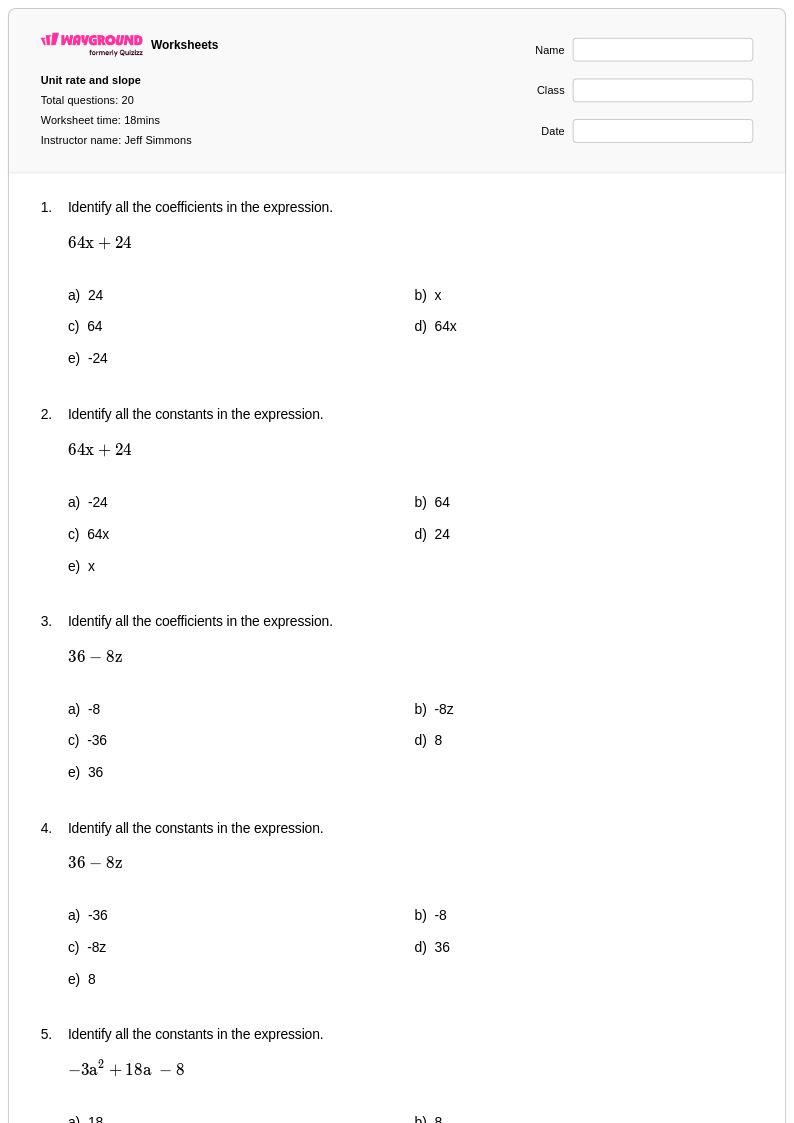
20 Q
6th - 8th
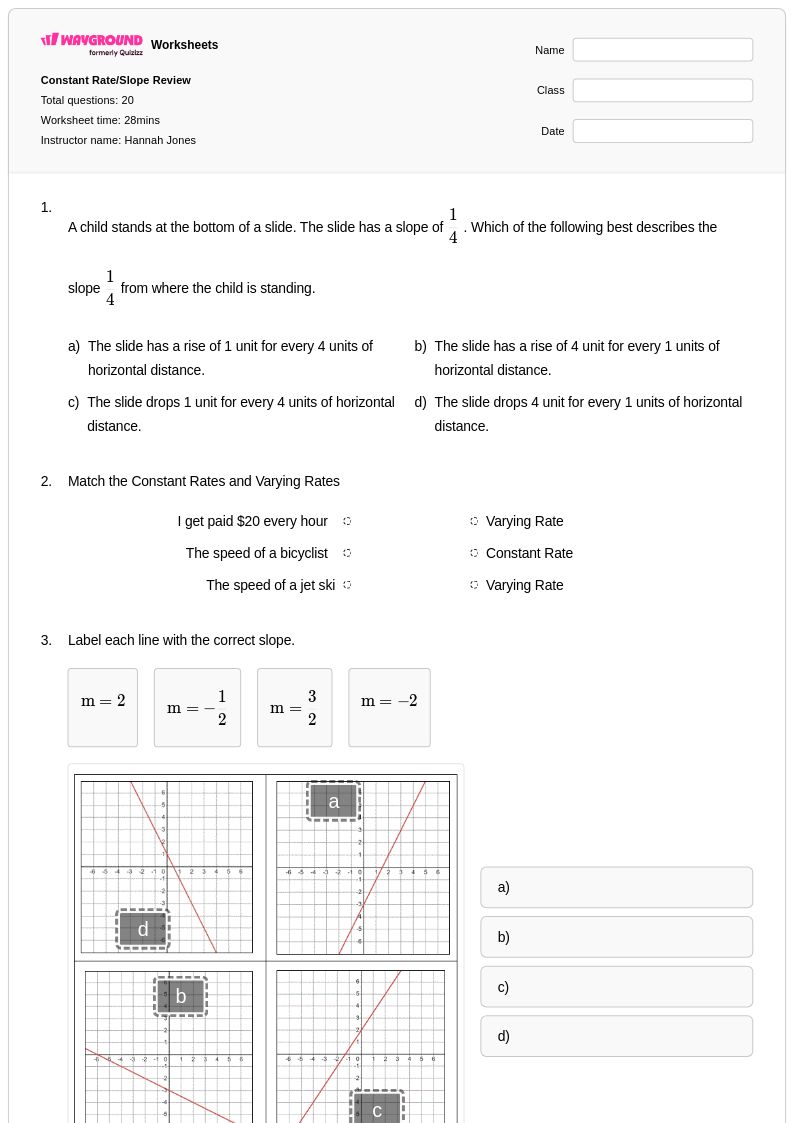
20 Q
6th - 8th
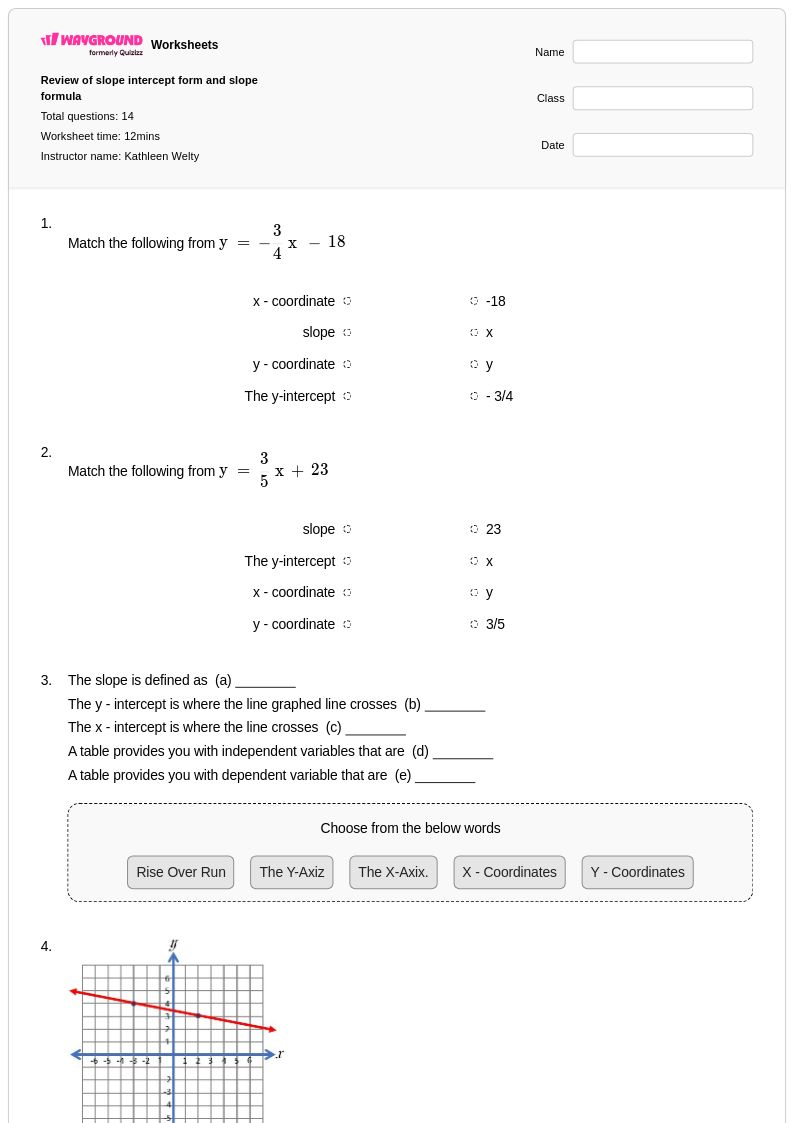
14 Q
6th - 12th
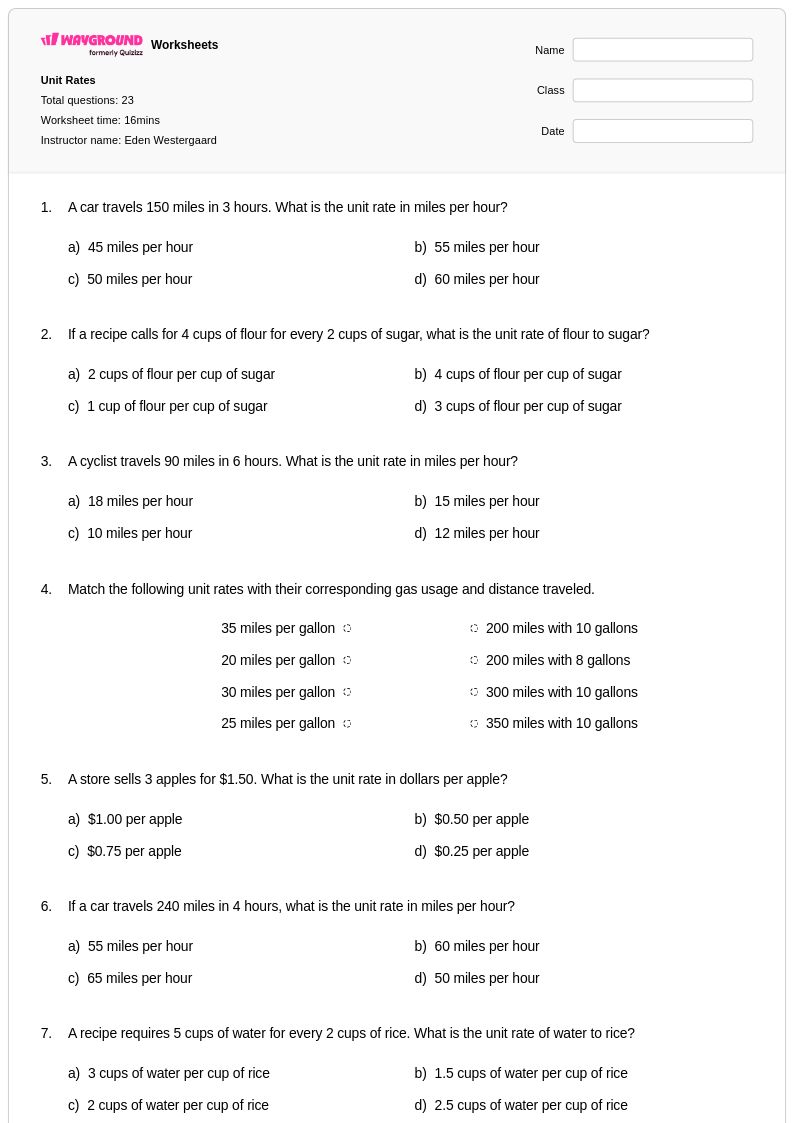
23 Q
6th
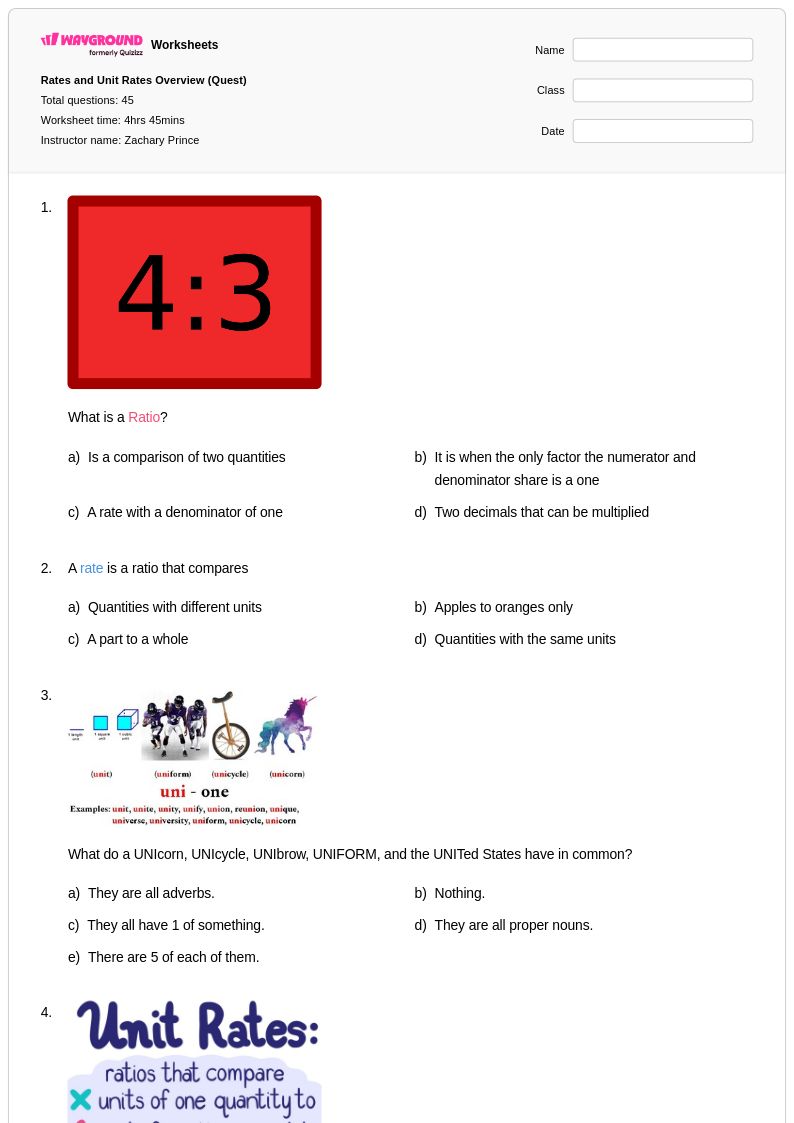
45 Q
6th
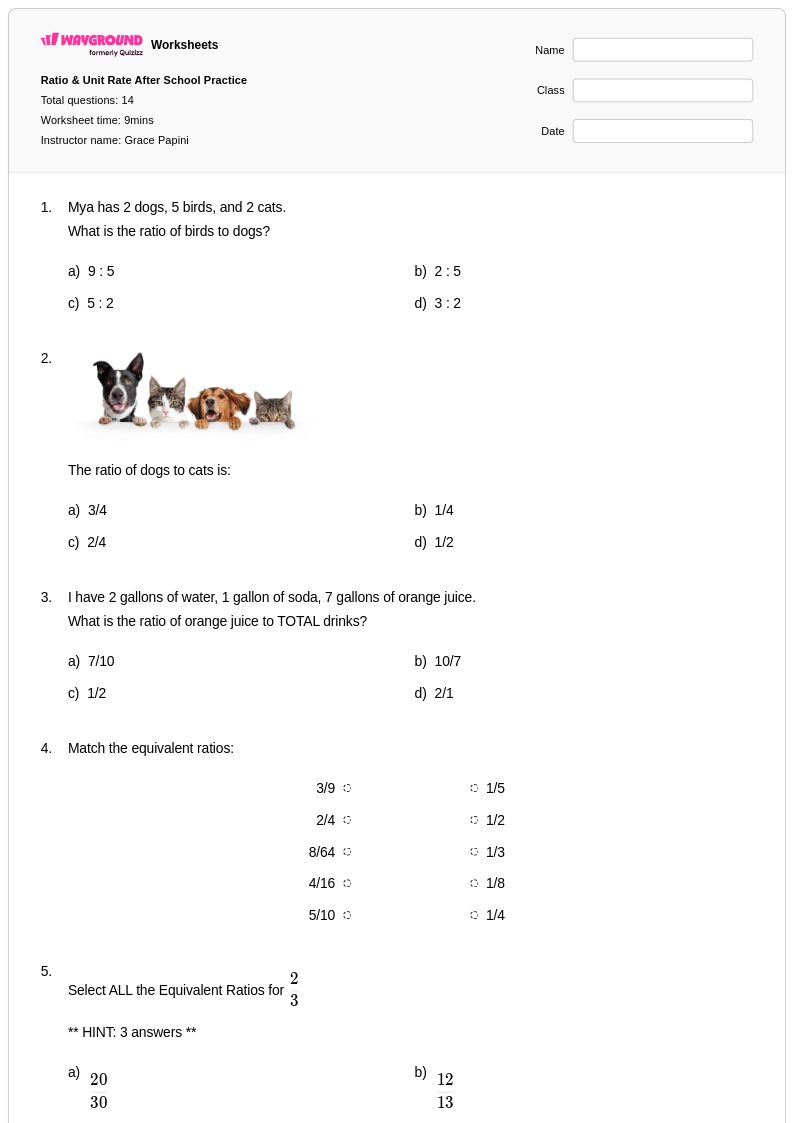
14 Q
6th
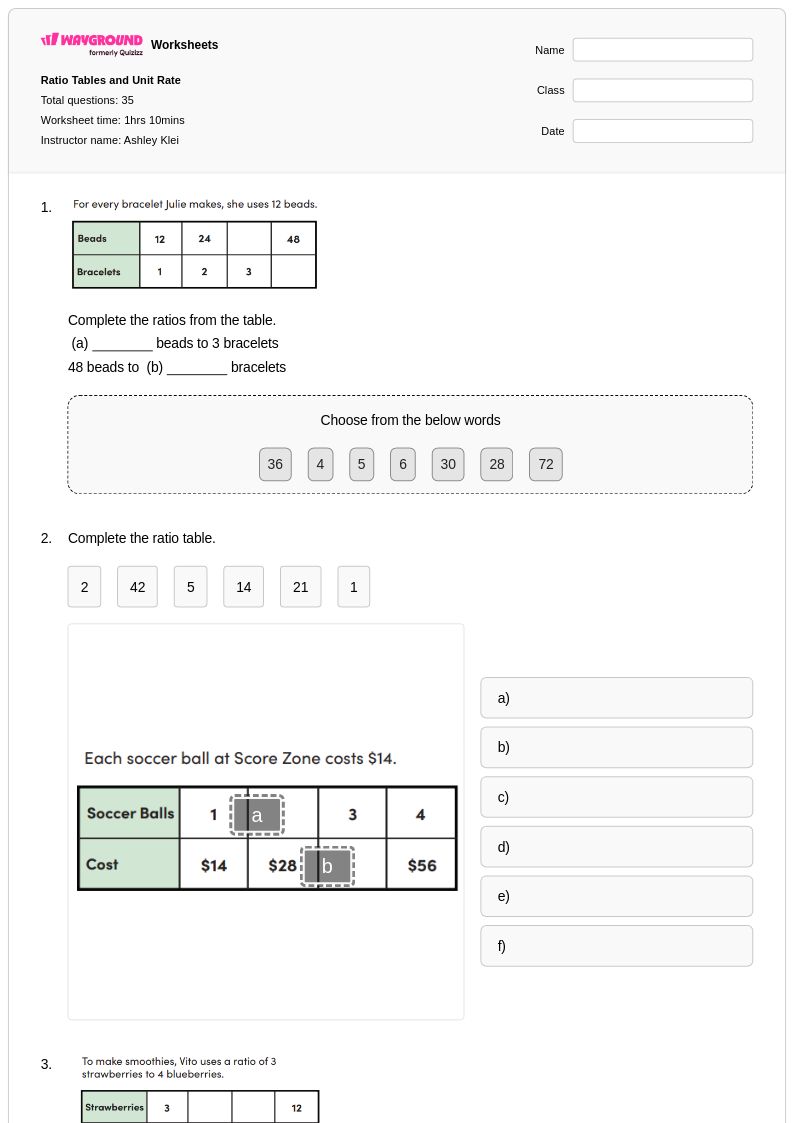
35 Q
6th
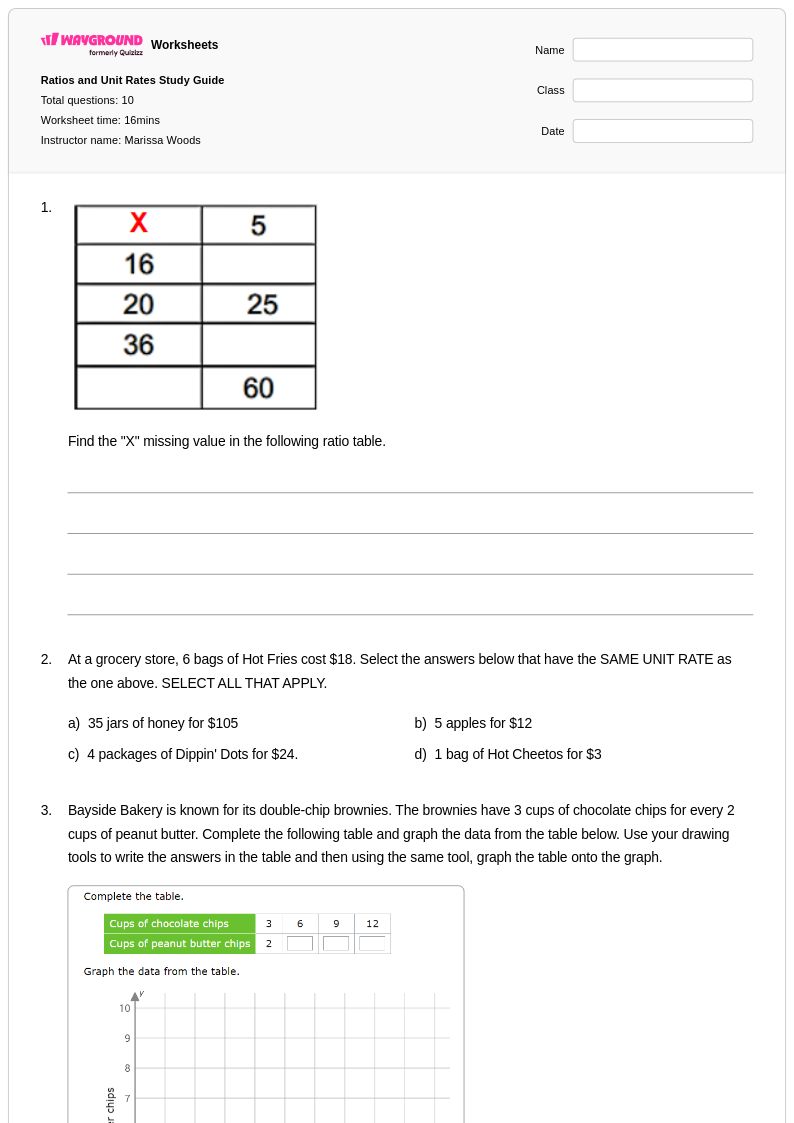
10 Q
6th
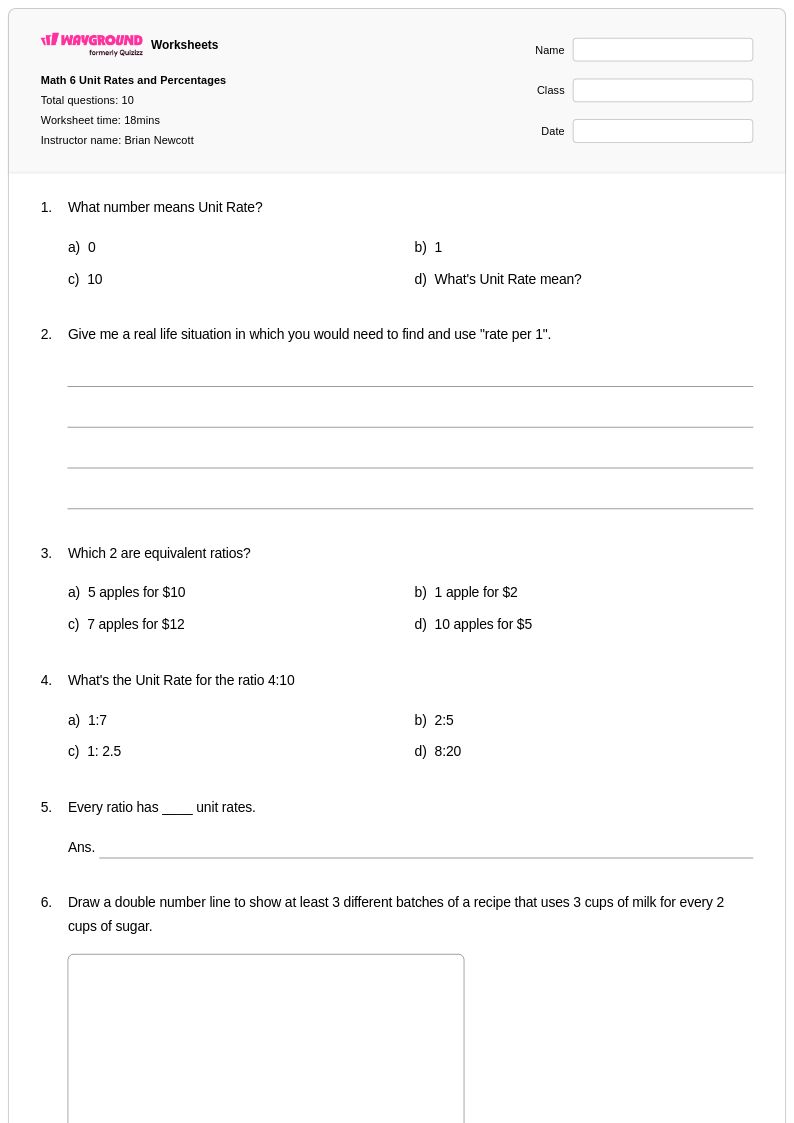
10 Q
6th
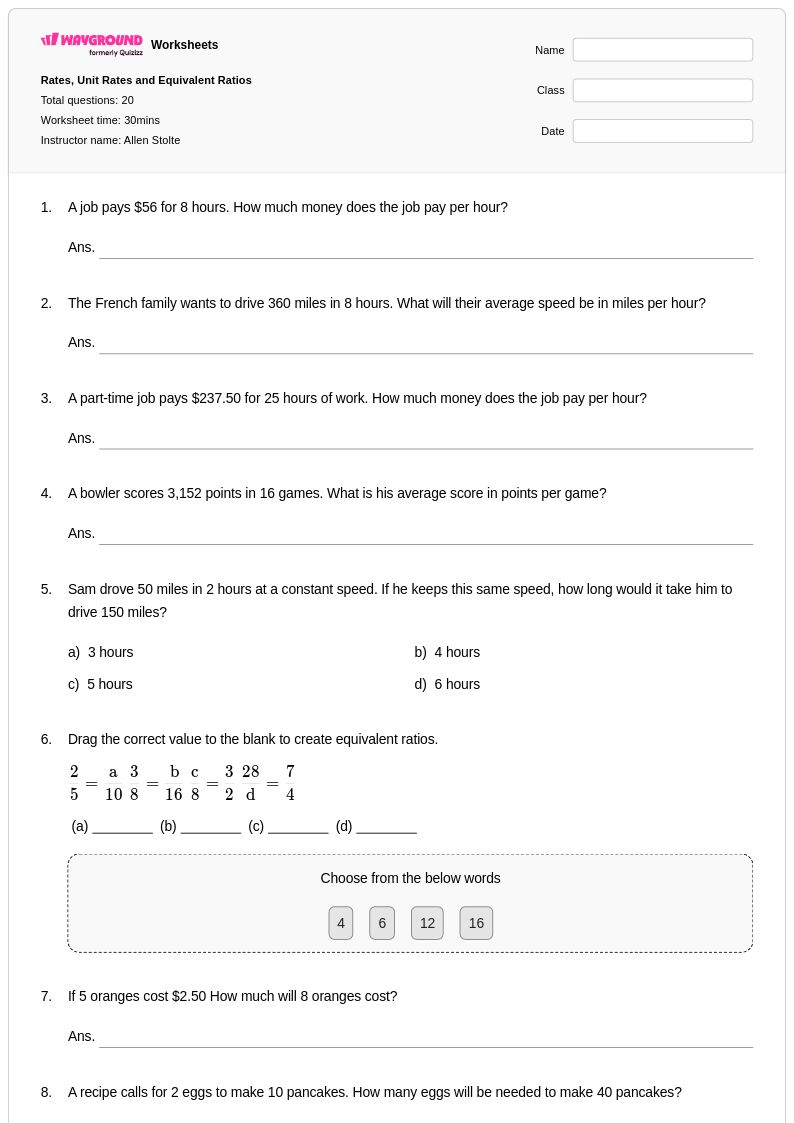
20 Q
6th - 8th
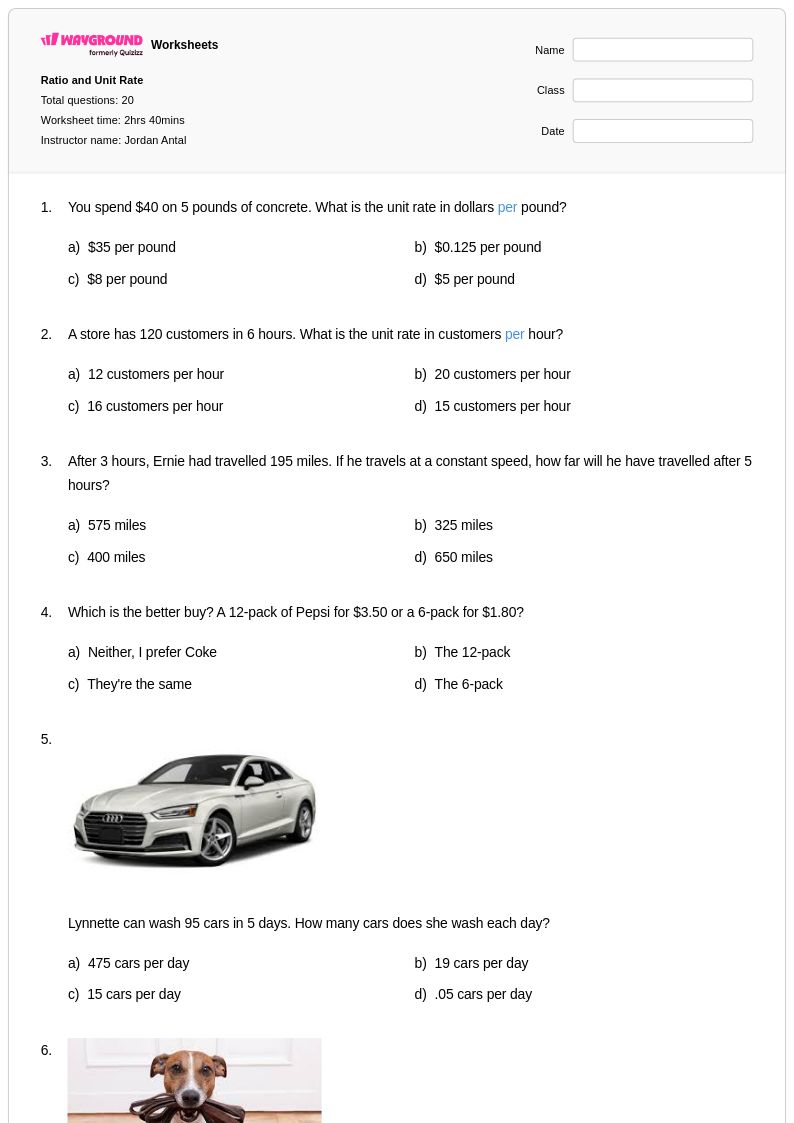
20 Q
4th - 6th
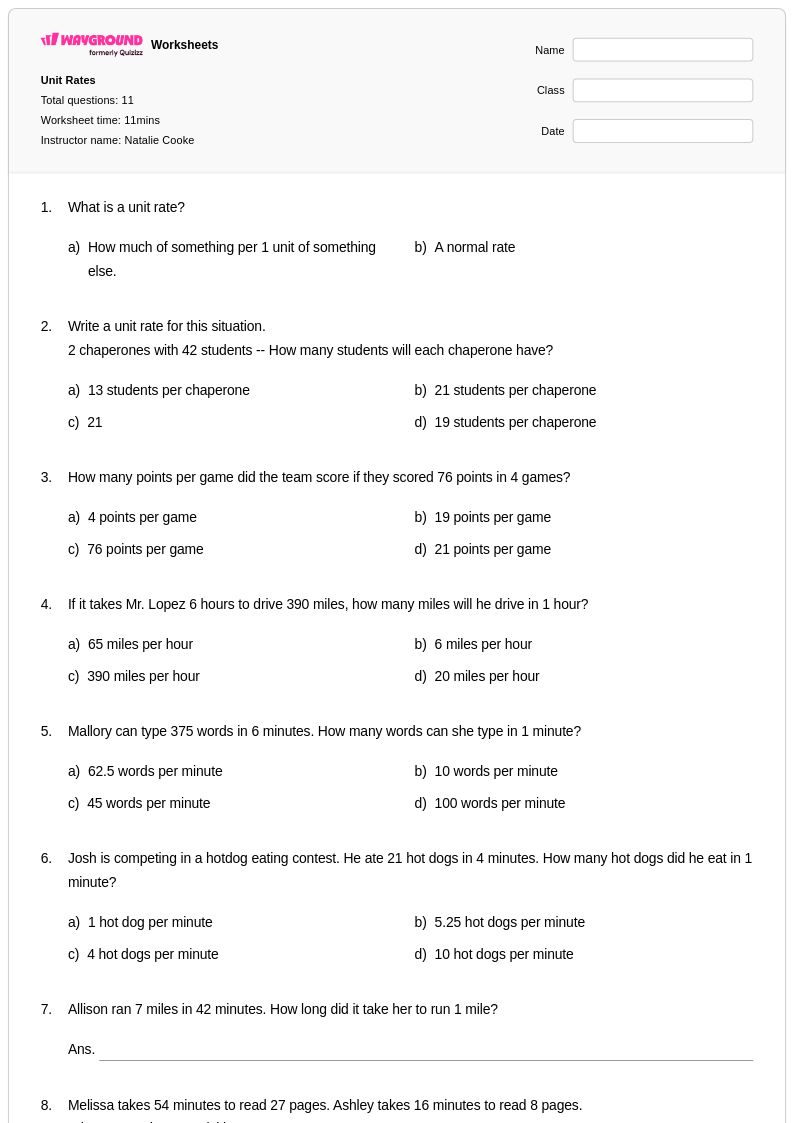
11 Q
6th
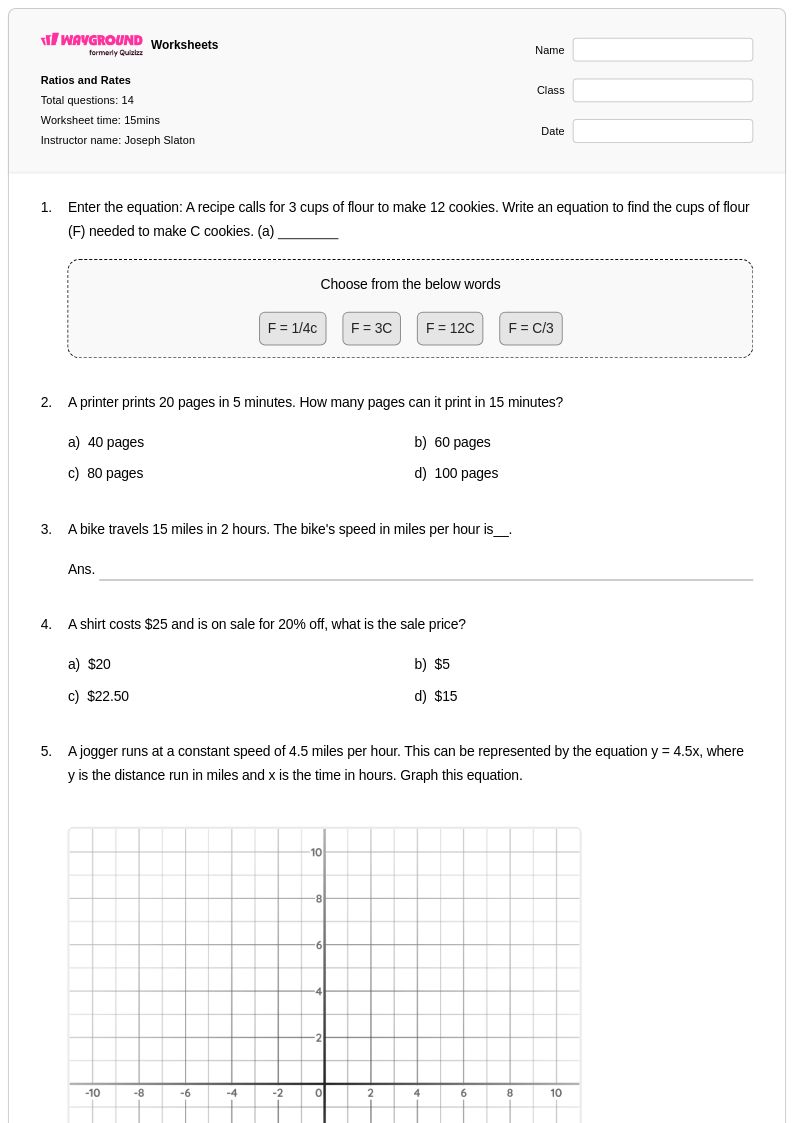
14 Q
6th - 8th
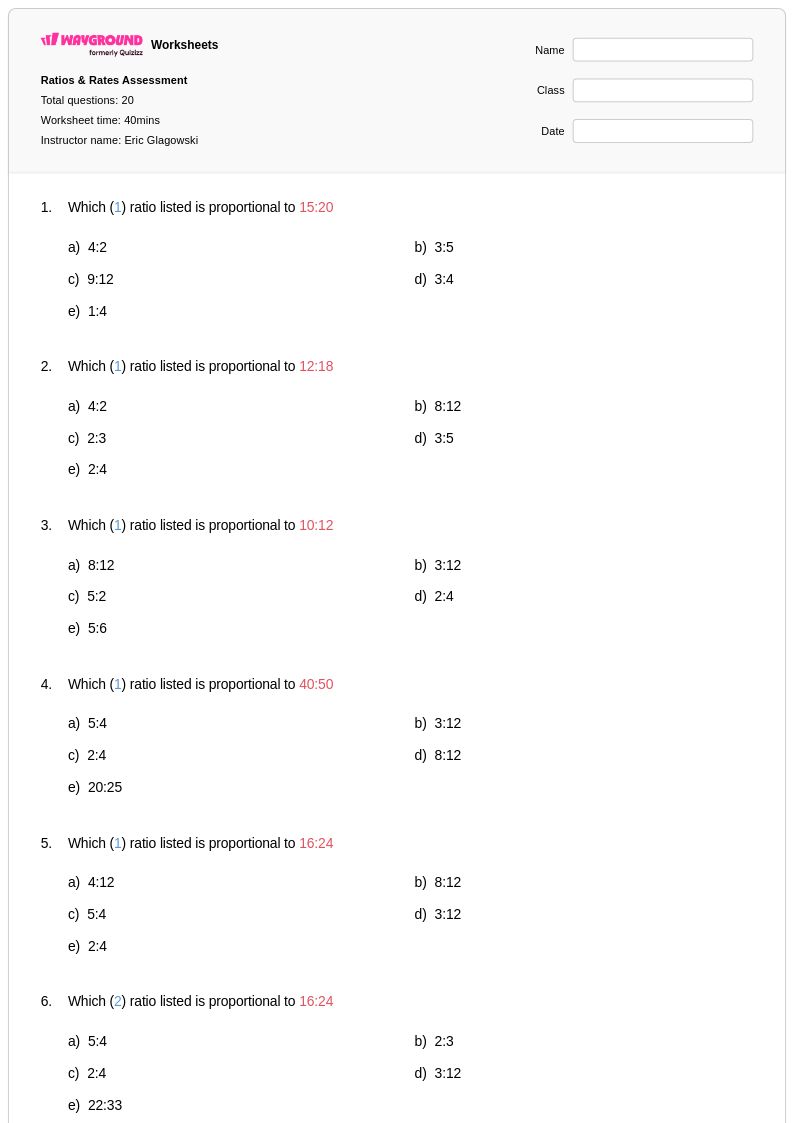
20 Q
6th
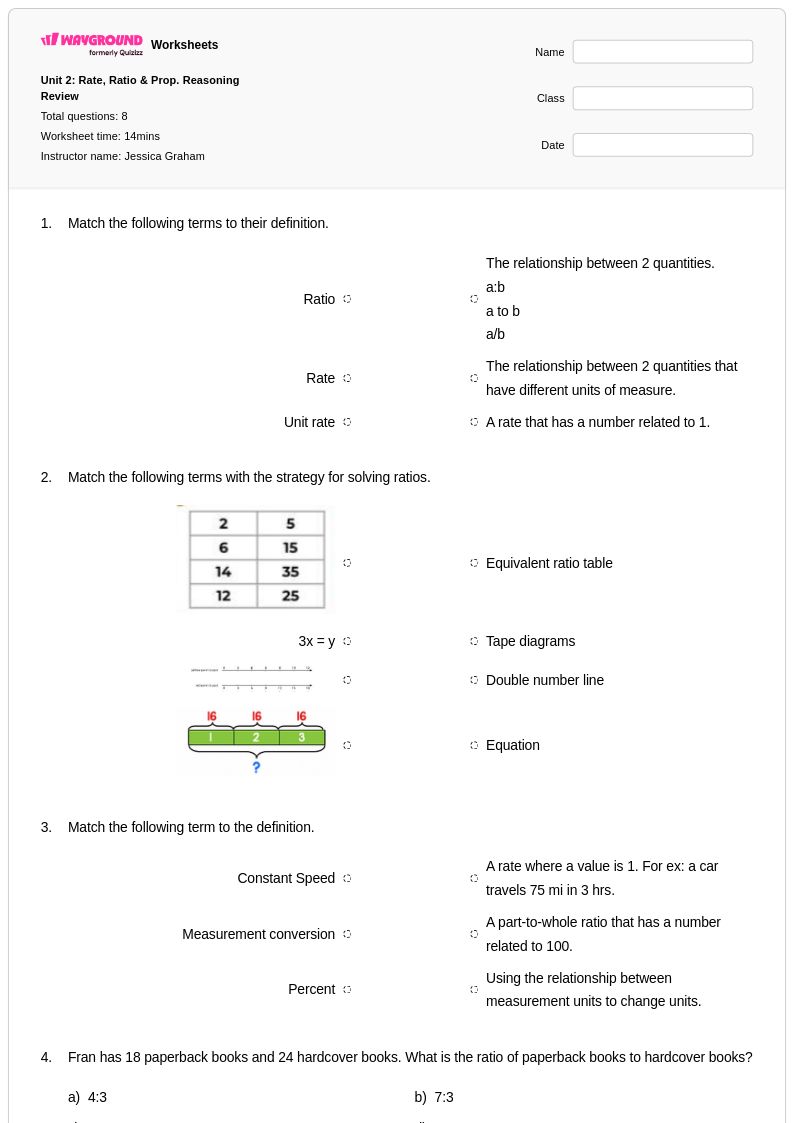
8 Q
6th
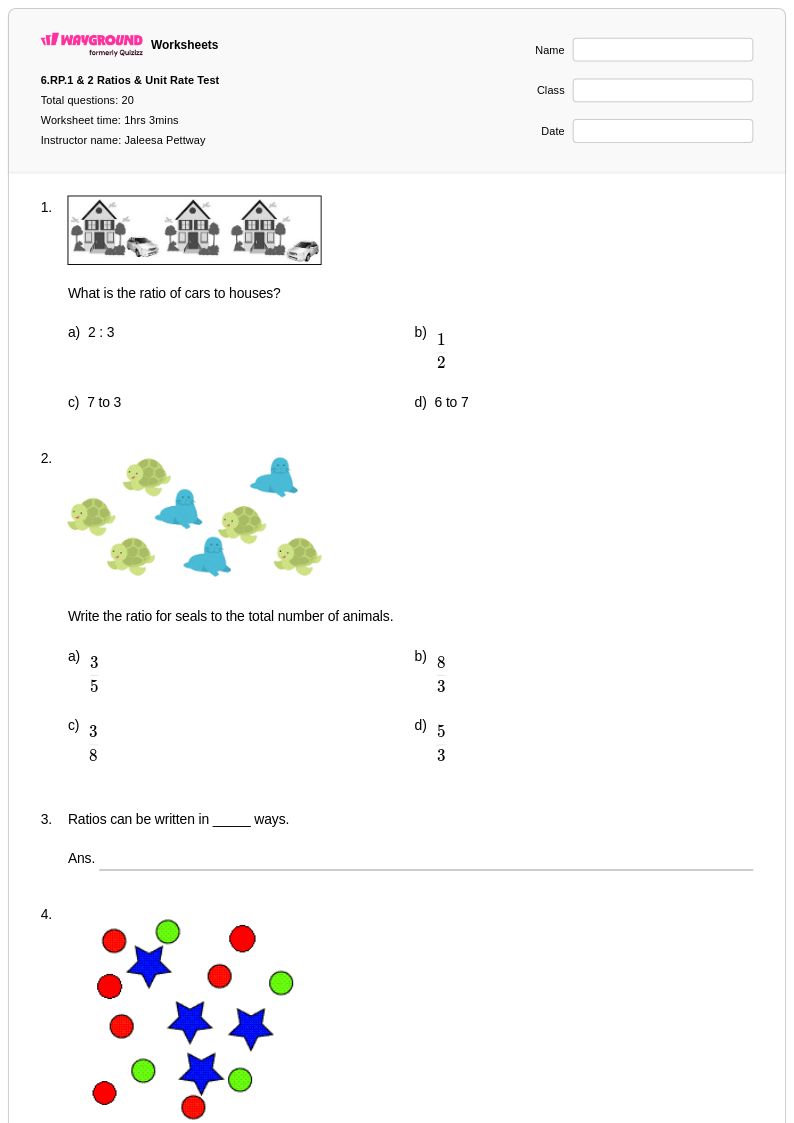
20 Q
6th
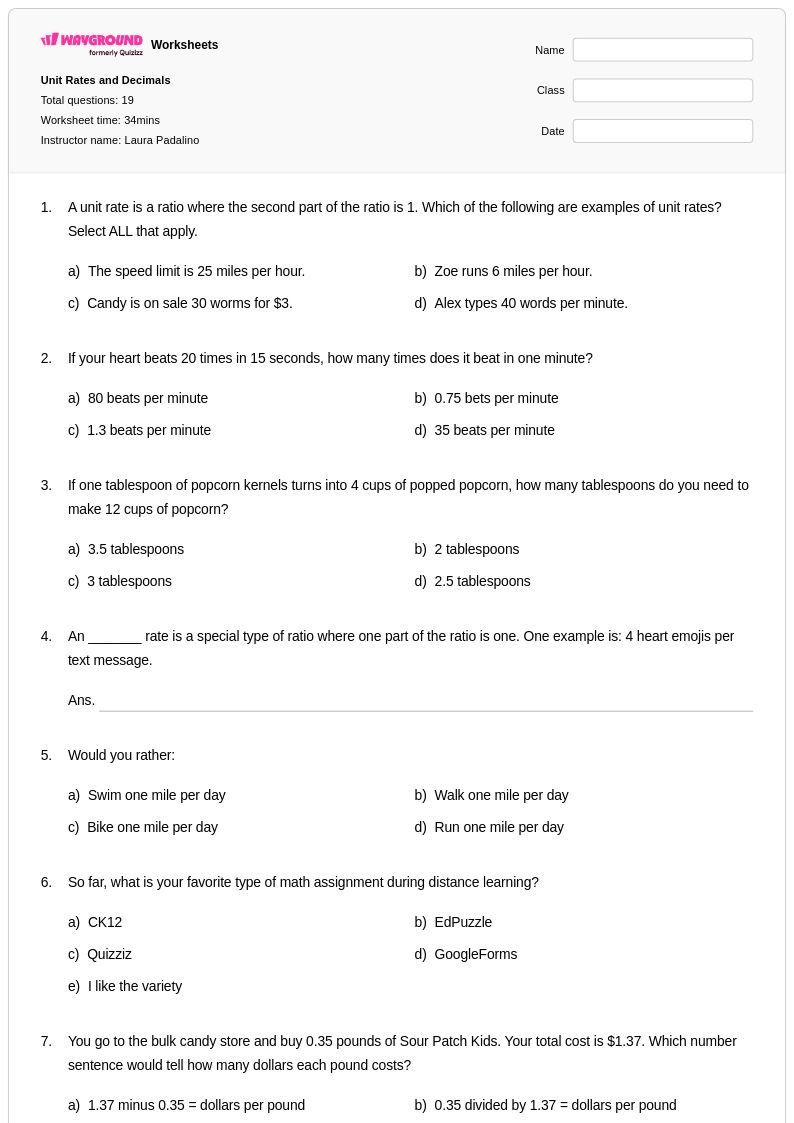
19 Q
6th
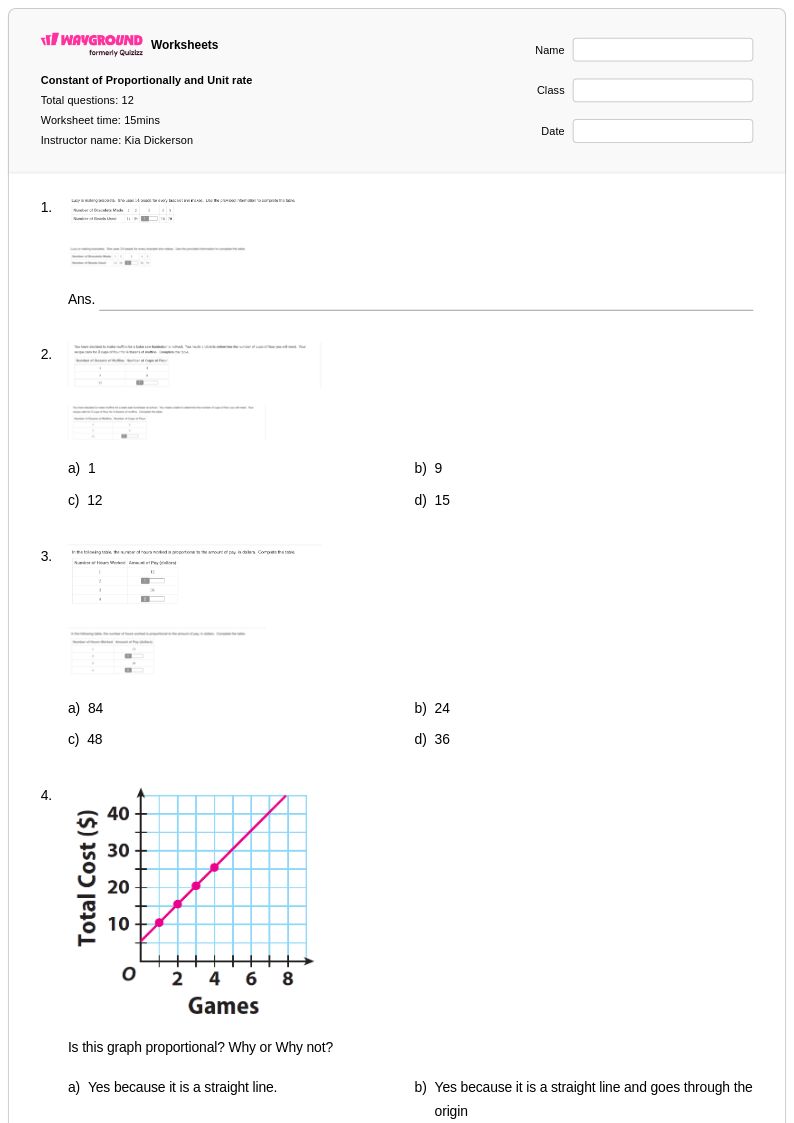
12 Q
6th - 8th
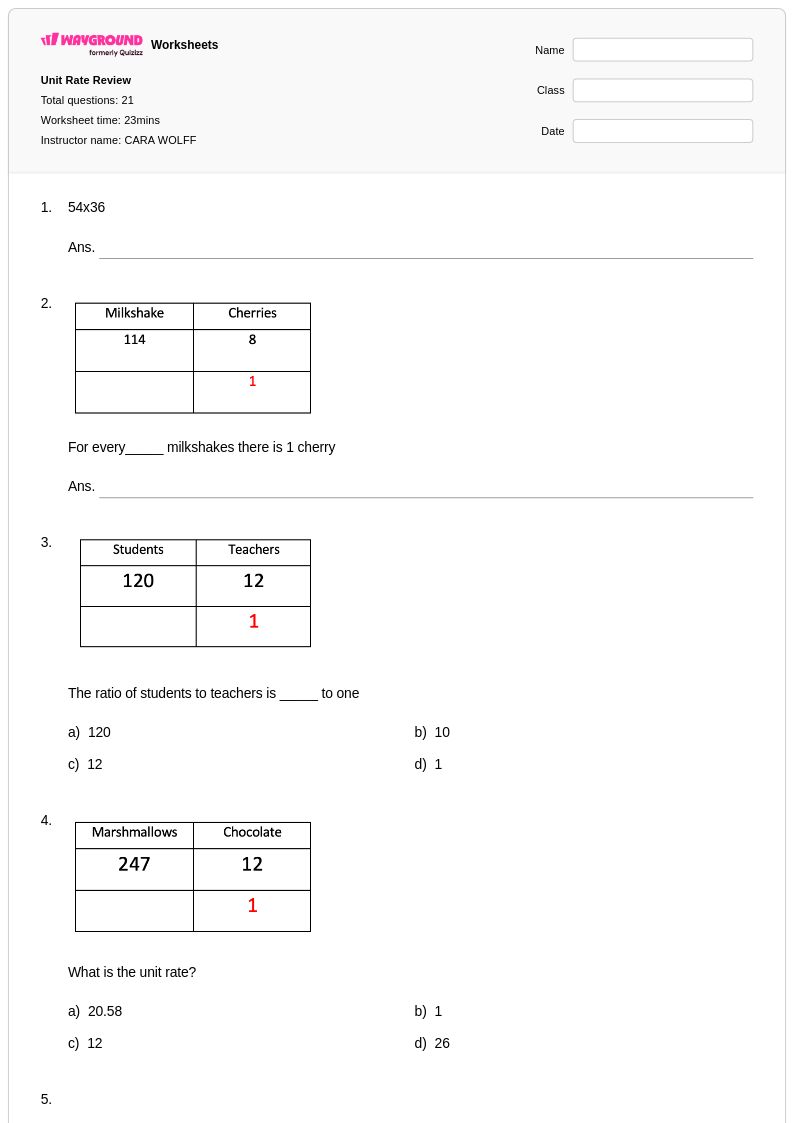
21 Q
6th
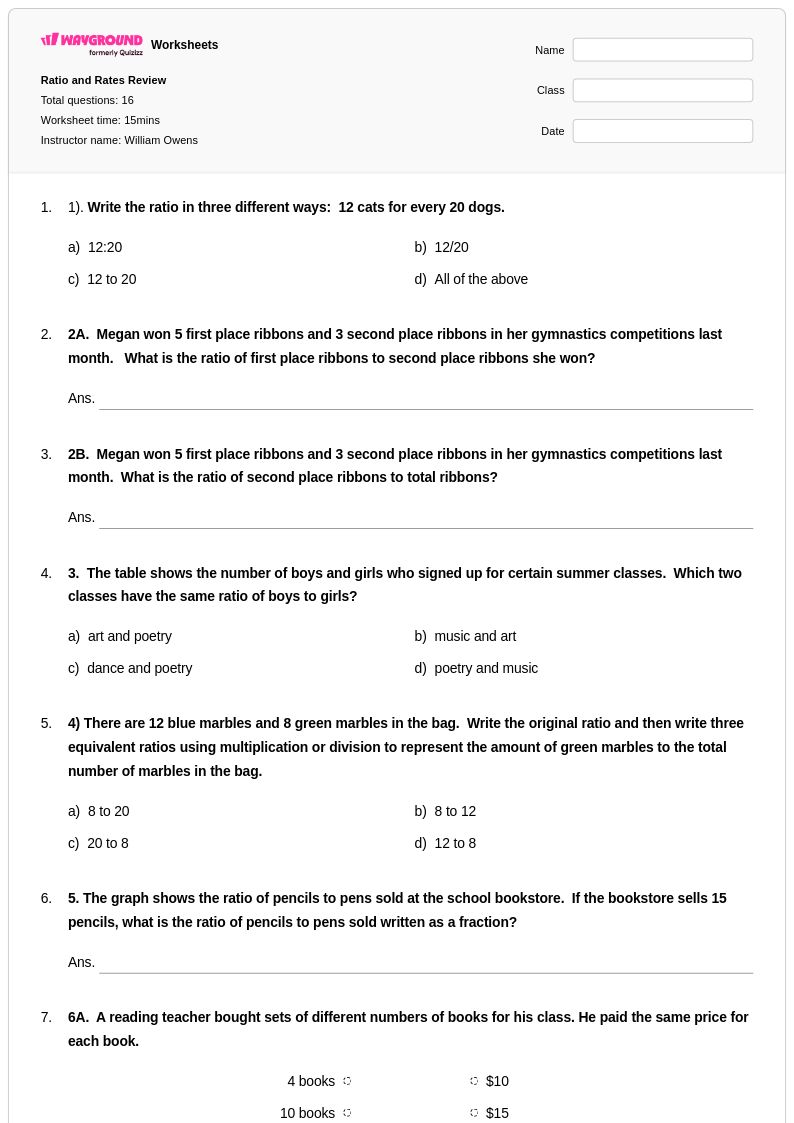
16 Q
6th
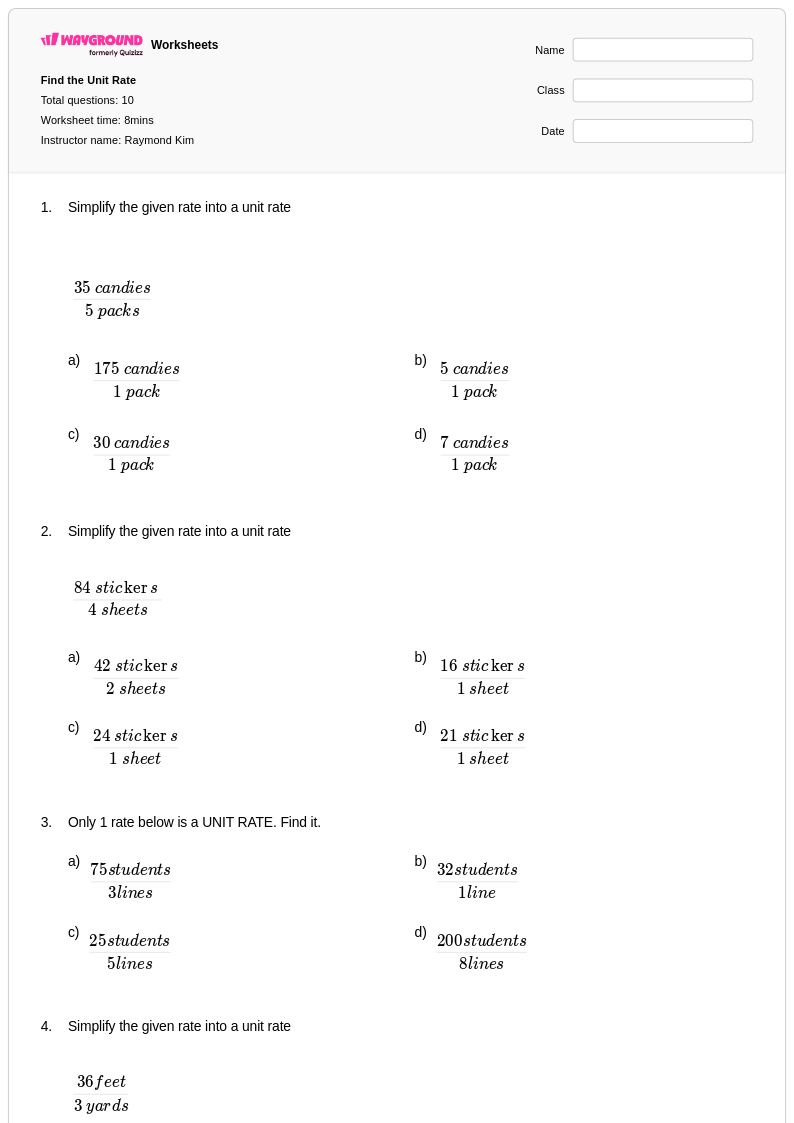
10 Q
6th - 9th
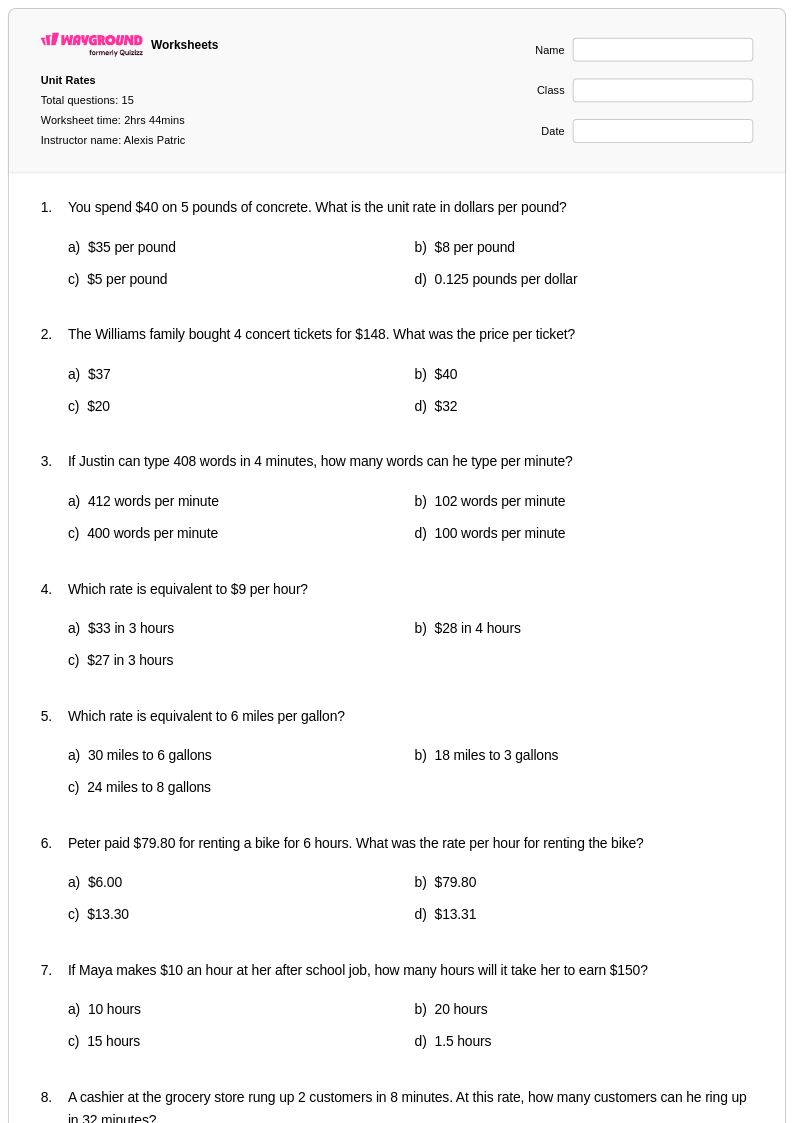
15 Q
6th
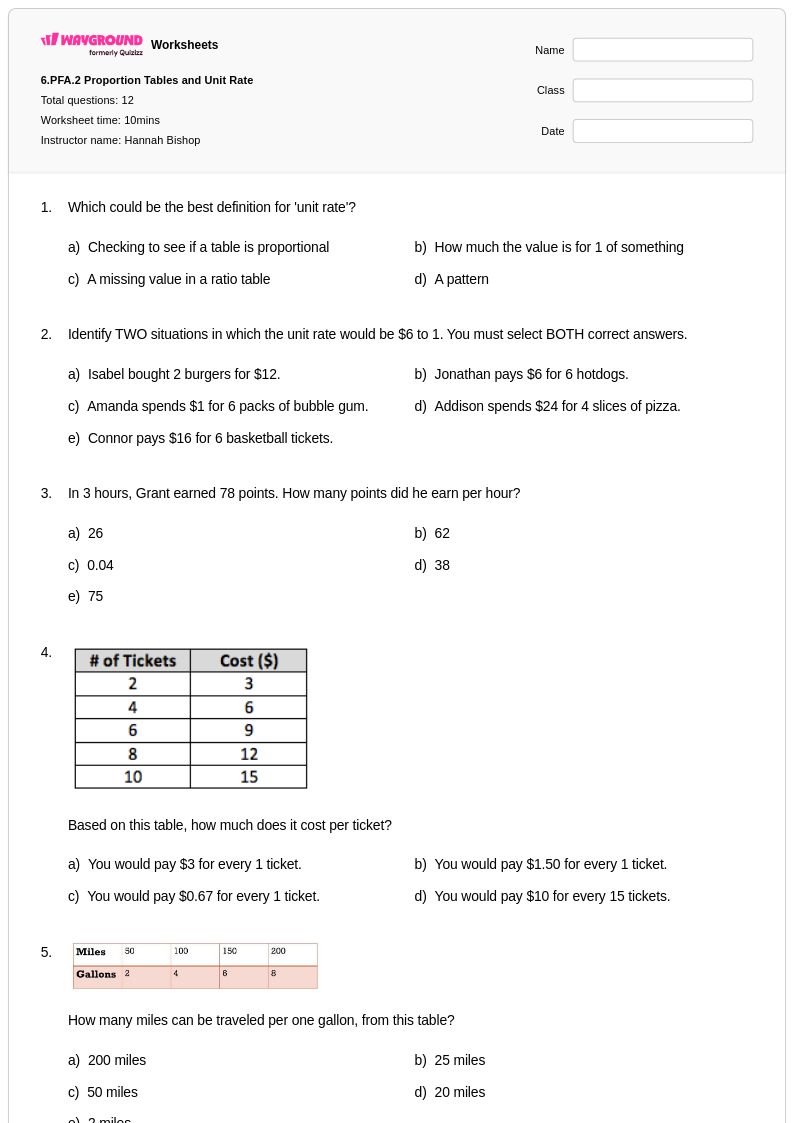
12 Q
6th - Uni
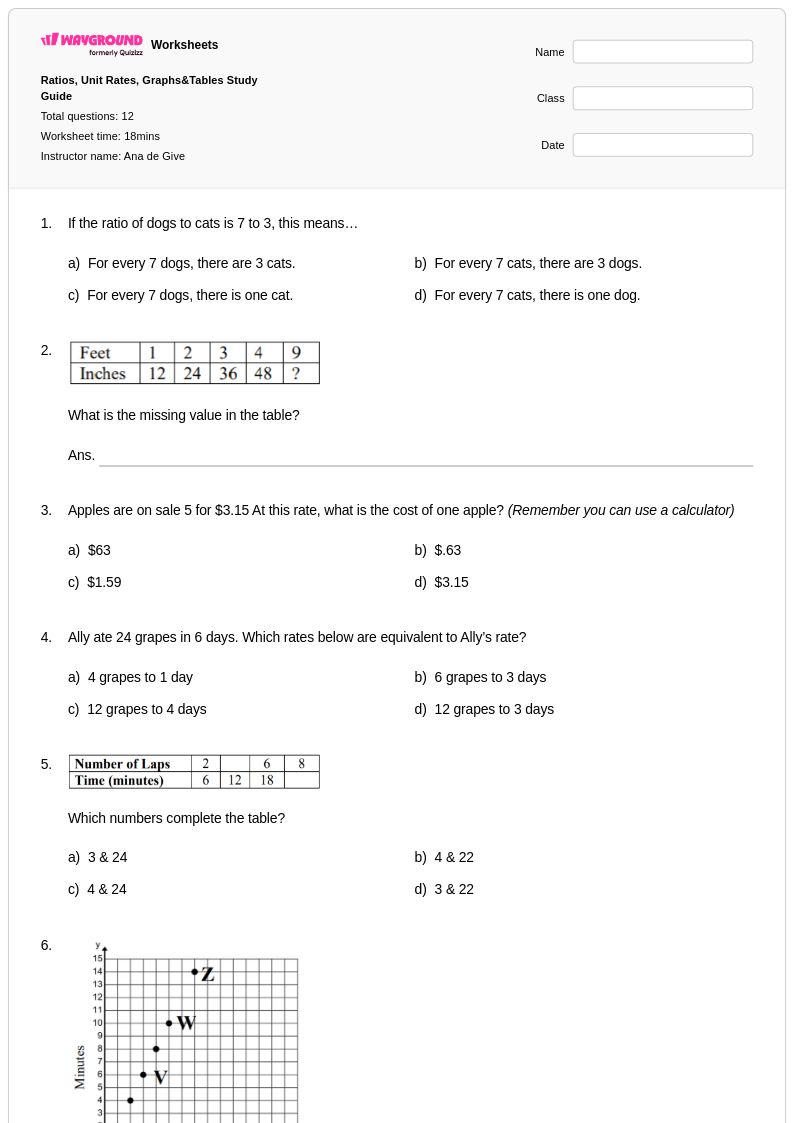
12 Q
6th
Explore Unit Rate and Slope Worksheets by Grades
Explore Other Subject Worksheets for grade 6
Explore printable Unit Rate and Slope worksheets for Grade 6
Unit rate and slope worksheets for Grade 6 students available through Wayground (formerly Quizizz) provide comprehensive practice in understanding the fundamental relationship between these interconnected mathematical concepts. These carefully designed printable resources help students master the essential skill of calculating unit rates—finding how much of one quantity corresponds to a single unit of another—while simultaneously building their foundational understanding of slope as a rate of change. The worksheets feature diverse practice problems that guide students through real-world applications, from calculating speeds and prices per unit to analyzing the steepness of lines on coordinate graphs. Each worksheet collection includes detailed answer keys that support both independent learning and instructional feedback, with free pdf formats ensuring easy access and distribution in any classroom setting.
Wayground (formerly Quizizz) empowers educators with an extensive library of millions of teacher-created resources specifically targeting unit rate and slope concepts for Grade 6 mathematics instruction. The platform's robust search and filtering capabilities allow teachers to quickly locate worksheets aligned with specific curriculum standards, while built-in differentiation tools enable customization based on individual student needs and skill levels. These versatile resources are available in both printable and digital formats, including downloadable pdfs that seamlessly integrate into lesson planning workflows. Teachers can efficiently address diverse classroom requirements through targeted skill practice, remediation for struggling learners, and enrichment opportunities for advanced students, all while maintaining consistent alignment with grade-appropriate mathematical expectations for percents, ratios, and rates instruction.