
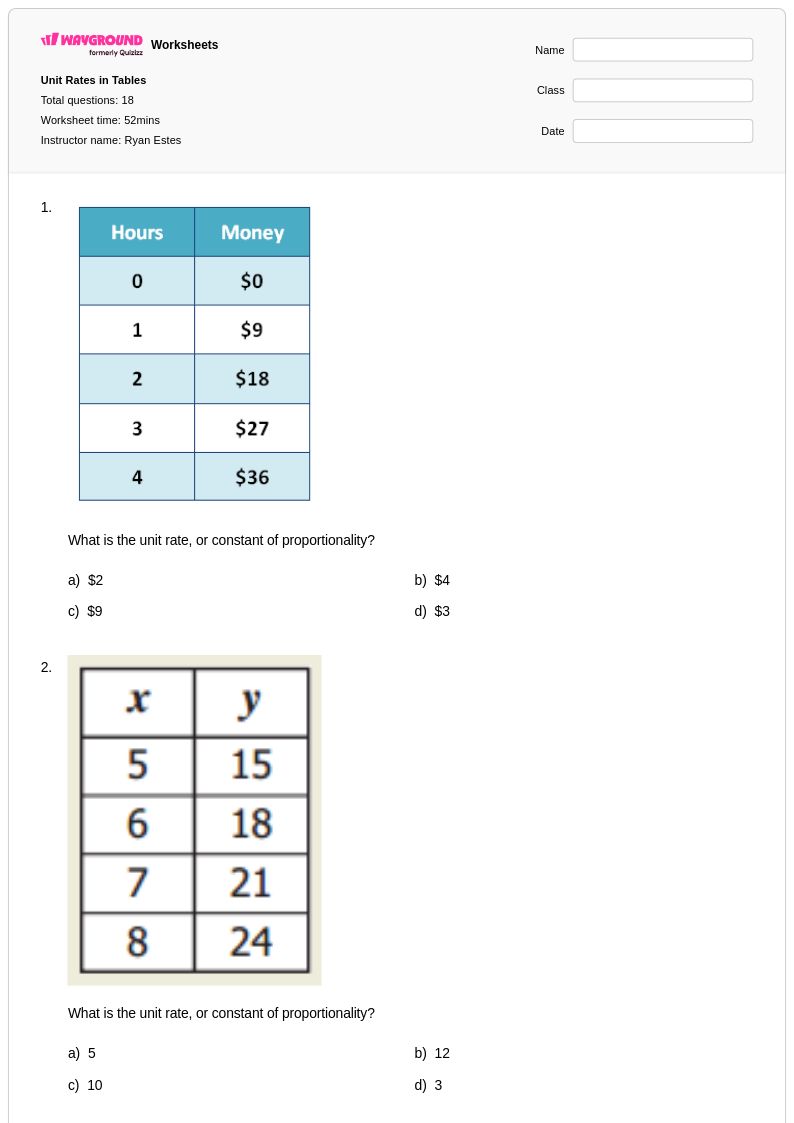
18 Q
6th - 8th
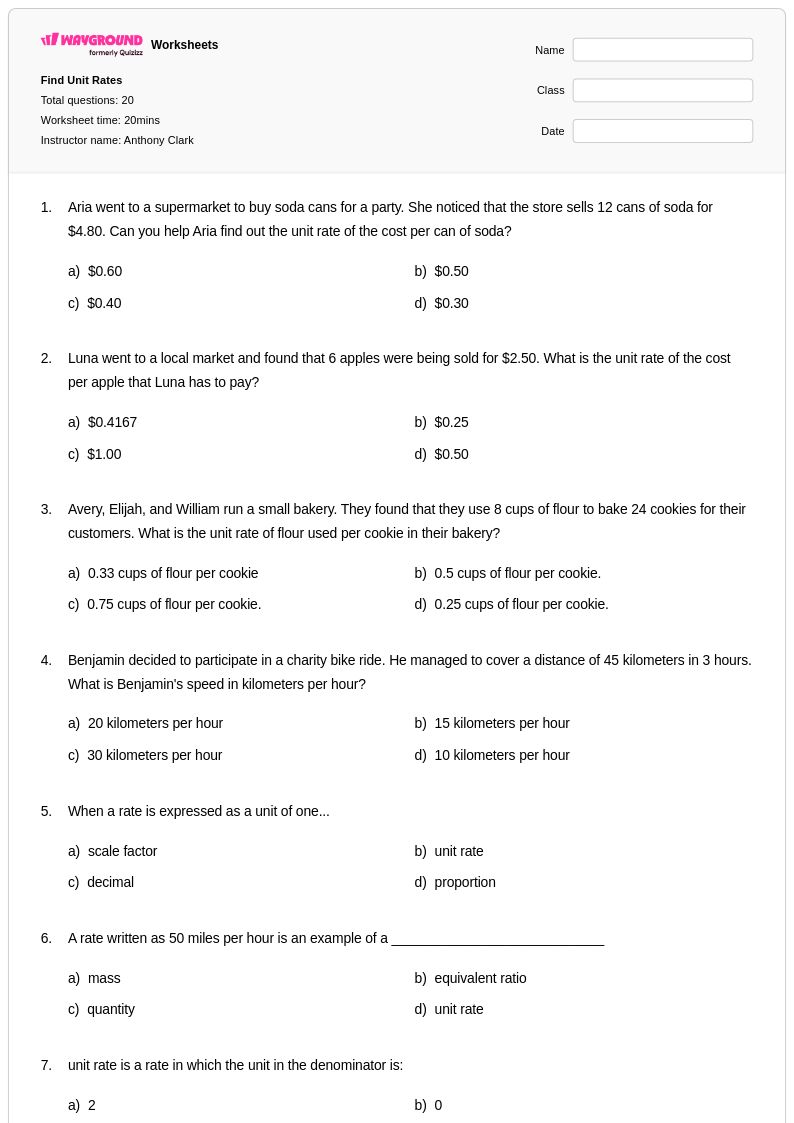
20 Q
7th - Uni
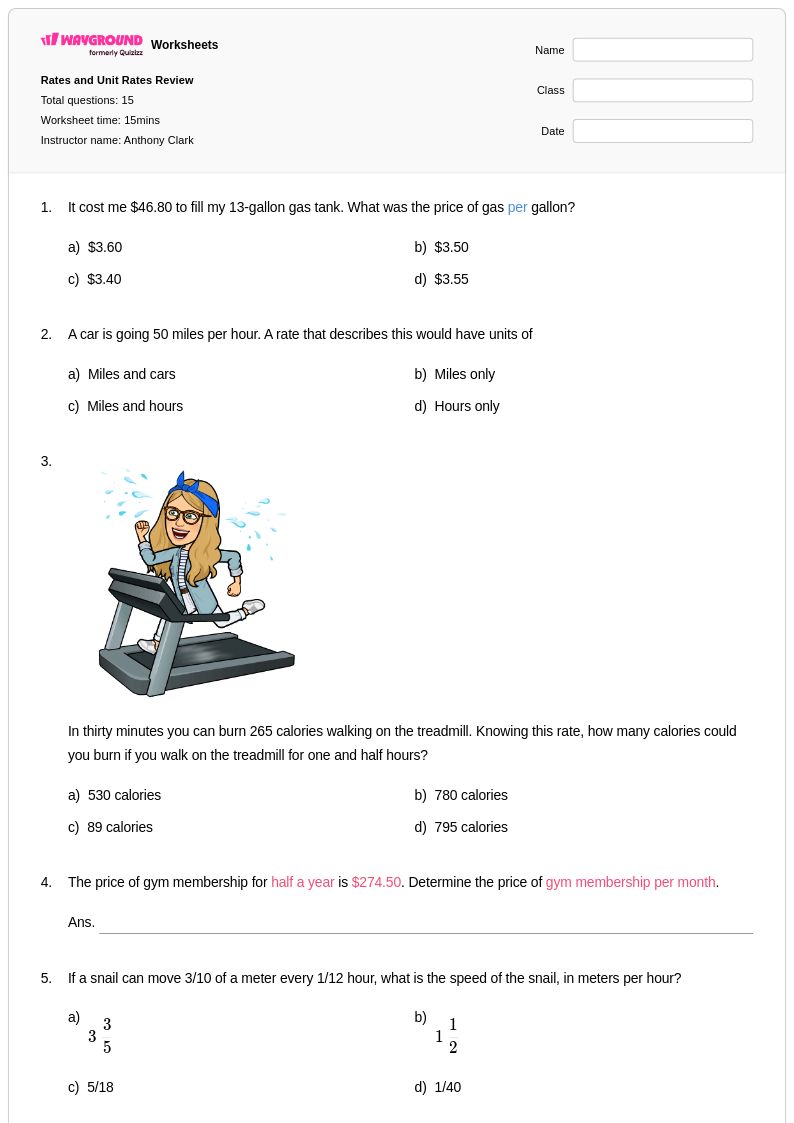
15 Q
7th - Uni
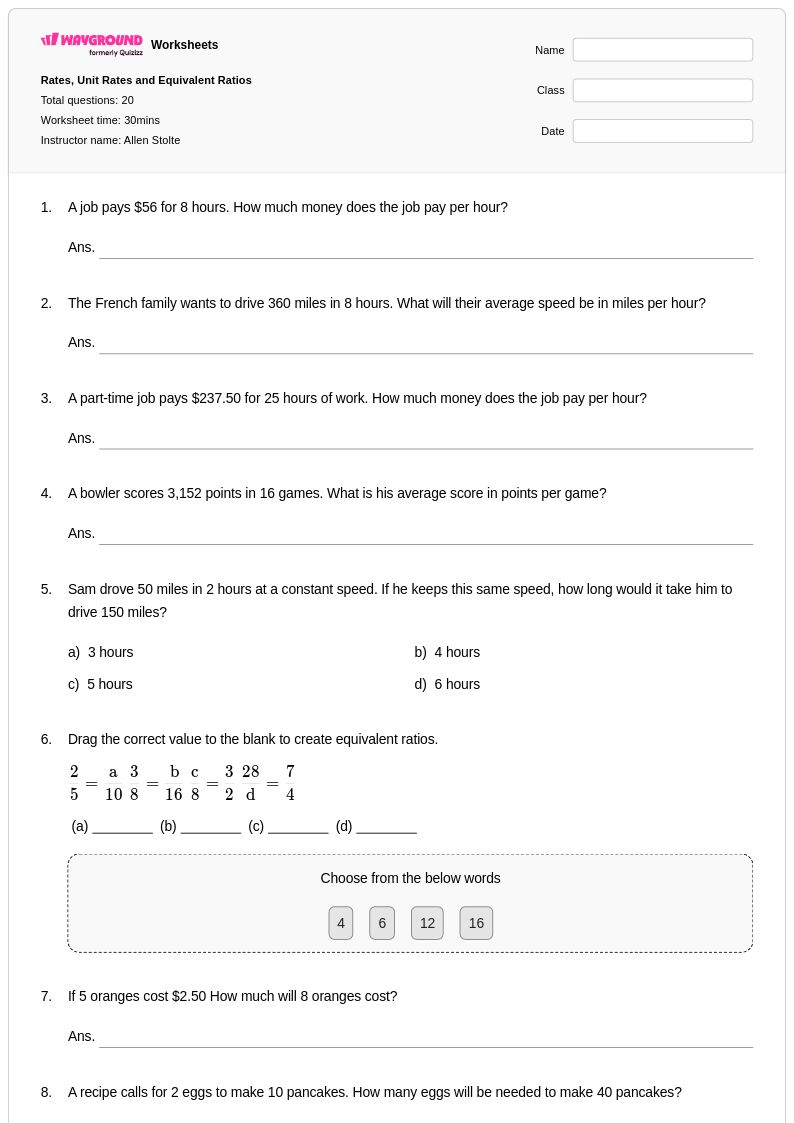
20 Q
6th - 8th
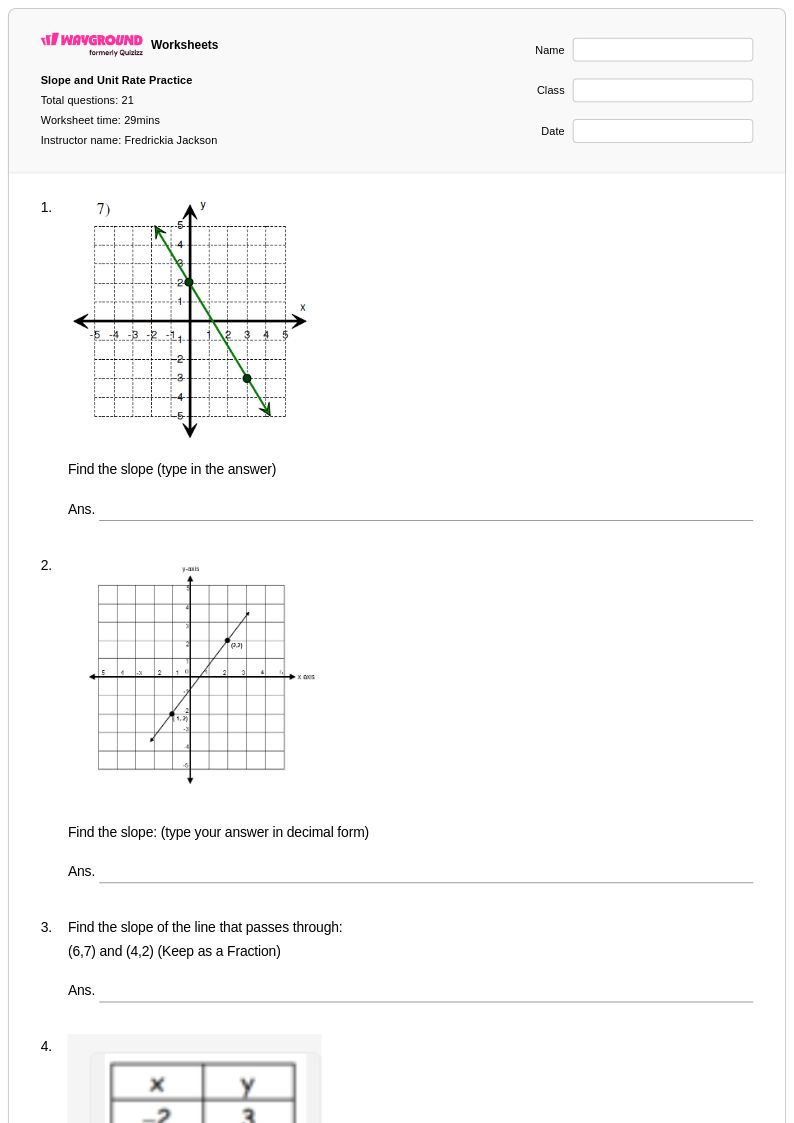
21 Q
8th
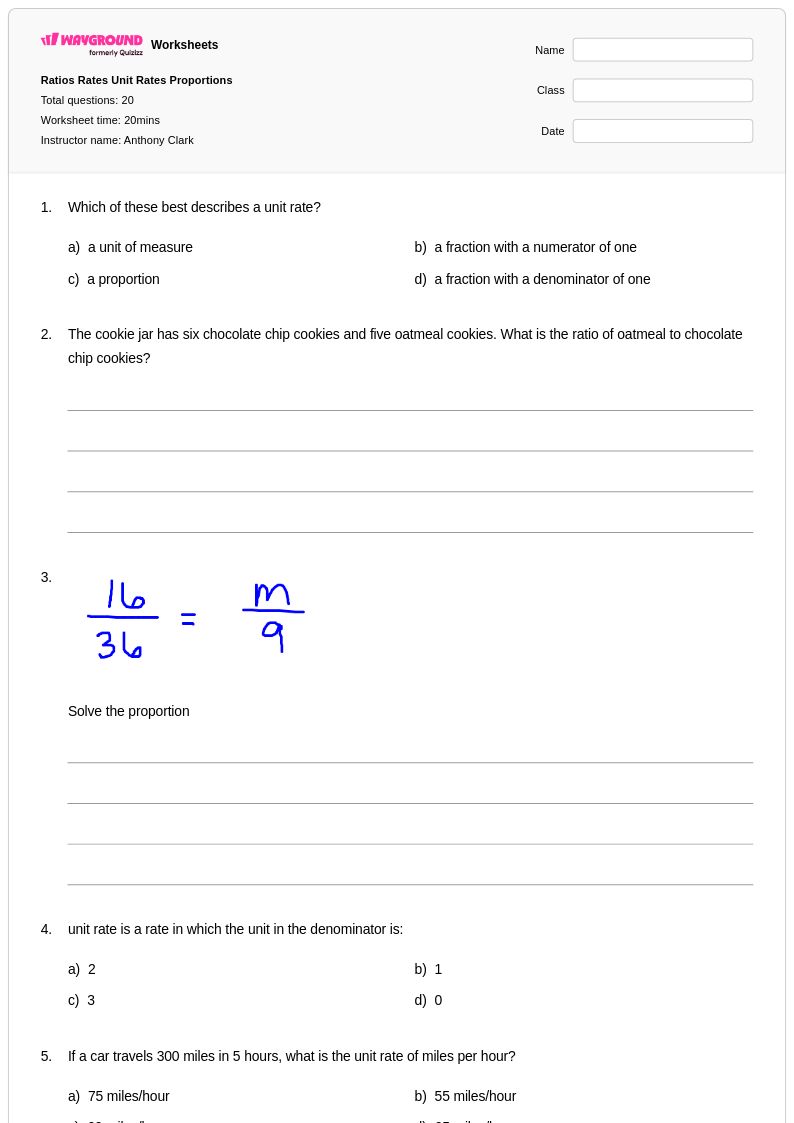
20 Q
6th - Uni
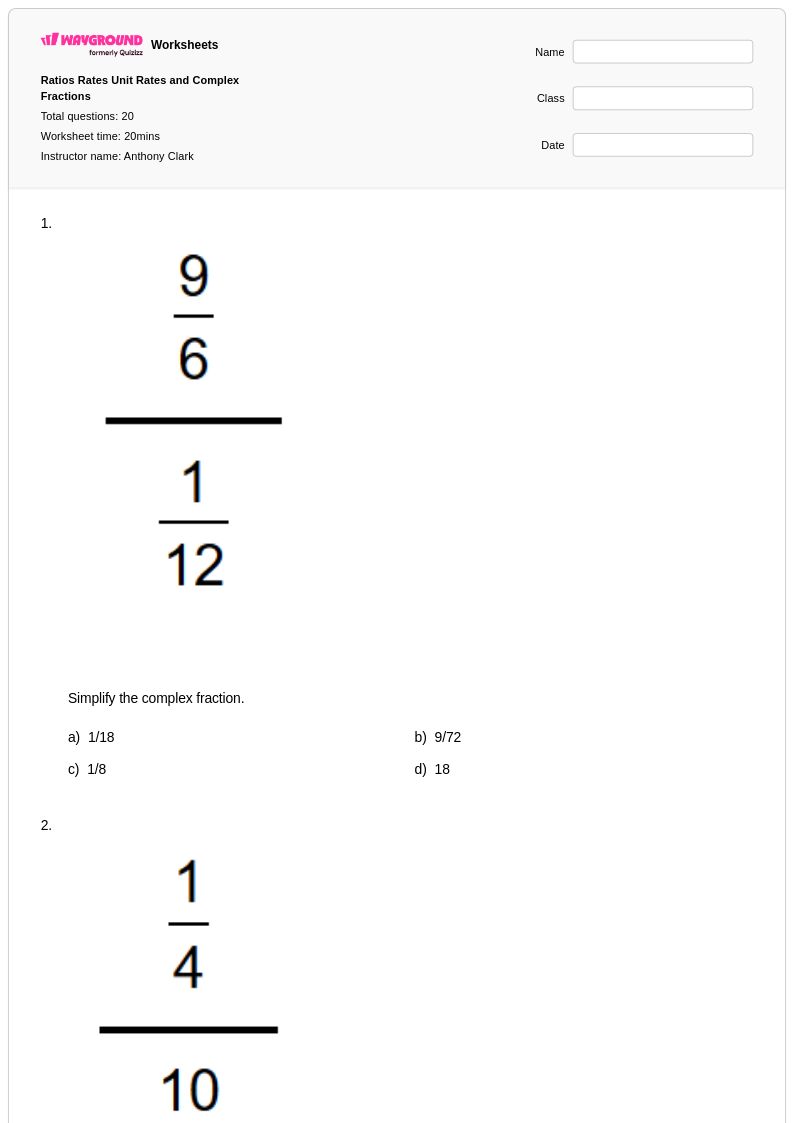
20 Q
7th - Uni
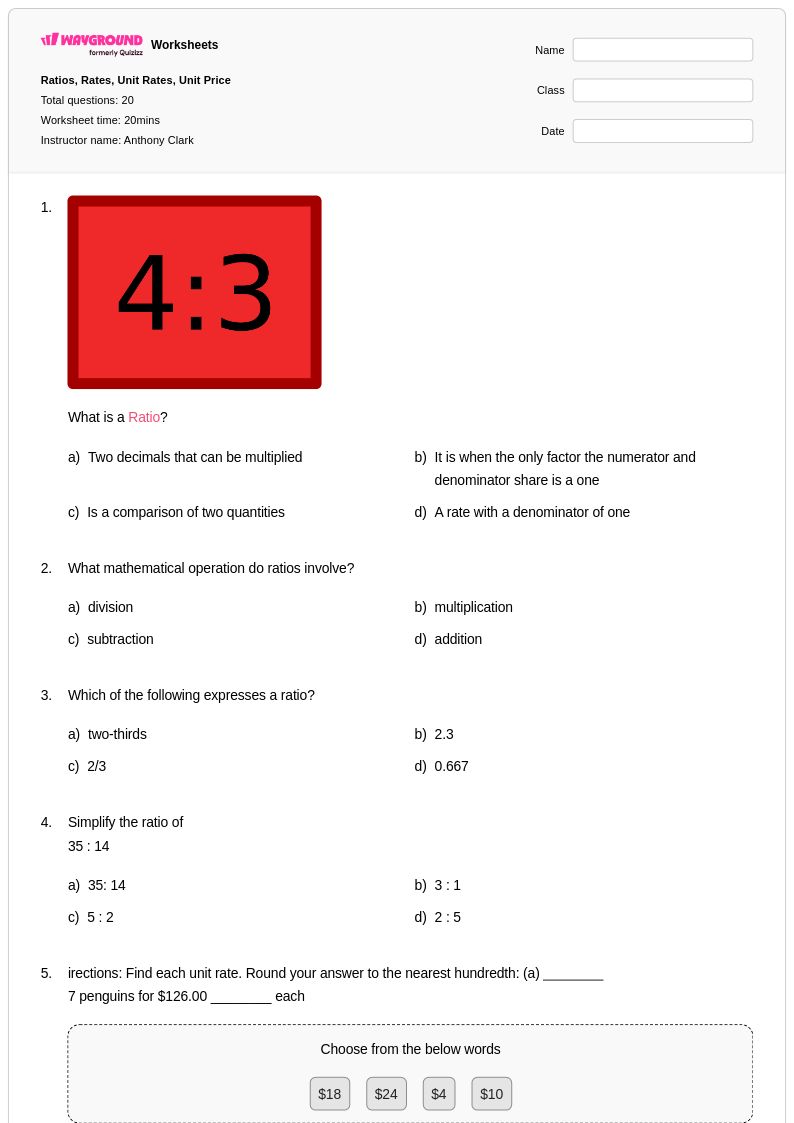
20 Q
6th - Uni
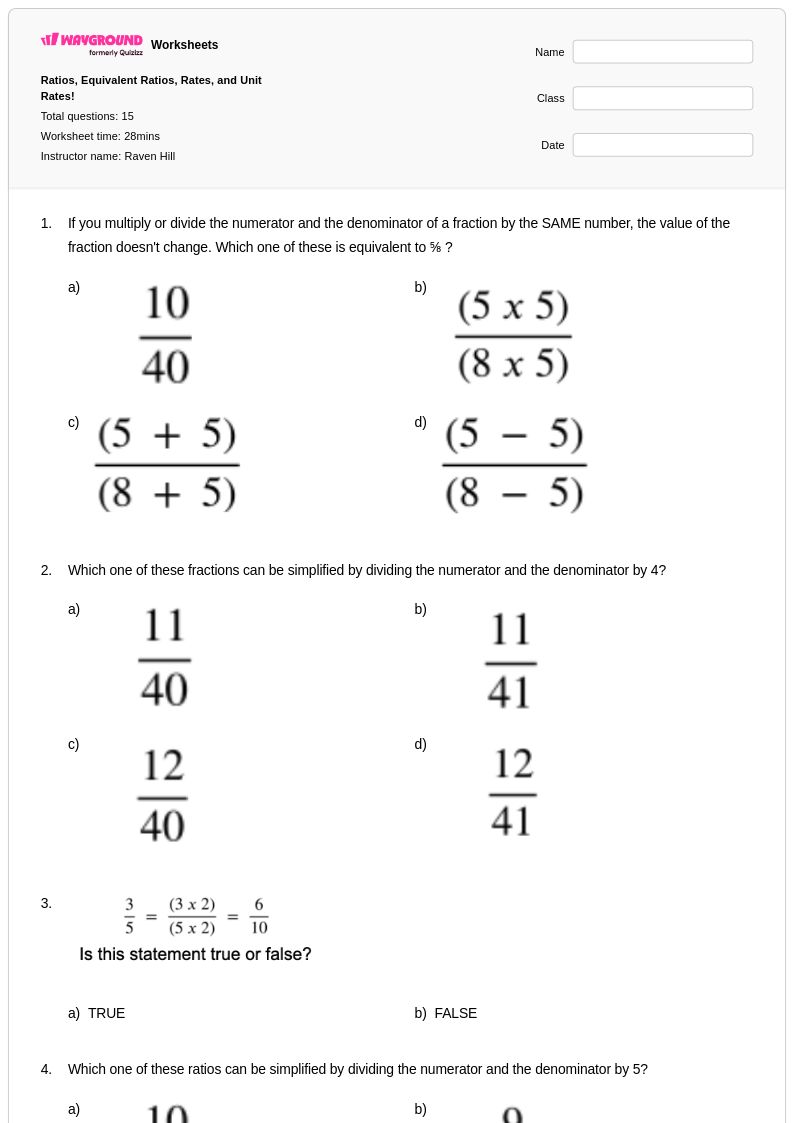
15 Q
6th - 8th
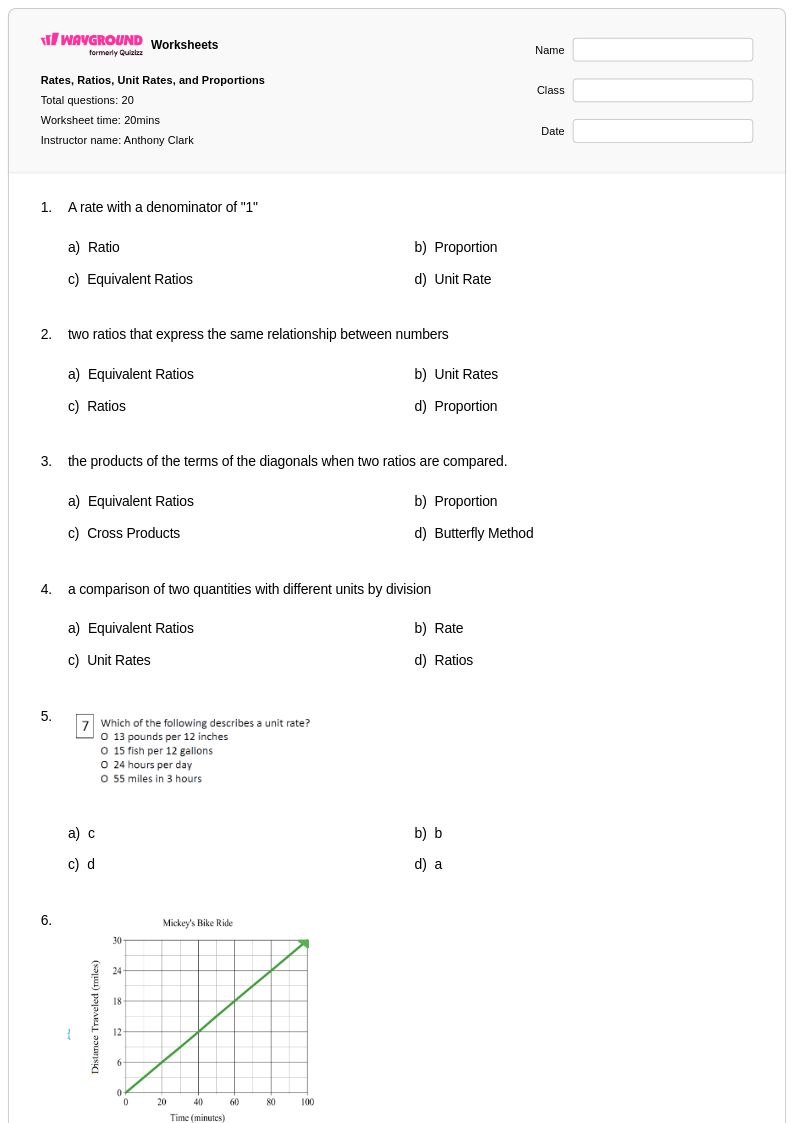
20 Q
6th - Uni
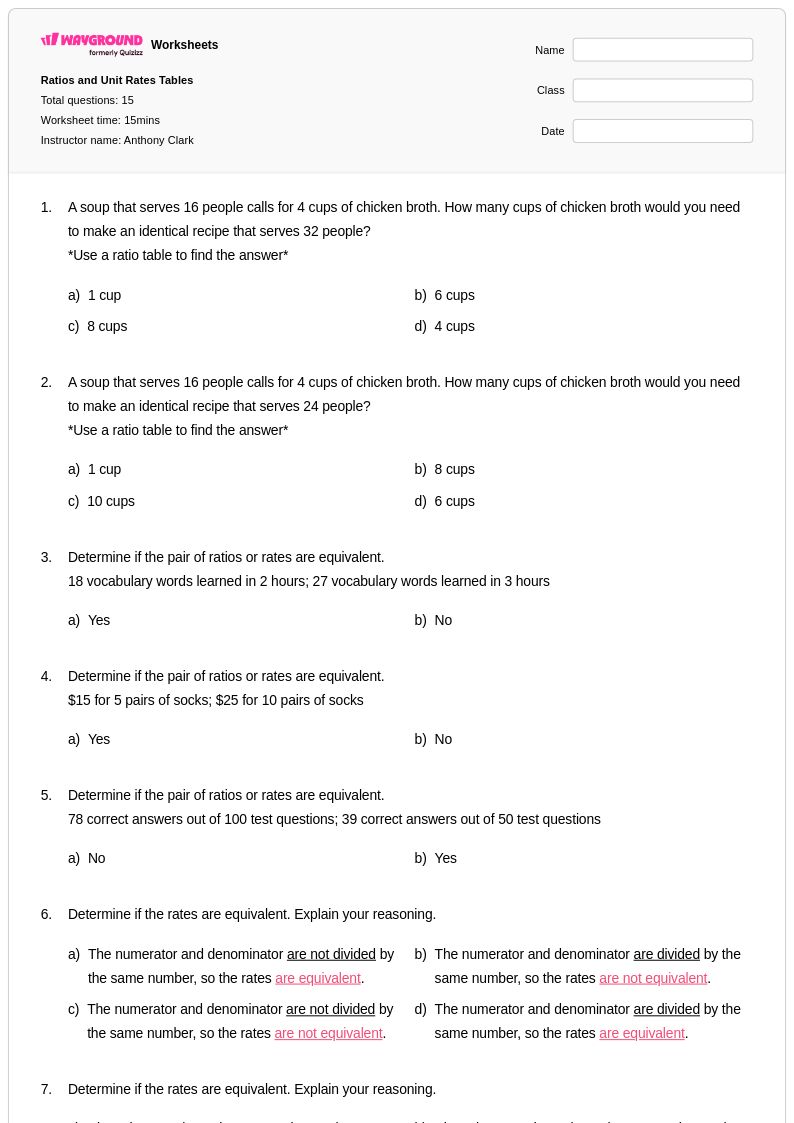
15 Q
6th - Uni
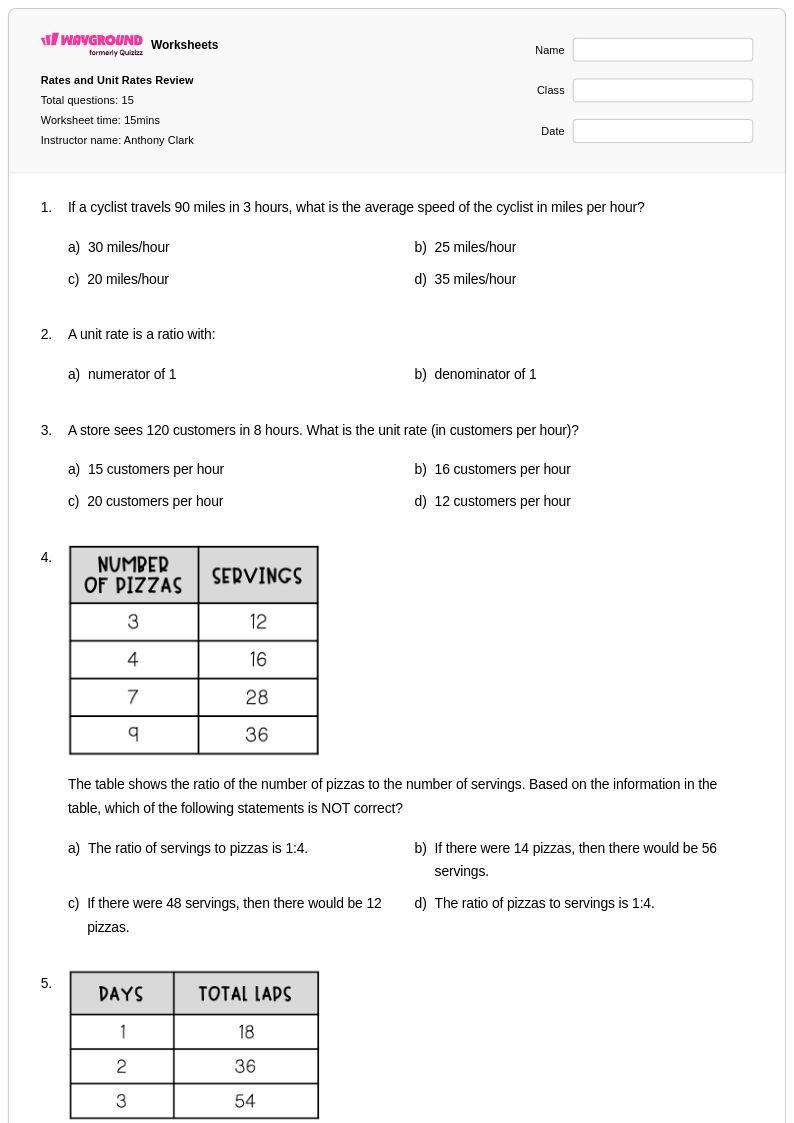
15 Q
7th - Uni
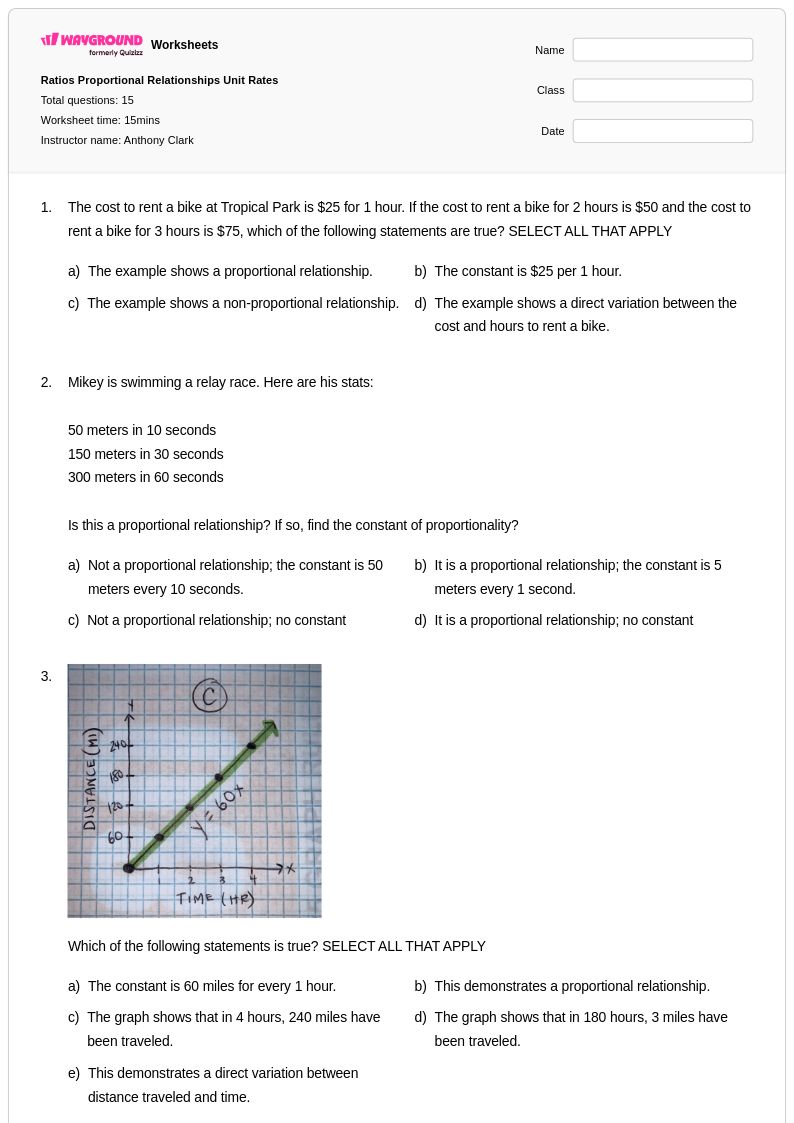
15 Q
7th - Uni
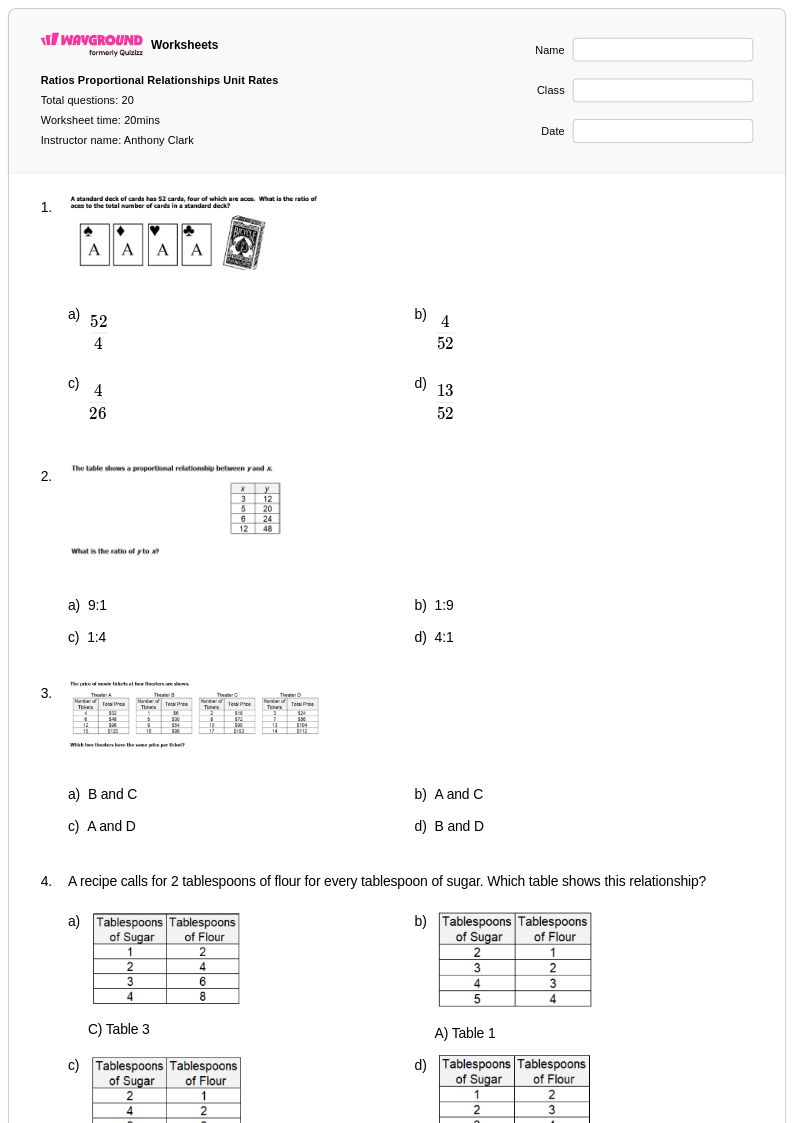
20 Q
7th - Uni
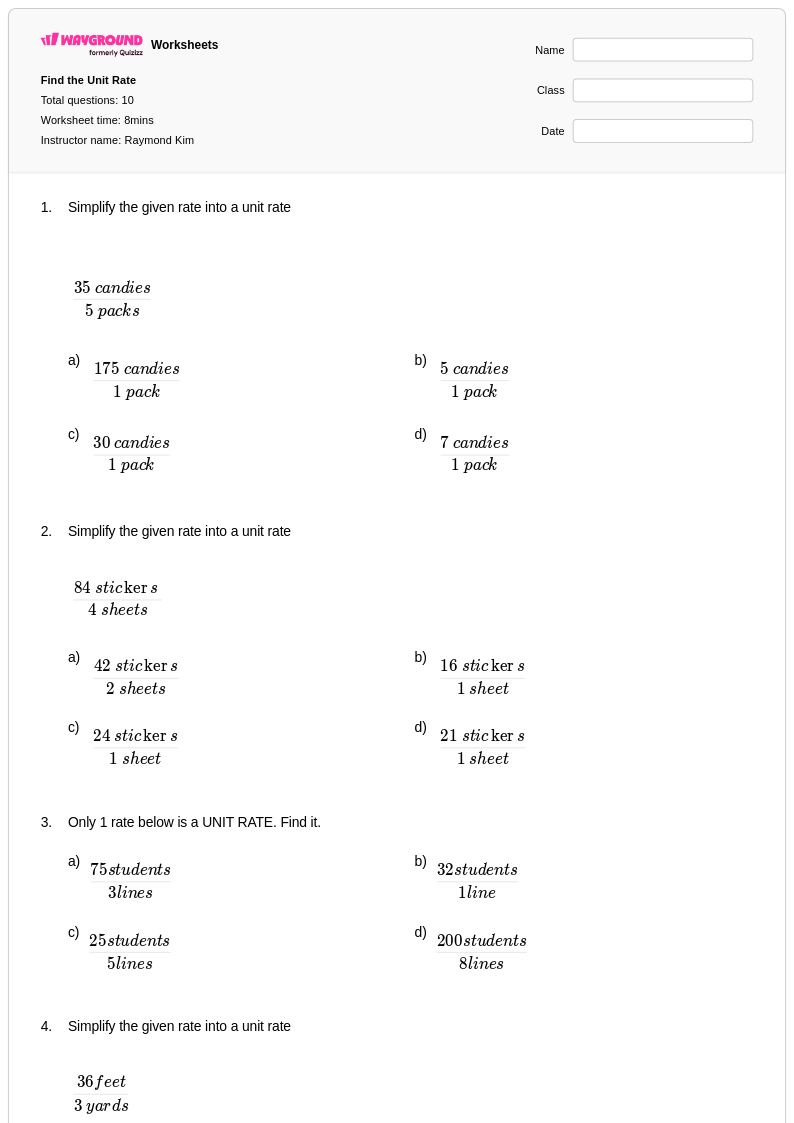
10 Q
6th - 9th
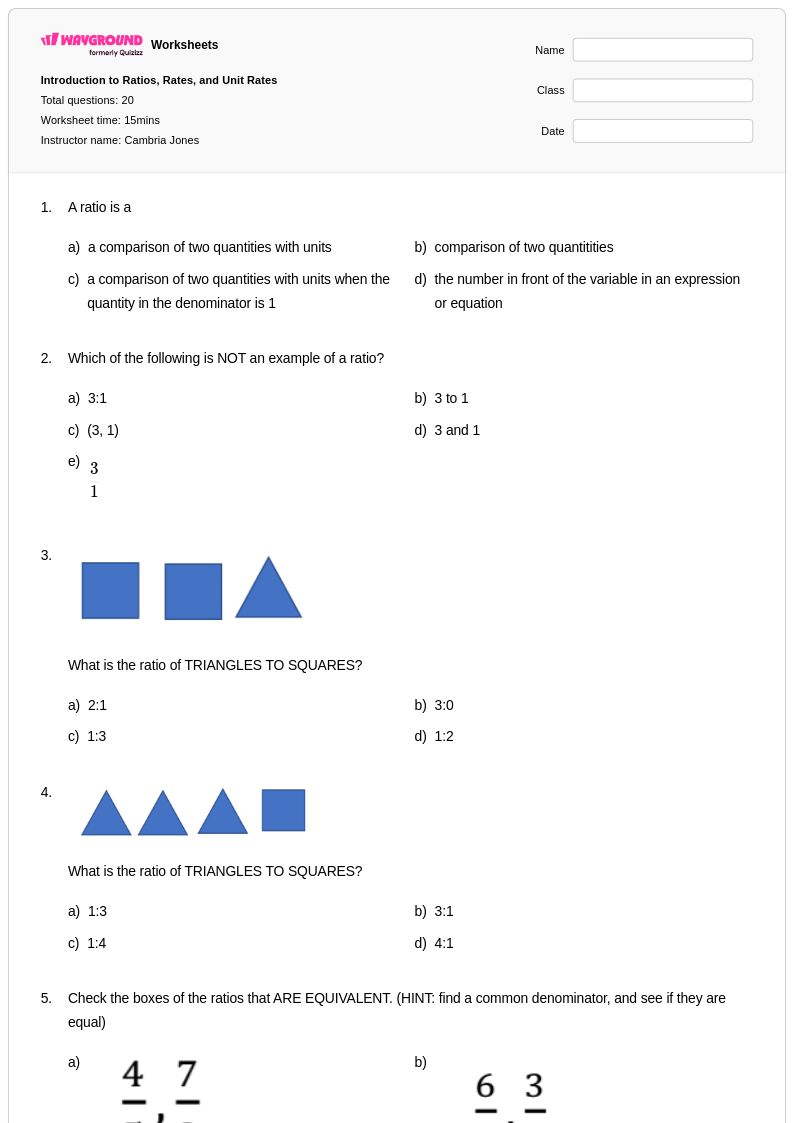
20 Q
6th - 8th
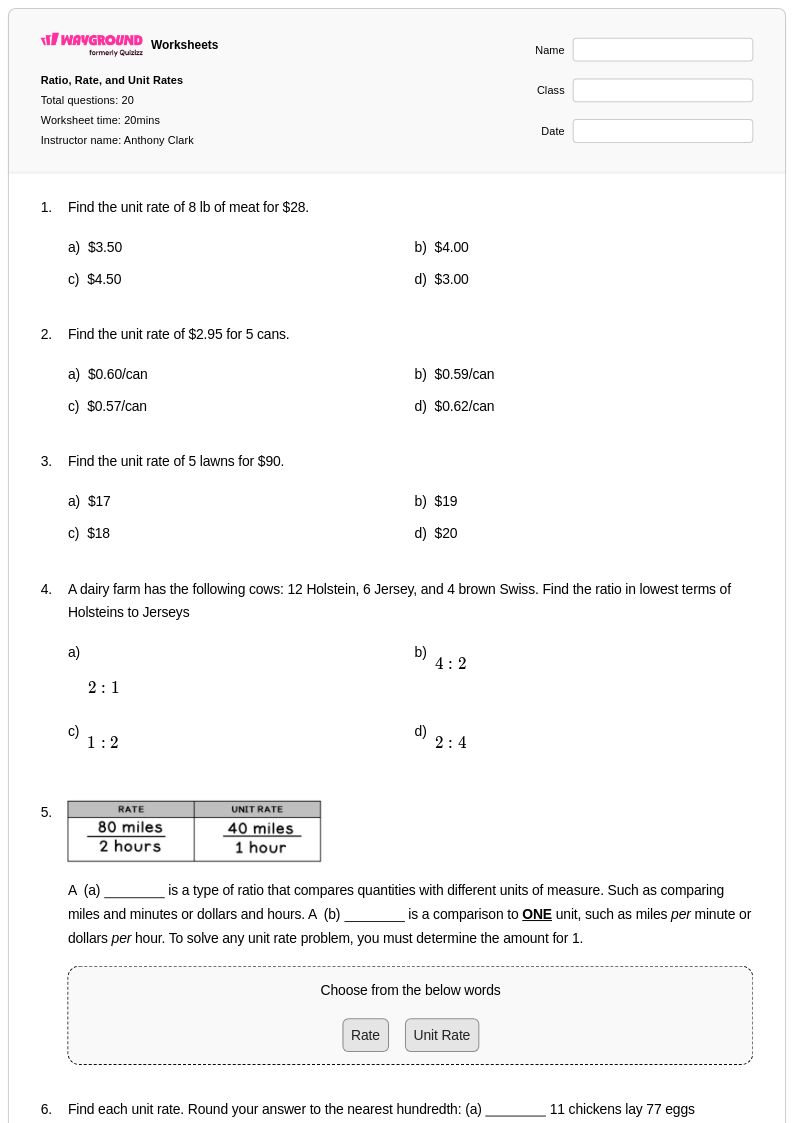
20 Q
6th - Uni
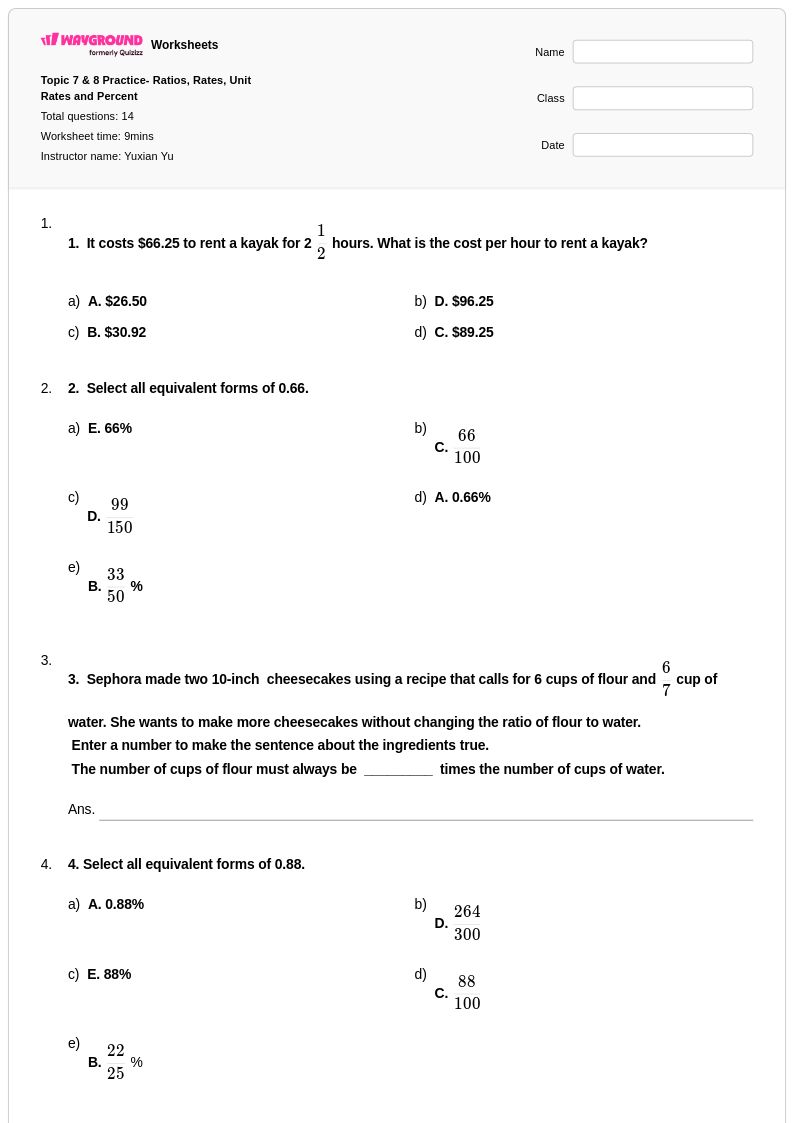
14 Q
6th - 8th
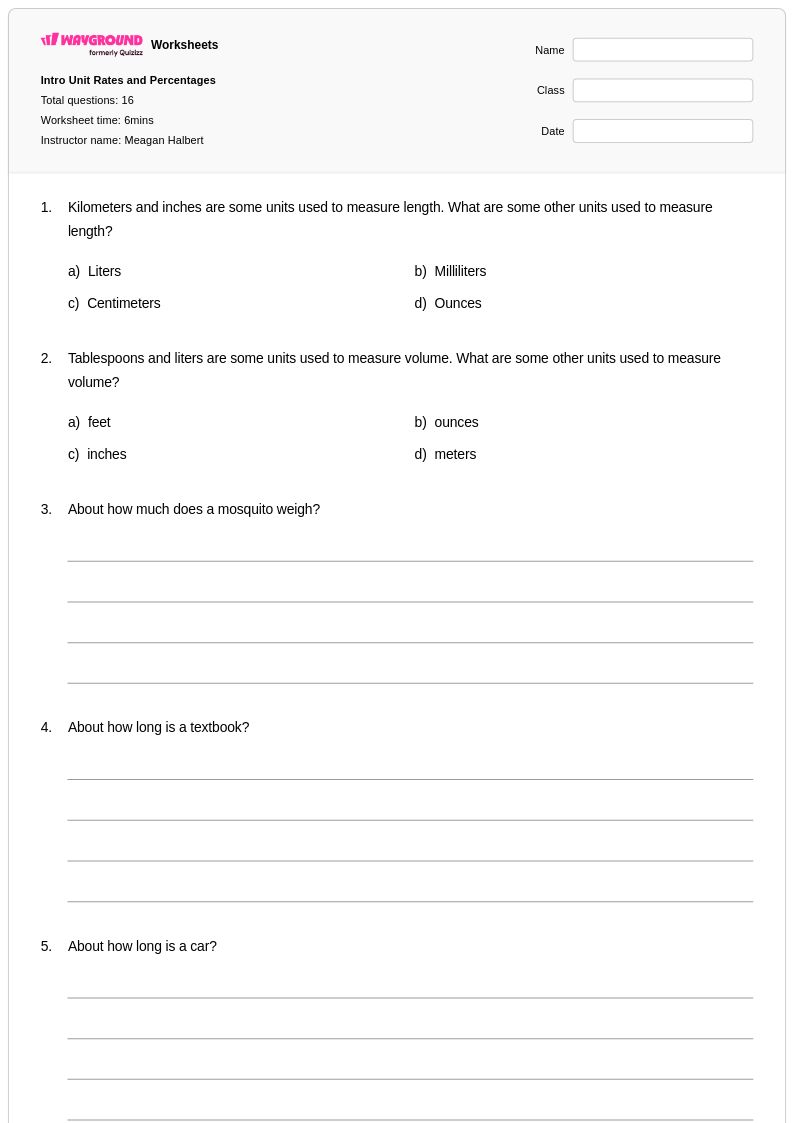
16 Q
6th - Uni
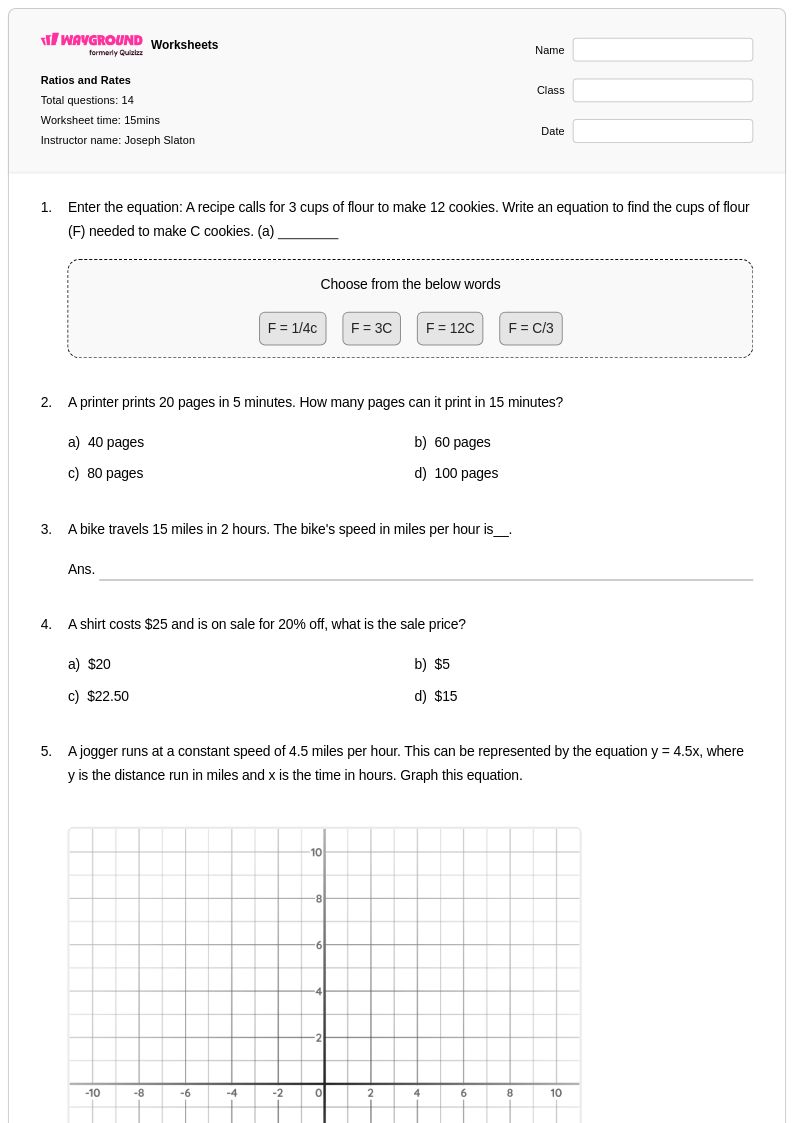
14 Q
6th - 8th
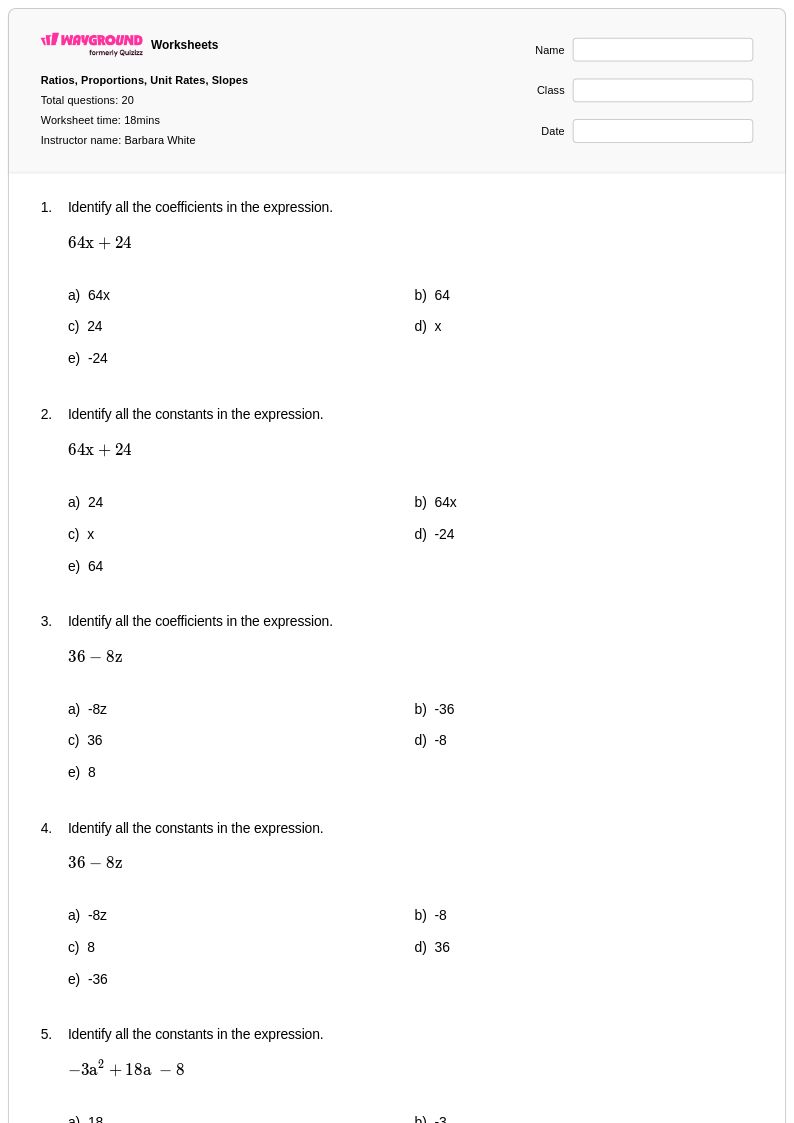
20 Q
6th - 8th
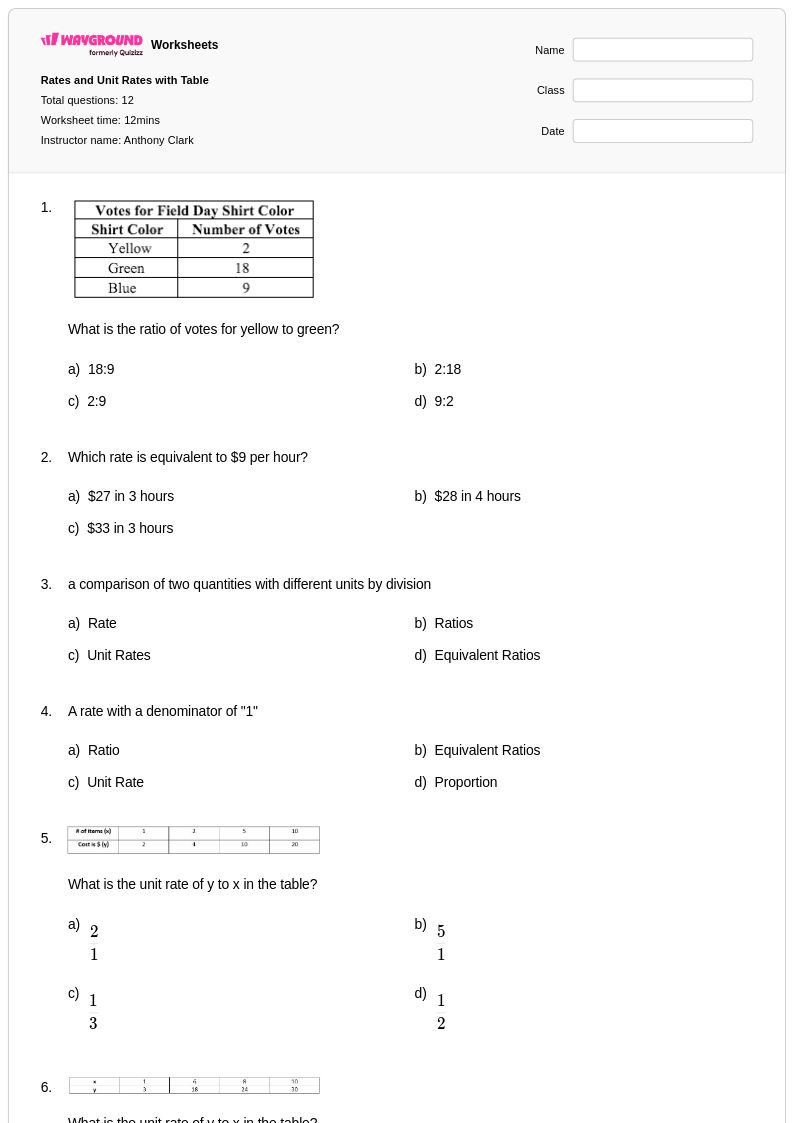
12 Q
6th - Uni
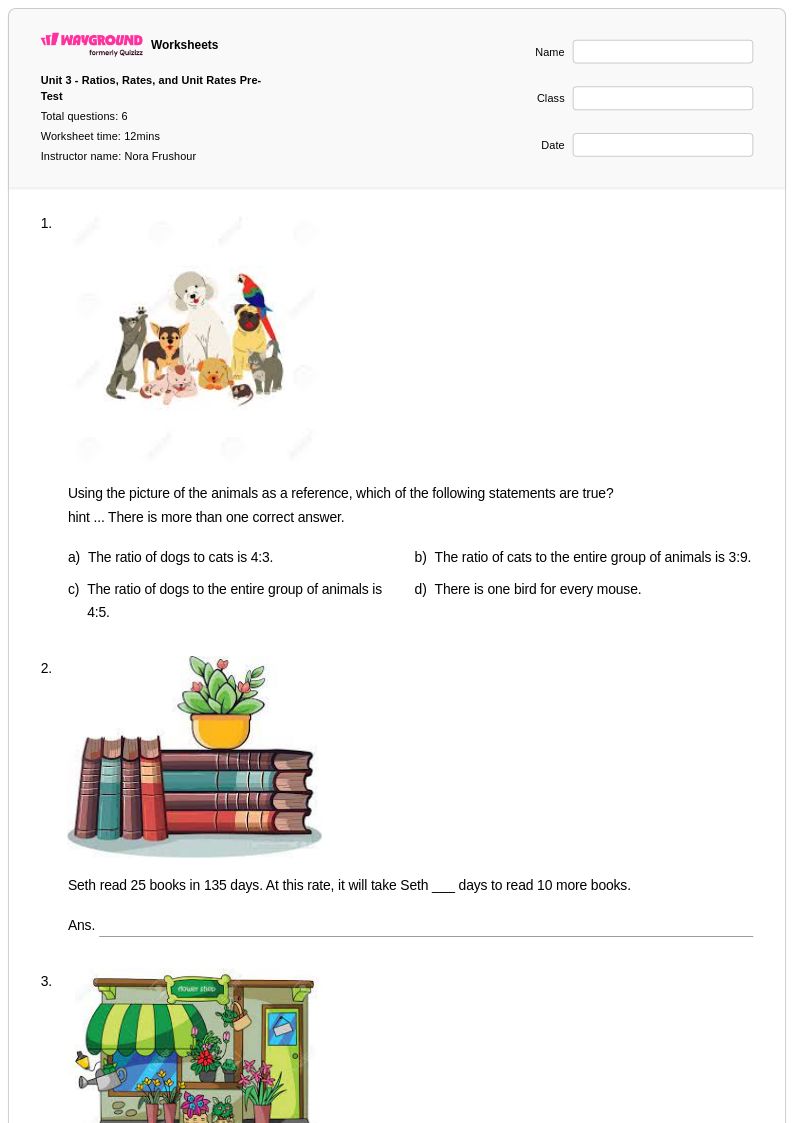
6 Q
6th - 8th
Explore Other Subject Worksheets for grade 8
Explore printable Unit Rates worksheets for Grade 8
Unit rates worksheets for Grade 8 students available through Wayground (formerly Quizizz) provide comprehensive practice in calculating and applying rates with a denominator of one, a fundamental concept that bridges basic ratio understanding with real-world mathematical applications. These carefully designed practice problems strengthen students' ability to convert complex rates into simplified unit rates, compare different rates effectively, and solve multi-step problems involving speed, price per unit, and other practical scenarios. Each worksheet collection includes detailed answer keys that support both independent study and classroom instruction, with free printable pdf formats that allow teachers to distribute materials seamlessly while ensuring students master this essential algebraic thinking skill.
Wayground (formerly Quizizz) empowers educators with millions of teacher-created unit rate resources that streamline lesson planning and differentiate instruction for diverse Grade 8 mathematics classrooms. The platform's robust search and filtering capabilities enable teachers to locate worksheets aligned with specific curriculum standards, while customization tools allow for modification of difficulty levels, problem types, and format preferences to meet individual student needs. Available in both printable and digital pdf formats, these worksheet collections support targeted remediation for struggling learners, enrichment opportunities for advanced students, and consistent skill practice across various learning environments, ensuring that all students develop confidence in working with unit rates as they progress toward more complex proportional reasoning concepts.