
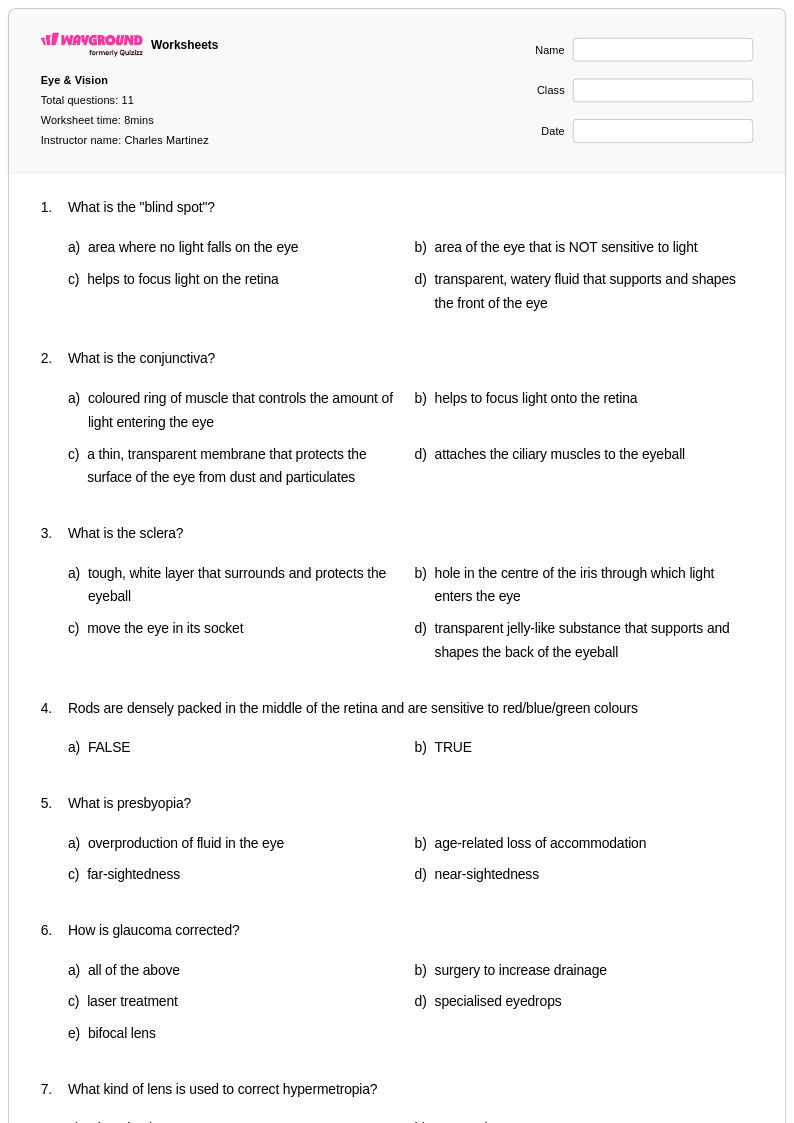
11 Q
11th
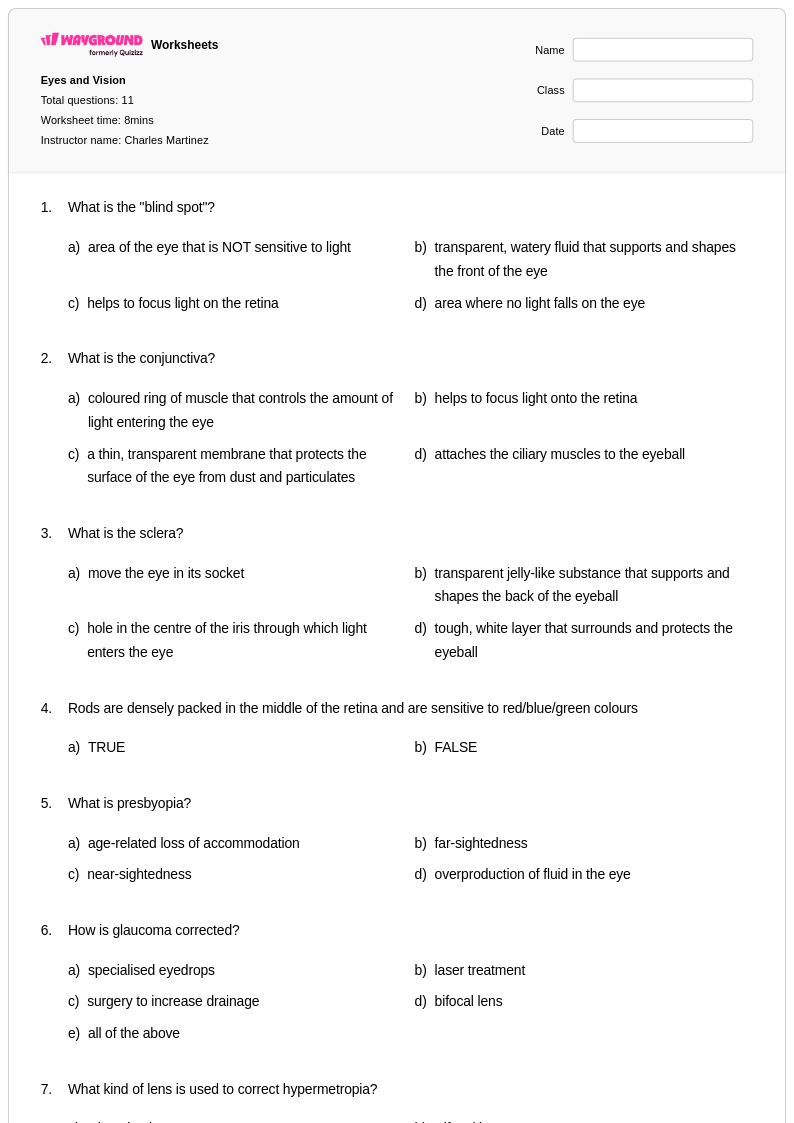
11 Q
11th

16 Q
11th
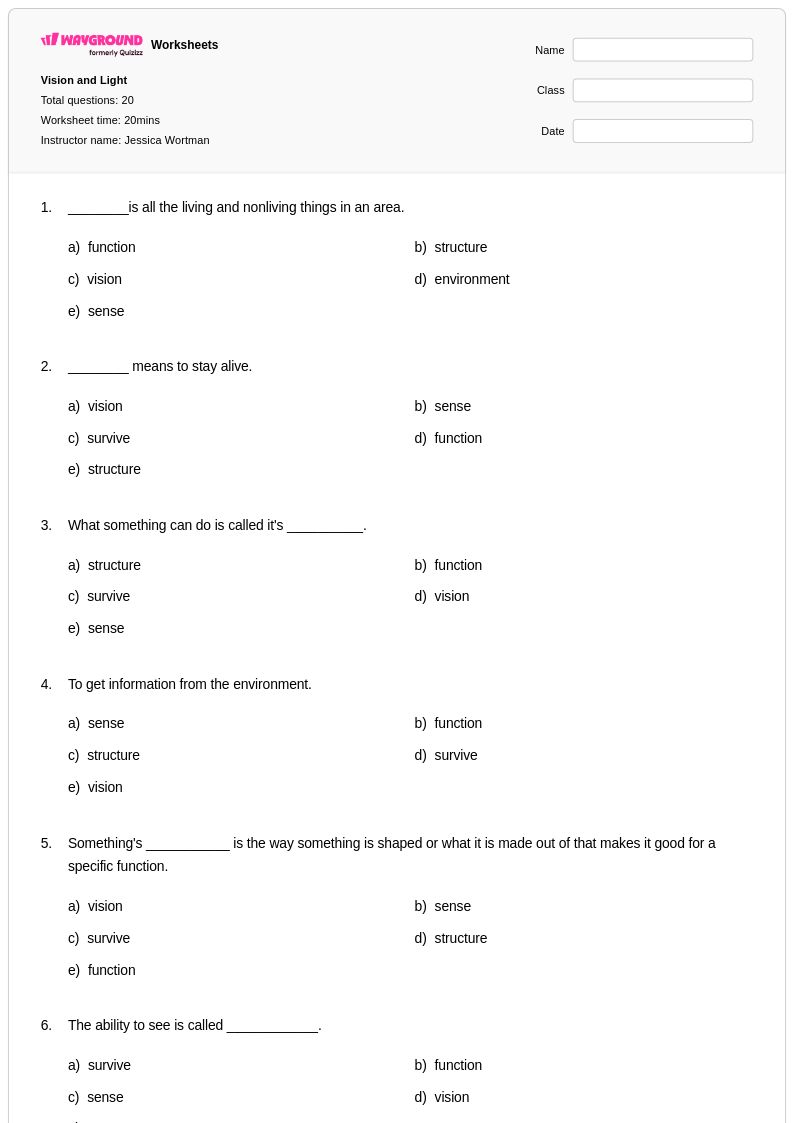
20 Q
4th - Uni
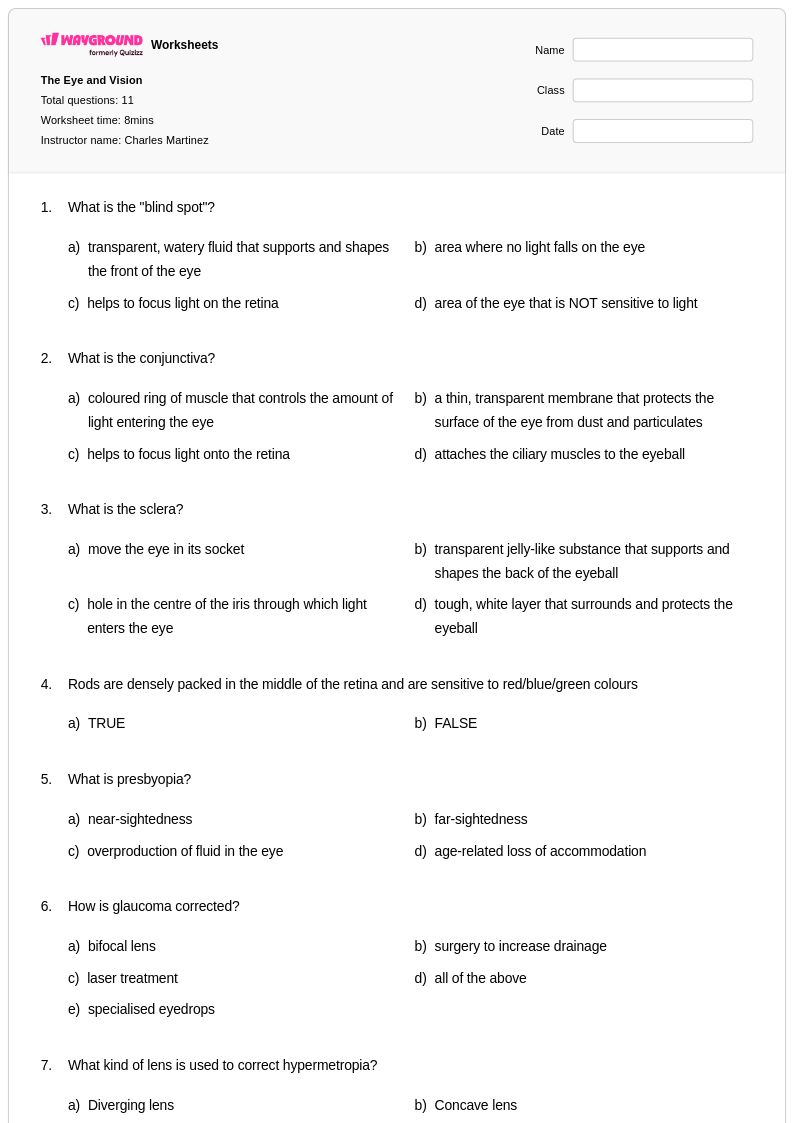
11 Q
11th
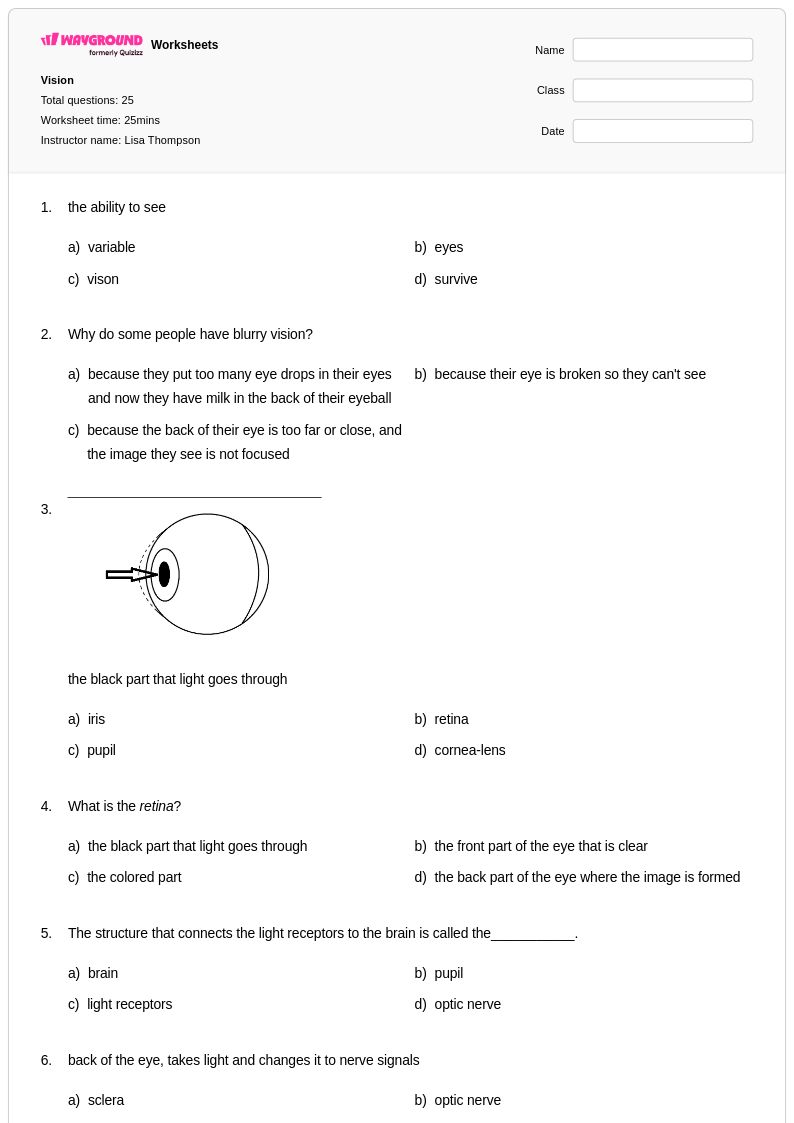
25 Q
4th - Uni
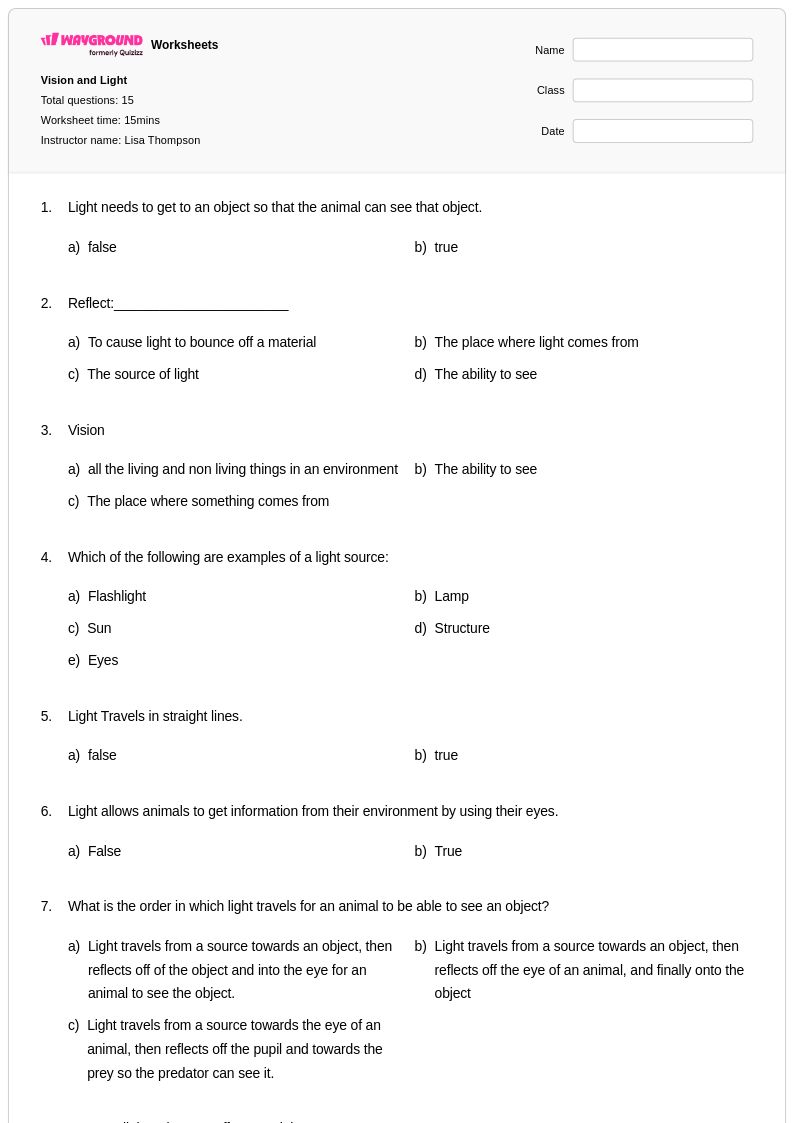
15 Q
4th - Uni
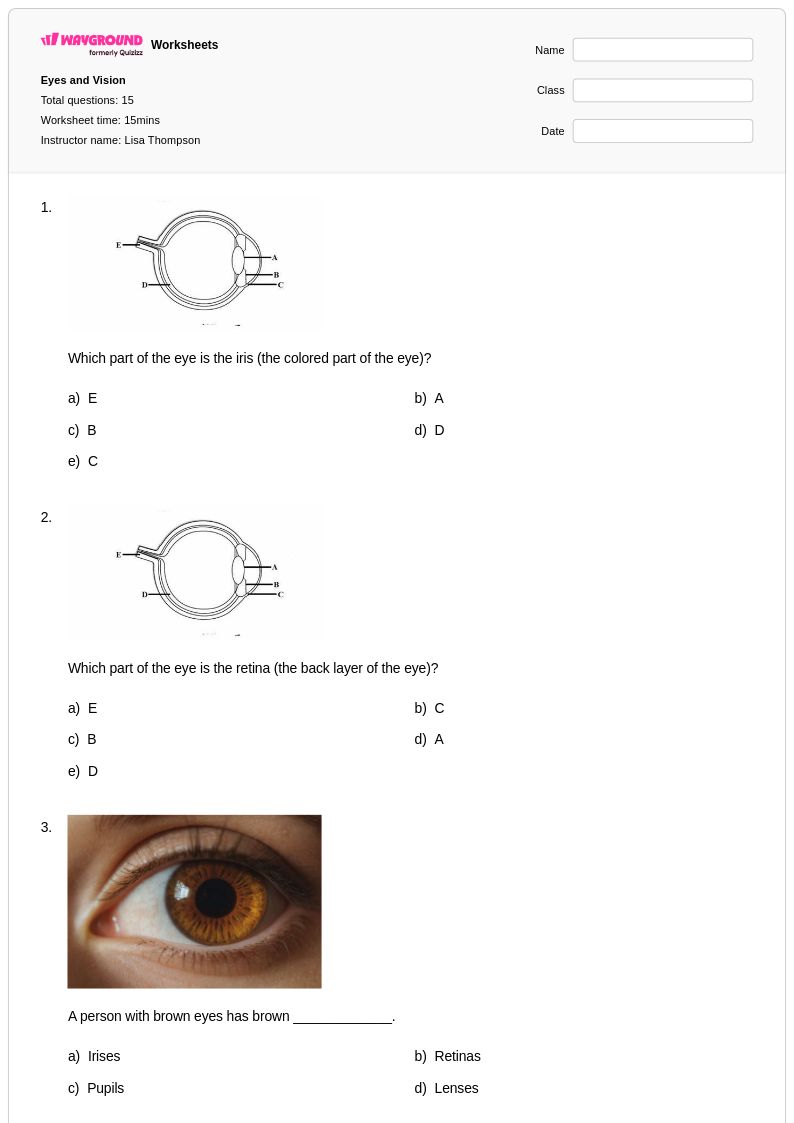
15 Q
4th - Uni
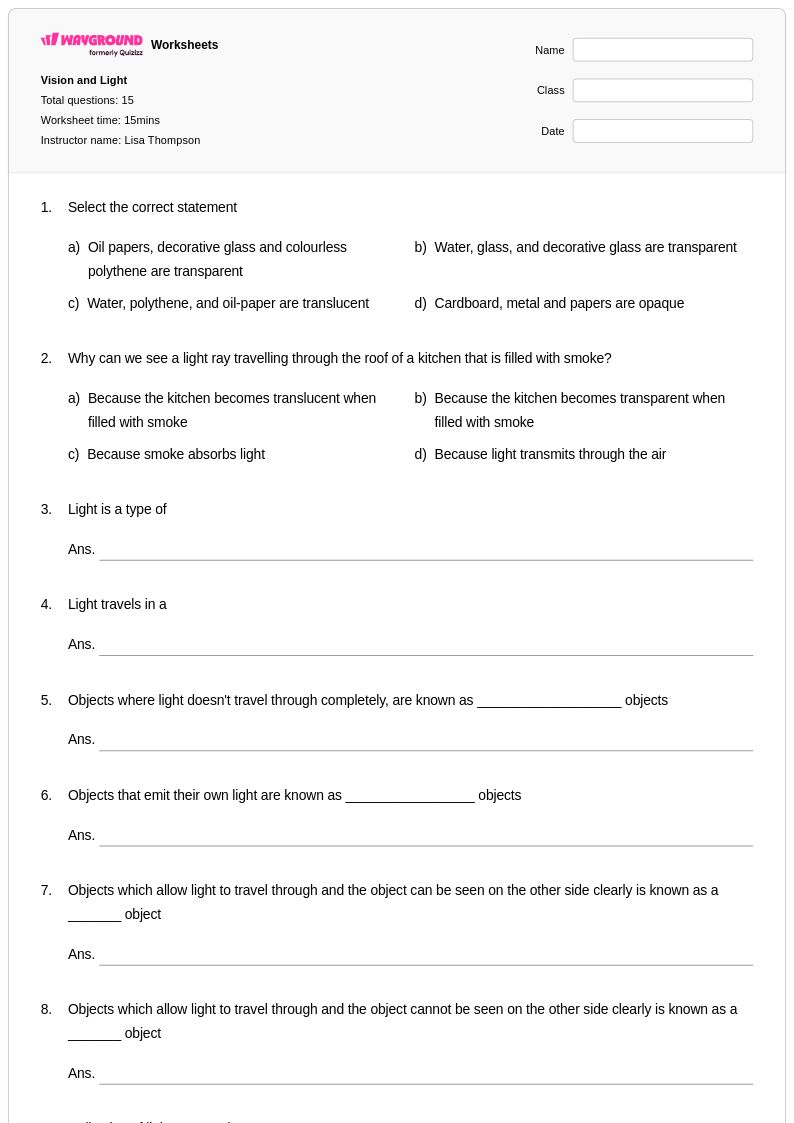
15 Q
4th - Uni
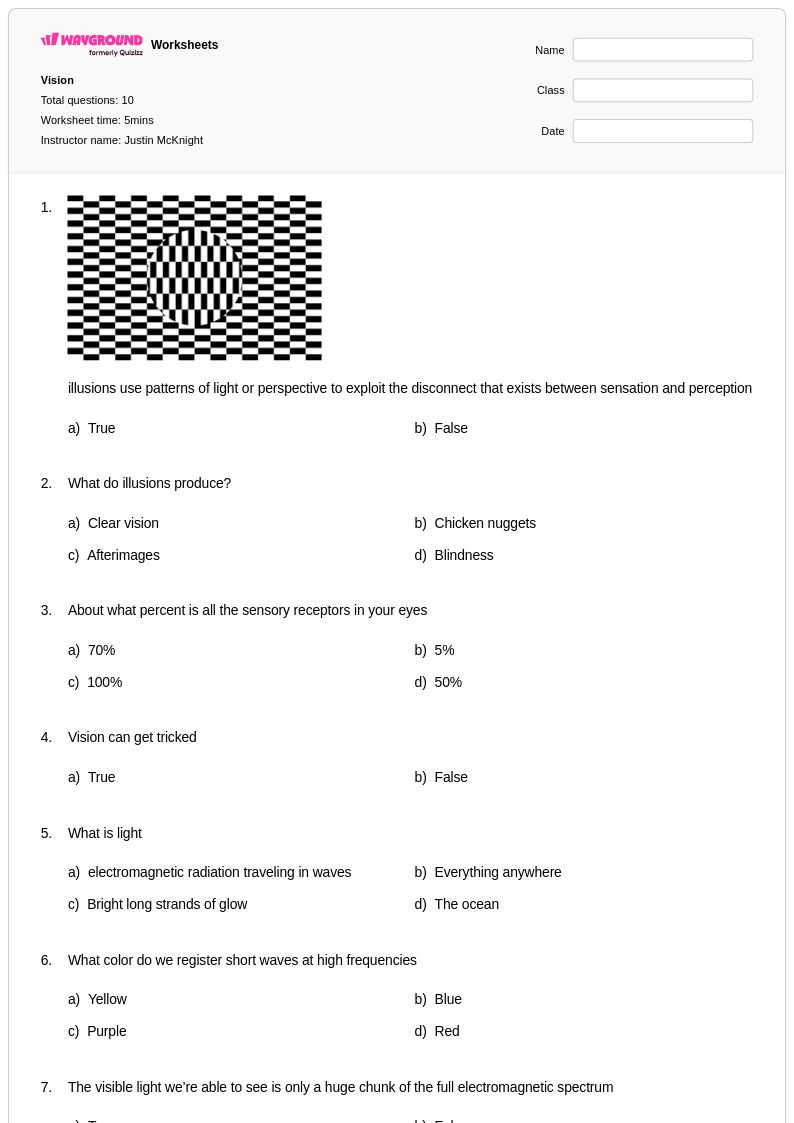
10 Q
7th - PD
18 Q
8th - Uni
20 Q
9th - 12th
25 Q
11th
11 Q
10th - 11th
12 Q
11th - 12th
25 Q
4th - Uni
25 Q
4th - Uni
20 Q
10th - 12th
15 Q
4th - Uni
16 Q
10th - 12th
20 Q
6th - 12th
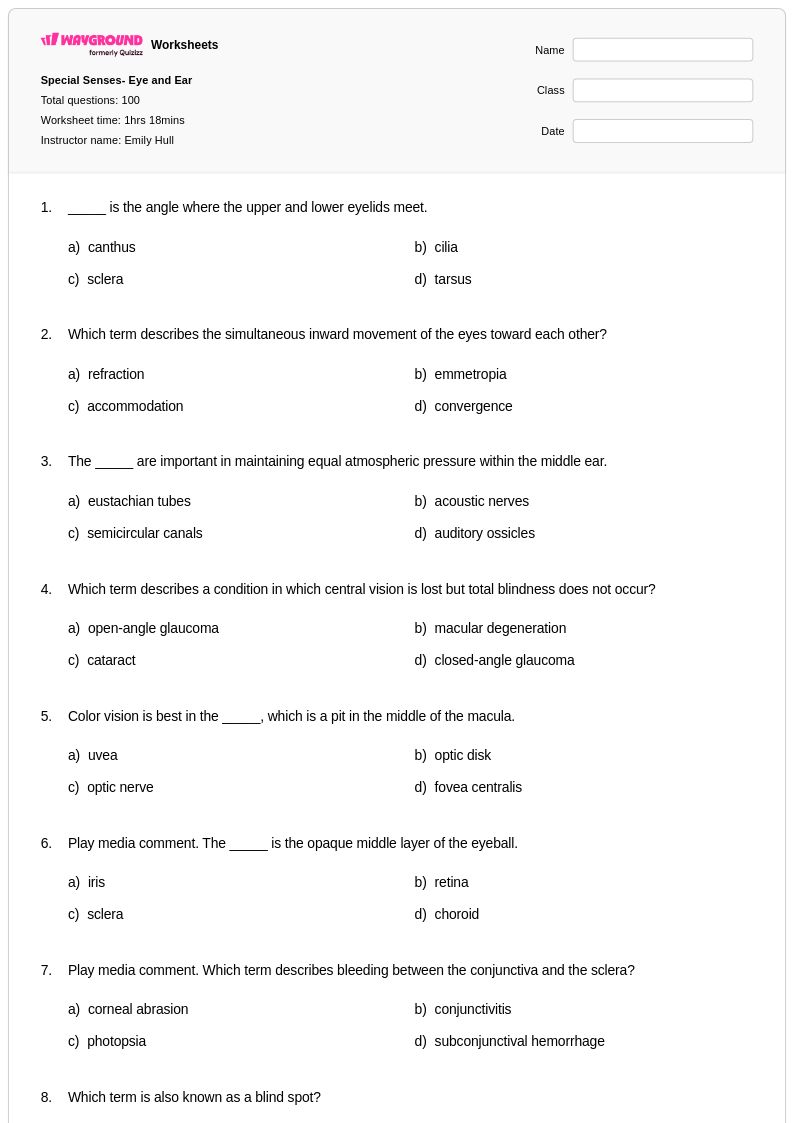
100 Q
9th - 12th
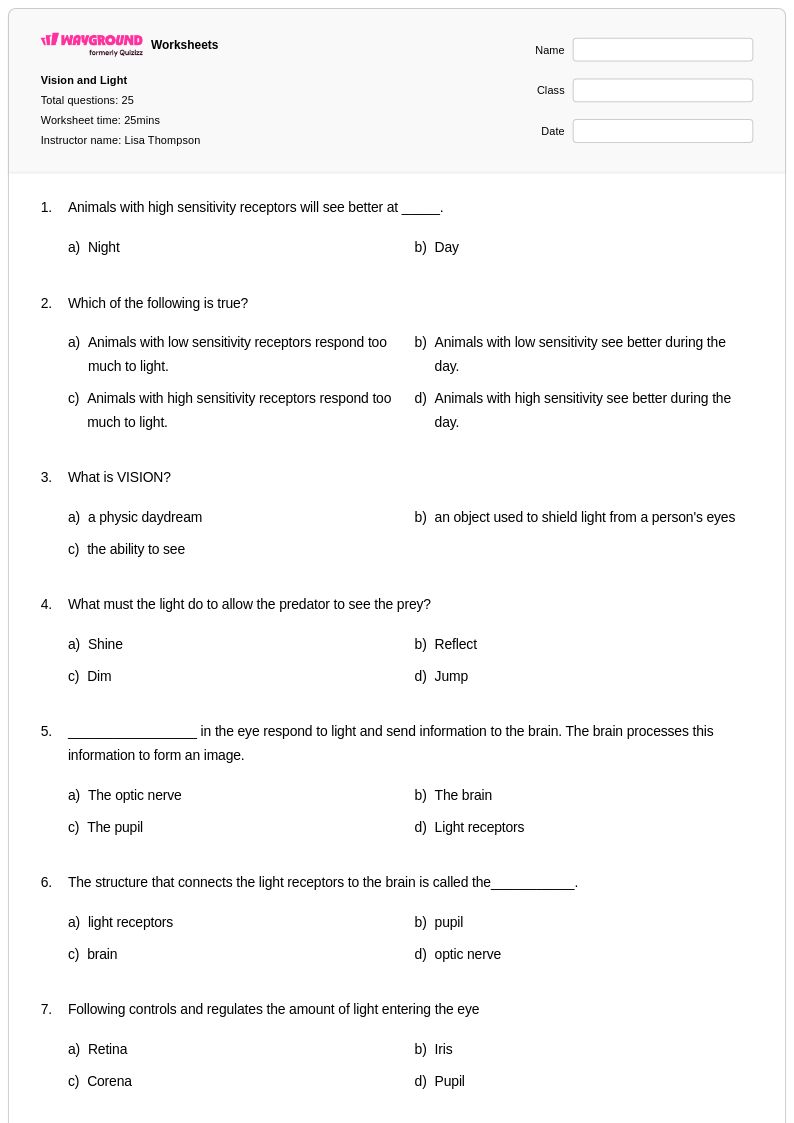
25 Q
4th - Uni
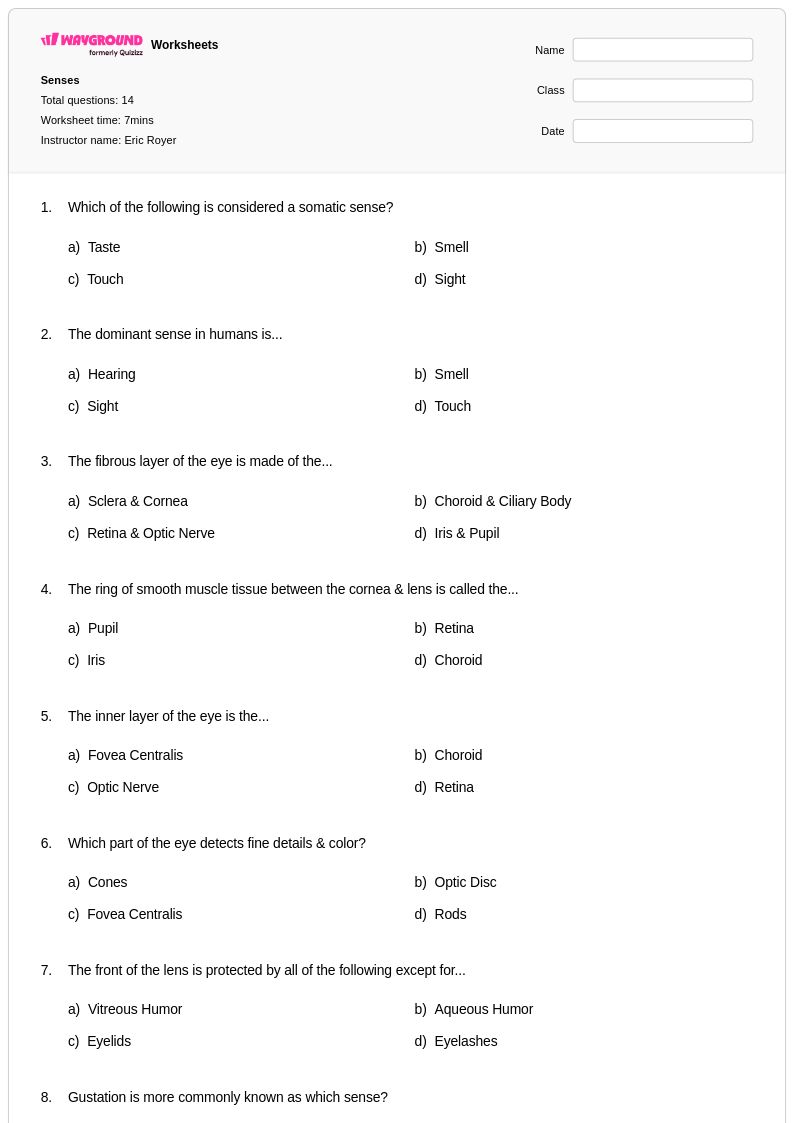
14 Q
9th - 12th
Explore Other Subject Worksheets for grade 11
Explore printable Vision worksheets for Grade 11
Vision worksheets for Grade 11 students available through Wayground (formerly Quizizz) provide comprehensive coverage of the complex mechanisms underlying human sight and visual perception. These expertly crafted resources guide students through the intricate anatomy of the eye, including detailed exploration of structures such as the cornea, lens, retina, and optic nerve, while examining how these components work together to process light and create visual images. The worksheets strengthen critical thinking skills by challenging students to analyze the pathway of light through the eye, understand accommodation and refraction processes, and explore common vision disorders like myopia, hyperopia, and astigmatism. Students engage with practice problems that require them to diagram visual pathways, calculate focal lengths, and explain the physiological basis of color vision and depth perception. Each worksheet includes a comprehensive answer key and is available as a free printable pdf, making these valuable resources easily accessible for both classroom instruction and independent study.
Wayground (formerly Quizizz) empowers educators with millions of teacher-created vision worksheets specifically designed for Grade 11 life science instruction, featuring robust search and filtering capabilities that allow teachers to quickly locate materials aligned with specific learning standards and curriculum requirements. The platform's differentiation tools enable instructors to customize worksheet difficulty levels and content focus areas, ensuring that diverse learners can access appropriate challenges whether they need remediation support or enrichment opportunities. Teachers can seamlessly integrate these resources into their lesson planning by selecting from both printable pdf formats for traditional classroom use and digital versions for technology-enhanced learning environments. The extensive collection supports varied instructional approaches, from introductory skill practice exploring basic eye anatomy to advanced problem-solving activities that connect vision science to real-world applications in optometry, ophthalmology, and visual neuroscience, making it an invaluable resource for comprehensive Grade 11 vision education.
FAQs
How do I teach students how the human eye works?
What activities help students practice tracing the path of light through the eye?
What common mistakes do students make when learning about vision and the eye?
How do I explain vision disorders like myopia and hyperopia to students?
How do I use Wayground's vision worksheets in my classroom?
How can I differentiate vision worksheets for students who need extra support or enrichment?