
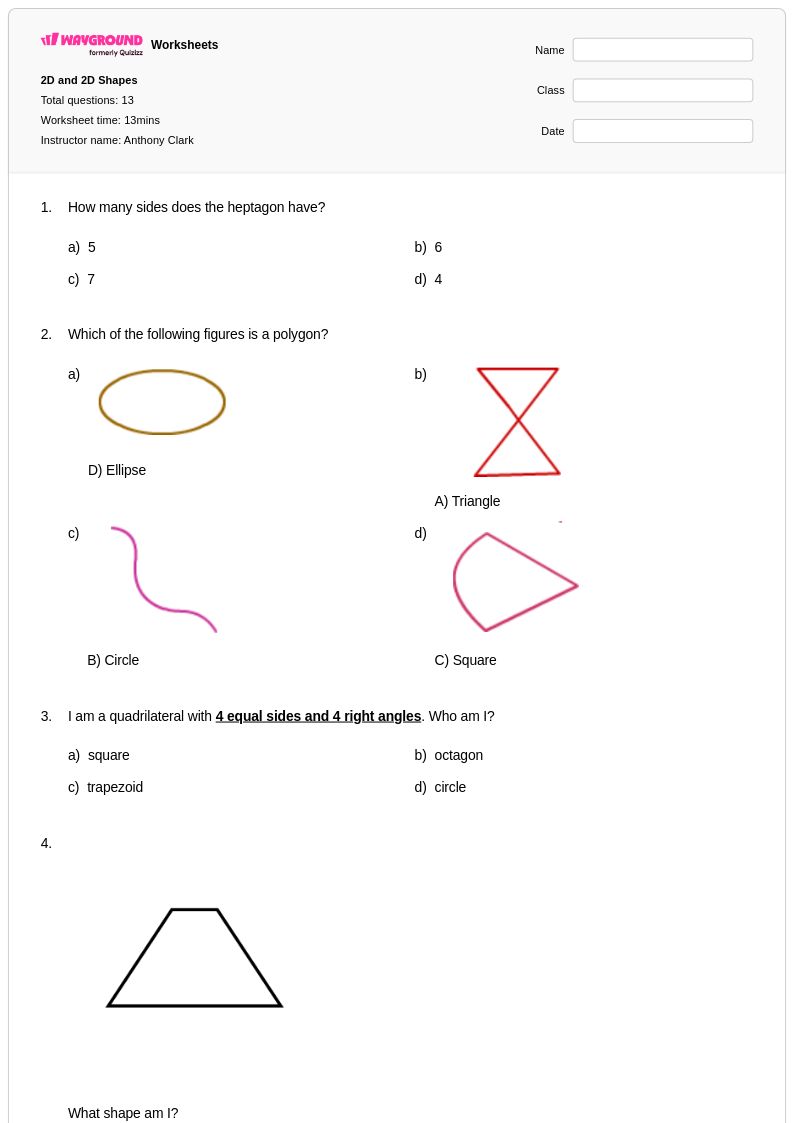
13 Q
1st - Uni
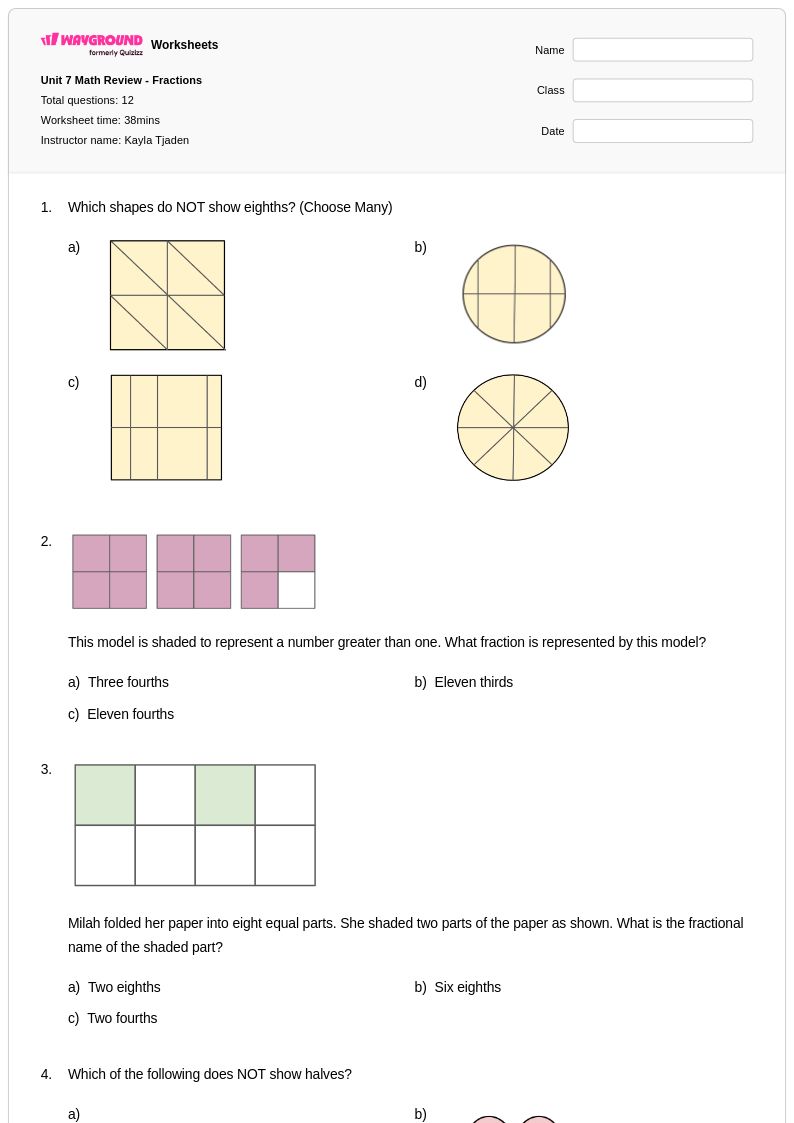
12 Q
2nd
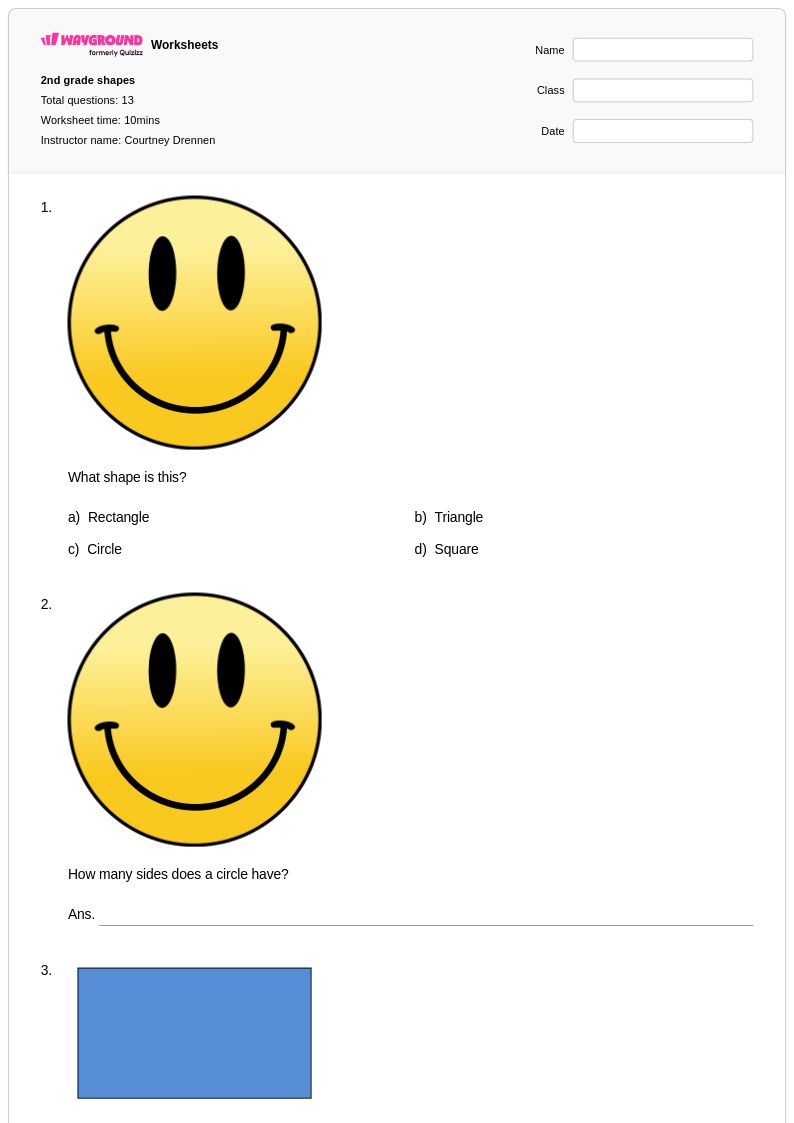
13 Q
2nd
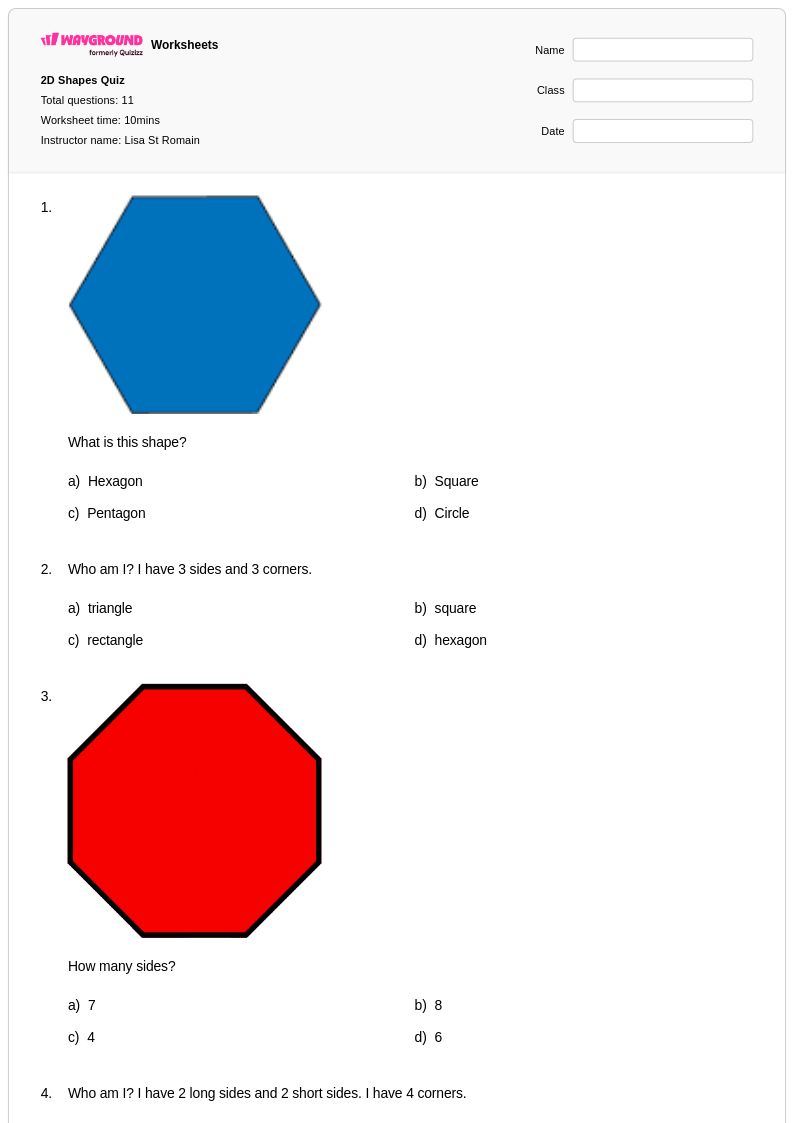
11 Q
1st - 2nd
18 Q
1st - Uni
11 Q
2nd
10 Q
2nd
15 Q
2nd
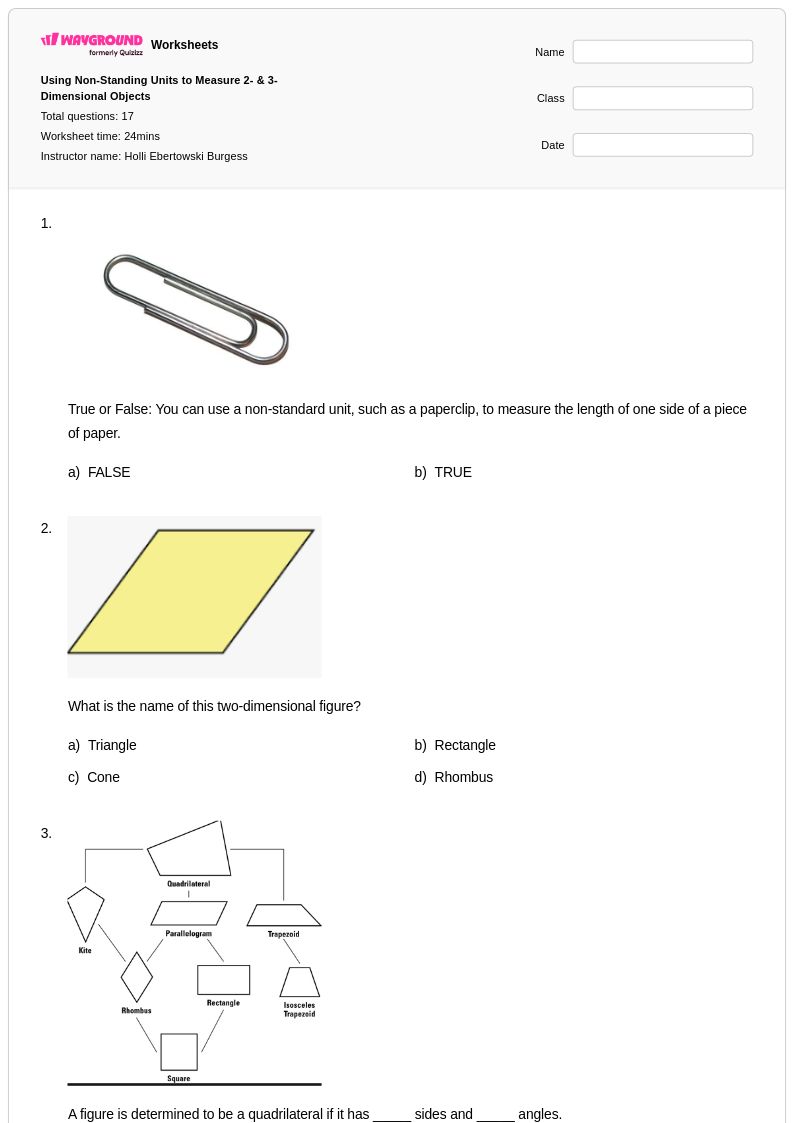
17 Q
2nd - 5th
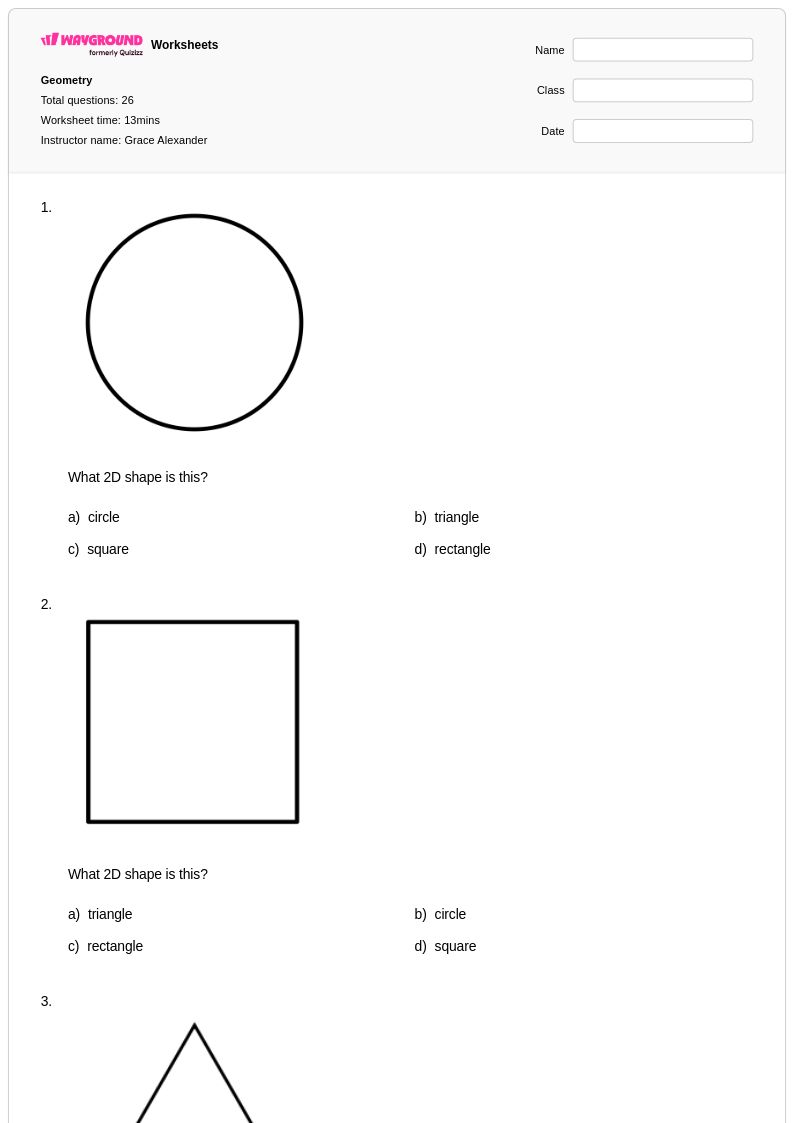
26 Q
2nd
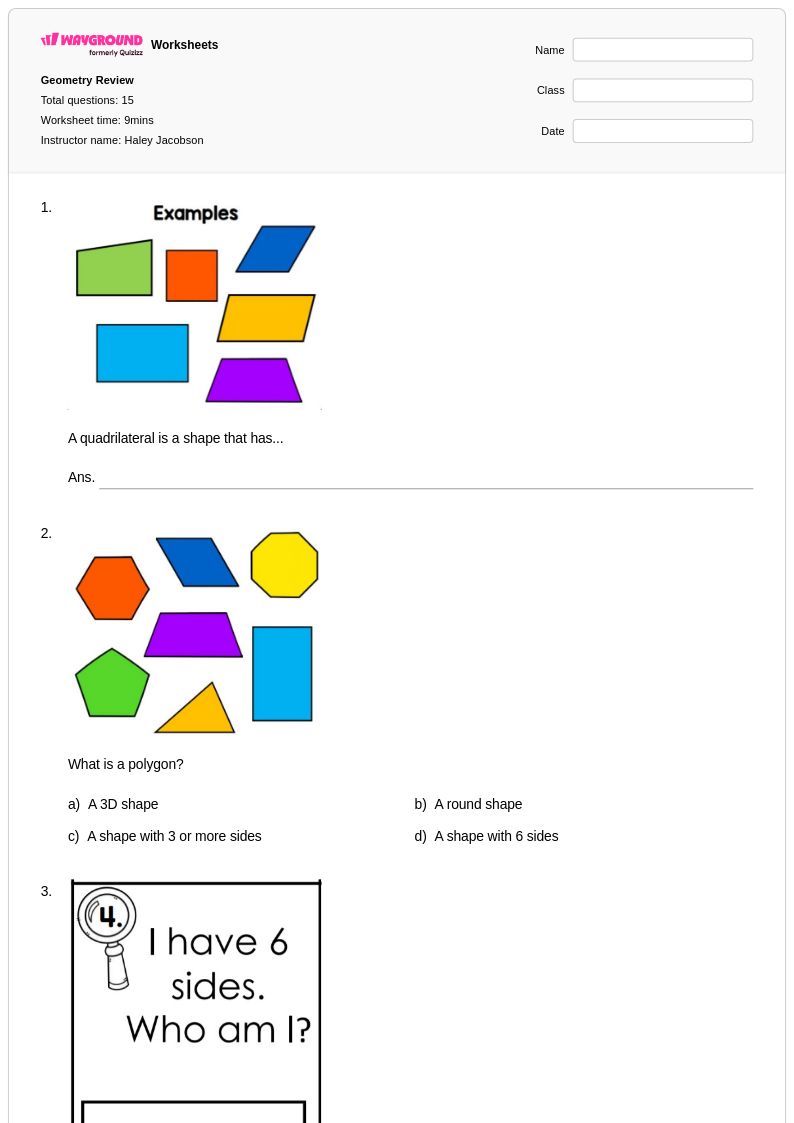
15 Q
2nd
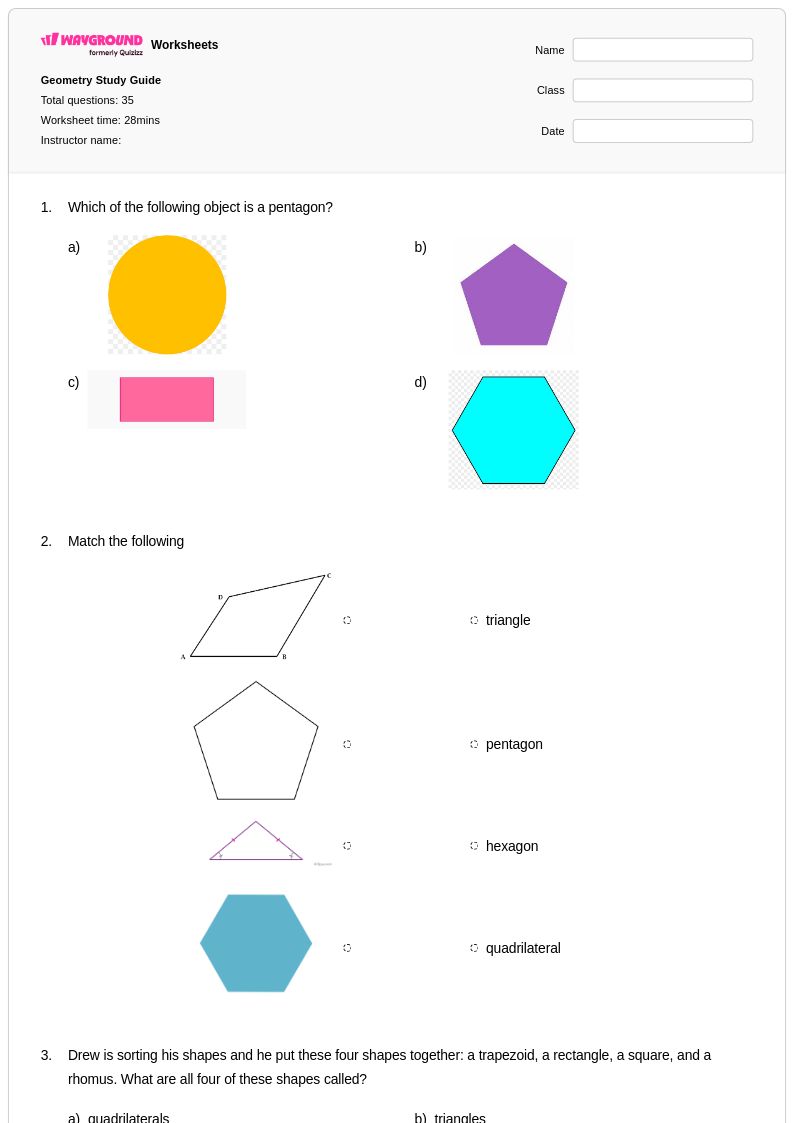
35 Q
2nd
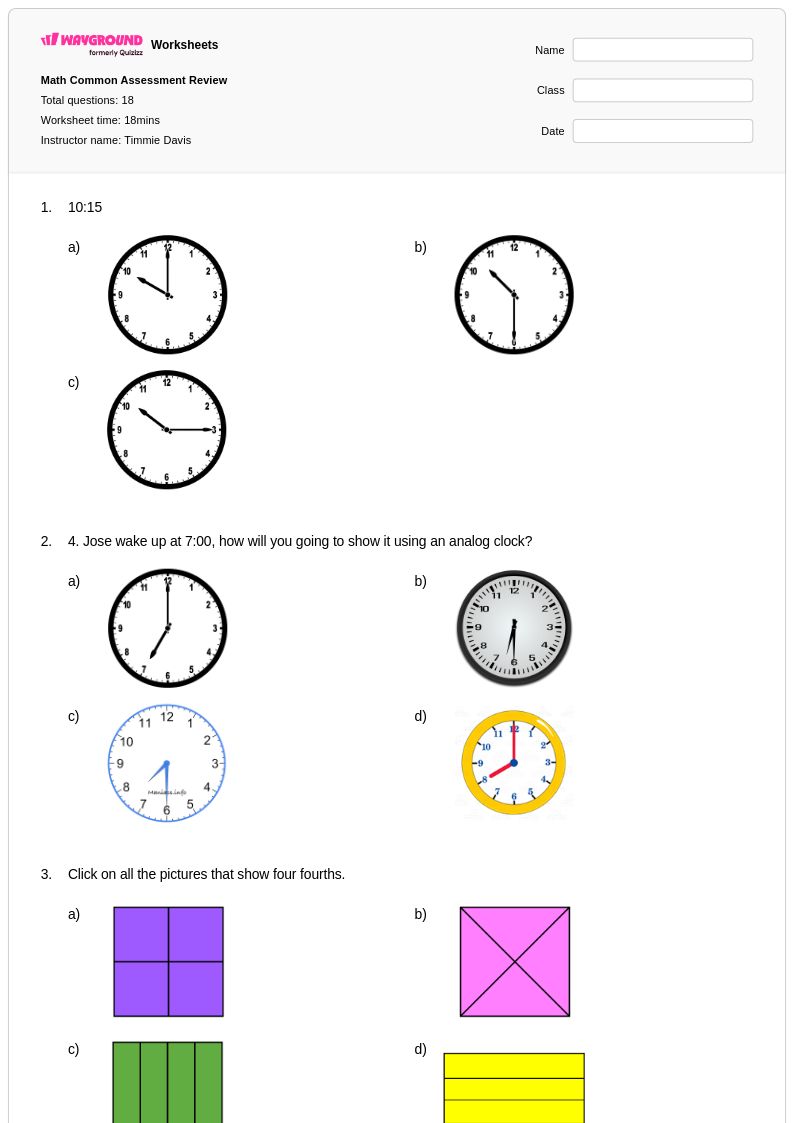
18 Q
2nd
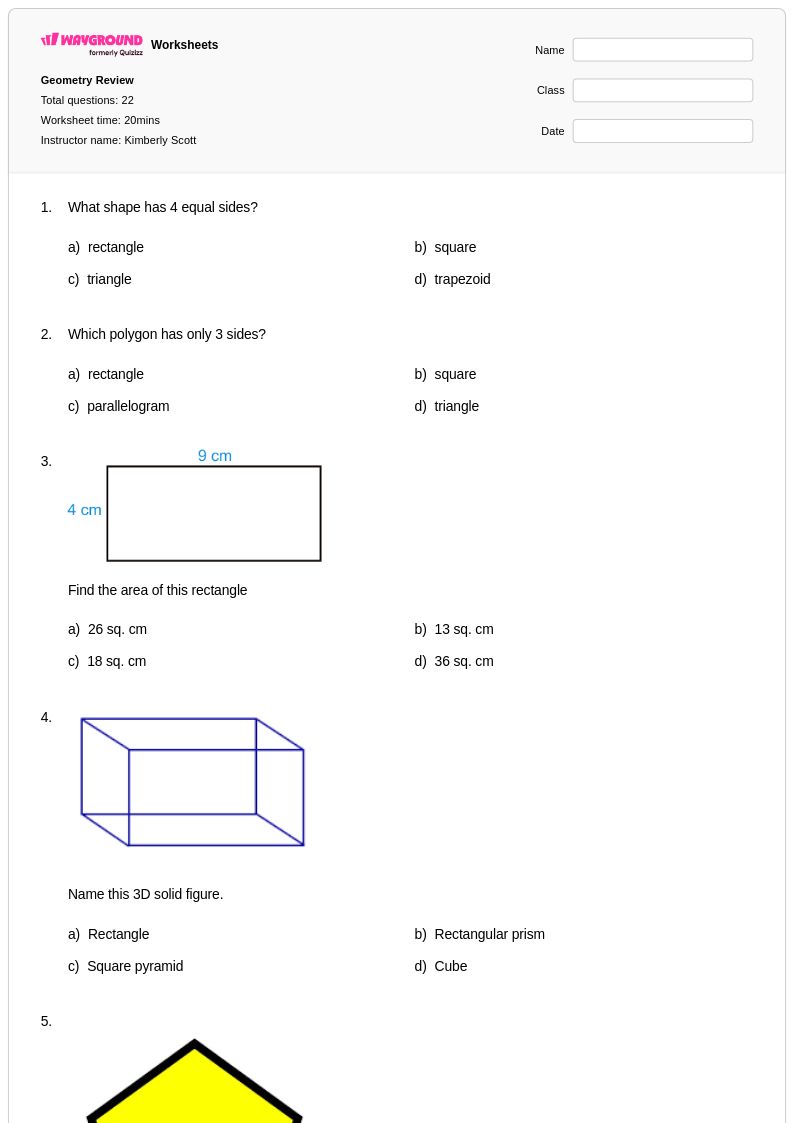
22 Q
2nd
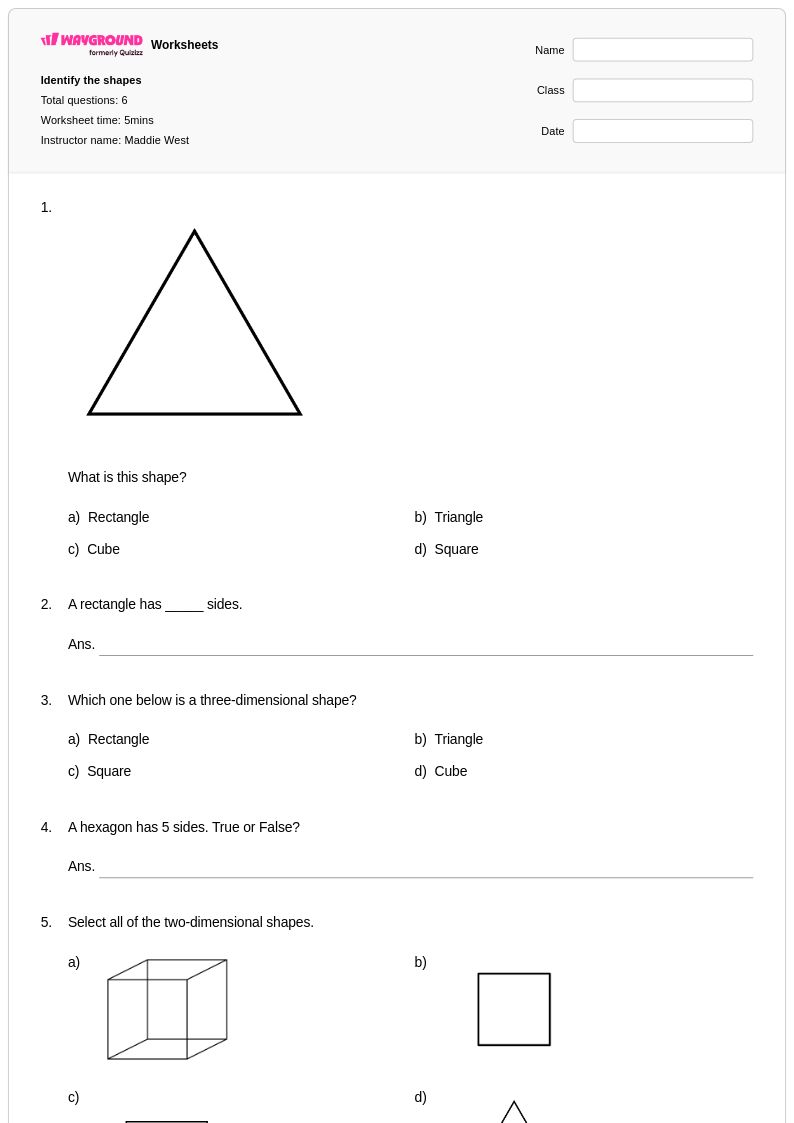
6 Q
2nd
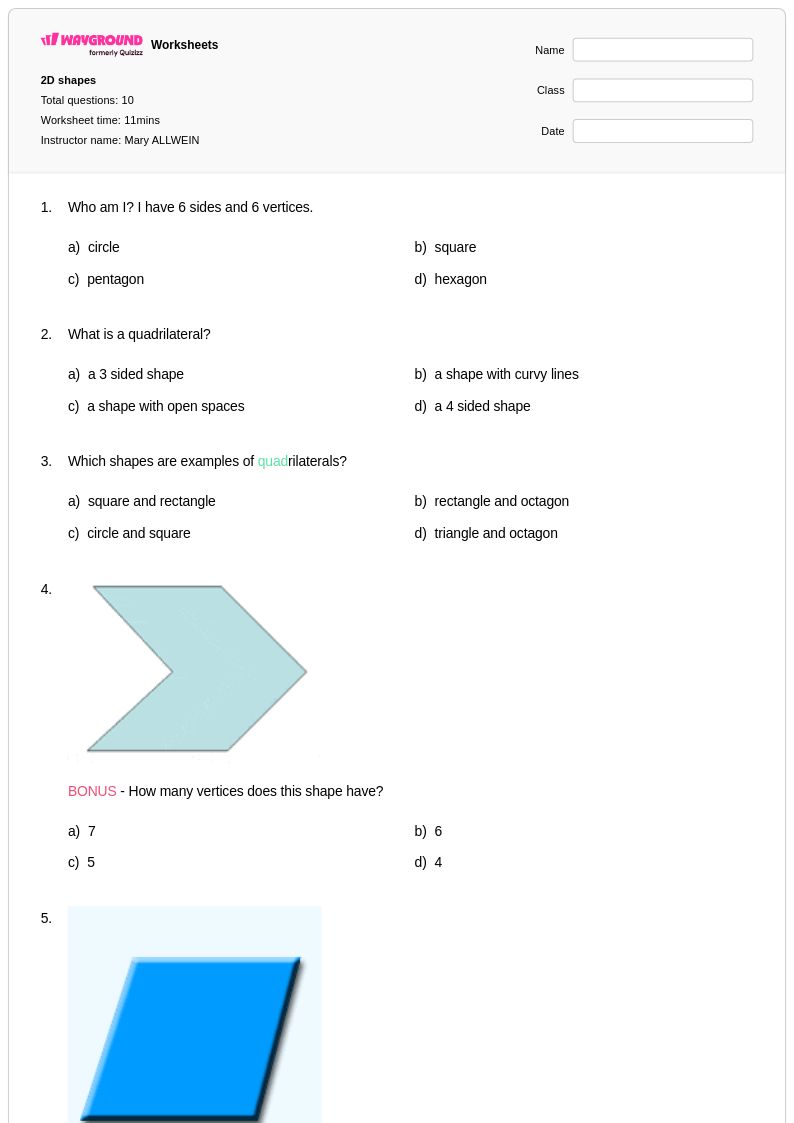
10 Q
2nd - 3rd
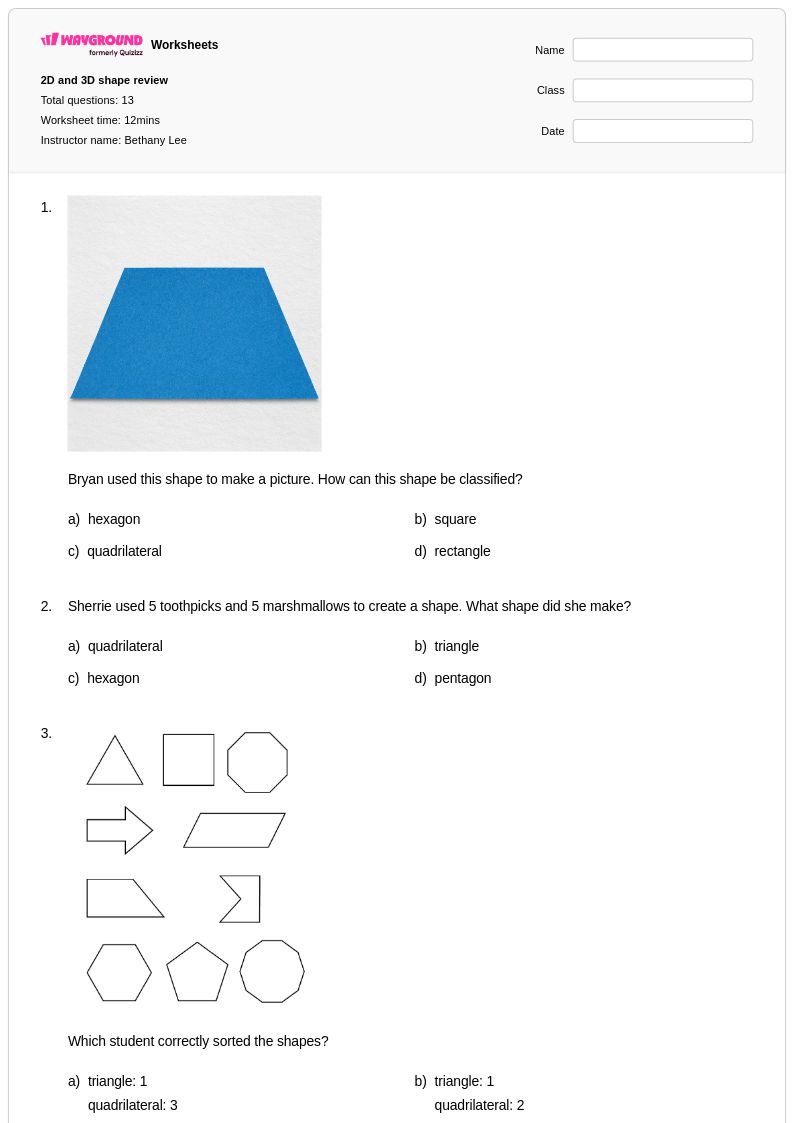
13 Q
2nd
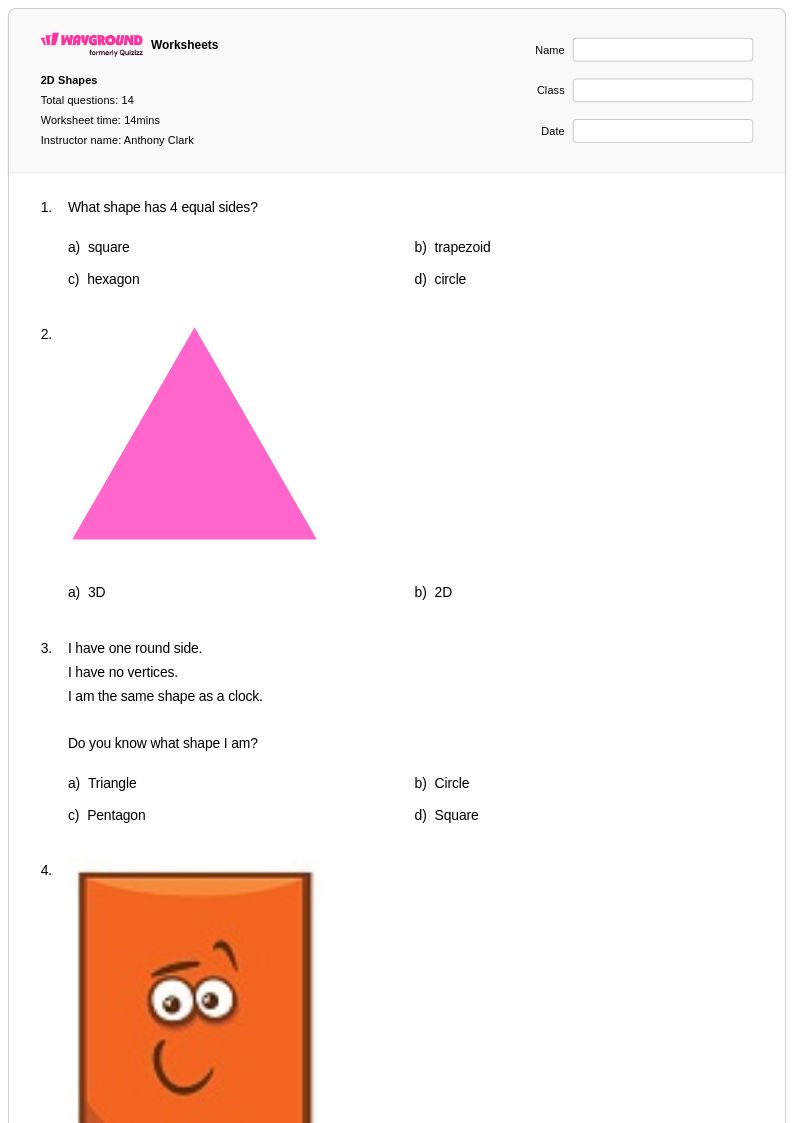
14 Q
1st - Uni
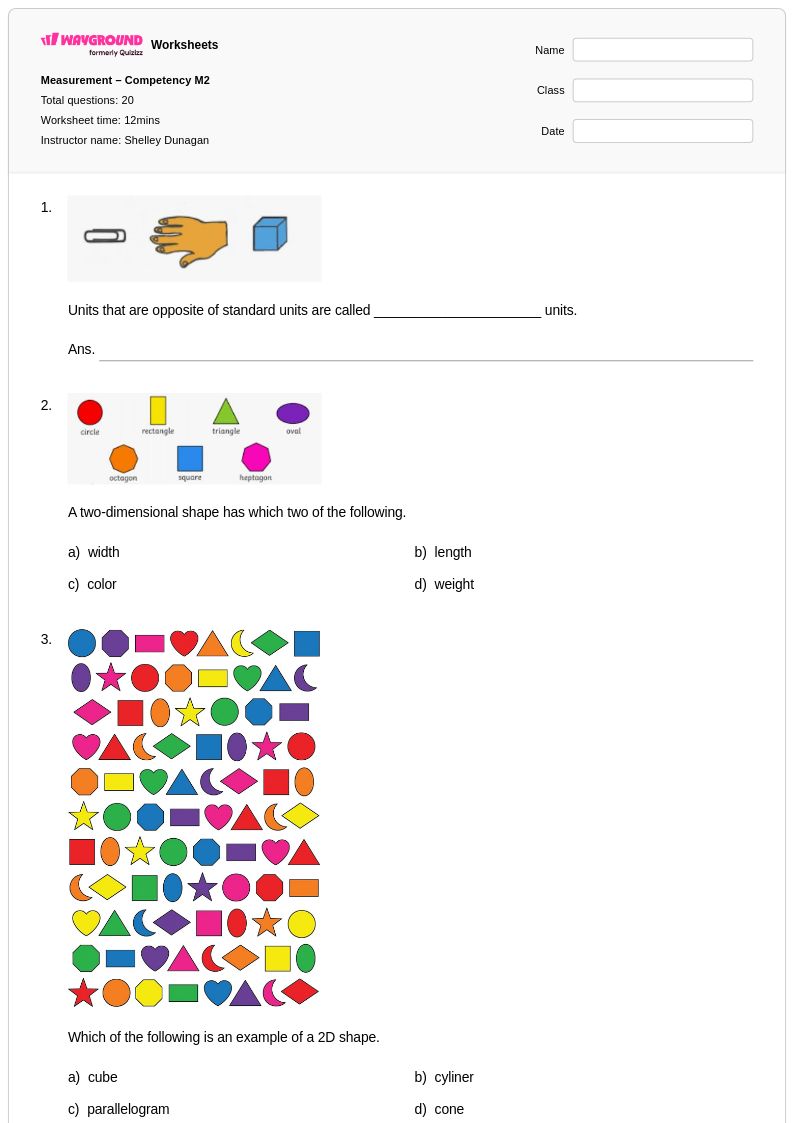
20 Q
1st - 3rd
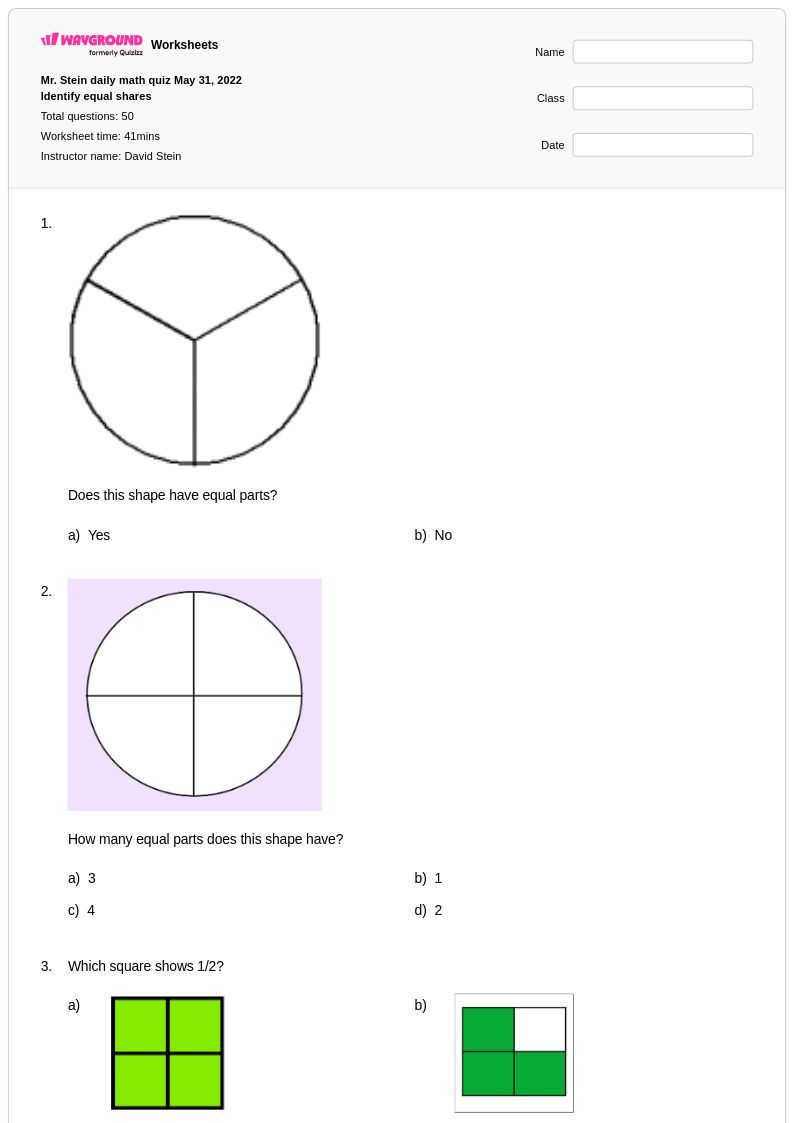
50 Q
2nd
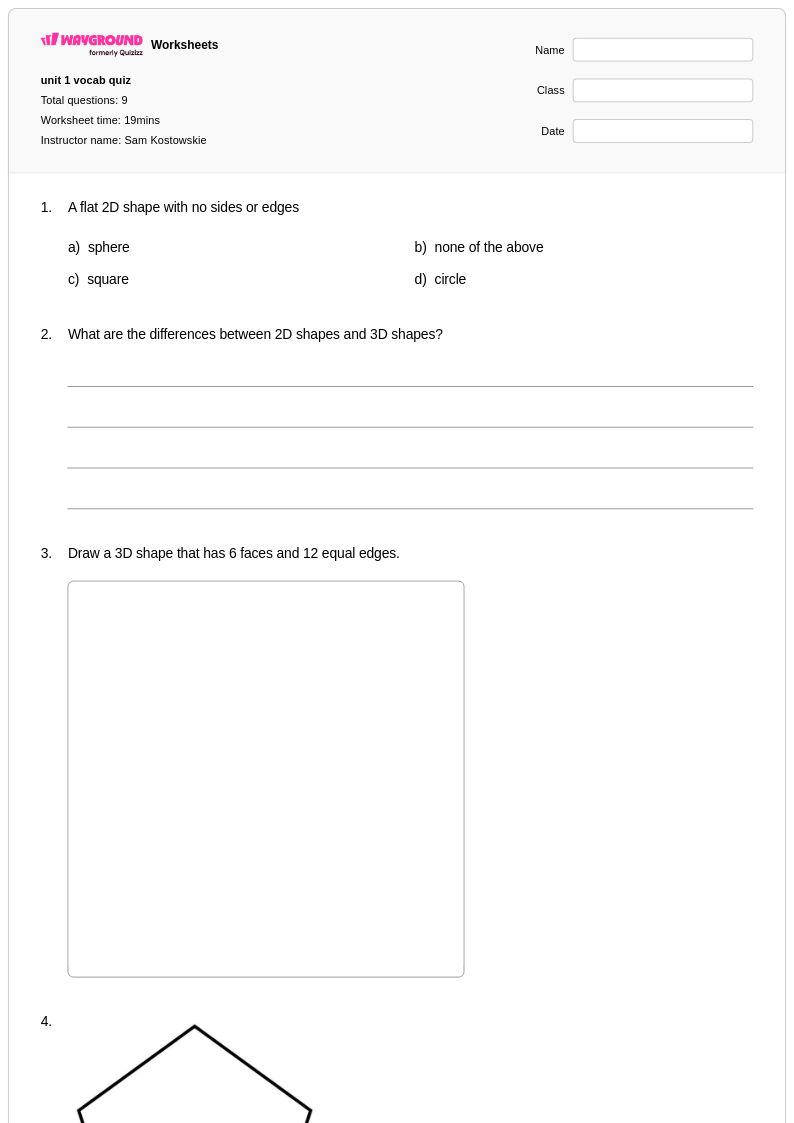
12 Q
2nd
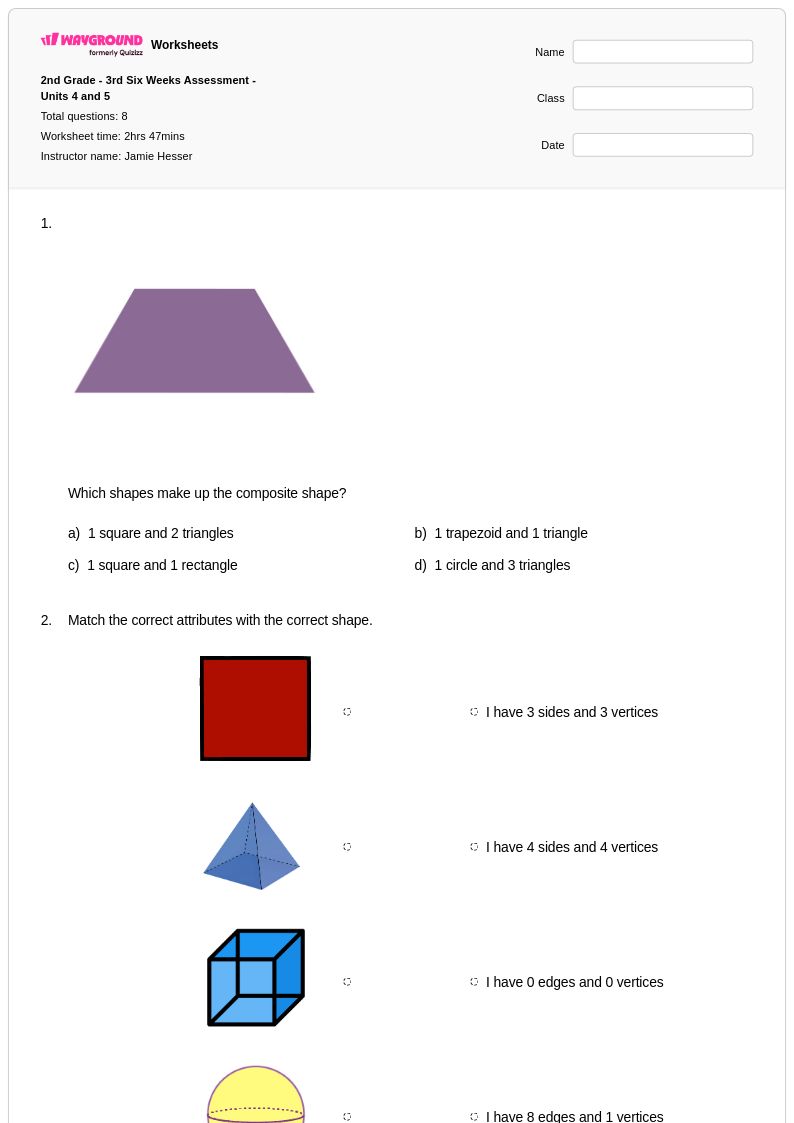
8 Q
2nd
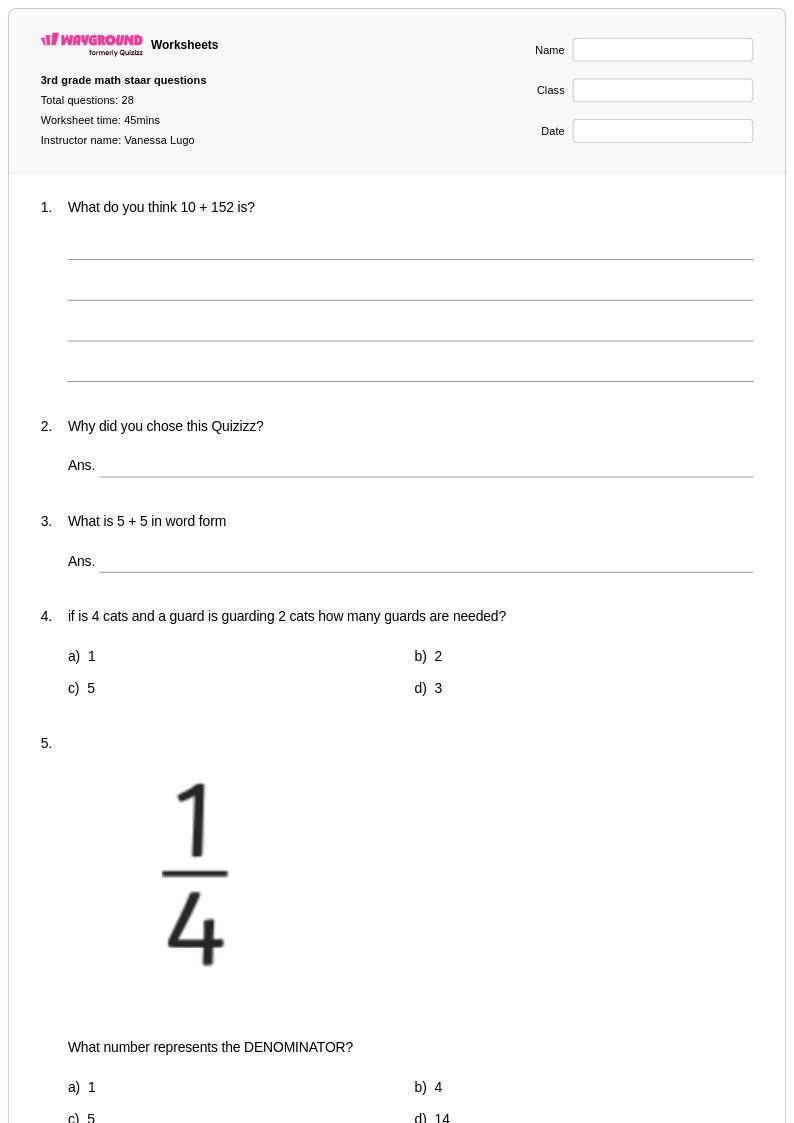
28 Q
2nd
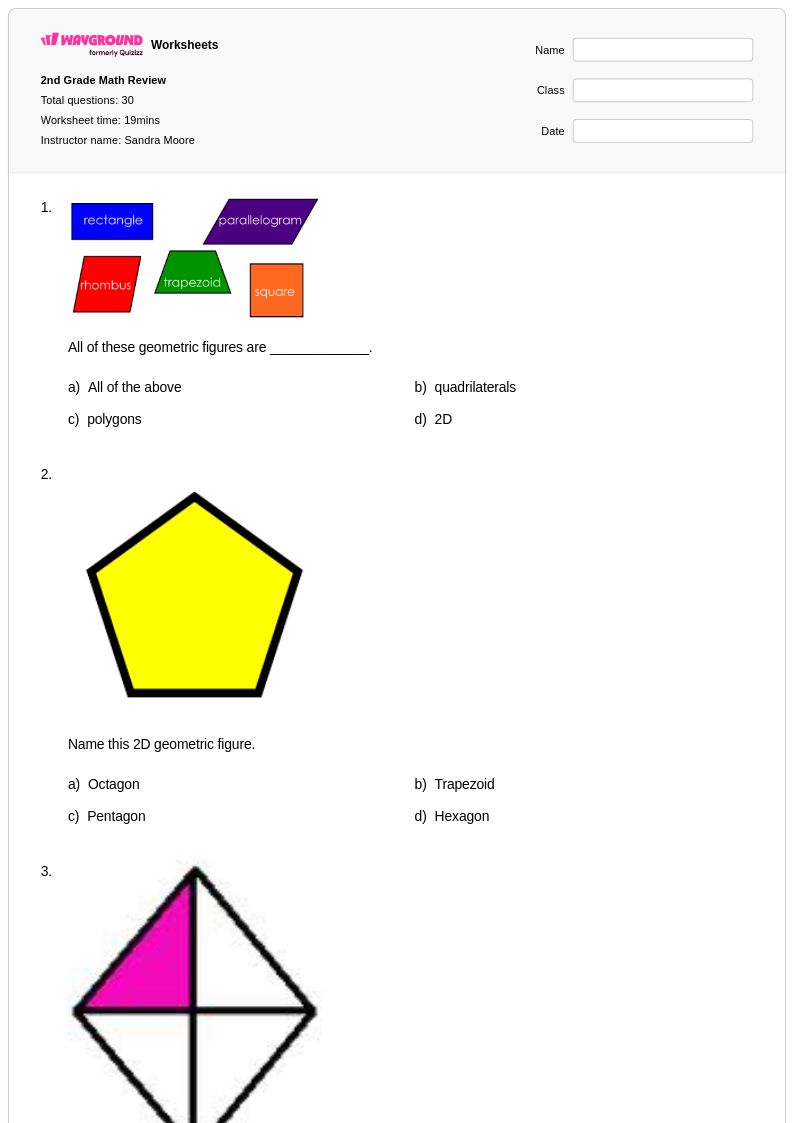
30 Q
2nd
Explore 2D Shapes and Fractions Worksheets by Grades
Explore Other Subject Worksheets for class 2
Explore printable 2D Shapes and Fractions worksheets for Class 2
Class 2 students develop foundational understanding of fractions through hands-on exploration of 2D shapes and fractions with comprehensive worksheet collections available through Wayground (formerly Quizizz). These carefully designed mathematics worksheets guide young learners to recognize how circles, rectangles, squares, and other geometric shapes can be divided into equal parts to represent fractional concepts like halves, thirds, and fourths. Each worksheet strengthens visual reasoning skills and spatial understanding while introducing fraction vocabulary in age-appropriate ways. Teachers can access free printables with complete answer keys, ensuring students receive immediate feedback on their practice problems while building confidence with fraction identification and basic fraction notation.
Wayground (formerly Quizizz) empowers Class 2 educators with millions of teacher-created resources specifically focused on 2D shapes and fractions, offering robust search and filtering capabilities to locate materials that align with curriculum standards and individual classroom needs. The platform's differentiation tools allow teachers to customize worksheets for varying skill levels, supporting both remediation for struggling learners and enrichment opportunities for advanced students. Available in both printable PDF format and interactive digital versions, these worksheet collections streamline lesson planning while providing flexible options for independent practice, small group instruction, and homework assignments. This comprehensive approach ensures that every Class 2 student receives targeted skill practice in connecting geometric shapes with foundational fraction concepts.
FAQs
How do I teach fractions using 2D shapes in second grade?
What exercises help second graders practice fractions with shapes?
What mistakes do second graders make with shape fractions?
How can I use a Grade 2 shapes and fractions worksheet on Wayground?
How does Grade 2 shape-fraction work connect to Common Core?
How can I differentiate 2D shape and fraction worksheets for second graders?
What fraction skills are expected in second grade?