Free Printable Acid Base Nomenclature Worksheets for Class 9
Class 9 acid base nomenclature worksheets from Wayground help students master chemical naming conventions through comprehensive printables, practice problems, and answer keys available as free PDF downloads.
Explore printable Acid Base Nomenclature worksheets for Class 9
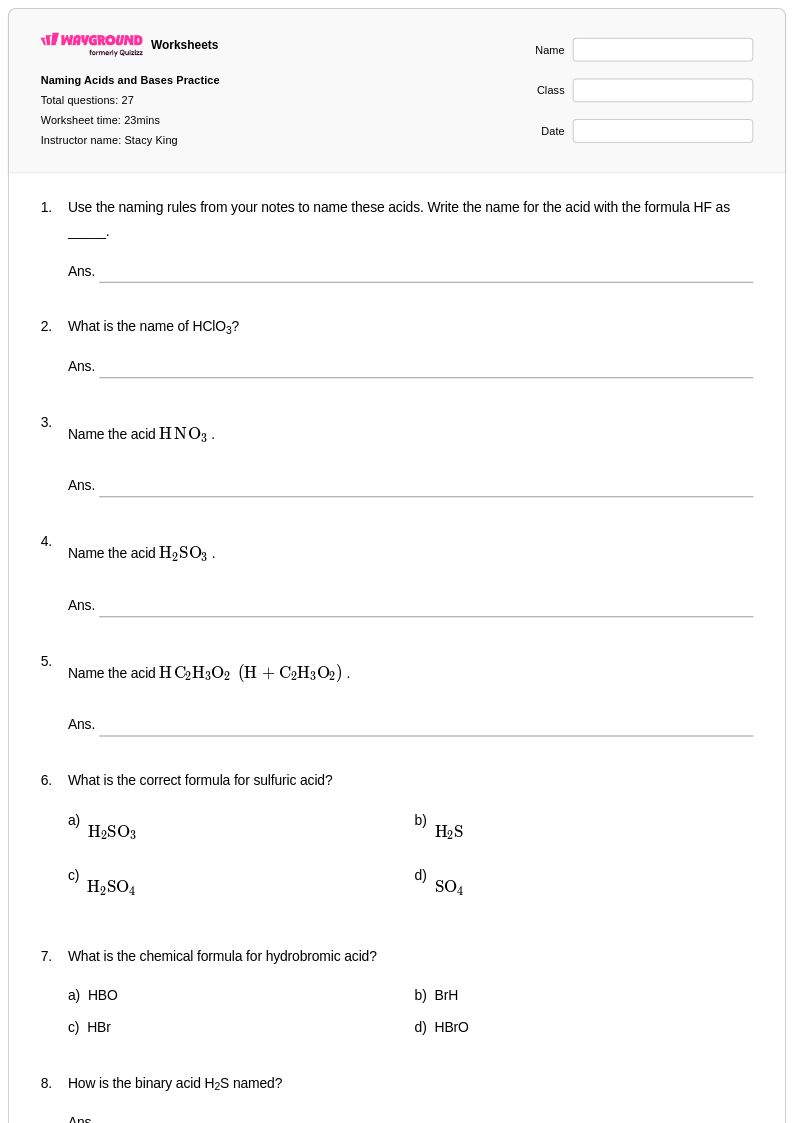
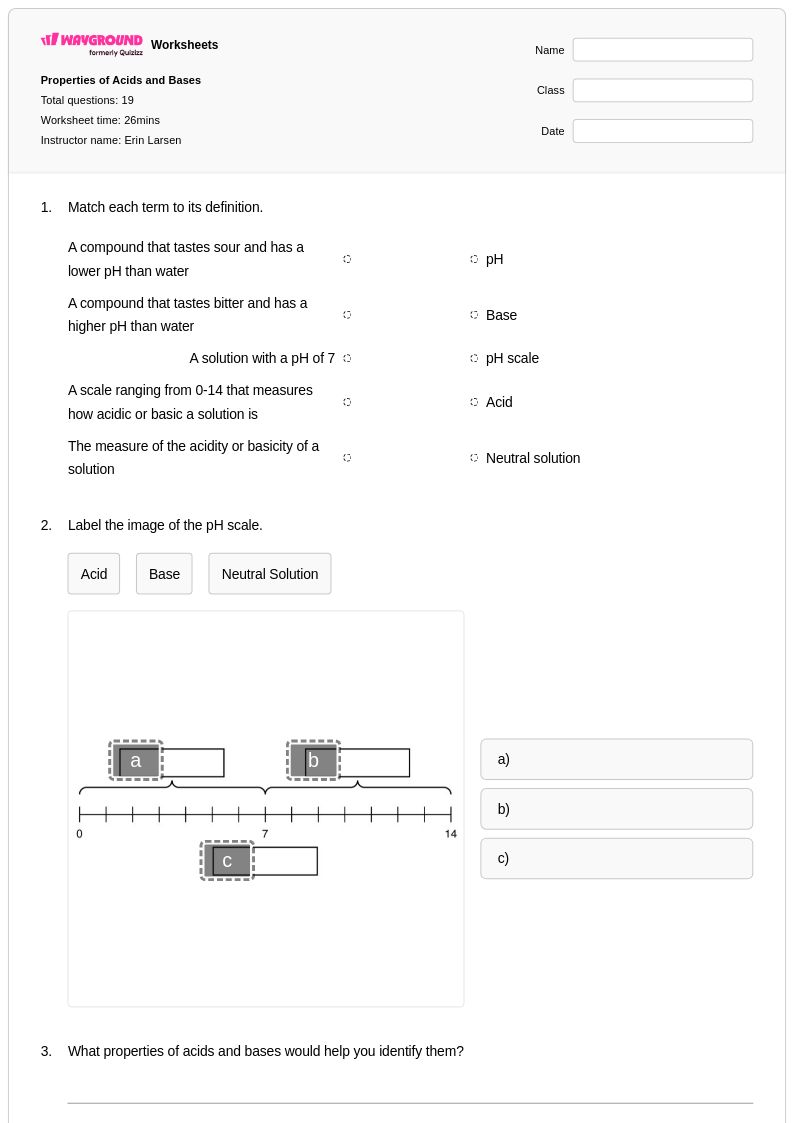
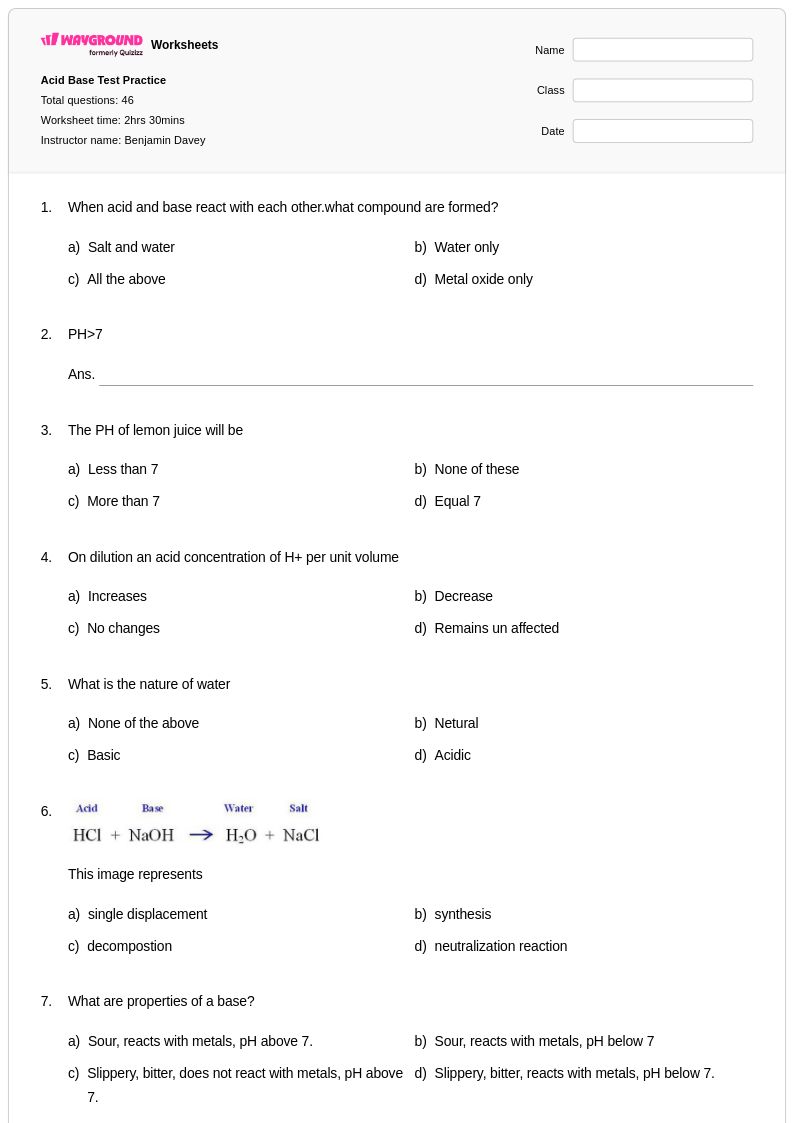
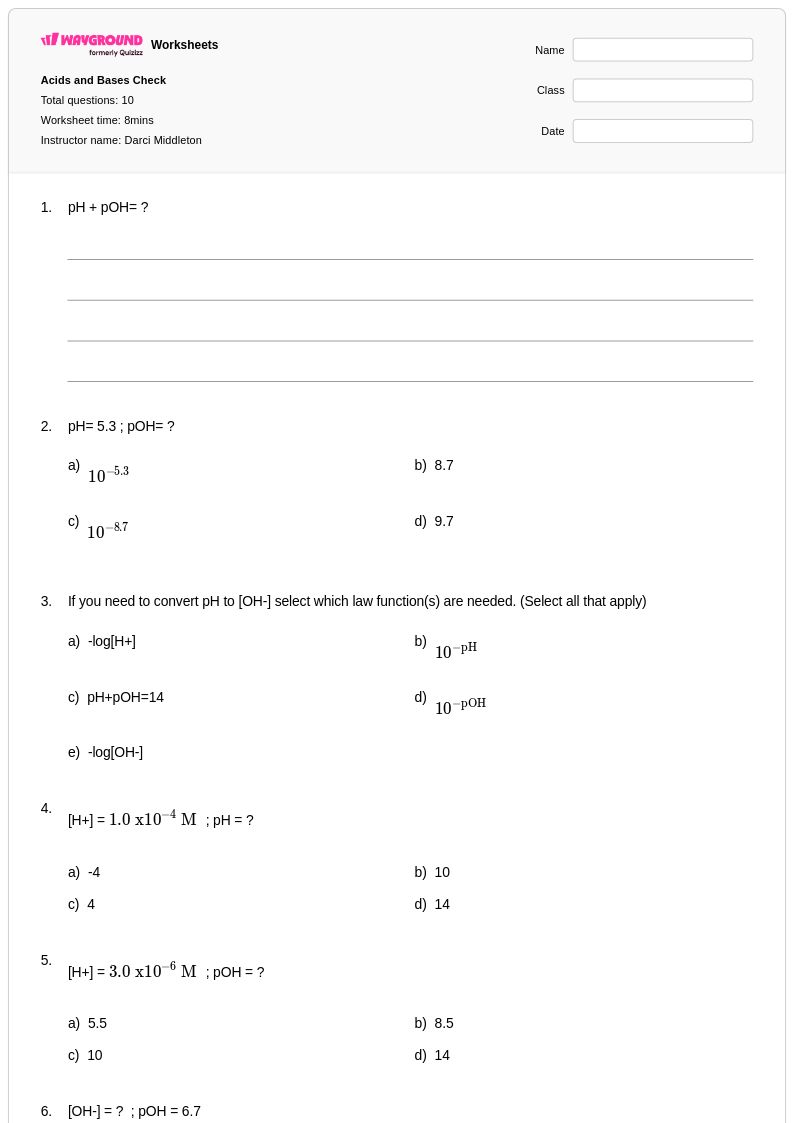
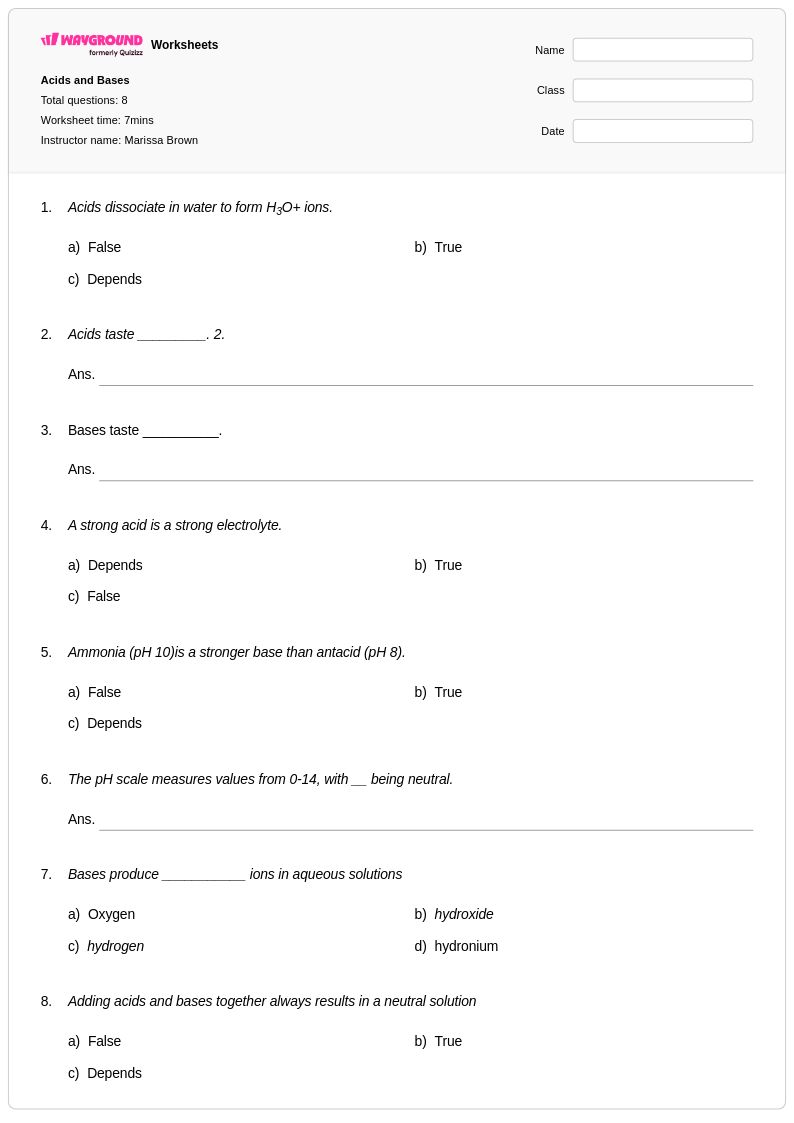
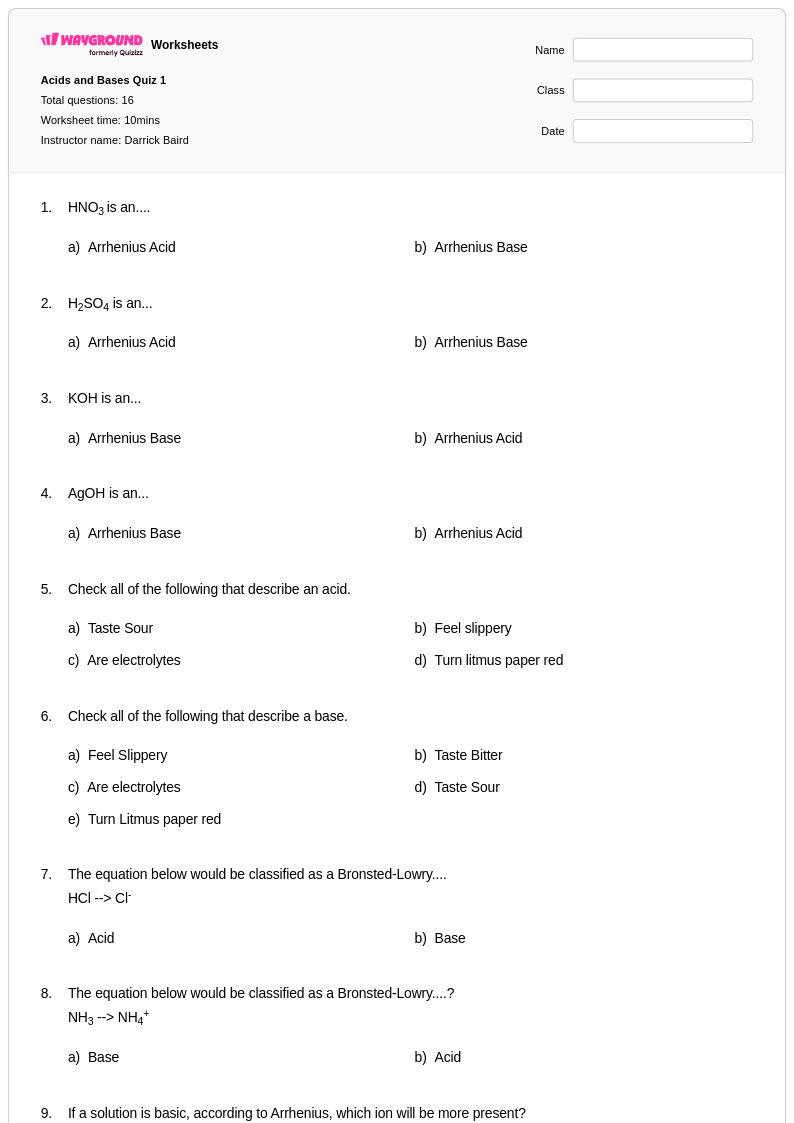
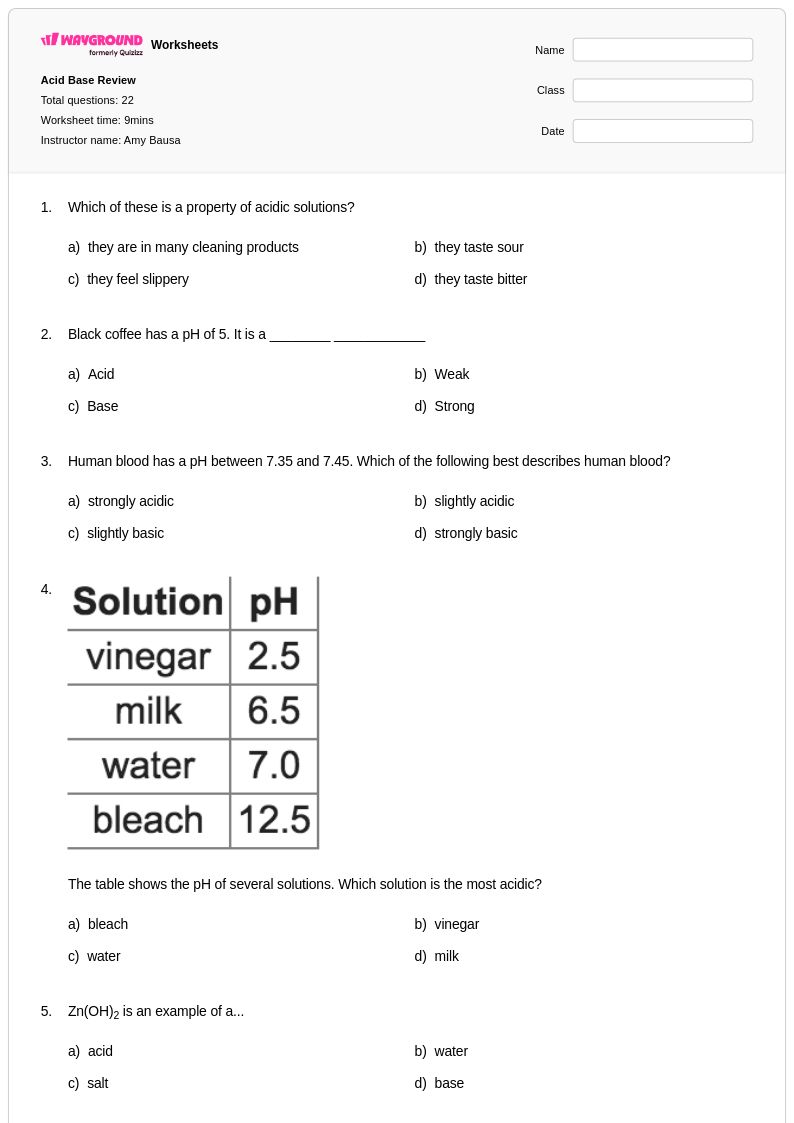
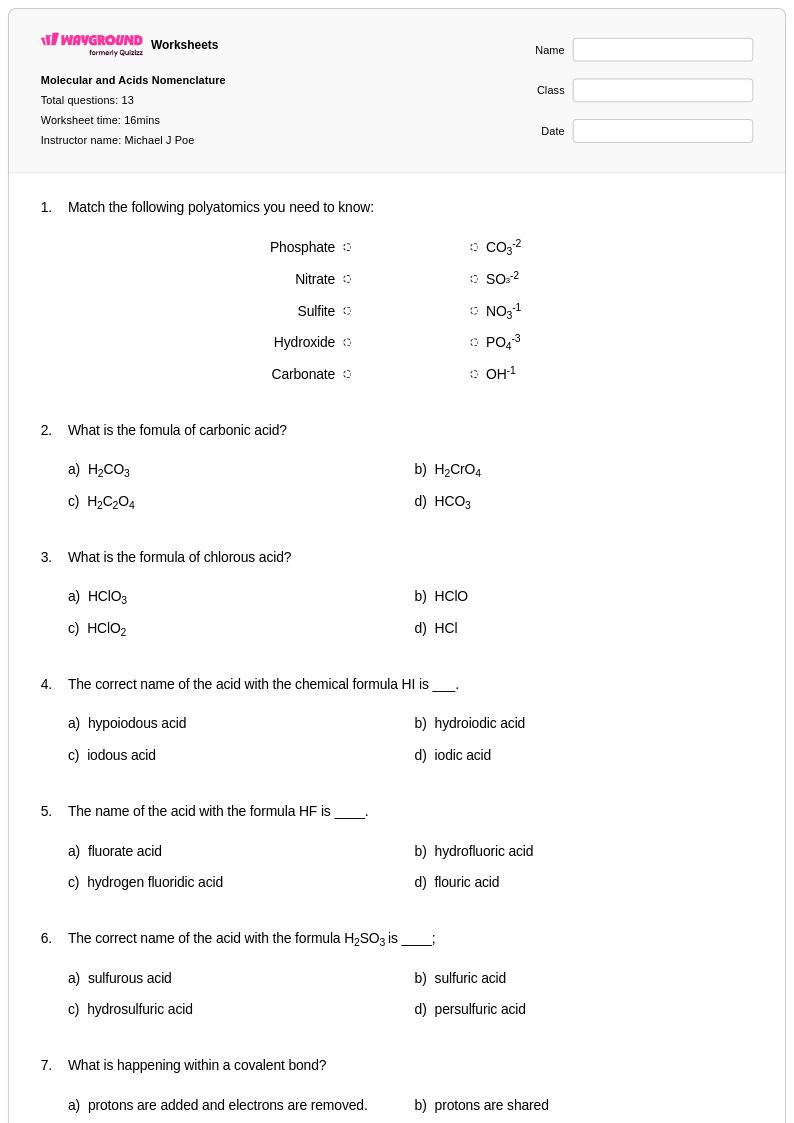
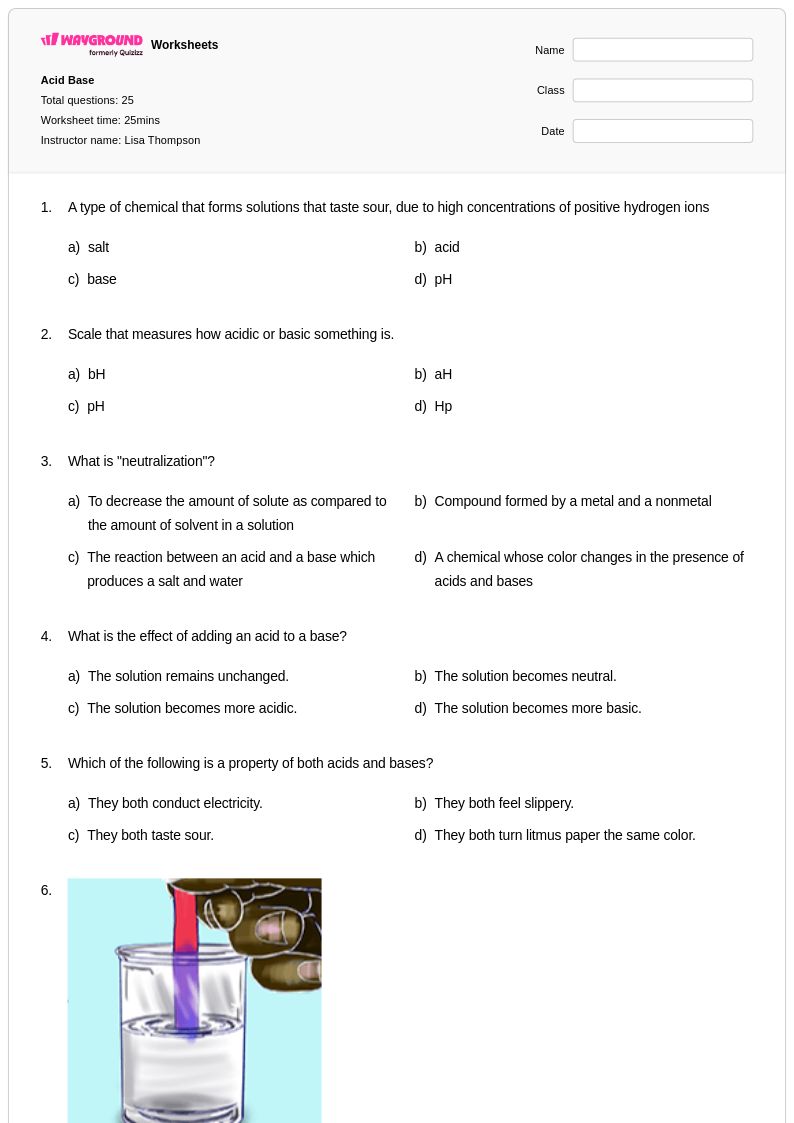
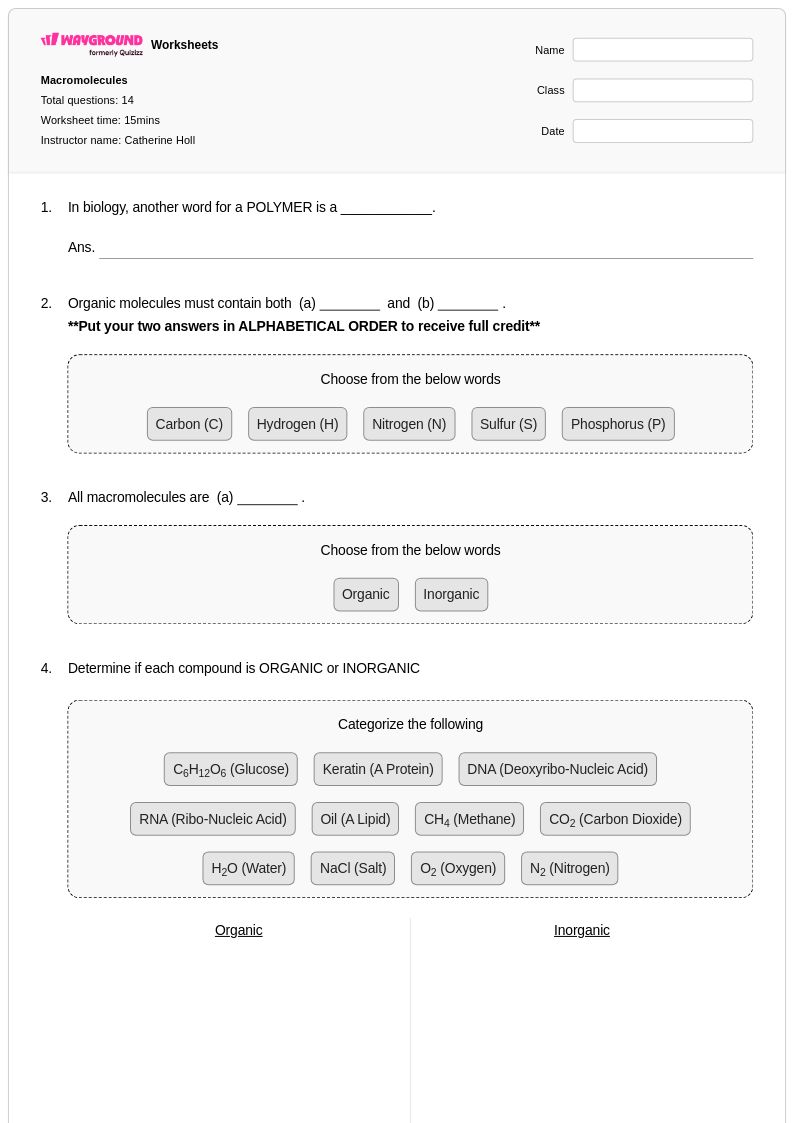
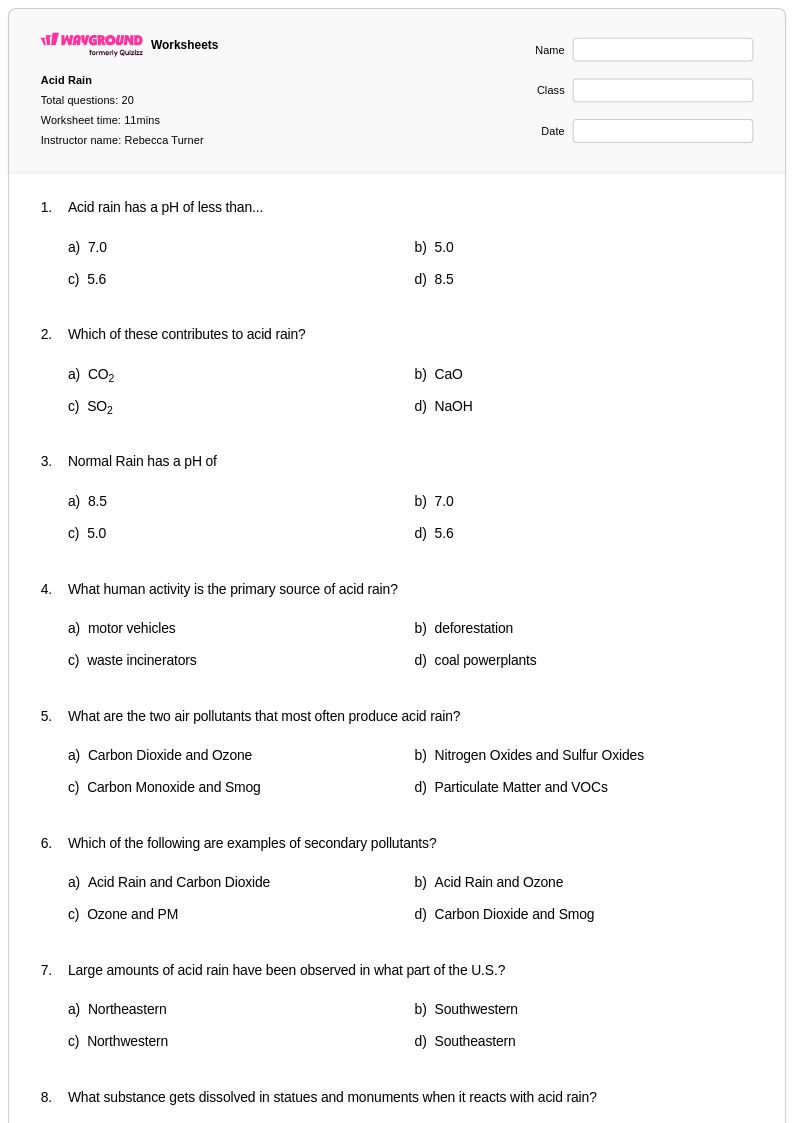
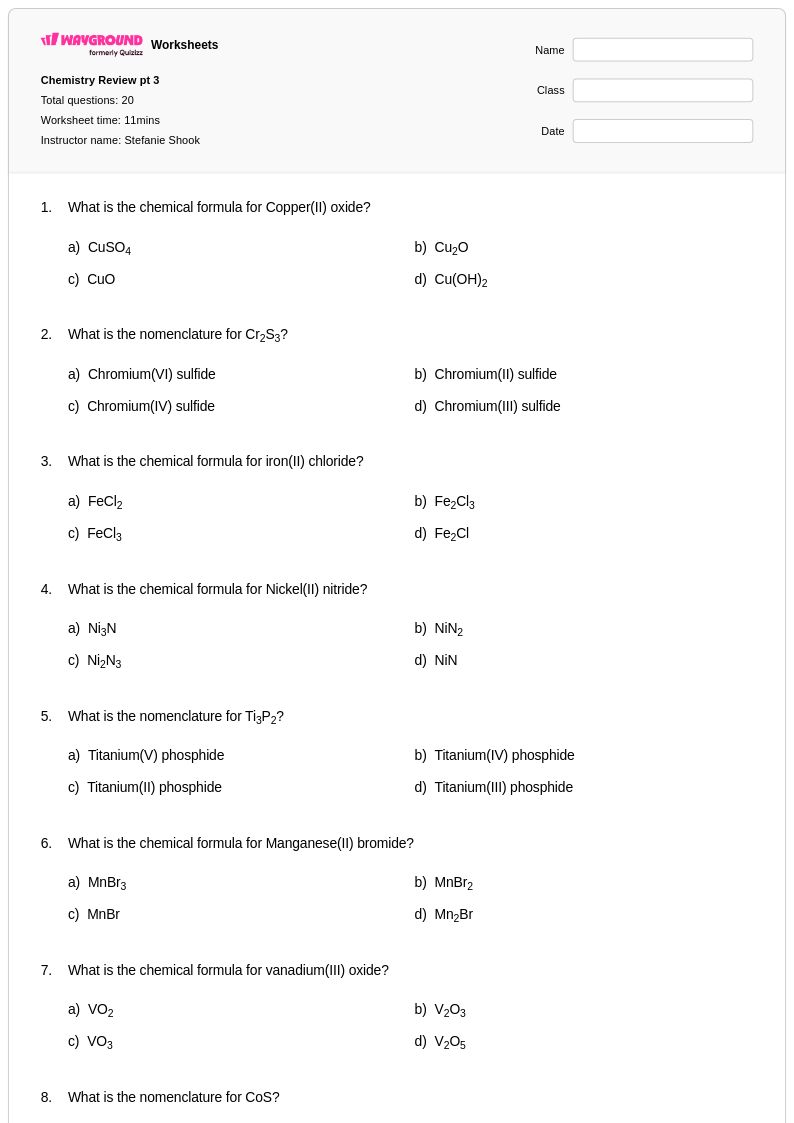
Acid base nomenclature worksheets for Class 9 students available through Wayground (formerly Quizizz) provide comprehensive practice in the systematic naming of acids and bases, a fundamental skill in chemistry education. These worksheets strengthen students' understanding of the rules governing acid nomenclature, including the distinction between binary acids and oxyacids, as well as the proper naming conventions for various types of bases. Through structured practice problems, students master the connection between chemical formulas and their corresponding names, developing fluency in translating between molecular representations and systematic nomenclature. Each worksheet collection includes detailed answer keys and is available as free printables in convenient pdf format, allowing students to work through increasingly complex naming scenarios while building confidence in their chemical vocabulary.
Wayground (formerly Quizizz) supports chemistry educators with an extensive collection of teacher-created acid base nomenclature resources, drawn from millions of professionally developed materials that undergo rigorous quality standards. The platform's advanced search and filtering capabilities enable teachers to locate worksheets that align with specific curriculum standards and match their students' skill levels, while differentiation tools allow for seamless customization of difficulty and content focus. These versatile resources are available in both printable and digital formats, including downloadable pdf versions, making them ideal for classroom instruction, homework assignments, remediation sessions, and enrichment activities. Teachers can efficiently plan lessons around systematic nomenclature practice, provide targeted support for struggling learners, and offer advanced challenges for students ready to explore more complex acid and base naming conventions.
FAQs
How do I teach acid base nomenclature to chemistry students?
Start by establishing the two main categories: binary acids (hydracids) formed from hydrogen and a nonmetal, and oxyacids formed from hydrogen and a polyatomic ion. Teach students to recognize the naming patterns systematically — 'hydro-' prefix and '-ic acid' suffix for binary acids, and '-ic acid' or '-ous acid' suffixes based on the oxidation state of the central element in oxyacids. Pairing formula-to-name and name-to-formula practice in the same lesson reinforces both directions of the skill and prevents rote memorization without conceptual understanding.
What are common mistakes students make when naming acids and bases?
The most frequent error is confusing binary acids with oxyacids, leading students to apply the wrong naming rule entirely — for example, writing 'hydrogen chloride' when the compound is dissolved in water and should be named 'hydrochloric acid.' Students also frequently mix up '-ic' and '-ous' suffixes for oxyacids, particularly when the central element has multiple oxidation states such as sulfur or nitrogen. A third common error is failing to account for the aqueous context, since HCl as a gas and HCl dissolved in water follow different naming conventions.
What practice exercises help students master acid nomenclature rules?
Structured exercises that separate binary acids from oxyacids into distinct practice sets help students internalize each rule before mixing types. Formula-to-name and name-to-formula drills, especially with acids like HNO₃, H₂SO₄, H₃PO₄, HClO₄, and their '-ous' counterparts, build pattern recognition across the most commonly tested compounds. Including the corresponding base forms and ionic salts in the same worksheet set reinforces how nomenclature relationships carry through an entire acid-base family.
How do I differentiate acid base nomenclature practice for students at different levels?
For struggling students, begin with binary acids only and provide a reference chart of prefixes and suffixes before introducing oxyacids. Advanced students benefit from extension problems involving transition metal compounds, polyatomic ions with less common oxidation states, or naming salts derived from weak acids. On Wayground, teachers can customize worksheets to adjust difficulty levels, modify problem quantities, and target specific nomenclature subcategories such as polyatomic ions or transition metal compounds, and individual student accommodations such as read aloud and reduced answer choices can be applied without other students being notified.
How can I use Wayground's acid base nomenclature worksheets in my classroom?
Wayground's acid base nomenclature worksheets are available as printable PDFs for traditional classroom use and in digital formats for technology-integrated or online learning environments, including the option to host them as a quiz directly on Wayground. Each worksheet includes a complete answer key, making them practical for independent practice, homework, or in-class review without additional teacher preparation. Teachers can filter resources by curriculum alignment and customize existing worksheets to match the specific naming conventions and compound types their course covers.
How does the context of aqueous solution affect acid naming conventions?
In IUPAC nomenclature, the physical state and context of a compound determine which naming system applies — HCl as a pure gas is named 'hydrogen chloride,' but when dissolved in water it becomes 'hydrochloric acid.' This distinction matters because many chemistry assessments test both contexts, and students who learn only one naming convention will make consistent errors on the other. Emphasizing the aqueous context early in instruction prevents students from treating acid nomenclature as a single uniform rule set.