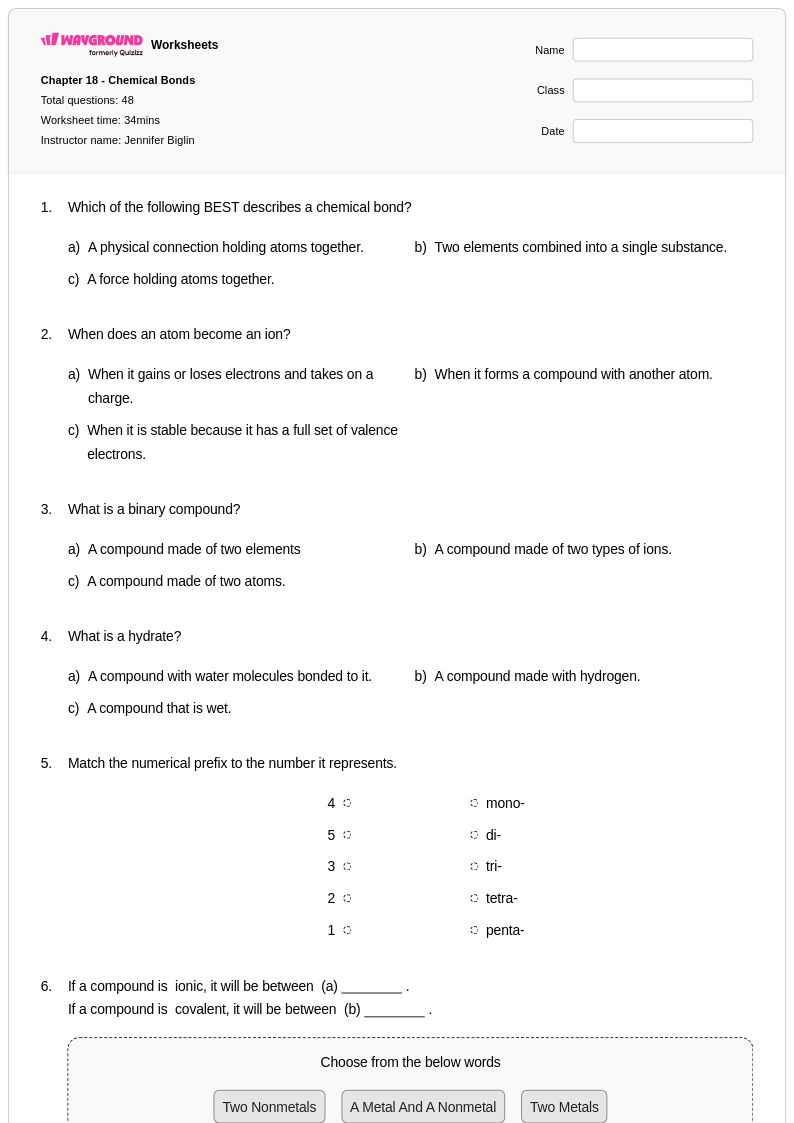
Free Printable Avogadro's Number Worksheets for Class 9
Class 9 Avogadro's Number worksheets from Wayground offer free printables and practice problems with answer keys to help students master this fundamental chemistry concept and molecular calculations.
Explore printable Avogadro's Number worksheets for Class 9
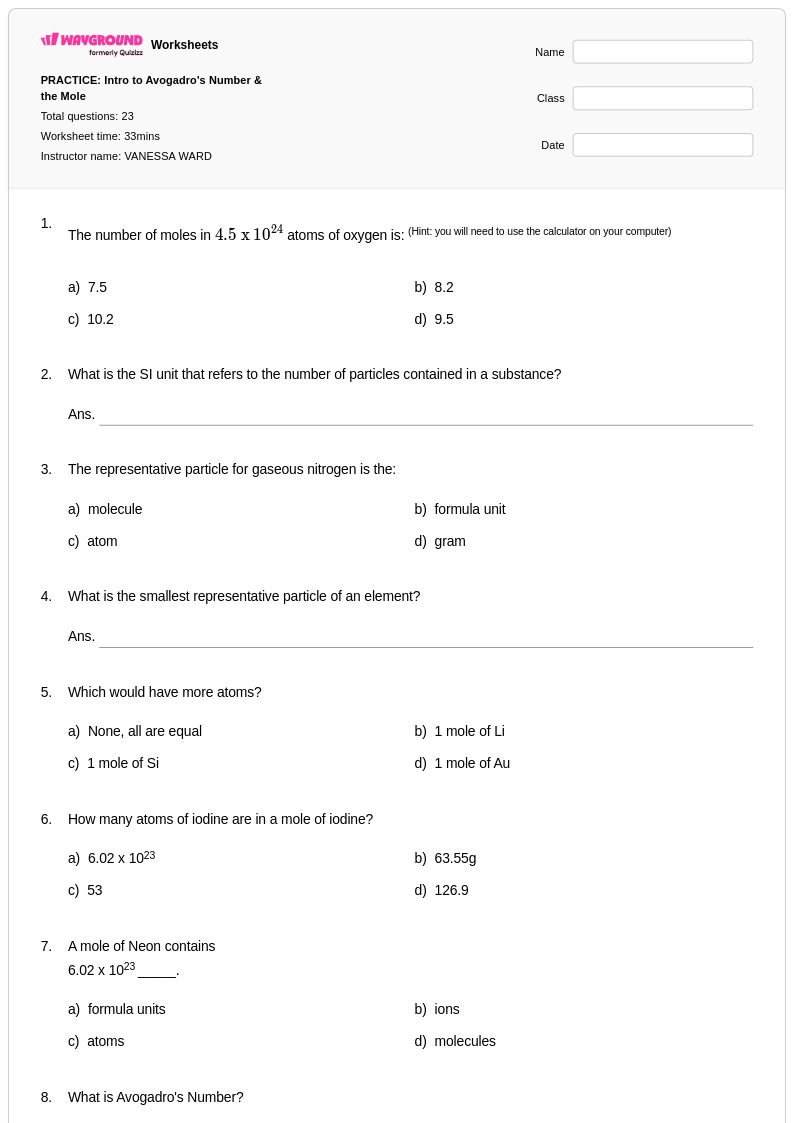
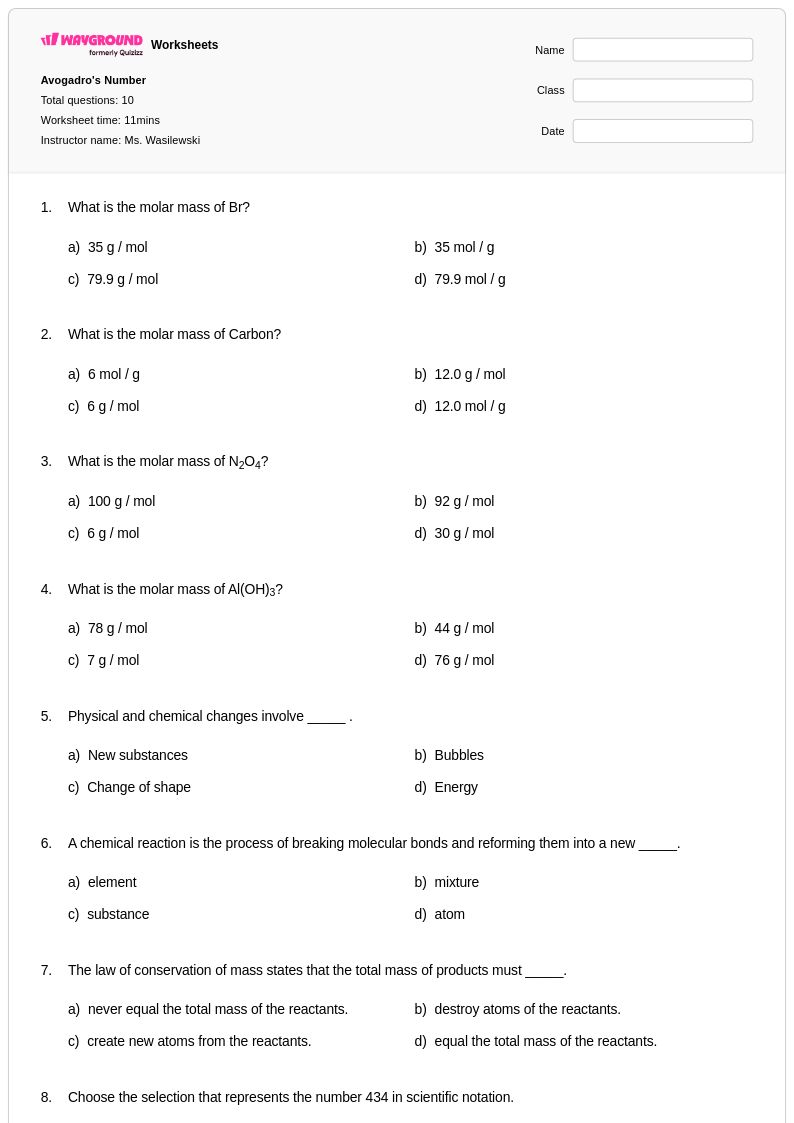
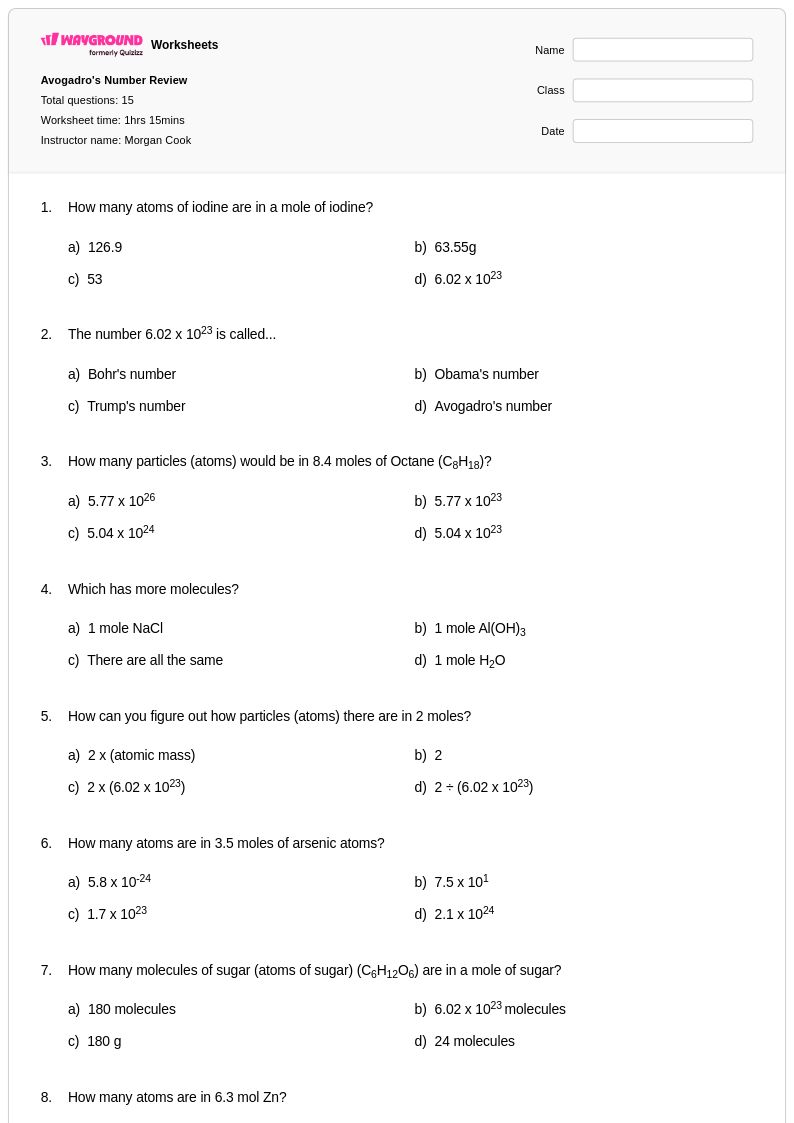
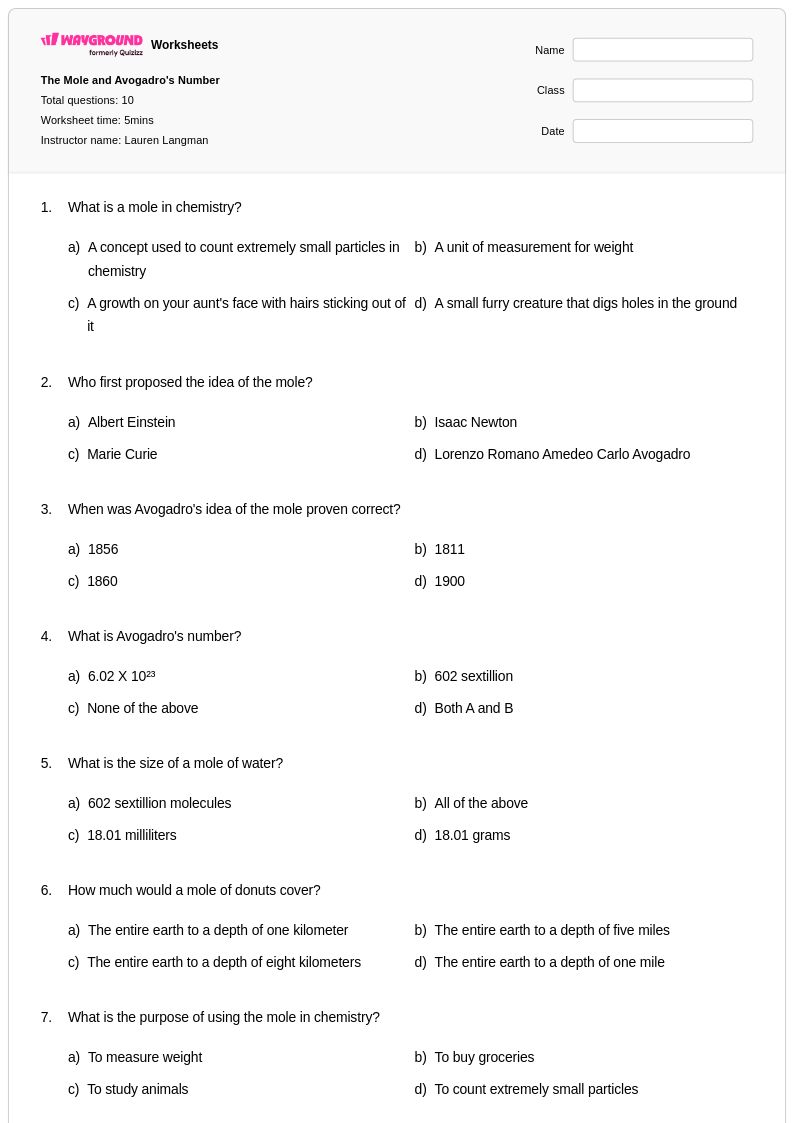
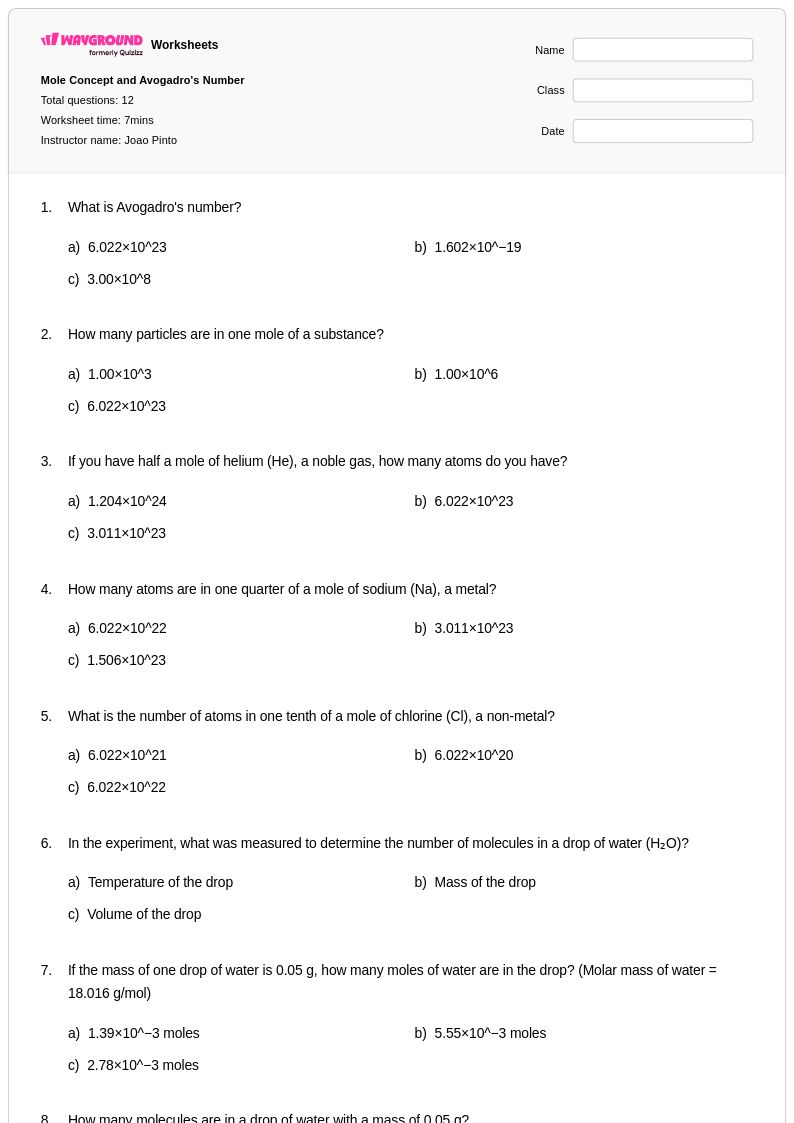
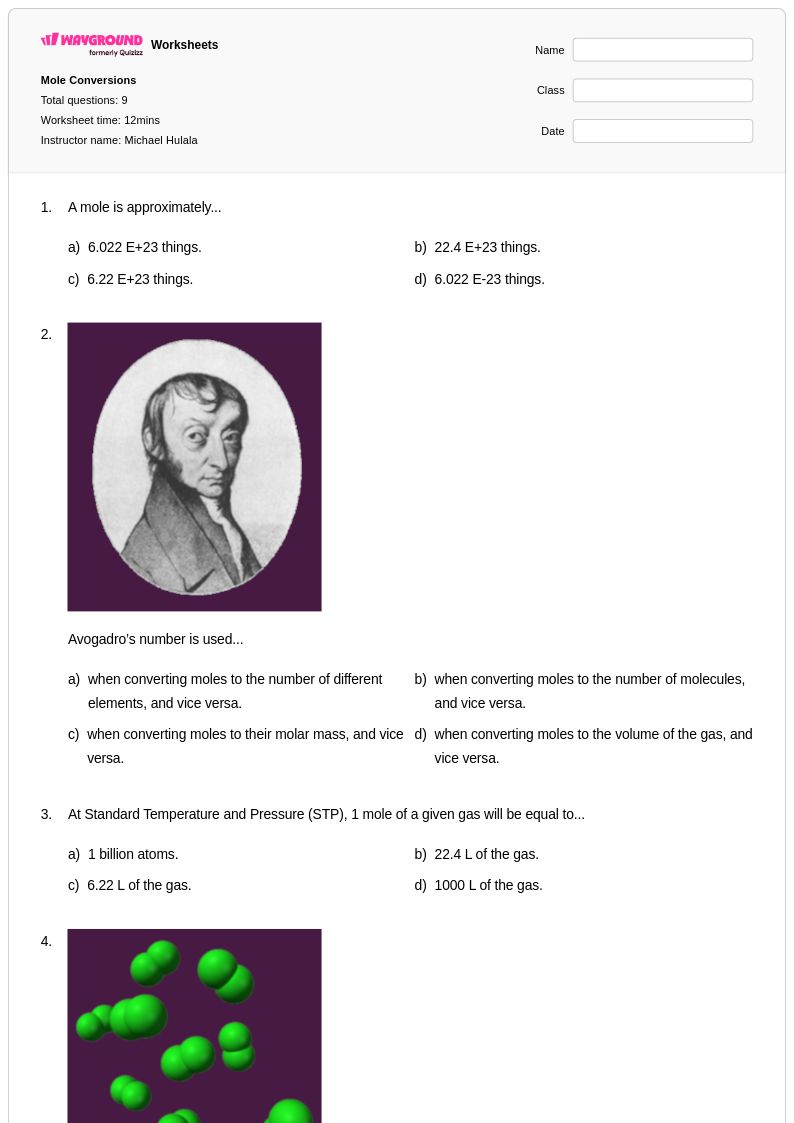
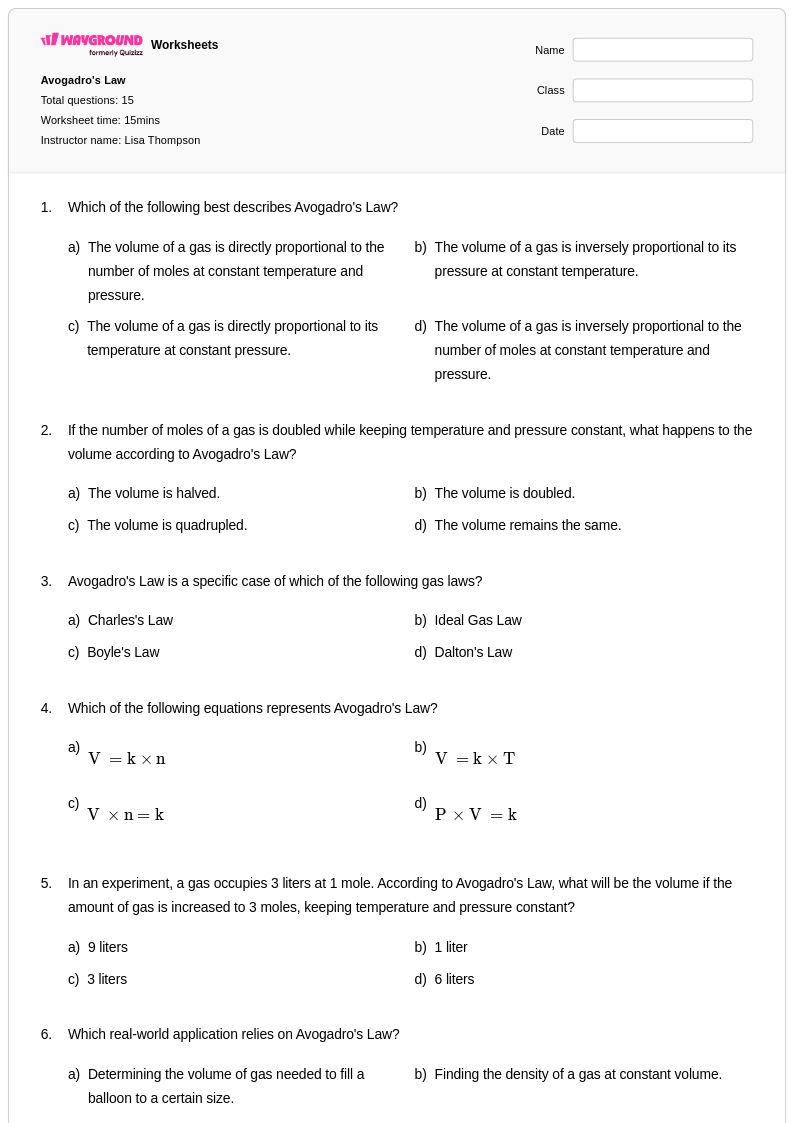
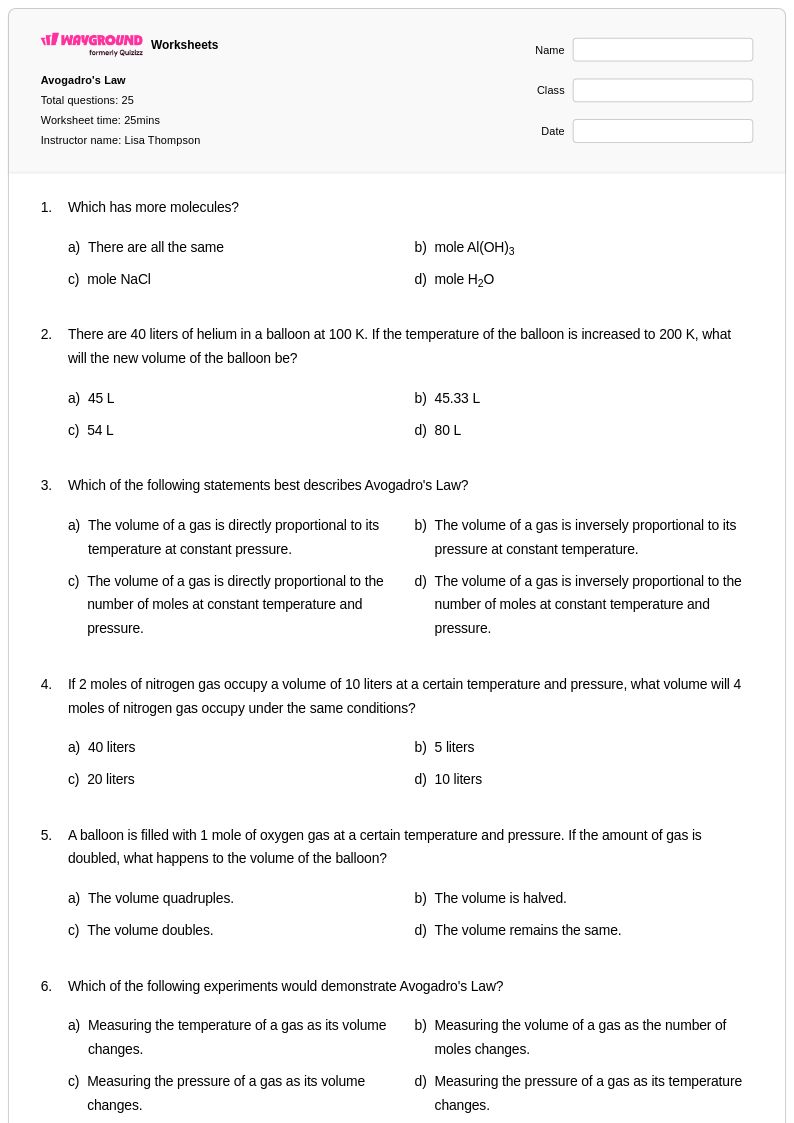
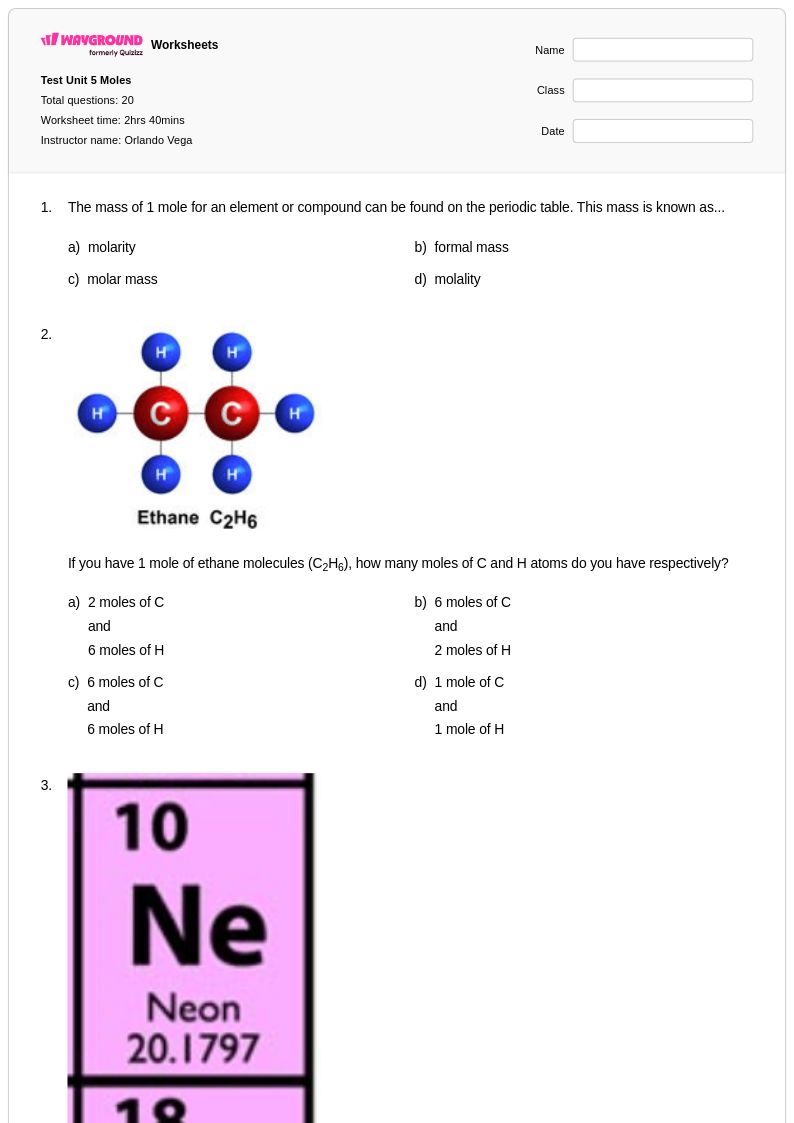
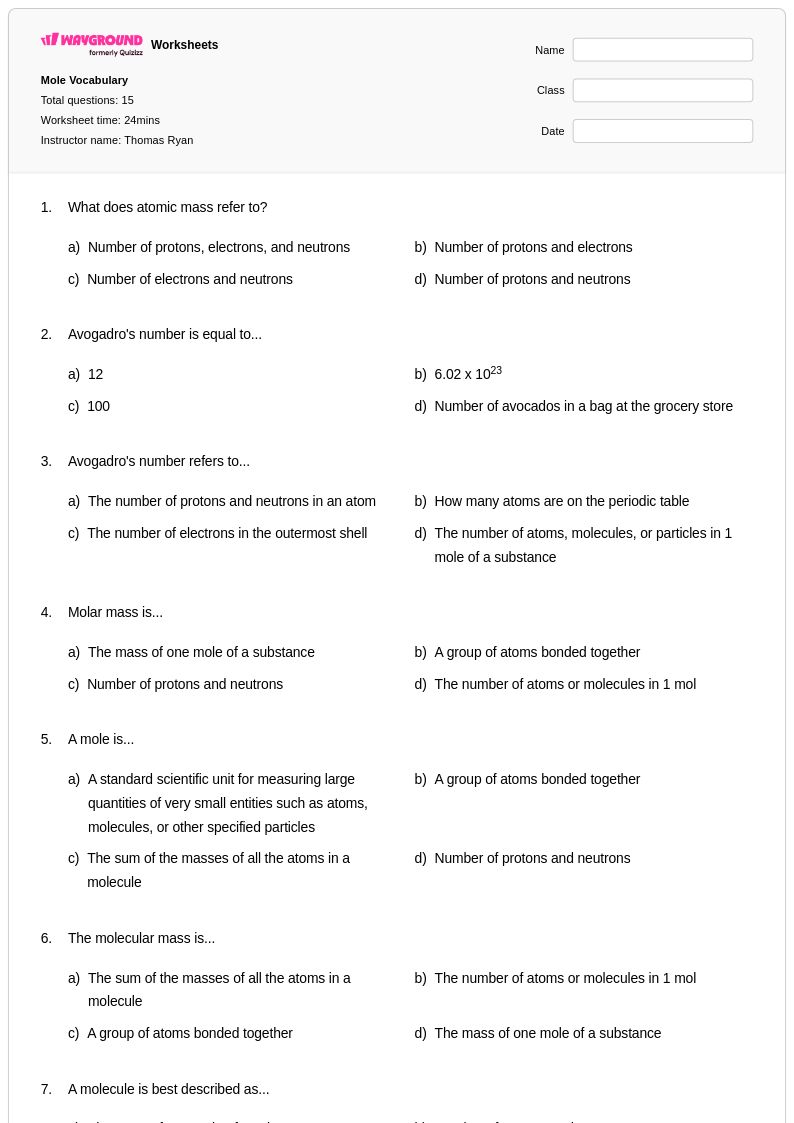
Avogadro's Number worksheets for Class 9 students available through Wayground (formerly Quizizz) provide comprehensive practice with one of chemistry's most fundamental constants. These educational resources strengthen students' understanding of the relationship between moles, particles, and atomic scale measurements, helping them master calculations involving 6.022 × 10²³ particles per mole. The worksheet collection includes practice problems that guide students through converting between moles and particles, determining the number of atoms or molecules in given samples, and applying Avogadro's Number to real-world chemistry scenarios. Each worksheet comes with detailed answer keys that support independent learning and self-assessment, while the free printable pdf format ensures easy classroom distribution and homework assignments.
Wayground (formerly Quizizz) empowers educators with millions of teacher-created Avogadro's Number resources specifically designed for Class 9 chemistry instruction. The platform's advanced search and filtering capabilities allow teachers to quickly locate worksheets aligned with curriculum standards and tailored to their students' specific learning needs. Differentiation tools enable instructors to customize difficulty levels, adjust problem complexity, and modify content to support both struggling learners requiring additional practice and advanced students ready for enrichment challenges. Available in both printable and digital formats including downloadable pdfs, these versatile worksheet collections streamline lesson planning while providing targeted practice for skill development, concept remediation, and assessment preparation in this essential chemistry topic.
FAQs
How do I teach Avogadro's Number to chemistry students?
Start by anchoring Avogadro's Number (6.022 × 10²³) to something students already understand: just as a 'dozen' always means 12, a 'mole' always means 6.022 × 10²³ particles. From there, build toward unit conversion using dimensional analysis, so students can move fluently between grams, moles, and number of particles. Connecting the constant to real molecular masses early helps students see why this number exists rather than treating it as an arbitrary value to memorize.
What exercises help students practice Avogadro's Number and mole calculations?
Effective practice starts with straightforward mole-to-particle conversions before introducing compound formulas and multi-step stoichiometry problems. Worksheets that present problems in a scaffolded sequence — basic particle counting, then mole-to-mass conversions, then molecular formula analysis — allow students to build confidence before tackling more complex calculations. Including worked examples alongside practice problems helps students self-check their unit-factor setups before attempting independent work.
What mistakes do students commonly make when working with Avogadro's Number?
The most common error is inverting the conversion factor, multiplying when they should divide or dividing when they should multiply. Students also frequently confuse atoms and molecules — for example, treating one molecule of H₂O as one atom rather than three. A third persistent mistake is failing to account for the number of atoms per formula unit in compounds, leading to off-by-a-factor-of-two or greater errors in particle counts.
How do I use Avogadro's Number worksheets to differentiate instruction in my chemistry class?
For students who struggle with the math, focus first on single-step conversions between moles and particles before introducing mass. For advanced students, extend practice into multi-step stoichiometry problems that require applying Avogadro's Number within larger calculations involving molecular formulas and compound analysis. On Wayground, teachers can also apply accommodations such as read aloud support, reduced answer choices, and extended time on a per-student basis, so the same worksheet can serve the full range of learners without requiring separate materials.
How do I use Wayground's Avogadro's Number worksheets in my classroom?
Wayground's Avogadro's Number worksheets are available as printable PDFs for traditional paper-and-pencil practice and in digital formats for technology-integrated instruction, including the option to host them as a quiz directly on Wayground. Each worksheet includes detailed answer keys and step-by-step solutions, making them suitable for in-class practice, independent study, or homework assignments. Teachers can search, filter, and customize resources to match specific curriculum requirements and student skill levels.
How does Avogadro's Number connect to stoichiometry?
Avogadro's Number is the bridge between the macroscopic world of measurable masses and the microscopic world of individual atoms and molecules, which makes it foundational to all stoichiometric calculations. When students convert moles to particles using 6.022 × 10²³, they are essentially translating a lab measurement into a count of actual chemical entities. Without a firm grasp of this conversion, students cannot accurately calculate reactant quantities, product yields, or limiting reagents in chemical reactions.