
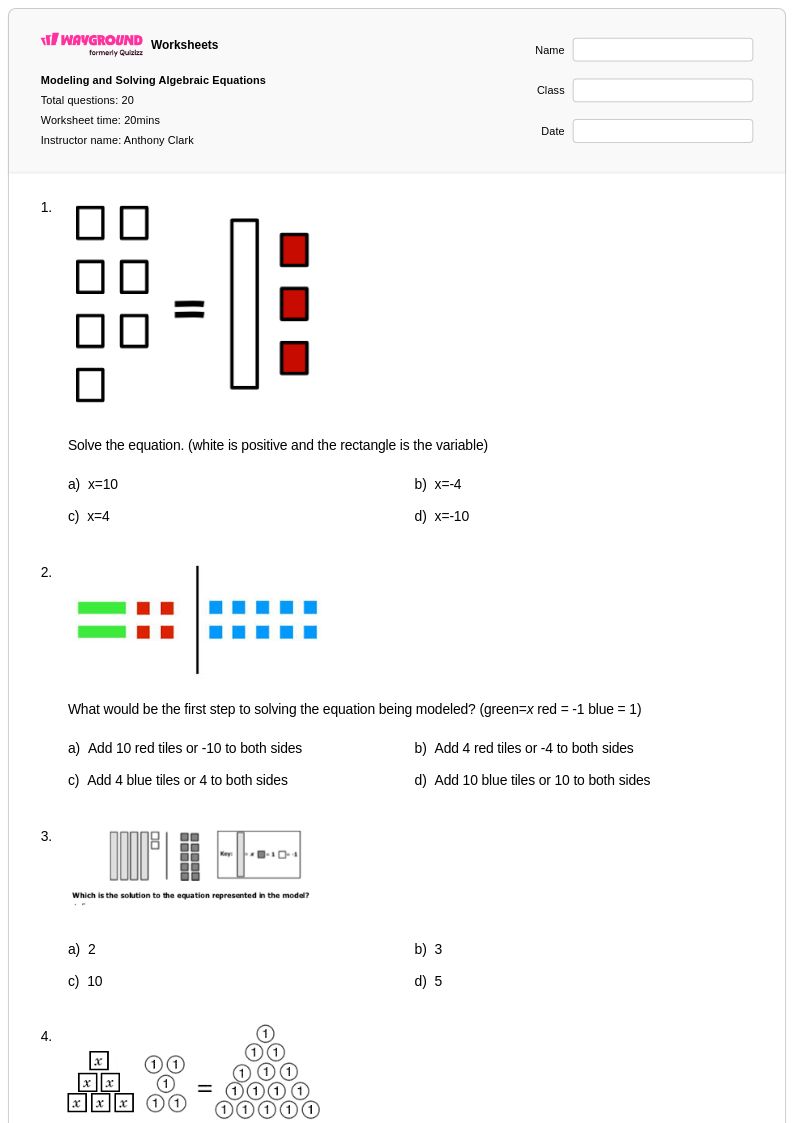
20 Q
8th - Uni
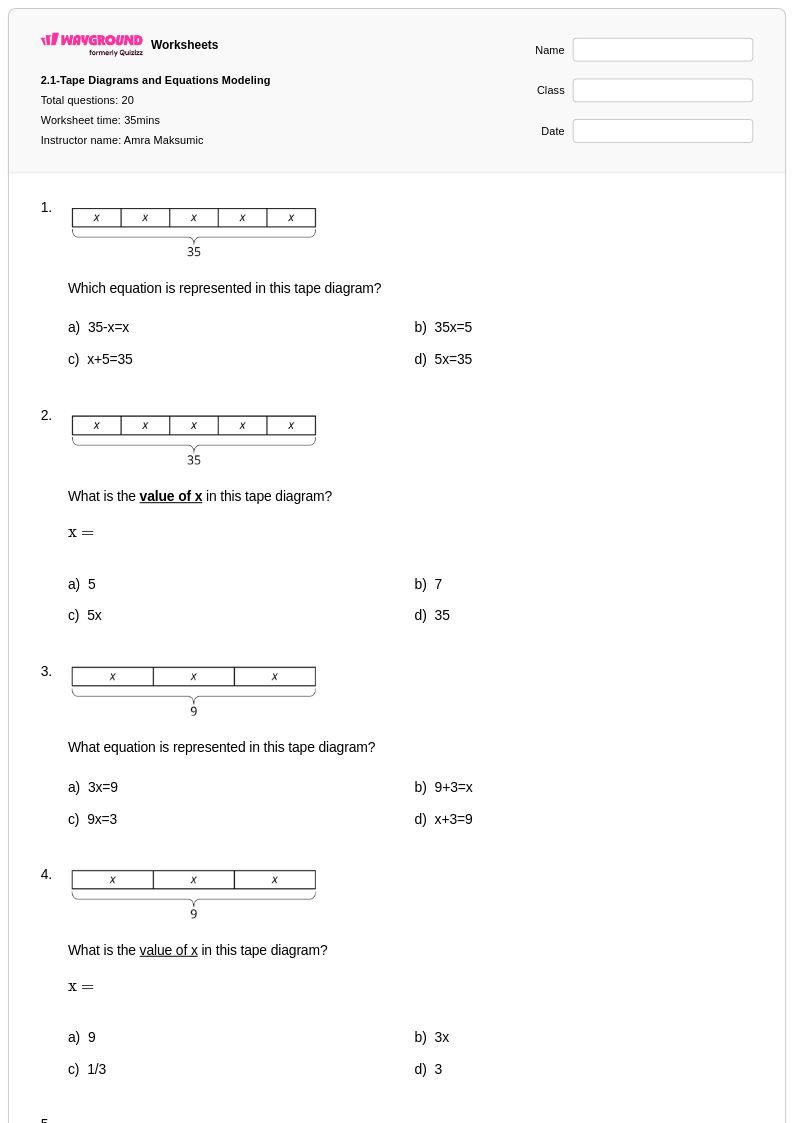
20 Q
9th
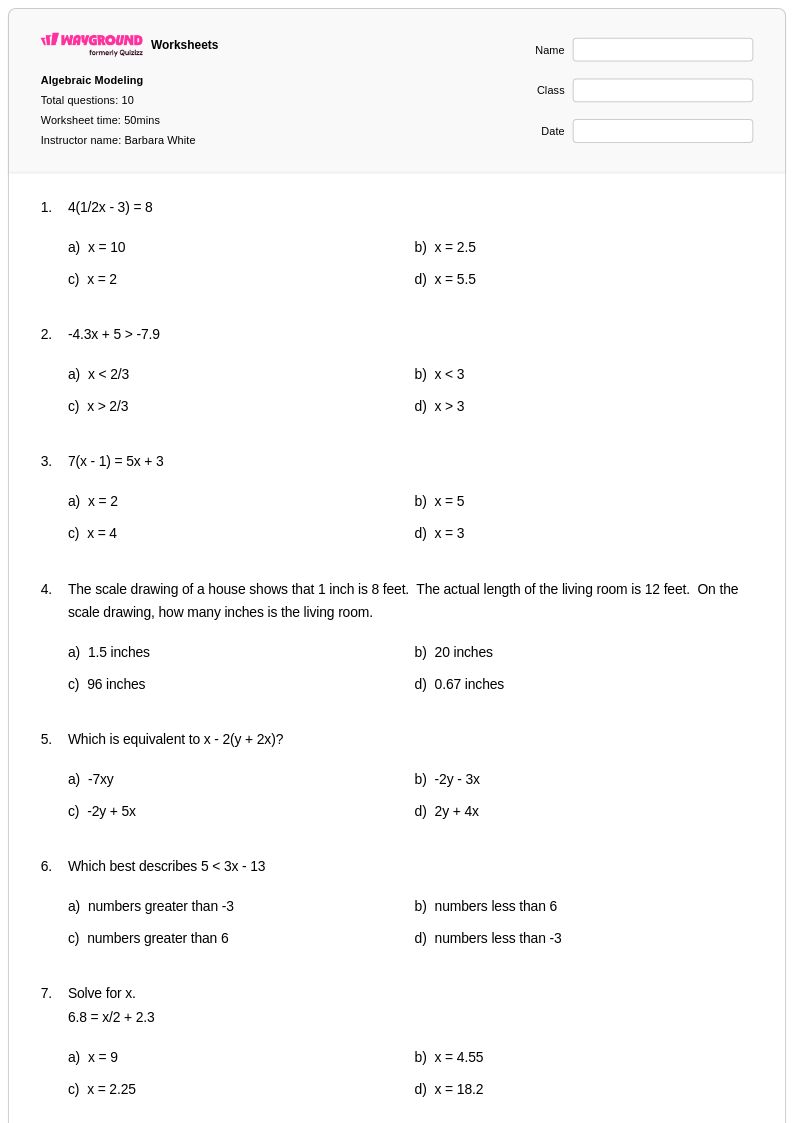
10 Q
9th
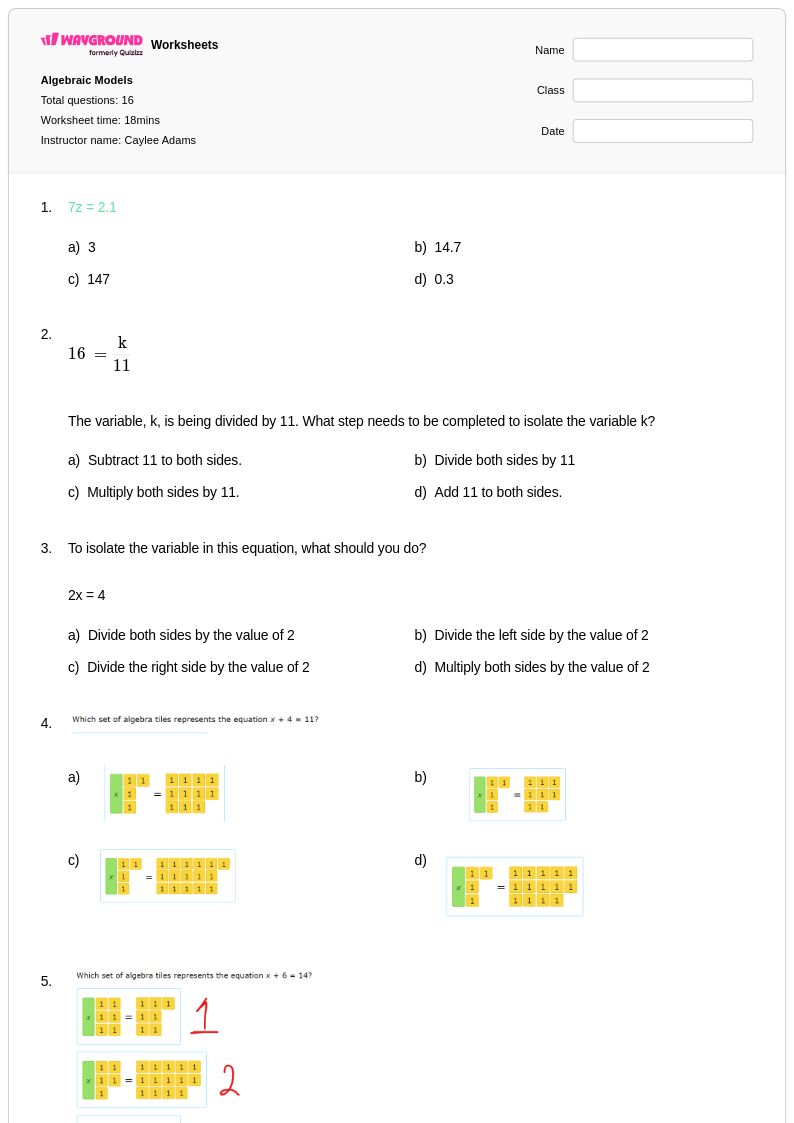
16 Q
6th
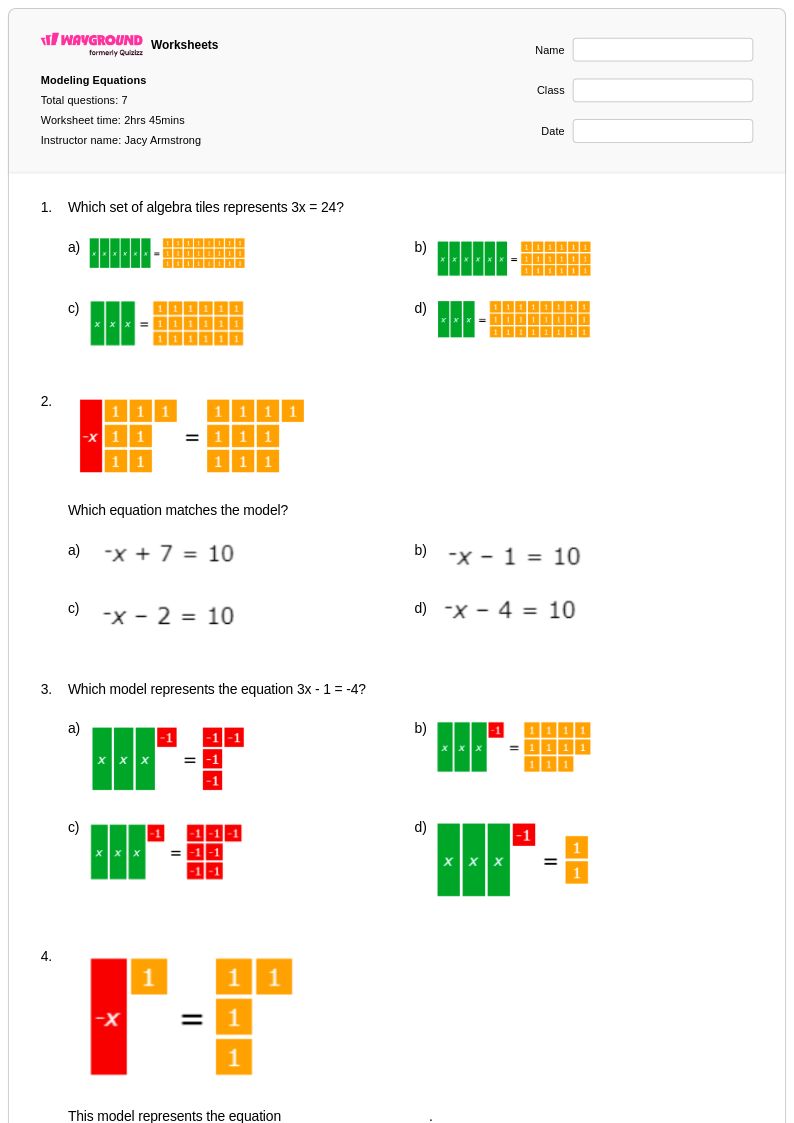
7 Q
7th
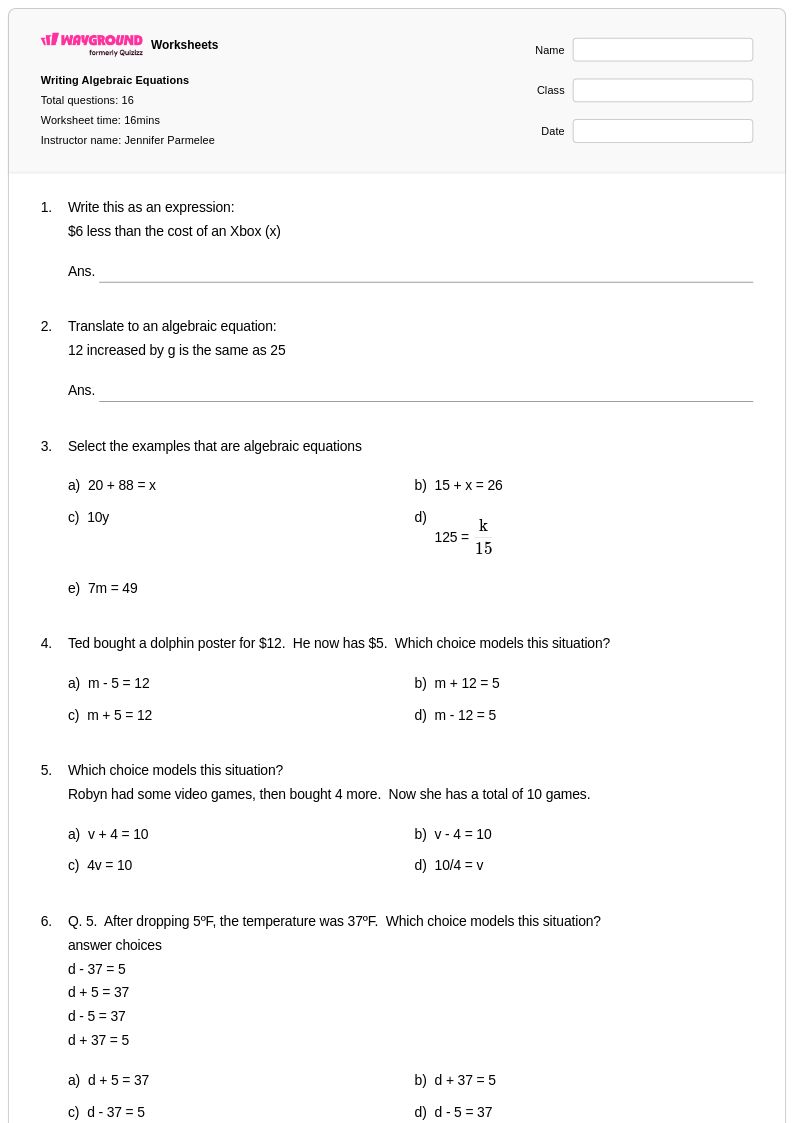
16 Q
5th - 7th
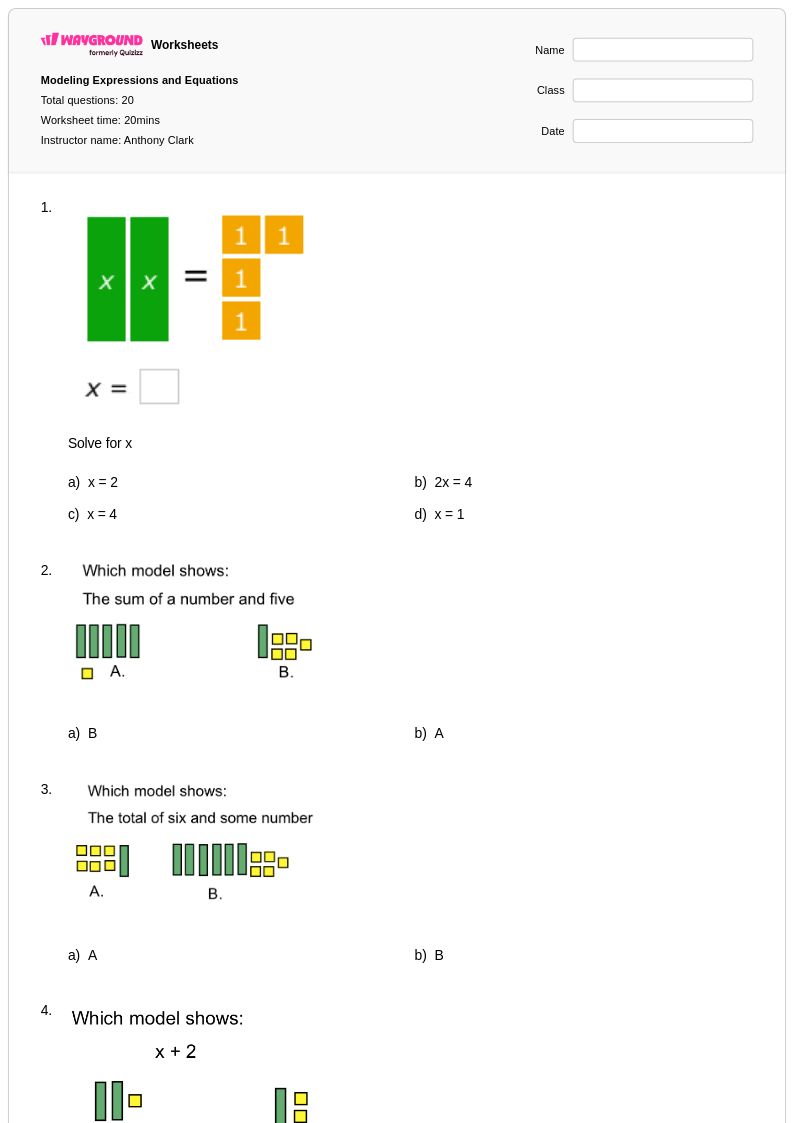
20 Q
6th - Uni
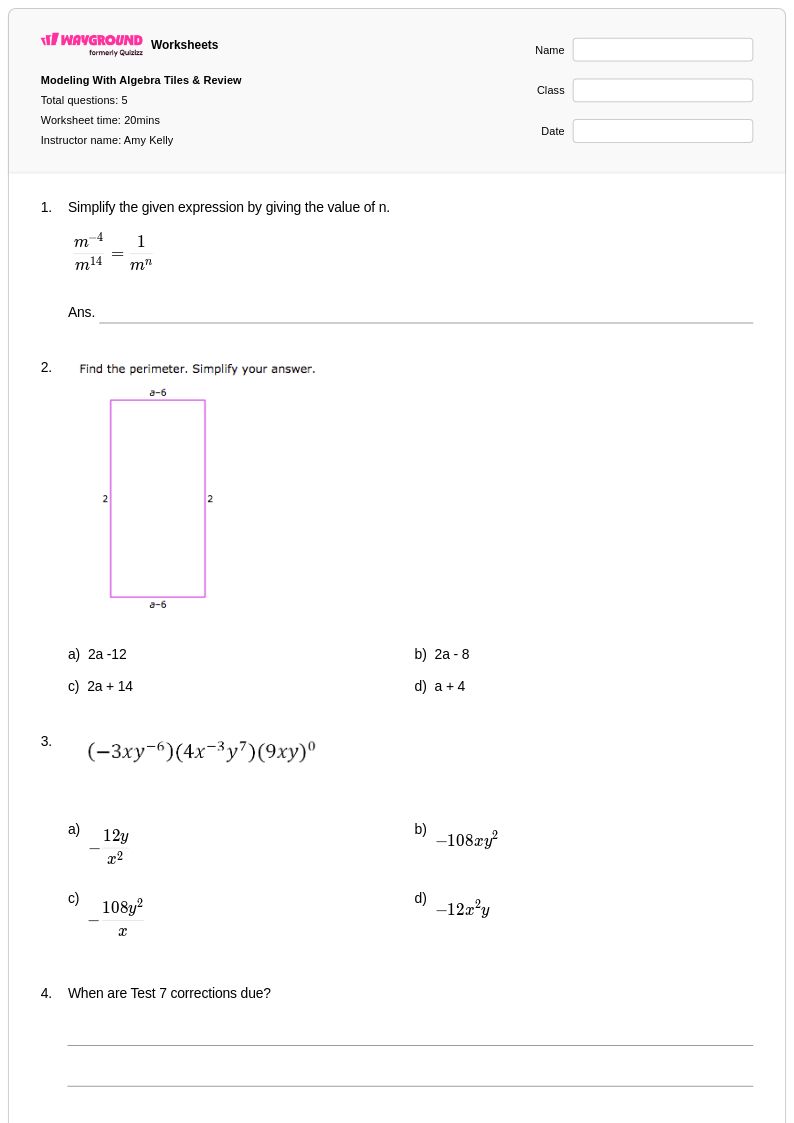
5 Q
9th
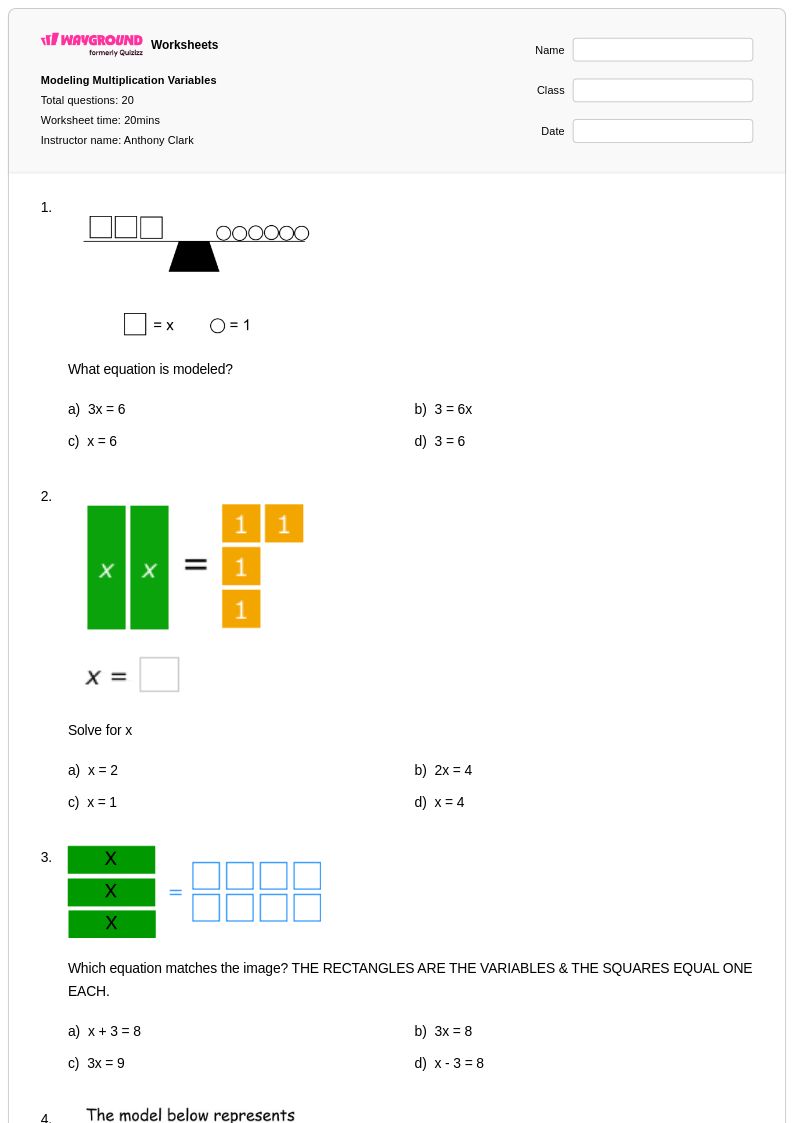
20 Q
6th - Uni
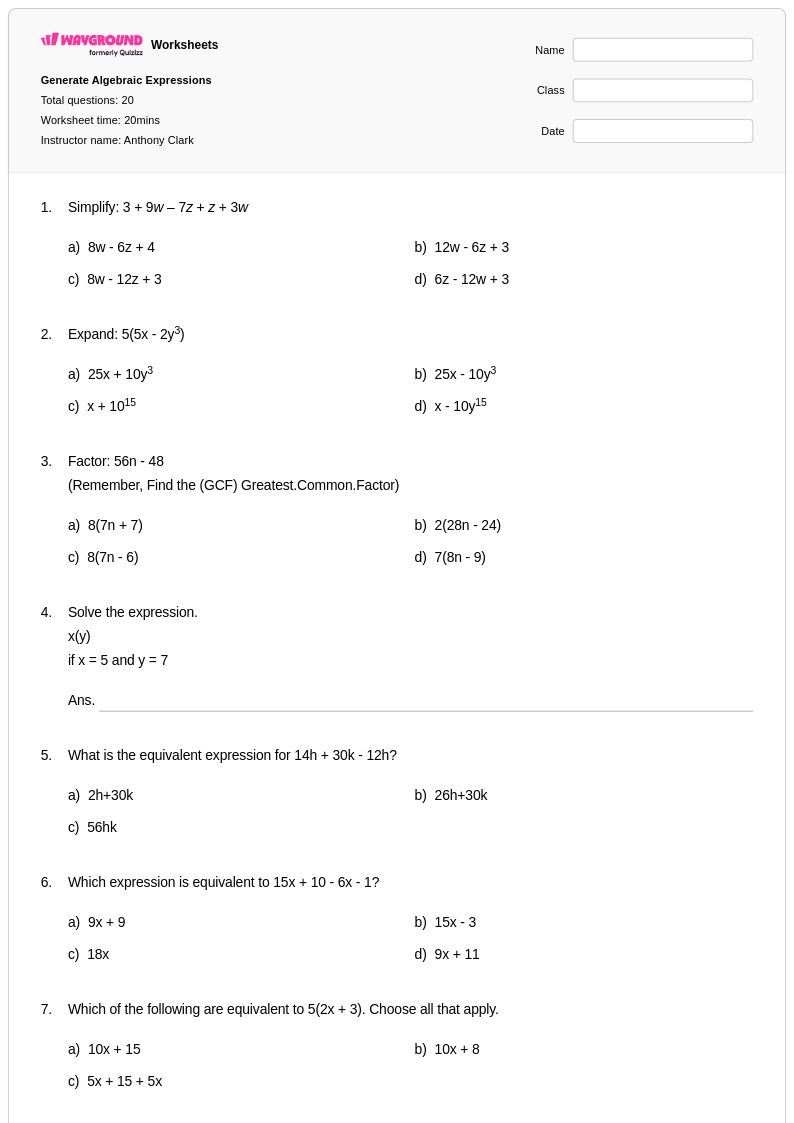
20 Q
6th - Uni
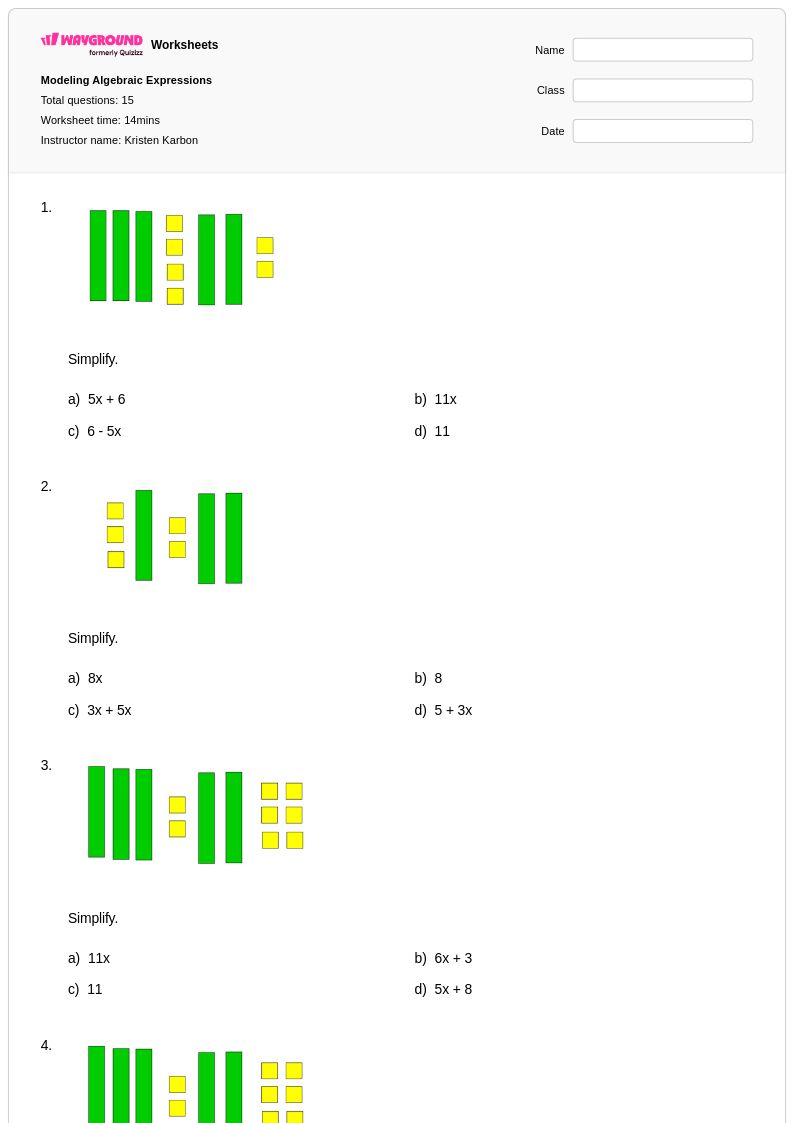
15 Q
6th
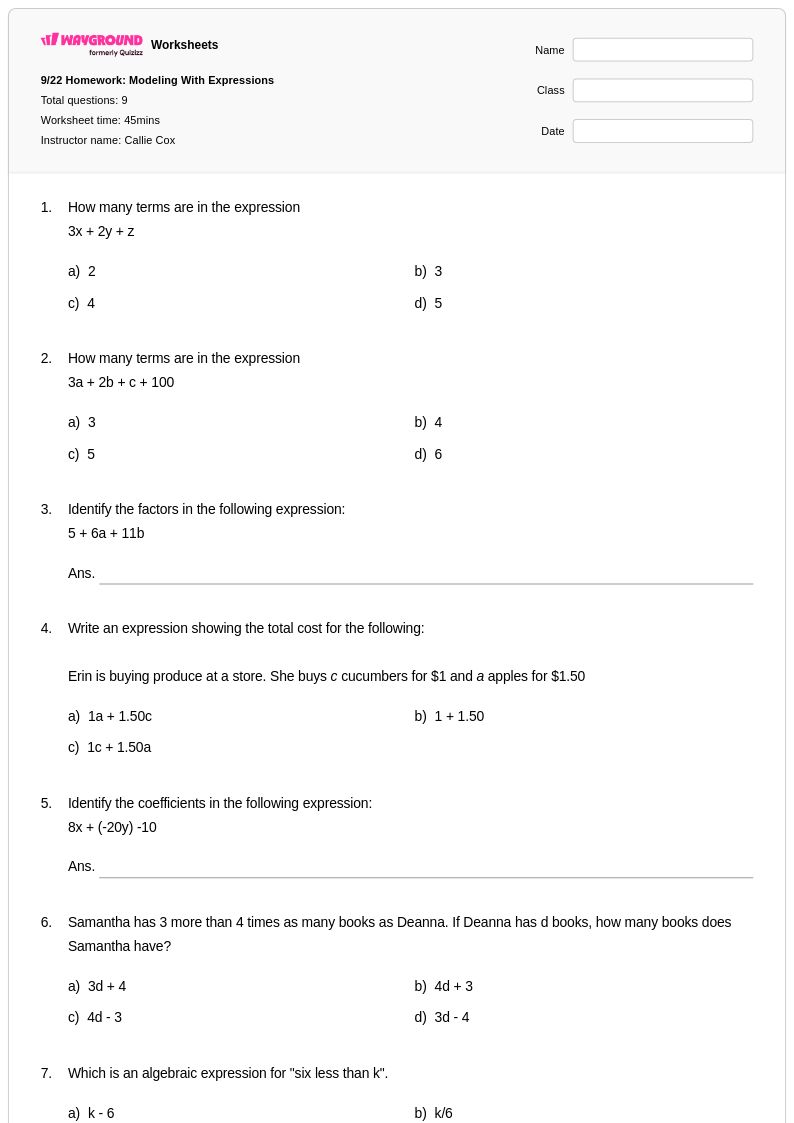
9 Q
9th - 12th
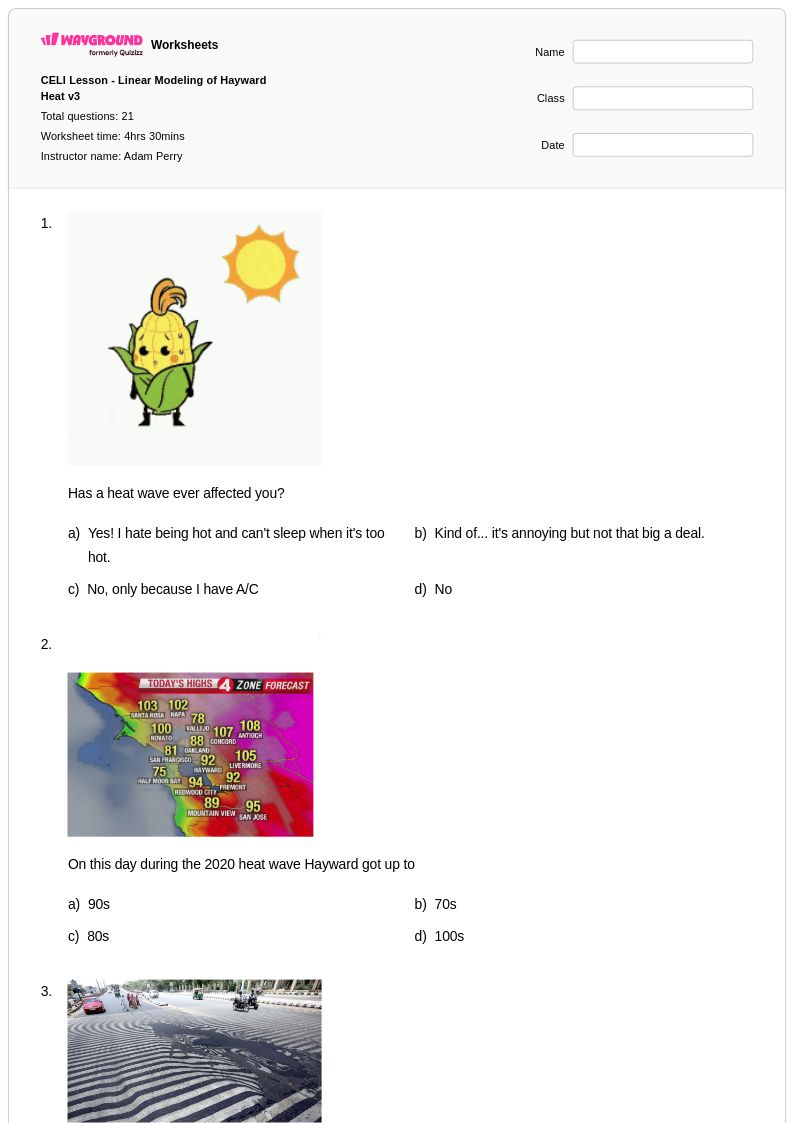
21 Q
9th - 12th
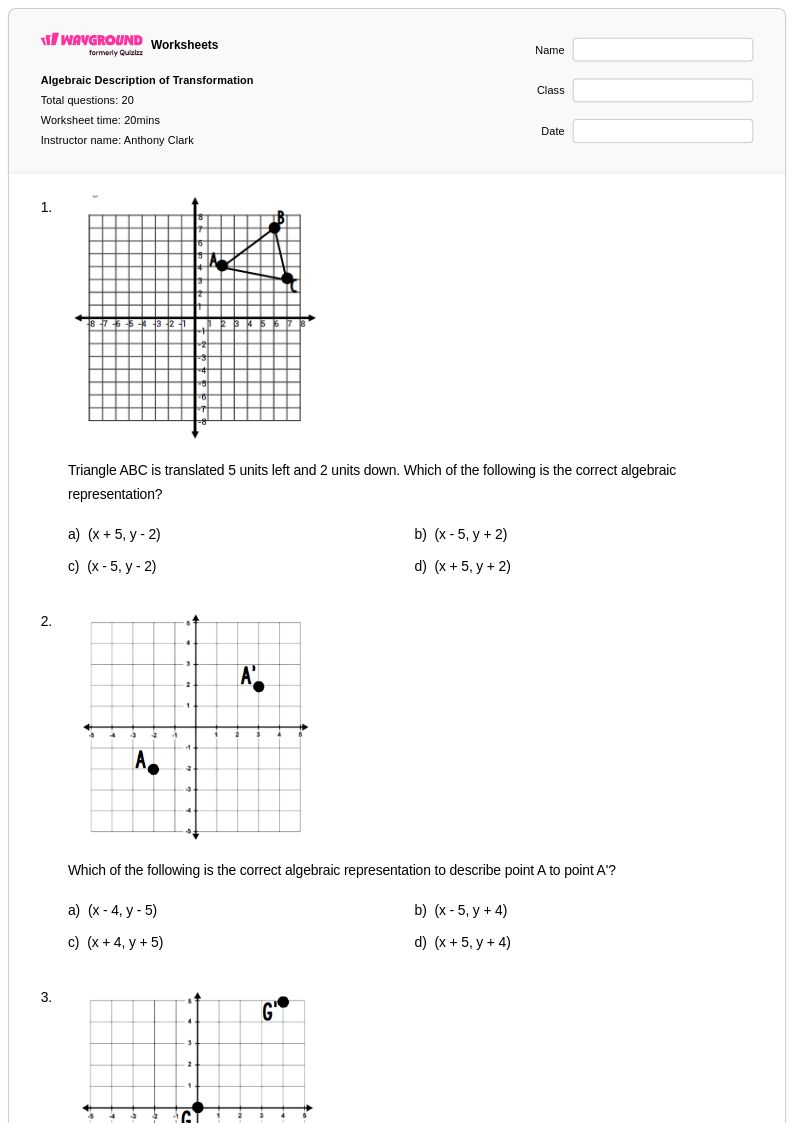
20 Q
8th - Uni
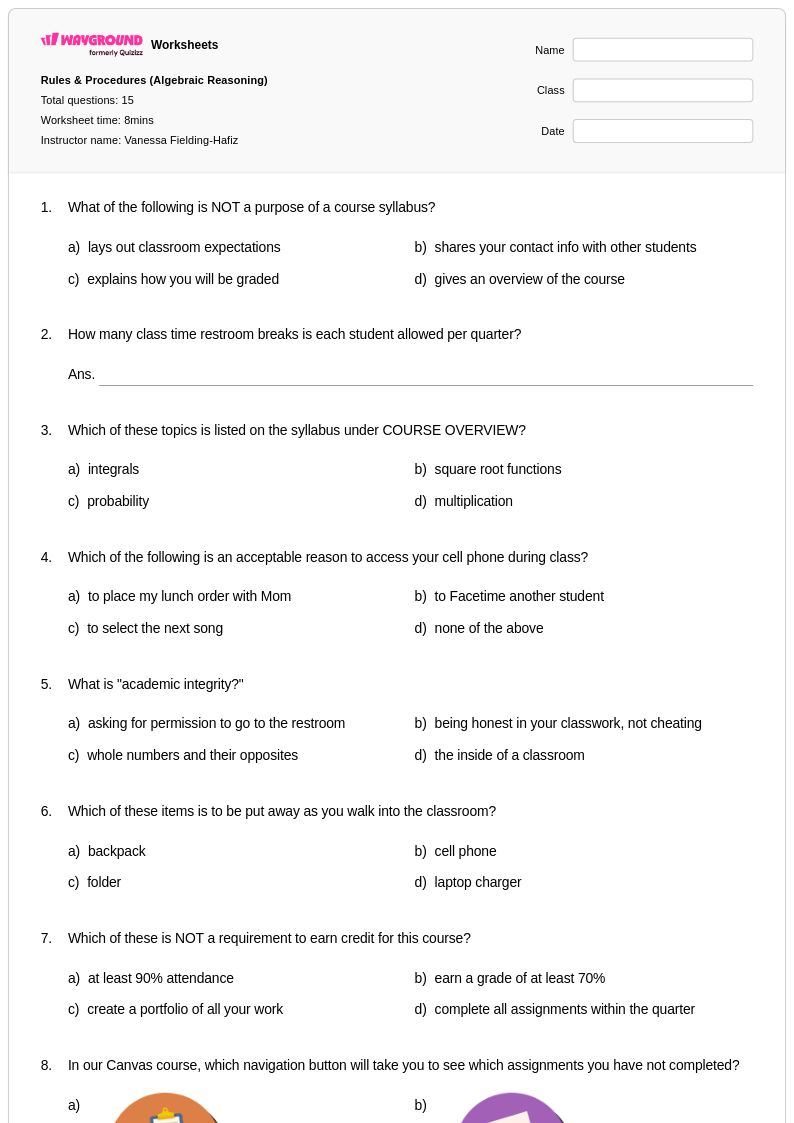
15 Q
9th - 10th
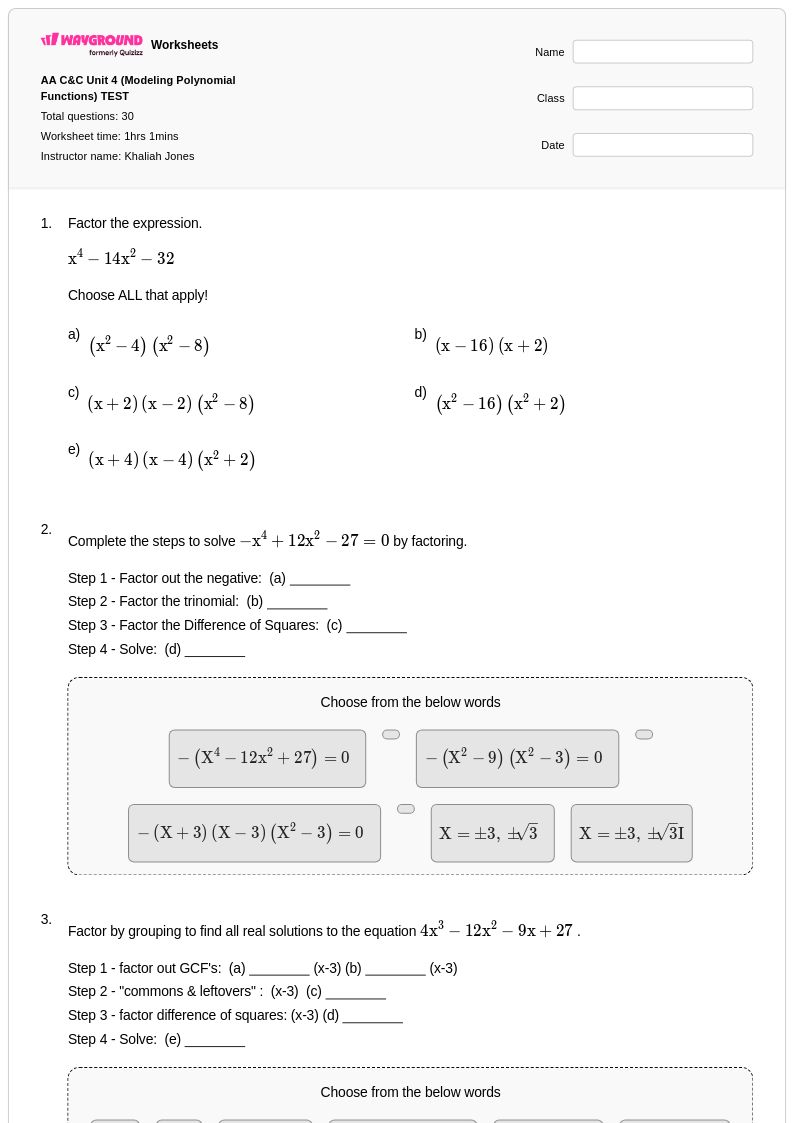
30 Q
11th
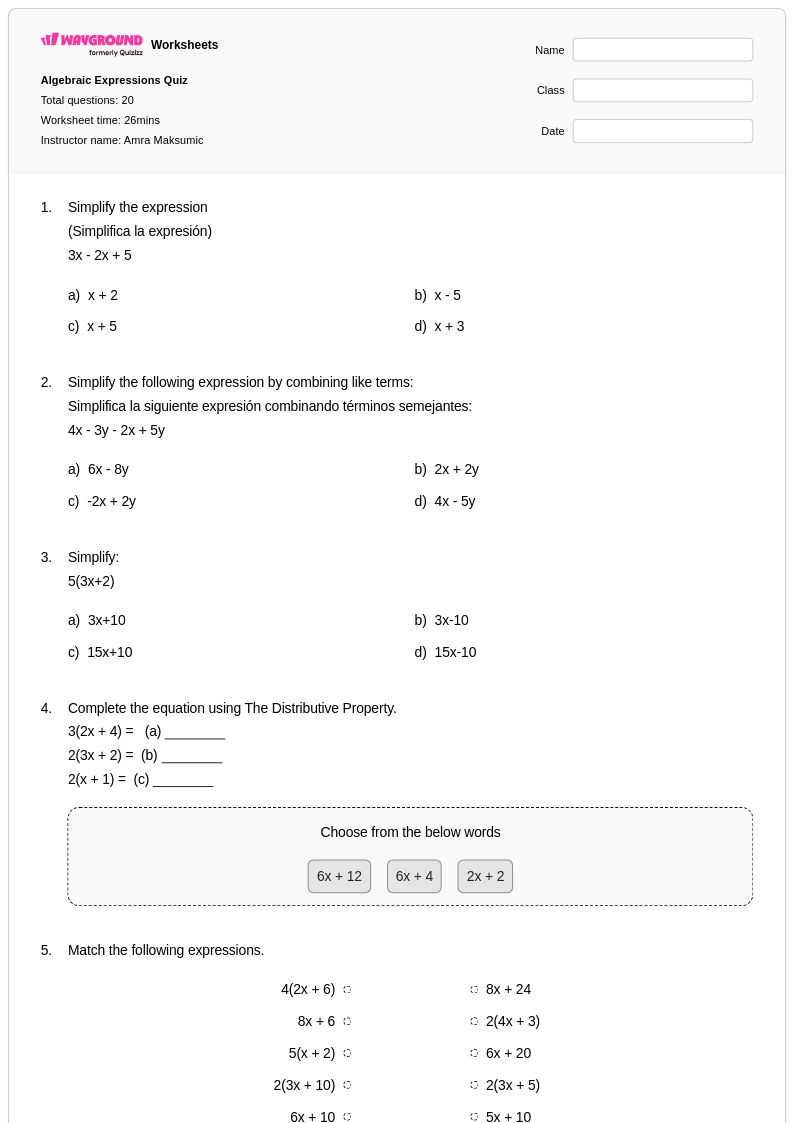
20 Q
9th
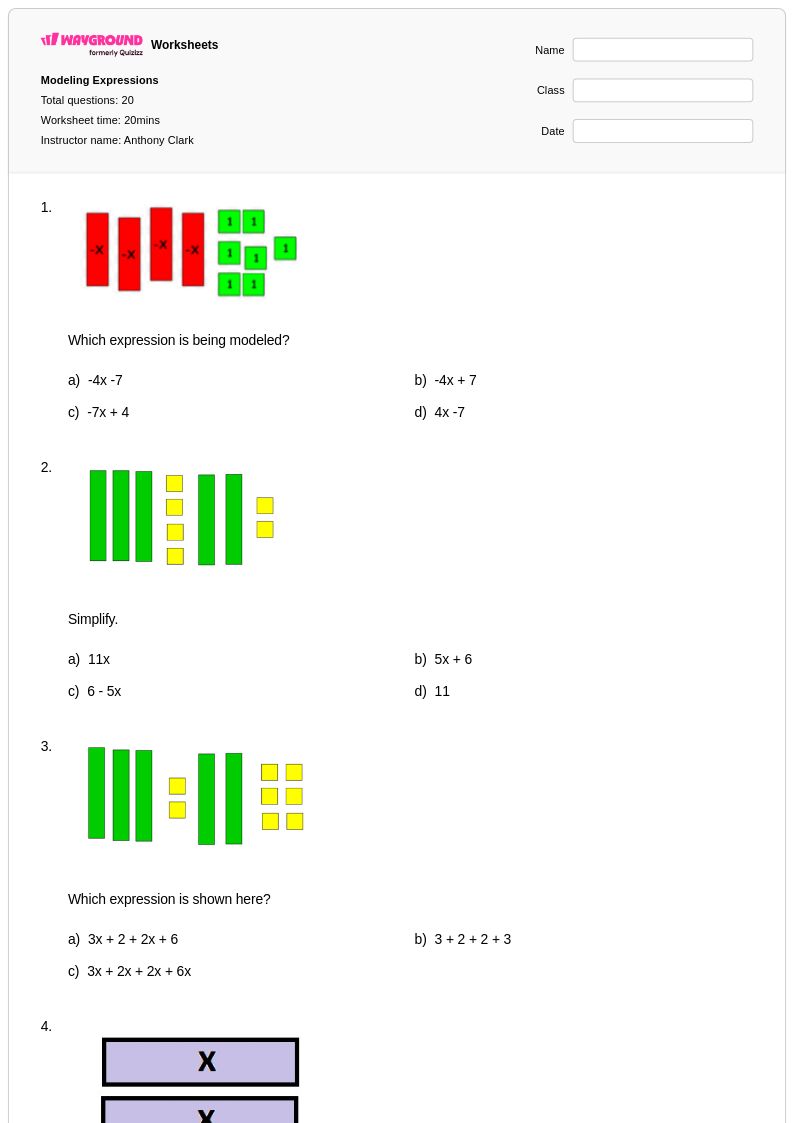
20 Q
6th - Uni
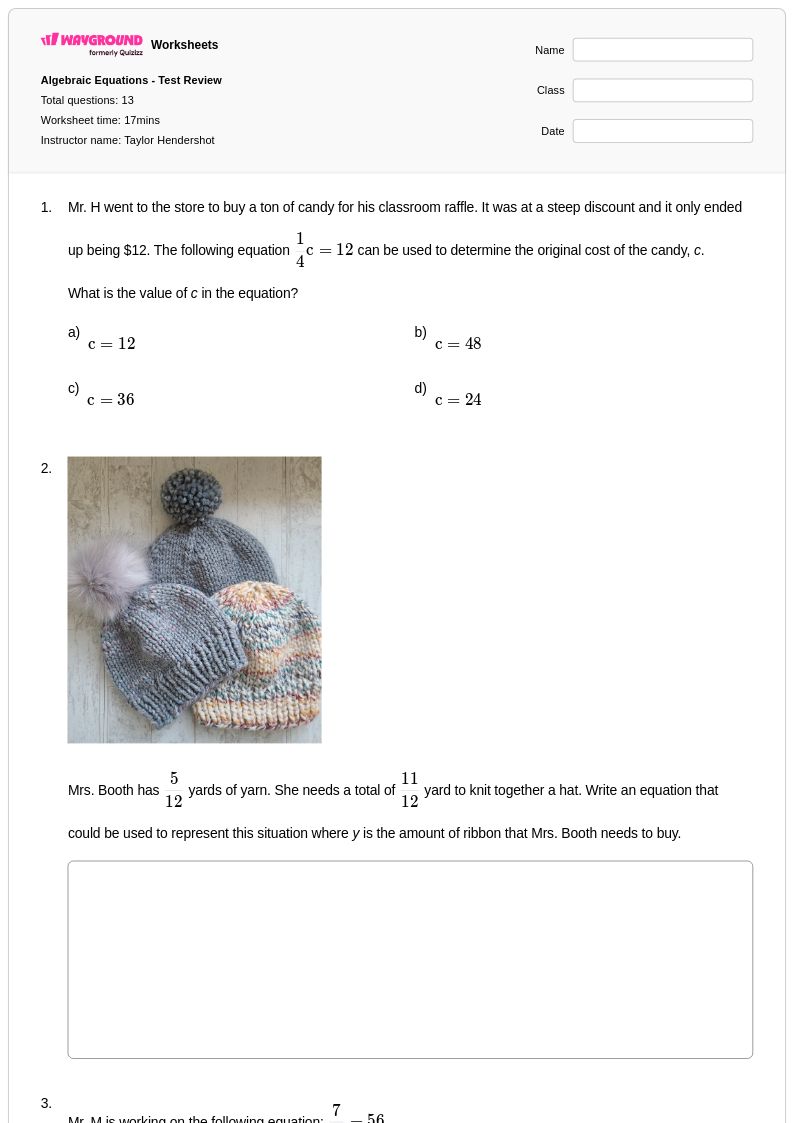
13 Q
6th
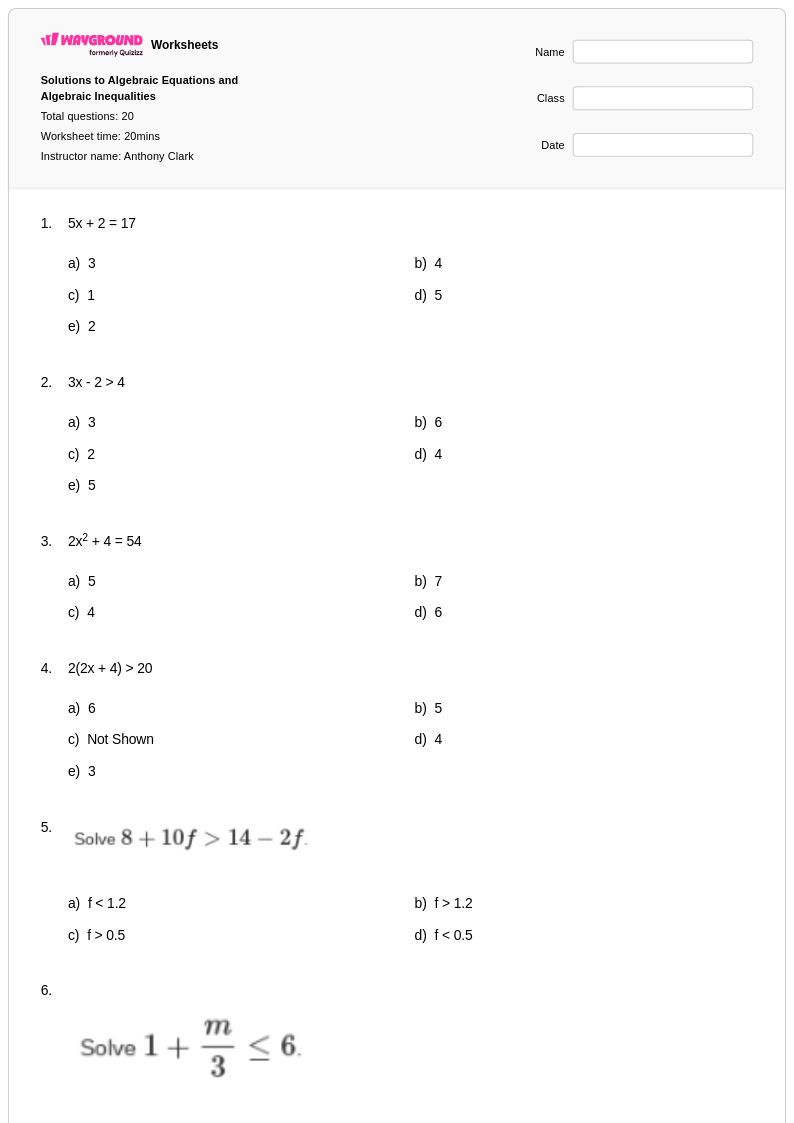
20 Q
6th - Uni
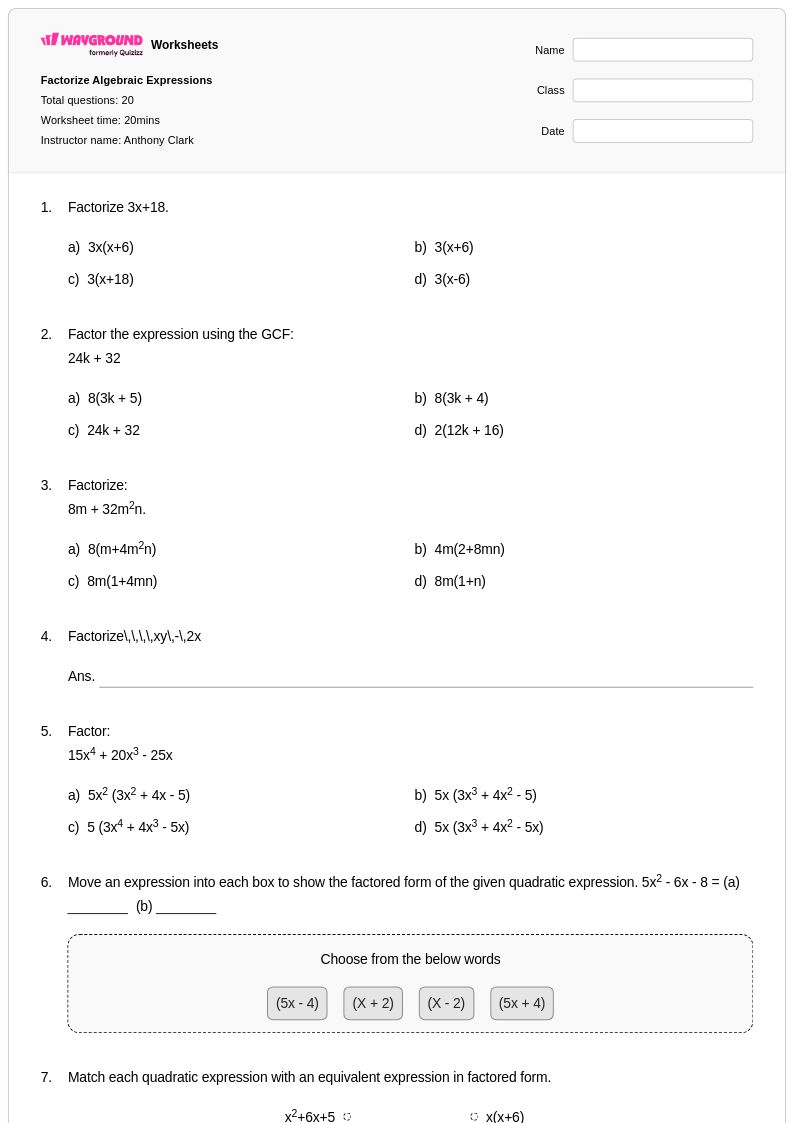
20 Q
8th - Uni
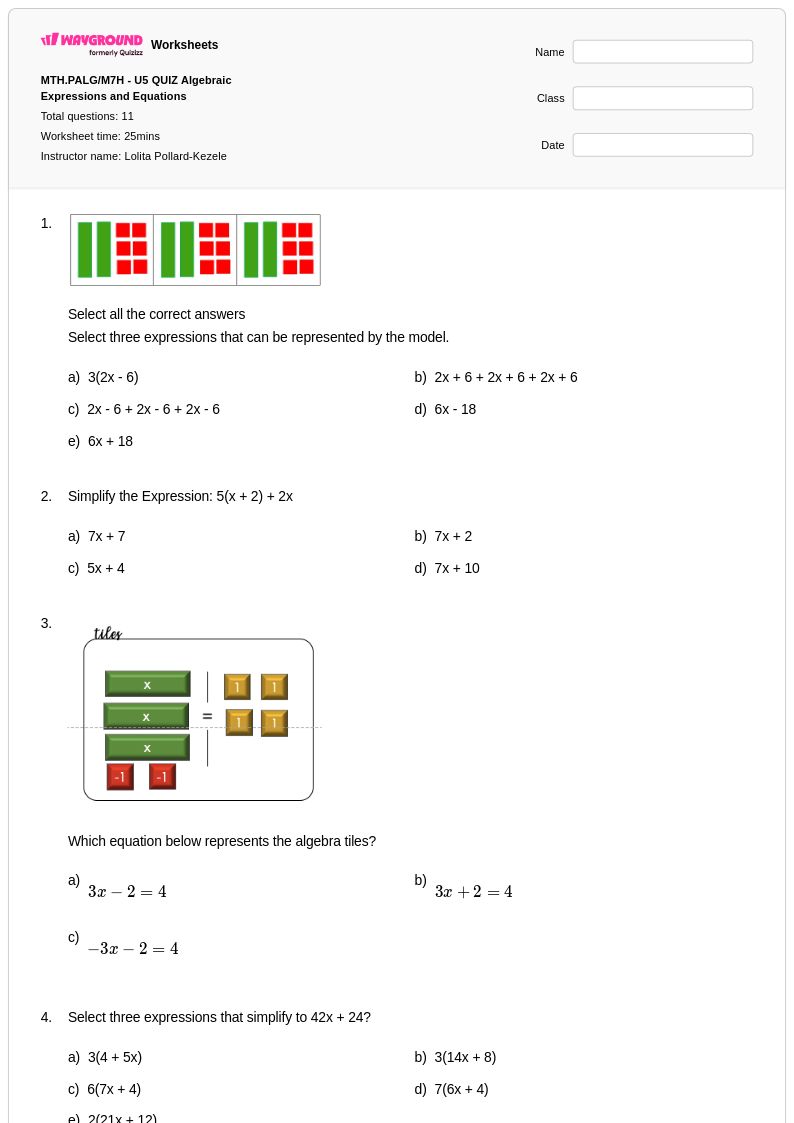
11 Q
8th

15 Q
7th
Explore Worksheets by Subjects
Explore printable Algebraic Modeling worksheets
Algebraic modeling worksheets available through Wayground (formerly Quizizz) provide students with essential practice in translating real-world scenarios into mathematical expressions, equations, and functions. These comprehensive resources strengthen critical thinking skills by challenging learners to identify variables, establish relationships between quantities, and construct algebraic representations of complex situations ranging from linear growth patterns to quadratic optimization problems. Each worksheet collection includes detailed answer keys and step-by-step solutions that guide students through the modeling process, while the free printable format ensures accessibility for both classroom instruction and independent practice. These practice problems systematically build proficiency in recognizing mathematical patterns within authentic contexts, enabling students to develop the analytical skills necessary for advanced mathematical reasoning.
Wayground (formerly Quizizz) empowers educators with millions of teacher-created algebraic modeling resources that streamline lesson planning and enhance instructional effectiveness. The platform's robust search and filtering capabilities allow teachers to quickly locate worksheets aligned with specific curriculum standards, while differentiation tools enable seamless customization for diverse learning needs and ability levels. Whether delivered as printable pdf handouts for traditional classroom environments or interactive digital assignments for technology-enhanced learning, these flexible resources support targeted skill practice, remediation for struggling learners, and enrichment opportunities for advanced students. Teachers benefit from the extensive variety of modeling scenarios represented across the collection, from basic linear relationships to complex multi-step applications, ensuring comprehensive coverage of algebraic modeling concepts throughout their instructional sequence.
FAQs
How do I teach algebraic modeling?
What exercises help students practice algebraic modeling?
What mistakes do students make with algebraic modeling?
How can I use an algebraic modeling worksheet from Wayground?
How does algebraic modeling align with Common Core math?
How can I differentiate algebraic modeling practice?