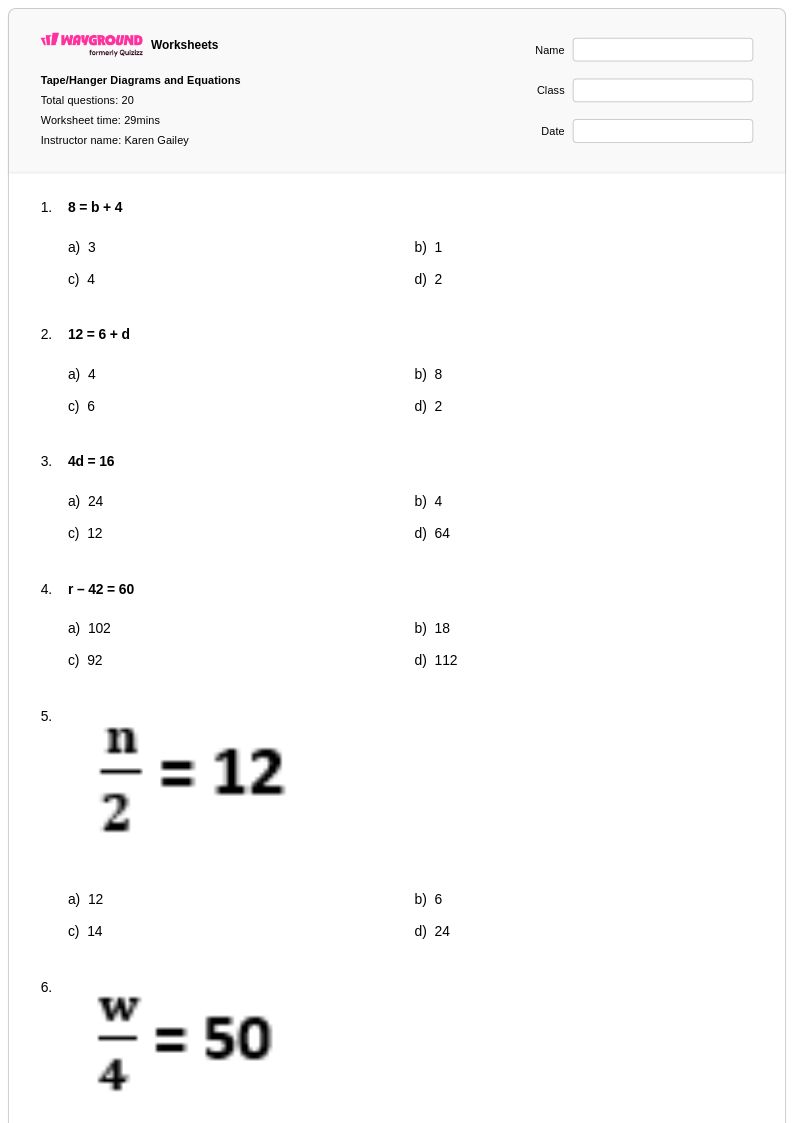
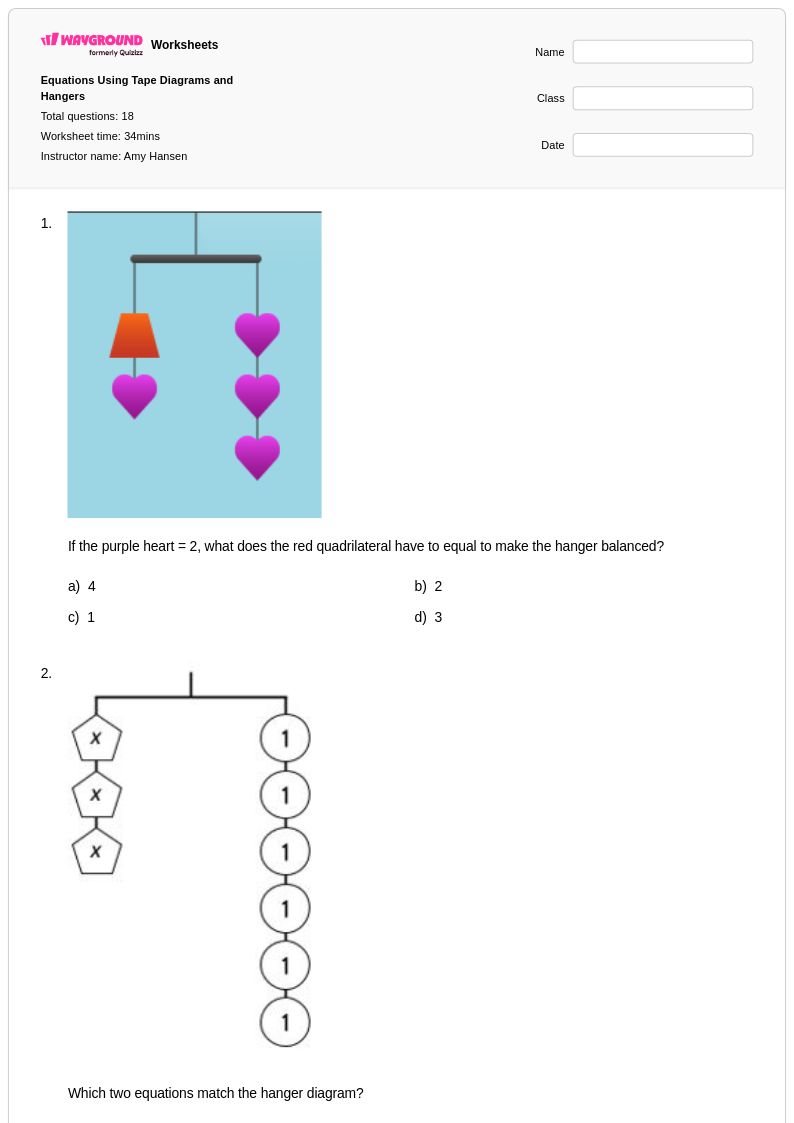
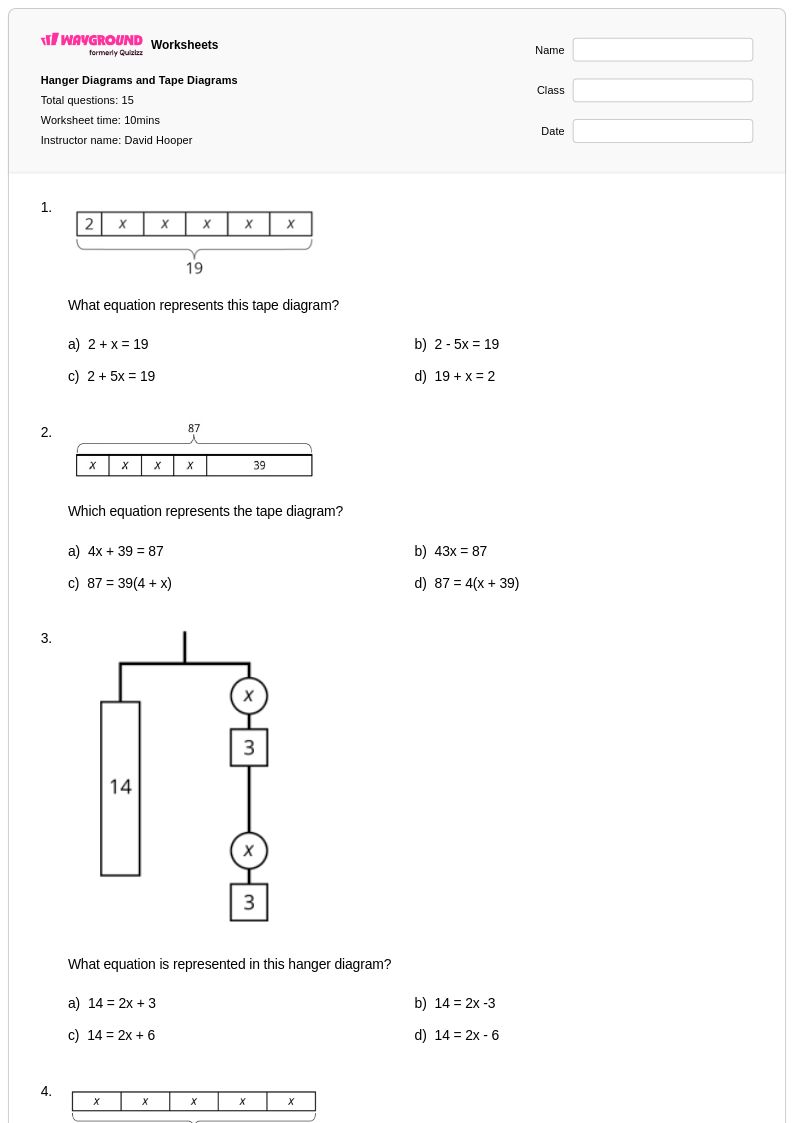
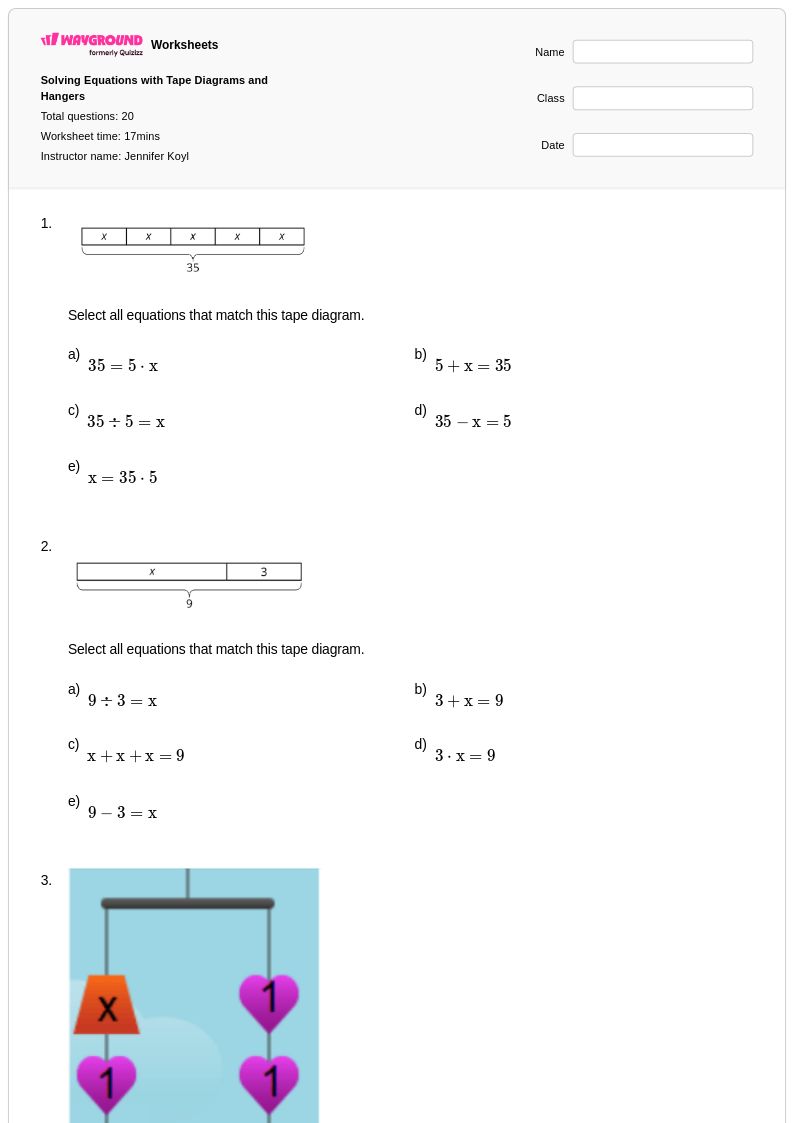
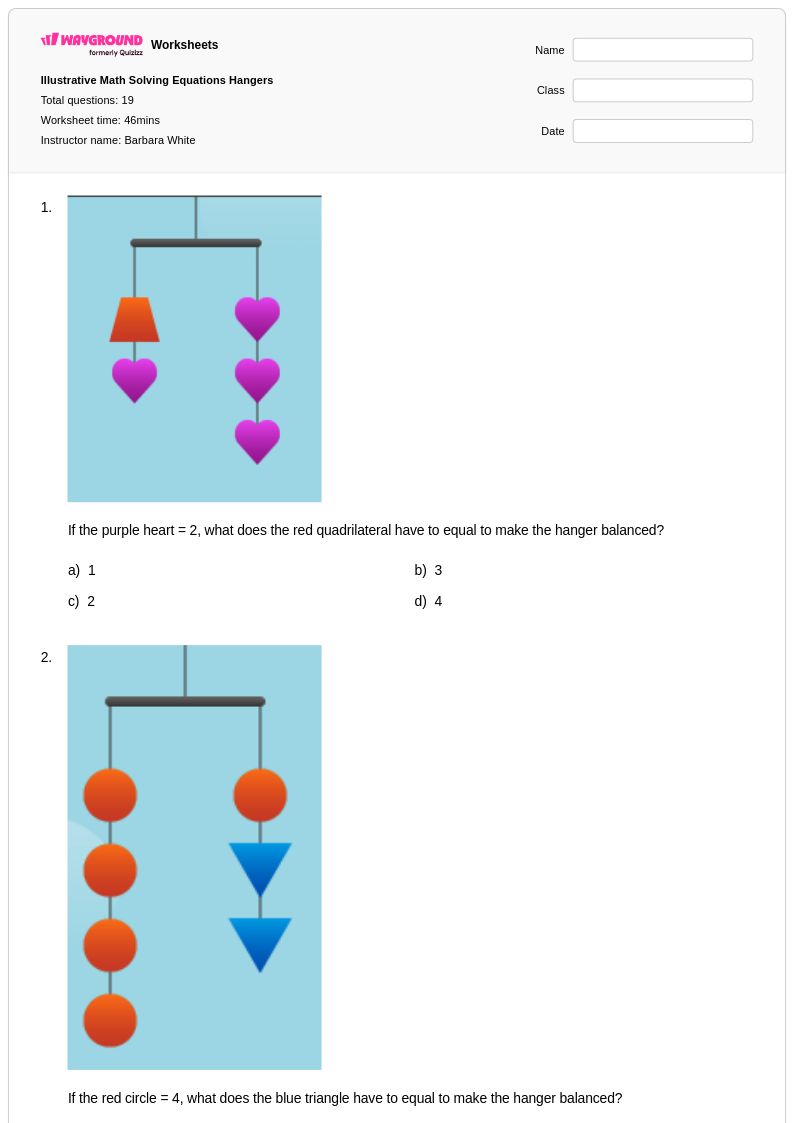
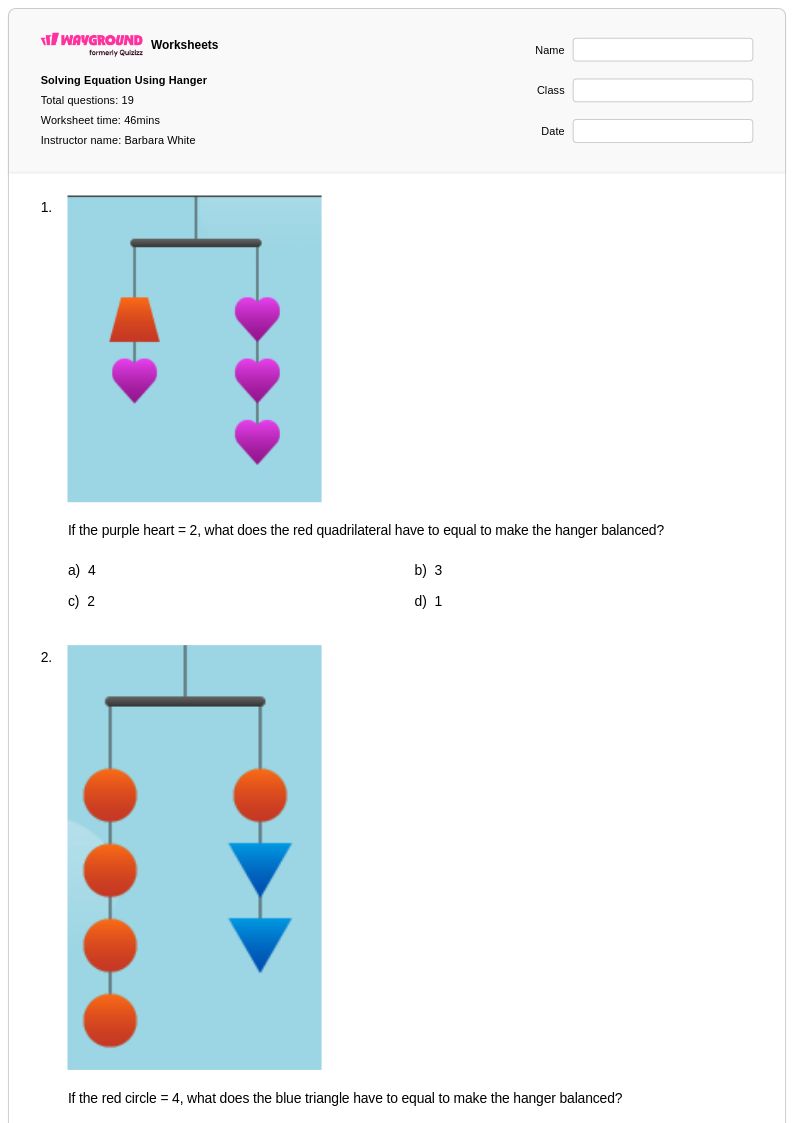
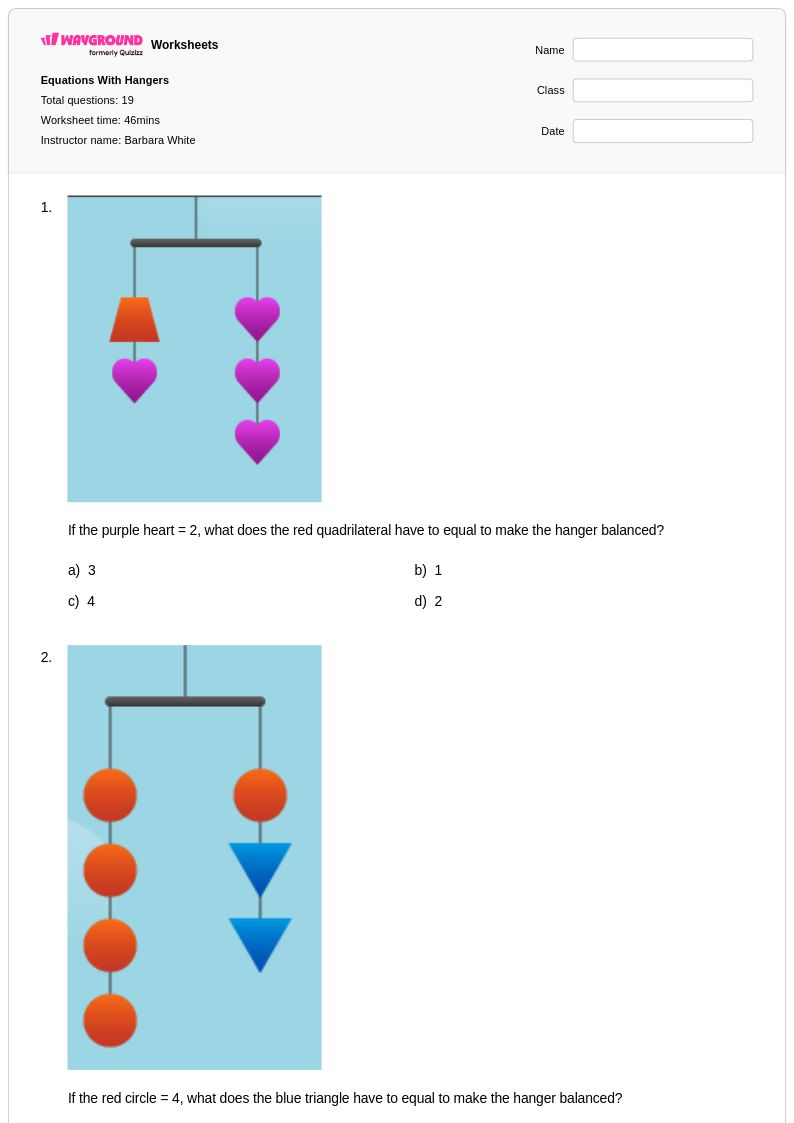
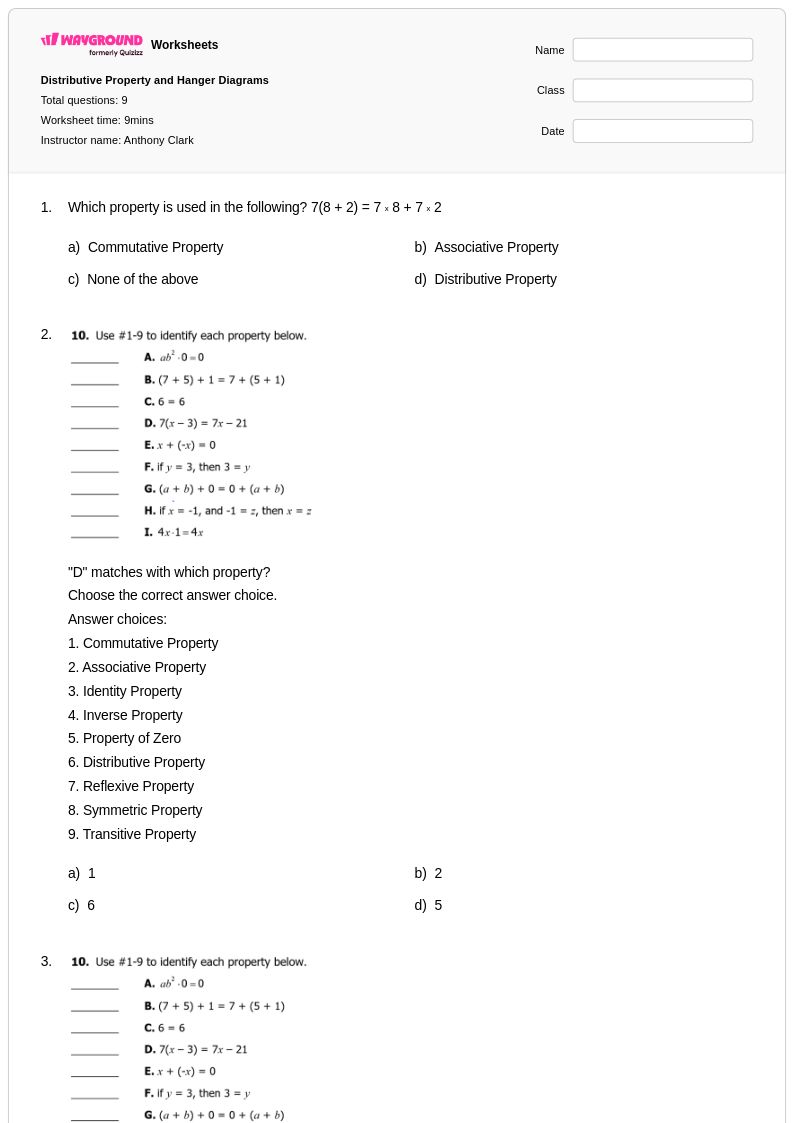
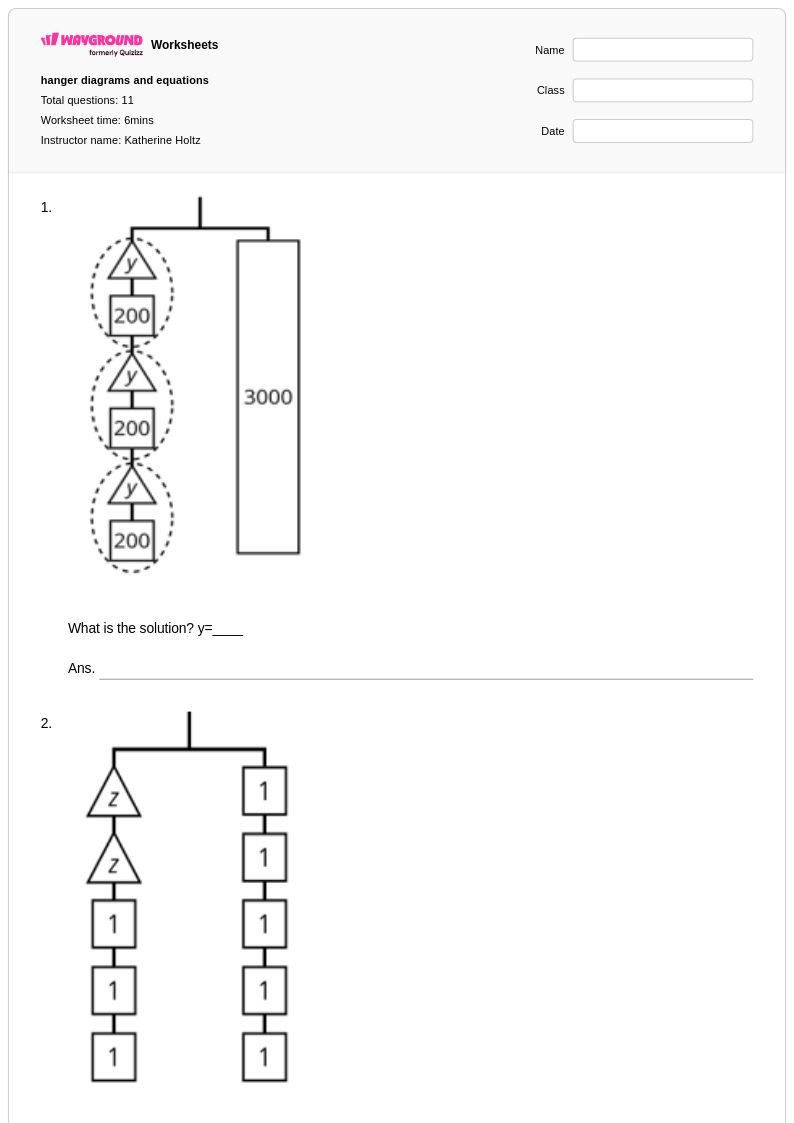
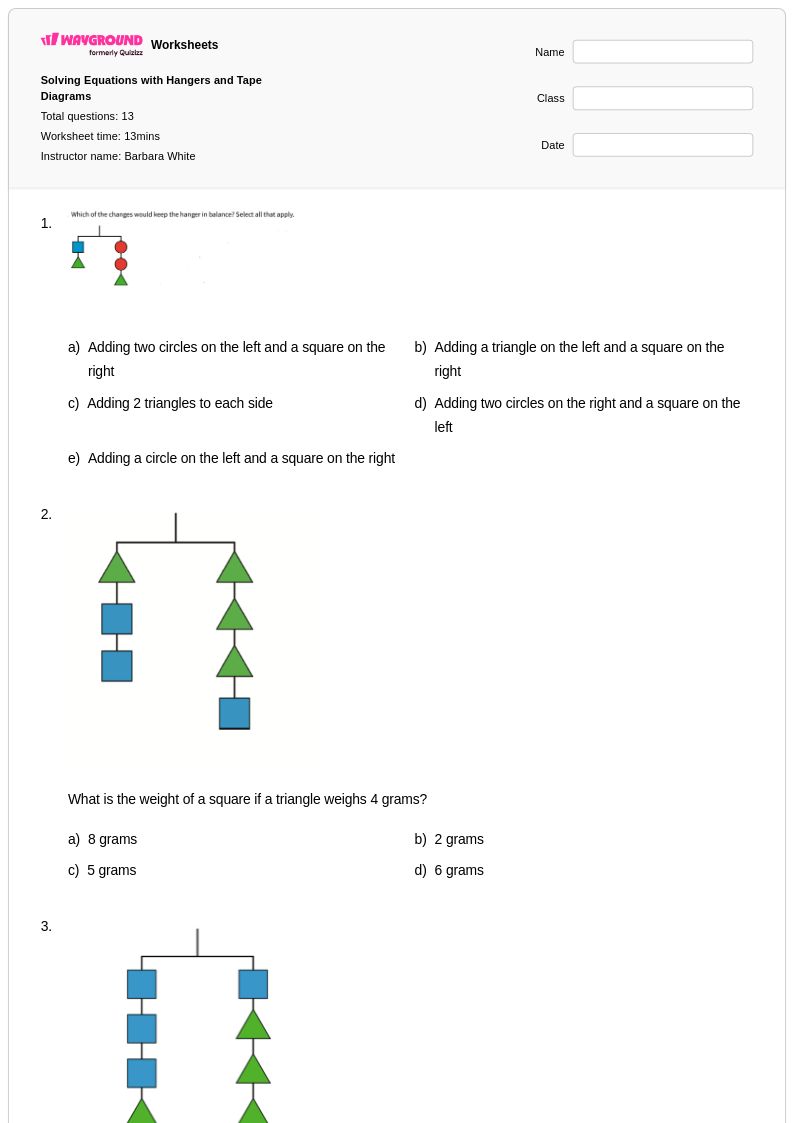
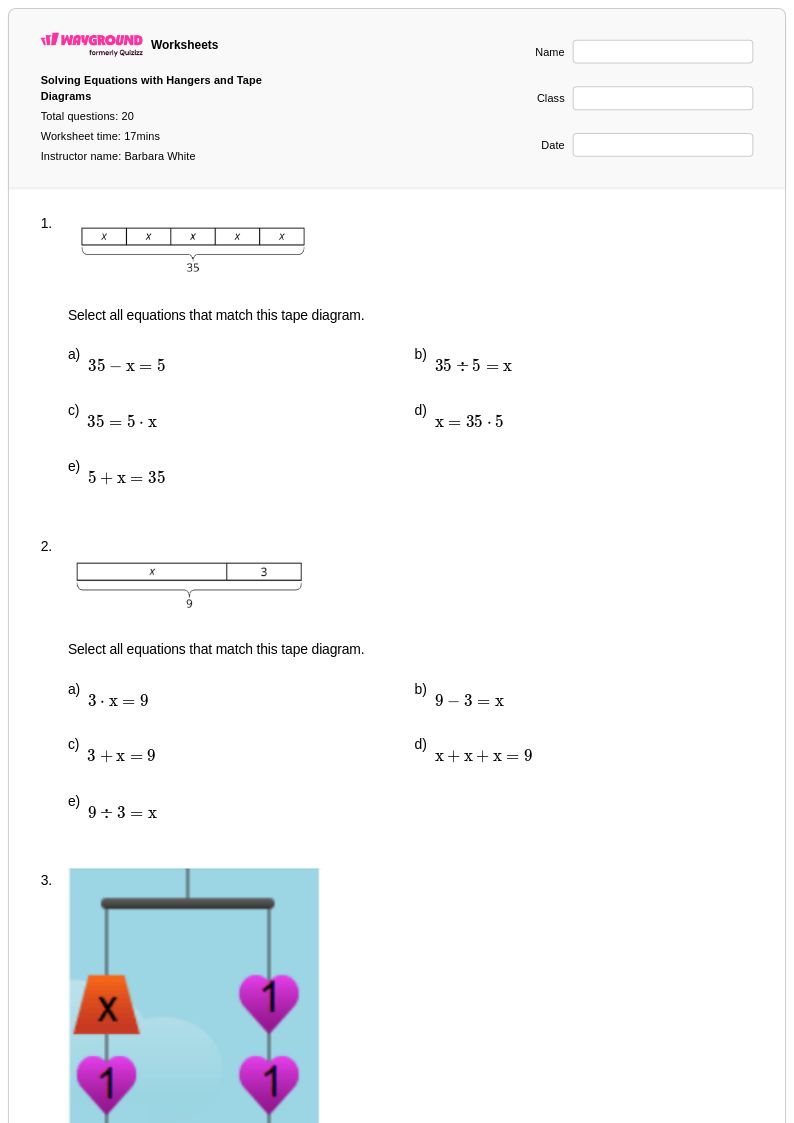
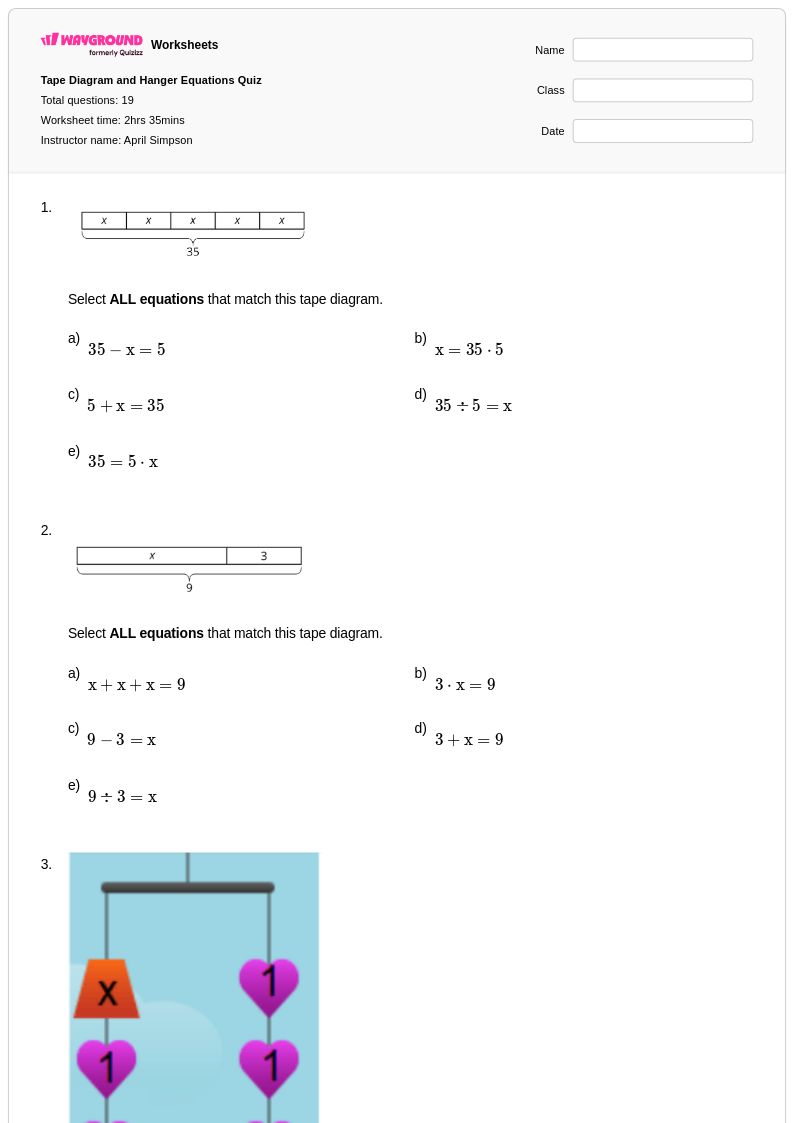
Explore Wayground's free hanger diagrams worksheets and printables that help students master algebraic balance concepts through visual practice problems, complete with answer keys for effective mathematics learning.
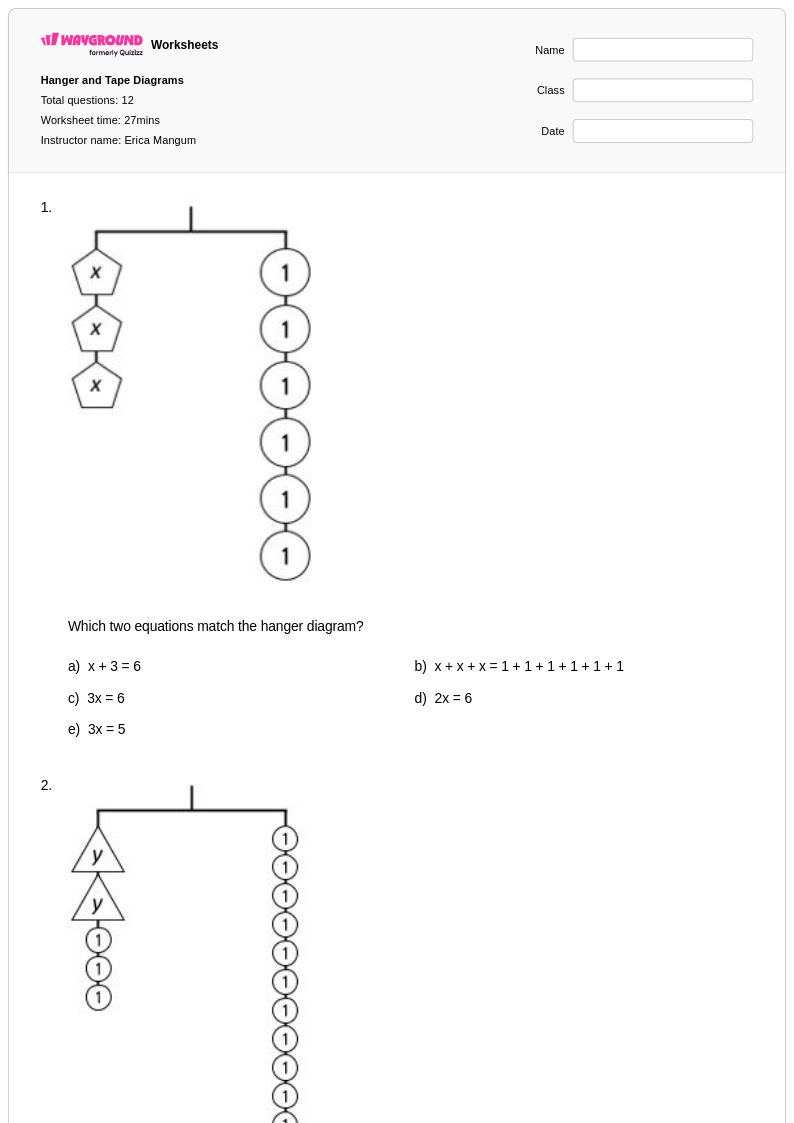
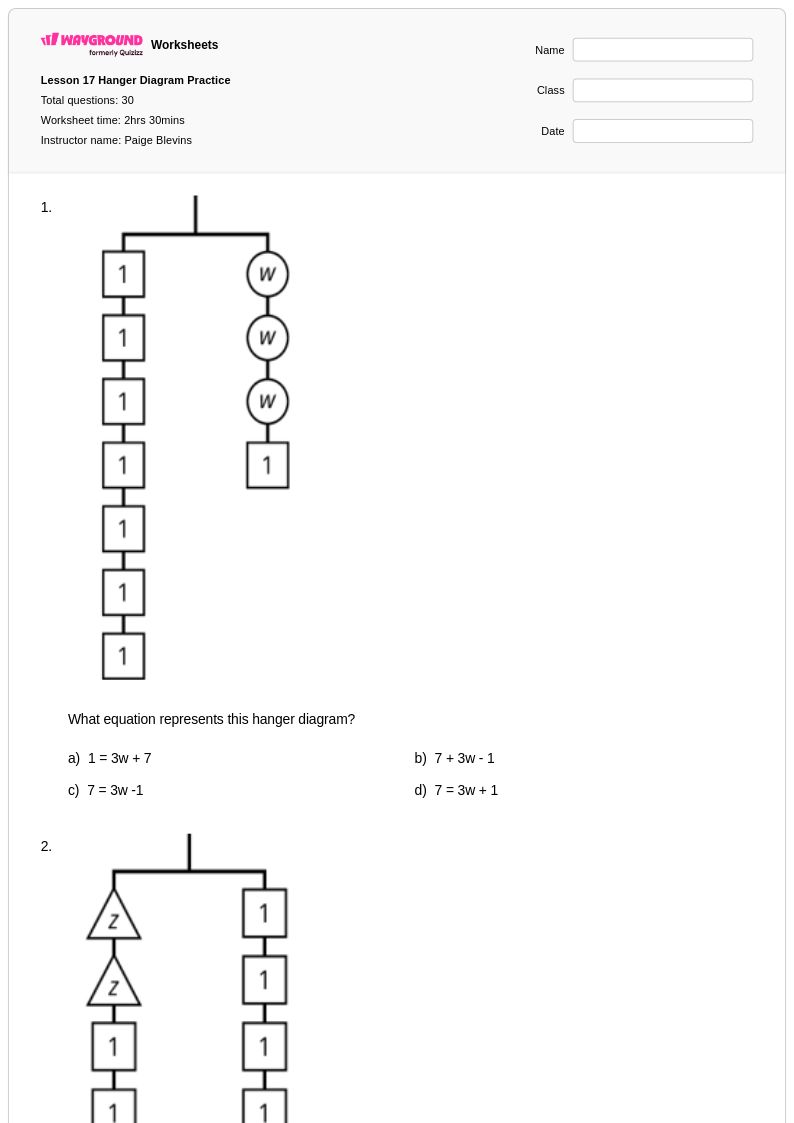
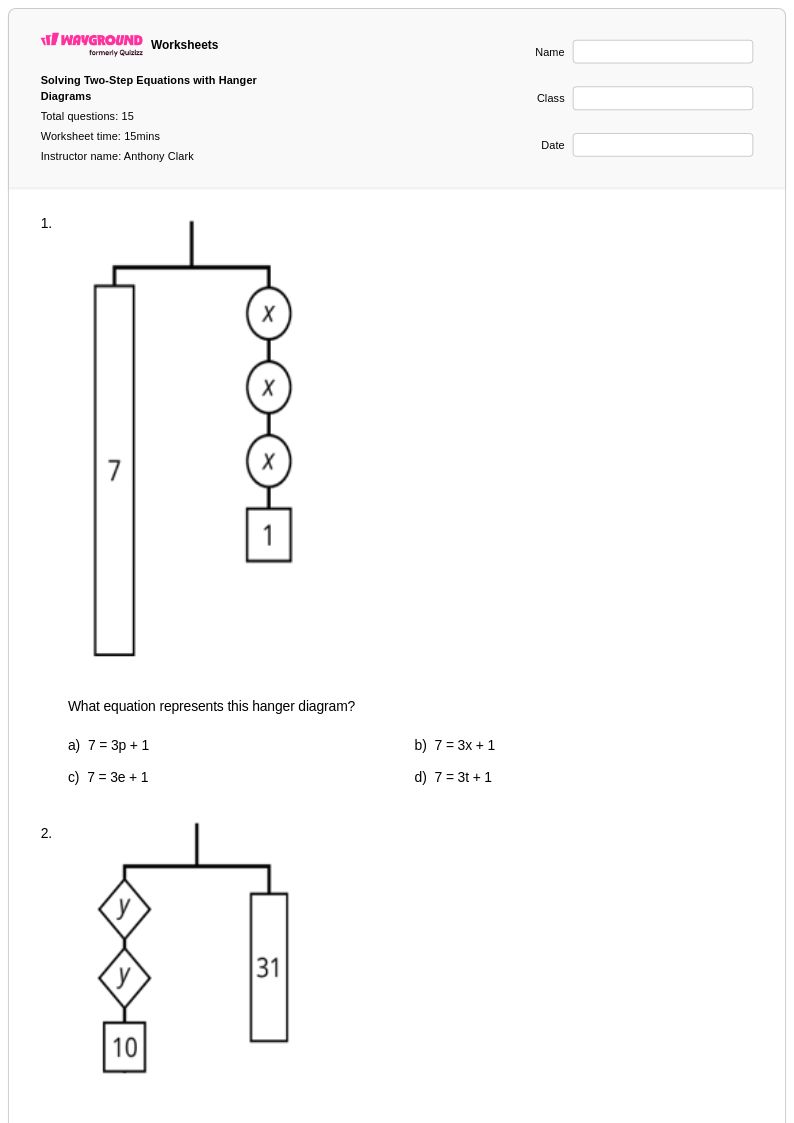
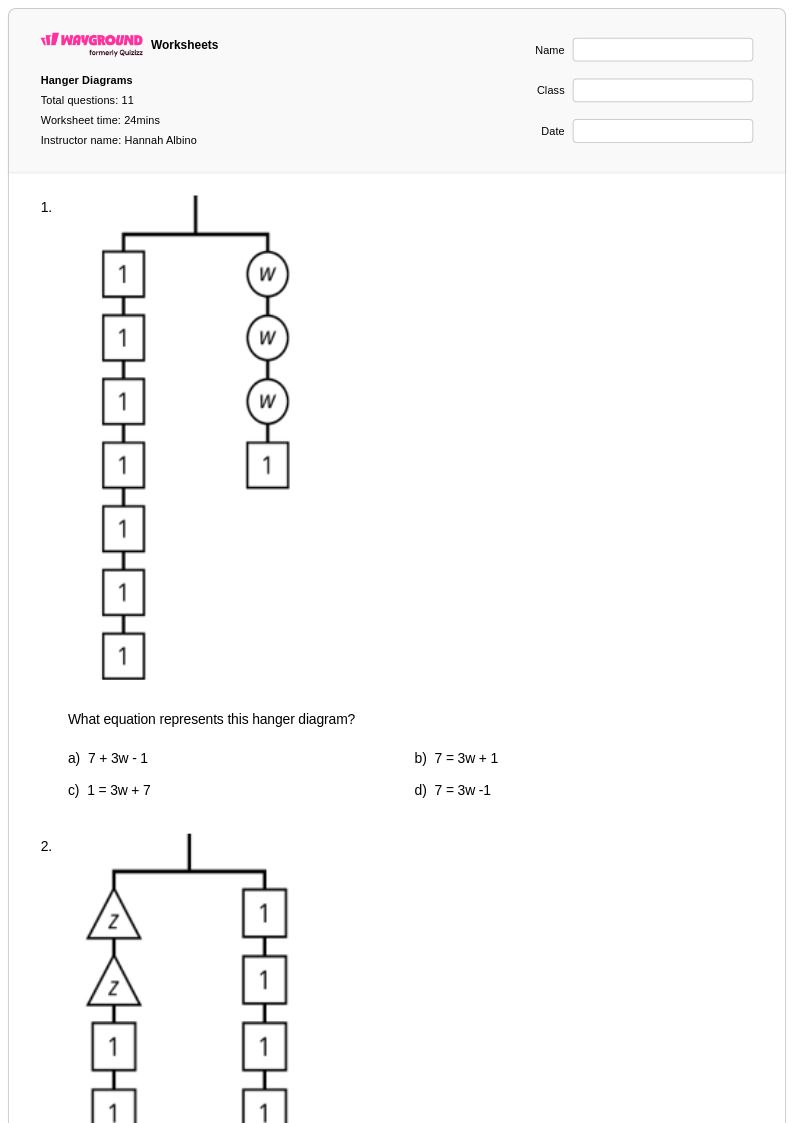
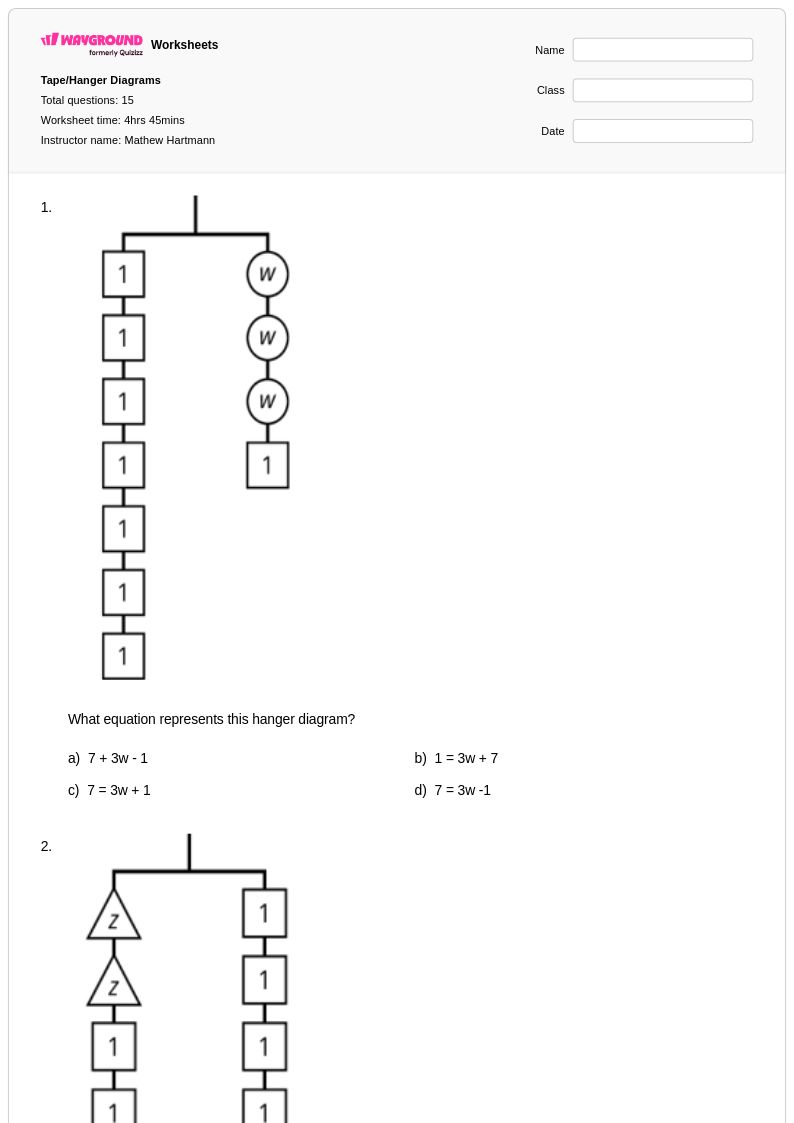
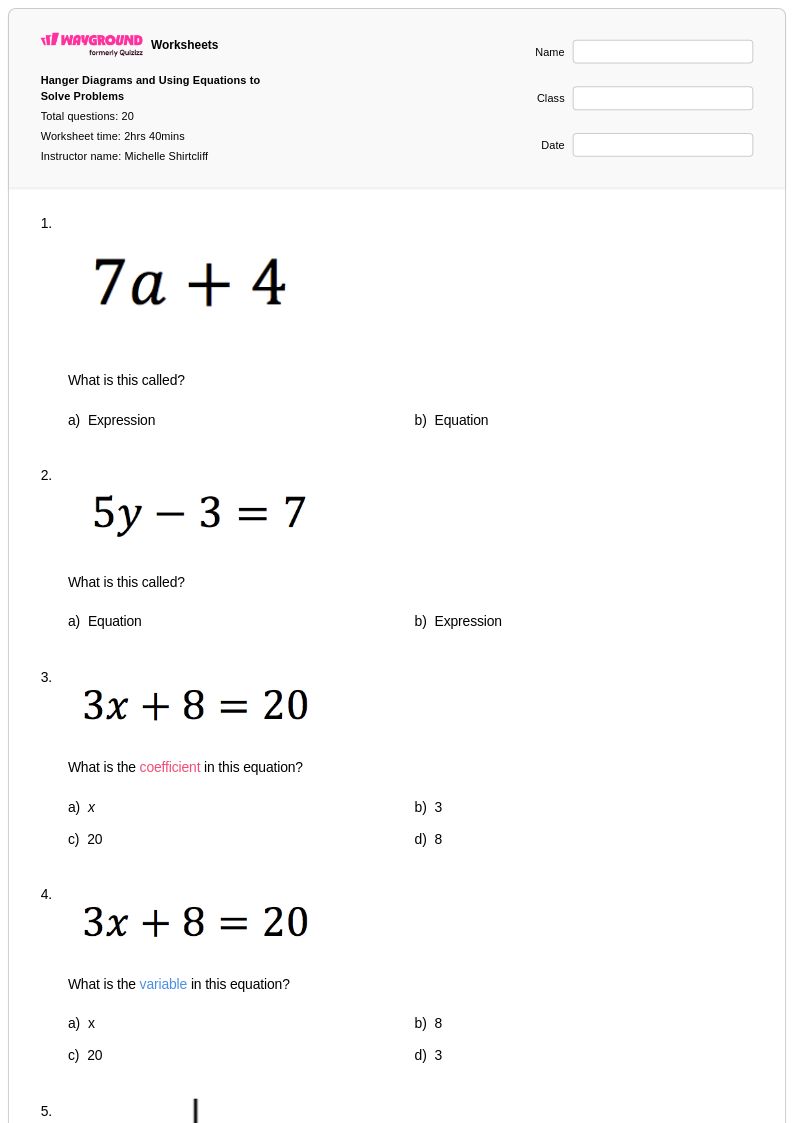
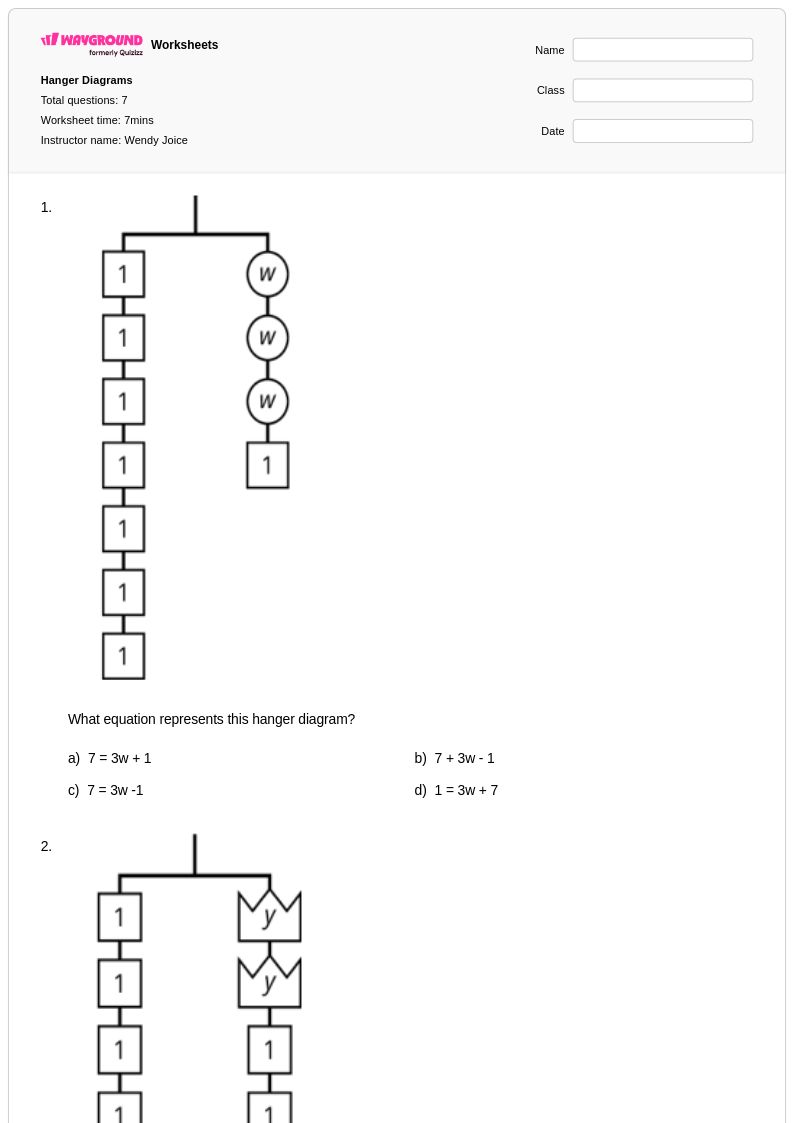
Hanger diagrams worksheets available through Wayground (formerly Quizizz) provide students with powerful visual tools for understanding algebraic balance and equation solving. These specialized practice problems use the metaphor of balanced hangers to help learners grasp fundamental concepts of equality, where objects on one side of the hanger must equal the weight on the other side. The worksheets strengthen critical algebraic thinking skills by having students determine unknown values, create equivalent expressions, and solve equations through visual representation rather than abstract manipulation. Teachers can access comprehensive collections that include detailed answer keys and are available as free printables in convenient pdf format, making it easy to provide targeted practice that builds conceptual understanding before introducing traditional algebraic notation.
Wayground (formerly Quizizz) supports mathematics educators with an extensive library of millions of teacher-created hanger diagram resources that can be easily discovered through robust search and filtering capabilities. The platform's differentiation tools allow teachers to customize worksheets based on individual student needs, whether providing remediation for struggling learners or enrichment challenges for advanced students. These versatile materials are available in both printable and digital formats, including downloadable pdf versions, giving educators flexibility in how they deliver instruction and assign practice work. The comprehensive collection aligns with mathematical standards and provides teachers with essential resources for lesson planning, skill-building activities, and formative assessment opportunities that help students develop a strong foundation in algebraic reasoning through visual problem-solving approaches.
FAQs
How do I teach equation solving with hanger diagrams?
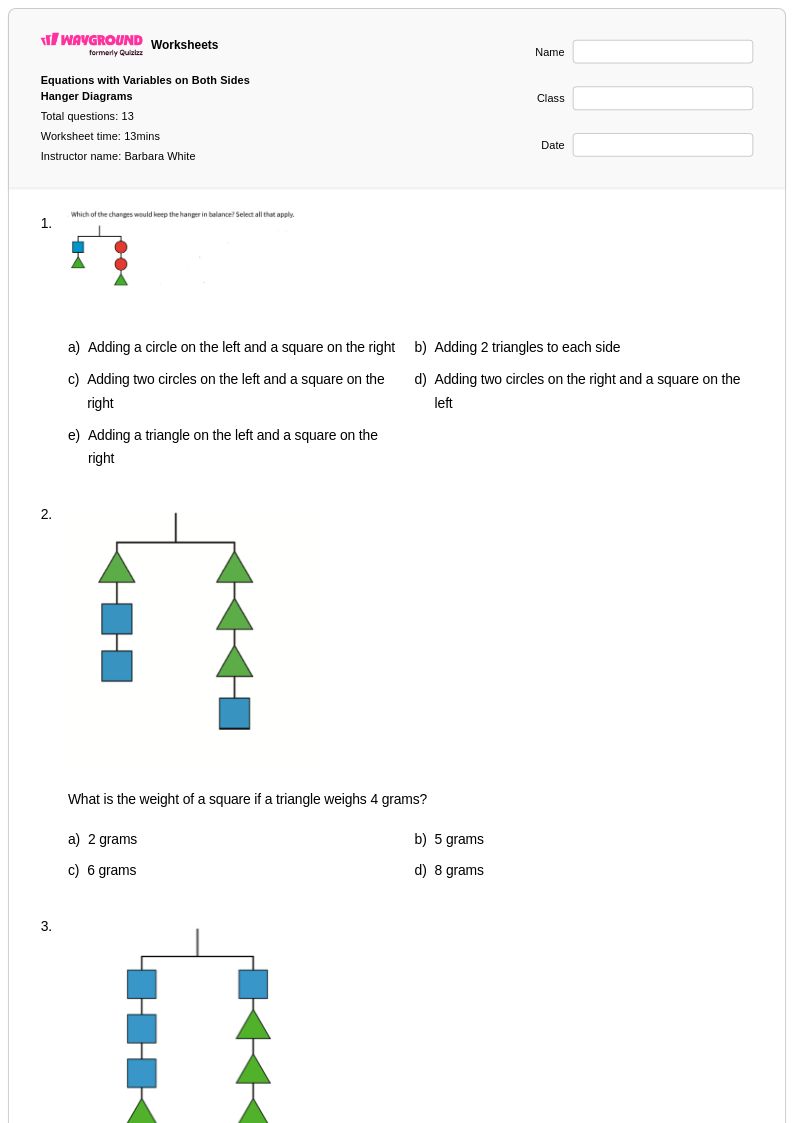
Introduce hanger diagrams as a balance scale. Start with simple diagrams where students find a single unknown value using arithmetic. Emphasize that both sides must always be equal. Gradually progress to diagrams that represent multi-step equations, encouraging students to describe the steps needed to keep the hanger balanced (e.g., 'remove three blocks from each side').
What exercises help students practice solving equations visually?
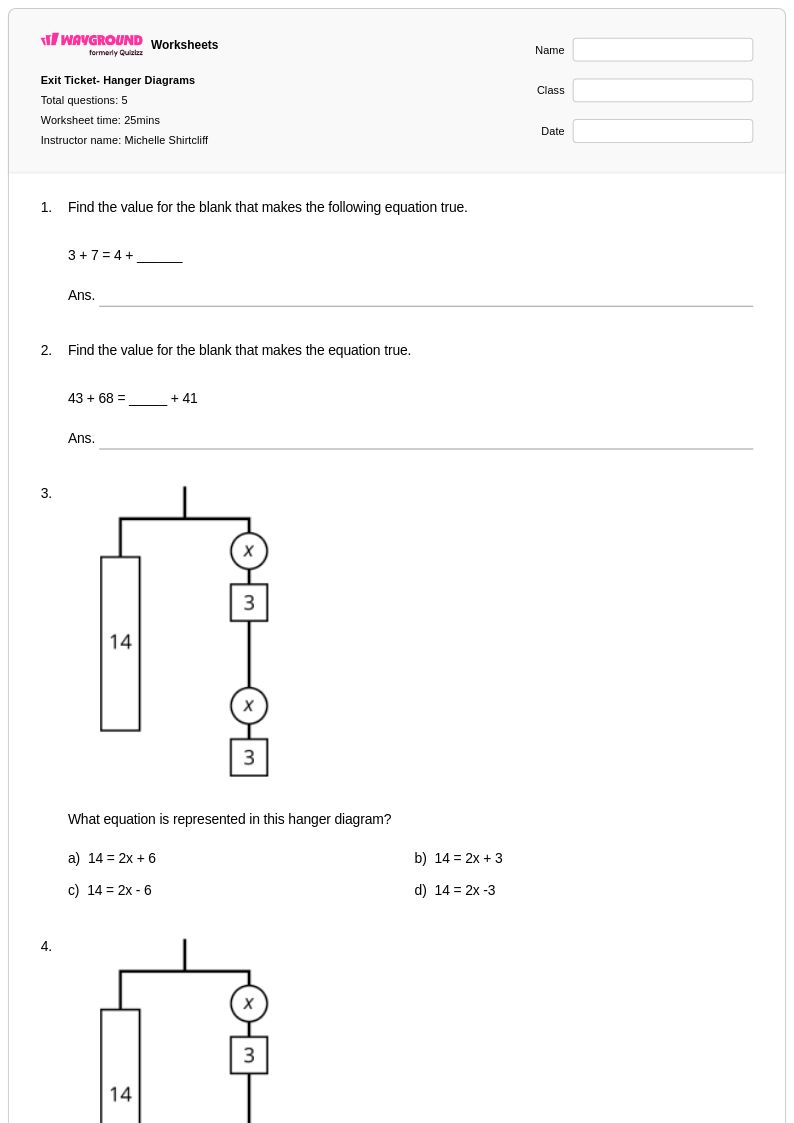
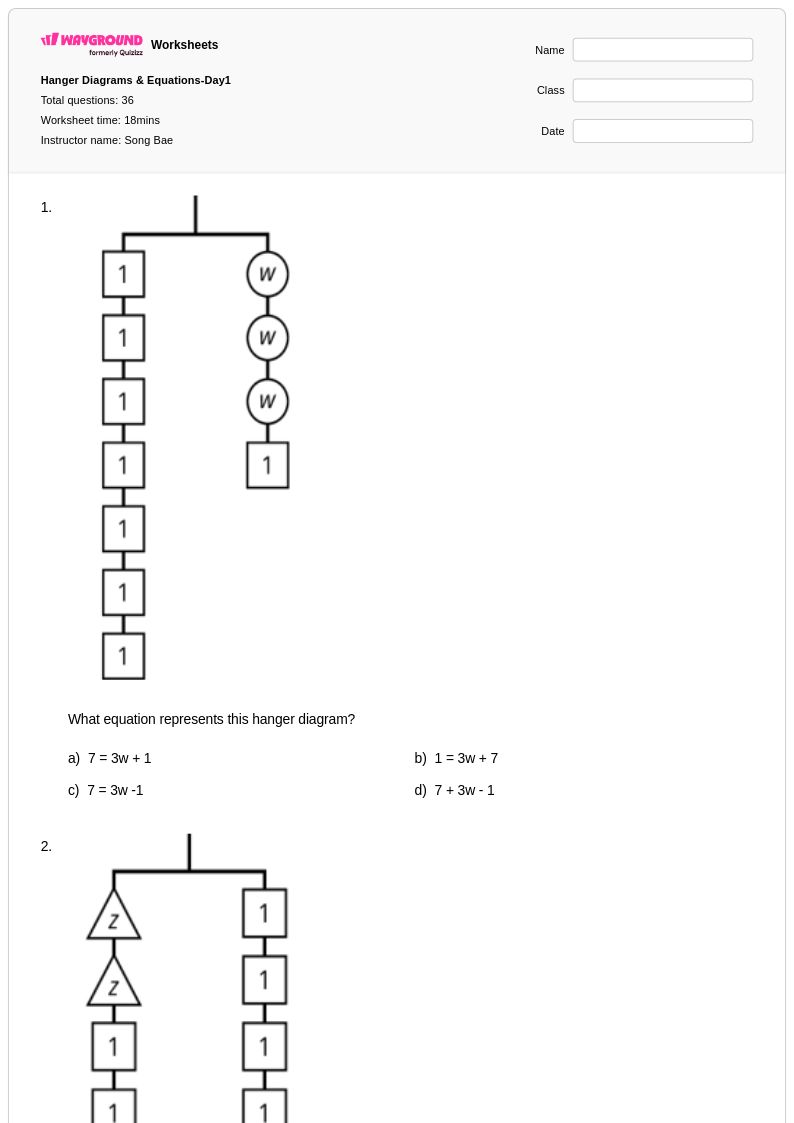
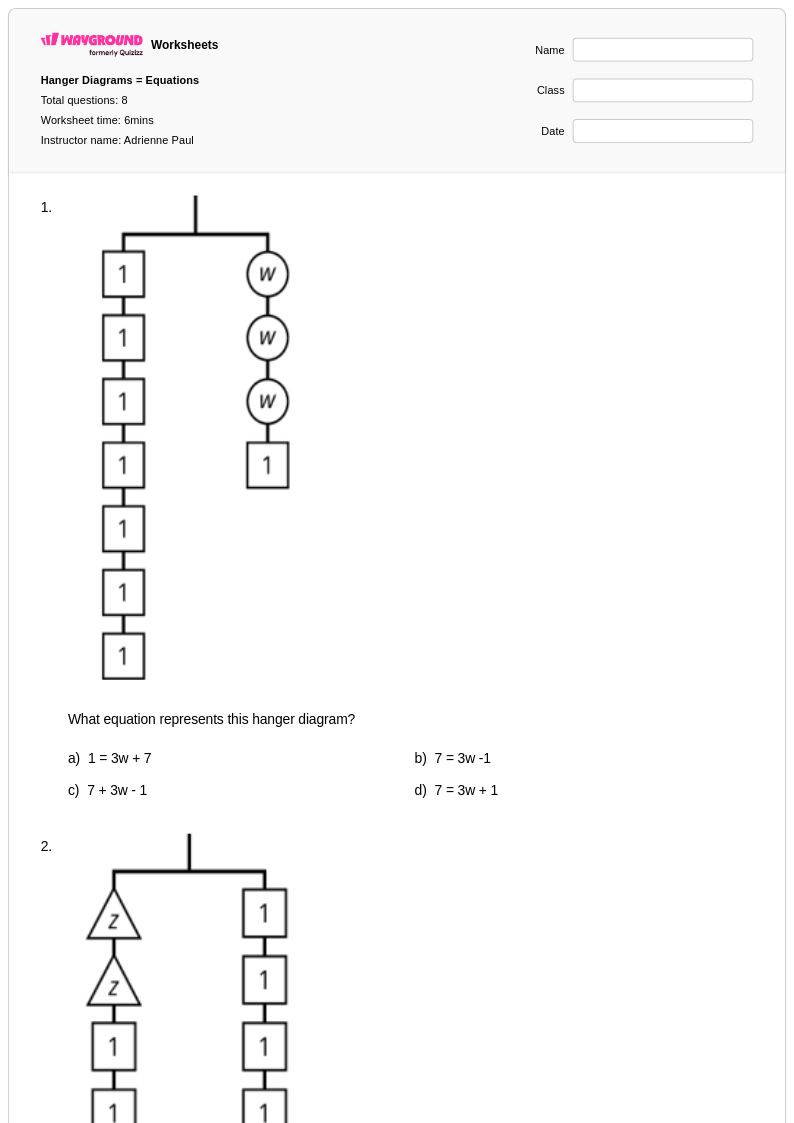
Effective practice involves a variety of hanger diagram problems. Start with tasks where students must find the value of an unknown shape. Then, ask them to write an equation that represents a given diagram. Finally, challenge them to draw a hanger diagram that models a given one-step or two-step equation.
What are common student mistakes with hanger diagrams?
A primary mistake is performing an operation on only one side of the hanger, which unbalances the 'equation.' Students may also struggle to correctly translate the visual model into a symbolic equation, for instance, confusing the total value on one side with the value of a single variable.
How do hanger diagrams align with Common Core math standards?
Hanger diagrams directly support the Common Core's progression for Expressions and Equations. They provide a crucial visual model for understanding variables, maintaining equality, and solving equations. This concrete representation helps students build the conceptual foundation needed before they are asked to solve abstract equations like `px + q = r` using symbolic manipulation.
How can I use this hanger diagrams worksheet in my classroom?
This worksheet can be assigned as a printable PDF for hands-on practice or as an interactive digital quiz on the Wayground platform. The printable version allows for offline work and can be graded quickly using the Wayground for Teachers mobile app. Both formats include a complete answer key for efficient review.
How can I differentiate this topic for diverse learners?
The visual nature of hanger diagrams is itself a scaffold. For digital assignments on Wayground, you can use the Read Aloud feature to support students with reading difficulties or reduce the number of answer choices to lower cognitive load. For printable versions, you can adjust font size and spacing to improve readability for different students.