Free Printable Ancient World History Worksheets for Class 3
Explore free Class 3 Ancient World History worksheets and printables from Wayground that help students discover early civilizations through engaging practice problems and activities with complete answer keys.
Explore printable Ancient World History worksheets for Class 3
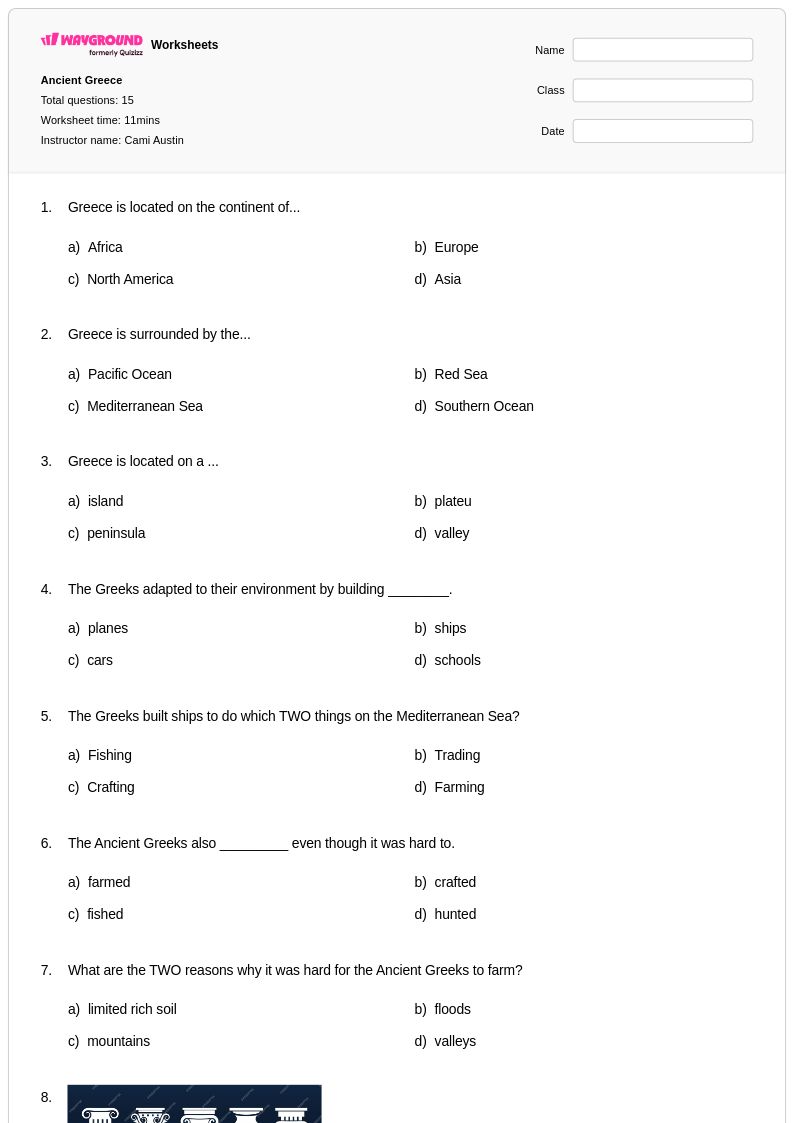
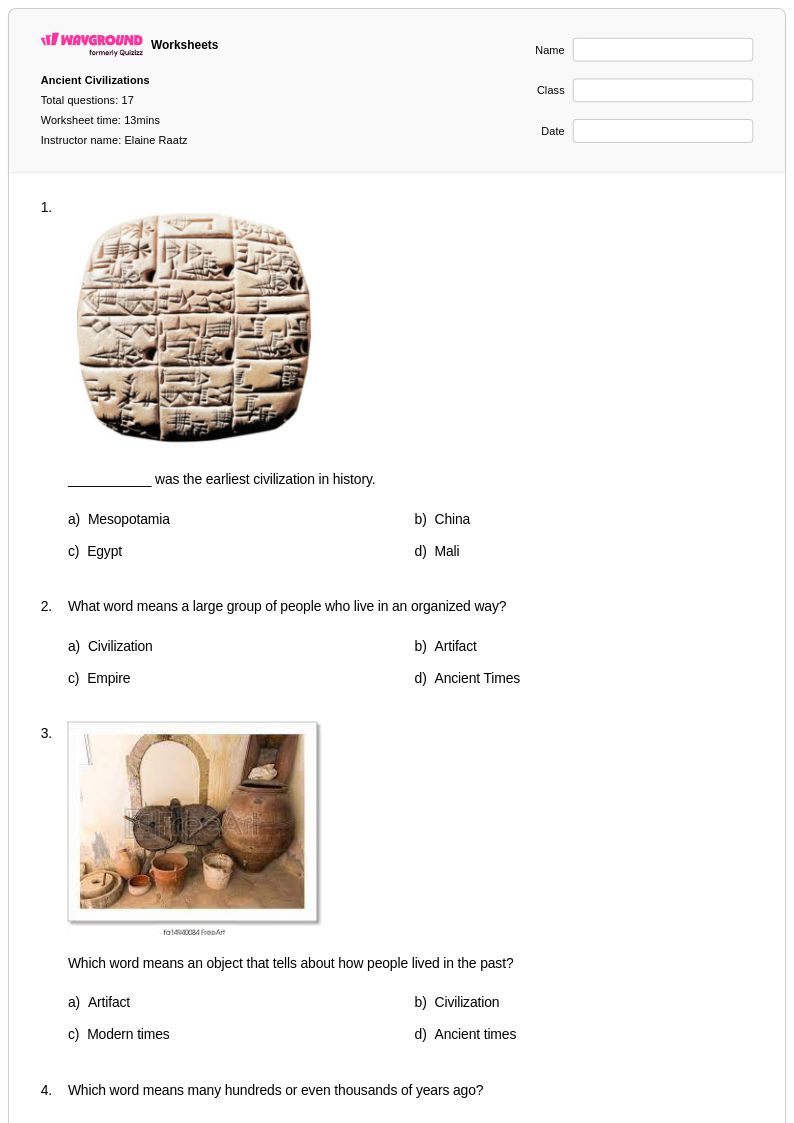
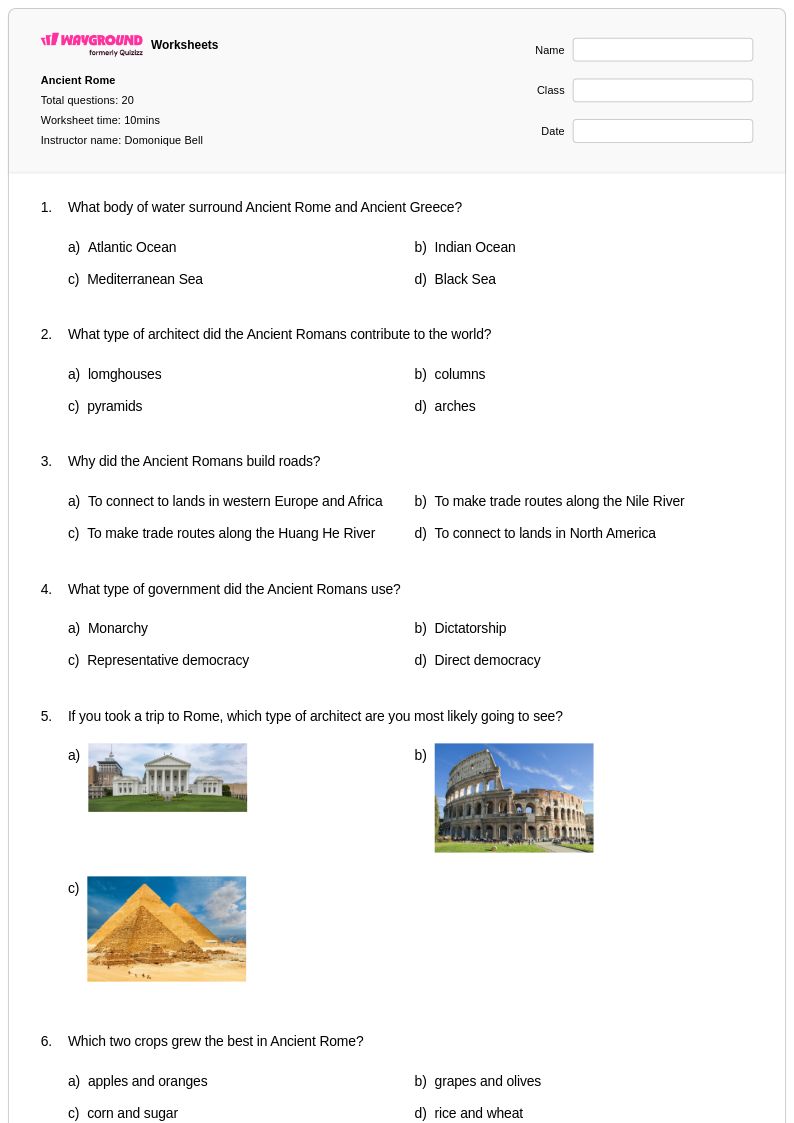
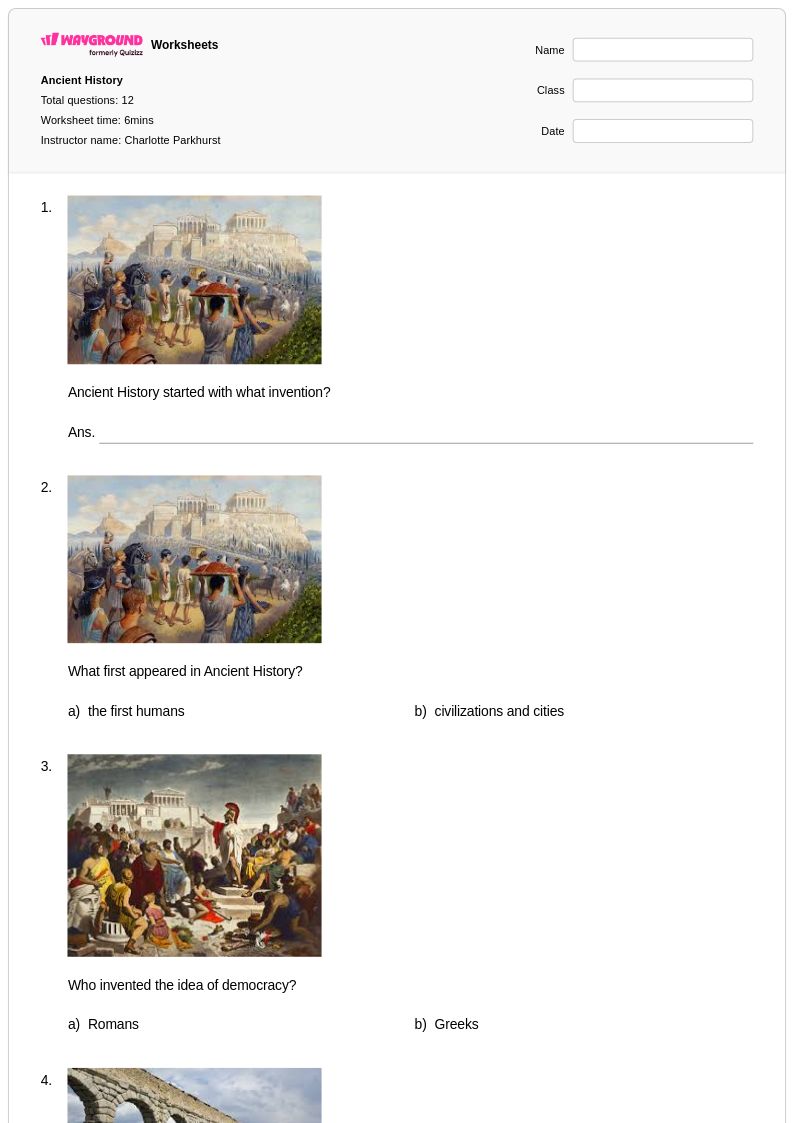
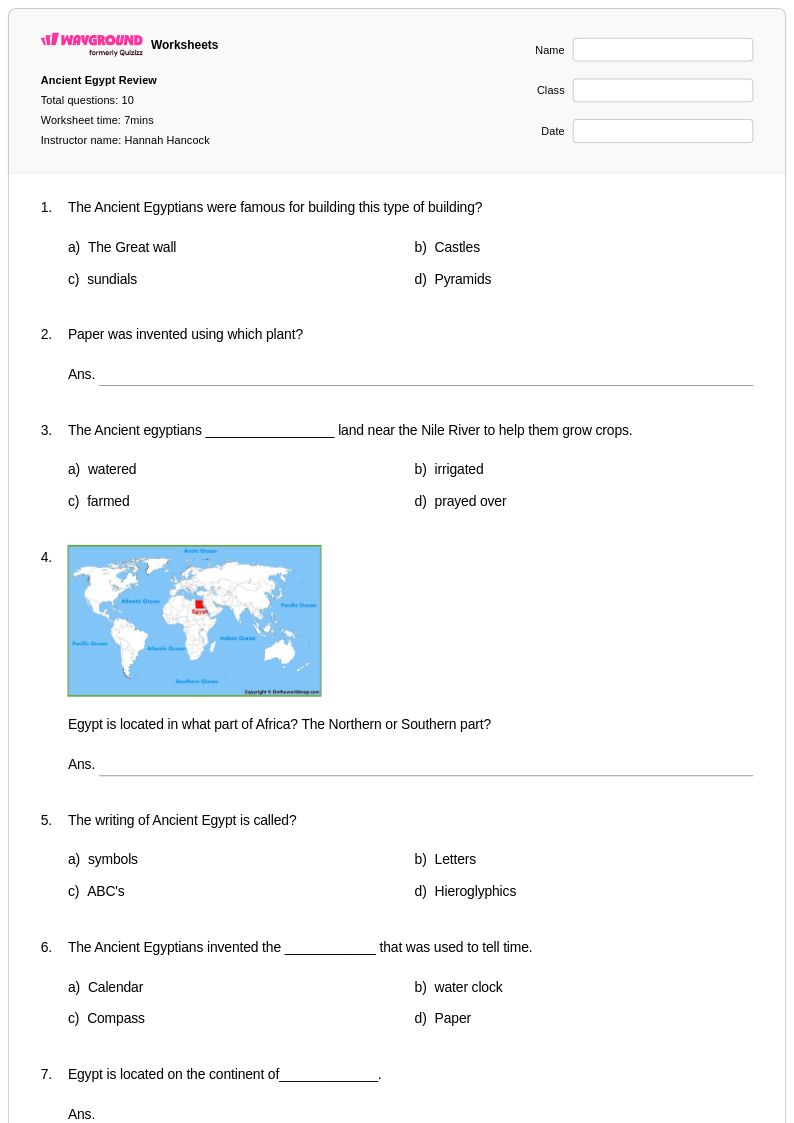
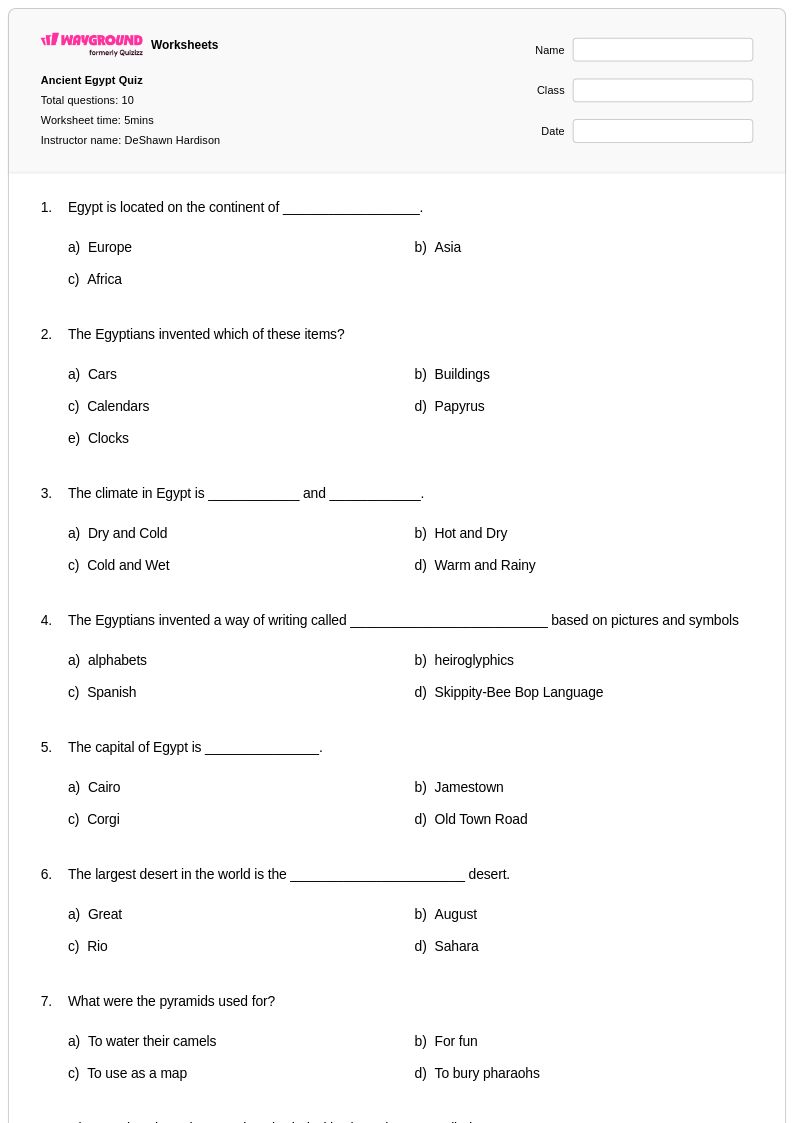
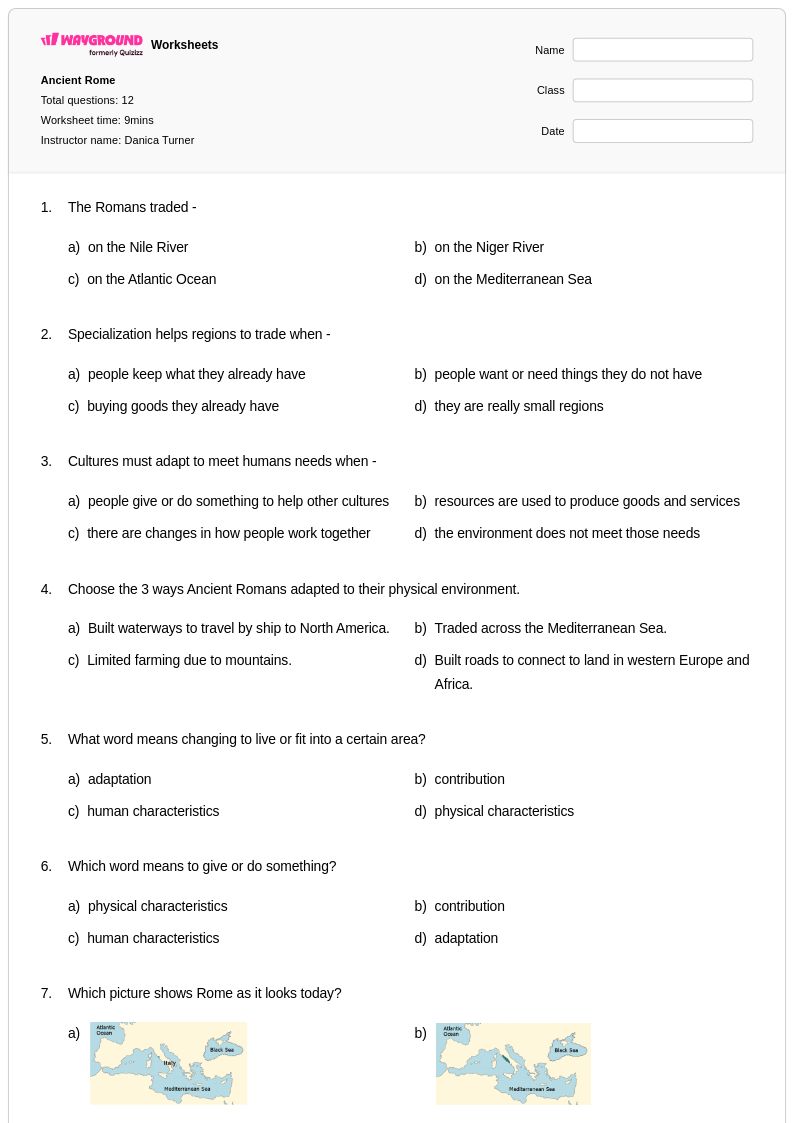
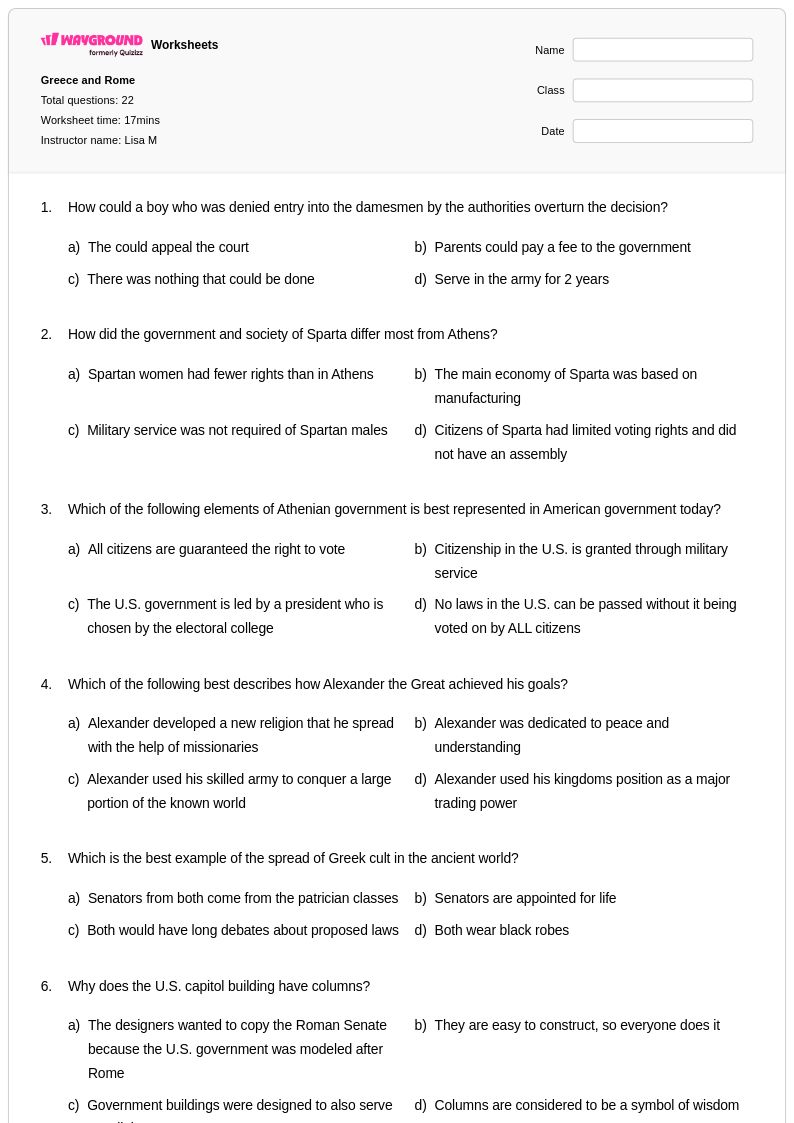
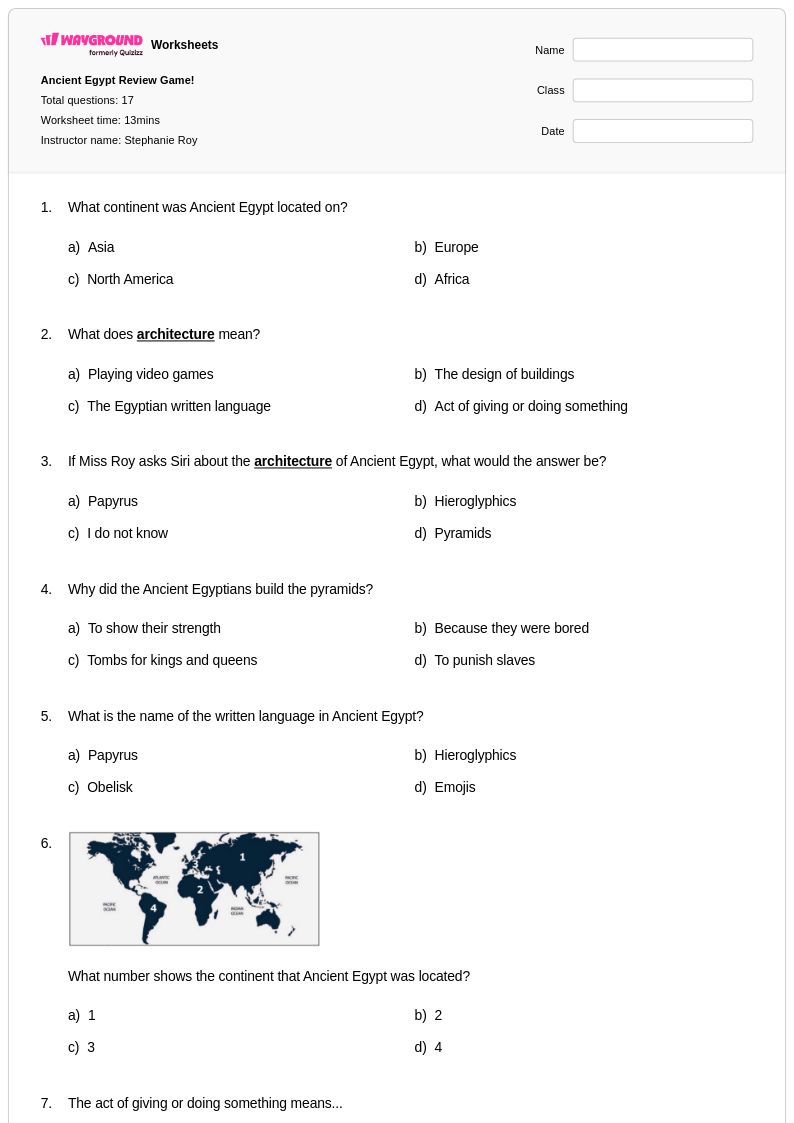
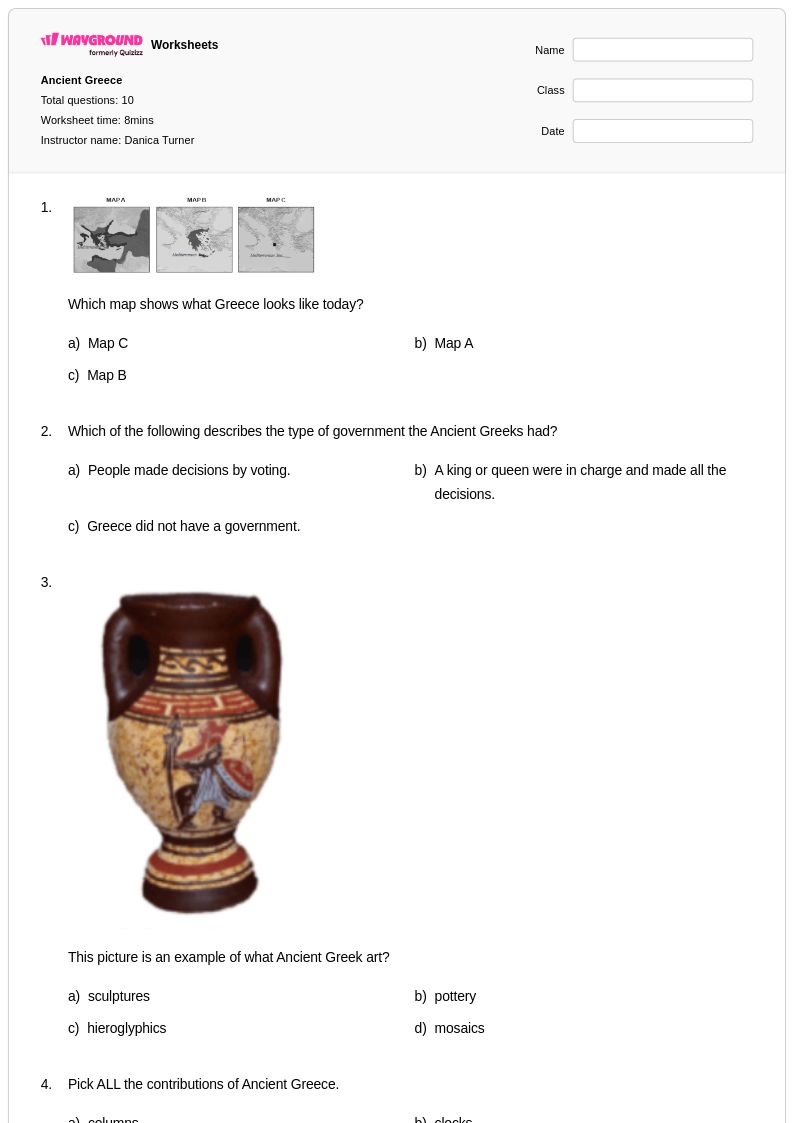
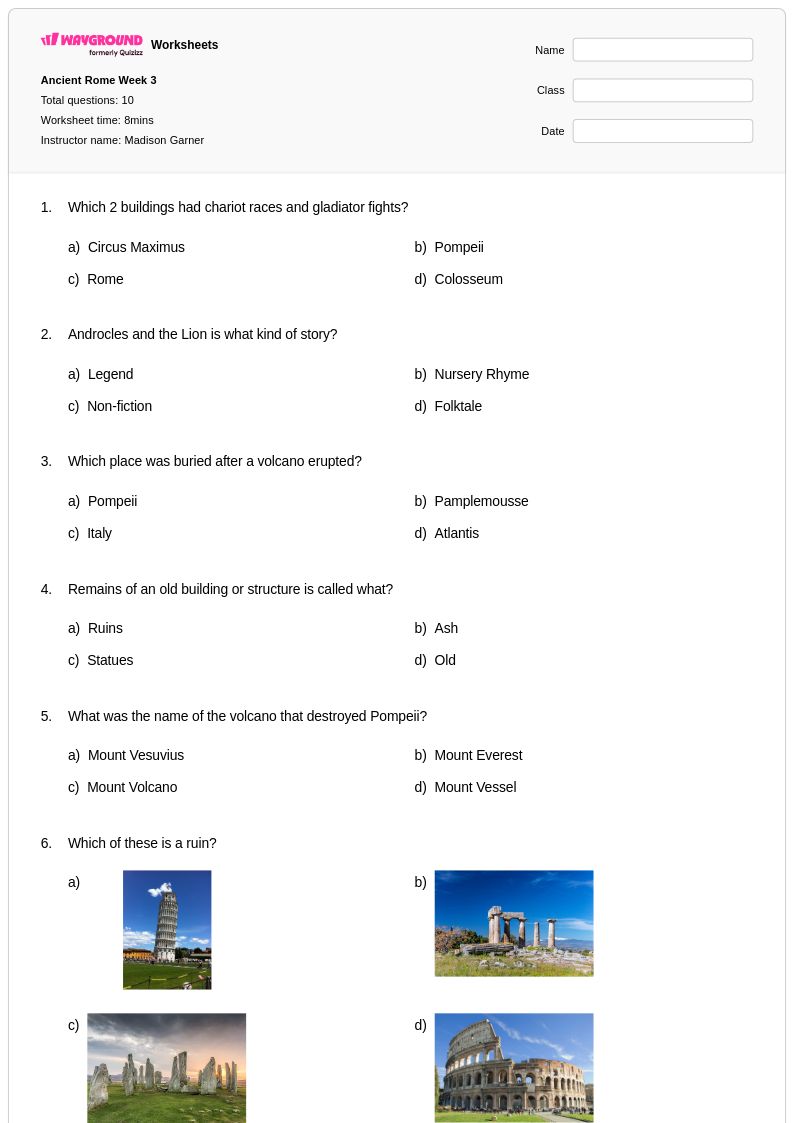
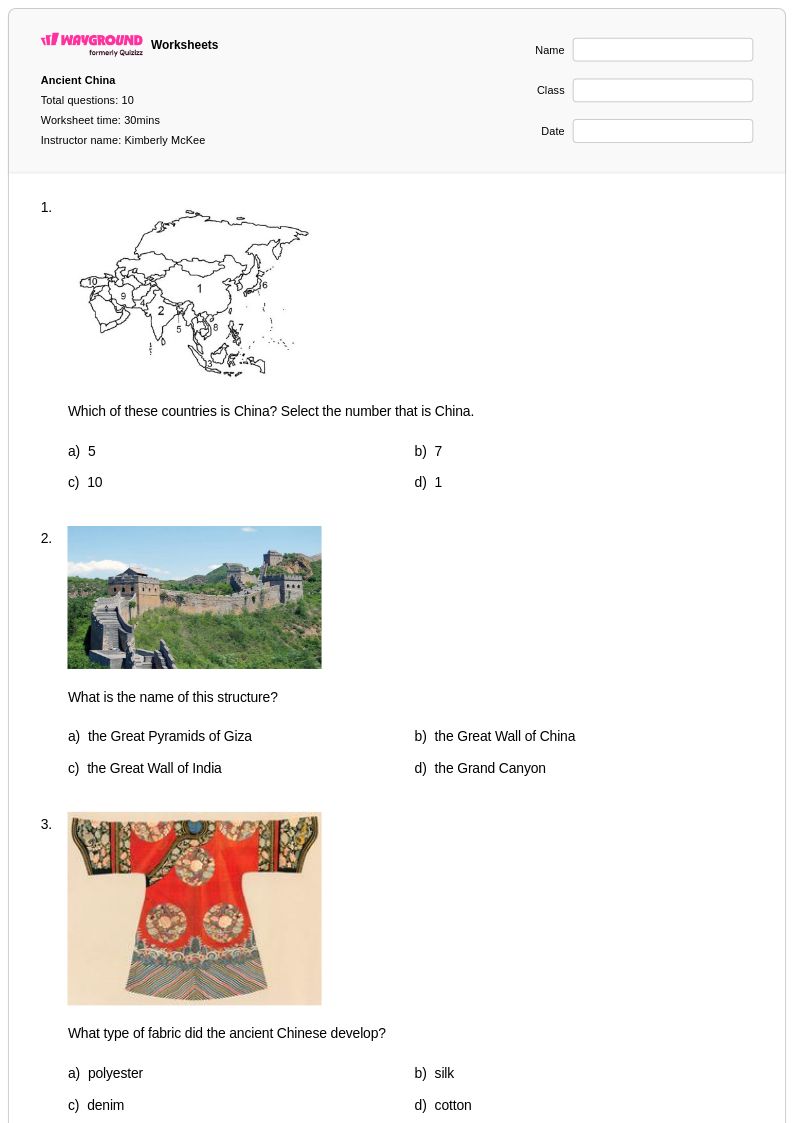
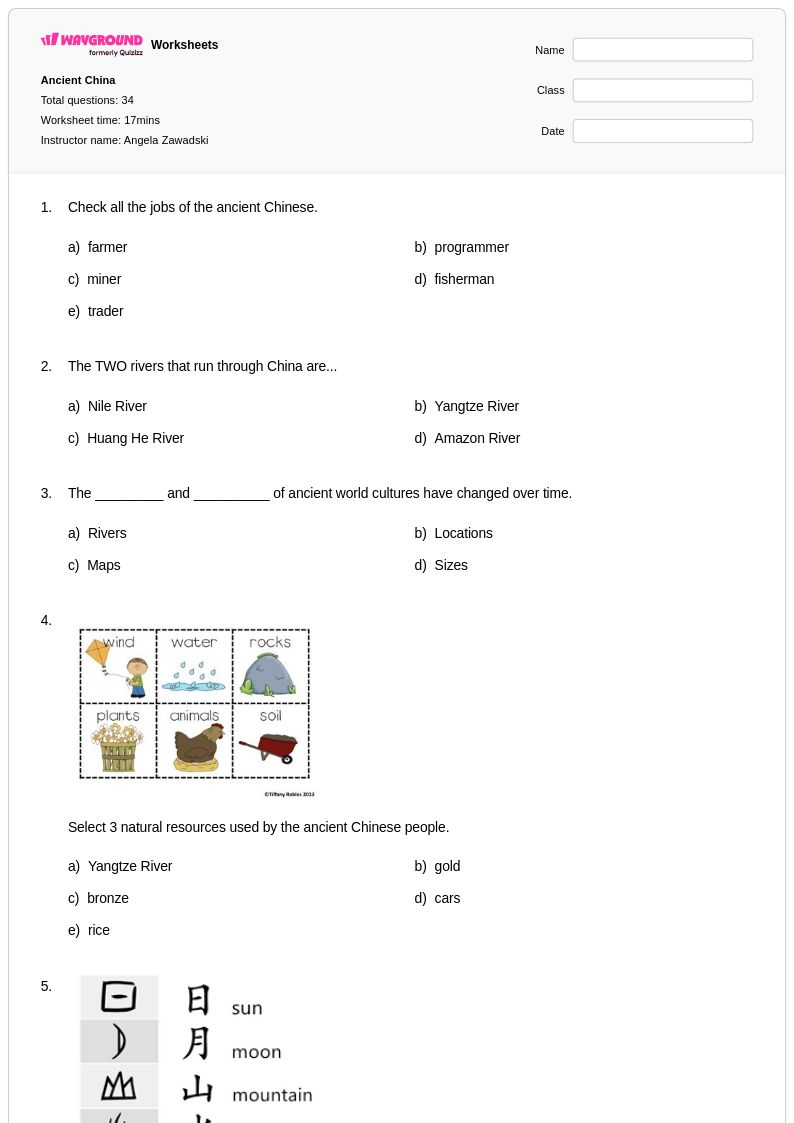
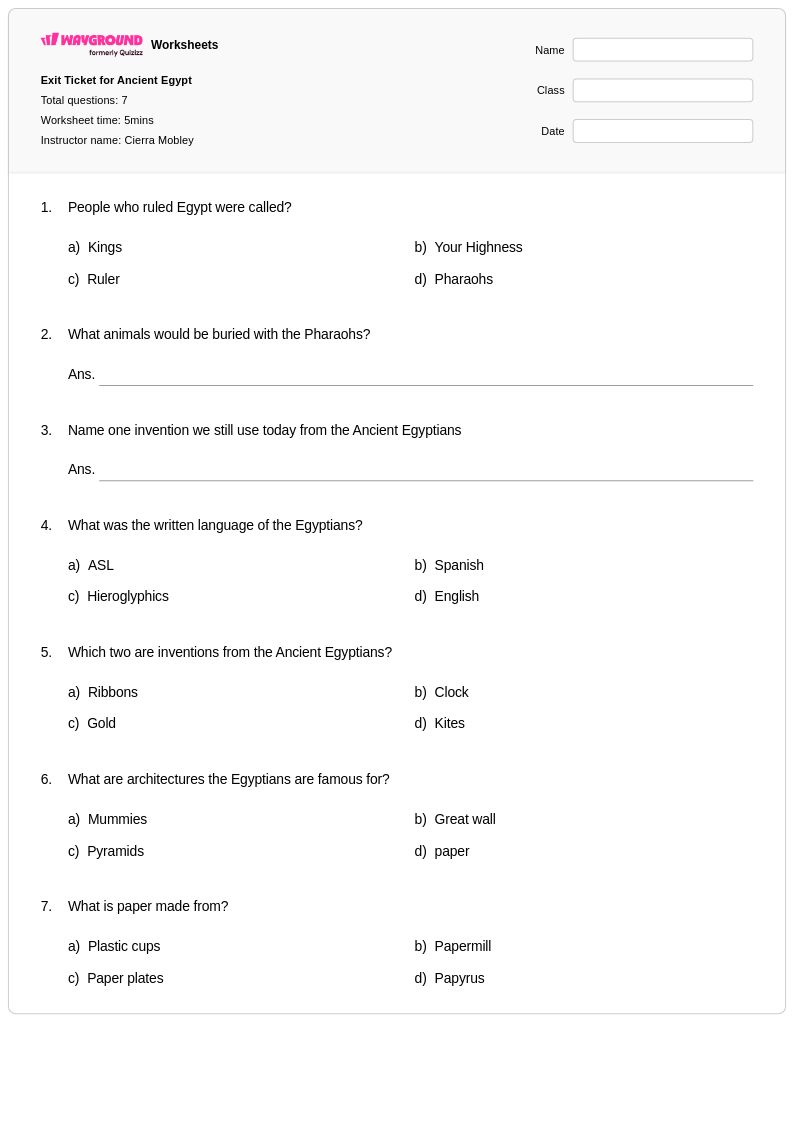
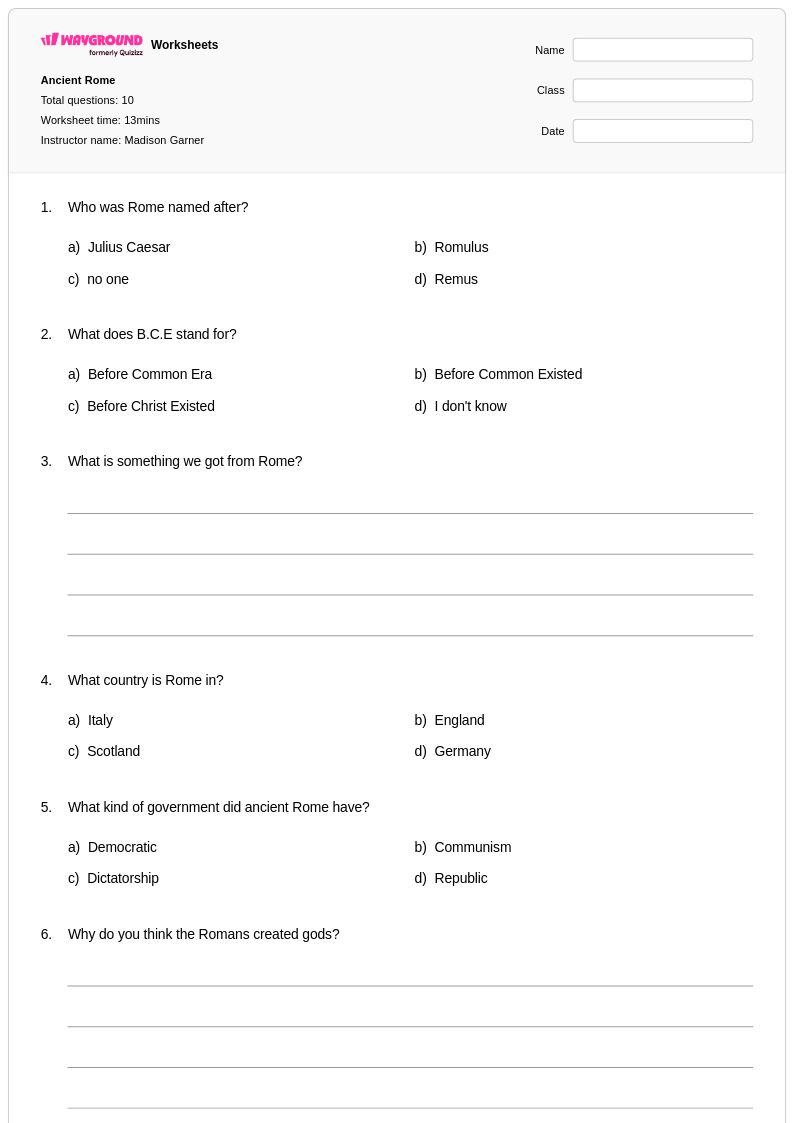
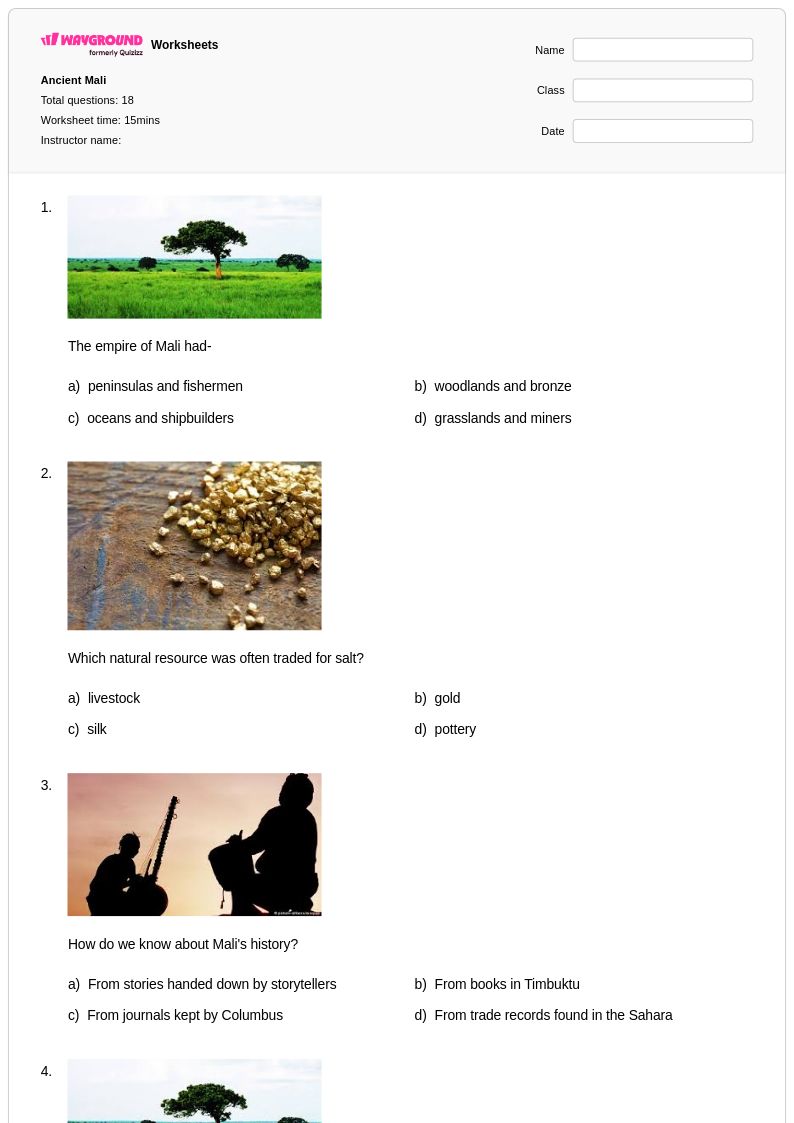
Ancient World History worksheets for Class 3 students available through Wayground (formerly Quizizz) introduce young learners to the fascinating civilizations and cultures that shaped our earliest human societies. These carefully designed educational materials help third-grade students develop foundational knowledge about ancient Egypt, Mesopotamia, Greece, Rome, and other early civilizations through age-appropriate content that emphasizes key historical concepts, timelines, and cultural achievements. The worksheets strengthen essential social studies skills including chronological thinking, historical comprehension, and cultural awareness while building vocabulary related to ancient societies, their innovations, and daily life. Teachers can access comprehensive practice problems that cover topics from pyramid construction and hieroglyphics to Greek mythology and Roman engineering, with each worksheet including a detailed answer key and available in convenient pdf format for easy classroom distribution and homework assignments.
Wayground (formerly Quizizz) empowers educators with an extensive collection of teacher-created Ancient World History resources specifically tailored for Class 3 learning objectives, drawn from millions of educational materials developed by classroom professionals worldwide. The platform's robust search and filtering capabilities allow teachers to quickly locate worksheets aligned with state social studies standards, while built-in differentiation tools enable customization based on individual student needs and learning levels. These flexible resources are available in both printable pdf formats for traditional classroom use and digital formats for interactive learning experiences, supporting diverse teaching methods and classroom technologies. Teachers utilize these comprehensive worksheet collections for lesson planning, targeted skill remediation, enrichment activities for advanced learners, and regular practice sessions that reinforce students' understanding of ancient civilizations, helping third graders build a solid foundation in historical thinking and cultural literacy that will support their continued social studies education.
FAQs
How do I teach ancient world history to students who struggle with chronology?
Timeline construction is one of the most effective tools for building chronological thinking in ancient history. Have students anchor events to major civilizations — Mesopotamia, Egypt, Greece, Rome — and practice placing developments like the rise of city-states or the fall of the Roman Empire in sequence. Connecting cause-and-effect relationships between events, rather than memorizing dates in isolation, helps students internalize the order and logic of ancient history.
What are good exercises for practicing ancient world history concepts?
Effective practice exercises for ancient world history include primary source analysis, comparative civilization studies, and timeline activities that require students to connect events across cultures. Worksheets that ask students to evaluate the lasting impact of ancient civilizations on modern society push beyond recall into critical thinking. Practice problems that address cause-and-effect relationships — such as how Greek democracy influenced later governments — build the analytical skills assessed on most history exams.
What mistakes do students commonly make when studying ancient civilizations?
One of the most common errors is treating ancient civilizations as isolated rather than interconnected — students often miss how trade, conquest, and cultural exchange linked Mesopotamia, Egypt, Greece, and Rome. Another frequent misconception is conflating chronology, such as assuming Greek democracy and Roman expansion were simultaneous. Students also tend to underestimate continuity, failing to recognize how ancient institutions and ideas directly shaped modern legal, political, and cultural systems.
How can I use primary sources effectively in an ancient world history unit?
Primary sources work best when students are given structured scaffolding — a clear context for the document, guiding questions, and a framework for evaluating bias and perspective. In ancient history, this means helping students understand that sources like Egyptian inscriptions or Roman legal texts were created with specific political or religious purposes. Pairing primary source analysis with broader context worksheets allows students to situate individual documents within the larger arc of a civilization's development.
How do I use Wayground's Ancient World History worksheets in my classroom?
Wayground's Ancient World History worksheets are available as printable PDFs for traditional classroom use and in digital formats for technology-integrated environments, giving teachers flexibility in how they deliver content. Teachers can also host worksheets as a live quiz on Wayground, making them suitable for whole-class review or formative assessment. Each worksheet includes a detailed answer key, so they work equally well for independent practice, homework, or guided instruction.
How do I differentiate ancient world history instruction for students at different skill levels?
For struggling learners, focus on core vocabulary and simplified cause-and-effect relationships before introducing comparative analysis across civilizations. Advanced students benefit from evaluative tasks — such as assessing the legacy of Roman law or Greek democracy on contemporary institutions — that require synthesis rather than recall. On Wayground, teachers can apply accommodations such as read aloud, reduced answer choices, and extended time to individual students, allowing differentiated delivery without disrupting the rest of the class.