Free Printable The Mali Empire Worksheets for Class 3
Class 3 Mali Empire worksheets and printables help students explore this powerful West African civilization through engaging practice problems, free PDF resources, and comprehensive answer keys for effective learning.
Explore printable The Mali Empire worksheets for Class 3
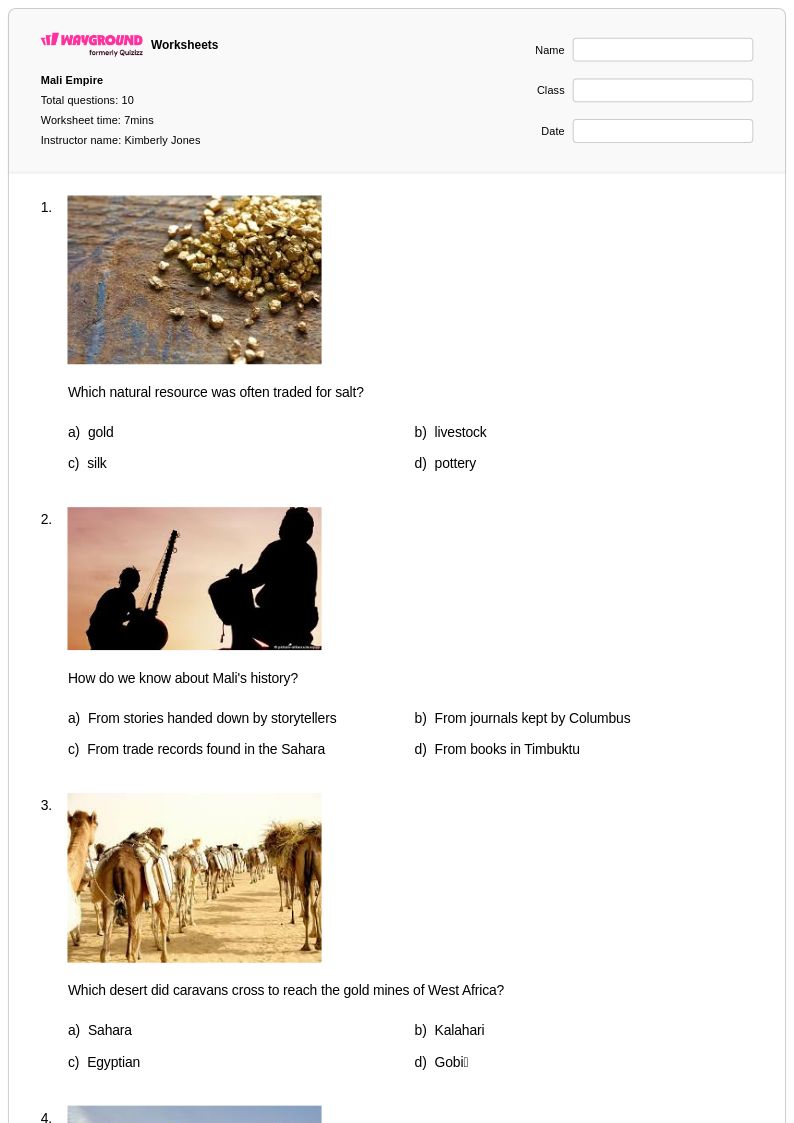
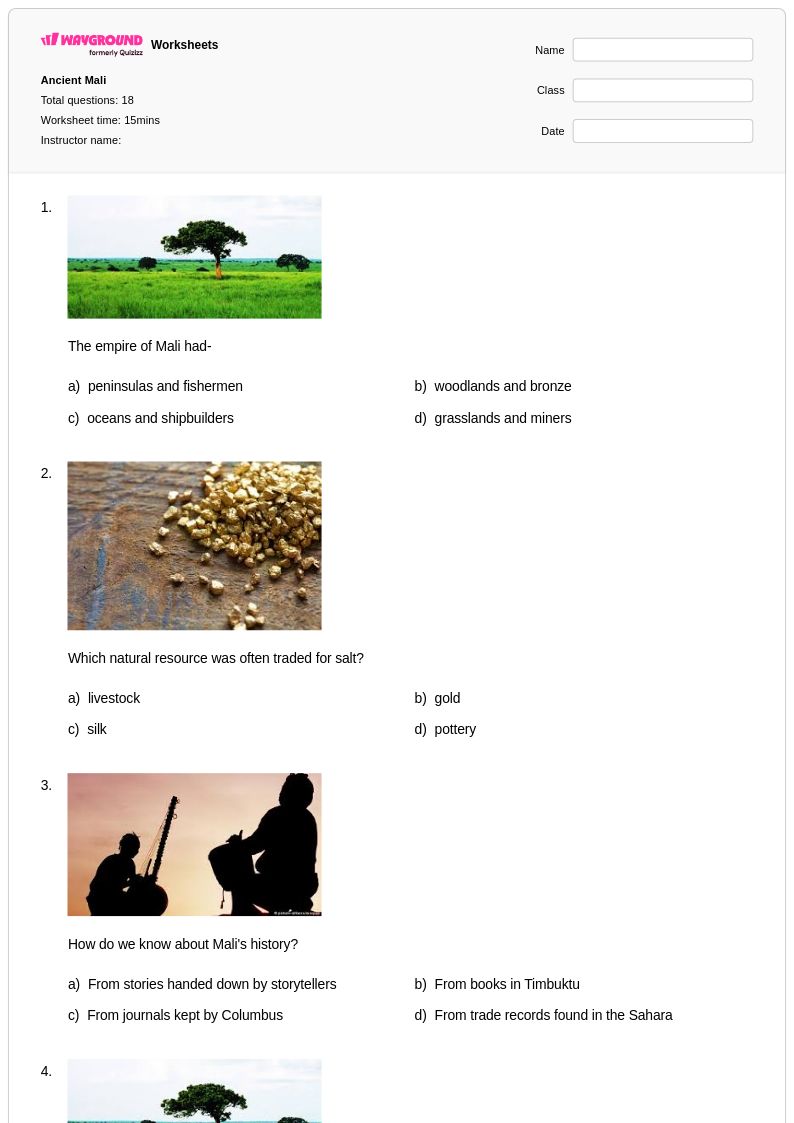
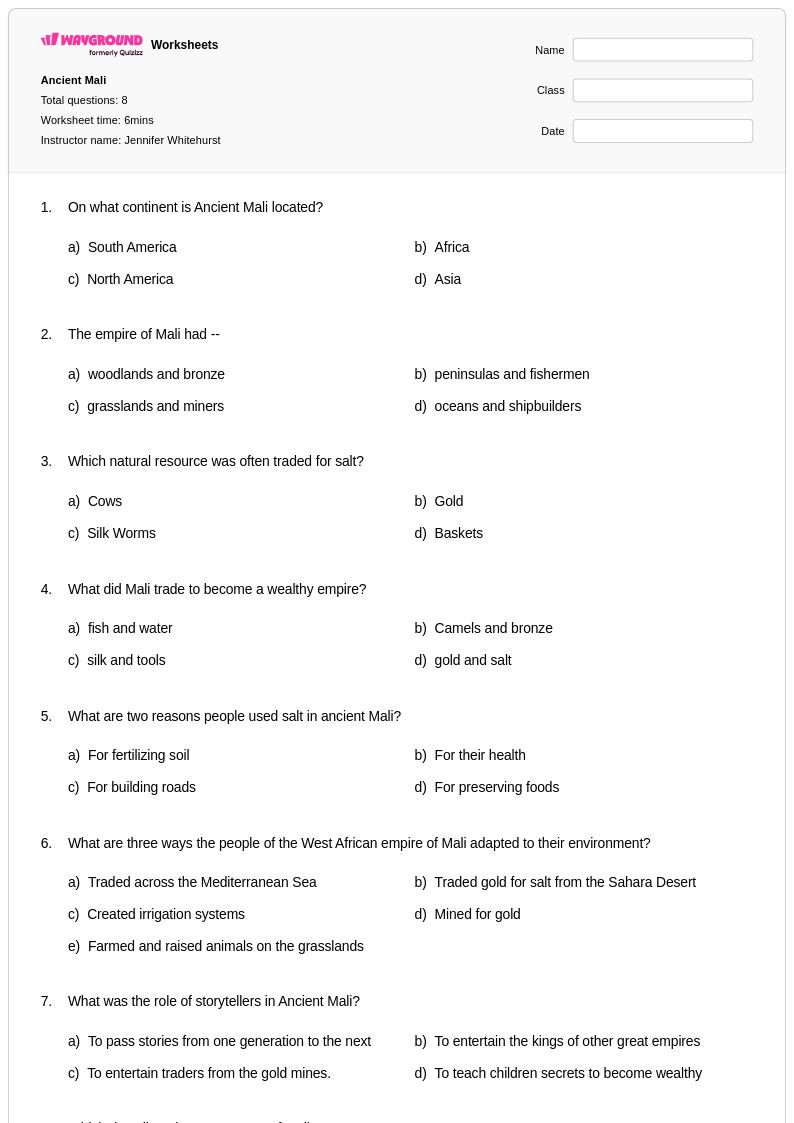
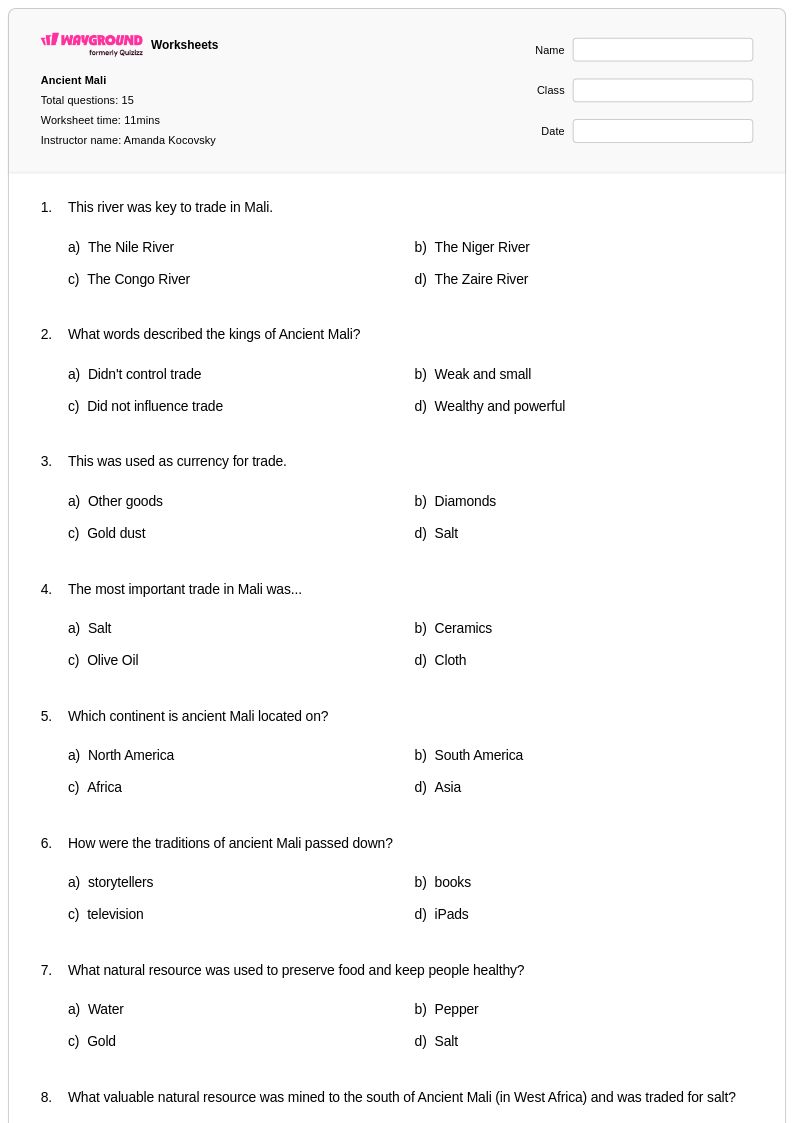
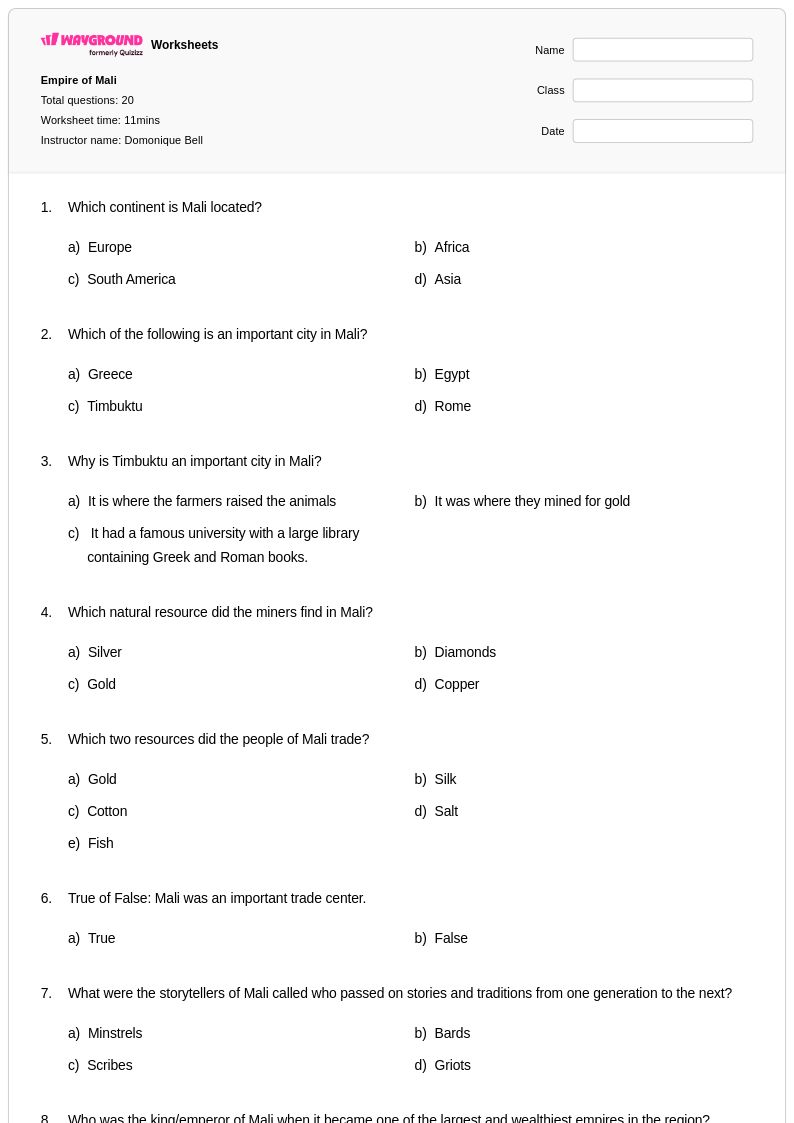
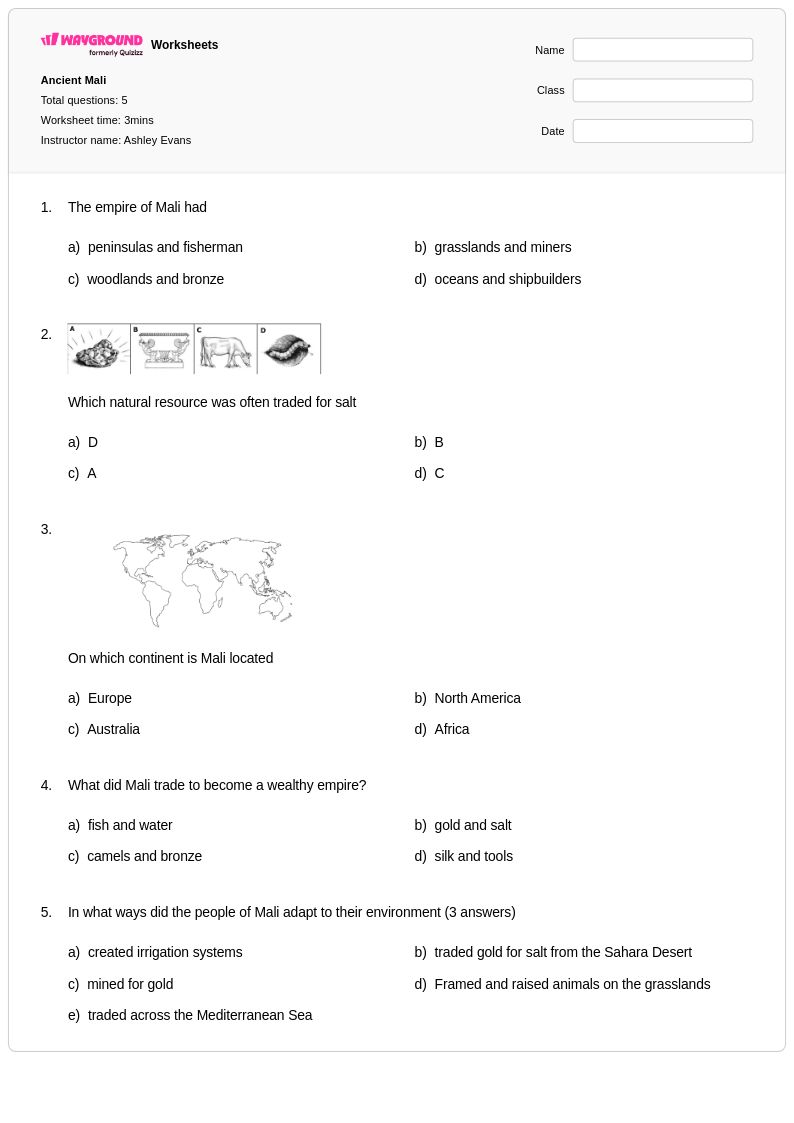
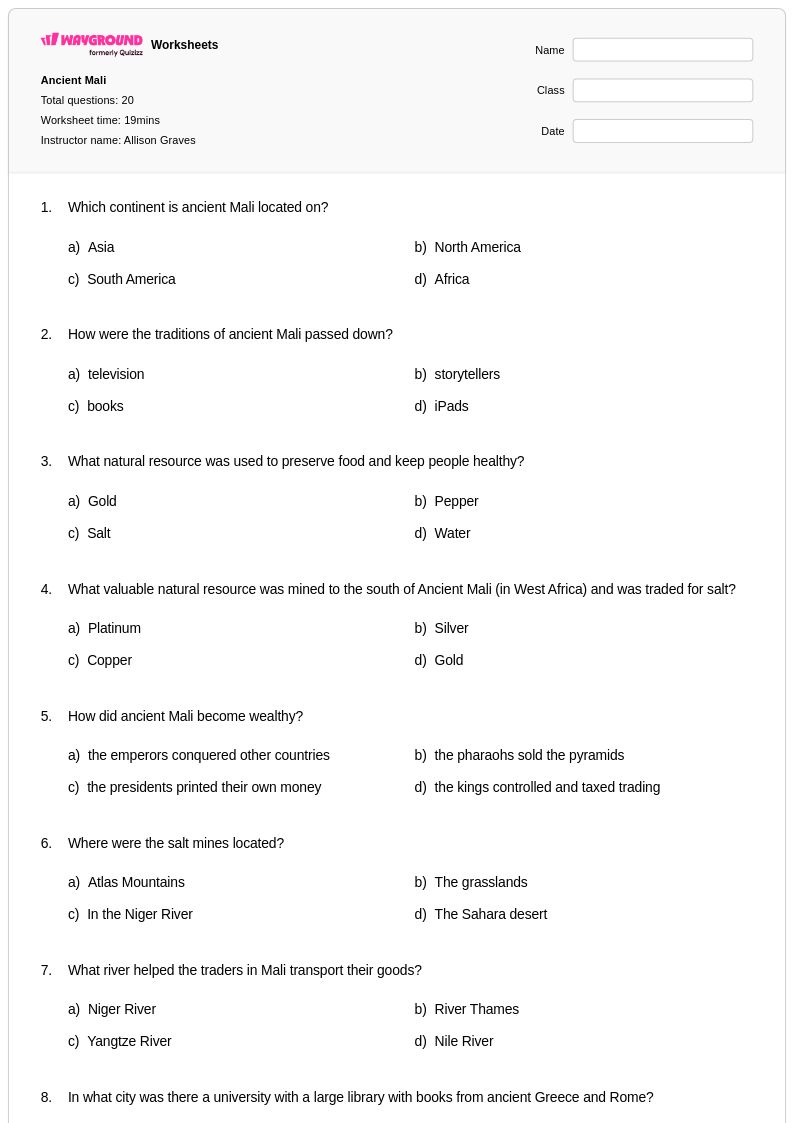
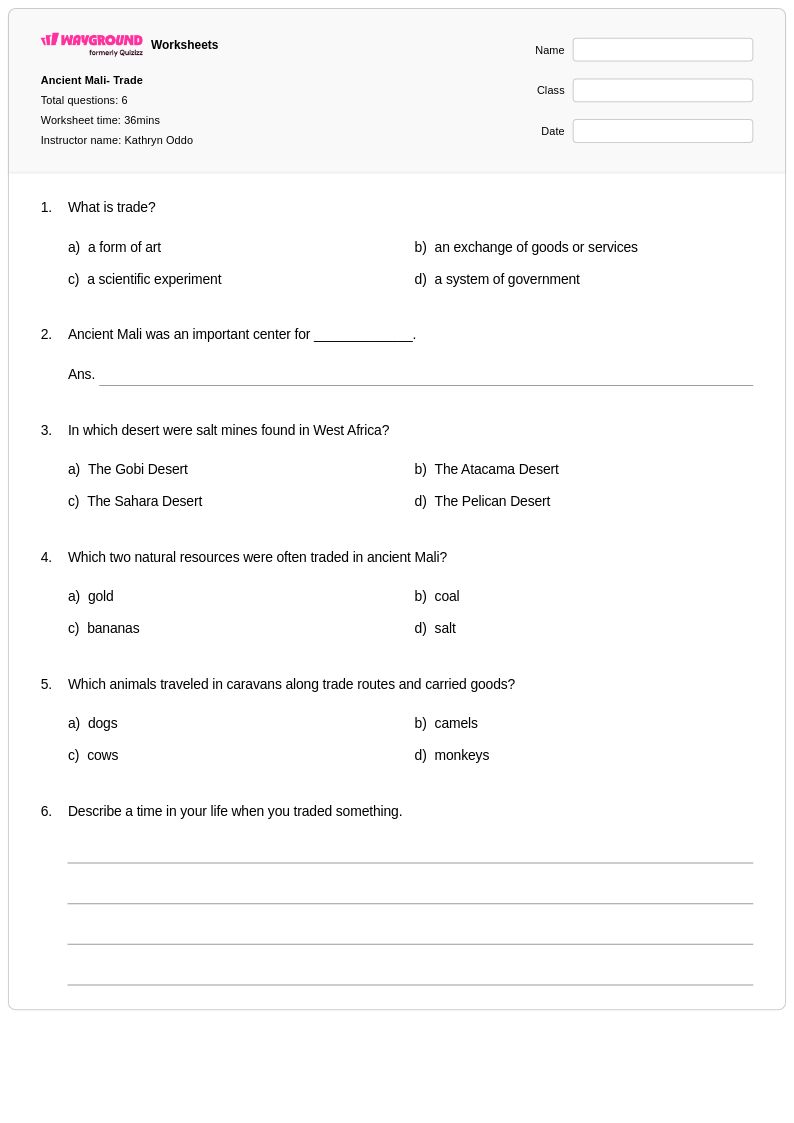
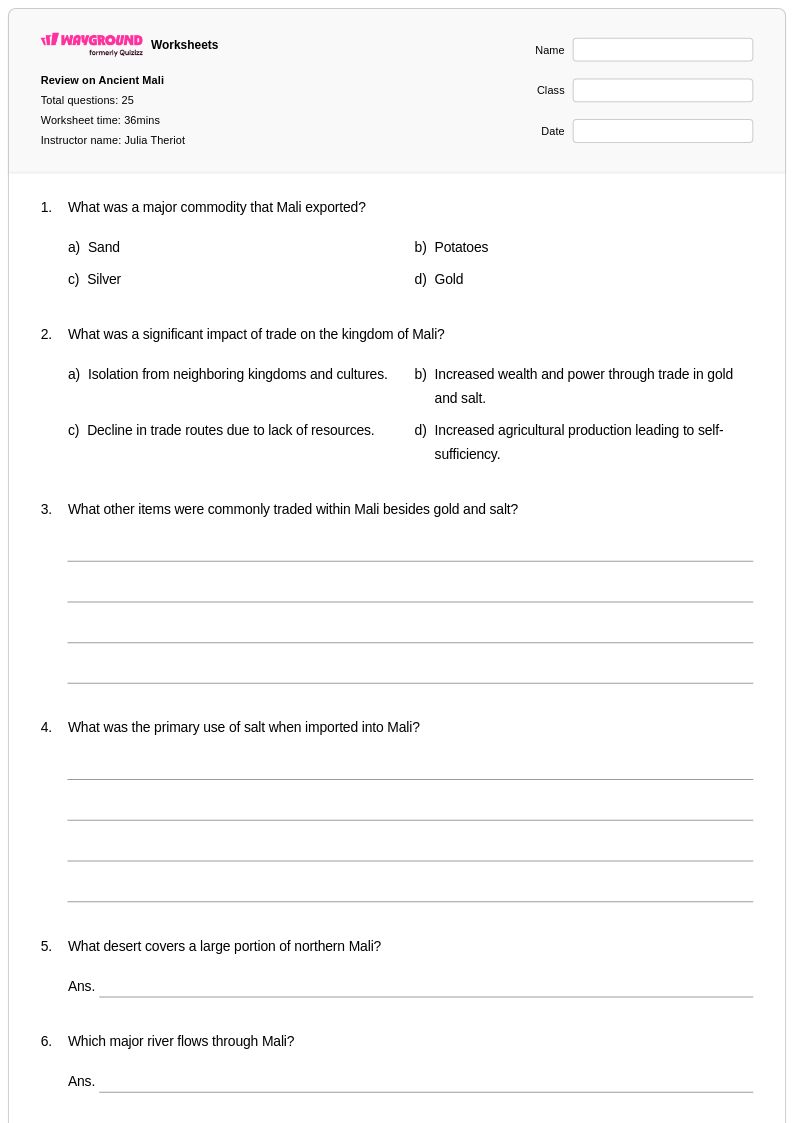
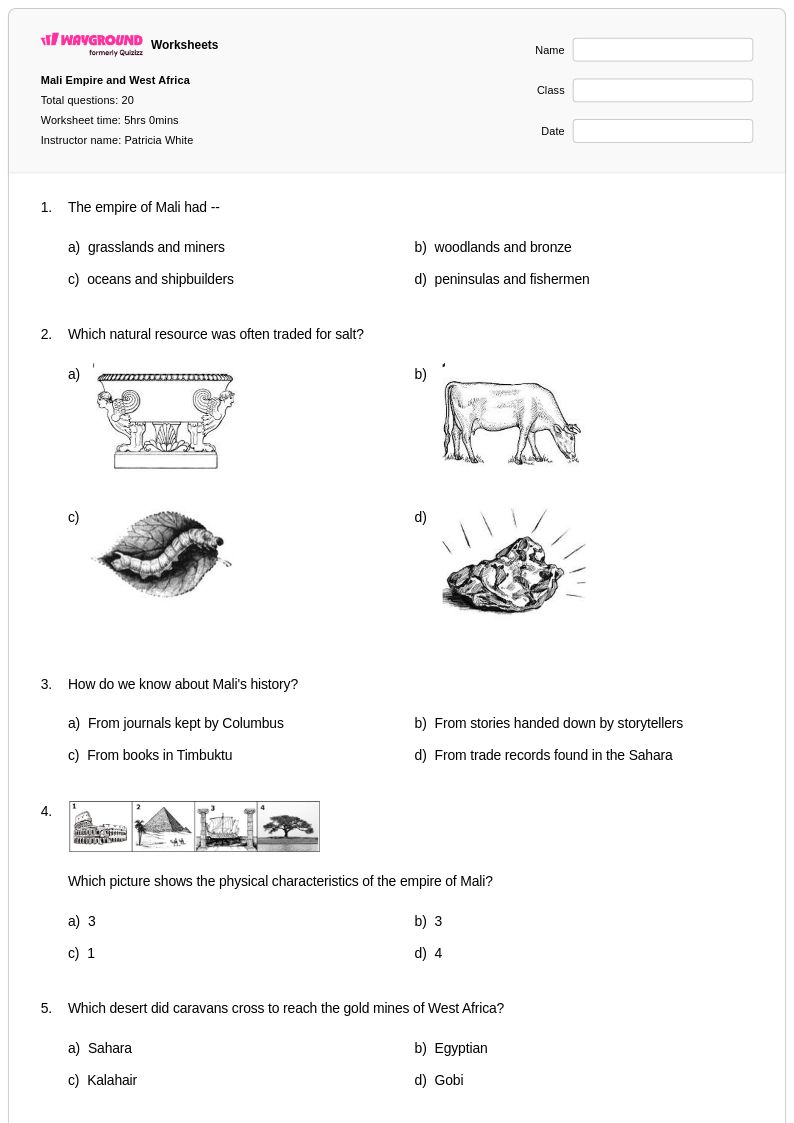
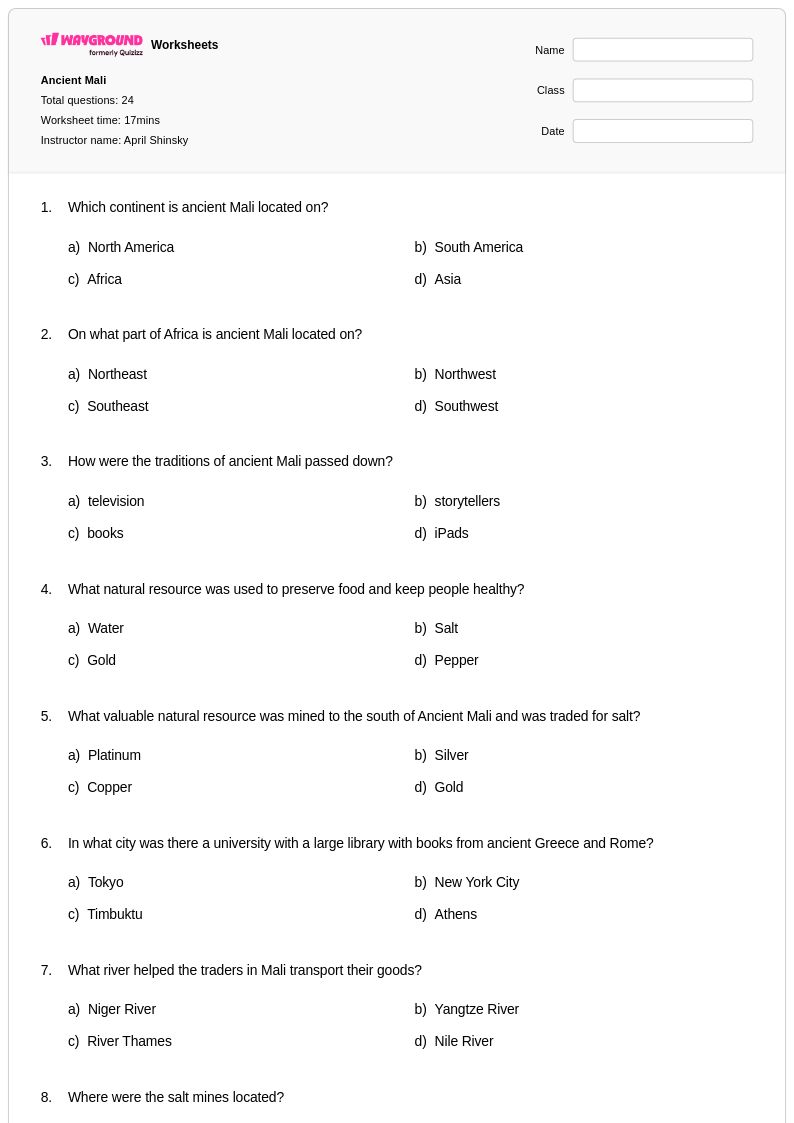
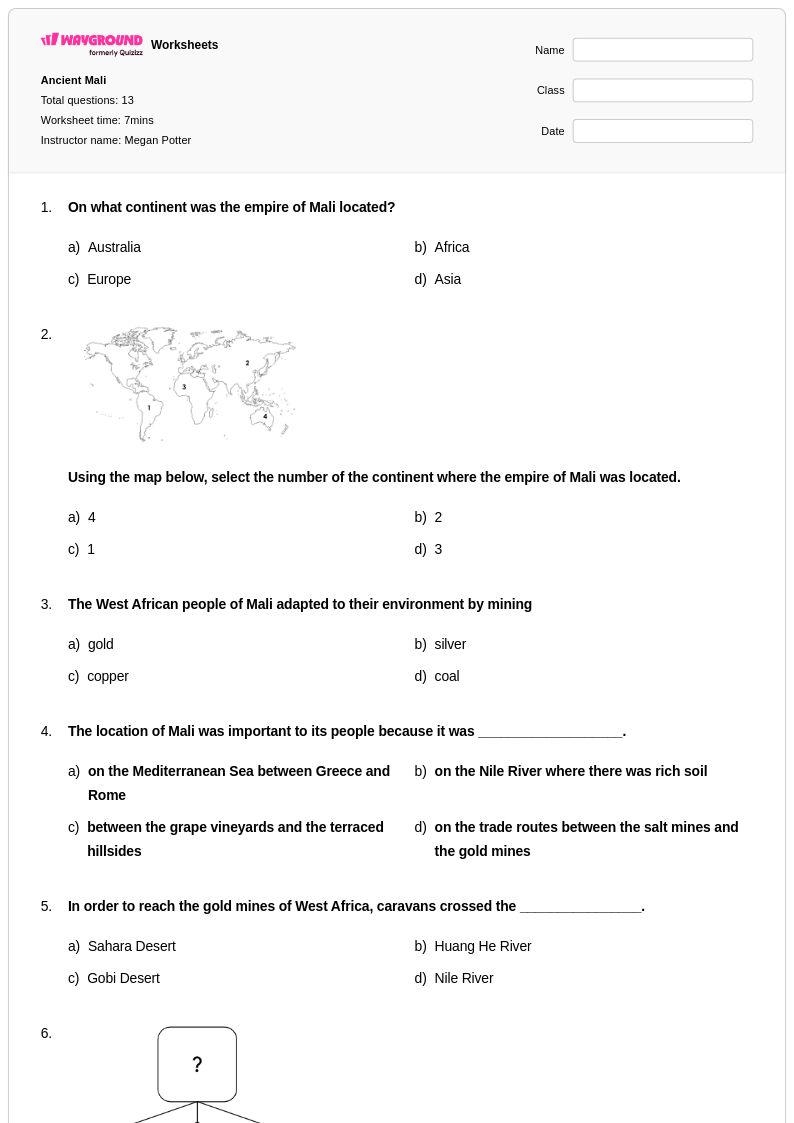
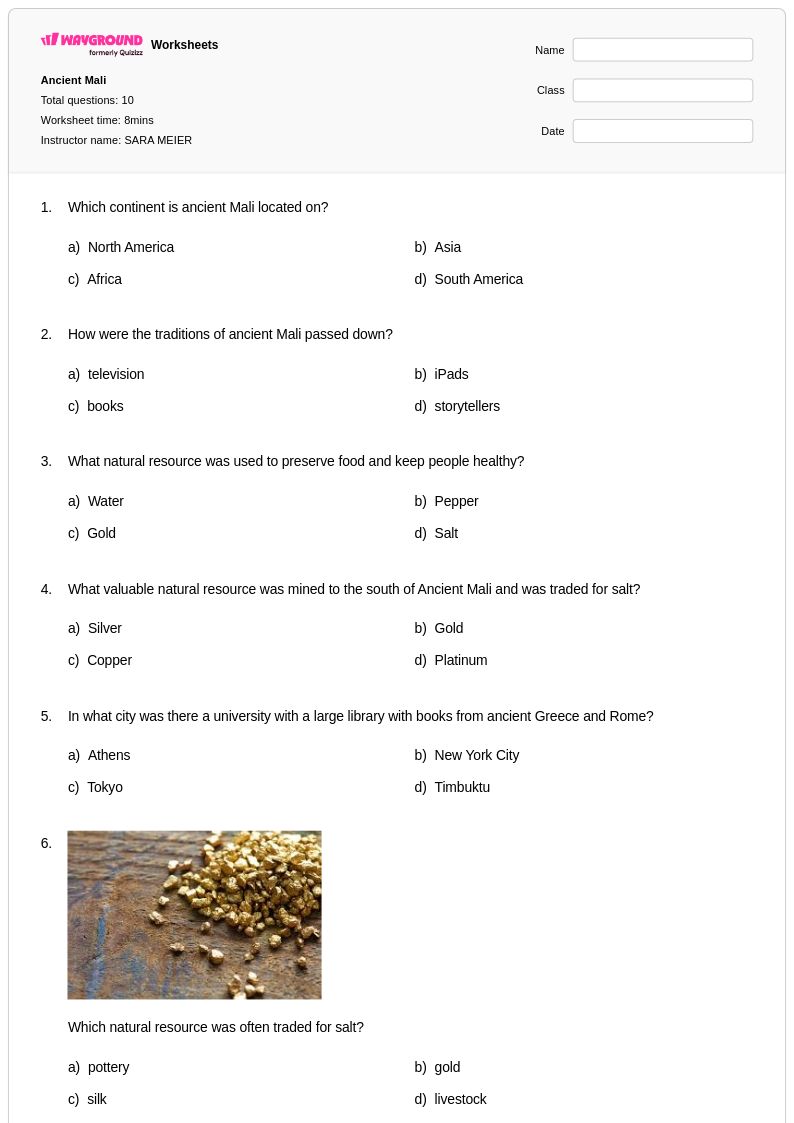
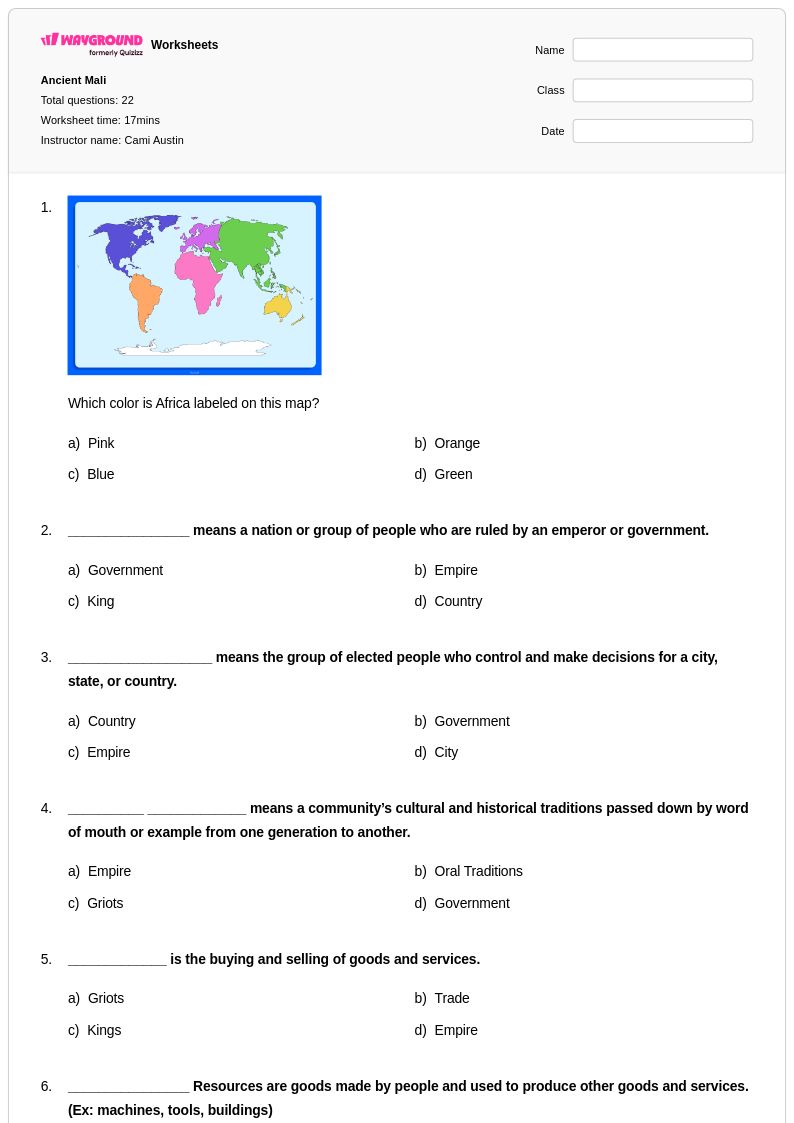
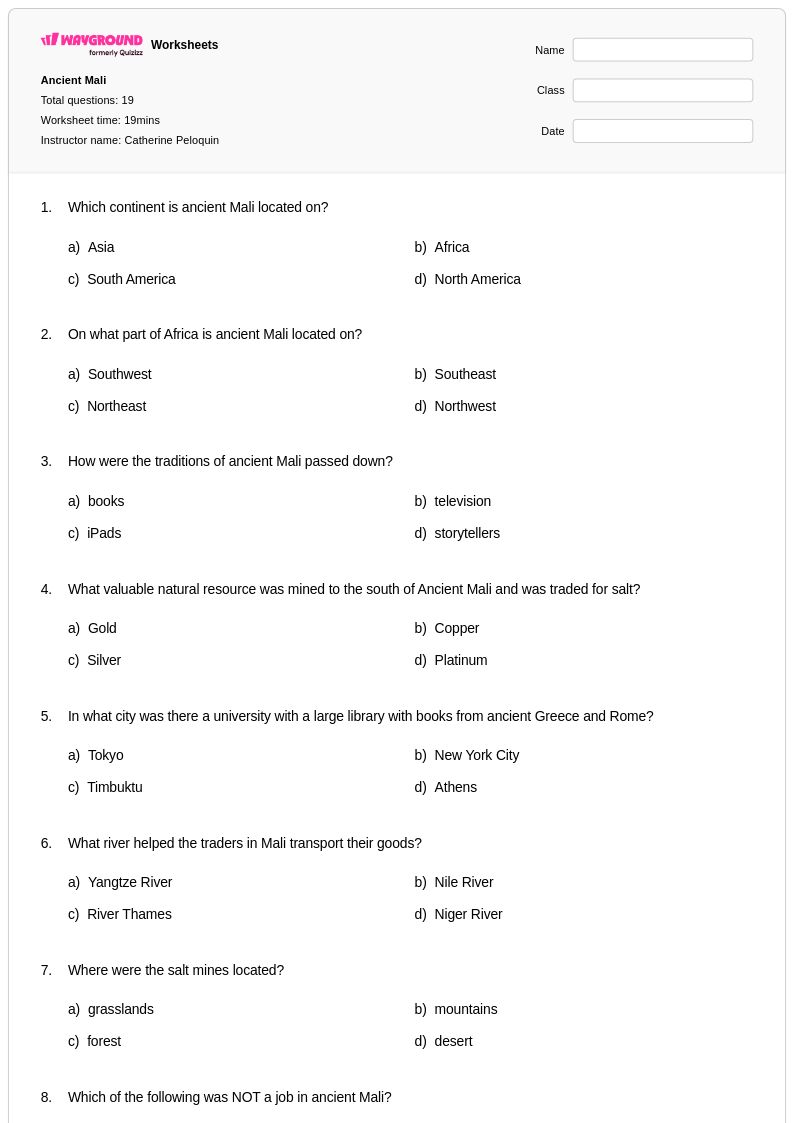
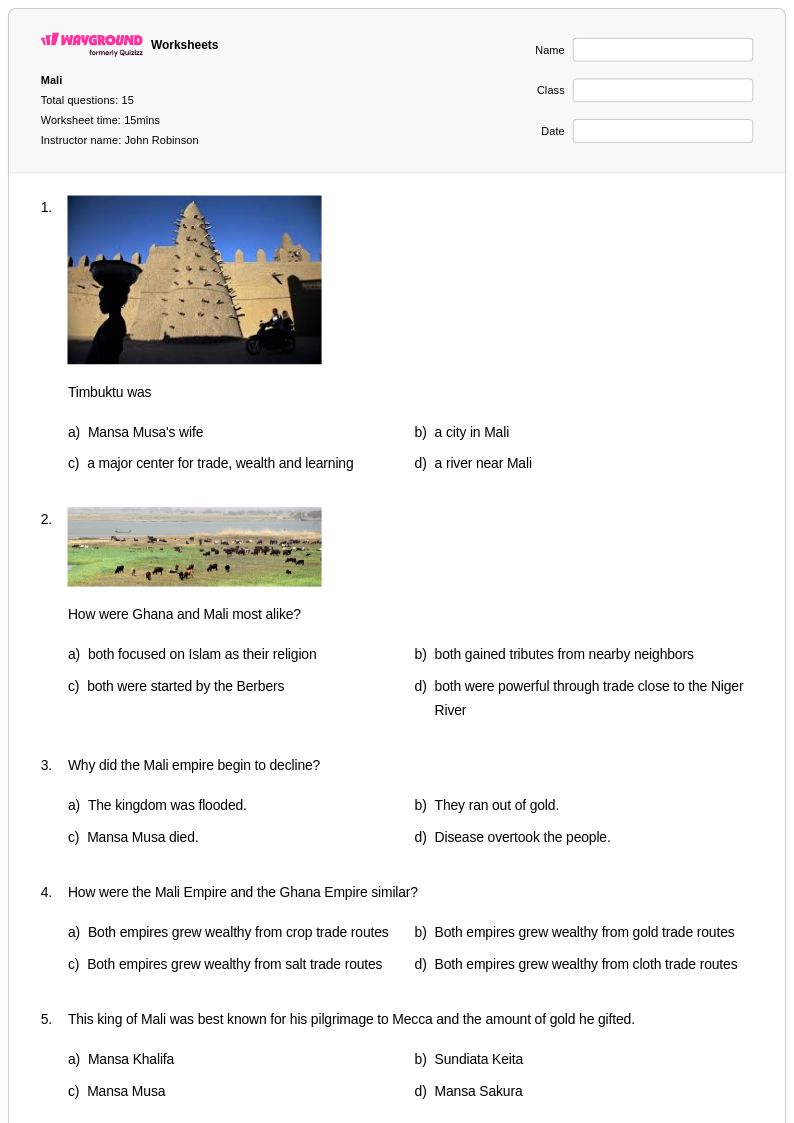
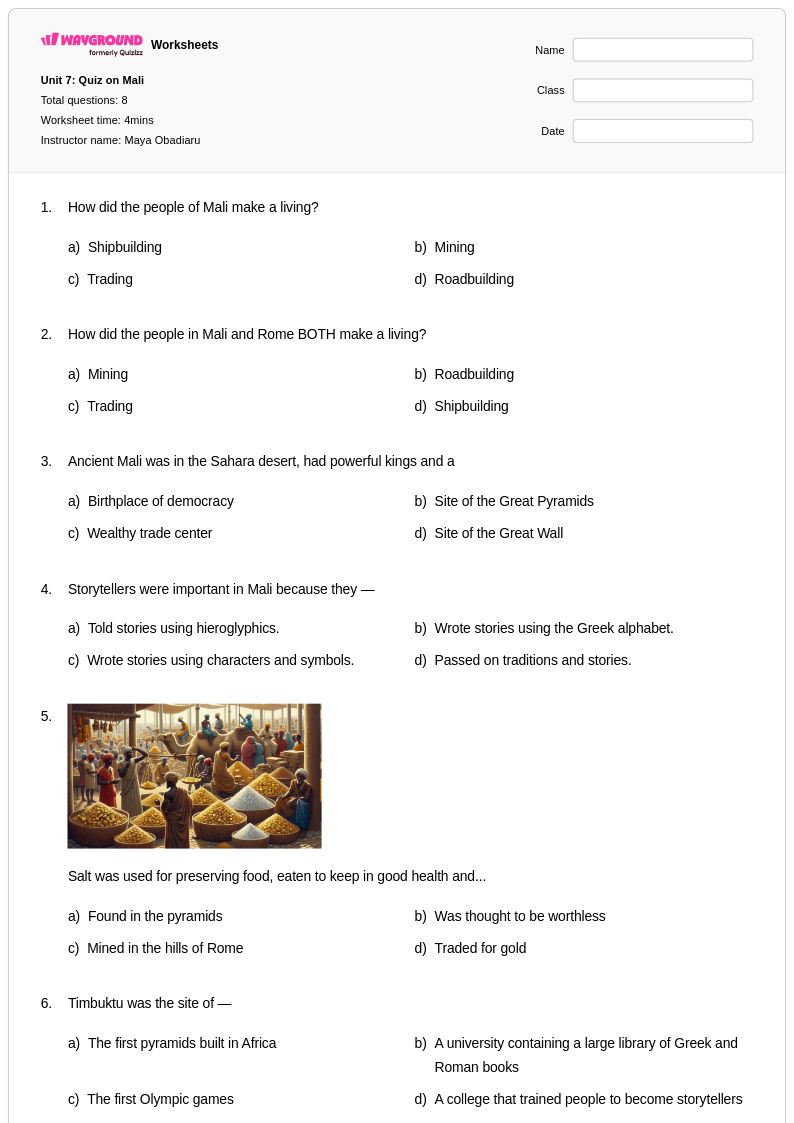
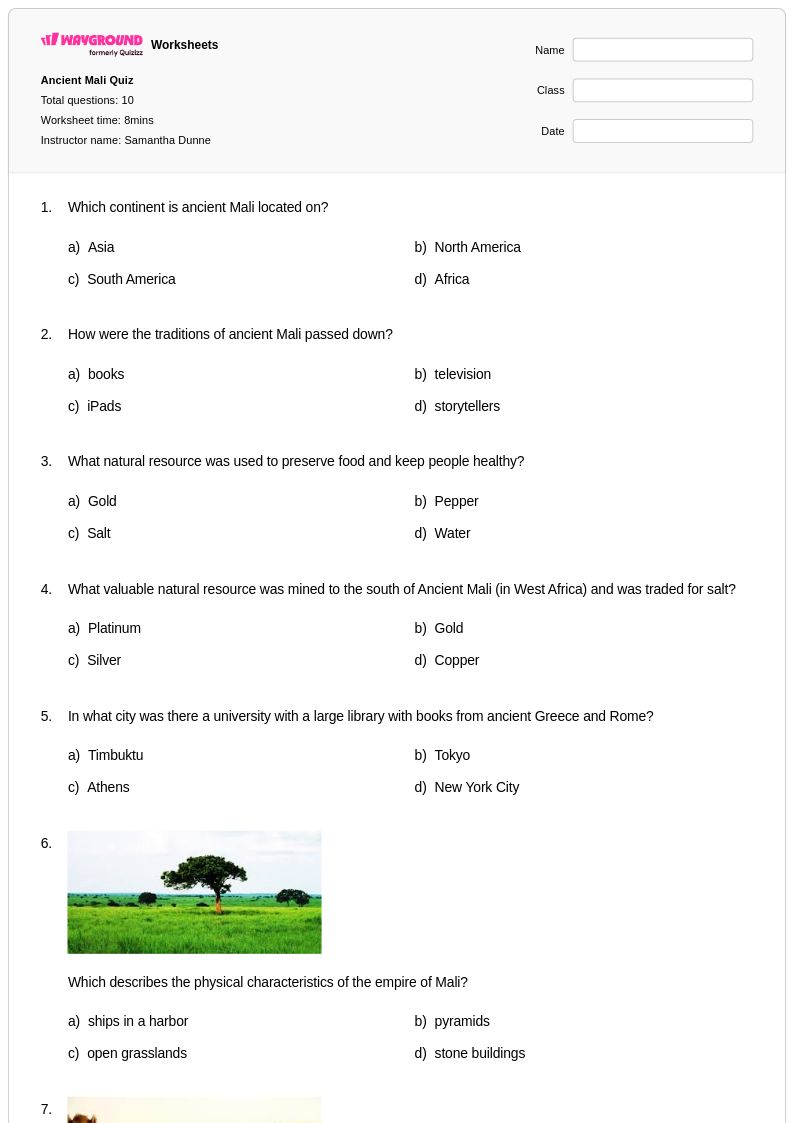
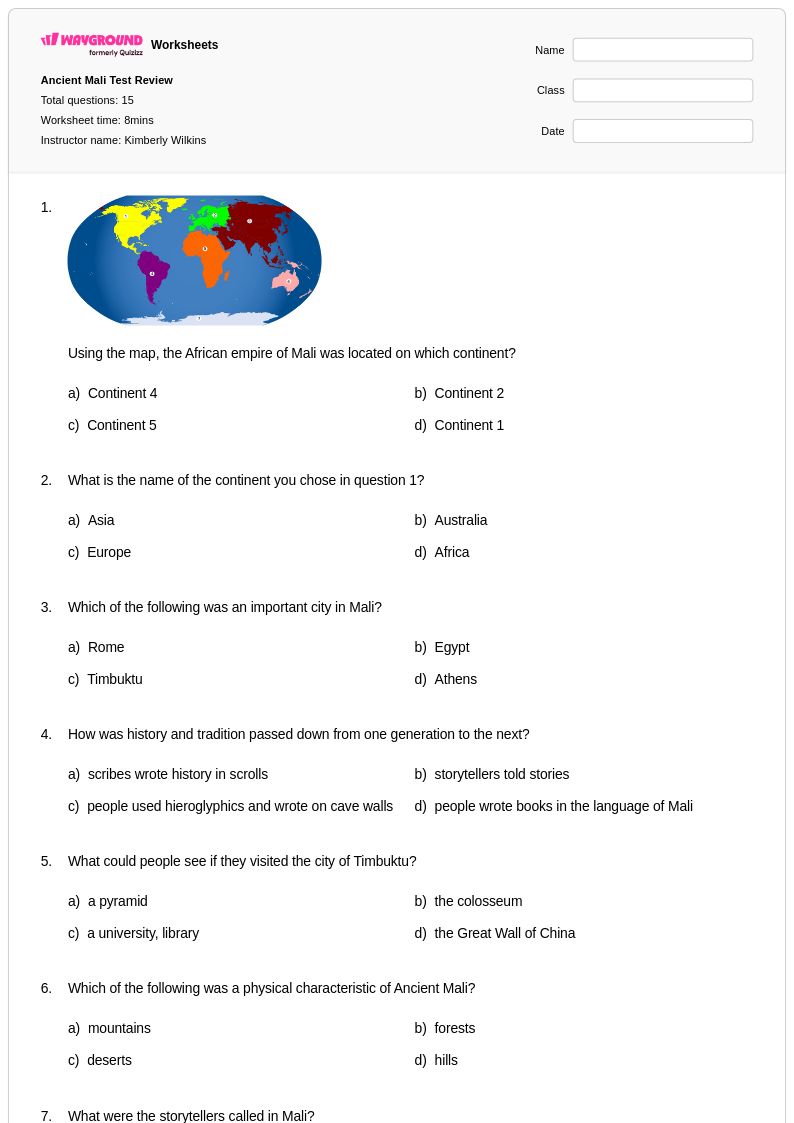
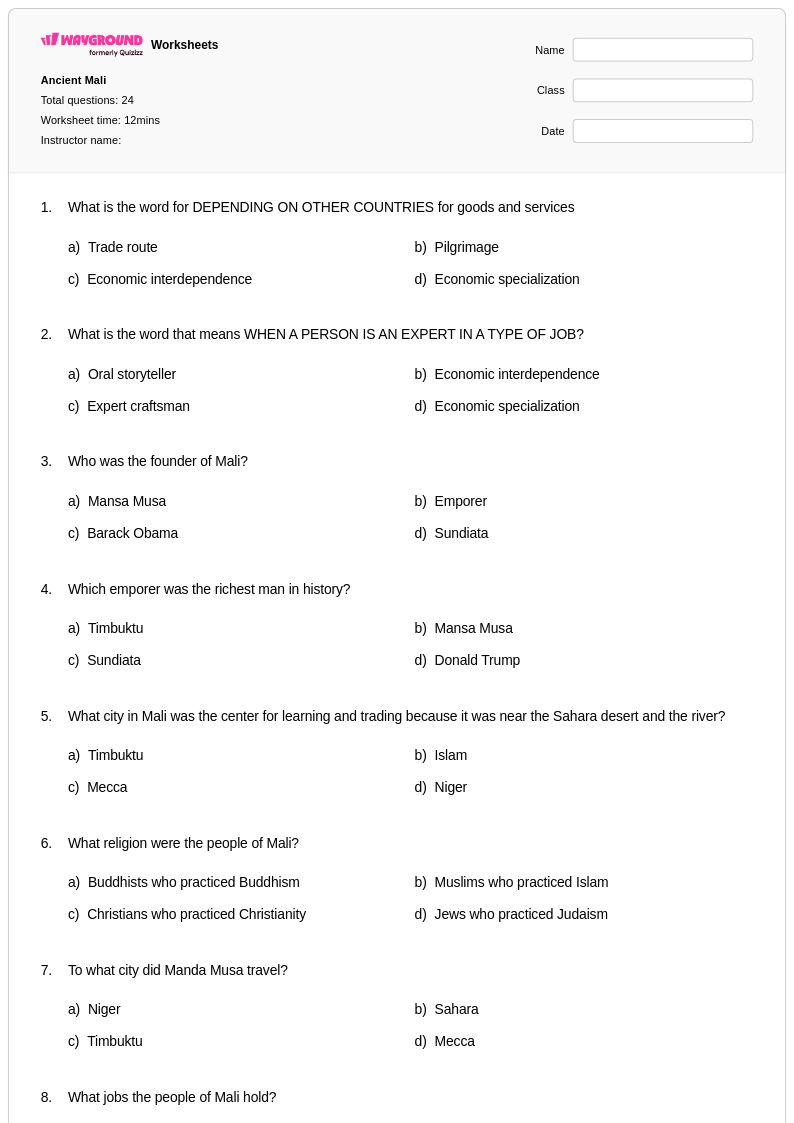
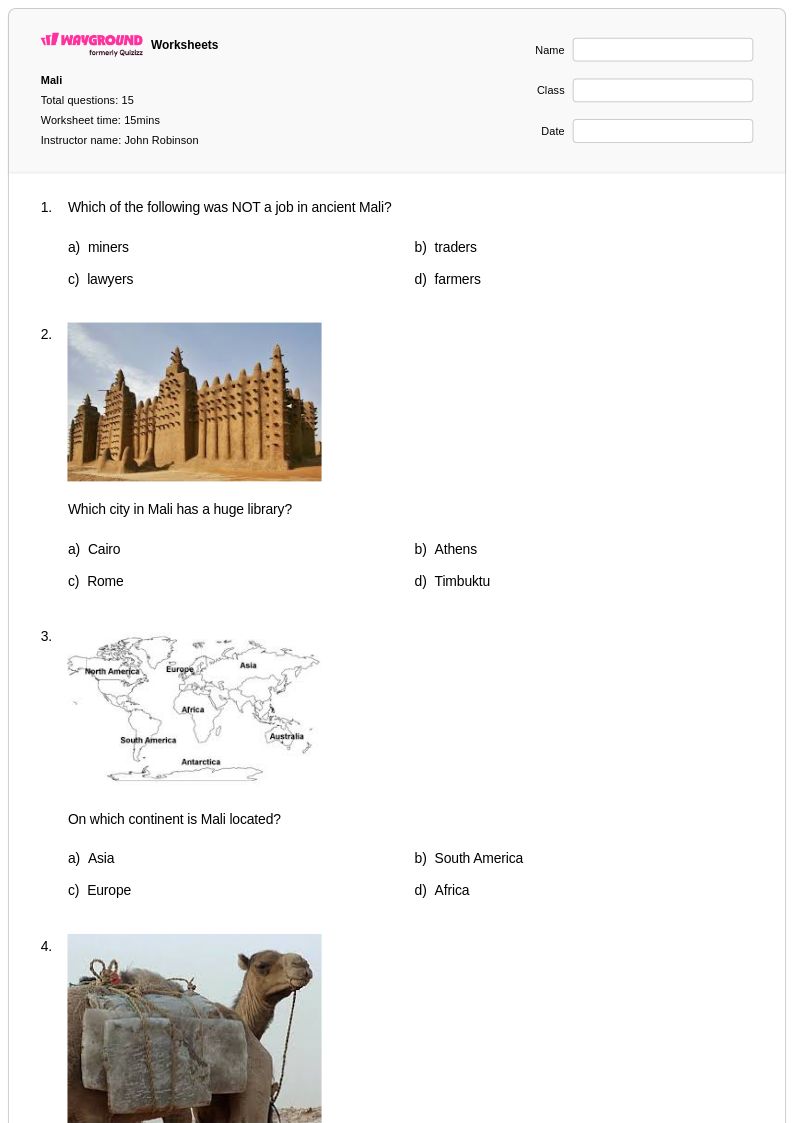
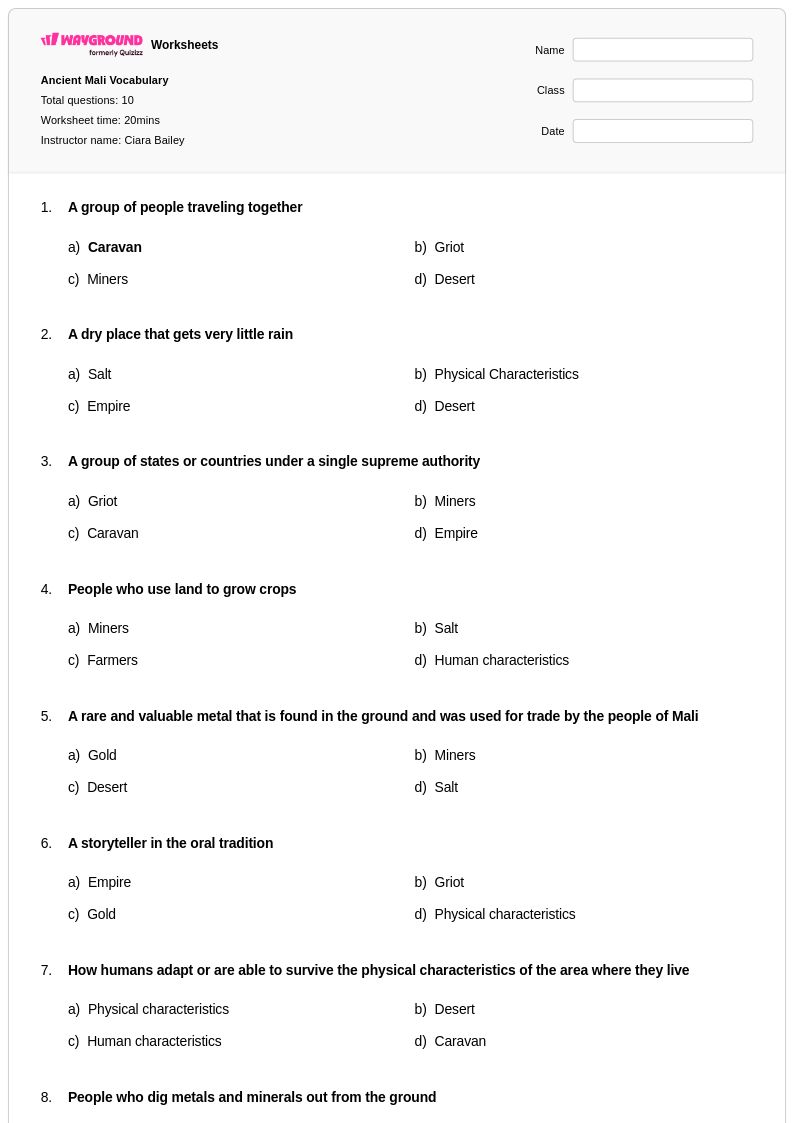
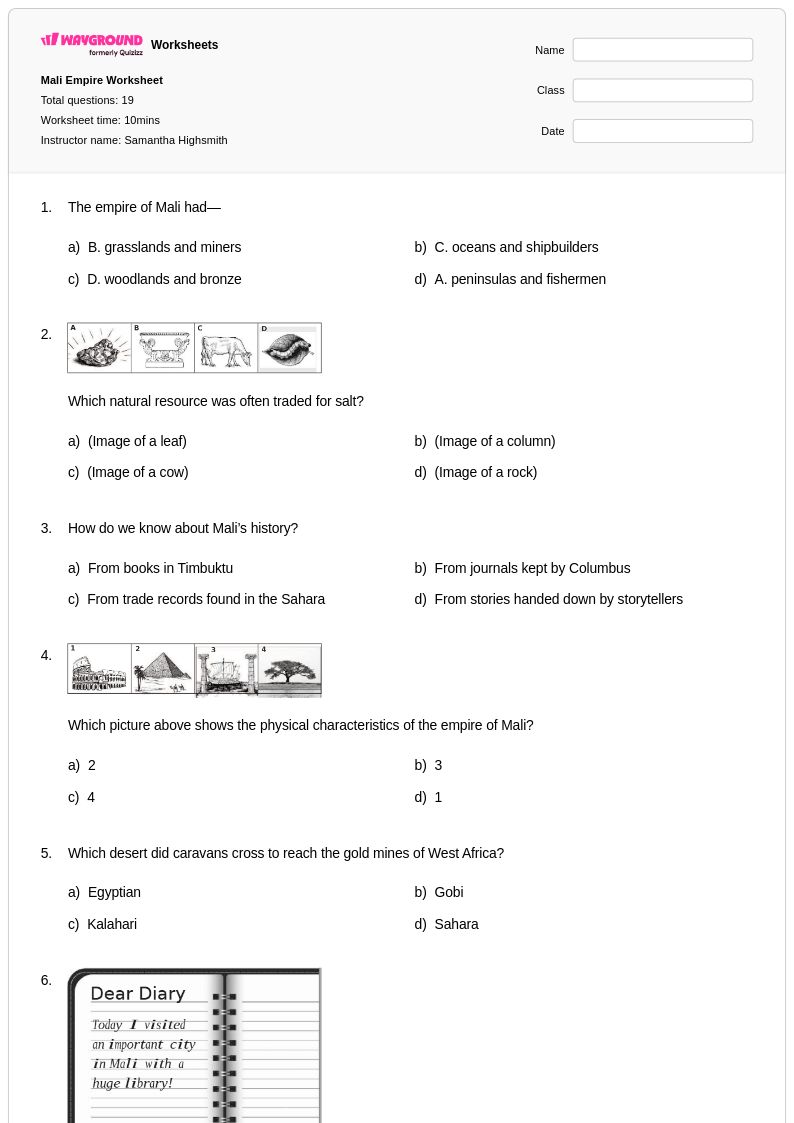
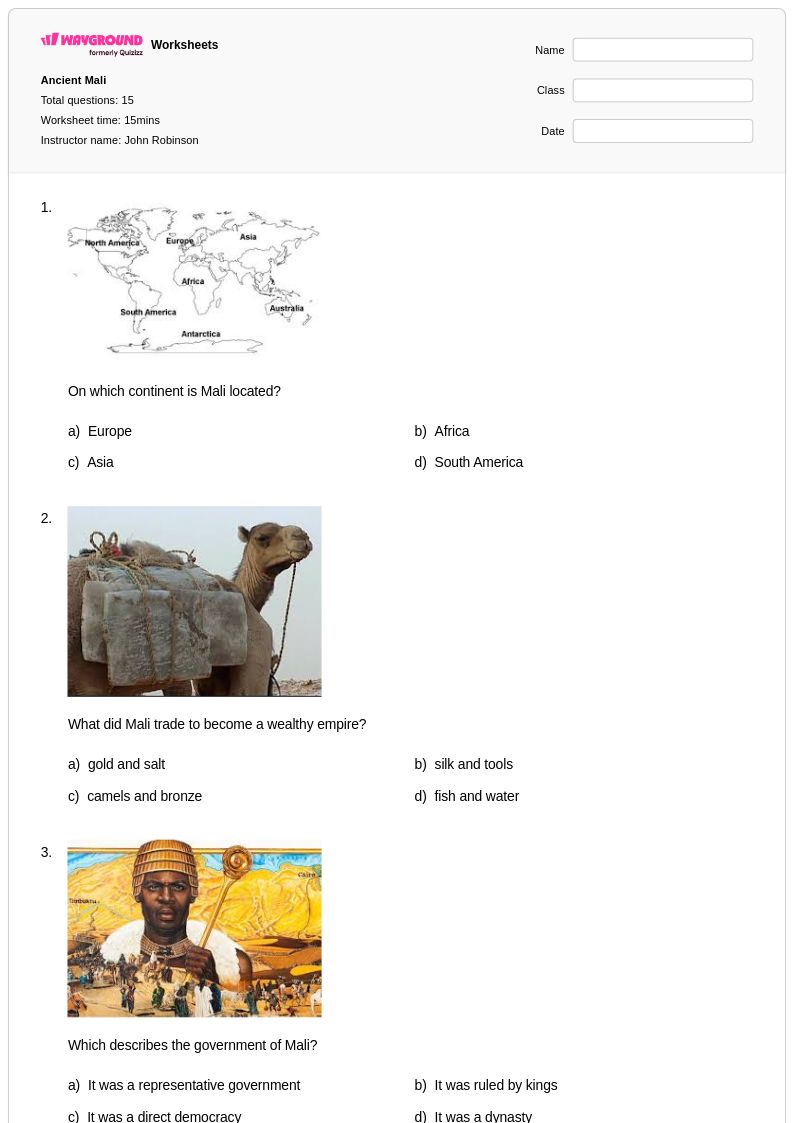
The Mali Empire worksheets available through Wayground (formerly Quizizz) provide Class 3 students with engaging opportunities to explore one of West Africa's most influential medieval kingdoms. These educational resources strengthen essential social studies skills including reading comprehension, historical thinking, and cultural awareness as young learners discover the wealth, trade networks, and leadership of this remarkable civilization. Students work through practice problems that examine the empire's golden age under Mansa Musa, the importance of salt and gold trade routes, and the cultural significance of Timbuktu as a center of learning. Each worksheet collection includes comprehensive answer keys and is available as free printables in convenient pdf format, allowing educators to seamlessly integrate authentic historical content into their curriculum while building students' understanding of African civilizations and their lasting contributions to world history.
Wayground (formerly Quizizz) supports educators with an extensive collection of teacher-created Mali Empire resources that align with social studies standards and accommodate diverse learning needs in Class 3 classrooms. The platform's robust search and filtering capabilities enable teachers to quickly locate worksheets that match specific learning objectives, while differentiation tools allow for customized instruction that meets individual student abilities. These flexible resources are available in both printable and digital formats, including downloadable pdf files, making them ideal for classroom instruction, homework assignments, or remote learning environments. Teachers can easily modify content to support remediation for struggling learners or provide enrichment activities for advanced students, while the vast library of millions of educator-developed materials ensures comprehensive coverage of Mali Empire topics including geography, economics, leadership, and cultural achievements that enhance historical thinking skills and global awareness.
FAQs
How do I teach the Mali Empire to middle or high school students?
Teaching the Mali Empire effectively starts with grounding students in its geographic context — specifically the Niger River valley and the trans-Saharan trade routes that made Mali's wealth possible. From there, structure your instruction around three anchor points: the founding under Sundiata Keita, the imperial peak under Mansa Musa, and the eventual decline. Using primary source analysis alongside political and economic frameworks helps students understand Mali not as an isolated case study but as a central node in a connected medieval world.
What are common misconceptions students have about the Mali Empire?
One of the most persistent misconceptions is that medieval Africa lacked sophisticated political or economic systems. Students often underestimate the complexity of Mali's governance structure, its codified legal traditions, and the scale of its trans-Saharan trade networks. Another common error is conflating the Mali Empire with the later Songhai Empire or with the earlier Ghana Empire — students benefit from explicit timelines and comparison activities that distinguish these distinct civilizations.
What exercises help students understand the role of trade in the Mali Empire?
Map-based activities that trace gold-salt trade routes between sub-Saharan Africa, North Africa, and the Mediterranean are particularly effective for building spatial and economic understanding. Document analysis tasks using accounts from Ibn Battuta or other contemporary sources help students evaluate how trade shaped Mali's political power and cultural exchange. Follow-up questions that ask students to connect trade wealth to the growth of Timbuktu as a center of Islamic scholarship add analytical depth.
How can I use Mali Empire worksheets to support primary source analysis skills?
Mali Empire worksheets that incorporate excerpts from historical accounts — such as those describing Mansa Musa's 1324 pilgrimage to Mecca — give students structured opportunities to practice sourcing, contextualization, and corroboration. Pairing a primary source with guided questions that ask students to identify the author's perspective, the intended audience, and the historical significance of the event builds transferable document analysis skills. These tasks align well with social studies standards focused on historical thinking and evidence-based argumentation.
How do I use Wayground's Mali Empire worksheets in my classroom?
Wayground's Mali Empire worksheets are available as printable PDFs for traditional classroom distribution and in digital formats for technology-integrated learning environments, including the option to host them as a quiz directly on Wayground. Each worksheet includes a detailed answer key, which reduces prep time and supports consistent assessment. Teachers can use these resources for initial instruction, targeted remediation, or enrichment, and can filter by topic to locate materials focused on specific aspects of the empire such as Mansa Musa's reign, Islamic scholarship in Timbuktu, or the factors behind Mali's decline.
How do I differentiate Mali Empire instruction for students at different skill levels?
For students who need additional support, simplifying source texts, providing graphic organizers, and reducing the number of response options can lower cognitive load without sacrificing content rigor. On Wayground, teachers can apply accommodations such as read aloud, extended time, and reduced answer choices to individual students — settings that are saved and reusable across future sessions without notifying the rest of the class. Advanced students can be challenged with comparative tasks that connect Mali's political and economic structures to contemporaneous civilizations in Europe or Asia.