Free Printable Primary and Secondary Sources Worksheets for Class 3
Free Class 3 primary and secondary sources worksheets help students learn to identify and distinguish between different types of historical evidence through engaging printables, practice problems, and comprehensive answer keys.
Explore printable Primary and Secondary Sources worksheets for Class 3
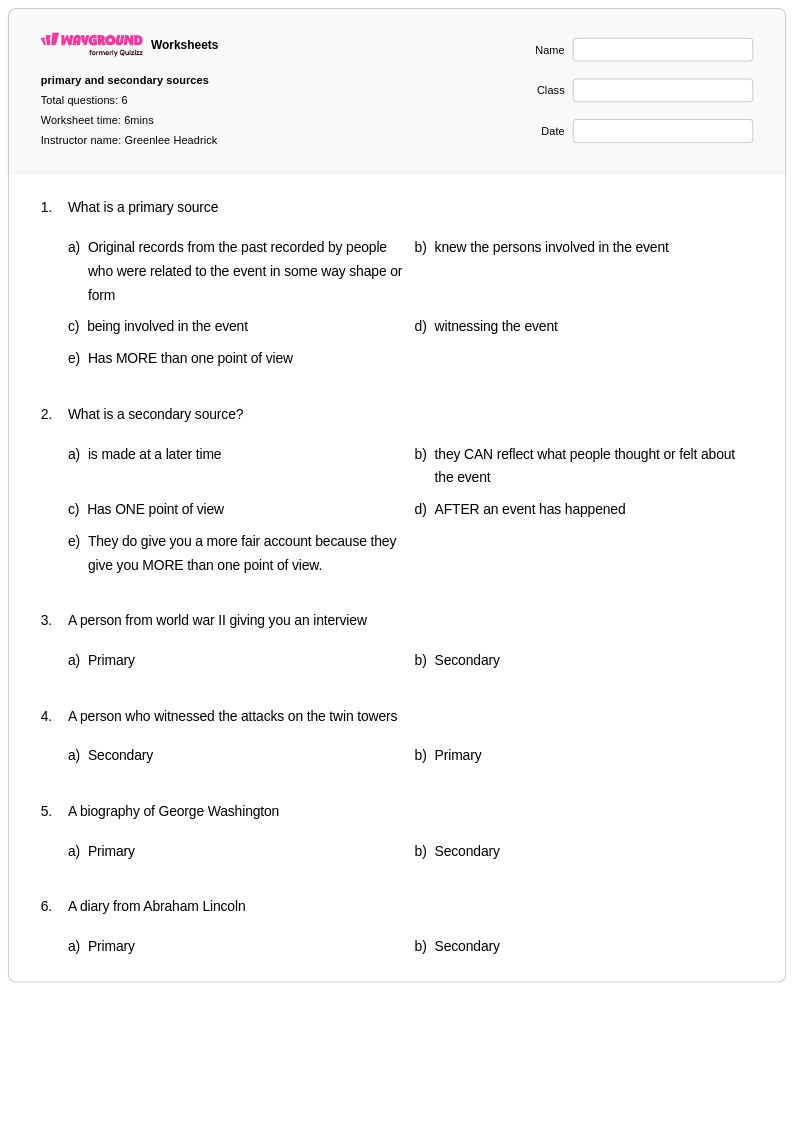
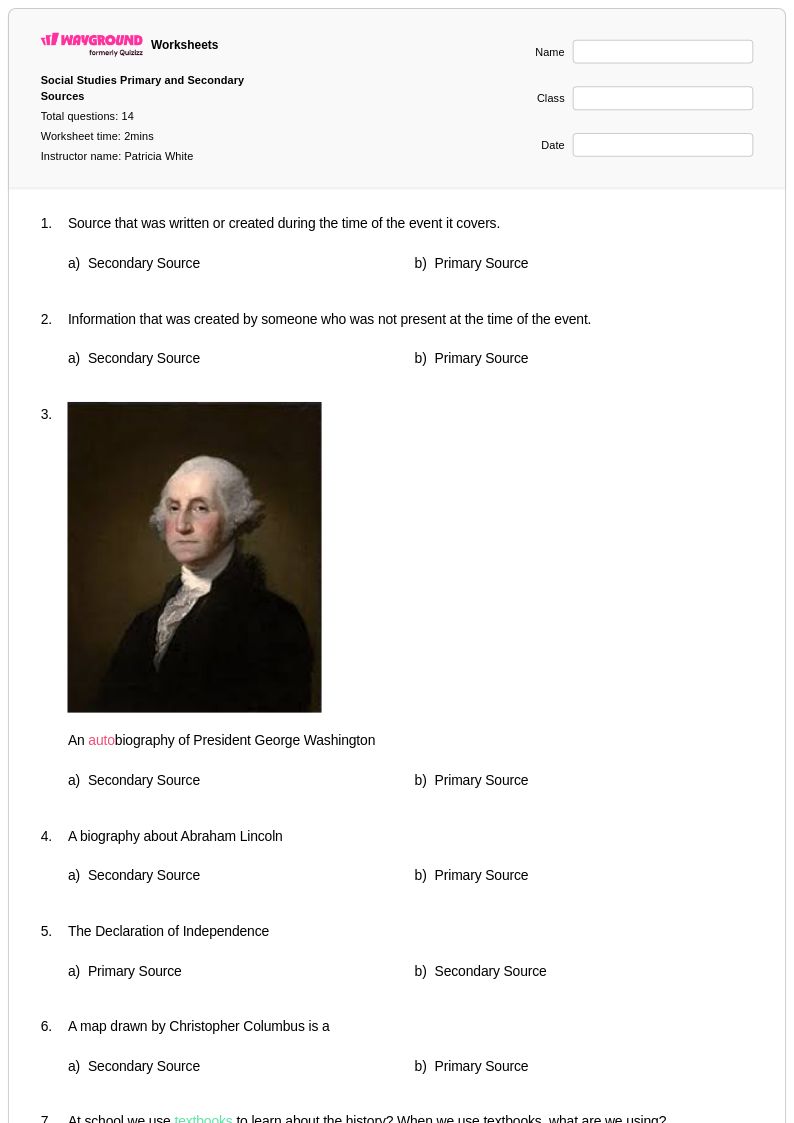
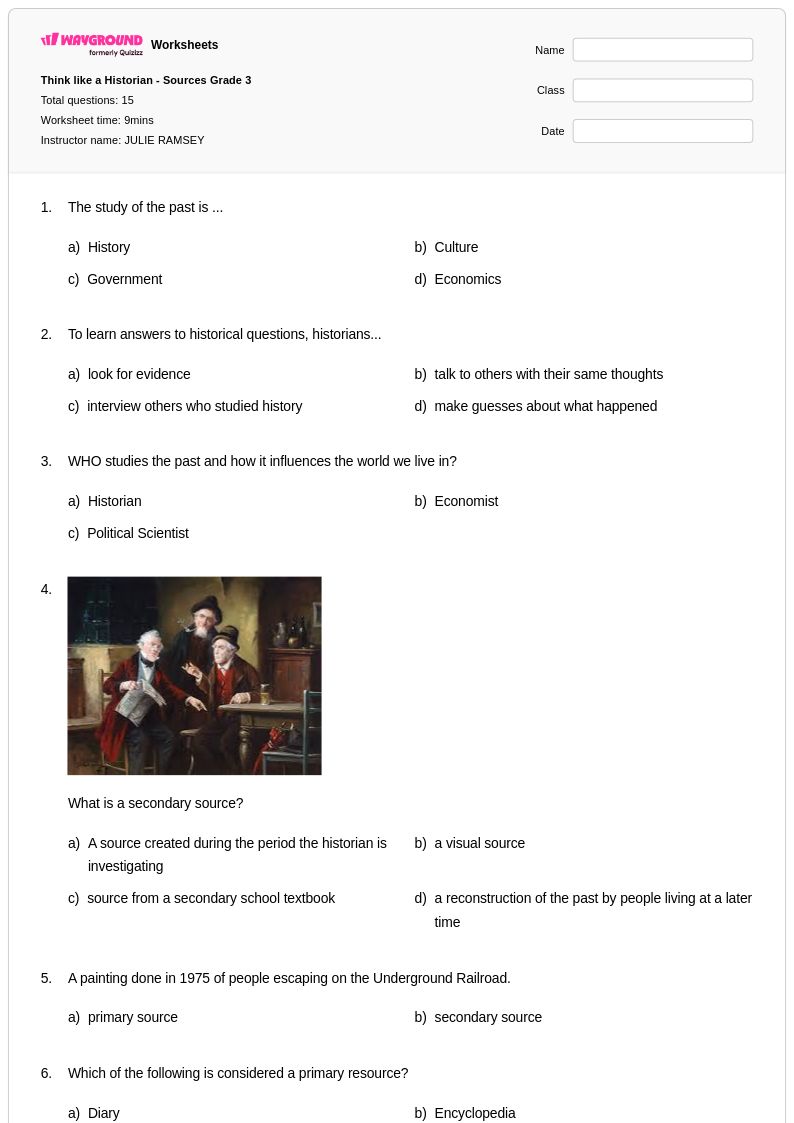
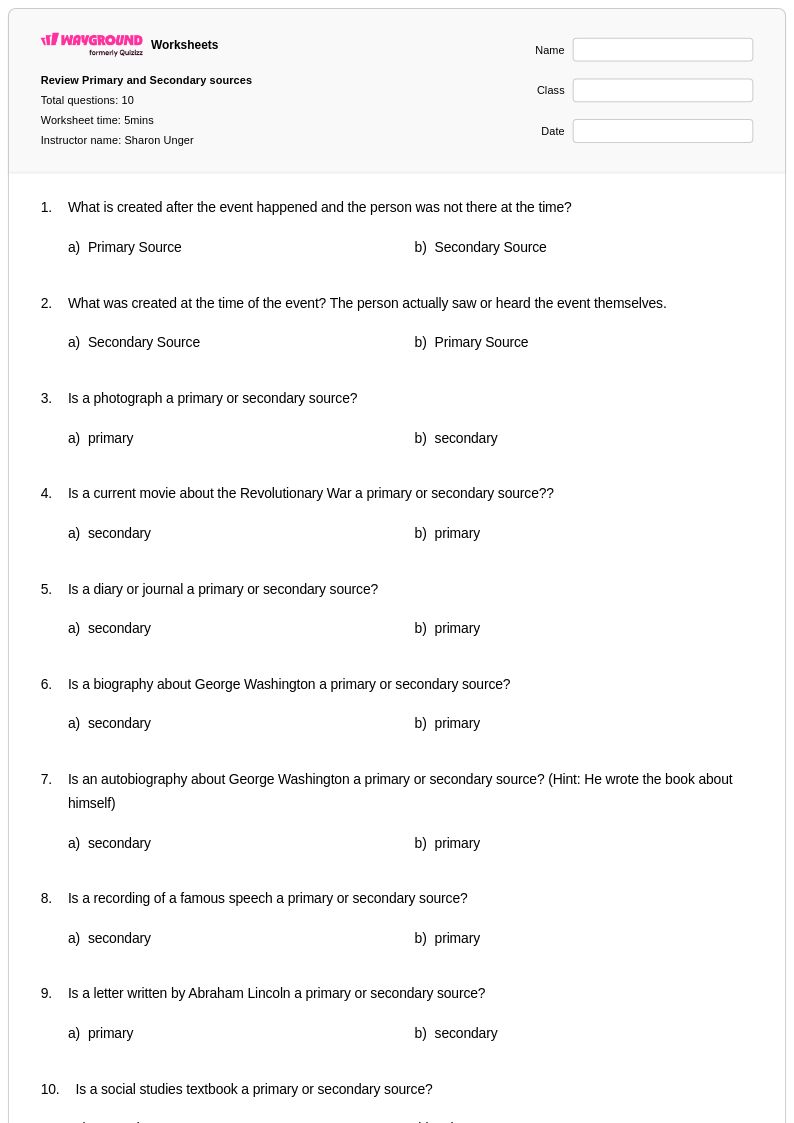
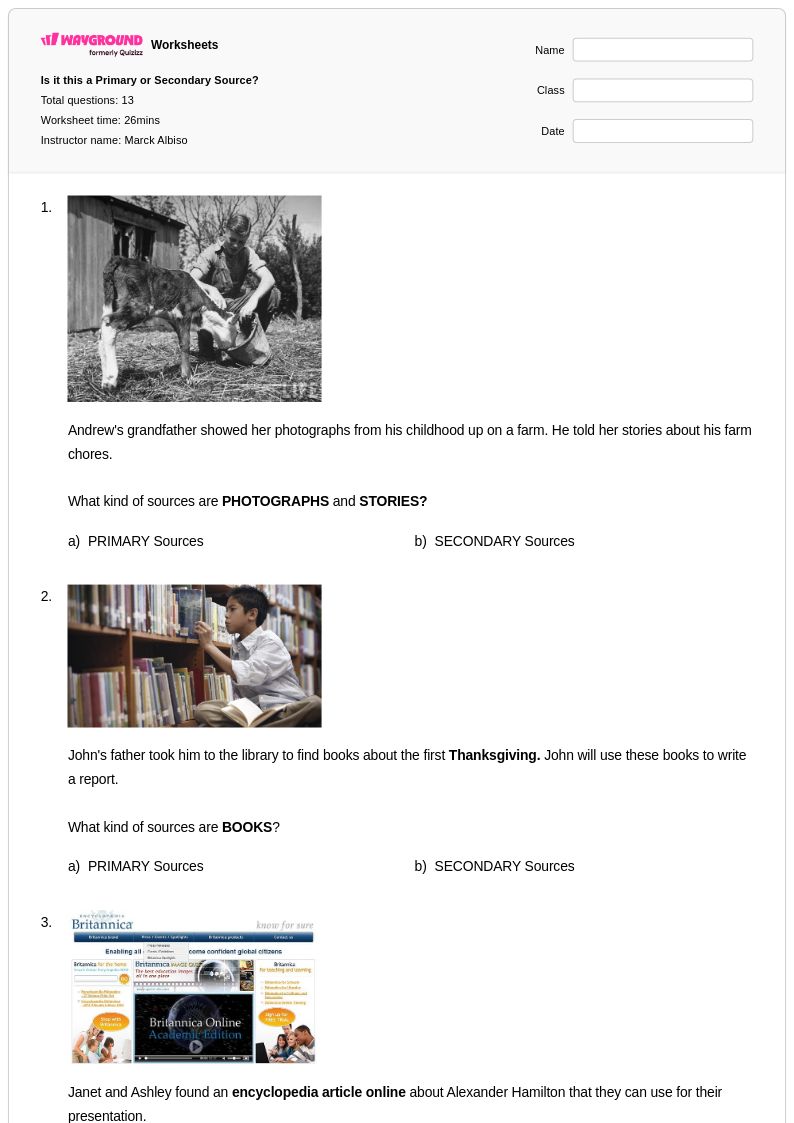
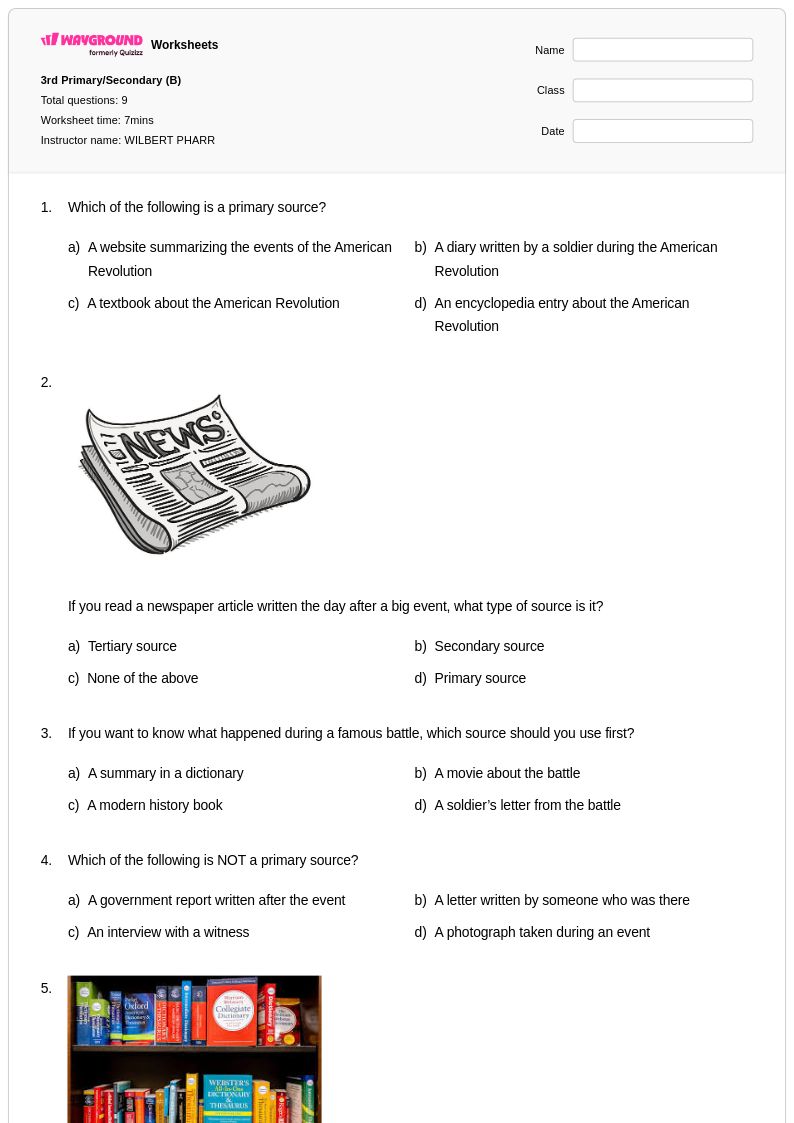
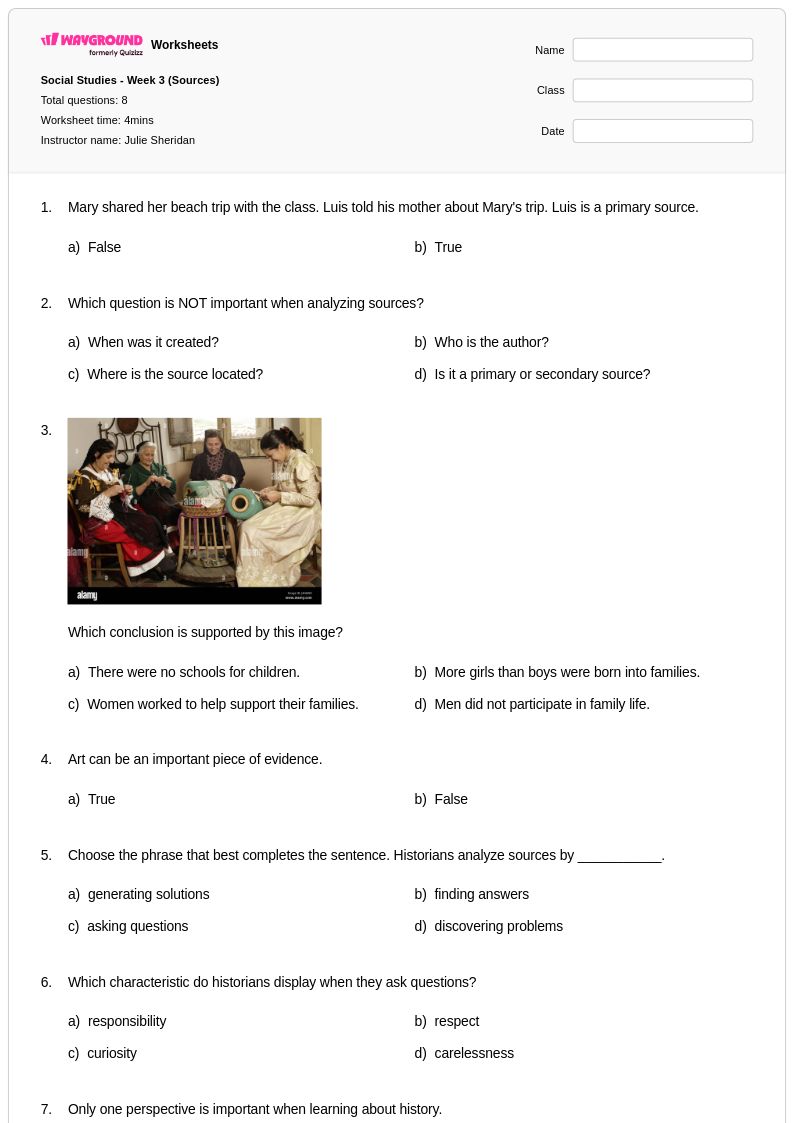
Primary and Secondary Sources worksheets for Class 3 through Wayground (formerly Quizizz) introduce young historians to the fundamental skill of distinguishing between firsthand accounts and interpretations of historical events. These carefully crafted educational resources help third-grade students develop critical thinking abilities by examining artifacts, photographs, diary entries, and textbook passages to determine their origins and reliability. Each worksheet includes clear examples and engaging practice problems that guide students through identifying whether a source was created during the time period being studied or afterward by someone who was not present. The comprehensive answer key accompanying these printables enables teachers to provide immediate feedback and clarify misconceptions, while the free pdf format ensures easy classroom distribution and home practice opportunities.
Wayground (formerly Quizizz) empowers educators with an extensive collection of millions of teacher-created resources specifically designed to support primary and secondary source instruction at the elementary level. The platform's robust search and filtering capabilities allow teachers to quickly locate worksheets that align with state social studies standards and match their students' varying ability levels through built-in differentiation tools. These customizable materials are available in both printable and digital formats, including downloadable pdf versions that can be modified to meet specific classroom needs or learning objectives. Whether used for initial skill introduction, targeted remediation for struggling learners, or enrichment activities for advanced students, these versatile worksheet collections streamline lesson planning while providing multiple opportunities for students to practice this essential historical thinking skill through varied and engaging exercises.
FAQs
How do I teach students to distinguish between primary and secondary sources?
Start by anchoring instruction in concrete examples: a soldier's diary entry versus a historian's analysis of the same war. Teach students to ask two diagnostic questions about any source: Was this created by someone who directly witnessed the event? And was it produced during or after the time period being studied? Once students internalize these questions, move to practice with mixed document sets so they must apply the distinction without scaffolding.
What exercises help students practice identifying primary and secondary sources?
The most effective practice exercises present students with a variety of source types, including photographs, letters, textbook excerpts, newspaper articles, and artifacts, and ask them to classify and justify each one. Worksheets that require students to explain their reasoning, not just label sources, build the analytical muscle needed for historical inquiry. Pairing classification tasks with brief source analysis questions reinforces both identification and interpretation skills simultaneously.
What mistakes do students commonly make when identifying primary and secondary sources?
The most common error is assuming that older sources are automatically primary and newer ones are secondary. Students also frequently misclassify encyclopedias and textbooks as primary sources because they feel authoritative. Another persistent misconception is that photographs are always primary sources, when in fact a photo taken decades after an event to illustrate a documentary is secondary. Worksheets that include deliberate edge cases help students confront and correct these misunderstandings.
How can I use primary and secondary source worksheets to support historical literacy skills?
Use source-identification worksheets as a gateway to deeper historical literacy by connecting classification to credibility and bias analysis. Once students can reliably distinguish source types, worksheets that prompt them to evaluate reliability, intended audience, and purpose extend that skill into genuine historical thinking. This progression, from identification to interpretation, mirrors the actual work of historians and prepares students for document-based essay tasks.
How do I use Wayground's primary and secondary sources worksheets in my classroom?
Wayground's primary and secondary sources worksheets are available as printable PDFs for traditional classroom use and in digital formats for technology-integrated environments, including the option to host them as a live quiz on Wayground. Teachers can use them for direct instruction, independent practice, homework, or remediation. For students who need additional support, Wayground's accommodation tools, such as read aloud and reduced answer choices, can be applied to individual students without disrupting the rest of the class.
How do I differentiate primary and secondary source instruction for students at different skill levels?
For struggling learners, scaffold with anchor charts that list defining characteristics of each source type and use simple, high-interest examples before introducing complex documents. For advanced students, push beyond classification toward evaluation: asking why a source's origin affects its reliability or how two secondary sources about the same event might differ. Wayground's differentiation tools allow teachers to adjust content complexity within the same assignment, so all learners can access the skill at an appropriate level of challenge.