
15 Q
6th - 8th
17 Q
7th - 8th
26 Q
7th
10 Q
7th
20 Q
5th - Uni
18 Q
7th
17 Q
7th
19 Q
7th
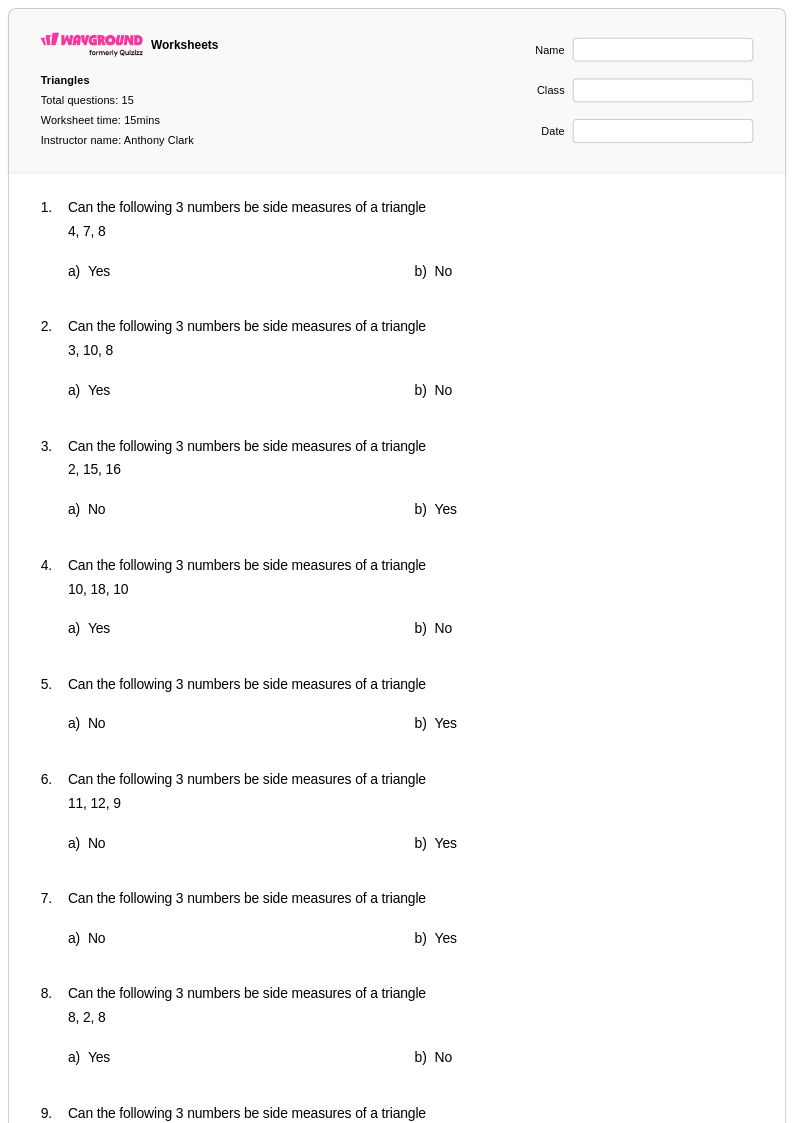
15 Q
5th - Uni
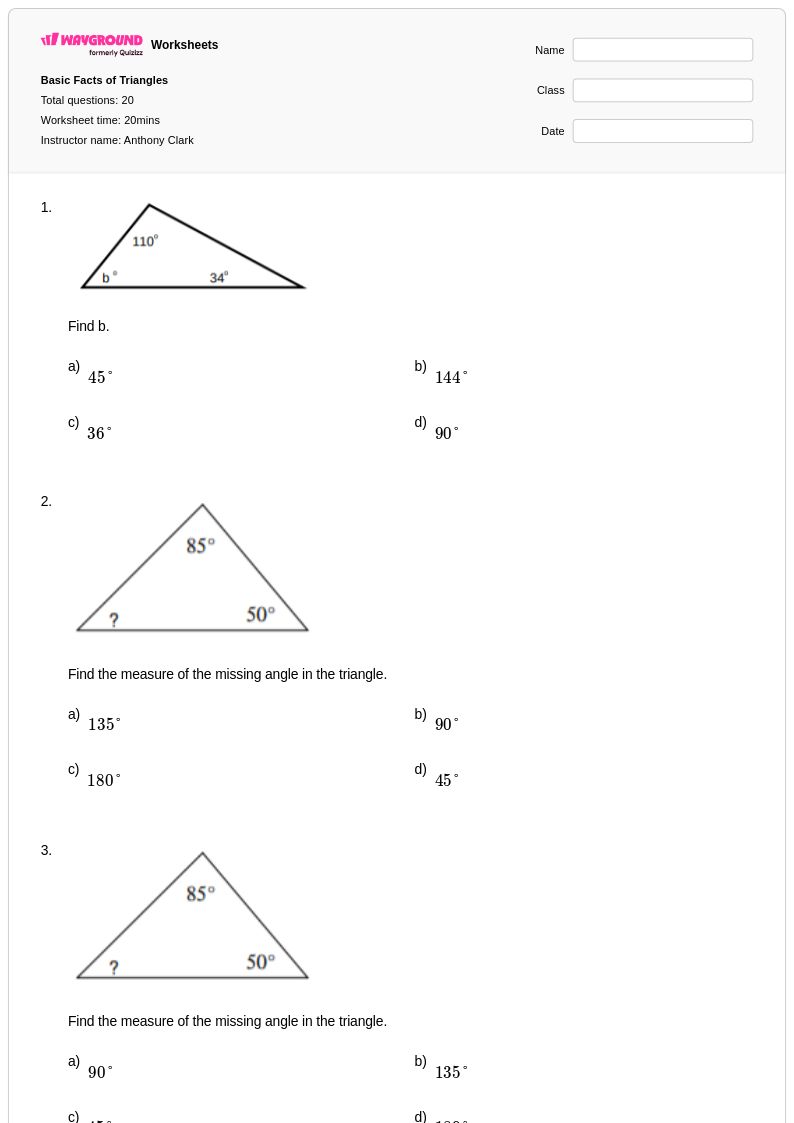
20 Q
3rd - Uni
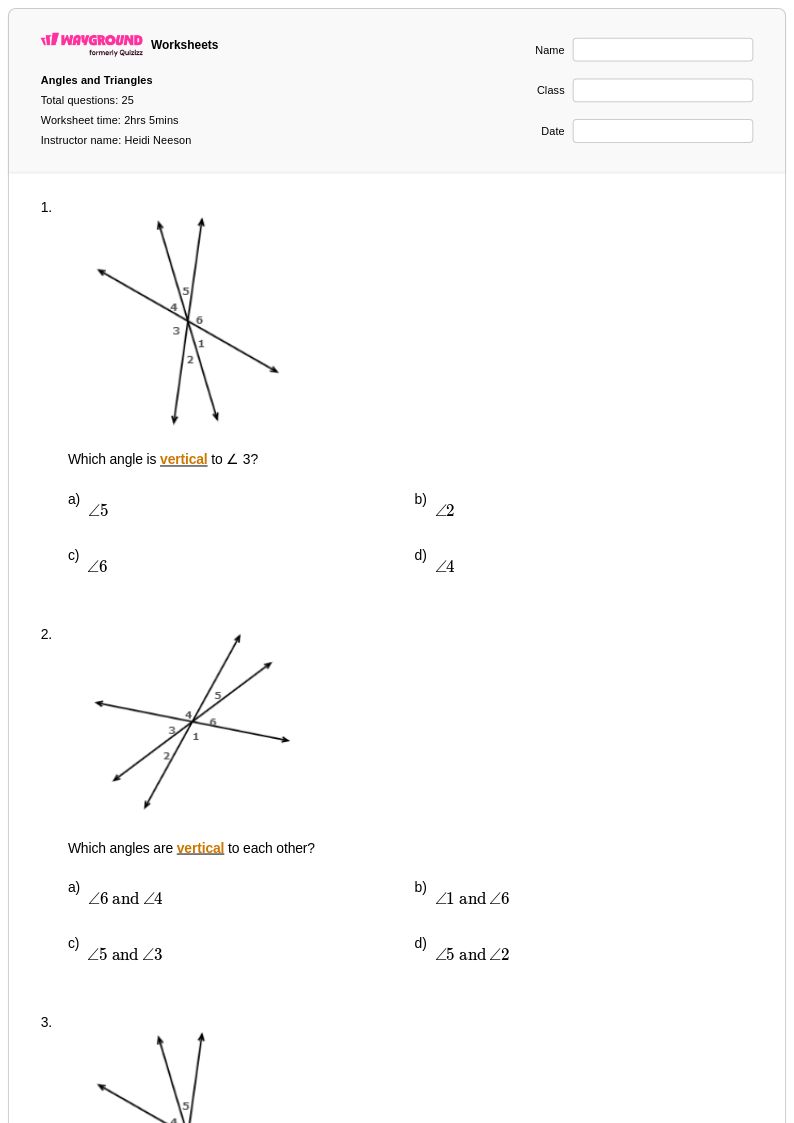
25 Q
7th
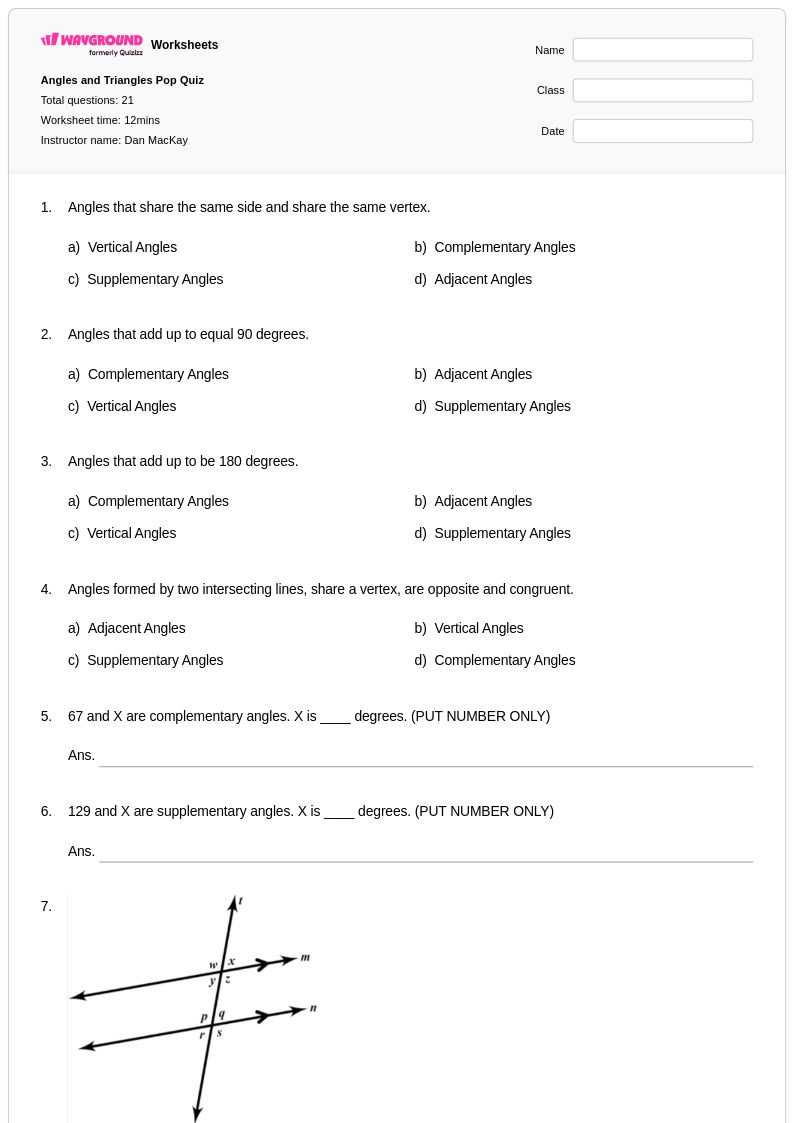
21 Q
7th - 8th
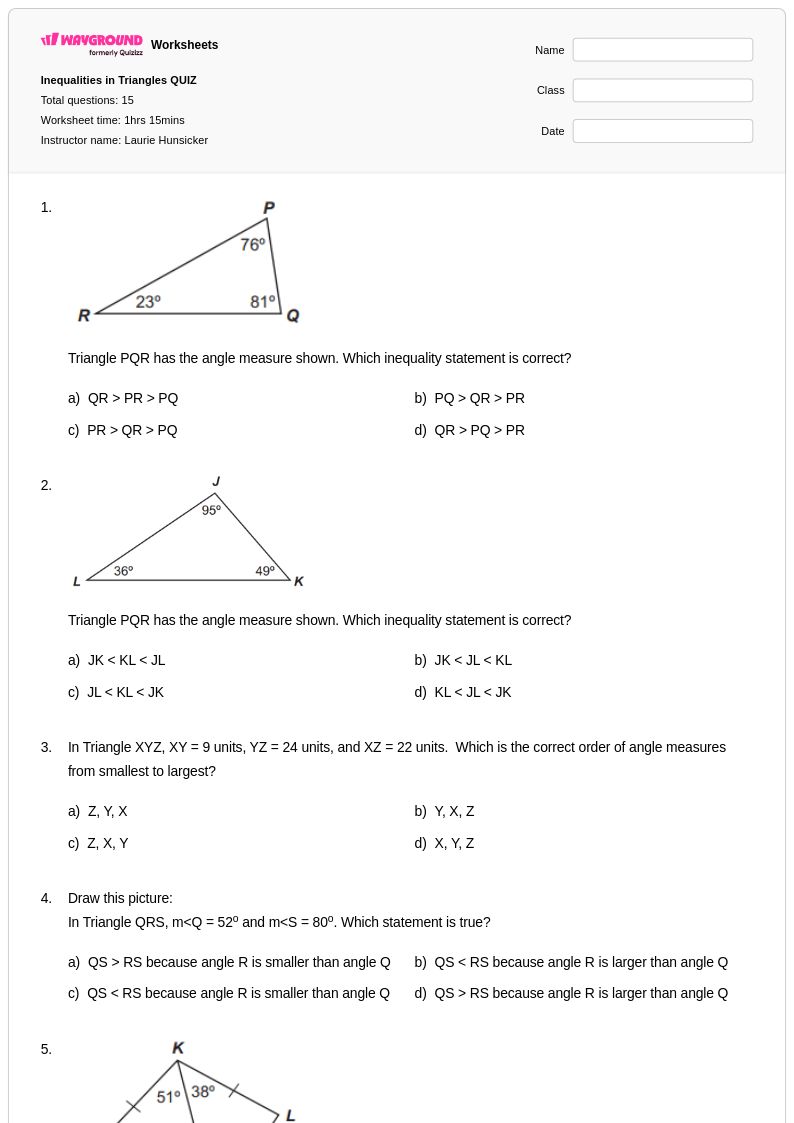
15 Q
7th - 10th
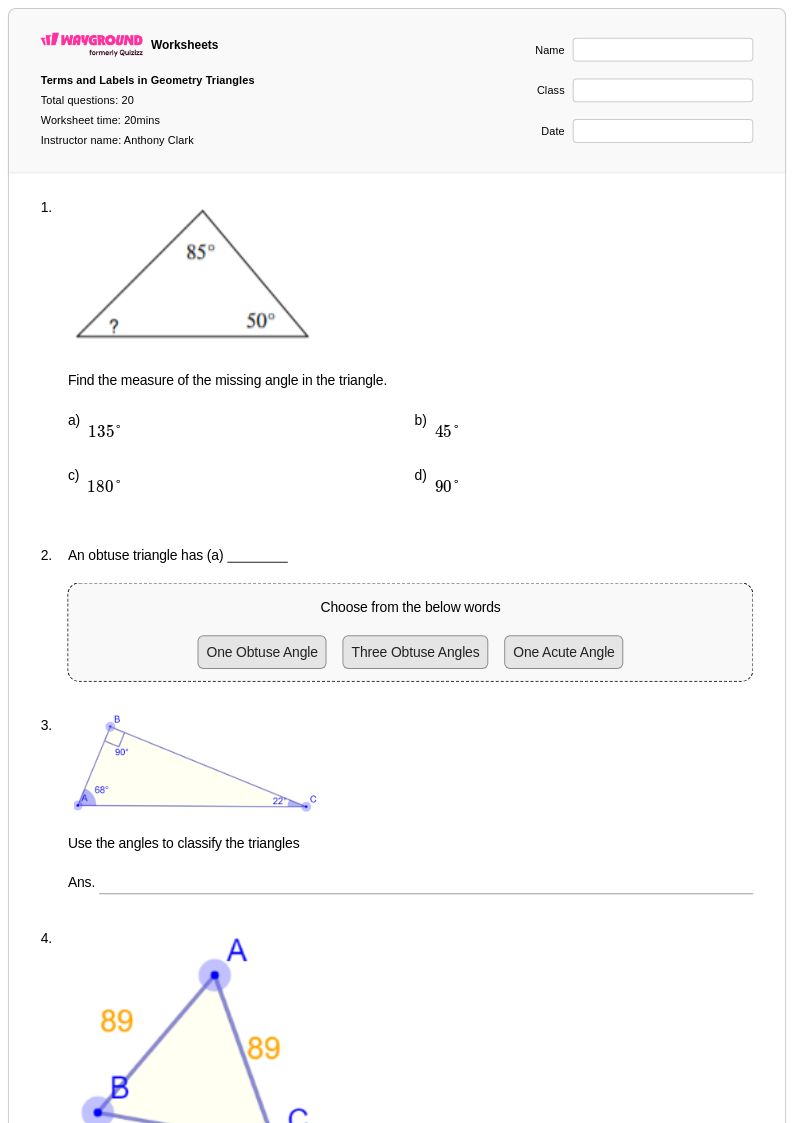
20 Q
5th - Uni
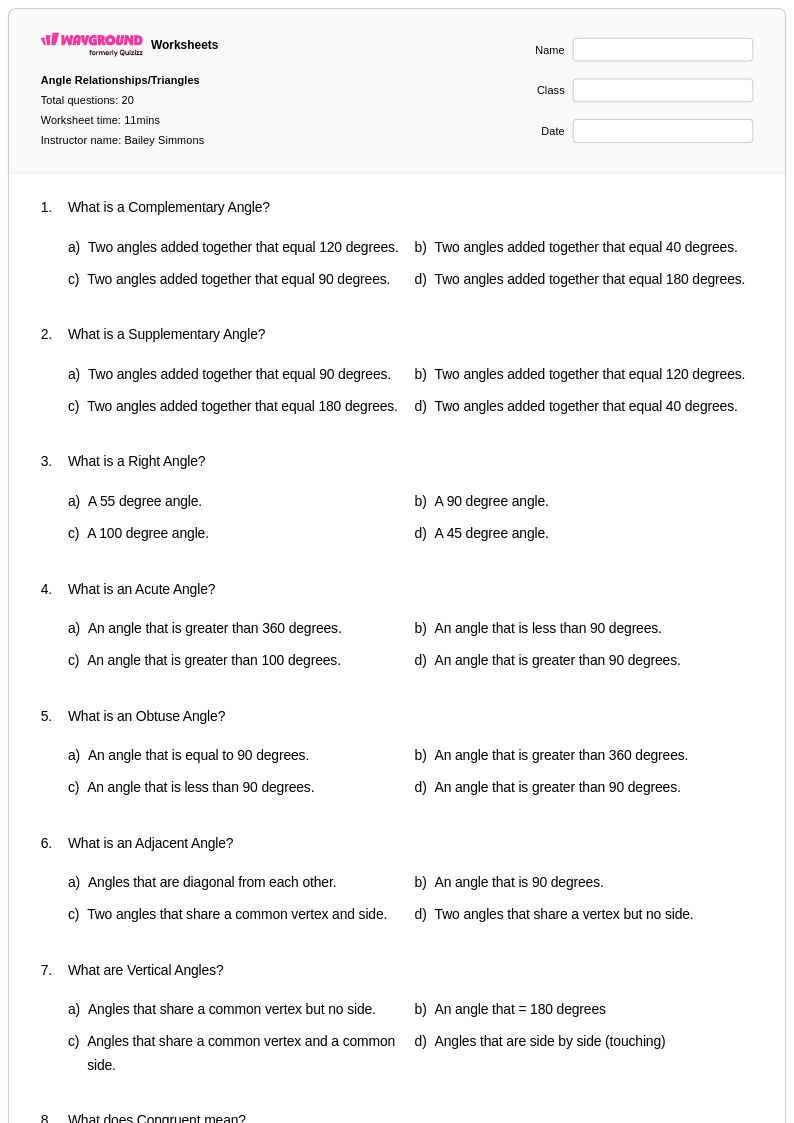
20 Q
7th
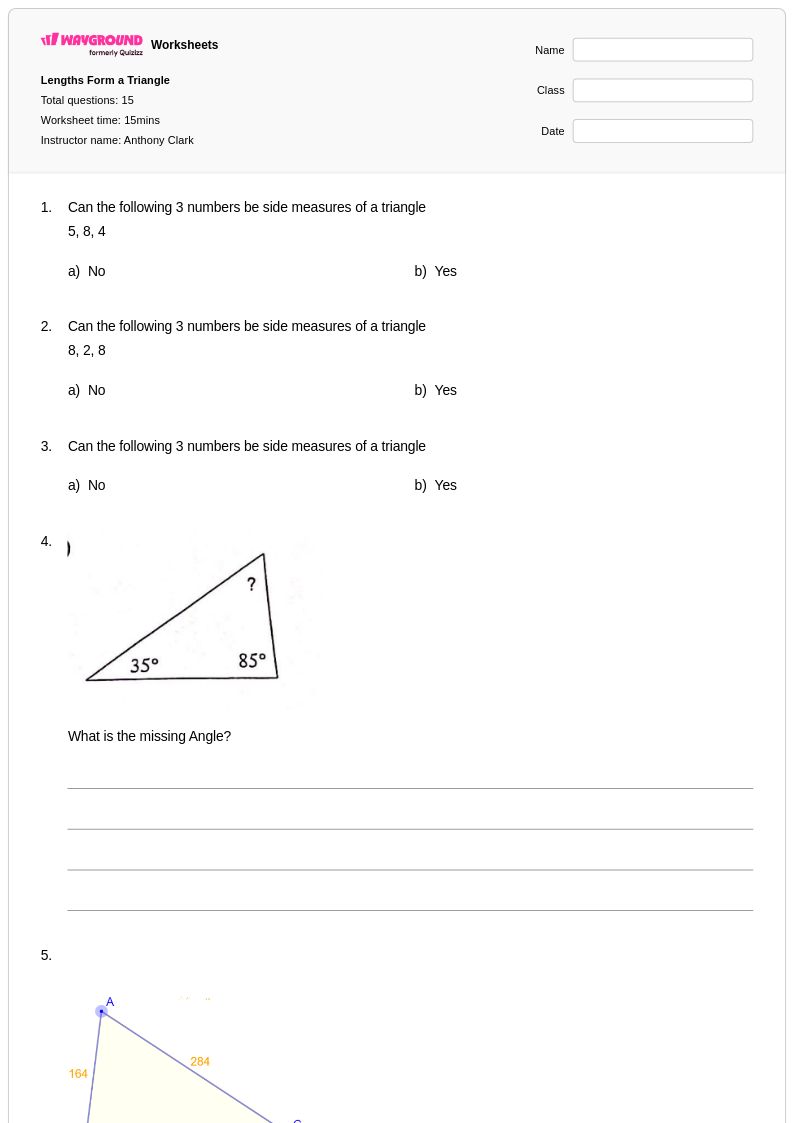
15 Q
7th - Uni
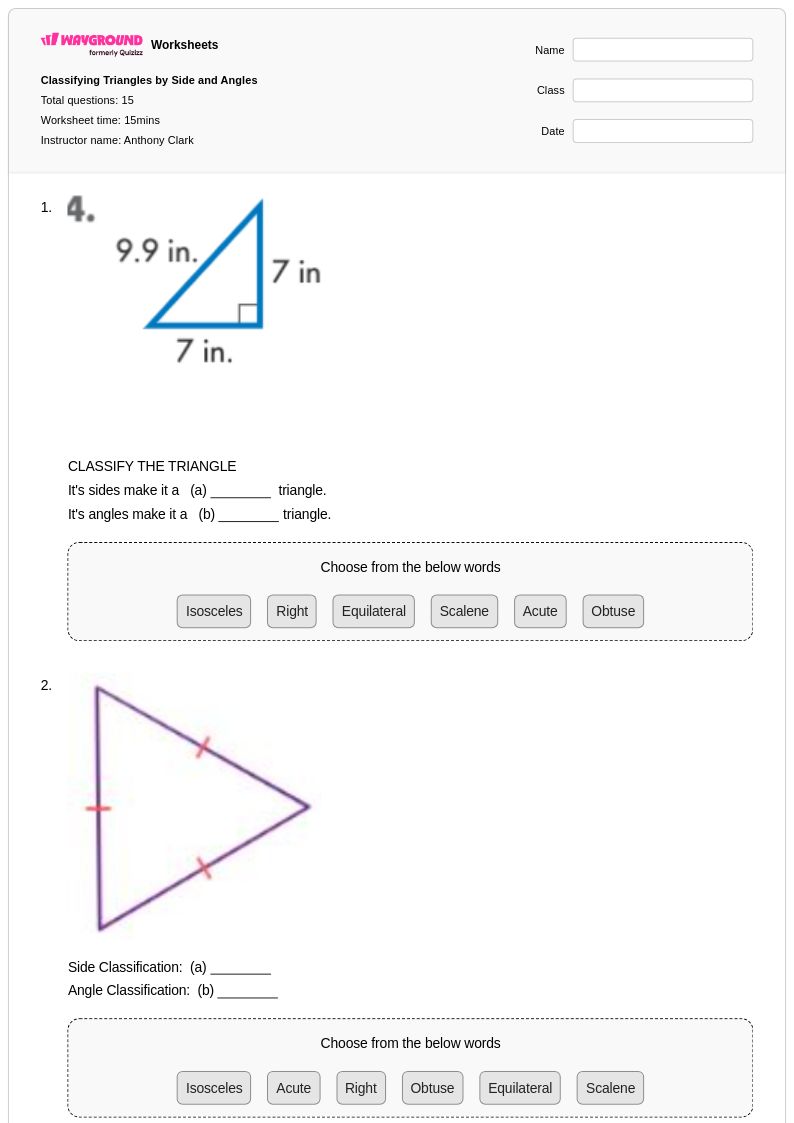
15 Q
5th - Uni
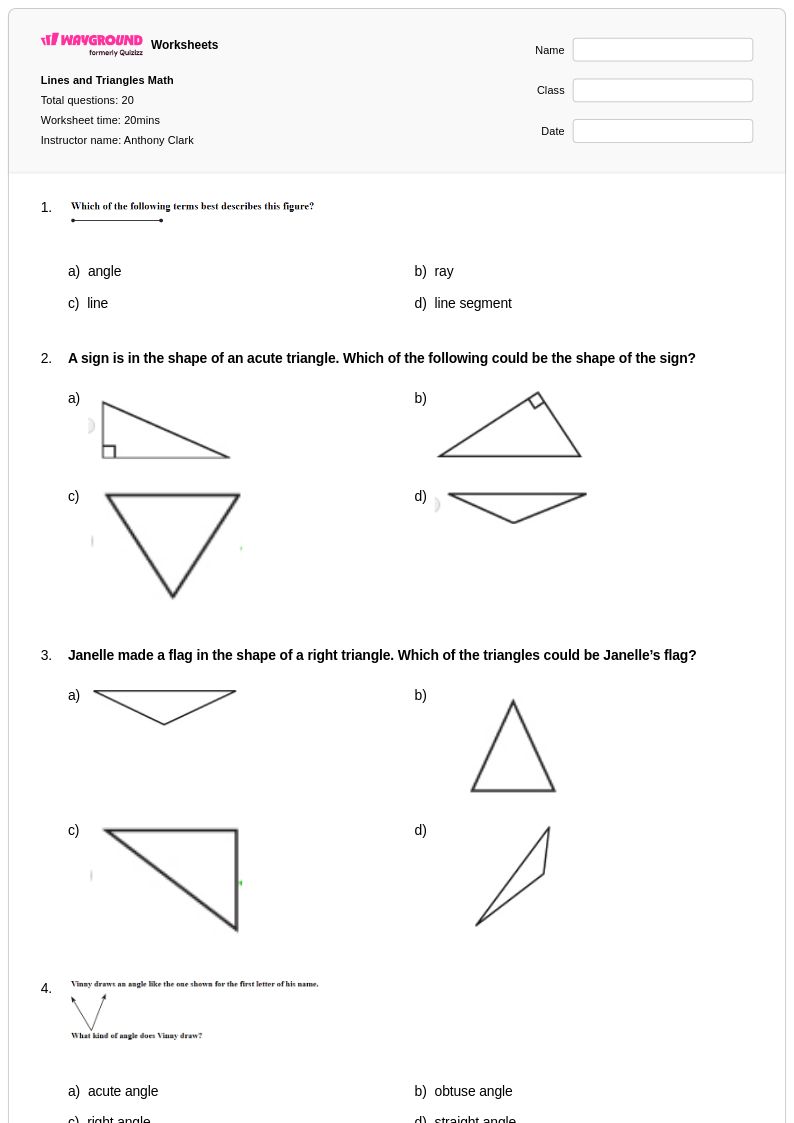
20 Q
4th - Uni
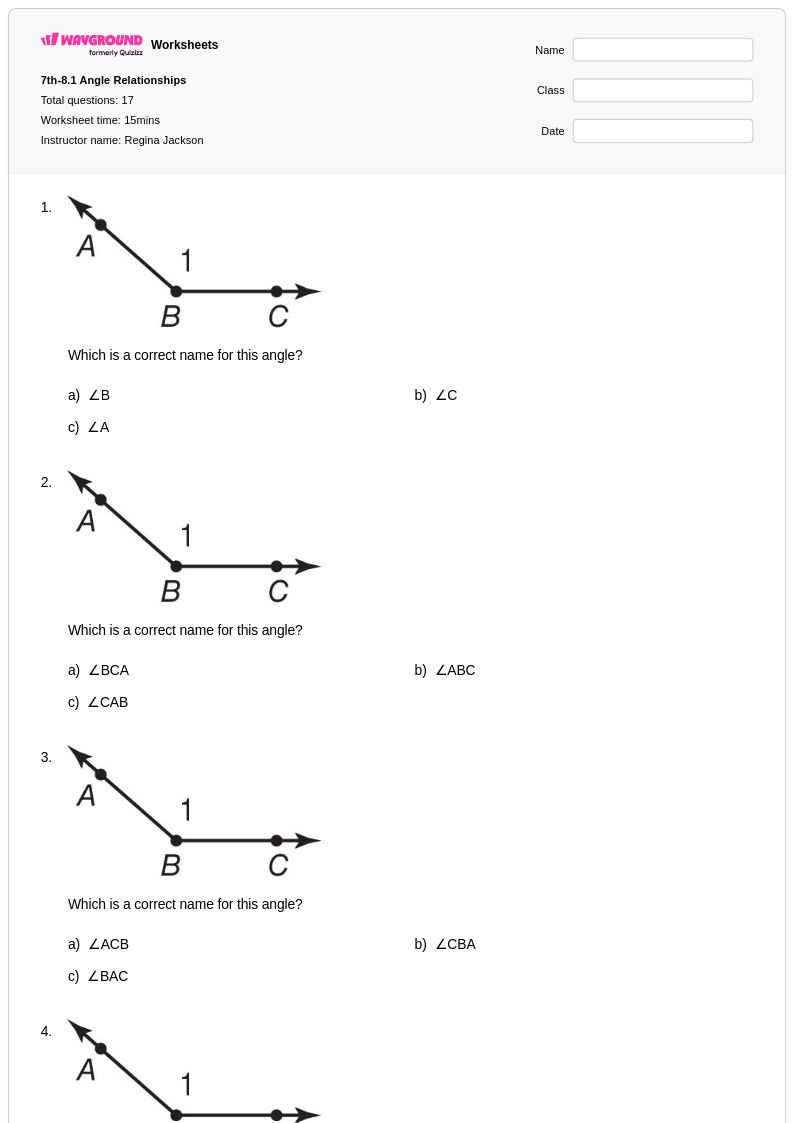
17 Q
7th
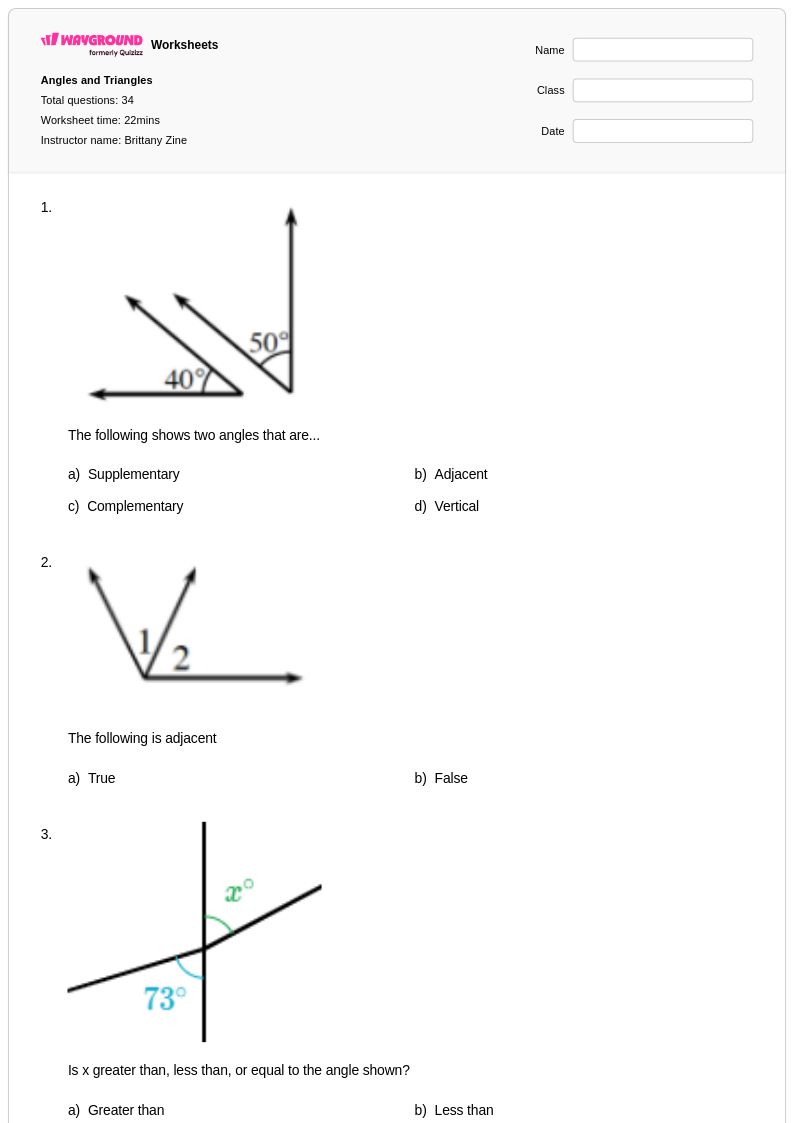
34 Q
7th
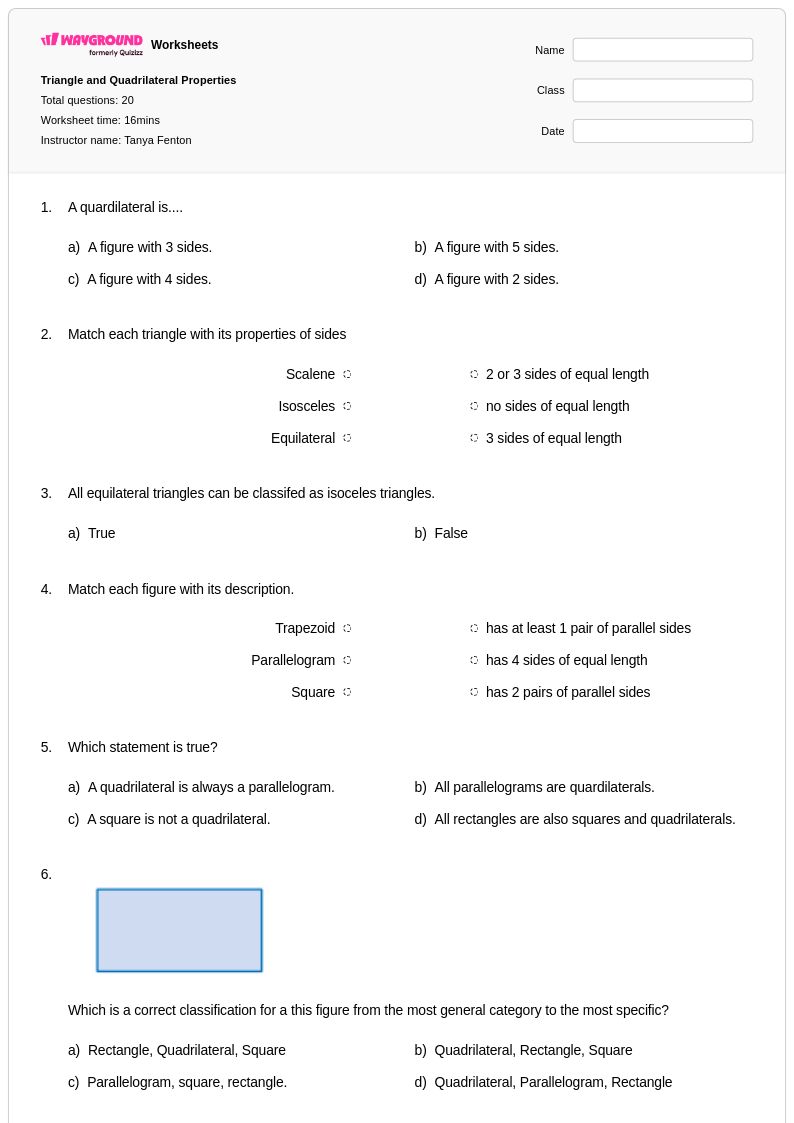
20 Q
6th - 8th
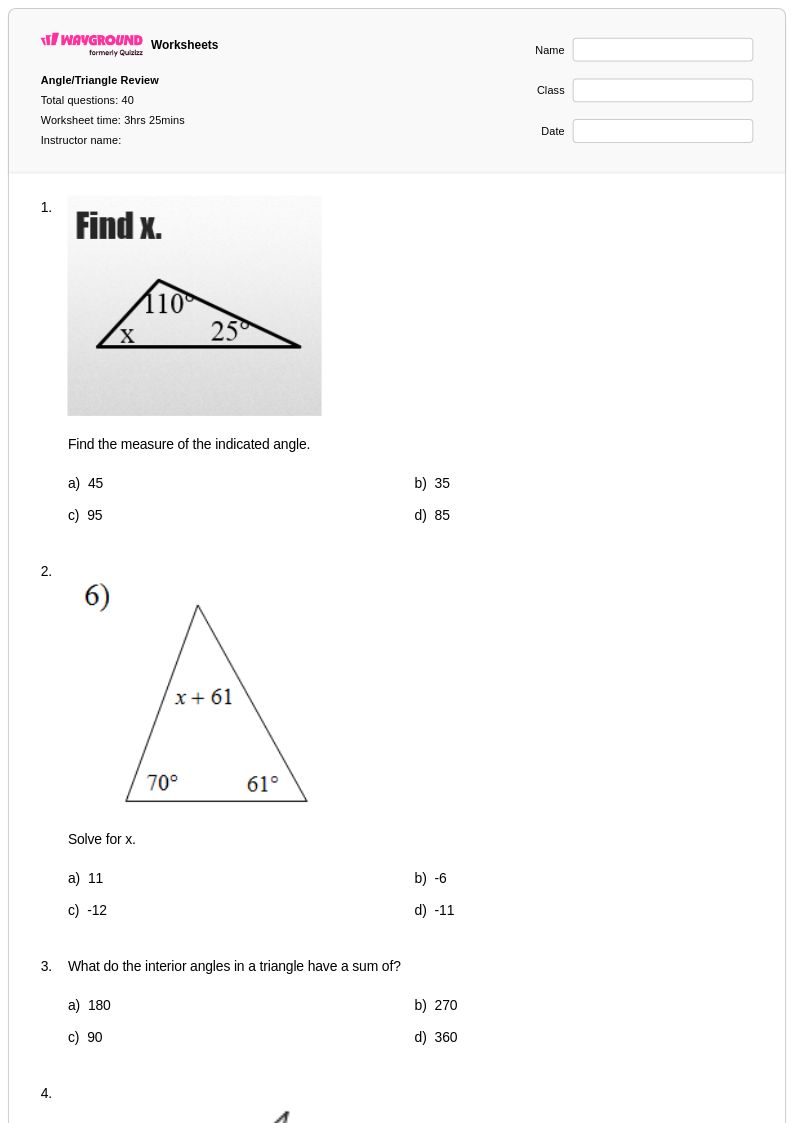
40 Q
7th
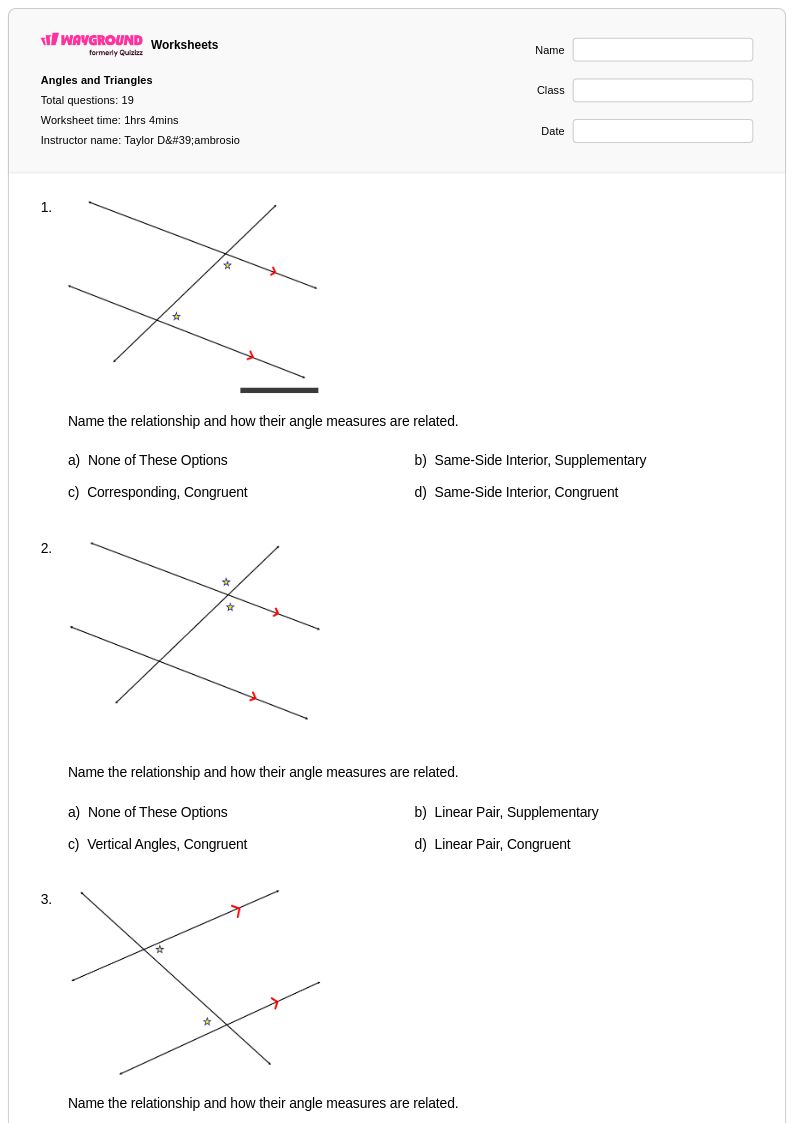
19 Q
7th - 9th
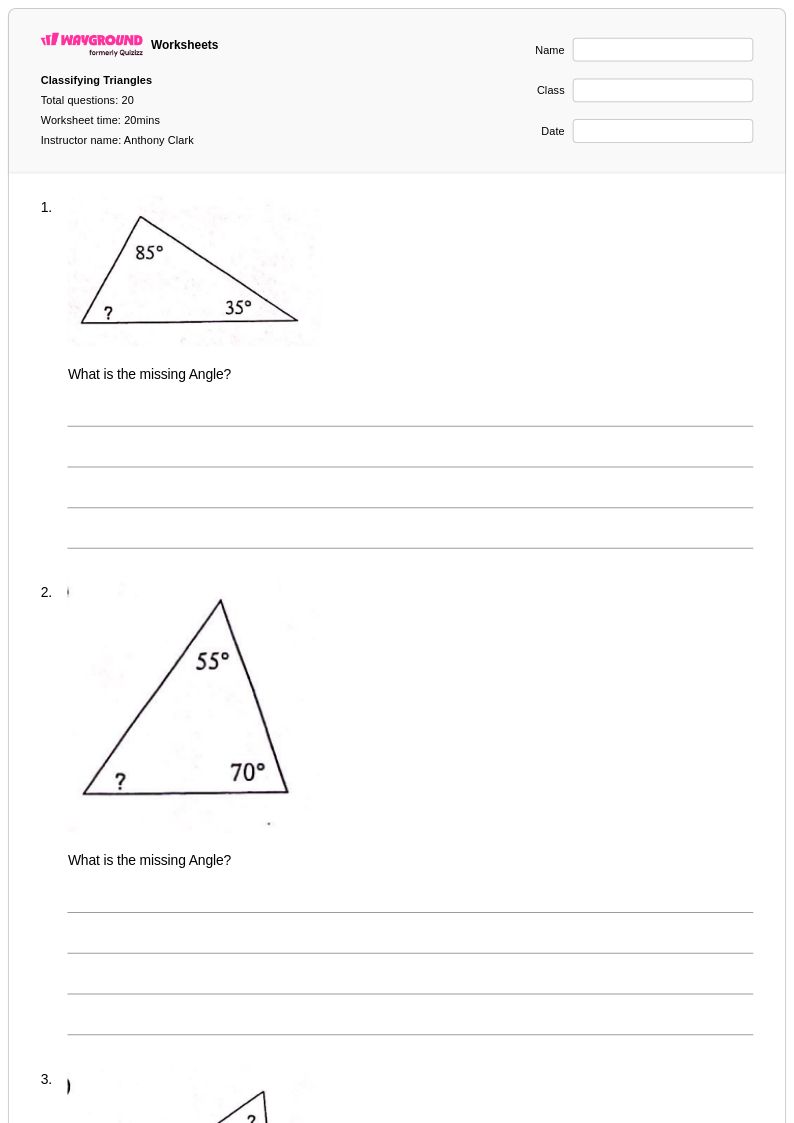
20 Q
5th - Uni
Explore Angle Side Relationships in Triangles Worksheets by Grades
Explore Other Subject Worksheets for class 7
Explore printable Angle Side Relationships in Triangles worksheets for Class 7
Angle side relationships in triangles represent a fundamental concept in Class 7 geometry that establishes the crucial connections between a triangle's angles and the lengths of its opposite sides. Wayground's comprehensive collection of angle side relationship worksheets provides students with systematic practice in understanding how larger angles correspond to longer opposite sides, and vice versa. These carefully designed practice problems strengthen students' analytical skills as they work through exercises involving triangle inequality theorems, side ordering based on angle measures, and angle ordering based on side lengths. Each worksheet includes detailed answer keys and is available as free printable pdf resources, allowing students to develop proficiency in comparing and ordering triangle elements while building the geometric reasoning skills essential for advanced mathematical concepts.
Wayground's extensive library supports educators with millions of teacher-created resources specifically focused on triangle angle side relationships, featuring robust search and filtering capabilities that allow instructors to quickly locate materials aligned with Class 7 geometry standards. The platform's differentiation tools enable teachers to customize worksheets for varying skill levels, ensuring that both struggling learners and advanced students can access appropriate challenges through targeted practice problems. These flexible resources are available in both printable pdf format and interactive digital versions, making them ideal for classroom instruction, homework assignments, remediation sessions, and enrichment activities. Teachers can efficiently plan comprehensive lessons that build conceptual understanding while providing students with the repetitive practice necessary to master the intricate relationships between triangular angles and sides.
FAQs
How should I teach angle-side relationships in triangles in Grade 7?
What are good practice problems for triangle angle-side relationships?
What misconceptions should I watch for when teaching triangle side and angle relationships?
How can teachers use these Grade 7 triangle worksheets?
Are angle-side relationships in triangles aligned with Common Core?
How can I support mixed-ability students with these triangle worksheets?
What grade level are these angle-side relationship worksheets for?