
10 Q
7th - 12th
19 Q
5th - Uni
25 Q
7th
20 Q
3rd - Uni
20 Q
2nd - Uni
20 Q
6th - 8th
20 Q
4th - Uni
20 Q
4th - Uni
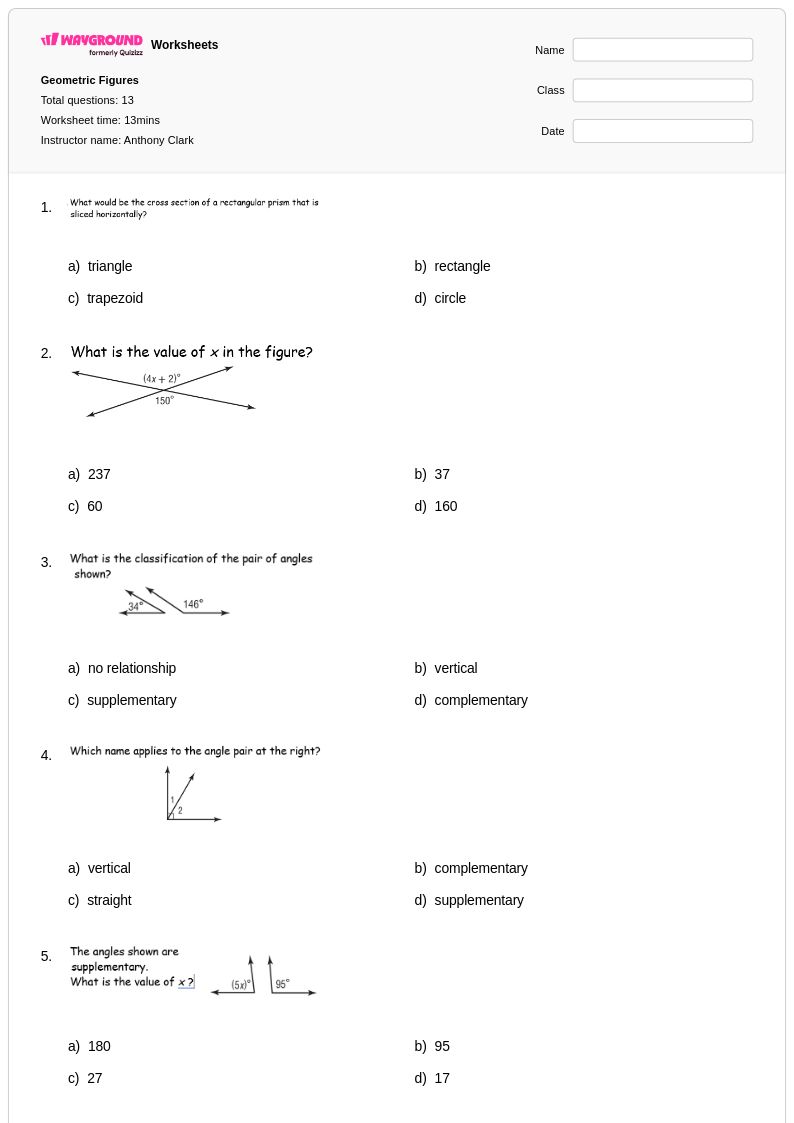
13 Q
5th - Uni
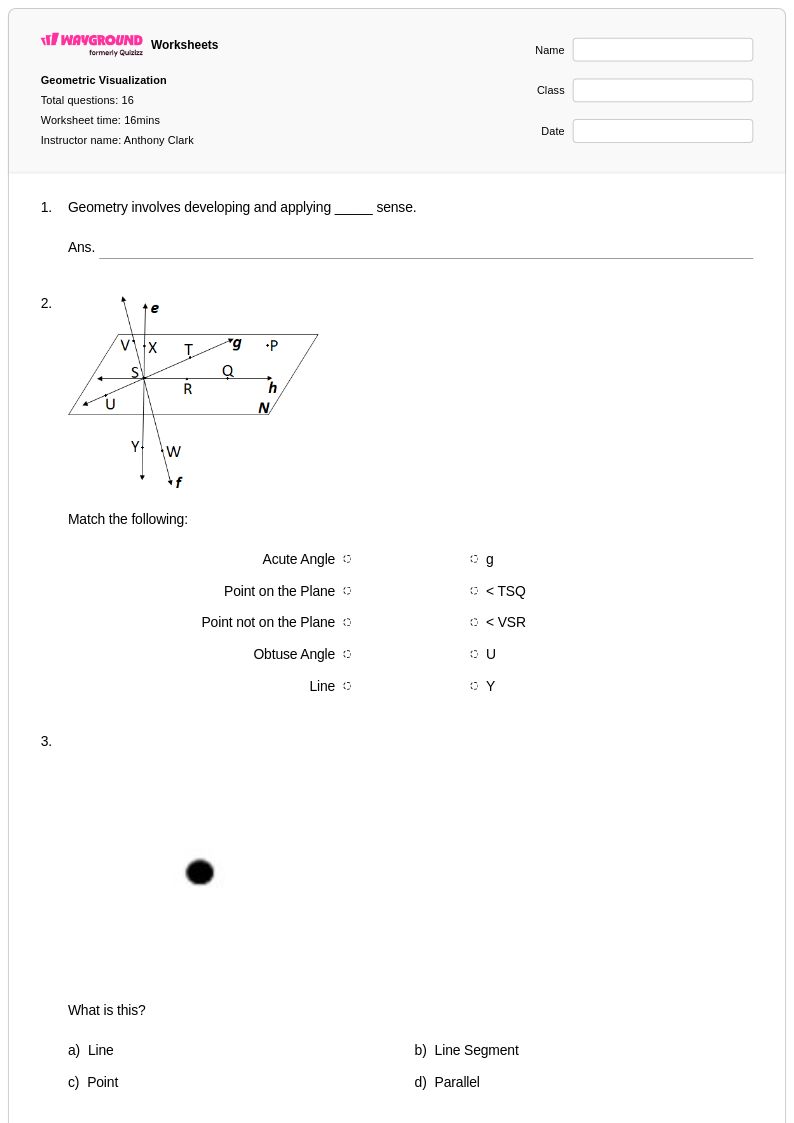
16 Q
5th - Uni
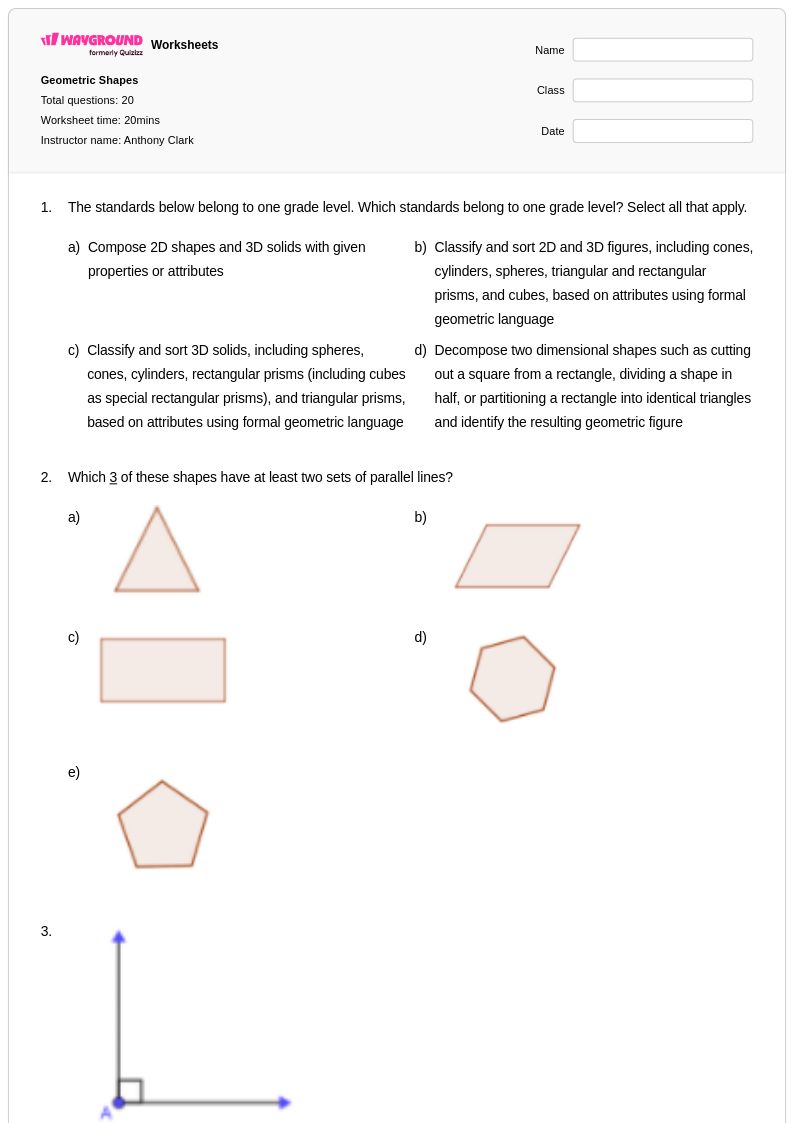
20 Q
4th - Uni
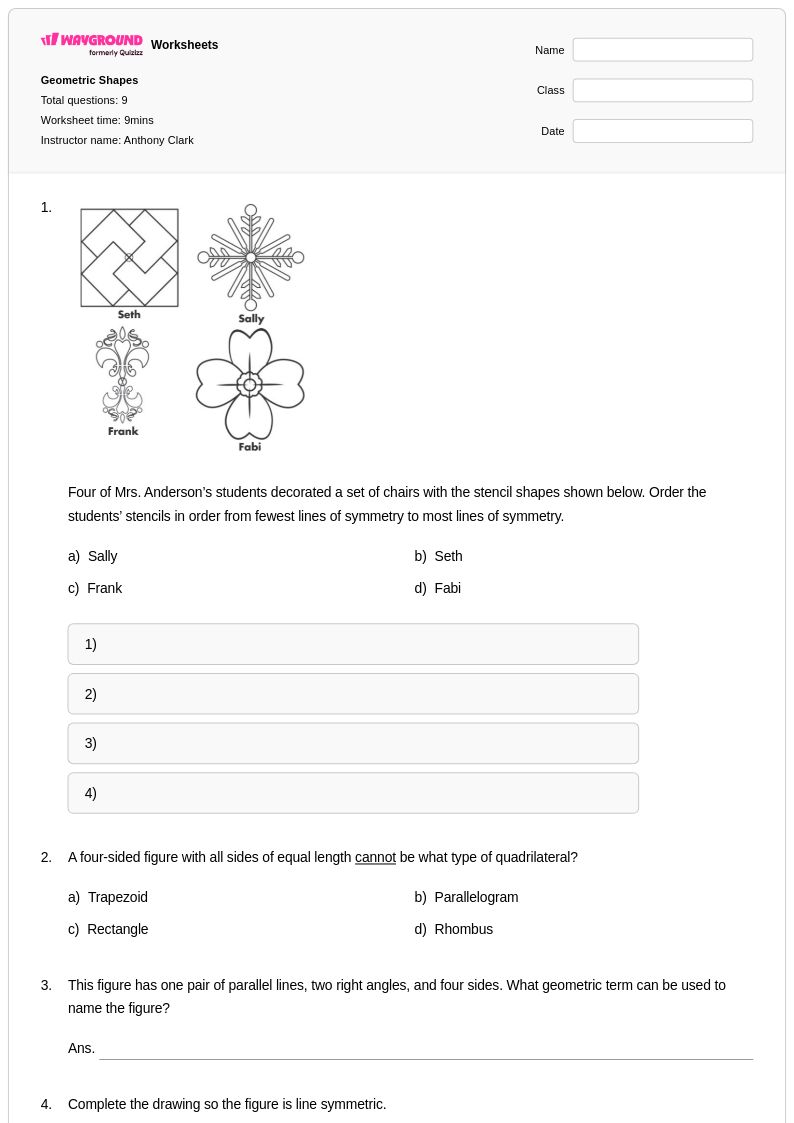
9 Q
4th - Uni

12 Q
6th - Uni
20 Q
6th - Uni
17 Q
7th

12 Q
7th
12 Q
7th
17 Q
6th - Uni
19 Q
7th - Uni
18 Q
7th - Uni
17 Q
7th
38 Q
7th
20 Q
7th
Explore Geometric Boundaries Worksheets by Grades
Explore Other Subject Worksheets for class 7
Explore printable Geometric Boundaries worksheets for Class 7
Geometric boundaries worksheets available through Wayground (formerly Quizizz) provide Class 7 students with comprehensive practice in understanding and analyzing the edges, borders, and limits that define geometric shapes and regions. These carefully crafted resources strengthen essential mathematical skills including identifying perimeters of polygons, determining boundaries between geometric regions, and recognizing how lines, curves, and vertices create shape definitions. Students develop spatial reasoning abilities as they work through practice problems that explore concepts such as interior versus exterior regions, boundary points, and the mathematical properties that separate one geometric area from another. Each worksheet collection includes detailed answer keys and is available as free printables in pdf format, making it easy for educators to provide targeted skill reinforcement both in classroom settings and for independent study.
Wayground (formerly Quizizz) empowers teachers with an extensive library of millions of teacher-created geometric boundaries resources that can be easily accessed through robust search and filtering capabilities aligned with educational standards. The platform's differentiation tools allow educators to customize worksheets based on individual student needs, whether providing foundational practice for struggling learners or advanced challenges for students ready for enrichment activities. Teachers can seamlessly integrate these materials into their lesson planning workflow, utilizing both printable pdf versions for traditional paper-based instruction and digital formats for technology-enhanced learning environments. This flexibility supports effective remediation strategies, targeted skill practice sessions, and comprehensive assessment preparation, enabling educators to address diverse learning styles while maintaining rigorous mathematical instruction in geometric boundary concepts.
FAQs
What is the main focus for geometric boundaries in 7th grade?
How can I help students who confuse the formulas for a circle's area and circumference?
What kinds of problems help 7th graders practice with geometric boundaries?
How can I assign this 7th-grade geometric boundaries worksheet?
How does this topic align with 7th-grade Common Core math standards?
Can I adjust this worksheet for students who need more support?