Free Printable Animal Anatomy Worksheets for Class 4
Explore Wayground's free Class 4 animal anatomy worksheets and printables that help students learn about body systems, organs, and structures through engaging practice problems with complete answer keys.
Explore printable Animal Anatomy worksheets for Class 4
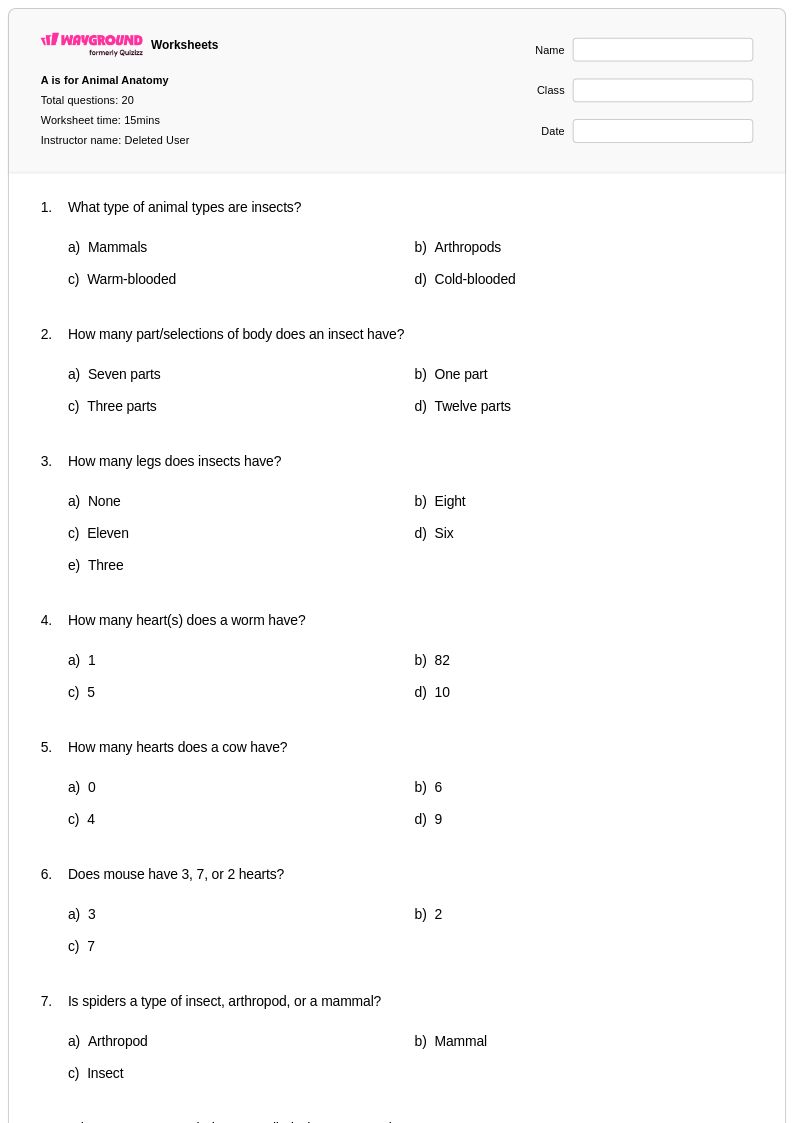
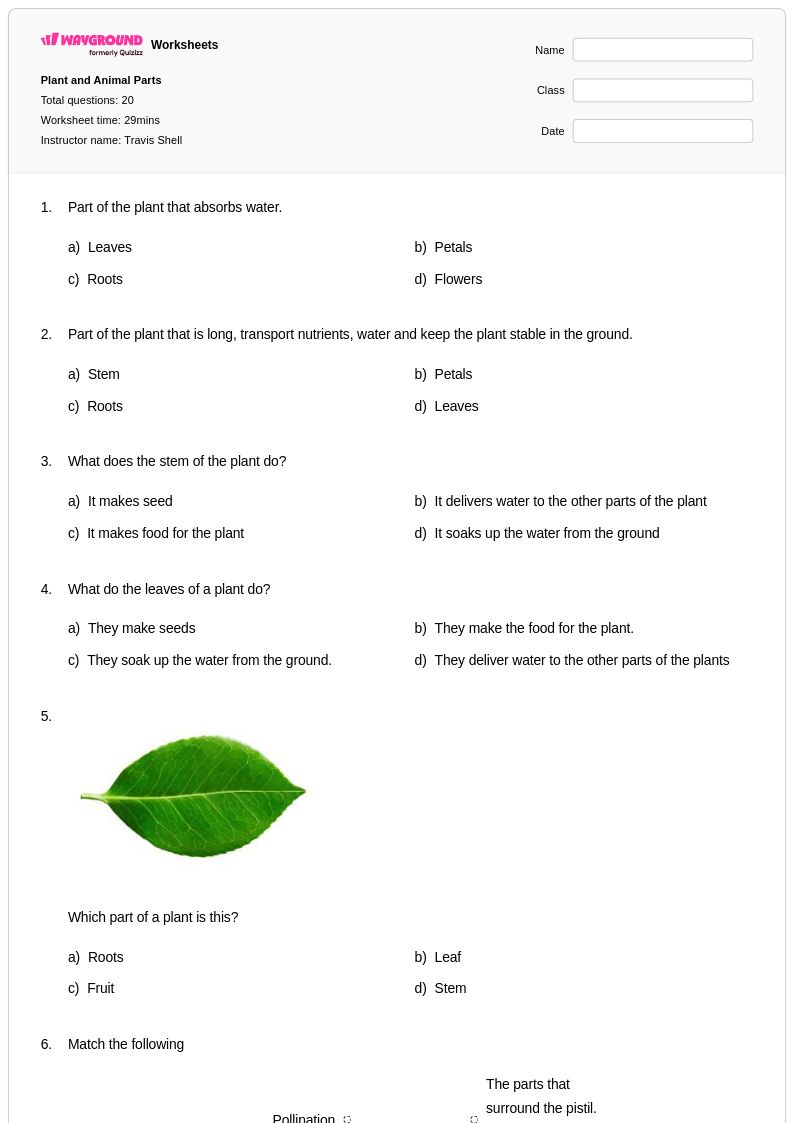
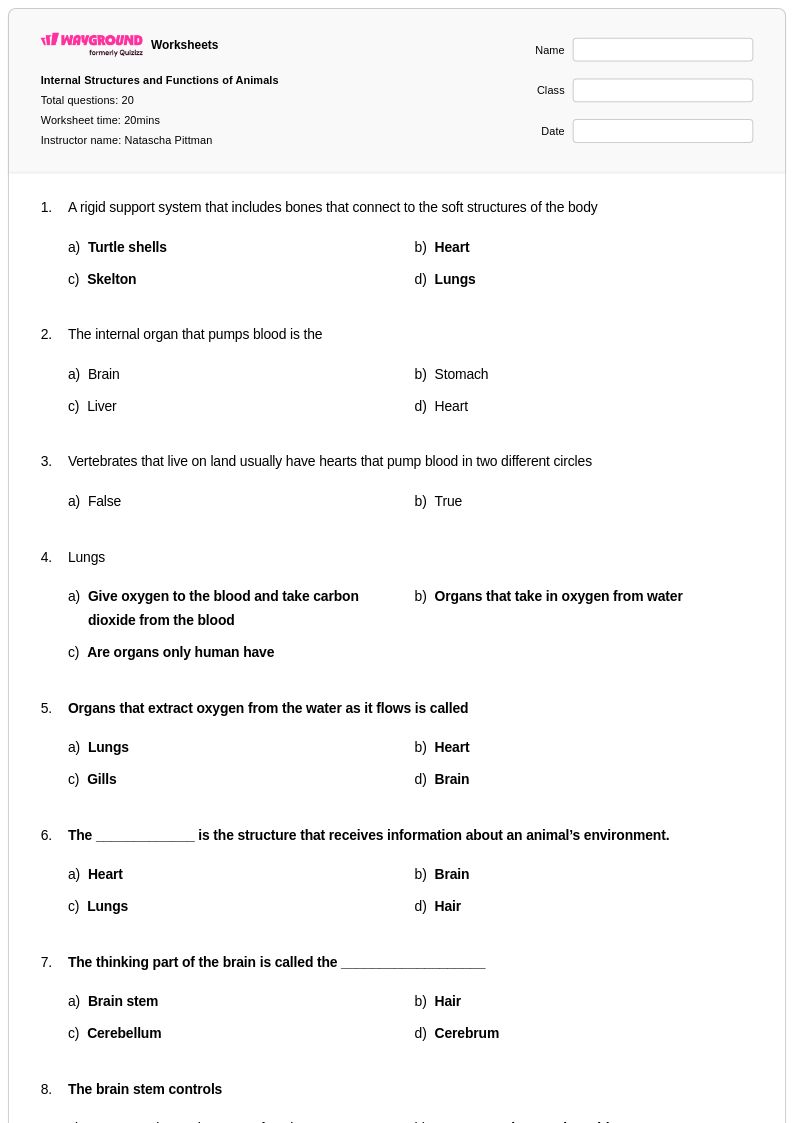
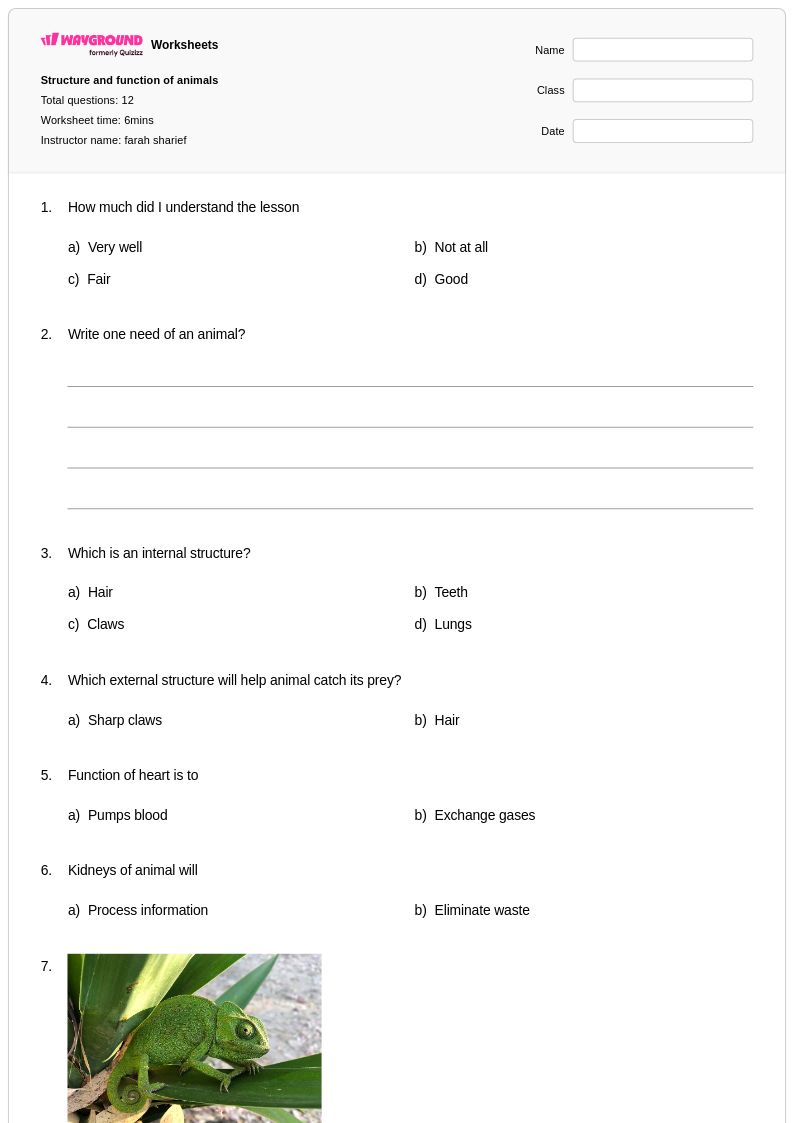
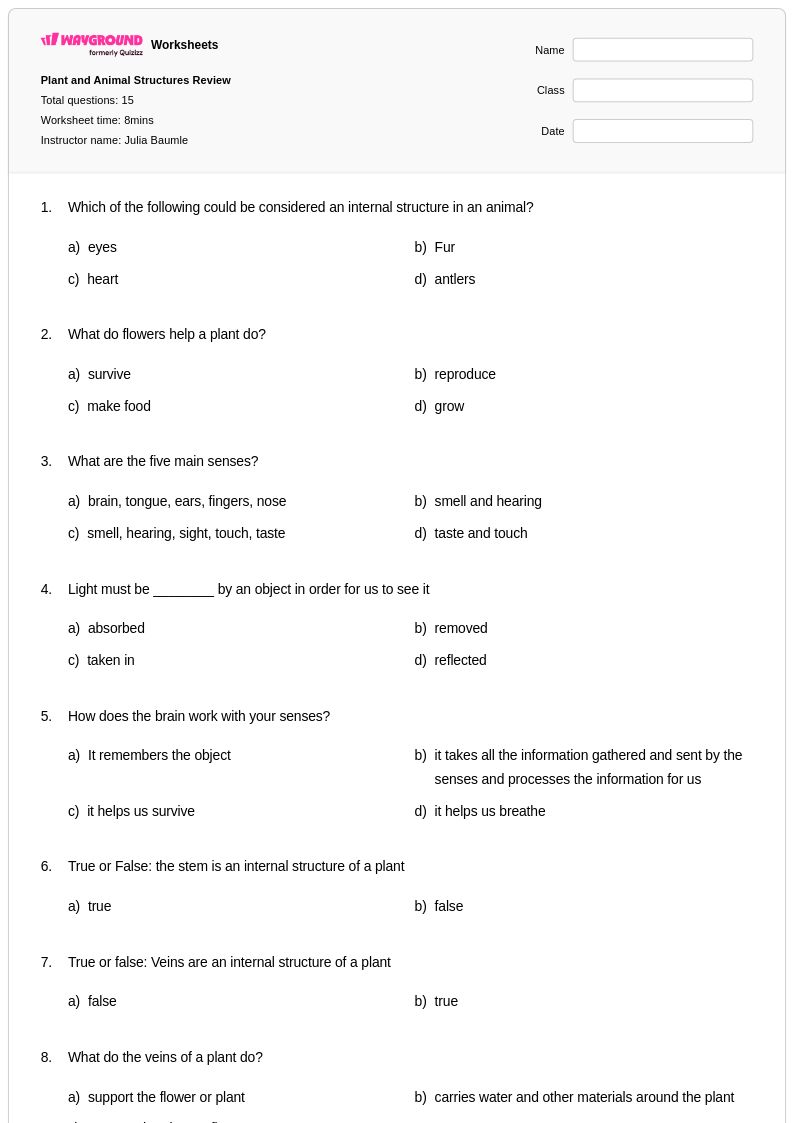
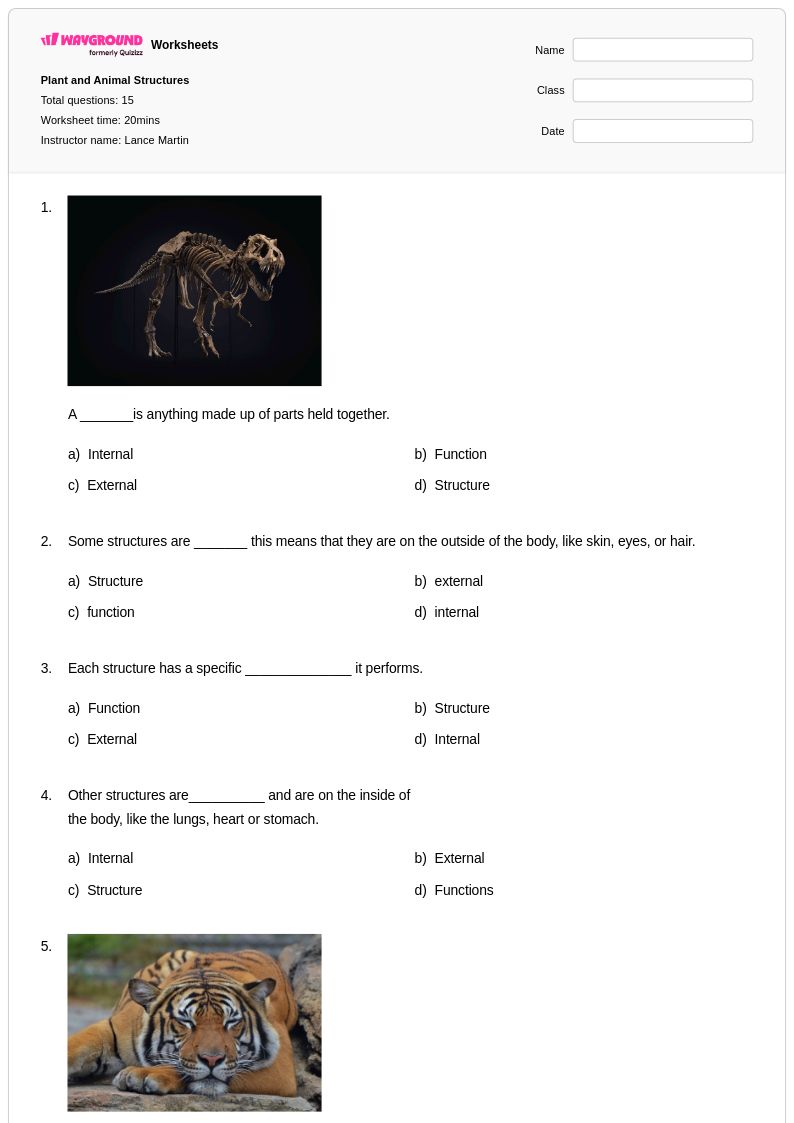
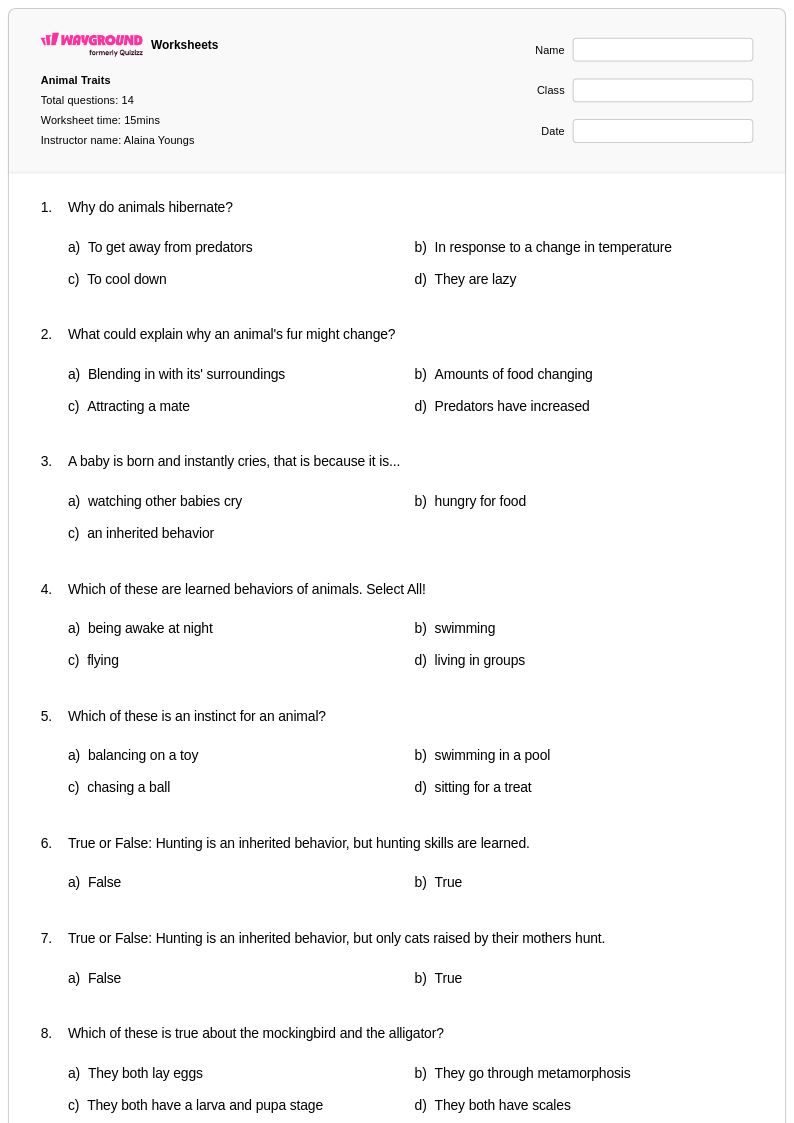
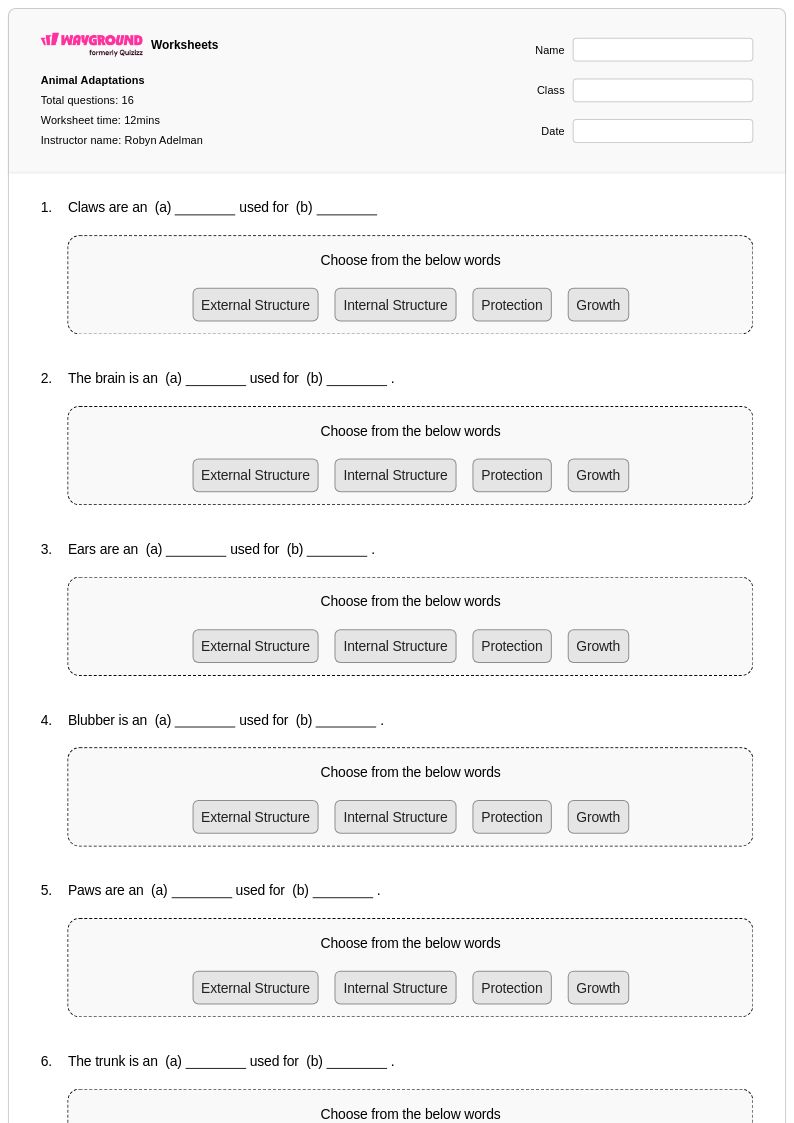
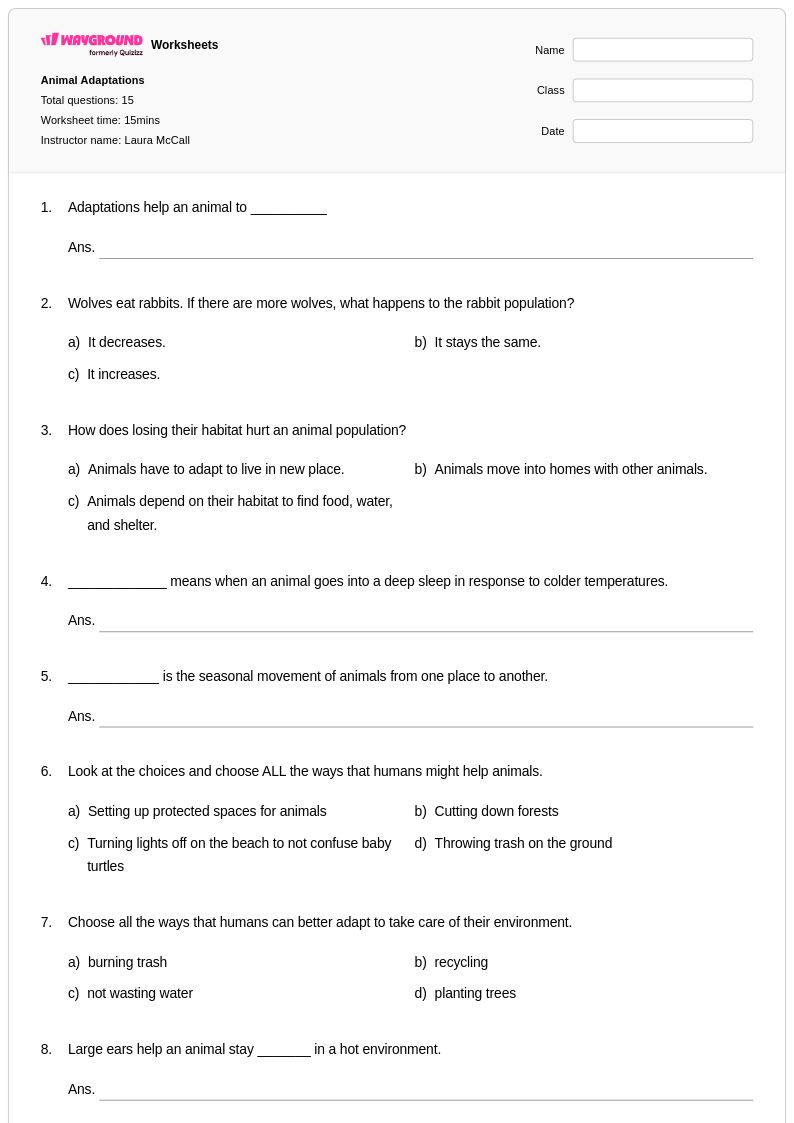
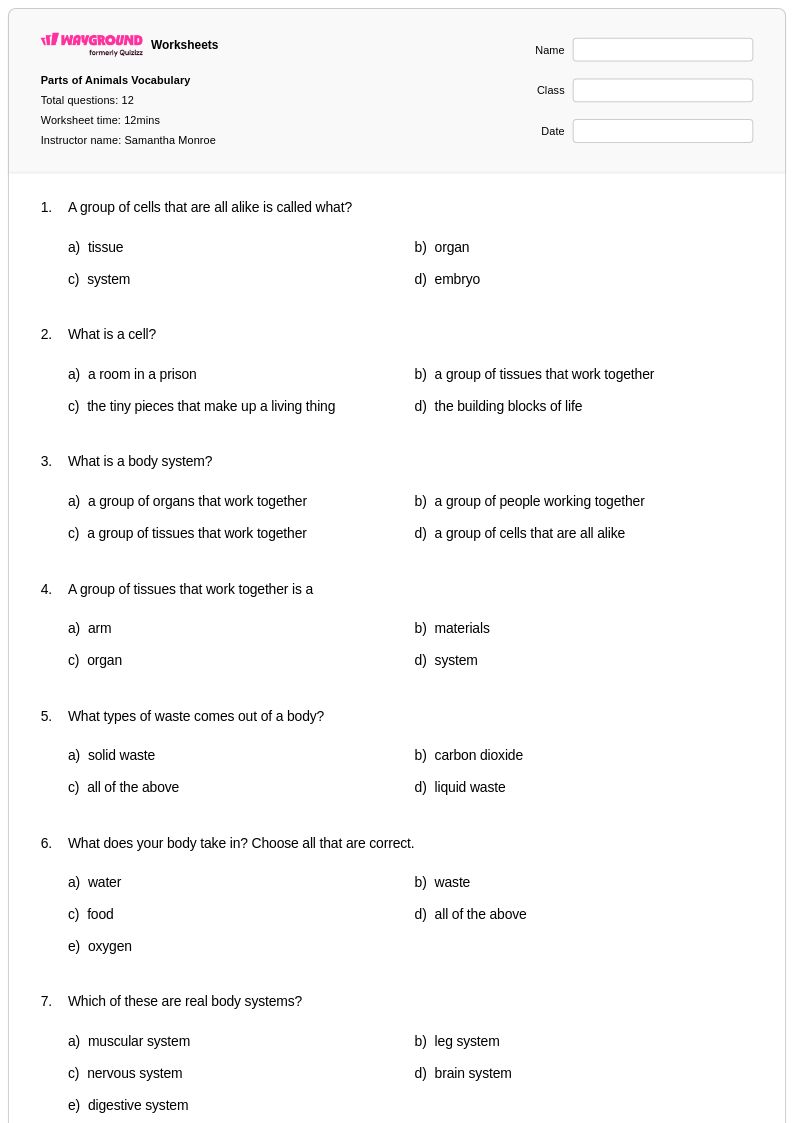
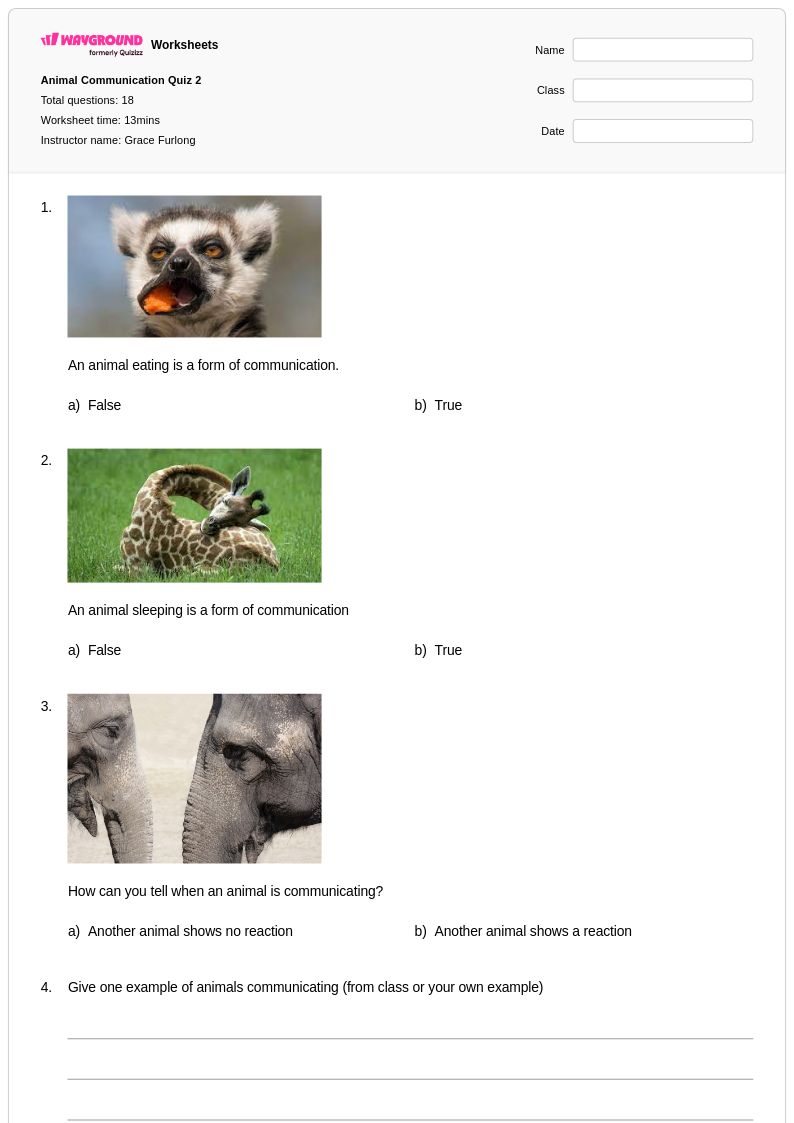
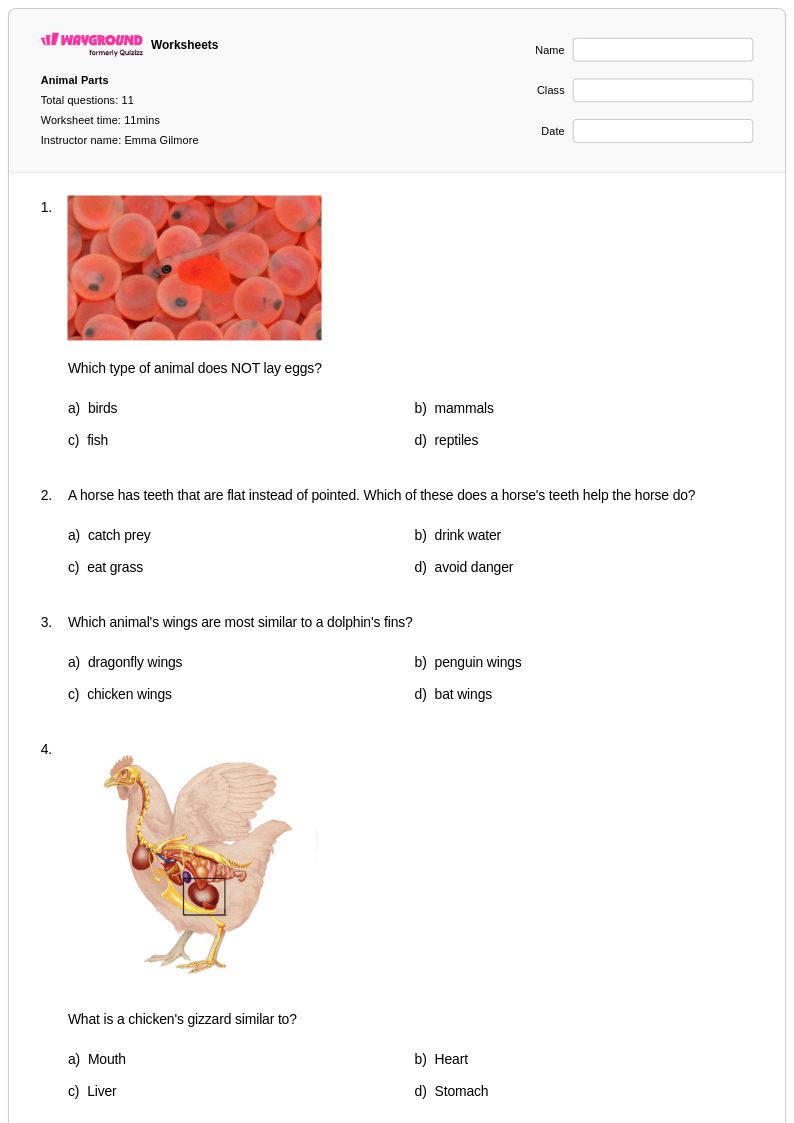
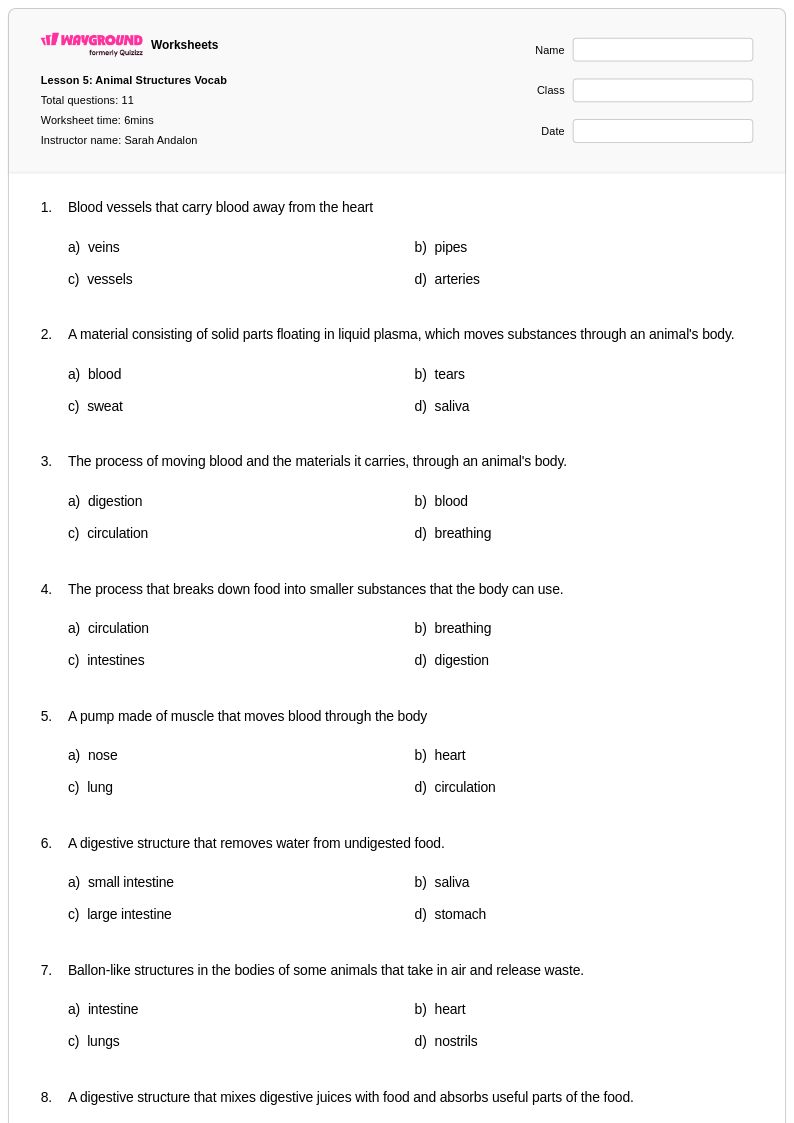
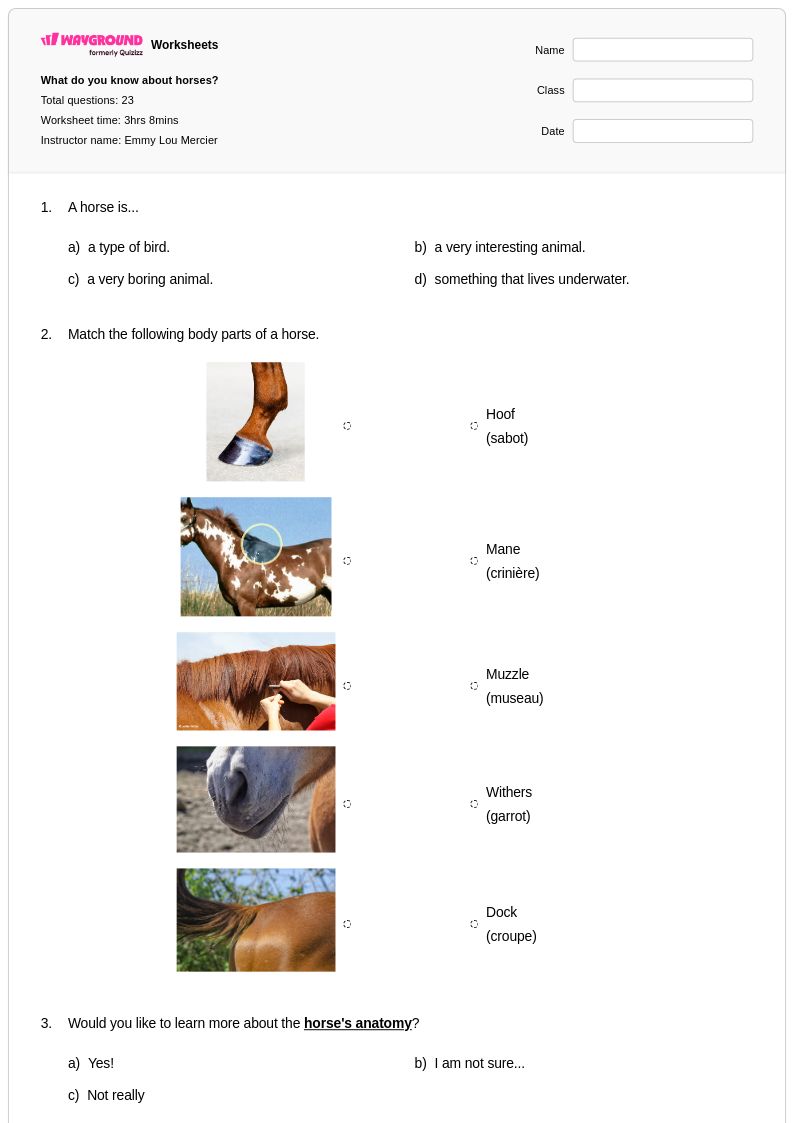
Animal anatomy worksheets for Class 4 students available through Wayground (formerly Quizizz) provide comprehensive exploration of how different animals are structured and how their body parts function. These educational resources strengthen students' understanding of comparative anatomy by examining everything from basic external features like wings, fins, and limbs to internal systems such as skeletal and digestive structures across various animal groups. The collection includes practice problems that challenge students to identify body parts, match animals with their specialized features, and explain how anatomical adaptations help animals survive in their environments. Each worksheet comes with a detailed answer key, and teachers can access these materials as free printables in convenient pdf format, making them ideal for both classroom instruction and independent study.
Wayground (formerly Quizizz) empowers educators with millions of teacher-created animal anatomy resources that can be easily discovered through robust search and filtering capabilities designed specifically for Class 4 science instruction. The platform's extensive worksheet collection aligns with national and state science standards, ensuring that anatomical concepts are presented at developmentally appropriate levels while supporting curriculum requirements. Teachers benefit from built-in differentiation tools that allow customization of content difficulty and question types, enabling effective remediation for struggling learners and enrichment opportunities for advanced students. Available in both printable and digital formats including downloadable pdfs, these versatile resources streamline lesson planning while providing targeted skill practice that helps students master fundamental concepts about how animal body structures relate to their functions and survival strategies.
FAQs
How do I teach animal anatomy to students who struggle with memorizing structures?
The most effective approach is to anchor memorization in function rather than isolated labels. When students understand why a structure exists — for example, why a fish has a lateral line system or why a bird's bones are hollow — retention improves significantly. Pairing labeling exercises with short explanations of each structure's role helps students build durable conceptual frameworks rather than surface-level recall.
What exercises help students practice identifying animal anatomical structures?
Diagram labeling activities, structure-function matching tasks, and comparative anatomy charts are among the most effective practice formats for animal anatomy. Having students compare the same system — such as the respiratory or skeletal system — across multiple animal groups reinforces both identification skills and the ability to draw evolutionary connections. Worksheets that progress from basic organ identification to multi-system interactions build skills systematically without overwhelming learners.
How do I teach comparative anatomy across vertebrates and invertebrates in the same lesson?
Start with a shared anchor structure — such as the presence or absence of a backbone — and use it to organize comparisons rather than covering each animal in isolation. Worksheets that place vertebrate and invertebrate examples side by side help students see patterns in physiological adaptation rather than treating each animal as a separate memorization task. This approach builds the comparative reasoning skills central to biological literacy.
What mistakes do students commonly make when studying animal anatomy?
Students frequently confuse structural similarity with evolutionary relatedness, assuming that animals with similar features — such as wings in birds and insects — must be closely related. They also tend to treat anatomy as a list of parts rather than a set of integrated systems, which leads to difficulty answering questions about how disruption to one system affects others. Targeted practice with structure-function relationships and cross-system questions helps address both of these error patterns.
How can I differentiate animal anatomy instruction for students at different skill levels?
For foundational learners, focus on single-system identification tasks with visual supports before introducing cross-system or comparative questions. Advanced students benefit from activities that ask them to predict adaptations based on an animal's environment or diet. On Wayground, teachers can apply accommodations such as reduced answer choices to lower cognitive load for struggling students, or enable Read Aloud for students who need audio support, while other students continue with standard settings.
How do I use Wayground's animal anatomy worksheets in my classroom?
Wayground's animal anatomy worksheets are available as printable PDFs for traditional classroom use and in digital formats for technology-integrated environments, so they work whether students are working on paper or on a device. Teachers can also host worksheets directly as a quiz on Wayground for live or self-paced digital sessions. Each worksheet includes a complete answer key, which supports both teacher-led correction and independent student self-assessment.