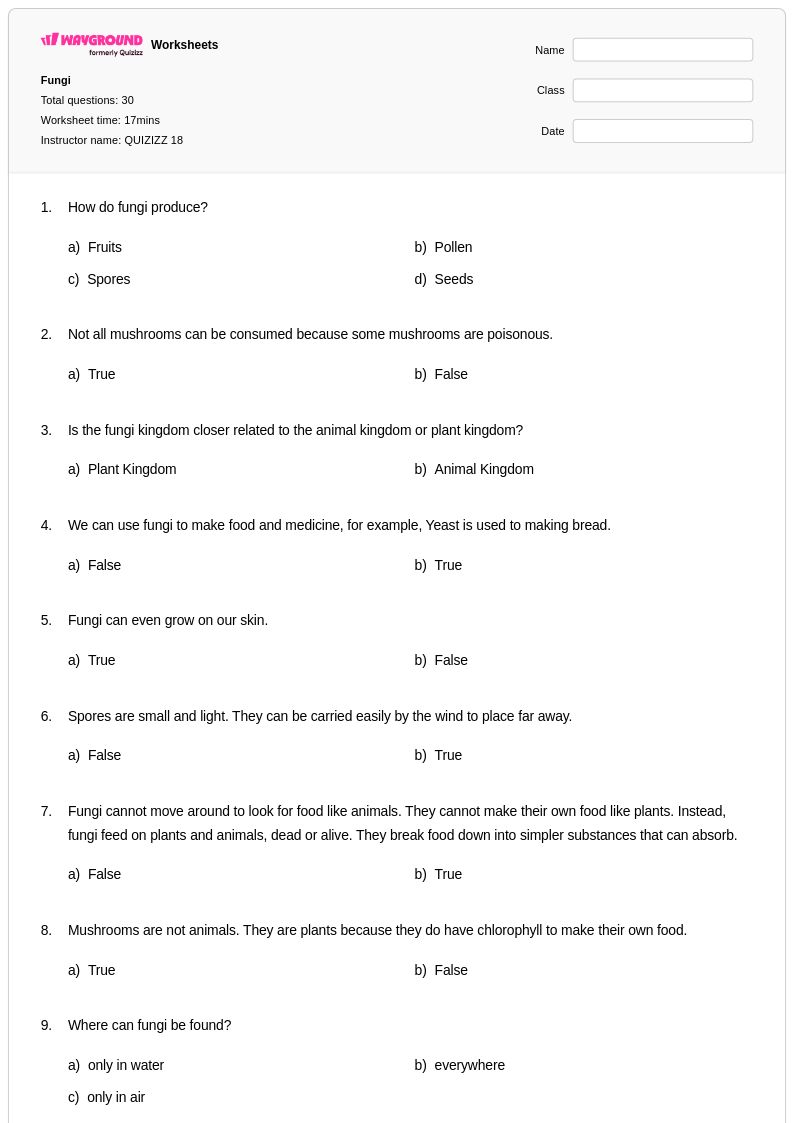
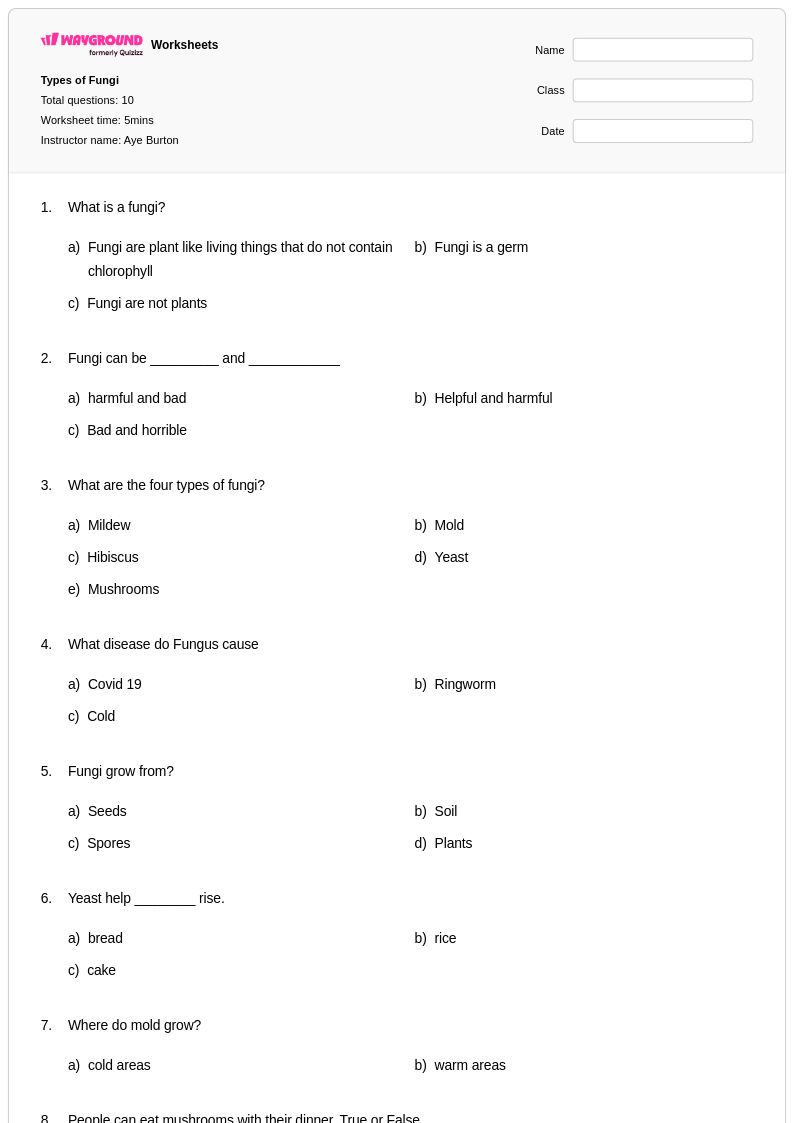
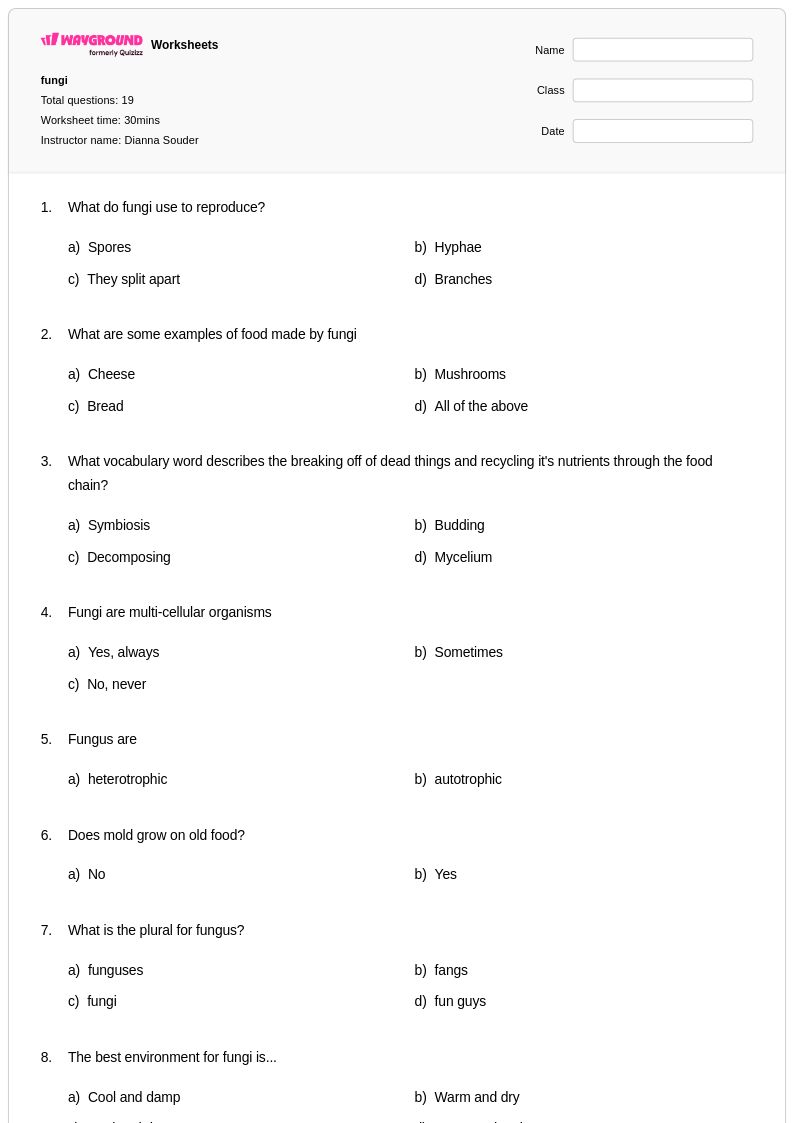
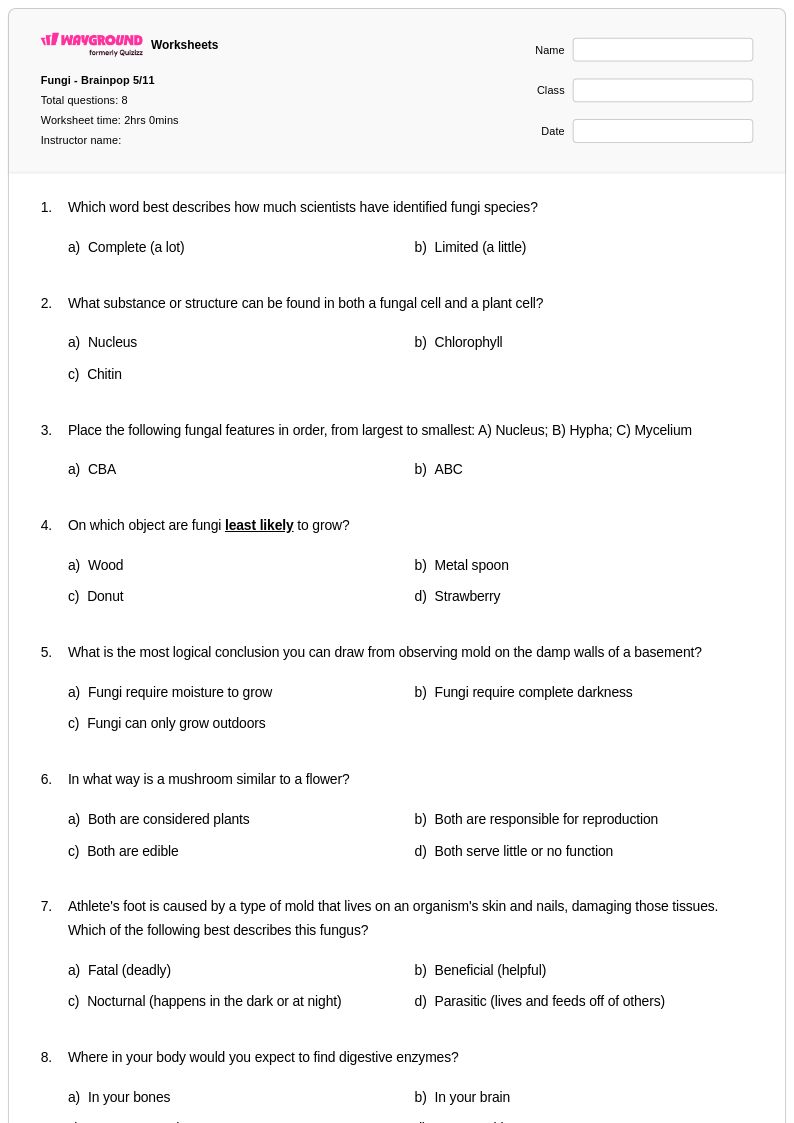
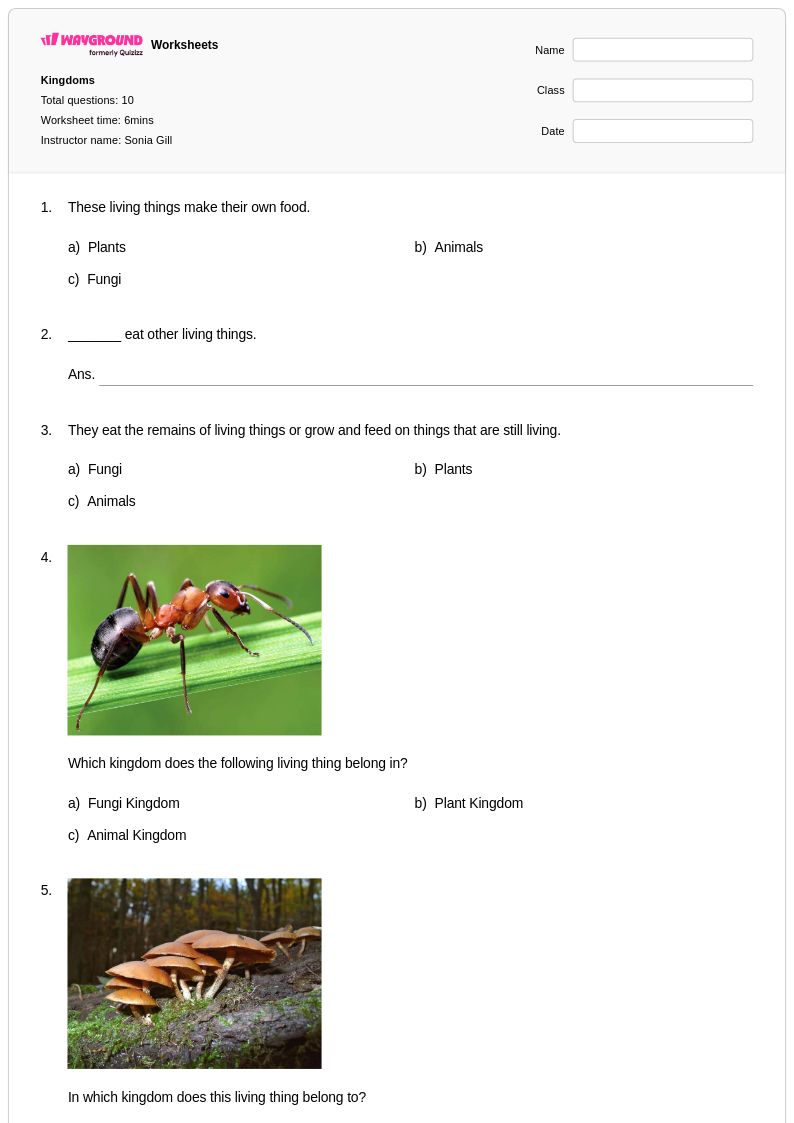
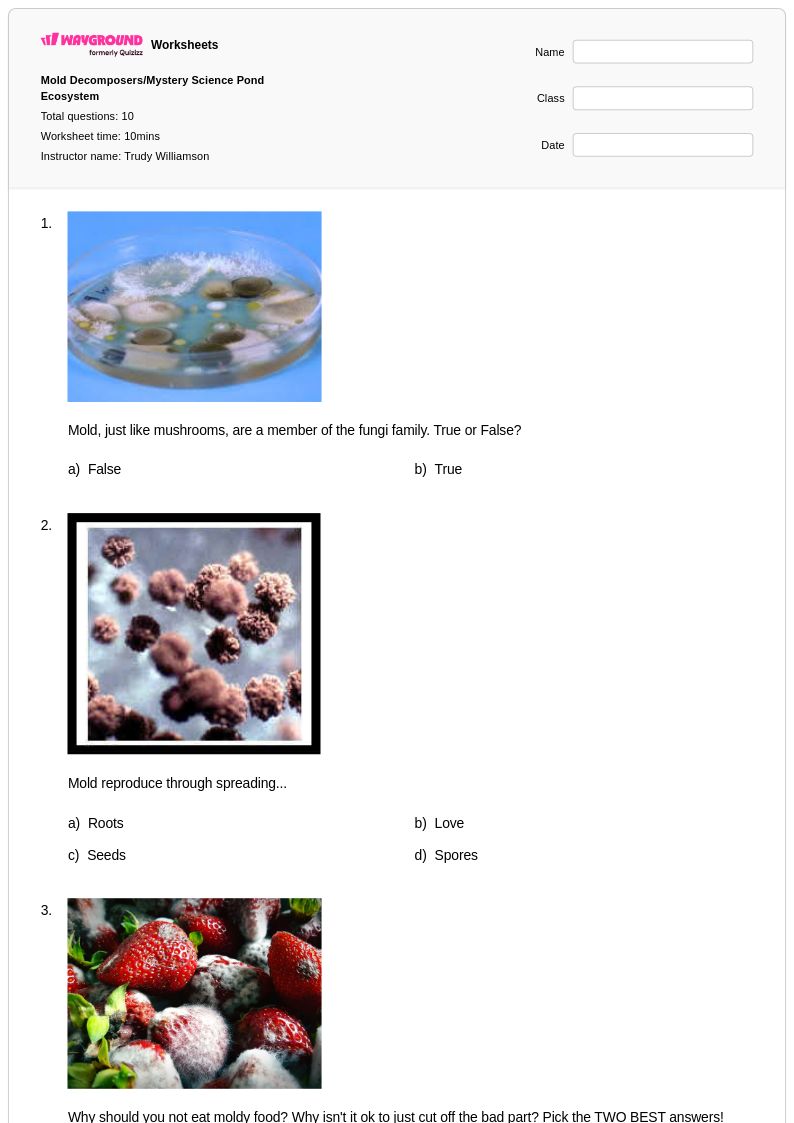
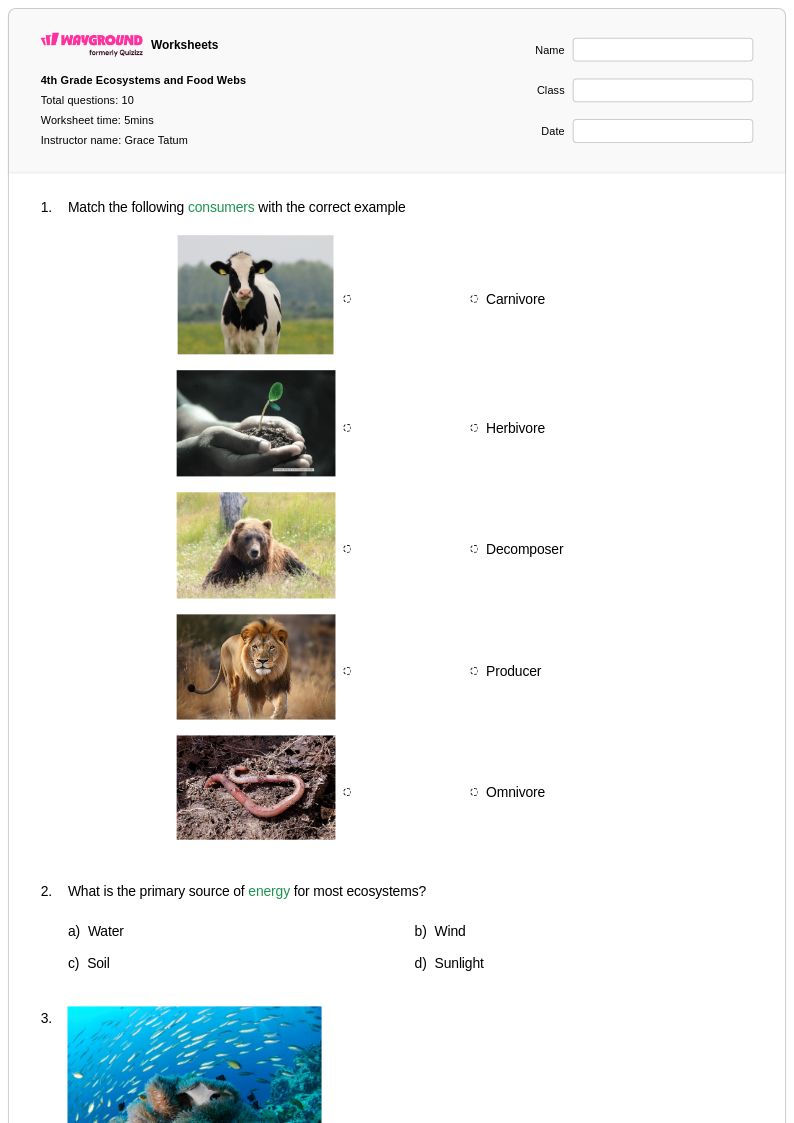
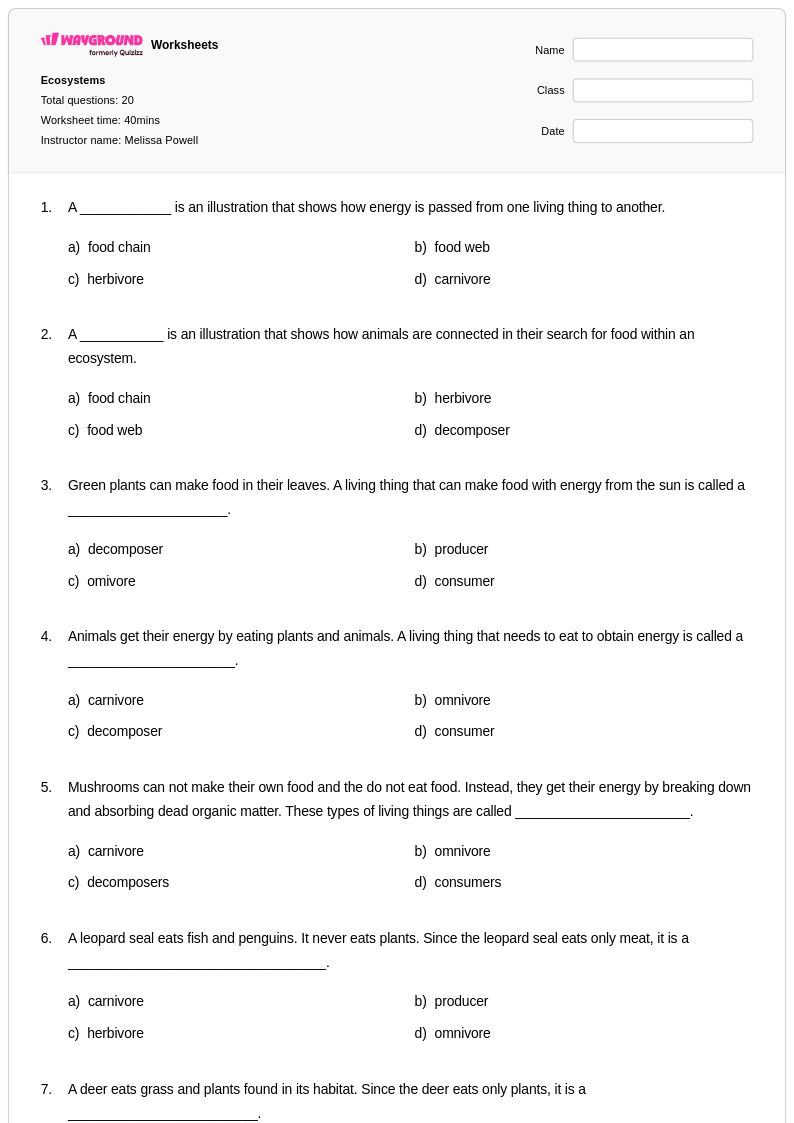
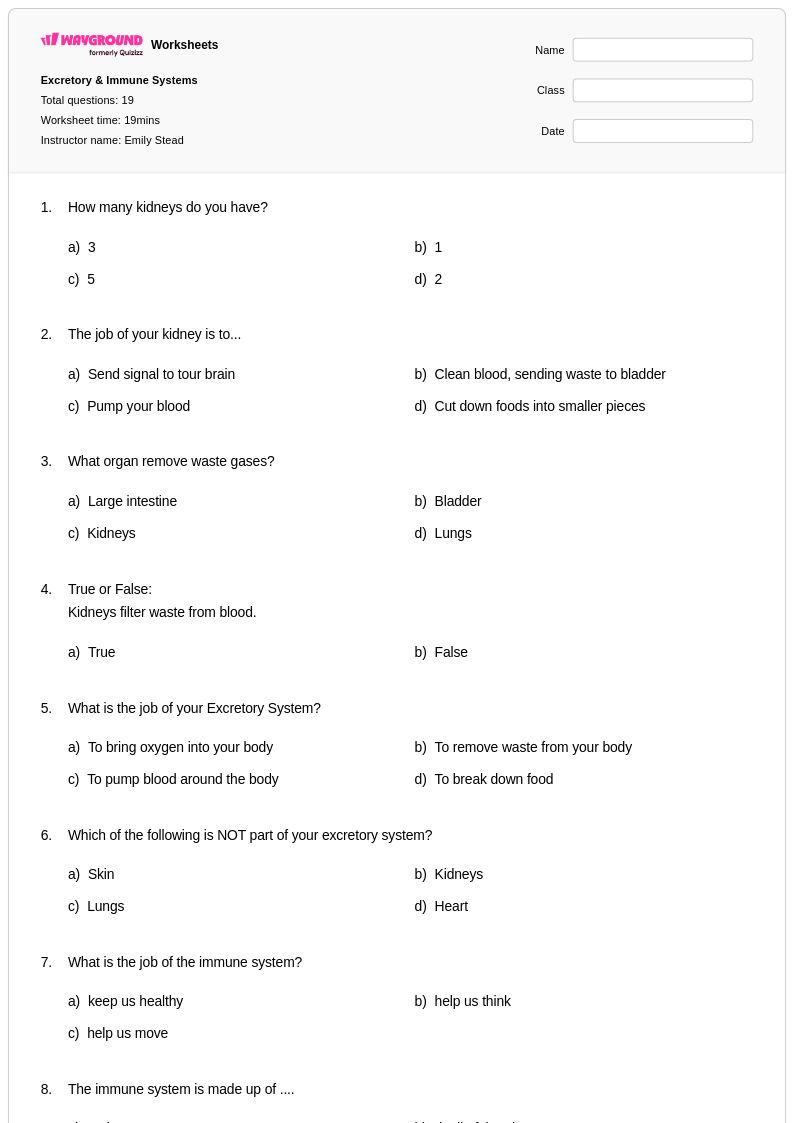
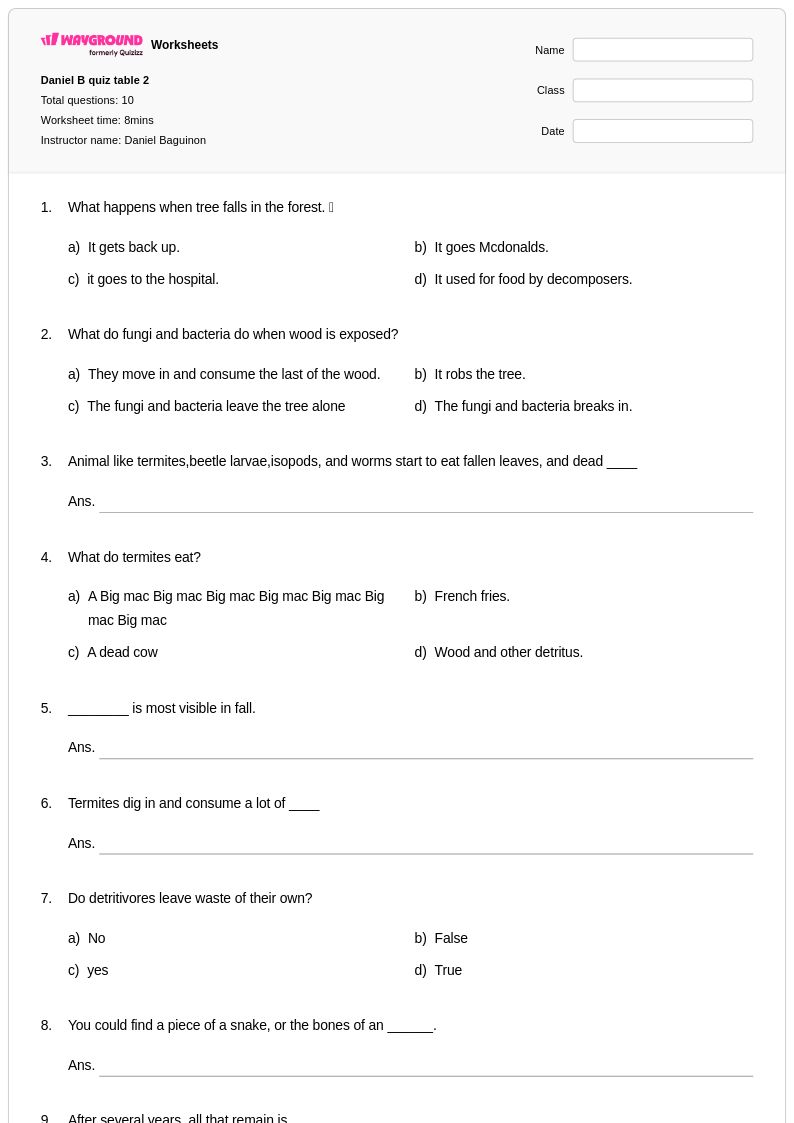
Explore our comprehensive Class 4 fungi worksheets and printables that help students discover the fascinating world of mushrooms, molds, and yeasts through engaging practice problems, free PDF downloads, and complete answer keys.
Fungi worksheets for Class 4 students available through Wayground (formerly Quizizz) provide comprehensive exploration of this fascinating kingdom of organisms that fourth-grade learners encounter in their science curriculum. These educational resources strengthen students' understanding of fungal characteristics, life cycles, and ecological roles through engaging activities that distinguish fungi from plants and animals. The worksheets feature practice problems that challenge students to identify different types of fungi, understand their reproductive processes, and recognize their importance in decomposition and nutrient cycling. Each printable resource includes detailed answer keys that support both independent learning and teacher-guided instruction, with free pdf formats ensuring accessibility for diverse classroom needs.
Wayground (formerly Quizizz) empowers educators with millions of teacher-created resources specifically designed for Class 4 fungi instruction, offering robust search and filtering capabilities that align with science education standards. Teachers can easily differentiate instruction by selecting from worksheets that range from basic fungal identification to more complex ecological relationship exercises, with flexible customization options allowing educators to modify content for individual student needs. The platform's comprehensive collection supports effective lesson planning while providing valuable tools for remediation and enrichment activities that reinforce fungal biology concepts. Available in both printable and digital pdf formats, these resources enable seamless integration into classroom instruction, homework assignments, and skill practice sessions that build students' scientific literacy and observational abilities.
FAQs
How do I teach fungi to middle or high school biology students?
Start by establishing what makes fungi distinct from plants and animals — no chlorophyll, heterotrophic nutrition, and a cell wall made of chitin rather than cellulose. From there, move into fungal diversity by grouping organisms like mushrooms, yeasts, and molds and examining their structural and reproductive differences. Connecting fungi to real-world contexts like bread rising, antibiotic production, and mycorrhizal networks helps students see why mycology matters beyond classification.
What exercises help students practice identifying and classifying fungi?
Labeling diagrams of fungal anatomy — including hyphae, mycelium, sporangia, and fruiting bodies — gives students hands-on practice with key structures before moving to classification tasks. Exercises that ask students to distinguish between ascomycetes, basidiomycetes, and zygomycetes based on reproductive features reinforce taxonomy at a more advanced level. Worksheets that pair spore formation diagrams with short-answer questions are especially effective for building both identification and analytical skills.
What concepts do students commonly struggle with when learning about fungi?
Students frequently confuse fungi with plants because both are stationary and can resemble plant matter — addressing the absence of photosynthesis and the chitin cell wall early prevents this misconception from taking hold. The difference between sexual and asexual reproduction in fungi is another common sticking point, particularly understanding how spores are produced through different structures depending on the fungal group. Symbiotic relationships like mycorrhizae and lichens also cause confusion because students must track multiple organisms and interactions simultaneously.
How can I use fungi worksheets to support different skill levels in my class?
For students who need foundational support, worksheets focused on basic fungal structure, vocabulary matching, and simple classification tasks build confidence before introducing more complex concepts. Advanced learners benefit from problems that explore ecological roles, biotechnology applications, and the economic importance of fungi in food production and medicine. On Wayground, teachers can apply individual accommodations such as read aloud support, reduced answer choices, and extended time, so the same worksheet can be adapted for diverse learners without creating separate materials.
How do I use Wayground's fungi worksheets in my classroom?
Wayground's fungi worksheets are available as printable PDFs for traditional classroom use and in digital formats for technology-integrated learning environments, making them suitable for in-person, hybrid, and remote settings. Each worksheet includes a comprehensive answer key, so teachers can use them for guided practice, independent review, or formative assessment without additional preparation. Teachers can also host the worksheets as a quiz directly on Wayground, enabling real-time student responses and immediate feedback.
How do I assess student understanding of fungal life cycles and reproduction?
Ask students to sequence the stages of a fungal life cycle — from spore germination through hyphal growth, mycelium formation, and spore release — rather than simply labeling a static diagram. Short-answer questions that require students to compare asexual and sexual reproduction in fungi reveal whether they understand the structural and genetic differences between these processes. Checking whether students can explain the adaptive advantages of spore-based reproduction in varied environments is a reliable indicator of deeper conceptual understanding.