Free Printable Characteristics of Living Things Worksheets for Class 4
Class 4 students can explore the characteristics of living things with Wayground's free printable biology worksheets, featuring engaging practice problems and comprehensive answer keys to master essential life science concepts.
Explore printable Characteristics of Living Things worksheets for Class 4
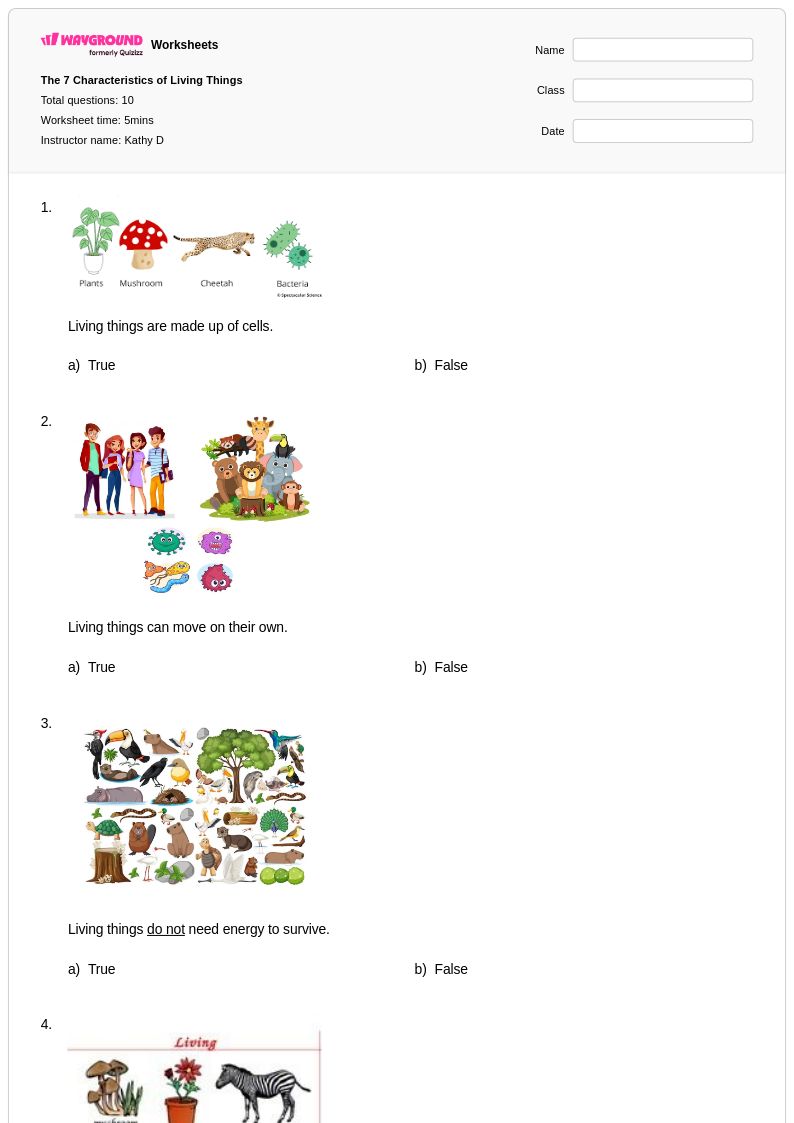
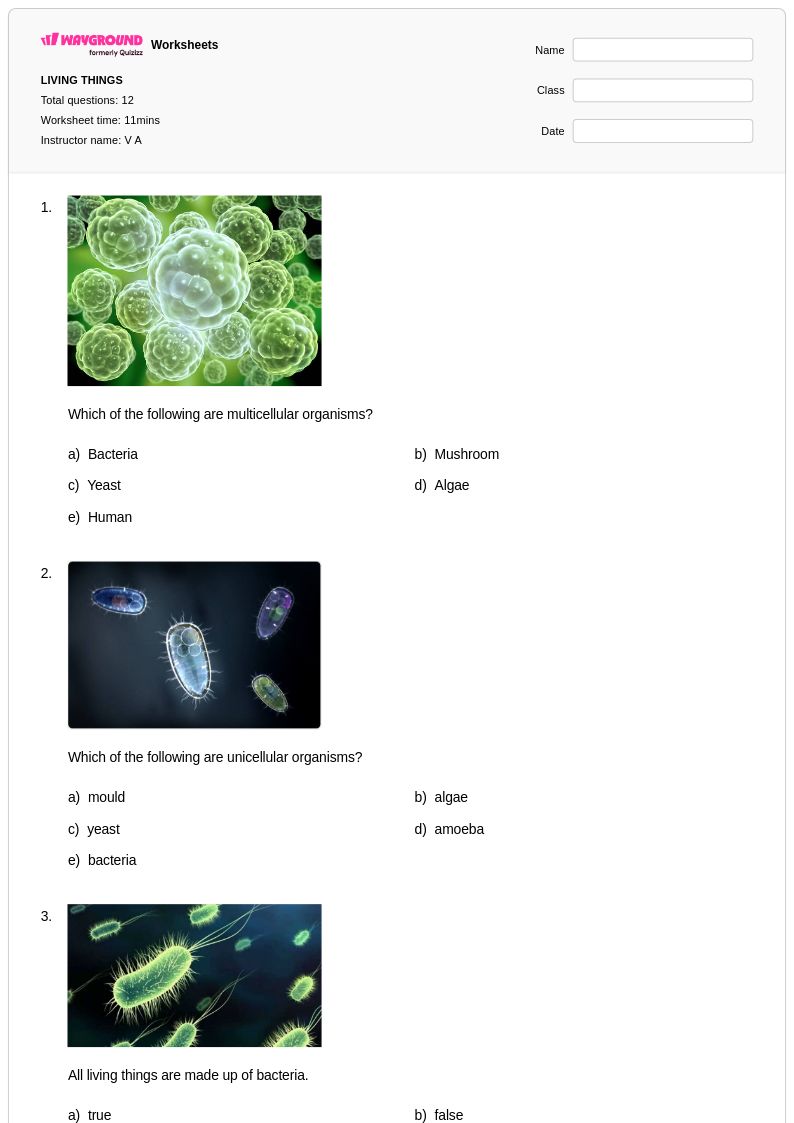
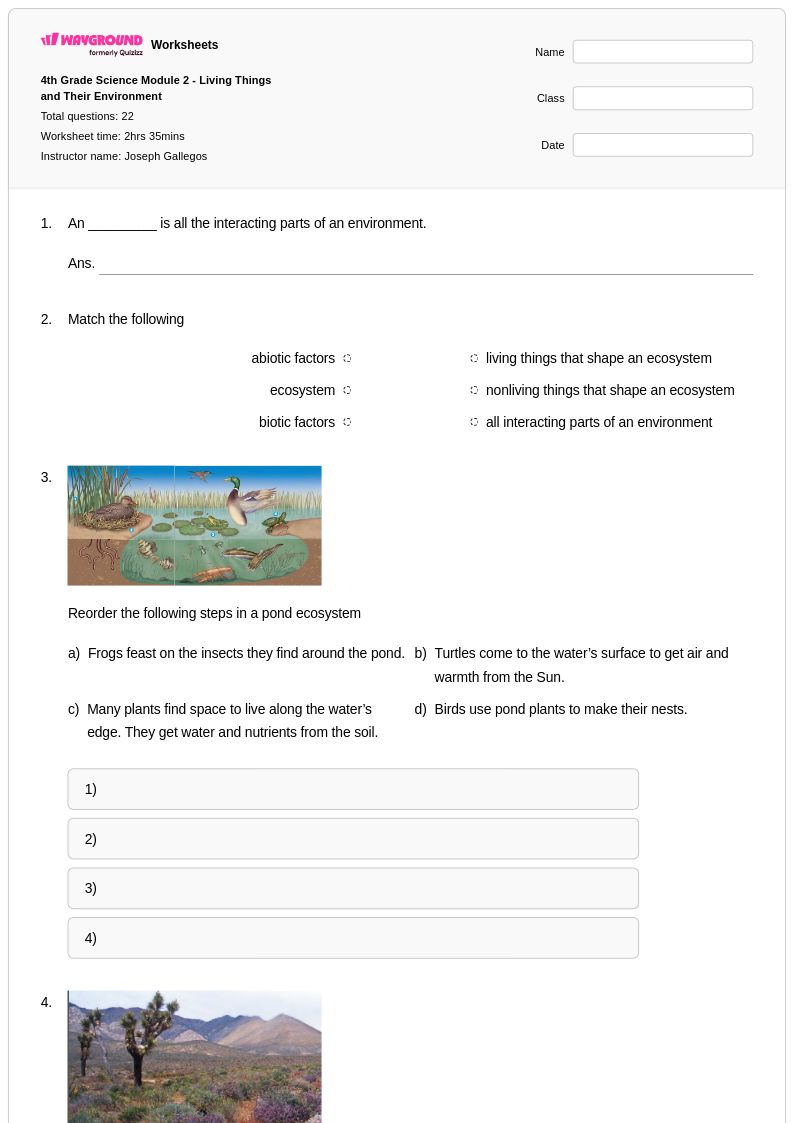
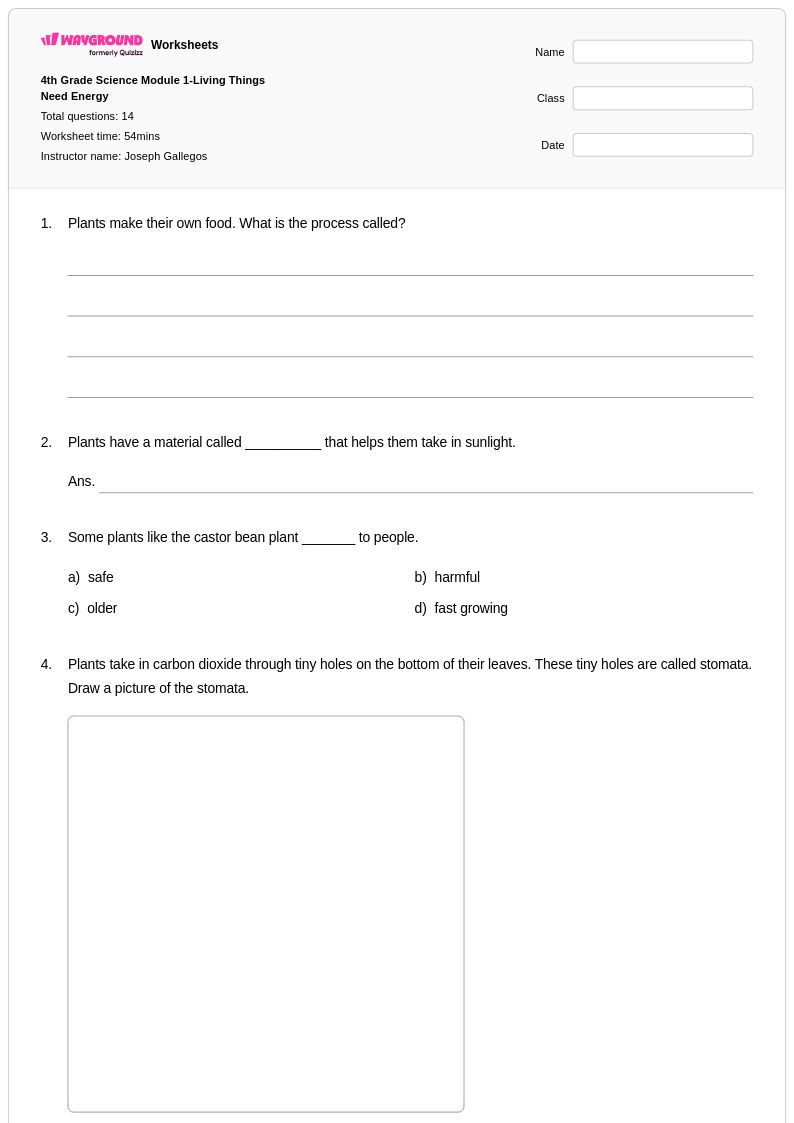
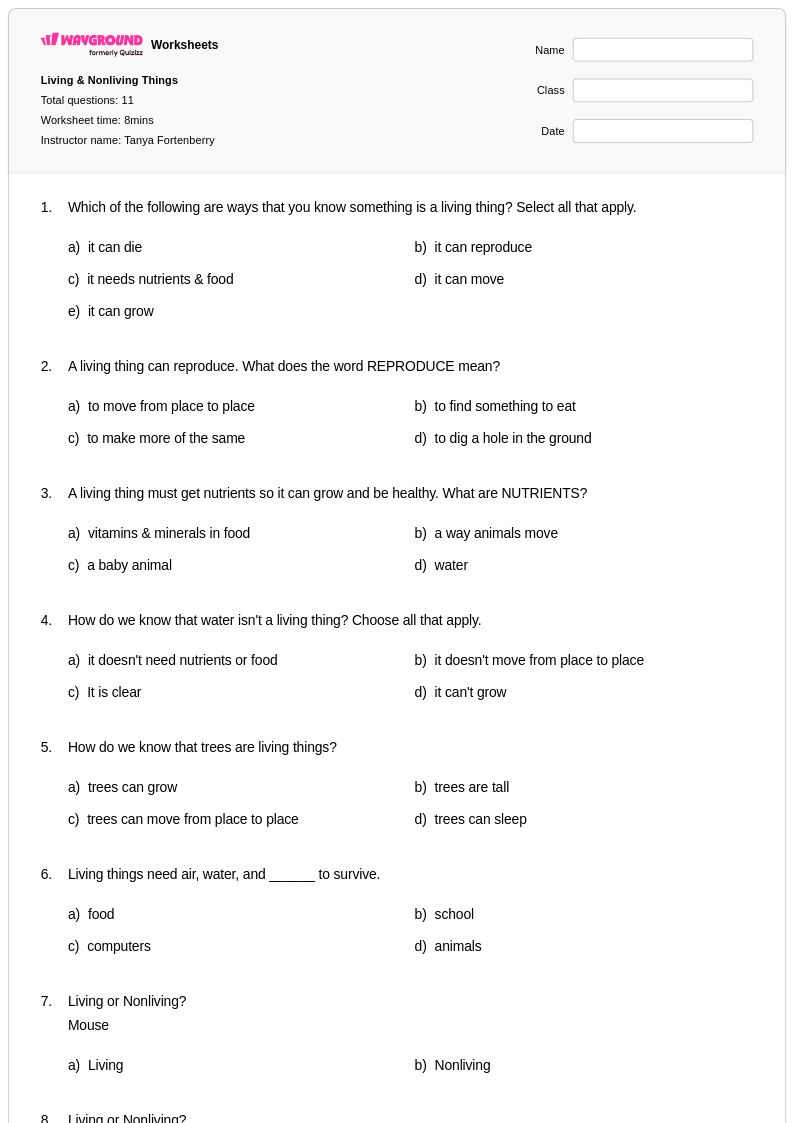
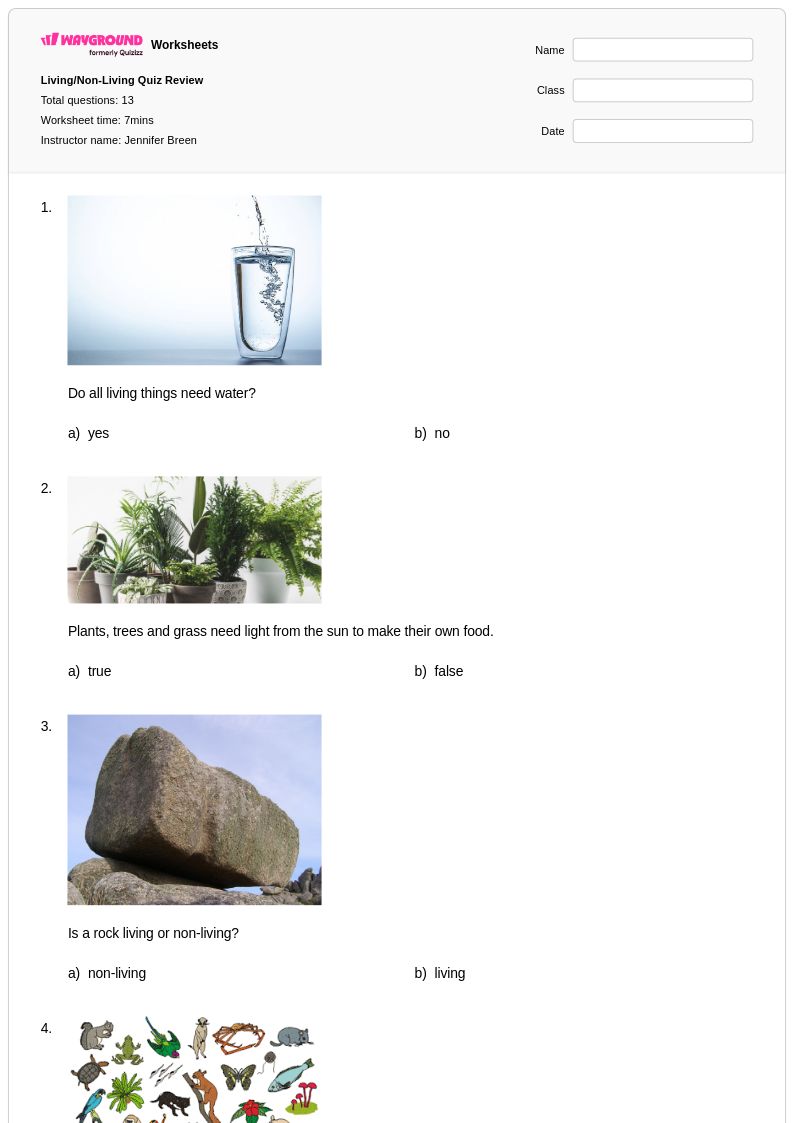
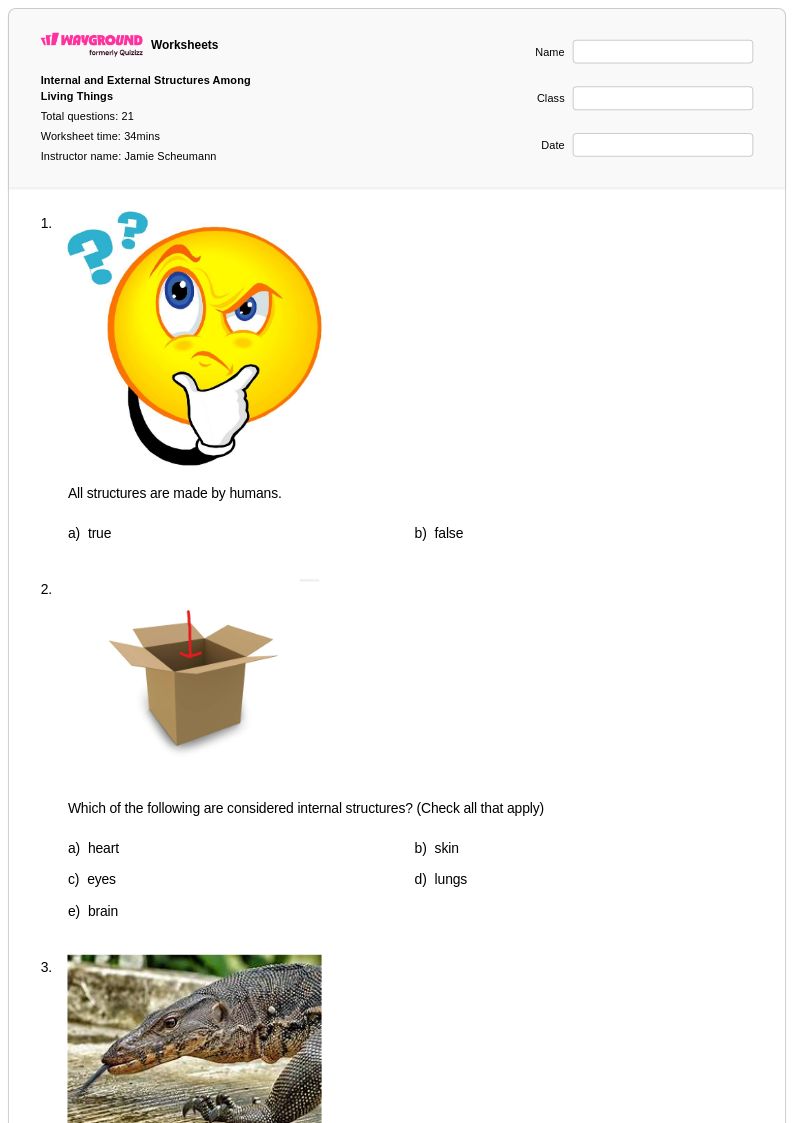
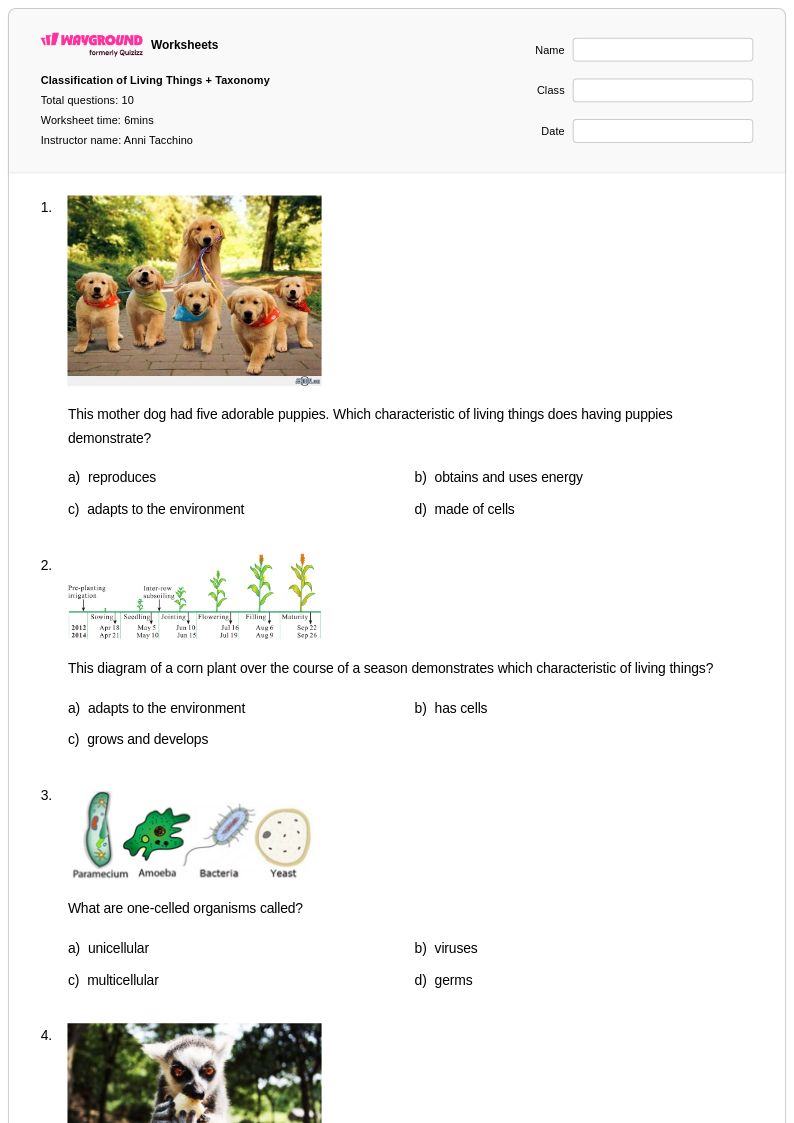
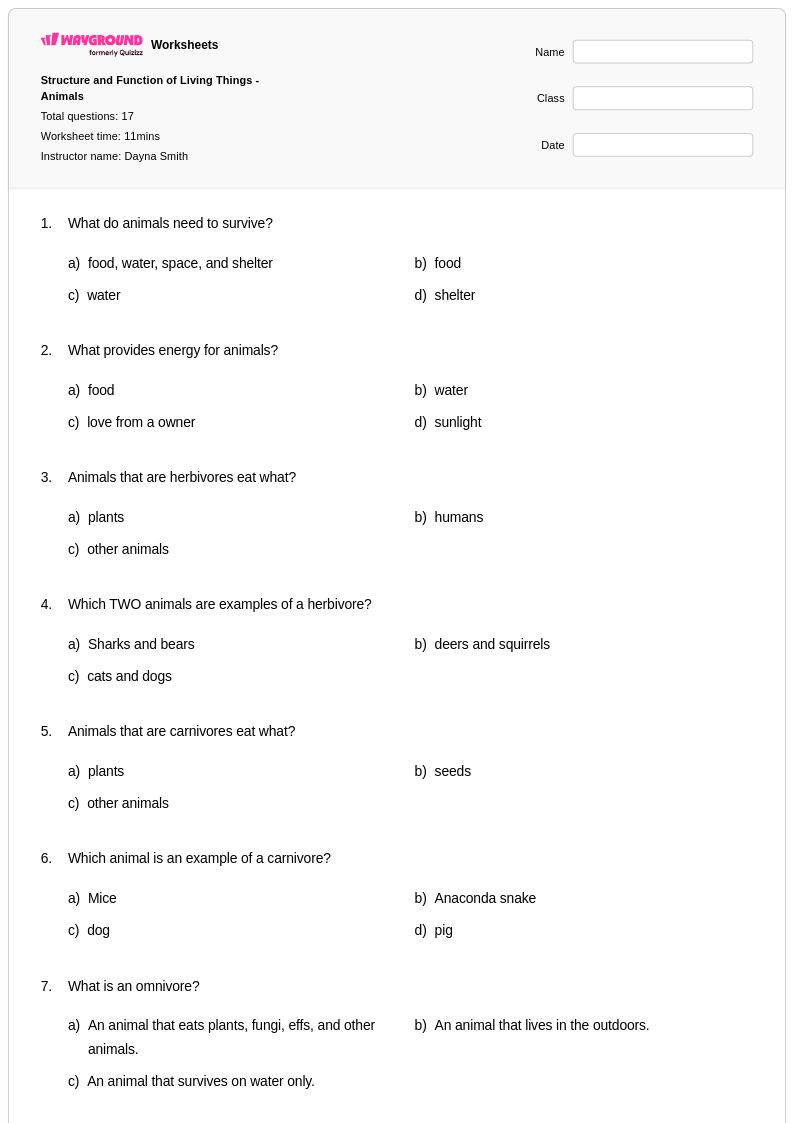
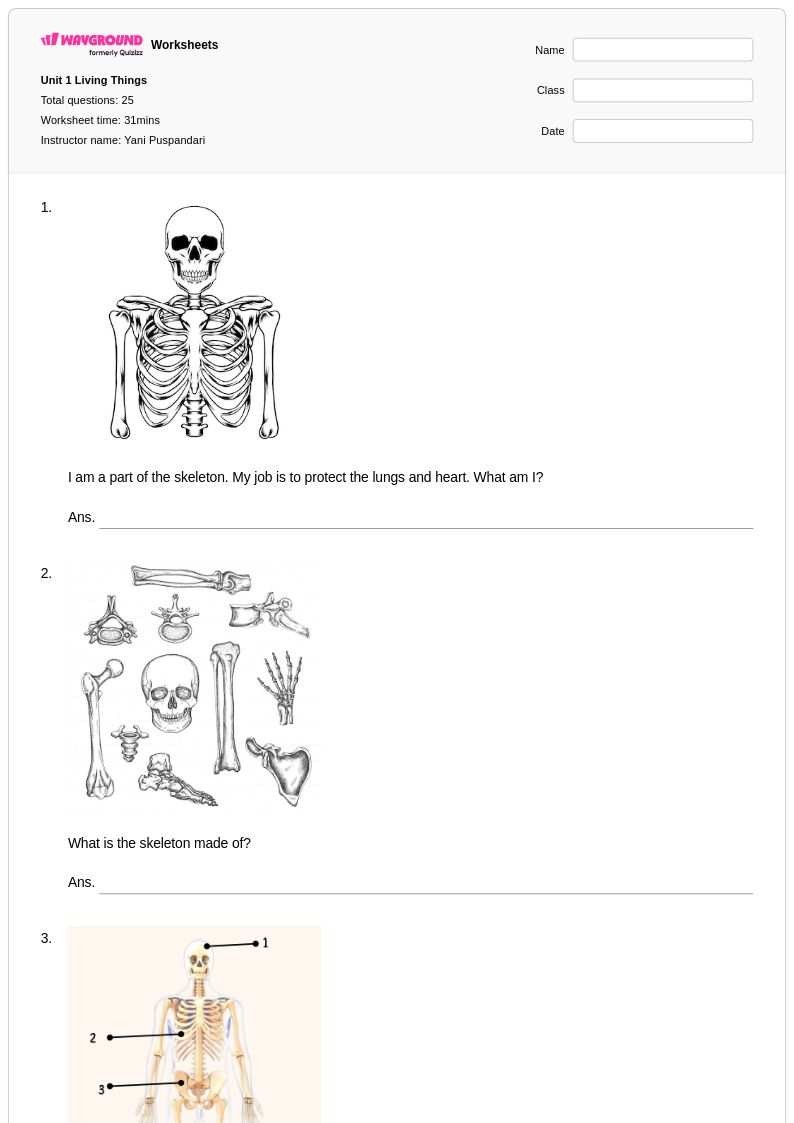
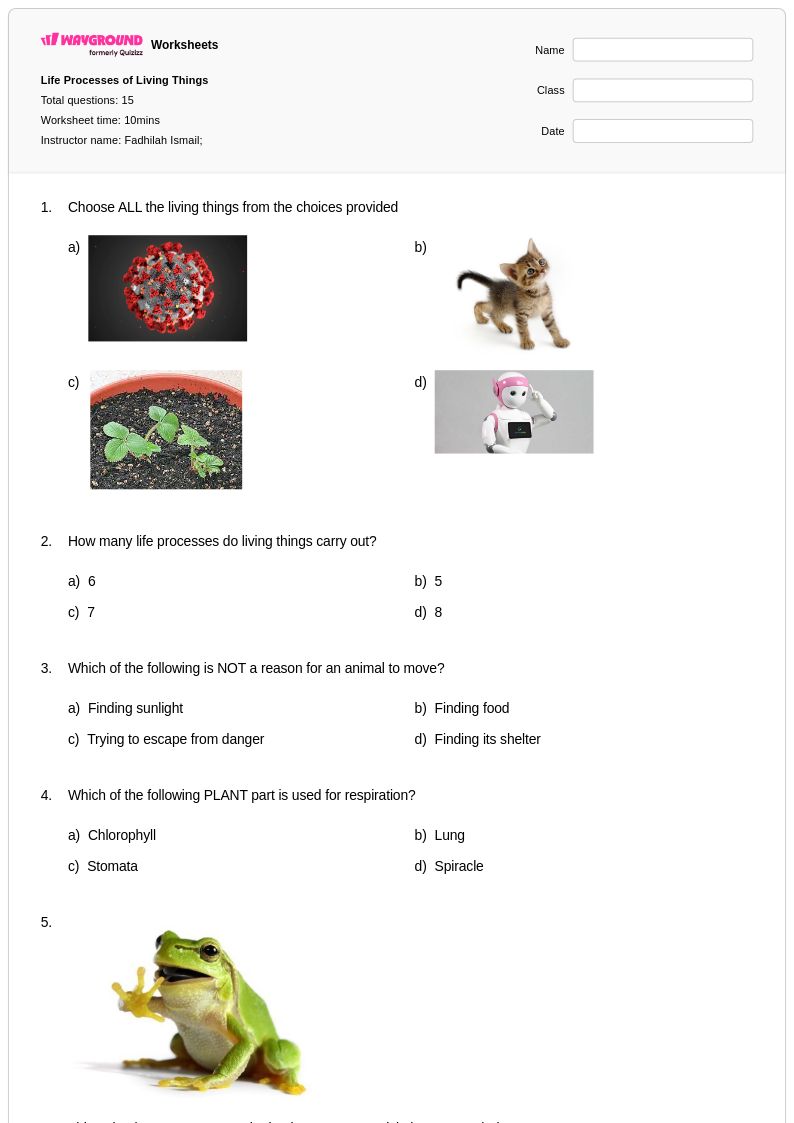
Characteristics of living things worksheets for Class 4 students provide essential practice in identifying and understanding the fundamental traits that distinguish living organisms from non-living objects. These comprehensive printables guide young scientists through the exploration of key biological concepts including growth, reproduction, response to stimuli, metabolism, and cellular organization. Students engage with practice problems that challenge them to classify various organisms and objects, analyze life processes, and draw connections between different living systems. Each worksheet comes with a detailed answer key to support independent learning and self-assessment, while the free pdf format ensures easy access for both classroom instruction and home study. These educational resources strengthen critical thinking skills by encouraging students to observe, compare, and categorize the natural world around them.
Wayground, formerly Quizizz, empowers educators with millions of teacher-created resources specifically designed to support Class 4 biology instruction on the characteristics of living things. The platform's robust search and filtering capabilities allow teachers to quickly locate worksheets that align with specific curriculum standards and learning objectives, while differentiation tools enable customization for diverse student needs and ability levels. These versatile materials are available in both printable and digital pdf formats, providing flexibility for various classroom environments and teaching approaches. Teachers can seamlessly integrate these resources into their lesson planning for initial instruction, targeted remediation, or enrichment activities, ensuring that every student develops a solid foundation in recognizing and understanding the essential characteristics that define life on Earth.
FAQs
How do I teach the characteristics of living things to biology students?
Begin by introducing the seven defining characteristics of life: organization, metabolism, homeostasis, growth and development, reproduction, response to stimuli, and adaptation through evolution. Use concrete, familiar examples for each characteristic before moving to less intuitive organisms like viruses or fungi, which challenge students to apply definitions rigorously. Case studies and organism-sorting activities are especially effective for building conceptual clarity early in a biology unit.
What are good practice exercises for students learning the characteristics of living things?
Effective practice includes organism identification tasks where students classify items as living or non-living and justify their reasoning using specific characteristics. Scenario-based problems that ask students to identify which characteristic is being demonstrated in a described biological event also strengthen applied understanding. Worksheets that require students to analyze diverse organisms, from single-celled bacteria to complex animals, reinforce that all seven characteristics must be considered together, not in isolation.
What mistakes do students commonly make when identifying characteristics of living things?
One of the most frequent errors is treating any single characteristic as sufficient to define life, for example assuming that movement alone indicates a living organism. Students also struggle with edge cases like viruses, fire, or crystals, which display some life-like properties but do not meet all seven criteria. Another common misconception is conflating metabolism with respiration only, when metabolism encompasses all chemical processes that sustain an organism.
How can I differentiate instruction when teaching characteristics of living things?
For struggling students, reduce the number of characteristics introduced at once and use highly familiar organisms as anchor examples before introducing ambiguous cases. Advanced learners benefit from analyzing borderline entities like viruses or prions, which require deeper reasoning about what life truly requires. On Wayground, teachers can apply individual accommodations such as read aloud support, reduced answer choices, and extended time to specific students, ensuring each learner engages with the material at an appropriate level of challenge.
How do I use Wayground's characteristics of living things worksheets in my classroom?
Wayground's characteristics of living things worksheets are available as printable PDFs for traditional classroom use and in digital formats for technology-integrated environments, including the option to host them as a quiz directly on Wayground. Each worksheet includes a complete answer key, supporting both independent student practice and teacher-led instruction. The flexible format means the same resource can serve as a take-home assignment, an in-class activity, or a formative assessment depending on your instructional needs.
How do I assess whether students truly understand the characteristics of living things versus just memorizing them?
Memorization-based assessments ask students to list the seven characteristics, while true understanding is revealed when students can apply those characteristics to novel or ambiguous scenarios. Present students with unfamiliar organisms or borderline cases and ask them to defend whether each characteristic is present. Requiring written justification rather than simple yes/no answers exposes gaps in reasoning and shows whether students have internalized the underlying biological principles.