
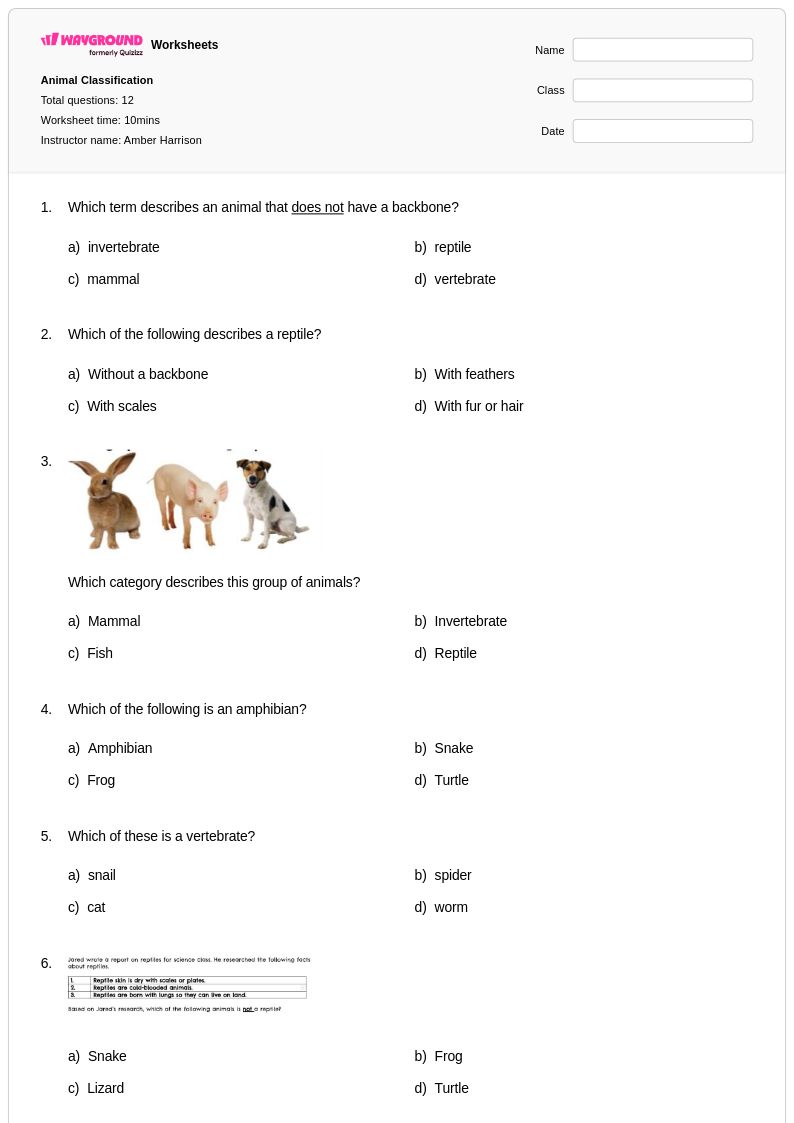
12 Hỏi
4th
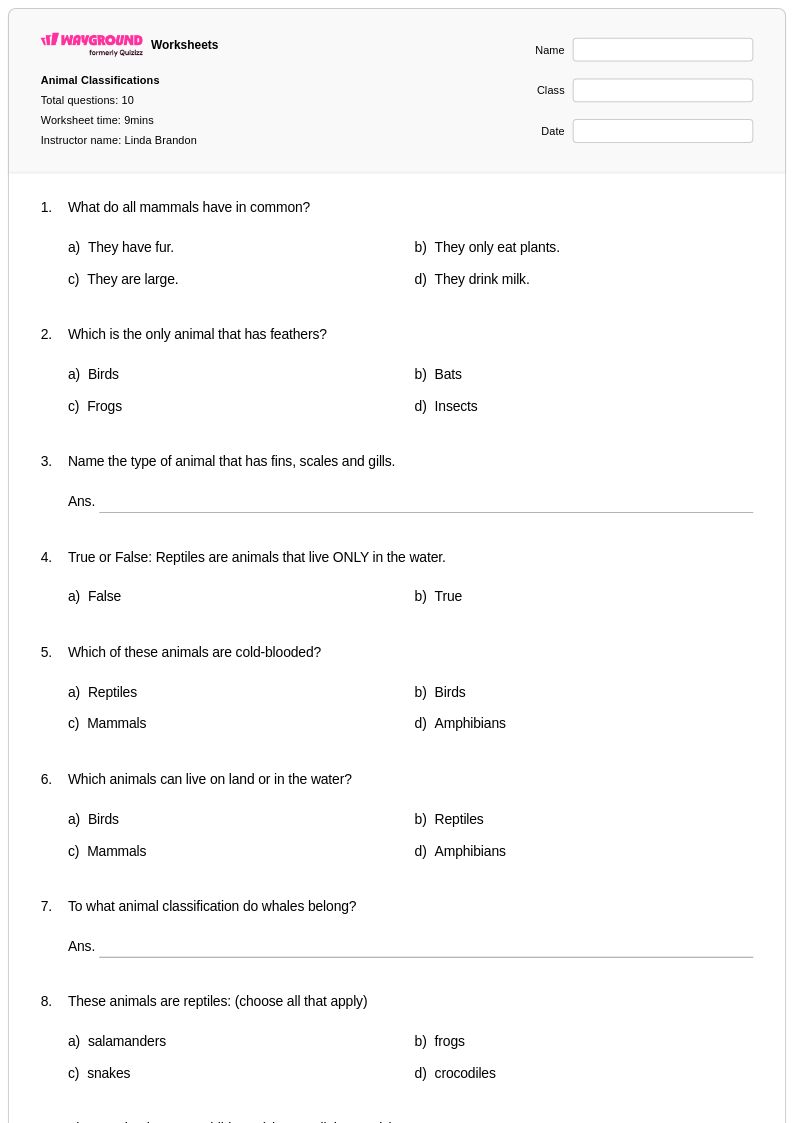
10 Hỏi
1st - 4th
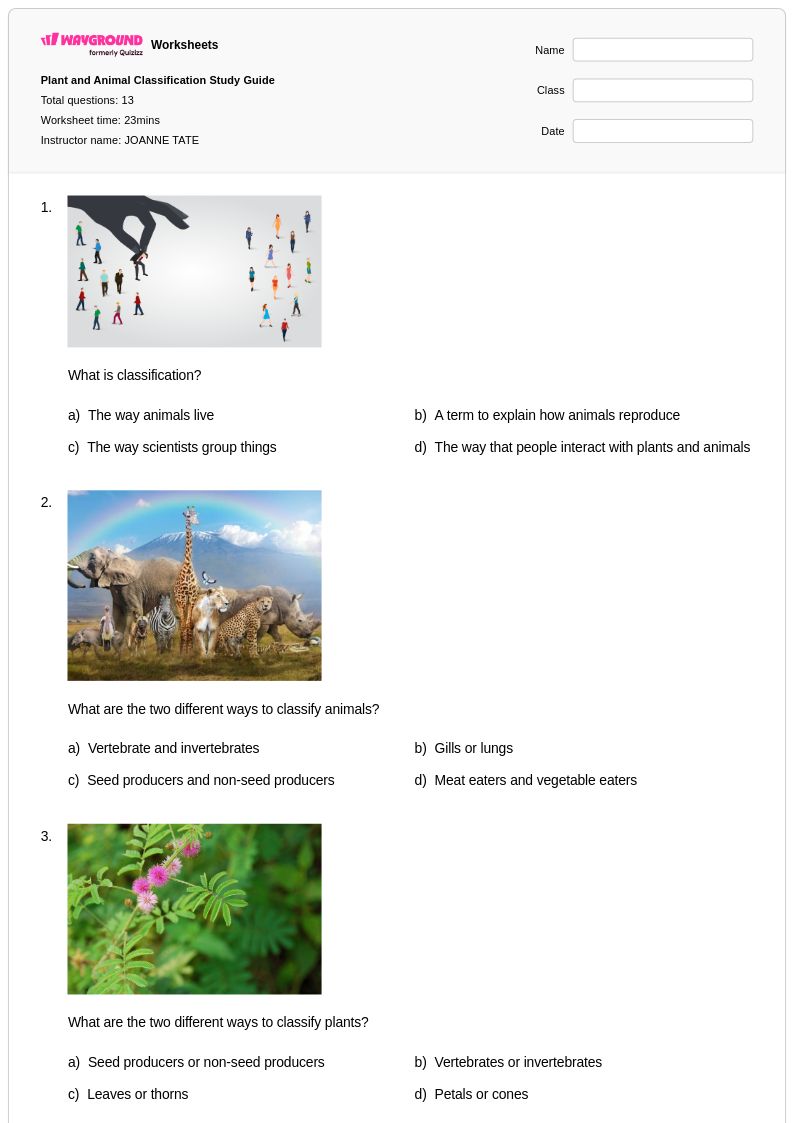
13 Hỏi
4th - 5th
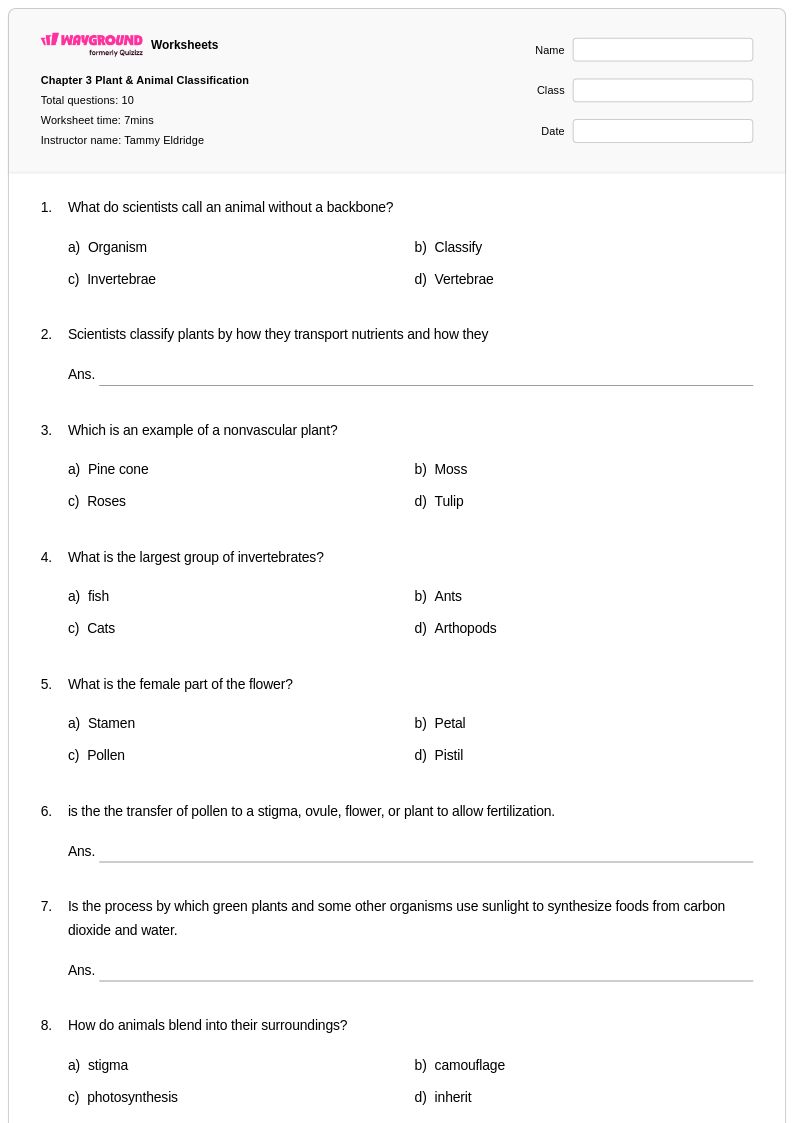
10 Hỏi
4th
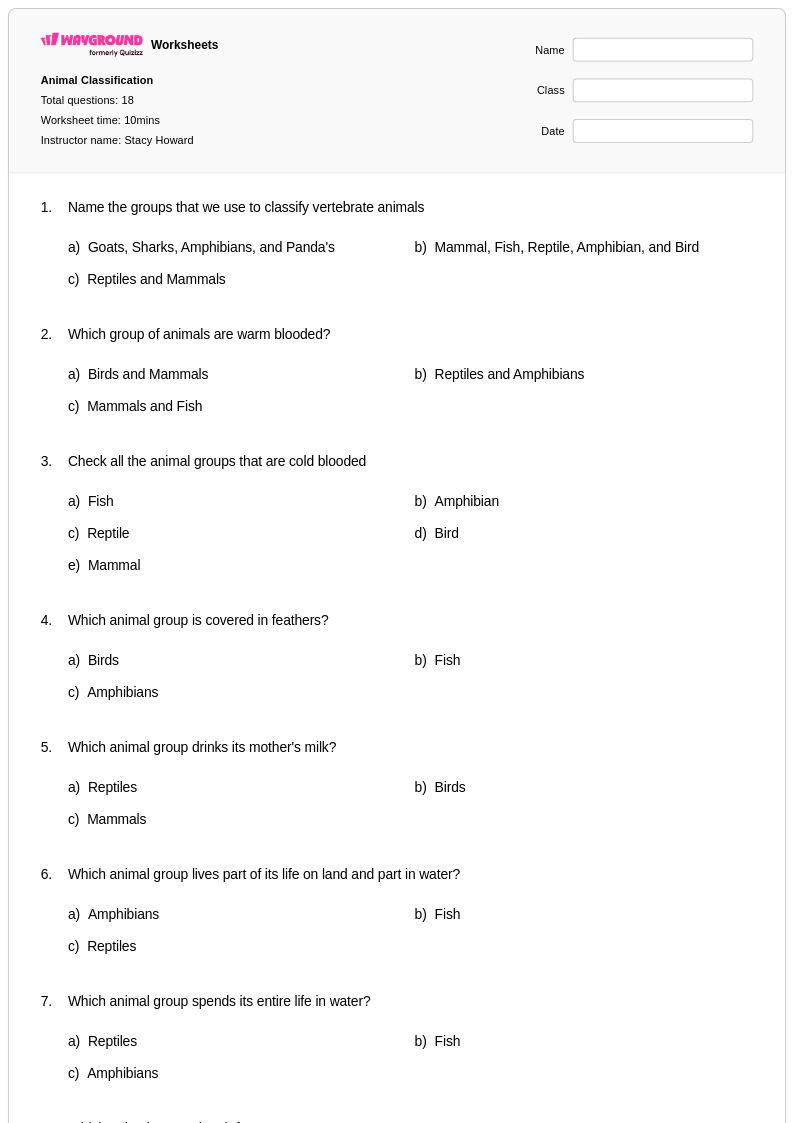
18 Hỏi
4th - 5th
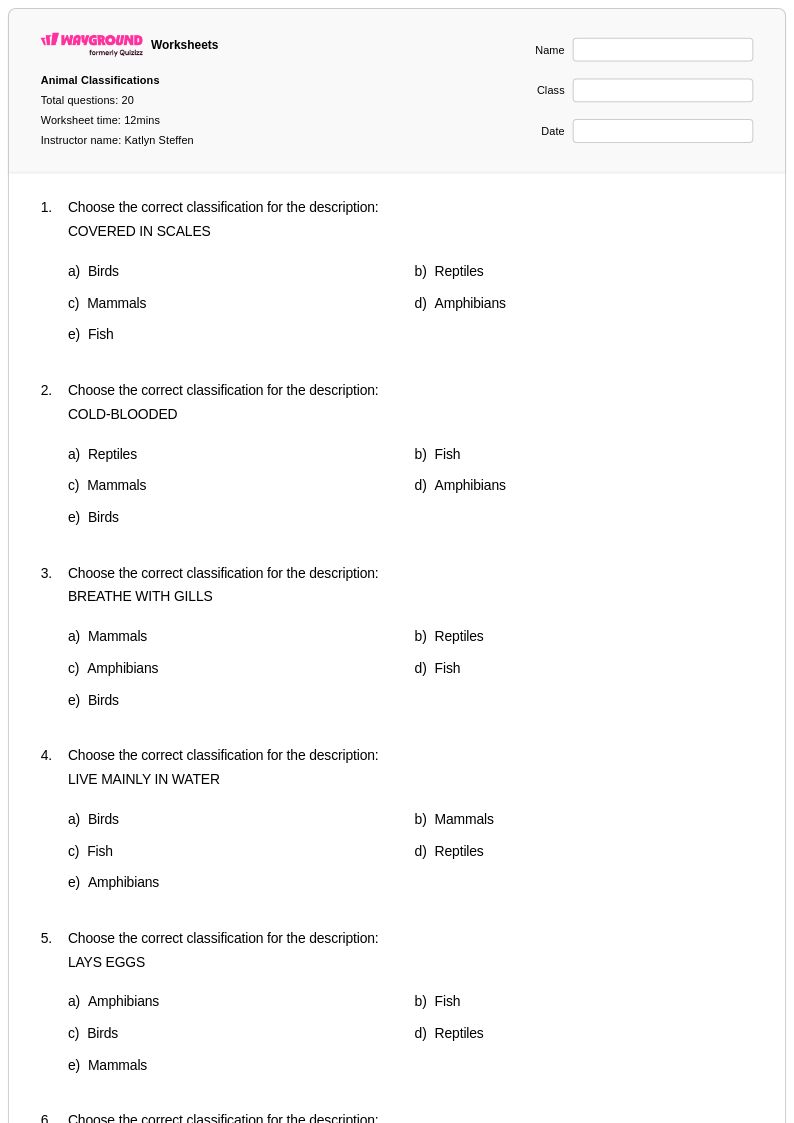
20 Hỏi
1st - 6th
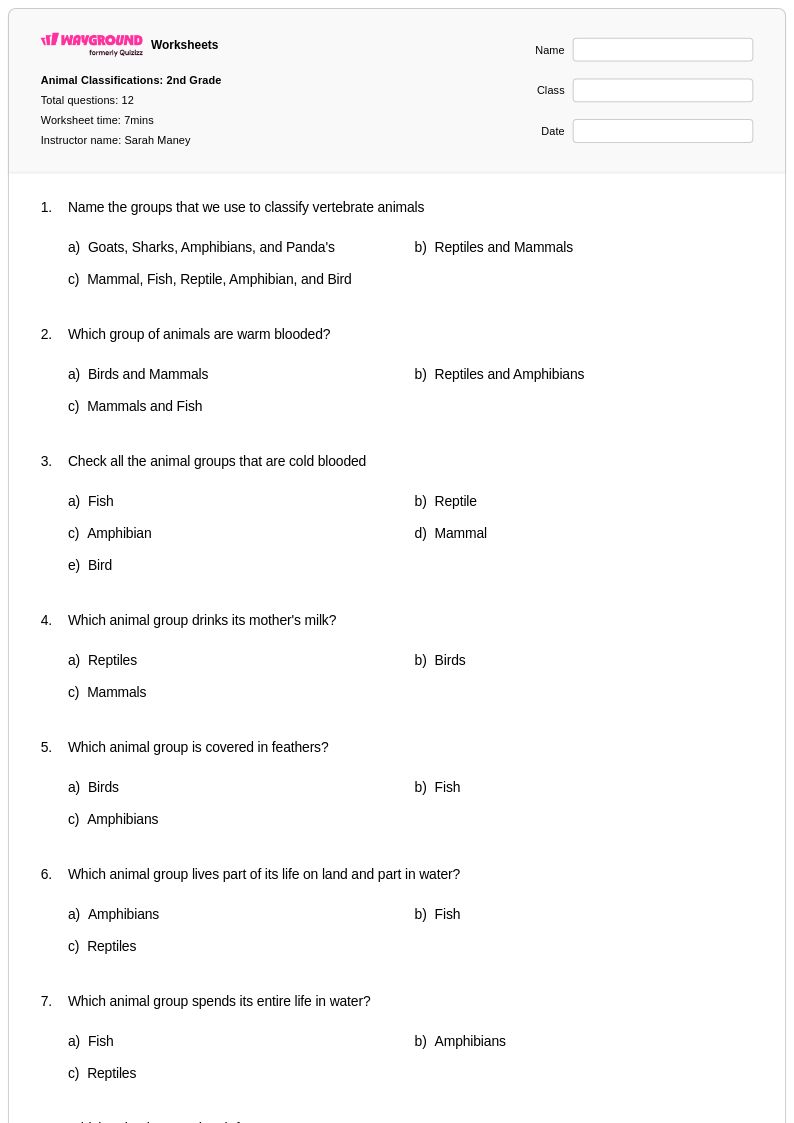
12 Hỏi
2nd - 4th
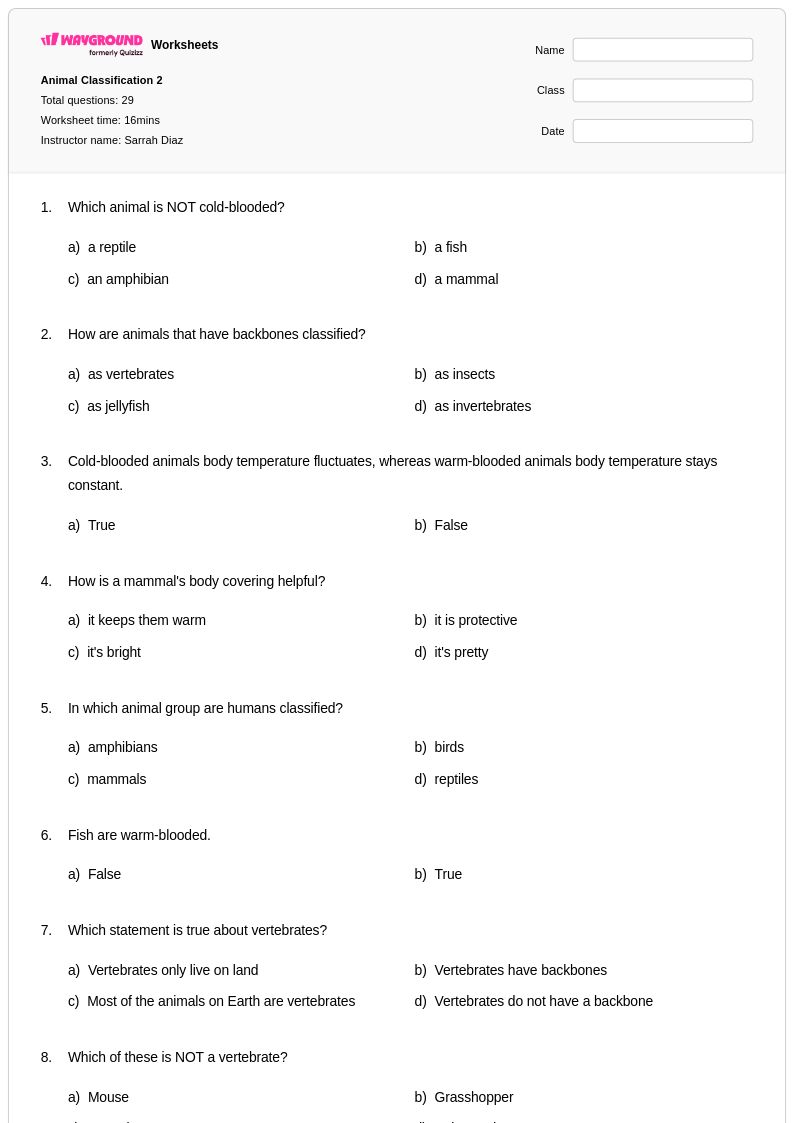
29 Hỏi
3rd - 5th
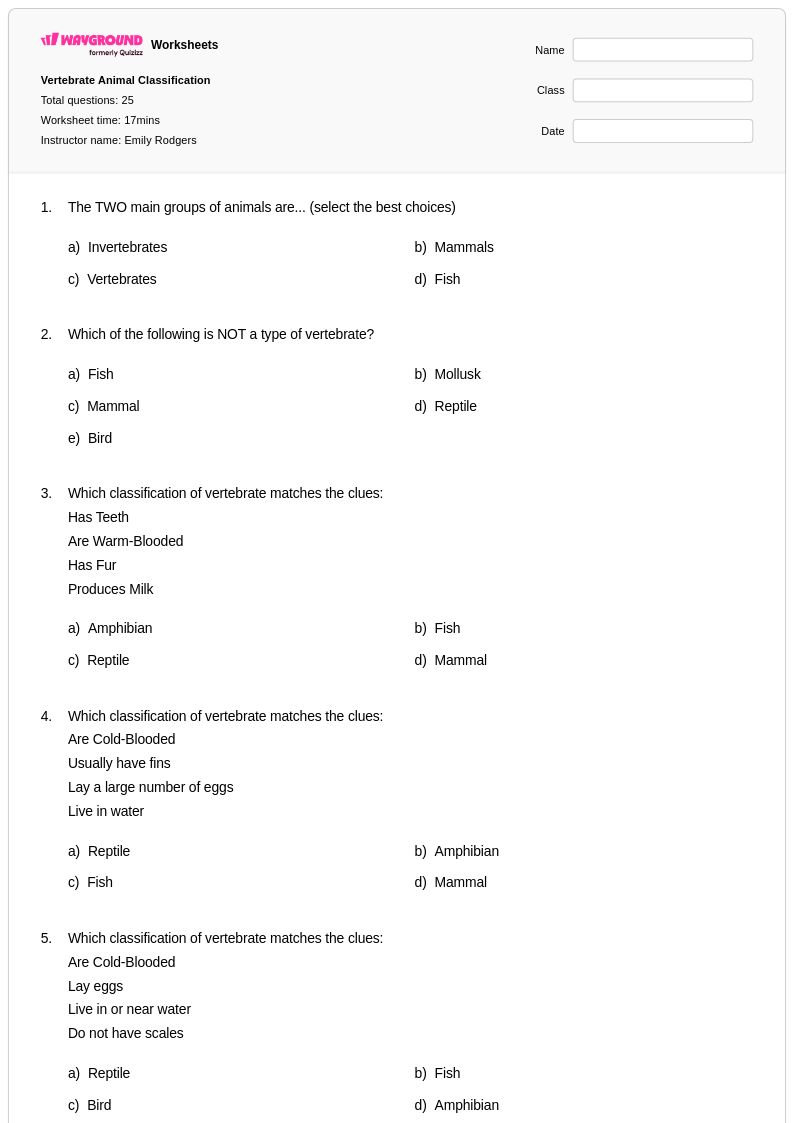
25 Hỏi
4th - 5th
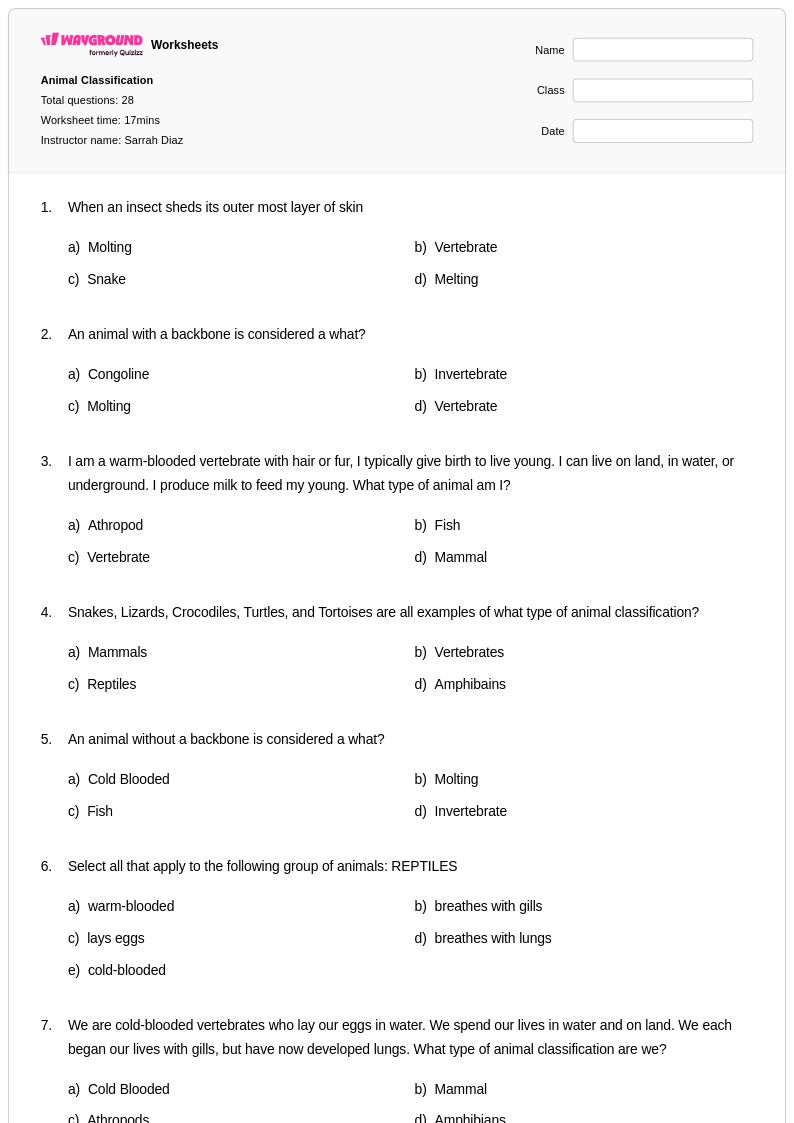
28 Hỏi
3rd - 5th
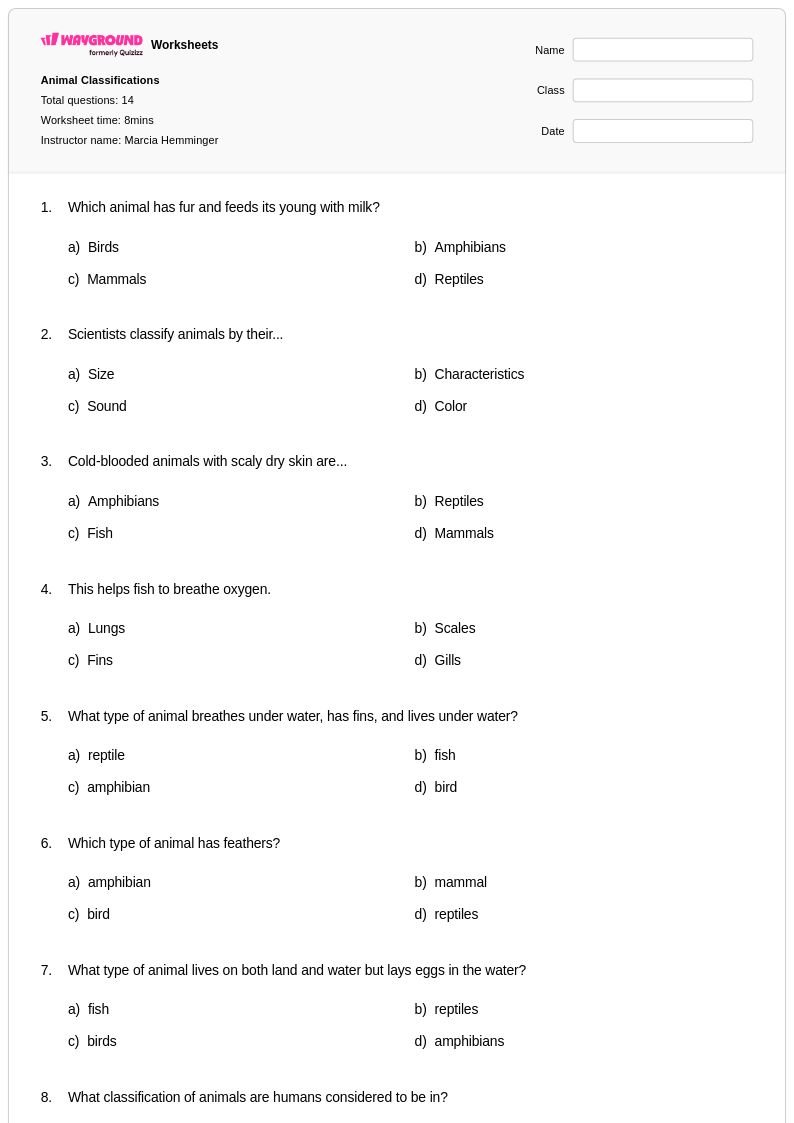
14 Hỏi
4th
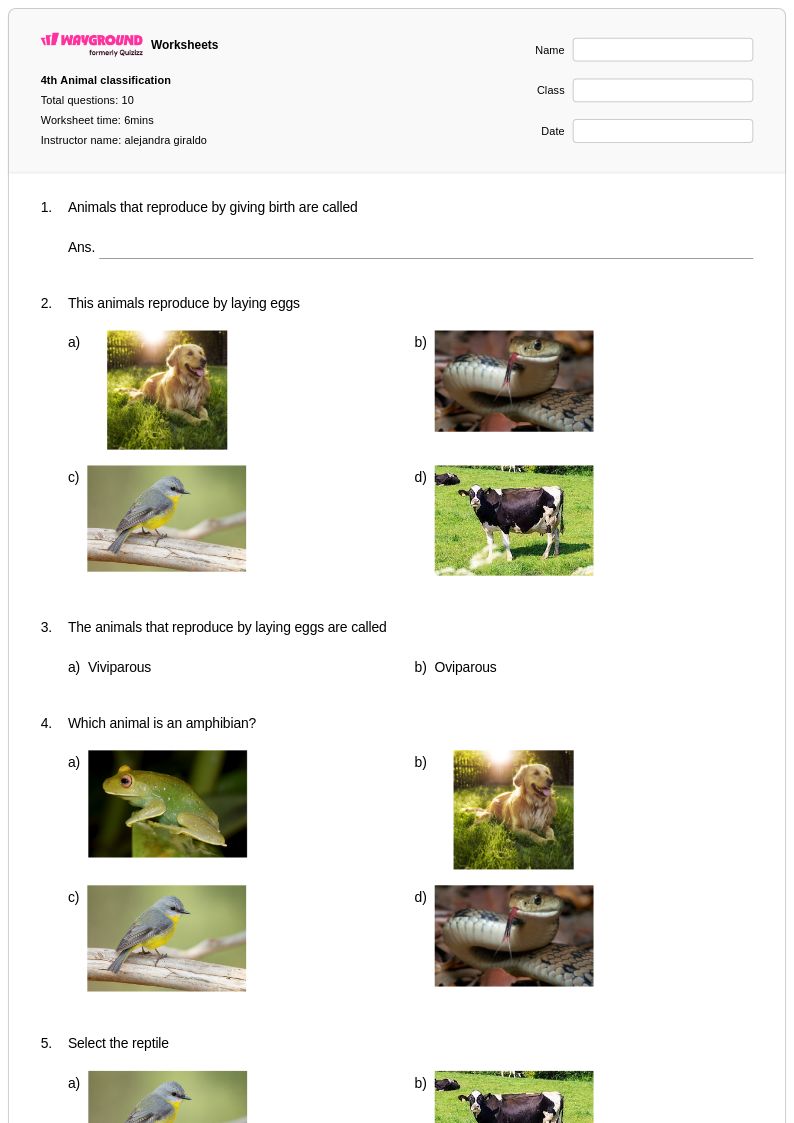
10 Hỏi
KG - 4th
15 Hỏi
3rd - 5th
18 Hỏi
2nd - 5th
26 Hỏi
2nd - 4th
15 Hỏi
1st - 5th
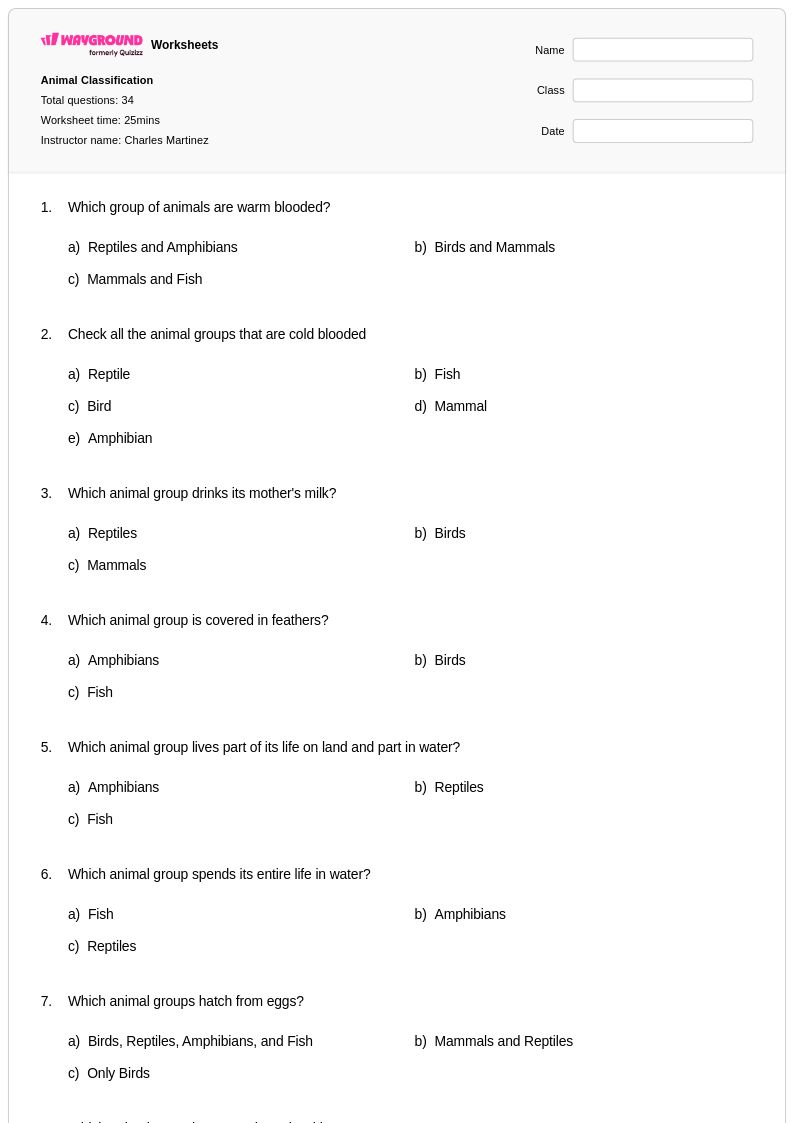
34 Hỏi
4th
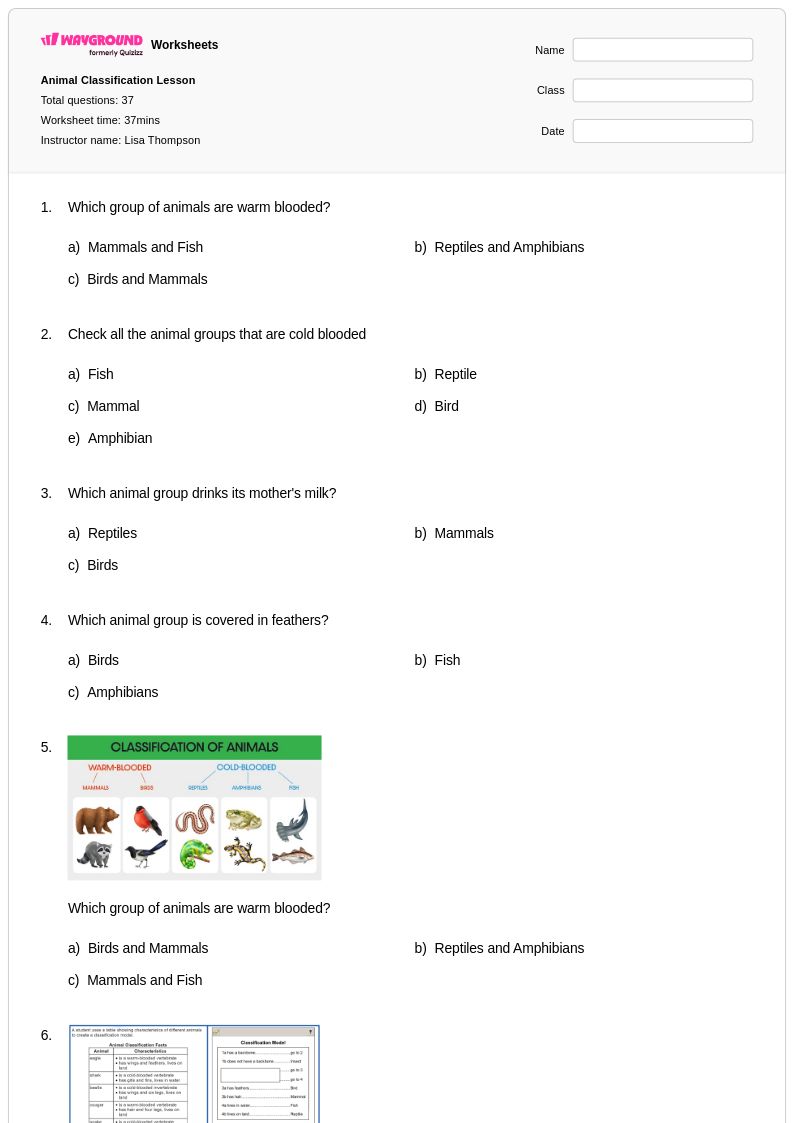
37 Hỏi
4th - Uni
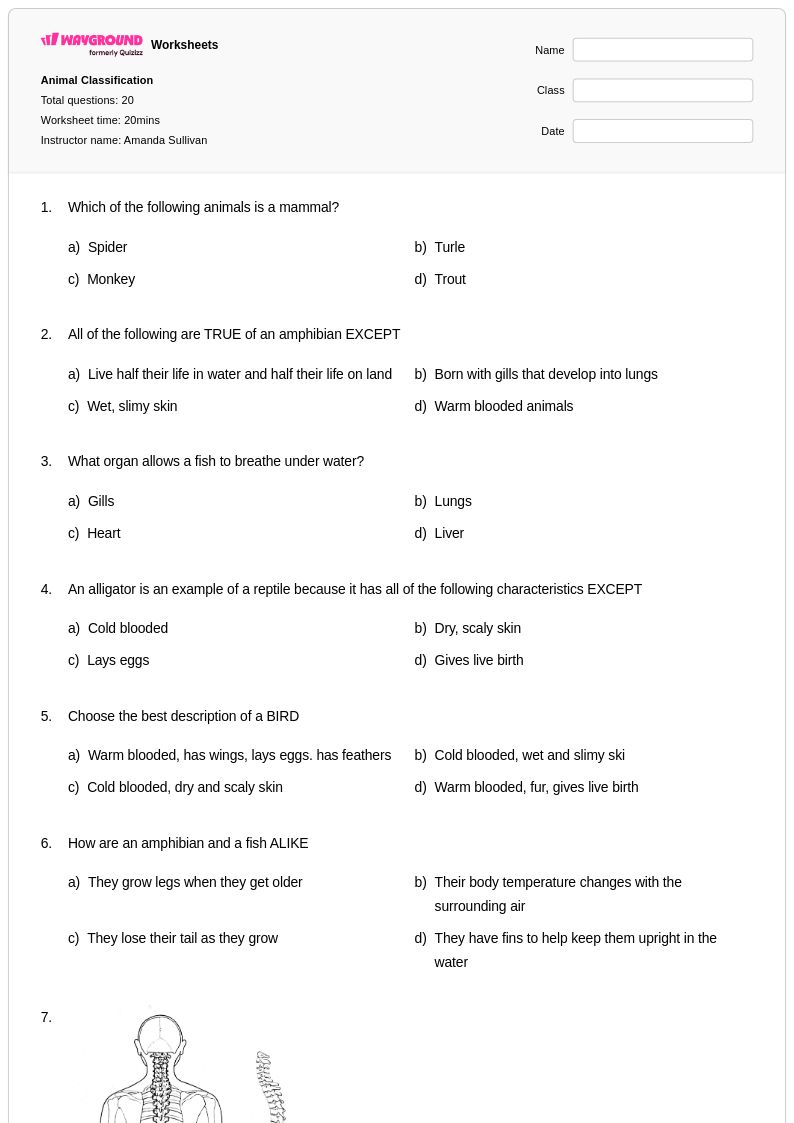
20 Hỏi
4th
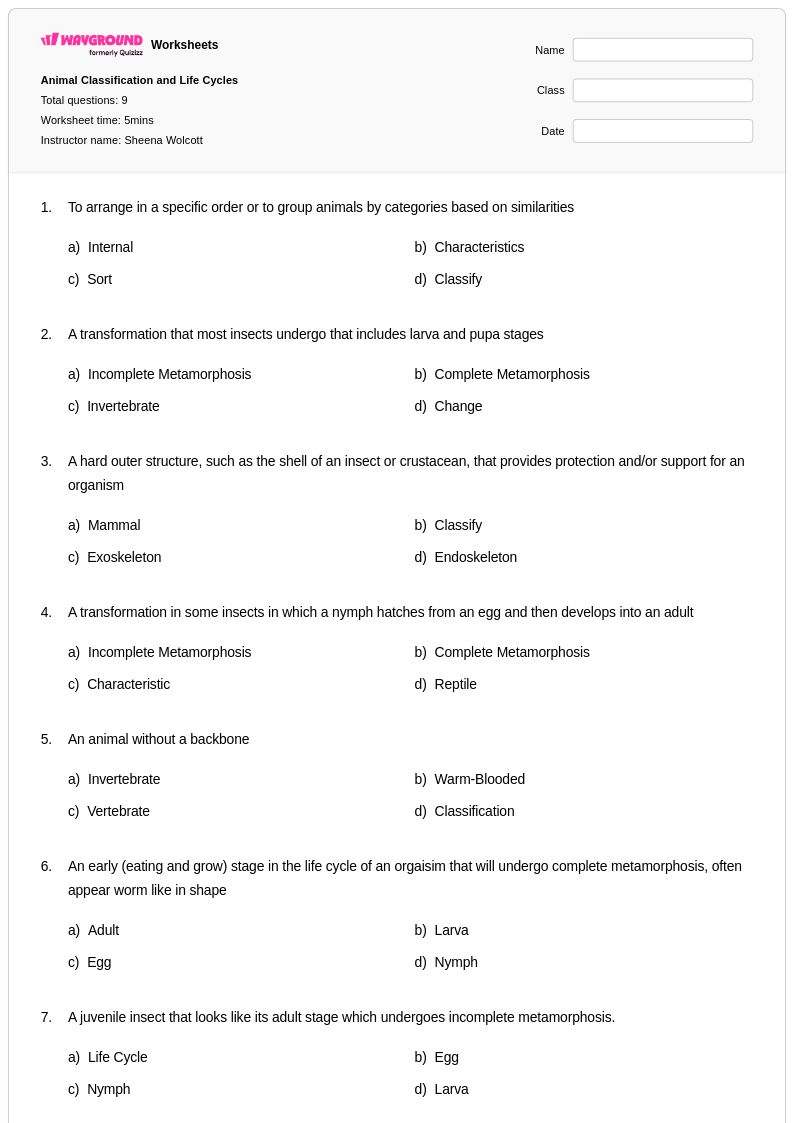
9 Hỏi
4th - 5th
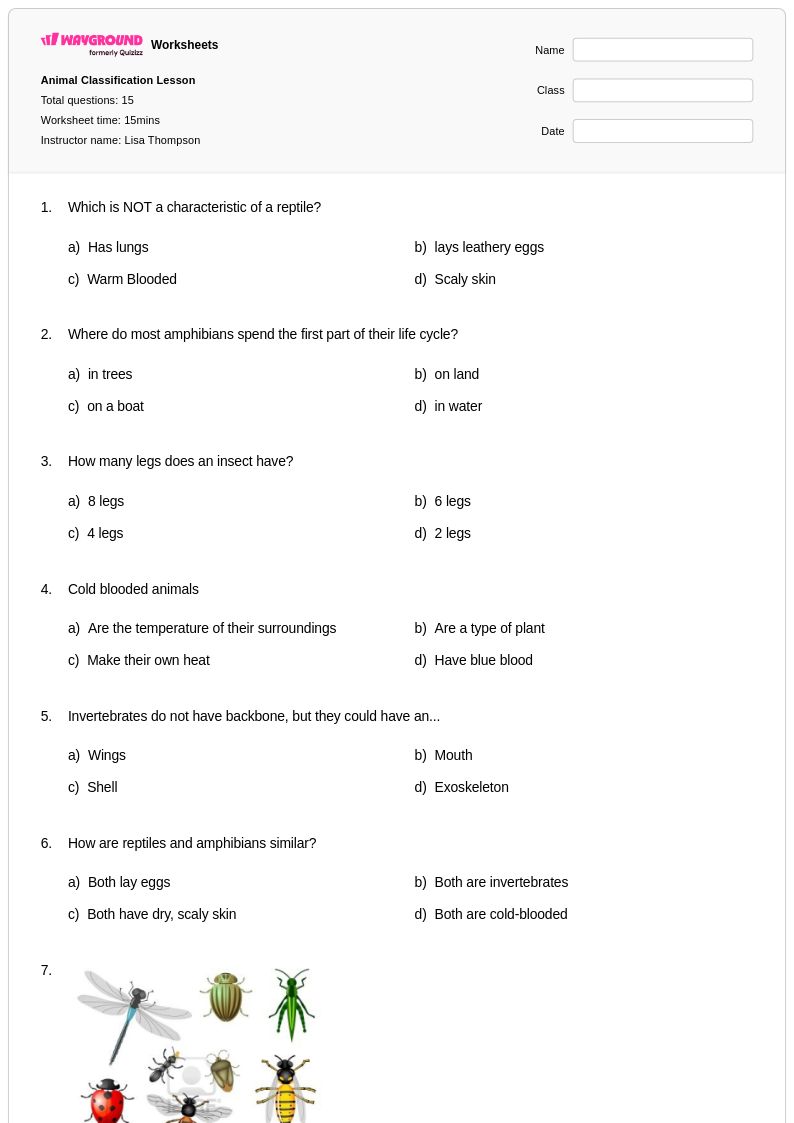
15 Hỏi
4th - Uni
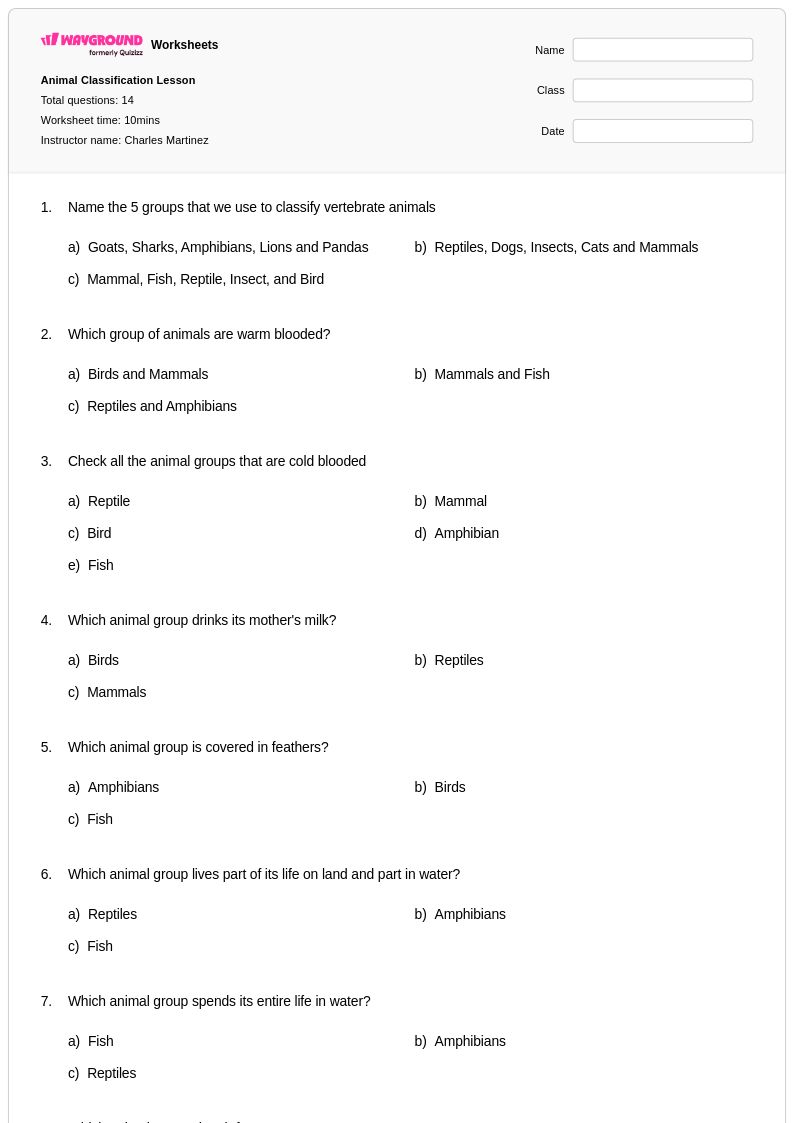
14 Hỏi
3rd - 4th
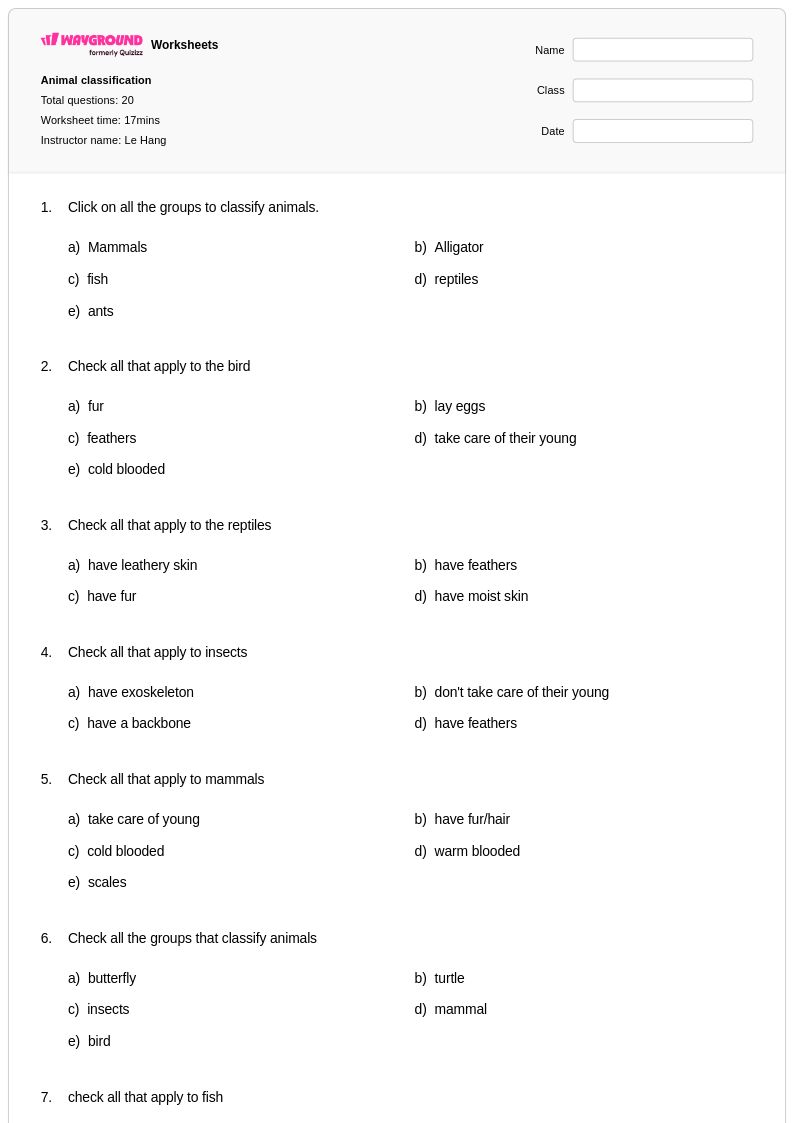
20 Hỏi
1st - 5th
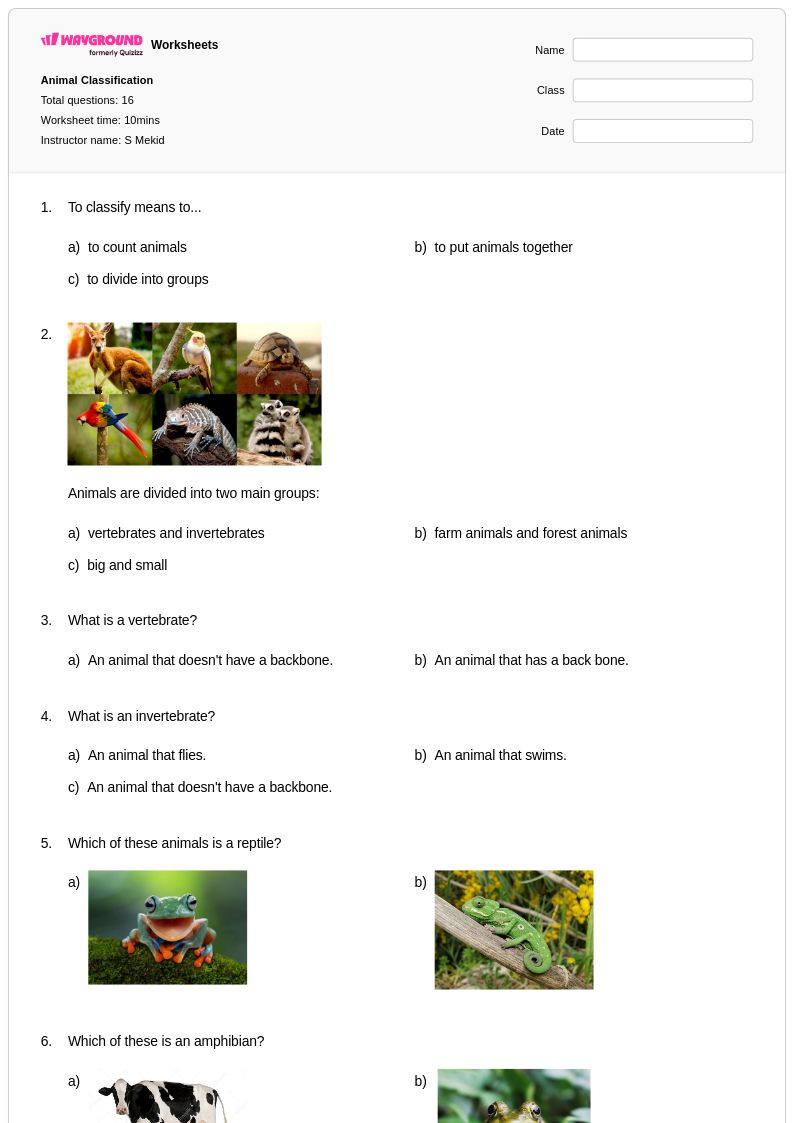
16 Hỏi
2nd - 5th
Khám phá Animal Classification Bảng tính theo cấp độ
Khám phá các bảng tính chủ đề khác cho class 4
Explore printable Animal Classification worksheets for Class 4
Class 4 animal classification worksheets available through Wayground (formerly Quizizz) provide students with comprehensive practice in organizing and categorizing living organisms based on their shared characteristics and biological relationships. These expertly designed educational resources strengthen critical scientific thinking skills by guiding students through the systematic process of grouping animals according to features such as body structure, habitat, diet, and reproduction methods. The collection includes diverse practice problems that challenge learners to distinguish between vertebrates and invertebrates, identify mammals, birds, reptiles, amphibians, and fish, and understand how scientists use classification systems to study biodiversity. Each worksheet comes with a detailed answer key to support independent learning and assessment, while the printable pdf format ensures easy access for both classroom instruction and home study, making these free educational materials an invaluable resource for building foundational life science knowledge.
Wayground (formerly Quizizz) empowers educators with an extensive library of millions of teacher-created animal classification resources specifically designed to meet Class 4 learning objectives and align with established science standards. The platform's advanced search and filtering capabilities allow teachers to quickly locate worksheets that match their students' specific needs, while built-in differentiation tools enable seamless customization for learners at varying skill levels. Whether delivered in digital format for interactive classroom engagement or as printable pdf documents for traditional paper-based learning, these flexible materials support comprehensive lesson planning and provide targeted opportunities for remediation, enrichment, and skill reinforcement. Teachers can confidently rely on this robust collection to supplement their curriculum with high-quality practice activities that deepen students' understanding of taxonomic principles and scientific classification methods essential for advanced life science studies.
FAQs
How do I teach animal classification to students?
What exercises help students practice animal classification?
What common mistakes do students make when learning animal classification?
How can I differentiate animal classification instruction for students at different levels?
How do I use Wayground's animal classification worksheets in my classroom?