
46 Q
4th
8 Q
4th
10 Q
3rd - 9th
12 Q
4th
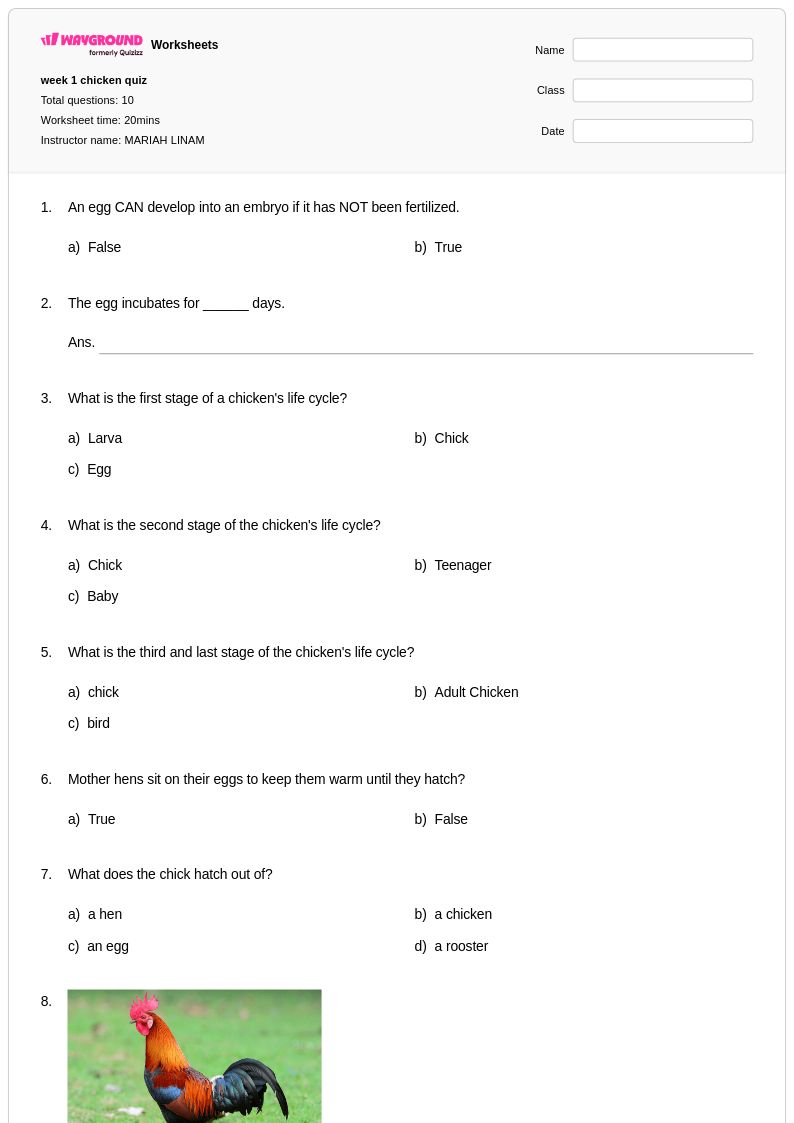
10 Q
1st - 5th
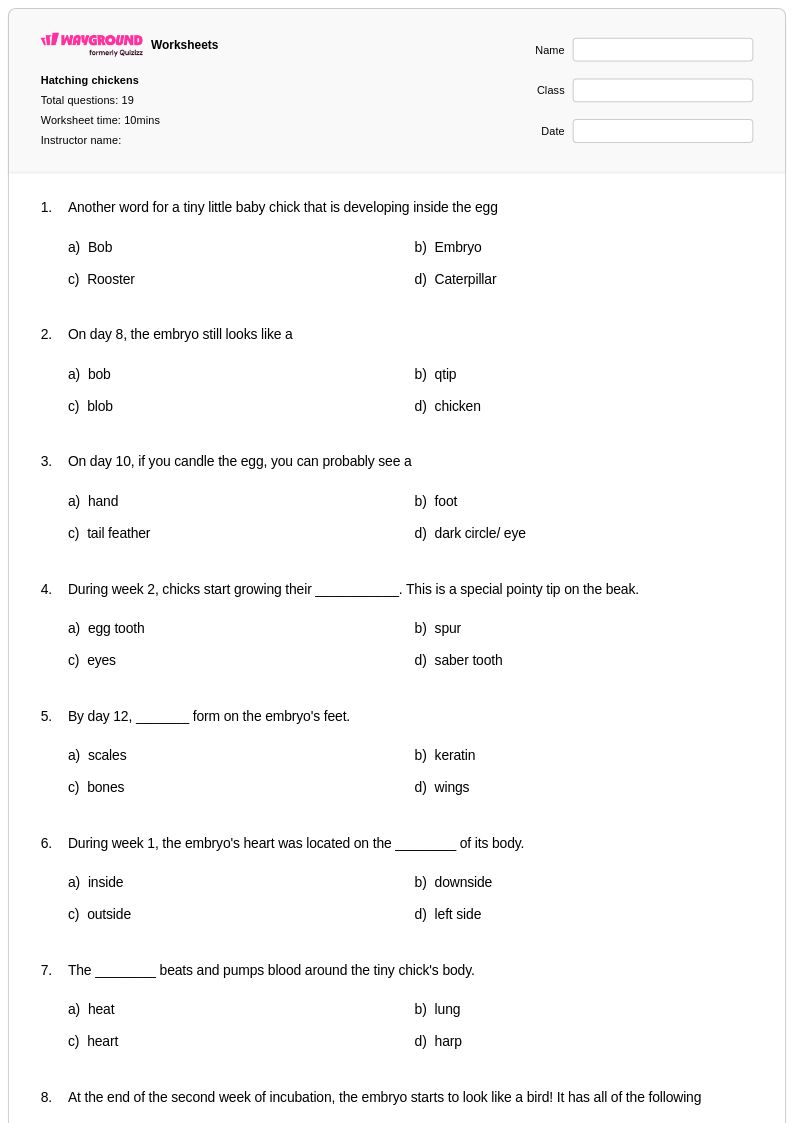
19 Q
2nd - 5th
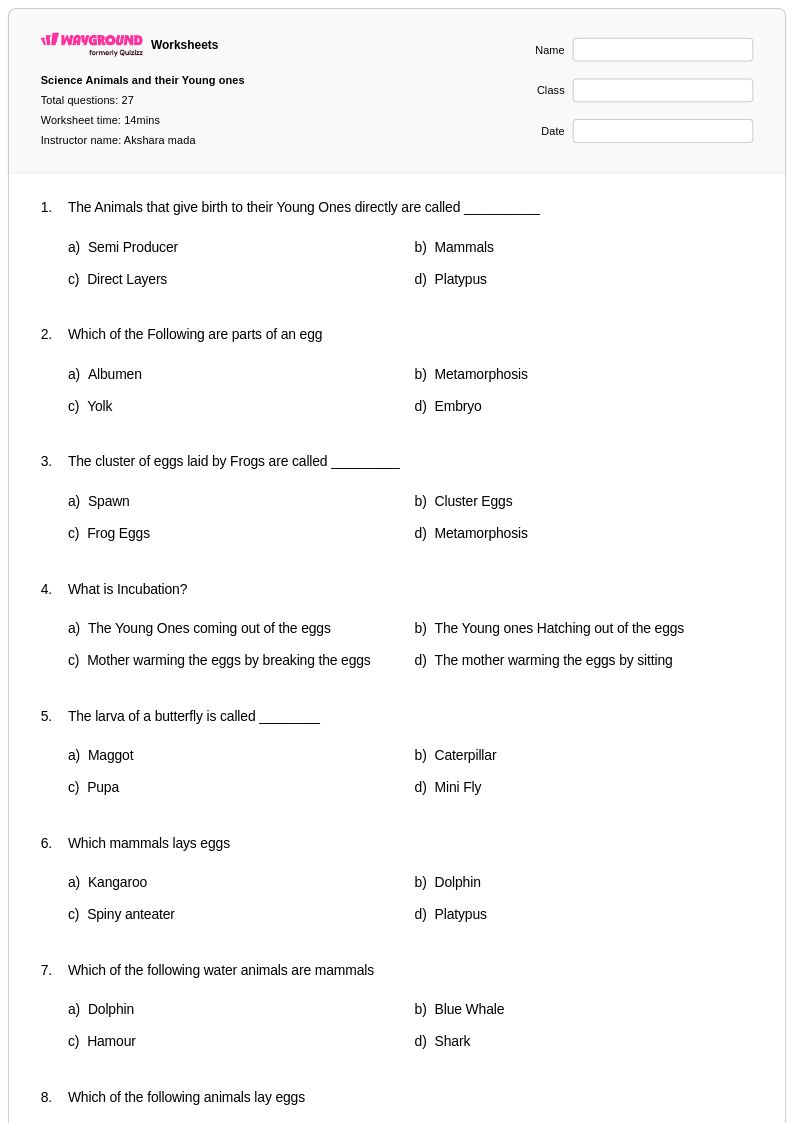
27 Q
4th
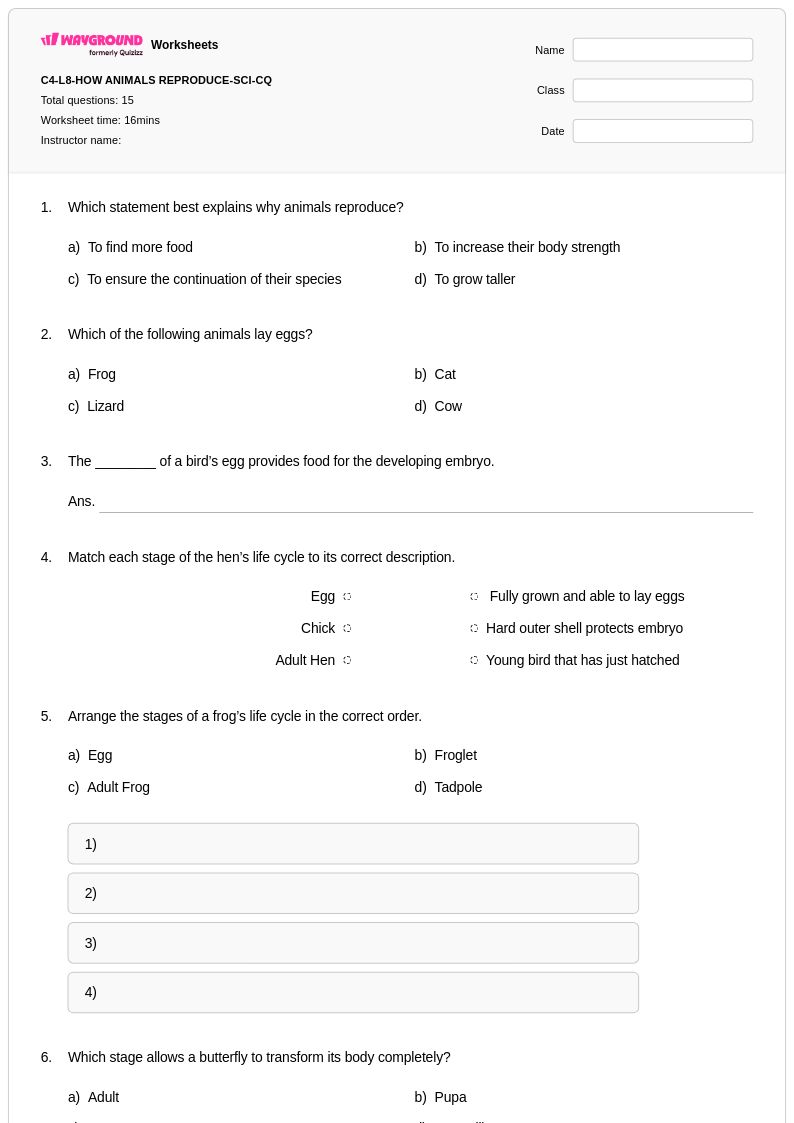
15 Q
4th
19 Q
4th
5 Q
4th
8 Q
4th
10 Q
4th
10 Q
4th
12 Q
2nd - 6th
10 Q
3rd - 4th
13 Q
4th - 5th
12 Q
4th - 5th
12 Q
4th - 5th
10 Q
4th
10 Q
1st - 5th
5 Q
3rd - 6th
30 Q
2nd - Uni
5 Q
1st - 5th
Explore Other Subject Worksheets for class 4
Explore printable Hen worksheets for Class 4
Hen-focused worksheets for Class 4 life science students available through Wayground (formerly Quizizz) provide comprehensive exploration of these fascinating domesticated birds and their biological characteristics. These educational resources strengthen students' understanding of animal life cycles, particularly focusing on the hen's reproductive process, egg development, and the intricate stages from fertilization to hatching. Students engage with practice problems that examine hen anatomy, including specialized structures like the comb, wattles, and egg-laying systems, while developing critical observation and classification skills essential for elementary life science mastery. The collection includes detailed answer keys and free printables that guide learners through concepts such as bird behavior, habitat requirements, and the hen's role in agricultural systems, ensuring thorough comprehension of avian biology fundamentals.
Wayground (formerly Quizizz) empowers educators with an extensive library of millions of teacher-created resources specifically designed for Class 4 hen studies and broader life science curriculum needs. The platform's robust search and filtering capabilities allow teachers to quickly locate standards-aligned materials that match their specific instructional goals, whether focusing on basic animal characteristics, life cycle sequences, or comparative anatomy studies. Advanced differentiation tools enable seamless customization of worksheet difficulty levels, accommodating diverse learning needs within the classroom while maintaining rigorous academic standards. Available in both printable pdf formats and interactive digital versions, these resources support flexible lesson planning, targeted remediation for struggling learners, enrichment opportunities for advanced students, and consistent skill practice that reinforces essential biological concepts throughout the academic year.
FAQs
How do I teach students about hens and their role in farm ecosystems?
What types of practice activities help students learn about hen biology and life cycles?
What misconceptions do students commonly have about hens and egg development?
How can I use hen worksheets to support different learners in my classroom?
How do I use hen worksheets from Wayground in my classroom?