Explore Class 4 ladybug life science worksheets and free printables that help students learn about ladybug anatomy, life cycles, and habitats through engaging practice problems with complete answer keys.
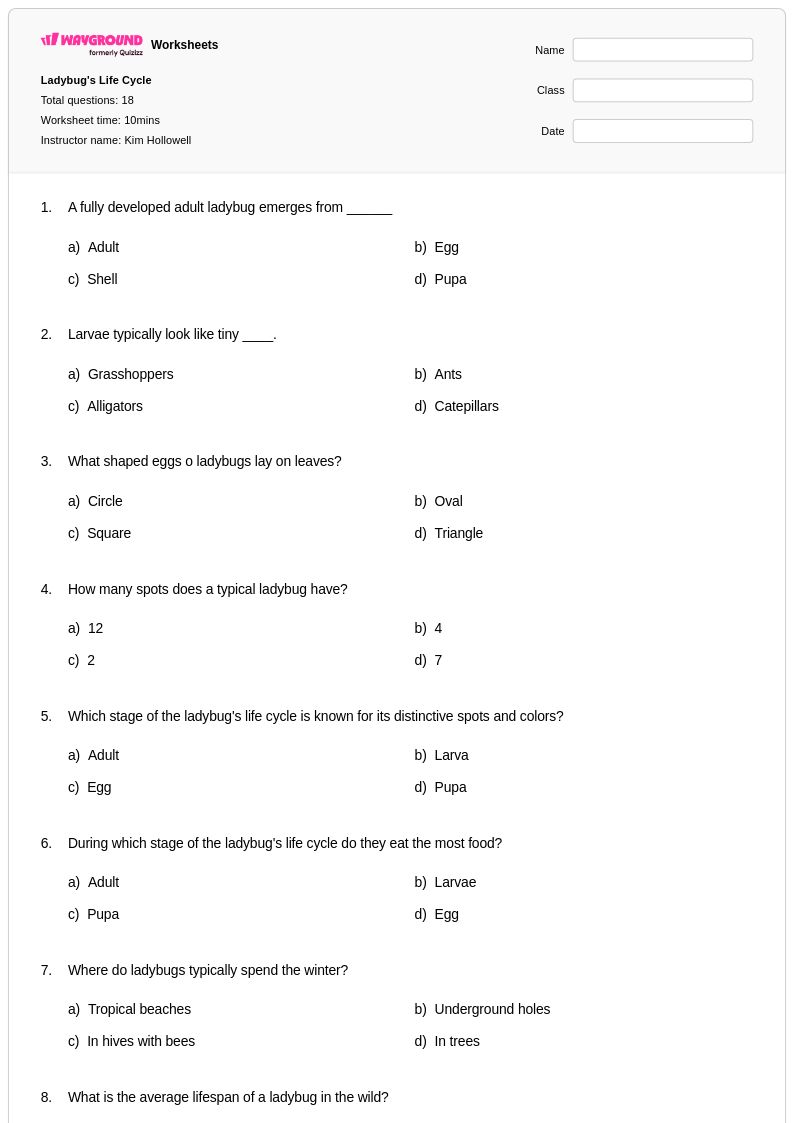
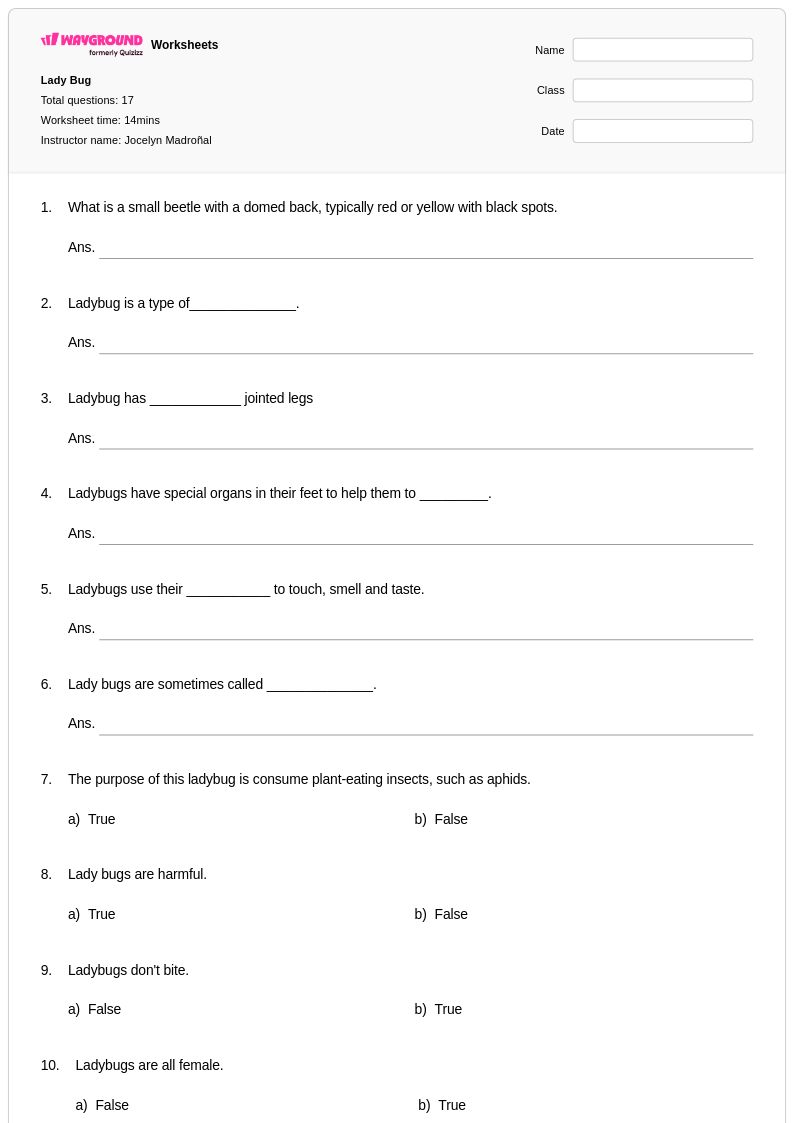
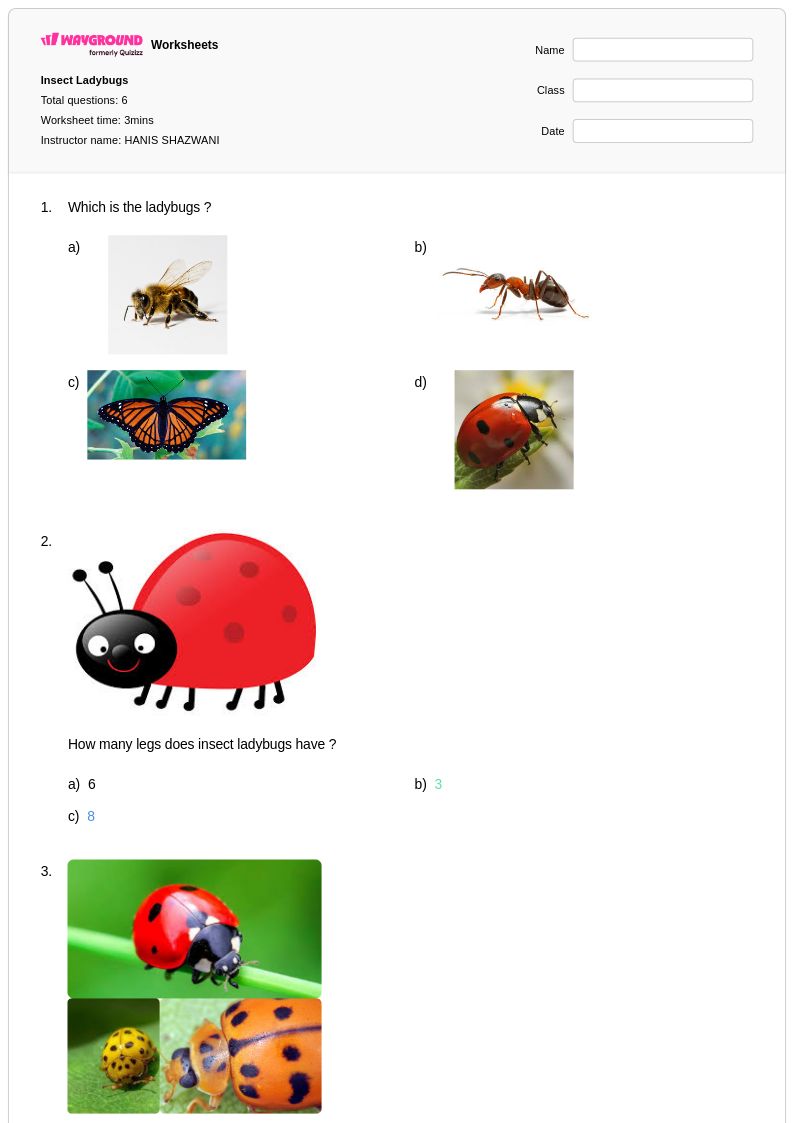
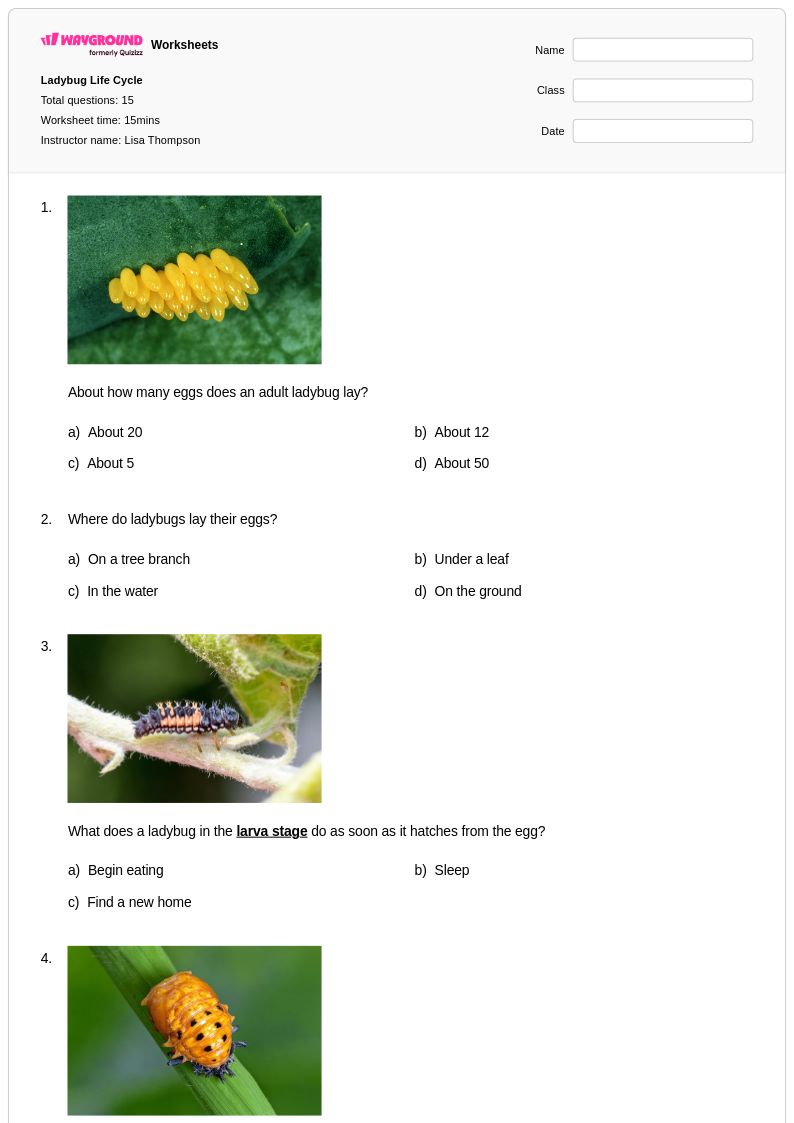
Ladybug worksheets for Class 4 students available through Wayground (formerly Quizizz) provide comprehensive learning materials that explore these fascinating beneficial insects and their role in ecosystems. These educational resources strengthen students' observational skills, scientific vocabulary, and understanding of insect life cycles, predator-prey relationships, and biological adaptations. The worksheet collection includes detailed anatomy diagrams, life cycle sequencing activities, habitat identification exercises, and comparative studies that help fourth graders develop critical thinking about biodiversity and ecological relationships. Students engage with practice problems that reinforce key concepts while building scientific literacy through hands-on activities, and teachers can access complete answer keys alongside printable pdf versions that support both classroom instruction and independent study.
Wayground's extensive collection draws from millions of teacher-created resources, offering educators powerful search and filtering capabilities to locate grade-appropriate ladybug content that aligns with life science standards and curriculum requirements. The platform's differentiation tools enable teachers to customize worksheets based on individual student needs, supporting both remediation for struggling learners and enrichment opportunities for advanced students. These flexible materials are available in both printable and digital formats, including downloadable pdf versions that facilitate lesson planning and accommodate diverse classroom environments. Teachers can seamlessly integrate these resources into their instruction for skill practice, formative assessment, and reinforcement of essential life science concepts, while the comprehensive organization system helps educators efficiently locate materials that support their specific learning objectives and pacing requirements.
FAQs
How do I teach ladybug life cycles to elementary students?
Teaching the ladybug life cycle works best when students can sequence the four stages of complete metamorphosis: egg, larva, pupa, and adult. Use visual diagrams that show each stage alongside key changes in the insect's appearance and behavior. Connecting the life cycle to real-world observations, such as finding ladybug larvae on plants in a garden, helps students move from abstract stages to concrete understanding. Worksheets that ask students to label, order, or describe each stage reinforce retention and check for comprehension.
What are the key parts of ladybug anatomy students need to know?
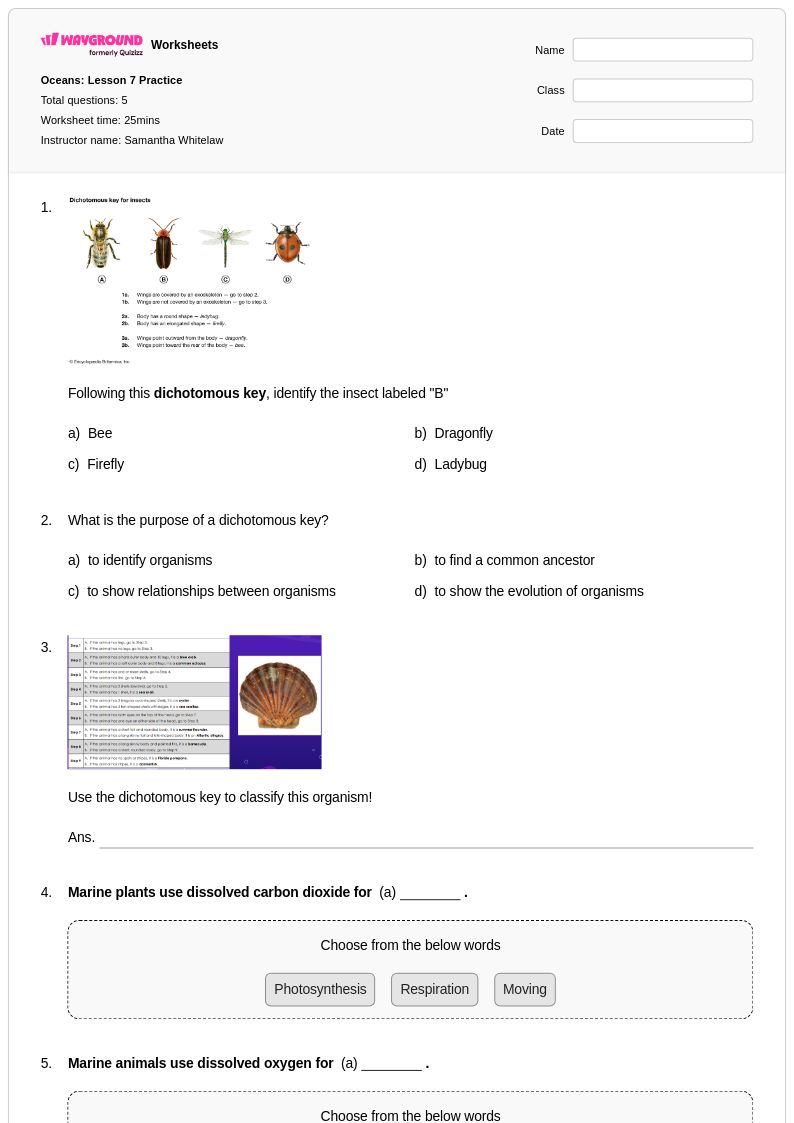
Students should be able to identify the major external structures of a ladybug, including the elytra (hard wing covers), pronotum, head, antennae, six legs, and the soft wings beneath the elytra used for flight. Understanding that ladybugs are insects and therefore have three body segments (head, thorax, abdomen) is a foundational concept. Many students confuse the elytra with the wings, so explicit labeling practice helps clarify the difference. Anatomy worksheets with diagram labeling exercises are particularly effective for cementing these distinctions.
What common mistakes do students make when learning about ladybugs?
One of the most frequent misconceptions is that a ladybug's spots indicate its age, when in fact spot number and pattern are species-specific traits that do not change over time. Students also often misidentify the elytra as wings, not realizing the actual wings are tucked underneath. Another common error is assuming all ladybugs are red with black spots, when over 5,000 species exist in a range of colors and patterns. Addressing these misconceptions directly during instruction, and including correction-based questions on worksheets, significantly improves conceptual accuracy.
Why are ladybugs considered beneficial insects, and how do I explain this to students?
Ladybugs are natural predators of aphids, mites, and other small plant-damaging insects, making them valuable allies in both agricultural and garden ecosystems. A single ladybug can consume hundreds of aphids in a day, which reduces the need for chemical pesticides. When teaching this concept, framing ladybugs as a form of natural pest control helps students understand ecological relationships and the concept of beneficial predators. This context also connects ladybug biology to broader life science themes like food chains and ecosystem balance.
What kinds of exercises help students practice what they know about ladybugs?
Effective practice activities include life cycle sequencing tasks, anatomy labeling diagrams, habitat matching exercises, and short-answer questions about the ecological role of ladybugs. Worksheets that combine visual prompts with written responses help reinforce both recall and deeper understanding. Including questions about metamorphosis stages and pest control roles ensures students practice the most critical concepts rather than surface-level facts.
How do I use Wayground's ladybug worksheets in my classroom?
Wayground's ladybug worksheets are available as printable PDFs, making them easy to distribute for in-class activities, homework, or independent study, and in digital formats suitable for technology-integrated or remote learning environments. Teachers can also host worksheets as a quiz directly on Wayground, enabling interactive student responses and streamlined grading. All worksheets include complete answer keys, so teachers can assess student work efficiently without additional preparation time.