
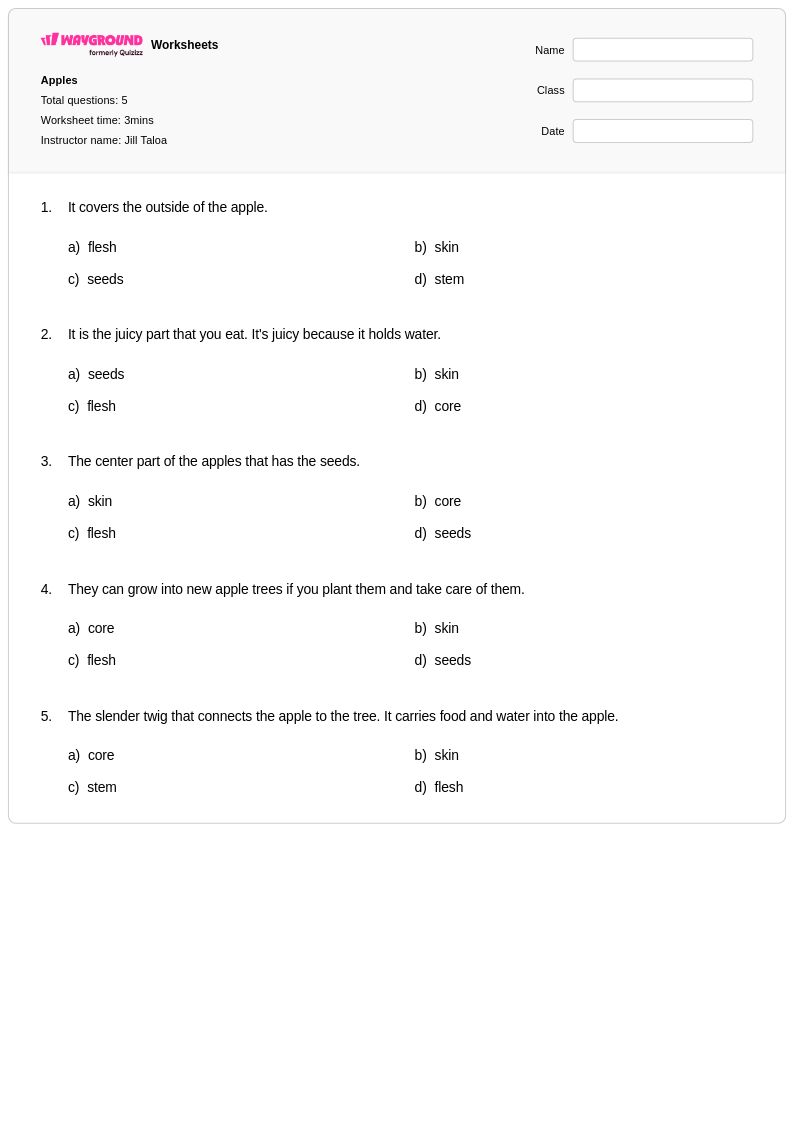
5 Q
1st - 3rd
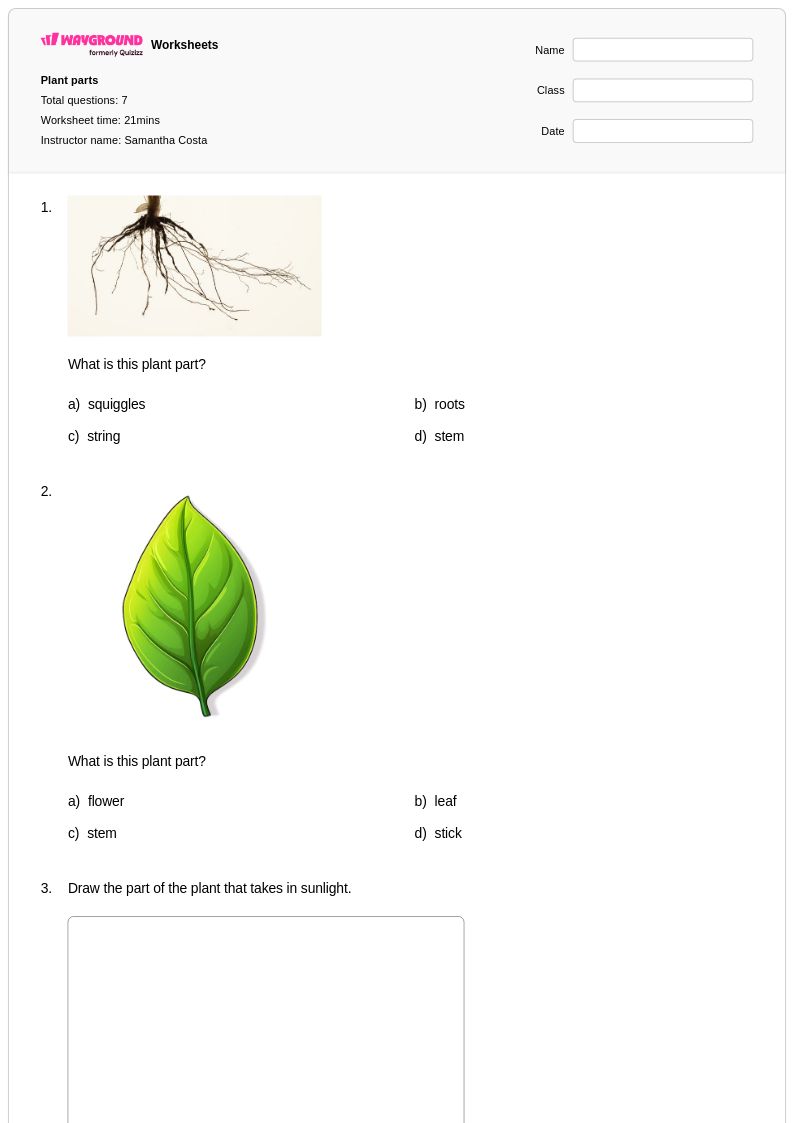
8 Q
1st
10 Q
1st
11 Q
1st - 2nd
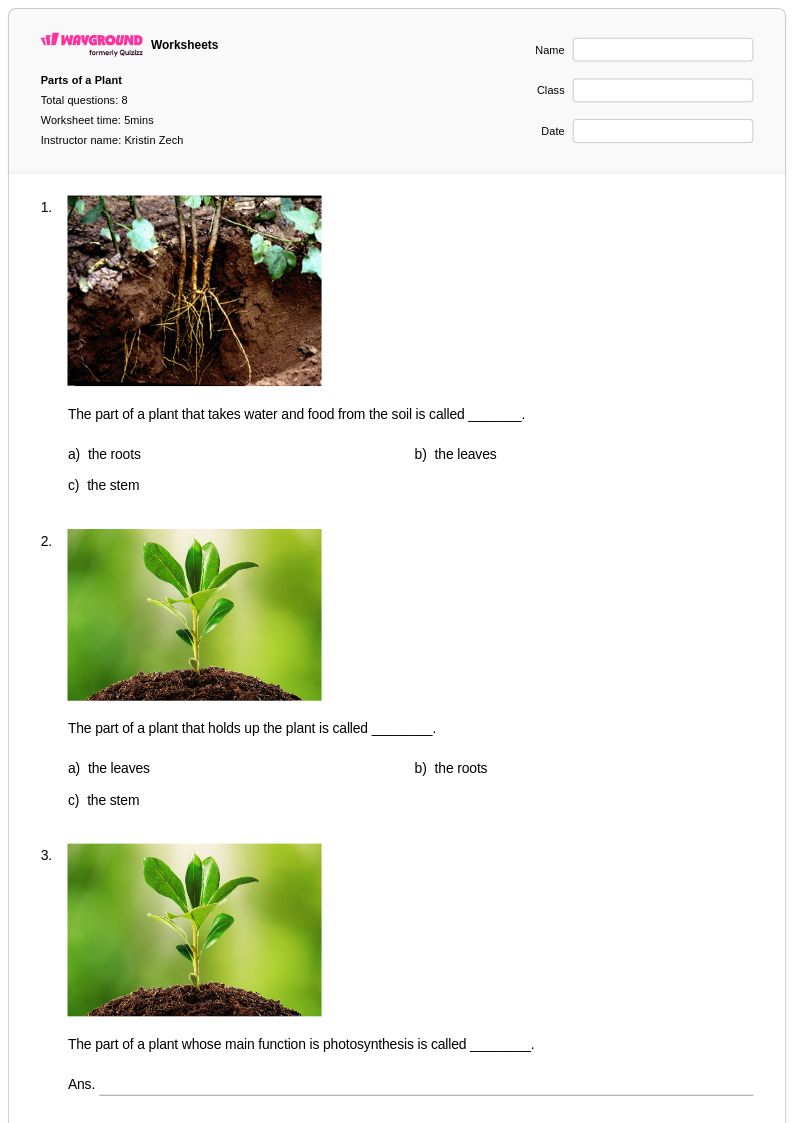
8 Q
1st - 3rd
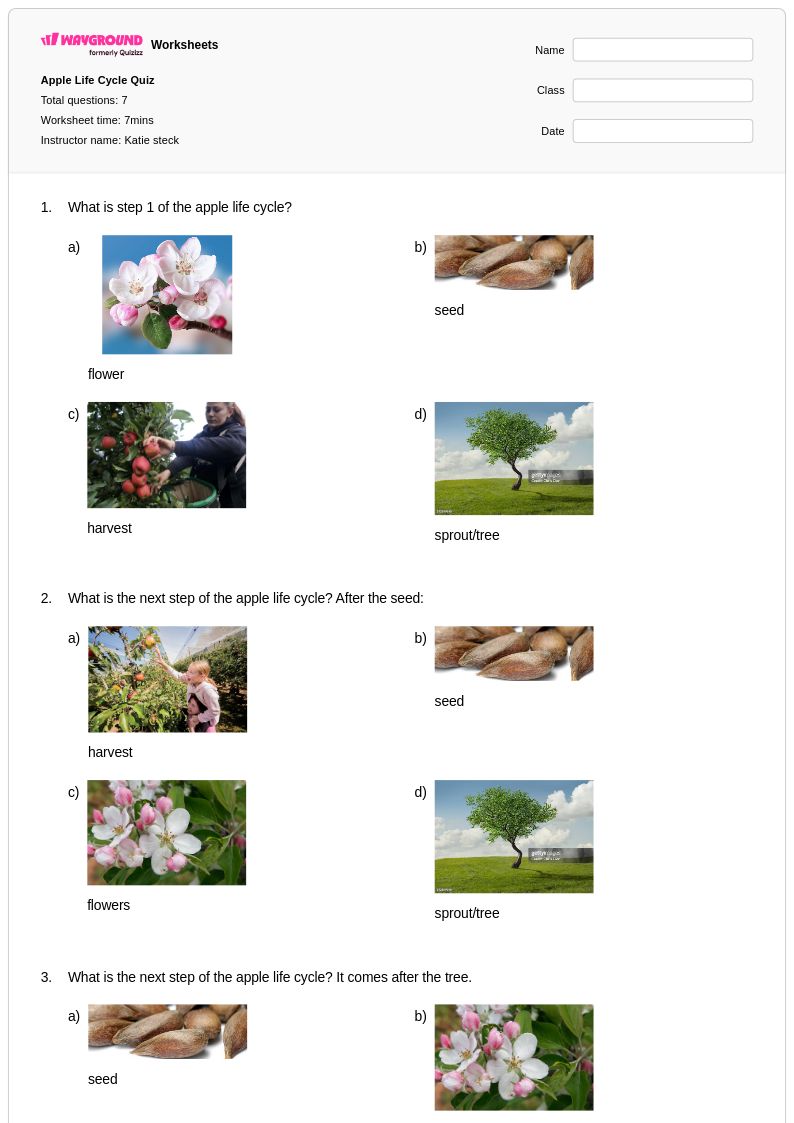
7 Q
1st
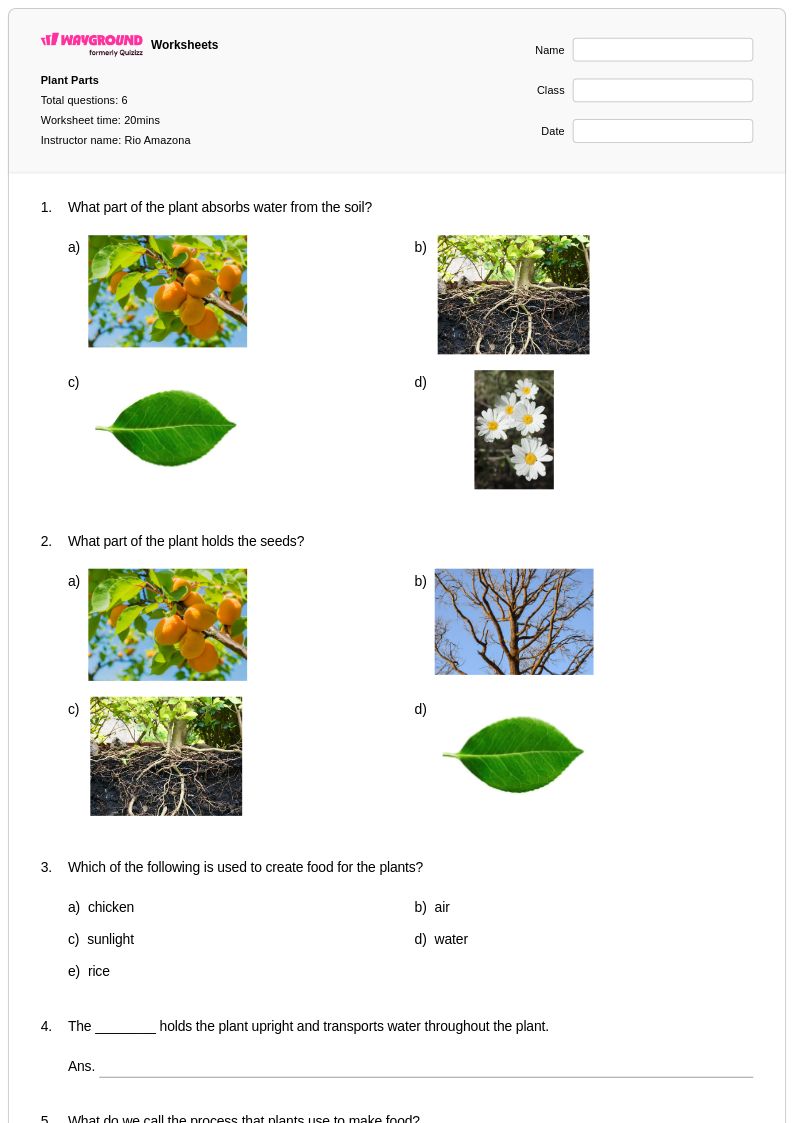
6 Q
1st
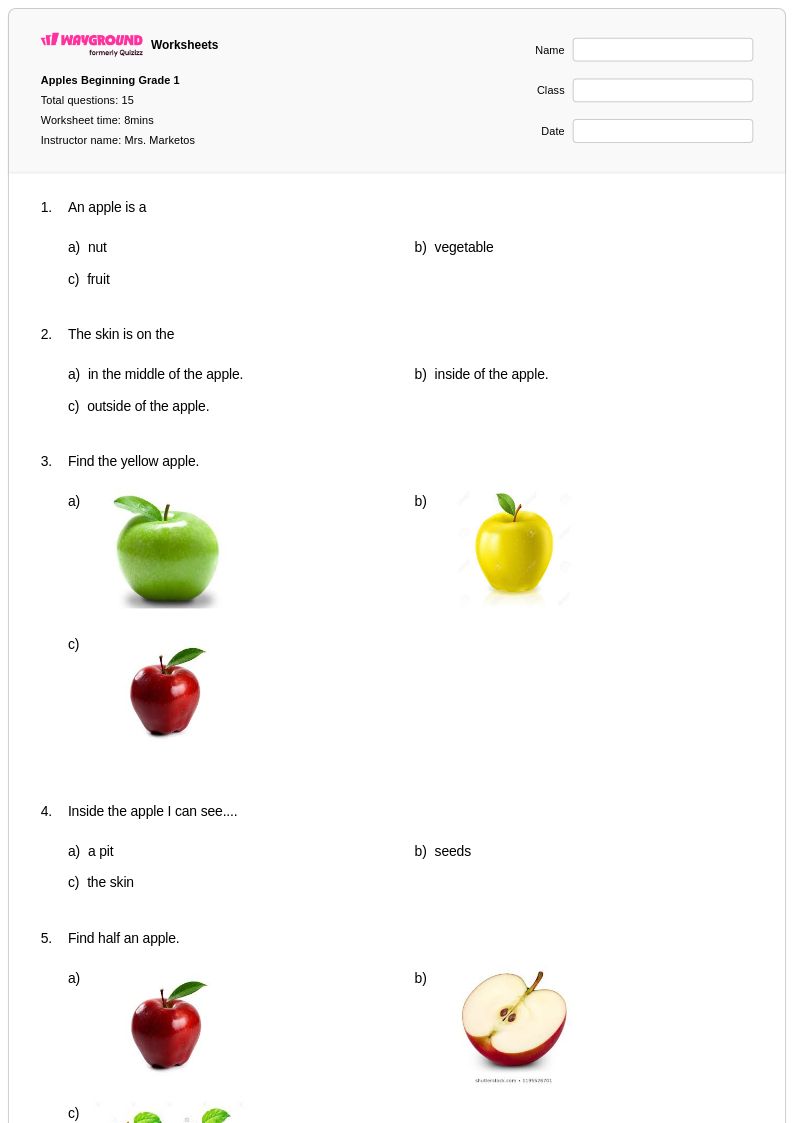
15 Q
1st
10 Q
1st
7 Q
1st - 5th
10 Q
1st
20 Q
1st
12 Q
1st
16 Q
1st
6 Q
1st
25 Q
1st - 5th
10 Q
1st - 6th
19 Q
1st
15 Q
1st
14 Q
1st
10 Q
KG - 2nd
10 Q
1st
6 Q
1st
16 Q
1st
Explore Apple Parts Worksheets by Grades
Explore Other Subject Worksheets for class 1
Explore printable Apple Parts worksheets for Class 1
Apple parts worksheets for Class 1 students through Wayground (formerly Quizizz) introduce young learners to fundamental plant biology concepts through engaging, hands-on activities centered on familiar fruit anatomy. These educational resources help first-grade students identify and label essential apple components including the skin, flesh, core, seeds, and stem while building foundational scientific vocabulary and observation skills. The comprehensive worksheet collection strengthens early biology understanding through interactive practice problems that encourage students to examine real apples, compare different varieties, and explore how each part serves a specific function in plant growth and reproduction. Teachers can access printable pdf versions alongside digital formats, with detailed answer keys provided to support effective instruction and assessment of student progress in this introductory plant science unit.
Wayground (formerly Quizizz) empowers educators with millions of teacher-created apple parts resources specifically designed for Class 1 biology instruction, featuring robust search and filtering capabilities that allow quick identification of materials aligned with early elementary science standards. The platform's differentiation tools enable teachers to customize worksheets based on individual student needs, offering various complexity levels from basic identification activities to more advanced comparison exercises that challenge developing scientific thinking. These flexible resources support comprehensive lesson planning while providing targeted options for remediation and enrichment, ensuring all first-grade students can successfully engage with plant biology concepts at their appropriate learning level. The seamless integration of printable and digital formats allows teachers to adapt instruction for diverse classroom environments while maintaining consistent access to high-quality educational materials that make abstract botanical concepts concrete and accessible for young learners.
FAQs
How do I teach apple parts to young students?
What worksheets help students practice identifying apple parts?
What mistakes do students commonly make when identifying apple parts?
How do I use apple parts worksheets in my classroom?
How do apple parts worksheets support scientific vocabulary development?