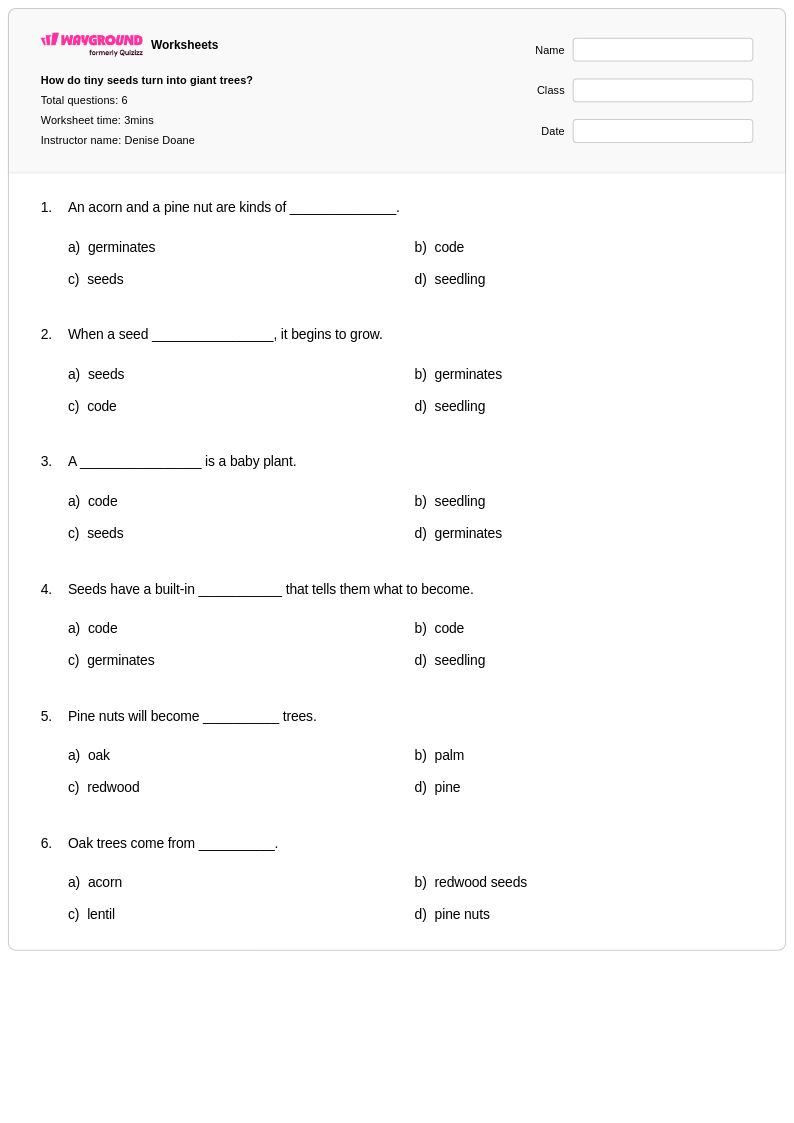
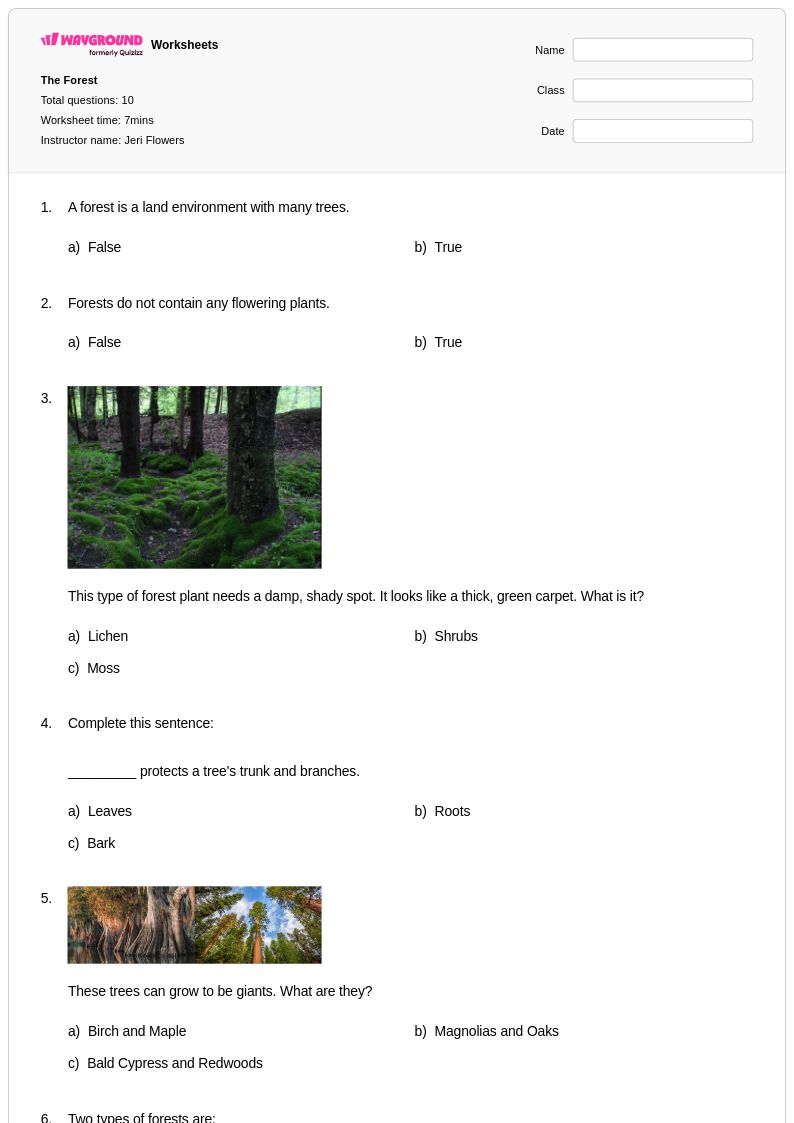
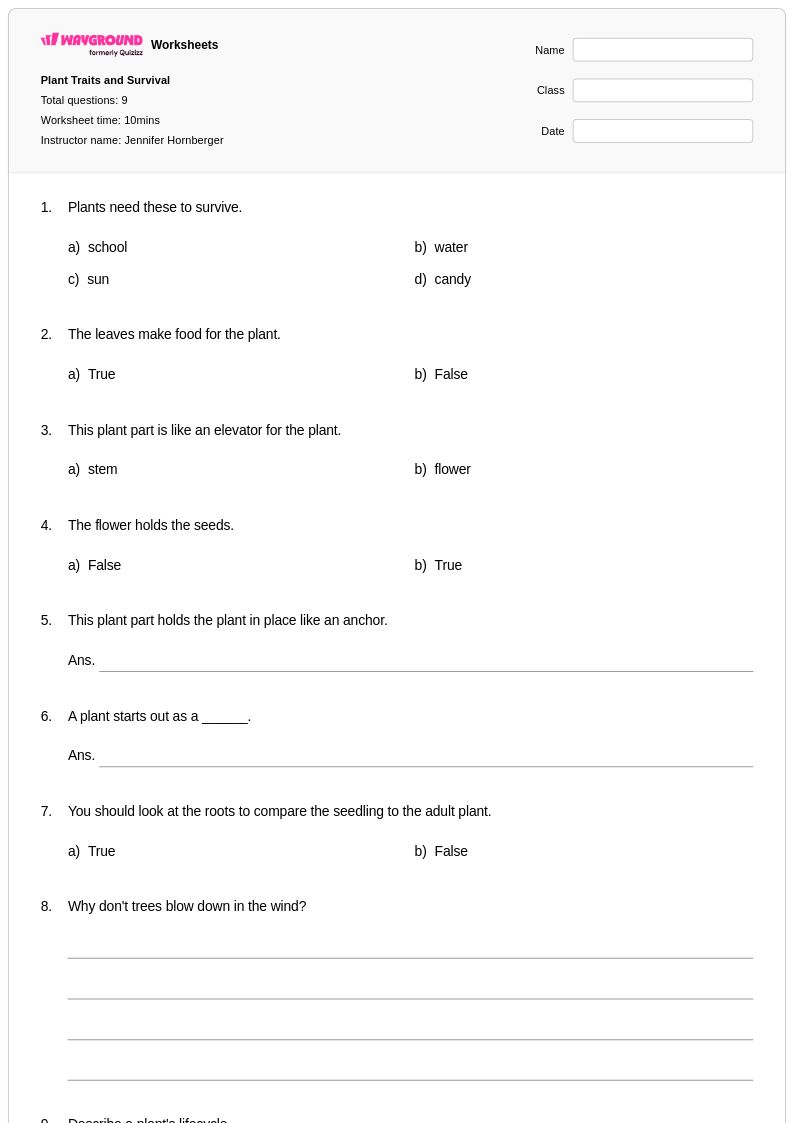
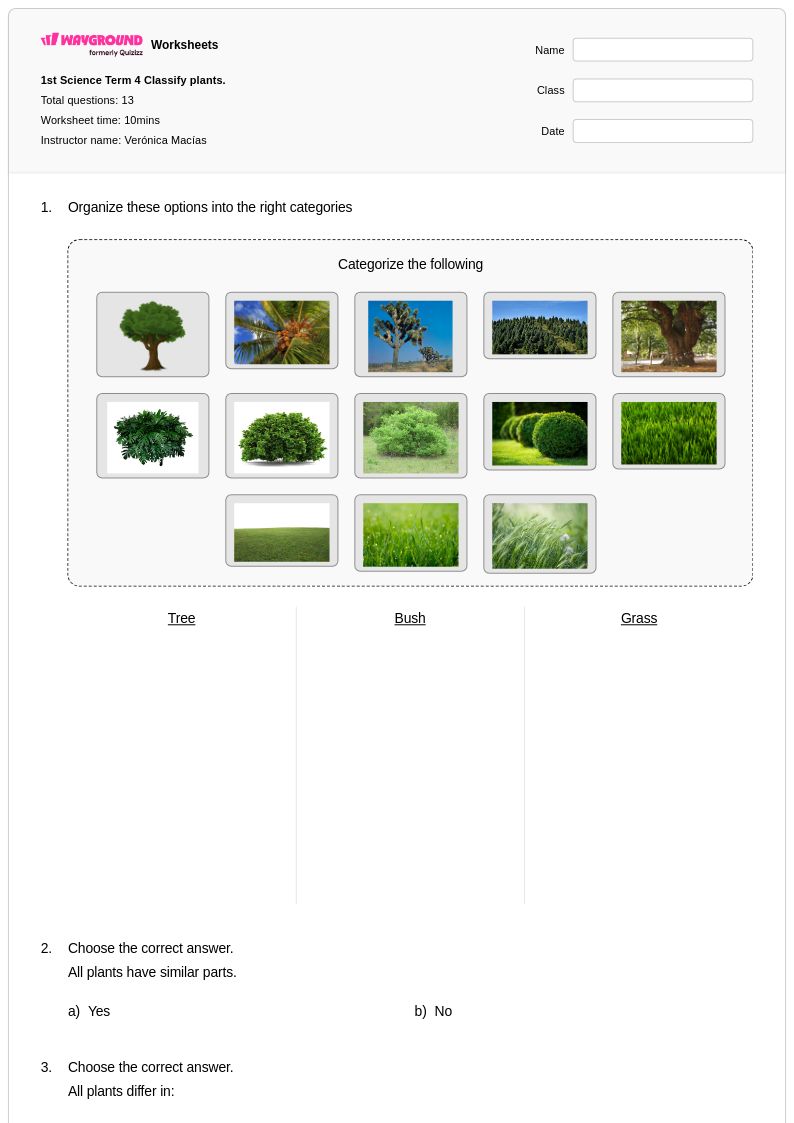
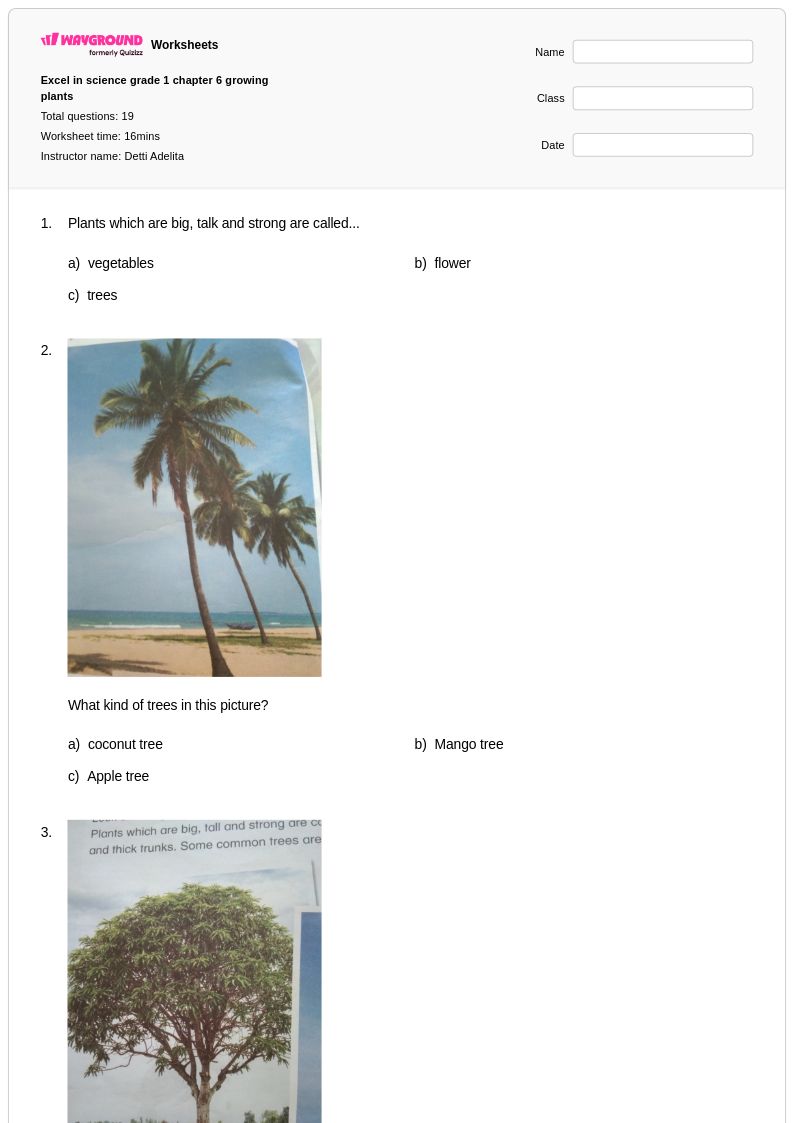
Discover Class 1 trees worksheets and free printables from Wayground that help young students learn about different tree types, parts, and characteristics through engaging practice problems with answer keys.
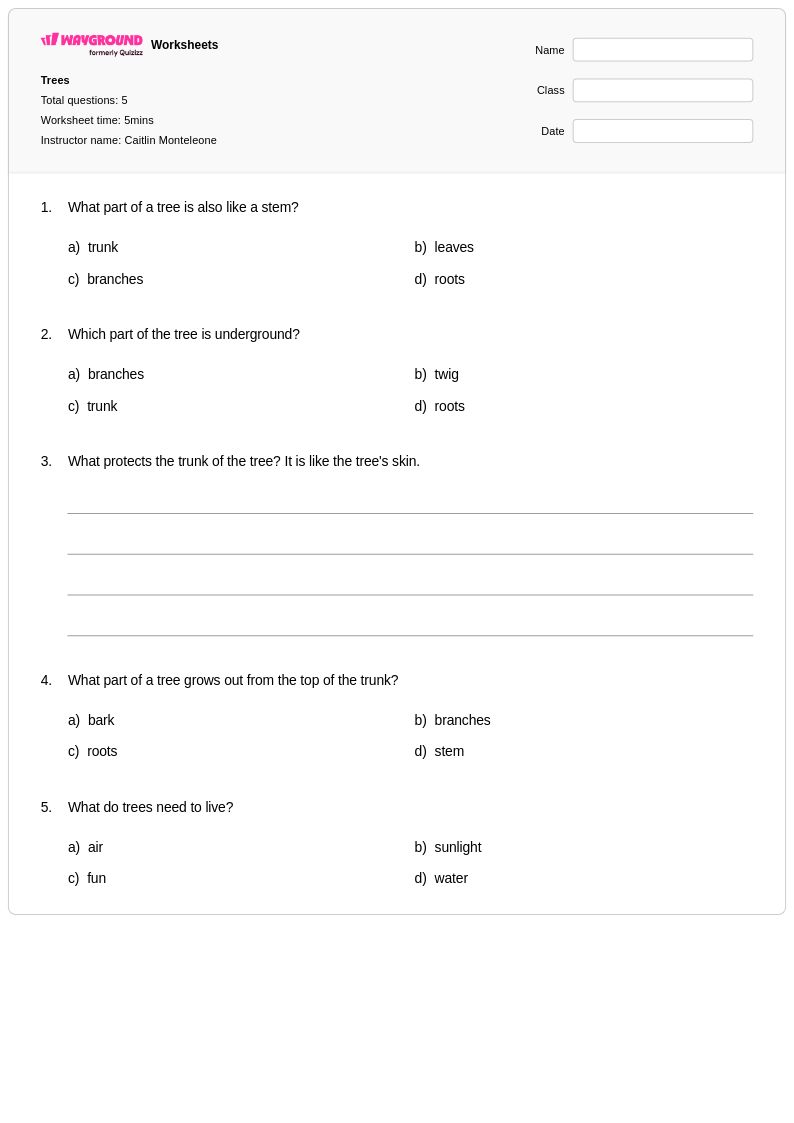
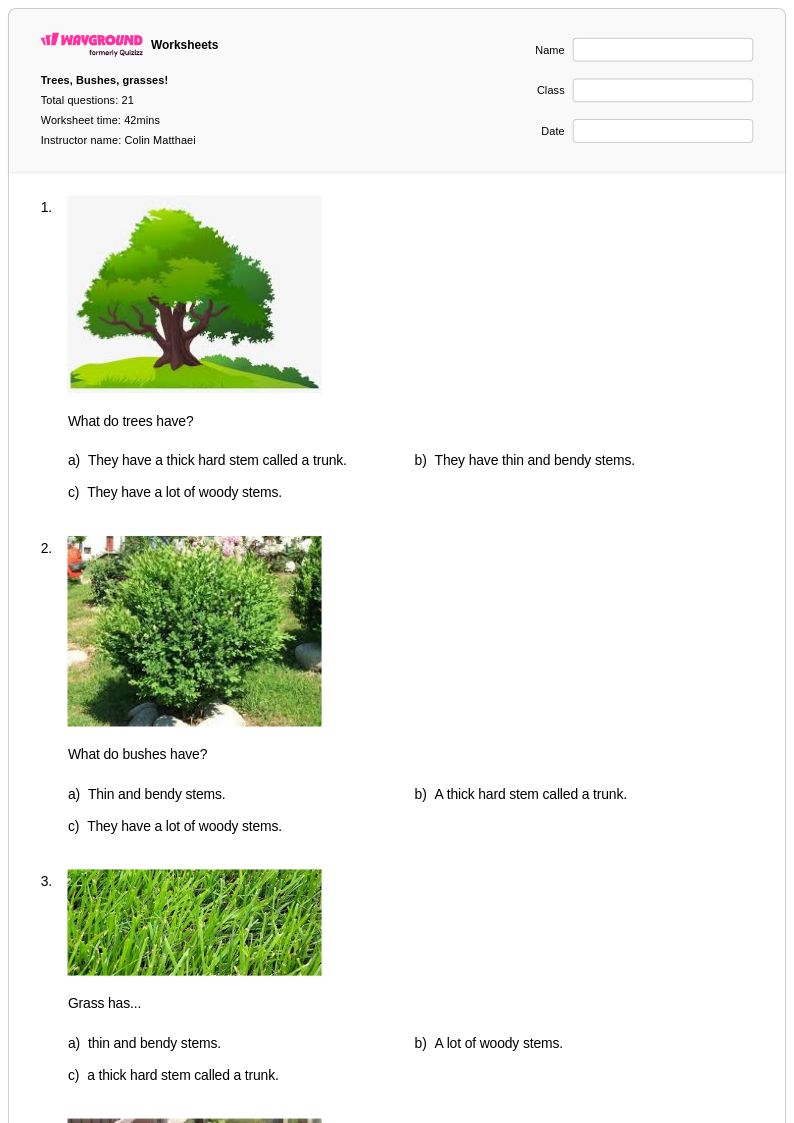
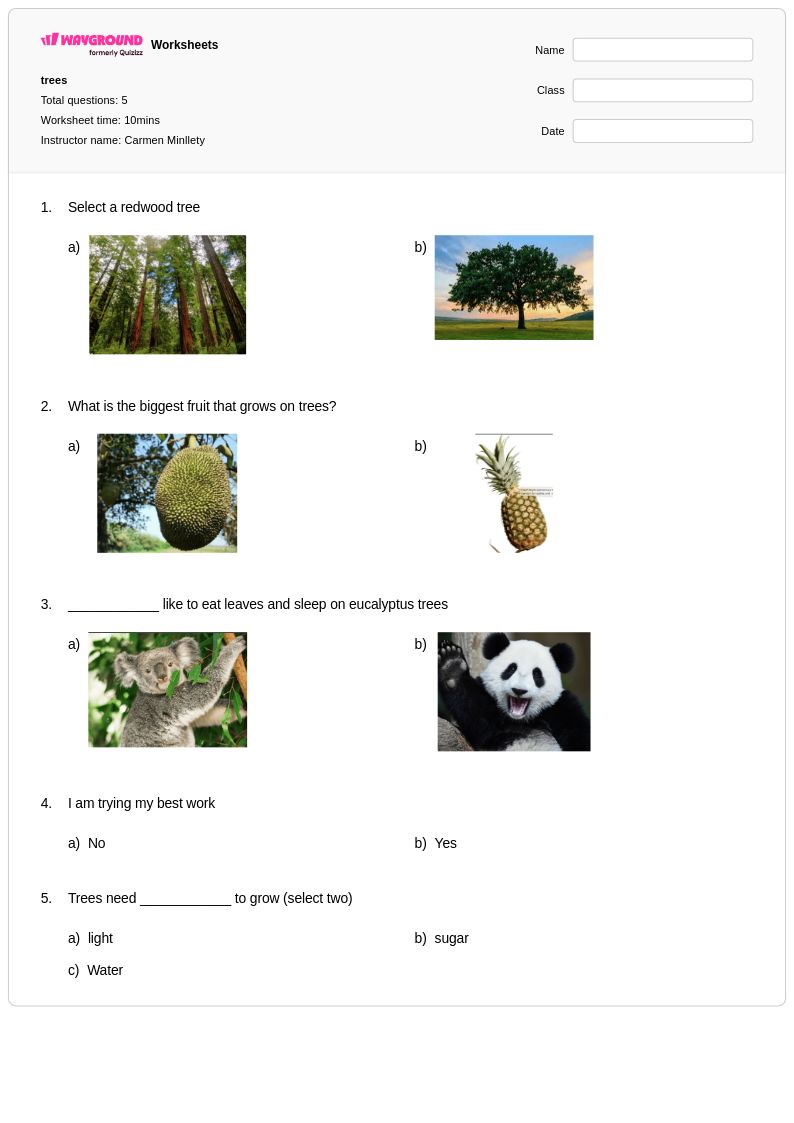
Trees worksheets for Class 1 students through Wayground (formerly Quizizz) introduce young learners to the fundamental concepts of plant biology through age-appropriate activities and exercises. These educational resources help first-grade students develop essential scientific observation skills while exploring tree structure, growth patterns, and basic functions. The worksheets feature engaging practice problems that guide students through identifying different tree parts such as roots, trunk, branches, and leaves, while building vocabulary essential for elementary science understanding. Each printable resource includes comprehensive materials with answer keys to support both independent learning and teacher-guided instruction, making these free educational tools invaluable for developing foundational biology knowledge in primary grade classrooms.
Wayground (formerly Quizizz) empowers educators with an extensive collection of millions of teacher-created tree worksheets specifically designed for Class 1 science instruction. The platform's robust search and filtering capabilities allow teachers to quickly locate resources that align with specific learning standards and curriculum requirements, while differentiation tools enable customization for diverse learning needs within the classroom. These versatile materials are available in both printable pdf formats and interactive digital versions, providing flexibility for various teaching environments and learning preferences. Teachers can efficiently plan comprehensive tree biology lessons, implement targeted remediation strategies for struggling students, offer enrichment opportunities for advanced learners, and provide consistent skill practice through these carefully curated educational resources that support multiple instructional approaches and assessment needs.
FAQs
How do I teach tree biology to elementary and middle school students?
Effective tree biology instruction starts with concrete, observable structures before moving to abstract processes. Begin with hands-on labeling of root, trunk, branch, and leaf systems, then connect each structure to its function — roots absorb water, leaves capture sunlight for photosynthesis, and the trunk transports nutrients between them. Introducing deciduous versus evergreen comparisons gives students a natural framework for understanding how trees adapt to seasonal change.
What kinds of worksheets help students practice tree biology concepts?
Diagram labeling exercises are especially effective for reinforcing tree anatomy, as they require students to actively recall and place structural terms rather than passively read them. Comparative analysis activities that contrast deciduous and evergreen species build classification skills, while tree ring interpretation exercises connect growth patterns to real-world environmental conditions. Practice problems that address photosynthesis and nutrient transport push students to understand trees as functioning systems, not just static structures.
What misconceptions do students commonly have about how trees work?
A frequent misconception is that trees absorb food from the soil — students often confuse nutrient uptake with energy production, not realizing that trees manufacture their own food through photosynthesis in their leaves. Another common error is treating deciduous and evergreen trees as opposites rather than as two adaptations along a broader continuum. Students also frequently misread tree rings, assuming each ring represents a single season rather than a full annual growth cycle.
How can I use tree worksheets to connect plant biology to broader ecological concepts?
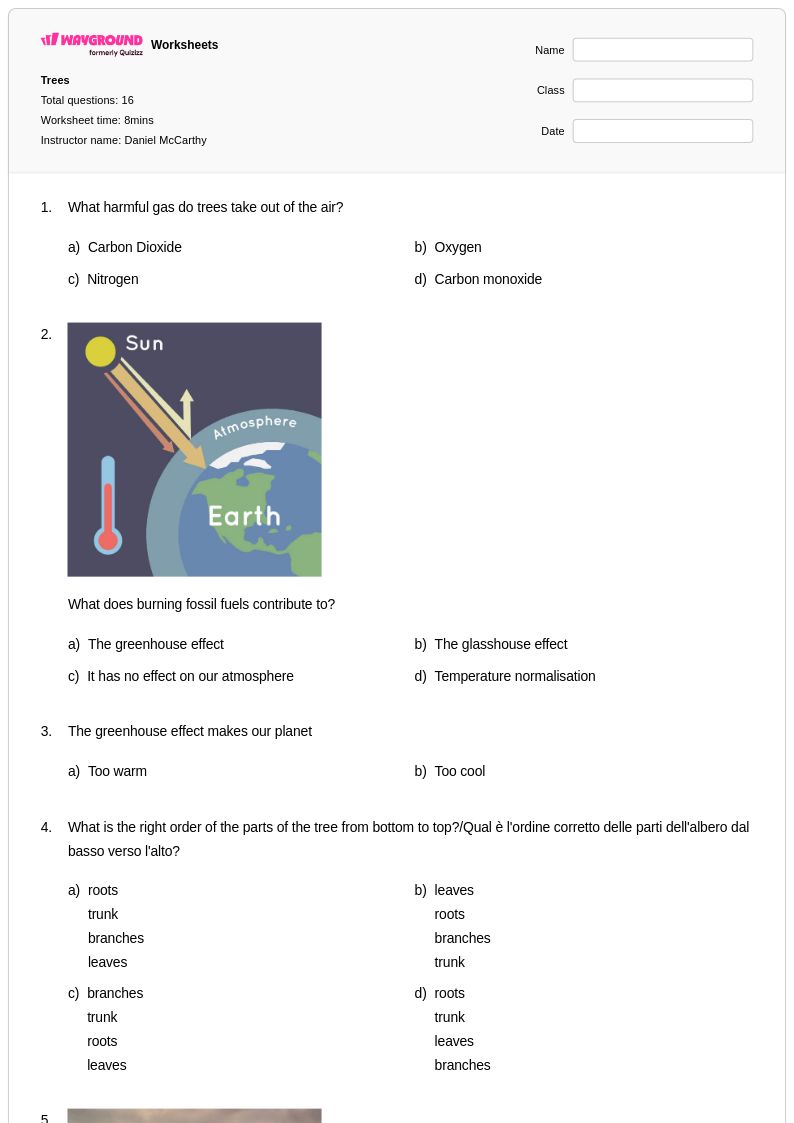
Tree worksheets that address the carbon cycle, habitat provision, and human economic uses give students a clear pathway from individual plant biology to ecosystem-level thinking. Exercises examining how trees sequester carbon or provide canopy habitat help students see trees as active participants in ecological systems rather than background scenery. These cross-cutting connections are particularly effective for meeting life science standards that require students to understand organisms in relation to their environments.
How do I use Wayground's tree worksheets in my classroom?
Wayground's tree worksheets are available as printable PDFs for traditional classroom use and in digital formats for technology-integrated learning environments, giving teachers flexibility depending on their setup. Teachers can also host worksheets directly as a quiz on Wayground, which allows for immediate student interaction and streamlined grading. Each worksheet includes a complete answer key, so implementation requires minimal preparation time regardless of the format chosen.
How can I differentiate tree biology instruction for students at different skill levels?
For students who need additional support, start with foundational labeling tasks focused on the four main tree structures before introducing functional relationships like photosynthesis or nutrient transport. Wayground's platform allows teachers to apply accommodations at the individual student level, including read-aloud support for students with reading challenges, reduced answer choices to lower cognitive load, and extended time settings that persist across future sessions. Advanced learners can be directed toward more complex investigations, such as analyzing tree ring data or examining trees' roles in carbon cycling.