
15 Q
9th - 12th
20 Q
6th - 10th
13 Q
10th
20 Q
10th
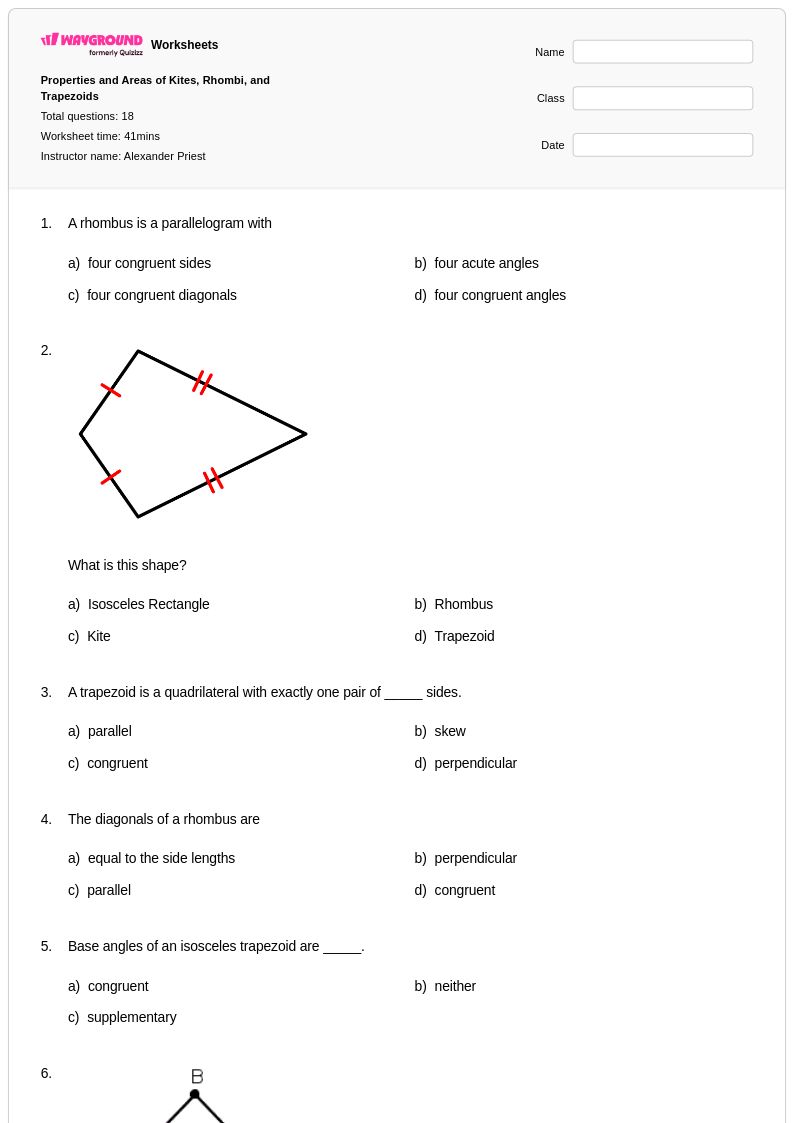
18 Q
10th
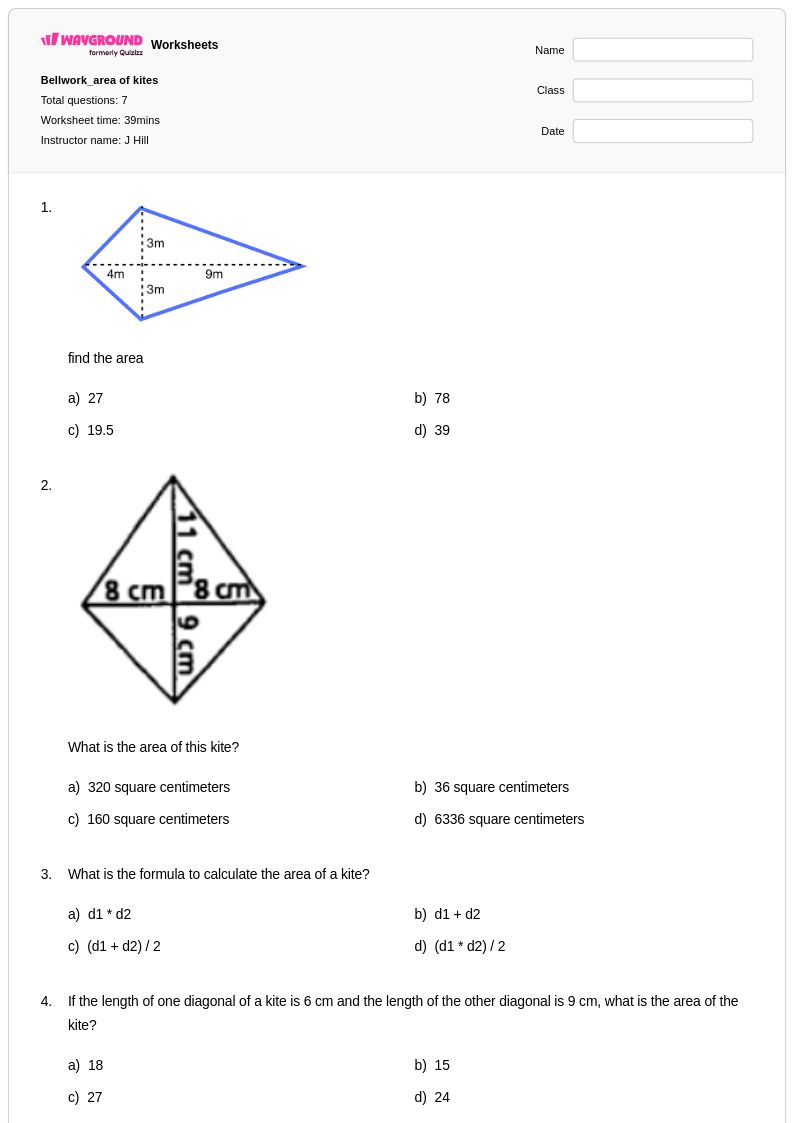
7 Q
9th - 12th
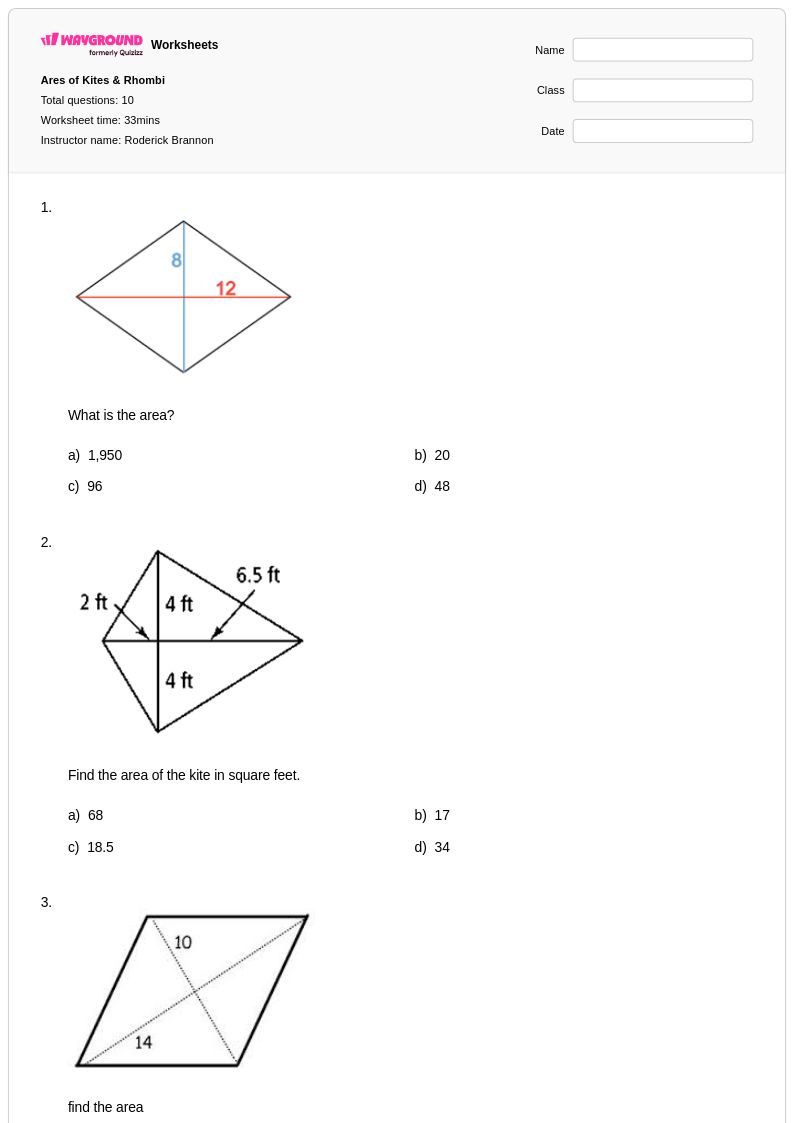
10 Q
9th - 12th
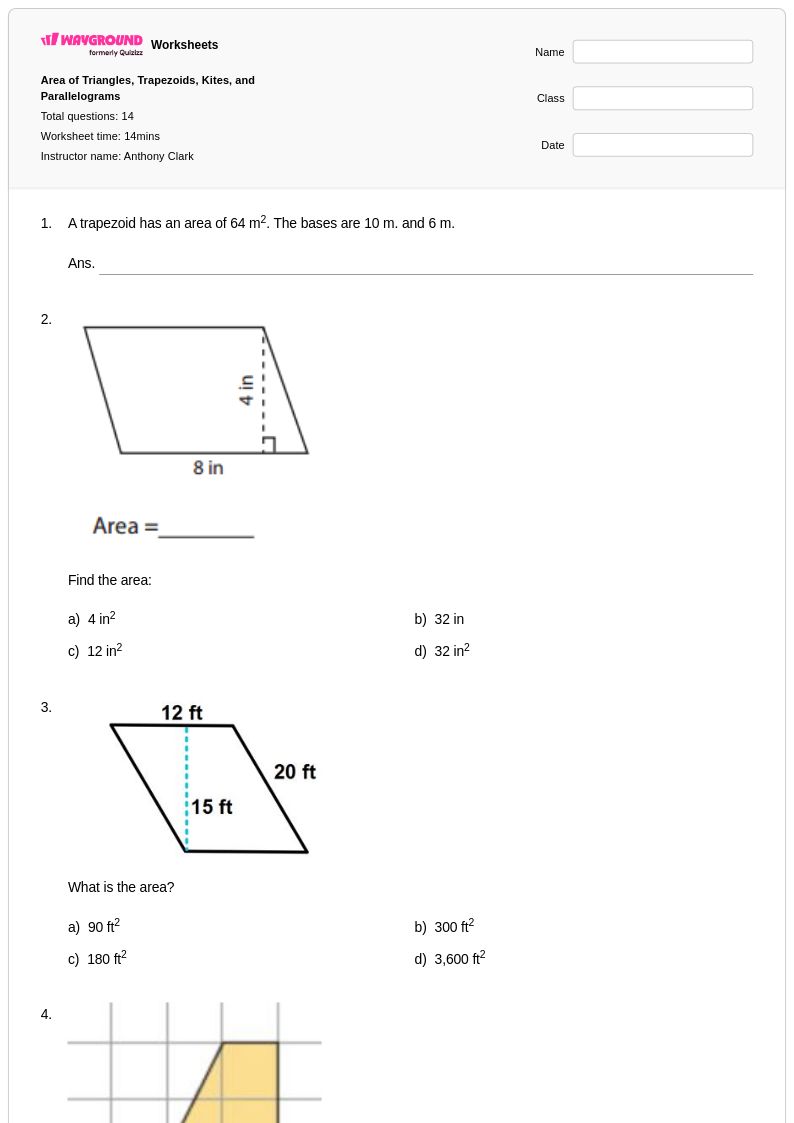
14 Q
6th - Uni
20 Q
9th - Uni
19 Q
9th - Uni
11 Q
10th - Uni
18 Q
9th - 12th
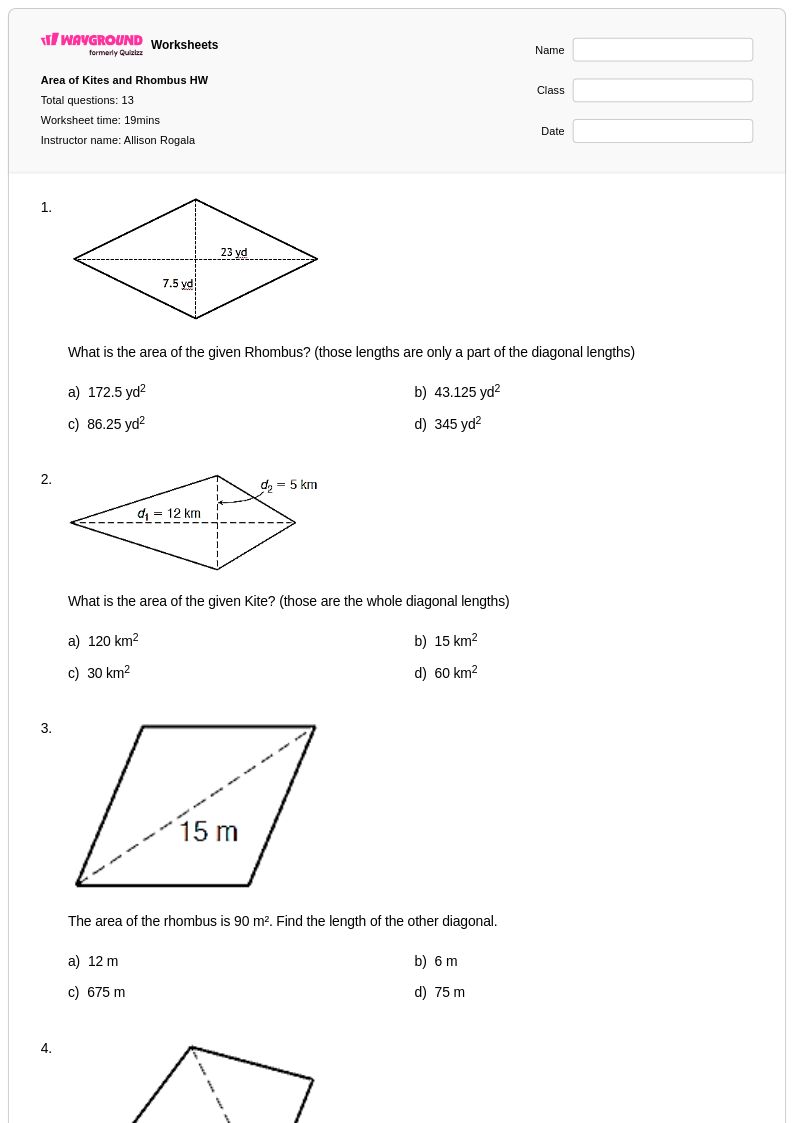
13 Q
10th
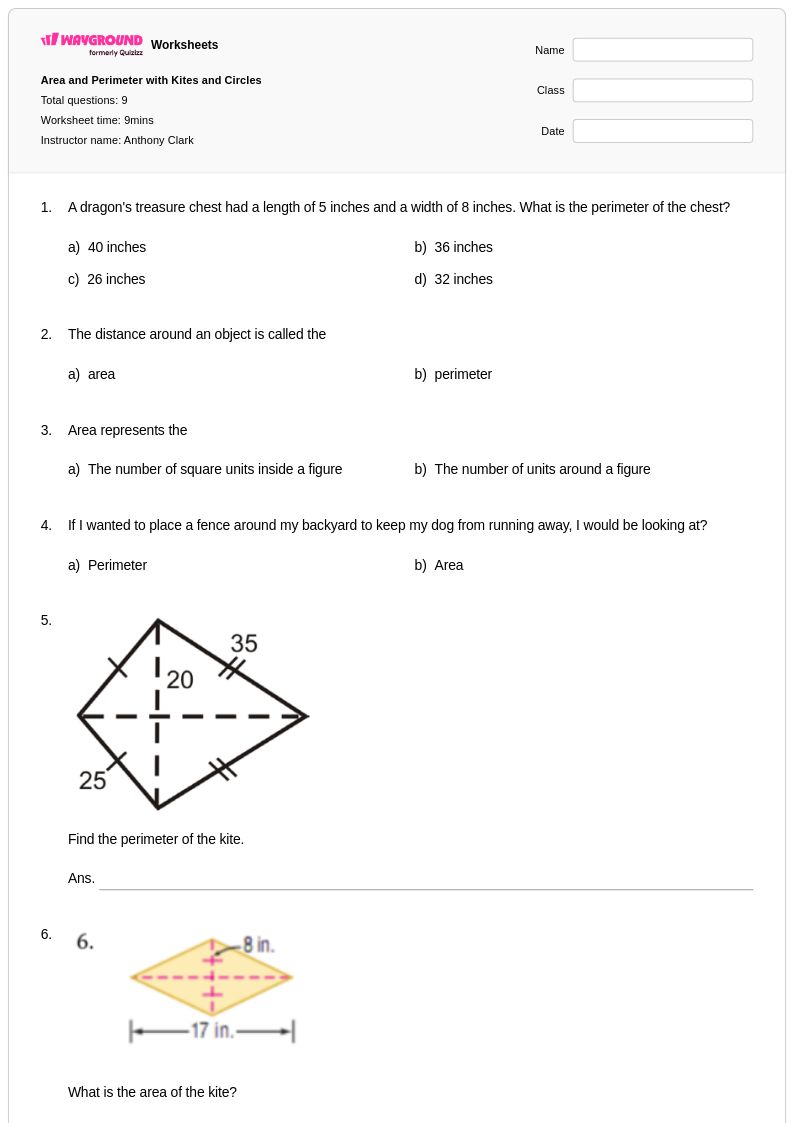
9 Q
4th - Uni
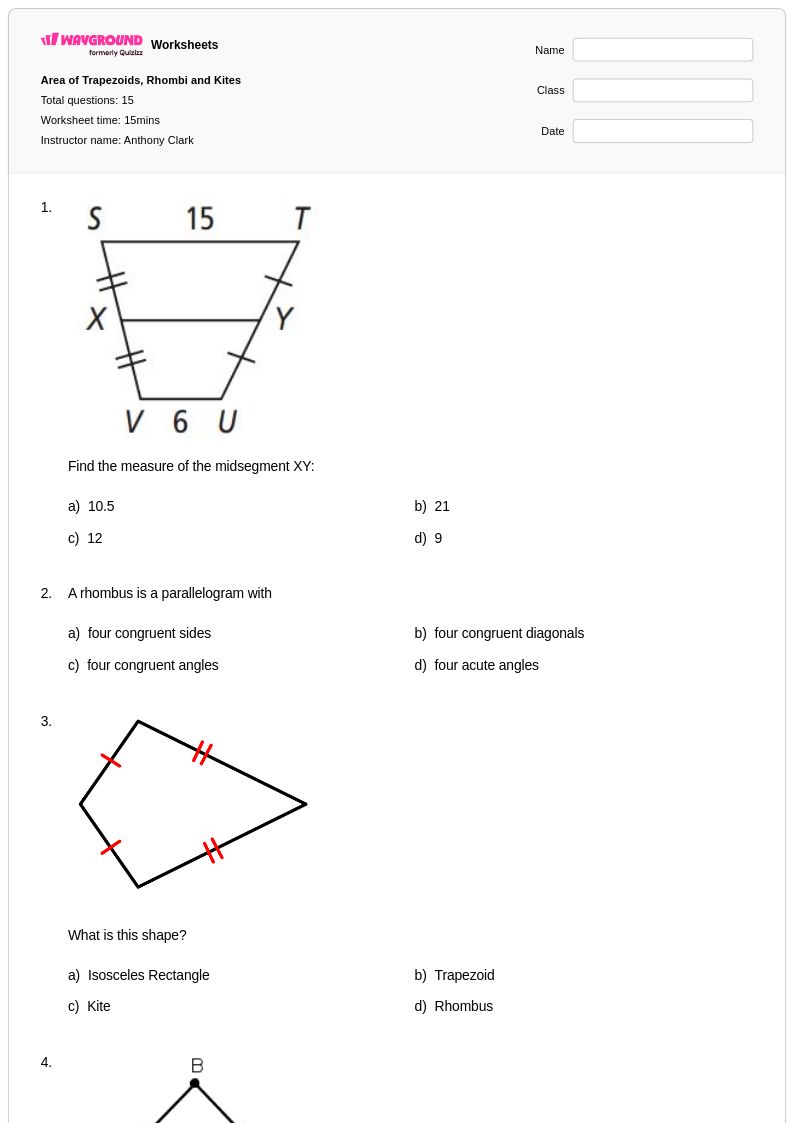
15 Q
10th - Uni
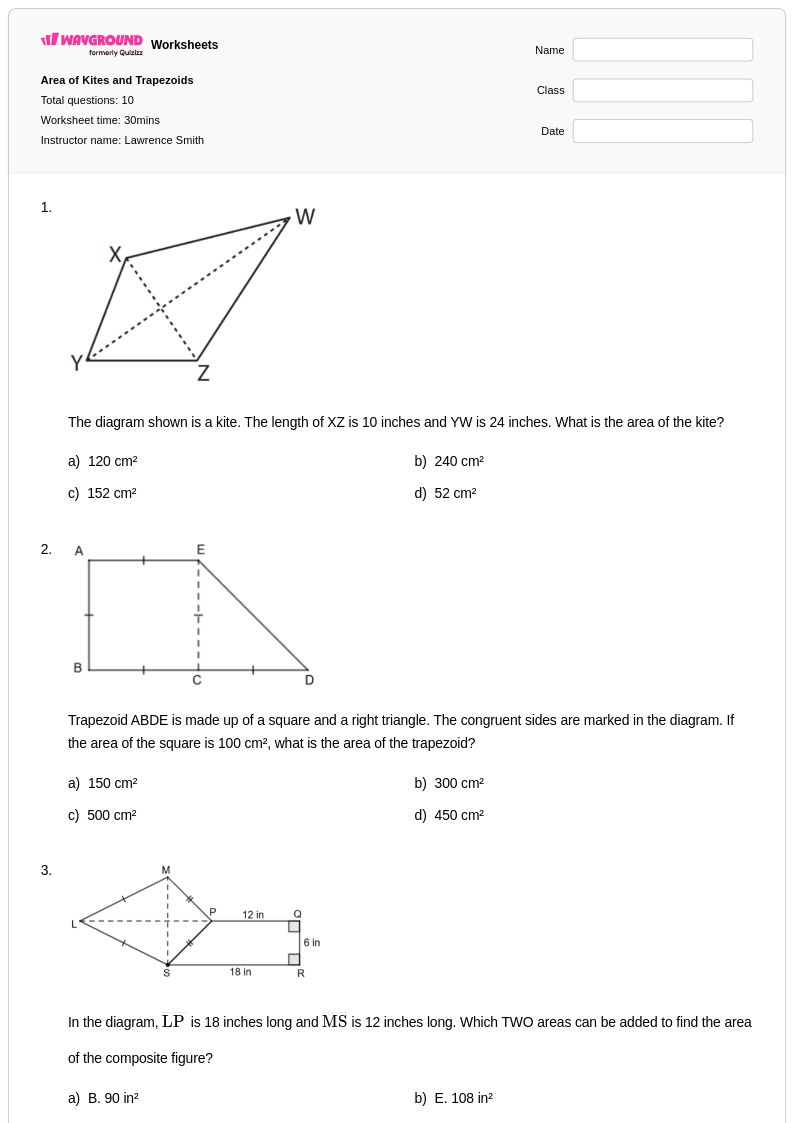
10 Q
10th
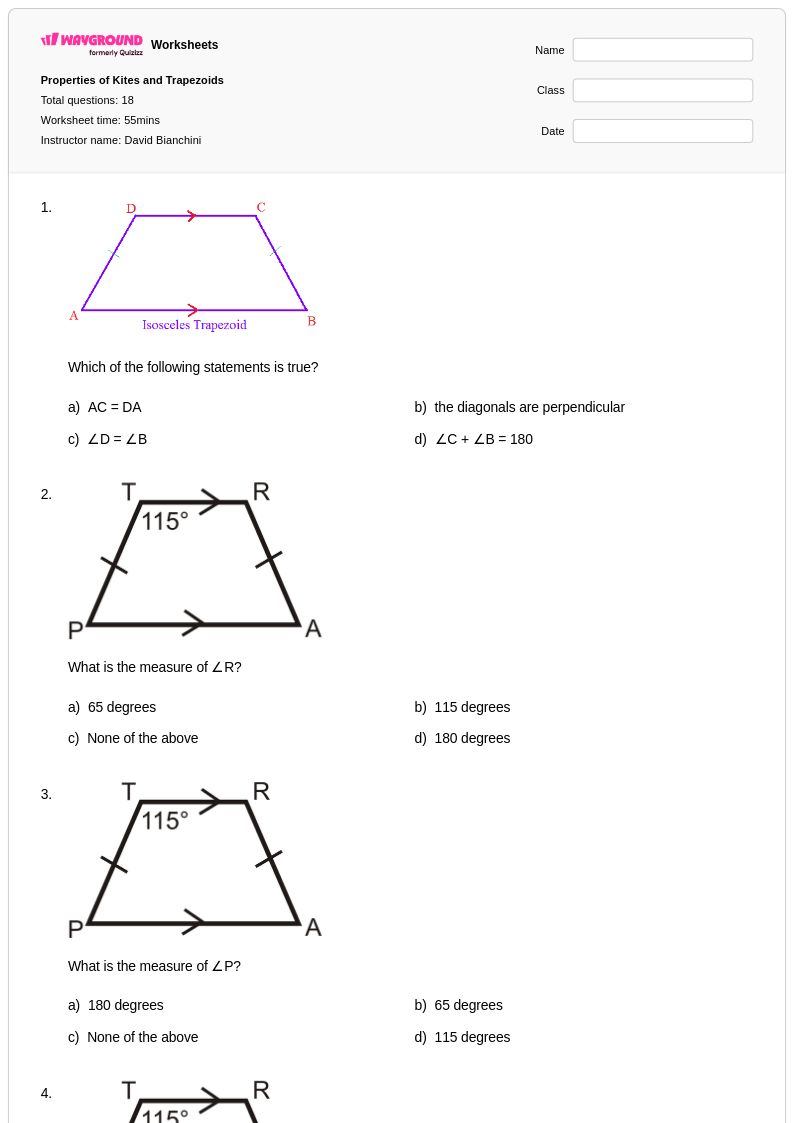
18 Q
10th
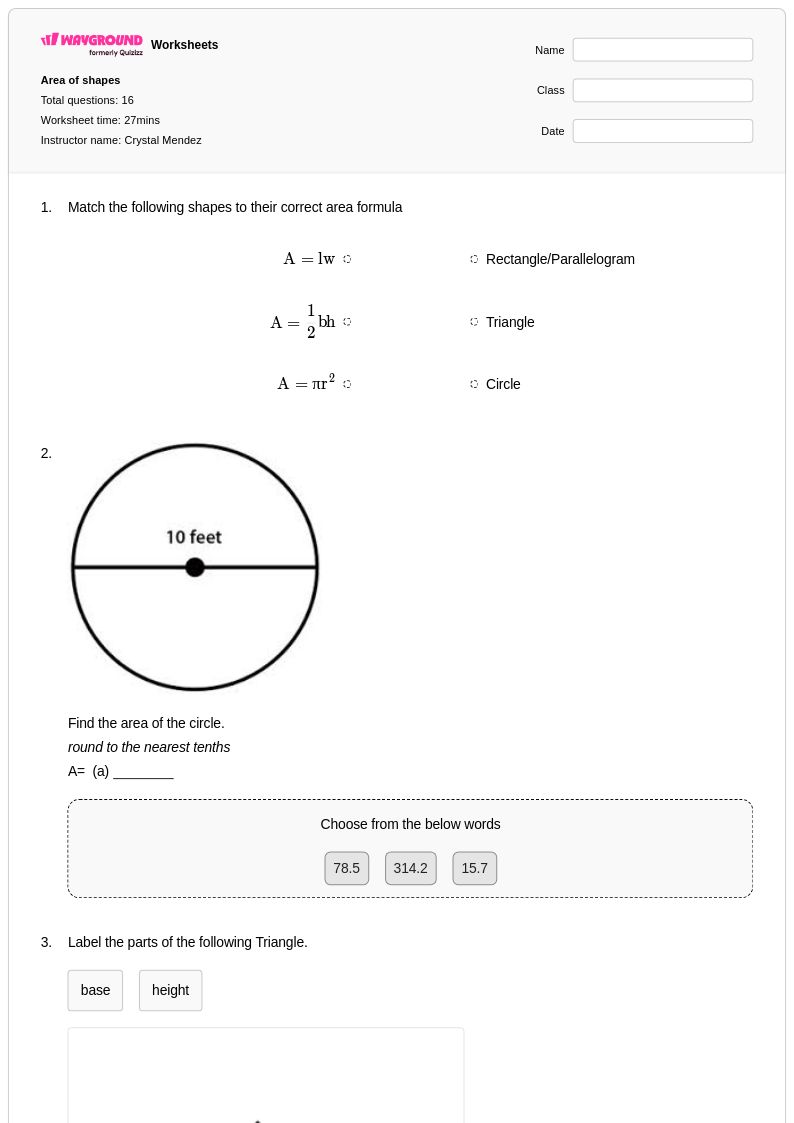
16 Q
10th
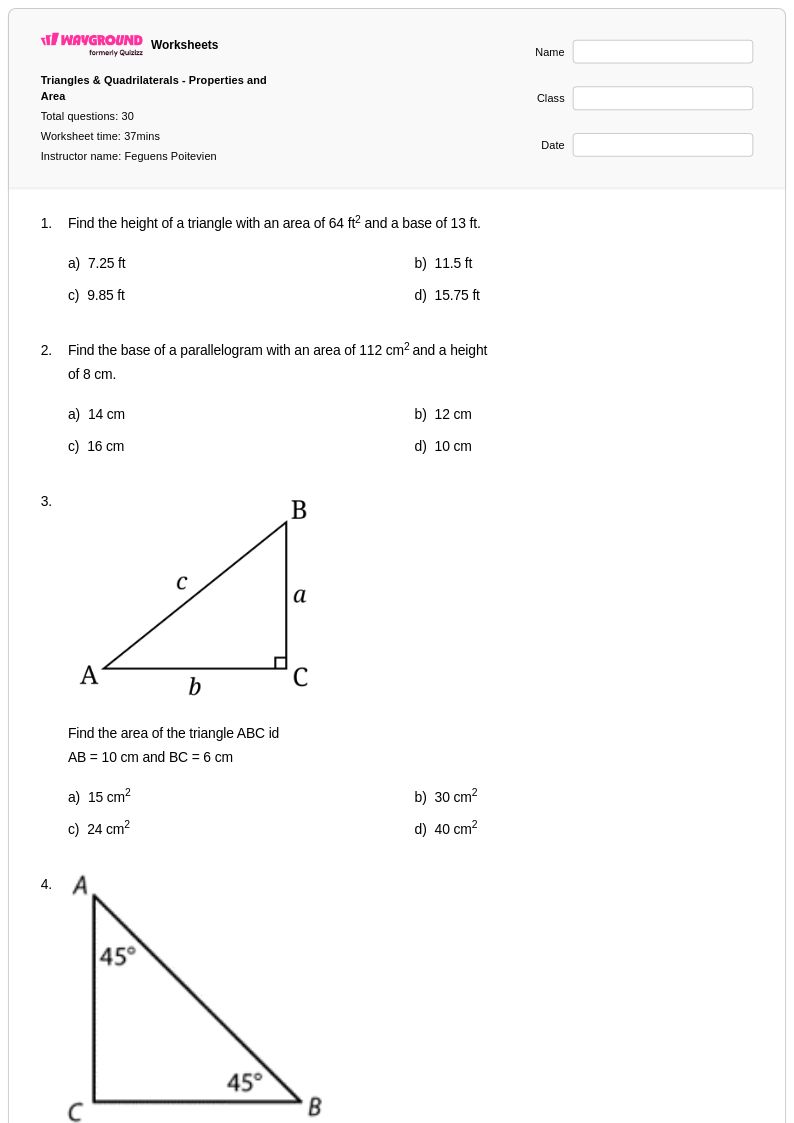
30 Q
10th
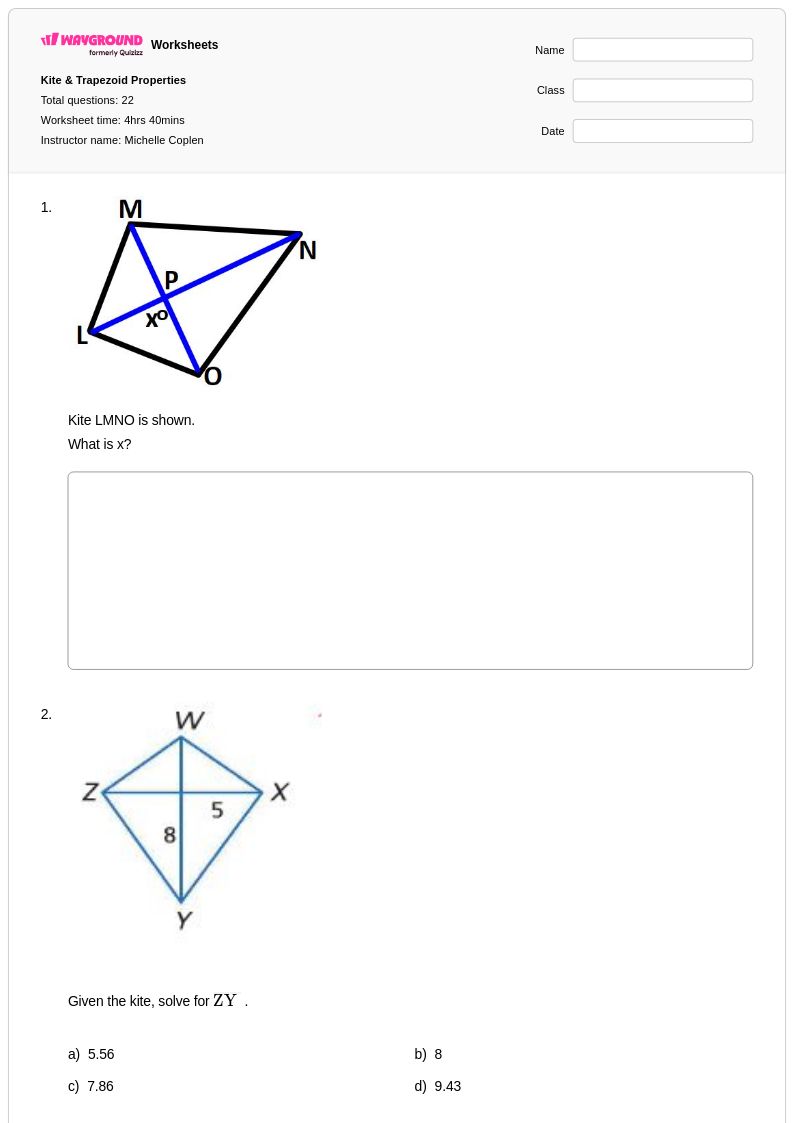
22 Q
9th - 12th
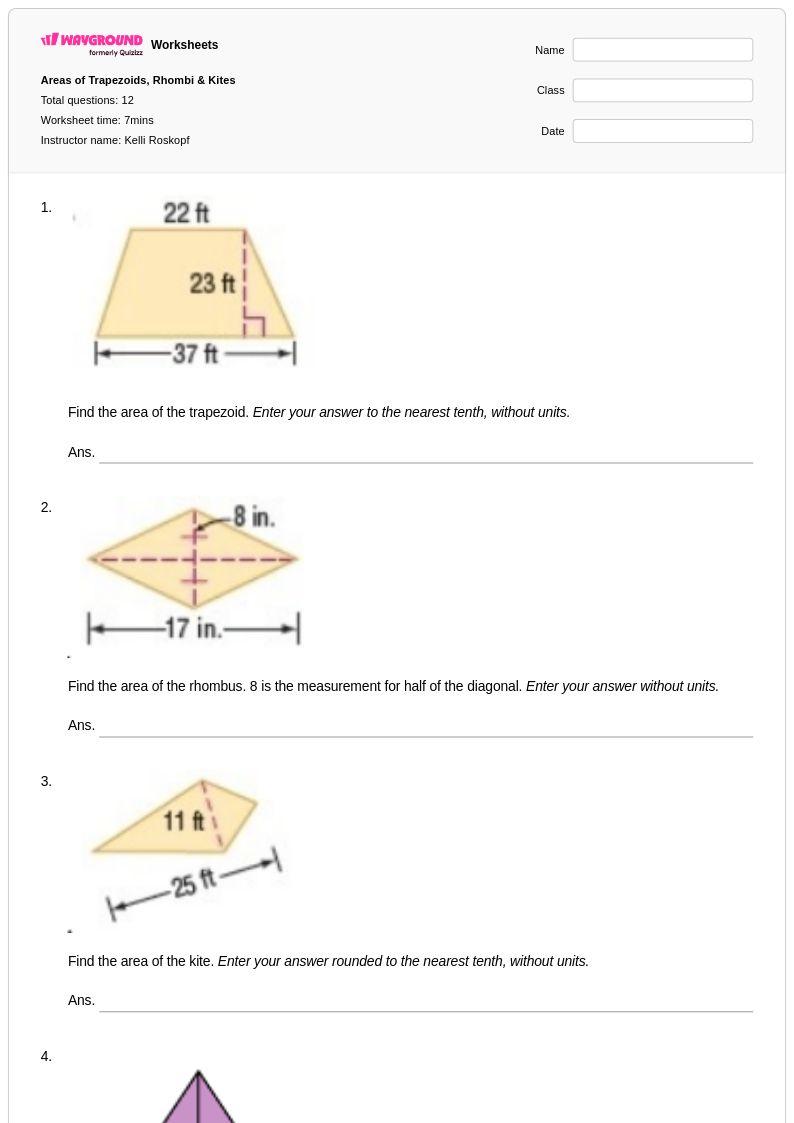
12 Q
9th - 11th
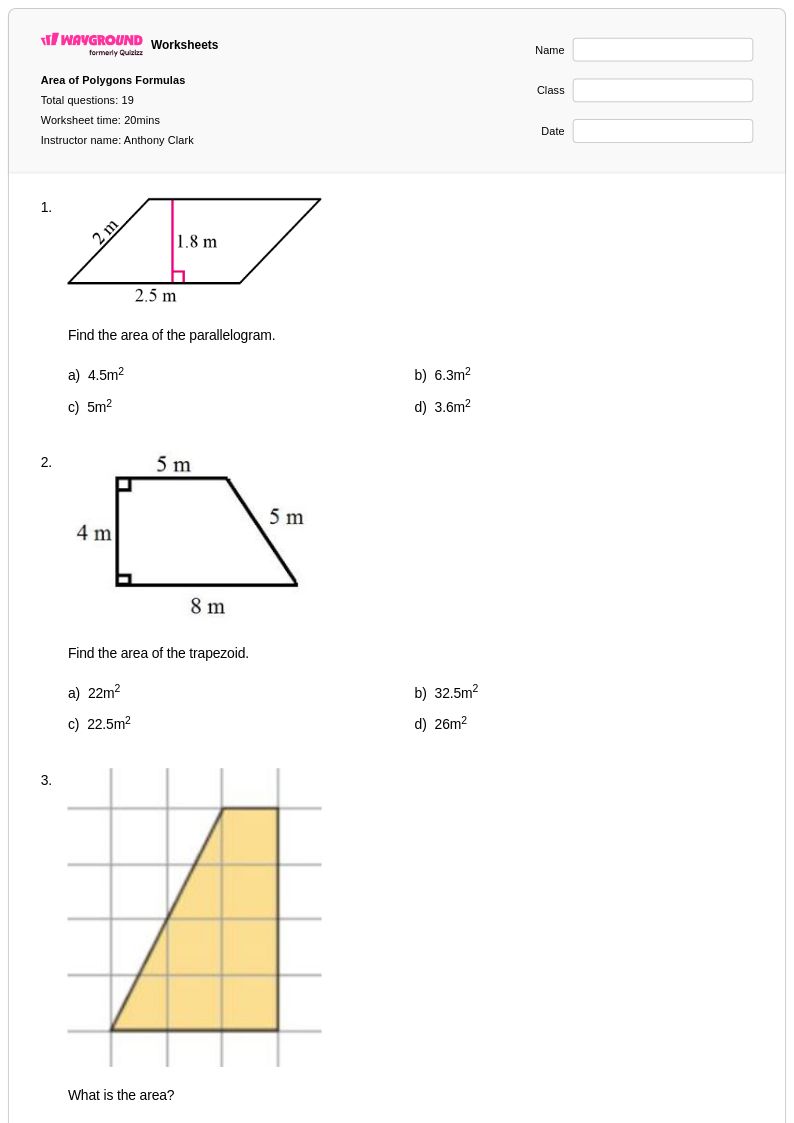
20 Q
6th - Uni
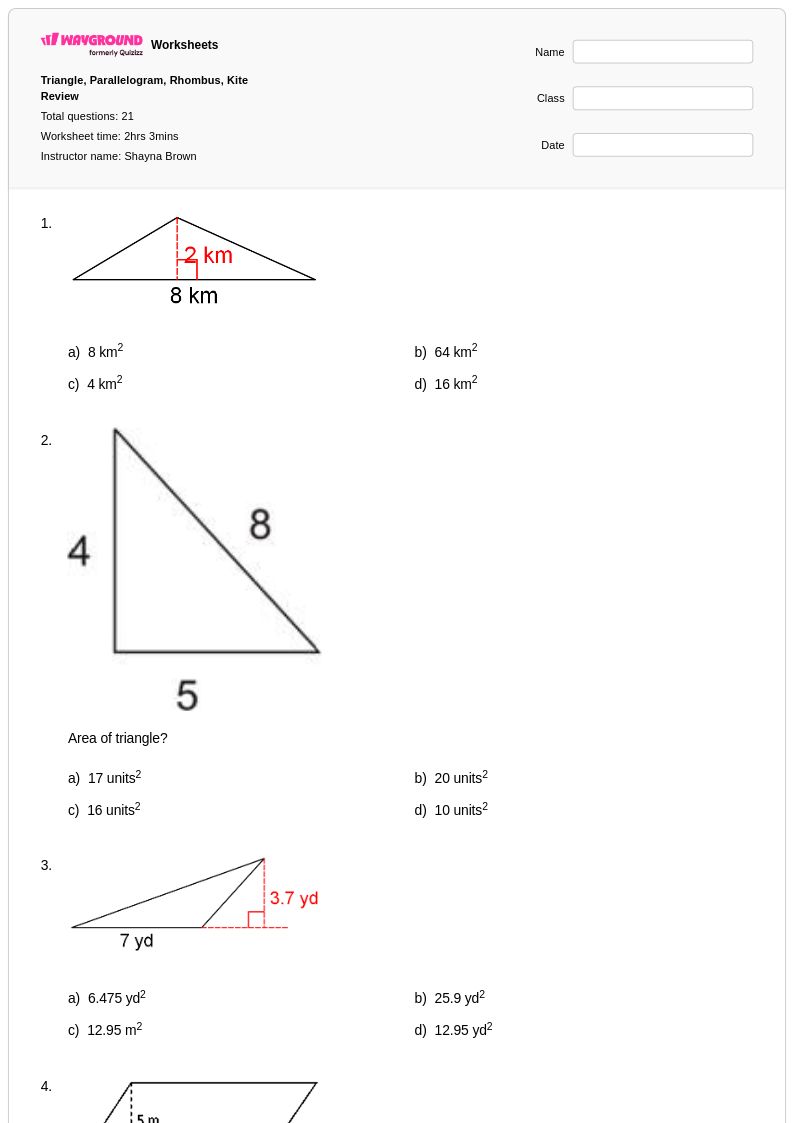
21 Q
9th - 12th
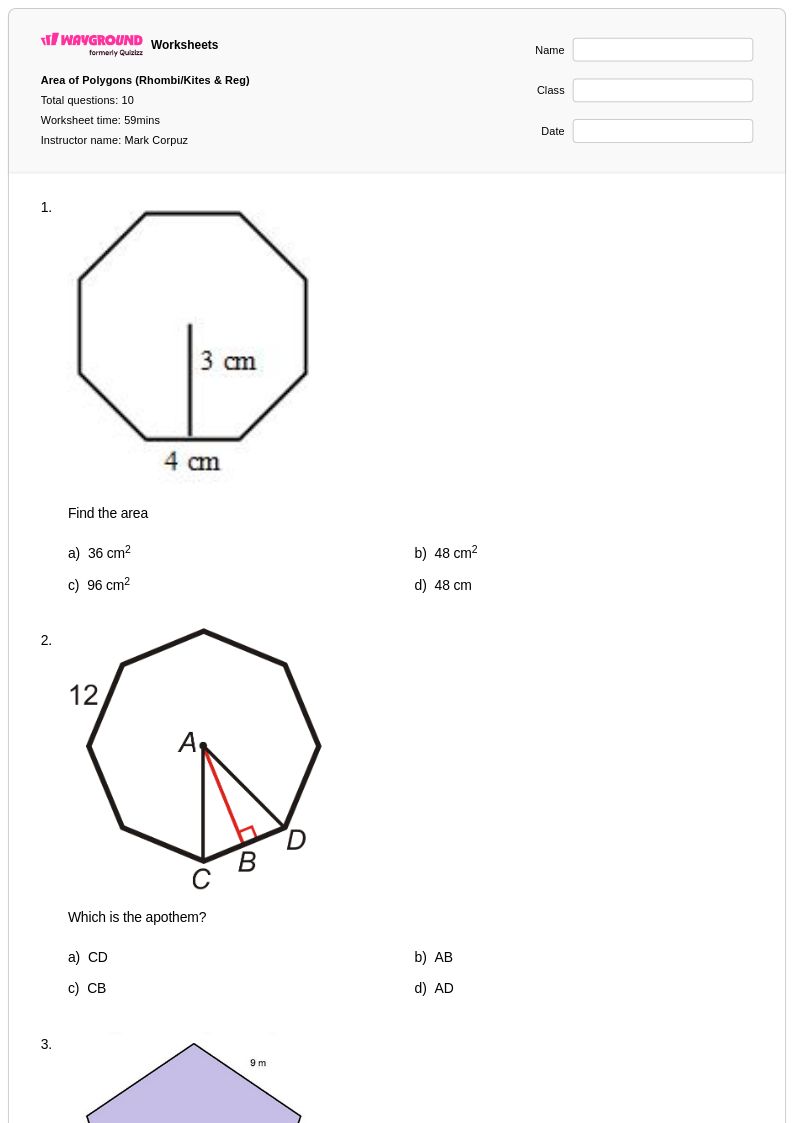
10 Q
8th - 10th
Explore Other Subject Worksheets for class 10
Explore printable Area of a Kite worksheets for Class 10
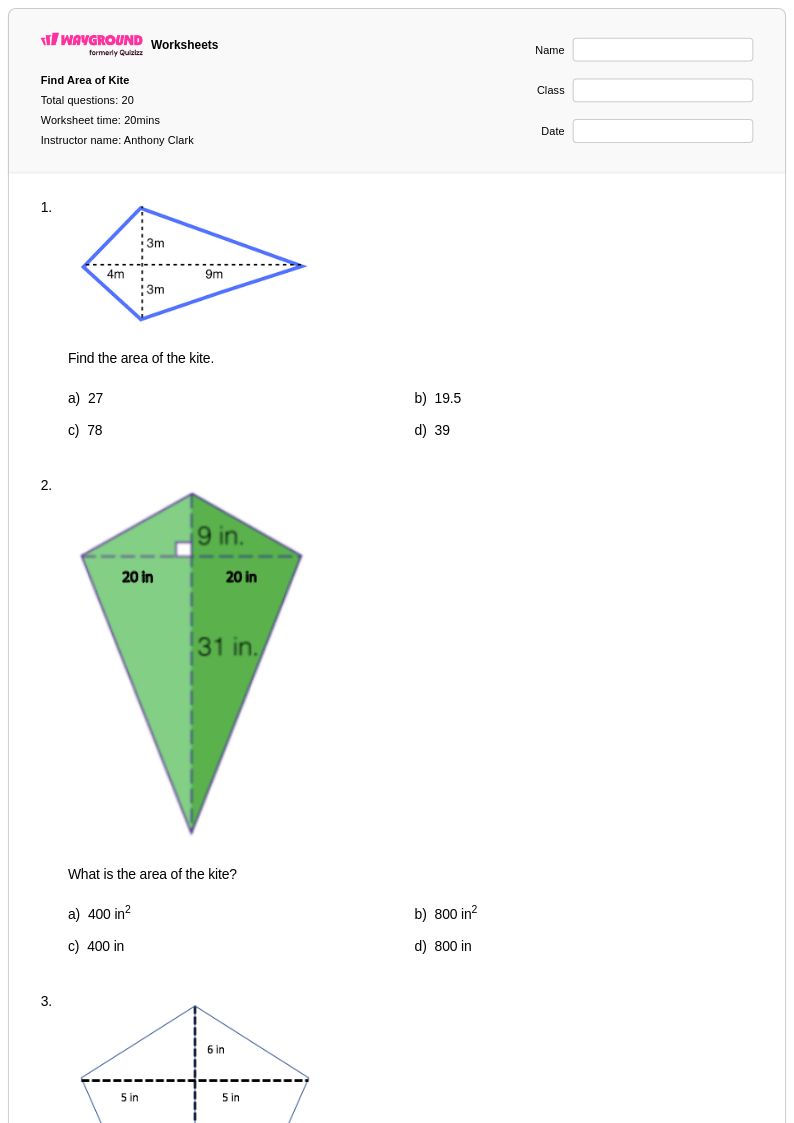
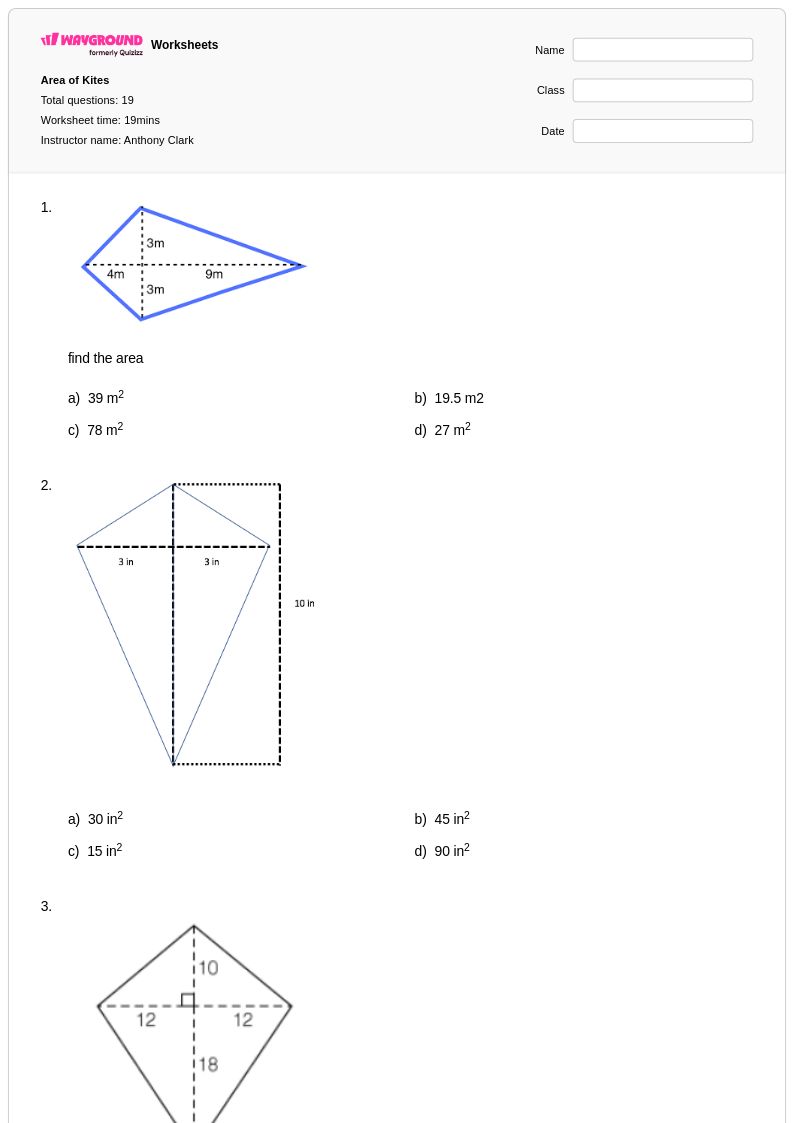
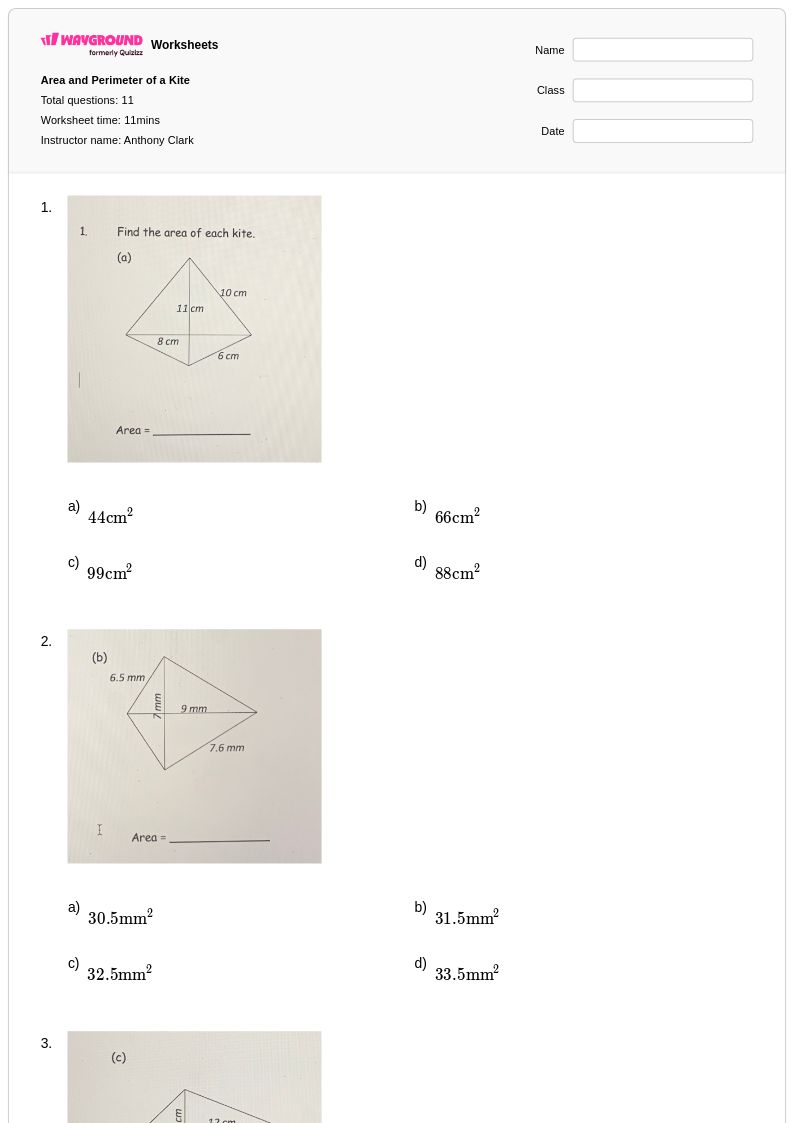
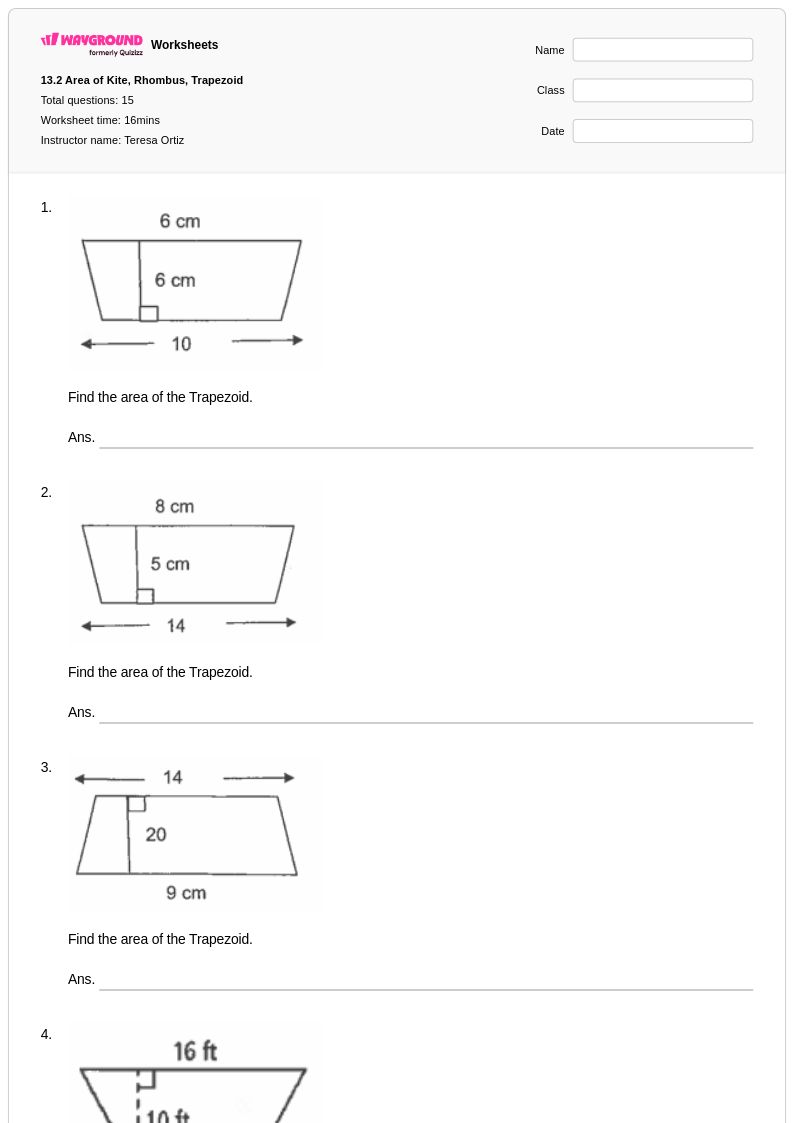
Area of a kite worksheets for Class 10 students available through Wayground (formerly Quizizz) provide comprehensive practice with calculating the area of this unique quadrilateral shape. These worksheets focus on developing students' understanding of the kite area formula, which utilizes the lengths of the two diagonals, and help strengthen critical geometric reasoning skills including identifying perpendicular diagonals, applying the formula A = (1/2)d₁d₂, and solving multi-step problems involving kite properties. The practice problems progress from basic formula application to more complex scenarios involving coordinate geometry and real-world applications, with each worksheet including a complete answer key to support independent learning and self-assessment. These free printable resources in pdf format allow students to master this essential geometric concept through repeated practice and varied problem types.
Wayground (formerly Quizizz) empowers mathematics teachers with millions of teacher-created resources specifically designed for Class 10 geometry instruction, including extensive collections of area of kite worksheets that align with curriculum standards and learning objectives. The platform's robust search and filtering capabilities enable educators to quickly locate materials that match their specific instructional needs, while built-in differentiation tools allow for seamless customization to accommodate diverse learning levels within the classroom. Teachers can access these resources in both printable and digital formats, including downloadable pdf versions, making them ideal for various teaching environments and learning preferences. This flexibility supports effective lesson planning, targeted remediation for struggling students, enrichment opportunities for advanced learners, and consistent skill practice that reinforces geometric concepts and problem-solving strategies essential for success in higher-level mathematics courses.
FAQs
How should I teach the area of a kite in Grade 10 geometry?
What are effective Grade 10 exercises for practicing the area of a kite?
What common errors should I look for when students find the area of a kite?
How can teachers assign these Grade 10 area of a kite worksheets?
Is finding the area of a kite part of Common Core geometry?
How can I support students who struggle with kite area problems?
Is area of a kite appropriate for Grade 10?