
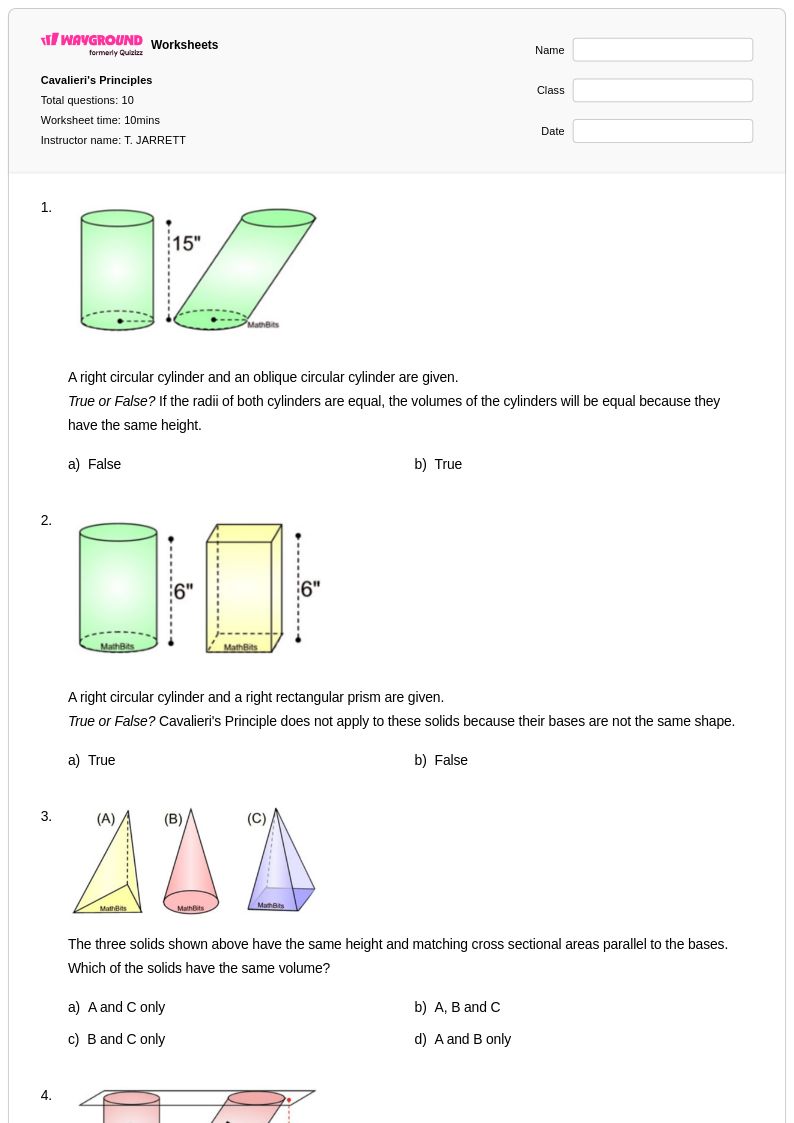
10 T
10th
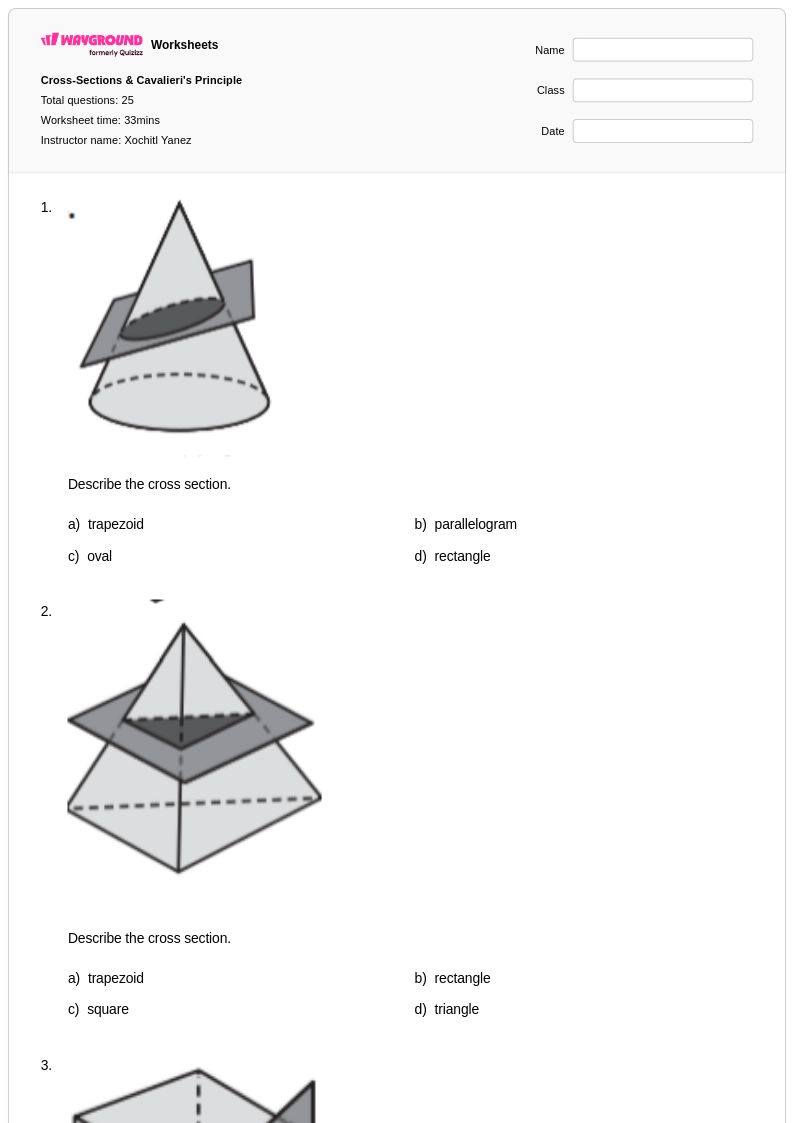
25 T
10th
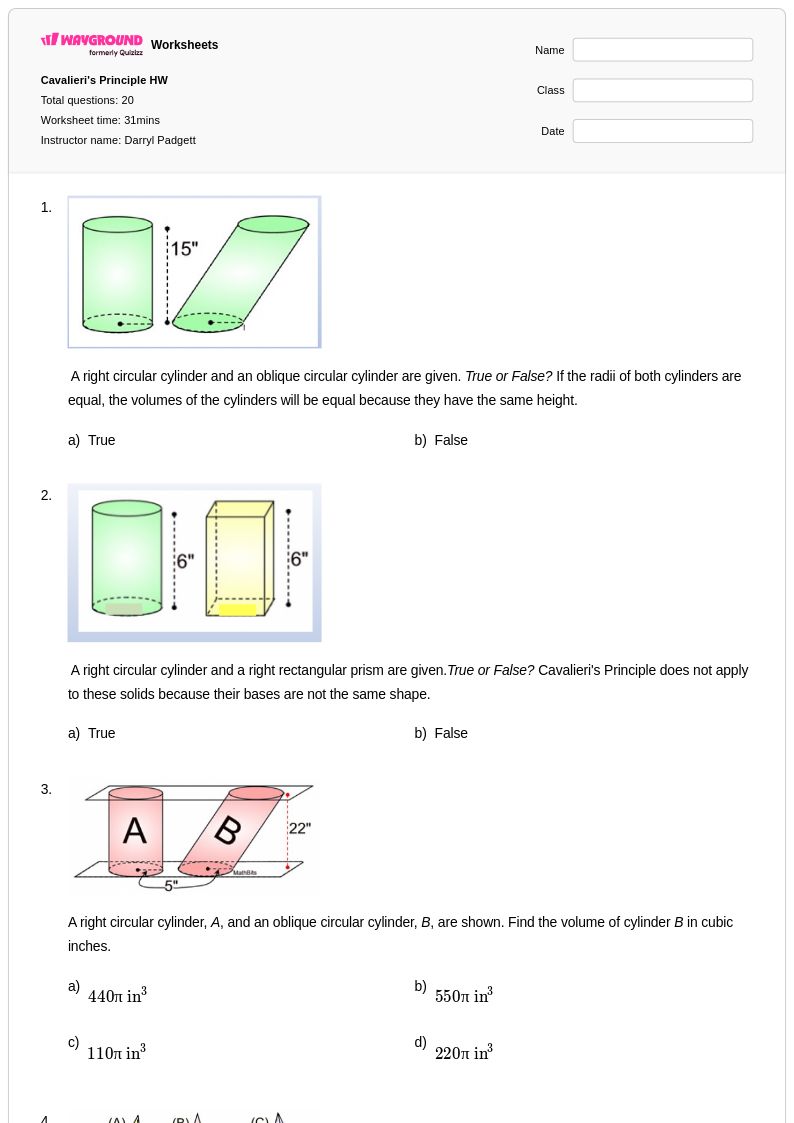
20 T
9th - 12th
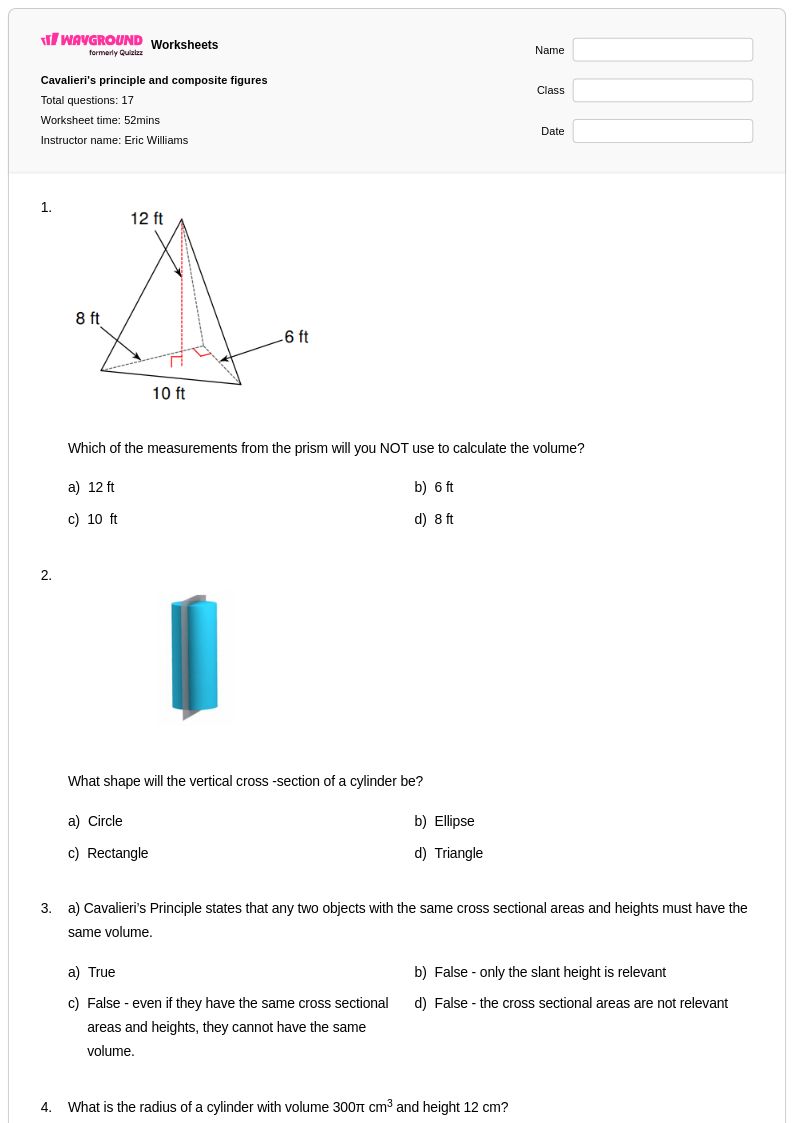
17 T
10th
27 T
9th - 10th
20 T
10th
12 T
10th
11 T
10th
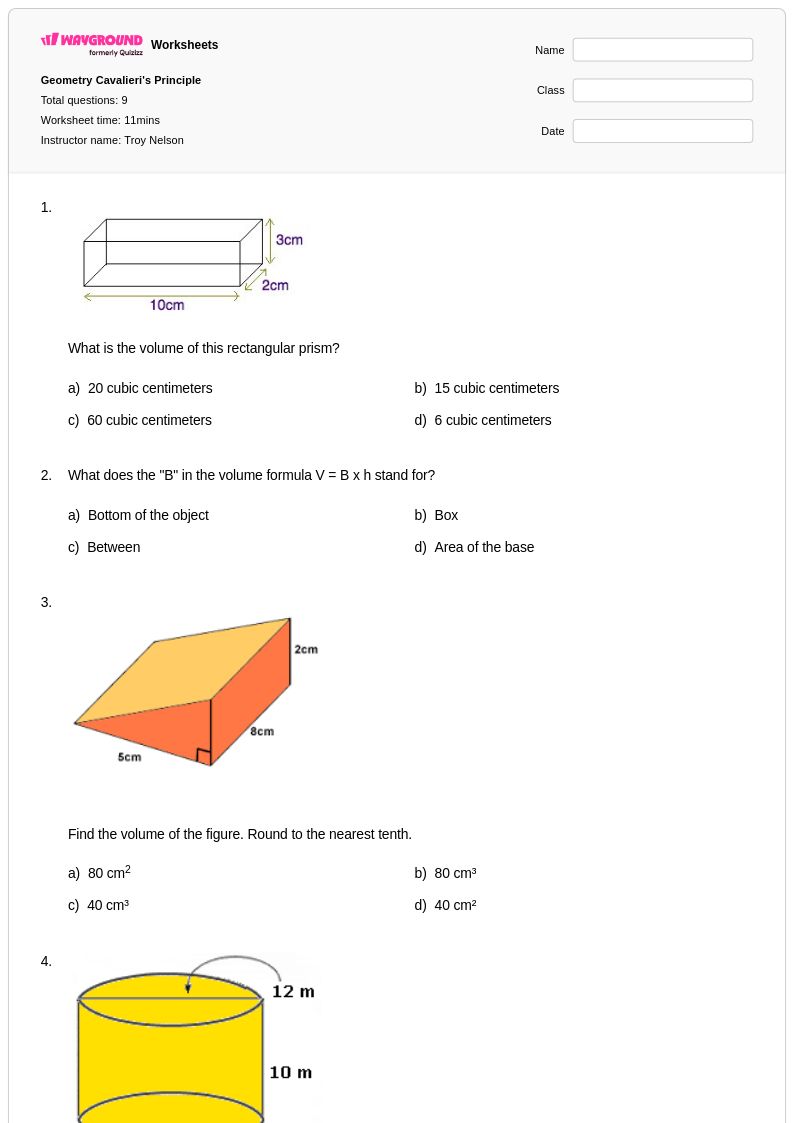
9 T
9th - 10th
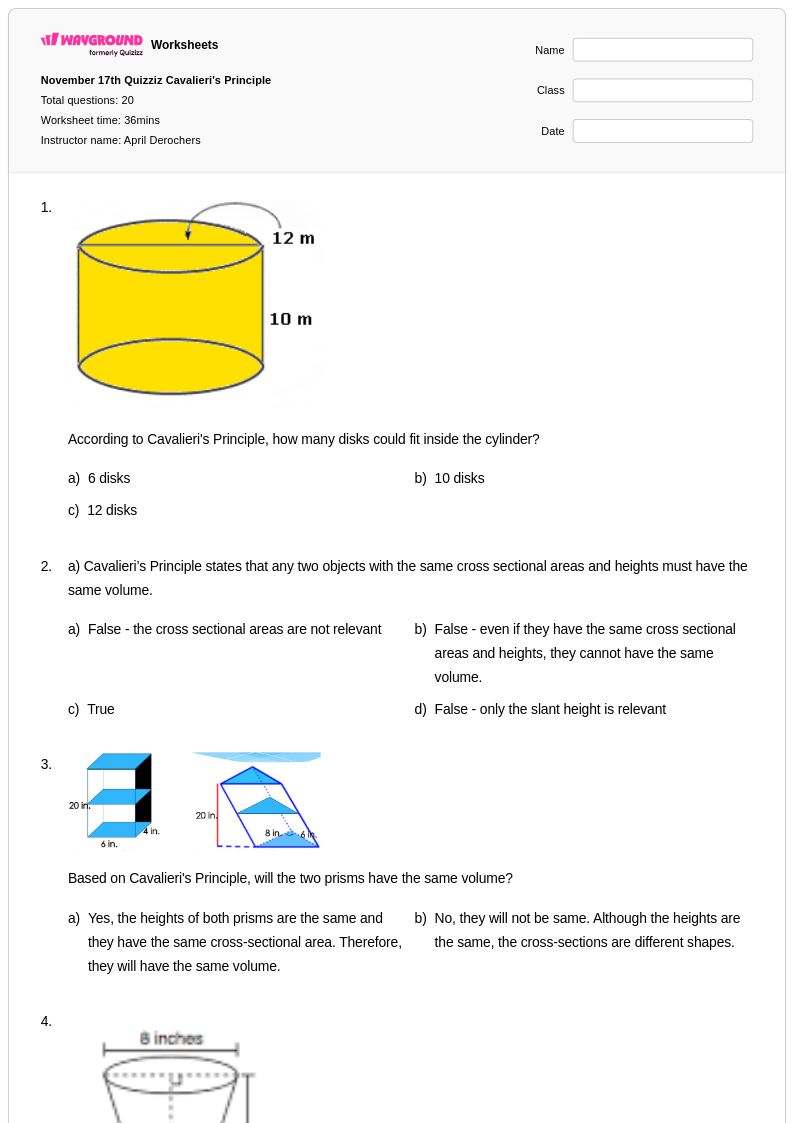
20 T
10th
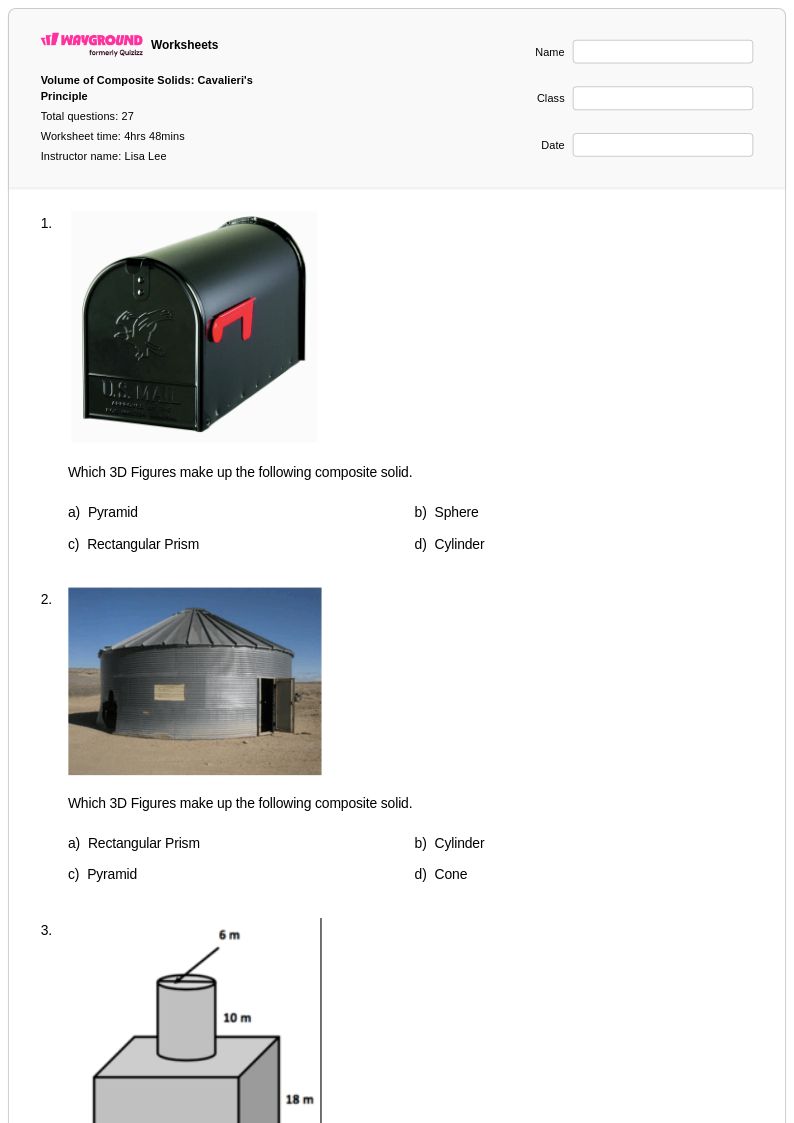
27 T
9th - 10th
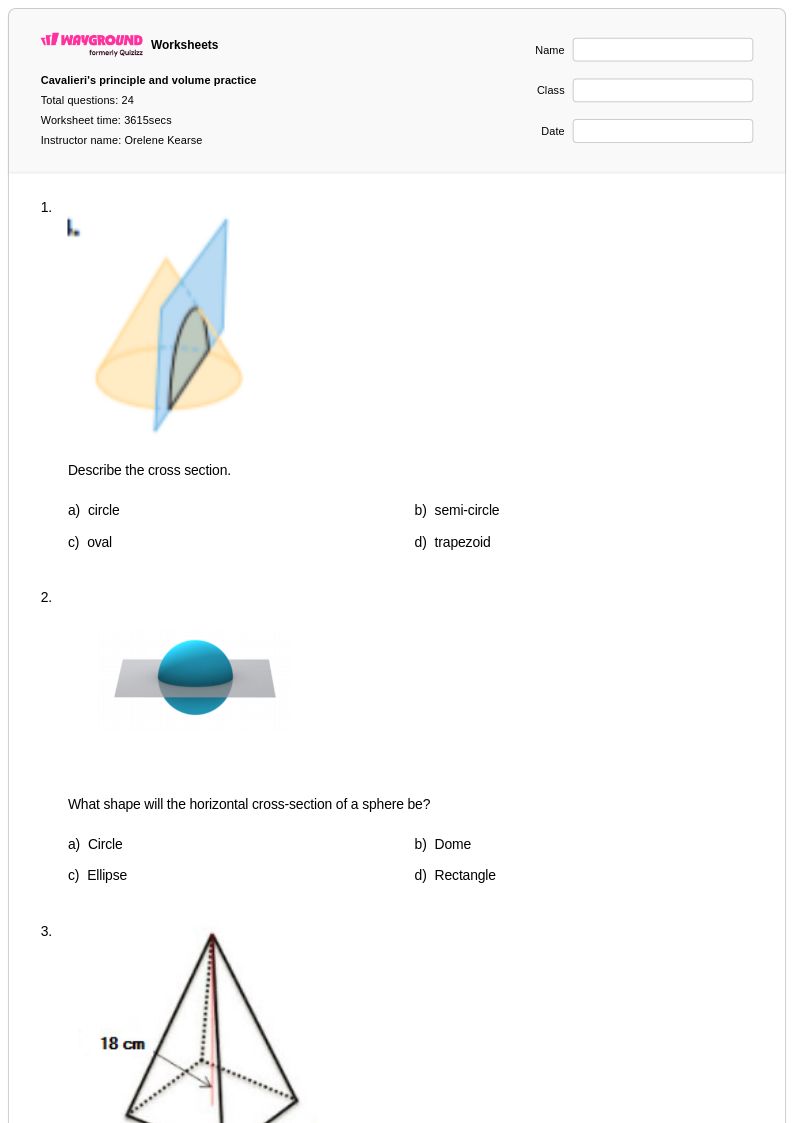
24 T
10th
21 T
9th - 12th
27 T
9th - 10th
20 T
10th - Uni
11 T
10th
19 T
10th
10 T
10th
13 T
8th - 12th
32 T
10th
12 T
8th - 11th
6 T
9th - 12th
12 T
8th - 11th
22 T
10th
Jelajahi Lembar Kerja Mata Pelajaran Lainnya untuk class 10
Explore printable Cavalieri's Principle worksheets for Class 10
Cavalieri's Principle worksheets for Class 10 students available through Wayground (formerly Quizizz) provide comprehensive practice with this fundamental geometric theorem that relates the volumes of solids with equal cross-sectional areas. These expertly designed worksheets strengthen students' understanding of how to apply Cavalieri's Principle to calculate volumes of complex three-dimensional shapes, including oblique prisms, cylinders, pyramids, and cones. The practice problems guide students through systematic approaches to comparing cross-sections at equal heights and using this relationship to determine when two solids have equivalent volumes. Each worksheet includes detailed answer keys that help students verify their solutions and understand the logical progression of Cavalieri's reasoning, while the free printable pdf format ensures convenient access for both classroom instruction and independent study.
Wayground (formerly Quizizz) supports mathematics educators with an extensive collection of teacher-created Cavalieri's Principle resources, drawing from millions of professionally developed worksheets that undergo rigorous quality review. The platform's advanced search and filtering capabilities allow teachers to locate materials specifically aligned with Class 10 geometry standards, while differentiation tools enable customization based on individual student needs and learning objectives. These versatile worksheet collections are available in both printable pdf and interactive digital formats, providing flexibility for traditional paper-based instruction or technology-enhanced learning environments. Teachers can efficiently plan comprehensive lesson sequences, design targeted remediation activities for struggling students, create enrichment challenges for advanced learners, and implement systematic skill practice that builds conceptual understanding of volume relationships through cross-sectional analysis.
FAQs
How should I teach Cavalieri's Principle in Grade 10 geometry?
What are good practice problems for Cavalieri's Principle?
What misconceptions should I check when assessing Cavalieri's Principle?
How do I assign a Grade 10 Cavalieri's Principle worksheet on Wayground?
Is Cavalieri's Principle aligned with Common Core geometry?
How can I support students who find cross-sectional diagrams difficult?
What grade do students learn Cavalieri's Principle?