
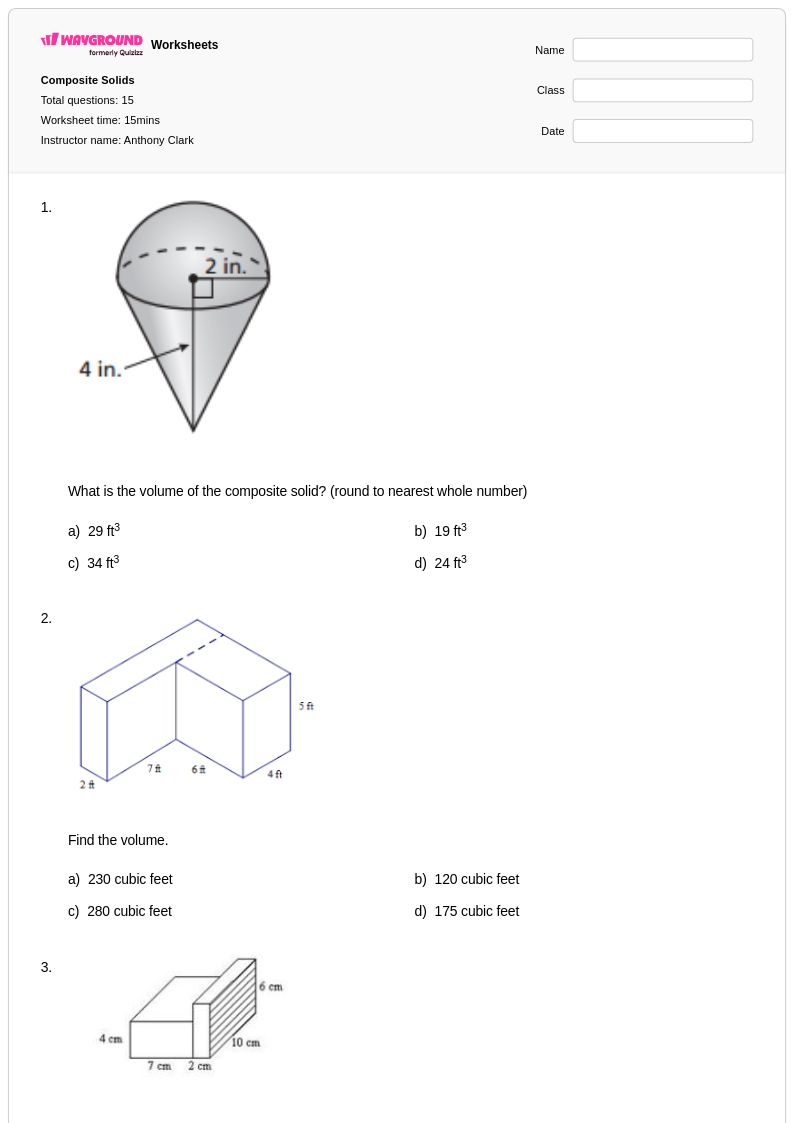
15 Q
8th - Uni
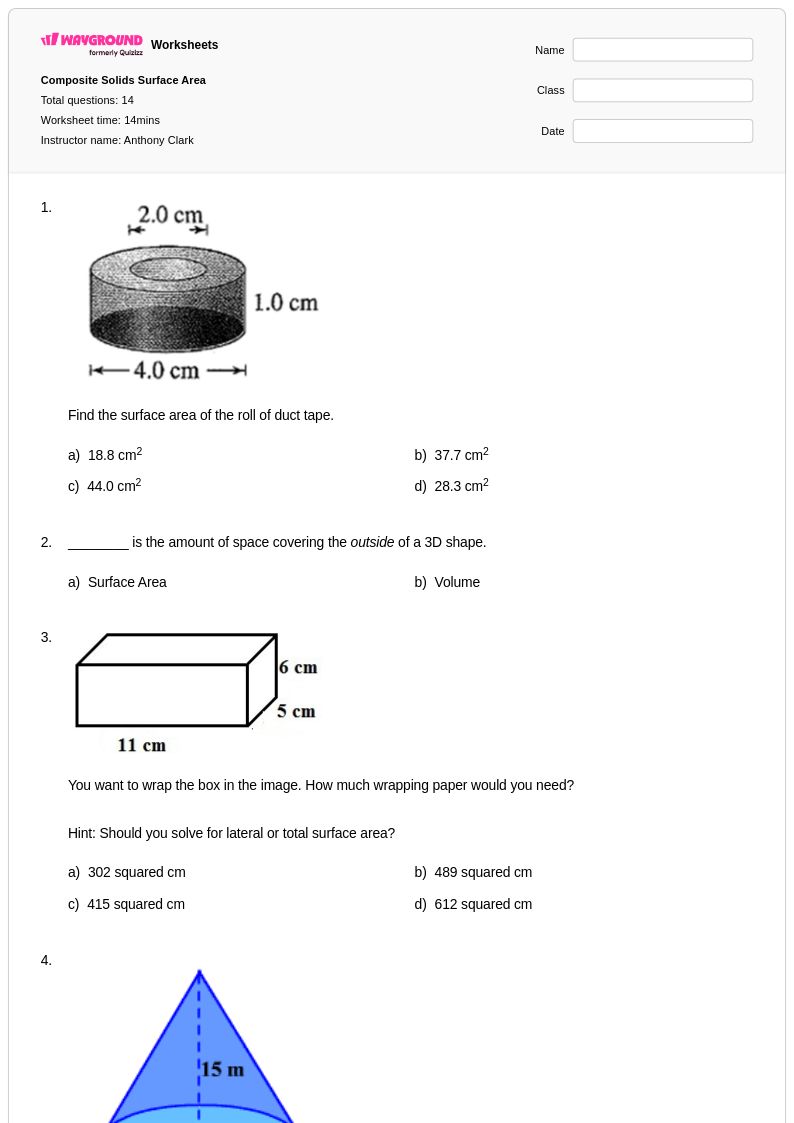
14 Q
10th - Uni
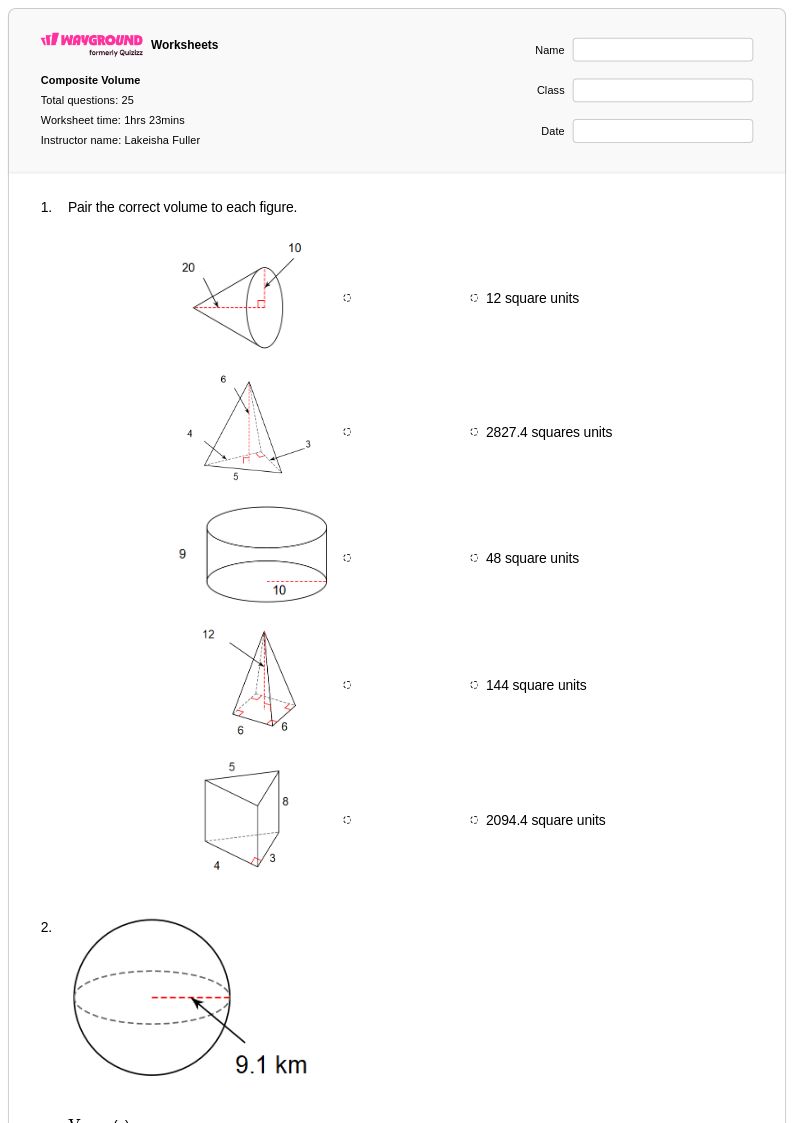
25 Q
10th
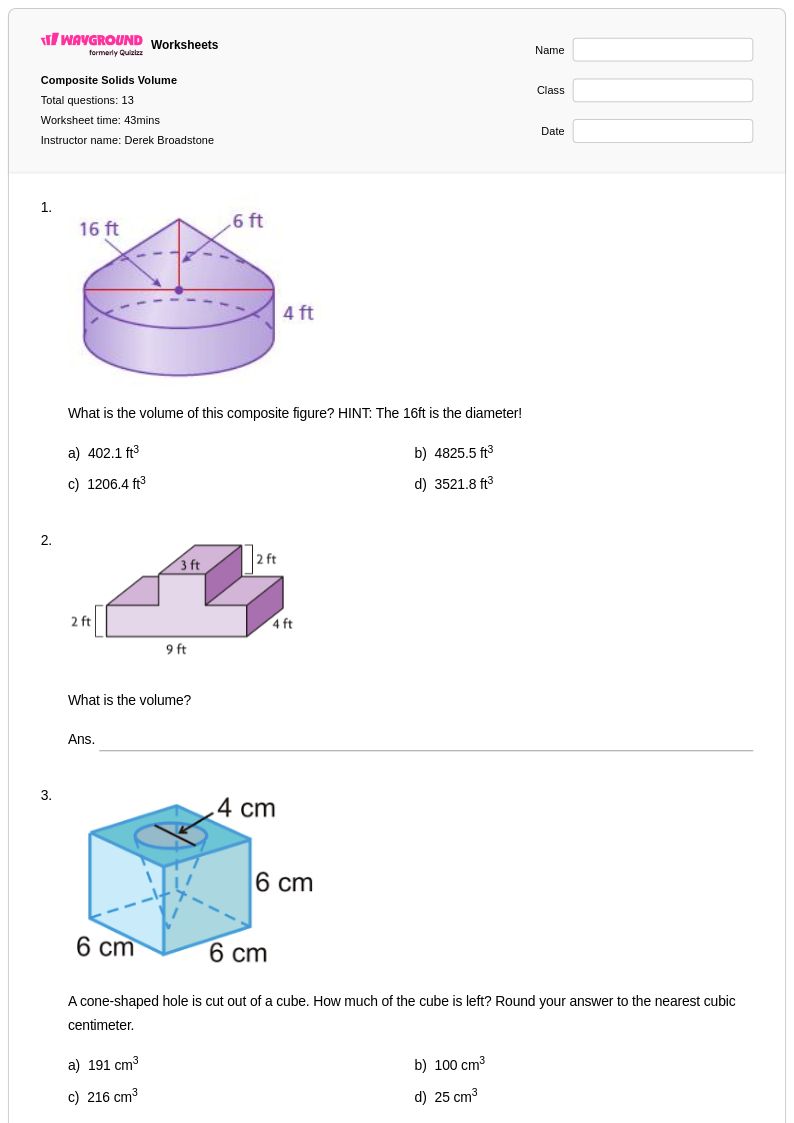
13 Q
9th - 12th
16 Q
8th - Uni
10 Q
8th - Uni
25 Q
10th
25 Q
10th
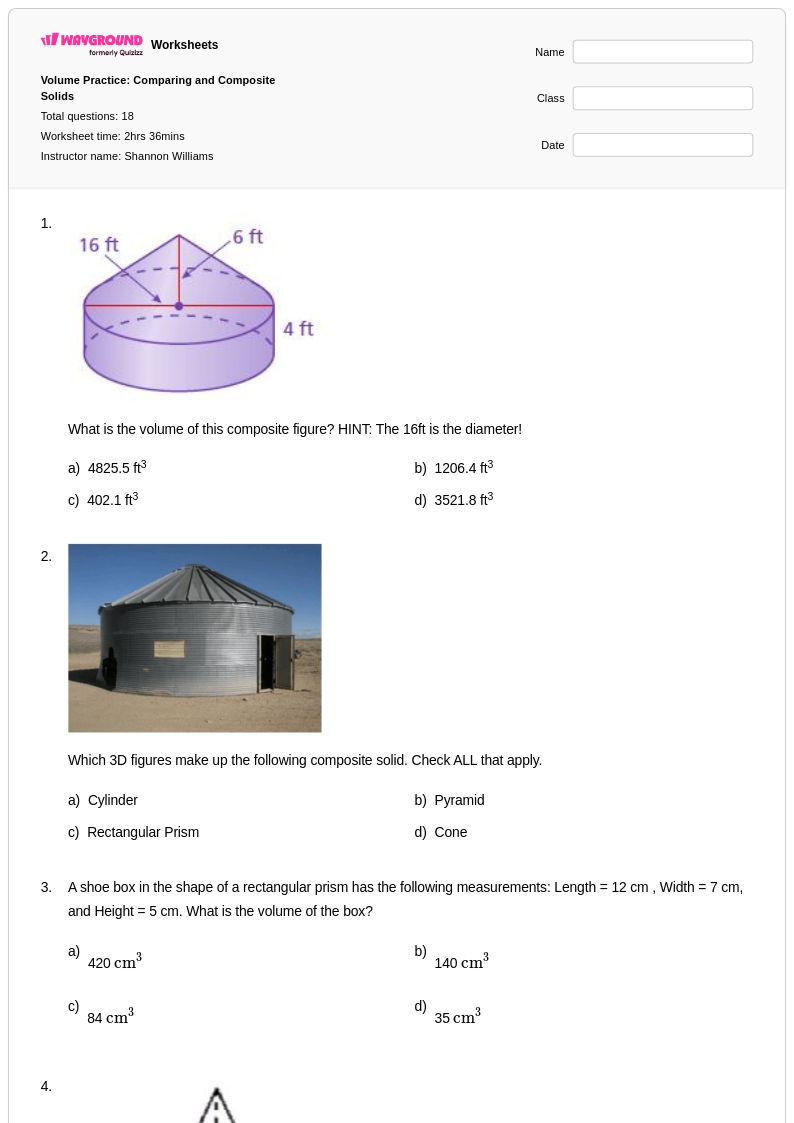
18 Q
9th - 12th
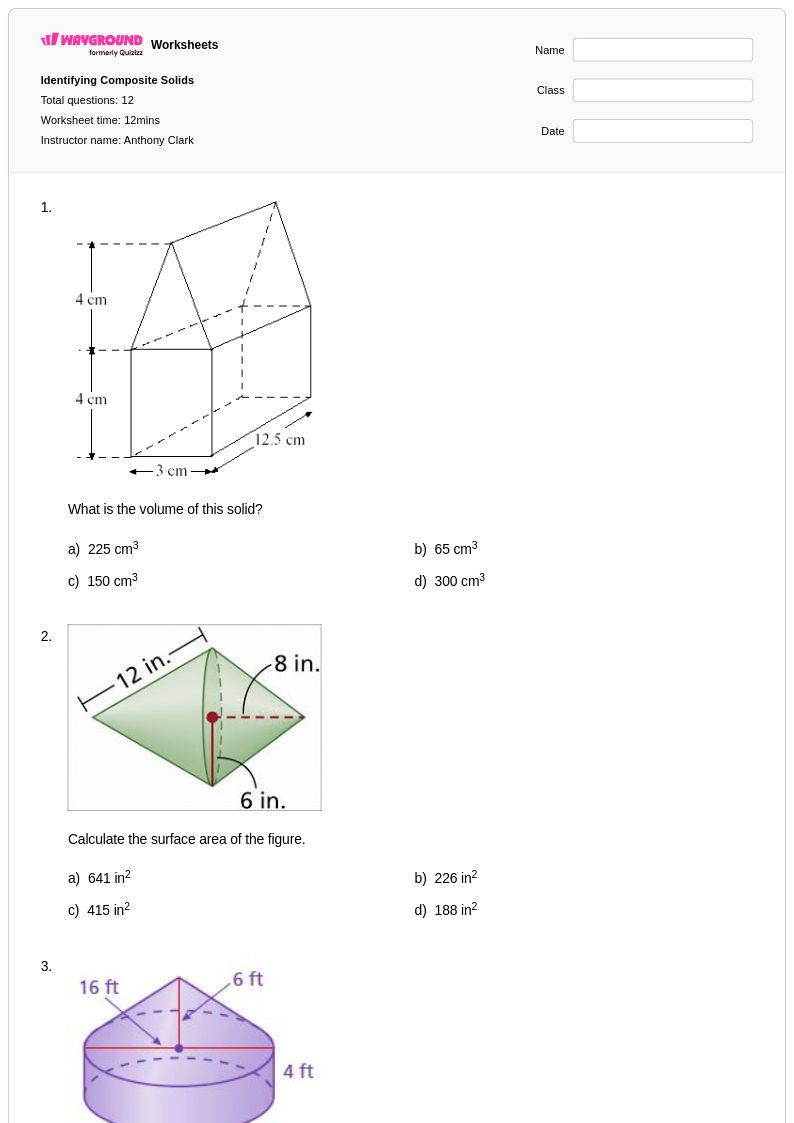
12 Q
8th - Uni
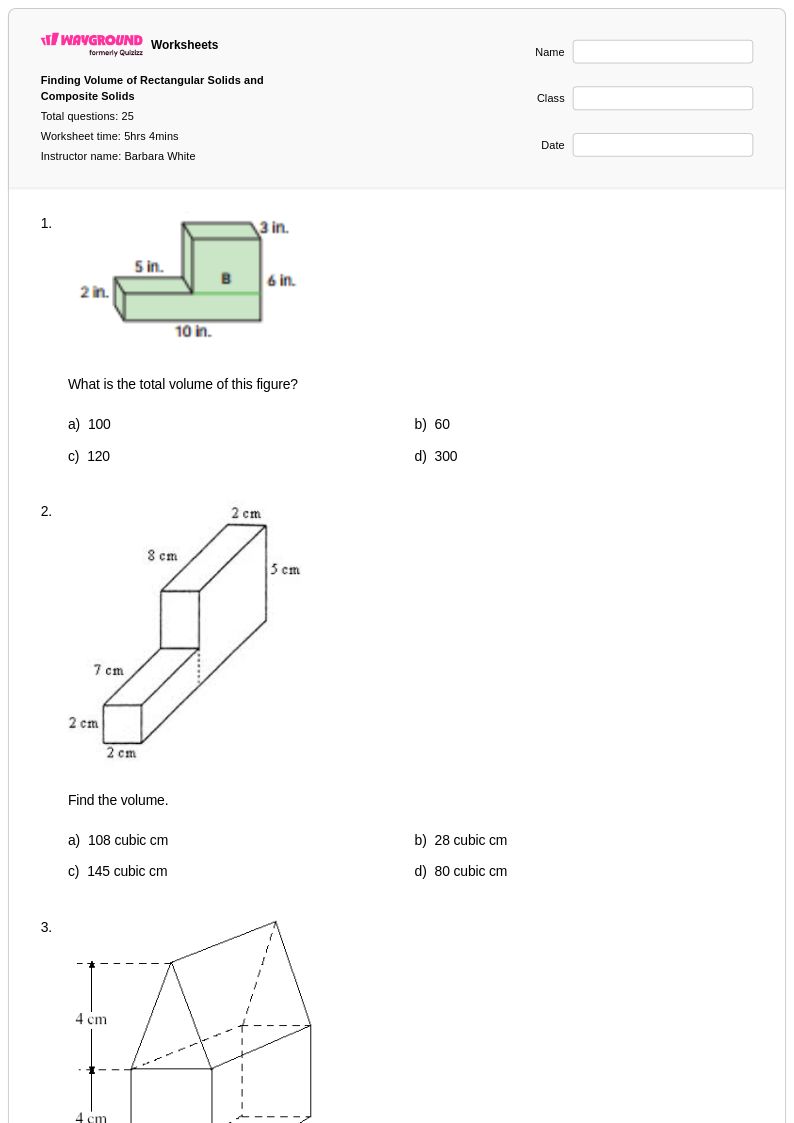
25 Q
10th
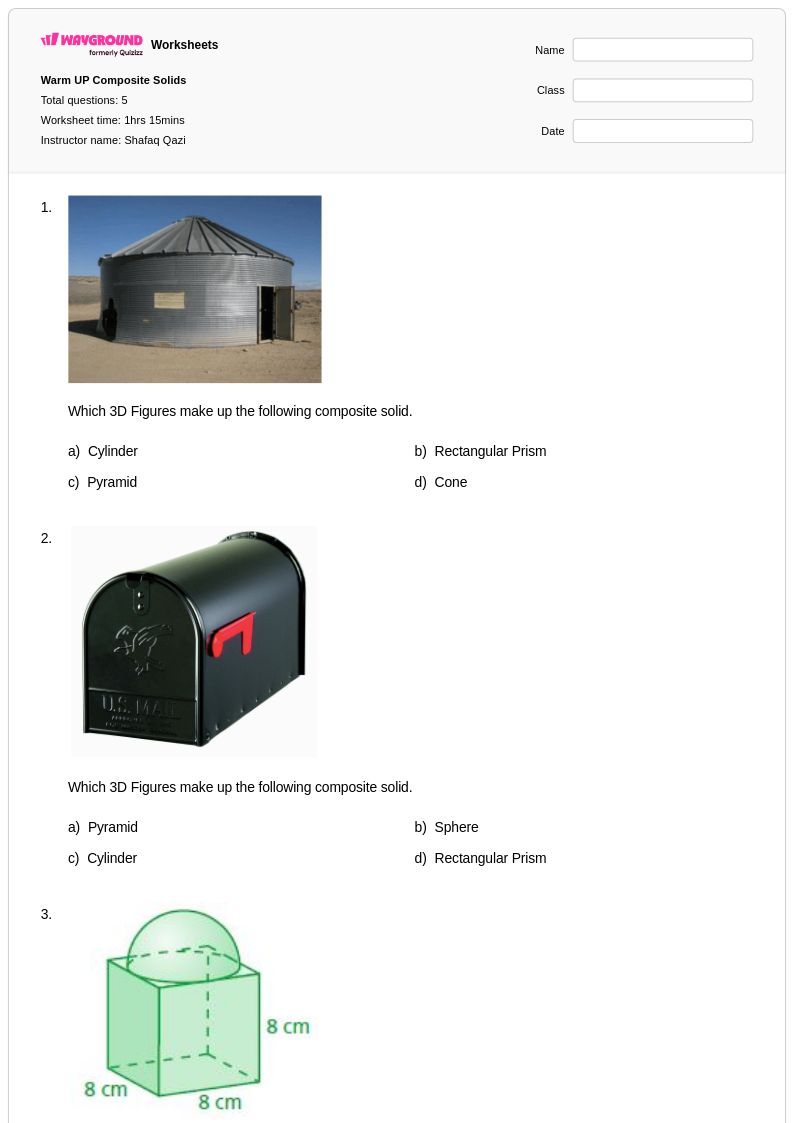
5 Q
9th - 12th
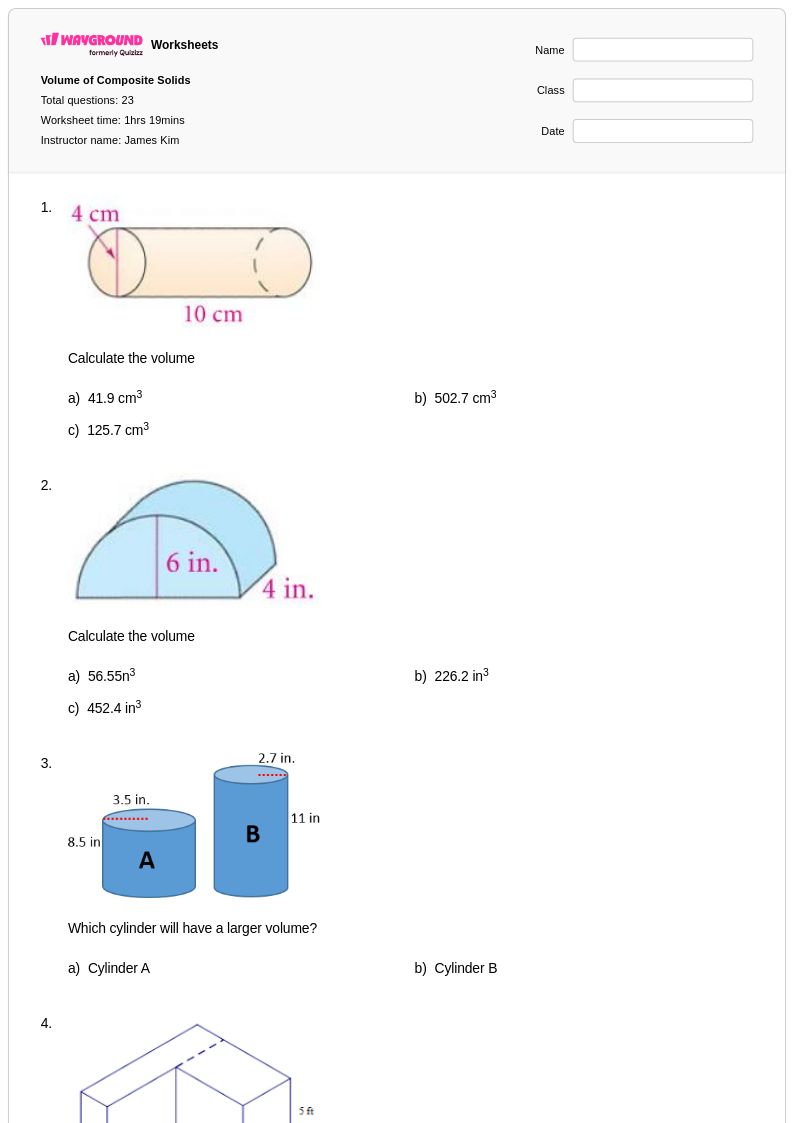
23 Q
8th - Uni
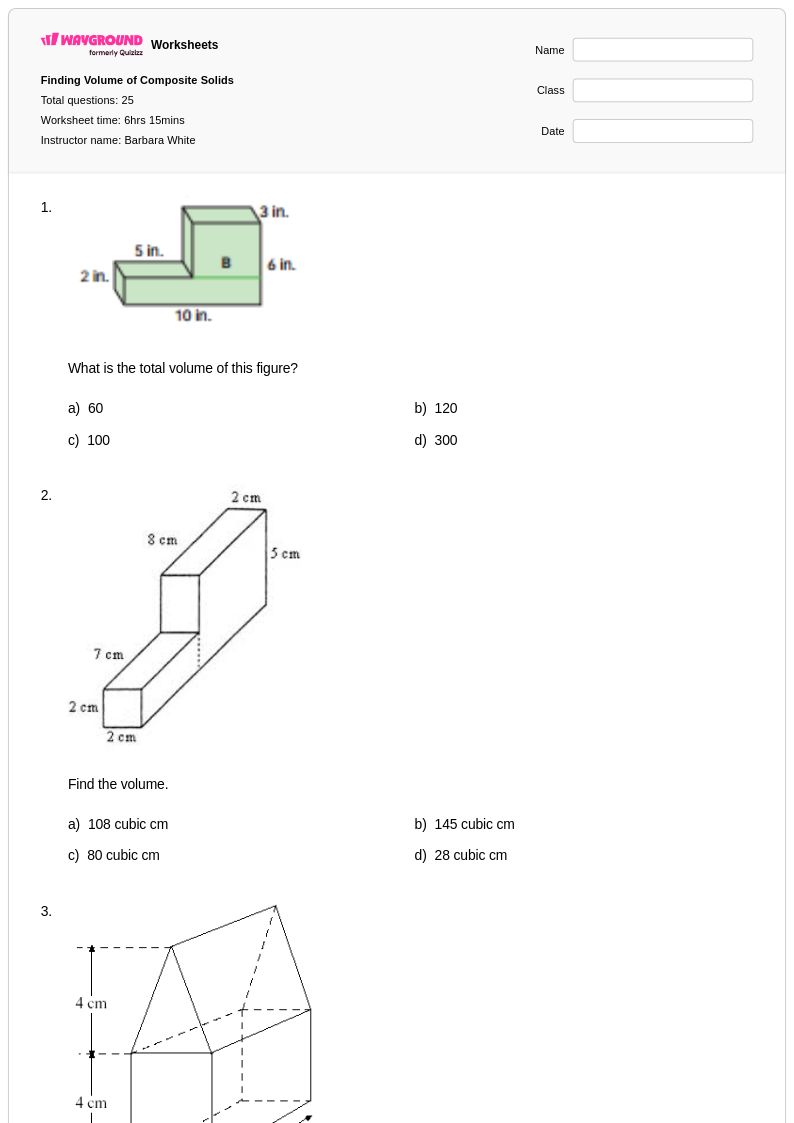
25 Q
10th
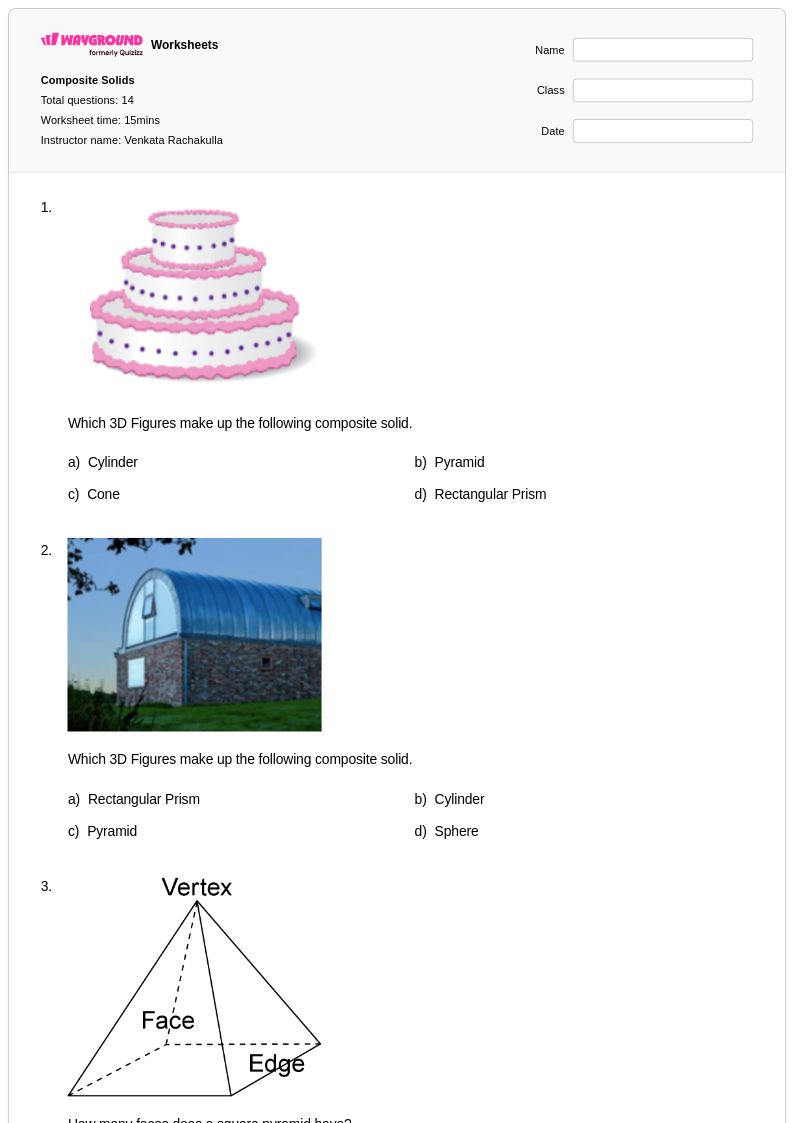
14 Q
10th
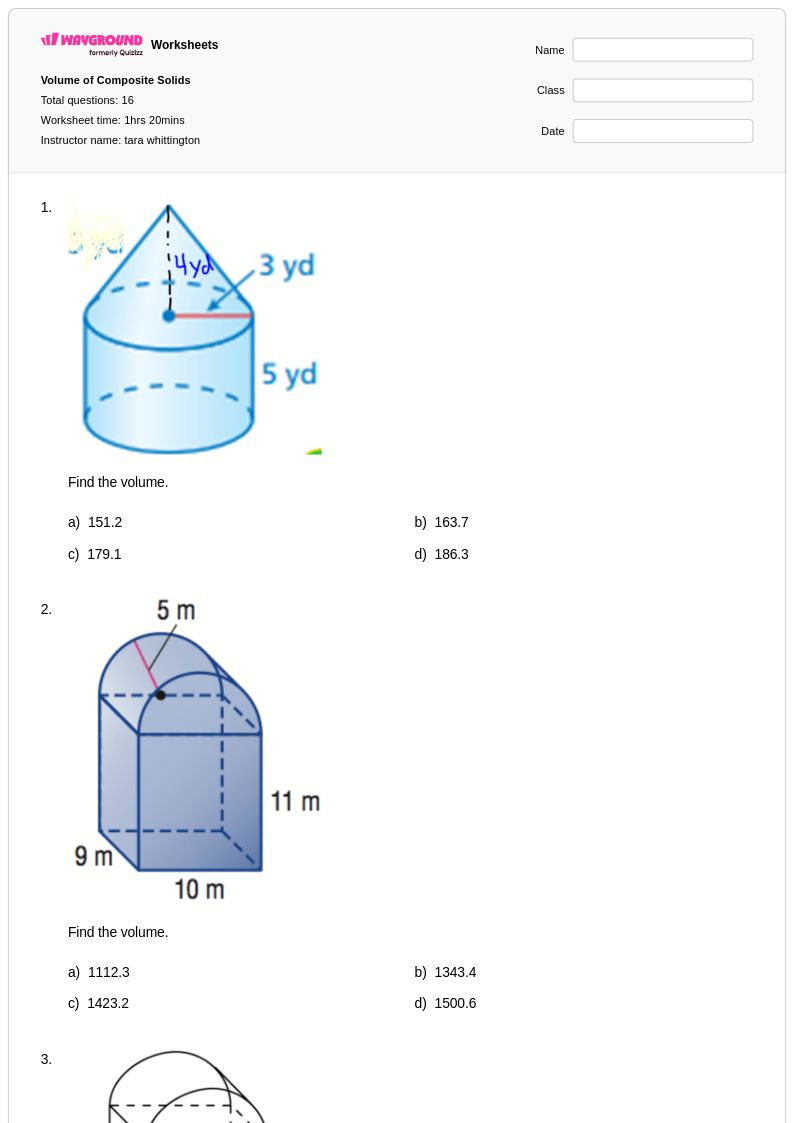
16 Q
10th
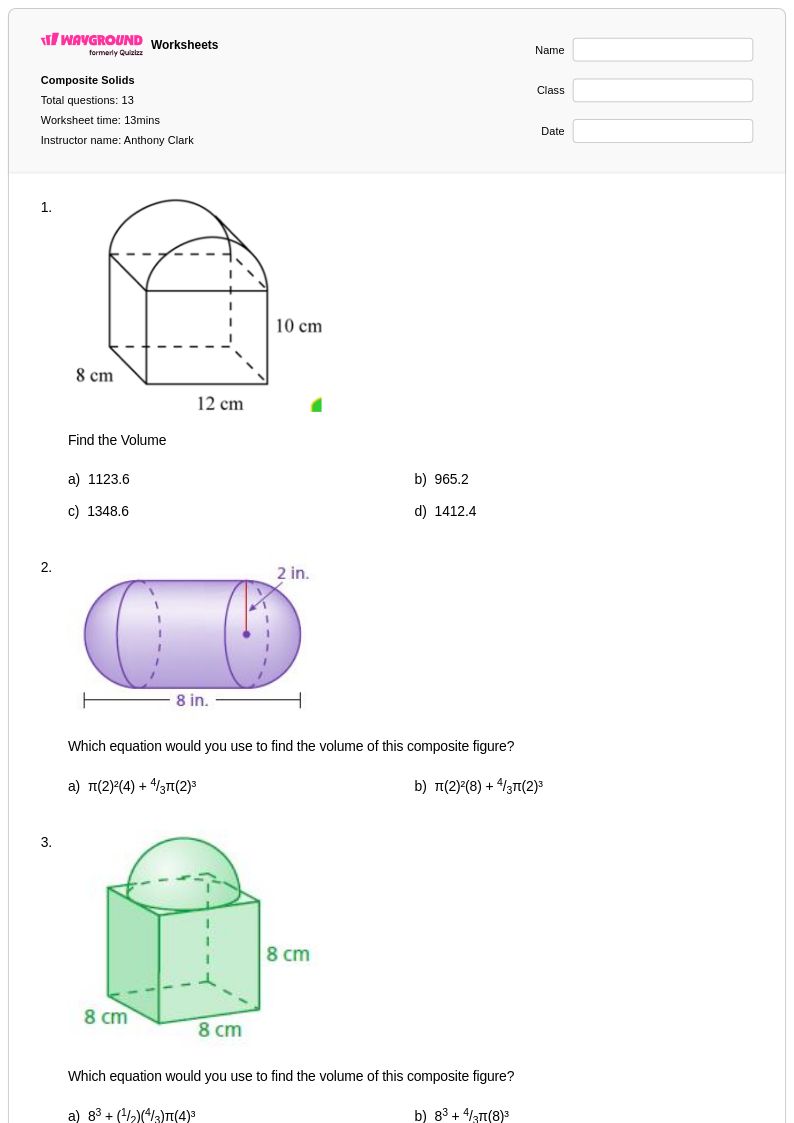
13 Q
8th - Uni
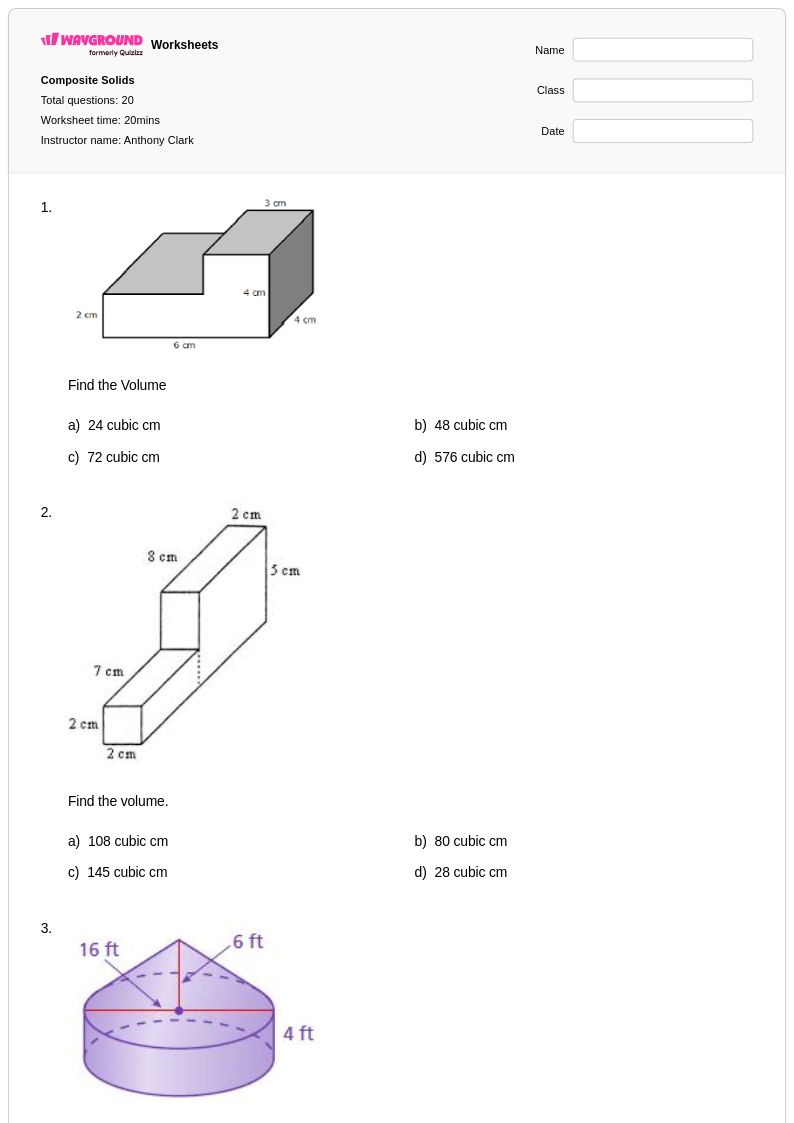
20 Q
8th - Uni
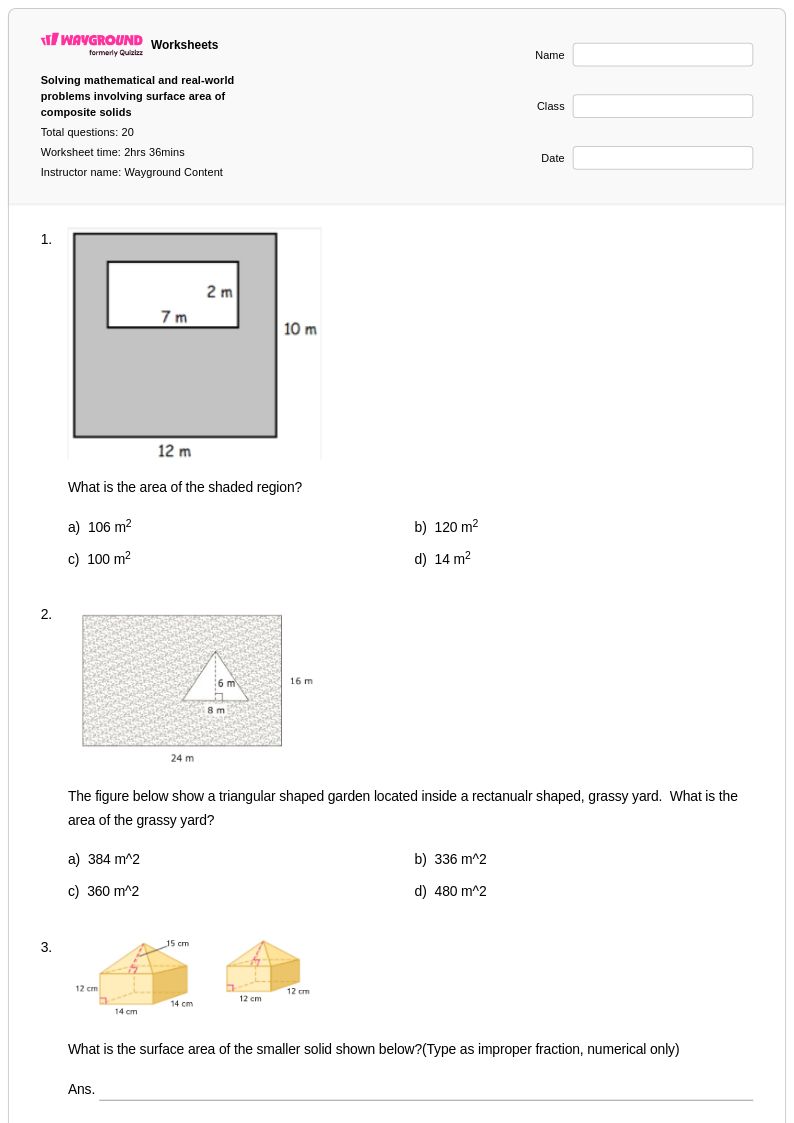
20 Q
9th - 12th
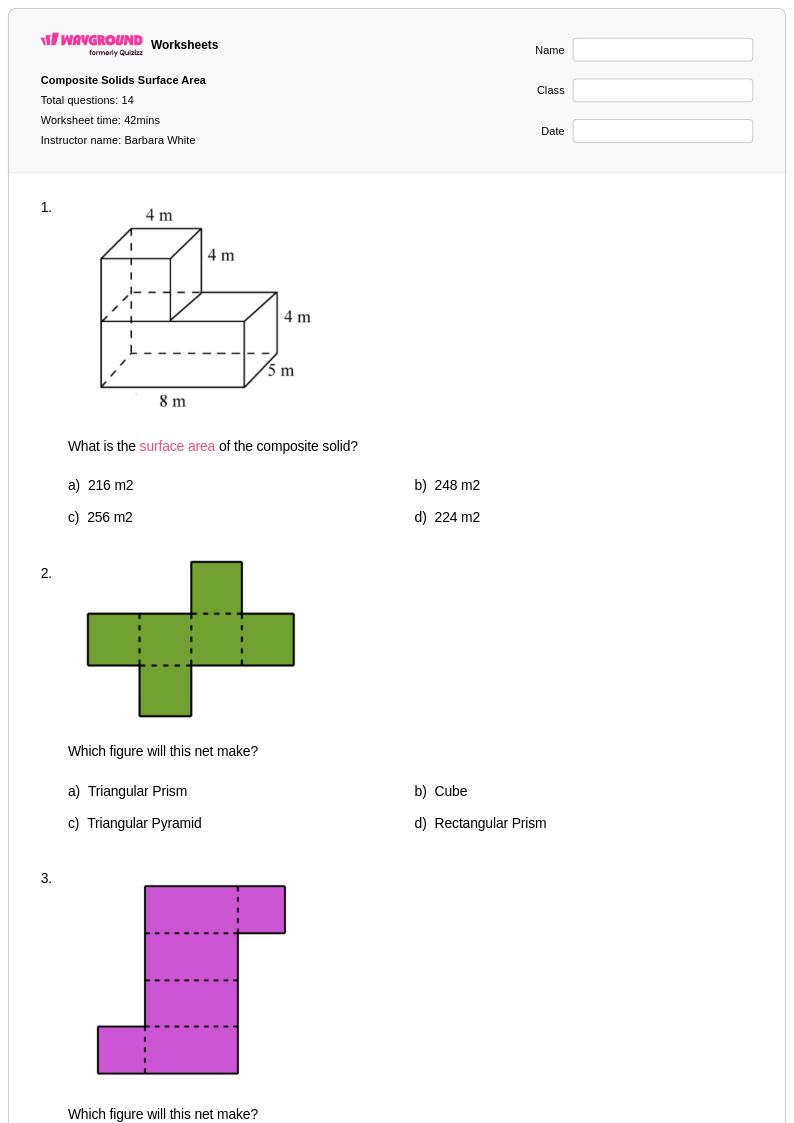
14 Q
10th
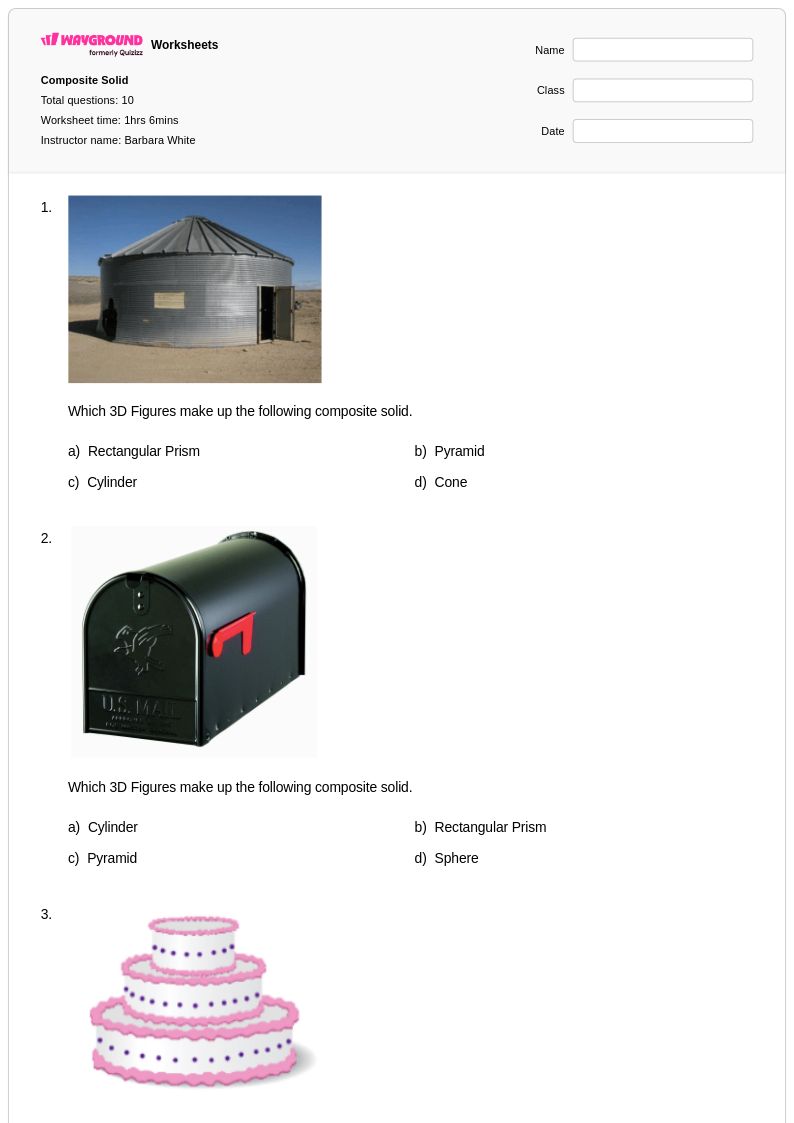
10 Q
10th
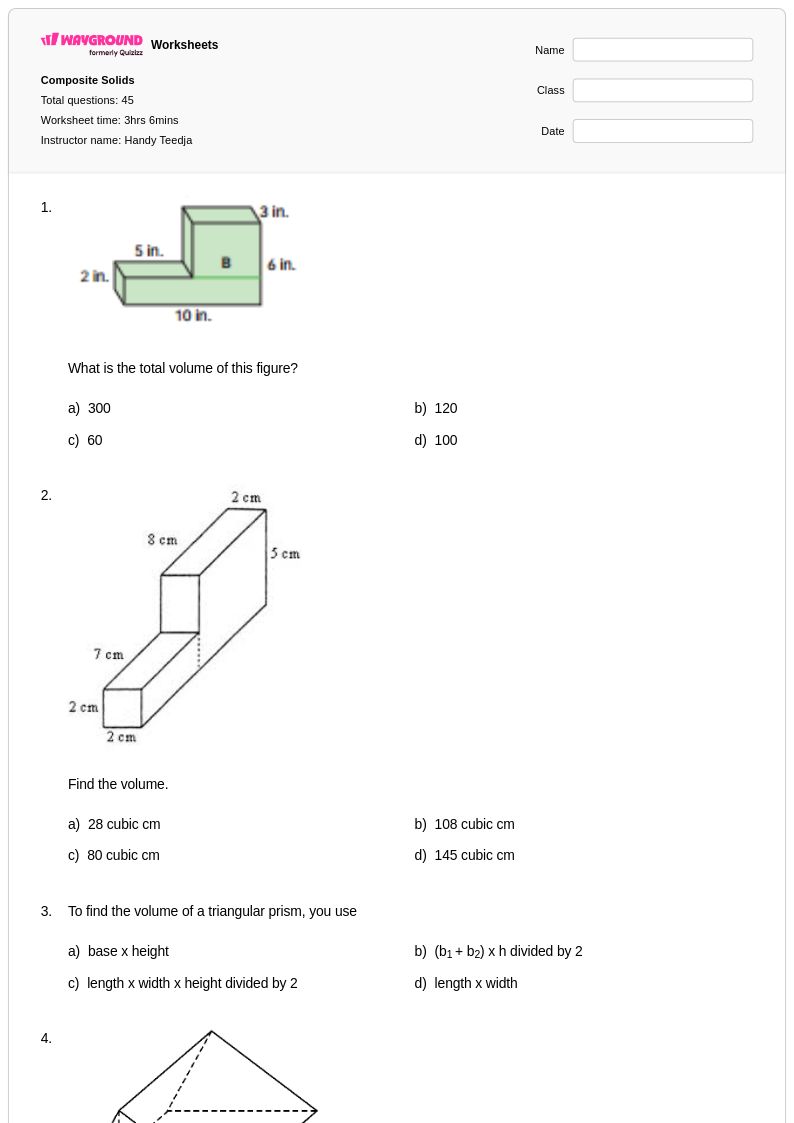
45 Q
8th - Uni
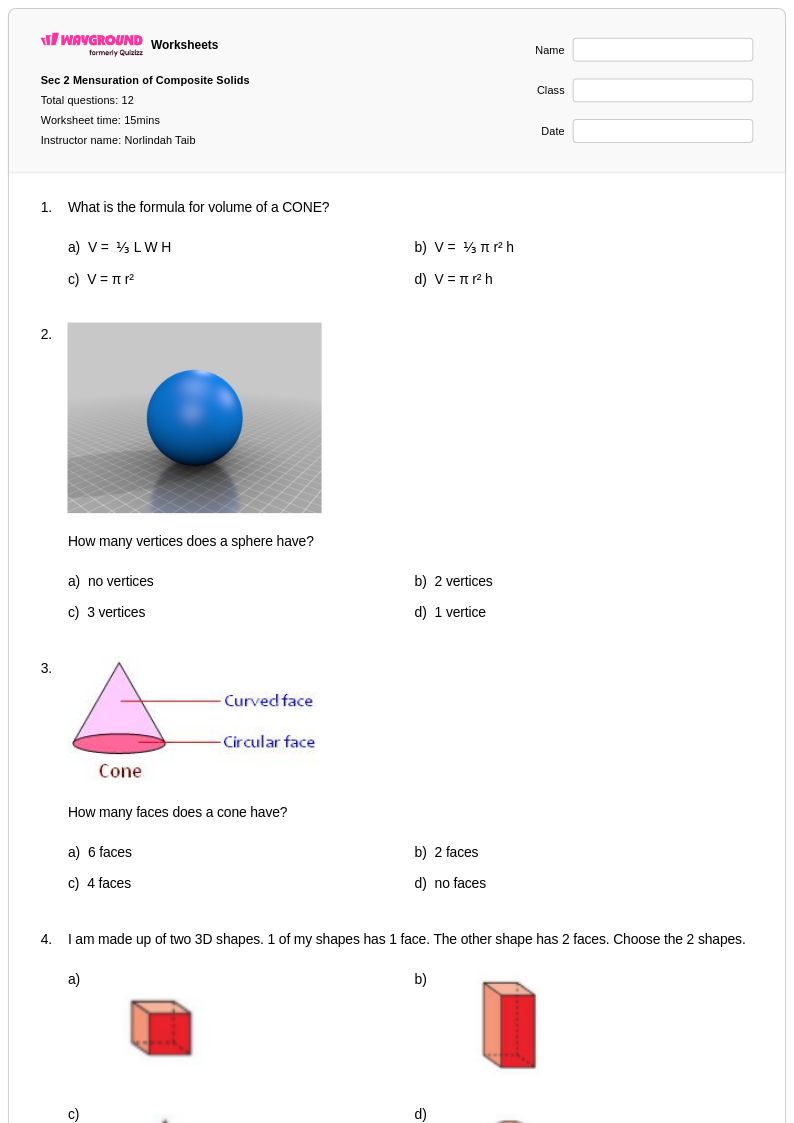
12 Q
7th - 10th
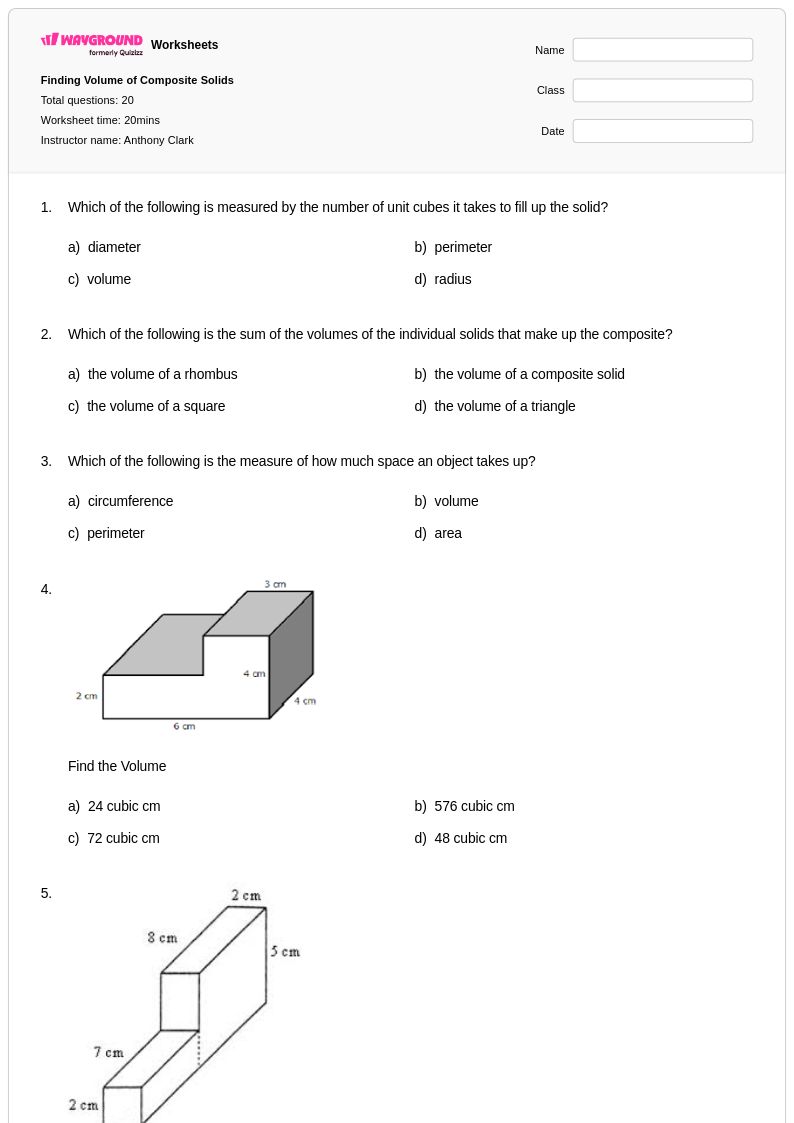
20 Q
10th - Uni
Explore Other Subject Worksheets for class 10
Explore printable Composite Solids worksheets for Class 10
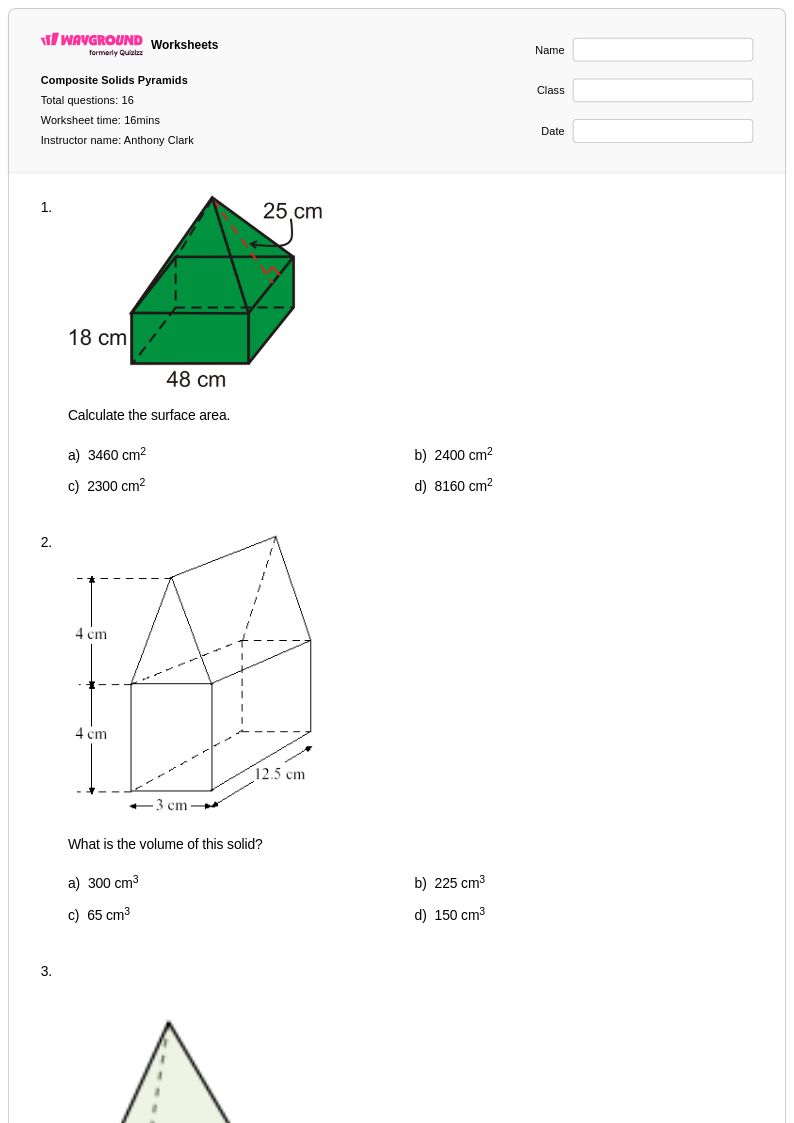
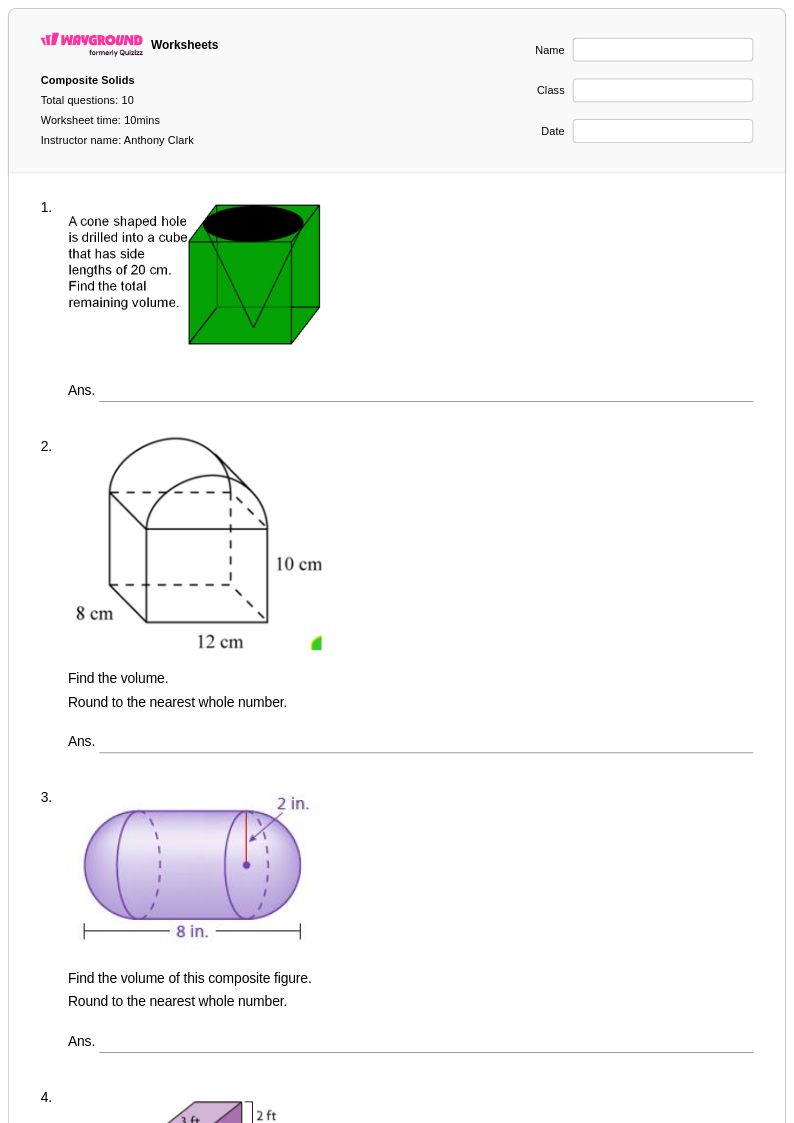
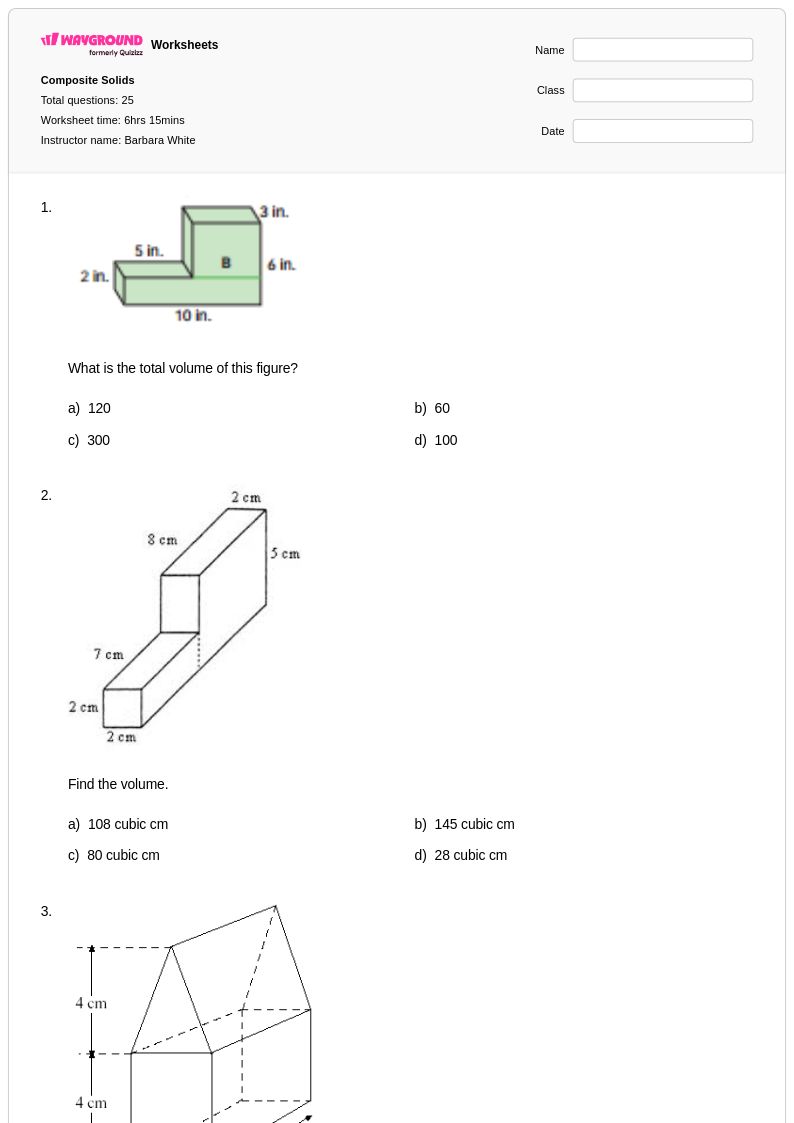
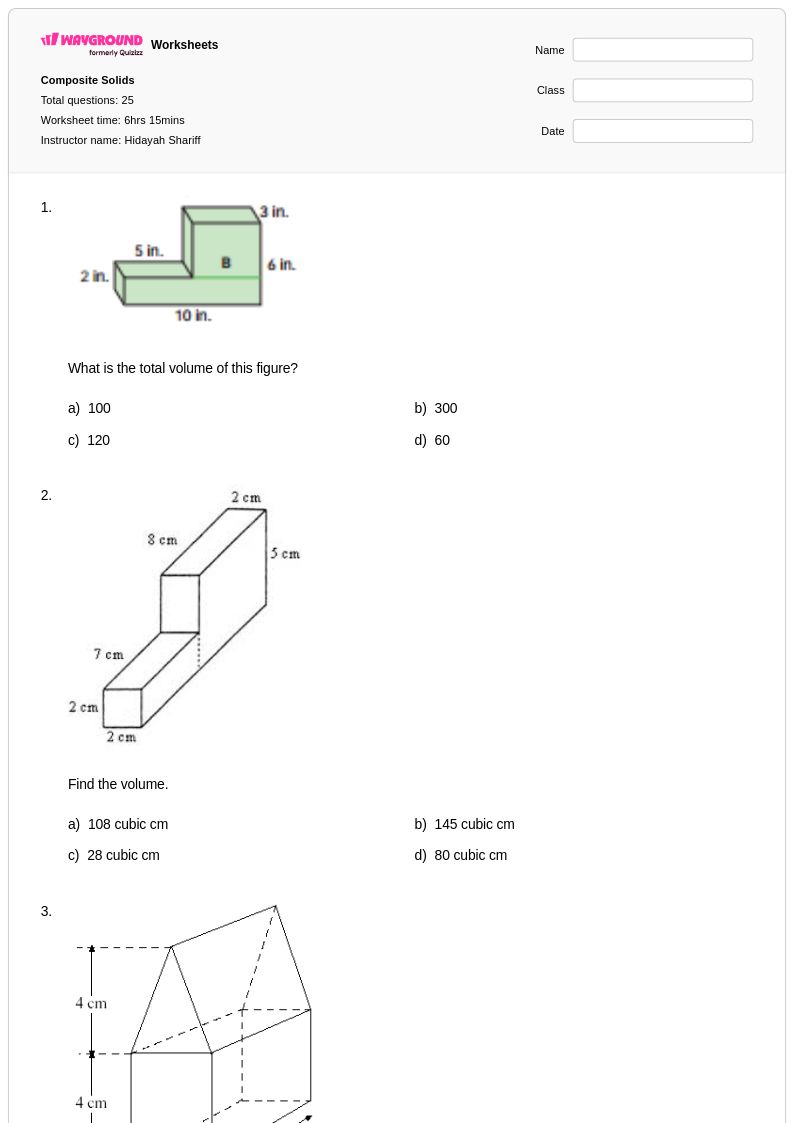
Composite solids worksheets for Class 10 students available through Wayground (formerly Quizizz) provide comprehensive practice with three-dimensional figures formed by combining basic geometric shapes such as cylinders, cones, prisms, pyramids, and spheres. These carefully designed practice problems strengthen students' ability to calculate surface area and volume of complex solids by breaking them down into their component parts, applying appropriate formulas, and combining results accurately. The worksheets emphasize critical thinking skills as students learn to visualize composite figures, identify constituent shapes, and determine the most efficient solution strategies. Each printable resource includes detailed answer keys that guide students through step-by-step solutions, making these free materials invaluable for both classroom instruction and independent study of advanced geometric concepts.
Wayground (formerly Quizizz) supports mathematics educators with an extensive collection of teacher-created composite solids worksheets that can be easily accessed through robust search and filtering capabilities. The platform's millions of educational resources are aligned with curriculum standards and offer differentiation tools that allow teachers to customize difficulty levels, problem types, and mathematical complexity to meet diverse student needs. These flexible worksheet collections are available in both printable pdf format and interactive digital versions, enabling seamless integration into various instructional approaches. Teachers can efficiently plan targeted skill practice sessions, provide remediation for students struggling with volume and surface area calculations, or offer enrichment opportunities for advanced learners ready to tackle more sophisticated composite solid problems involving irregular combinations and real-world applications.
FAQs
How do I teach composite solids to Grade 10 students?
What exercises help Grade 10 students practice composite solids?
What errors should I watch for in Grade 10 composite solids work?
How can I assign Grade 10 composite solids worksheets on Wayground?
How do composite solids fit into the Common Core progression for high school geometry?
What grade level are these composite solids worksheets designed for?
How can I support diverse learners with Grade 10 composite solids practice?