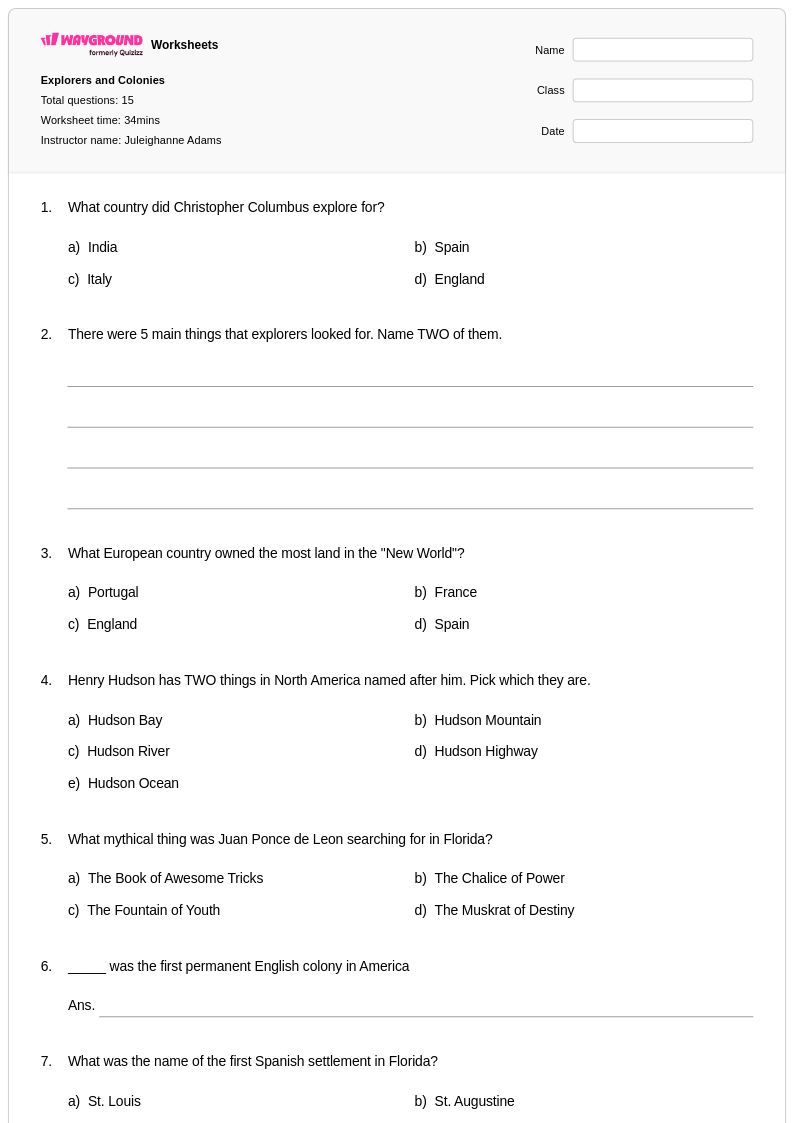
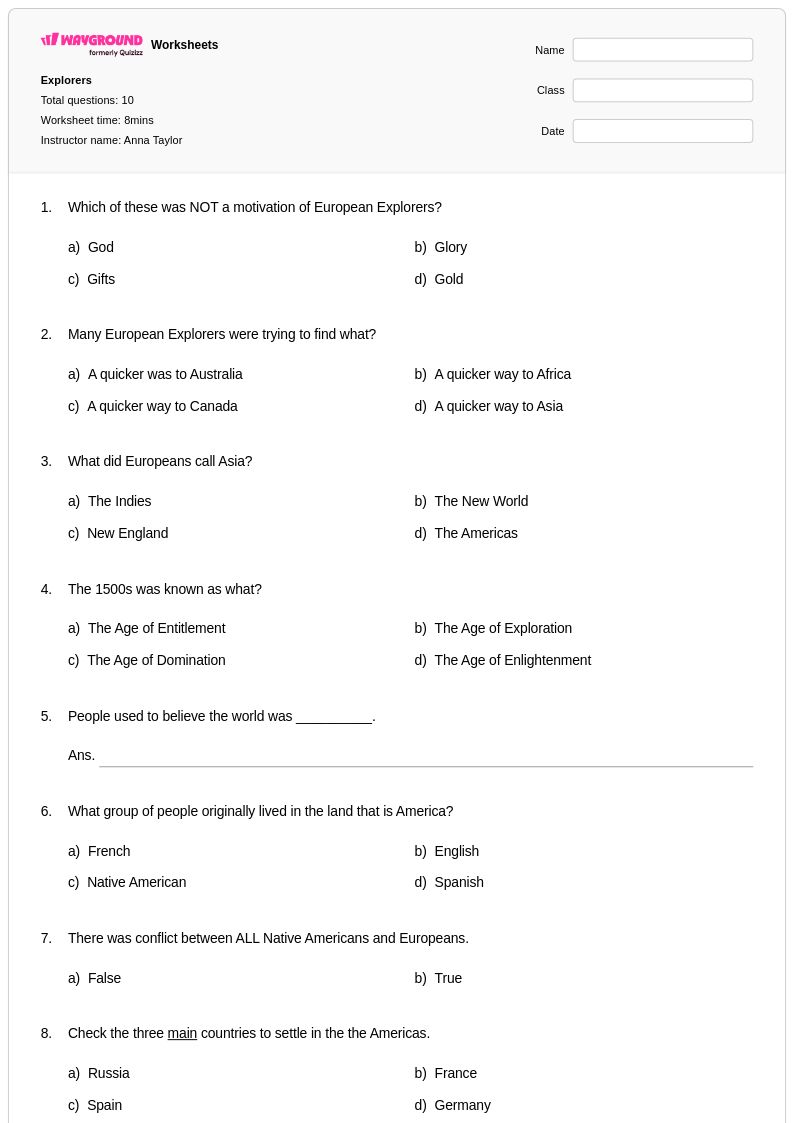
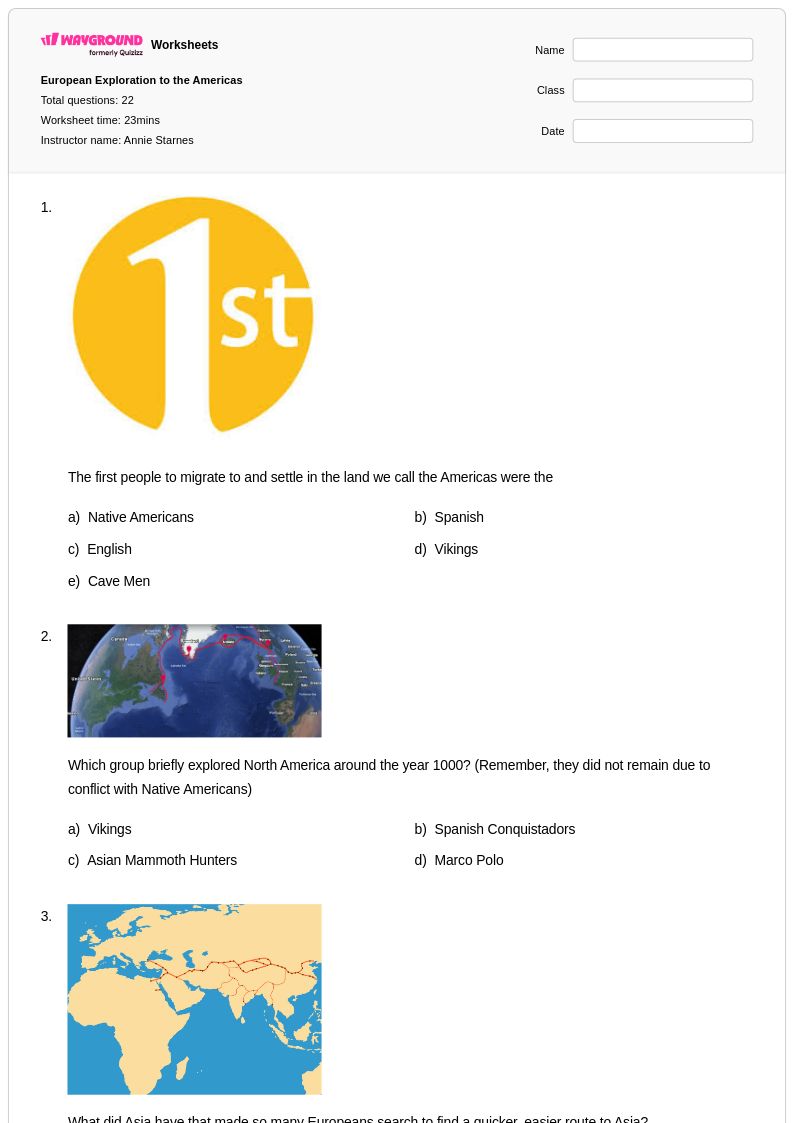
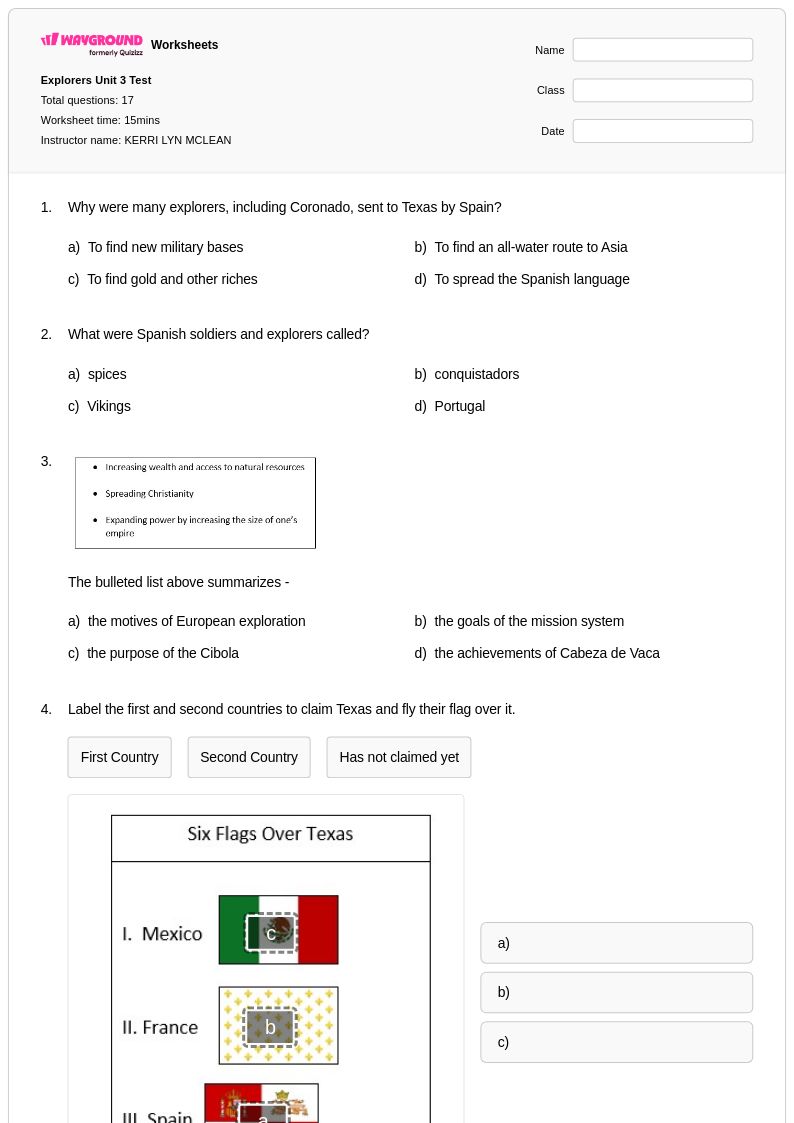
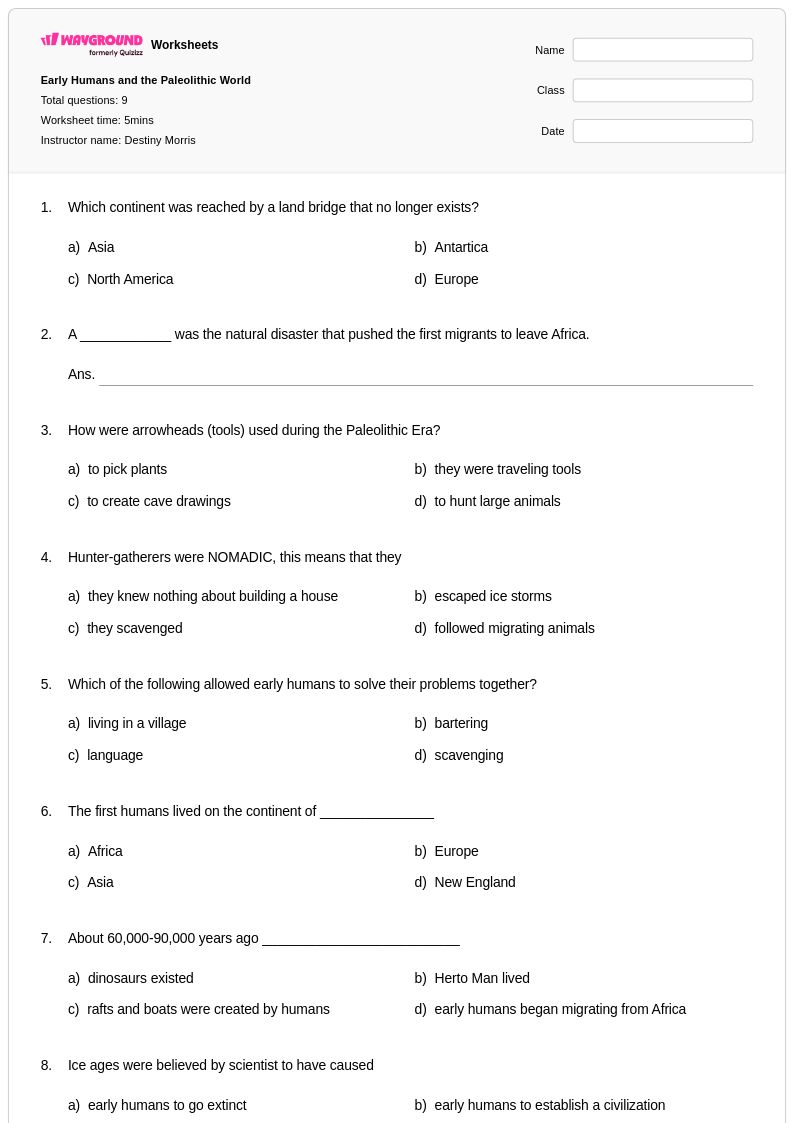
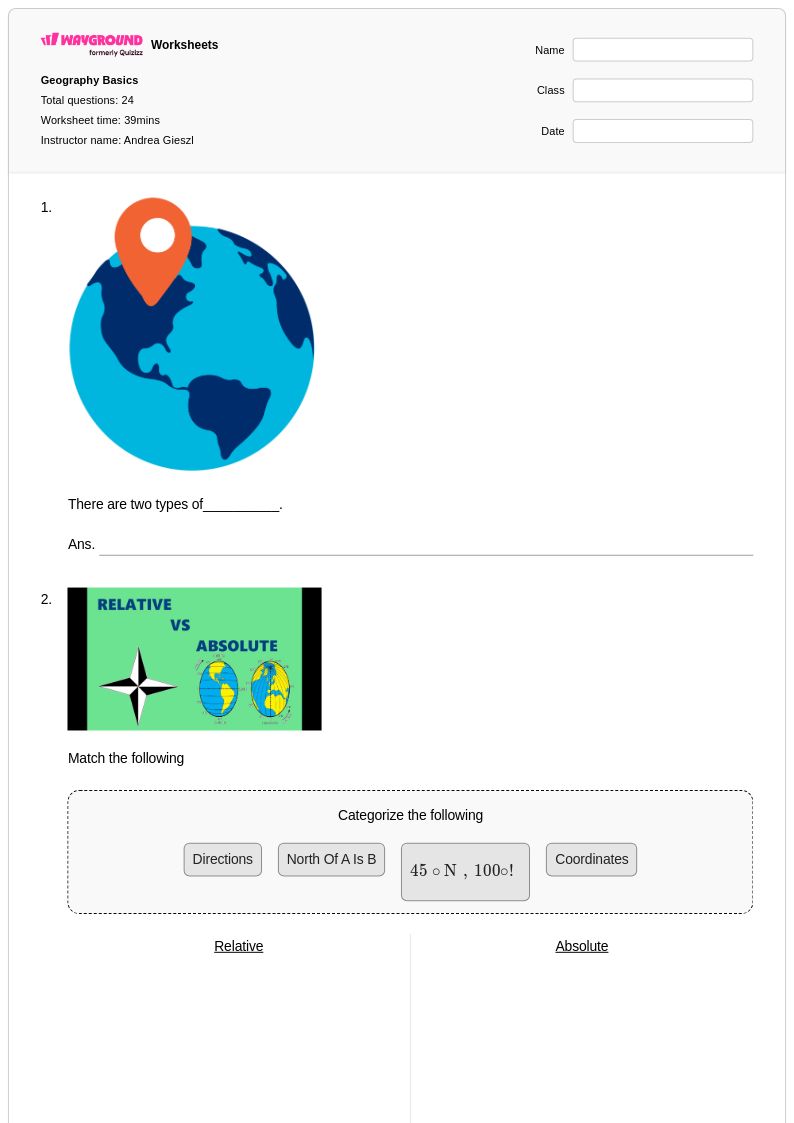
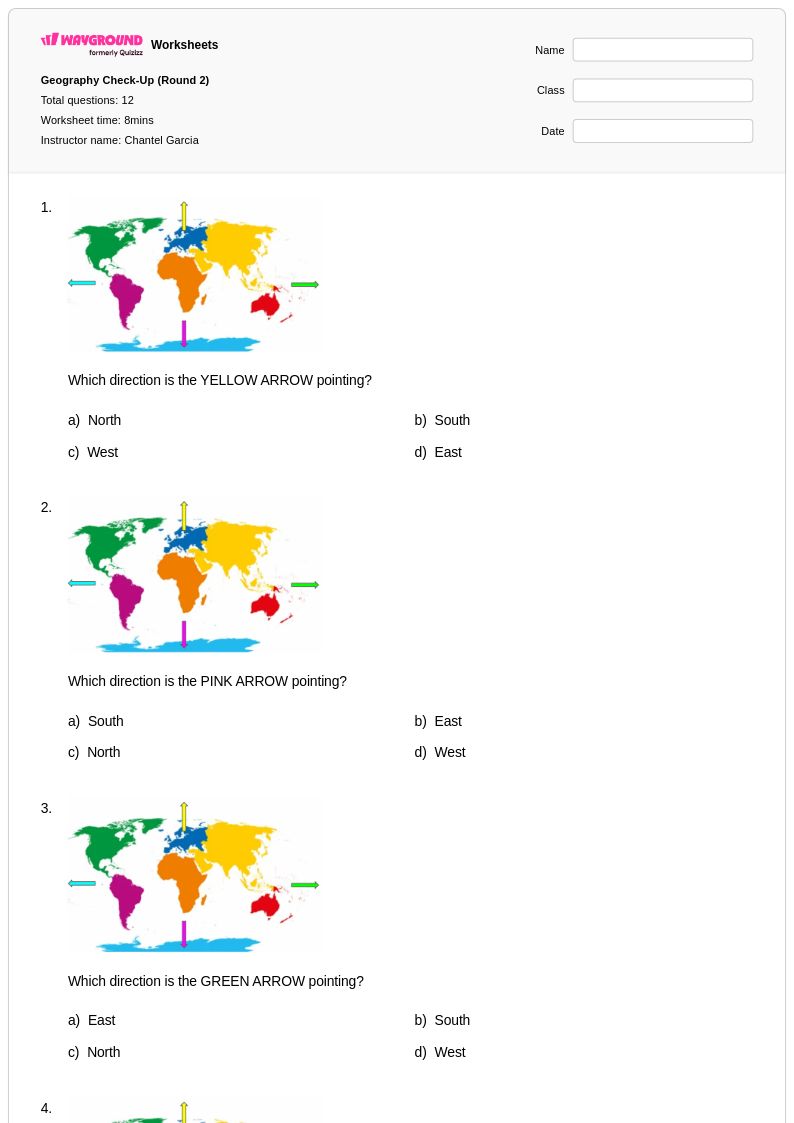
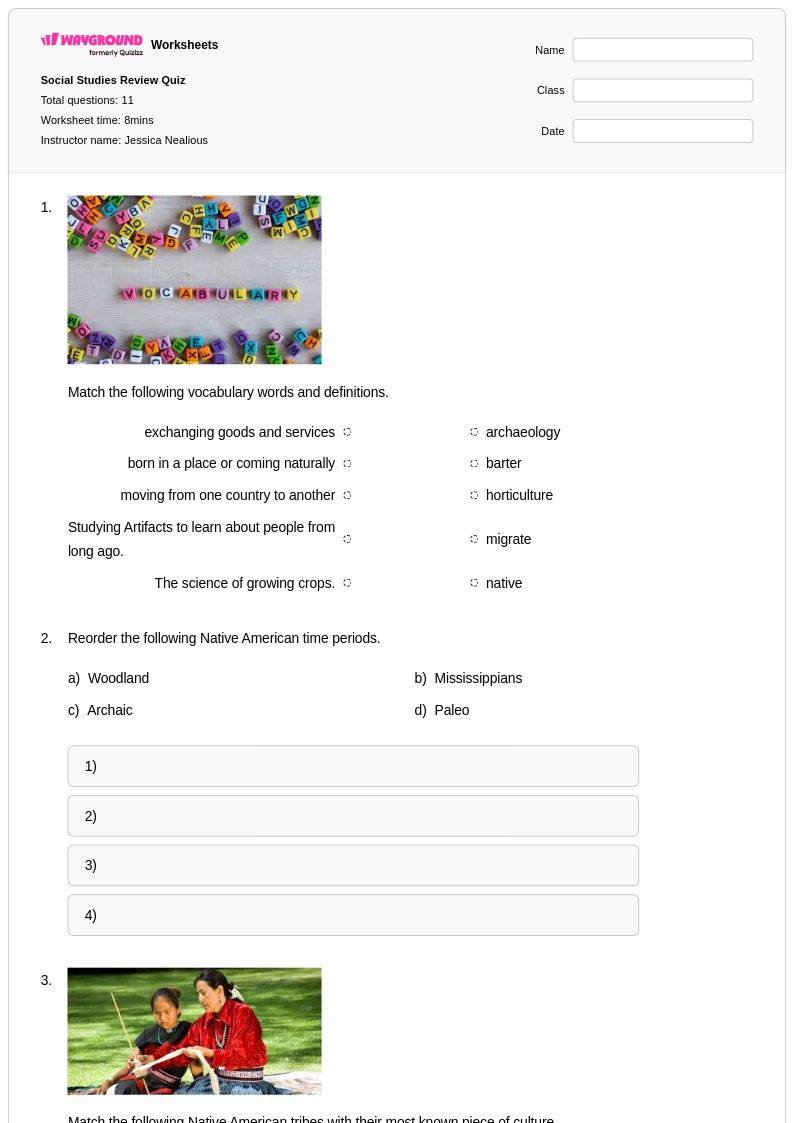
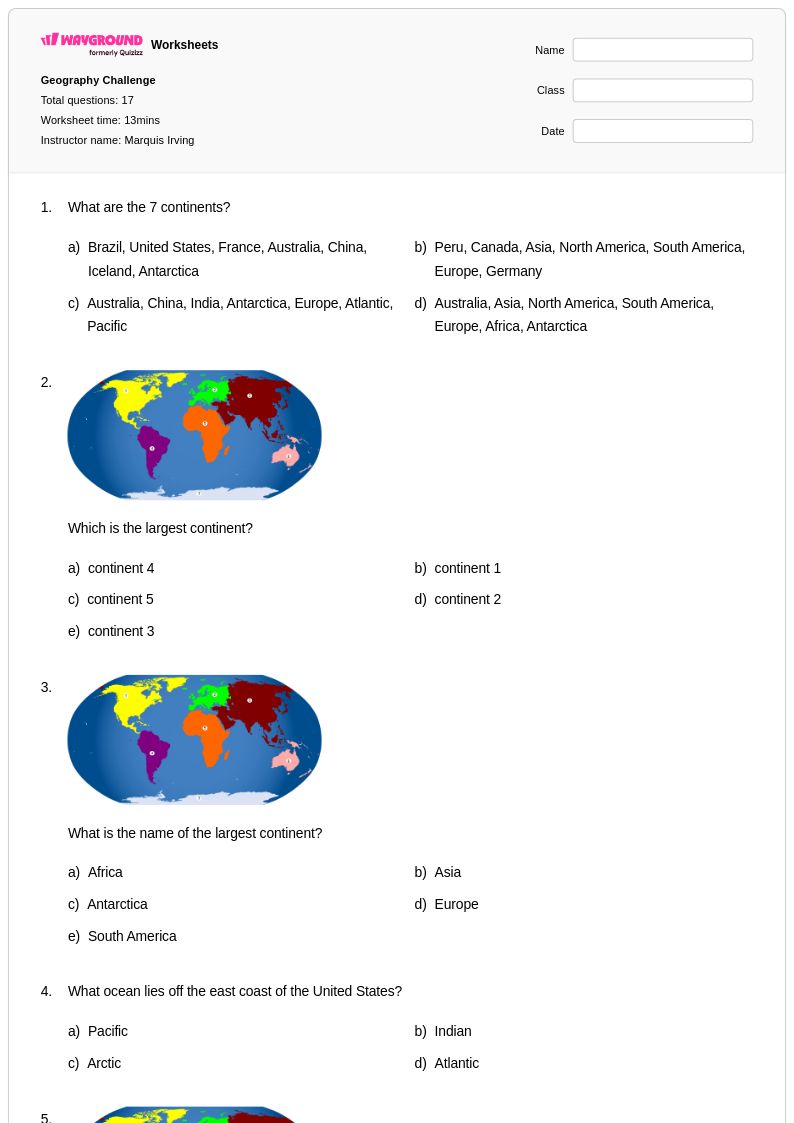
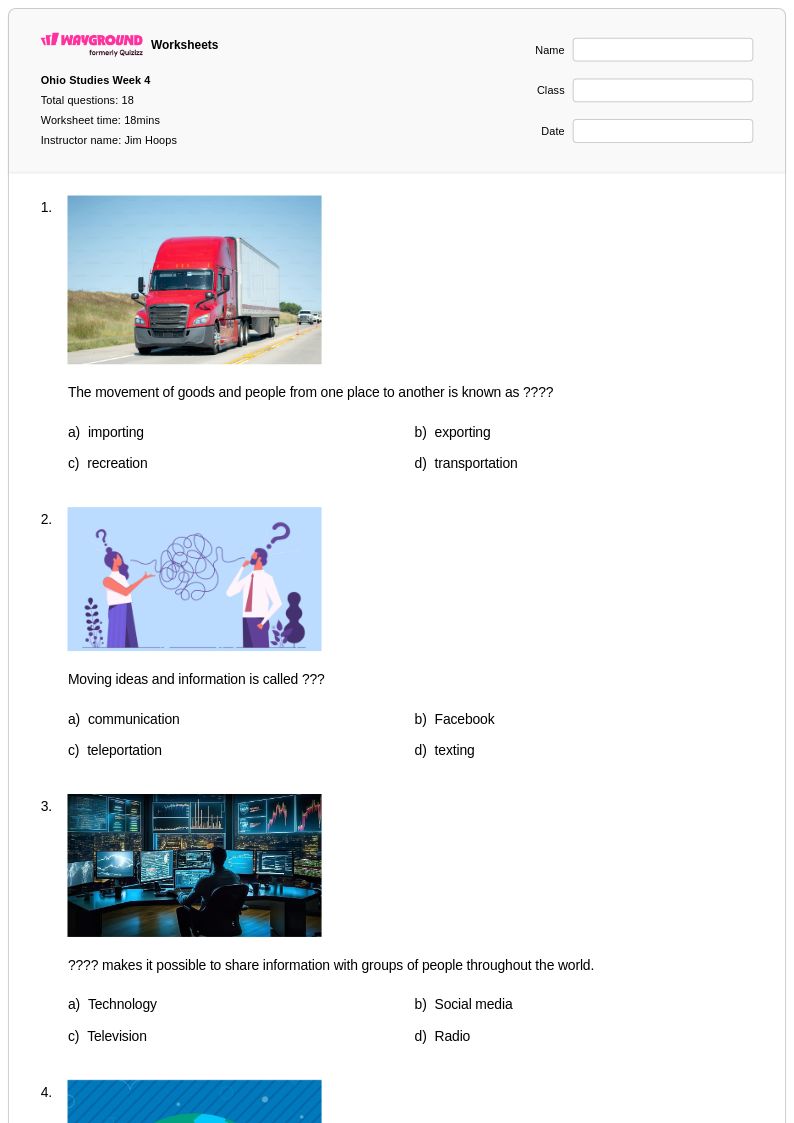
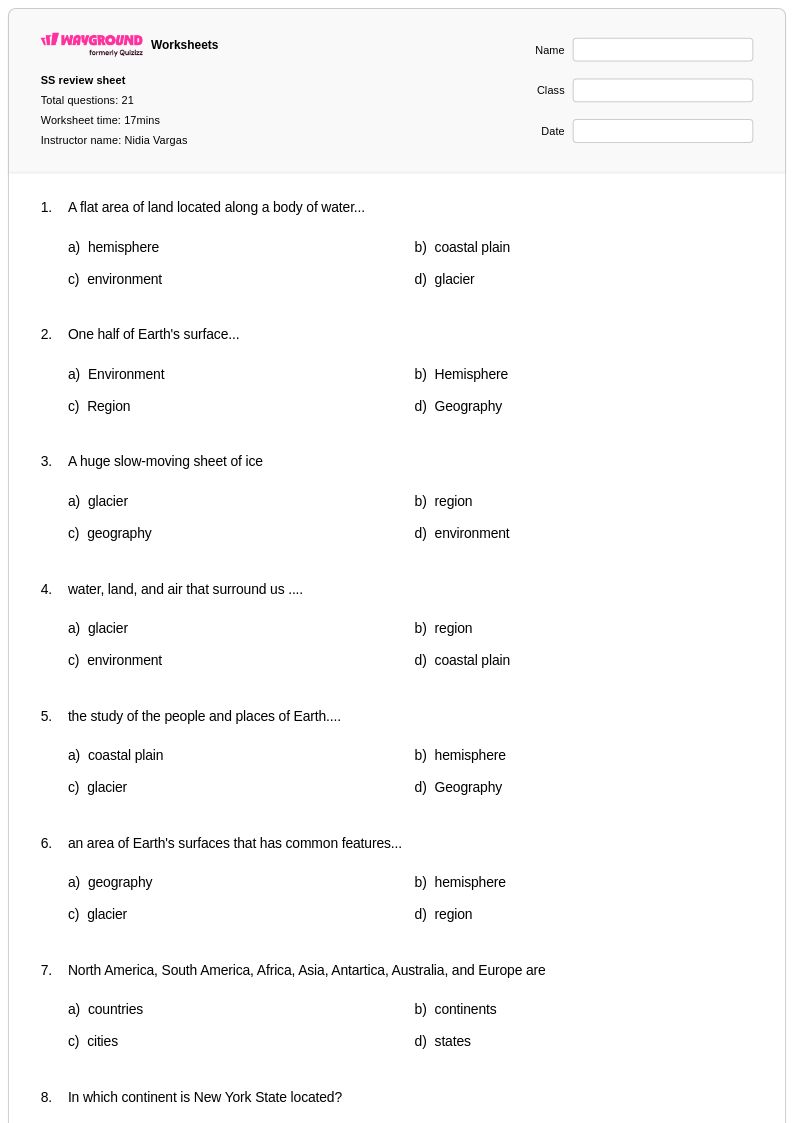
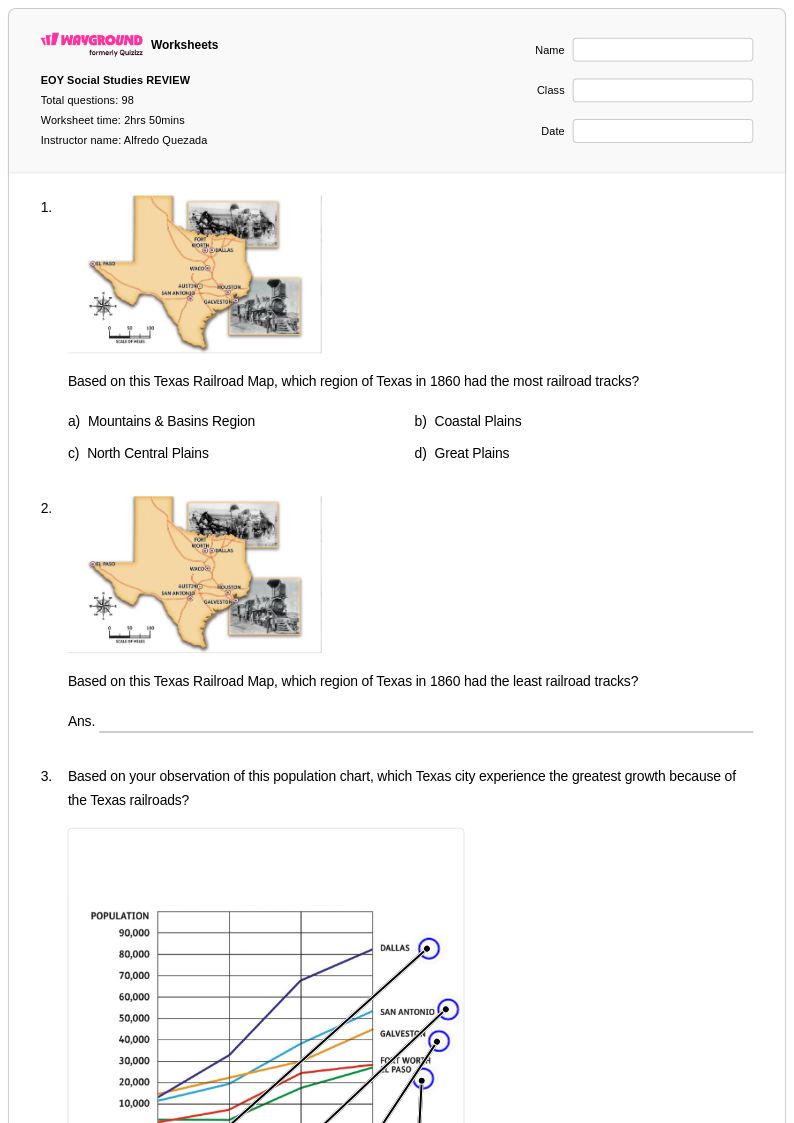
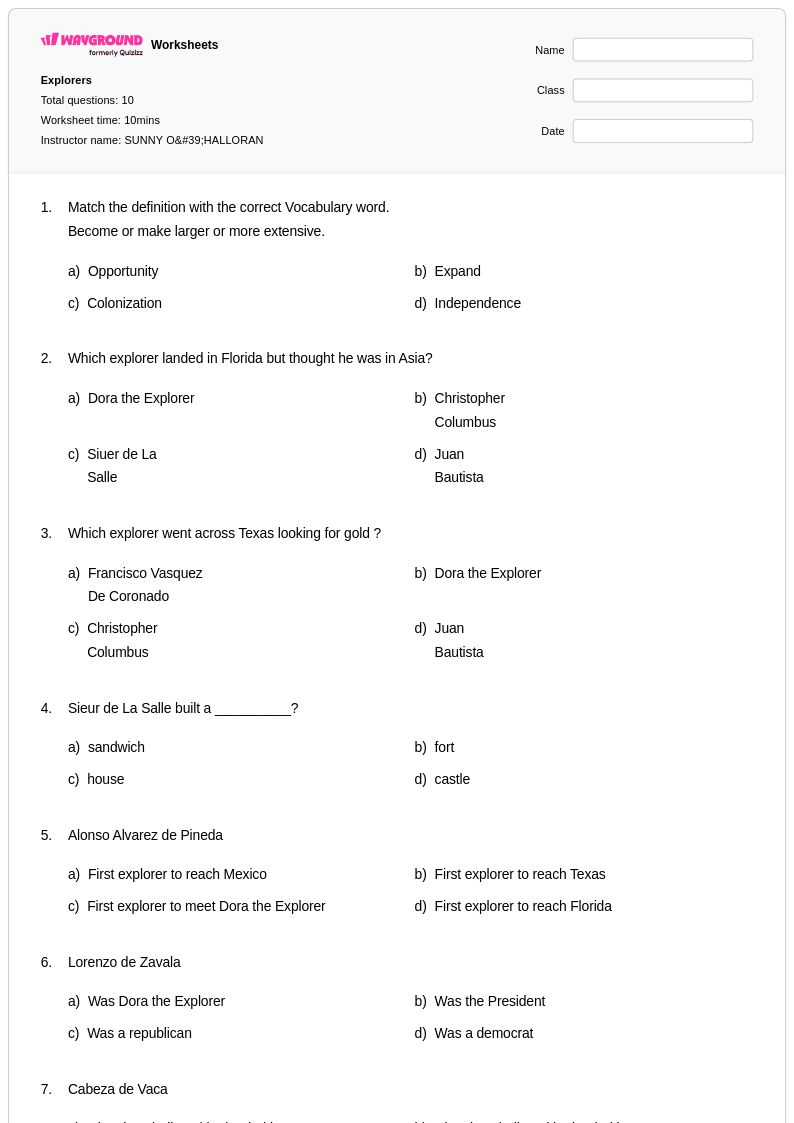
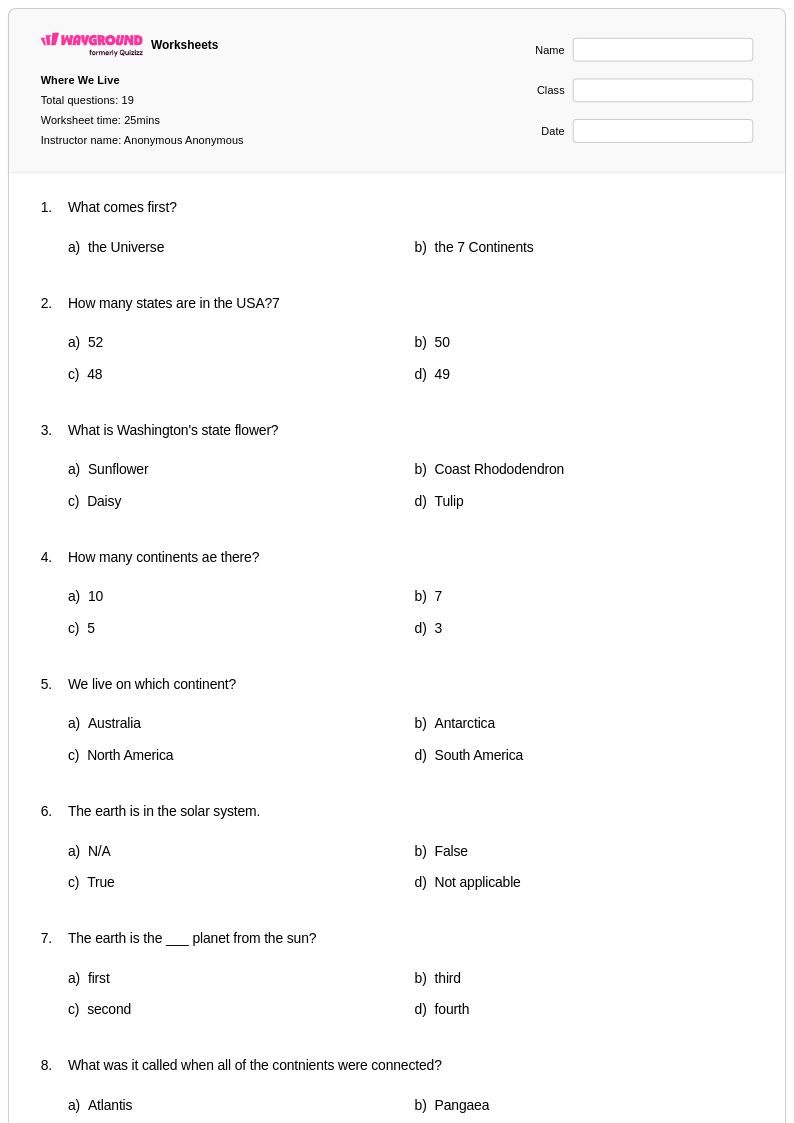
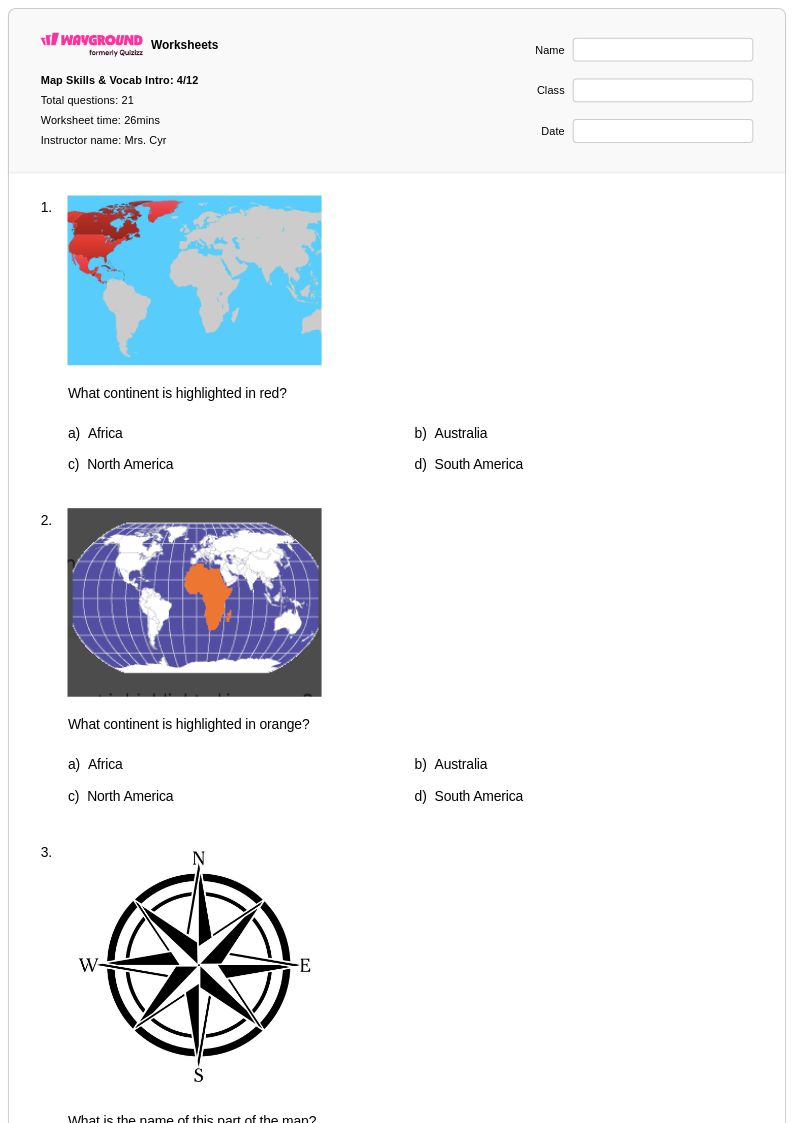
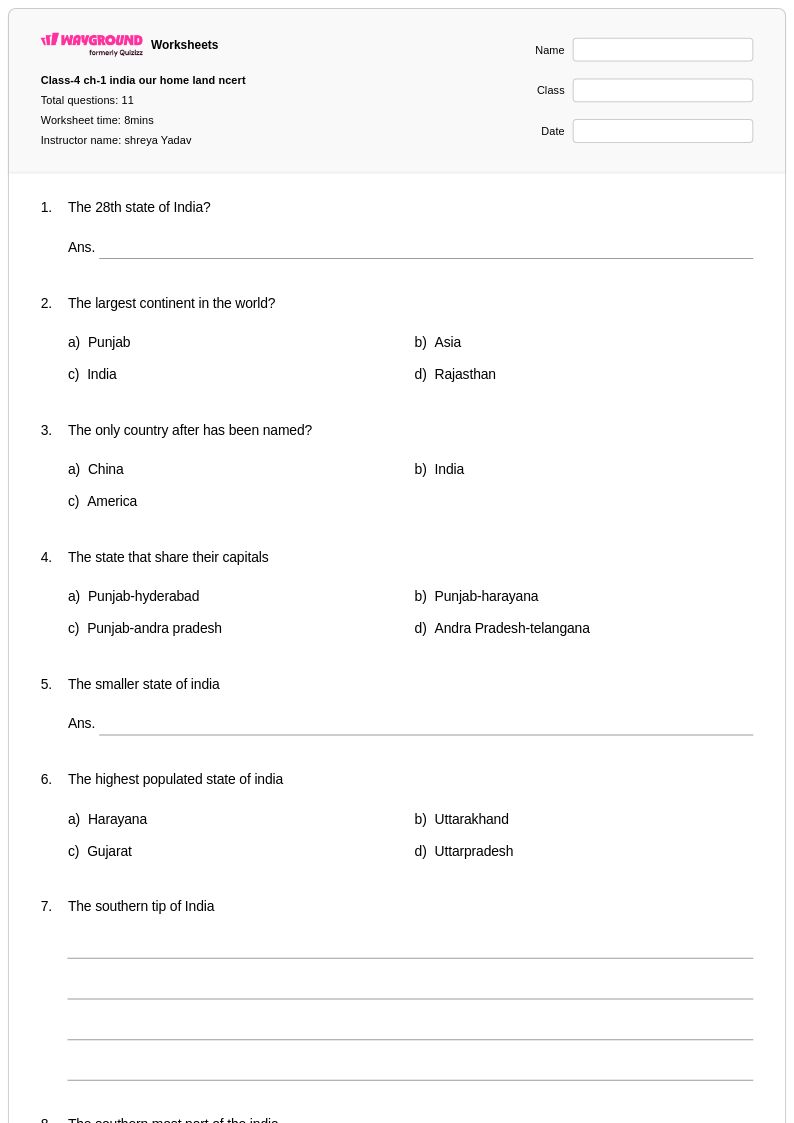
Explore Wayground's comprehensive collection of free Class 4 Asia geography worksheets and printables with answer keys, helping students master Asian countries, capitals, landforms, and cultural features through engaging practice problems and educational PDF resources.
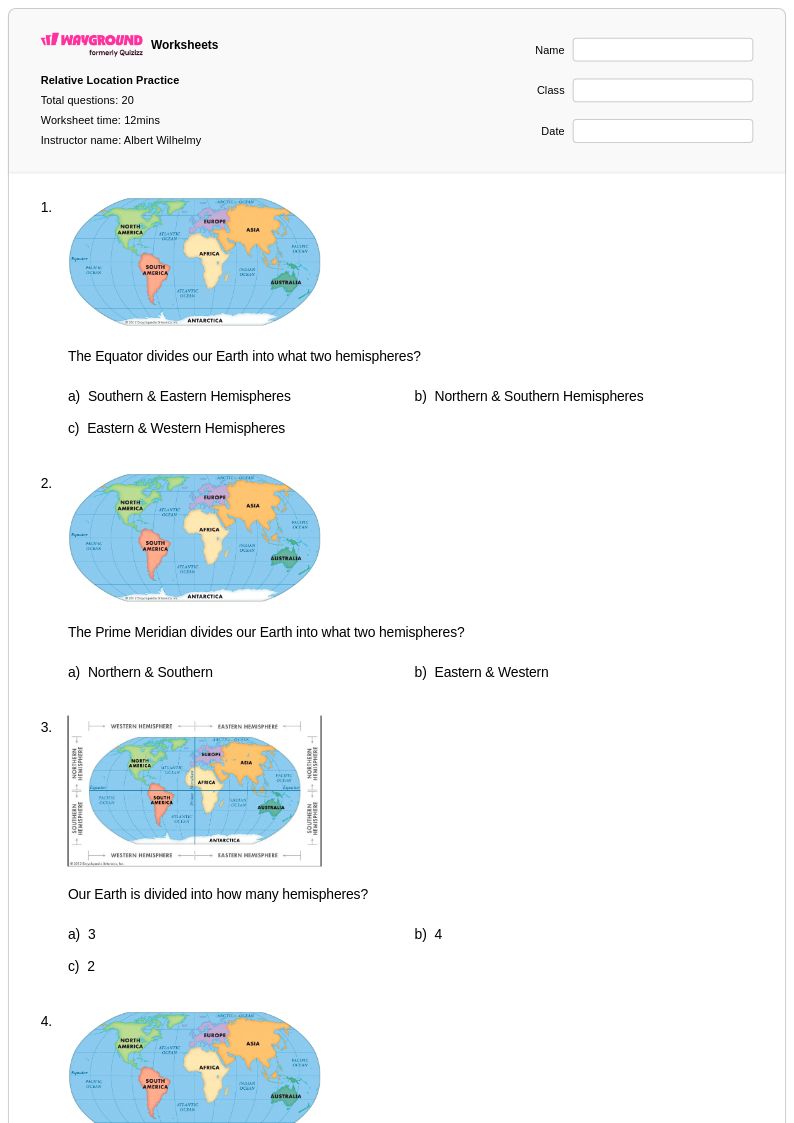
Asia worksheets for Class 4 students available through Wayground (formerly Quizizz) provide comprehensive exploration of the world's largest continent, covering essential geographic concepts including countries, capitals, major landforms, climate zones, and cultural regions. These educational resources strengthen fundamental map reading skills, spatial reasoning abilities, and geographic literacy while introducing fourth-grade learners to Asia's diverse physical features such as the Himalayan mountain range, major river systems like the Yangtze and Ganges, and significant bodies of water including the Arabian Sea and Sea of Japan. Each worksheet includes detailed answer keys and practice problems designed to reinforce learning objectives, with free printable pdf formats that make classroom implementation seamless and accessible for both independent study and group activities.
Wayground (formerly Quizizz) empowers educators with millions of teacher-created Asia geography resources specifically designed for Class 4 instruction, featuring robust search and filtering capabilities that allow precise alignment with curriculum standards and learning objectives. The platform's comprehensive worksheet collection supports differentiated instruction through customizable difficulty levels and flexible formatting options, enabling teachers to address diverse learning needs within their classrooms while maintaining focus on essential Asian geography concepts. These printable and digital resources, available in convenient pdf formats, facilitate effective lesson planning and provide valuable tools for remediation, enrichment, and targeted skill practice, ensuring students develop strong foundational knowledge of Asia's geographic characteristics, political boundaries, and cultural significance within the global context.
FAQs
How do I teach Asian geography to students who struggle with memorizing countries and capitals?
Breaking Asia into subregions, such as East Asia, Southeast Asia, South Asia, and Central Asia, makes the continent more manageable for students. Start with high-profile countries like China, India, and Japan before expanding outward, using labeled and blank maps together so students build recognition before recall. Repeated low-stakes practice with map identification activities reinforces retention far more effectively than one-time memorization drills.
What exercises help students practice identifying Asia's physical features?
Map labeling exercises that ask students to locate and name major mountain ranges like the Himalayas, rivers like the Yangtze and Ganges, and climate zones give students hands-on engagement with physical geography. Pairing these with questions about how physical features influence population patterns or monsoon systems deepens conceptual understanding beyond simple identification. Asia geography worksheets that combine physical and human geography tasks in a single activity are especially effective for building geographic literacy.
What are the most common mistakes students make when studying Asian geography?
Students frequently confuse the boundaries of Asian subregions, placing countries like Kazakhstan or Afghanistan in the wrong regional category. They also tend to conflate political and physical geography, struggling to connect mountain ranges, river systems, or climate zones to the countries they influence. A third common error is assuming Asia's geography is dominated by a single cultural or economic pattern, when in fact the continent contains enormous diversity across its regions.
How can I differentiate Asia geography worksheets for students at different skill levels?
For students who need additional support, begin with worksheets focused on a single subregion or a limited set of countries before expanding to continent-wide tasks. Advanced students benefit from activities that connect physical geography to economic or demographic analysis, such as examining why major cities cluster near river systems or coastal zones. On Wayground, teachers can apply accommodations such as reduced answer choices or read-aloud support to individual students, allowing the same core worksheet to serve a range of learners without requiring separate materials.
How do I use Wayground's Asia geography worksheets in my classroom?
Wayground's Asia geography worksheets are available as printable PDFs for traditional classroom use and in digital formats for technology-integrated environments, so they work whether students are in seats or working remotely. Teachers can also host worksheets as a quiz directly on Wayground, which is useful for formative assessment or structured independent practice. Answer keys are included with every worksheet, reducing prep time and making it straightforward to review results with the class.
How do I teach students to understand Asia's monsoon system and climate zones?
Introduce the monsoon system by first establishing Asia's physical geography, particularly the role of the Himalayas in blocking and channeling air masses across South and Southeast Asia. Visual mapping activities that ask students to shade or label climate zones alongside physical features help them see the direct relationship between landforms and weather patterns. Following up with questions about how monsoons affect agriculture and population density in countries like India and Bangladesh connects climate geography to human geography in a meaningful way.