Free Printable Atomic Bomb Development Worksheets for Class 10
Class 10 Social Studies printables explore atomic bomb development during World War 2, featuring free worksheets with practice problems and answer keys to help students understand this pivotal historical moment.
Explore printable Atomic Bomb Development worksheets for Class 10
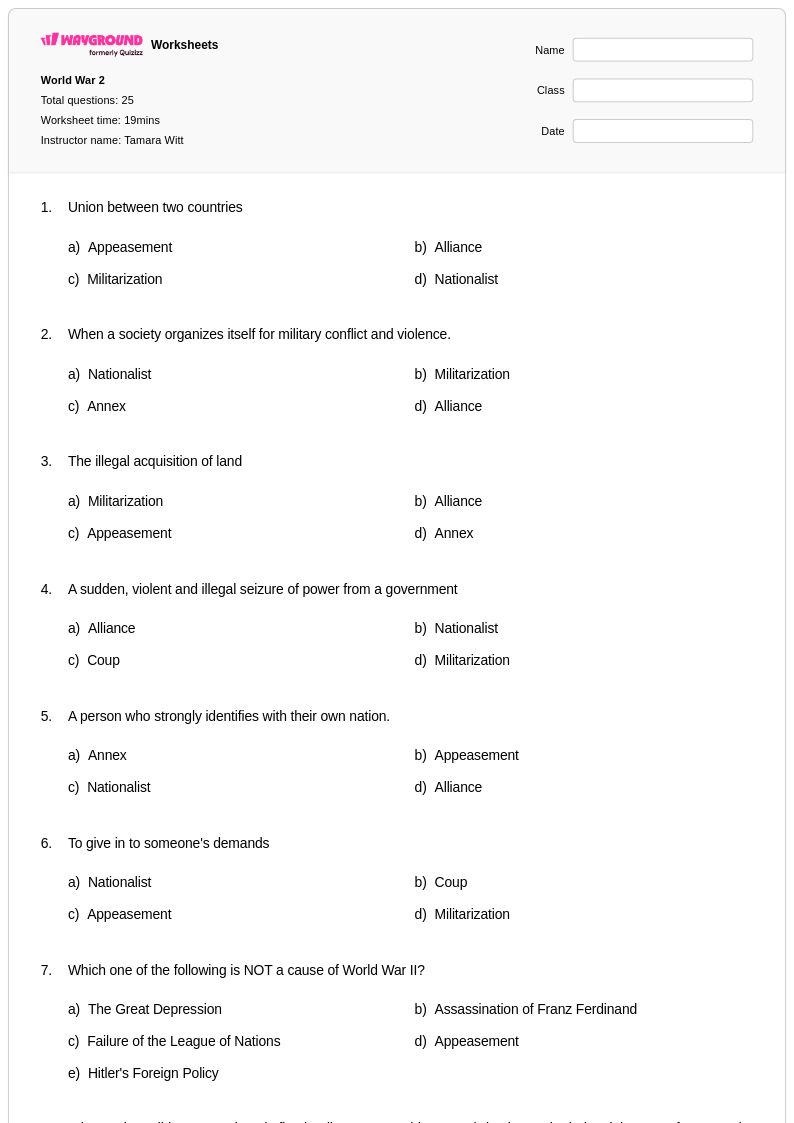
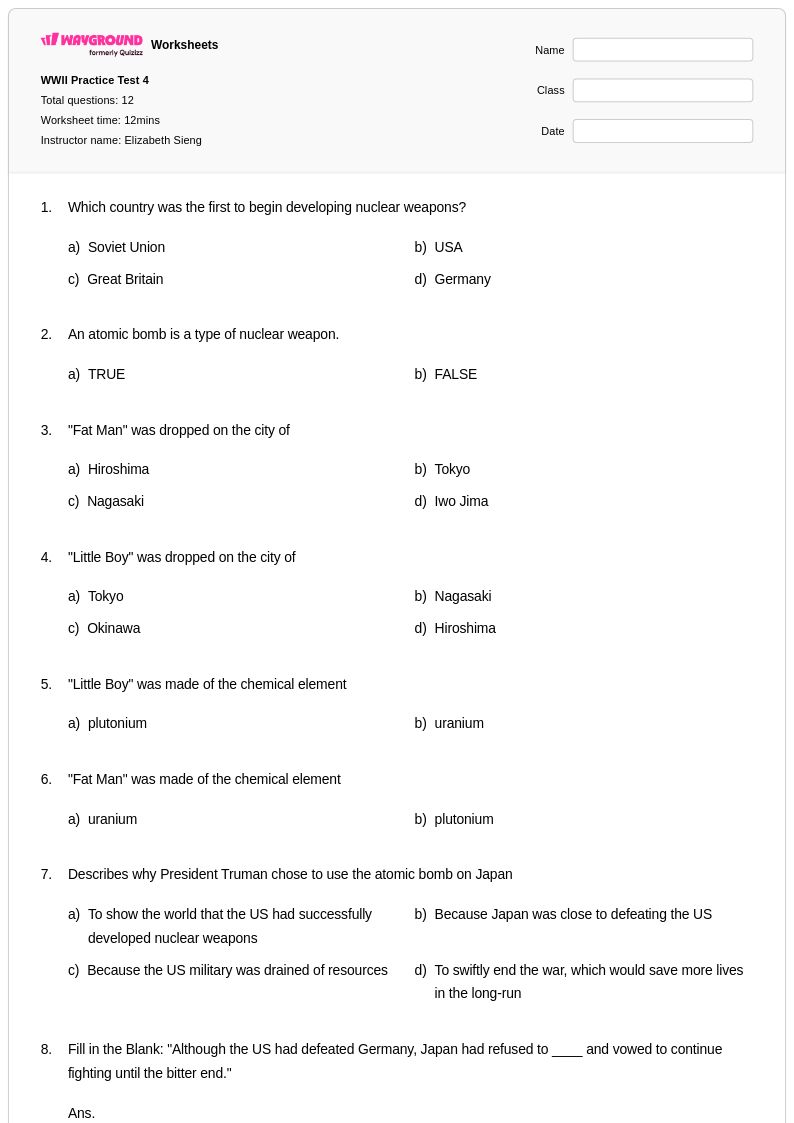
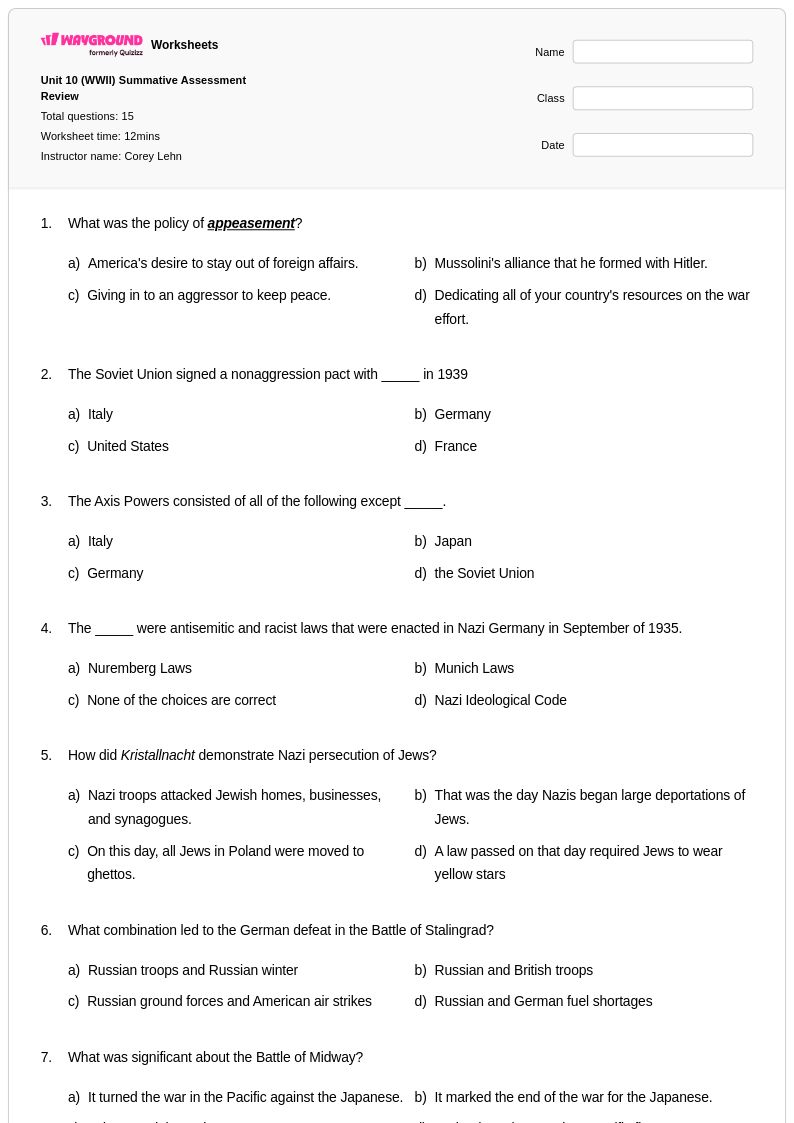
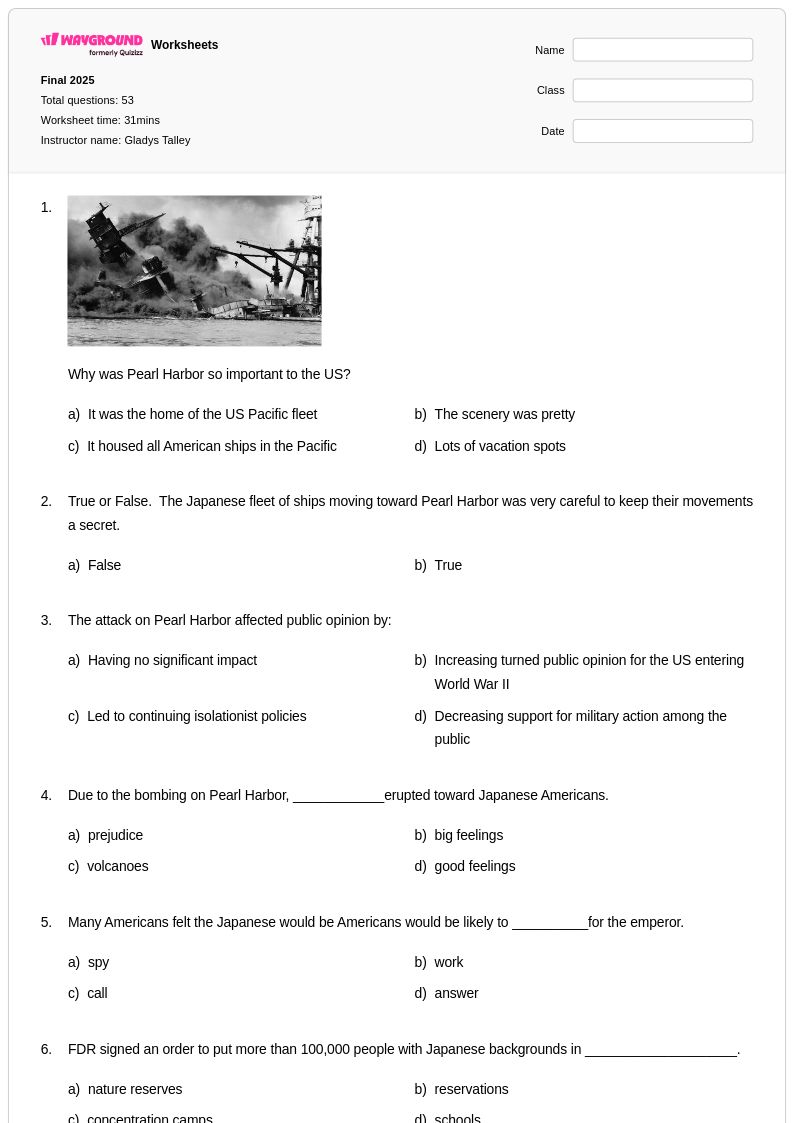
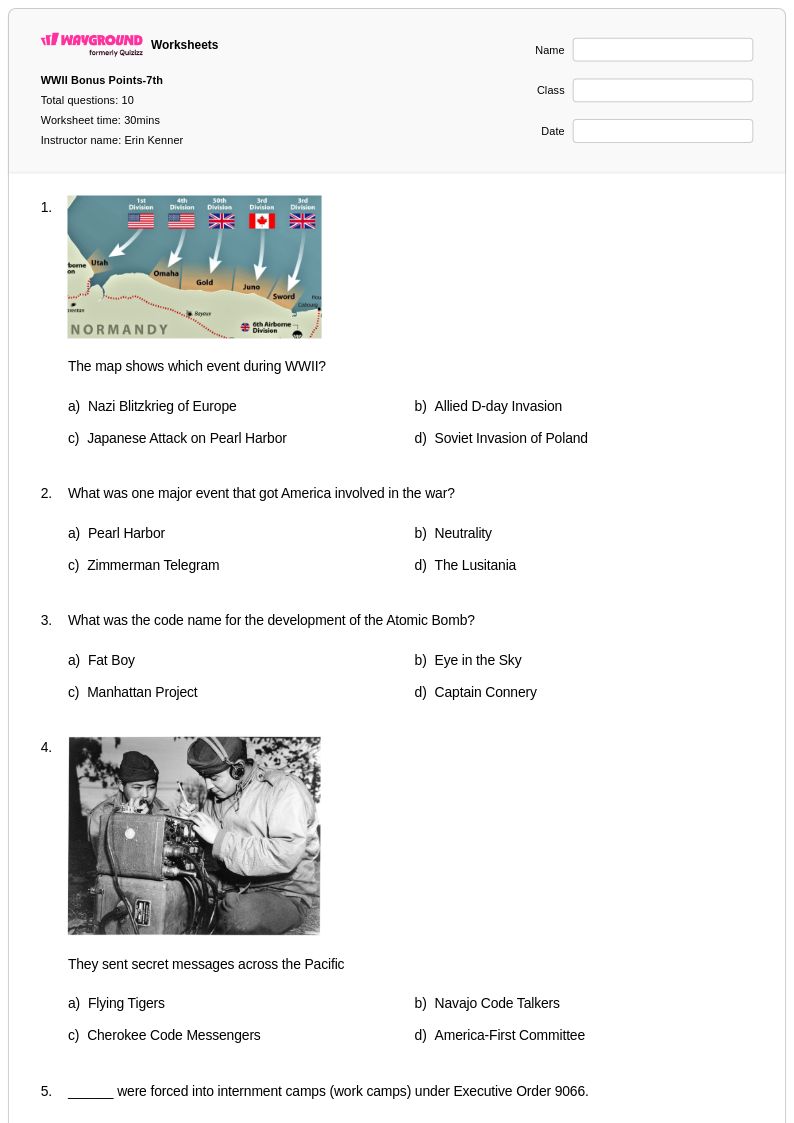
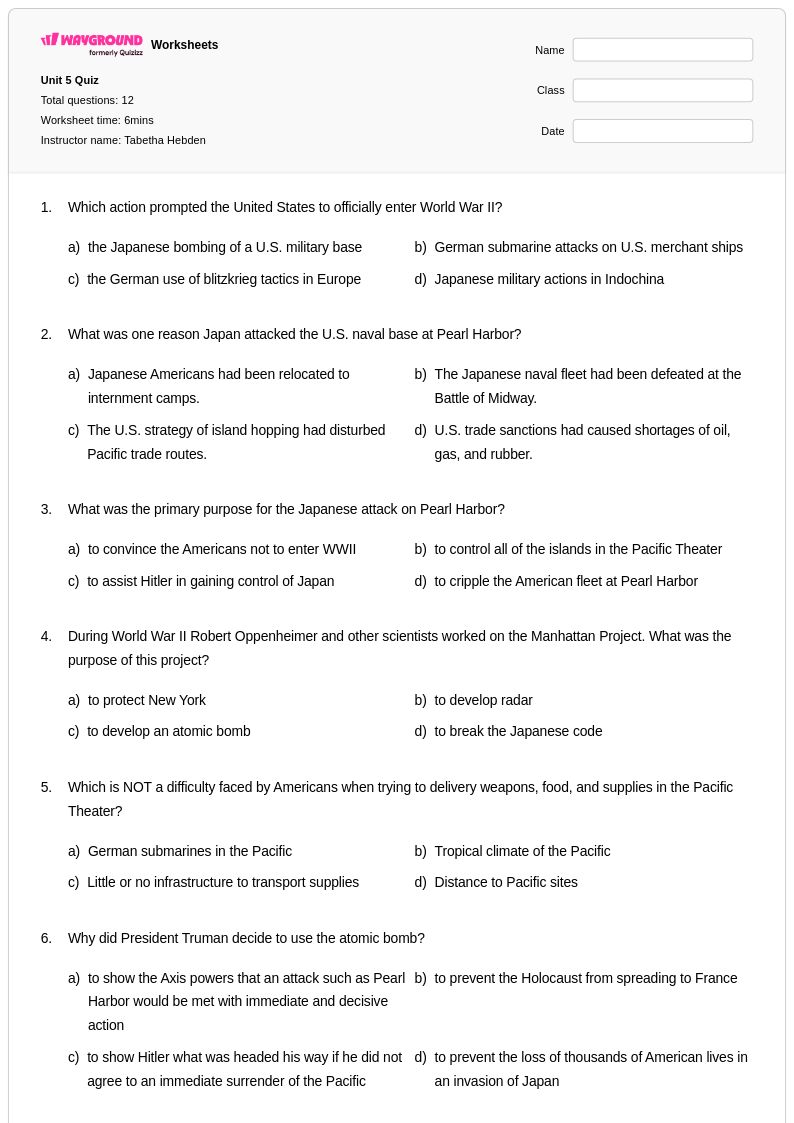
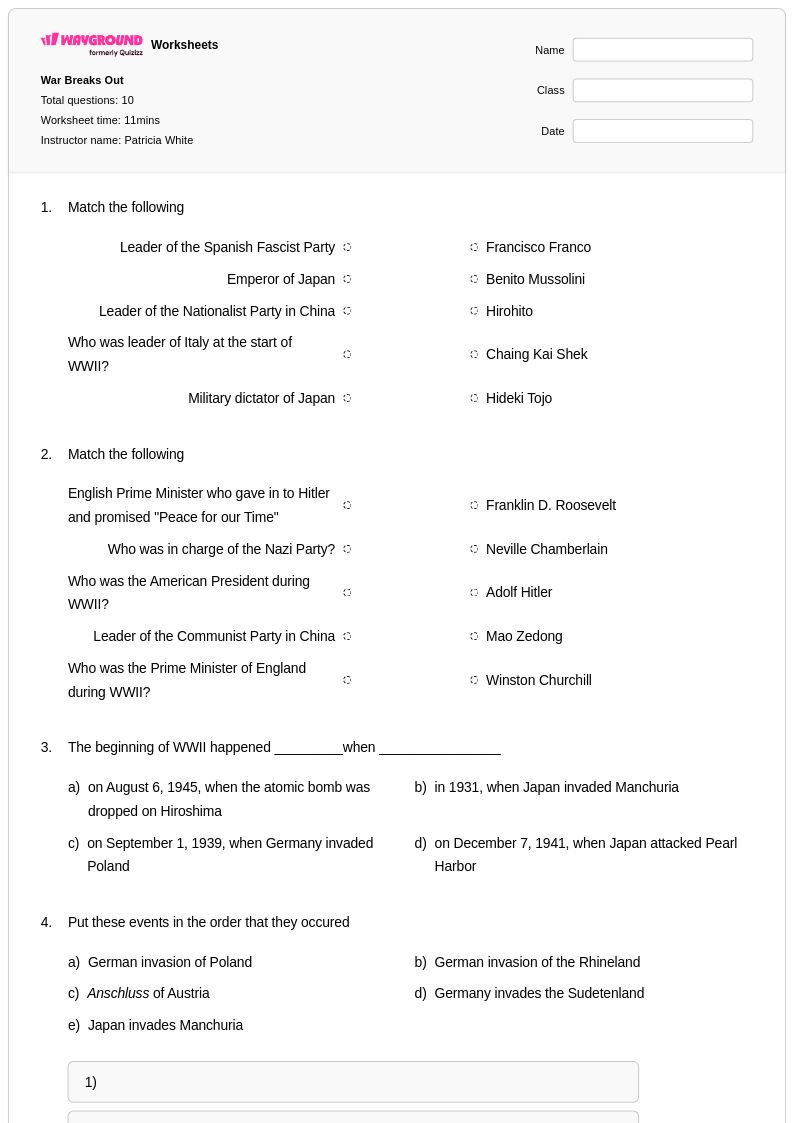
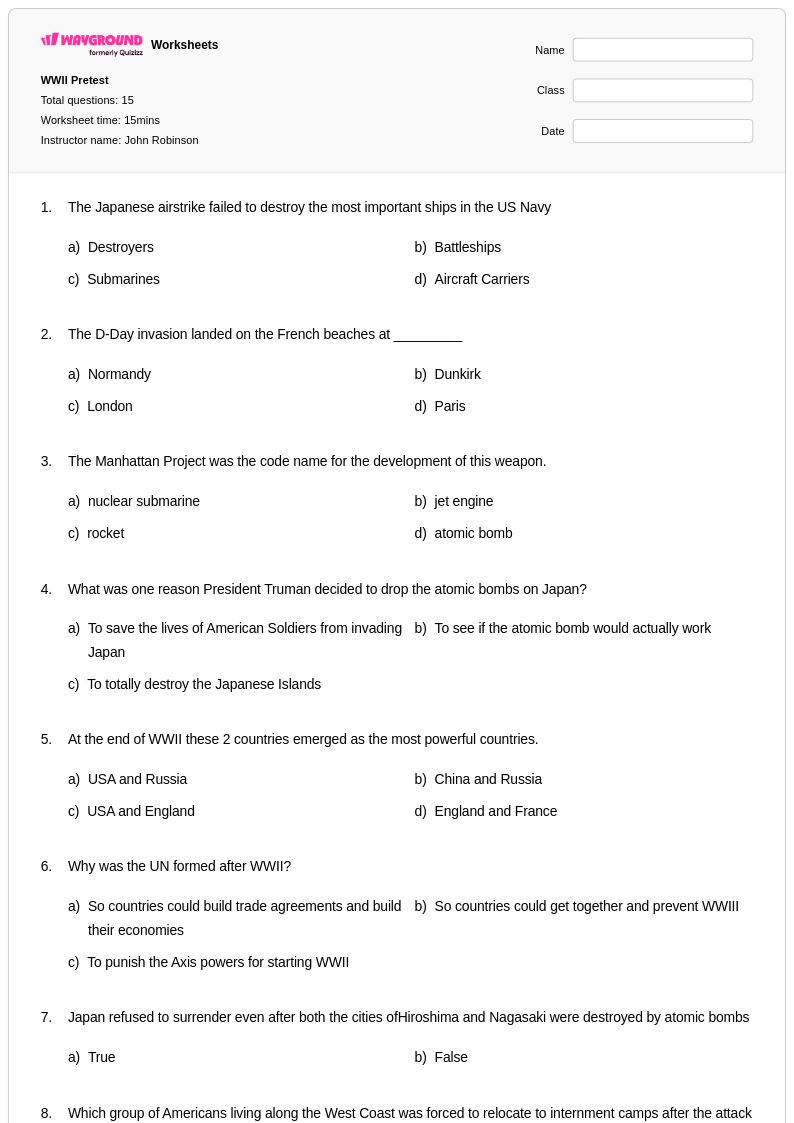
Atomic bomb development worksheets for Class 10 students provide comprehensive exploration of one of World War 2's most pivotal and controversial scientific achievements. These educational resources guide students through the complex Manhattan Project, examining the scientific breakthroughs, key figures like J. Robert Oppenheimer and Enrico Fermi, and the political decisions that led to the creation of nuclear weapons. Students engage with primary source documents, analyze the ethical implications of atomic warfare, and evaluate the impact of nuclear technology on the war's conclusion and subsequent global politics. Each worksheet includes detailed answer keys and practice problems that challenge students to think critically about the intersection of science, warfare, and morality, while free printable pdf formats make these resources accessible for both classroom instruction and independent study.
Wayground, formerly Quizizz, empowers educators with millions of teacher-created resources specifically designed to enhance World War 2 instruction at the Class 10 level. The platform's robust search and filtering capabilities allow teachers to quickly locate atomic bomb development materials that align with curriculum standards and learning objectives, while differentiation tools enable customization for diverse student needs and ability levels. Teachers can seamlessly modify worksheets to focus on specific aspects of nuclear development, from uranium enrichment processes to the bombing of Hiroshima and Nagasaki, ensuring content matches their instructional goals. Available in both printable and digital pdf formats, these resources support flexible lesson planning, targeted remediation for struggling learners, enrichment opportunities for advanced students, and ongoing skill practice that deepens understanding of this complex historical and scientific topic.
FAQs
How do I teach the Manhattan Project and atomic bomb development to students?
Teaching atomic bomb development effectively requires weaving together three distinct threads: the nuclear physics that made the bomb possible, the political decisions that drove its development, and the ethical debates that followed its use. Start by grounding students in the science of nuclear fission before moving into the historical context of World War 2 and the formation of the Manhattan Project. Incorporating primary source documents, such as letters from scientists like Einstein and Oppenheimer or declassified government memos, helps students engage critically with real decision-making rather than just memorizing events. Closing the unit with structured discussion or writing tasks around the Hiroshima and Nagasaki bombings builds essential analytical and moral reasoning skills.
What worksheets or activities help students practice key concepts from the Manhattan Project?
Effective practice activities for atomic bomb development should address both the scientific and historical dimensions of the topic. Worksheets that ask students to sequence the key milestones of the Manhattan Project, identify the contributions of specific scientists, and explain the mechanics of nuclear fission in plain language help consolidate core knowledge. Document analysis tasks using primary sources such as Truman's decision memos or scientists' personal accounts push students beyond recall into evaluation and argumentation. Practice problems with structured answer keys allow students to self-check their understanding of complex concepts like fission chain reactions and the strategic rationale behind targeting decisions.
What misconceptions do students commonly have about the atomic bomb and World War 2?
One of the most common misconceptions is that the atomic bomb was the sole reason Japan surrendered, when in reality historians debate a range of contributing factors including the Soviet declaration of war against Japan. Students also frequently conflate nuclear fission with nuclear fusion, which can undermine their understanding of how the bomb actually worked. Another persistent error is reducing the Manhattan Project to a single figure like Oppenheimer, overlooking the international team of physicists, engineers, and military personnel involved. Worksheets that ask students to evaluate multiple historical interpretations directly address these gaps by requiring evidence-based reasoning rather than simplified conclusions.
How can I use atomic bomb development worksheets to spark ethical debate in my classroom?
Atomic bomb development is one of the most ethically loaded topics in modern history, making it ideal for structured academic controversy or Socratic seminar formats. Assign students opposing positions on the decision to use the bomb and require them to support their arguments with historical evidence before switching sides. Worksheets that present primary source perspectives from American military leaders, Japanese civilians, and Manhattan Project scientists give students the raw material for nuanced debate. This approach develops both historical thinking and the ability to hold competing moral frameworks simultaneously, which are skills that transfer well beyond the history classroom.
How do I use Wayground's atomic bomb development worksheets in my classroom?
Wayground's atomic bomb development worksheets are available as printable PDFs for traditional classroom use and in digital formats for technology-integrated or remote learning environments, giving teachers flexibility in how they deploy them. Teachers can also host any worksheet as an interactive quiz directly on Wayground, which supports real-time student engagement and instant feedback. Each worksheet includes a complete answer key, reducing prep time and making it easier to use the materials for both instruction and assessment. For students who need additional support, Wayground's accommodation tools allow teachers to enable features such as read aloud, extended time, or reduced answer choices on a student-by-student basis without disrupting the rest of the class.
How do I differentiate atomic bomb development instruction for students at different readiness levels?
Differentiation for this topic works best when teachers vary the complexity of source materials and the cognitive demand of tasks rather than simply assigning more or less content. Struggling readers benefit from scaffolded documents with guided annotation prompts, while advanced students can engage with competing historiographical interpretations of the decision to drop the bomb. On Wayground, teachers can apply individual accommodations such as read aloud for students who need audio support, reduced answer choices to lower cognitive load, or extended time for students who require it, all without signaling those adjustments to the rest of the class. These settings are saved per student and carry over across future sessions, making differentiation sustainable rather than a one-time setup.