Free Printable Blending Syllables Worksheets for Kindergarten
Wayground's free kindergarten blending syllables worksheets help young learners practice combining syllable sounds to form complete words through engaging printables, practice problems, and comprehensive answer keys in PDF format.
Explore printable Blending Syllables worksheets for Kindergarten
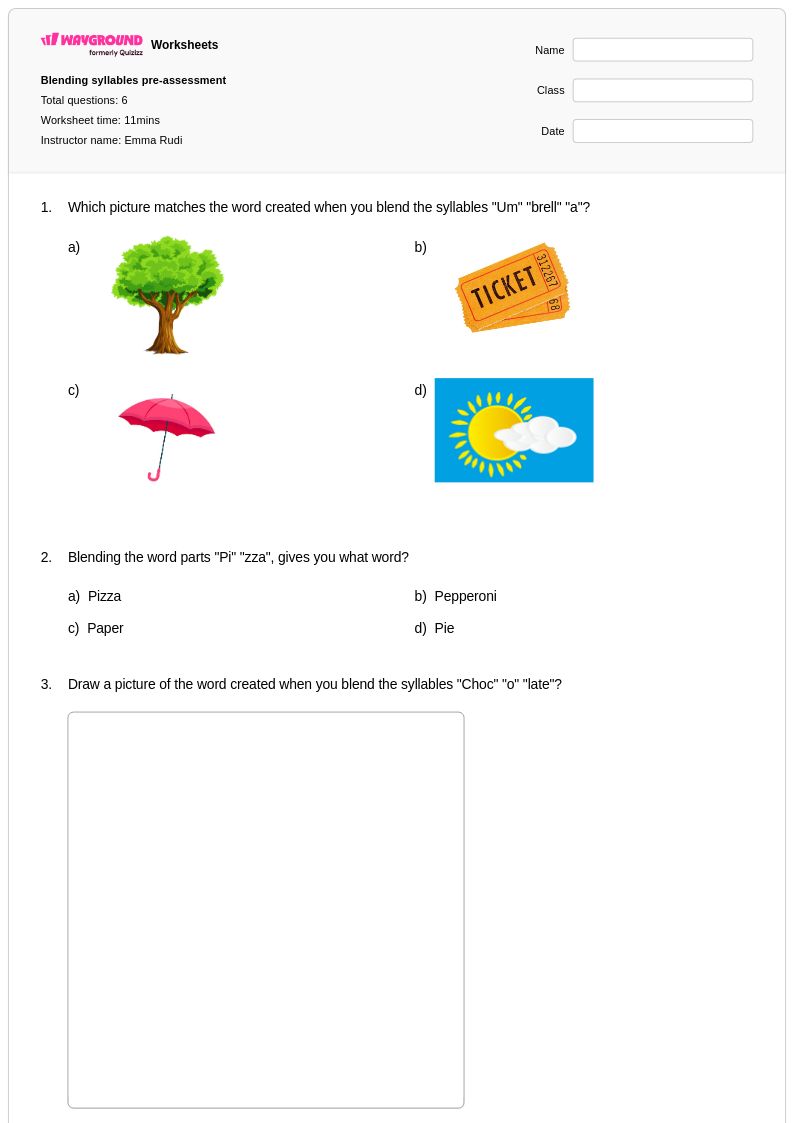
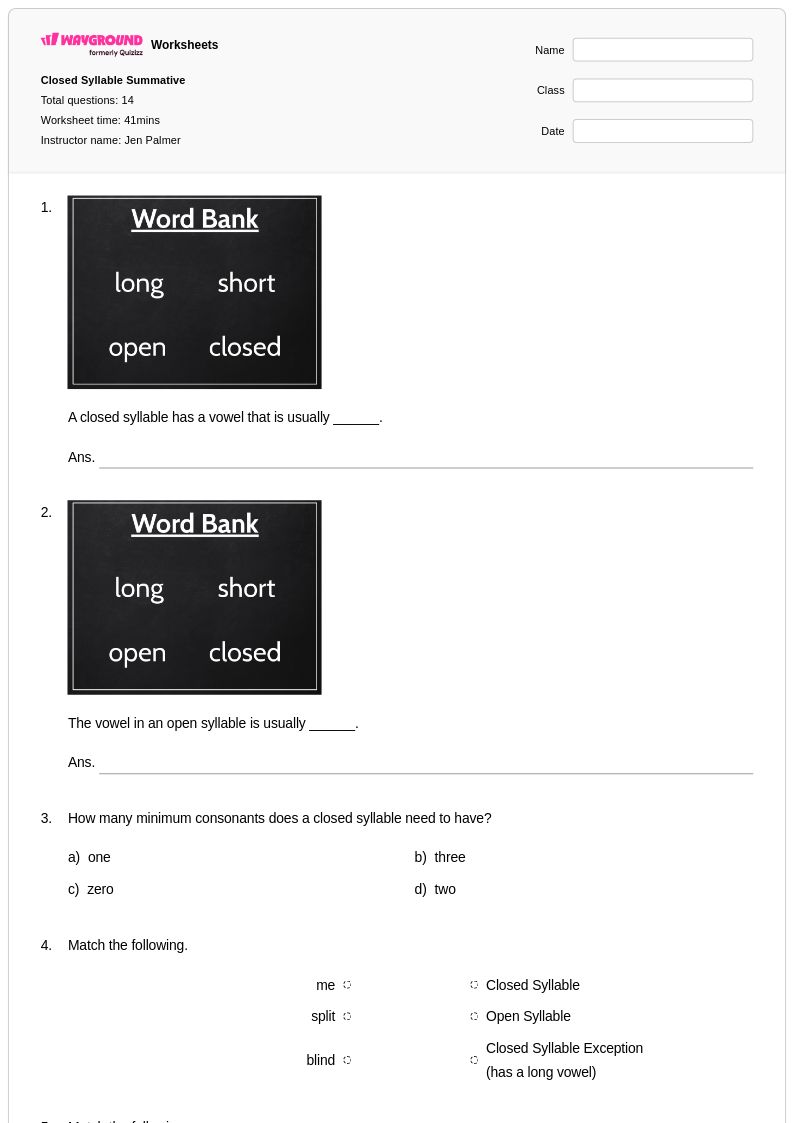
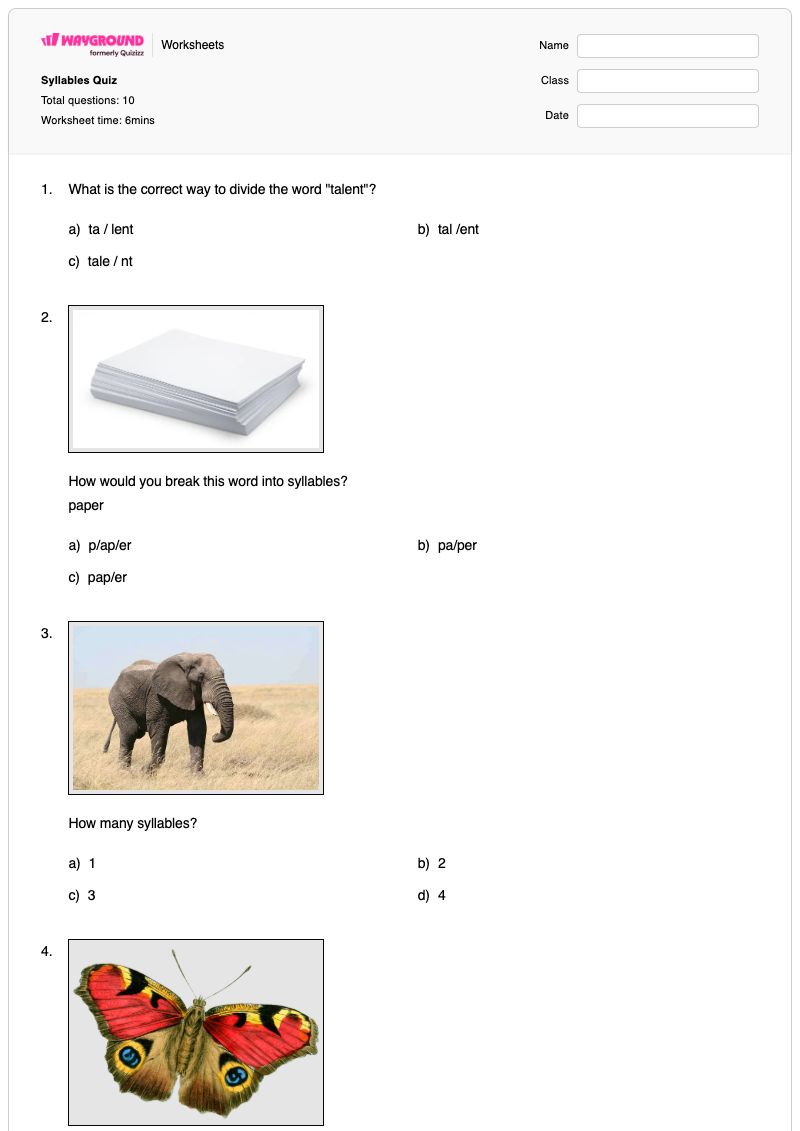
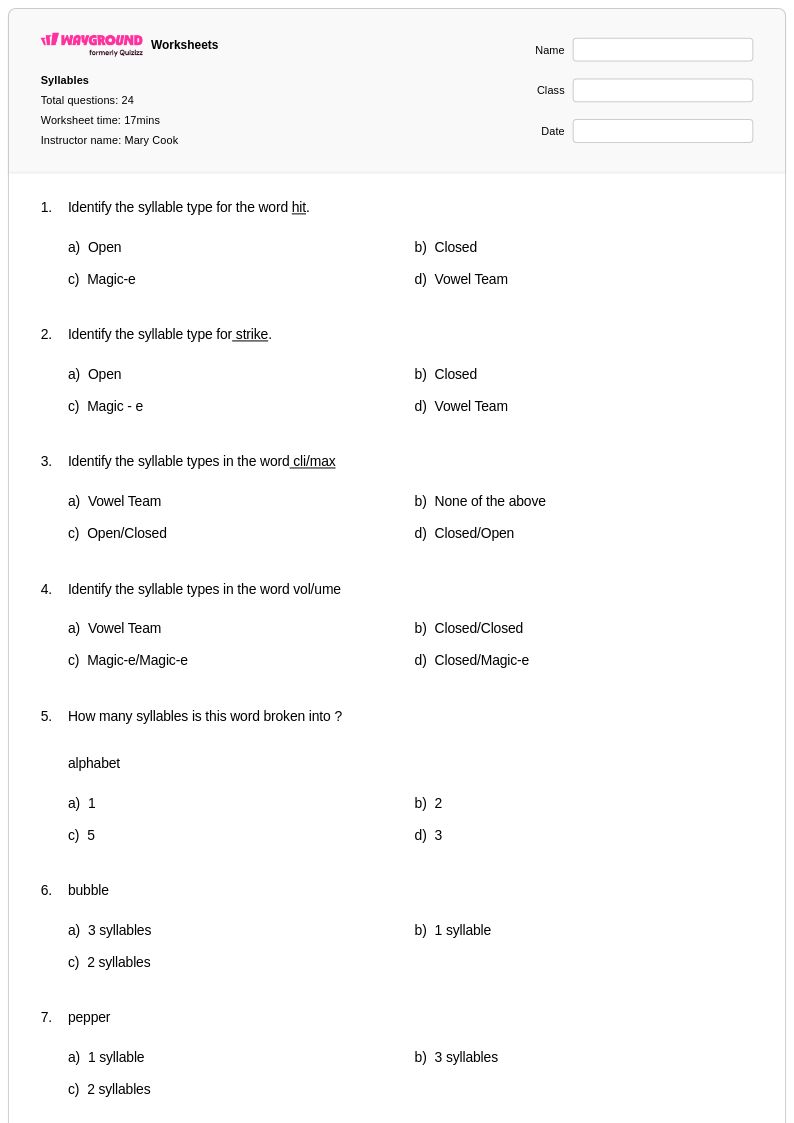
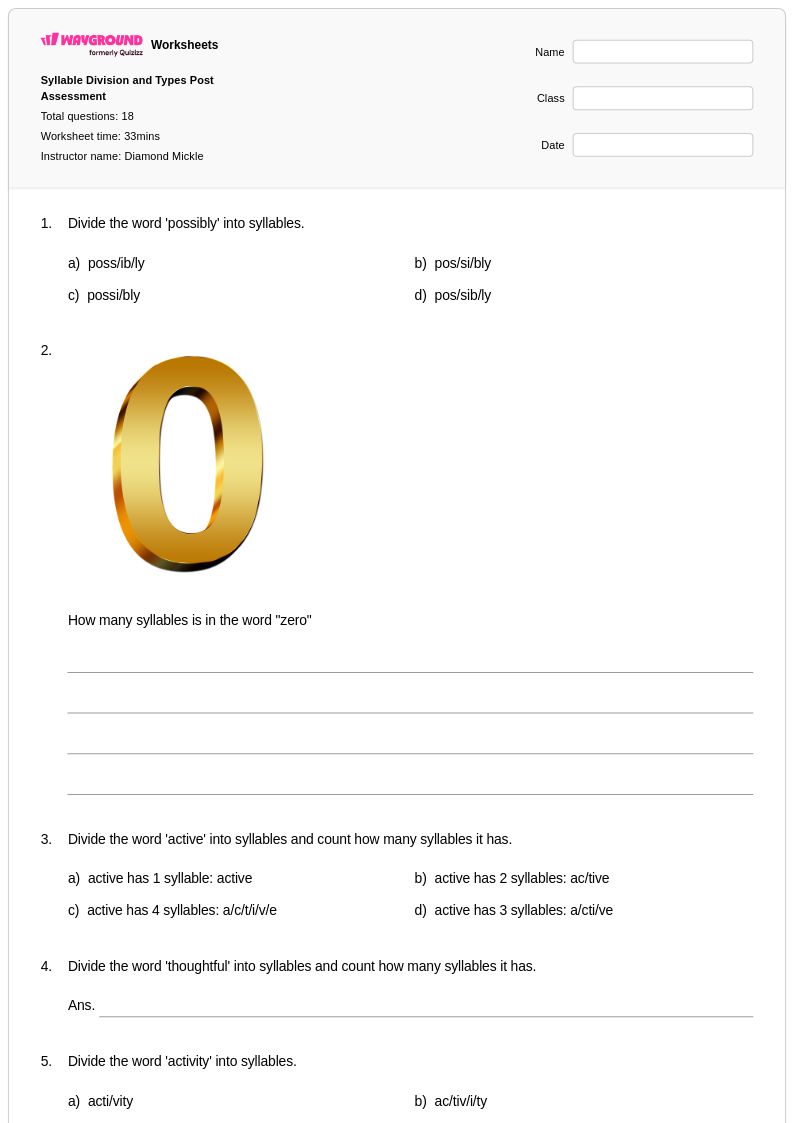
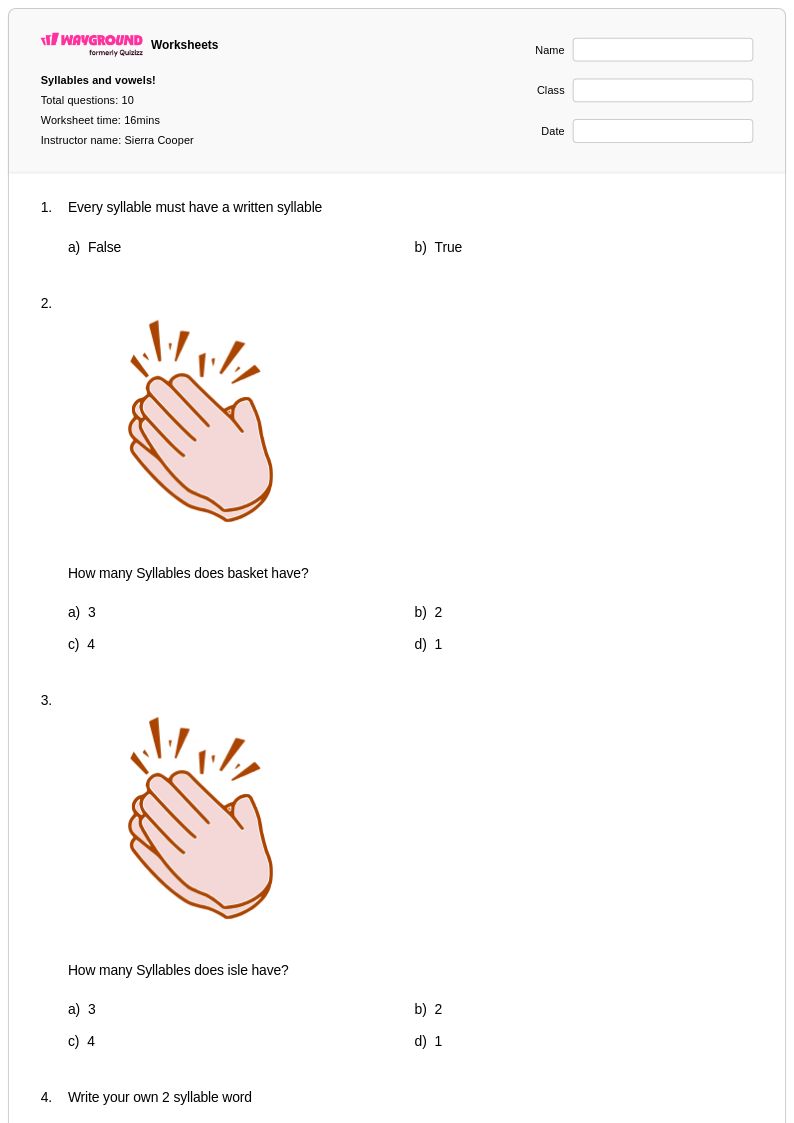
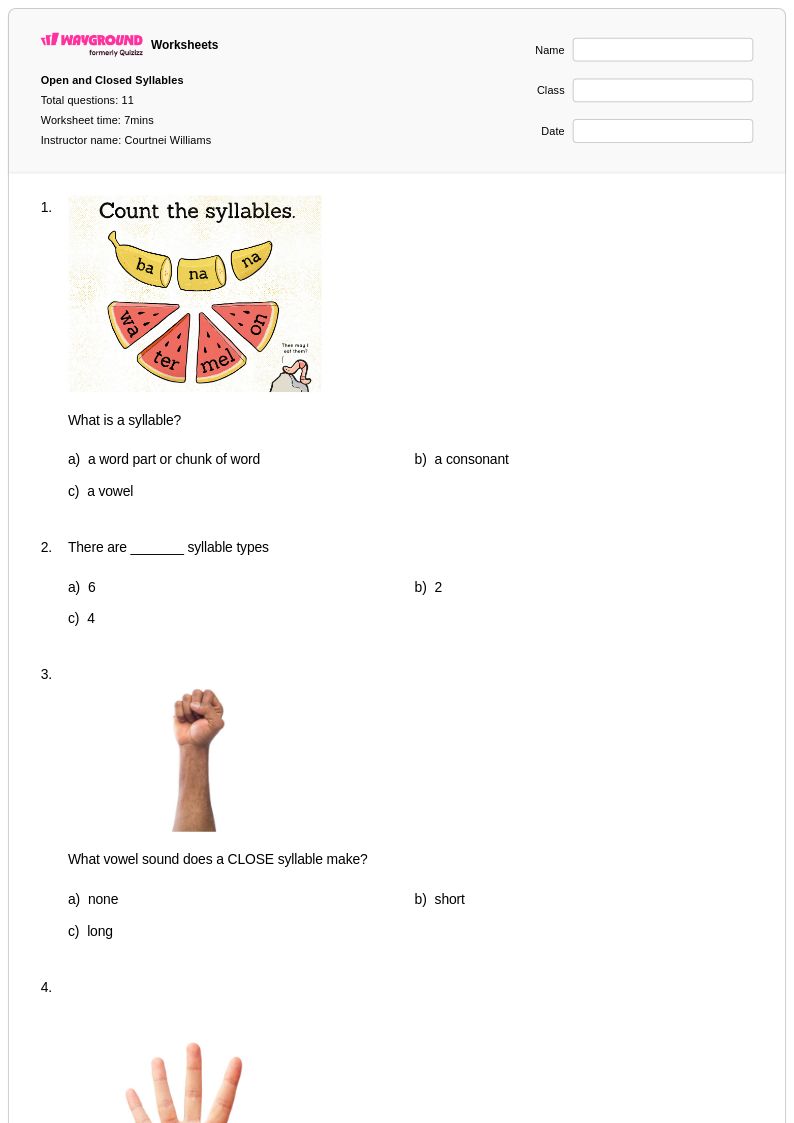
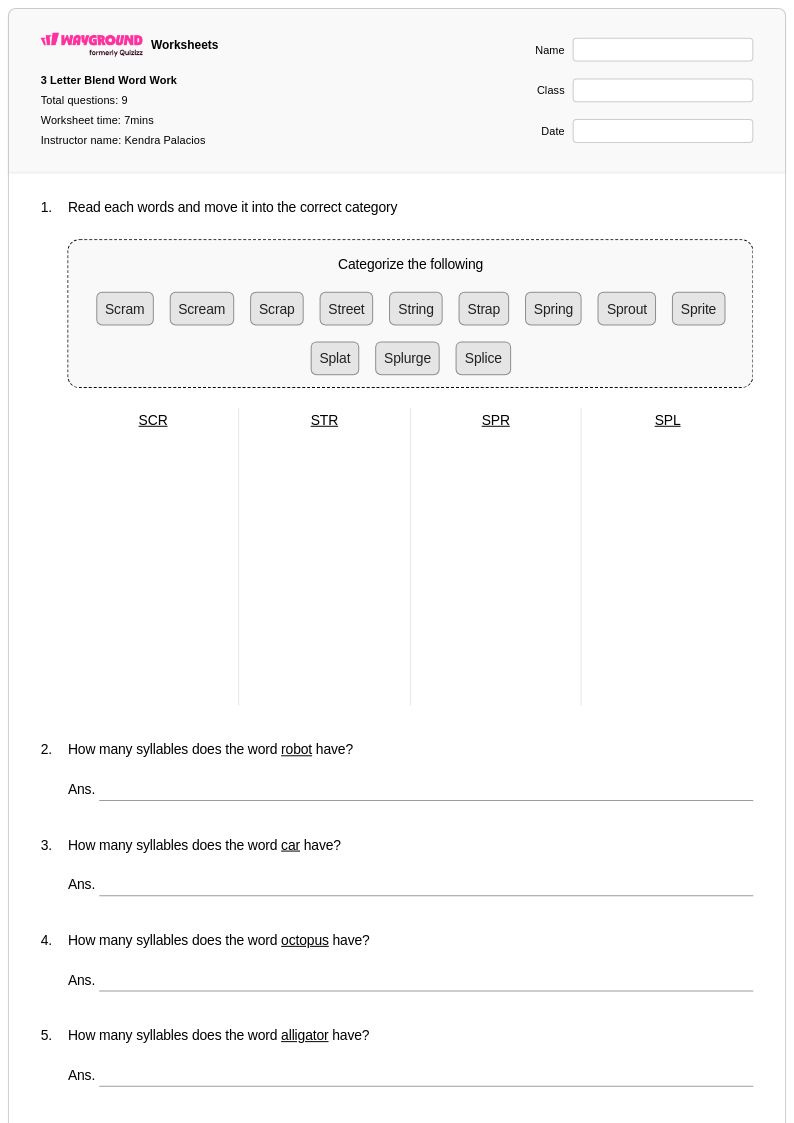
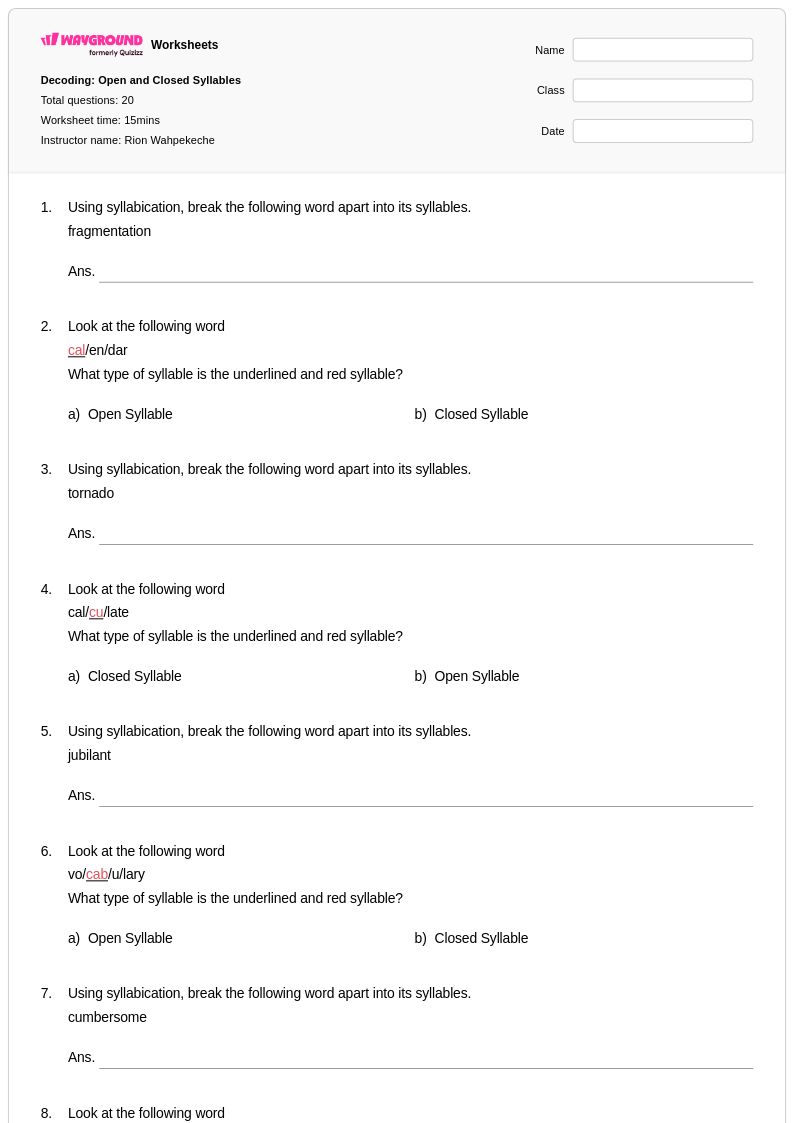
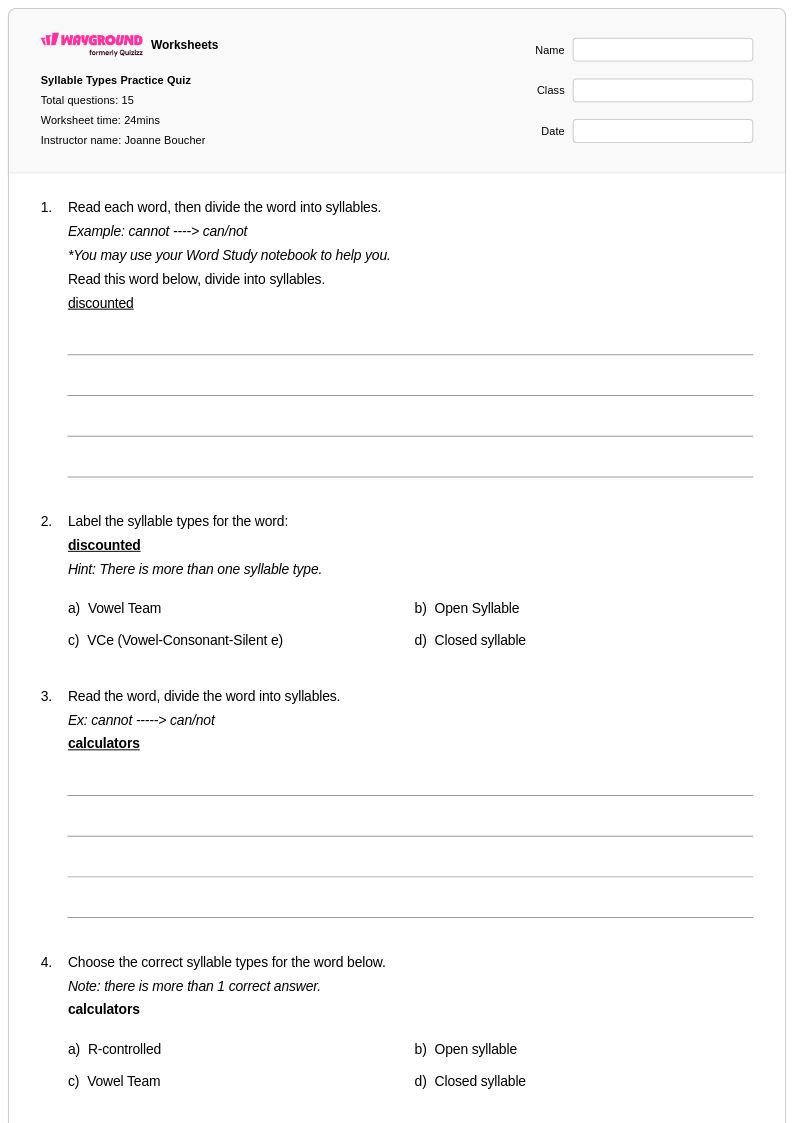
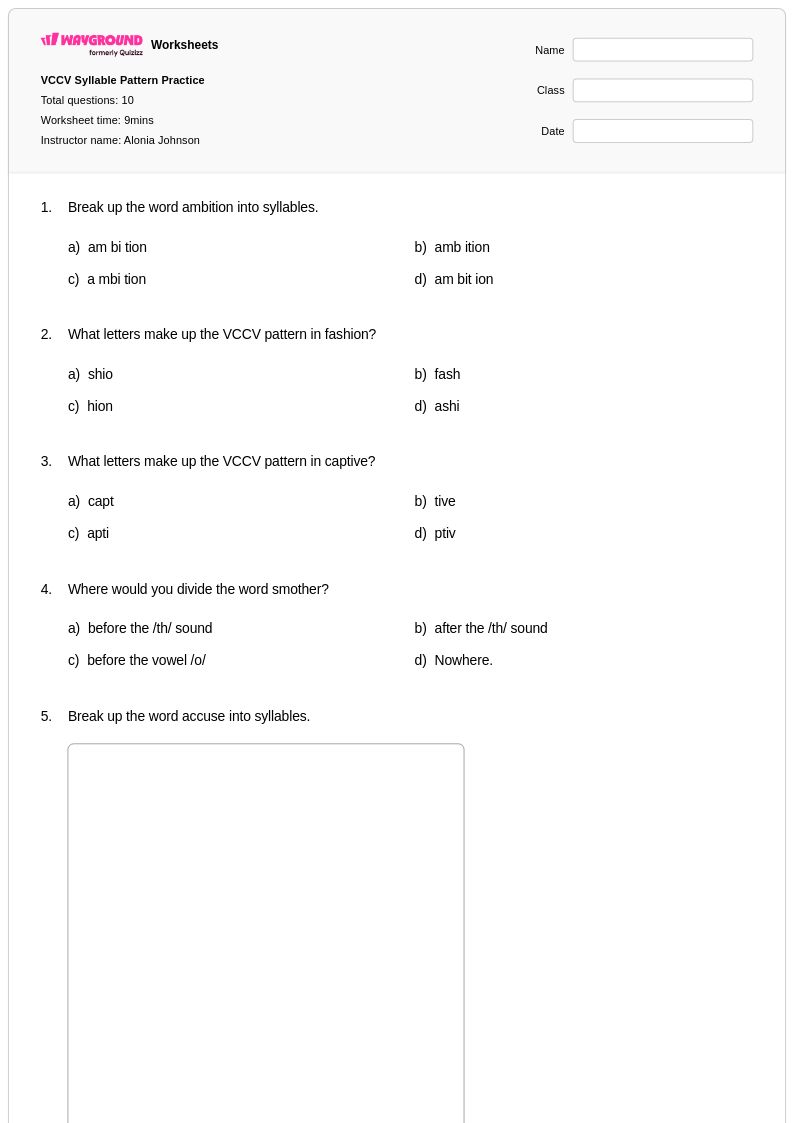
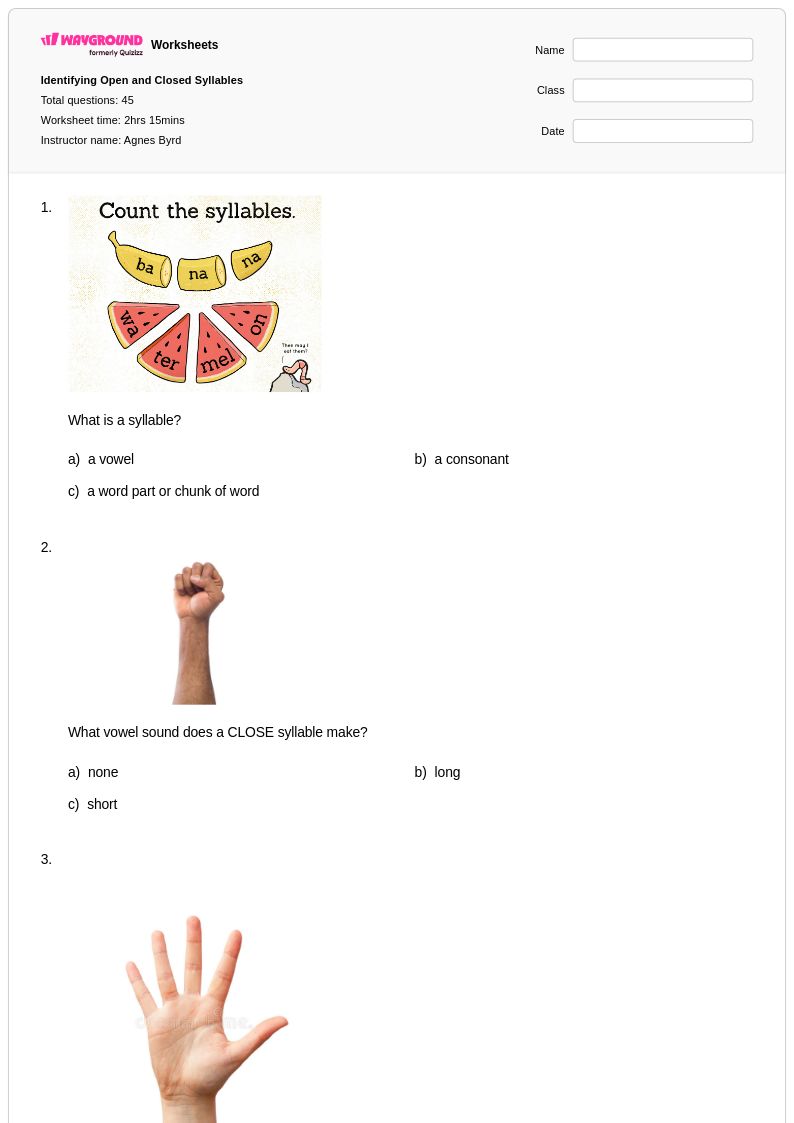
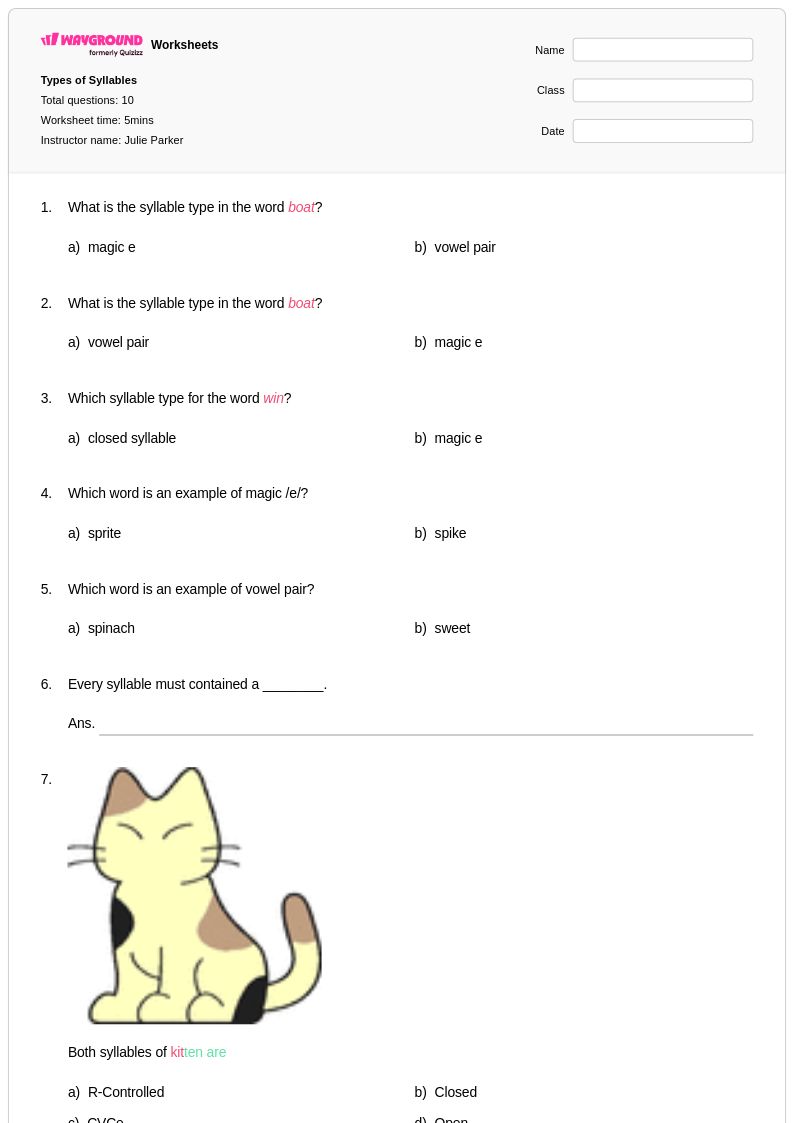
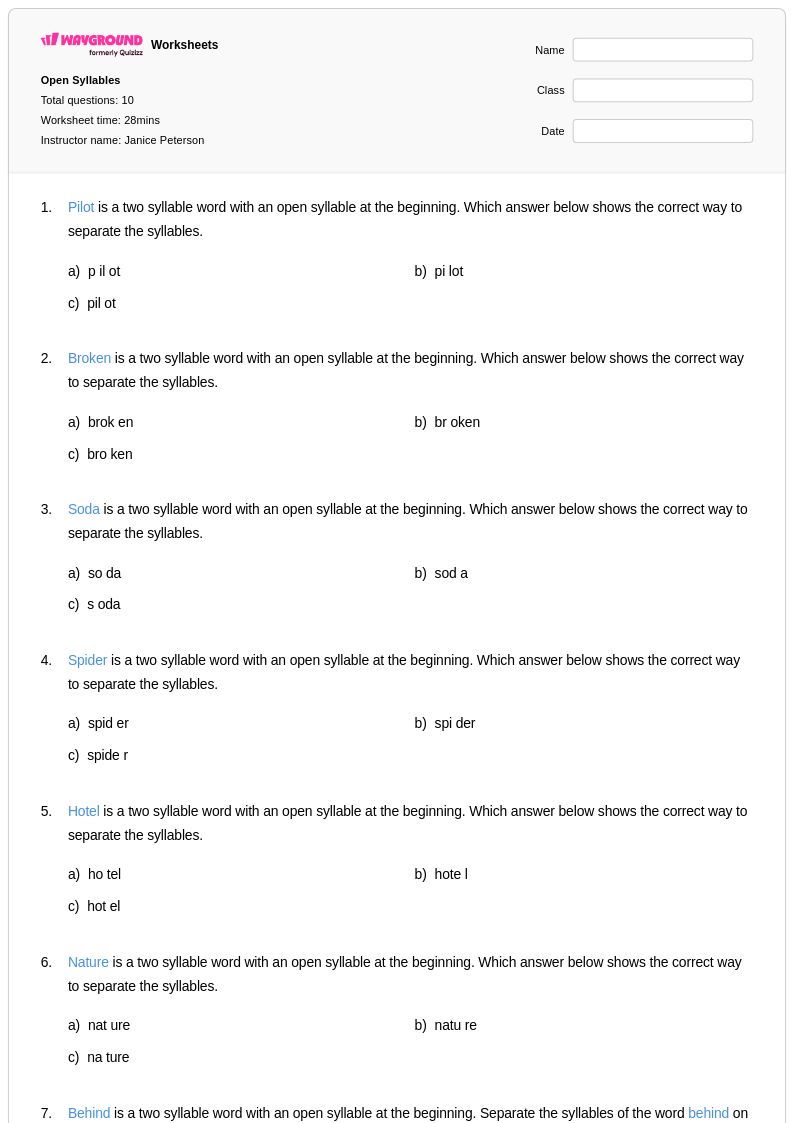
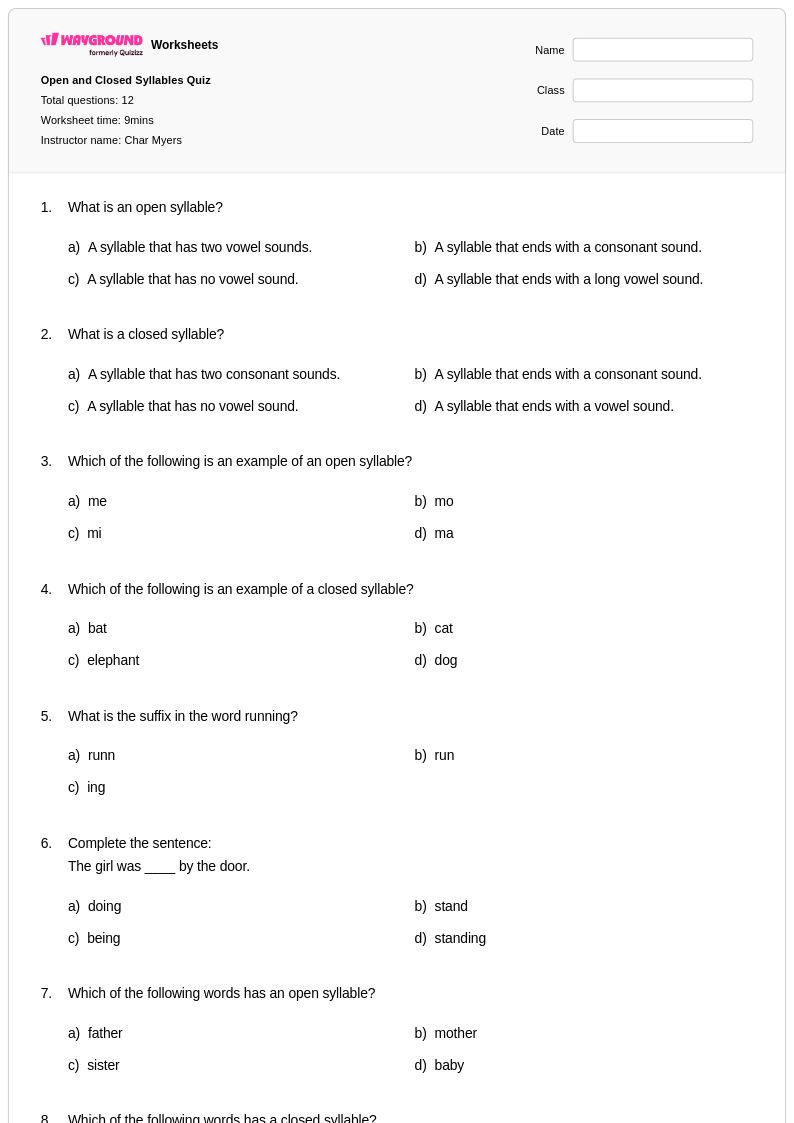
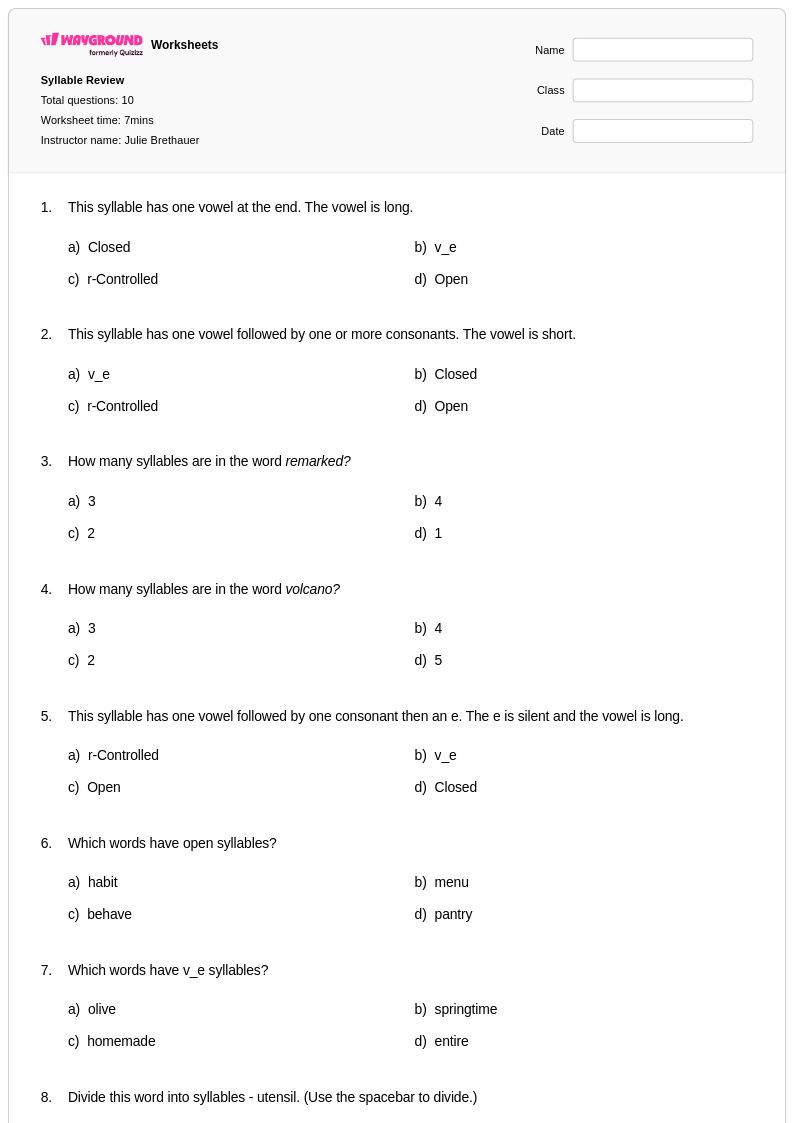
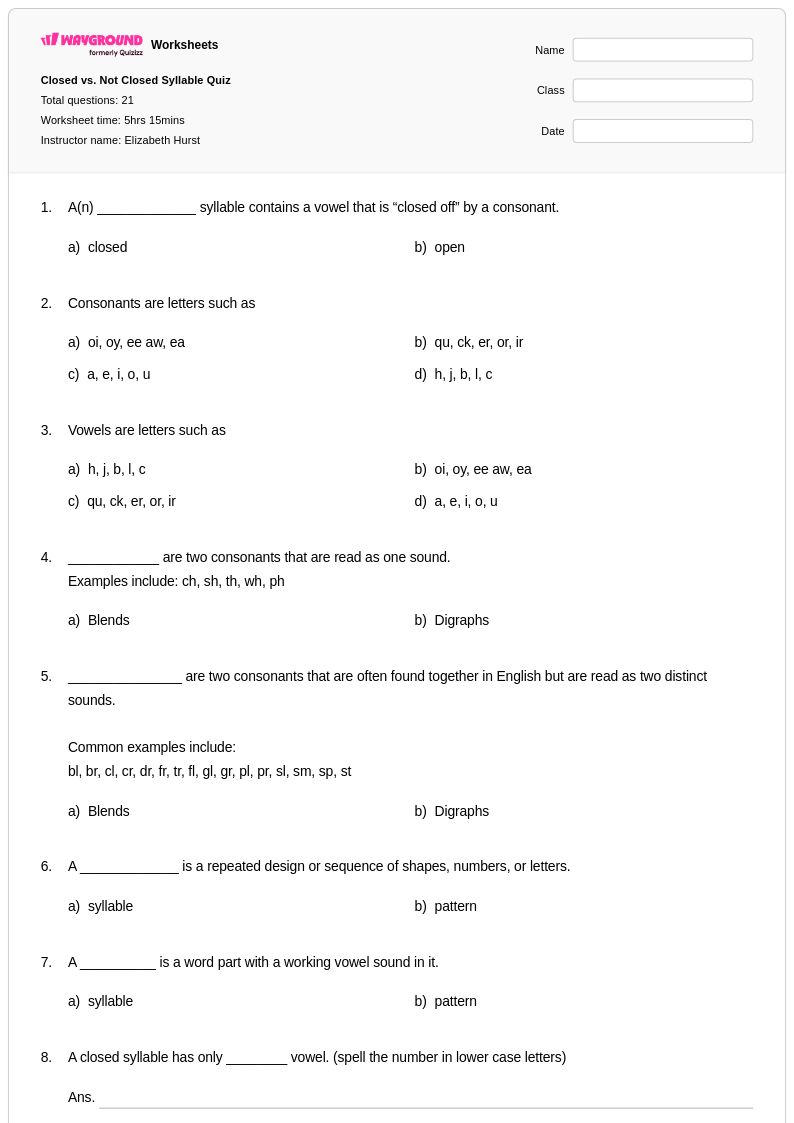
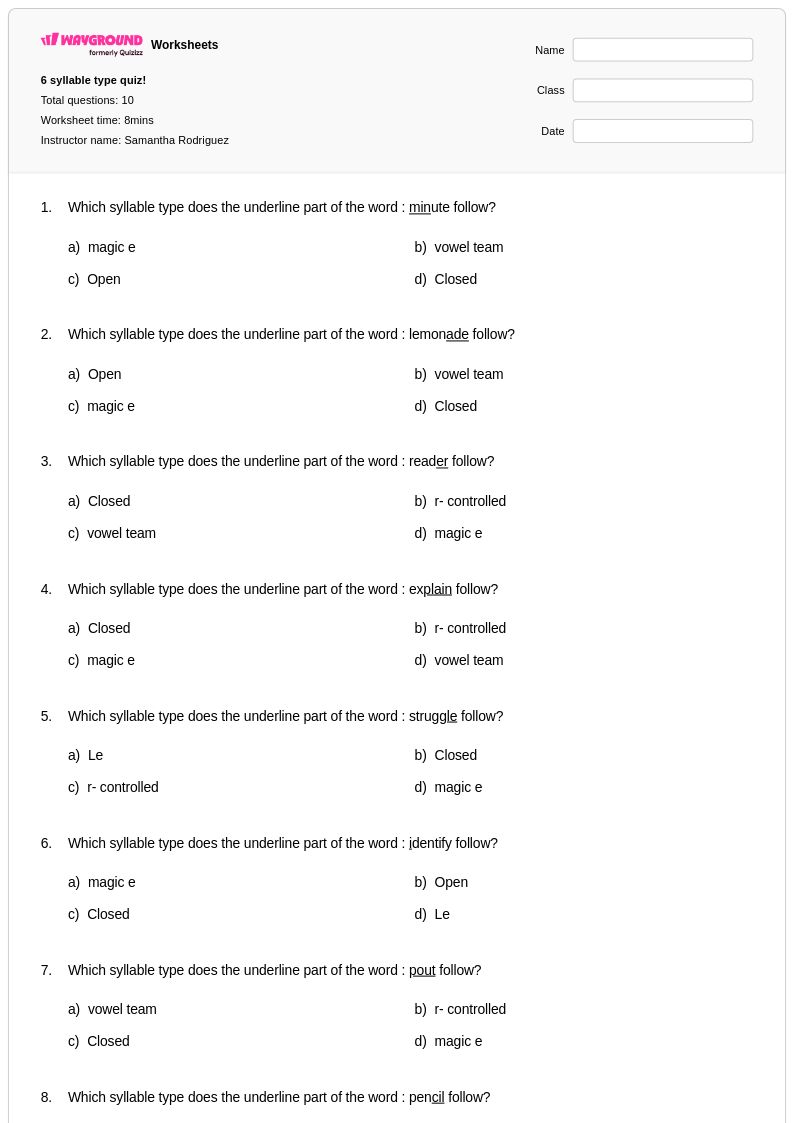
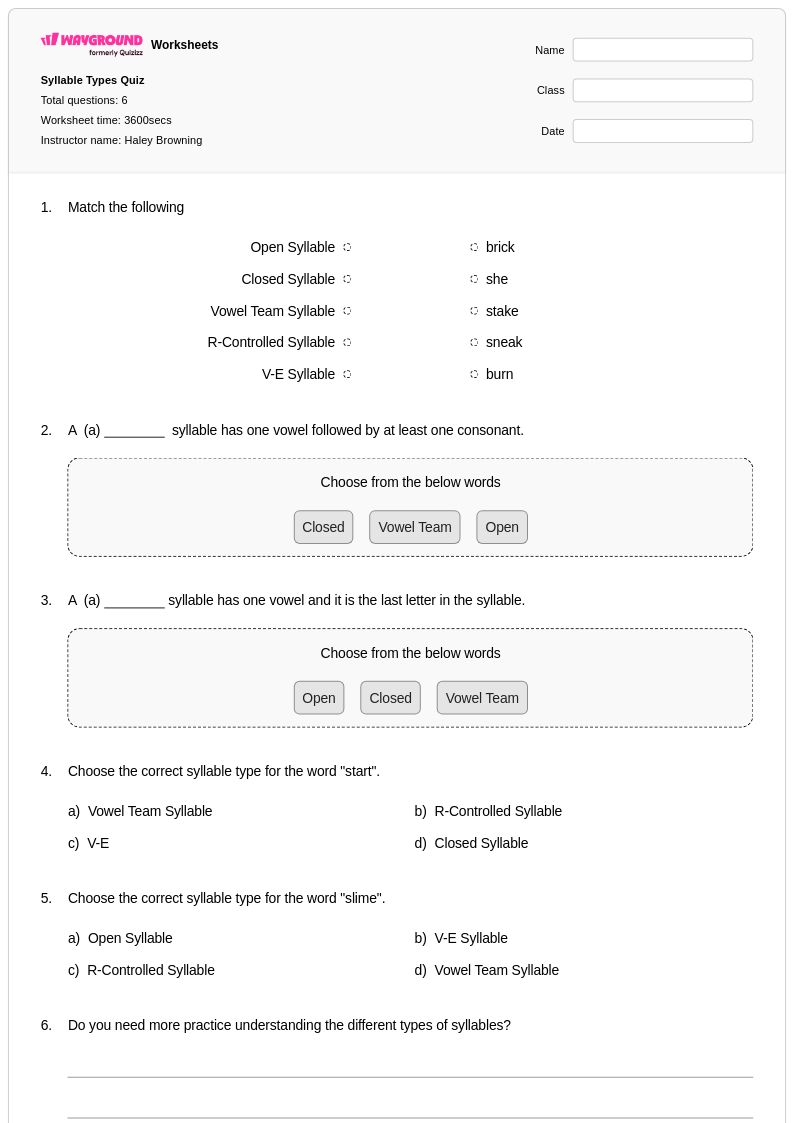
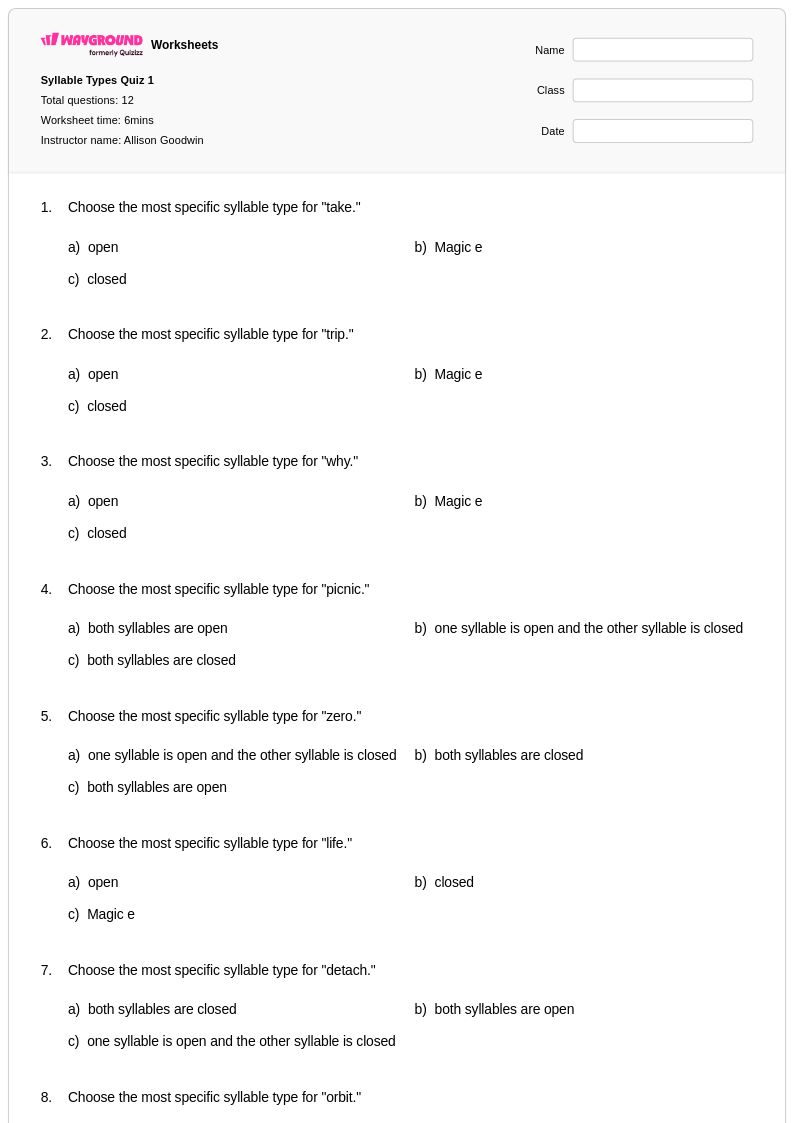
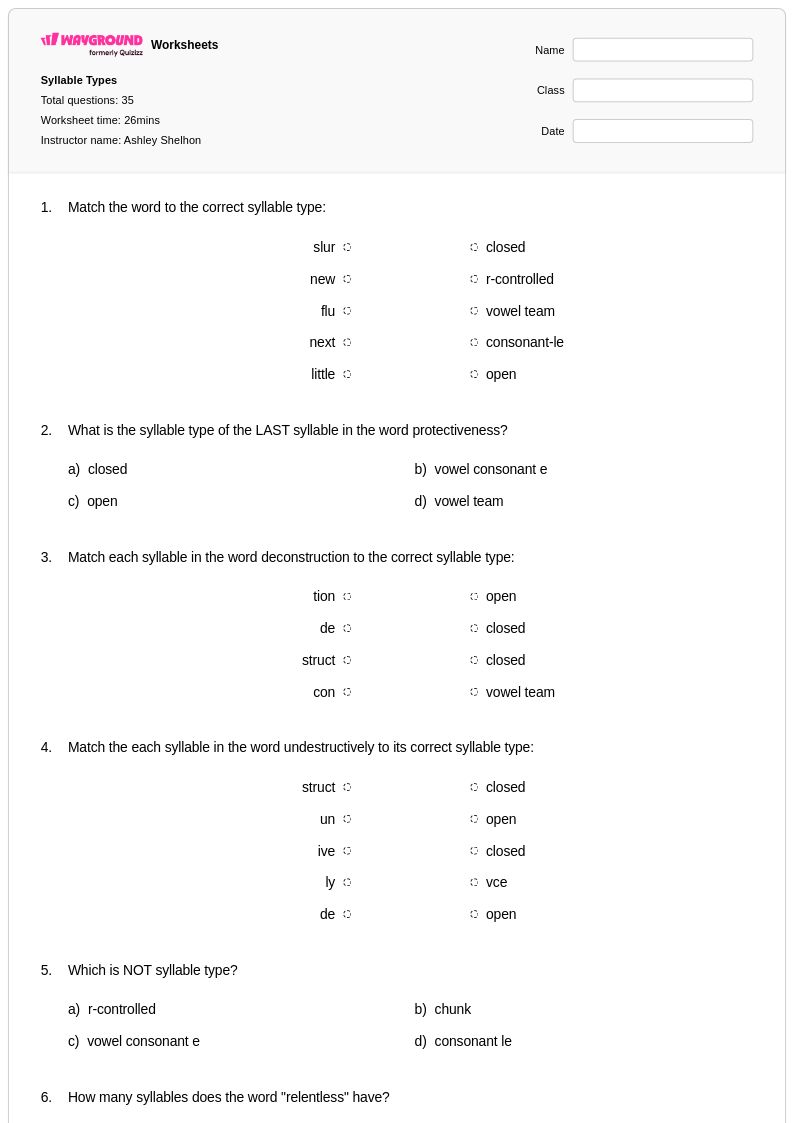
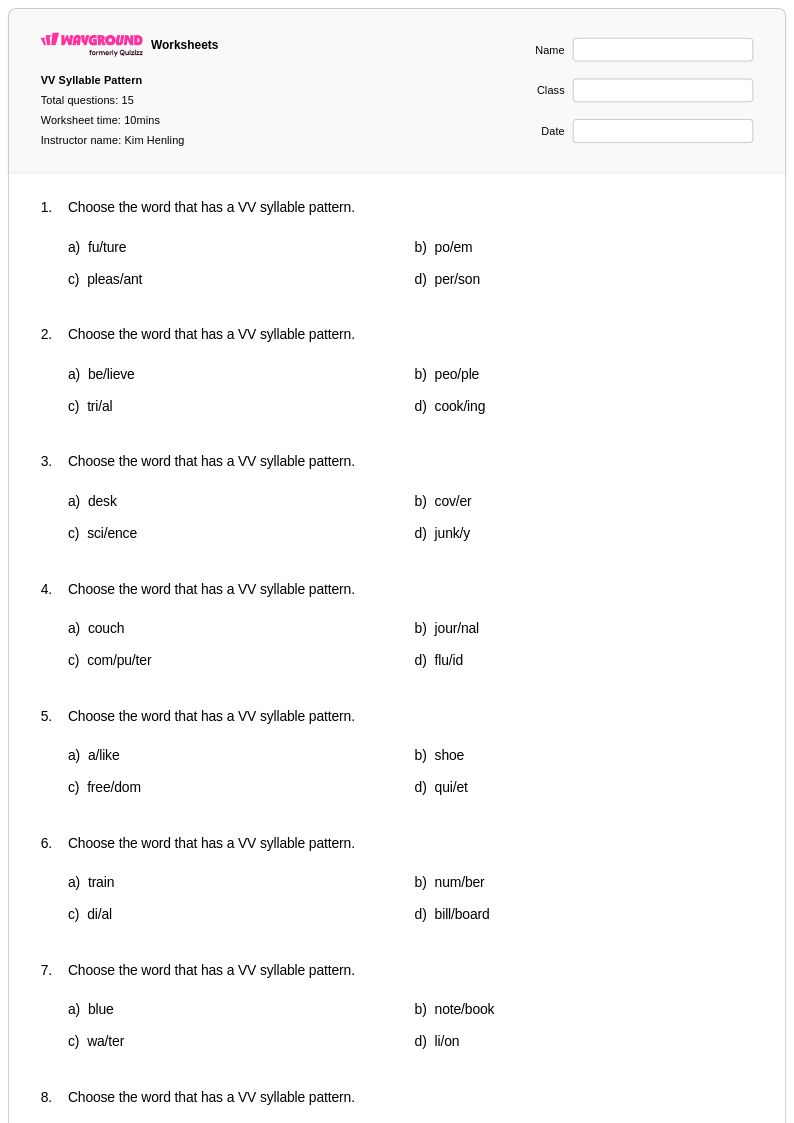
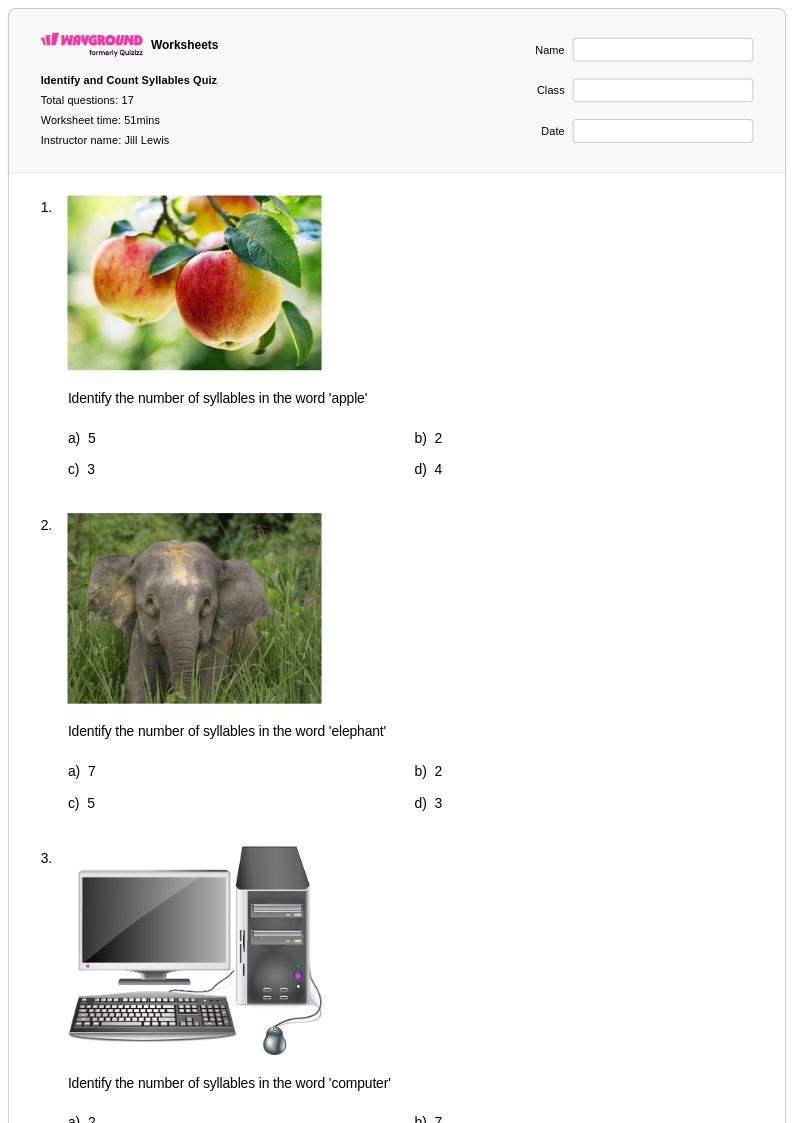
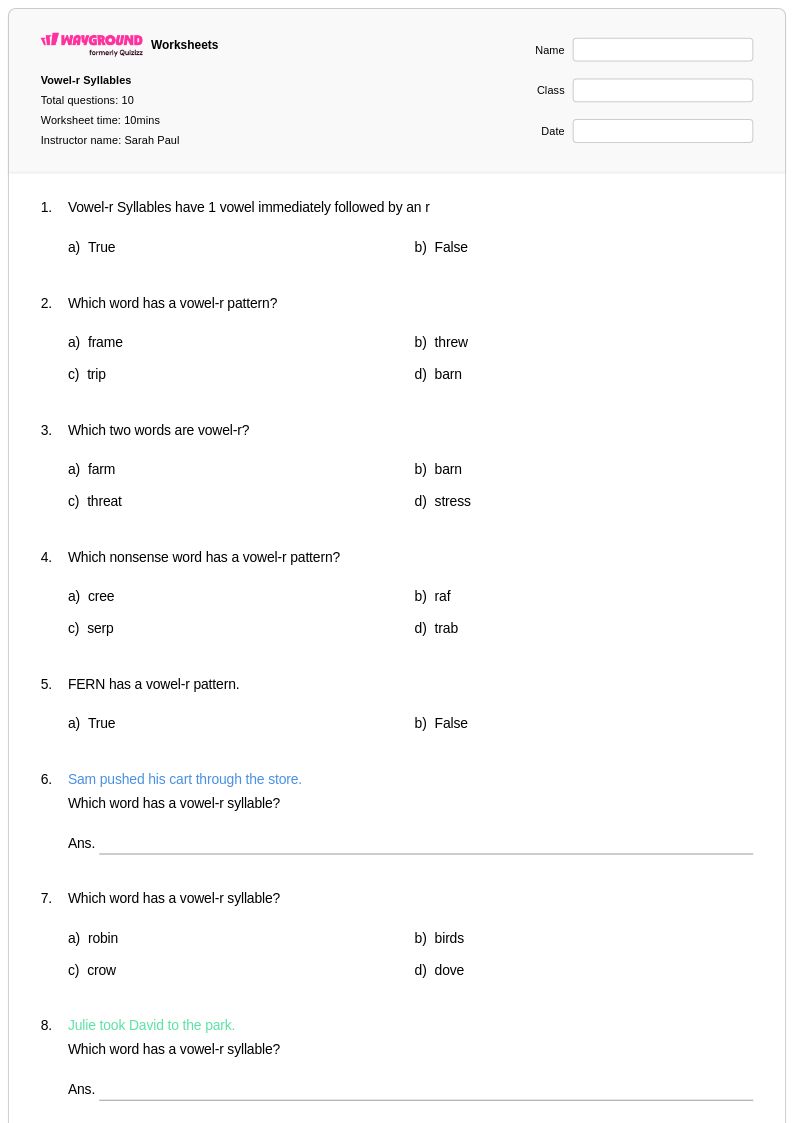
Blending syllables worksheets for kindergarten students available through Wayground (formerly Quizizz) provide essential foundational practice in phonological awareness and early reading development. These carefully crafted printables focus on helping young learners combine individual syllable sounds to form complete words, a critical skill that bridges the gap between phonemic awareness and fluent reading. The worksheets feature engaging activities where students practice blending two and three syllable combinations through visual cues, audio prompts, and hands-on exercises that make abstract sound concepts concrete and accessible. Each free worksheet includes comprehensive practice problems that progressively build difficulty, allowing kindergarten students to master this fundamental skill at their own pace, with answer keys provided to support both independent learning and guided instruction in pdf format.
Wayground (formerly Quizizz) empowers educators with an extensive collection of millions of teacher-created blending syllables resources specifically designed for kindergarten instruction. The platform's robust search and filtering capabilities enable teachers to quickly locate worksheets that align with specific phonics standards and match their students' individual learning needs. Advanced differentiation tools allow educators to customize existing materials or create modified versions that provide appropriate challenge levels for diverse learners, supporting both remediation for struggling students and enrichment for advanced readers. These versatile resources are available in both printable and digital formats, including downloadable pdfs, giving teachers the flexibility to seamlessly integrate syllable blending practice into classroom instruction, homework assignments, literacy centers, and targeted intervention programs while maintaining consistent skill development across all learning environments.
FAQs
How do I teach blending syllables to early readers?
Start by clapping or tapping individual syllable parts aloud before asking students to merge them into a whole word — for example, saying 'pen' then 'cil' before blending to 'pencil'. Use picture support alongside spoken practice so students can connect the blended word to meaning. Gradually remove scaffolding as students gain confidence moving from segmented pronunciation to automatic word recognition.
What exercises help students practice blending syllables?
Effective practice exercises include oral blending drills, written fill-in-the-blank tasks where students write the complete word after viewing its syllable parts, and matching activities that pair syllable cards to whole-word pictures. Progressing from two-syllable words to multi-syllabic vocabulary helps students build stamina and flexibility in decoding. Structured worksheets that sequence difficulty systematically are especially useful for reinforcing this skill in both guided and independent practice settings.
What common mistakes do students make when blending syllables?
A frequent error is pausing too long between syllables, which prevents the parts from fusing into a recognizable whole word. Students also sometimes stress the wrong syllable when blending, producing a pronunciation that doesn't match any familiar word in their vocabulary. Another common issue is over-segmenting, where students treat each individual letter rather than each syllable unit as the blending chunk, which slows fluency development.
How does blending syllables support reading fluency?
Blending syllables is a foundational phonological awareness skill that allows readers to decode unfamiliar multisyllabic words without memorizing them whole. When students can smoothly merge syllable segments, they transition from slow, labored decoding to faster, more automatic word recognition, which directly improves reading fluency and comprehension. Systematic practice with progressively complex words builds the mental flexibility students need to handle academic vocabulary across all subject areas.
How can I use Wayground's blending syllables worksheets in my classroom?
Wayground's blending syllables worksheets are available as free printable PDFs for traditional classroom use and in digital formats for technology-integrated instruction, including the option to host them as a quiz on Wayground. This flexibility makes them suitable for whole-class lessons, small-group intervention sessions, homework assignments, and independent practice. Each worksheet includes an answer key, so teachers can provide immediate, targeted feedback on student progress without additional preparation time.
How can I differentiate blending syllables practice for students at different levels?
For students who are still developing the skill, start with two-syllable words and pair written tasks with visual or audio support. Advanced learners can be challenged with three- and four-syllable words drawn from content-area vocabulary. On Wayground, teachers can apply individual accommodations such as read-aloud support for students who need to hear syllable parts spoken, or reduced answer choices to lower cognitive load for learners who need additional scaffolding.