Free Printable Recognizing Syllables Worksheets for Kindergarten
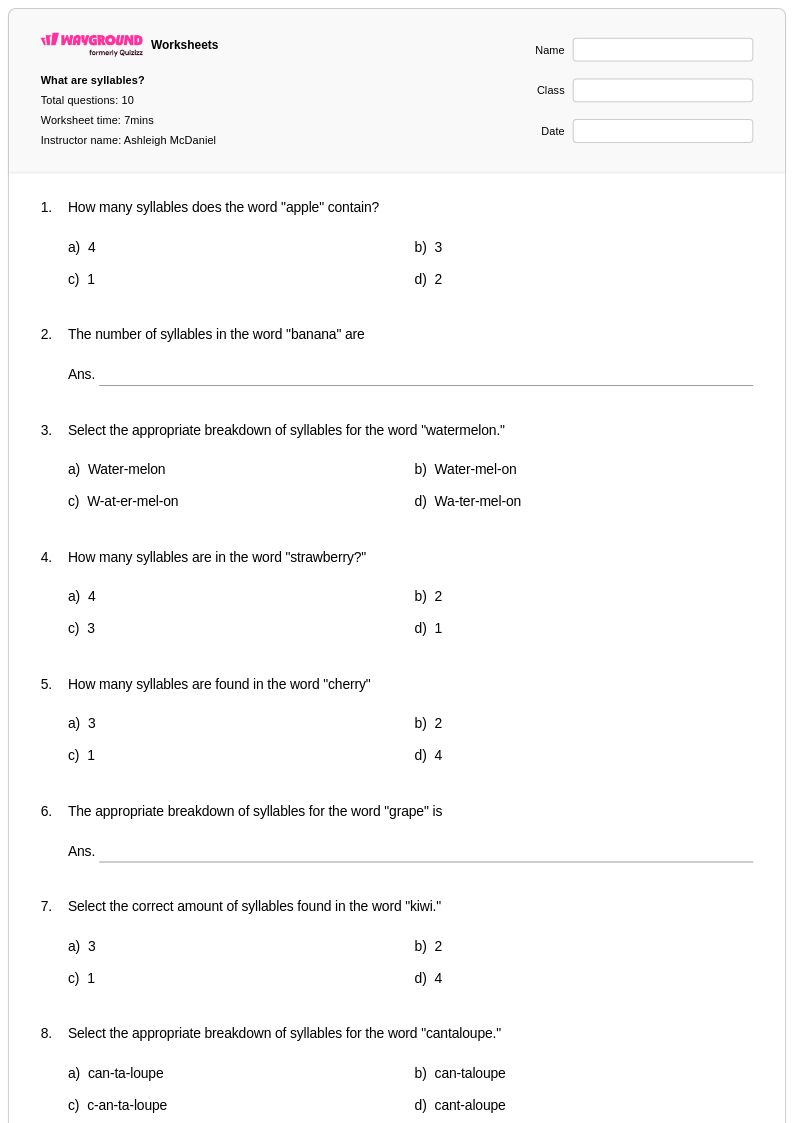
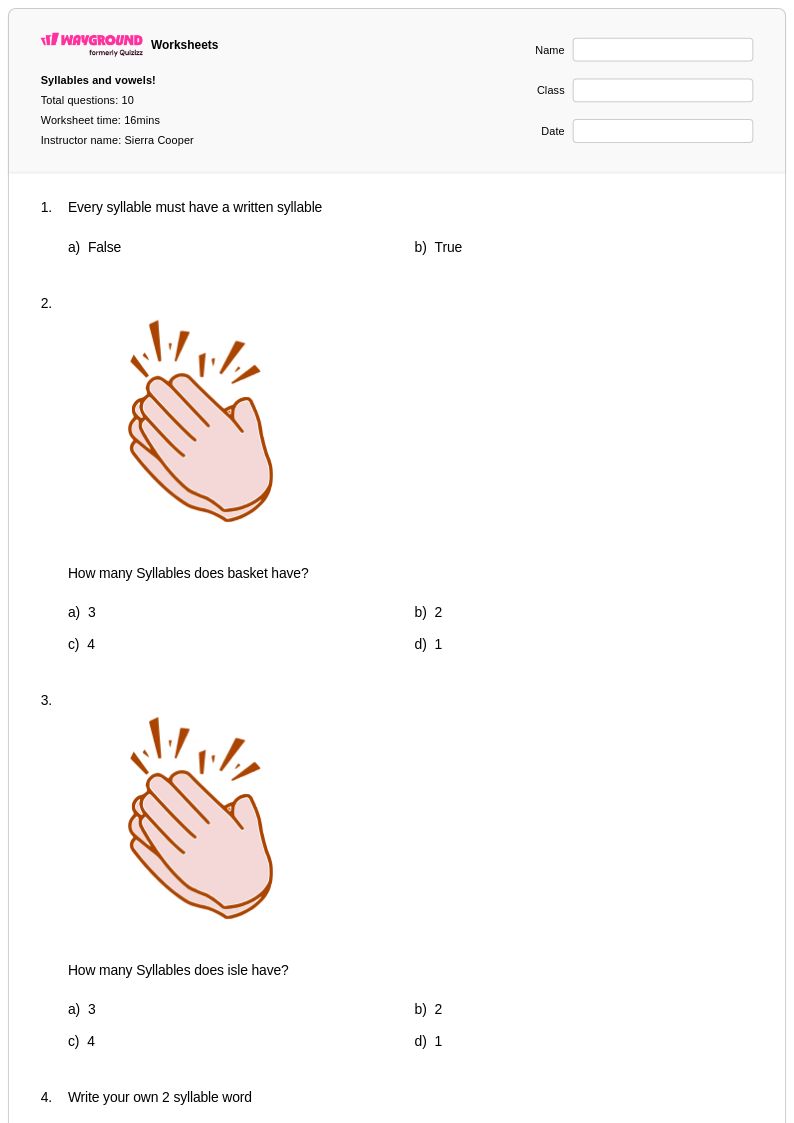
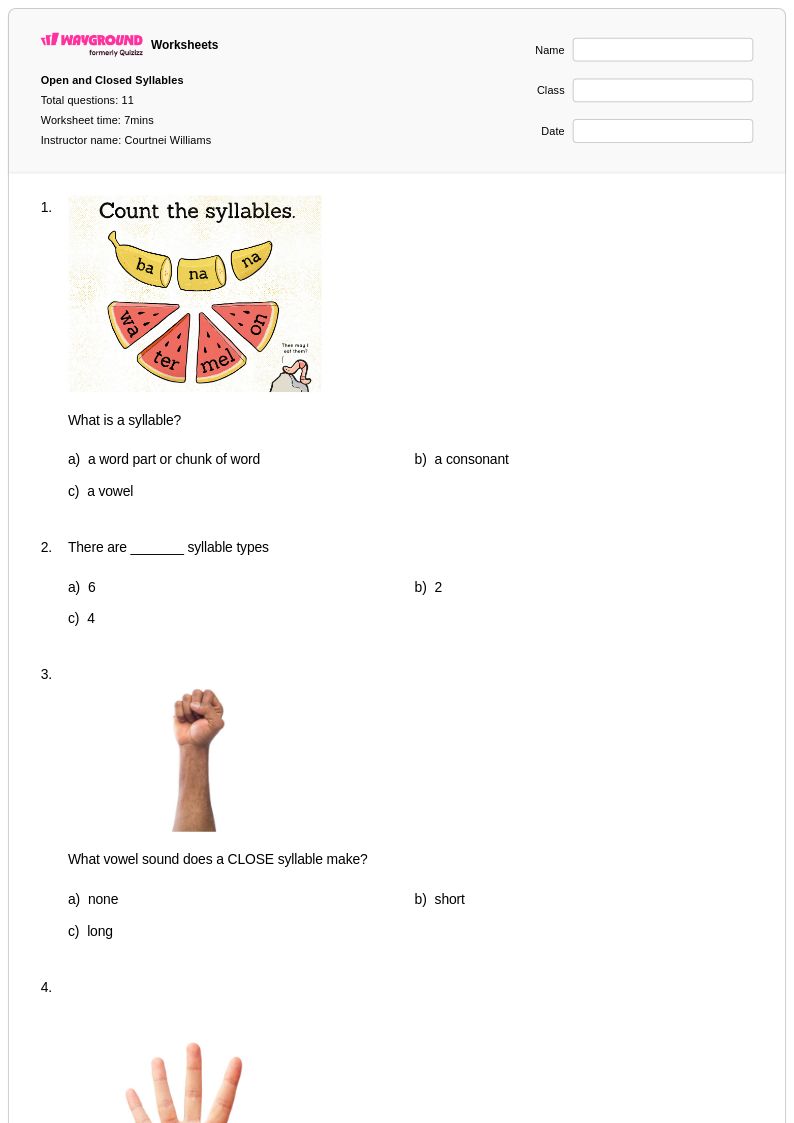
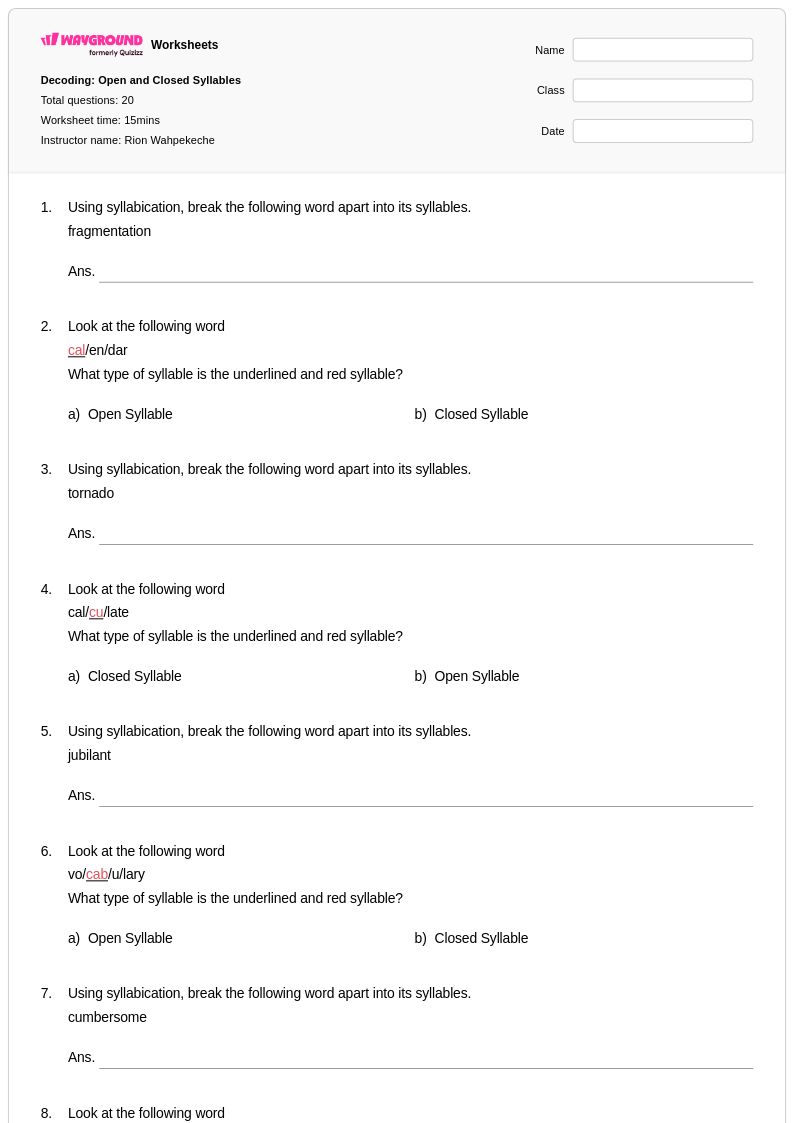
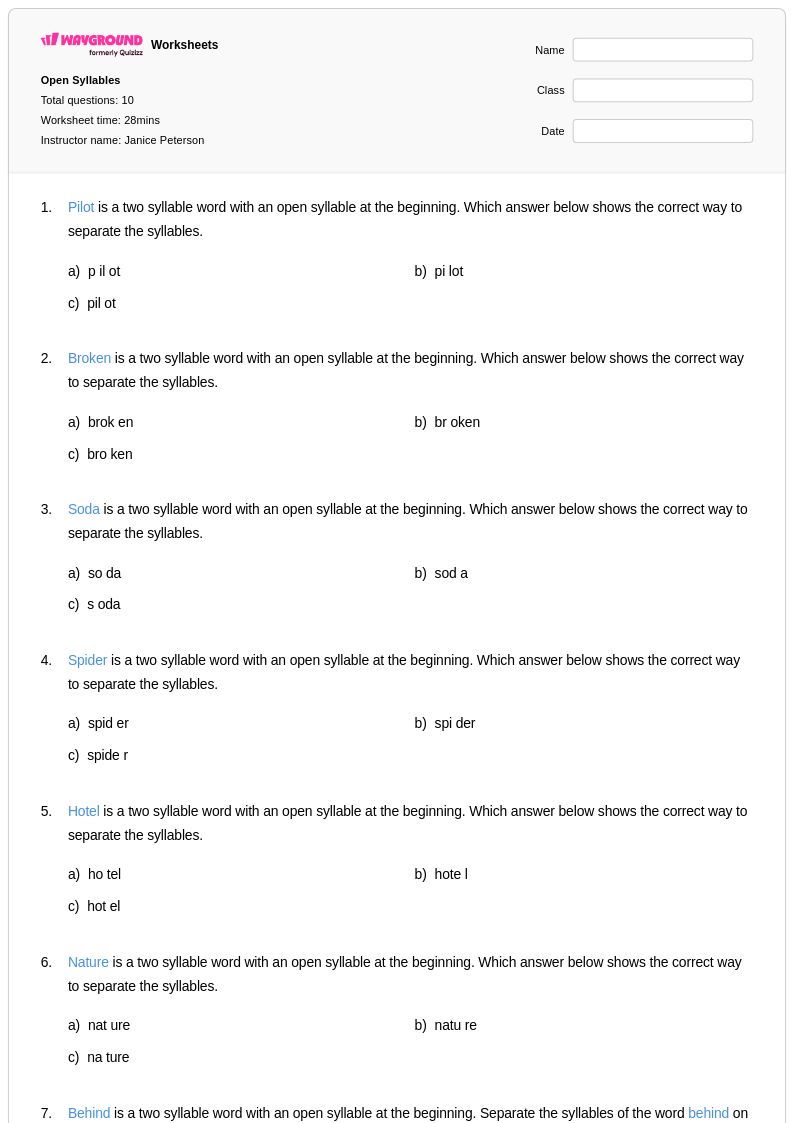
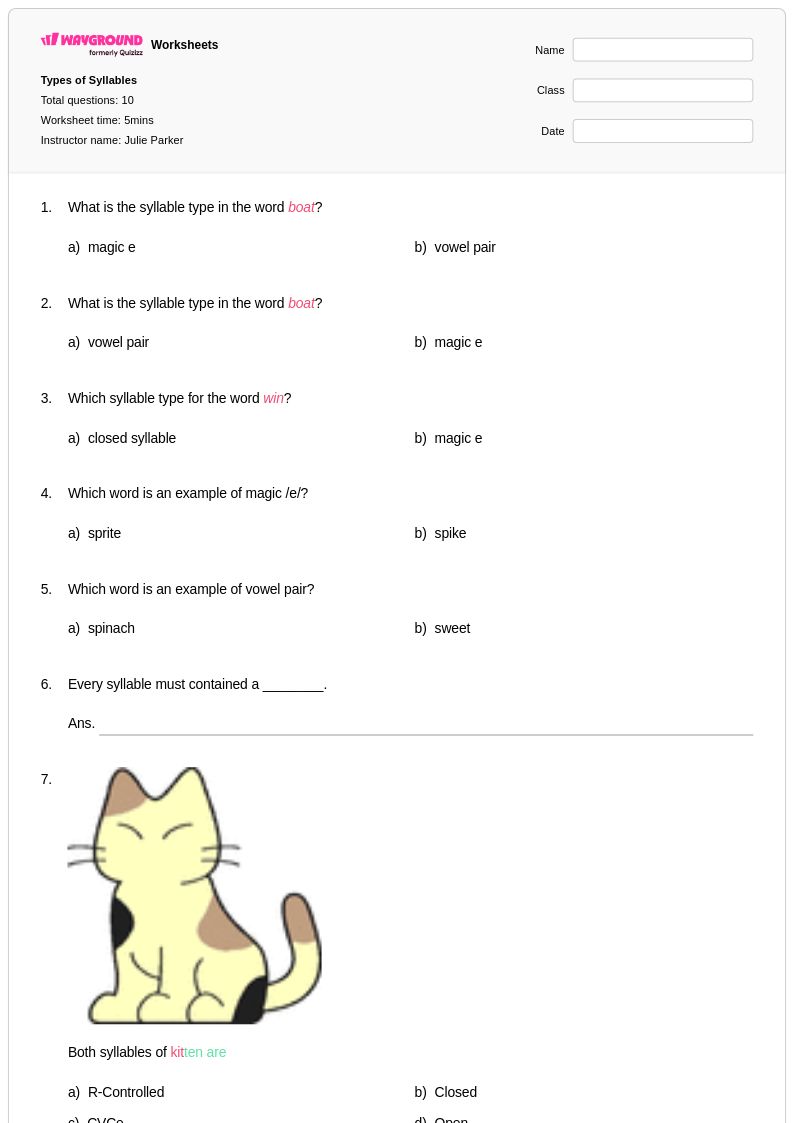
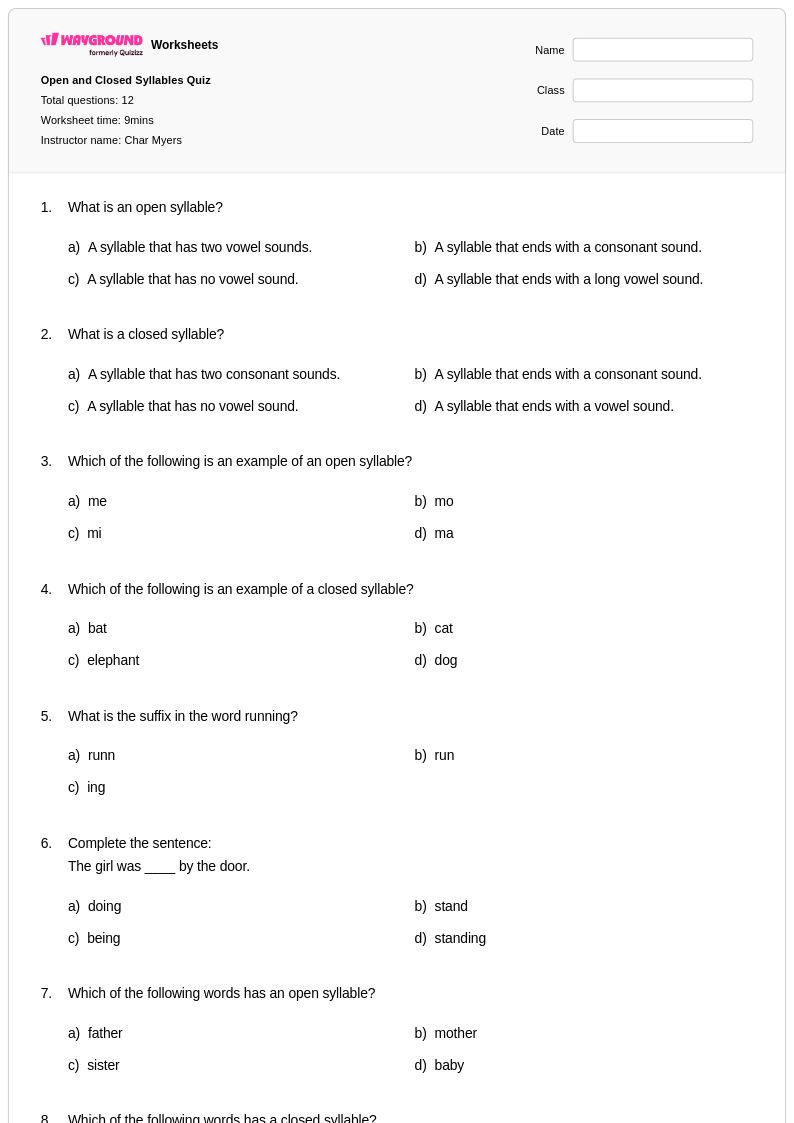
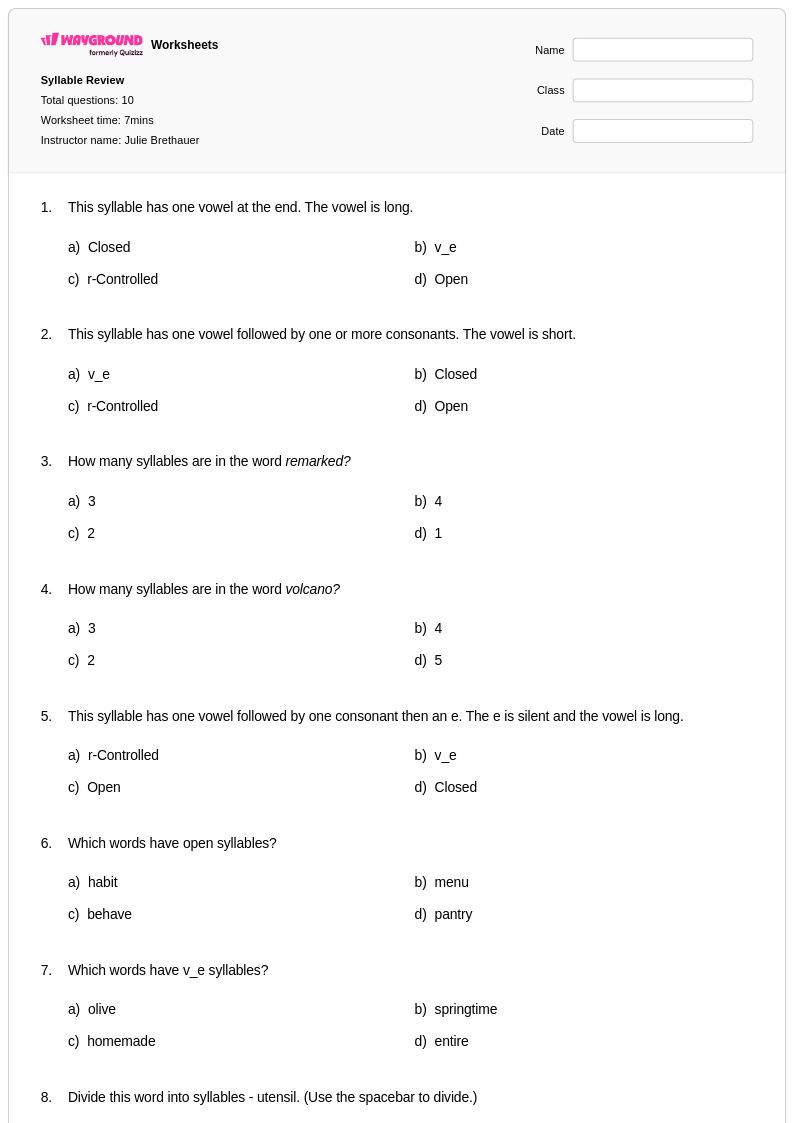
Wayground's free kindergarten recognizing syllables worksheets provide engaging printables and practice problems that help young learners identify and count syllables in words, complete with answer keys for easy assessment.
Explore printable Recognizing Syllables worksheets for Kindergarten
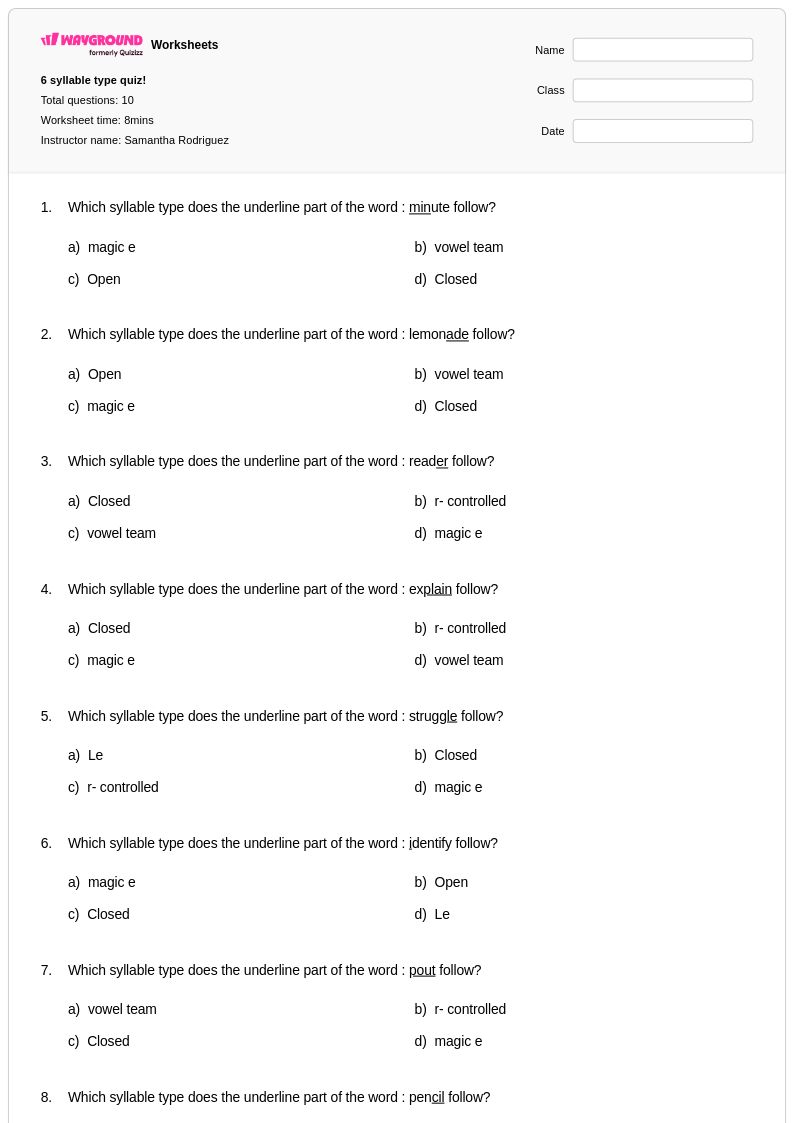
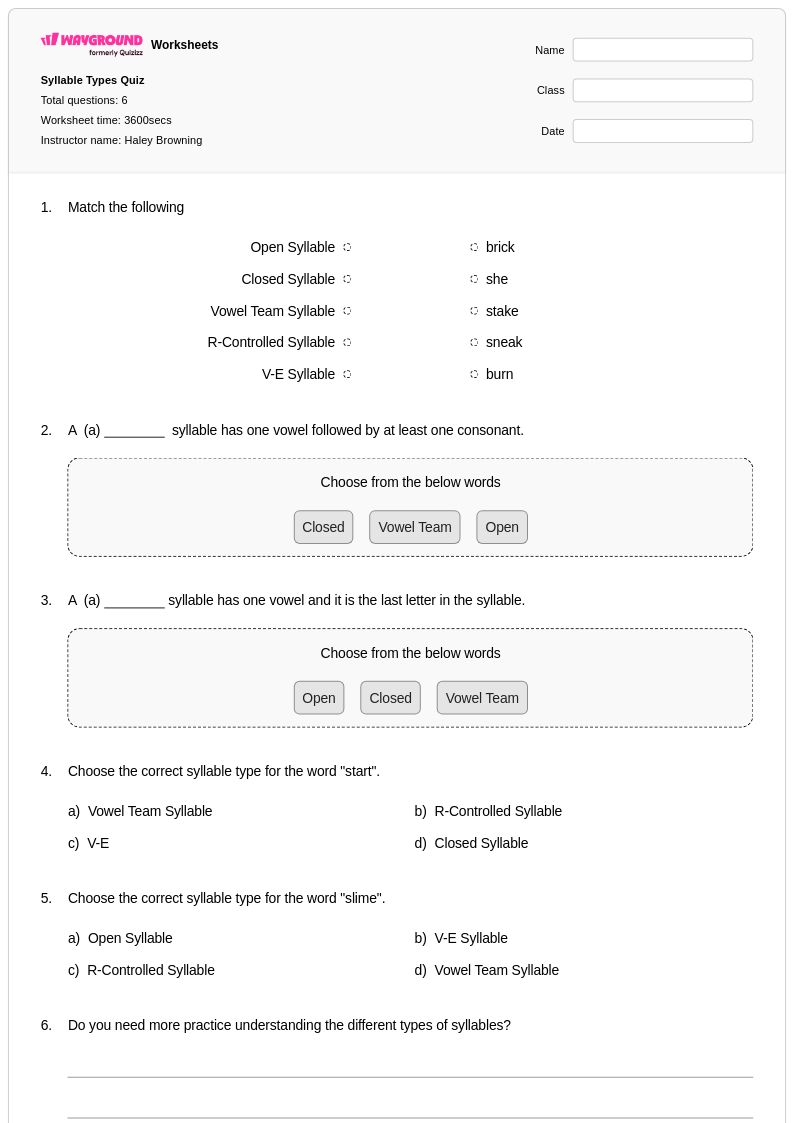
Recognizing syllables forms a crucial foundation for kindergarten students developing early literacy skills, and Wayground's comprehensive worksheet collection provides educators with expertly designed resources to support this essential learning objective. These thoughtfully crafted worksheets guide young learners through the process of identifying and counting syllables in familiar words, strengthening their phonological awareness and preparing them for more advanced reading and spelling tasks. Each worksheet features age-appropriate activities such as clapping exercises, picture-based syllable counting, and hands-on sorting activities that make abstract sound concepts concrete for developing minds. Teachers can access complete answer keys alongside these free printables, ensuring efficient grading and immediate feedback opportunities, while the varied practice problems accommodate different learning styles and help reinforce syllable recognition through multiple engaging approaches.
Wayground's extensive platform, formerly known as Quizizz, empowers teachers with access to millions of educator-created resources specifically designed for kindergarten syllable instruction, complete with robust search and filtering capabilities that streamline lesson planning and resource selection. The platform's alignment with educational standards ensures that syllable recognition worksheets meet curriculum requirements while supporting differentiated instruction through customizable difficulty levels and varied activity formats. Teachers can seamlessly integrate these materials into their literacy instruction by choosing from printable PDF formats for traditional classroom use or digital versions for interactive learning experiences. This flexibility proves invaluable for targeted remediation with struggling learners, enrichment opportunities for advanced students, and consistent skill practice across diverse classroom settings, enabling educators to address individual student needs while maintaining engaging, developmentally appropriate syllable recognition instruction.
FAQs
How do I teach students to recognize syllables?
Start by teaching students to listen for the number of vowel sounds in a word, since each syllable contains exactly one vowel sound. Hands-on strategies like clapping, chin-dropping, or tapping for each syllable help students physically feel the natural breaks in spoken words. Once students are comfortable with single-syllable and two-syllable words, gradually introduce multisyllabic words and common syllable patterns such as closed, open, and vowel-consonant-e syllables.
What exercises help students practice recognizing syllables?
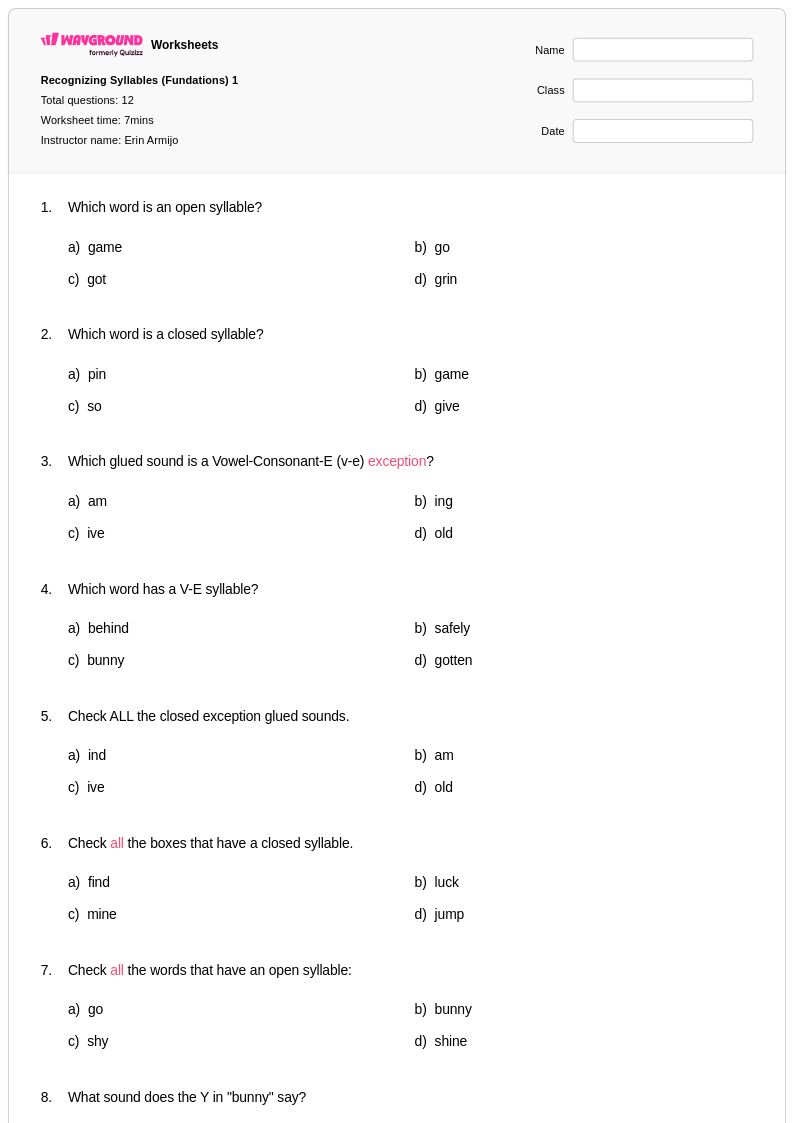
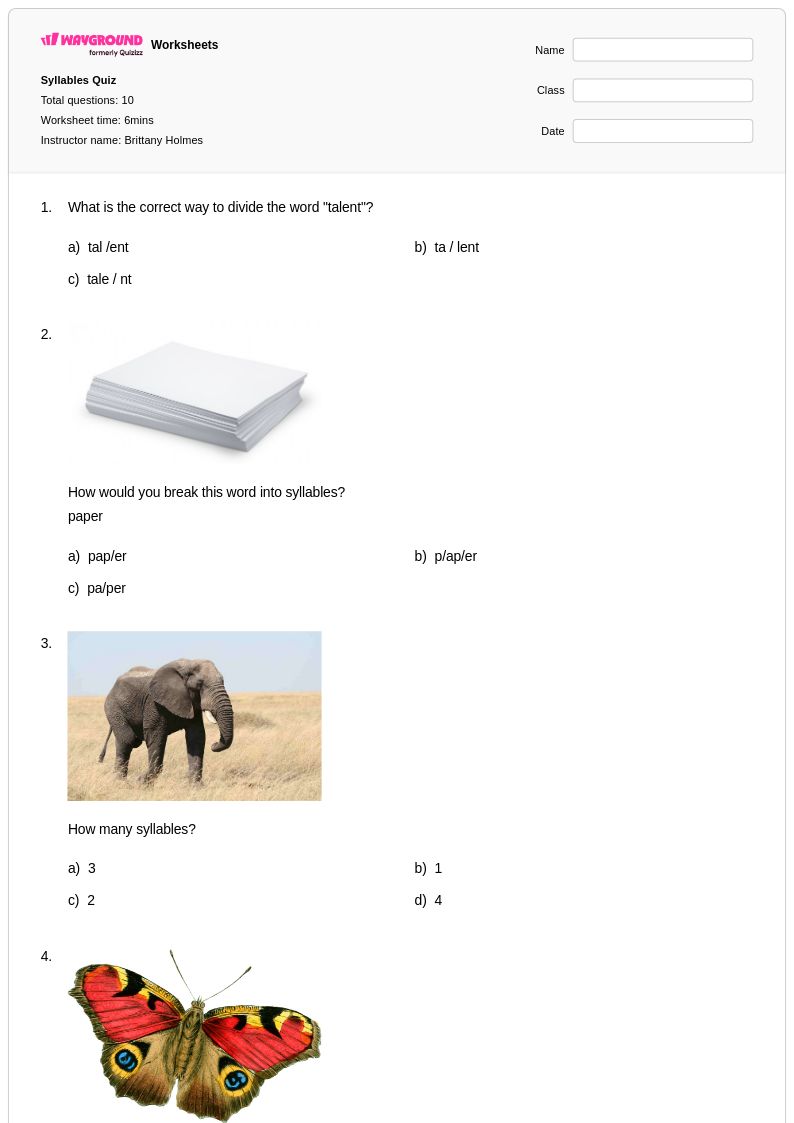
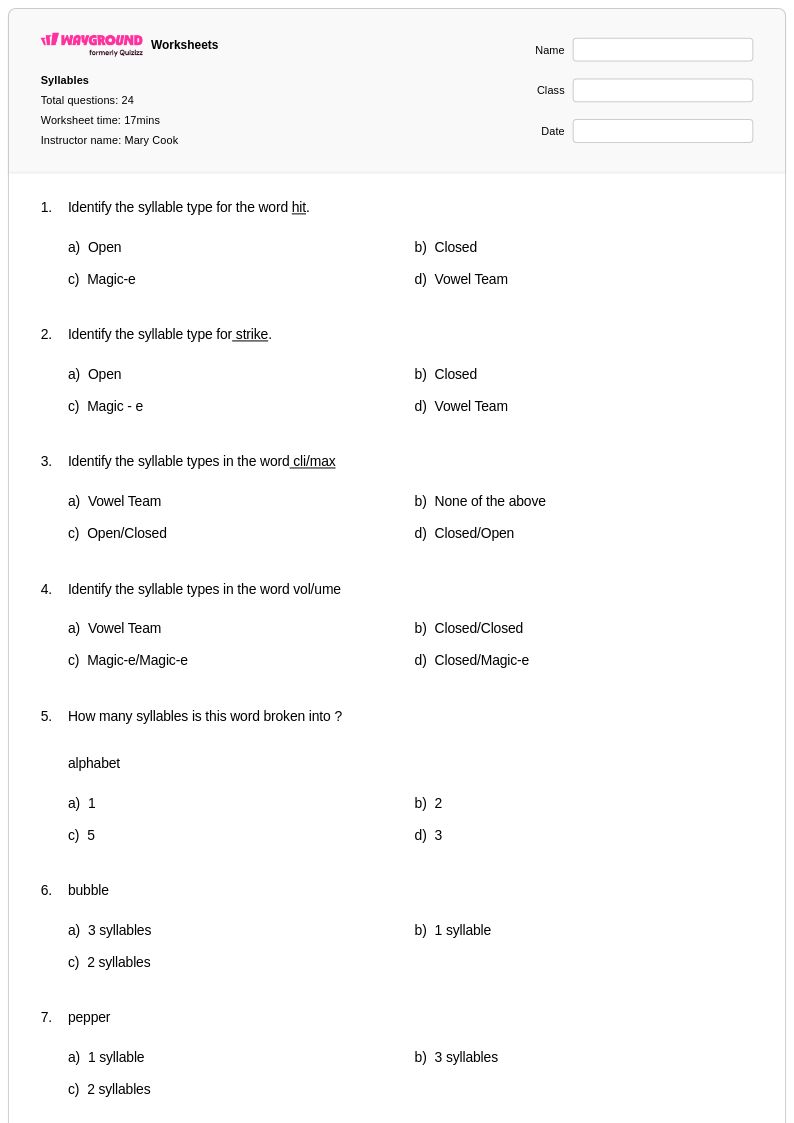
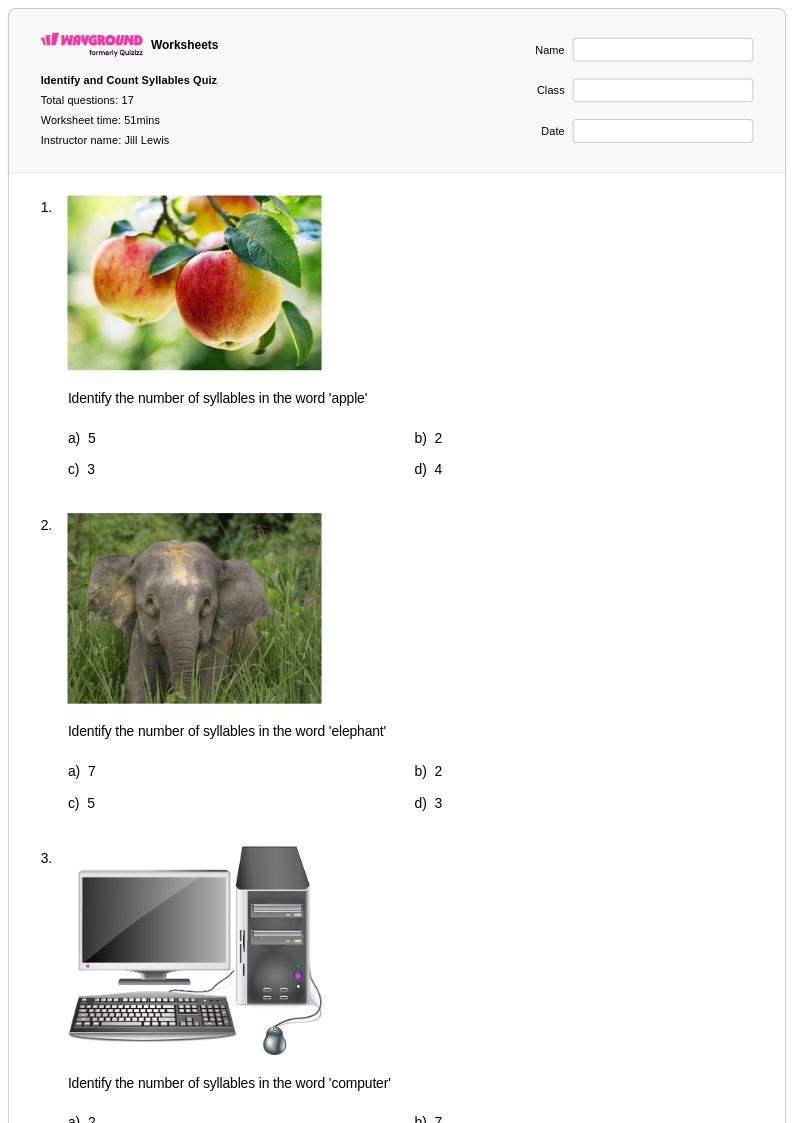
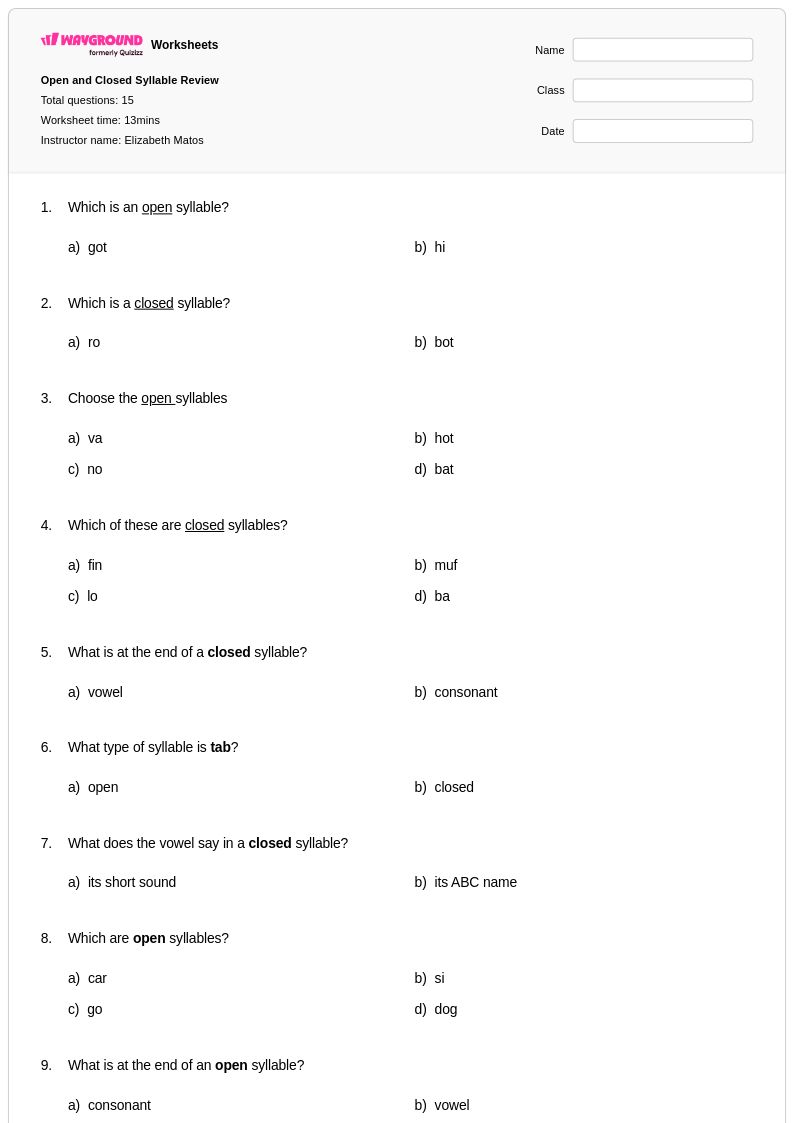
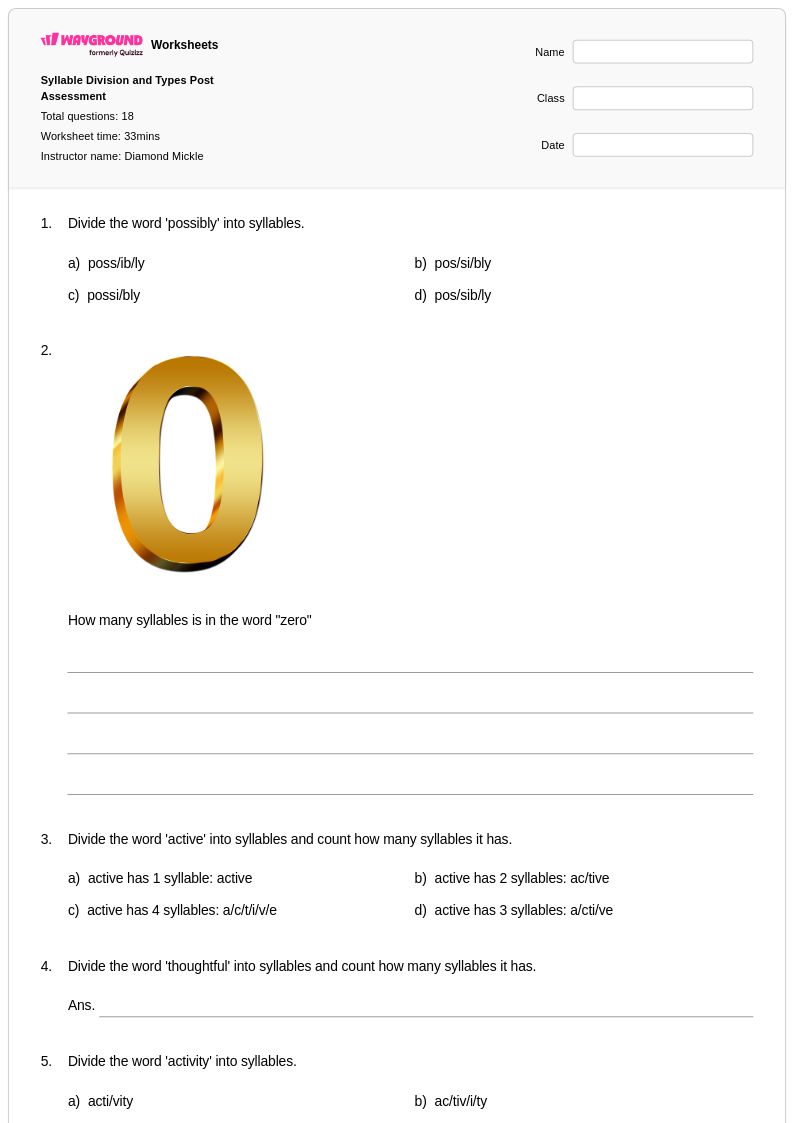
Effective practice exercises include syllable counting tasks where students identify how many syllables a word contains, word-splitting activities where students draw lines to divide words into syllable units, and sorting tasks where words are grouped by syllable count. Pattern recognition challenges that focus on specific syllable types, such as closed or open syllables, build systematic decoding skills. Repeated practice across a variety of single and multisyllabic words helps students internalize syllable boundaries and apply them when reading unfamiliar vocabulary.
What mistakes do students commonly make when identifying syllables?
A common error is miscounting syllables in words with vowel digraphs or silent vowels, such as treating 'ea' in 'bread' as two separate syllable cues rather than one sound. Students also frequently struggle with words ending in a consonant-le pattern, like 'table' or 'puzzle', because the final syllable contains no traditional vowel sound. Another frequent mistake is breaking words at incorrect points, such as splitting between the two letters of a blend rather than at the true syllable boundary.
How can I use syllable recognition worksheets in my classroom?
Recognizing syllables worksheets on Wayground are available as printable PDFs for traditional classroom use and in digital formats for technology-integrated learning environments, and teachers can also host them as a quiz directly on Wayground. Printable versions work well for independent seat work, small group intervention, and take-home practice, while digital formats are ideal for whole-class instruction on a shared screen or self-paced student review. Using both formats across a unit ensures students encounter syllable recognition practice in varied contexts, which strengthens retention.
How do I support struggling readers with syllable recognition?
For struggling readers, reduce cognitive load by starting with short, high-frequency words before introducing multisyllabic vocabulary, and provide visual supports like color-coding each syllable in a different color. On Wayground, teachers can apply accommodations such as read-aloud support so students hear words spoken aloud, reduced answer choices to lower the difficulty of selection tasks, and extended time to reduce performance pressure. These settings can be applied to individual students without alerting the rest of the class, making differentiation seamless during digital practice sessions.
How does recognizing syllables support reading fluency and spelling?
When students can accurately identify syllable boundaries, they gain a reliable strategy for decoding unfamiliar multisyllabic words rather than guessing from context or initial letters alone. In spelling, syllable awareness helps students apply spelling rules systematically, such as knowing when to double a consonant before adding a suffix. This foundational phonological skill directly supports reading fluency by making word recognition faster and more accurate, which frees up cognitive capacity for comprehension.