
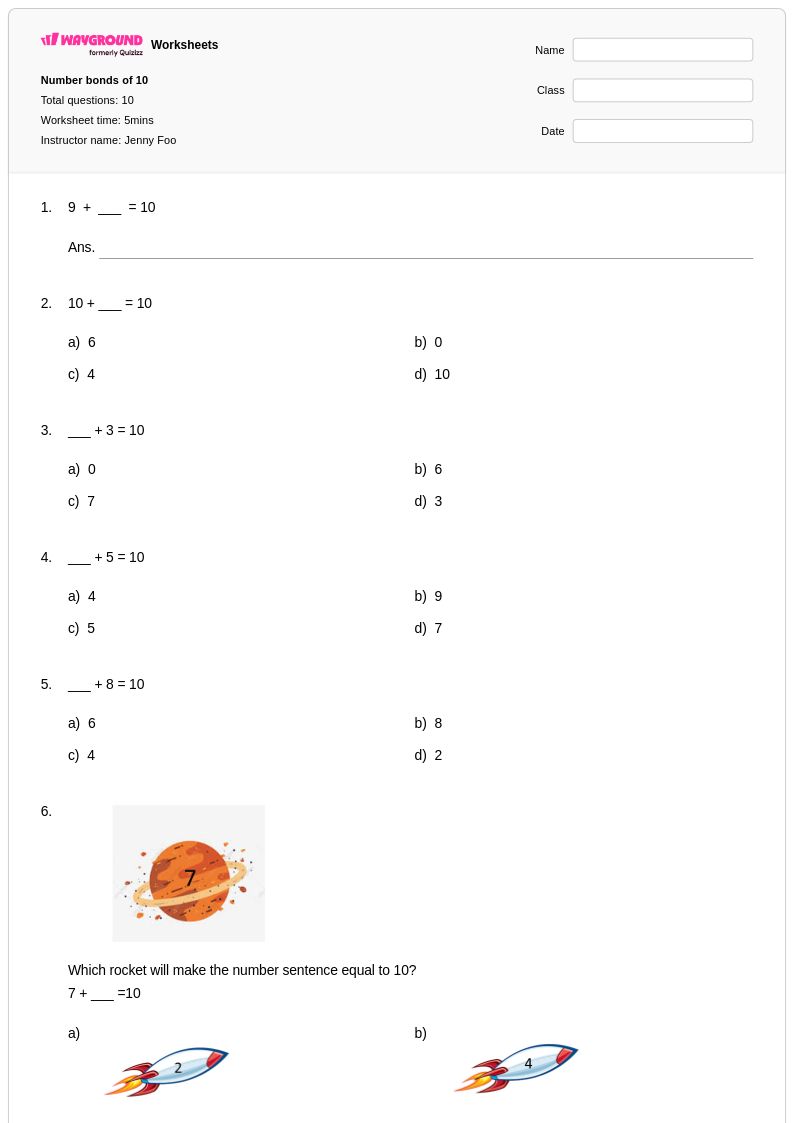
10 Q
KG
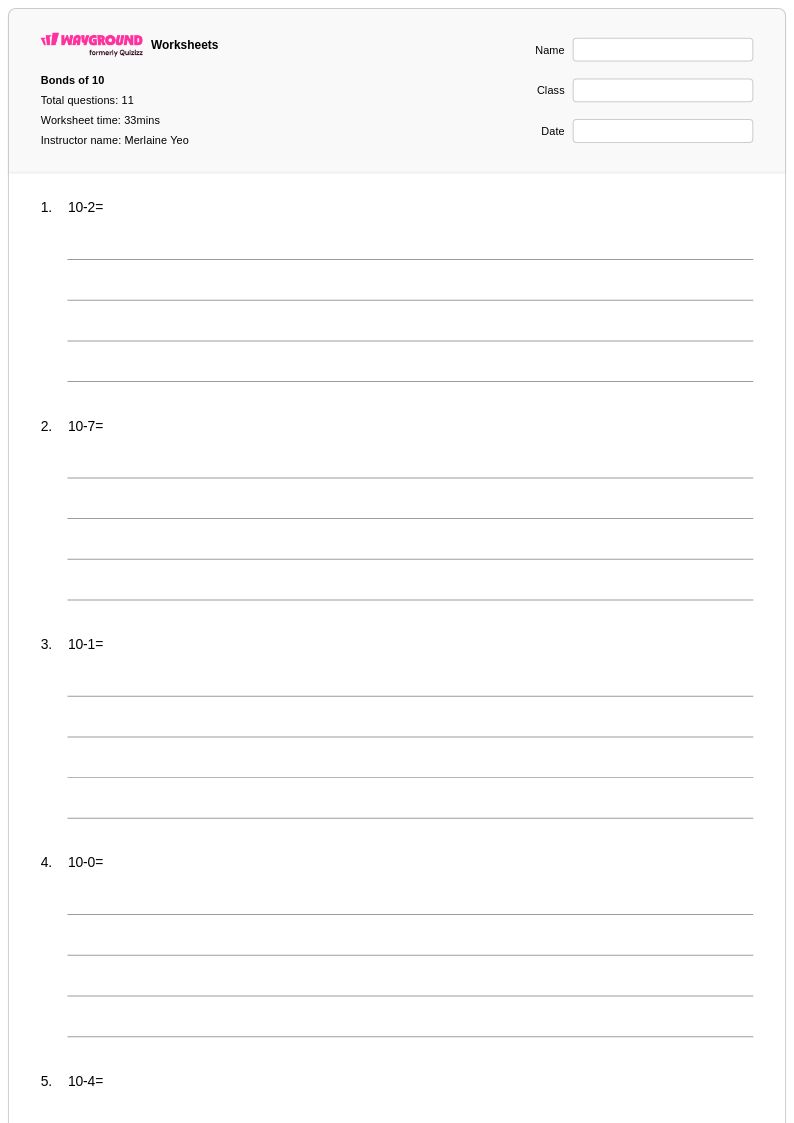
11 Q
1st
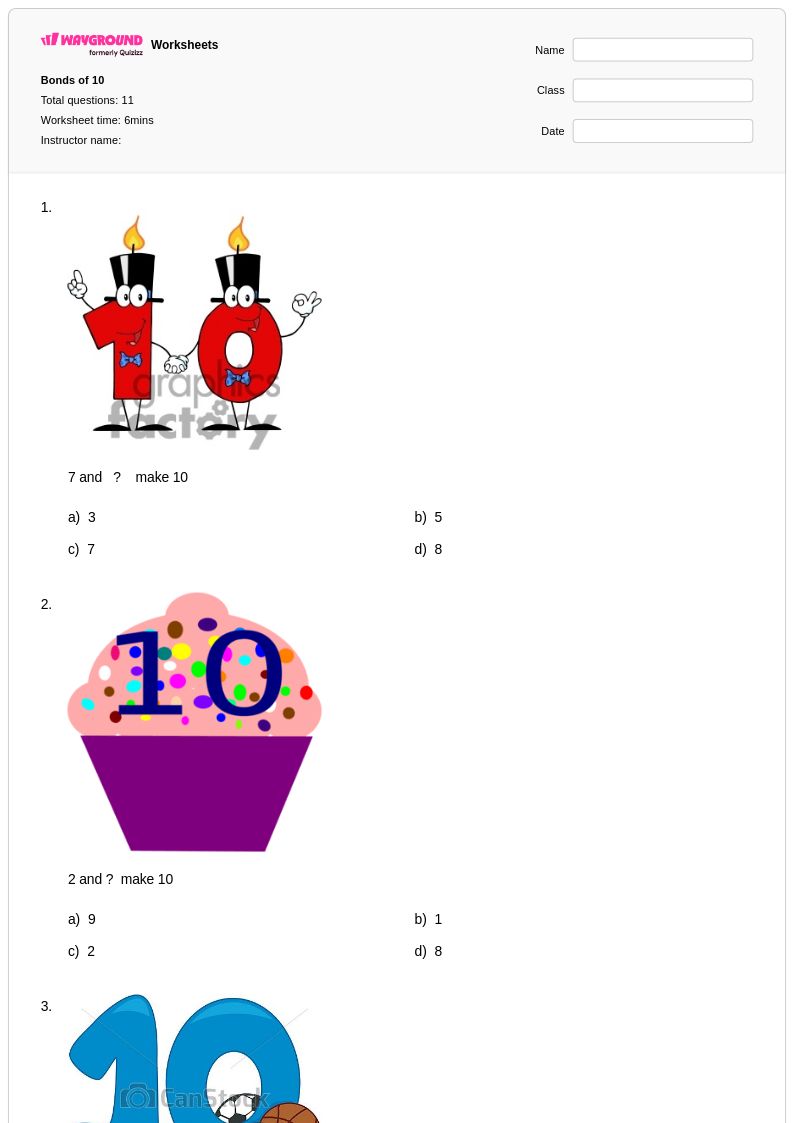
11 Q
1st - 2nd
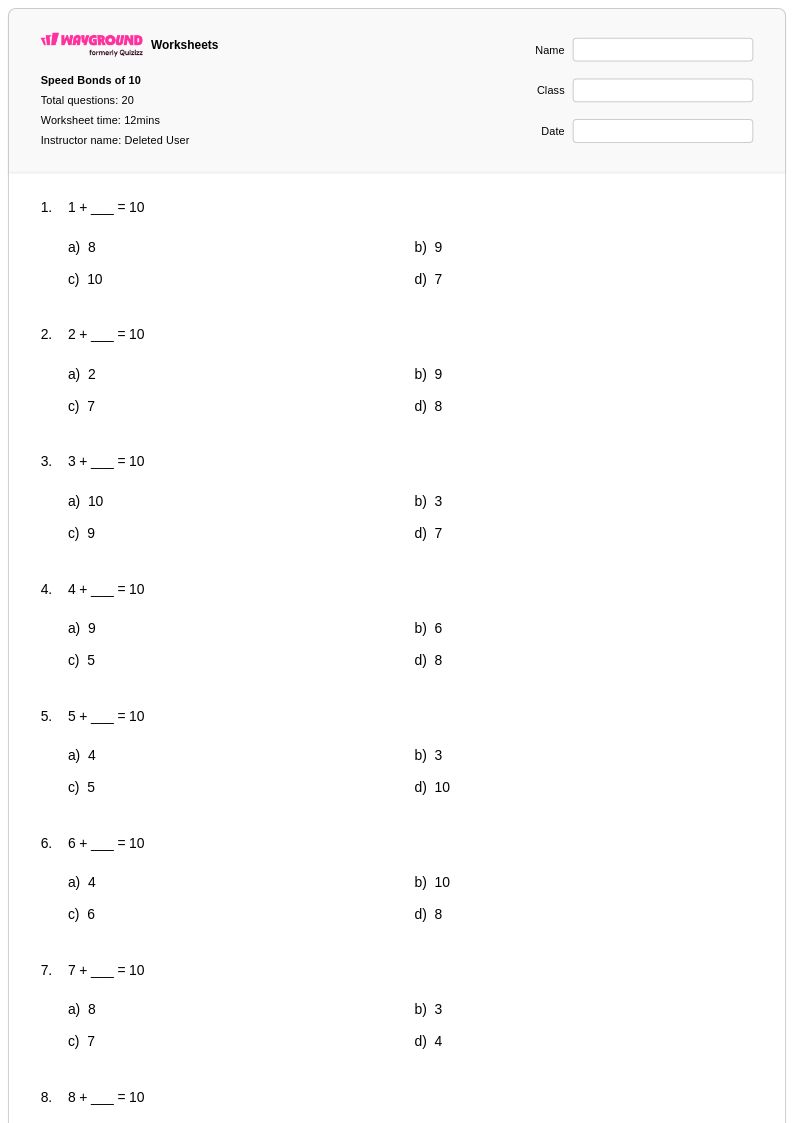
20 Q
1st - 2nd
12 Q
2nd
22 Q
1st - 2nd
16 Q
3rd
11 Q
1st
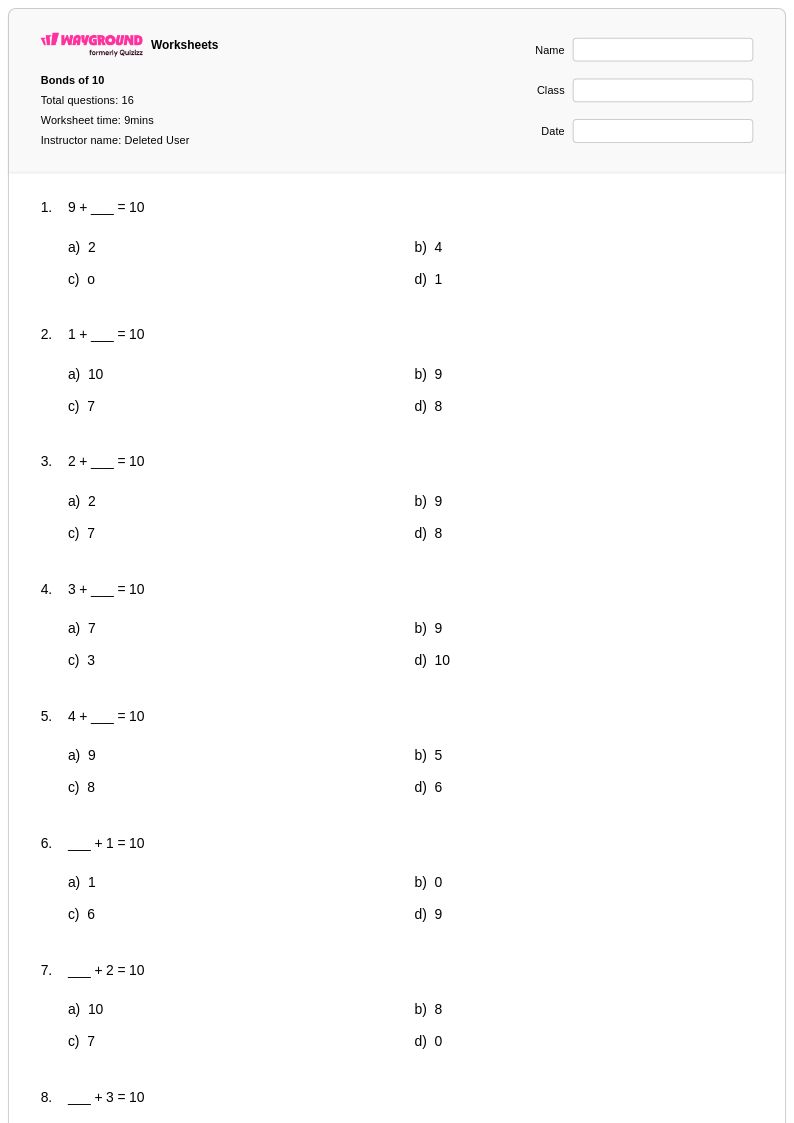
16 Q
2nd - 1st
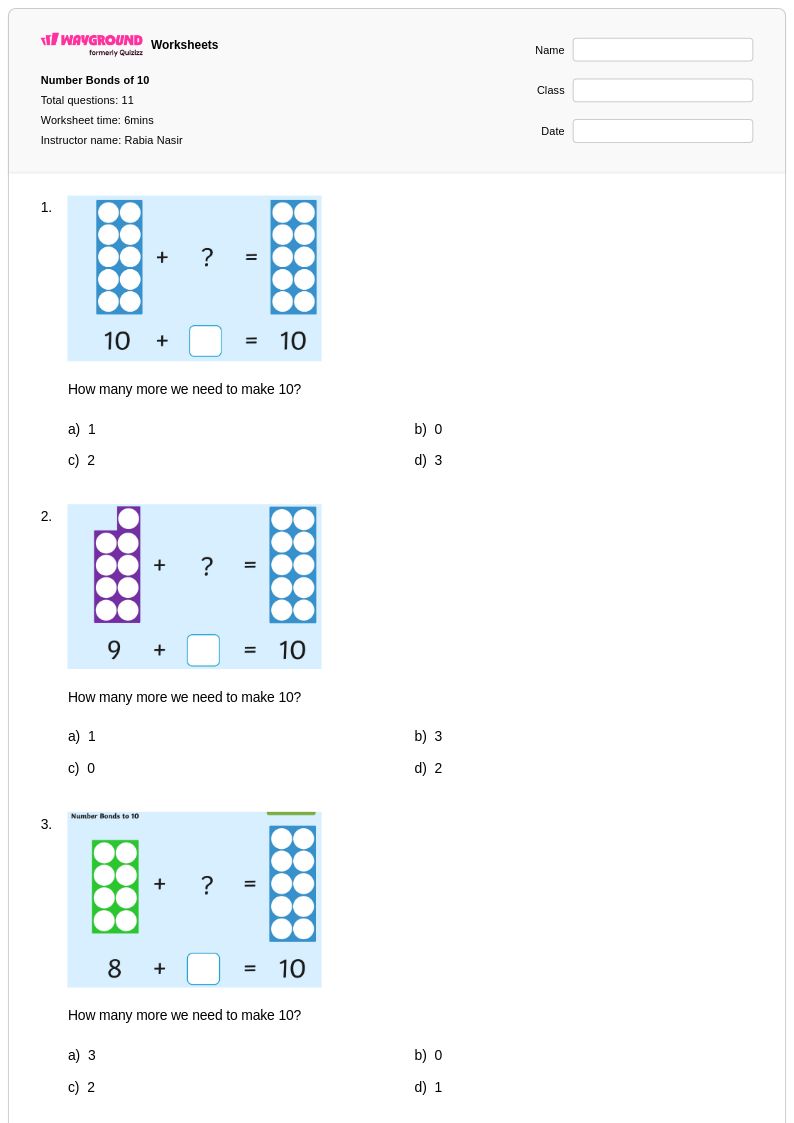
11 Q
KG - 1st
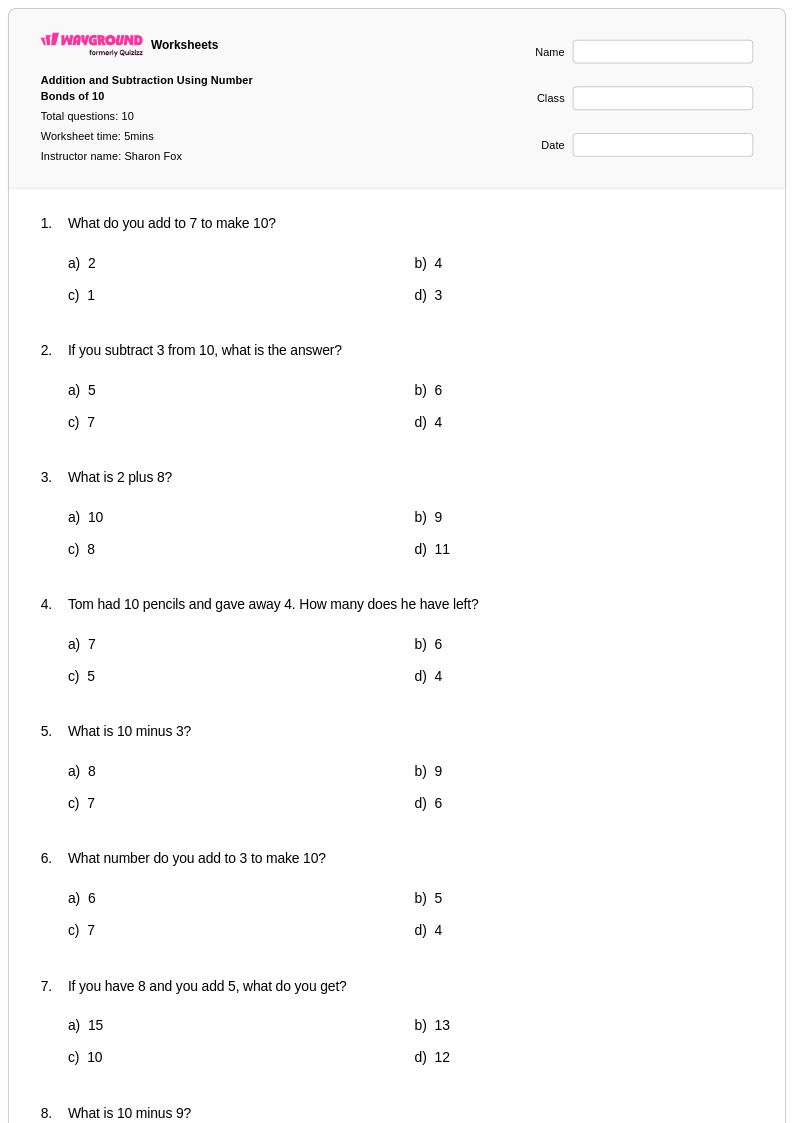
10 Q
3rd
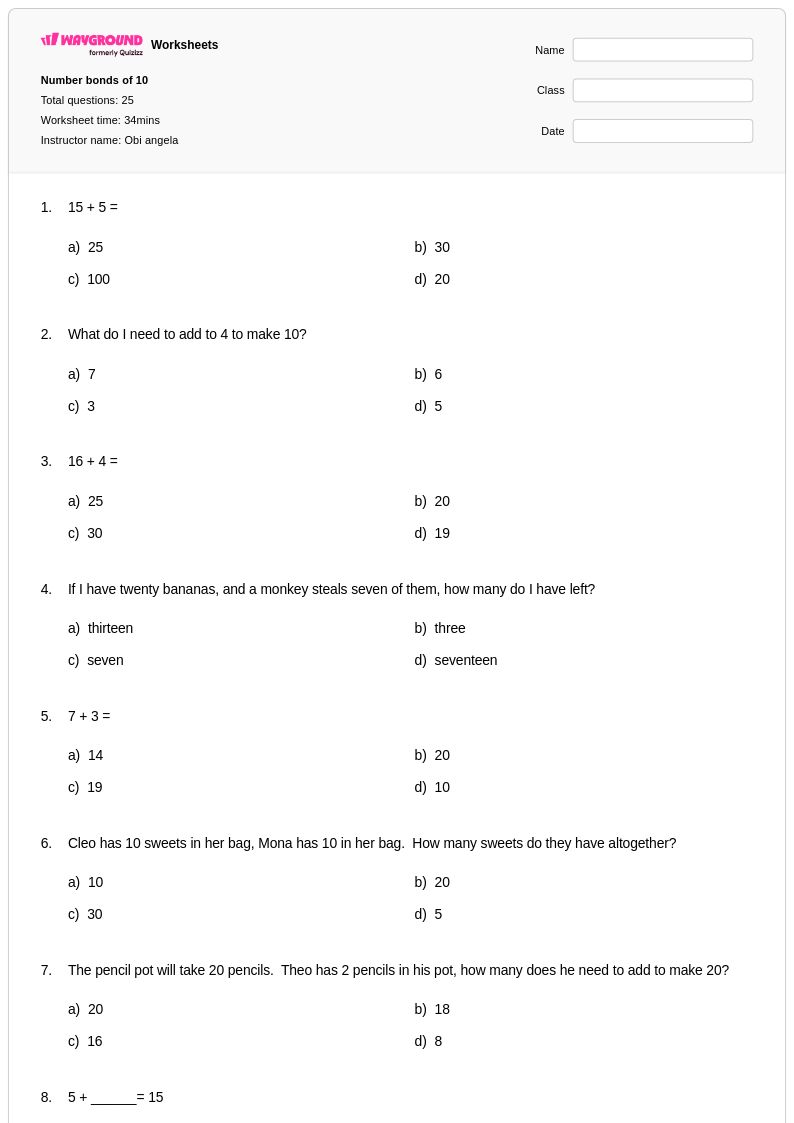
25 Q
1st - 3rd
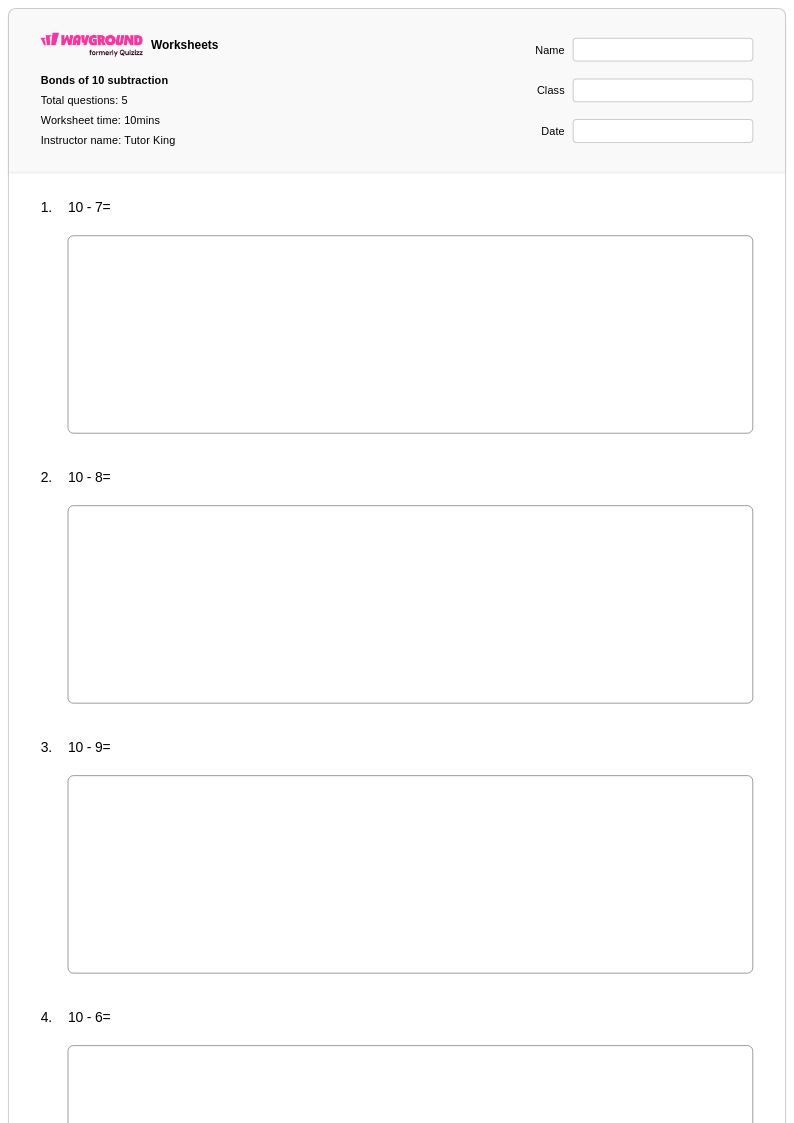
5 Q
1st
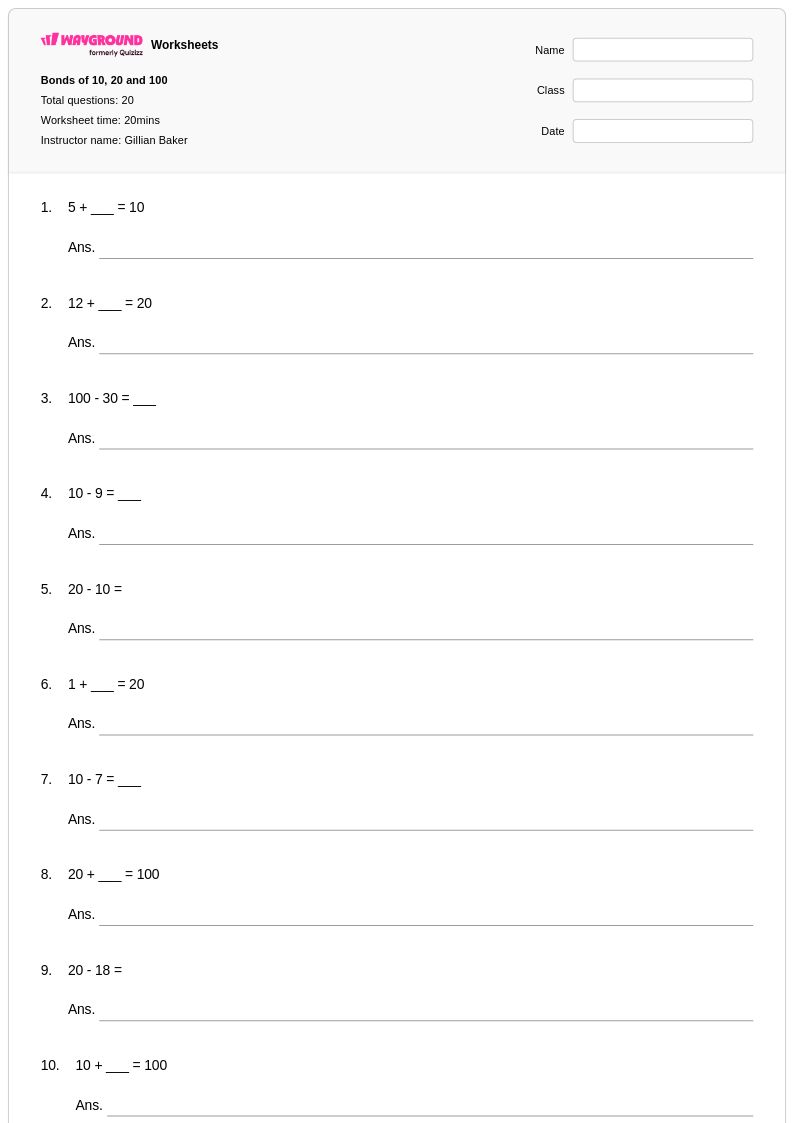
20 Q
2nd
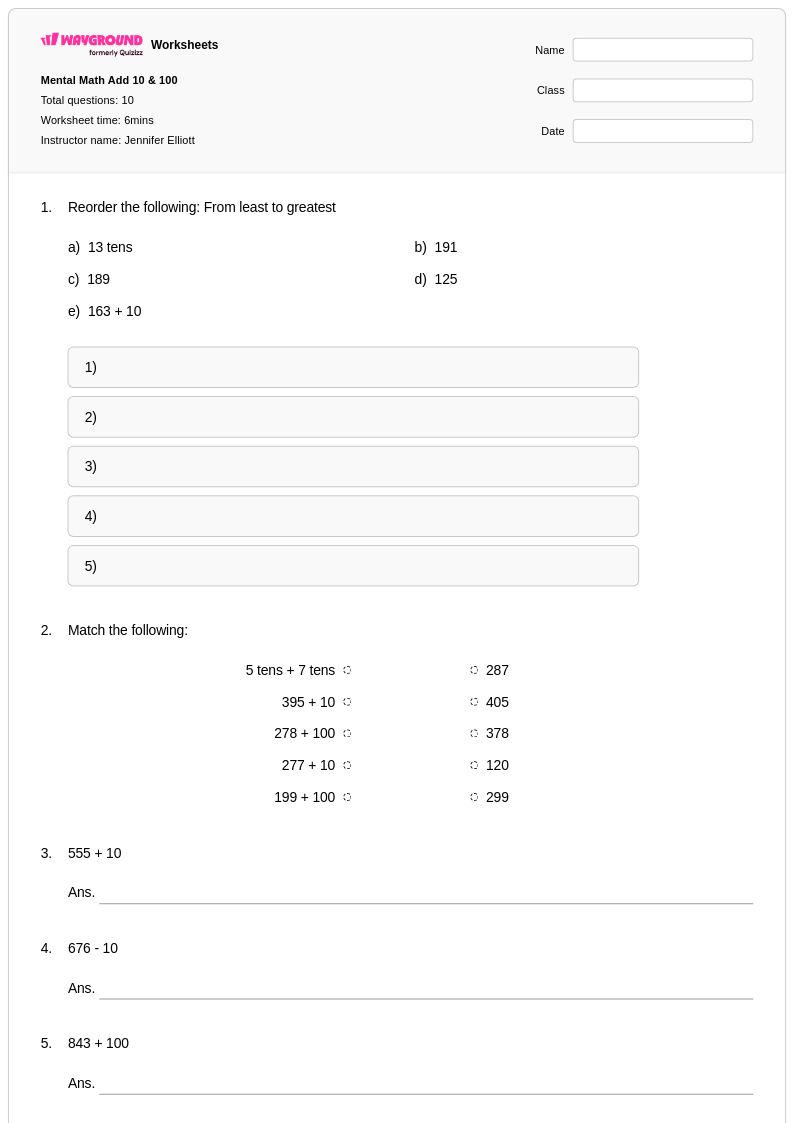
10 Q
2nd
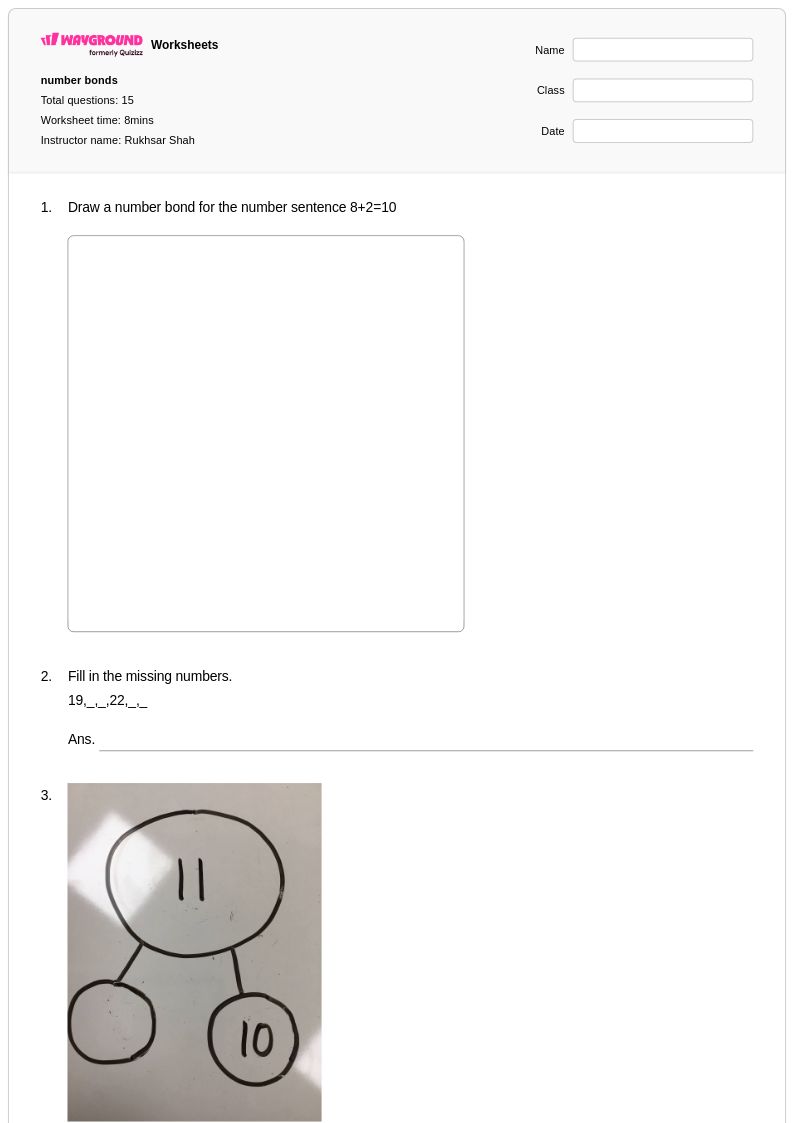
15 Q
KG
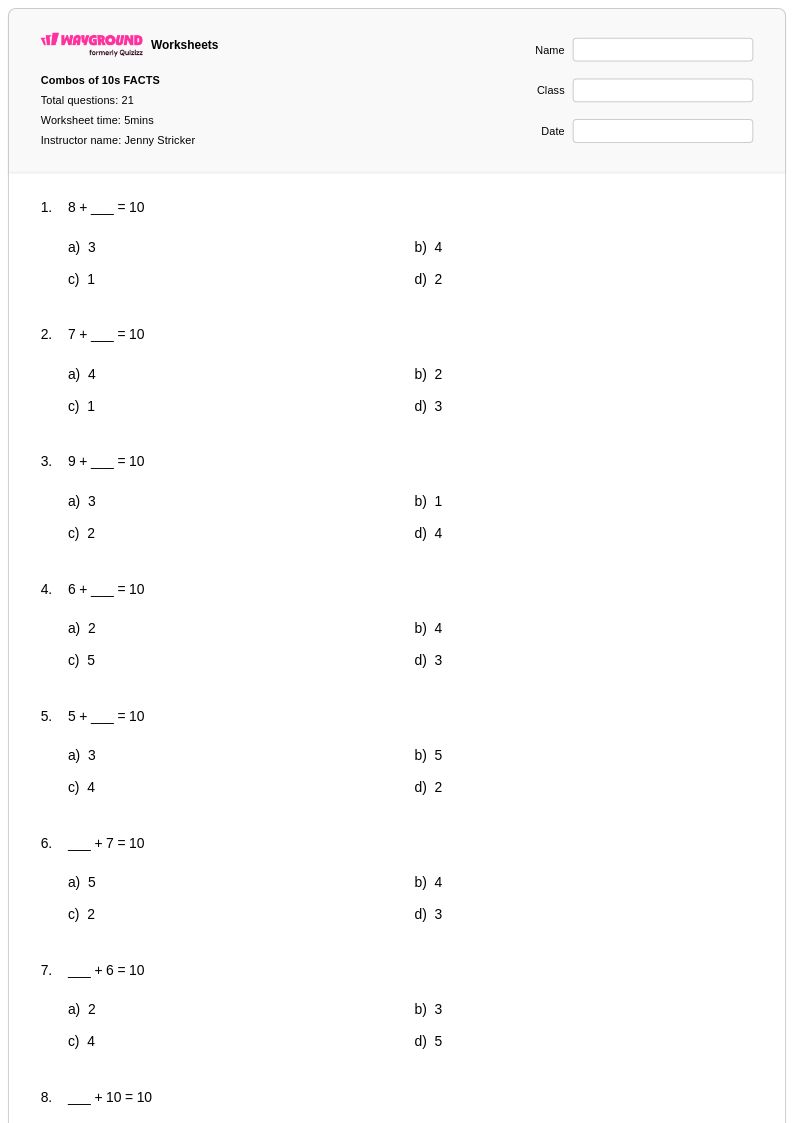
21 Q
1st
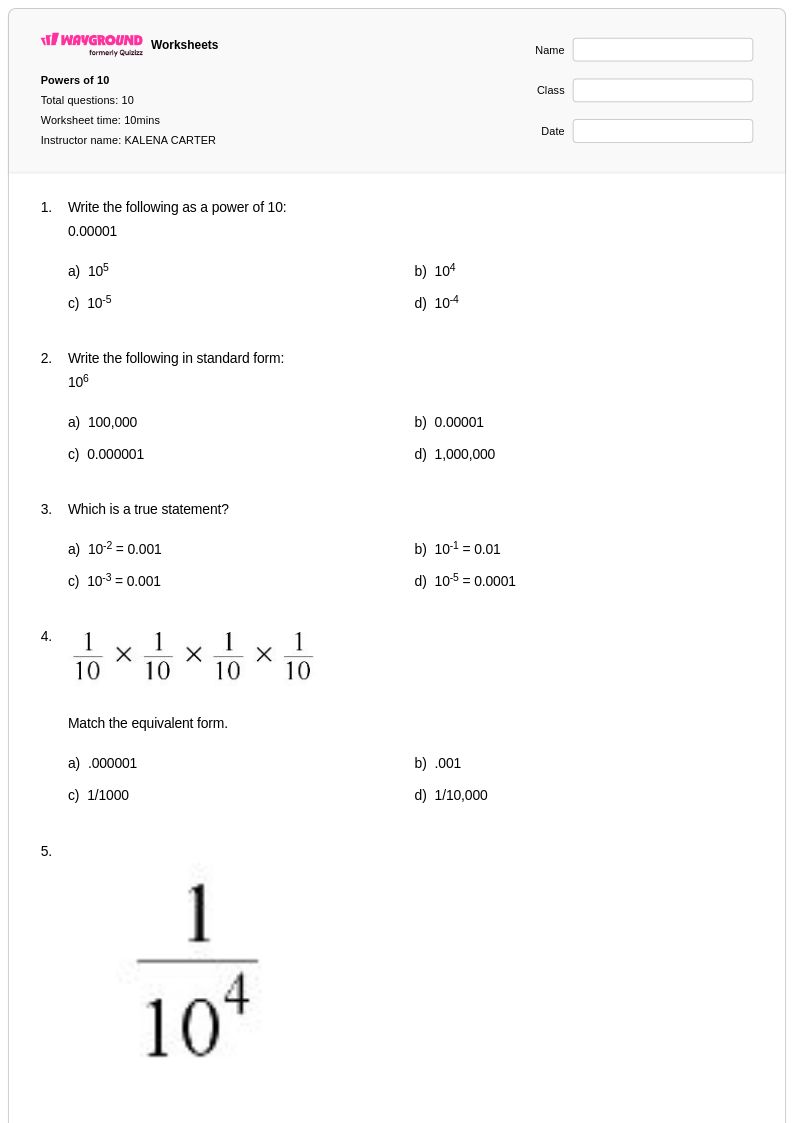
10 Q
7th
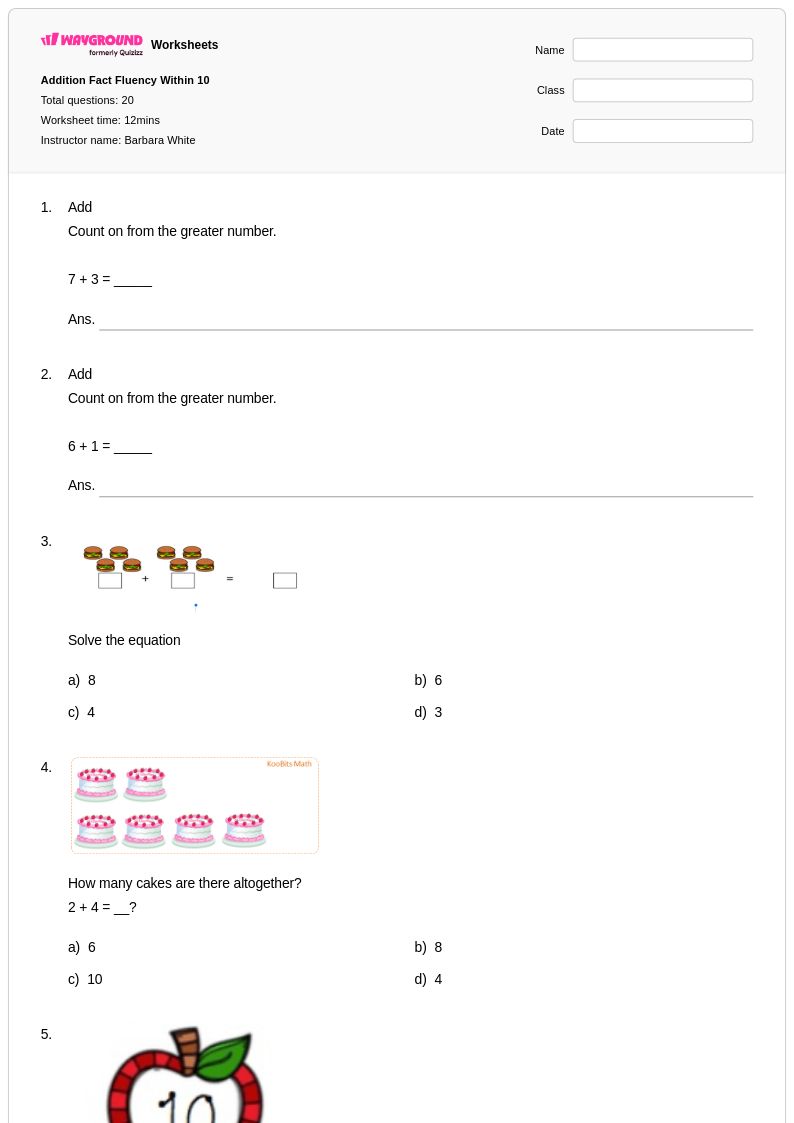
20 Q
1st
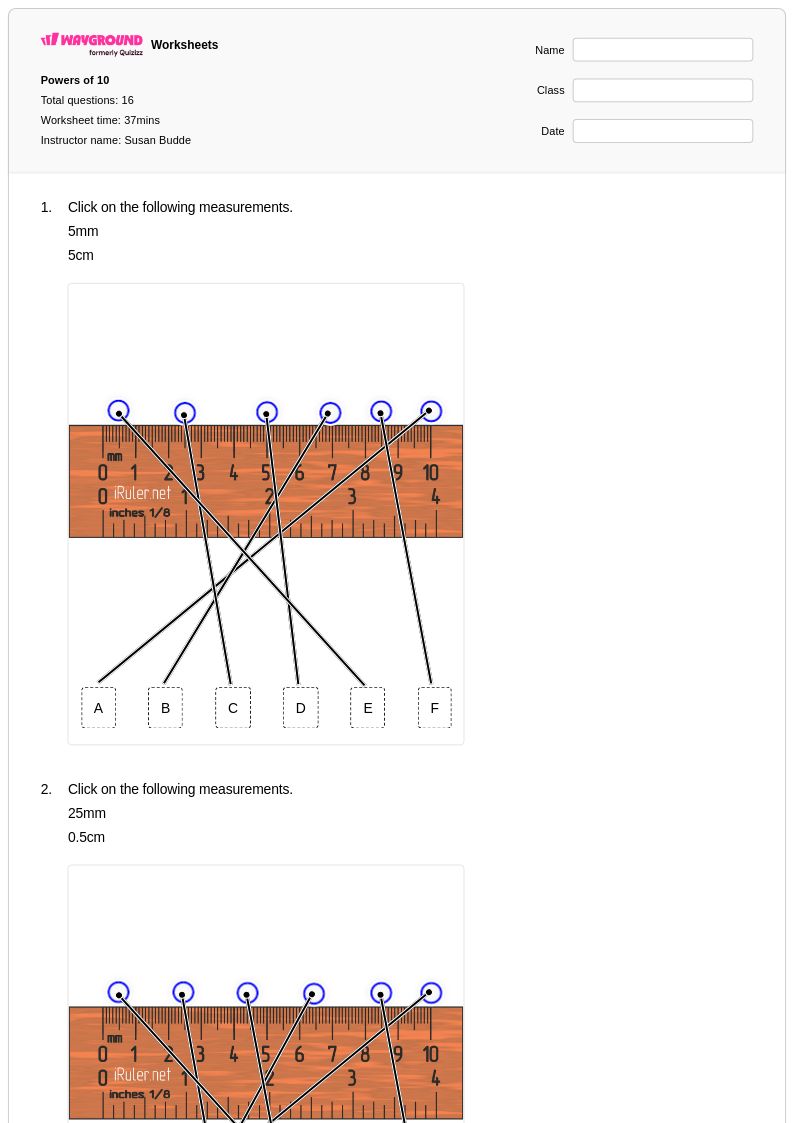
16 Q
9th - 12th
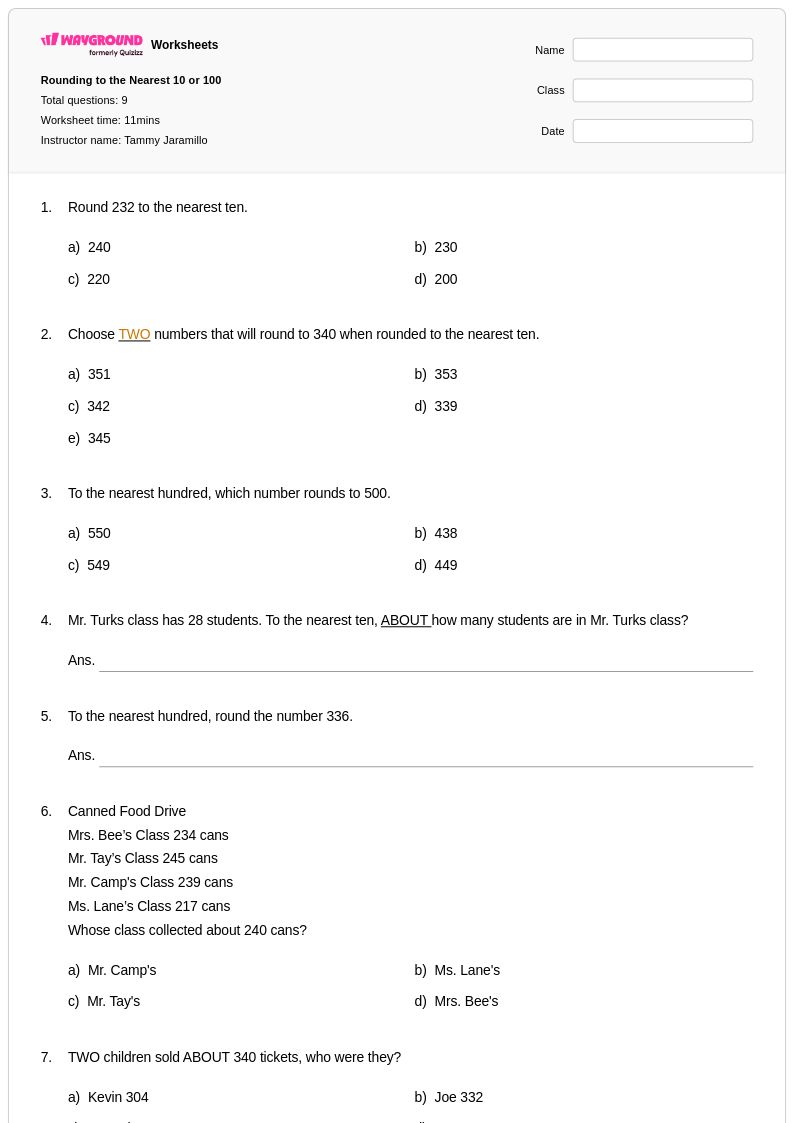
9 Q
3rd
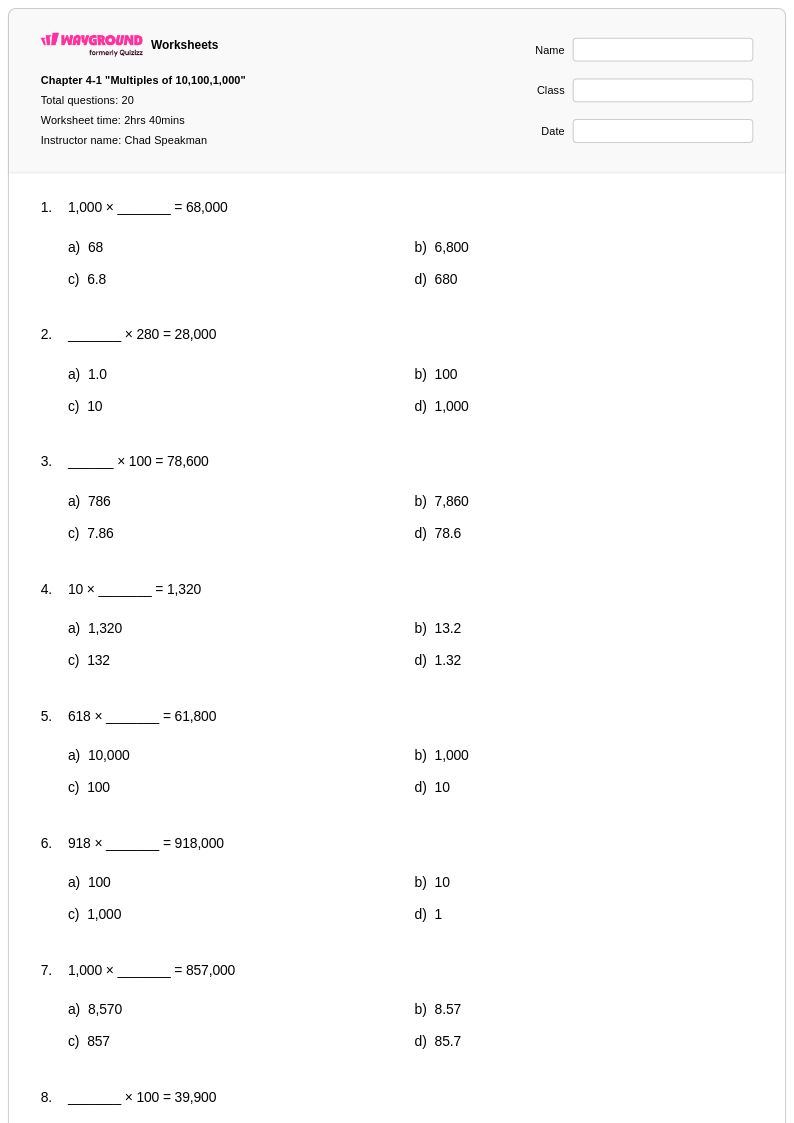
20 Q
4th
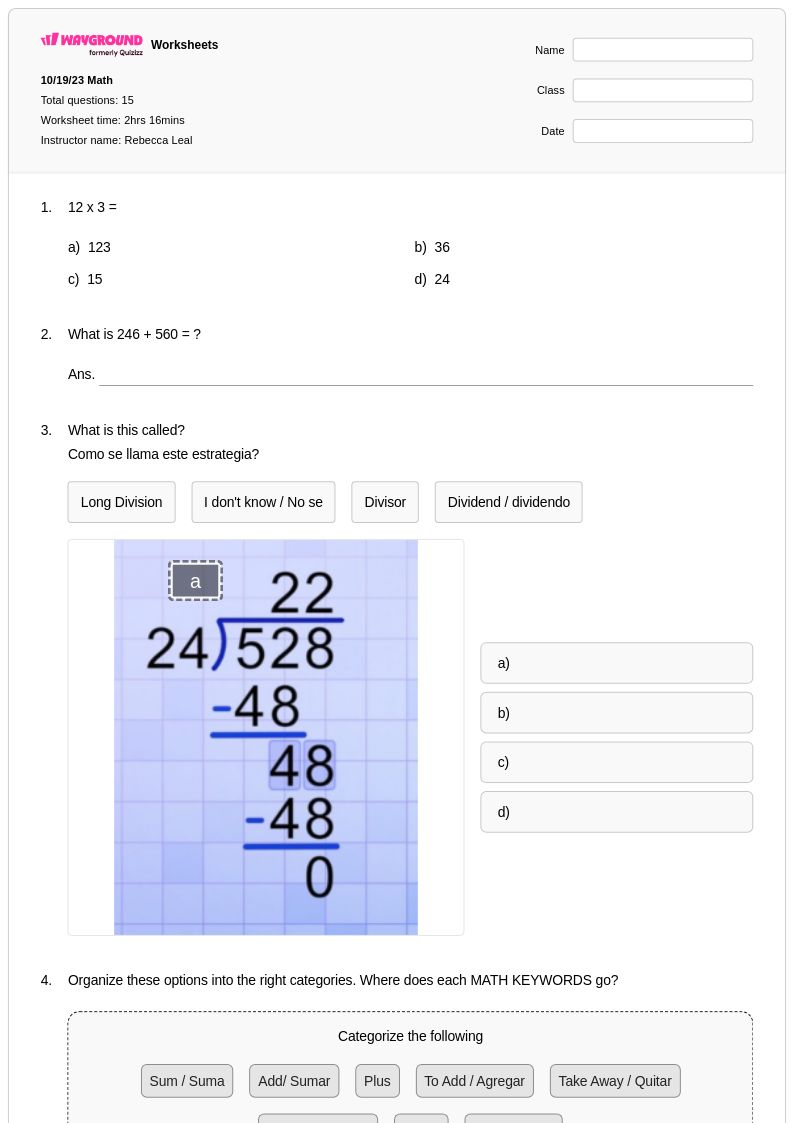
15 Q
4th
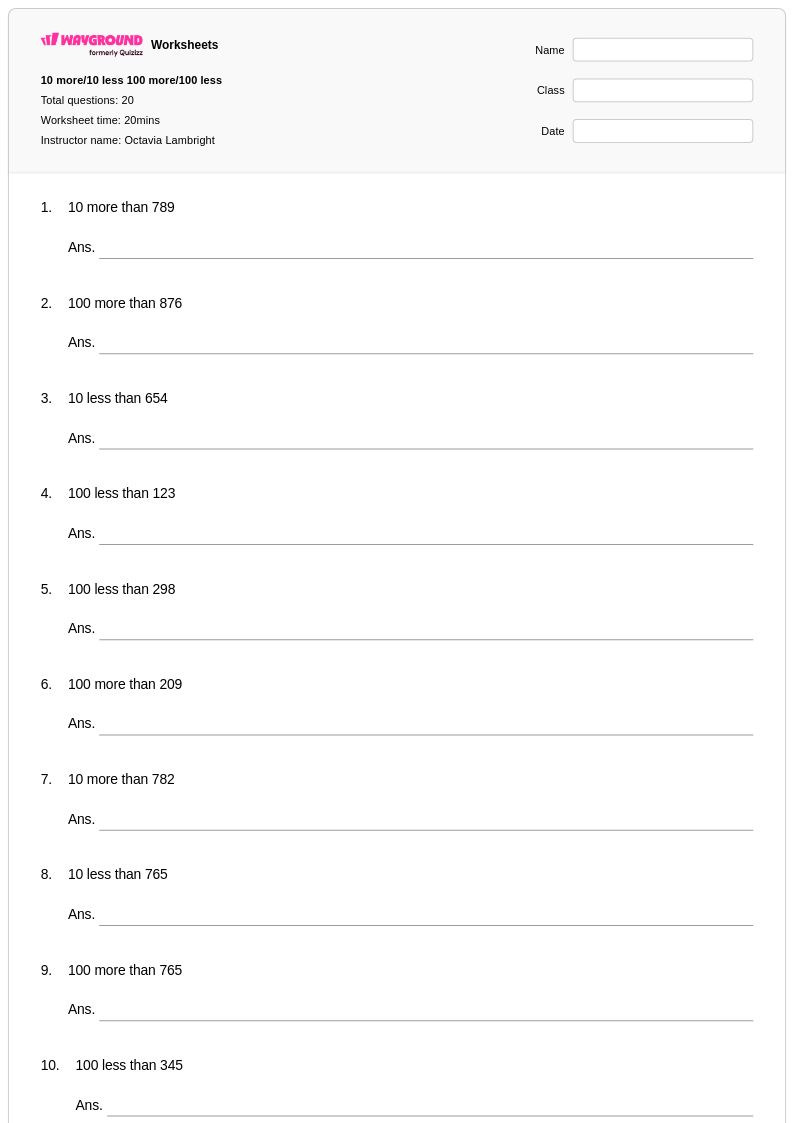
20 Q
2nd
Explore Bonds of 10 Worksheets by Grades
Explore Other Subject Worksheets for kindergarten
Explore printable Bonds of 10 worksheets for Kindergarten
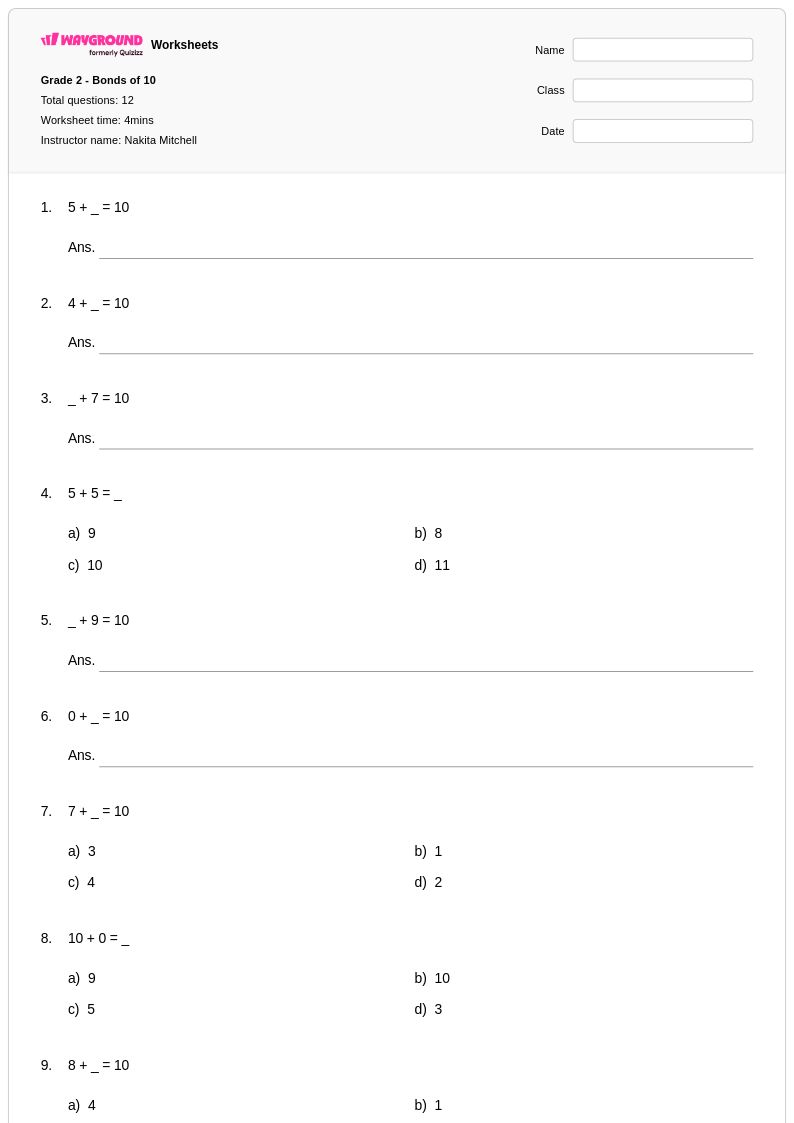
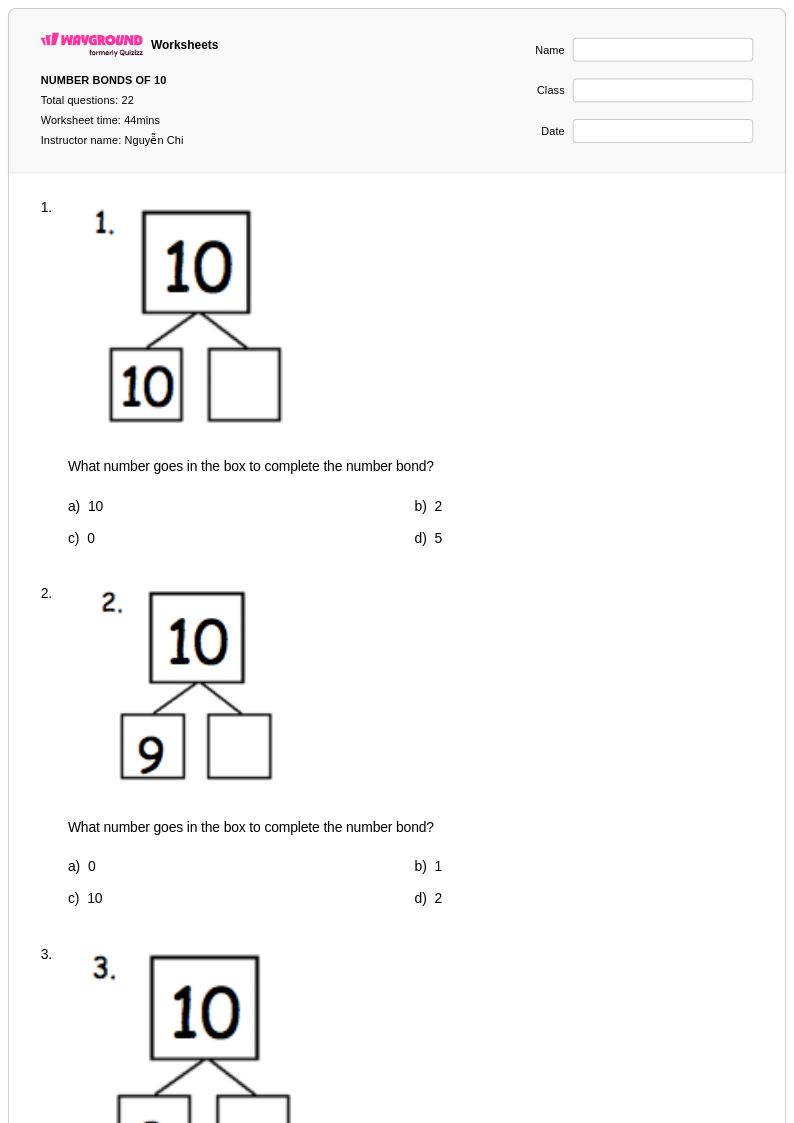
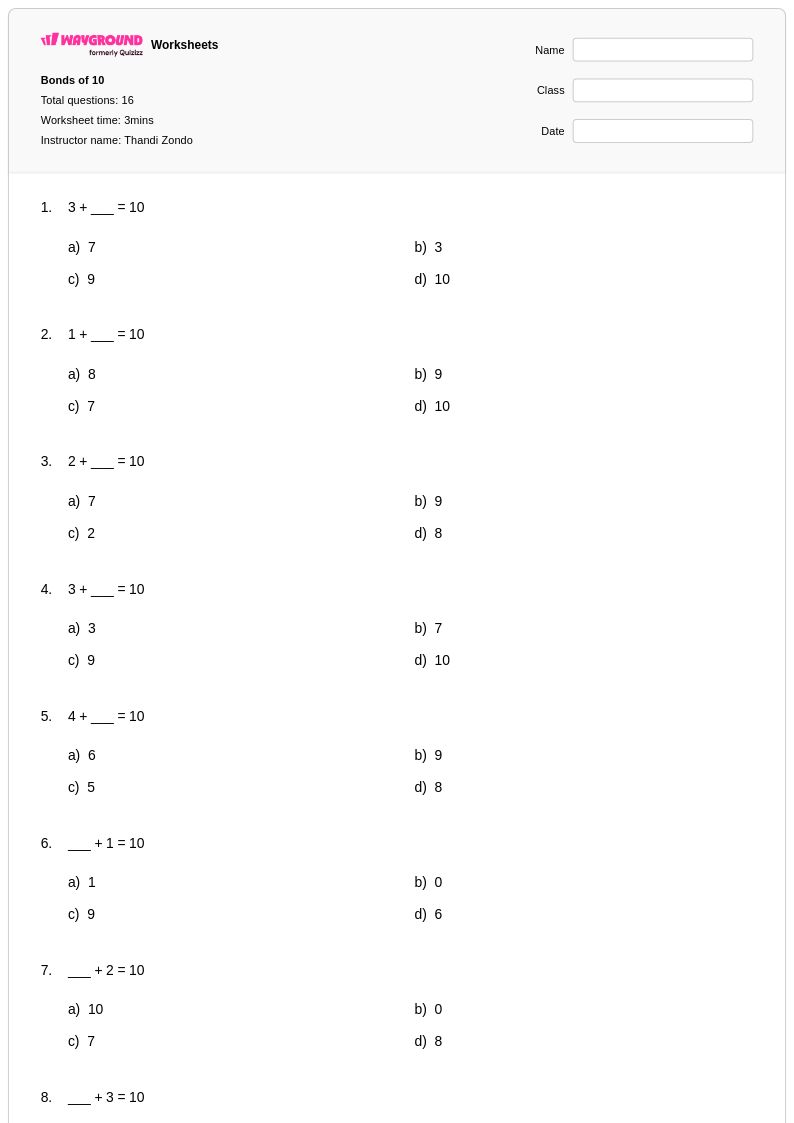
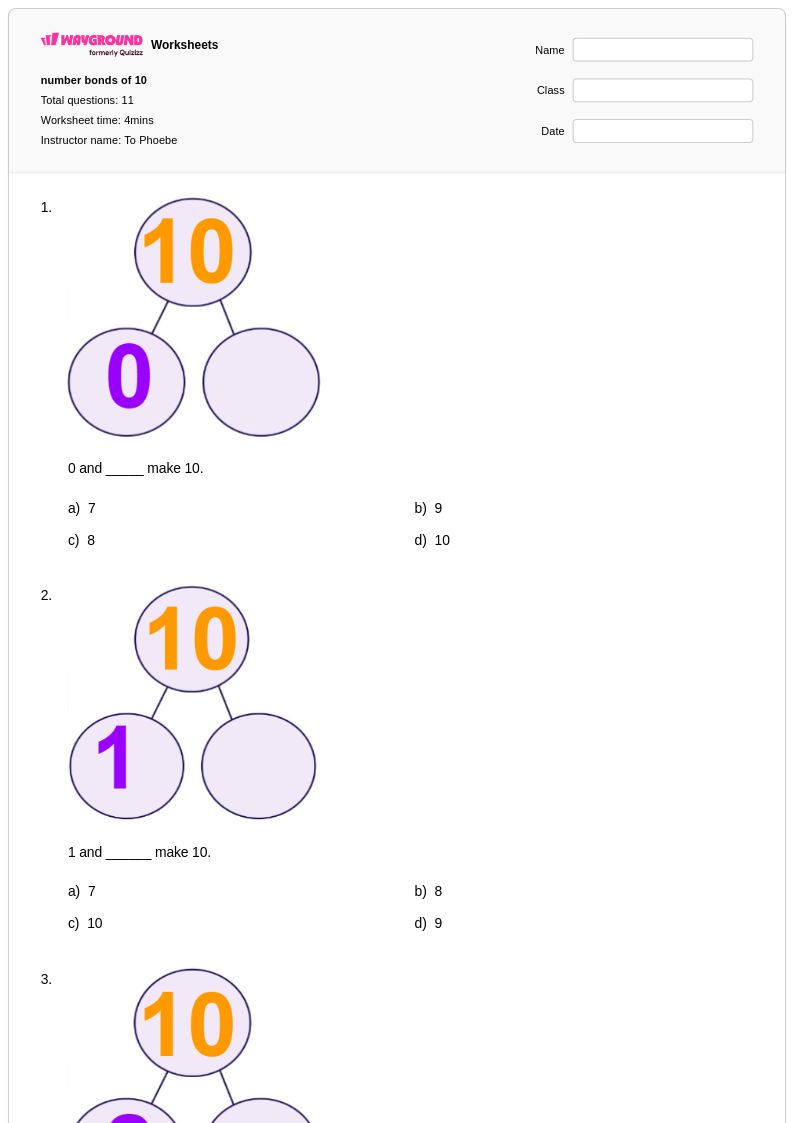
Bonds of 10 worksheets for kindergarten students through Wayground provide essential foundational practice for developing number sense and mental math fluency. These carefully designed printables focus on helping young learners discover and memorize the various number combinations that sum to 10, such as 1+9, 2+8, 3+7, 4+6, and 5+5. Each worksheet includes engaging practice problems that strengthen students' understanding of part-whole relationships while building automatic recall of these critical number facts. The free pdf resources feature visual representations, manipulative activities, and systematic exercises that make abstract mathematical concepts concrete for kindergarten minds. Complete answer keys accompany each worksheet, enabling teachers and parents to provide immediate feedback and support student learning effectively.
Wayground (formerly Quizizz) empowers educators with an extensive collection of millions of teacher-created bonds of 10 resources that streamline lesson planning and differentiated instruction. The platform's robust search and filtering capabilities allow teachers to quickly locate worksheets aligned with kindergarten mathematics standards and specific learning objectives. Flexible customization tools enable educators to modify existing materials or create personalized versions that meet diverse student needs, whether for remediation, enrichment, or standard skill practice. These comprehensive worksheet collections are available in both printable and digital formats, including downloadable pdf files, ensuring seamless integration into any classroom environment. Teachers can efficiently support struggling learners with additional practice opportunities while challenging advanced students with extension activities, all while maintaining focus on this fundamental mathematical concept that serves as a building block for future arithmetic operations.
FAQs
How do I teach bonds of 10 in kindergarten?
What activities help kindergarten students practice bonds of 10?
What mistakes do children make when learning bonds of 10?
How can I use a kindergarten bonds of 10 worksheet in class?
How do bonds of 10 fit into the kindergarten Common Core math progression?
How can I differentiate bonds of 10 practice for kindergarten students?
What grade do students learn bonds of 10?