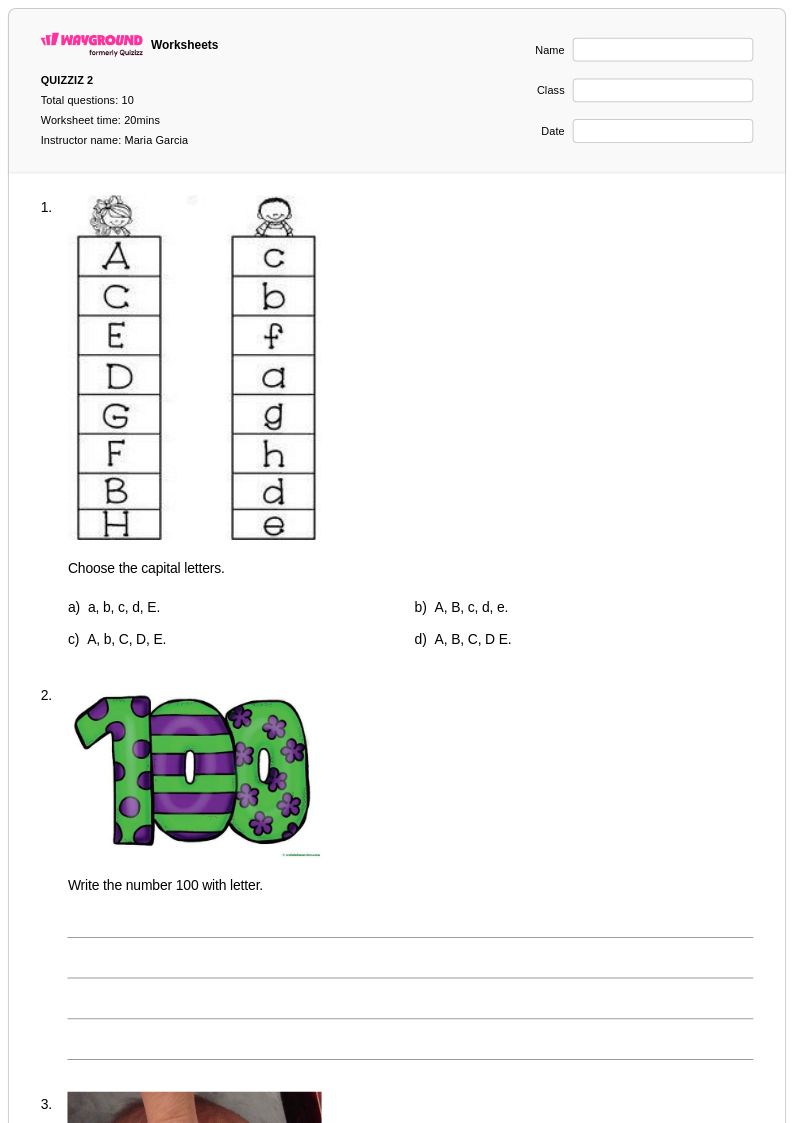
Free Printable Capital Letters Worksheets for Class 1
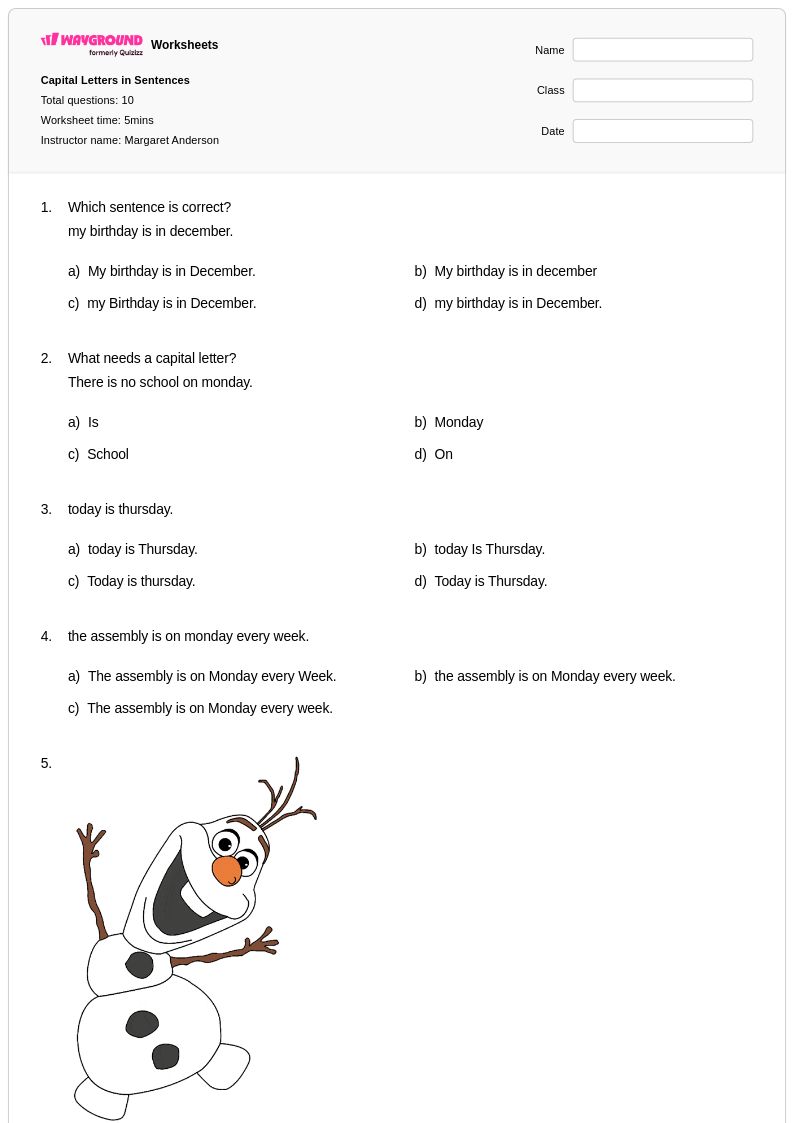
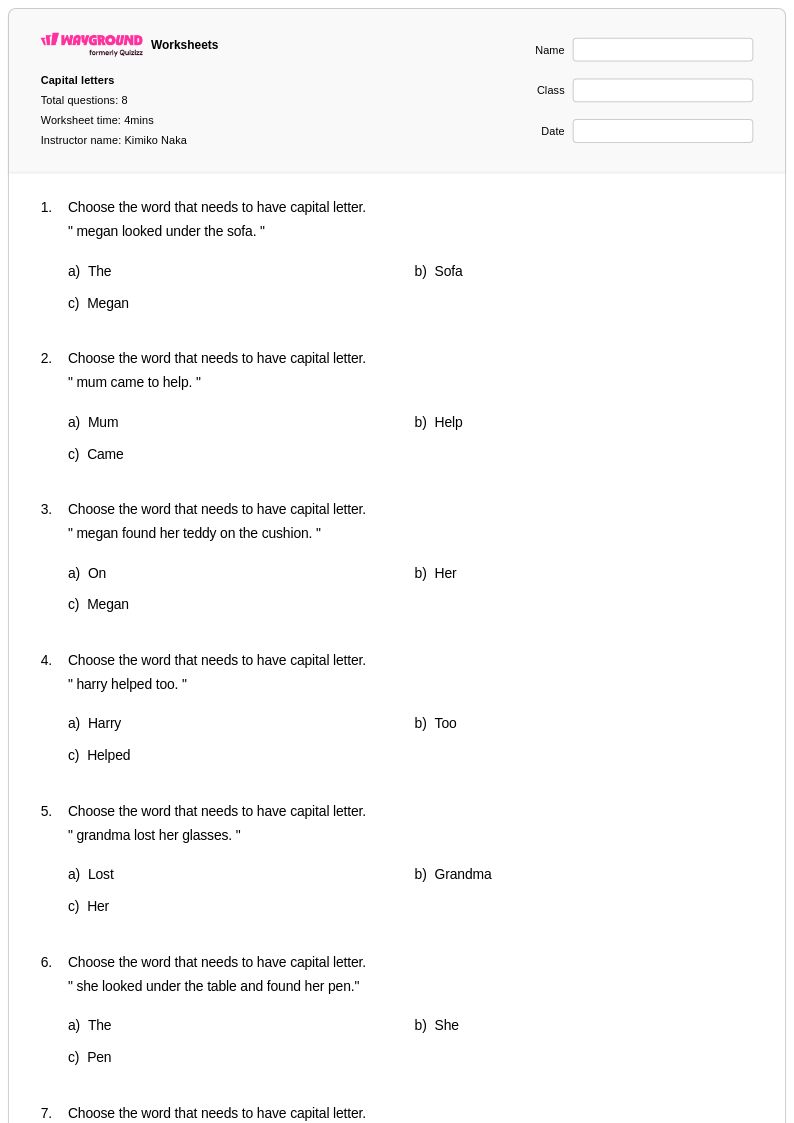
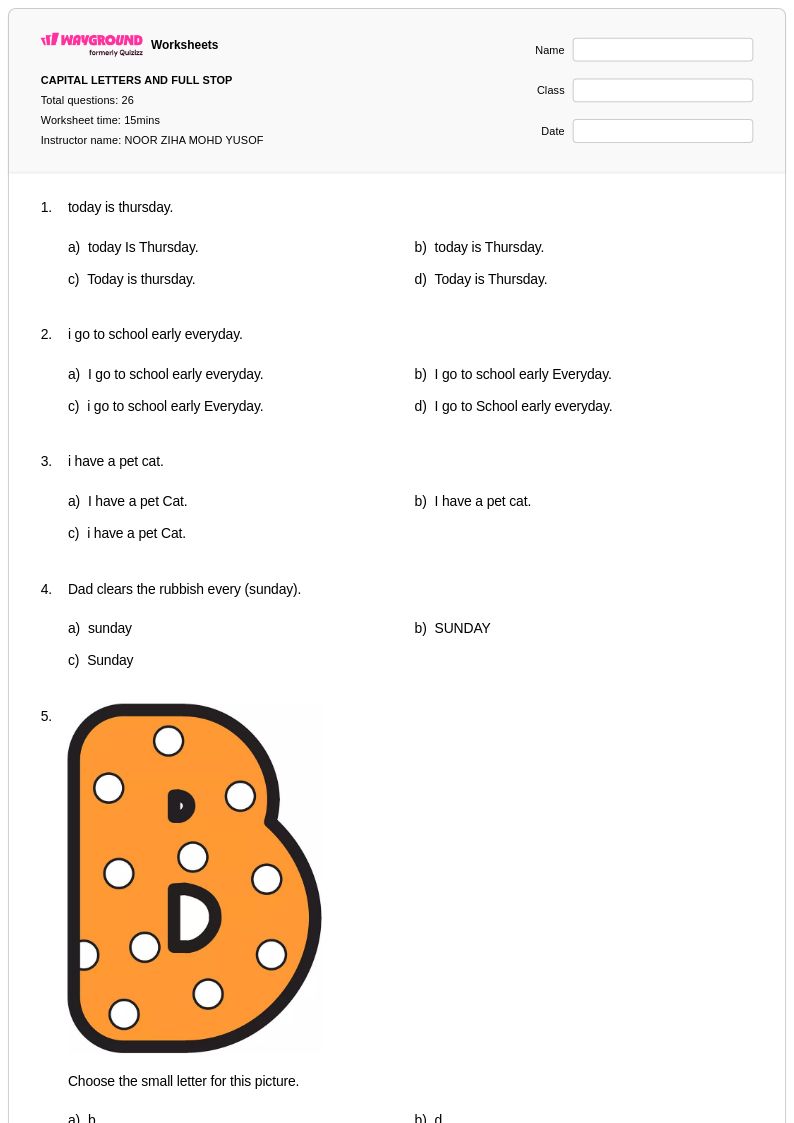
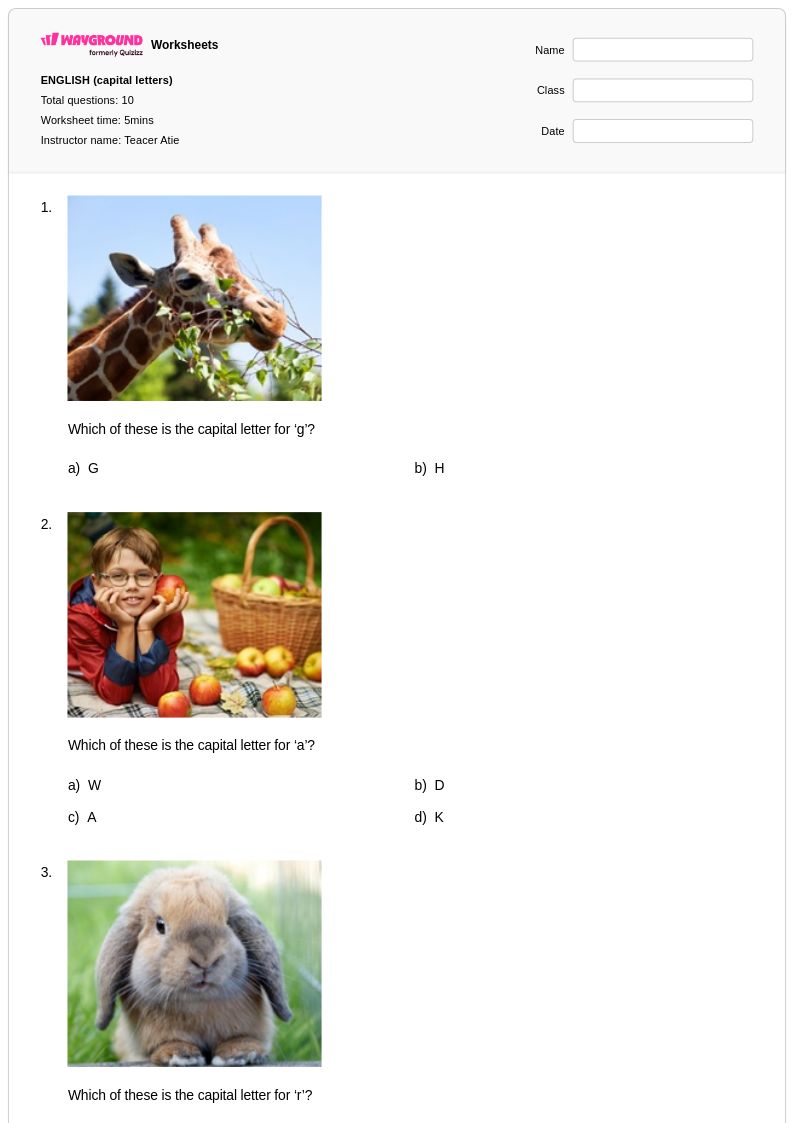
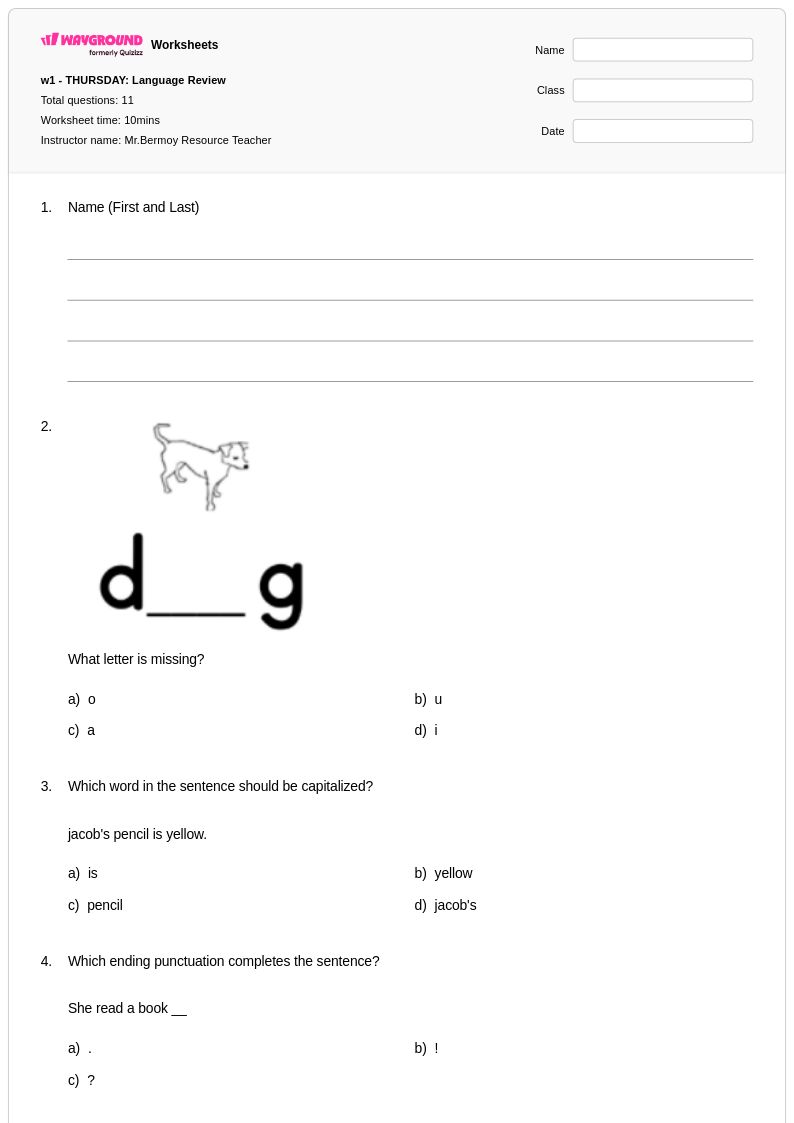
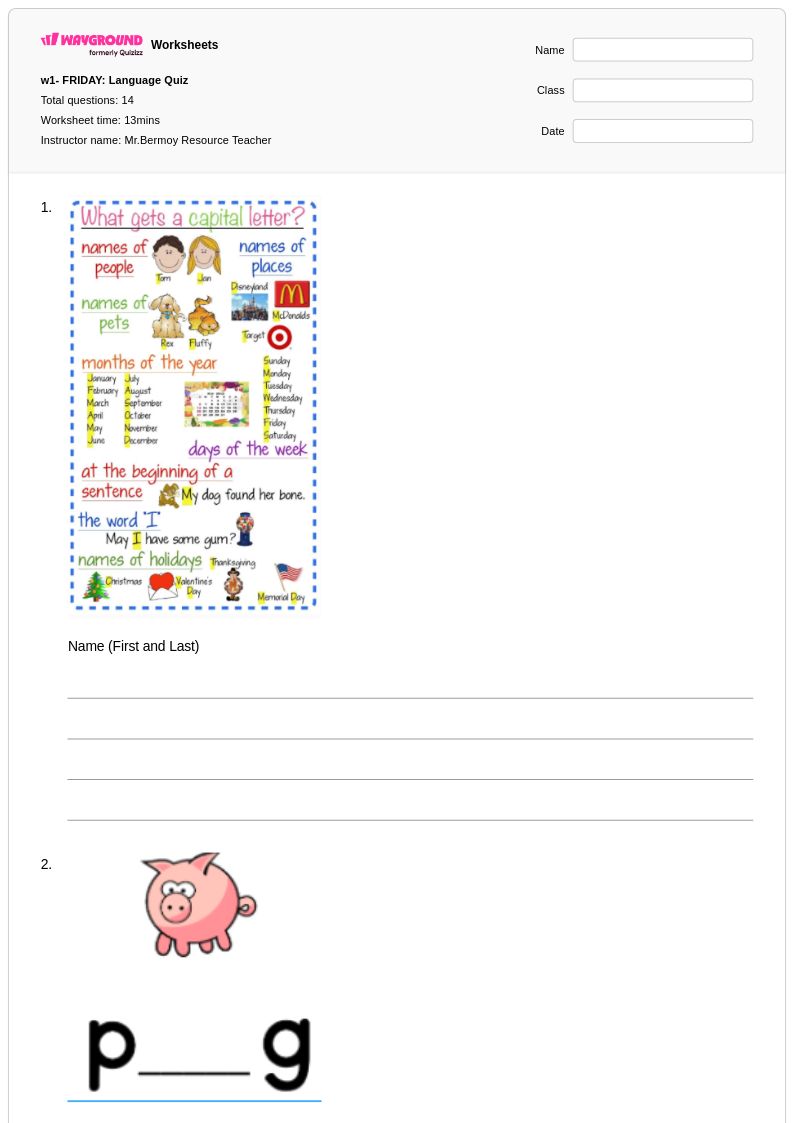
Class 1 capital letters handwriting worksheets and printables help young students master uppercase letter formation through engaging practice problems, available as free PDF downloads with answer keys.
Explore printable Capital Letters worksheets for Class 1
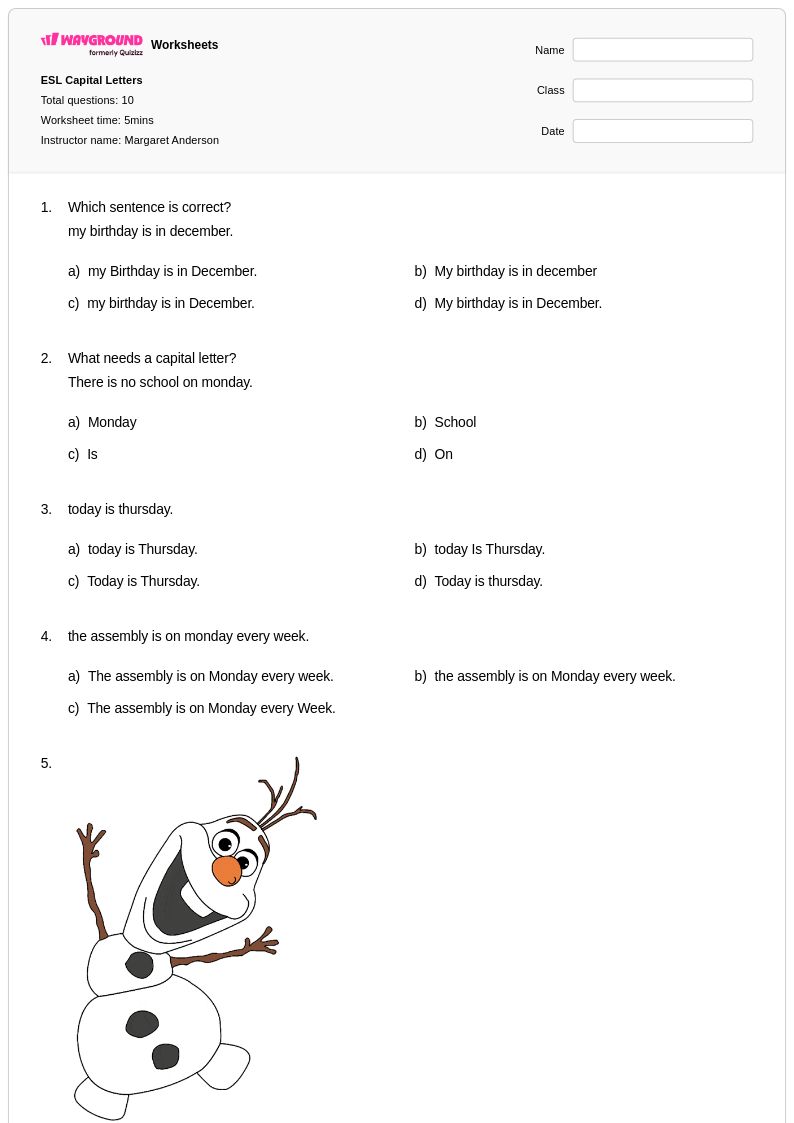
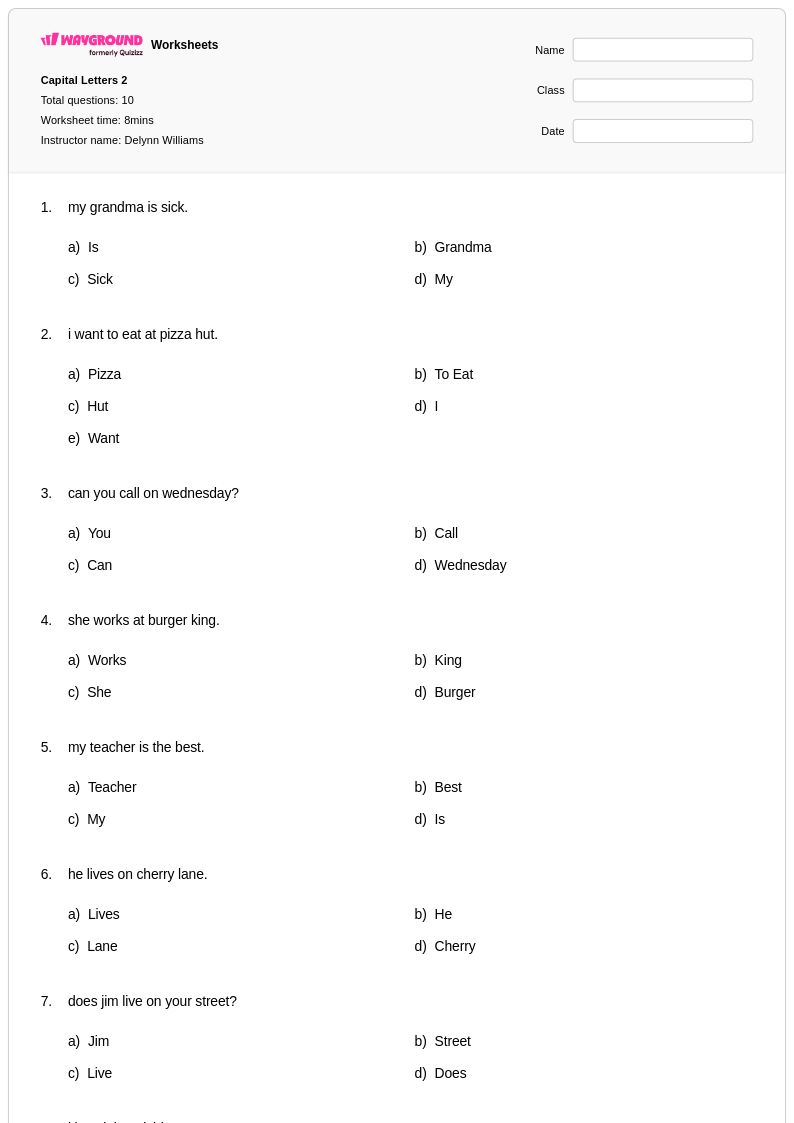
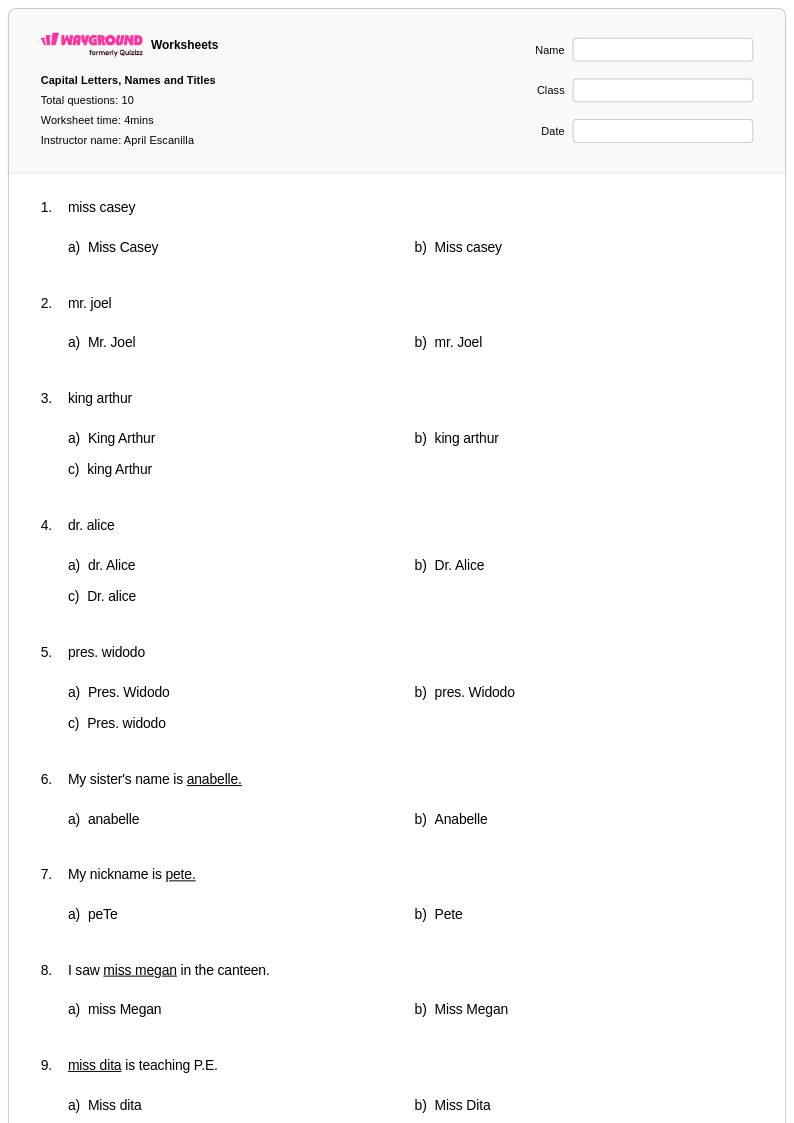
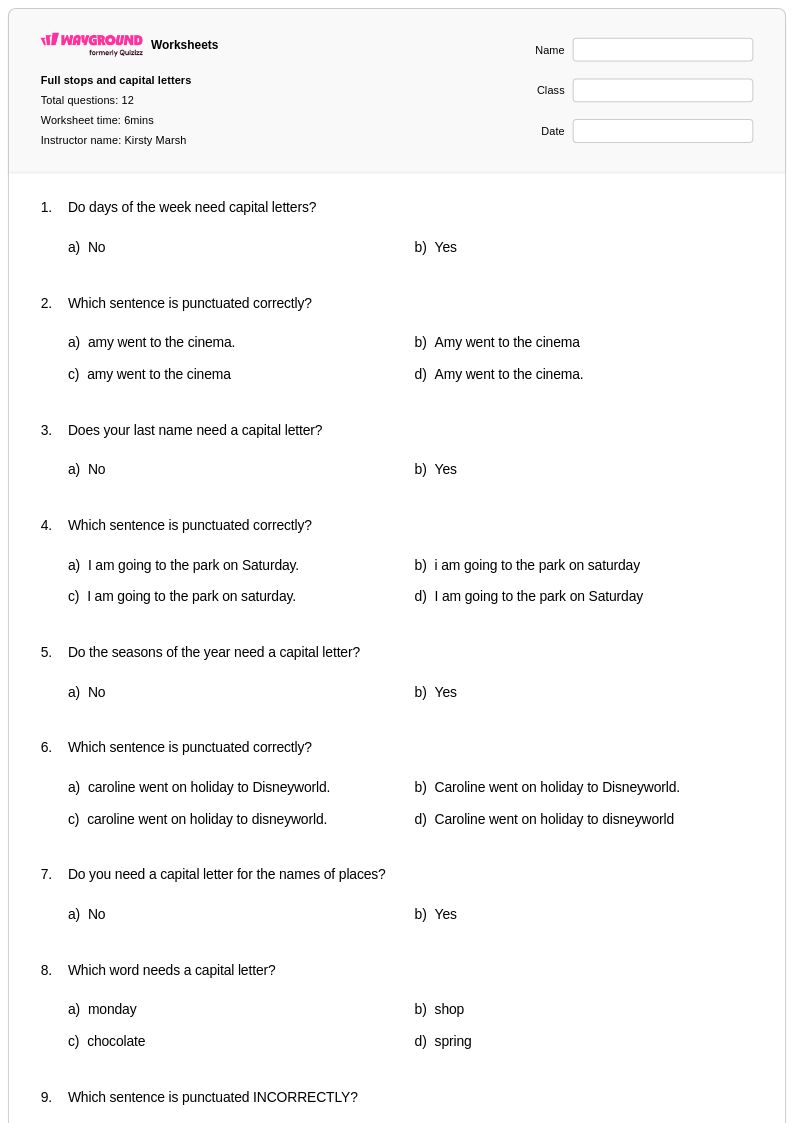
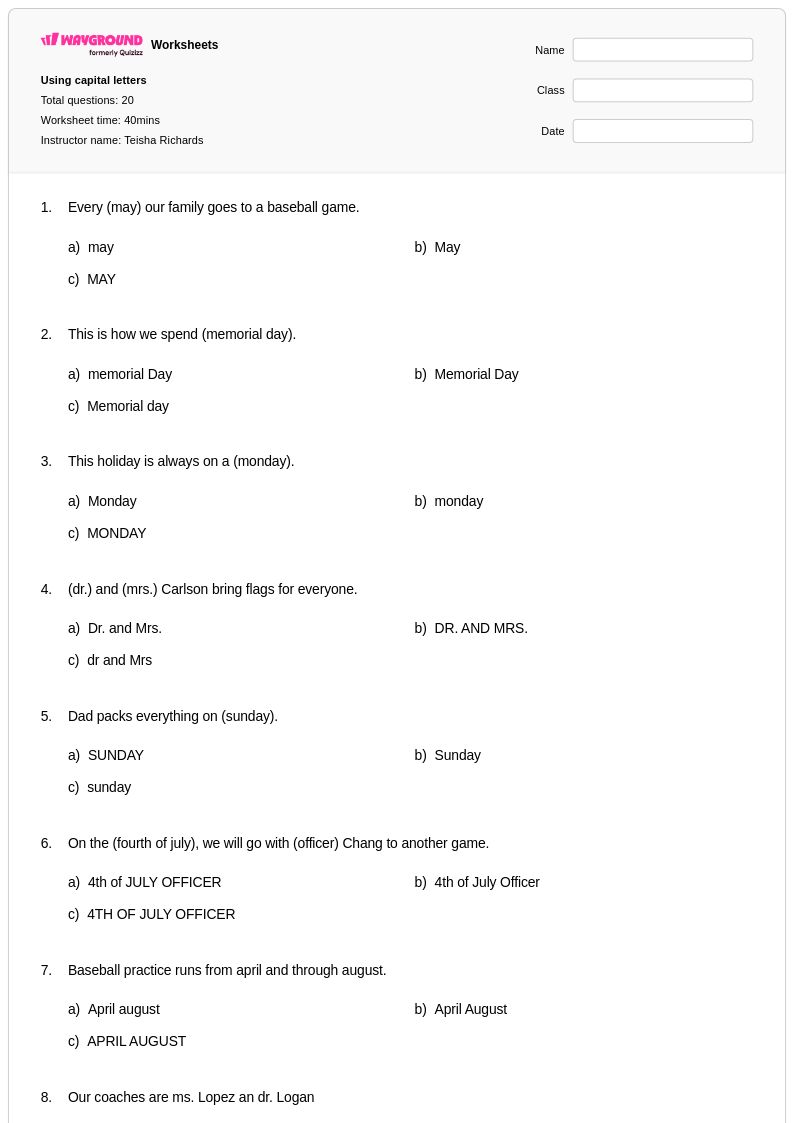
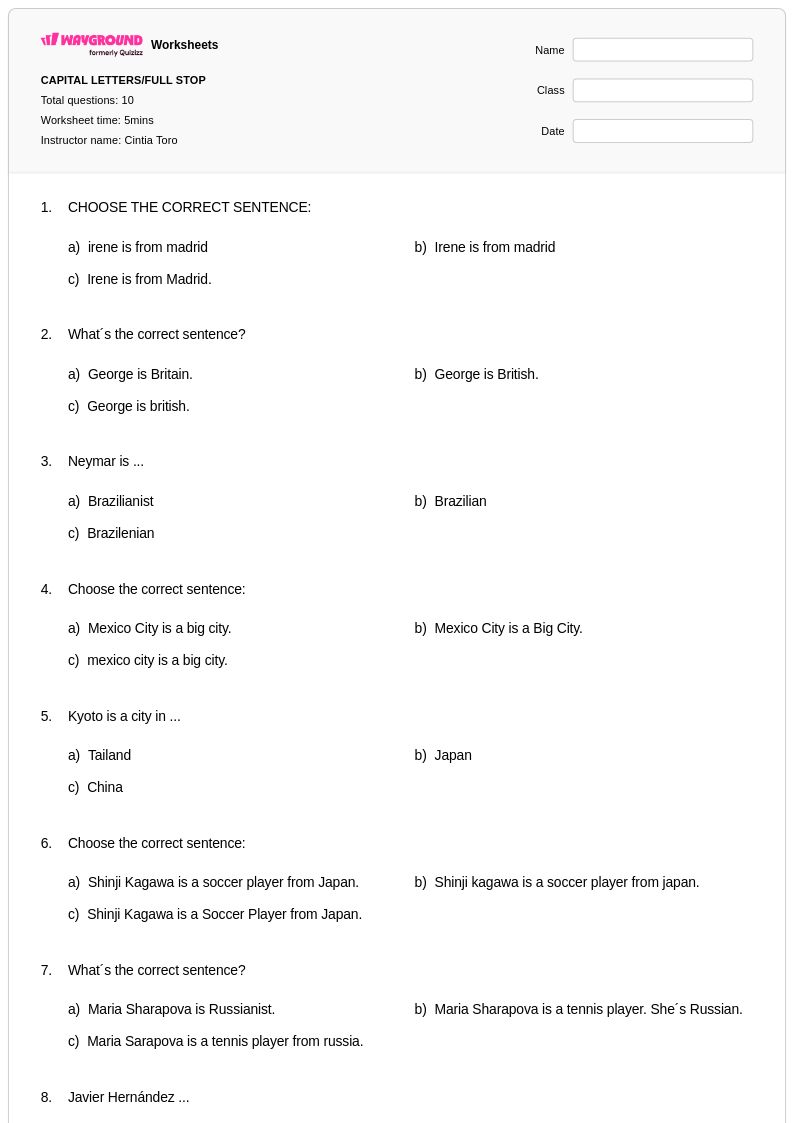
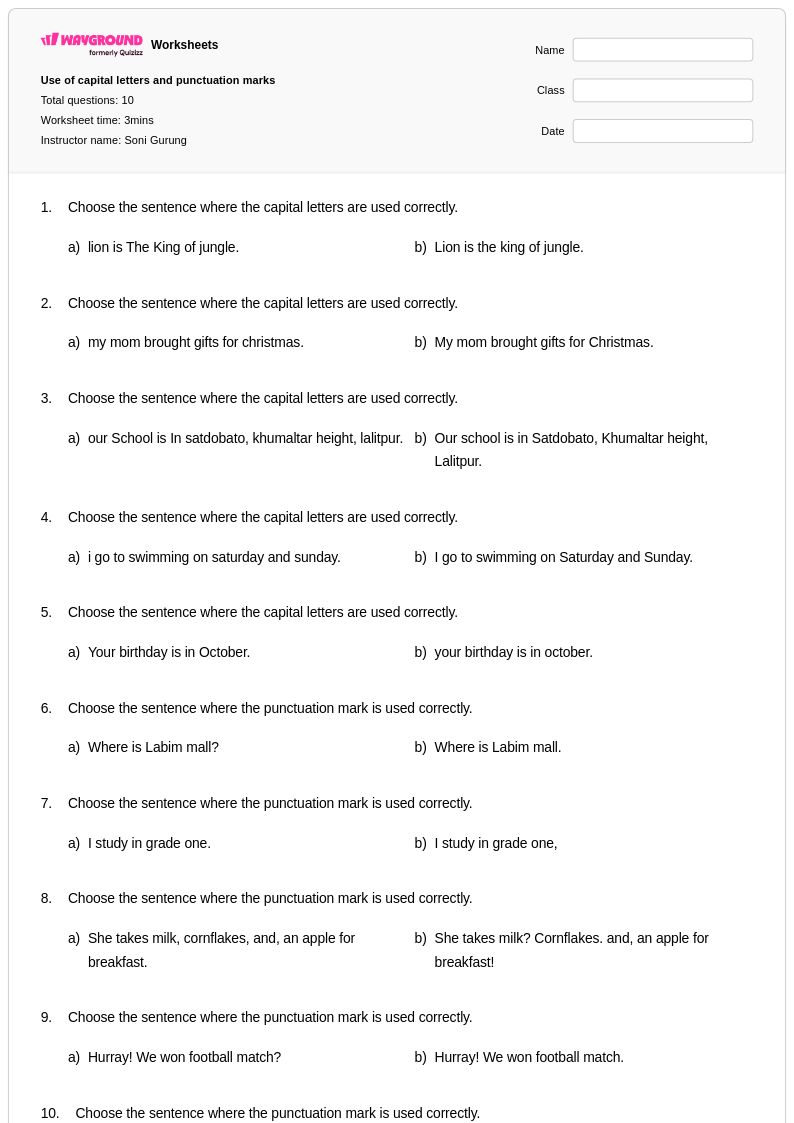
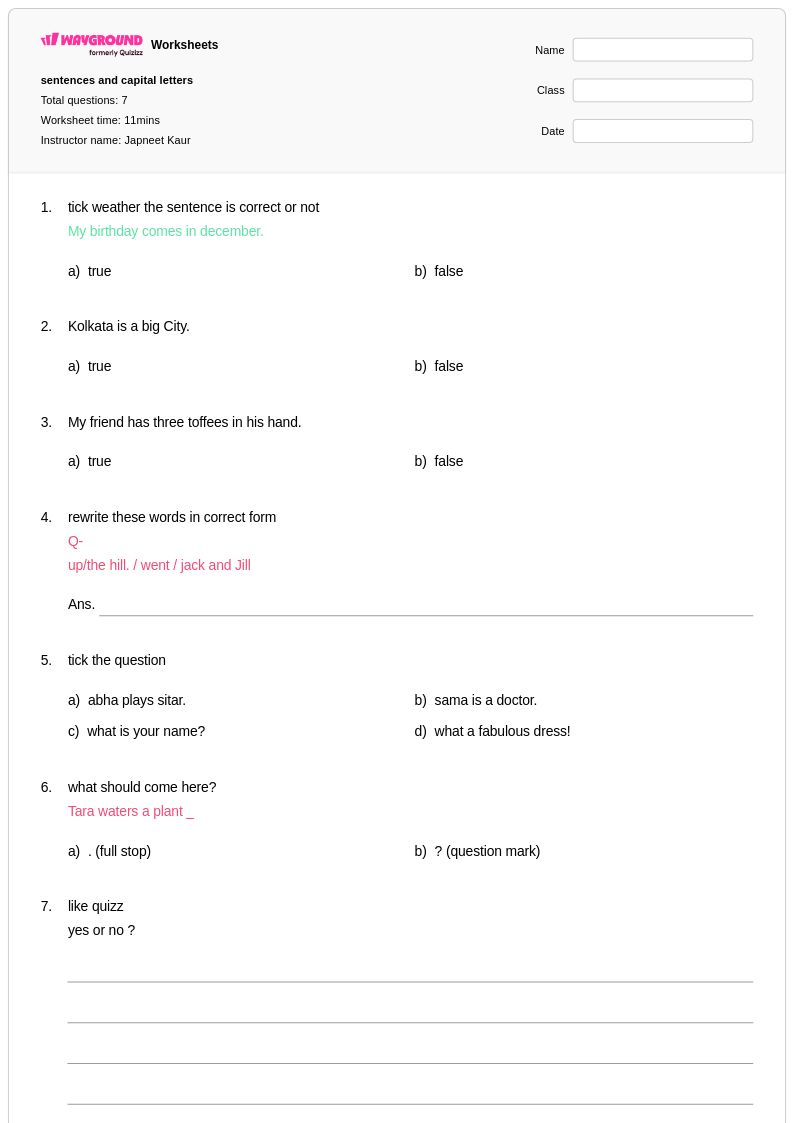
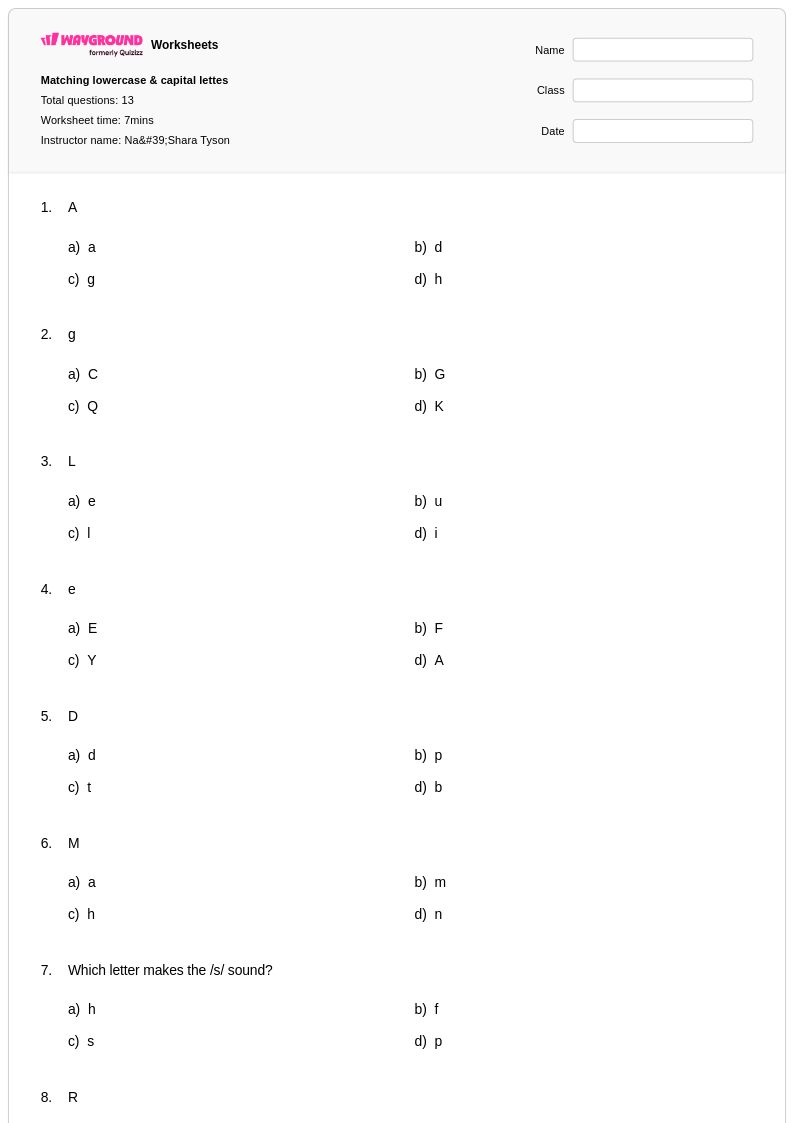
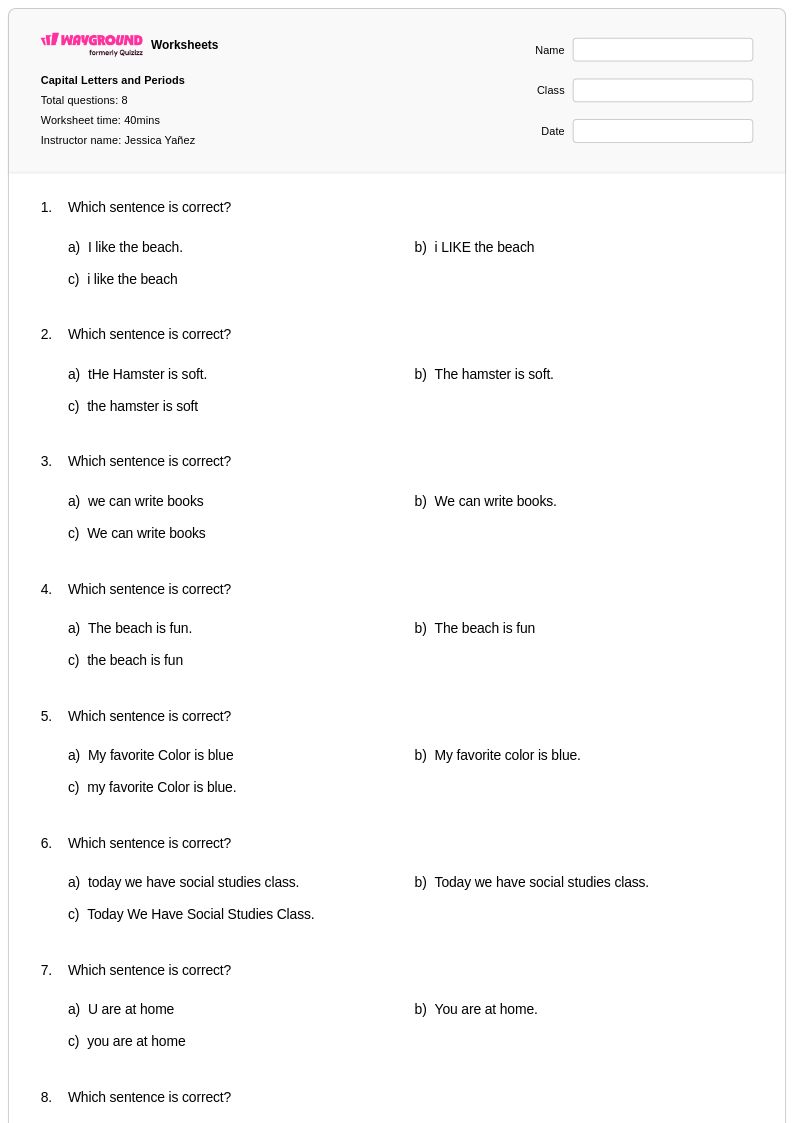
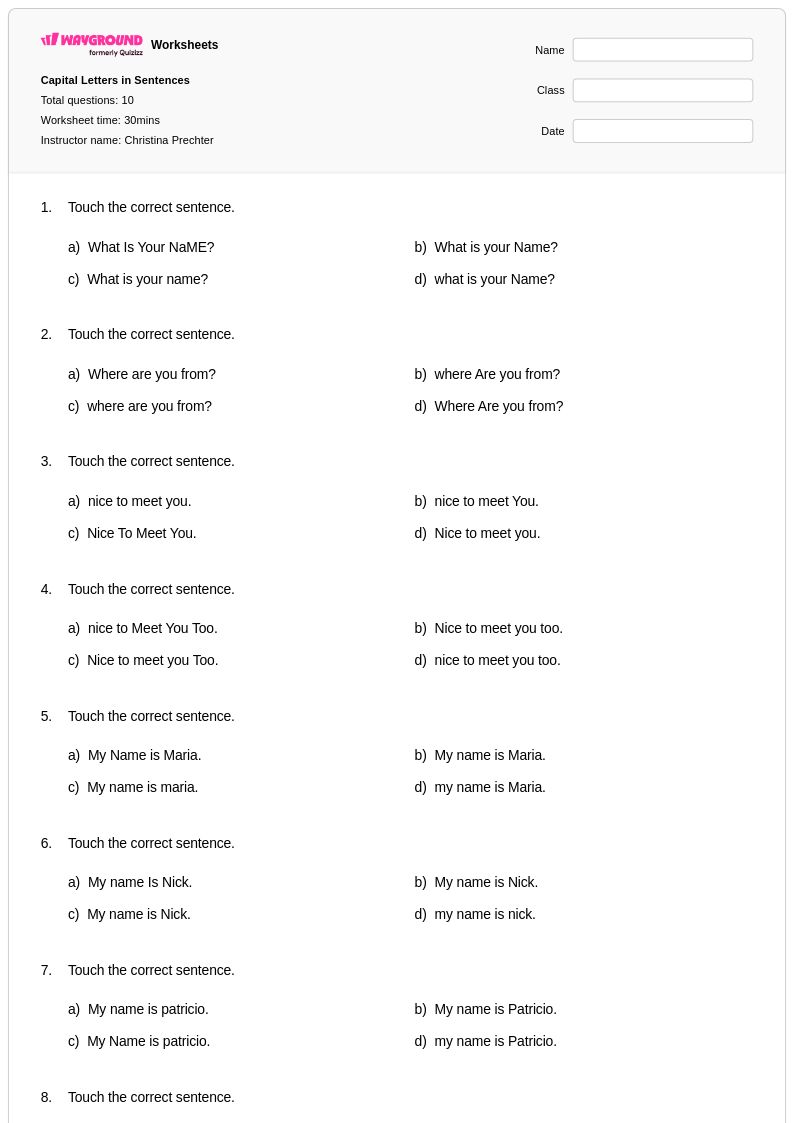
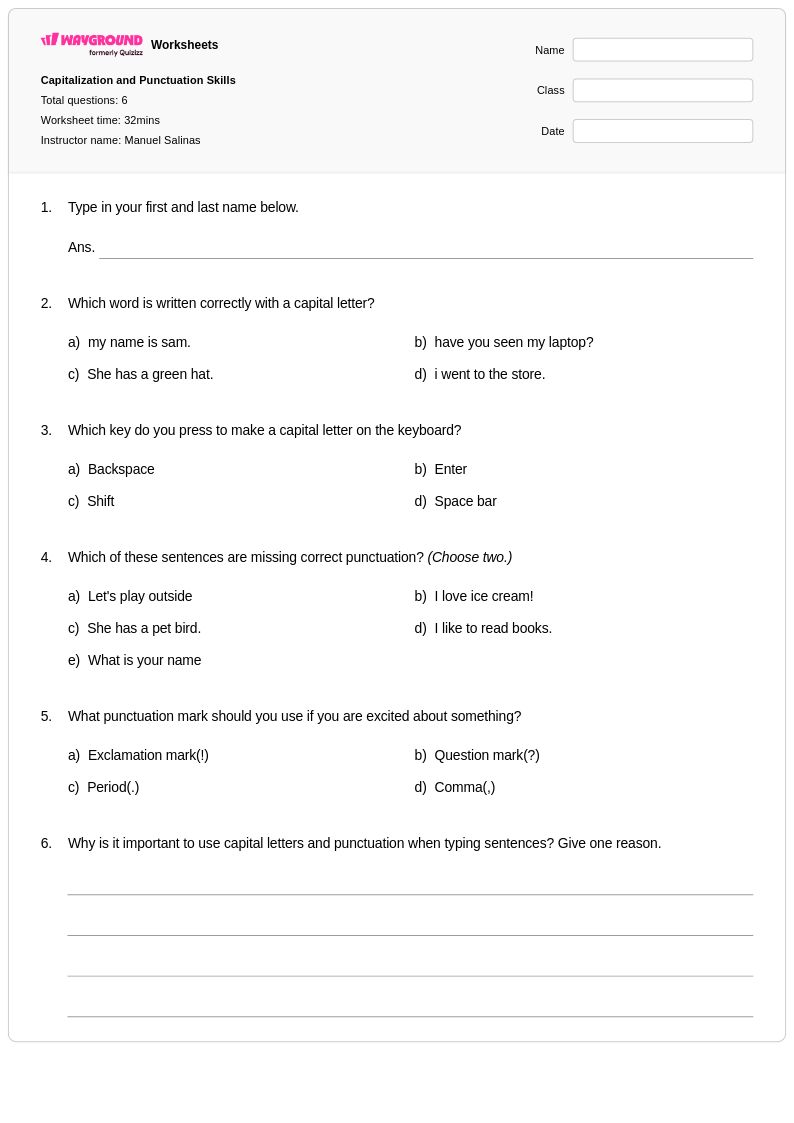
Capital letters form the foundation of proper writing mechanics for Class 1 students, and Wayground's comprehensive worksheet collection provides essential practice in letter formation, recognition, and usage. These expertly designed printables guide young learners through the systematic development of uppercase letter writing skills, from basic stroke patterns to complete alphabet mastery. Each worksheet targets specific aspects of capital letter instruction, including proper sizing, spacing, and positioning within words and sentences, while the accompanying answer key enables teachers and parents to provide immediate feedback on student progress. The free pdf resources offer structured practice problems that reinforce correct letter formation through tracing exercises, independent writing tasks, and visual discrimination activities that help students distinguish between uppercase and lowercase forms.
Wayground, formerly Quizizz, empowers educators with millions of teacher-created resources specifically designed to support Class 1 handwriting instruction through advanced search and filtering capabilities that quickly locate standards-aligned materials. The platform's differentiation tools allow teachers to customize worksheets based on individual student needs, whether providing additional scaffolding for struggling writers or offering enrichment activities for advanced learners. These versatile resources are available in both printable and digital pdf formats, enabling seamless integration into classroom instruction, homework assignments, and intervention programs. Teachers can efficiently plan comprehensive handwriting lessons, implement targeted remediation strategies, and provide ongoing skill practice through this extensive collection of capital letter worksheets that adapt to diverse learning environments and instructional approaches.
FAQs
How do I teach capital letter formation to early writers?
Effective capital letter instruction begins with explicit modeling of each stroke sequence, using consistent verbal cues like 'start at the top' or 'pull down straight' to anchor muscle memory. Grouping letters by shared stroke patterns (for example, teaching L, E, and F together because they share a vertical pull-down stroke) reduces cognitive load and accelerates retention. Guided practice on lined paper with clearly marked midlines and baselines helps students internalize correct sizing and alignment before transitioning to independent writing.
What exercises help students practice writing capital letters?
Structured tracing exercises that isolate individual strokes before combining them into full letters give students a controlled entry point into capital letter formation. Progressive practice problems that move from trace-only to copy-and-write to independent recall build automaticity over time. Incorporating word-level practice alongside isolated letter drills reinforces the practical application of uppercase letters, particularly for names, sentence beginnings, and proper nouns.
What mistakes do students commonly make when writing capital letters?
The most frequent errors include inconsistent letter sizing (mixing uppercase and lowercase proportions), starting strokes from the bottom rather than the top, and reversing symmetrical letters like B, D, and E. Students also commonly neglect proper spacing, crowding letters together or leaving uneven gaps that disrupt readability. Identifying which specific letters a student consistently misforms allows teachers to target remediation efficiently rather than re-teaching the entire alphabet.
How can I differentiate capital letter handwriting practice for students at different skill levels?
For students still developing fine motor control, worksheets with larger letter guides, dotted tracing paths, and fewer repetitions per page reduce frustration while building foundational skills. More advanced writers benefit from copy-only or independent writing formats that require recall without tracing support. On Wayground, teachers can apply accommodations such as Read Aloud for students who need auditory support and reduced answer choices to lower cognitive load, with settings saved individually per student so other students receive standard materials without disruption.
How do I use capital letters worksheets from Wayground in my classroom?
Wayground's capital letters worksheets are available as printable PDFs for traditional pencil-and-paper practice and in digital formats for technology-integrated classrooms, so they work equally well as desk work, homework, or station activities. Teachers can also host them as a quiz directly on Wayground, enabling interactive student responses and immediate progress visibility. Answer keys are included with each worksheet, which reduces grading time and allows teachers to return feedback to students quickly.
When should students start learning to write capital letters?
Most students are introduced to capital letter formation in kindergarten, often beginning with their own name as a meaningful entry point before expanding to the full uppercase alphabet. Because capital letters frequently share stroke patterns with each other but differ structurally from their lowercase counterparts, they are typically taught as a distinct skill set rather than in paired upper-lowercase sequences. Students who have developed sufficient pencil grip and basic line-following skills are generally ready to begin structured uppercase formation practice.