Free Printable Catholic Saints Worksheets for Class 11
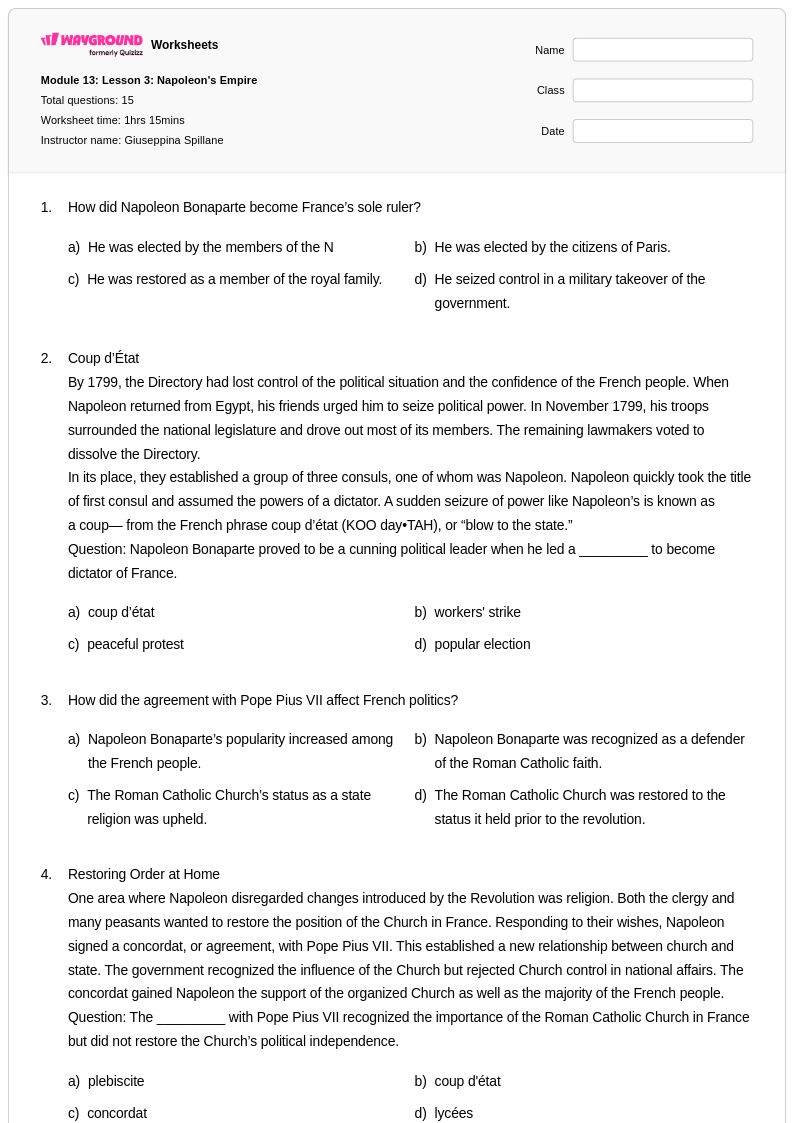
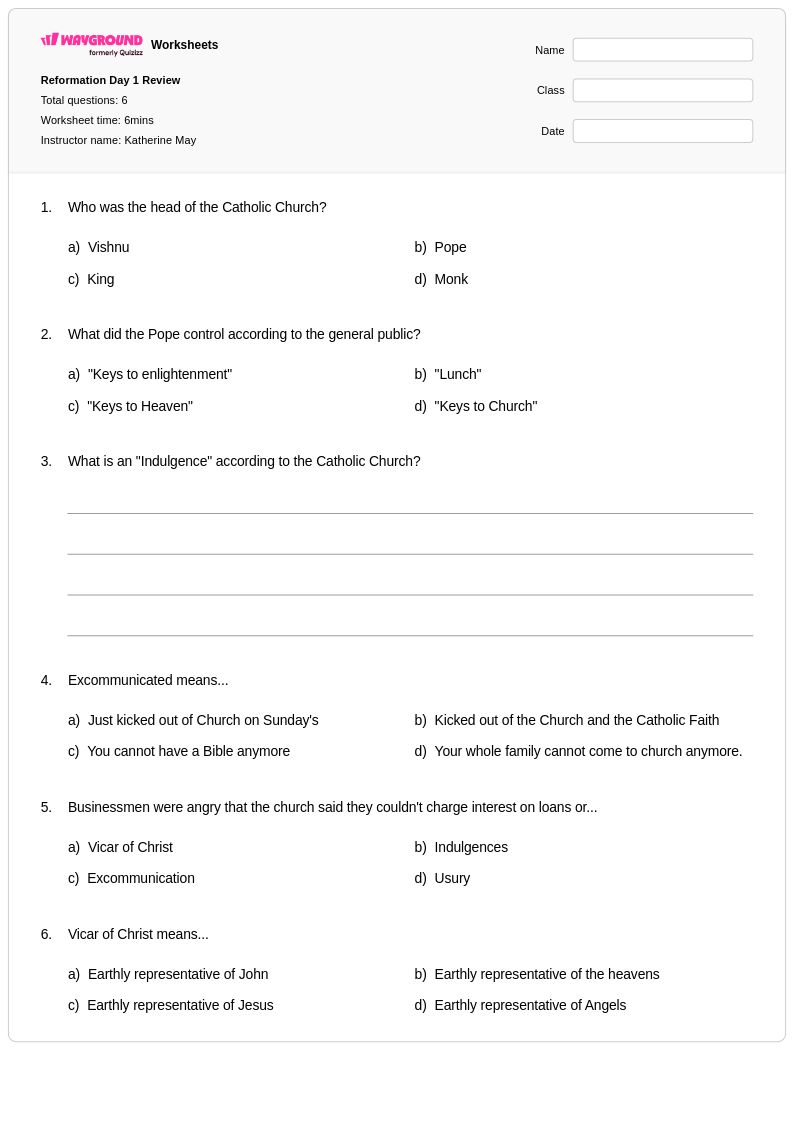
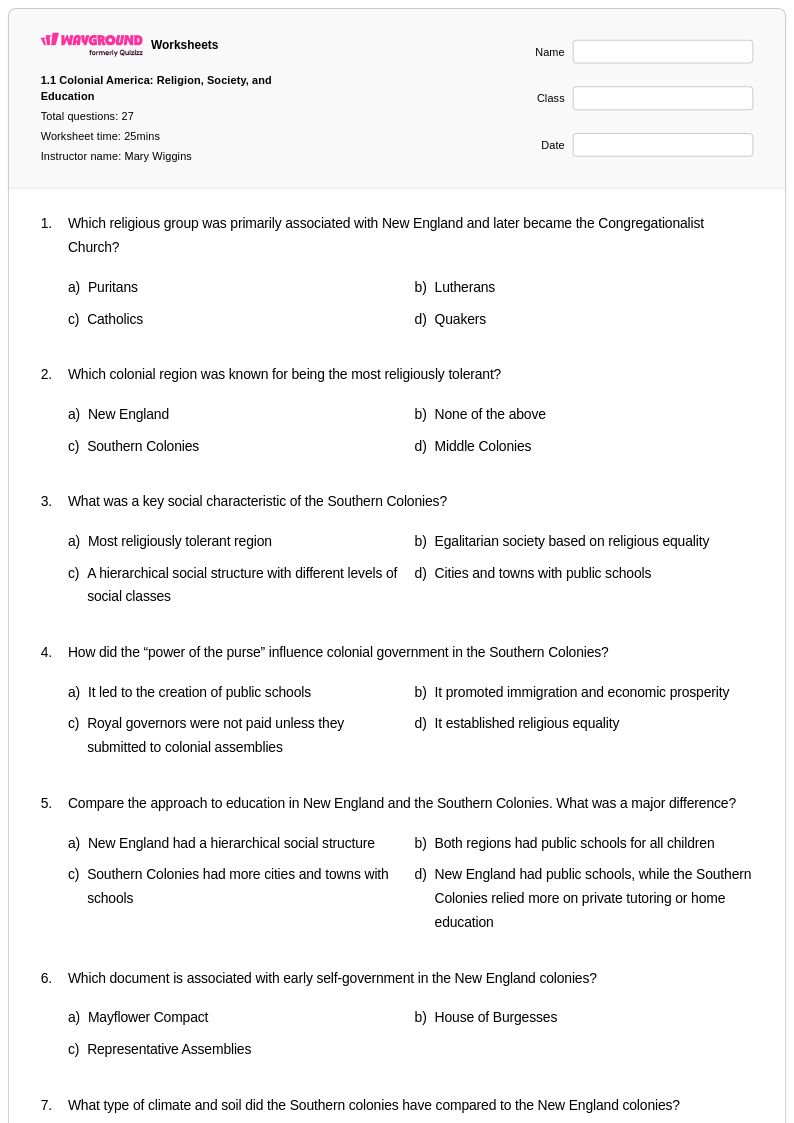
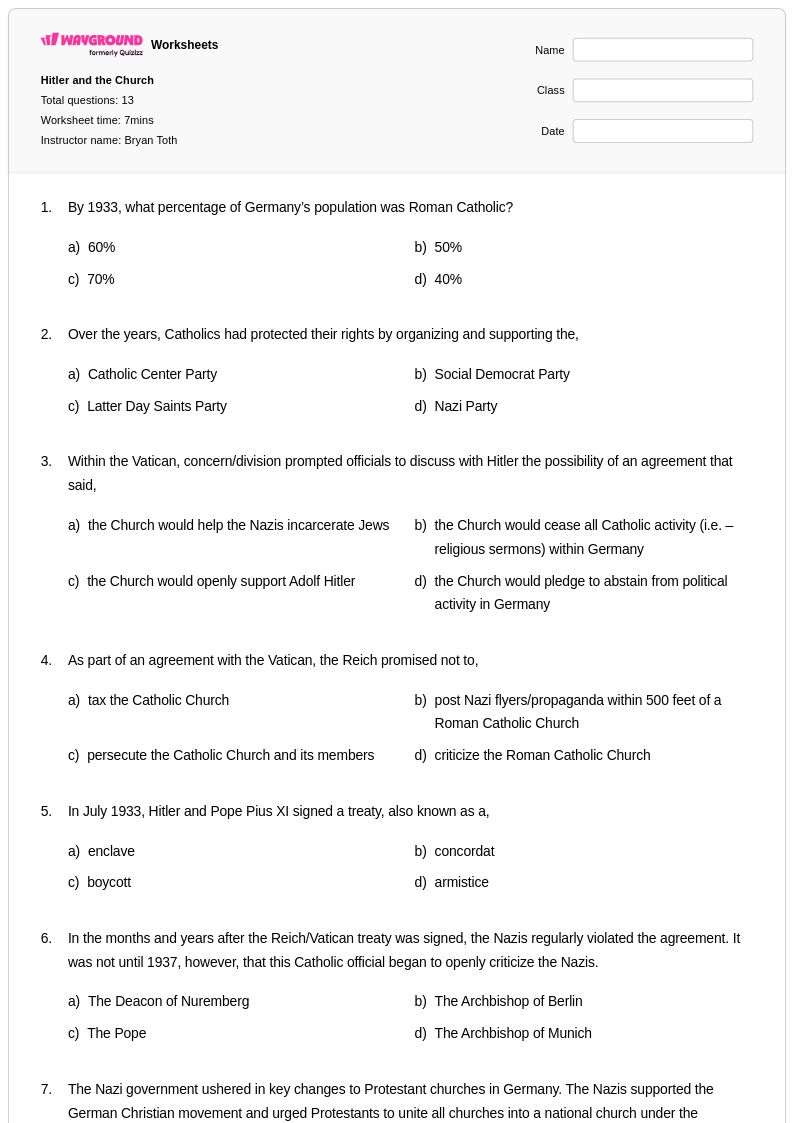
Explore Wayground's comprehensive collection of free Class 11 Catholic Saints worksheets and printables that help students deepen their understanding of religious figures, their historical significance, and cultural impact through engaging practice problems and detailed answer keys.
Explore printable Catholic Saints worksheets for Class 11
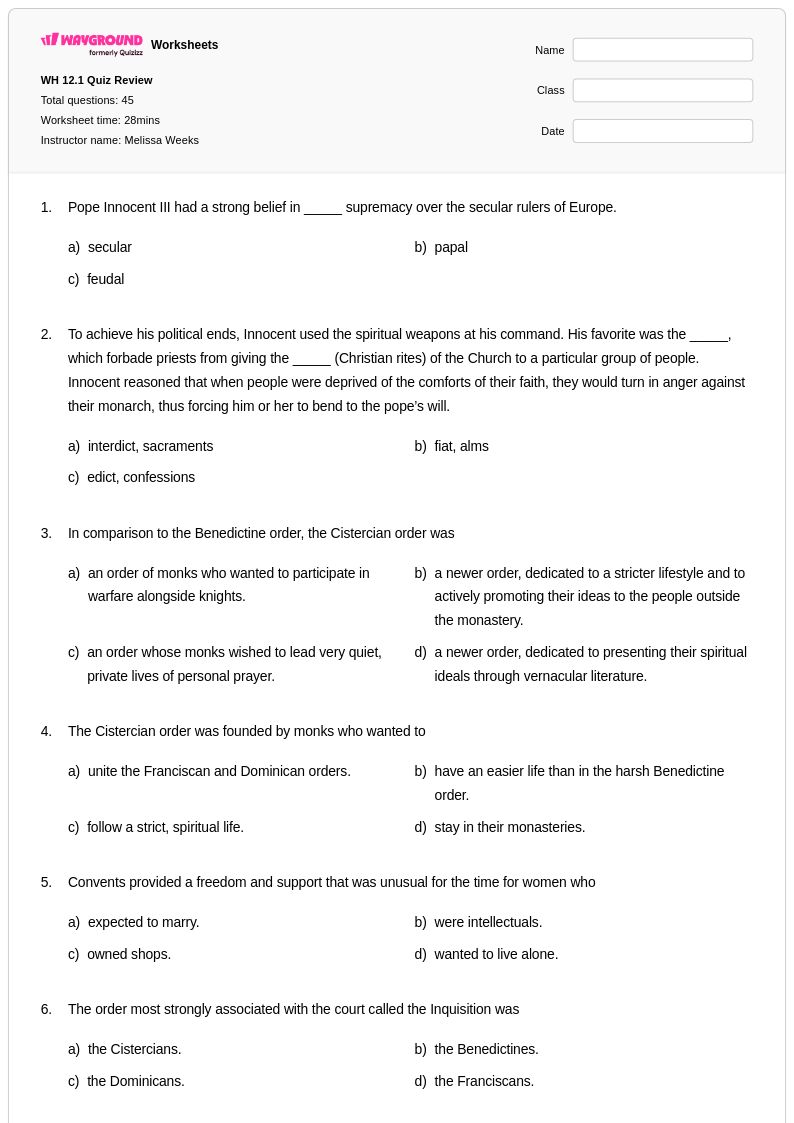
Catholic Saints worksheets for Class 11 students provide comprehensive educational resources that explore the lives, contributions, and cultural significance of canonized figures within the Catholic Church and their broader impact on global communities and cultures. These professionally developed materials strengthen critical thinking skills as students analyze the historical contexts in which saints lived, examine their influence on social movements, and evaluate their lasting effects on various cultural traditions worldwide. The collection includes detailed biographical studies, comparative analysis activities, and research-based practice problems that challenge students to investigate how saints have shaped religious practices, social justice movements, and community values across different time periods and geographical regions. Each worksheet comes with a complete answer key and is available as free printables in convenient pdf format, making them accessible for both classroom instruction and independent study.
Wayground (formerly Quizizz) supports educators with an extensive collection of millions of teacher-created resources focused on Catholic Saints and their cultural impact, featuring robust search and filtering capabilities that allow teachers to locate materials perfectly aligned with Class 11 social studies standards and learning objectives. The platform's differentiation tools enable instructors to customize worksheets according to diverse student needs, whether for remediation of foundational concepts about religious history or enrichment activities that explore complex theological and cultural themes. Teachers can access these resources in both printable and digital formats, including downloadable pdf versions, facilitating seamless integration into various instructional approaches from traditional paper-based assignments to interactive digital lessons. This comprehensive support system streamlines lesson planning while providing educators with the flexibility to address individual student requirements and reinforce essential skills through targeted practice opportunities that deepen understanding of how Catholic Saints have influenced community development and cultural evolution throughout history.
FAQs
How do I teach Catholic Saints in a Social Studies classroom?
Teaching Catholic Saints in Social Studies works best when framed around their historical context, community impact, and cultural legacy rather than purely theological content. Start by anchoring each saint to a specific time period, region, and social challenge they responded to, then ask students to analyze how their actions shaped the communities around them. Connecting saints to broader themes like moral leadership, cultural identity, and service helps students see their relevance across history.
What kinds of worksheets help students learn about Catholic Saints?
Effective Catholic Saints worksheets typically include reading comprehension passages about individual saints, timelines placing their lives in historical context, and analysis activities that ask students to evaluate their cultural and community impact. Graphic organizers comparing multiple saints across different time periods and regions are especially useful for building critical thinking skills. Practice problems that prompt students to connect a saint's legacy to present-day values deepen comprehension beyond surface-level recall.
What common mistakes do students make when studying Catholic Saints?
Students frequently conflate the spiritual and historical dimensions of sainthood, focusing only on miracles or religious titles rather than analyzing a saint's tangible impact on communities and cultures. Another common error is treating saints as isolated figures rather than situating them within the social, political, and regional contexts that shaped their actions. Worksheets that explicitly prompt historical and cultural analysis help students avoid these oversimplifications.
How can I differentiate Catholic Saints lessons for students with different learning needs?
Differentiation for Catholic Saints units can include modified reading passages at varying Lexile levels, graphic organizers with sentence starters for struggling readers, and enrichment tasks asking advanced students to compare multiple saints across cultures or time periods. On Wayground, teachers can enable accommodations such as Read Aloud for students who need audio support, reduced answer choices to lower cognitive load, and extended time settings that apply individually without affecting the rest of the class.
How do I use Wayground's Catholic Saints worksheets in my classroom?
Wayground's Catholic Saints worksheets are available as printable PDFs for traditional classroom use and in digital formats for technology-integrated environments, giving teachers flexibility to assign them as independent practice, homework, or guided group work. Teachers can also host these materials as a quiz directly on Wayground, enabling interactive digital delivery with built-in answer tracking. Each worksheet includes a complete answer key, making grading and review straightforward.
How do I connect Catholic Saints to broader Social Studies curriculum standards?
Catholic Saints align naturally with Social Studies standards focused on community, cultural heritage, moral leadership, and historical analysis across world regions and time periods. Lessons can be tied to units on the development of Western culture, the role of religion in shaping societies, or comparative studies of community service and civic identity. Framing saint studies within these curriculum anchors helps justify the content to administrators and parents while deepening its academic rigor.