
11 T
1st - 3rd
10 T
1st
20 T
1st
8 T
1st - 5th
11 T
1st
15 T
1st
10 T
1st
30 T
1st - 3rd
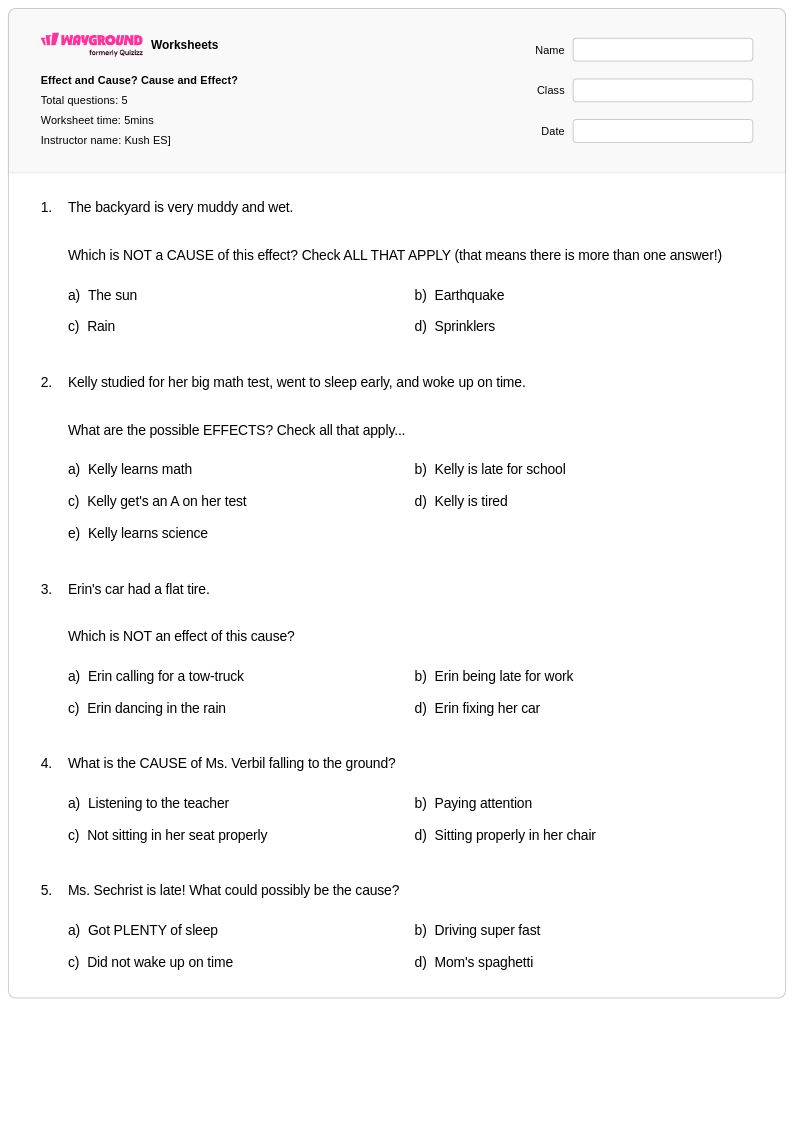
5 T
KG - 5th
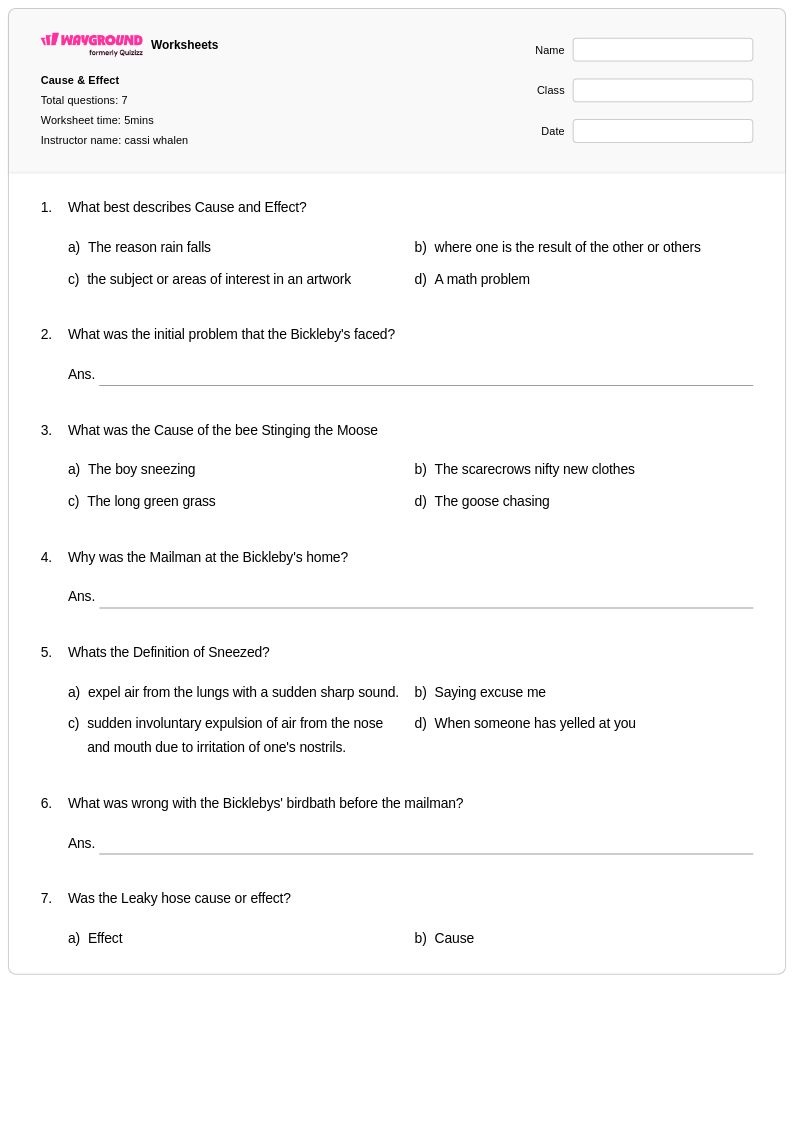
7 T
KG - 2nd
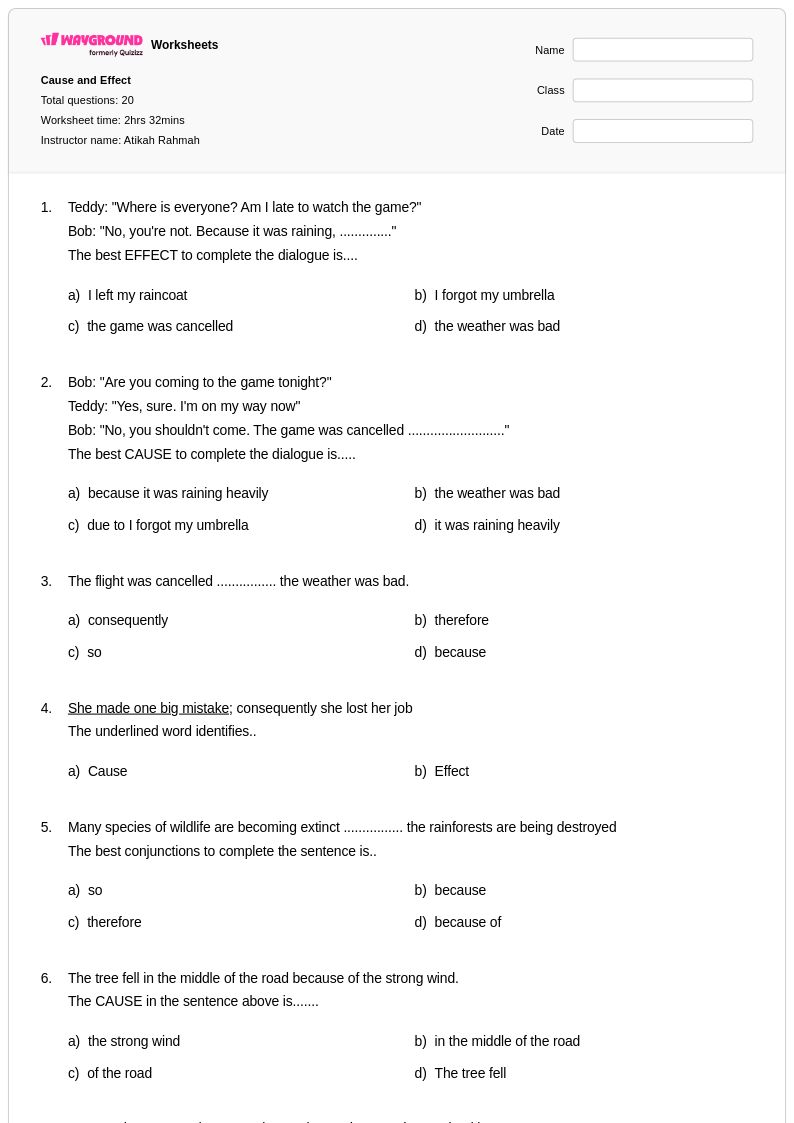
20 T
KG - 12th
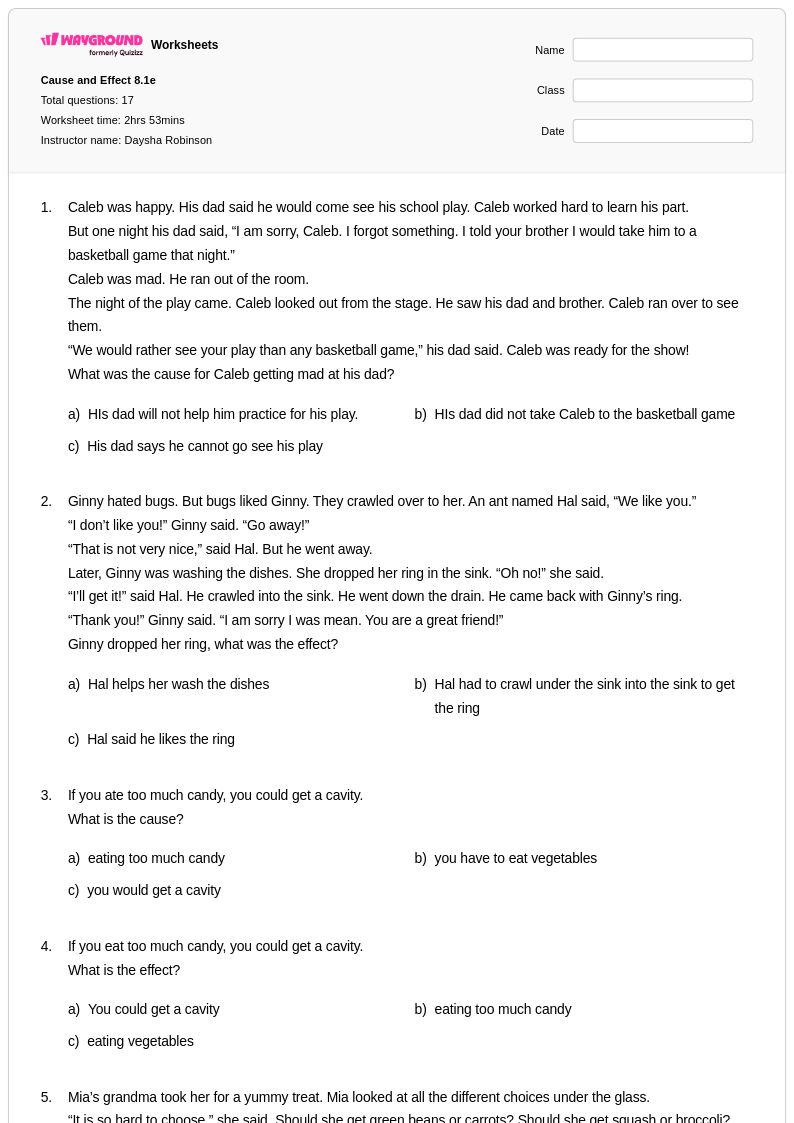
17 T
1st - 2nd
8 T
1st
15 T
1st
20 T
1st - Uni
7 T
1st
35 T
KG - Uni
10 T
1st
10 T
1st - 5th
10 T
1st
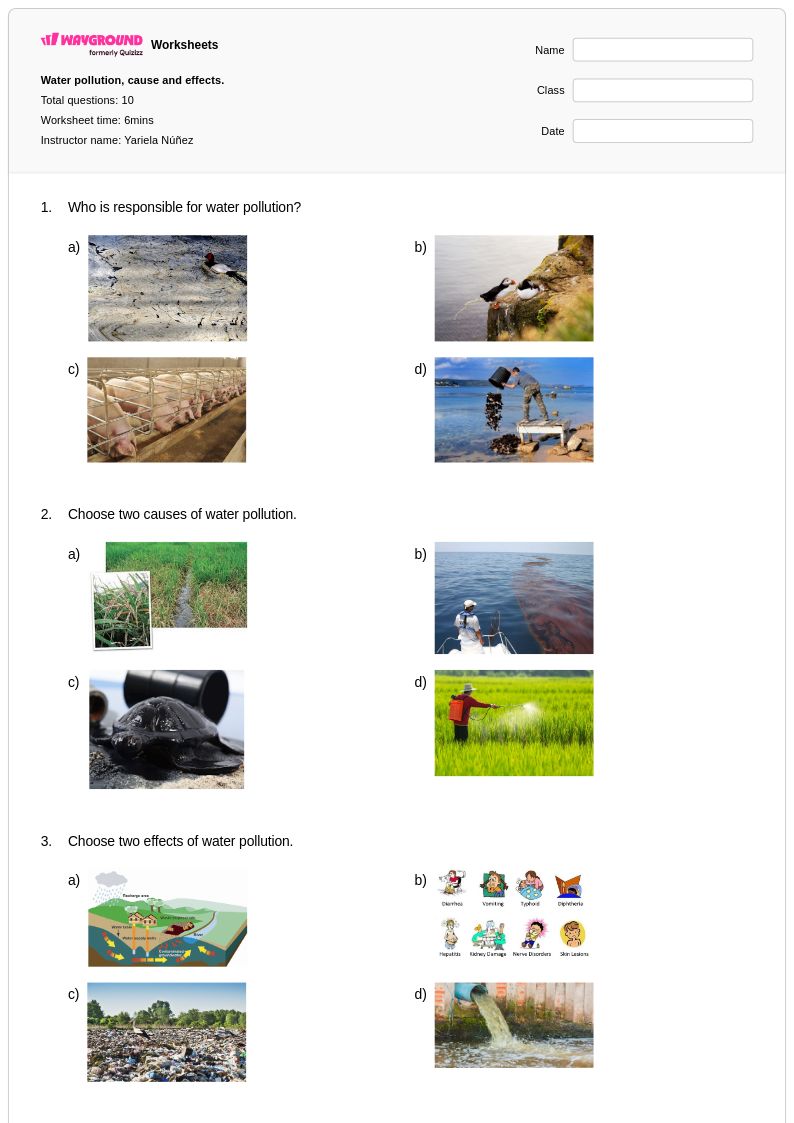
10 T
1st - 5th
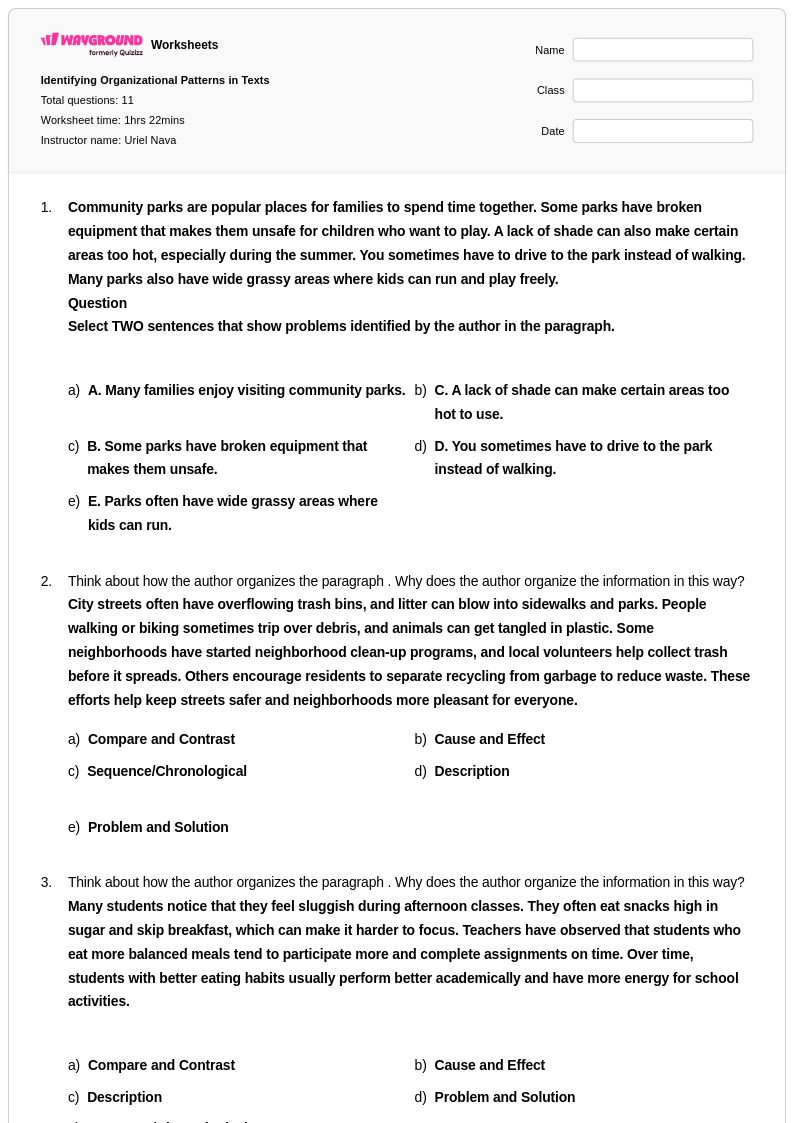
11 T
1st - 5th
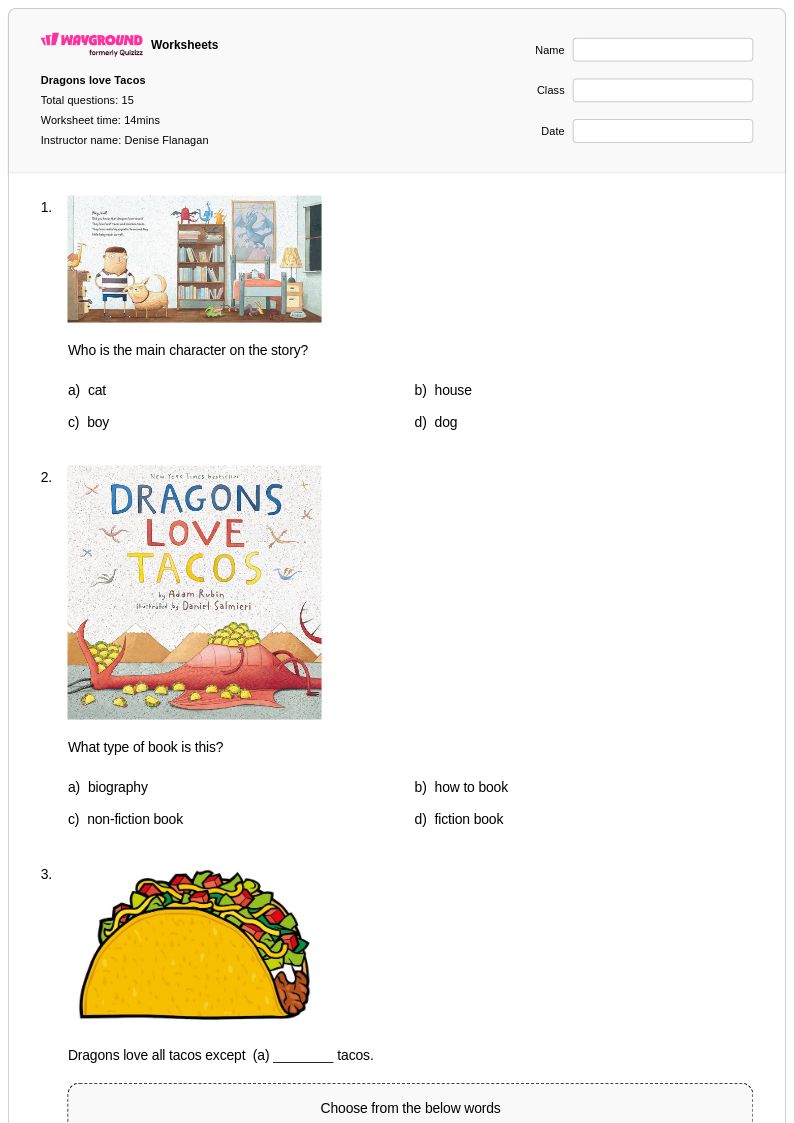
15 T
1st - 5th
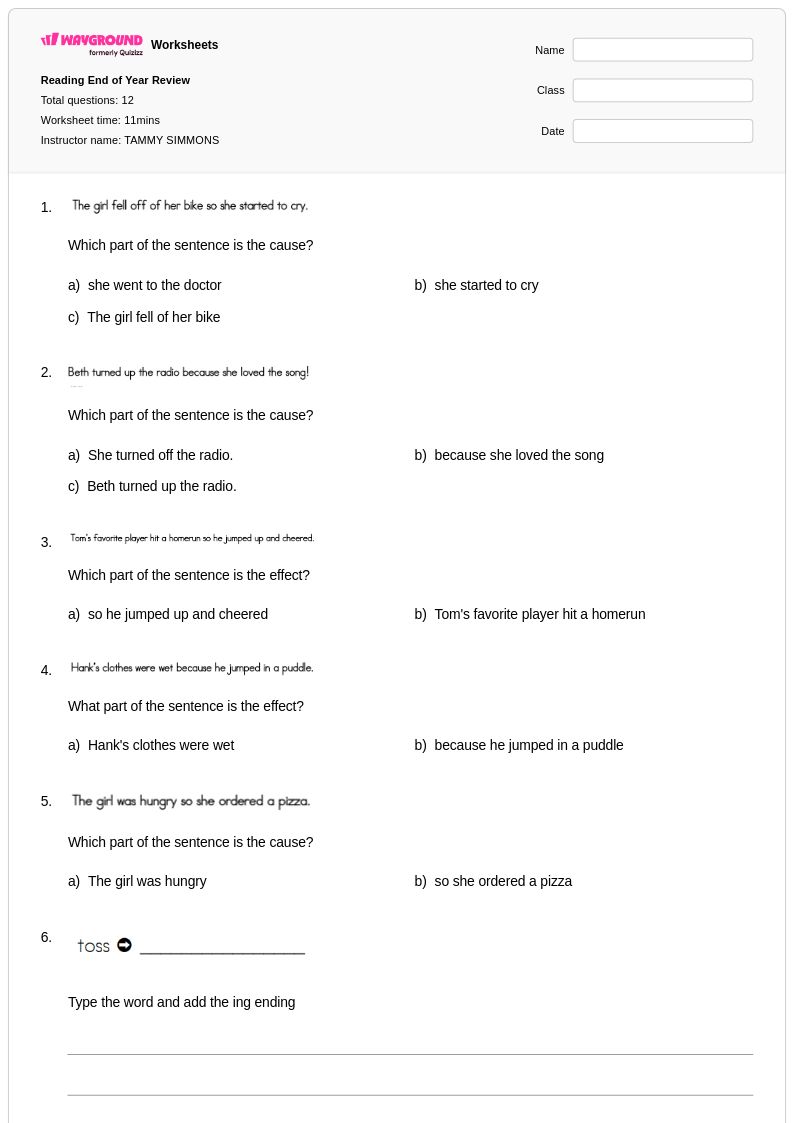
12 T
1st
Jelajahi Identifying Cause and Effect in Fiction Lembar Kerja berdasarkan Nilai
Jelajahi Lembar Kerja Mata Pelajaran Lainnya untuk class 1
Explore printable Identifying Cause and Effect in Fiction worksheets for Class 1
Identifying cause and effect in fiction worksheets for Class 1 students through Wayground (formerly Quizizz) provide young learners with essential foundational skills for reading comprehension and critical thinking. These carefully designed resources help first-grade students recognize the relationship between events in stories, understanding how one action leads to another outcome within fictional narratives. The worksheets feature age-appropriate stories, colorful illustrations, and simple scenarios that make abstract concepts concrete for developing readers. Students practice identifying what happens in a story and why it happens through engaging activities that include matching exercises, picture sequences, and guided reading questions. Each worksheet comes with a comprehensive answer key to support accurate assessment, and the free printable format allows for flexible classroom use. These practice problems strengthen students' analytical thinking while building crucial pre-reading and early literacy skills that serve as stepping stones to more advanced comprehension strategies.
Wayground (formerly Quizizz) empowers educators with an extensive collection of millions of teacher-created resources specifically designed for cause and effect instruction in fiction. The platform's robust search and filtering capabilities enable teachers to quickly locate Class 1 appropriate materials that align with curriculum standards and individual student needs. Teachers can easily differentiate instruction by selecting from various difficulty levels and formats, customizing worksheets to match their students' reading abilities and learning objectives. The flexible availability of both printable PDF versions and digital formats supports diverse classroom environments and teaching preferences. These comprehensive tools facilitate effective lesson planning by providing ready-to-use materials for initial instruction, targeted remediation for struggling readers, and enrichment opportunities for advanced students. The platform's organizational features help educators track student progress and identify areas requiring additional skill practice, making cause and effect identification in fiction an accessible and manageable concept for first-grade learners.