
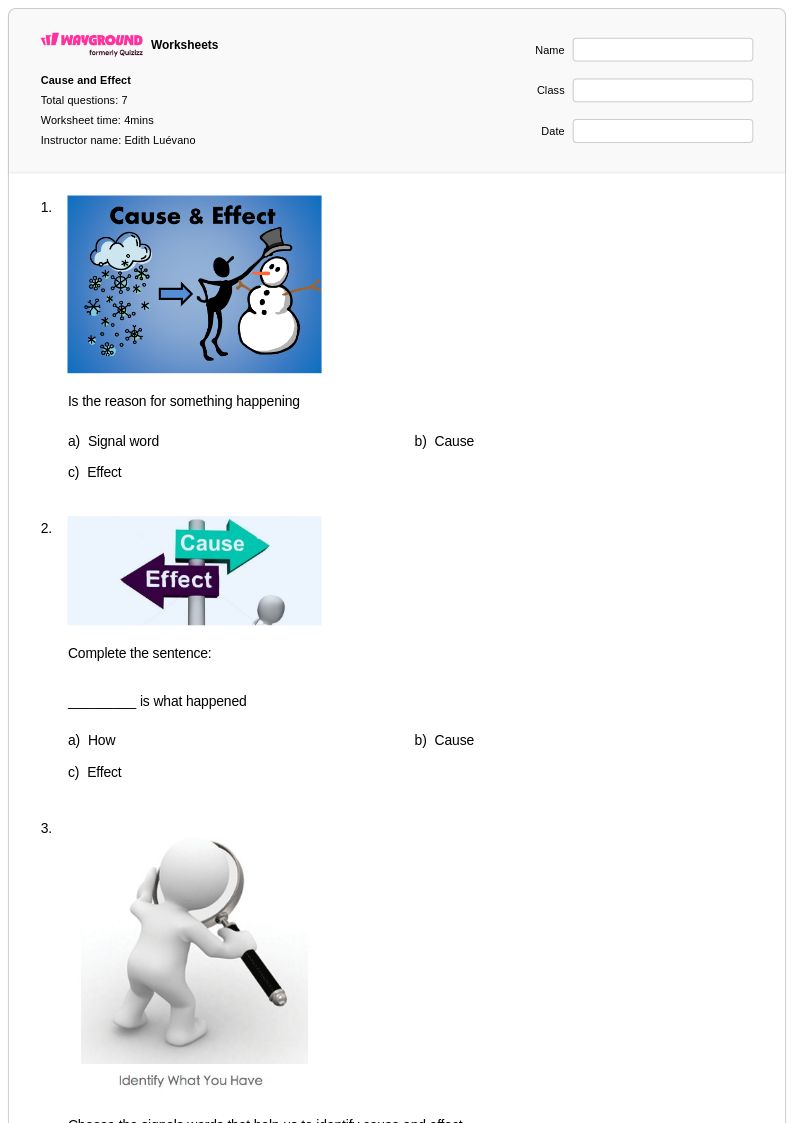
7Q
1st
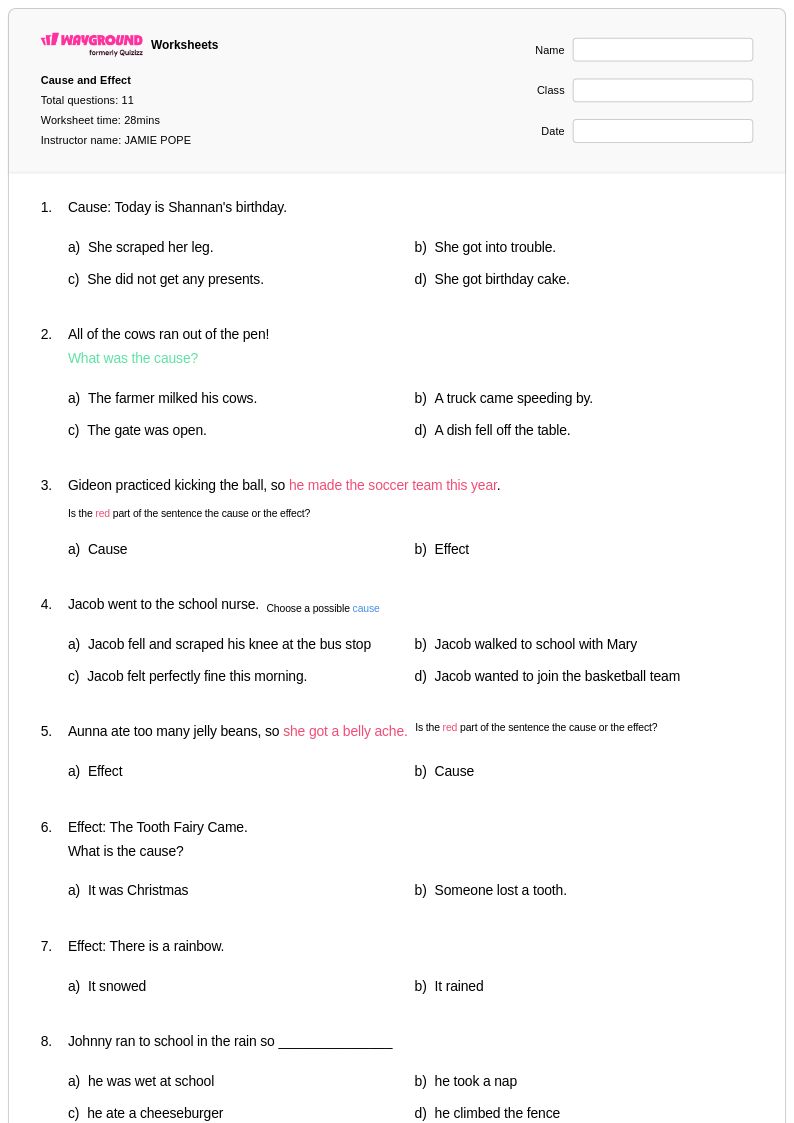
11Q
1st - 3rd
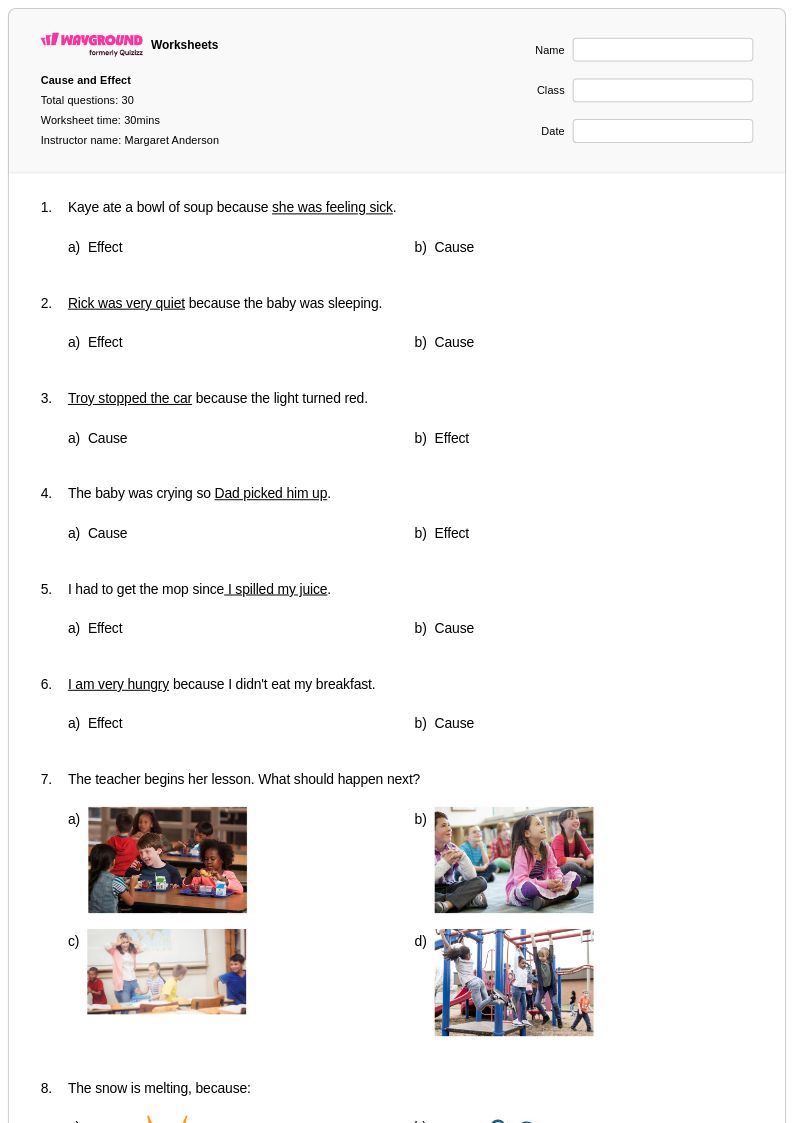
30Q
1st - 3rd
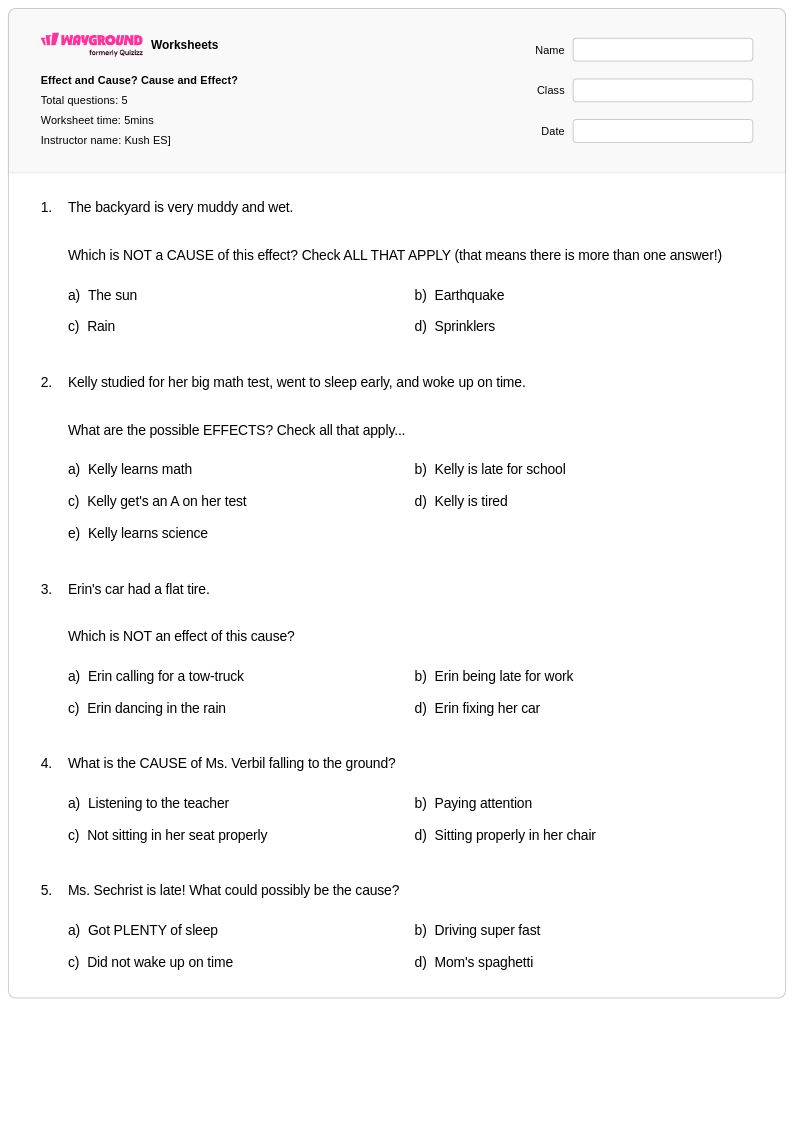
5Q
KG - 5th
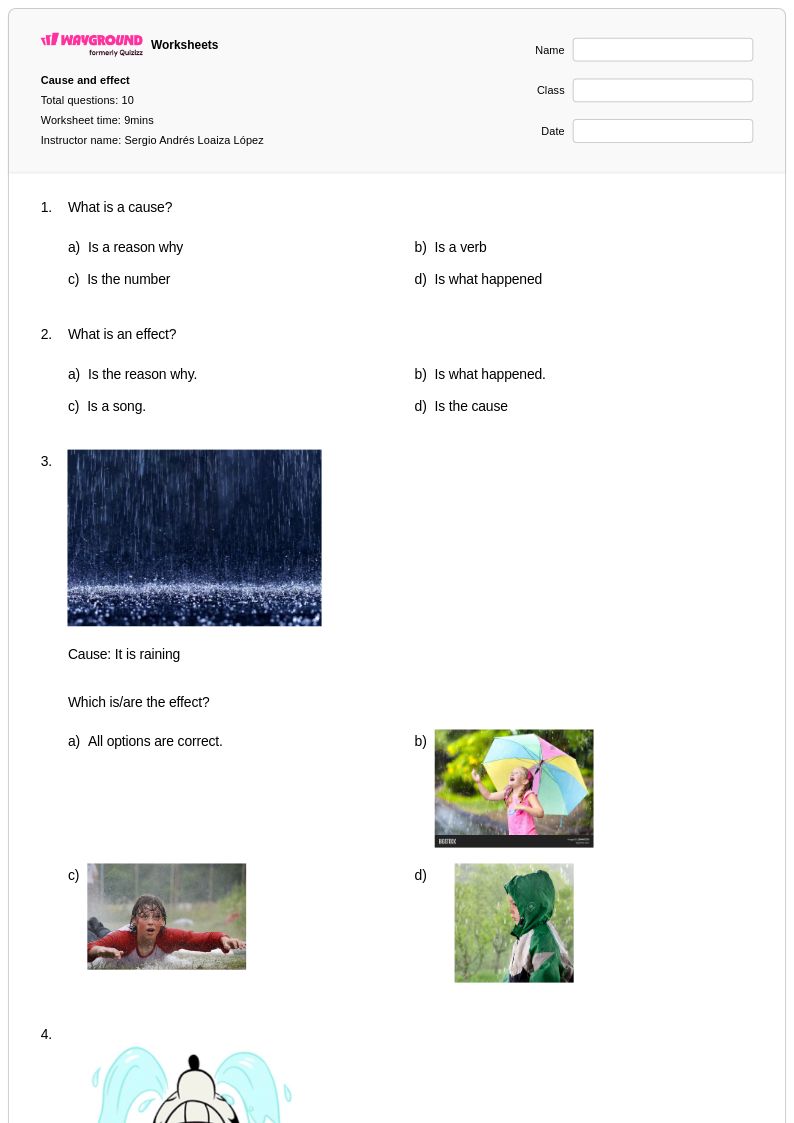
10Q
1st
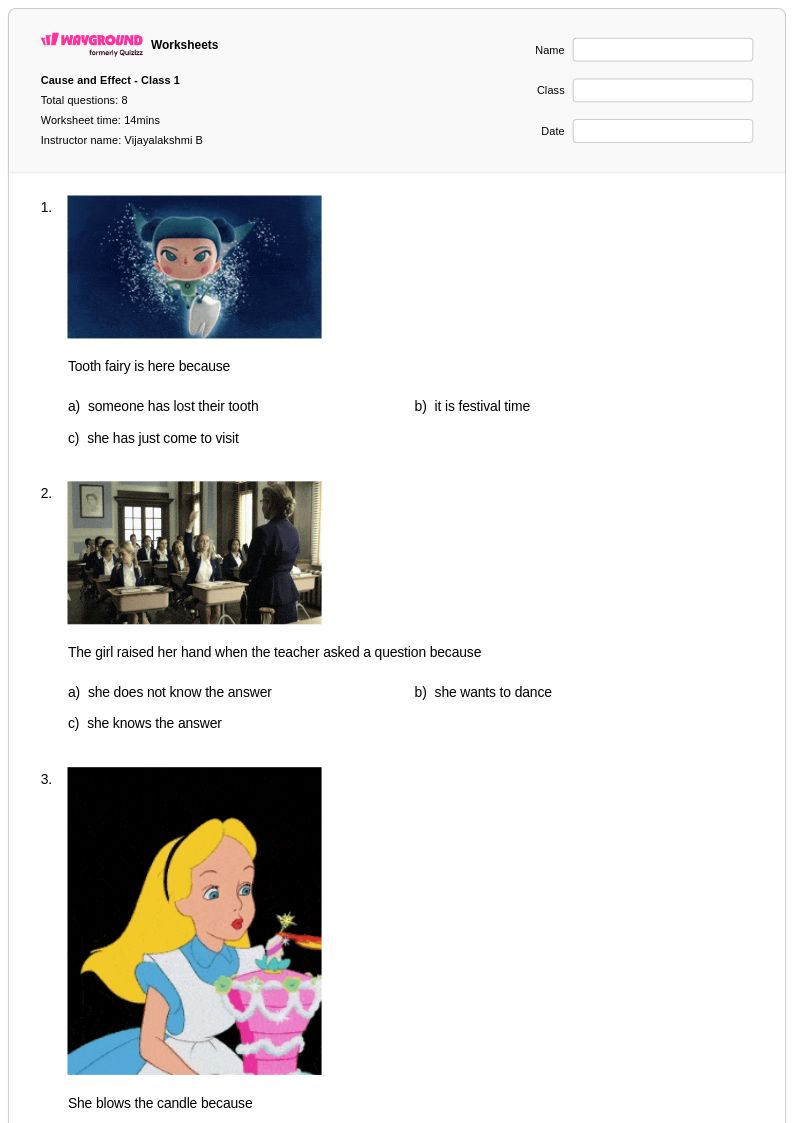
8Q
1st
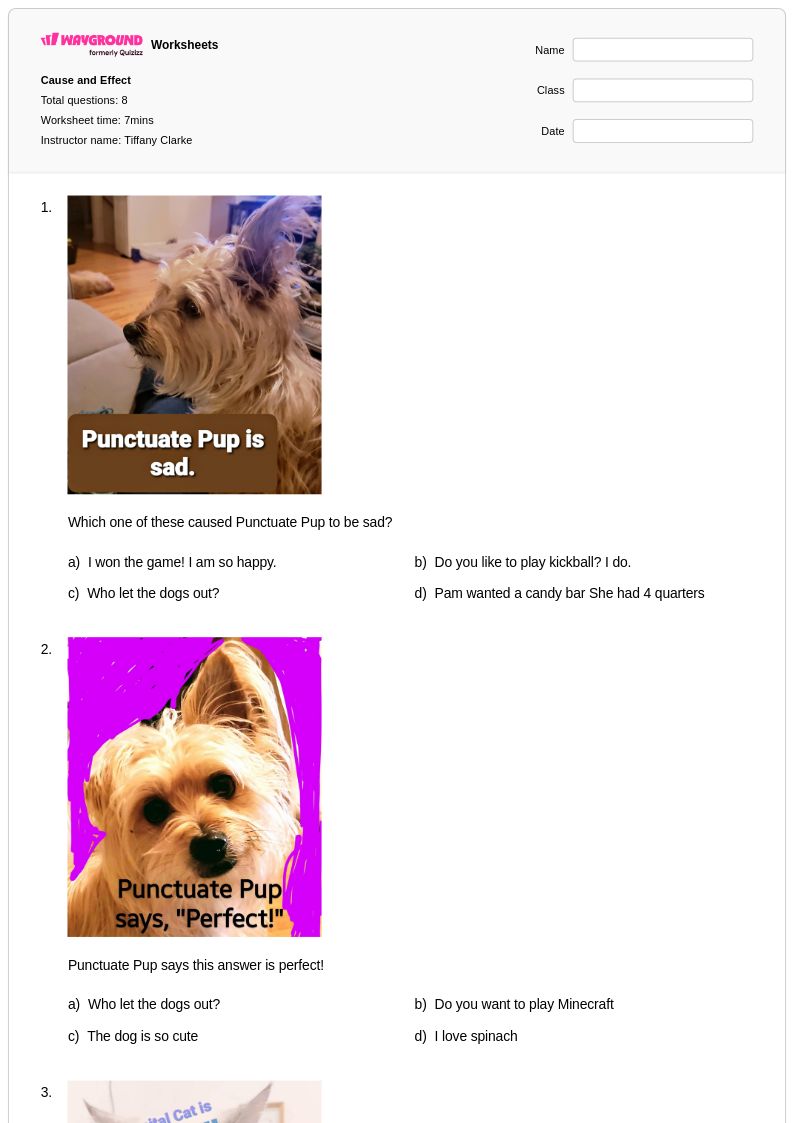
8Q
1st - 5th
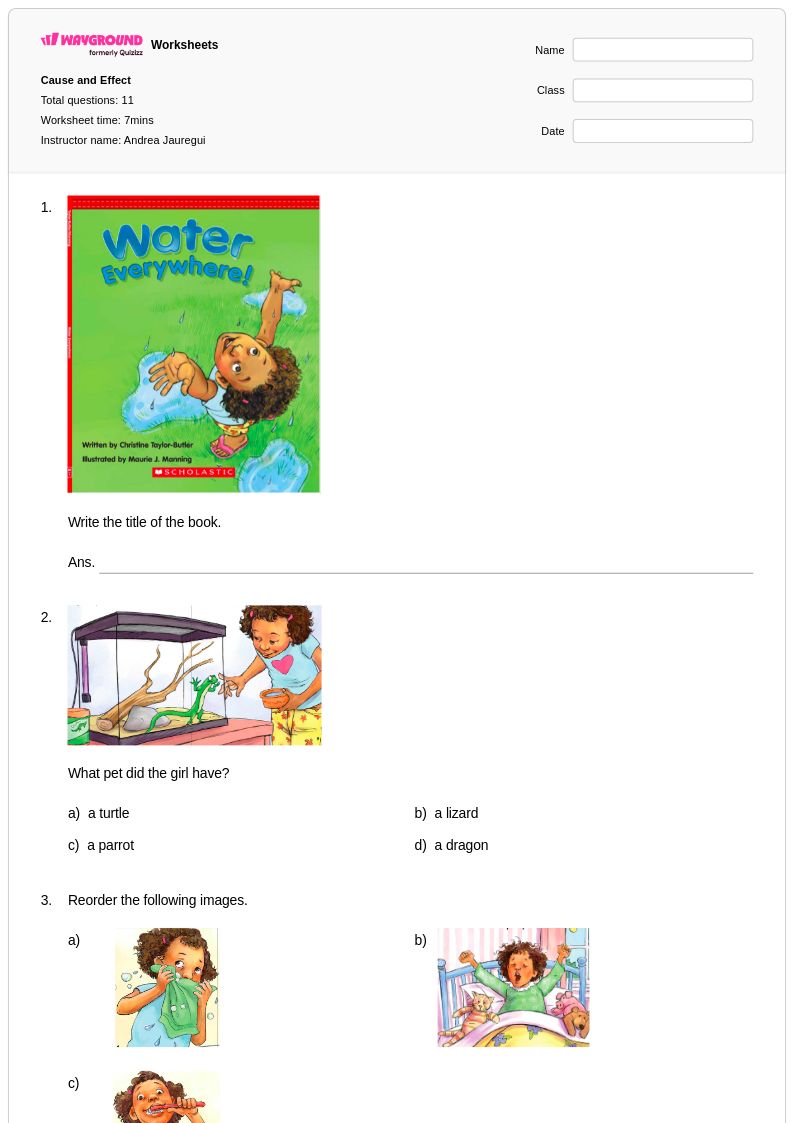
11Q
1st
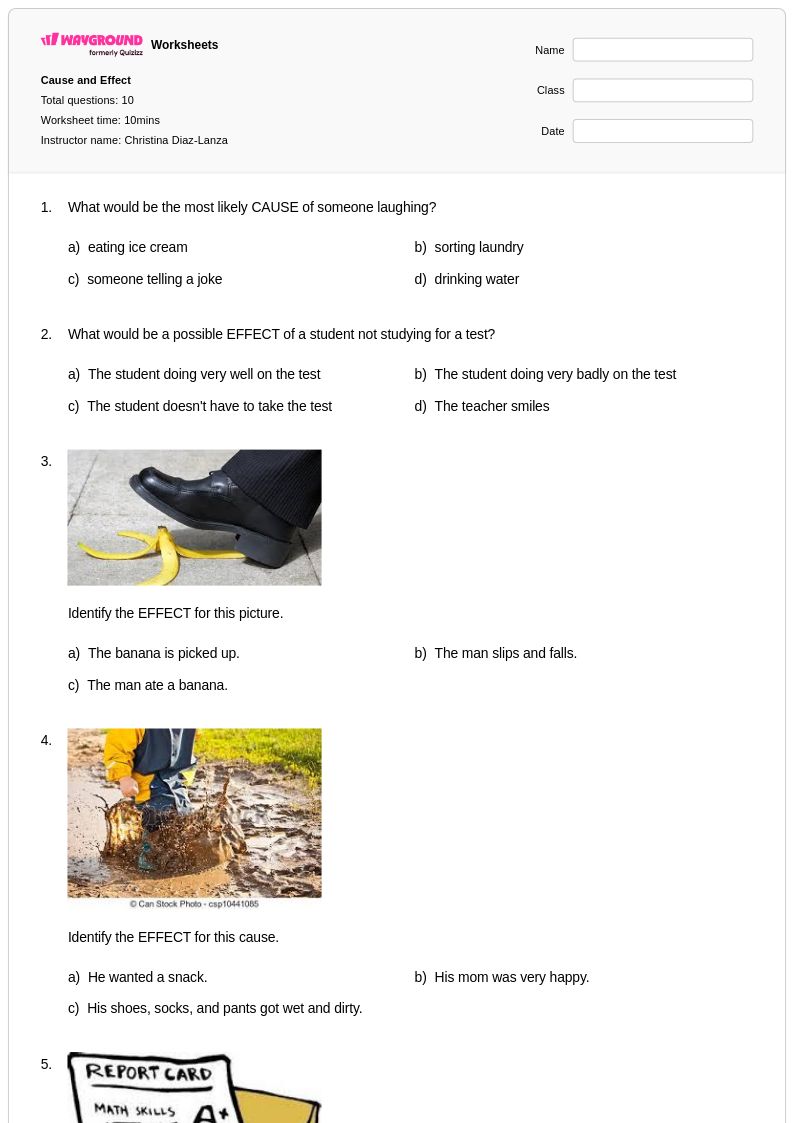
10Q
1st
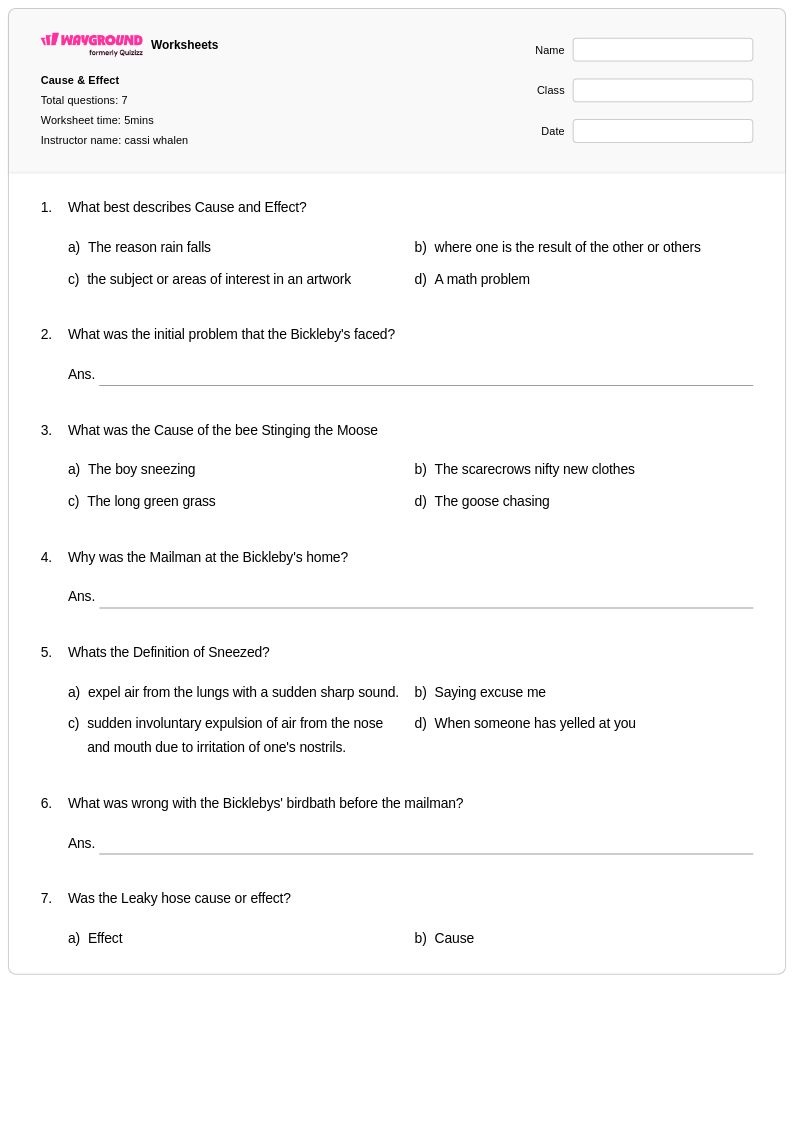
7Q
KG - 2nd
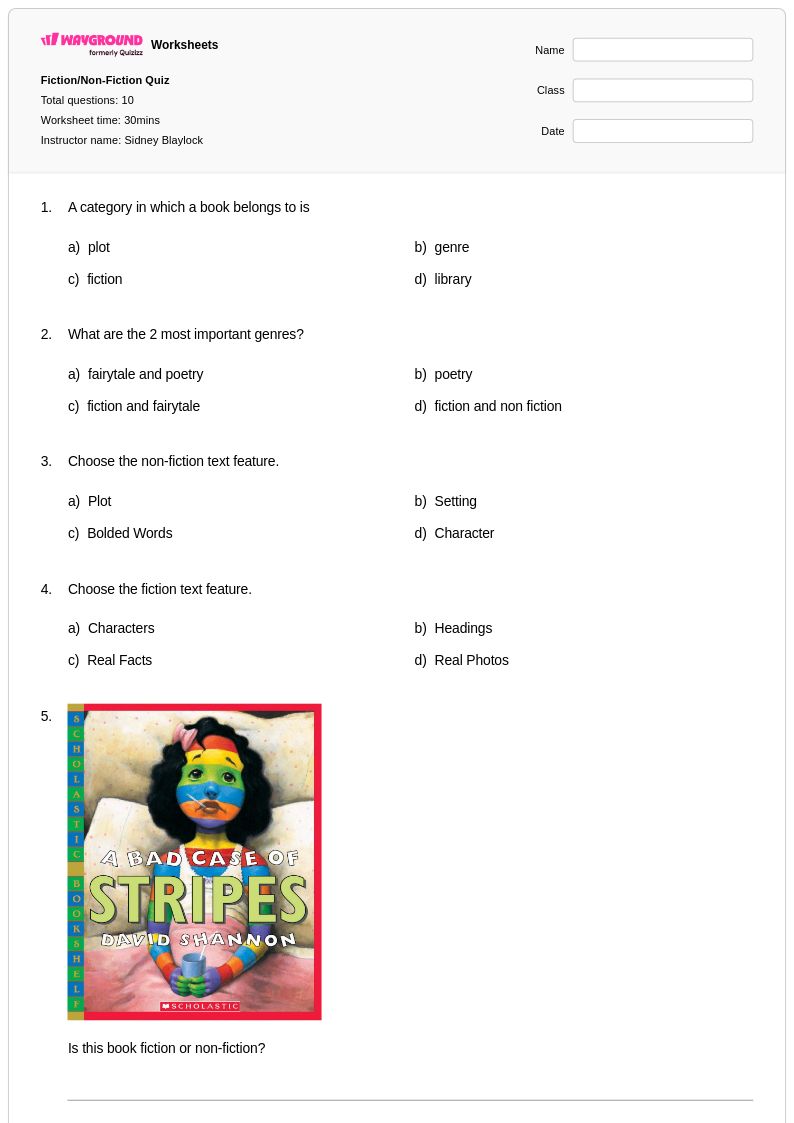
10Q
1st
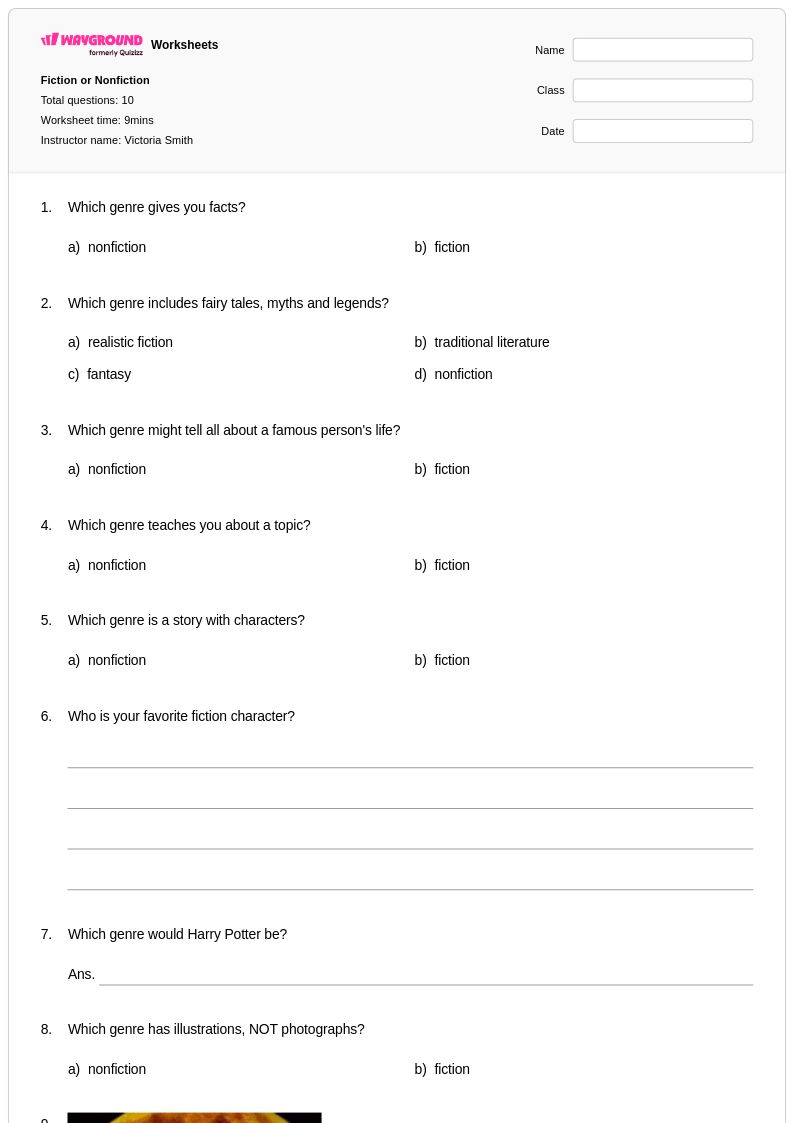
10Q
1st - 5th
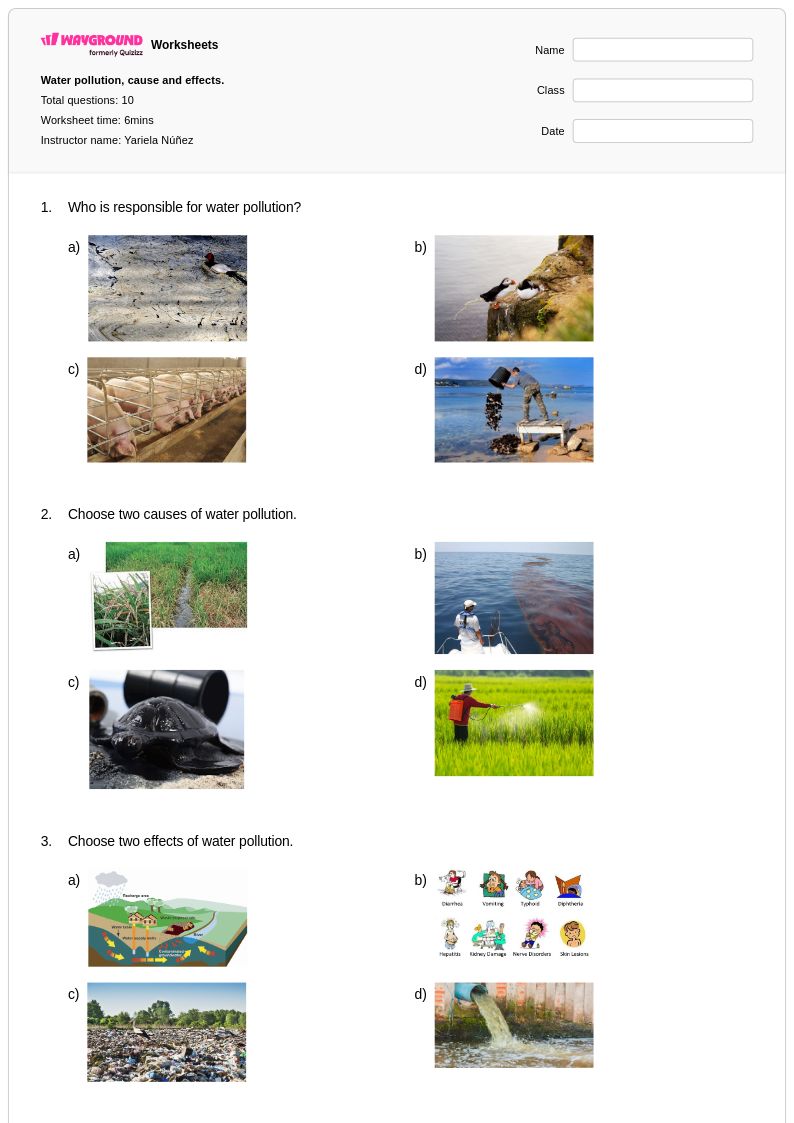
10Q
1st - 5th
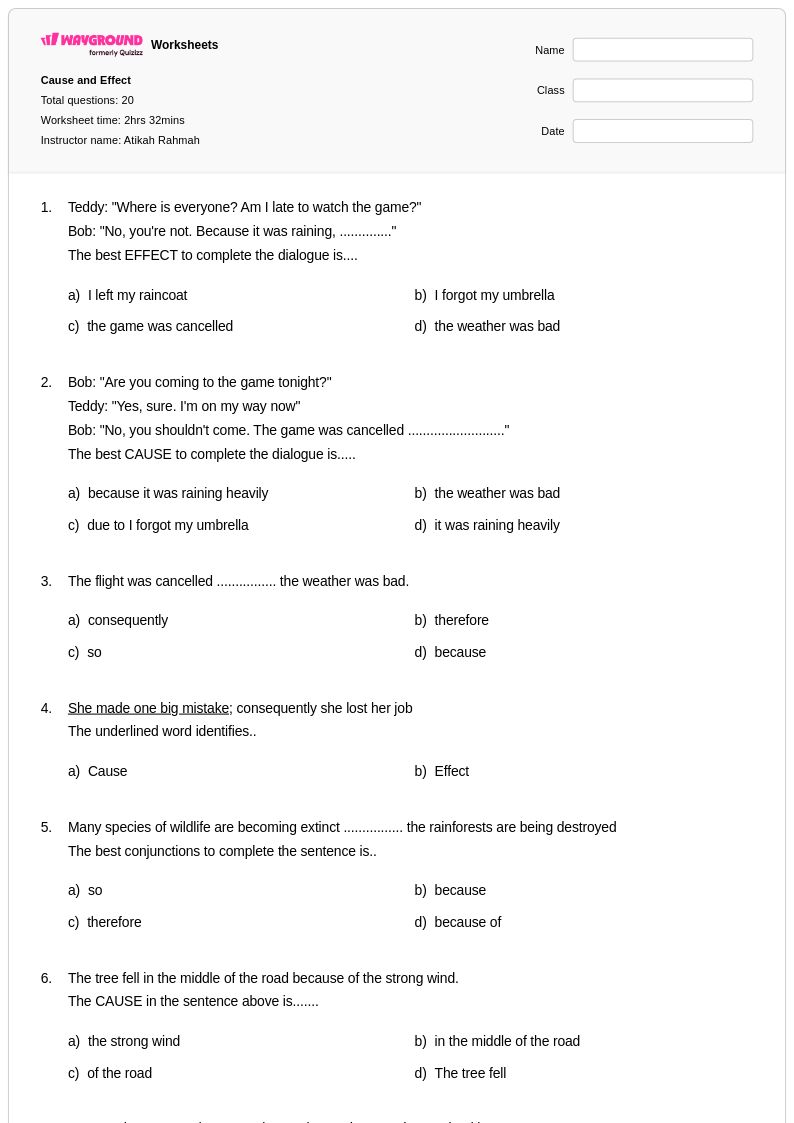
20Q
KG - 12th
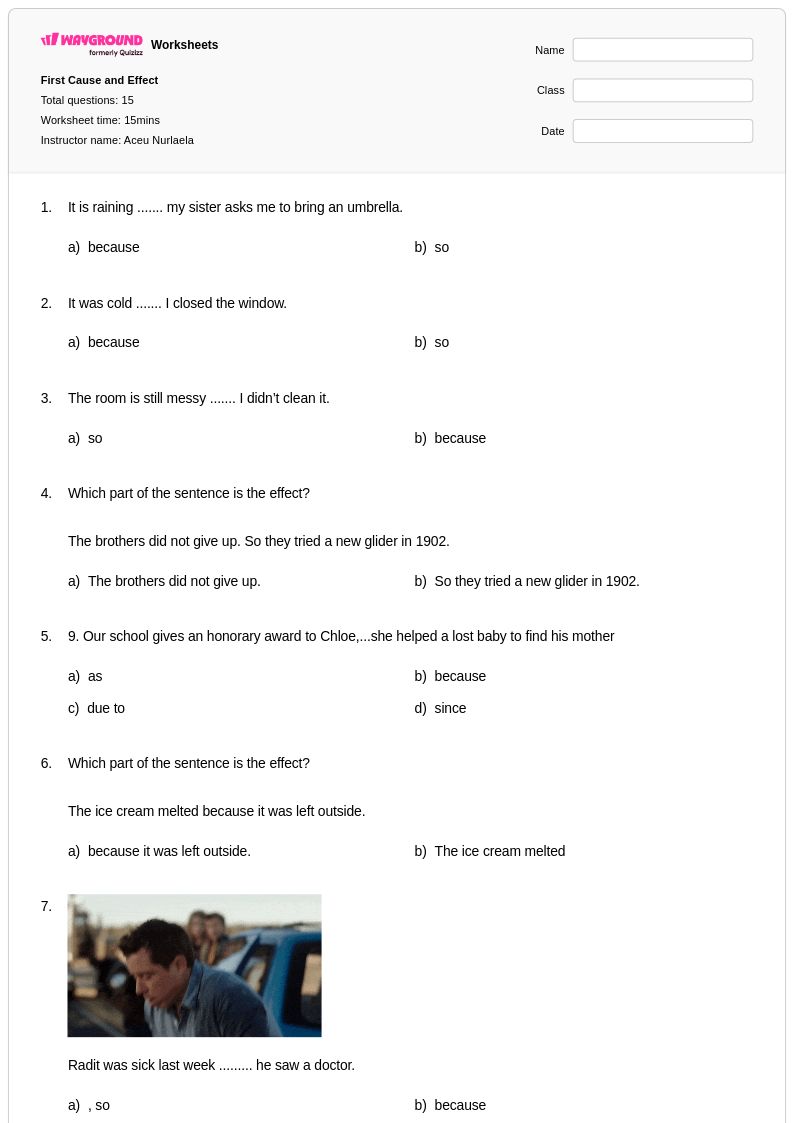
15Q
1st
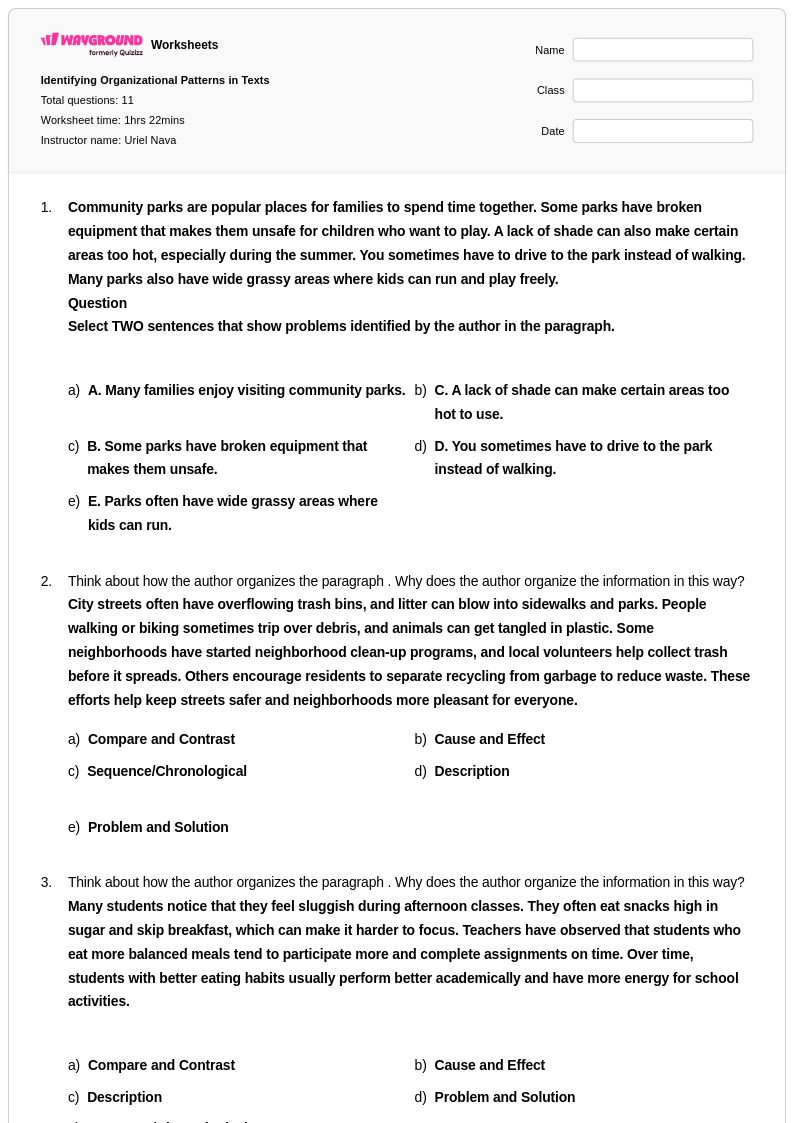
11Q
1st - 5th
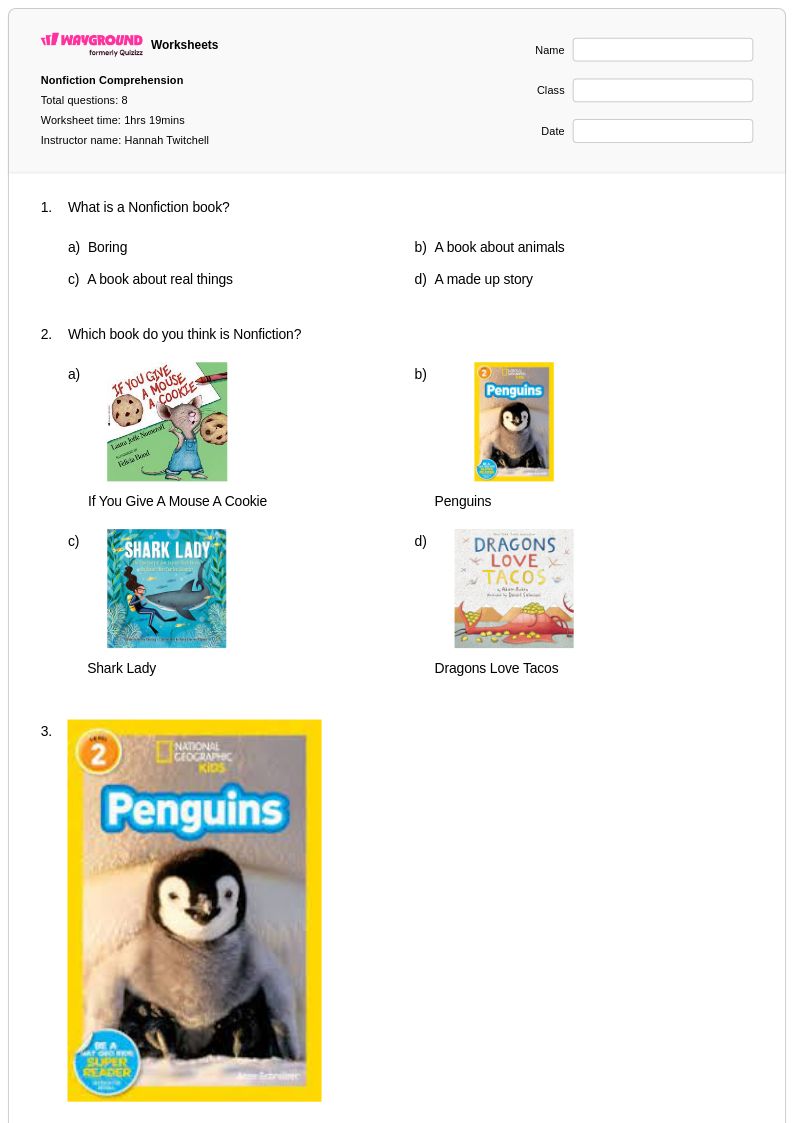
18Q
1st - 5th
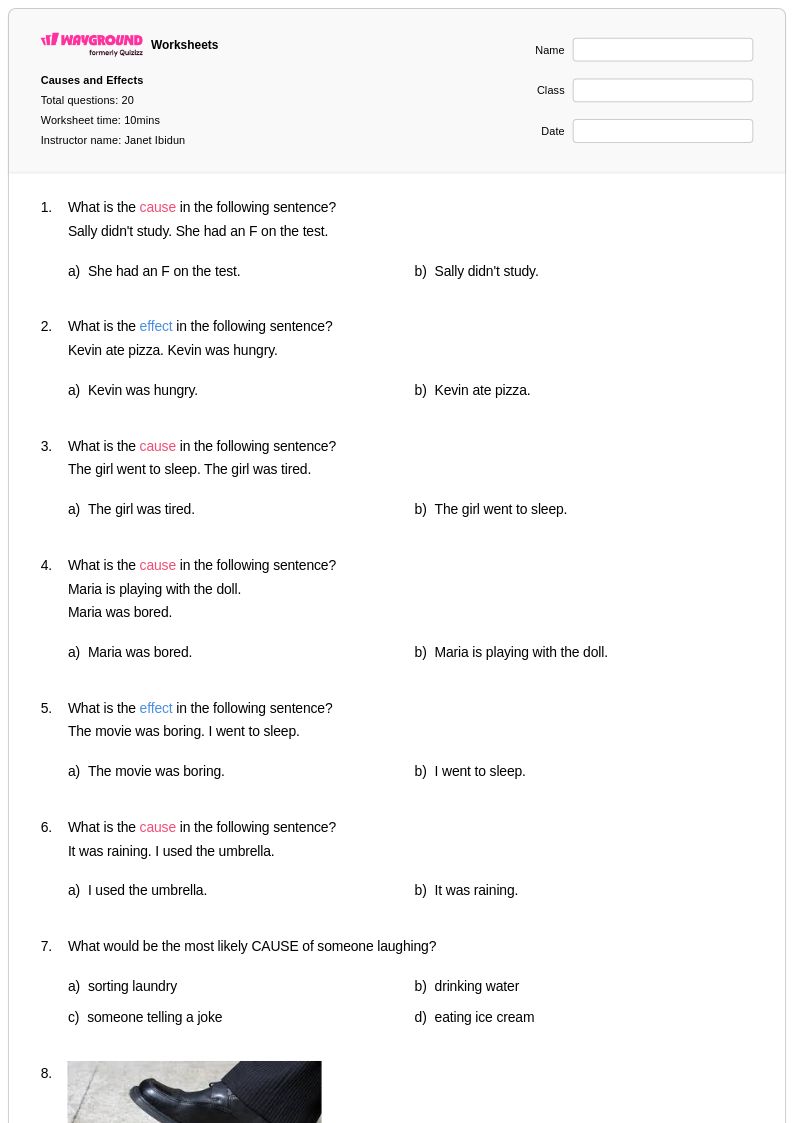
20Q
1st
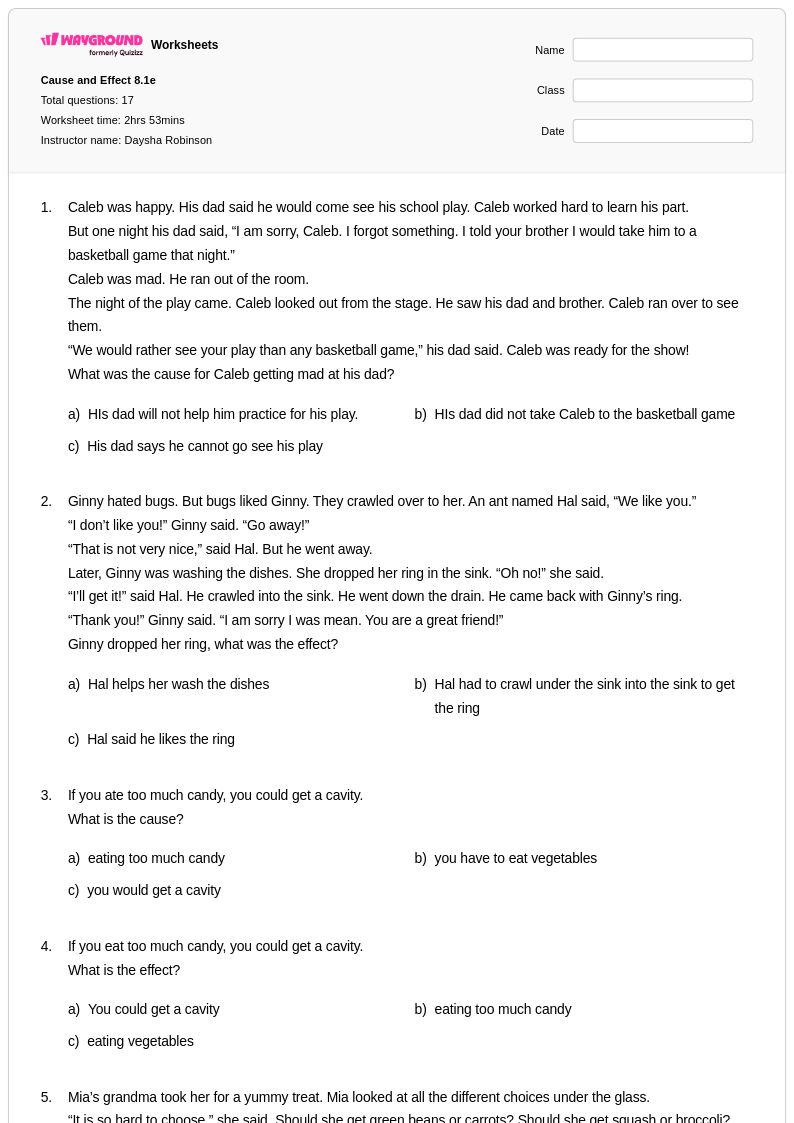
17Q
1st - 2nd
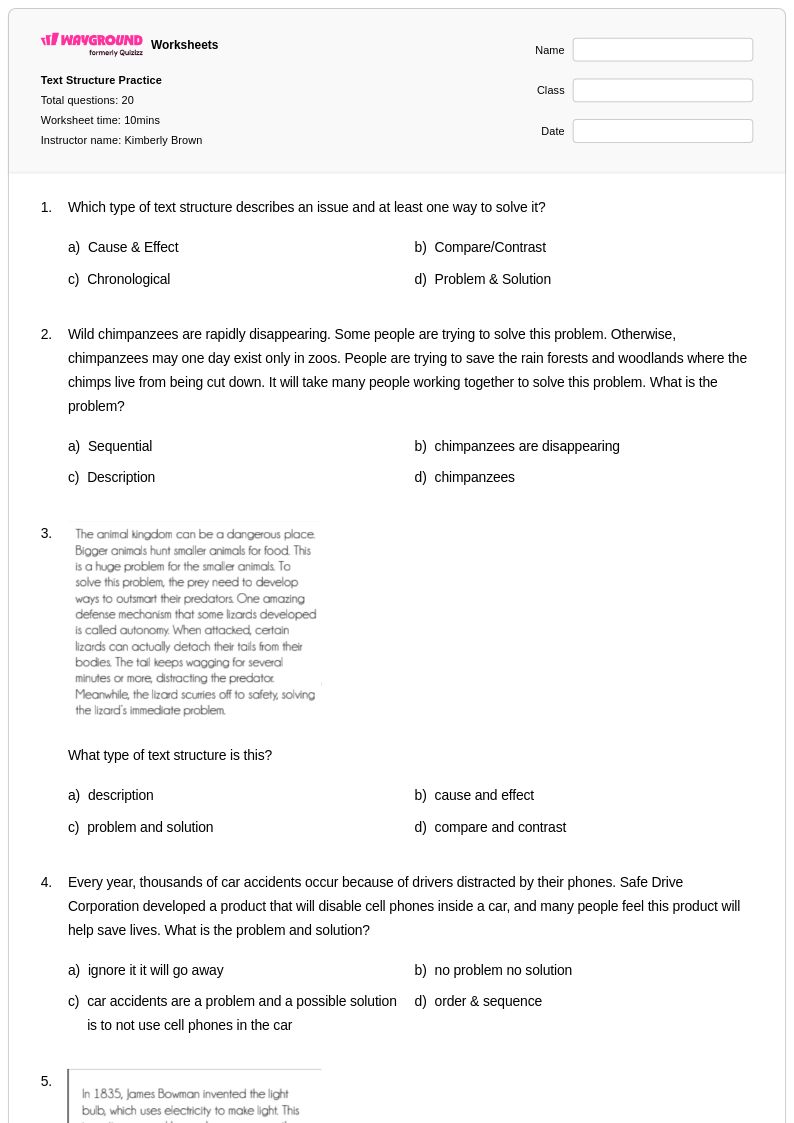
20Q
1st - Uni
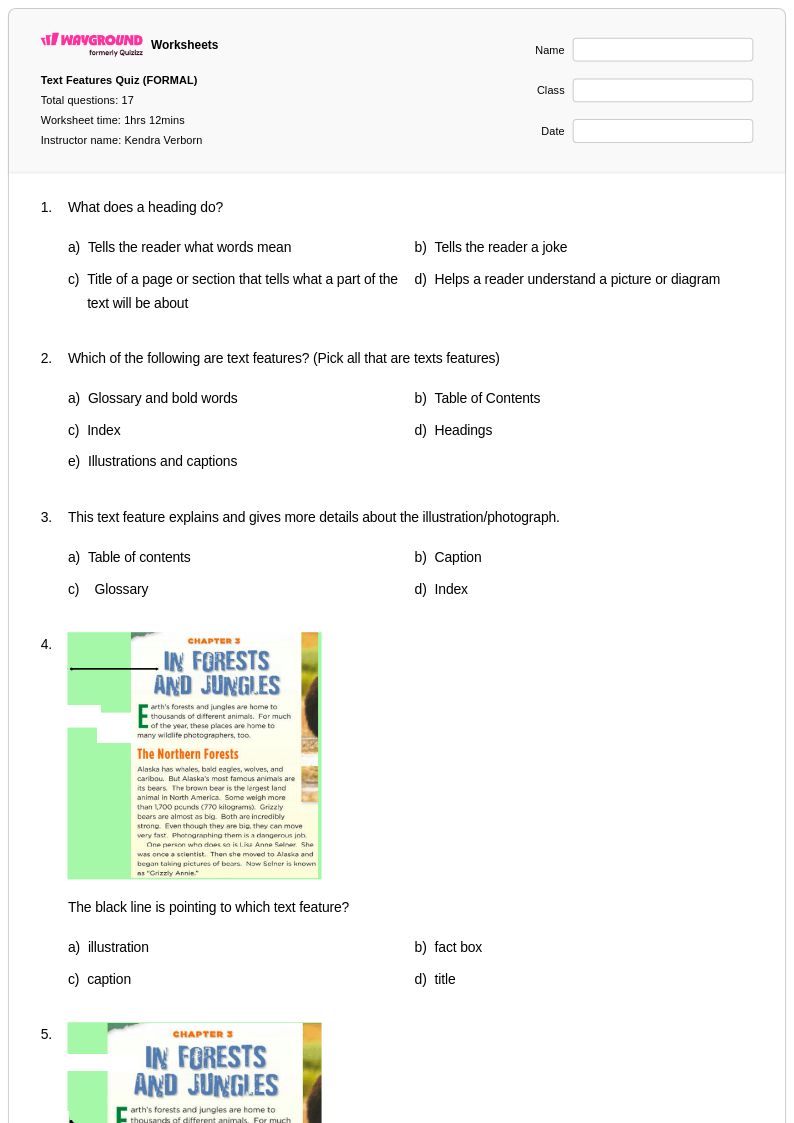
17Q
1st - 2nd
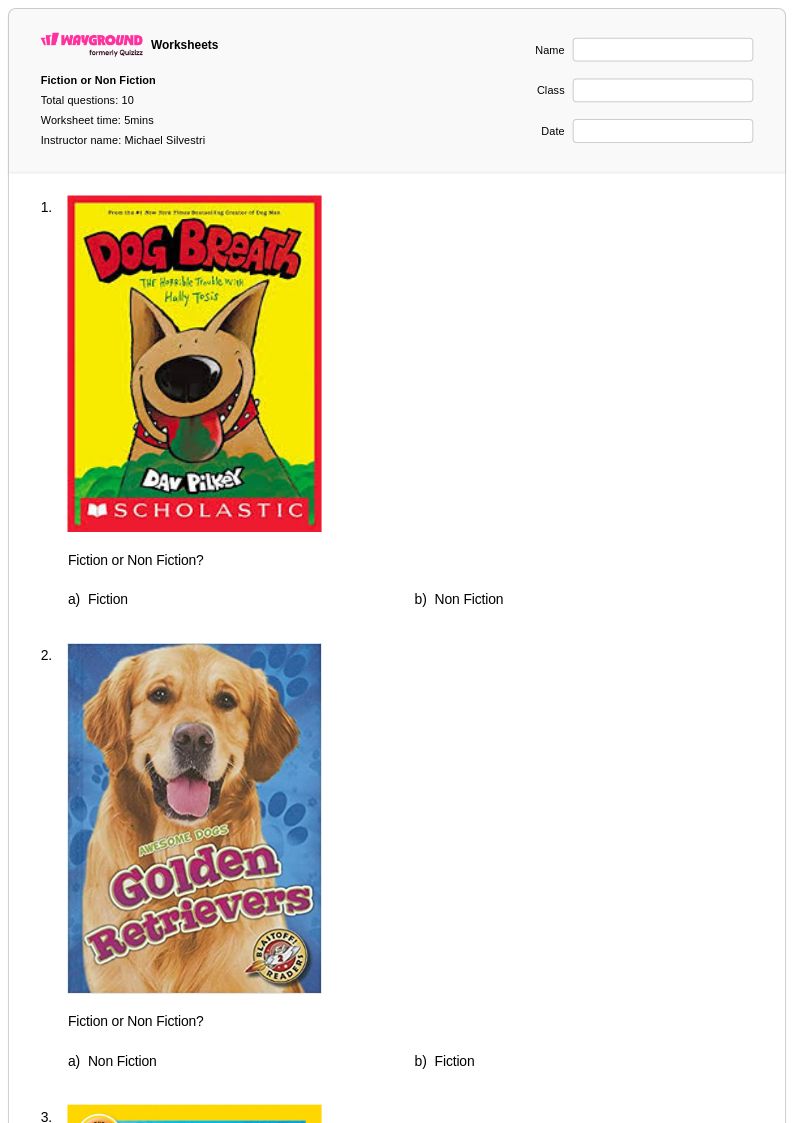
10Q
1st
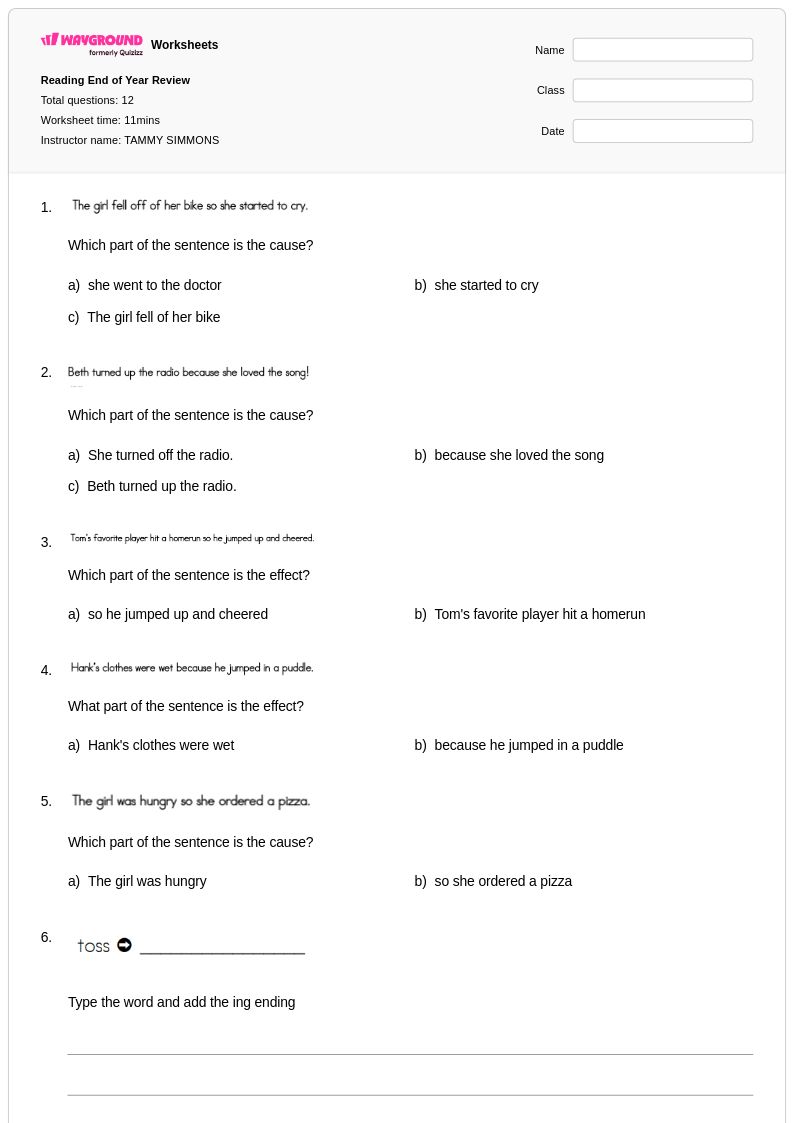
12Q
1st
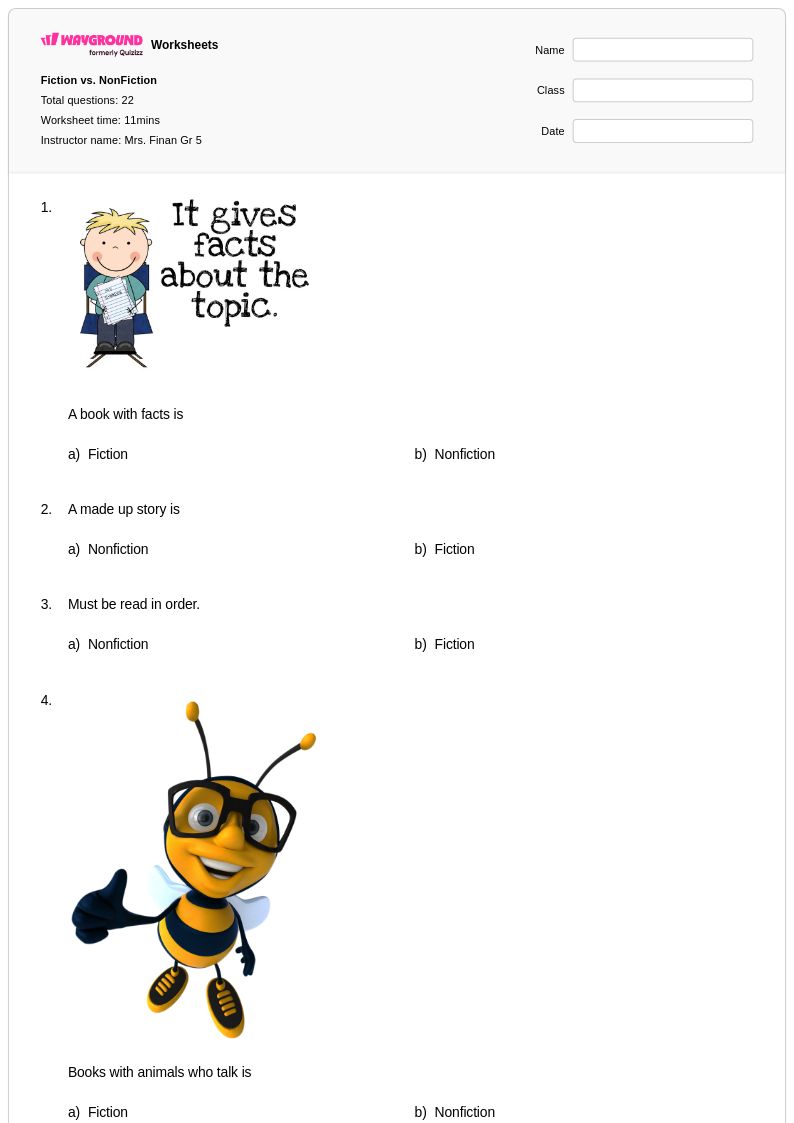
22Q
1st - 3rd
Explorar Identifying Cause and Effect in Nonfiction hojas de trabajo por grados
Explore otras hojas de trabajo de materias para class 1
Explore printable Identifying Cause and Effect in Nonfiction worksheets for Class 1
Identifying cause and effect in nonfiction texts represents a fundamental reading comprehension skill that Class 1 students must develop to become proficient readers and critical thinkers. Wayground's extensive collection of worksheets focuses specifically on helping young learners recognize the relationship between events and their consequences within factual texts, from simple science observations to basic historical events. These carefully crafted practice problems guide students through the process of distinguishing what happens (the effect) from why it happens (the cause), using age-appropriate nonfiction passages about topics like weather patterns, animal behaviors, and everyday phenomena. Each worksheet includes a comprehensive answer key that enables teachers and parents to provide immediate feedback, while the free printable format ensures accessibility for classroom instruction, homework assignments, and independent practice sessions.
Wayground, formerly Quizizz, empowers educators with millions of teacher-created resources specifically designed to strengthen cause and effect identification skills in Class 1 students. The platform's robust search and filtering capabilities allow teachers to quickly locate worksheets that align with specific learning objectives and reading standards, while built-in differentiation tools enable seamless adaptation of content for students at varying skill levels. These versatile resources are available in both printable pdf format and interactive digital versions, providing flexibility for traditional classroom settings, remote learning environments, and hybrid instruction models. Teachers can easily customize existing worksheets or create entirely new materials to support targeted skill practice, remediation for struggling readers, and enrichment opportunities for advanced learners, making lesson planning more efficient and instruction more effective.