Free Printable Chemistry Unit Conversions Worksheets for Class 12
Class 12 chemistry unit conversions worksheets and printables help students master dimensional analysis and measurement conversions through structured practice problems with comprehensive answer keys available as free PDF downloads.
Explore printable Chemistry Unit Conversions worksheets for Class 12
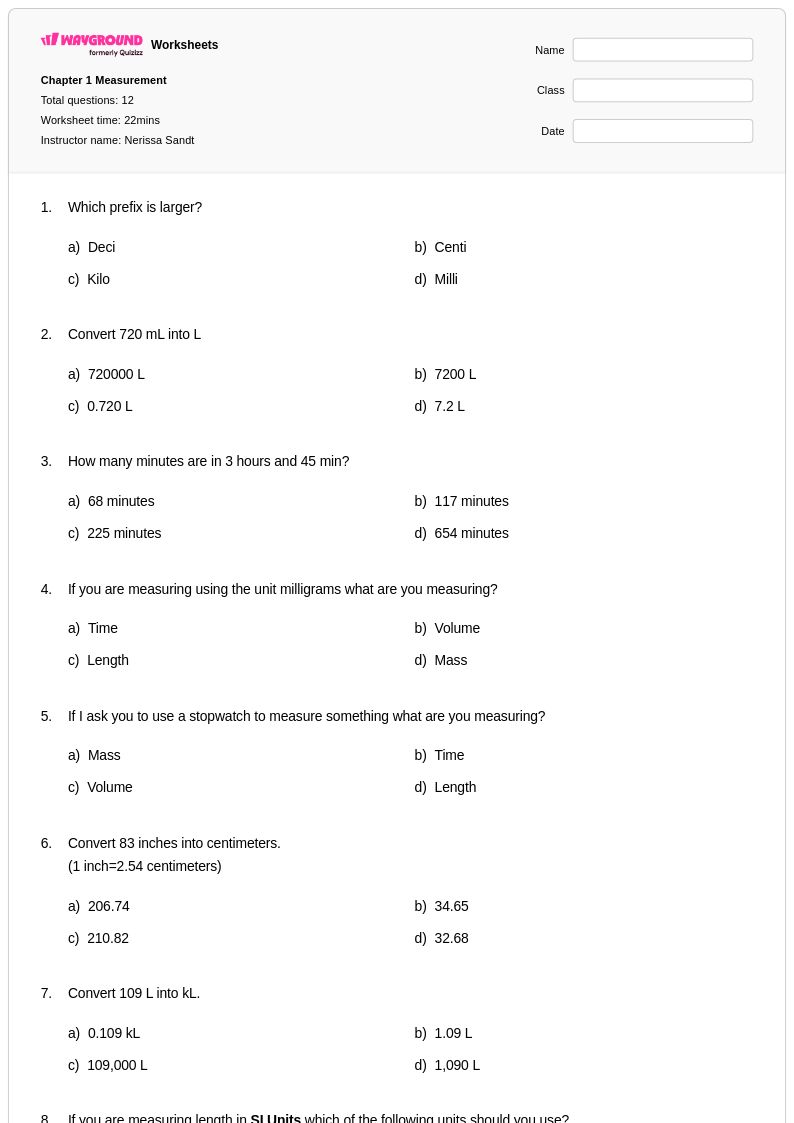
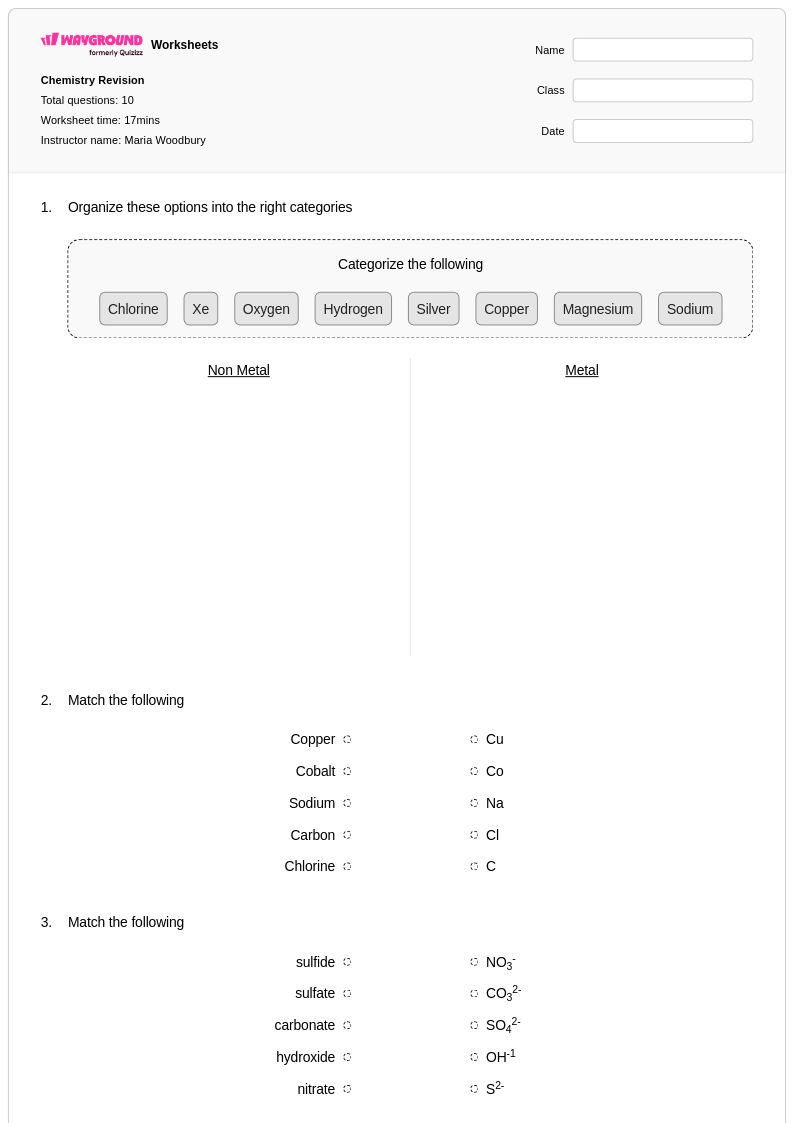
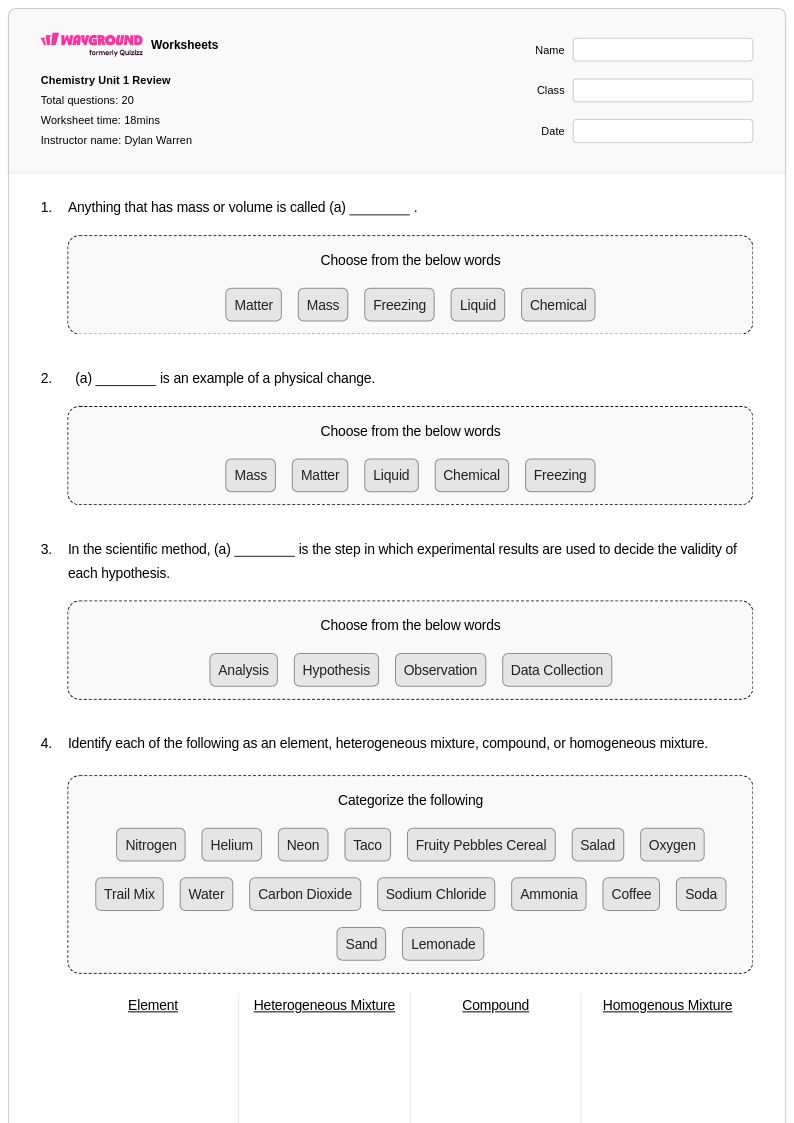
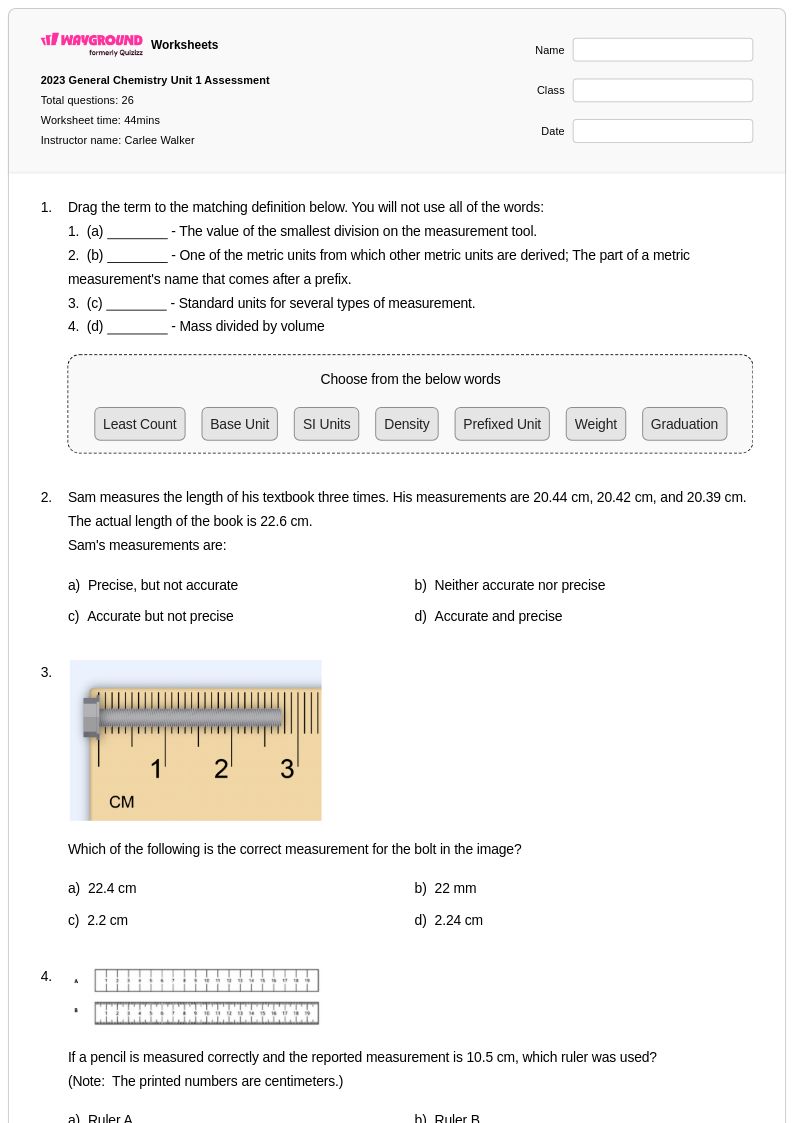
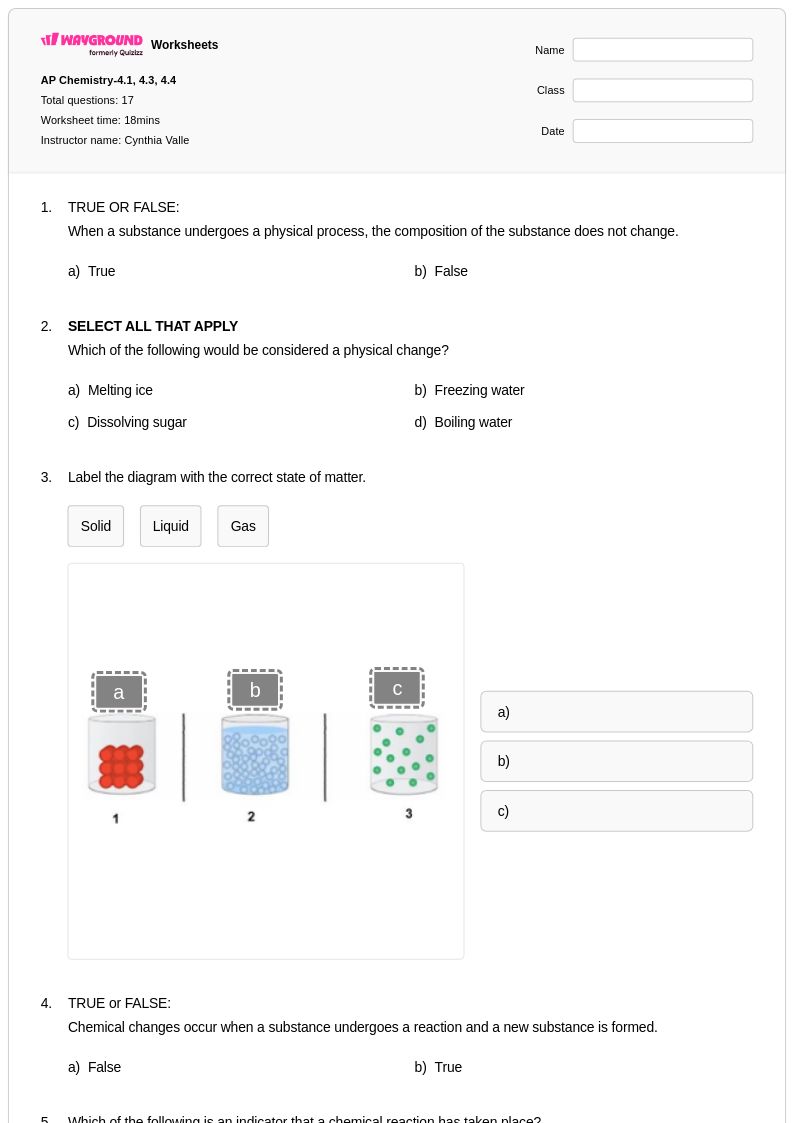
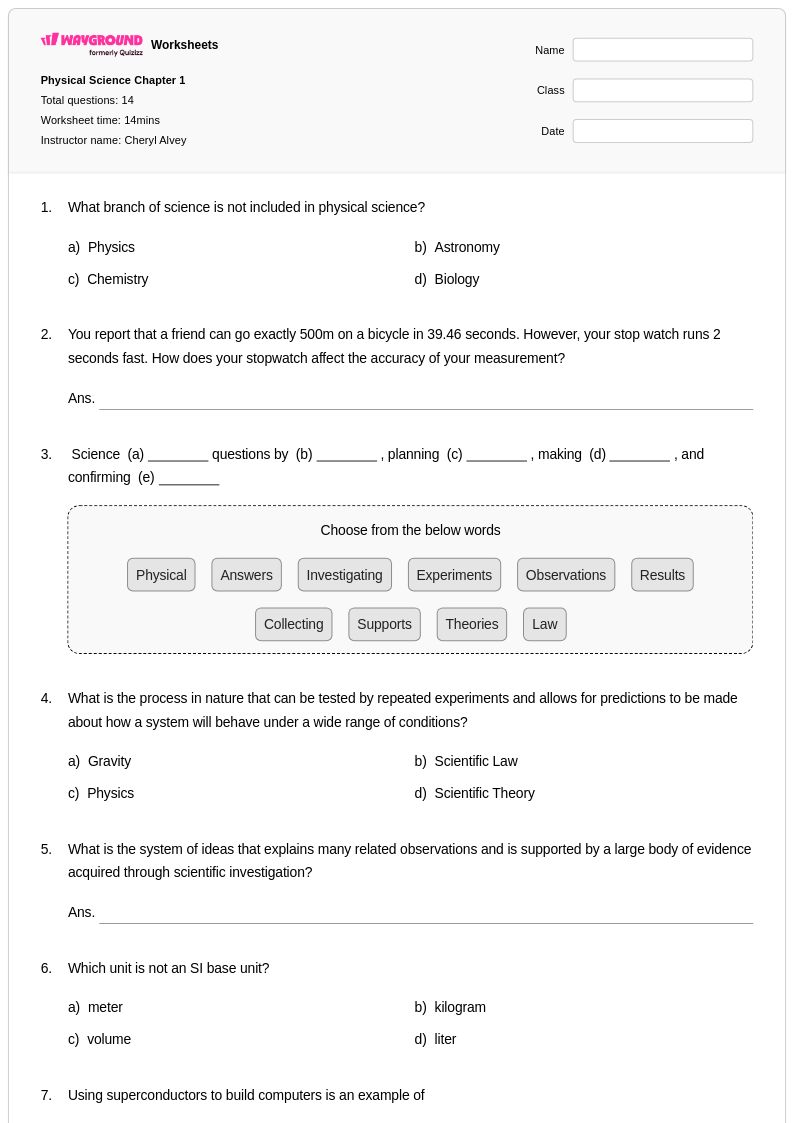
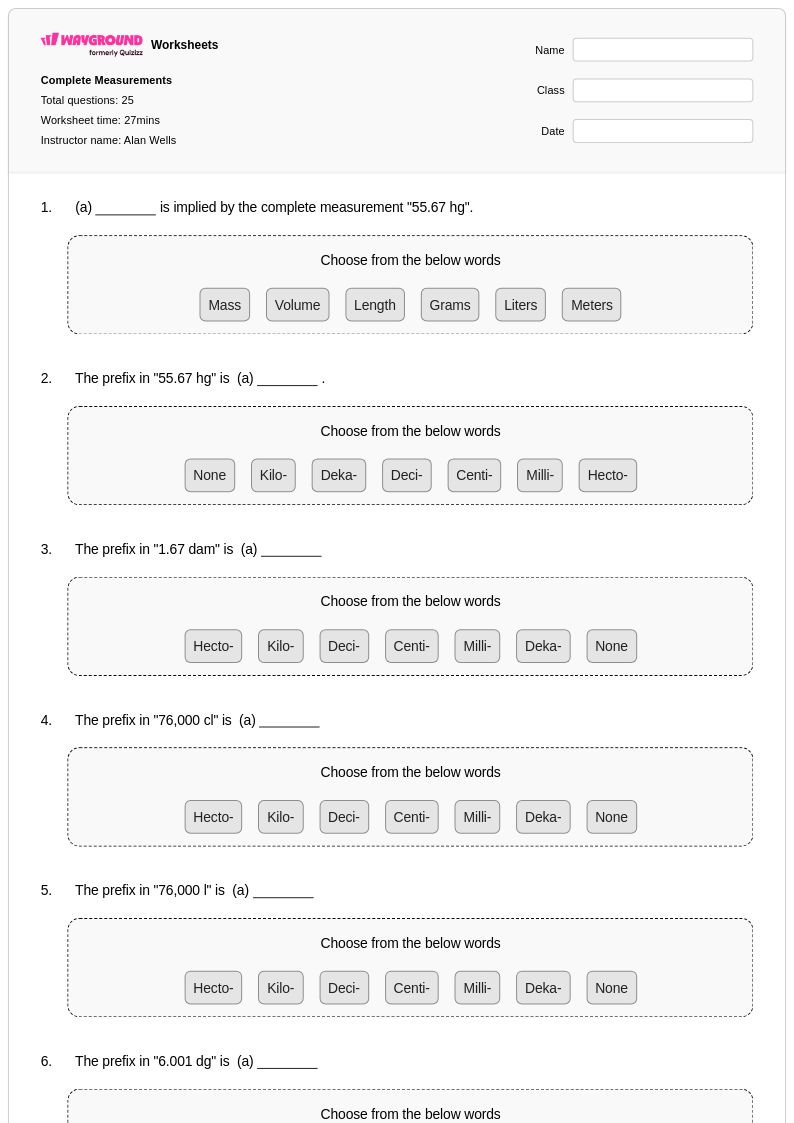
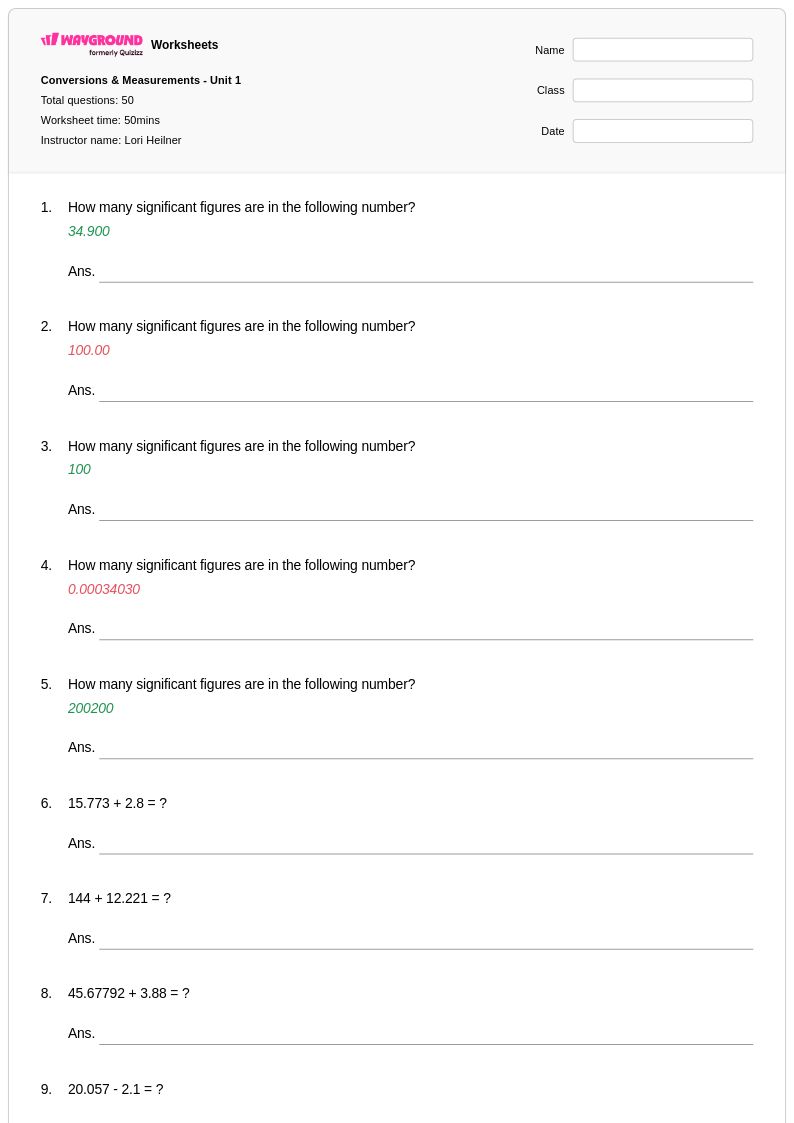
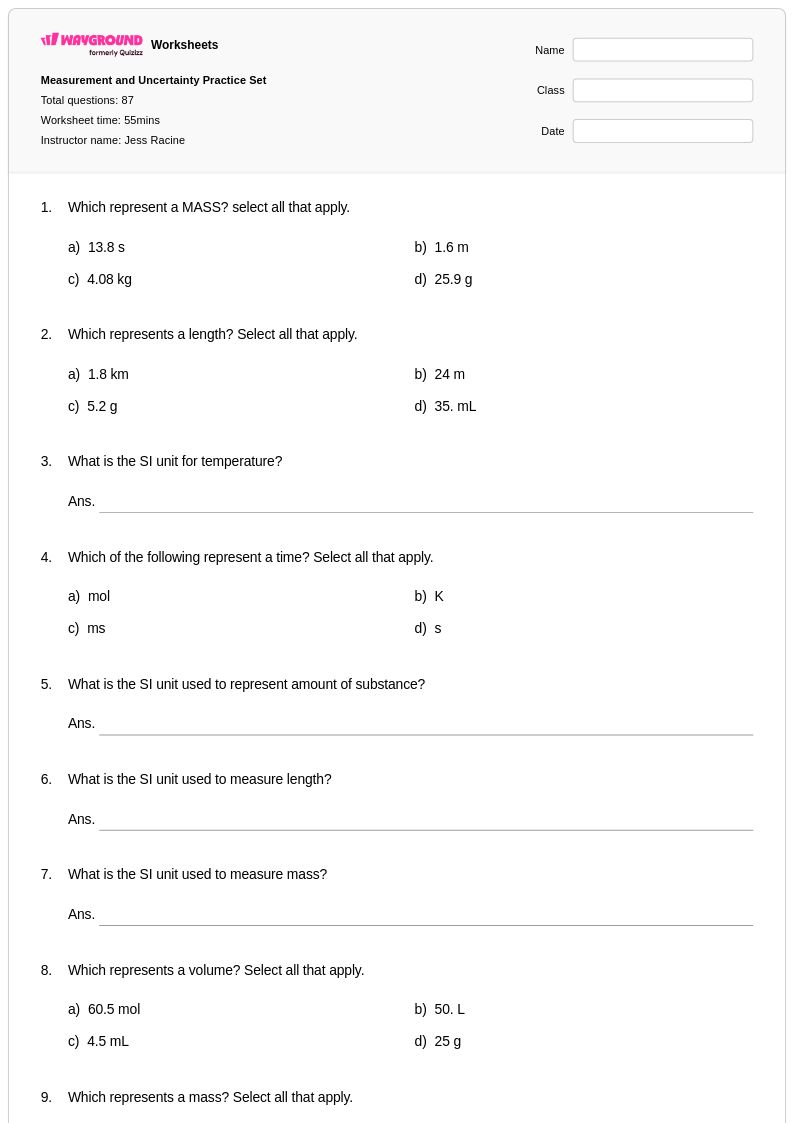
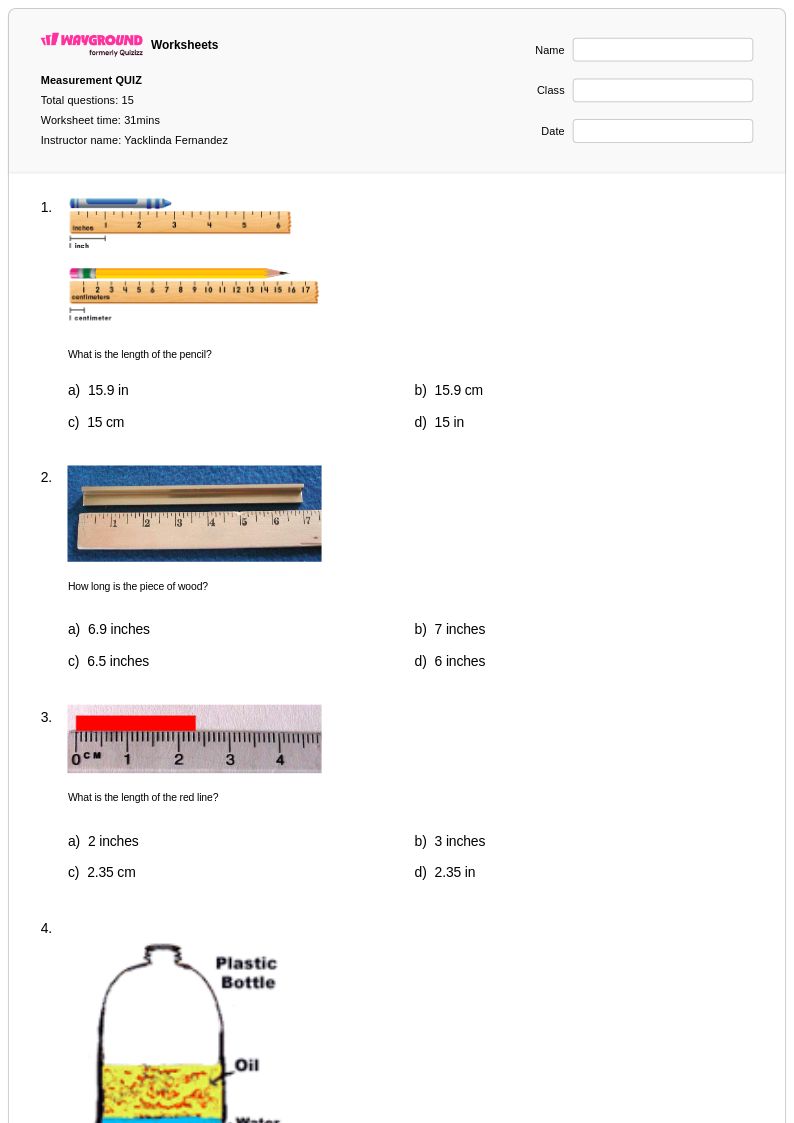
Chemistry unit conversions represent a fundamental skill set that Class 12 students must master to succeed in advanced chemistry coursework and standardized assessments. Wayground's extensive collection of chemistry unit conversion worksheets provides comprehensive practice opportunities that strengthen students' ability to convert between metric units, calculate molar relationships, and work with dimensional analysis across various chemical contexts. These carefully designed practice problems guide students through essential conversion techniques including mass-to-mole calculations, concentration unit transformations, gas law conversions, and thermodynamic unit manipulations. Each worksheet includes a detailed answer key that enables students to verify their problem-solving approaches and identify areas requiring additional focus, while the free printable format ensures accessibility for both classroom instruction and independent study sessions.
Wayground's robust platform empowers chemistry educators with millions of teacher-created resources specifically designed to support unit conversion instruction at the Class 12 level. The platform's sophisticated search and filtering capabilities allow teachers to quickly locate worksheets that align with specific curriculum standards and target particular conversion skills, from basic metric conversions to complex stoichiometric calculations. Teachers can customize these digital and printable materials to match their students' diverse learning needs, creating differentiated assignments that provide appropriate challenge levels for remediation, standard practice, or enrichment activities. The availability of resources in both interactive digital formats and downloadable pdf versions gives educators the flexibility to seamlessly integrate unit conversion practice into their lesson planning, homework assignments, and assessment preparation strategies.
FAQs
How do I teach unit conversions in chemistry?
The most effective approach to teaching chemistry unit conversions is dimensional analysis, also called the factor-label method. Teach students to write out units explicitly at every step and cancel them systematically, rather than relying on memorized formulas. Start with single-step conversions (grams to milligrams, liters to milliliters) before progressing to multi-step problems like grams to moles or Celsius to Kelvin. Grounding each conversion type in a real chemical context — such as using molar mass during stoichiometry — helps students understand why the skill matters.
What exercises help students practice chemistry unit conversions?
Progressive practice problems that move from single-step to multi-step conversions are the most effective for building fluency. Students should practice converting across the key measurement categories used in chemistry: mass (grams, kilograms, milligrams), volume (liters, milliliters), temperature (Celsius, Kelvin, Fahrenheit), pressure (atm, kPa, mmHg), and concentration (molarity, parts per million). Structured worksheets that require students to show their dimensional analysis work — rather than just write a final answer — reinforce the method and make errors easier to identify and correct.
What mistakes do students commonly make with chemistry unit conversions?
The most frequent error is inverting the conversion factor, which produces an answer in the wrong units or off by several orders of magnitude. Students also commonly treat temperature conversions (Celsius to Kelvin) as simple unit ratios rather than offset relationships, leading to systematic errors in gas law problems. A third common mistake is skipping intermediate unit labels when working multi-step conversions, which causes unit cancellation errors that compound across each step. Requiring students to write every unit explicitly and check that unwanted units cancel completely helps prevent all three of these errors.
How can I use chemistry unit conversion worksheets in my classroom?
Chemistry unit conversion worksheets on Wayground are available as printable PDFs for traditional classroom use and in digital formats for technology-integrated or remote learning environments, including the option to host them as a quiz on Wayground. Printable versions work well for guided practice, bell-ringers, or homework assignments where students show their dimensional analysis work by hand. Digital formats allow for self-paced practice with immediate feedback. You can also host the worksheet as a Wayground quiz to track student performance and identify which specific conversion types require reteaching.
How do I support students who struggle with unit conversions in chemistry?
Students who struggle with unit conversions typically need more scaffolding around the dimensional analysis setup before they practice independently. Provide conversion factor reference sheets and require students to write the given quantity, the conversion factor, and the target unit before calculating. On Wayground, teachers can apply accommodations such as reduced answer choices to lower cognitive load for struggling students, or enable Read Aloud so that students who have difficulty processing written problem text can still engage with the math. These settings can be assigned to individual students without disrupting the rest of the class.
What chemistry unit conversion topics should I cover and in what order?
Begin with metric prefix conversions (kilo-, milli-, micro-) since these appear across all measurement types and establish the pattern of dimensional analysis. Follow with mass and volume conversions, then temperature conversions (Celsius to Kelvin) as a distinct type that requires addition rather than multiplication. Pressure unit conversions (atm, kPa, torr) are best introduced alongside the ideal gas law. Mole conversions — grams to moles using molar mass, and moles to particles using Avogadro's number — should come last, as they require students to apply dimensional analysis to chemically meaningful quantities rather than straightforward SI unit relationships.