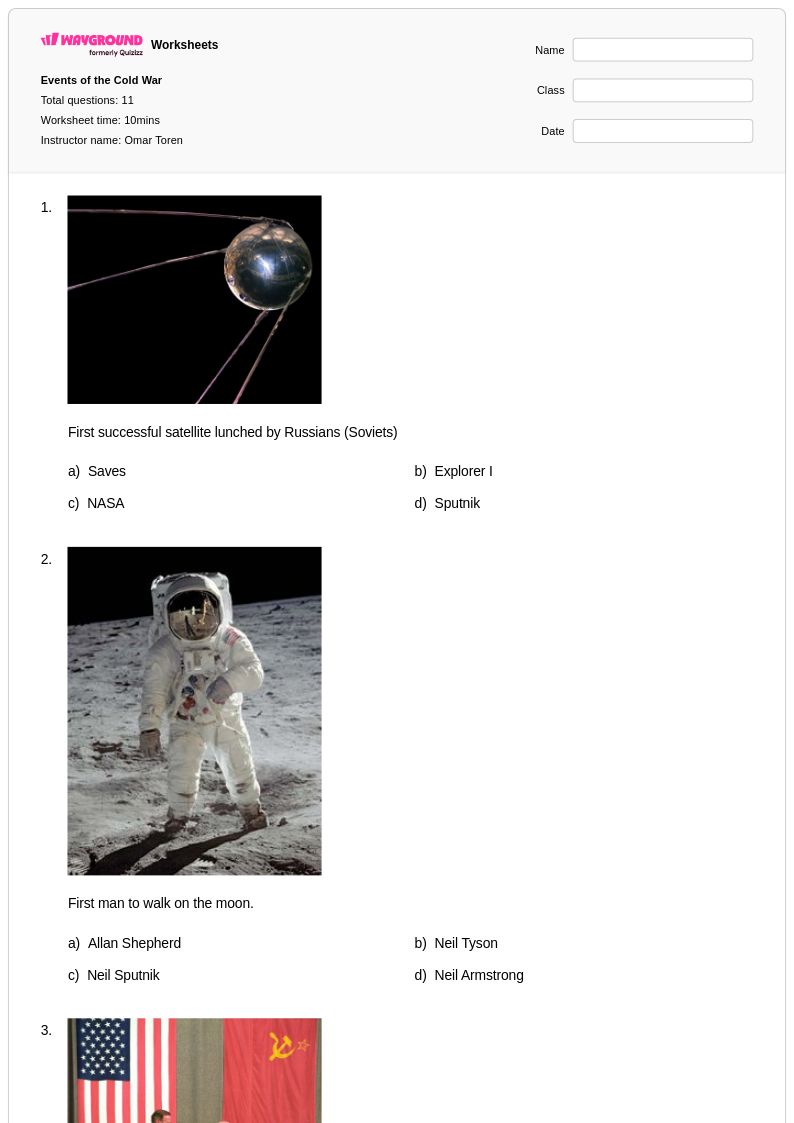
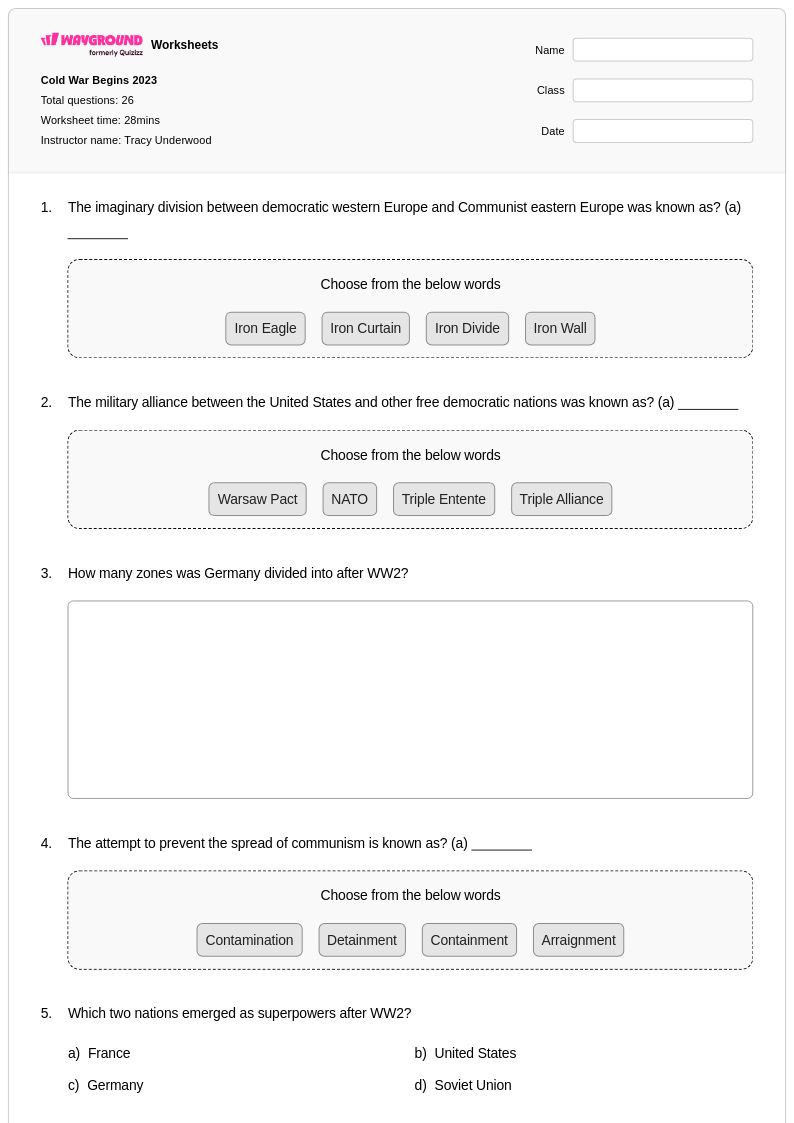
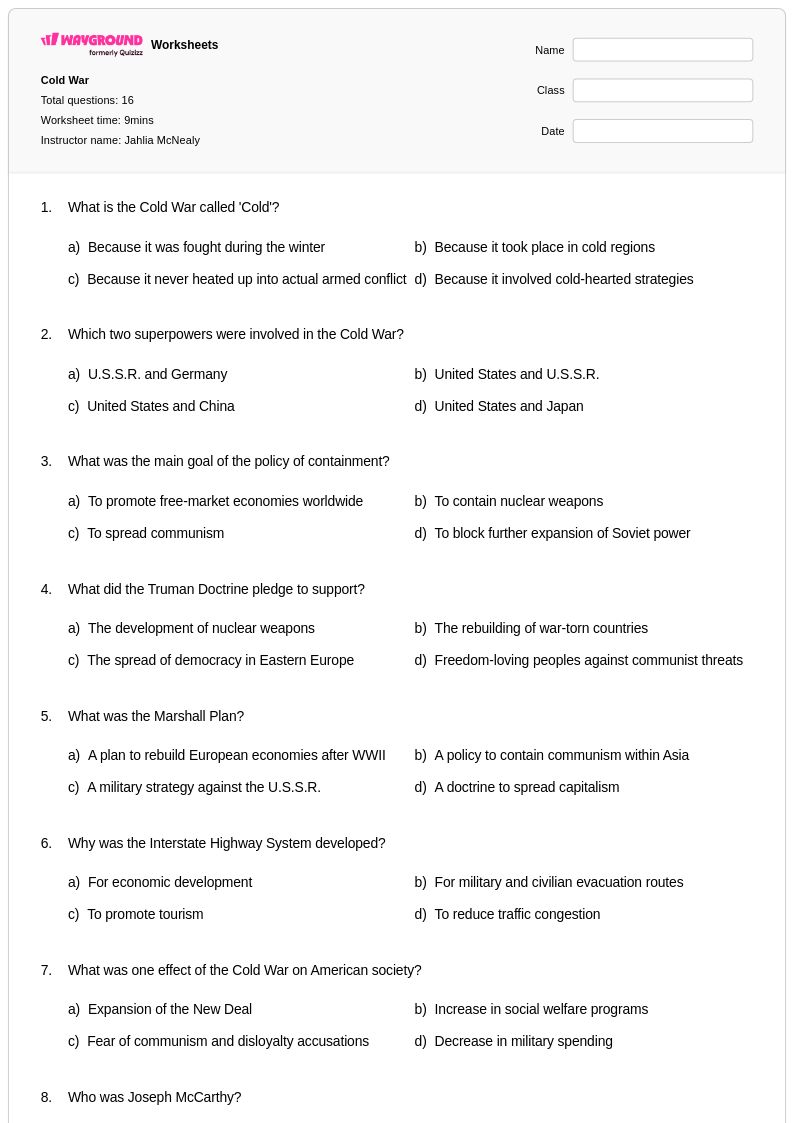
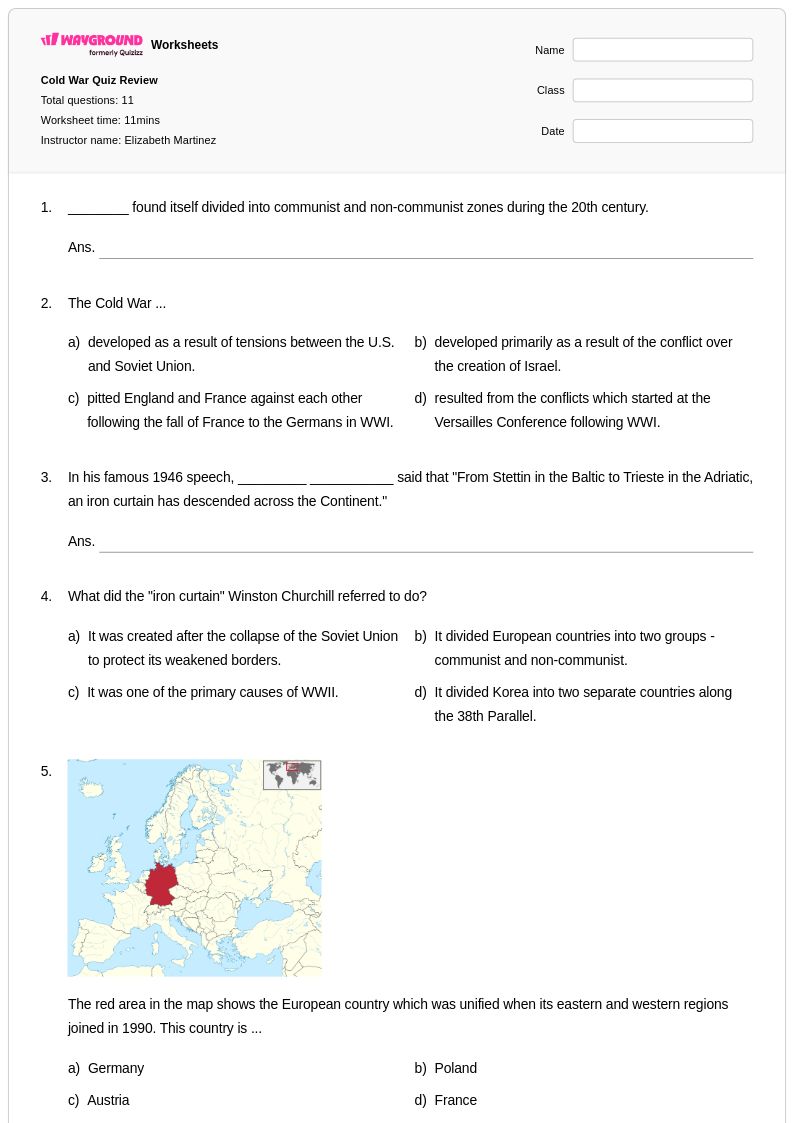
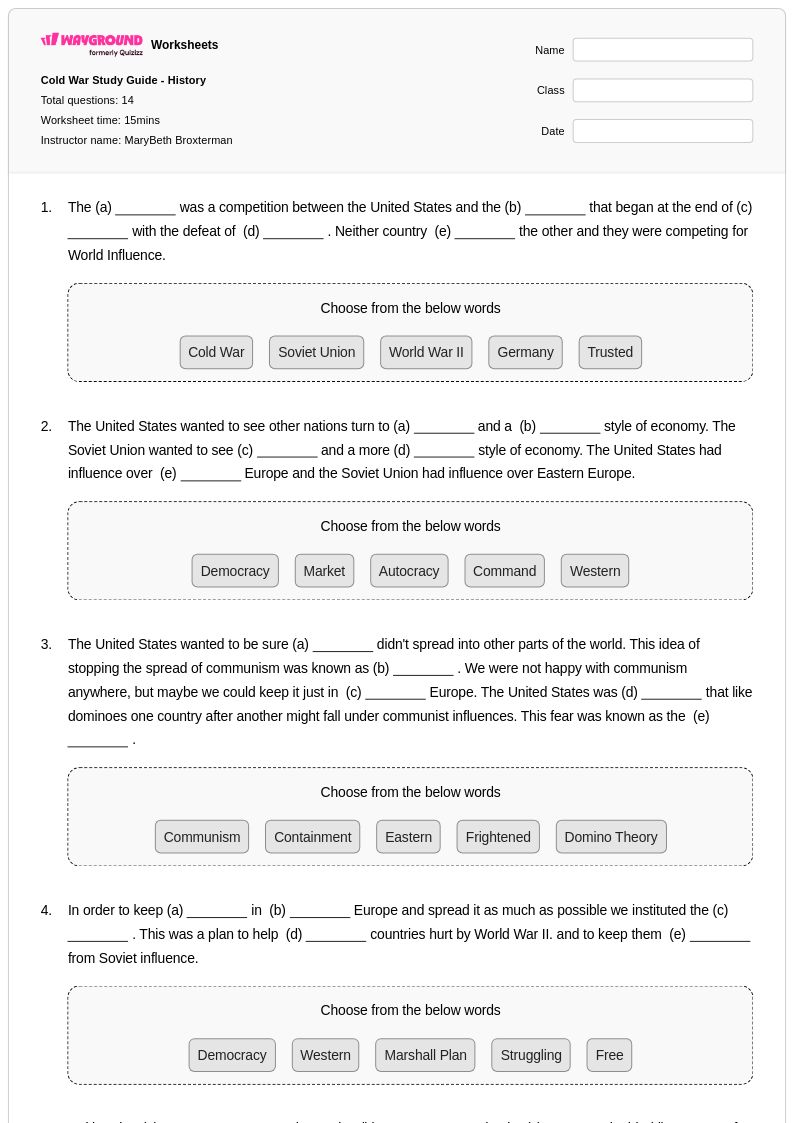
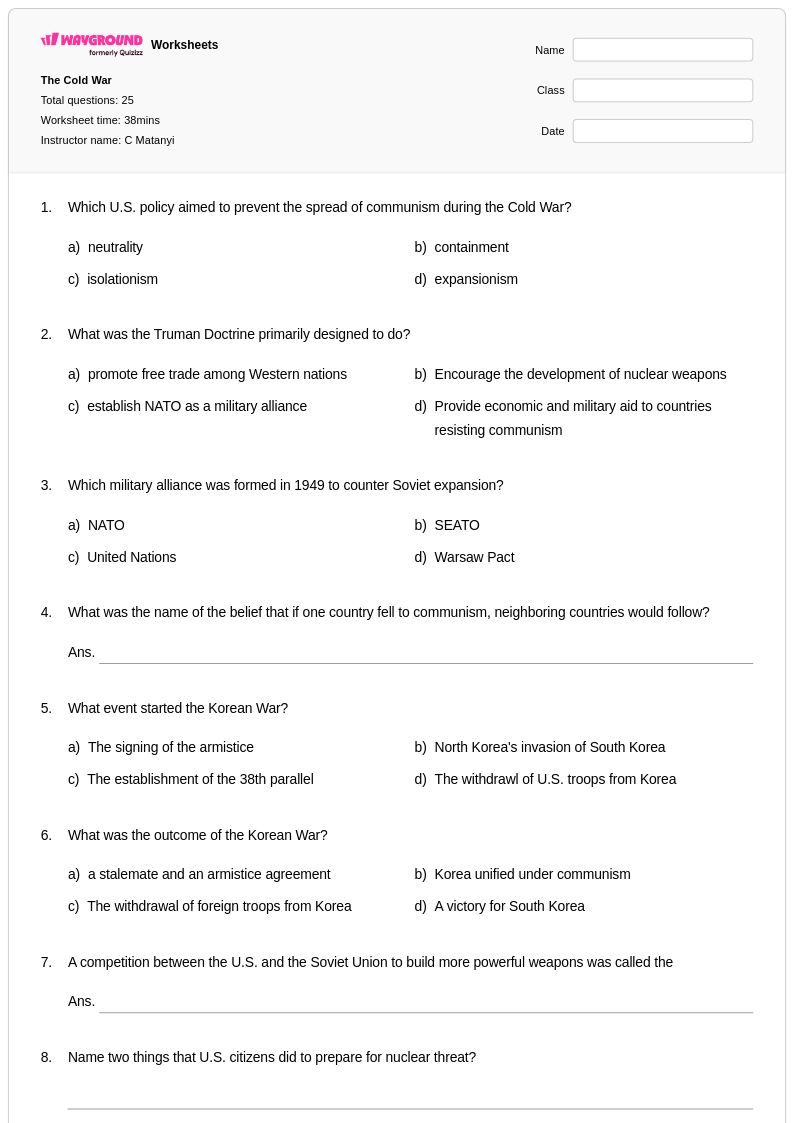
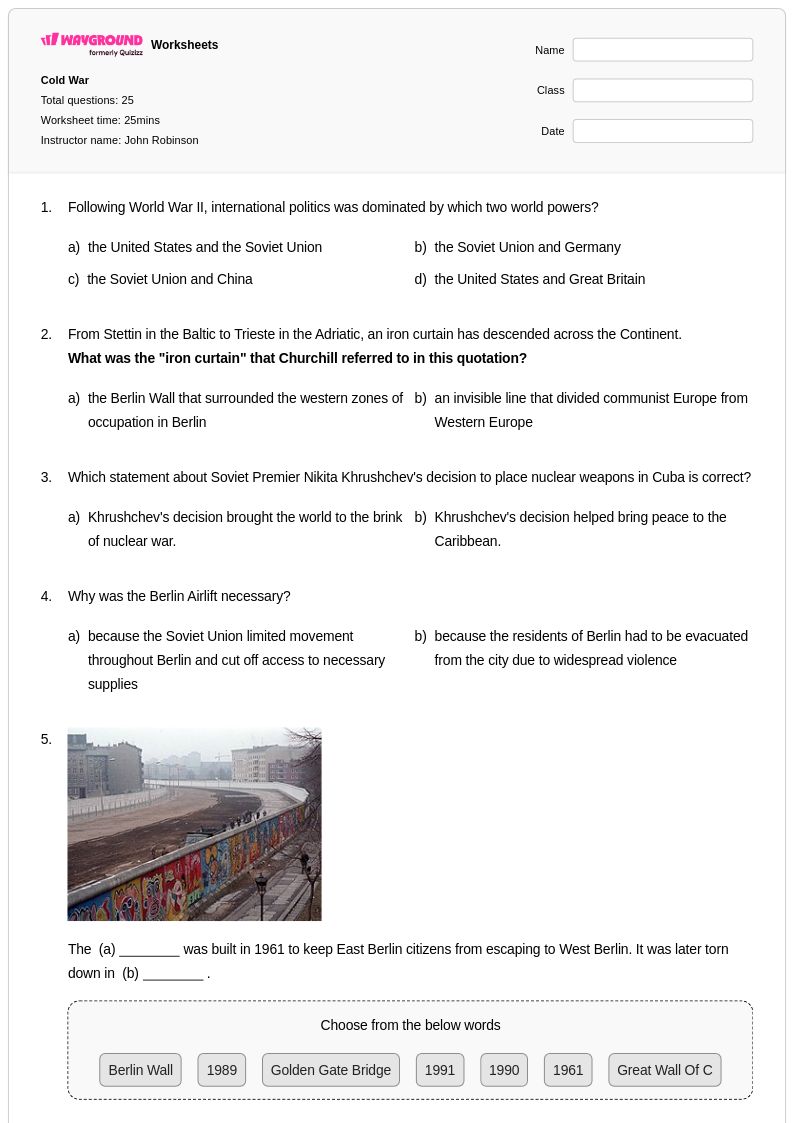
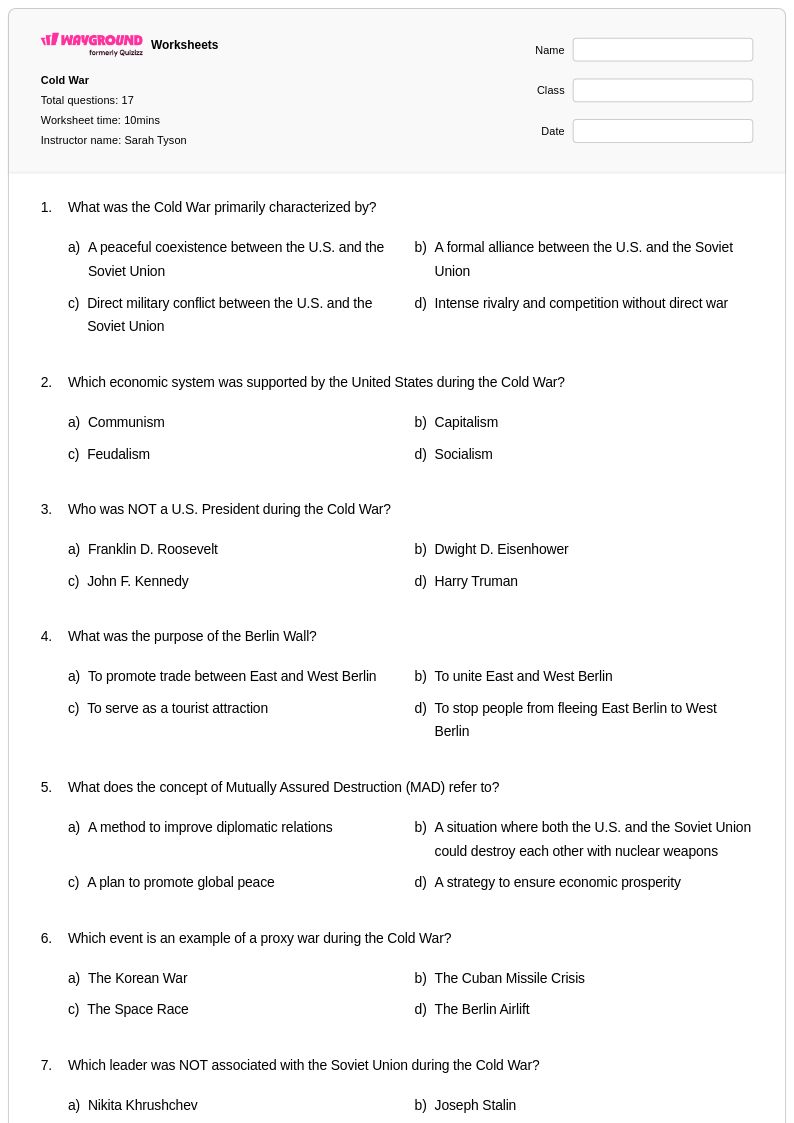
Explore our comprehensive Class 6 Cold War worksheets and printables that help students master key historical events, ideological conflicts, and global tensions through engaging practice problems and detailed answer keys.
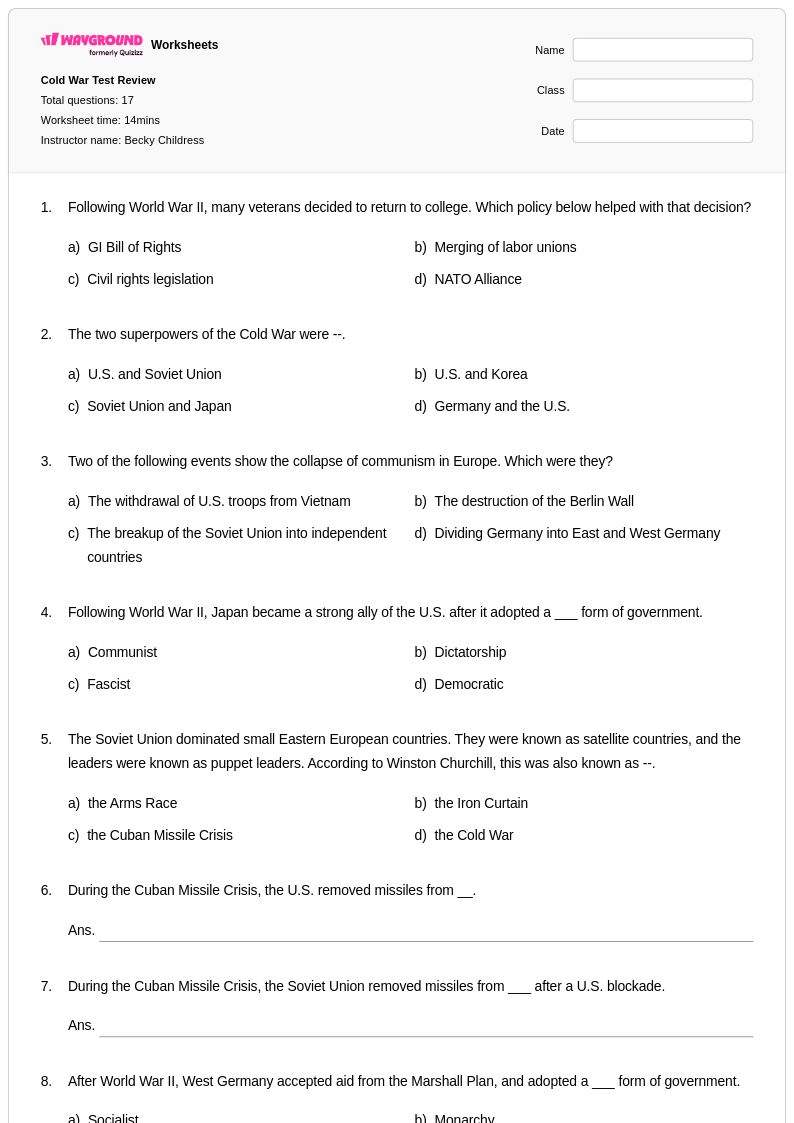
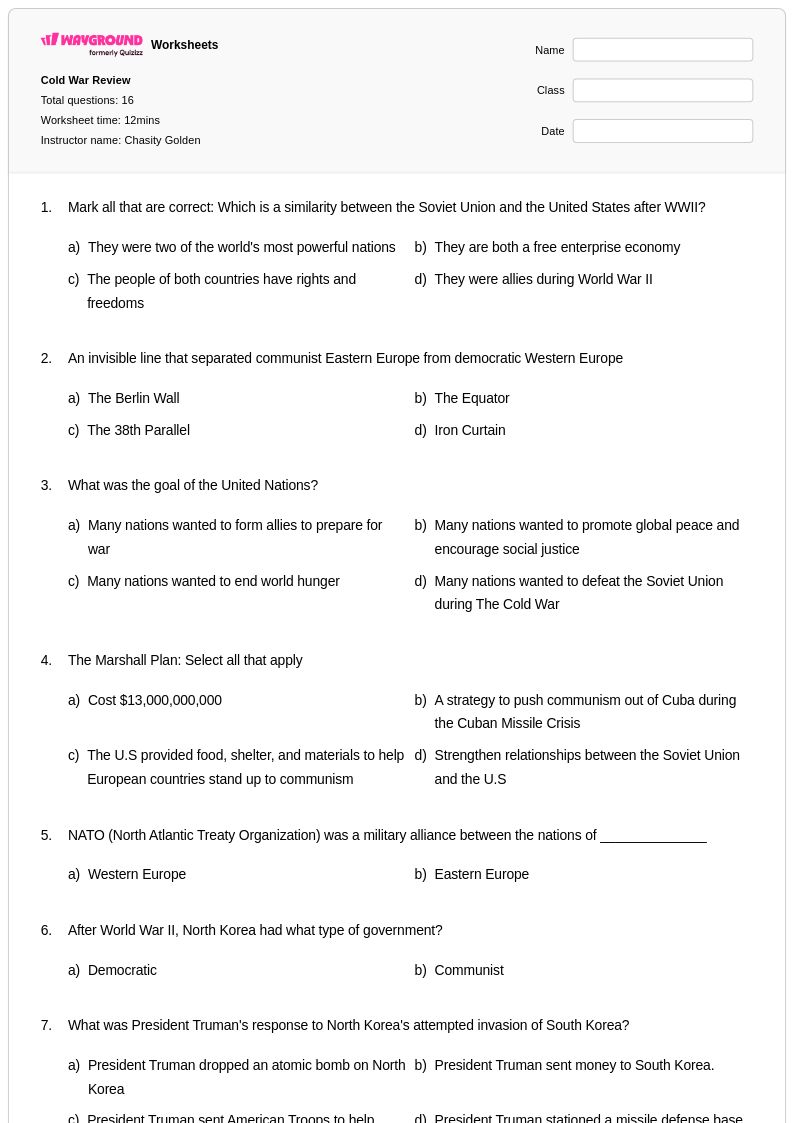
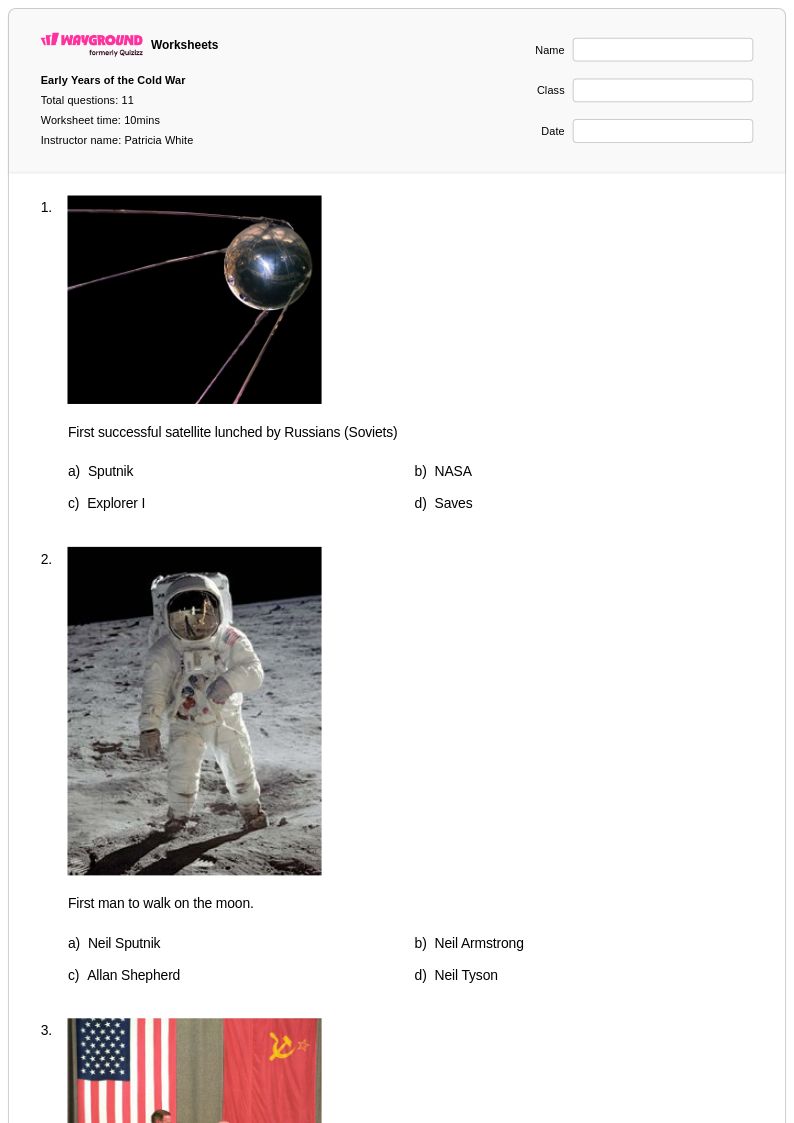
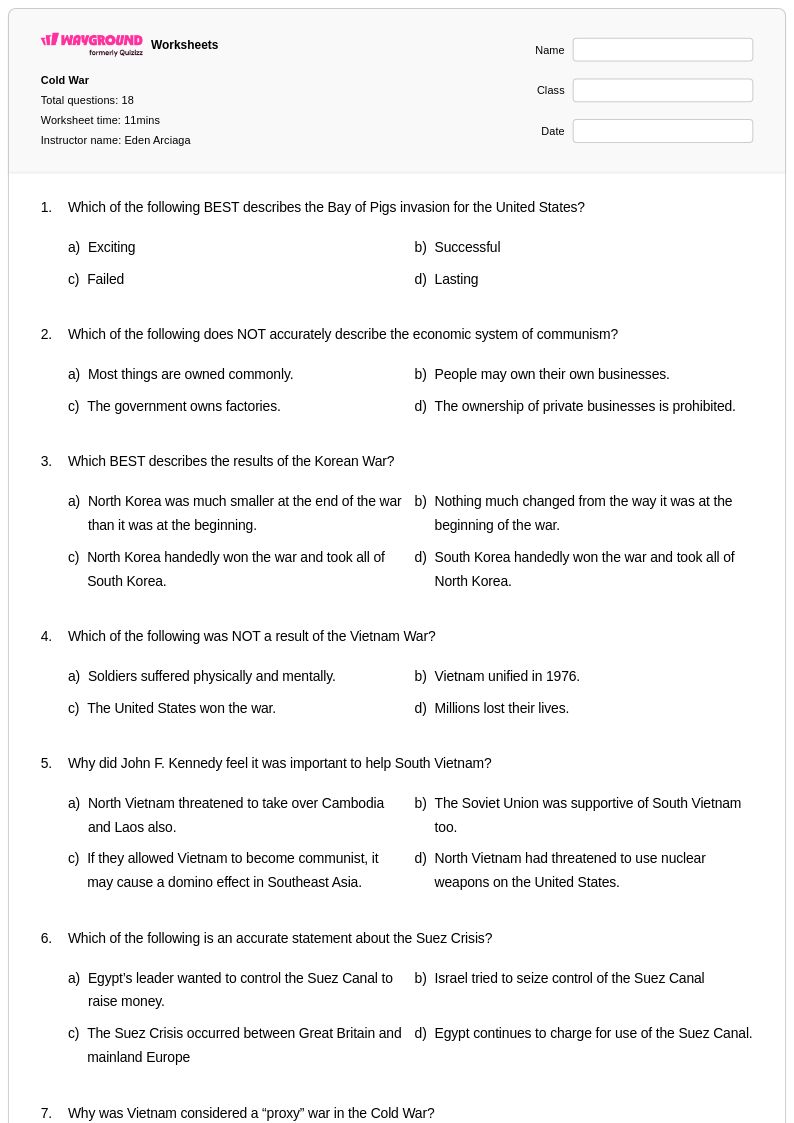
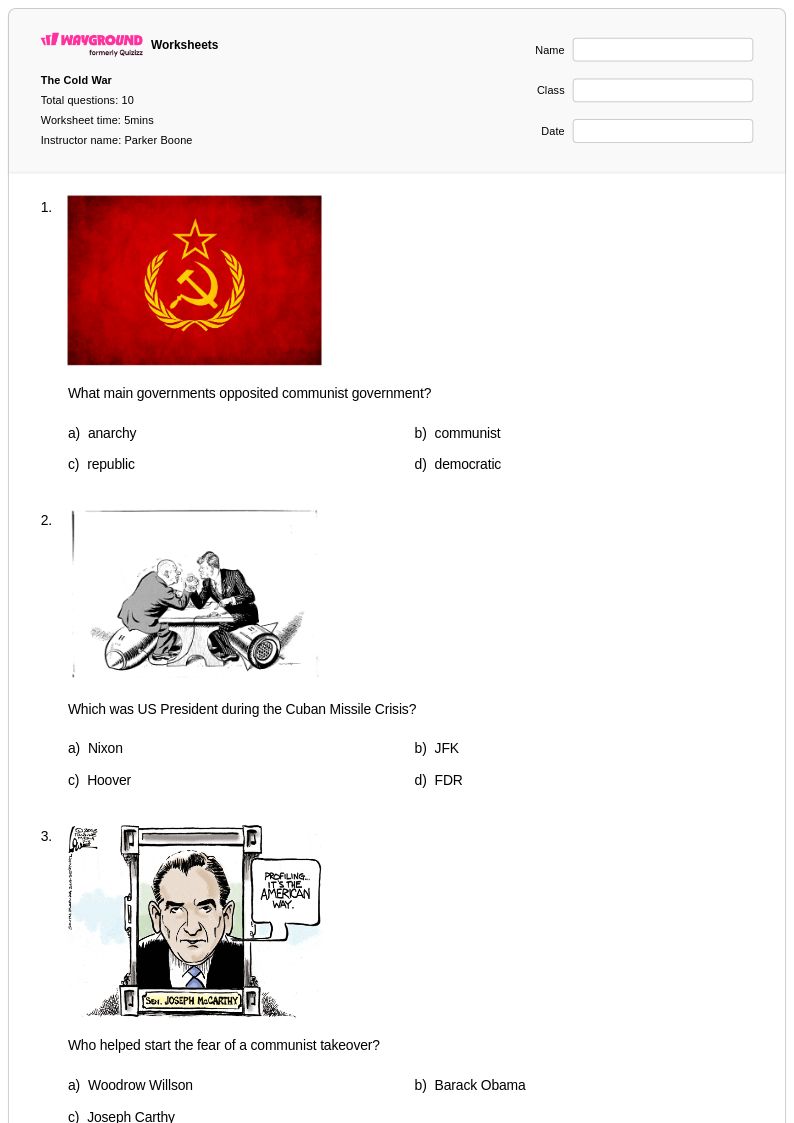
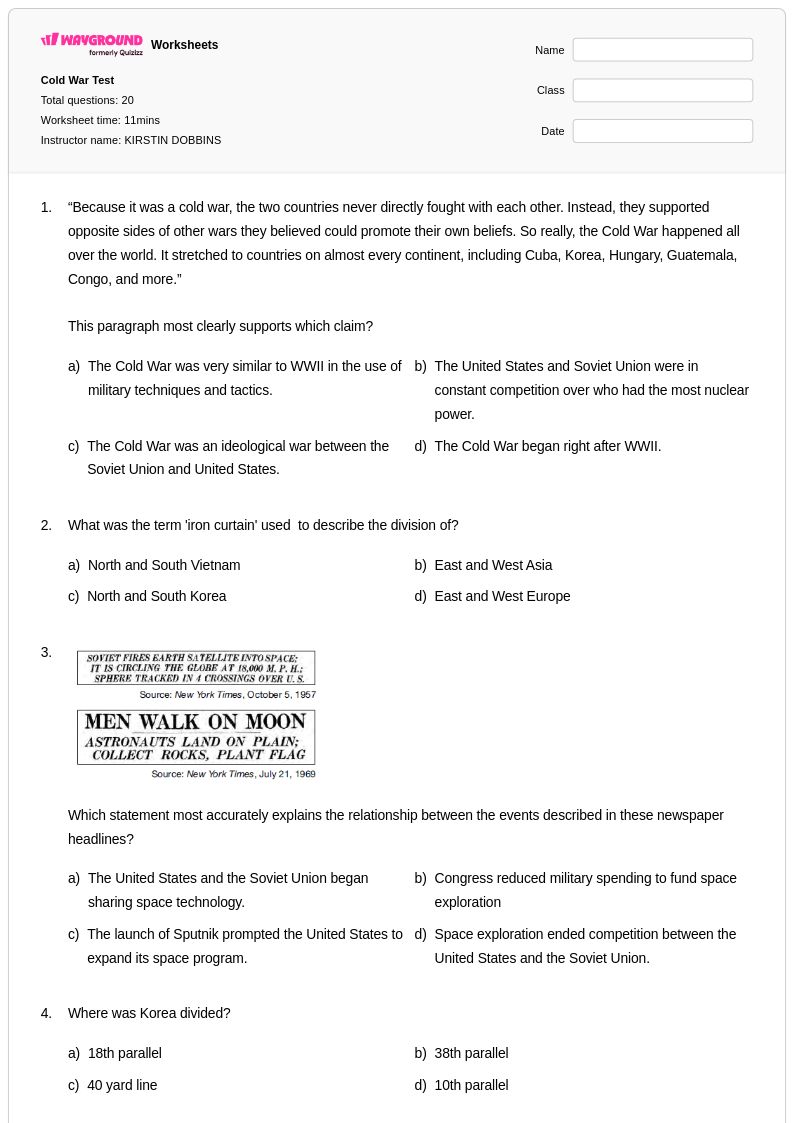
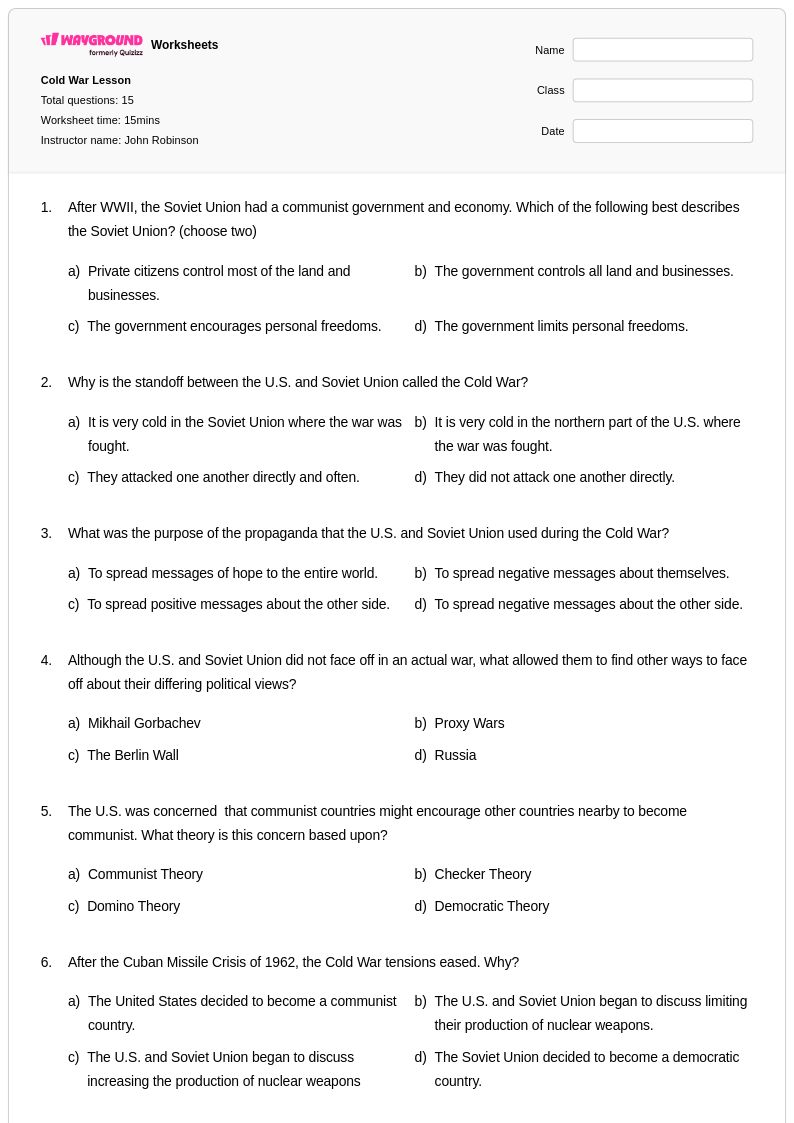
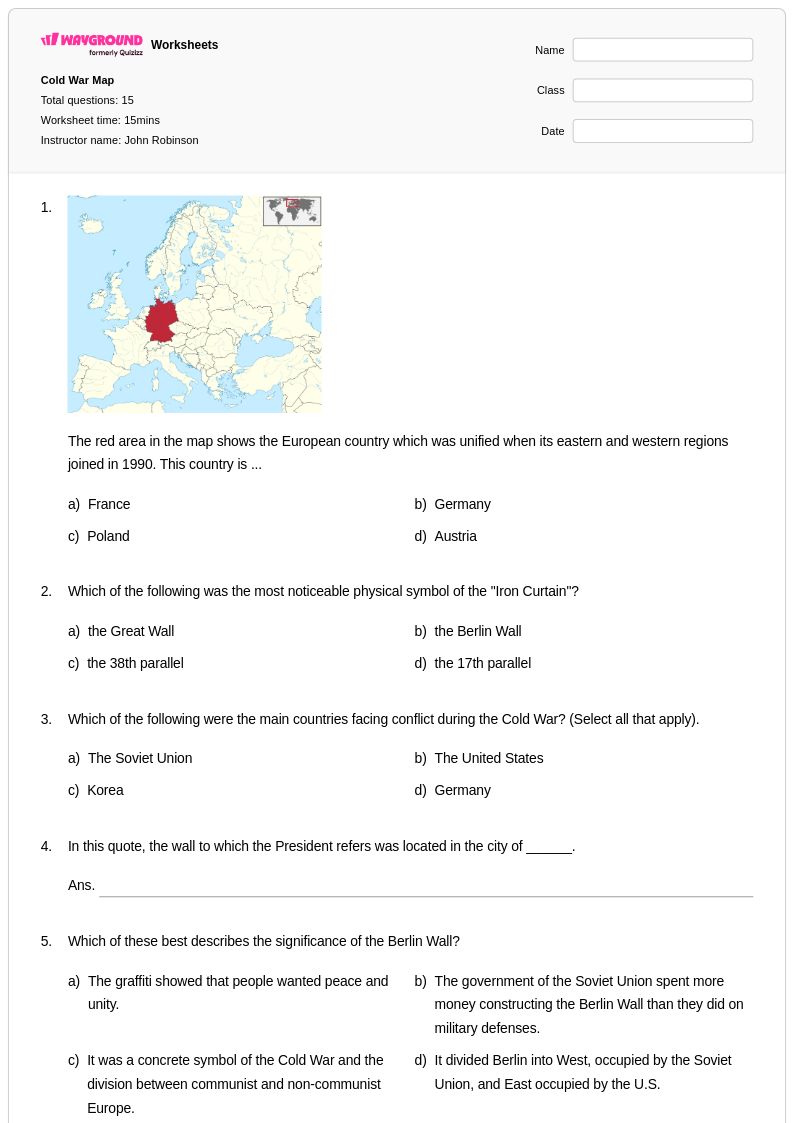
Cold War worksheets for Class 6 students available through Wayground (formerly Quizizz) provide comprehensive coverage of this pivotal period in 20th-century history, helping young learners understand the complex tensions between the United States and Soviet Union from 1945 to 1991. These educational resources strengthen critical thinking skills as students analyze primary sources, compare competing ideologies, and examine key events such as the Berlin Blockade, Cuban Missile Crisis, and the space race. The worksheet collections include practice problems that challenge students to interpret political cartoons, timeline activities that sequence major Cold War developments, and map exercises that illustrate the geographic divisions of the era. Each printable resource comes with a detailed answer key, allowing for efficient grading and immediate feedback, while the free pdf format ensures accessibility for both classroom instruction and independent study.
Wayground (formerly Quizizz) empowers educators with an extensive library of millions of teacher-created Cold War resources specifically designed for Class 6 social studies instruction. The platform's robust search and filtering capabilities enable teachers to quickly locate materials aligned with state and national history standards, while differentiation tools allow for seamless adaptation of content to meet diverse learning needs within the classroom. Teachers can customize worksheets to focus on specific Cold War themes, modify difficulty levels for remediation or enrichment purposes, and access materials in both printable and digital formats including downloadable pdfs for maximum flexibility. This comprehensive approach to resource management streamlines lesson planning while providing targeted skill practice opportunities that help students develop essential historical analysis abilities and deepen their understanding of how Cold War dynamics shaped modern global politics.
FAQs
How do I teach the Cold War to middle or high school students?
Teaching the Cold War effectively means helping students understand that it was an ideological and geopolitical conflict, not just a military one. Start with the post-WWII power vacuum and the competing visions of democracy and communism before moving into specific events like the Berlin Wall, Korean War, and Cuban Missile Crisis. Using primary sources, political cartoons, and propaganda analysis helps students see how fear and ideology shaped policy decisions on both sides. Connecting Cold War tensions to present-day geopolitics gives students a reason to care about the material.
What exercises help students practice Cold War history?
Cold War practice exercises are most effective when they require students to do more than recall facts. Cause-and-effect mapping for events like the arms race or proxy wars, document analysis of presidential doctrines, and compare-and-contrast tasks between U.S. and Soviet policies all build historical reasoning skills. Multiple-choice and short-answer questions that ask students to evaluate outcomes, rather than just identify events, push students toward deeper engagement with the material.
What mistakes do students commonly make when learning about the Cold War?
One of the most frequent misconceptions is that the Cold War was a single, continuous conflict rather than a series of shifting crises, alliances, and phases across nearly five decades. Students often conflate the Korean War, Vietnam War, and other proxy conflicts as being the same type of engagement, missing the distinct political contexts of each. Another common error is treating the Cold War as strictly a U.S.-Soviet bilateral issue, when in fact it had profound effects on Latin America, Africa, Southeast Asia, and the Middle East. Teachers should explicitly address these gaps to prevent surface-level understanding.
What topics should a Cold War worksheet cover?
A well-designed Cold War worksheet should address the ideological divide between capitalism and communism, key events such as the nuclear arms race, the Berlin Wall, McCarthyism, the Korean and Vietnam Wars, and the space race, as well as the broader concept of superpower rivalry and its global consequences. Students should also encounter vocabulary terms like détente, containment, mutually assured destruction, and the Truman Doctrine. Worksheets that incorporate primary source excerpts or political cartoons alongside structured questions give students more to work with than fact recall alone.
How can I use Cold War worksheets in my classroom?
Cold War worksheets on Wayground are available as printable PDFs for traditional classroom use and in digital formats for technology-integrated or hybrid learning environments, including the option to host them as a quiz directly on Wayground. Teachers can use them as standalone lesson activities, bell ringers, end-of-unit reviews, or formative assessments. For students who need additional support, Wayground's accommodation tools allow teachers to enable read-aloud functionality, extended time, or reduced answer choices on an individual basis, without disrupting the experience for the rest of the class.
How do I differentiate Cold War instruction for students at different skill levels?
For students who are still building foundational knowledge, focus on key events and vocabulary before introducing analytical tasks like document interpretation or cause-and-effect analysis. Advanced students benefit from comparing Cold War foreign policy decisions, evaluating historical revisionism, or analyzing how different nations experienced superpower interference. On Wayground, teachers can apply individual accommodations such as extended time, read-aloud support, or reduced answer choices to specific students, allowing the same core worksheet to serve diverse learners without requiring separate materials.