Free Printable The Roman Republic Worksheets for Class 6
Explore Wayground's comprehensive Class 6 Roman Republic worksheets and printables that help students master ancient government systems, key historical figures, and political structures through engaging practice problems with complete answer keys.
Explore printable The Roman Republic worksheets for Class 6
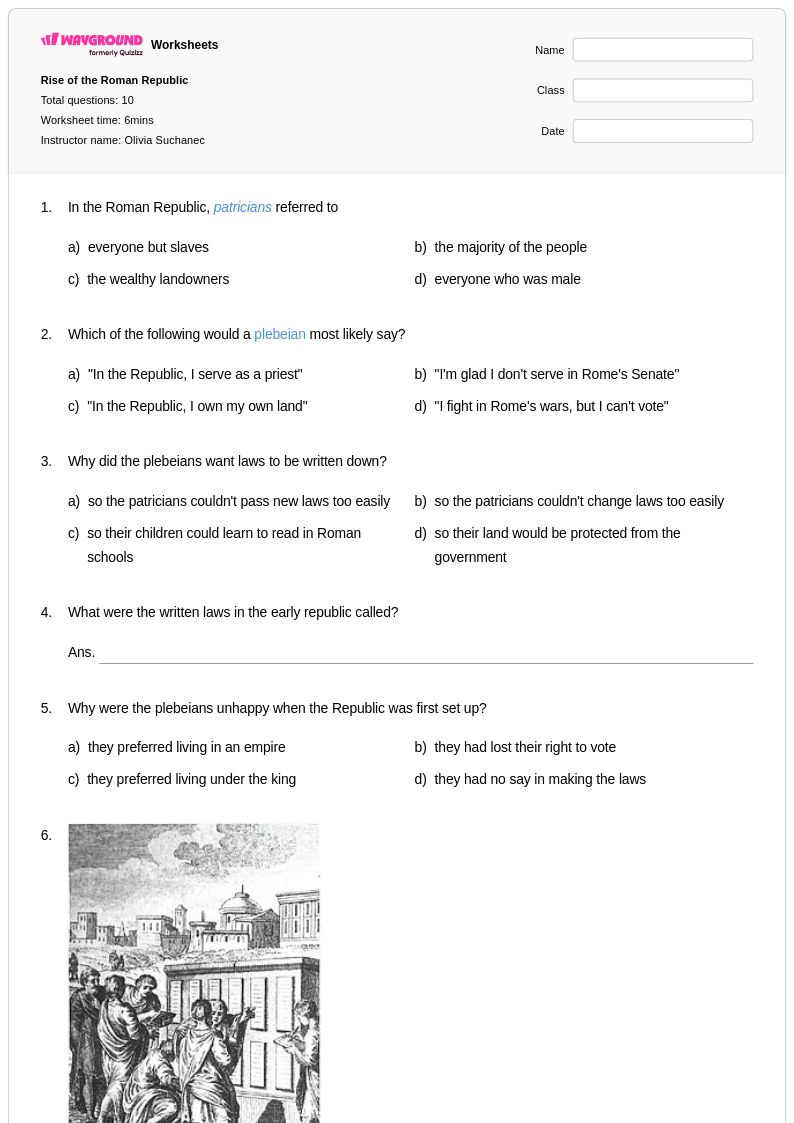
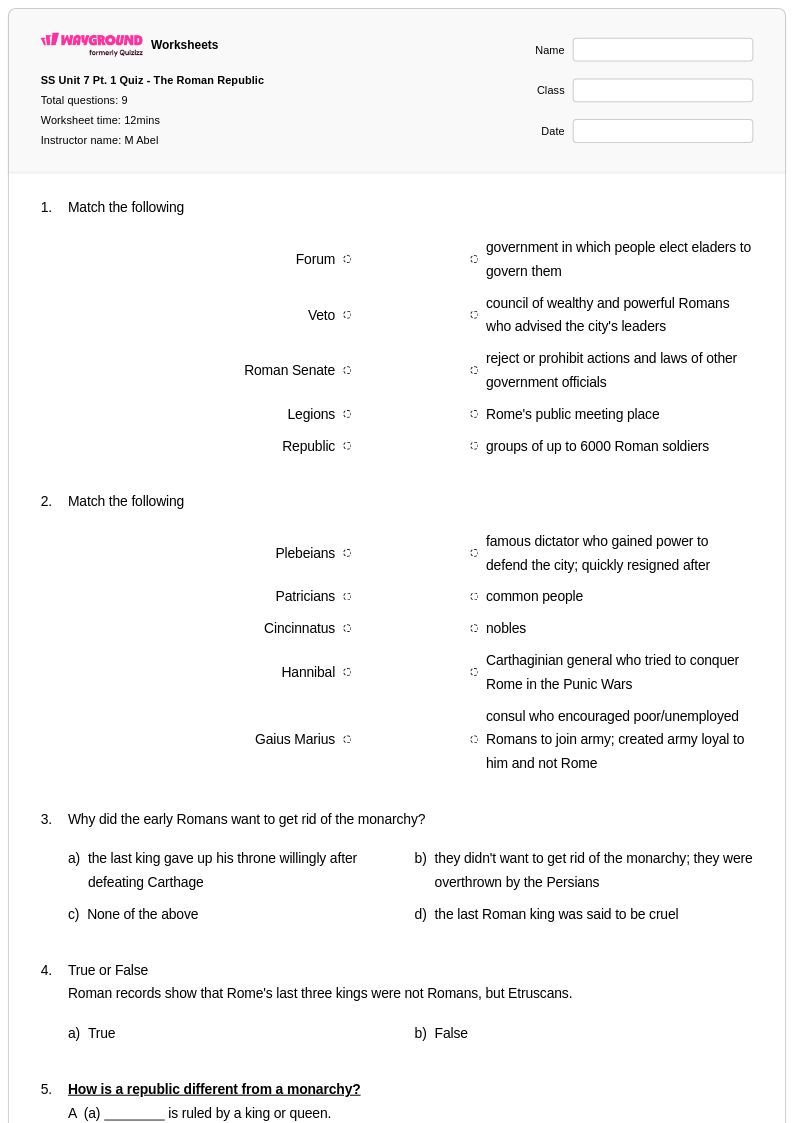
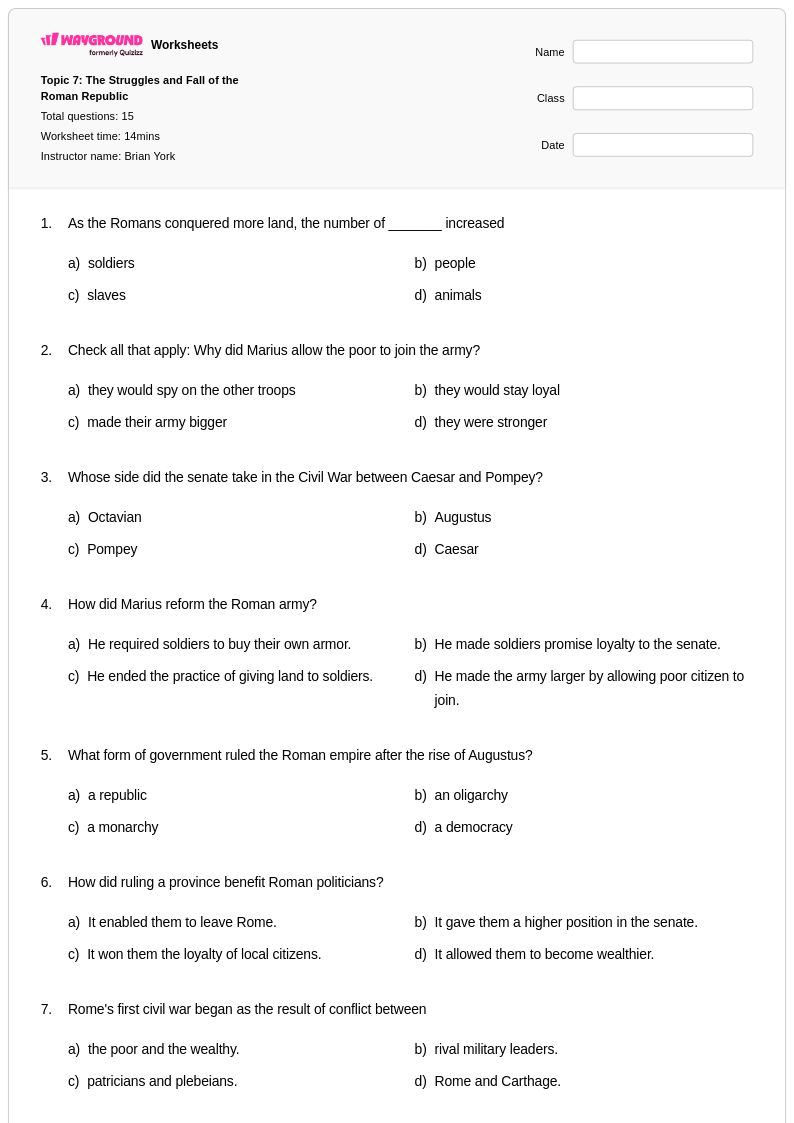
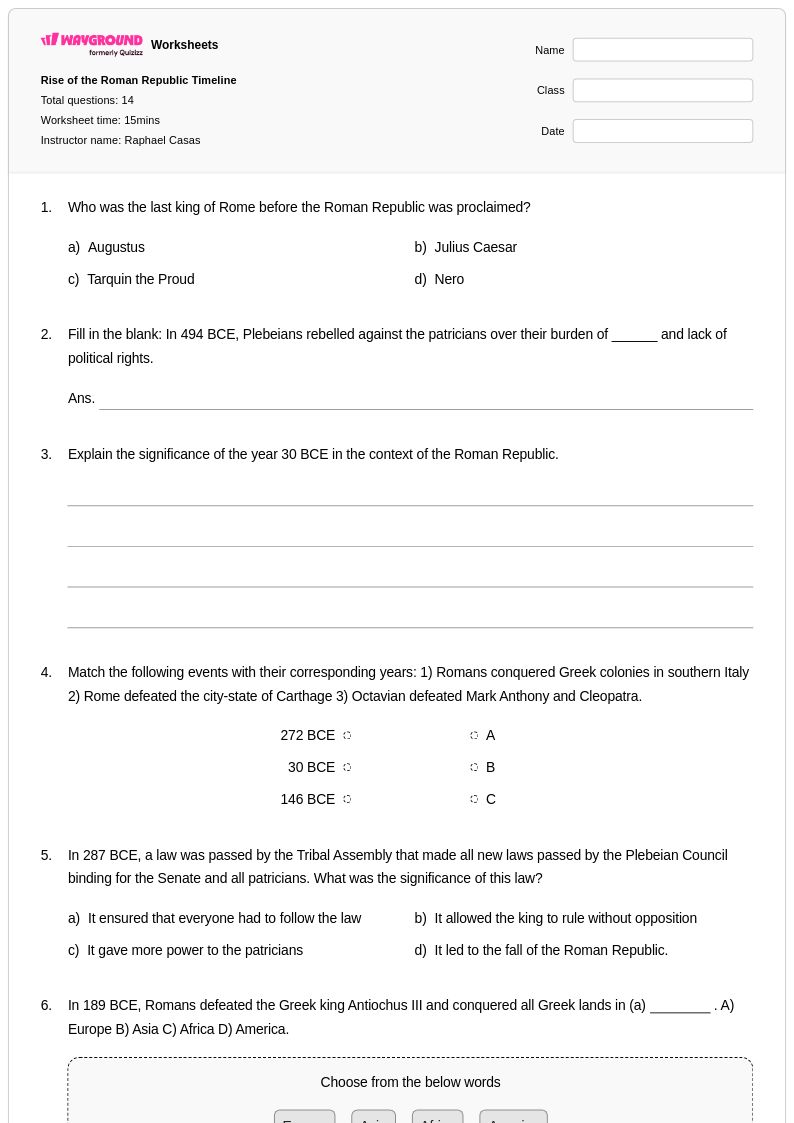
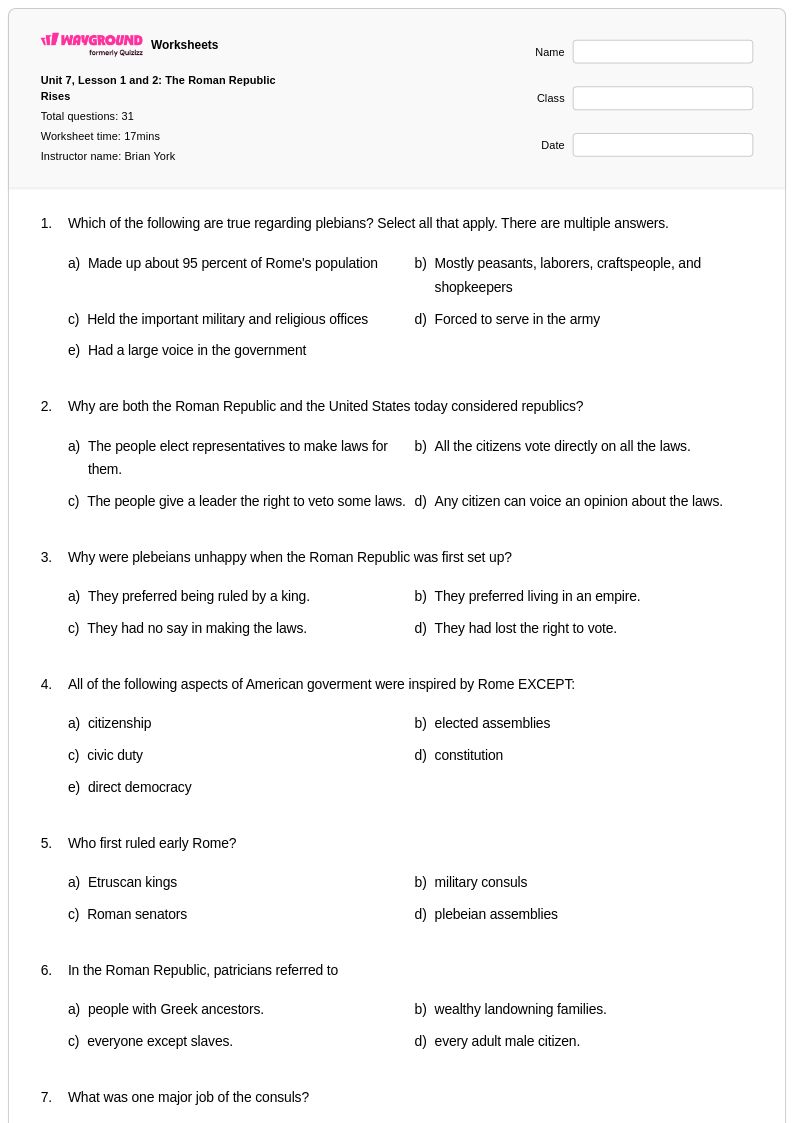
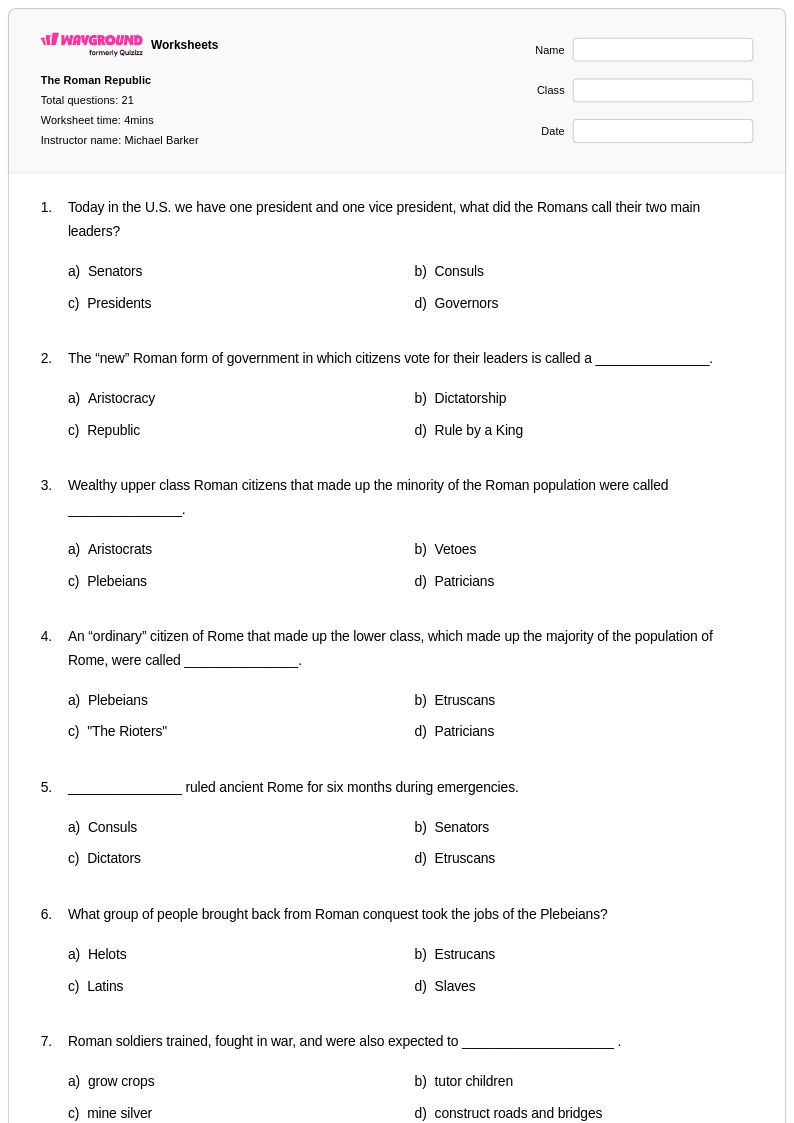
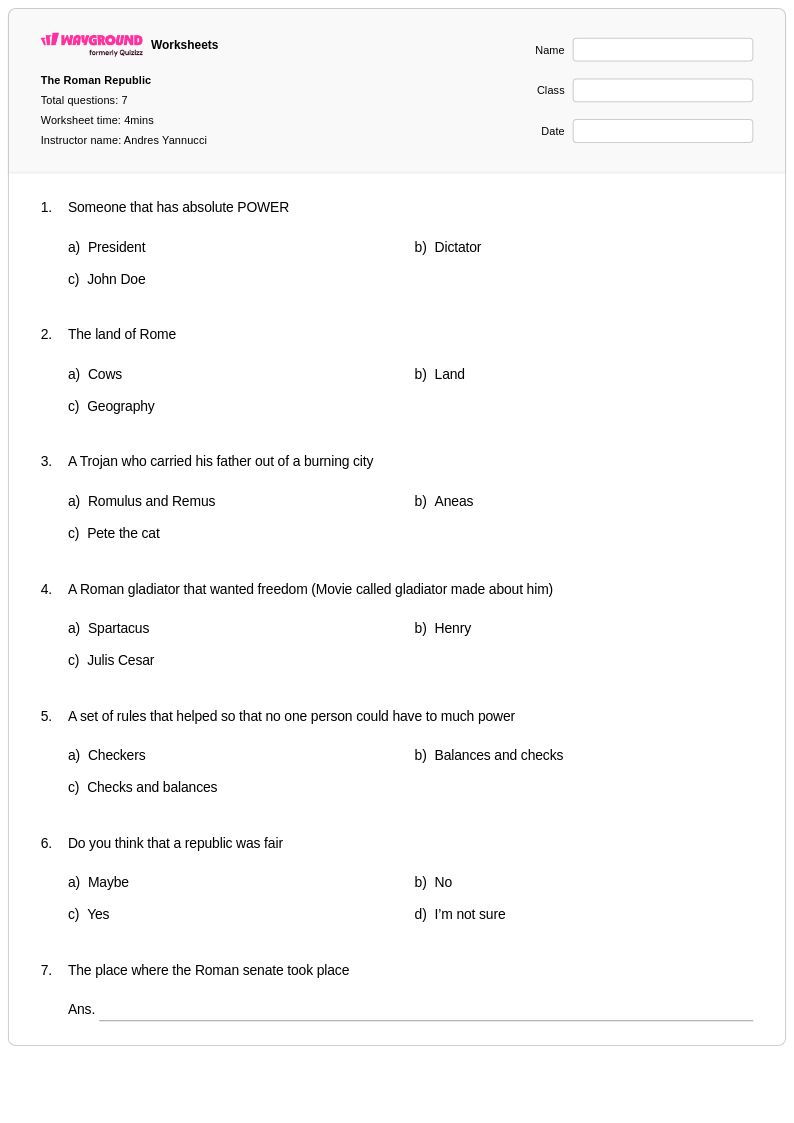
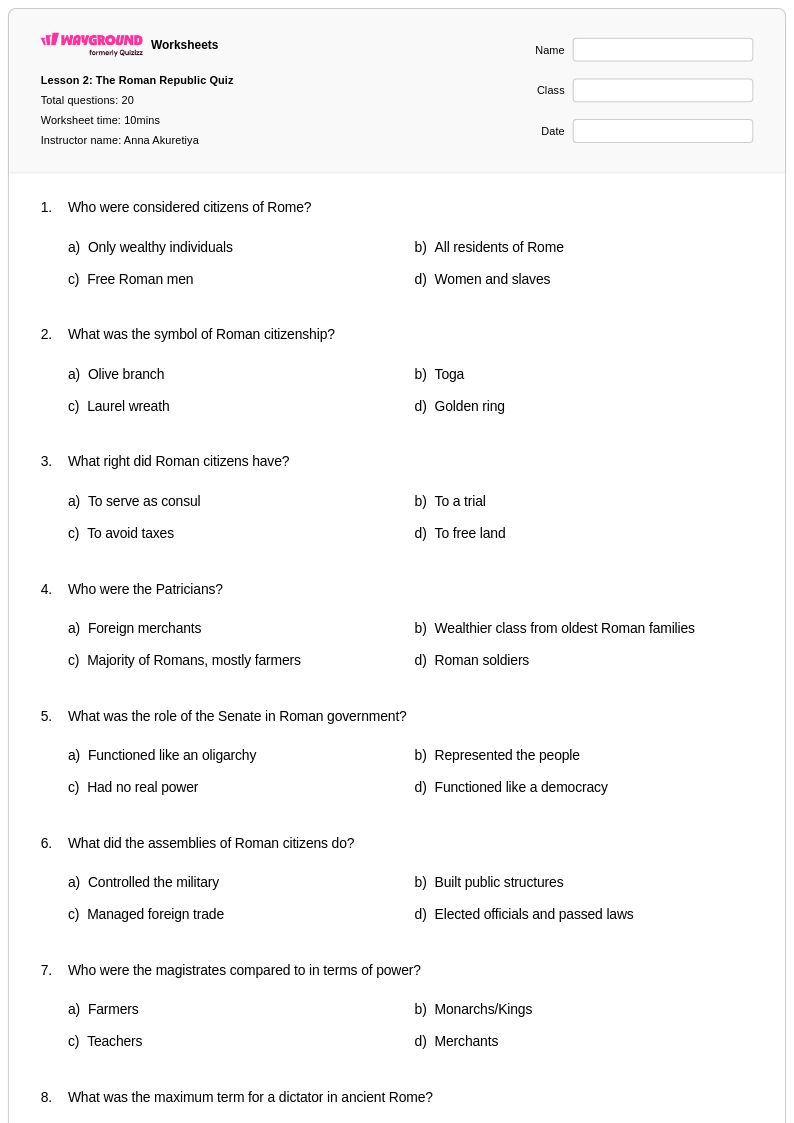
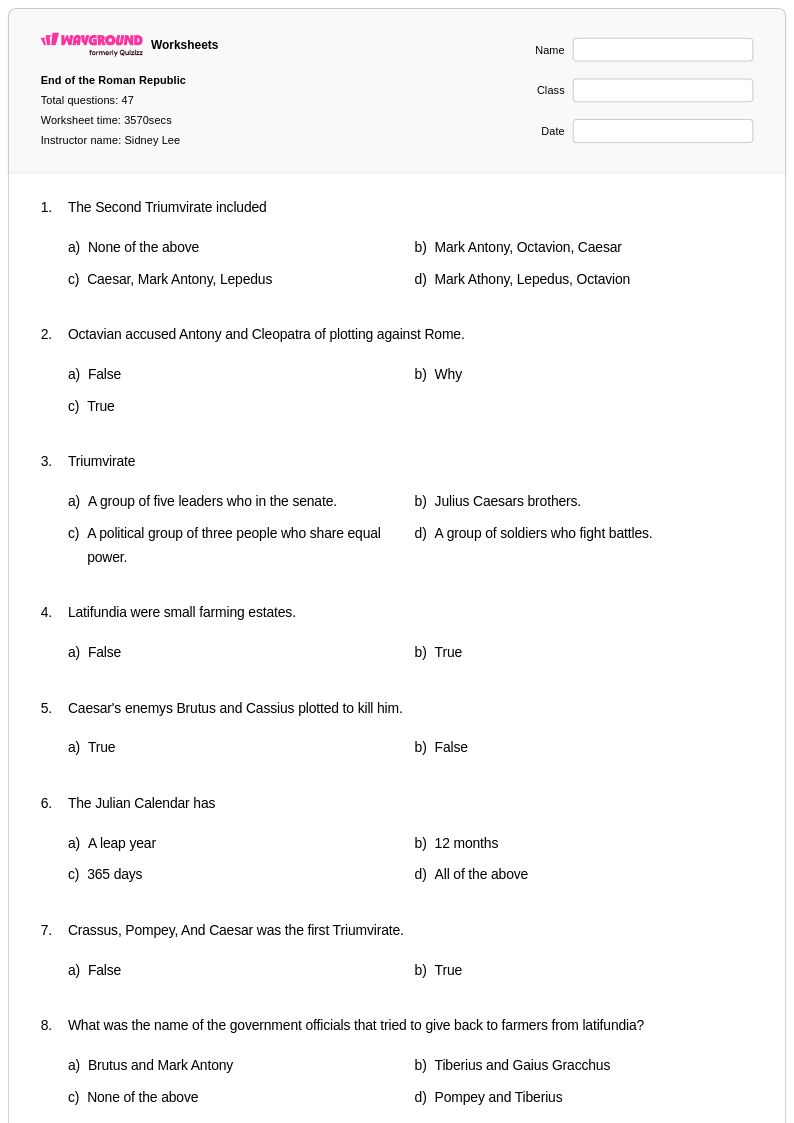
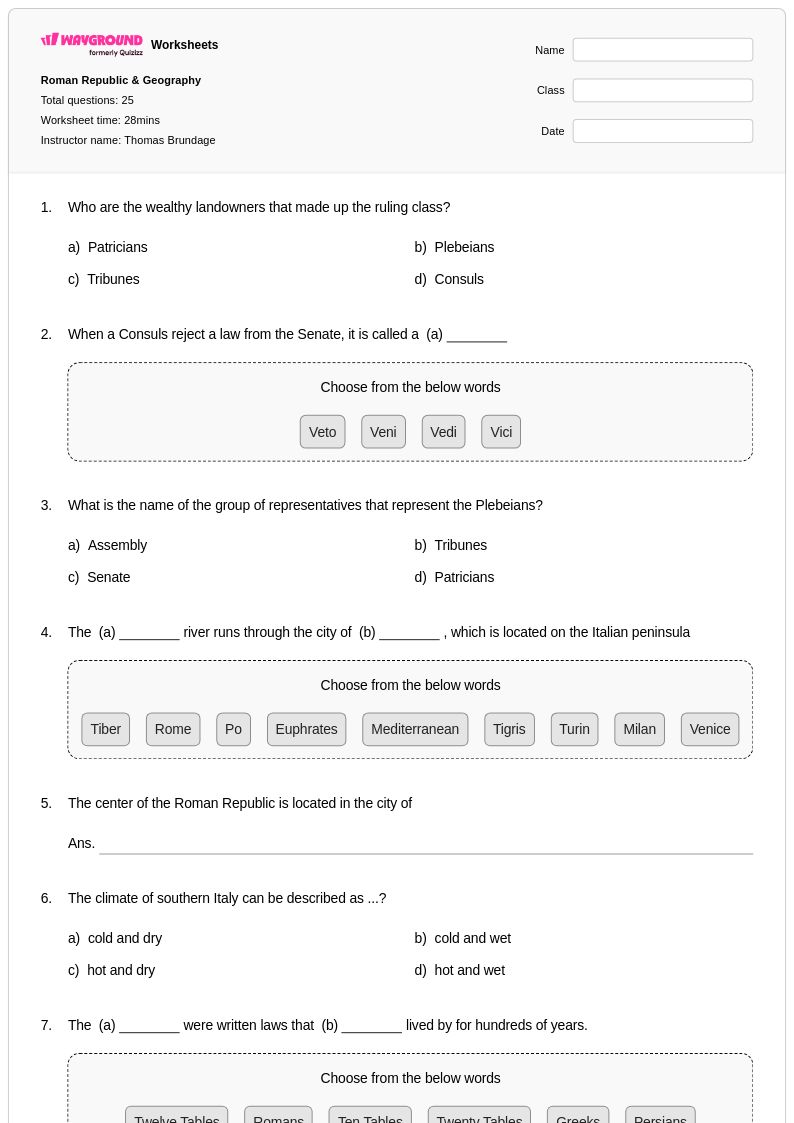
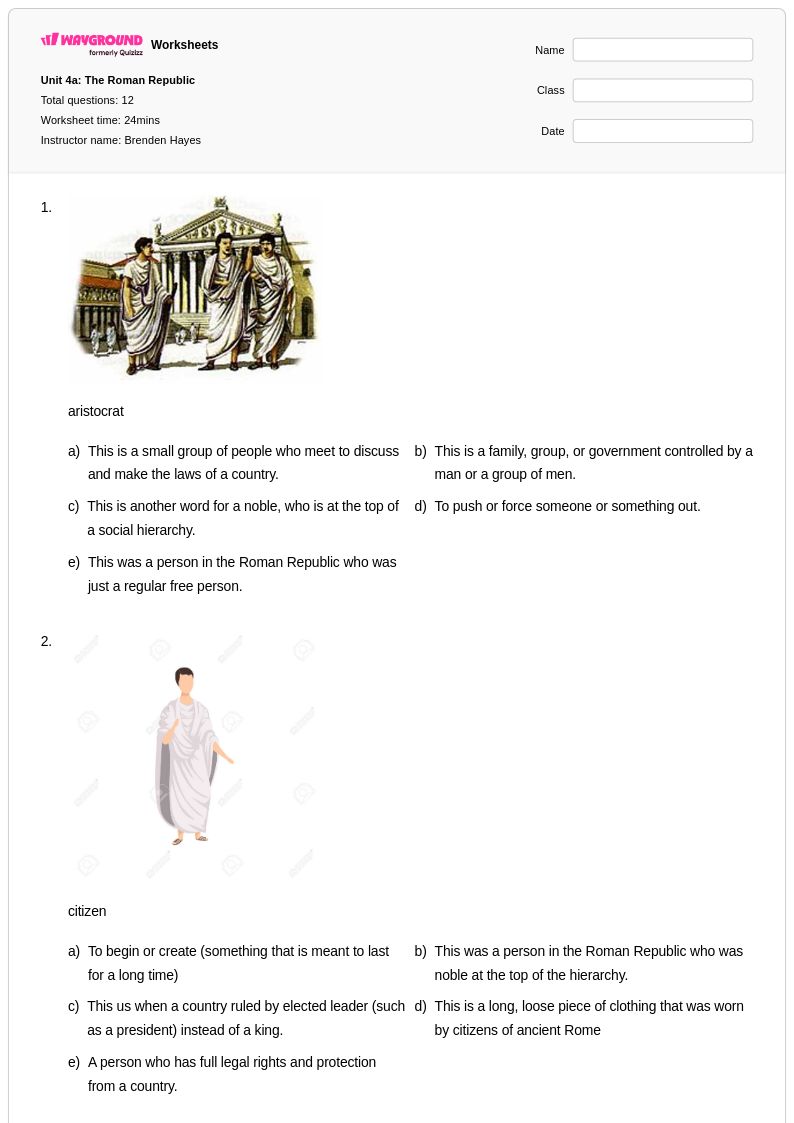
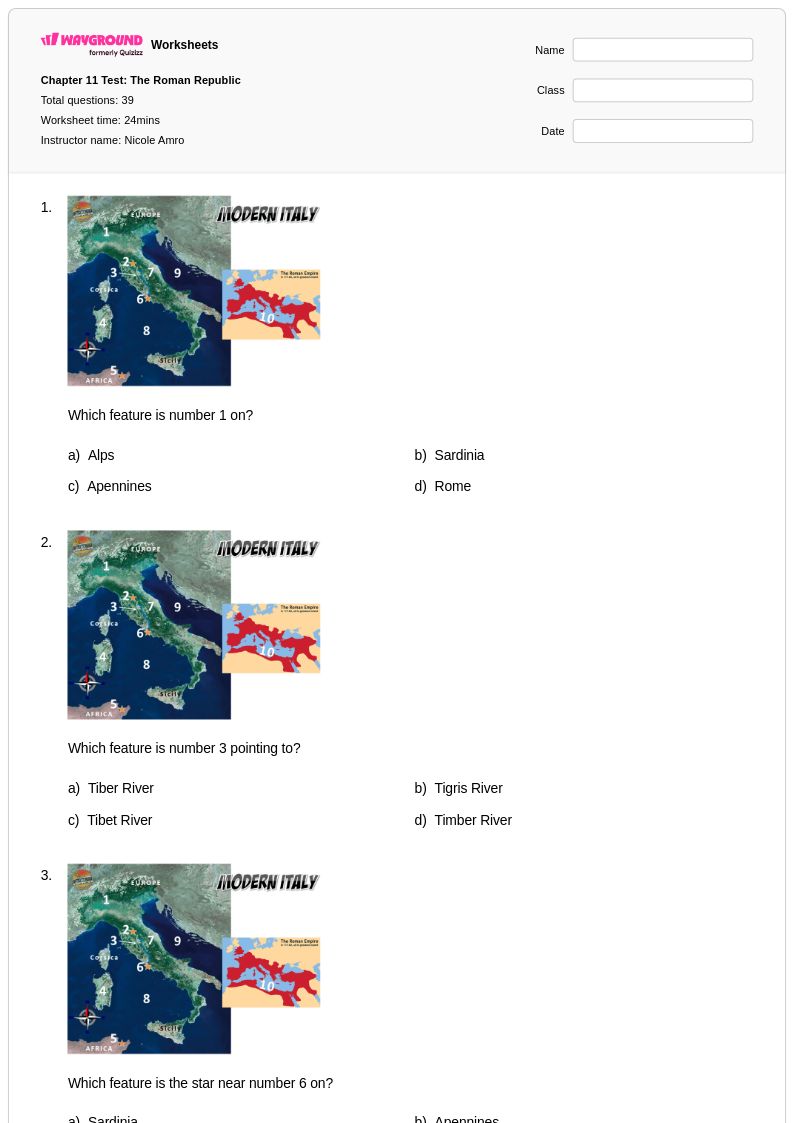
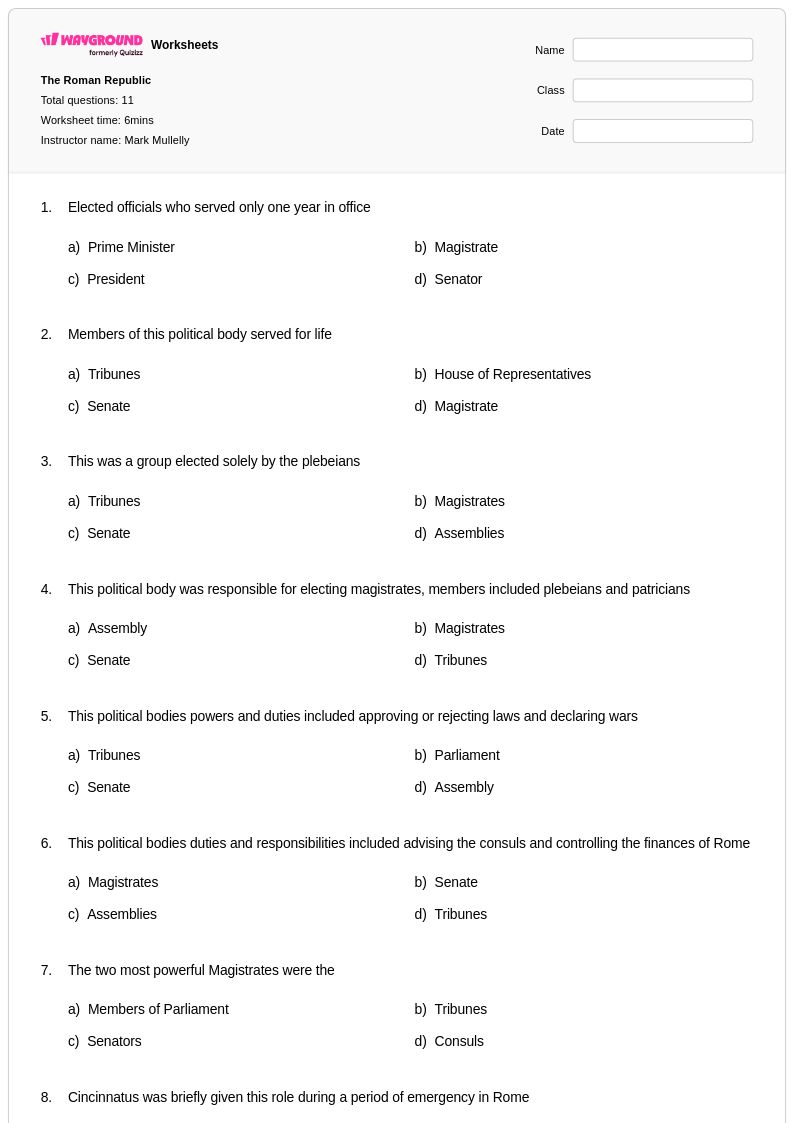
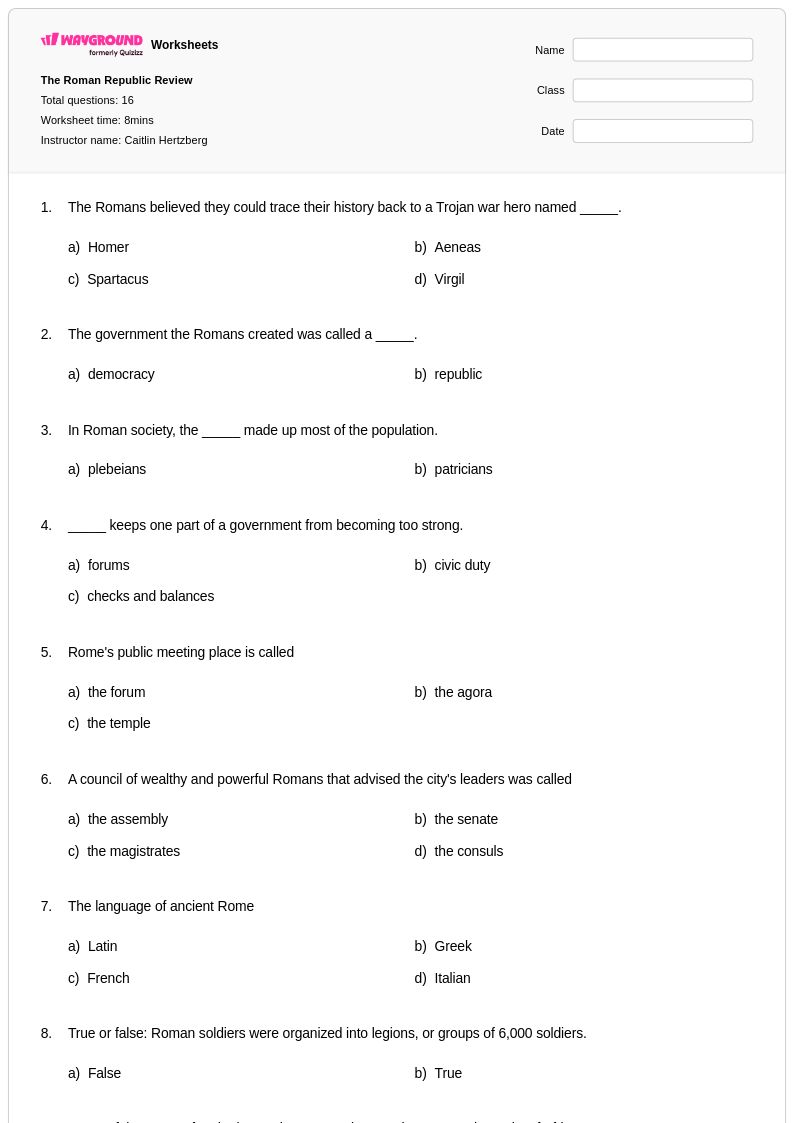
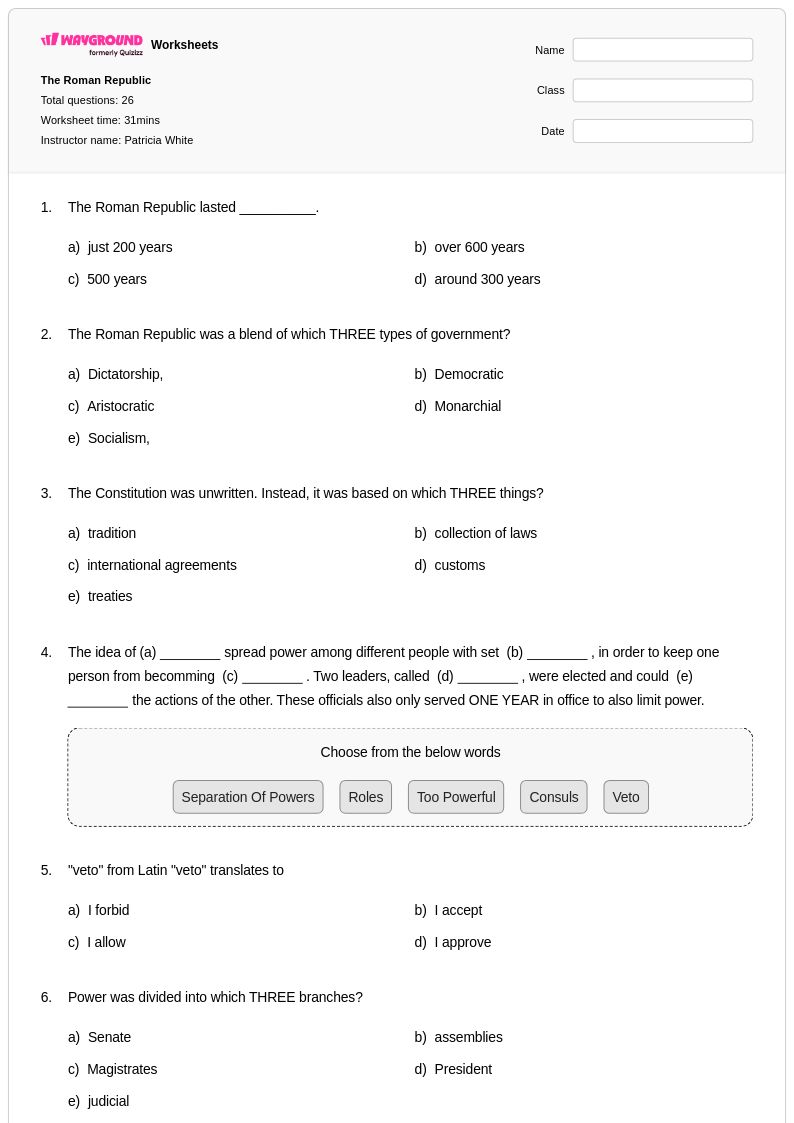
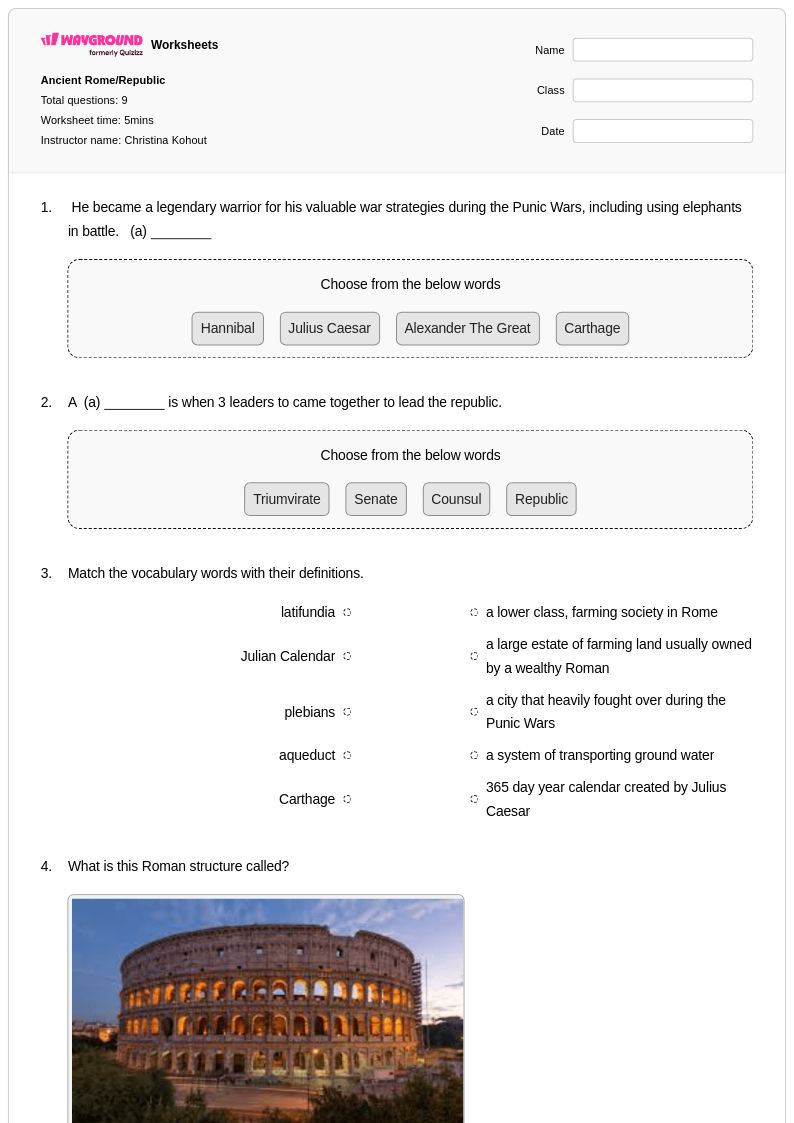
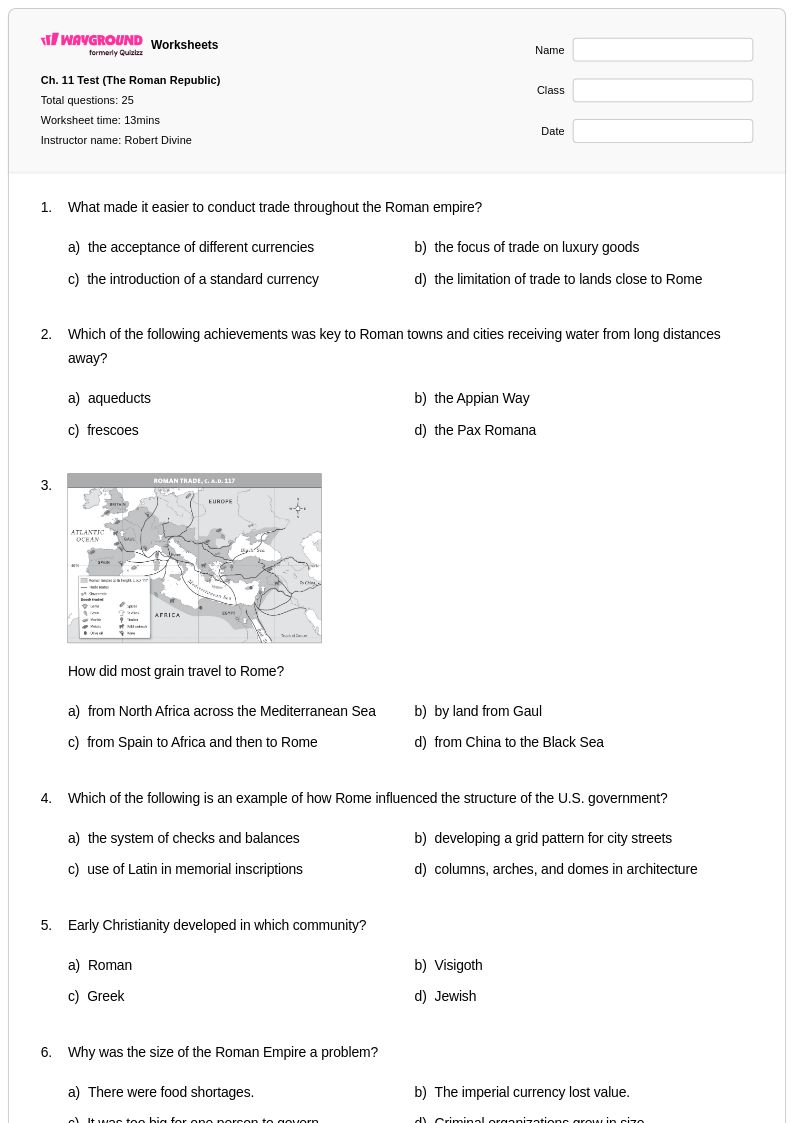
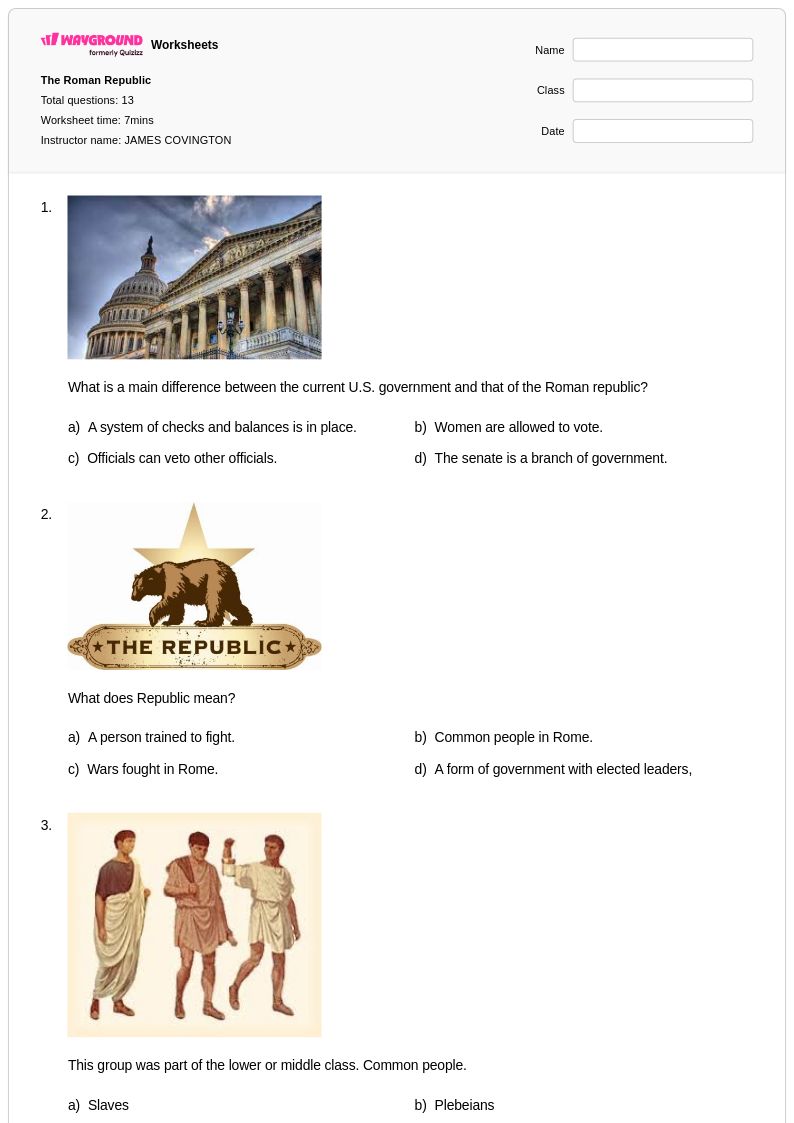
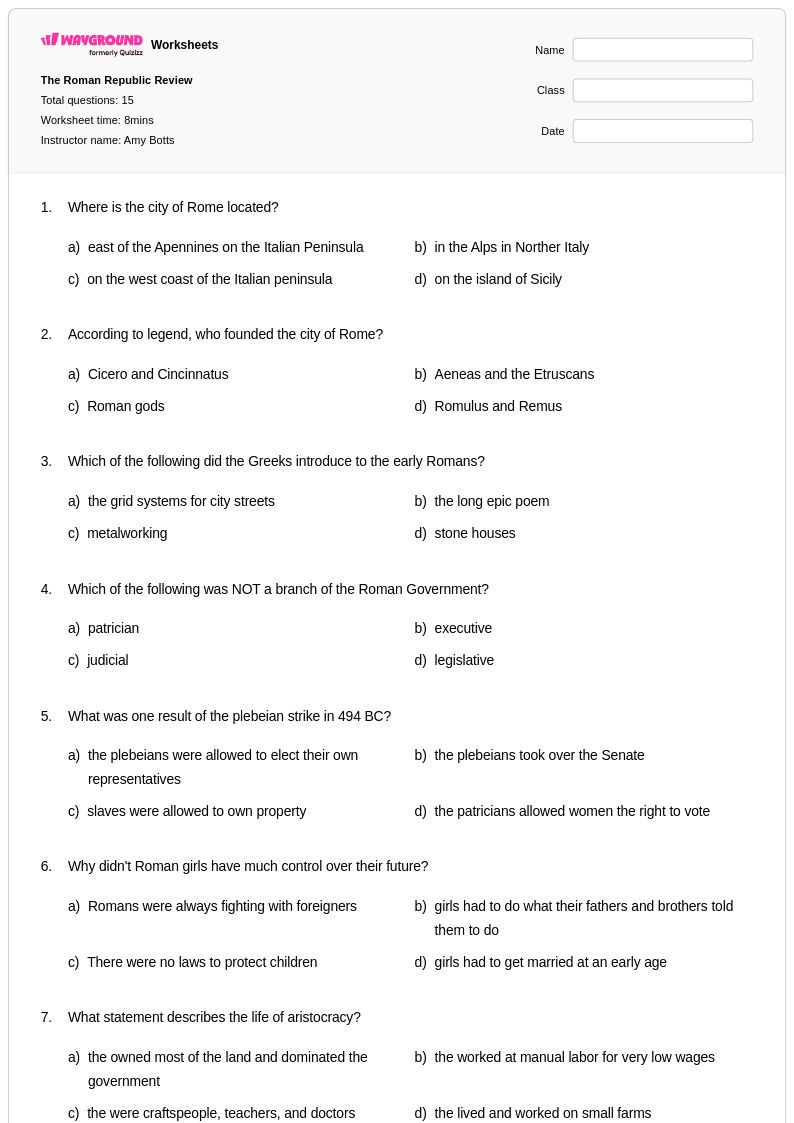
The Roman Republic worksheets available through Wayground (formerly Quizizz) provide Class 6 students with comprehensive resources to explore one of history's most influential governmental systems. These carefully crafted materials guide students through the political structure, social hierarchy, and key events that shaped Roman society from 509 to 27 BCE. Students engage with practice problems that examine the roles of consuls, senators, and citizens, while analyzing primary source documents and maps that illustrate the Republic's expansion across the Mediterranean. Each worksheet includes detailed answer keys that support both independent study and classroom instruction, with free printables covering essential topics such as the Punic Wars, the rise of Julius Caesar, and the transition from monarchy to republican government. These resources strengthen critical thinking skills, historical analysis abilities, and understanding of cause-and-effect relationships in ancient civilizations.
Wayground (formerly Quizizz) empowers educators with access to millions of teacher-created resources specifically designed for Roman Republic instruction at the Class 6 level. The platform's robust search and filtering capabilities enable teachers to quickly locate materials aligned with state and national social studies standards, ensuring content meets specific curricular requirements. Differentiation tools allow instructors to modify worksheets for diverse learning needs, while flexible customization options support both remediation for struggling students and enrichment activities for advanced learners. Available in both printable and digital formats including downloadable PDF versions, these resources seamlessly integrate into traditional classroom settings or remote learning environments. Teachers can efficiently plan comprehensive units on ancient Rome, provide targeted skill practice for historical thinking concepts, and assess student understanding through varied question formats that promote deep engagement with this foundational period in world history.
FAQs
How do I teach the Roman Republic to middle or high school students?
Teaching the Roman Republic effectively means anchoring instruction in its governmental structure before expanding into military history and social conflict. Start with the roles of consuls, the Senate, and tribunes to give students a concrete framework for understanding how power was divided and checked. From there, connect Rome's territorial expansion and internal class struggles to the eventual collapse of the Republic, helping students trace cause-and-effect relationships across centuries. Using structured worksheets that sequence these topics helps students build cumulative understanding rather than treating each event in isolation.
What topics should Roman Republic worksheets cover?
Strong Roman Republic worksheets should cover the Republic's founding in 509 BCE, the structure of Roman government including the roles of consuls, senators, and tribunes, the Conflict of the Orders between patricians and plebeians, Rome's military expansion across the Mediterranean, and the political crises that led to the transition from Republic to Empire by 27 BCE. Practice problems that ask students to analyze cause-and-effect relationships and compare Roman governmental structures to modern democracies deepen comprehension beyond surface-level recall.
What common mistakes do students make when learning about the Roman Republic?
Students frequently confuse the Roman Republic with the Roman Empire, failing to recognize that they represent distinct periods and governmental systems separated by a gradual political transformation rather than a sudden event. Another common error is treating the Senate as the sole governing body, overlooking the executive power of the consuls and the representative role of the tribunes. Students also tend to underestimate the role of social conflict, particularly the Conflict of the Orders, in shaping Roman law and political reform. Targeted practice that explicitly distinguishes these elements helps correct these misconceptions before they solidify.
How can I use Roman Republic worksheets to support different learners in my classroom?
Roman Republic worksheets can be differentiated by adjusting the complexity of questions, the amount of scaffolding provided, and the reading level of source materials. On Wayground, teachers can apply individual accommodations such as read aloud support, extended time, and reduced answer choices to specific students, while the rest of the class works with default settings. These accommodations are saved per student and carry over to future sessions, making it straightforward to support English language learners, students with IEPs, or advanced learners within the same assignment without disrupting the class workflow.
How do I use Wayground's Roman Republic worksheets in my classroom?
Wayground's Roman Republic worksheets are available as printable PDFs for traditional classroom use and in digital formats for technology-integrated or hybrid learning environments. Teachers can also host the worksheets as a live or self-paced quiz directly on the Wayground platform, allowing them to track student responses in real time. The digital format makes it easy to assign materials for homework, test prep, or in-class review, while the printable version suits paper-based instruction or assessments. Both formats include complete answer keys to streamline grading and feedback.
How does studying the Roman Republic help students understand modern government?
The Roman Republic introduced foundational governmental concepts including separation of powers, representative assemblies, and written law codes that directly influenced the framers of the U.S. Constitution and other modern democratic systems. By analyzing how Roman consuls shared executive authority and how the Senate functioned as a deliberative body, students gain concrete historical grounding for understanding why checks and balances exist in contemporary governments. This connection makes the Roman Republic one of the most content-rich topics for teaching civic literacy alongside ancient history.