Free Printable Origins of Judaism Worksheets for Class 6
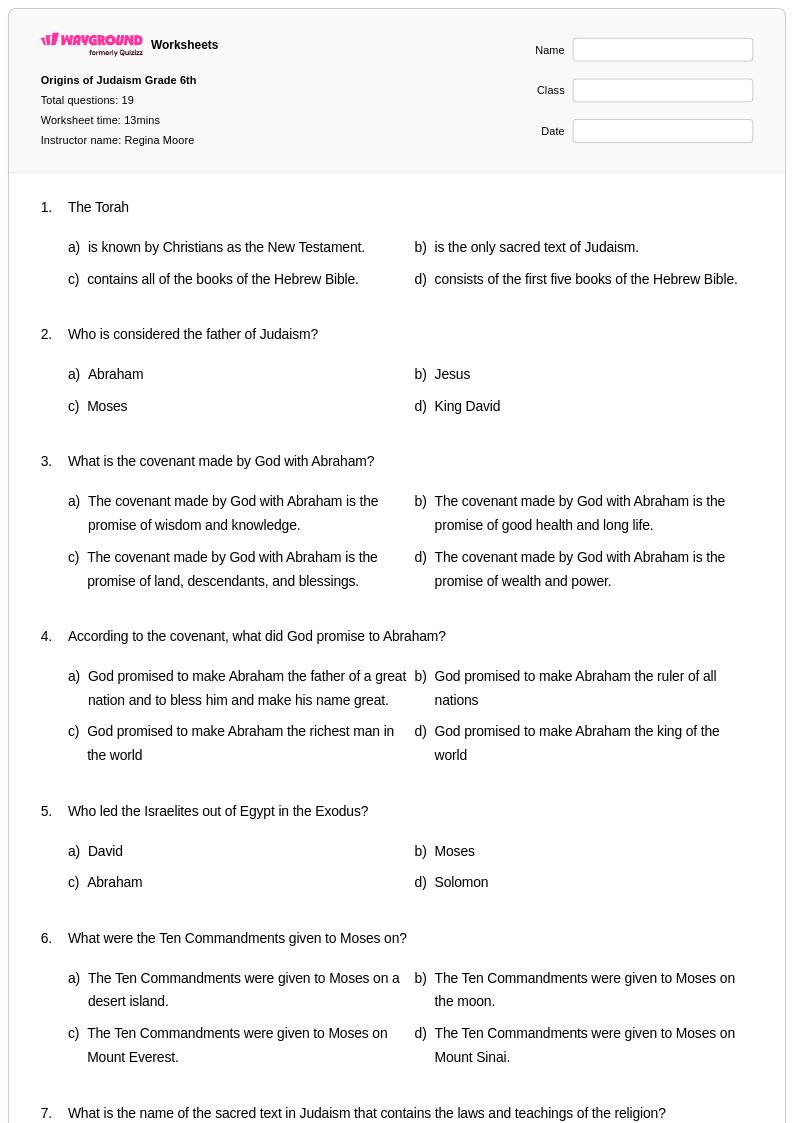
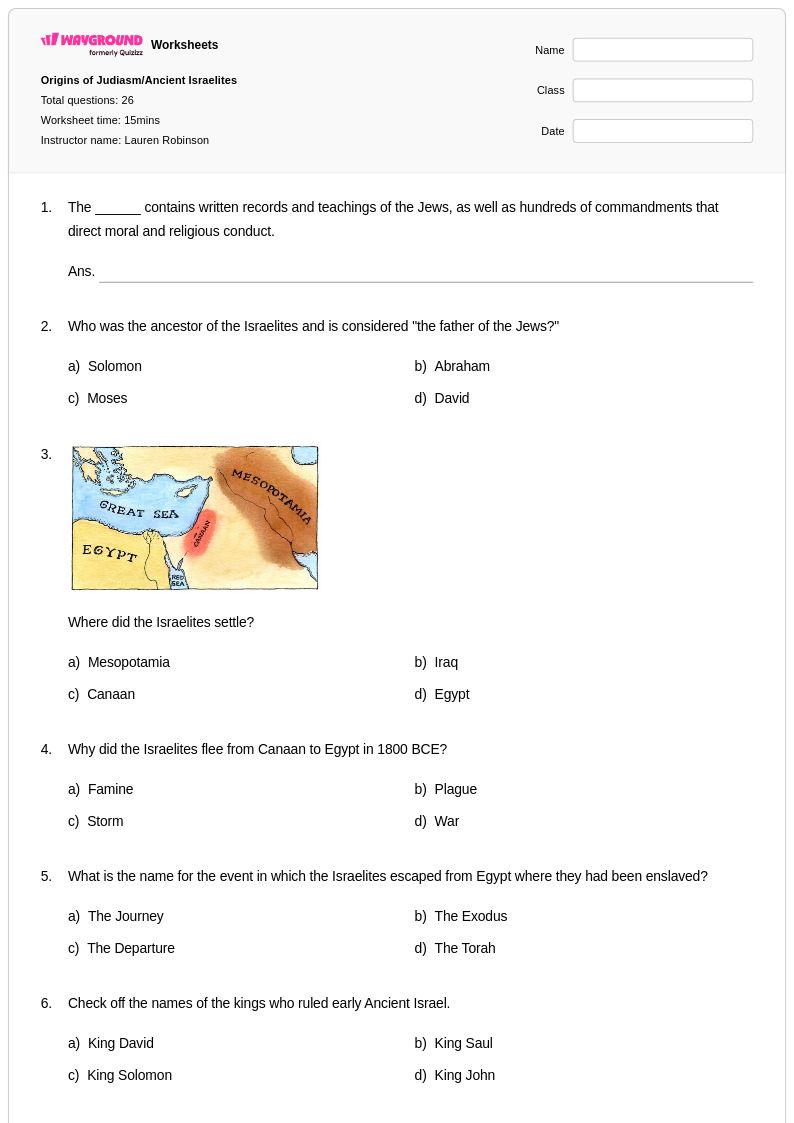
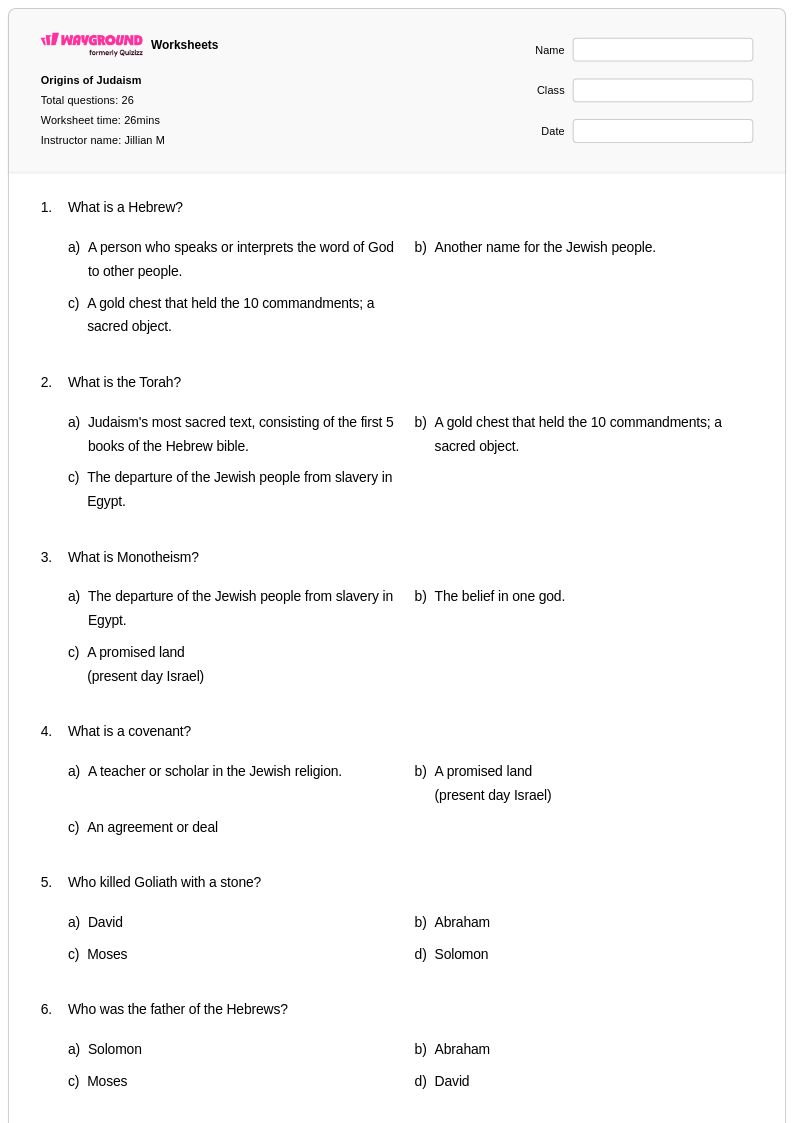
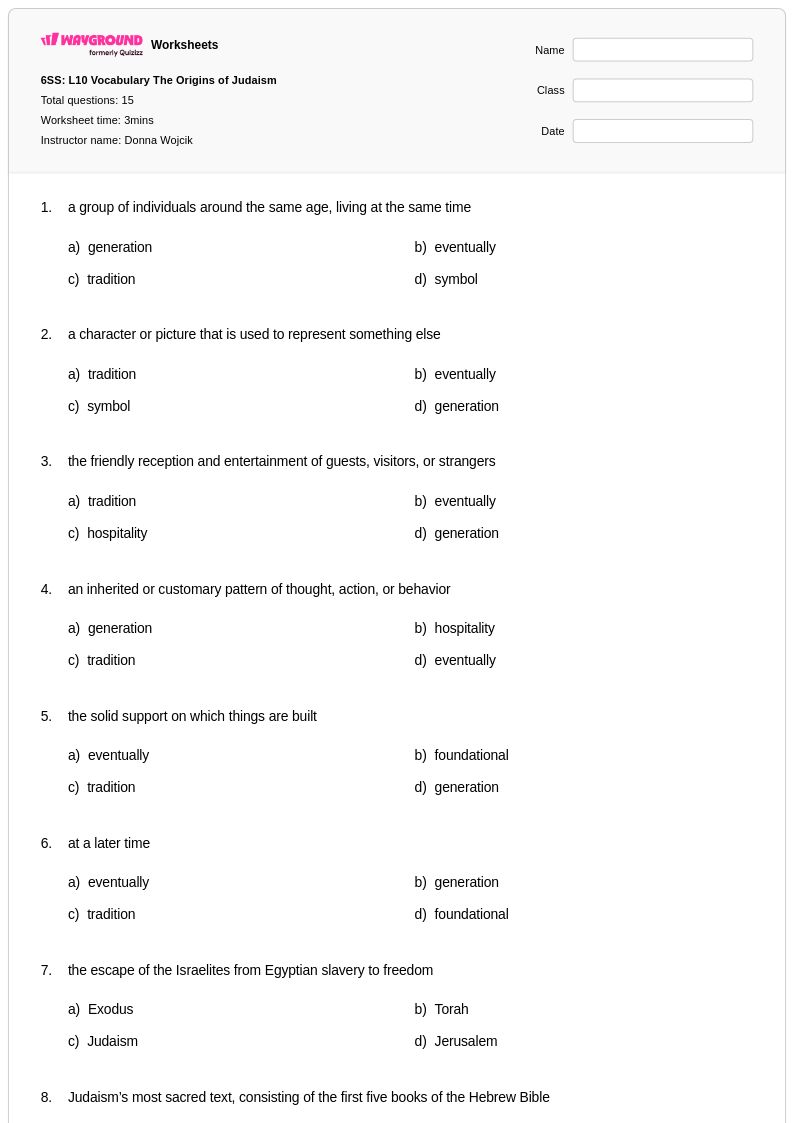
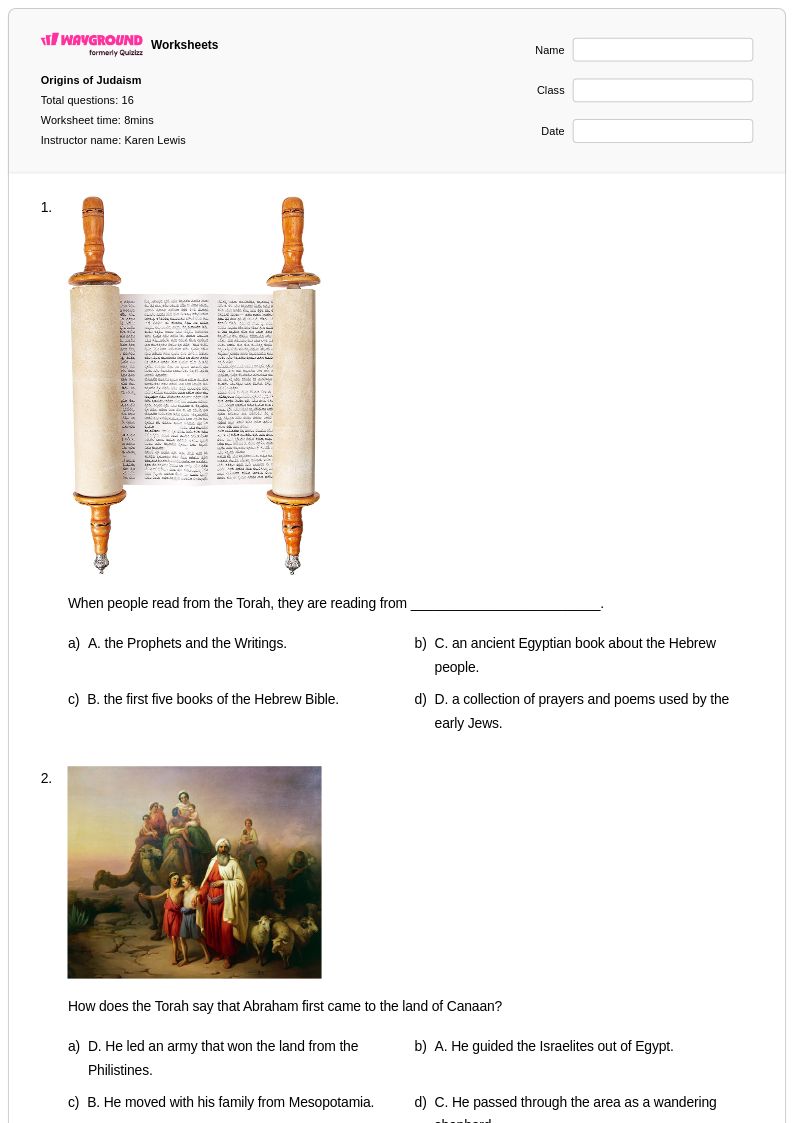
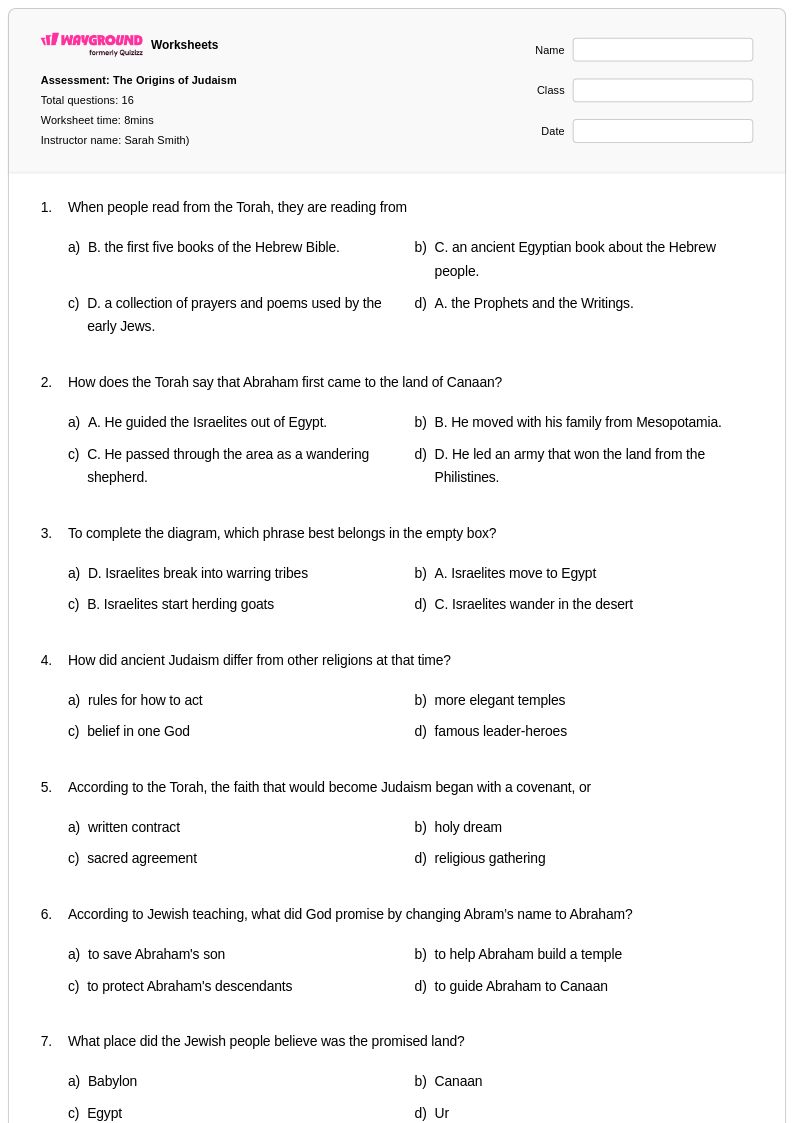
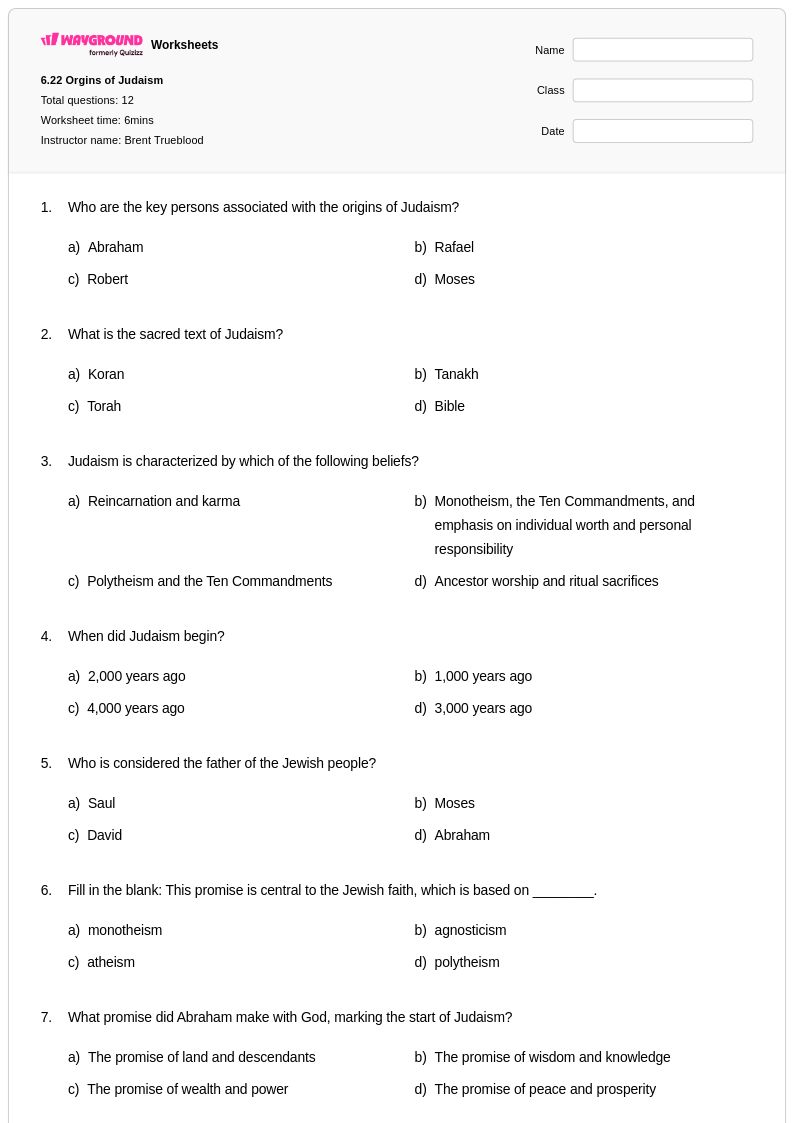
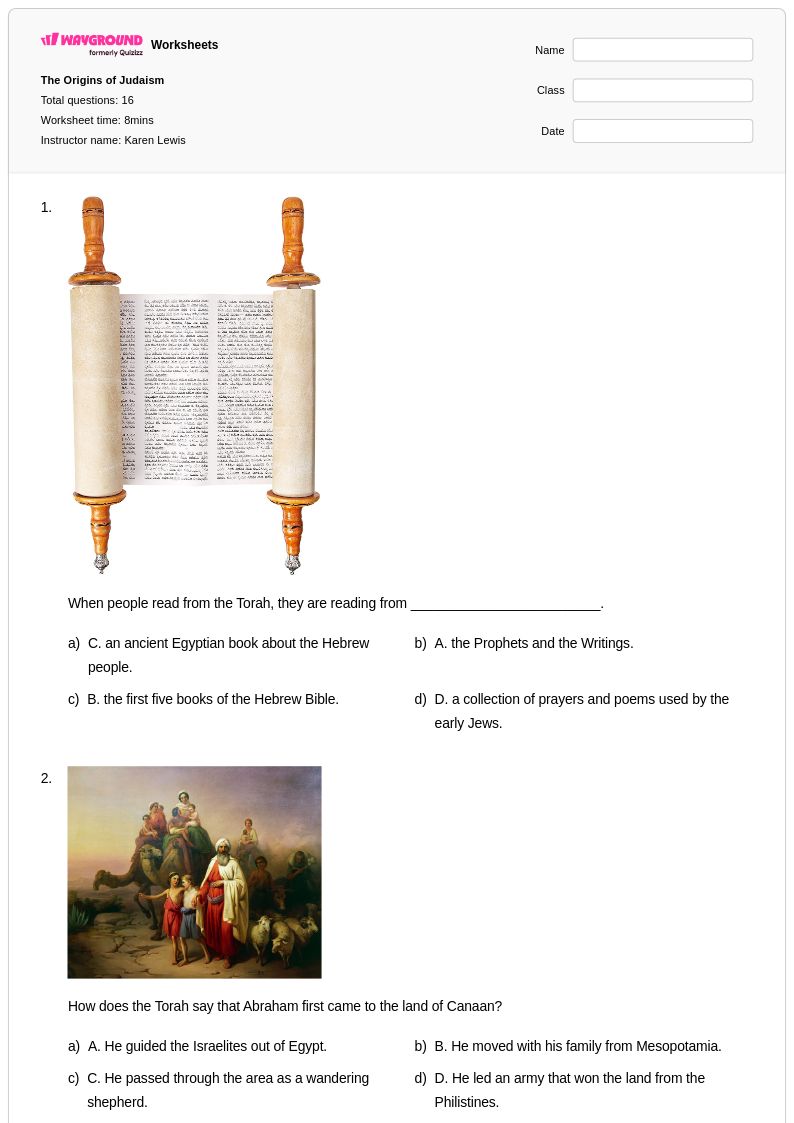
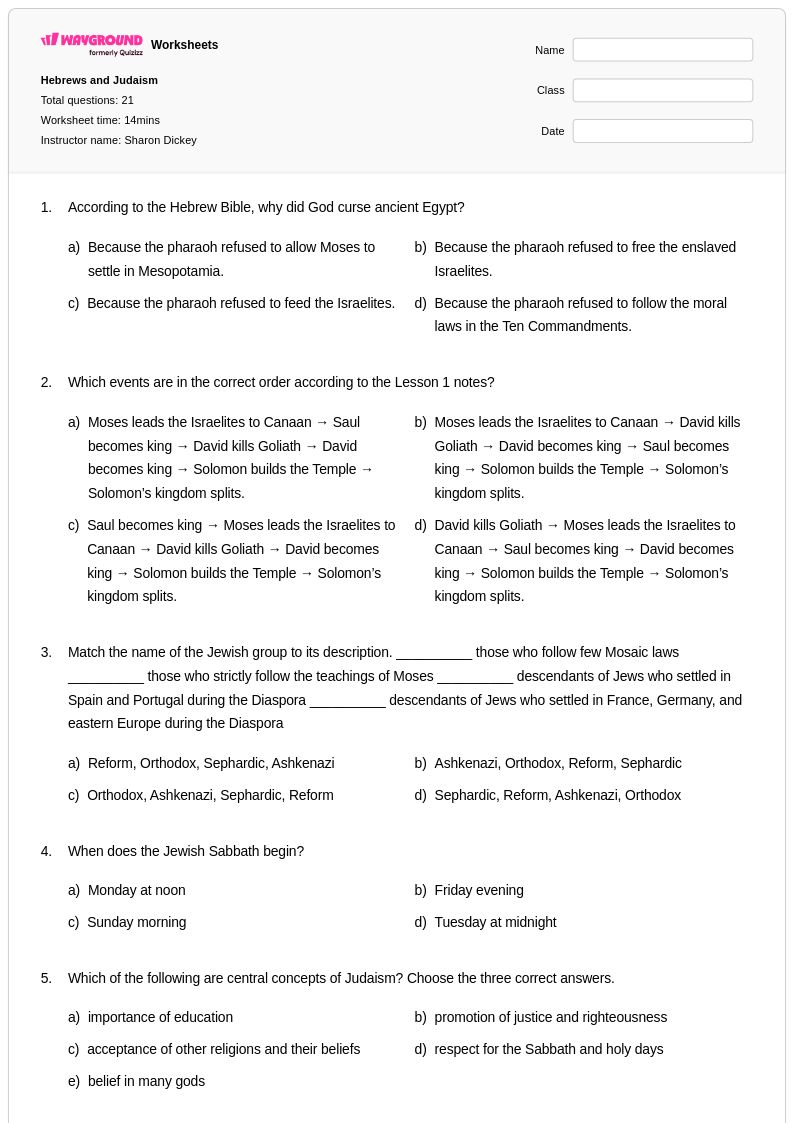
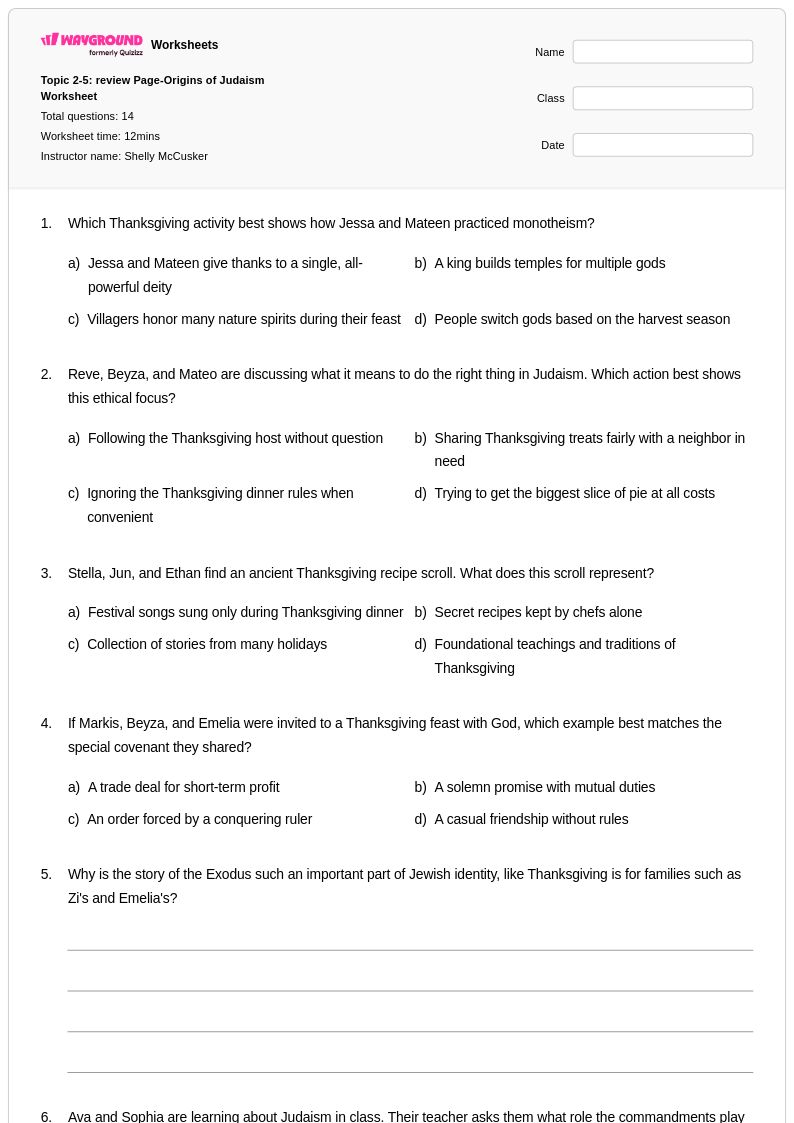
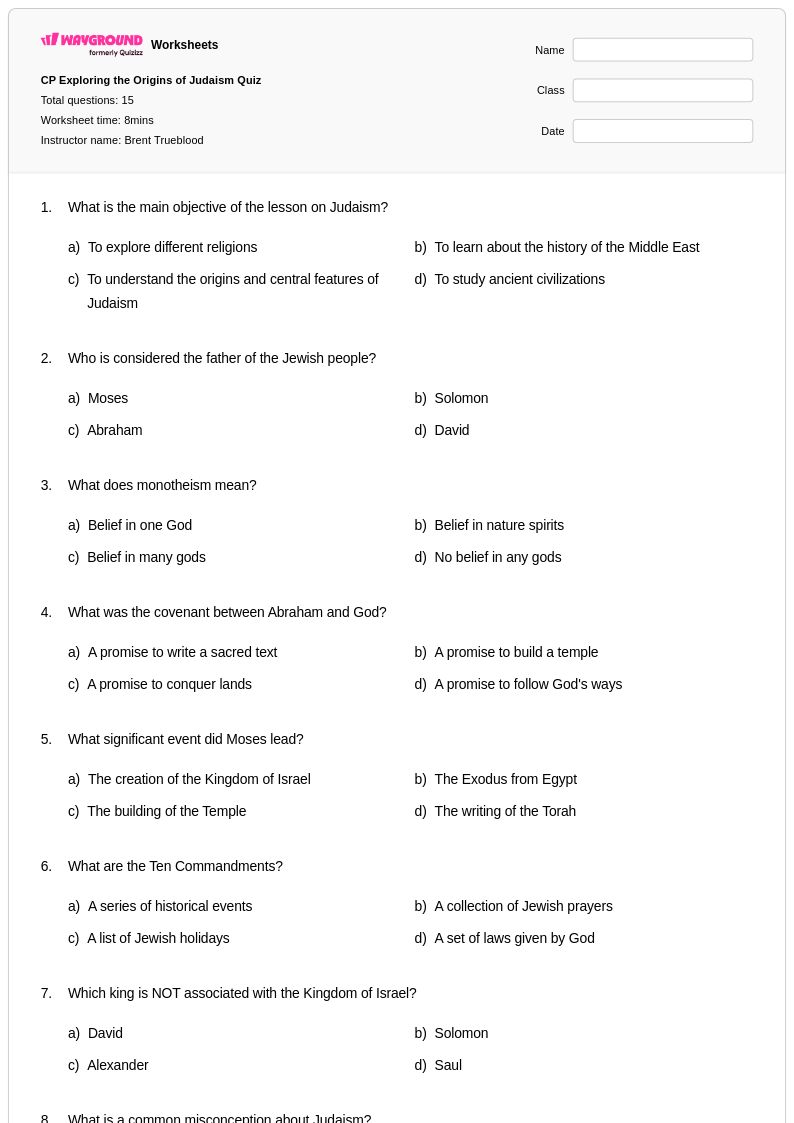
Class 6 Origins of Judaism worksheets and printables help students explore the foundational beliefs, traditions, and historical development of Judaism through engaging practice problems and comprehensive answer keys.
Explore printable Origins of Judaism worksheets for Class 6
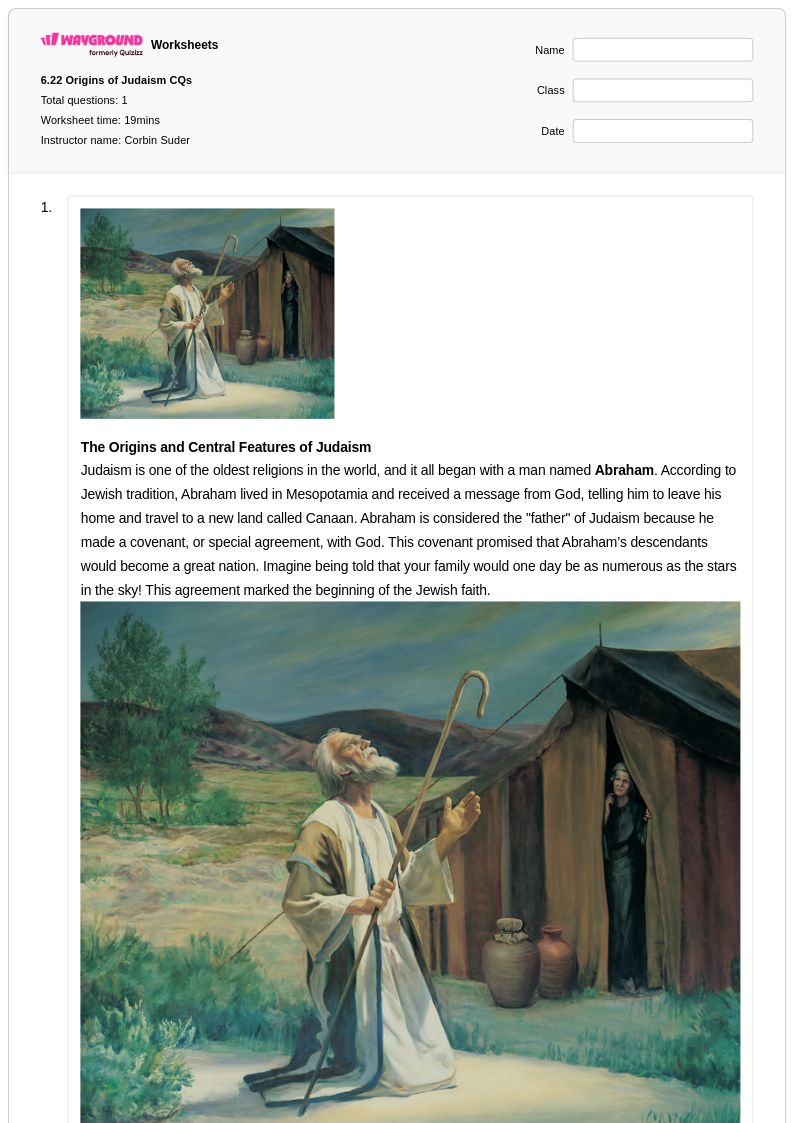
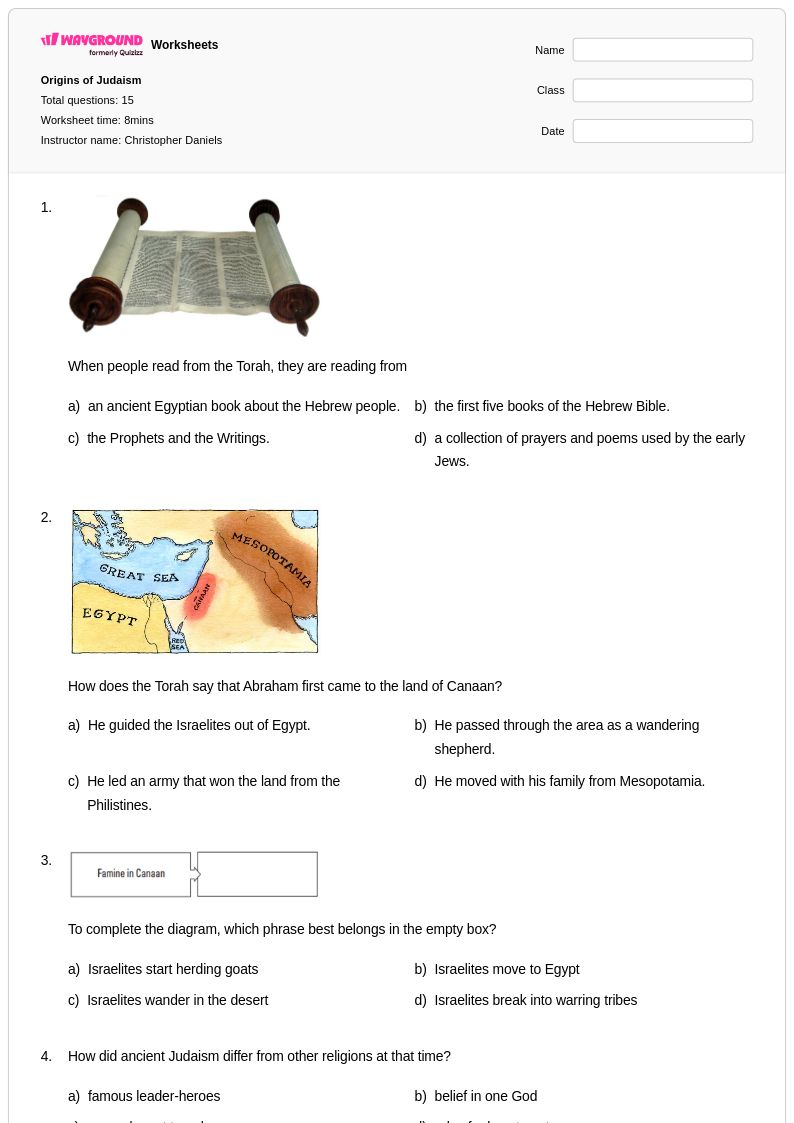
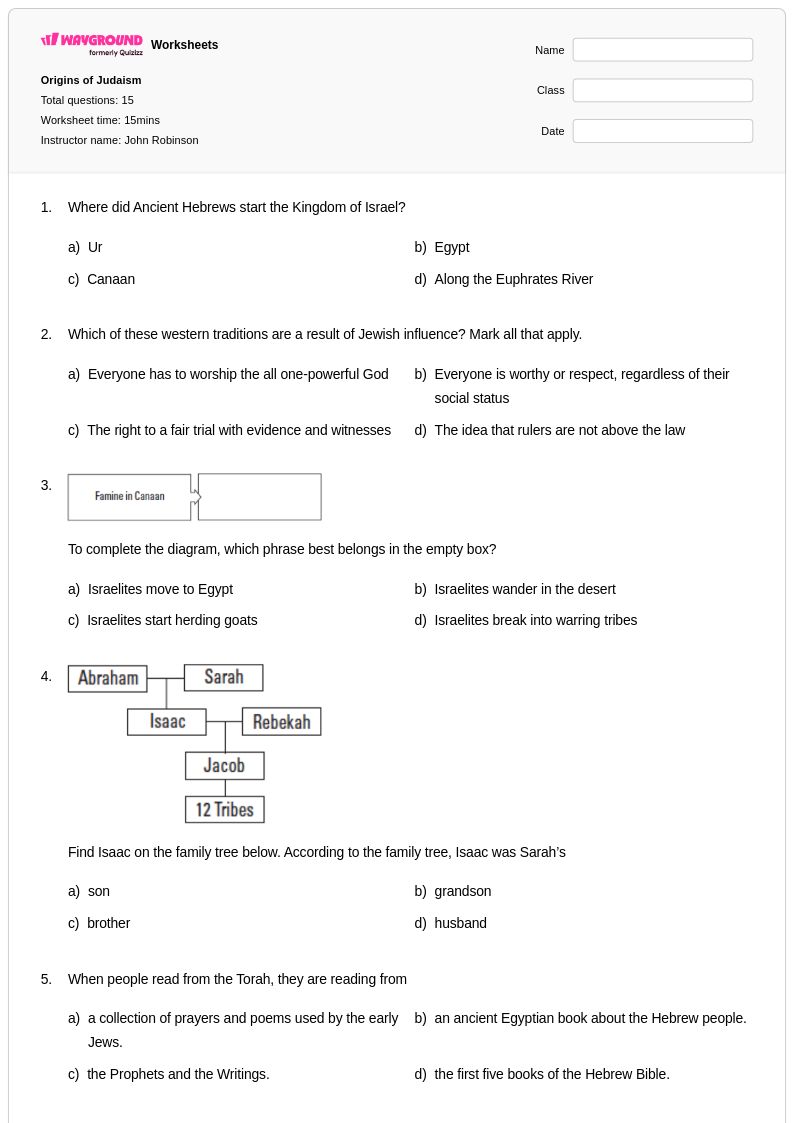
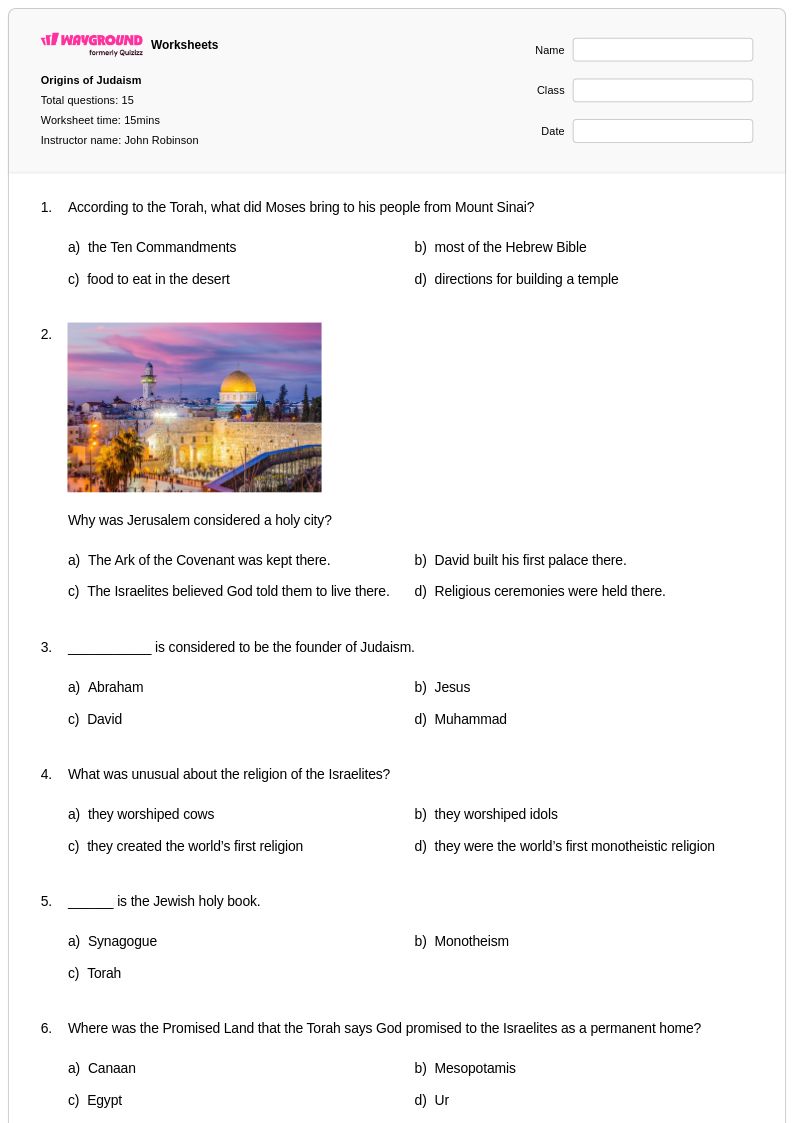
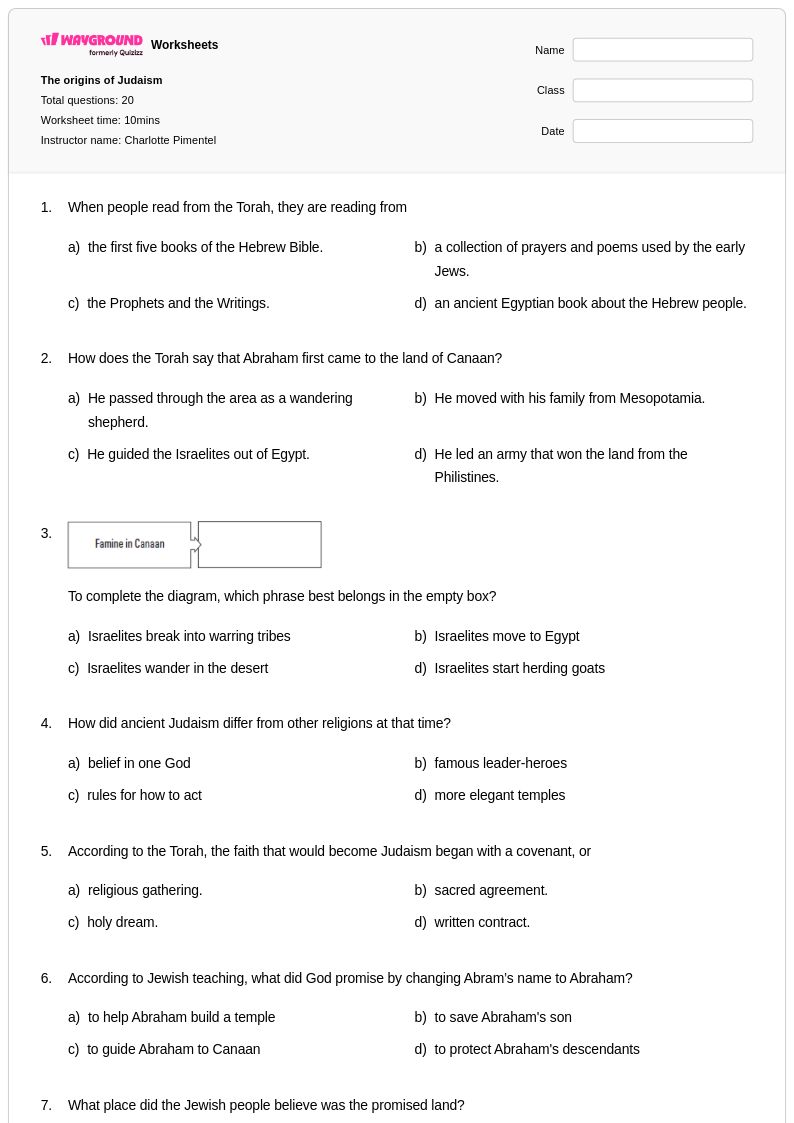
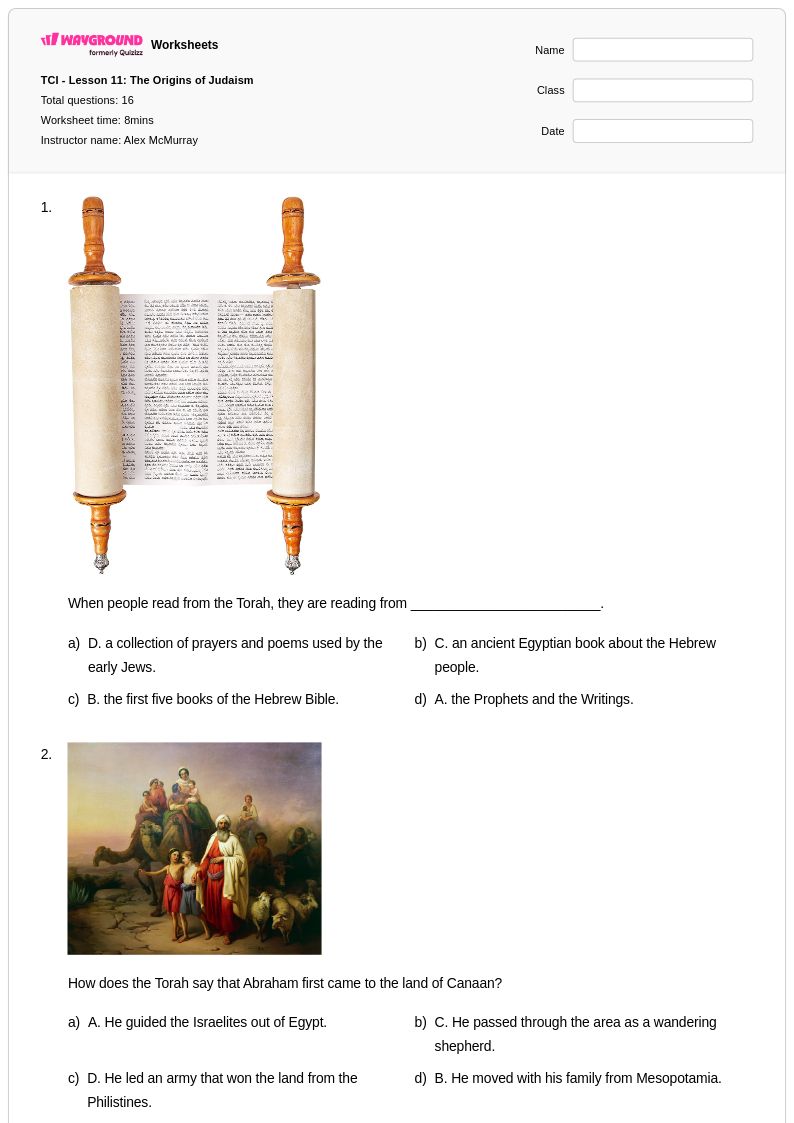
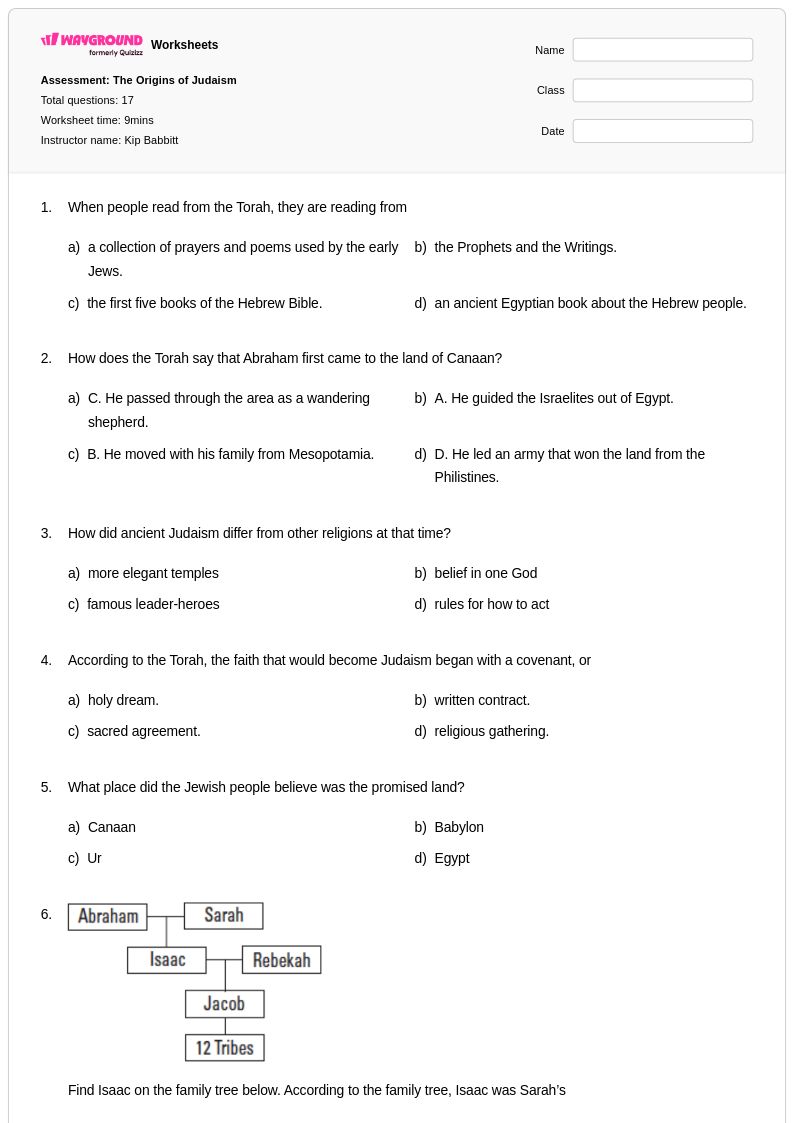
Origins of Judaism worksheets for Class 6 students available through Wayground (formerly Quizizz) provide comprehensive exploration of one of the world's oldest monotheistic religions and its foundational development. These educational resources guide sixth-grade learners through the ancient origins of Jewish faith, examining key figures like Abraham, Isaac, Jacob, and Moses, while investigating pivotal events such as the covenant with God, the Exodus from Egypt, and the receiving of the Torah at Mount Sinai. The worksheets strengthen critical thinking skills by encouraging students to analyze primary source excerpts, compare different historical accounts, and understand the geographic and cultural context of ancient Israel and Judah. Each printable resource includes practice problems that challenge students to identify cause-and-effect relationships in Jewish history, while accompanying answer keys ensure accurate learning and enable independent study. These free materials present complex theological and historical concepts in age-appropriate formats, incorporating maps, timelines, and text analysis exercises that build both content knowledge and essential reading comprehension skills.
Wayground (formerly Quizizz) supports educators with an extensive collection of teacher-created resources specifically designed for Origins of Judaism instruction, drawing from millions of expertly developed materials that align with social studies standards and Class 6 learning objectives. The platform's advanced search and filtering capabilities allow teachers to quickly locate worksheets that match their specific curriculum needs, whether focusing on archaeological evidence, religious texts, or cultural traditions of early Jewish communities. These differentiation tools enable educators to customize content for diverse learning styles and academic levels, providing both remediation support for struggling students and enrichment opportunities for advanced learners. Available in both printable pdf format and interactive digital versions, these worksheet collections streamline lesson planning while offering flexible implementation options for classroom instruction, homework assignments, and skill practice sessions. Teachers can efficiently assess student understanding of Jewish origins while building foundational knowledge that connects to broader studies of ancient civilizations and world religions.
FAQs
How do I teach the origins of Judaism in a history or world religions class?
Teaching the origins of Judaism works best when you anchor instruction in specific historical moments: Abraham's covenant with God, the Exodus from Egypt, and the establishment of ancient Israel. Start with the foundational narrative before moving into core beliefs like monotheism and the role of the Torah. Connecting these historical events to the development of Jewish law and identity helps students understand Judaism not just as a religion but as a civilization with deep historical roots.
What topics should a worksheet on the origins of Judaism cover?
A strong Origins of Judaism worksheet should cover Abraham's covenant, the significance of the Torah, the Exodus narrative, the transition from slavery in Egypt to nationhood in ancient Israel, and the formation of core Jewish beliefs and practices. Including primary source excerpts and comparison tasks between ancient and modern Jewish traditions deepens comprehension and builds critical thinking skills alongside content knowledge.
What common misconceptions do students have about the origins of Judaism?
Students often conflate Judaism, Christianity, and Islam without recognizing that Judaism developed independently as the world's oldest surviving monotheistic religion. Another frequent error is treating the Torah as a single text rather than understanding it as the foundation of Jewish law and identity encompassing narrative, commandment, and covenant. Students also tend to underestimate the historical complexity of early Jewish civilization, reducing it to a single event like the Exodus rather than seeing it as a centuries-long development.
How can I use primary sources to teach the origins of Judaism?
Primary source excerpts from the Torah and other ancient texts give students direct access to the language of covenant, law, and worship that shaped early Jewish civilization. Activities that ask students to analyze these texts for historical context, identify the values they express, and compare them to later Jewish traditions build both content knowledge and disciplinary literacy skills. Structured annotation guides or guided question sets can scaffold this work for students who are new to primary source analysis.
How do Origins of Judaism worksheets on Wayground work, and can I use them digitally?
Origins of Judaism worksheets on Wayground are available as printable PDFs for traditional classroom use and in digital formats for technology-integrated learning environments, including the option to host them as a quiz directly on Wayground. Each worksheet includes a complete answer key to support accurate and efficient assessment. Teachers can also apply student-level accommodations such as read aloud, extended time, and reduced answer choices to support diverse learners without disrupting the experience for the rest of the class.
How do I differentiate Origins of Judaism instruction for students with different learning needs?
Differentiation for this topic can involve tiered text complexity, scaffolded primary source analysis, and varied question formats that range from recall to comparison and synthesis. On Wayground, teachers can assign individual accommodations such as read aloud for struggling readers, extended time per question for students who need it, and reduced answer choices to lower cognitive load, all without flagging those students to their peers. These settings are saved per student and carry over to future sessions, reducing setup time.