
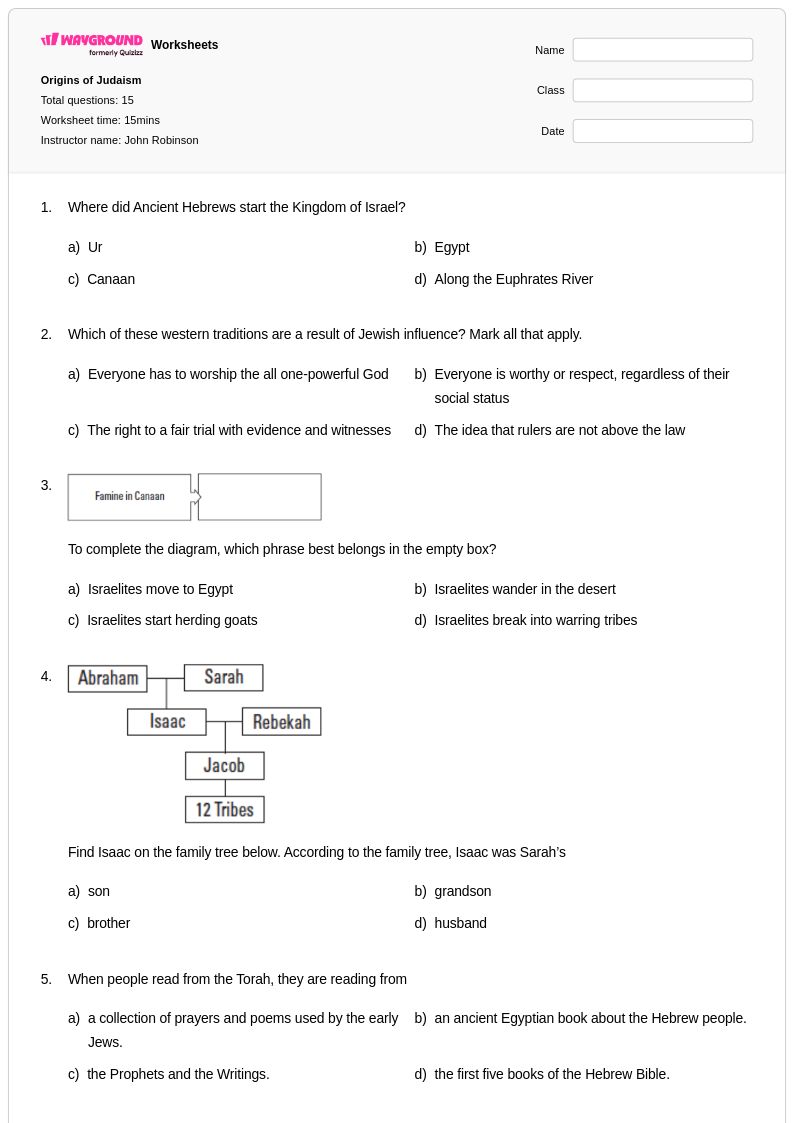
15 T
6th - Uni
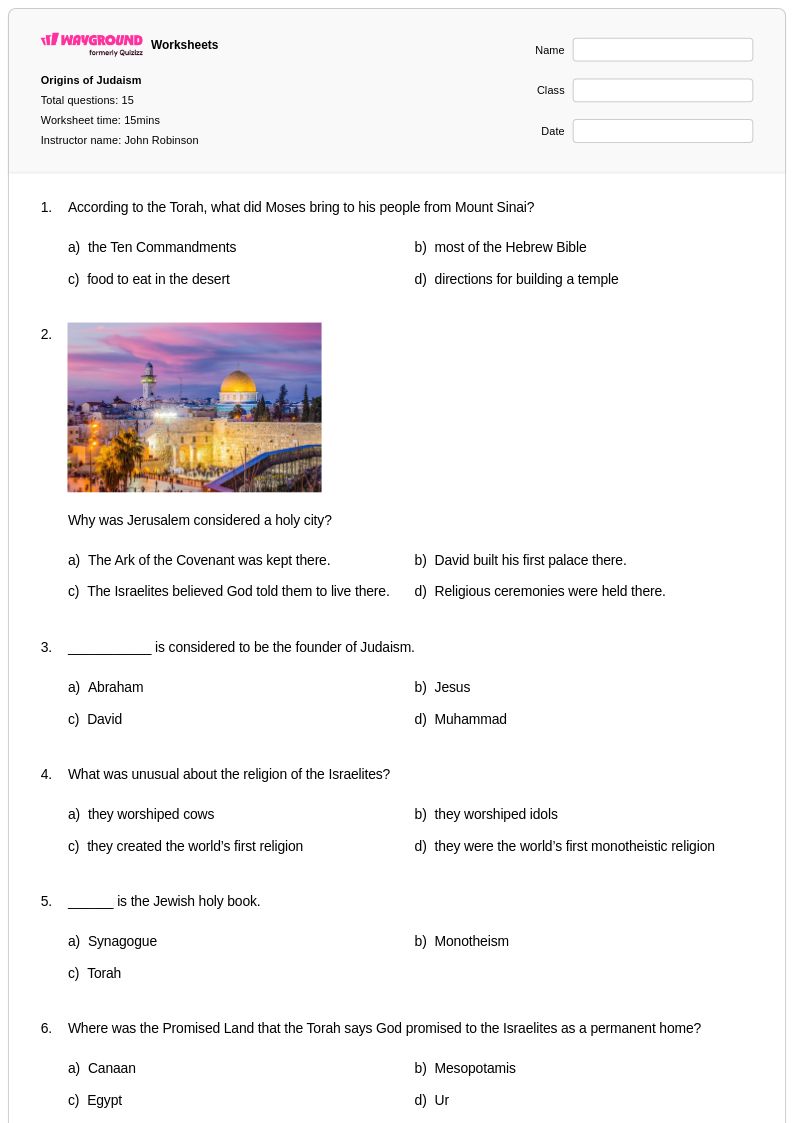
15 T
6th - Uni
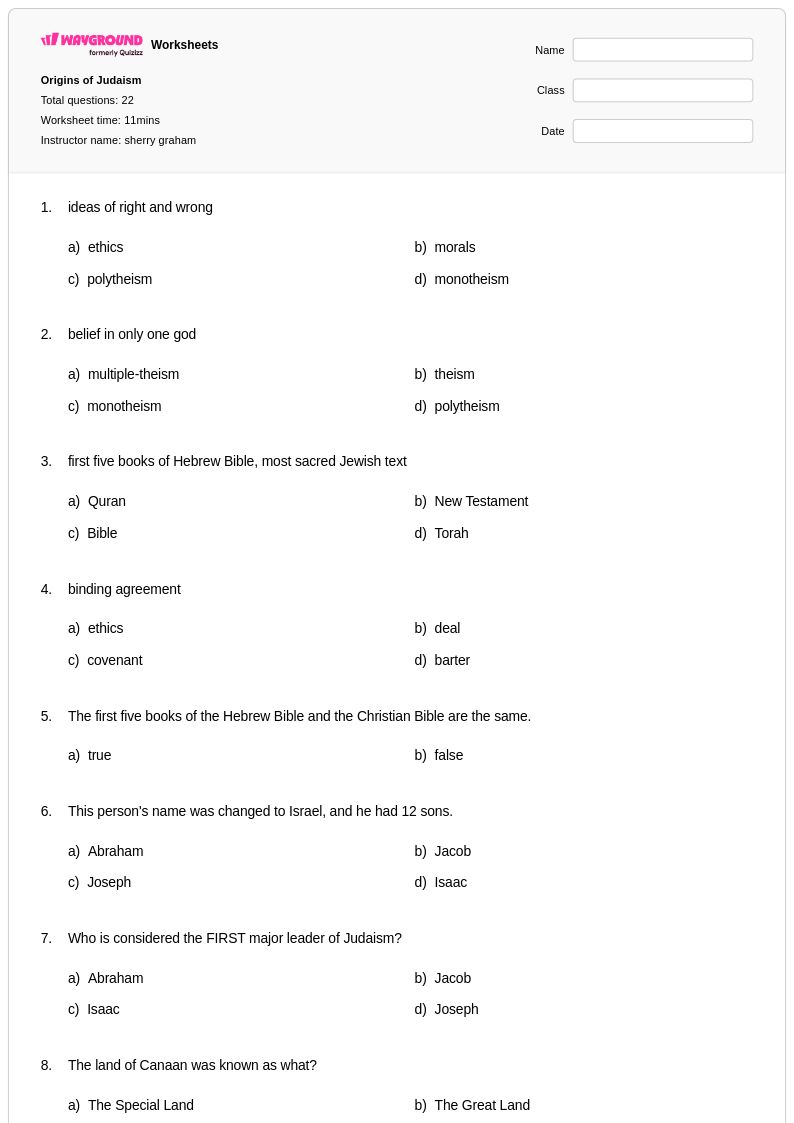
22 T
7th
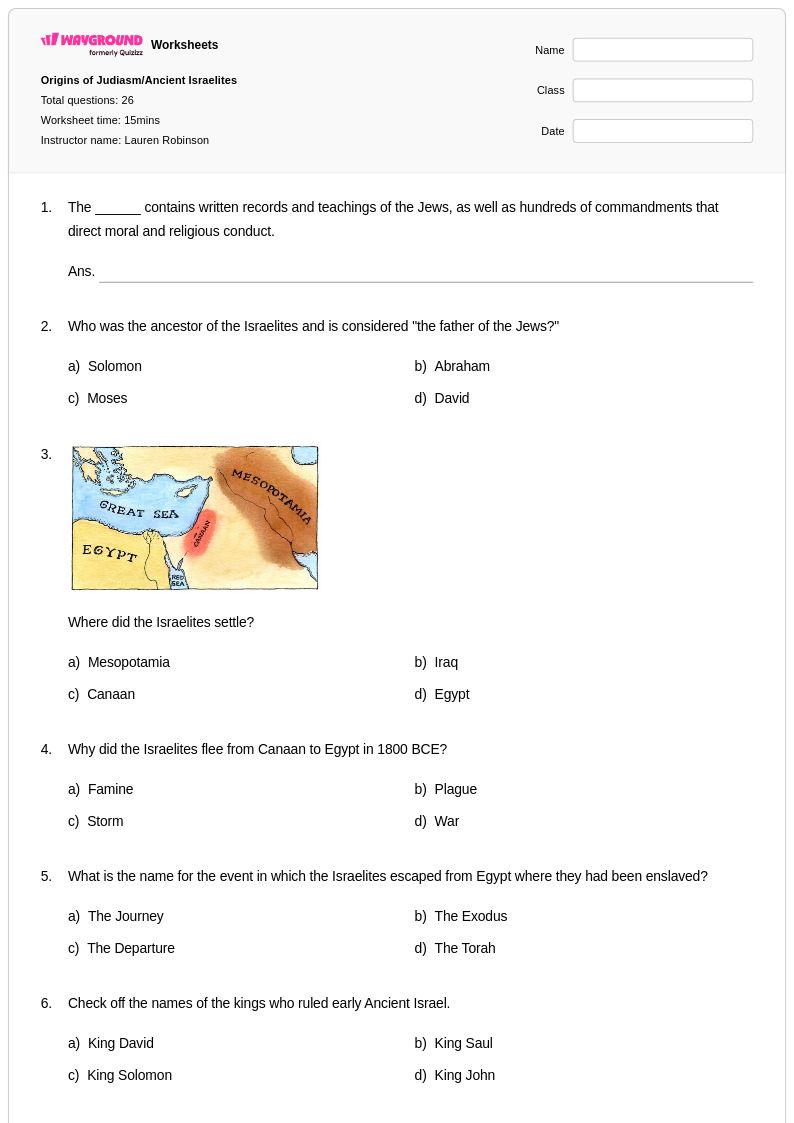
26 T
6th - 8th
15 T
6th - 7th
12 T
6th - Uni
38 T
7th
15 T
6th - Uni
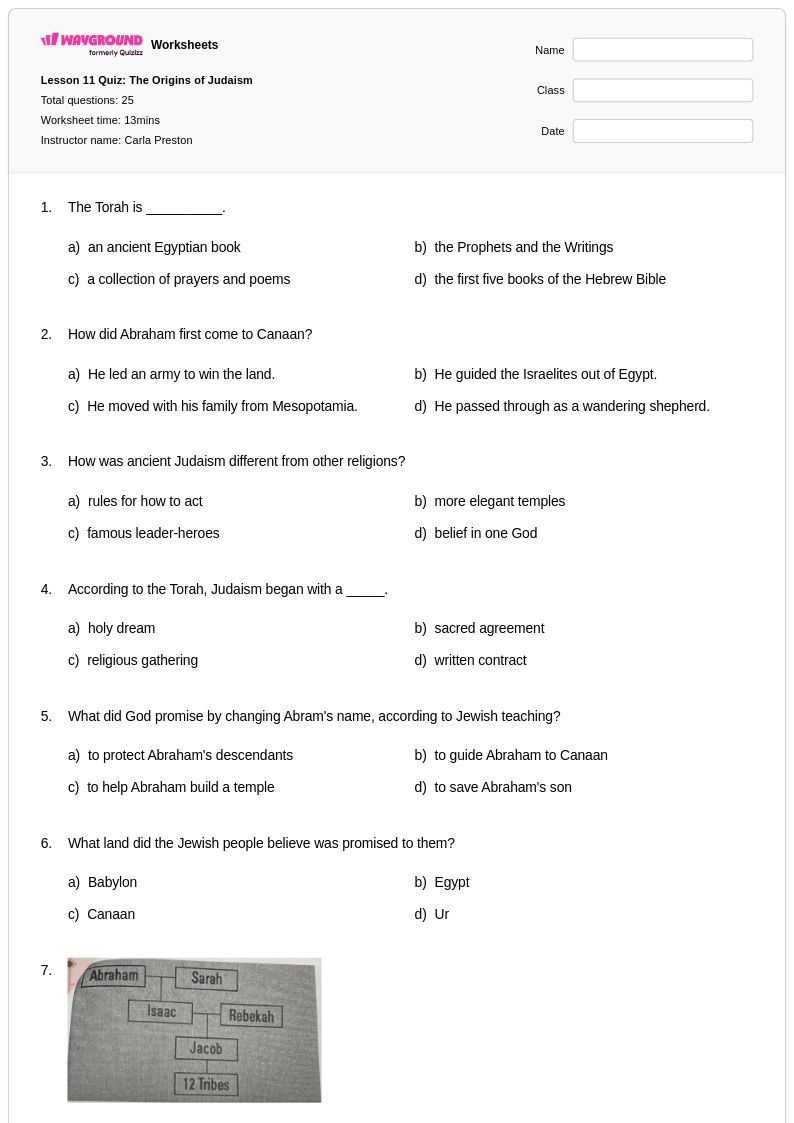
25 T
6th - 8th
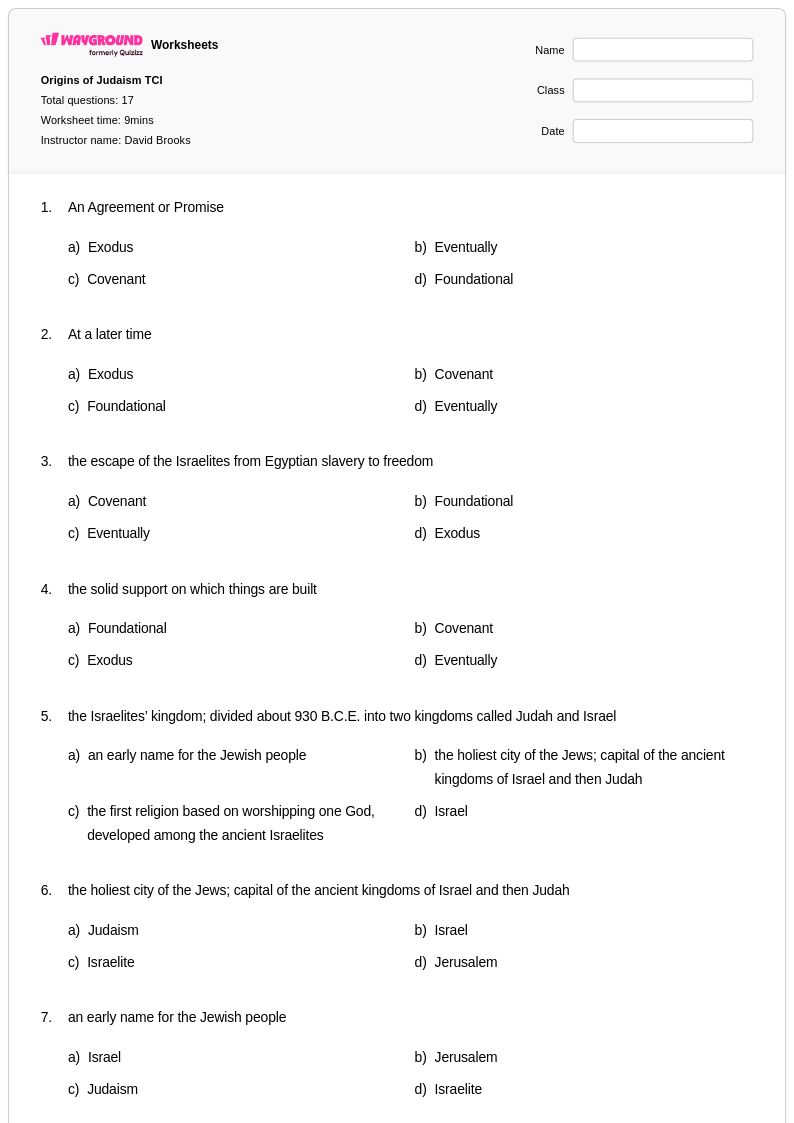
17 T
6th - 8th
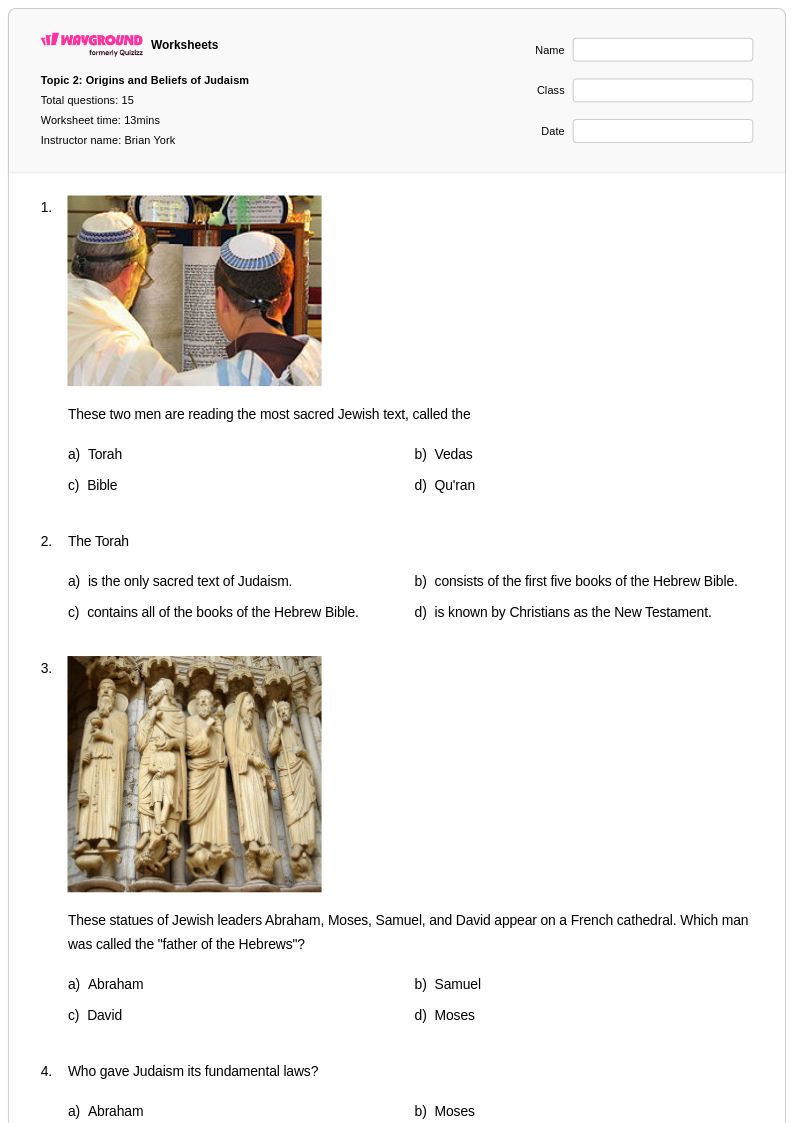
15 T
6th - 8th
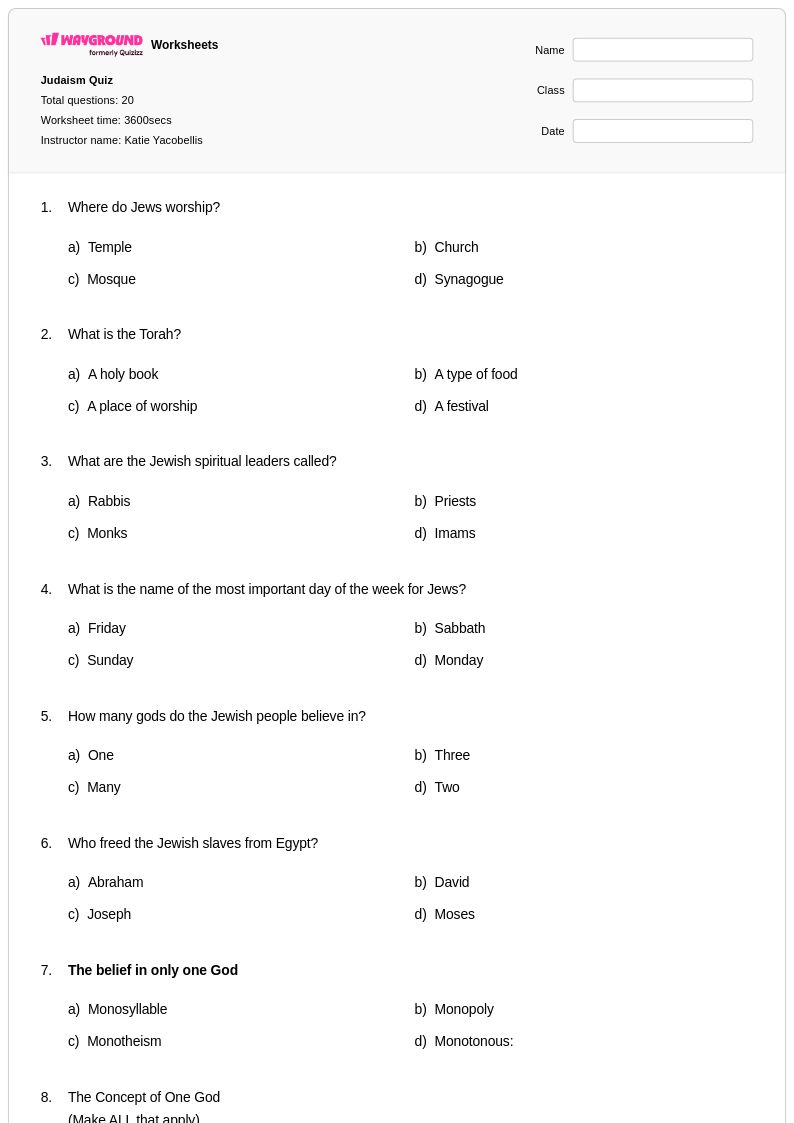
20 T
6th - Uni
20 T
7th
14 T
6th - 8th
15 T
7th
21 T
6th - 8th
10 T
7th
10 T
7th
29 T
6th - 8th
10 T
7th
13 T
6th - 8th
30 T
6th - Uni
22 T
6th - 8th
Jelajahi Origins of Judaism Lembar Kerja berdasarkan Nilai
Jelajahi Lembar Kerja Mata Pelajaran Lainnya untuk class 7
Explore printable Origins of Judaism worksheets for Class 7
Origins of Judaism worksheets for Class 7 students provide comprehensive exploration of one of the world's oldest monotheistic religions and its foundational impact on human civilization. These educational resources guide middle school learners through the ancient origins of Jewish faith, examining key figures like Abraham, Moses, and the patriarchs while investigating pivotal events such as the covenant with God, the Exodus from Egypt, and the receiving of the Torah at Mount Sinai. Students develop critical thinking skills as they analyze primary source excerpts, interpret historical timelines, and examine archaeological evidence that illuminates early Jewish communities in the ancient Near East. Each worksheet includes detailed answer keys to support independent learning and features practice problems that reinforce understanding of core concepts including monotheism, the diaspora, and the development of Jewish law and traditions. These free printables in pdf format enable students to engage with complex historical narratives while building essential skills in source analysis, chronological reasoning, and cultural interpretation.
Wayground, formerly Quizizz, supports educators with an extensive collection of Origins of Judaism worksheet resources created by millions of teachers who specialize in Class 7 social studies instruction. The platform's robust search and filtering capabilities allow teachers to quickly locate materials aligned with state and national history standards, ensuring that content meets specific curriculum requirements for ancient civilizations and world religions units. Teachers can easily differentiate instruction by selecting from worksheets that vary in complexity and format, from introductory vocabulary exercises to advanced document-based questions that challenge students to synthesize multiple historical sources. The flexible customization tools enable educators to modify existing worksheets or combine elements from different resources to meet their students' unique learning needs. Available in both printable pdf formats for traditional classroom use and digital formats for online learning environments, these resources streamline lesson planning while providing targeted options for remediation, enrichment, and skill practice that help students master this foundational period in religious and cultural history.
FAQs
How do I teach the origins of Judaism in a history or world religions class?
What topics should a worksheet on the origins of Judaism cover?
What common misconceptions do students have about the origins of Judaism?
How can I use primary sources to teach the origins of Judaism?
How do Origins of Judaism worksheets on Wayground work, and can I use them digitally?
How do I differentiate Origins of Judaism instruction for students with different learning needs?