Free Printable I Have a Dream Speech Worksheets for Class 7
Enhance Class 7 students' understanding of Martin Luther King Jr.'s iconic I Have a Dream Speech with Wayground's comprehensive collection of free printable worksheets, featuring engaging practice problems and complete answer keys in convenient PDF format.
Explore printable I Have a Dream Speech worksheets for Class 7
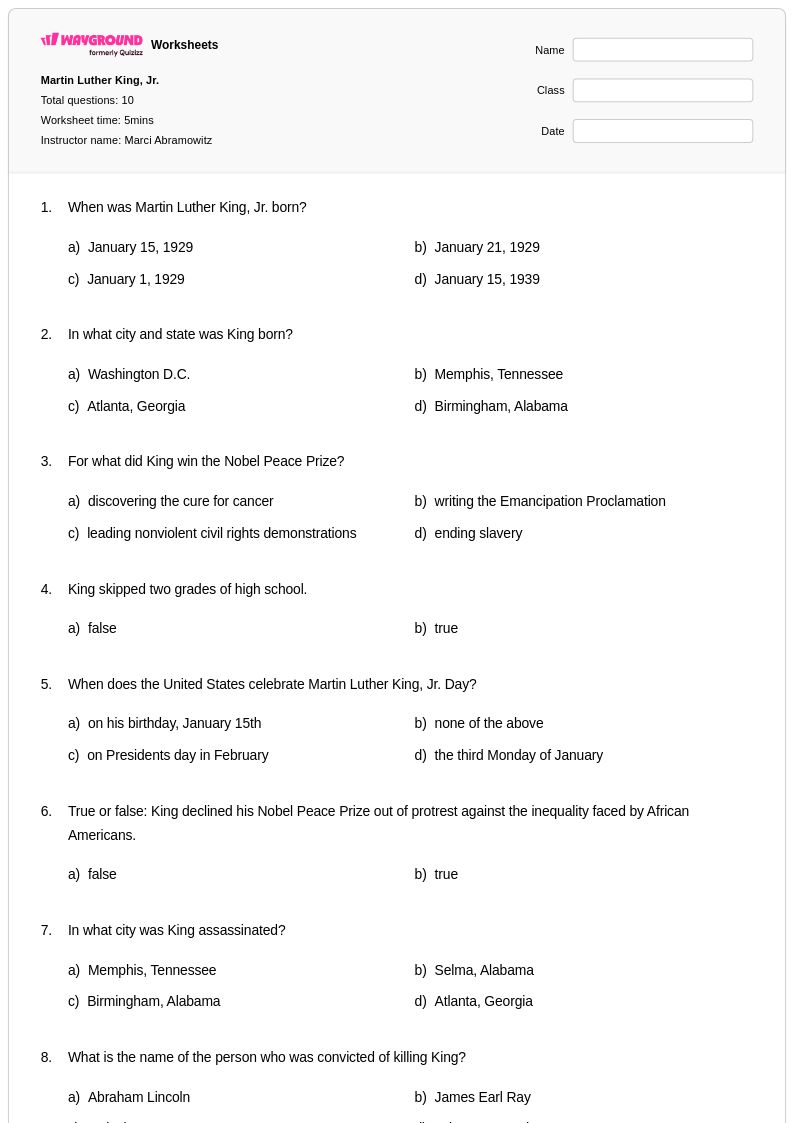
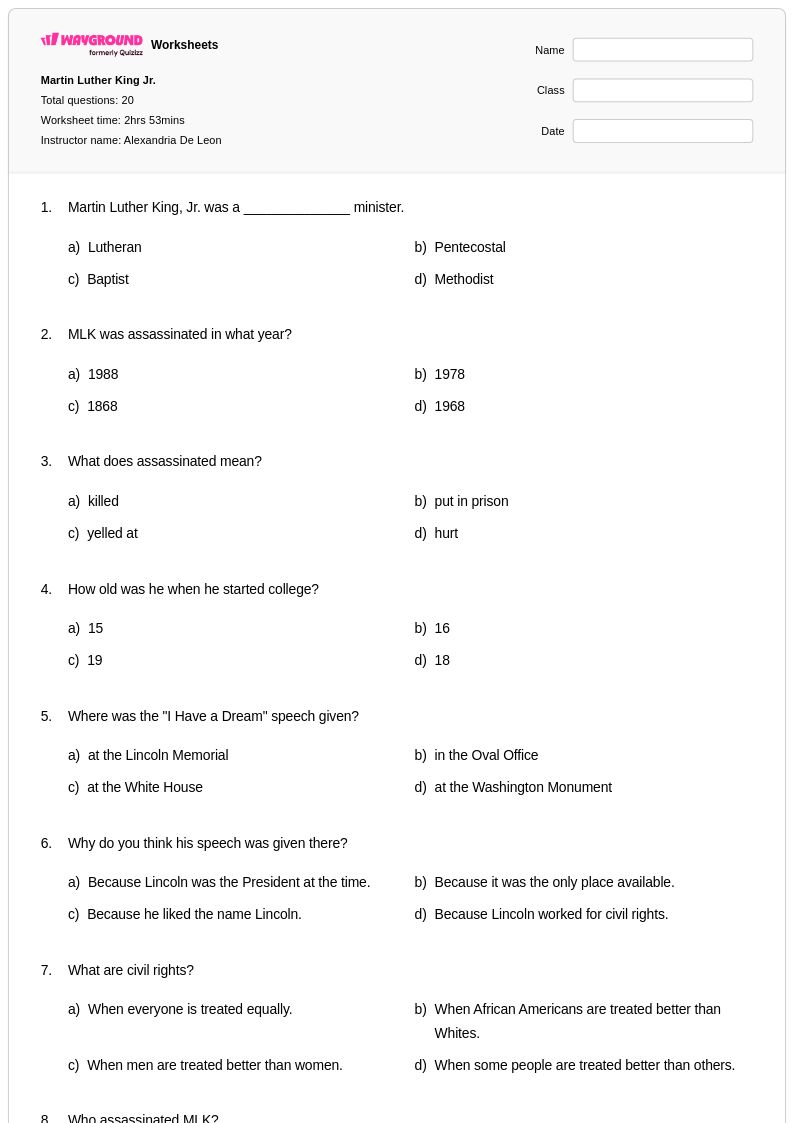
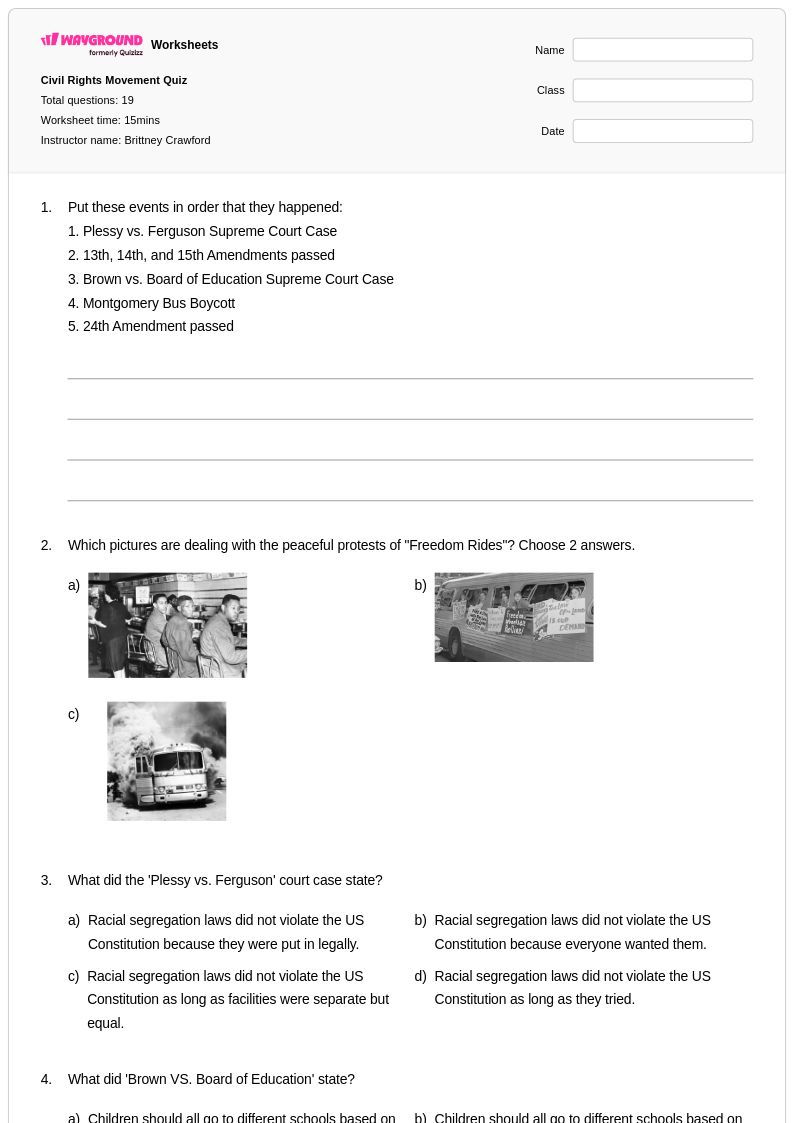
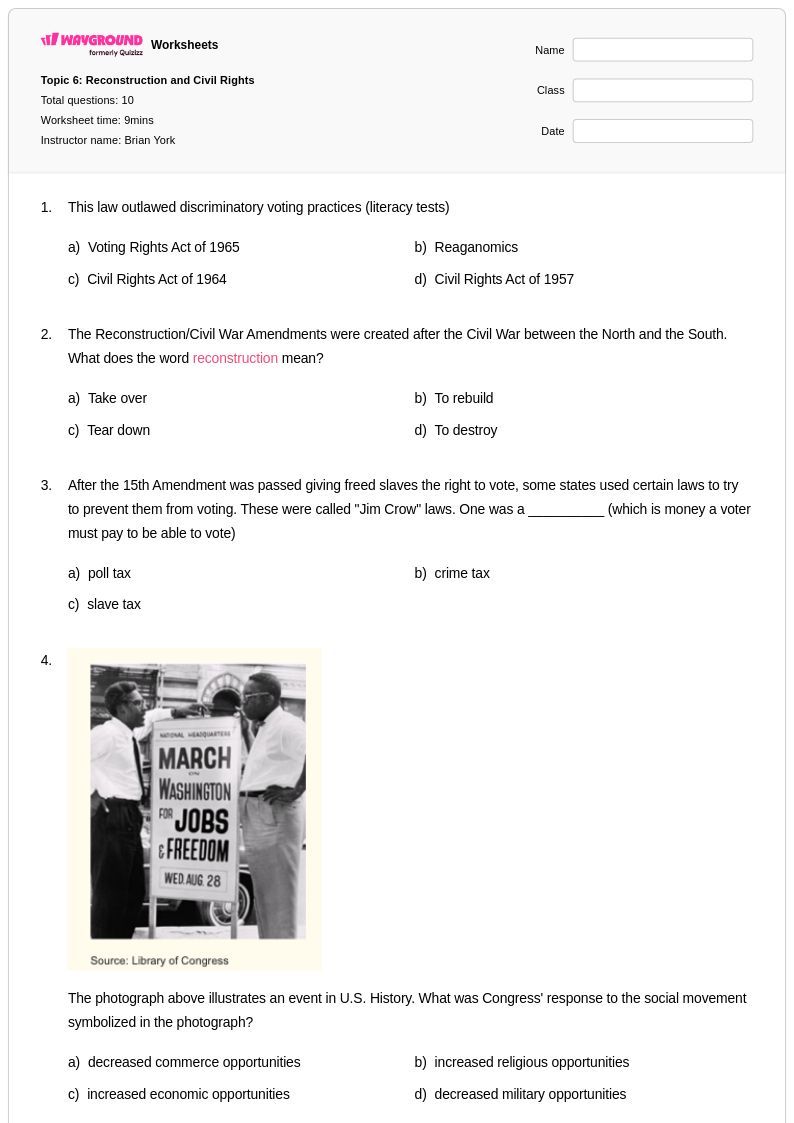
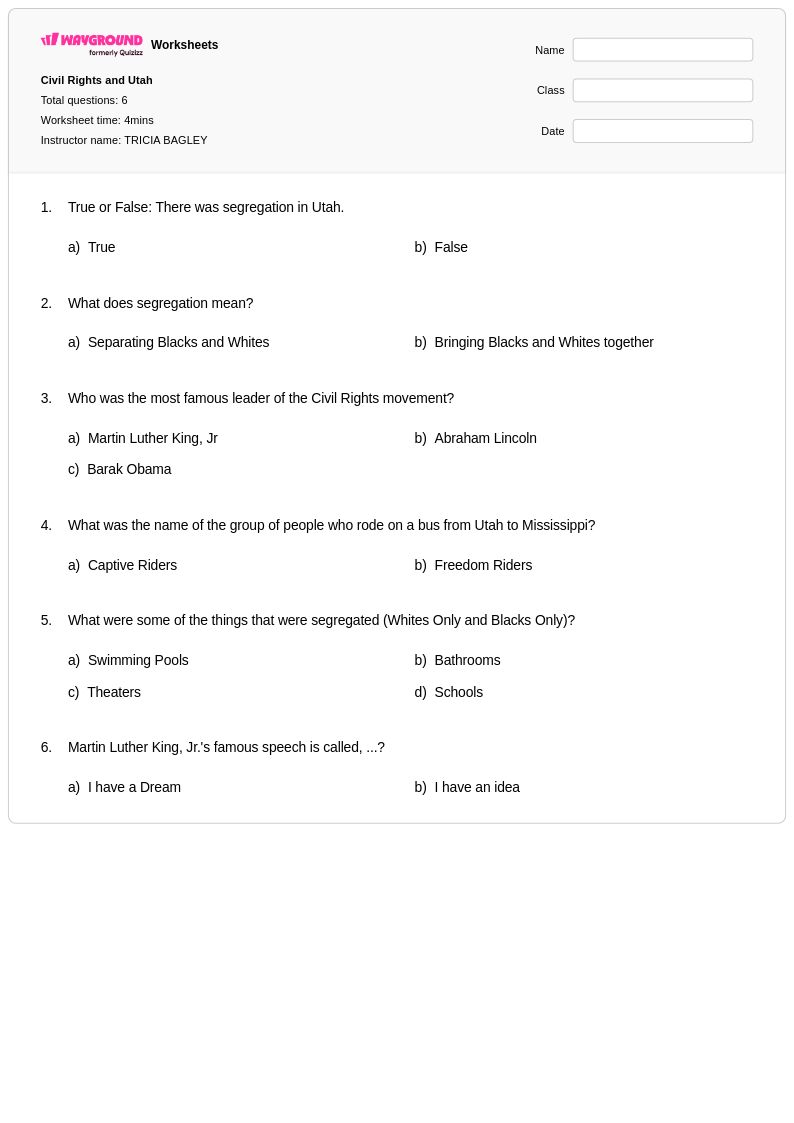
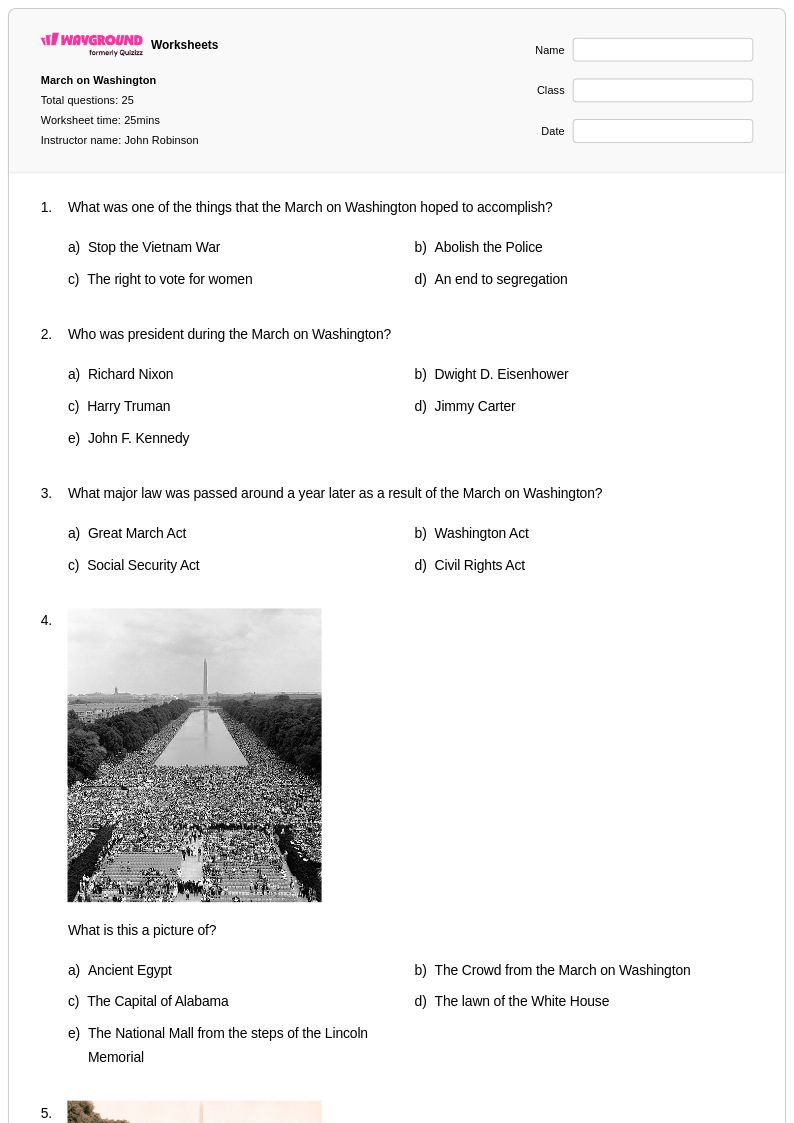
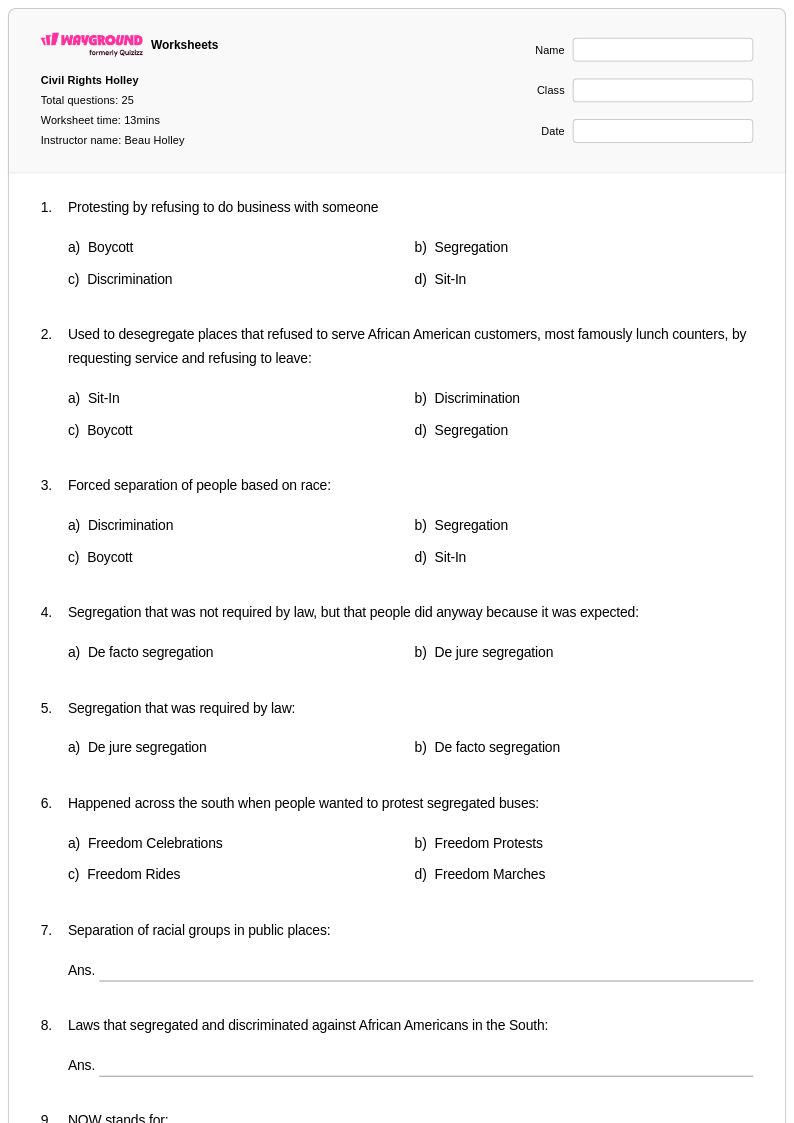
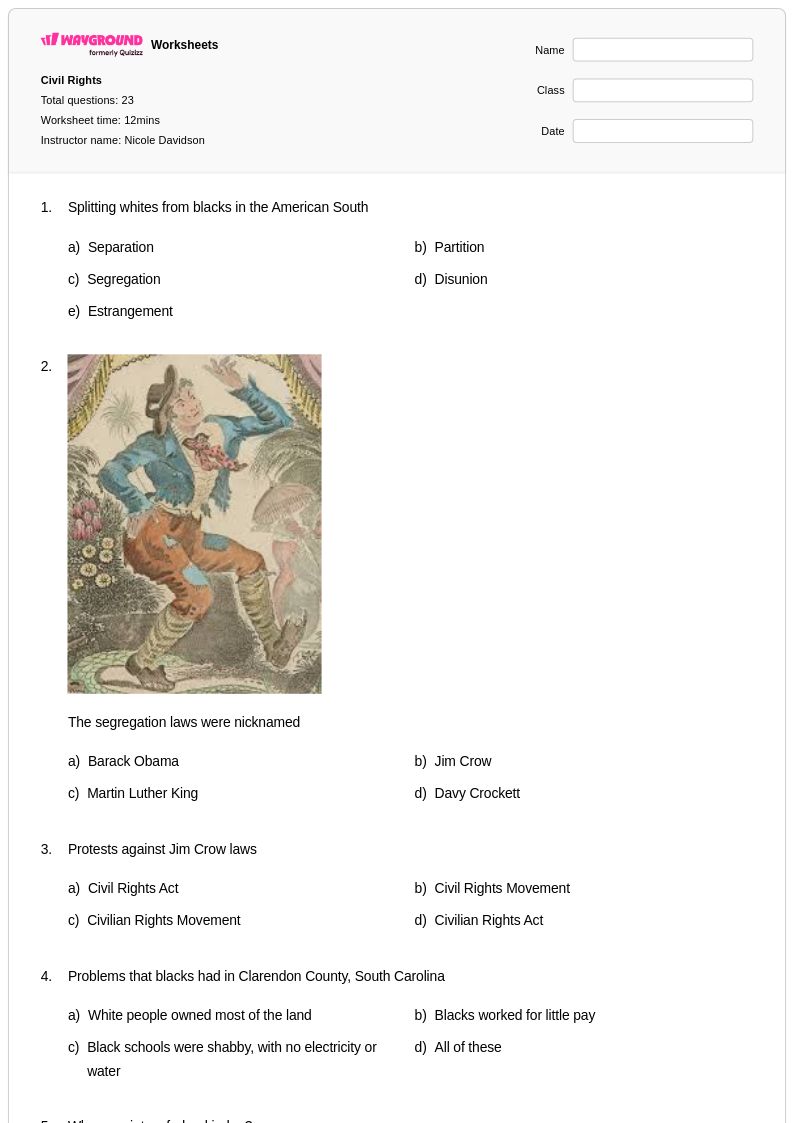
I Have a Dream Speech worksheets for Class 7 students provide comprehensive resources for analyzing one of the most significant speeches in American civil rights history. These educational materials guide seventh-grade learners through Martin Luther King Jr.'s iconic 1963 address, helping students develop critical thinking skills as they examine rhetorical devices, historical context, and the speech's lasting impact on American society. The worksheets feature practice problems that encourage students to identify metaphors, analyze persuasive techniques, and connect the speech's themes to broader civil rights movements. Available as free printables with accompanying answer keys, these resources support both independent study and classroom instruction while strengthening students' ability to interpret primary historical documents and understand their significance in shaping modern America.
Wayground, formerly Quizizz, supports educators with an extensive collection of teacher-created worksheets focused on the I Have a Dream Speech and related Class 7 social studies content. The platform's millions of resources include materials specifically aligned to curriculum standards, offering teachers robust search and filtering capabilities to locate age-appropriate content that matches their instructional goals. These differentiation tools enable educators to customize worksheets for varying skill levels within their classrooms, while the availability of both printable pdf formats and digital versions provides flexibility for diverse learning environments. Teachers can efficiently plan lessons, design targeted remediation activities, and create enrichment opportunities that deepen students' understanding of this pivotal moment in civil rights history, ensuring comprehensive skill practice that builds historical analysis capabilities essential for seventh-grade academic success.
FAQs
How do I teach the I Have a Dream Speech in the classroom?
Teaching the I Have a Dream Speech effectively requires grounding students in the historical context of the 1963 March on Washington before engaging with the text itself. Start by building background knowledge on the civil rights movement, then guide students through a close reading that focuses on King's use of repetition, metaphor, and allusion. Pairing the written text with an audio or video recording helps students appreciate the speech as an oral performance, not just a written document. Follow up with structured discussion or written analysis that asks students to connect King's argument to both its historical moment and present-day issues of racial equality.
What rhetorical devices should students identify in the I Have a Dream Speech?
The I Have a Dream Speech is rich with rhetorical techniques that make it an ideal text for teaching persuasive language. Students should focus on anaphora (the repeated phrase 'I have a dream'), extended metaphor (the 'bad check' analogy), allusion to the Declaration of Independence and biblical texts, and pathos-driven appeals to shared American values. Identifying these devices helps students understand not just what King said, but why his message was so persuasive and emotionally resonant. Practice exercises that ask students to locate, label, and explain the effect of each device build both literary analysis and rhetorical literacy skills.
What exercises help students practice analyzing the I Have a Dream Speech?
Effective practice exercises for the I Have a Dream Speech include close-reading tasks where students annotate specific passages for rhetorical devices, tone, and purpose. Graphic organizers that separate King's central claims from his supporting evidence help students build analytical frameworks they can apply to other persuasive texts. Short-answer and constructed-response questions that ask students to explain how a specific technique contributes to King's argument push beyond identification into interpretation. Worksheets that include both guided and independent practice allow students to build confidence before attempting open-ended analysis.
What mistakes do students commonly make when analyzing the I Have a Dream Speech?
One of the most common errors students make is identifying rhetorical devices without explaining their effect — they label anaphora or metaphor correctly but stop short of analyzing why King used that technique at that moment. Students also frequently confuse the speech's historical context with its rhetorical purpose, treating it as a history lesson rather than an argument meant to persuade a specific audience. Another frequent misconception is reading the speech as universally optimistic, missing the urgent, critical undercurrent in passages where King challenges the broken promises of American democracy. Targeted practice that requires students to explain cause and effect within the text helps correct these patterns.
How can I use I Have a Dream Speech worksheets in my classroom?
I Have a Dream Speech worksheets on Wayground are available as printable PDFs for traditional classroom use and in digital formats for technology-integrated environments, giving teachers flexibility regardless of their classroom setup. Teachers can assign them as guided in-class activities, independent practice, or homework, and can also host them as a quiz directly on Wayground for instant student feedback. Each worksheet includes a complete answer key, which supports both teacher-led instruction and student self-assessment. For classes with diverse learners, Wayground's accommodation tools allow teachers to enable read aloud, extended time, or reduced answer choices for individual students without disrupting the rest of the class.
How do I differentiate I Have a Dream Speech instruction for different skill levels?
Differentiation for the I Have a Dream Speech can be achieved by scaffolding the complexity of analysis tasks — providing sentence starters or partially completed graphic organizers for students who need support, while offering open-ended analytical prompts for advanced learners. On Wayground, teachers can customize content difficulty and apply individual student accommodations such as read aloud for struggling readers, extended time for students who need it, or reduced answer choices to lower cognitive load. These settings can be configured per student from the Students tab or session settings page, and remaining students receive default settings without any notification. This allows the same worksheet to serve multiple learner profiles within a single class period.