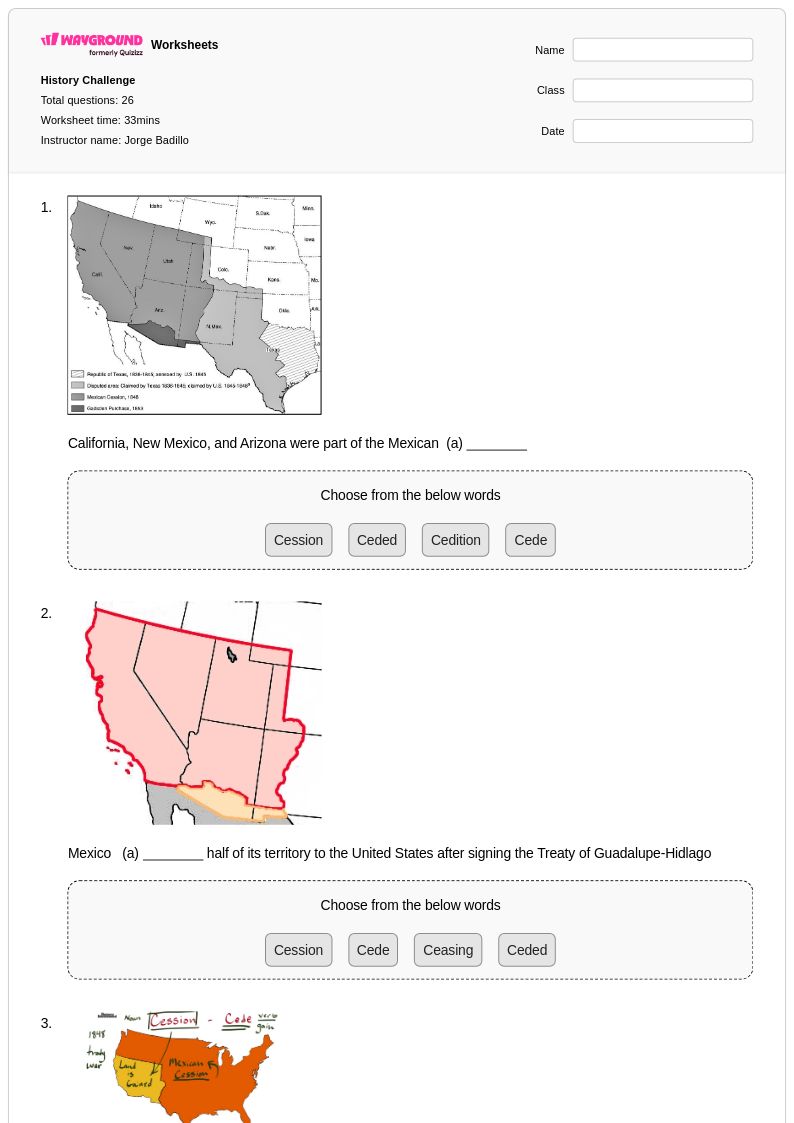
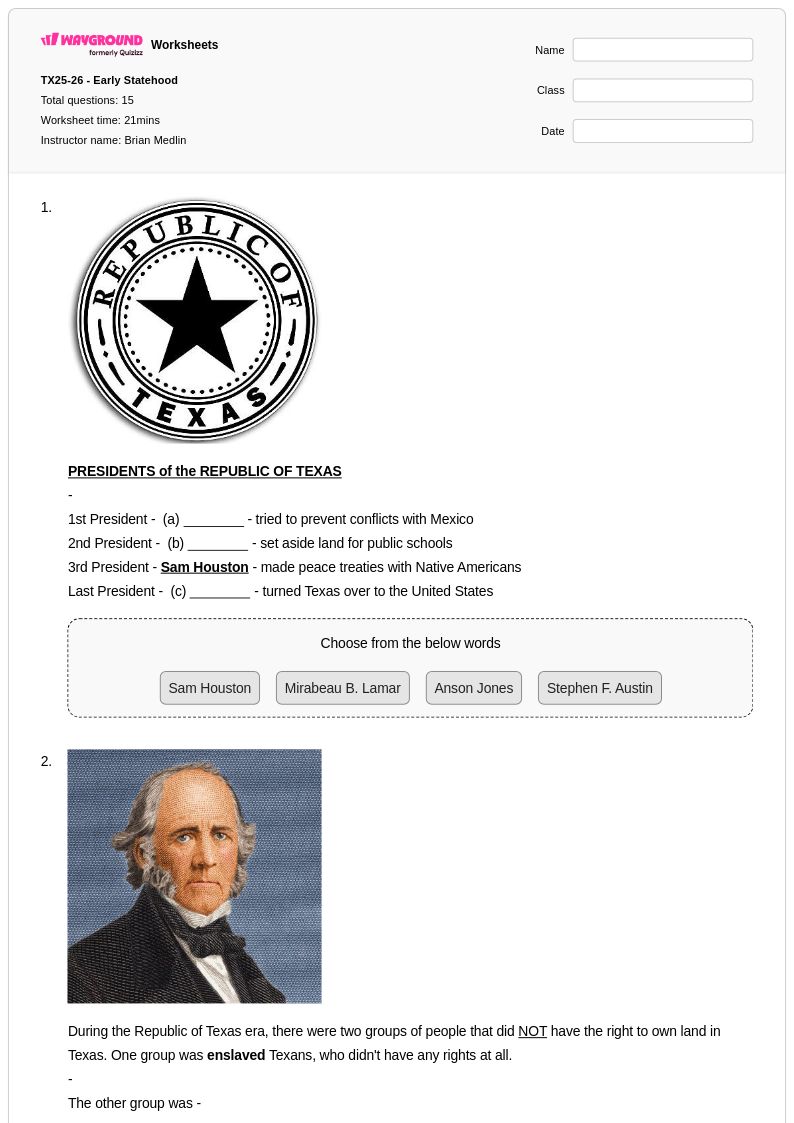
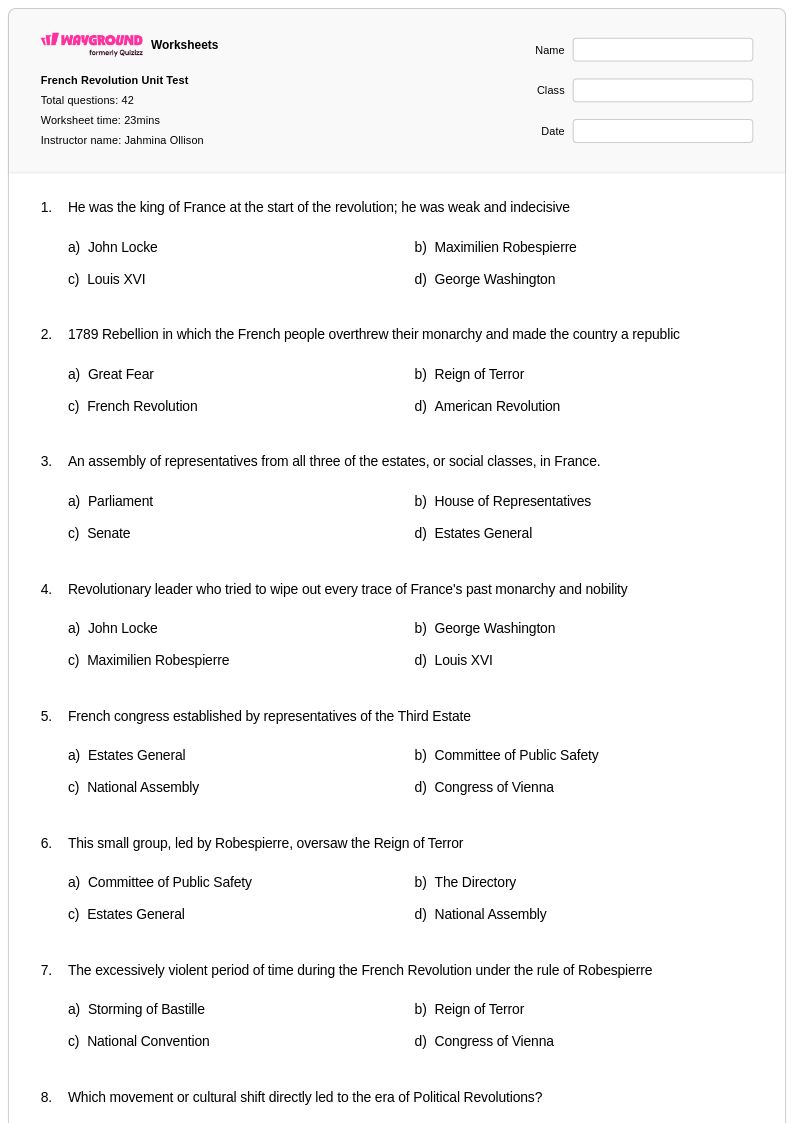
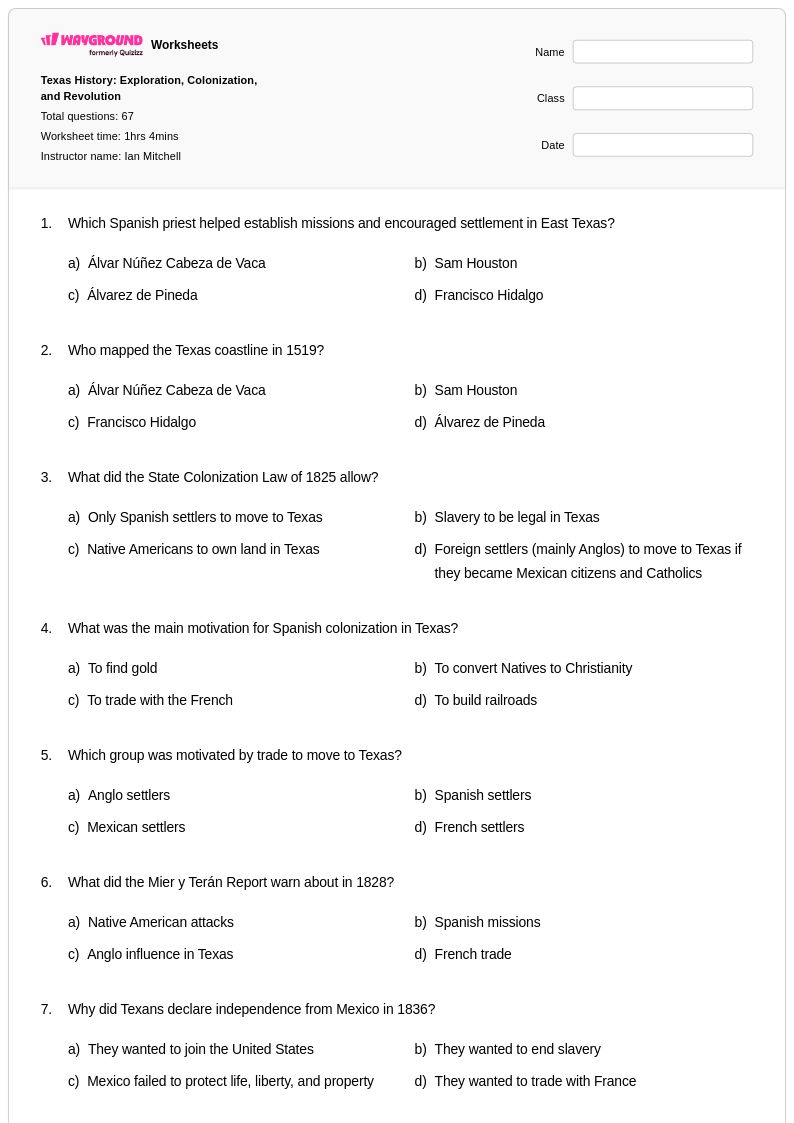
Free Printable Global Revolutions in History Worksheets for Class 7
Explore Class 7 Global Revolutions in History through Wayground's comprehensive collection of free worksheets and printables, featuring practice problems and answer keys to help students master revolutionary movements worldwide.
Explore printable Global Revolutions in History worksheets for Class 7
Global Revolutions in History worksheets for Class 7 available through Wayground (formerly Quizizz) provide comprehensive exploration of the transformative political and social upheavals that reshaped civilizations across different continents and time periods. These carefully crafted educational resources guide seventh-grade students through critical analysis of revolutionary movements including the American Revolution, French Revolution, Haitian Revolution, and Latin American independence movements, strengthening essential skills in cause-and-effect analysis, primary source interpretation, and historical comparison. Each worksheet collection includes detailed answer keys to support independent learning and assessment, while the free printables offer flexible access to practice problems that reinforce understanding of revolutionary ideologies, key figures, and lasting impacts on modern democratic societies.
Wayground's extensive collection of teacher-created resources supports educators with millions of Global Revolutions in History materials specifically designed for middle school learners. The platform's robust search and filtering capabilities enable teachers to quickly locate standards-aligned content that matches their curriculum requirements, while differentiation tools allow for seamless adaptation of worksheets to accommodate diverse learning needs within Class 7 classrooms. These customizable resources are available in both printable pdf format and interactive digital versions, providing maximum flexibility for lesson planning, targeted remediation of historical thinking skills, enrichment activities for advanced learners, and systematic practice of chronological reasoning and historical argumentation that seventh-grade students need to master revolutionary themes and their connections to contemporary global movements.
FAQs
How do I teach global revolutions in history to secondary students?
Teaching global revolutions effectively starts with helping students identify recurring causes: political oppression, economic inequality, and ideological shifts. Structure your unit comparatively so students can analyze the American, French, and Haitian Revolutions alongside decolonization movements in Africa and Asia, identifying shared patterns and distinct regional contexts. Primary source analysis, cause-and-effect mapping, and perspective-taking activities help students move beyond memorizing dates toward understanding why revolutions happen and what they change.
What worksheets help students practice analyzing revolutionary movements?
Worksheets that combine primary source document analysis with comparative exercises are most effective for this topic. Students benefit from tasks that ask them to identify the causes of a specific revolution, trace its major turning points, and evaluate its long-term political and social outcomes. Practice problems that prompt students to compare two revolutions across different regions, such as the French Revolution and independence movements in Latin America, build the kind of analytical thinking that history assessments require.
What common mistakes do students make when studying global revolutions?
A frequent misconception is treating revolutions as sudden events rather than as the result of long-building social, economic, and political pressures. Students also tend to view revolutionary outcomes as uniformly positive, overlooking cycles of instability, authoritarian backlash, or unmet goals that followed many revolutions. Another common error is applying a Western-centric framework to non-Western revolutions, which distorts students' understanding of decolonization movements in Africa and Asia.
How do I help students compare revolutions across different time periods and regions?
Use a structured comparative framework that asks students to evaluate each revolution along the same dimensions: causes, key actors, ideology, methods, and long-term impact. Graphic organizers and side-by-side analysis charts work well for this. Encouraging students to ask 'What did revolutionaries want, and did they achieve it?' across multiple cases builds genuine historical reasoning rather than surface-level recall.
How do I use Global Revolutions in History worksheets from Wayground in my classroom?
Wayground's Global Revolutions in History worksheets are available as printable PDFs for traditional classroom use and in digital formats for technology-integrated environments, giving you flexibility across in-person, hybrid, or remote settings. You can also host them as a quiz directly on Wayground. All worksheets include complete answer keys, supporting both independent student work and teacher-led instruction. Wayground's search and filtering tools make it straightforward to locate materials aligned with your specific curriculum standards and learning objectives.
How can I differentiate Global Revolutions instruction for students at different skill levels?
For students who need additional support, scaffold tasks by pre-teaching key vocabulary, providing sentence starters for written analysis, and using graphic organizers before asking students to write independently. For advanced learners, push toward synthesis tasks that require evaluating multiple perspectives or constructing an argument about whether a specific revolution achieved its goals. On Wayground, teachers can apply accommodations such as read aloud, extended time, and reduced answer choices to individual students without disrupting the rest of the class.

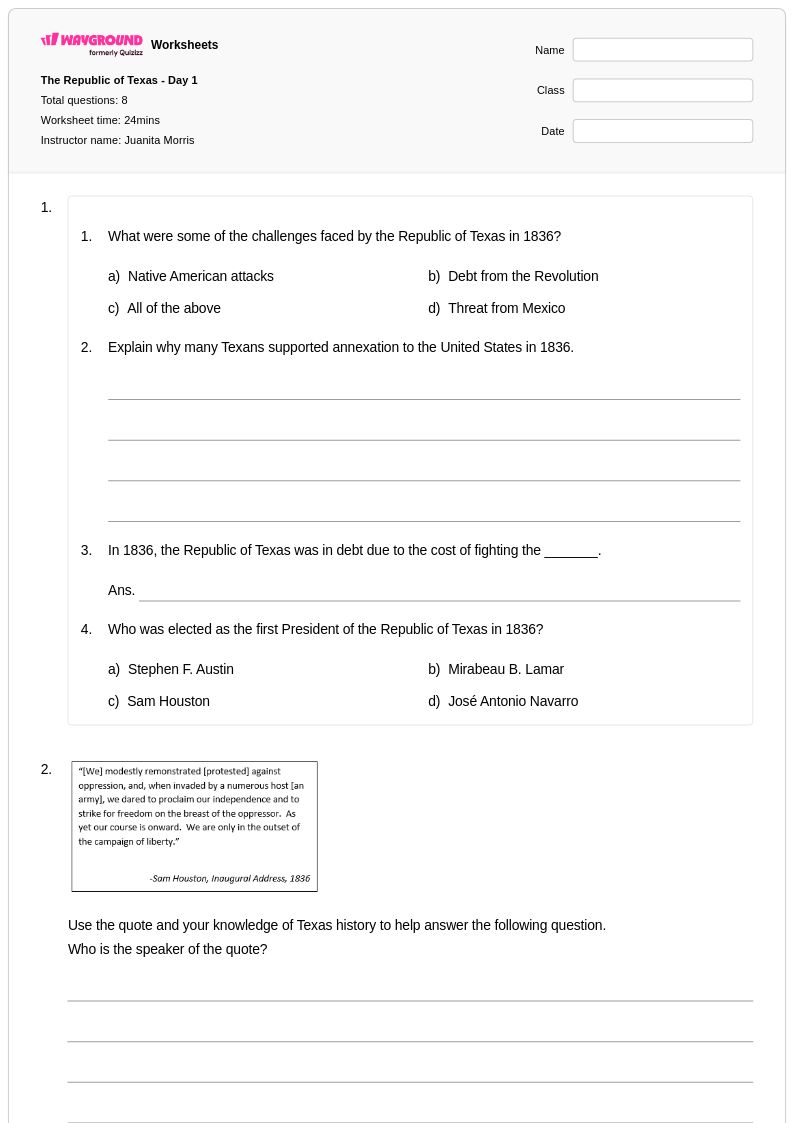
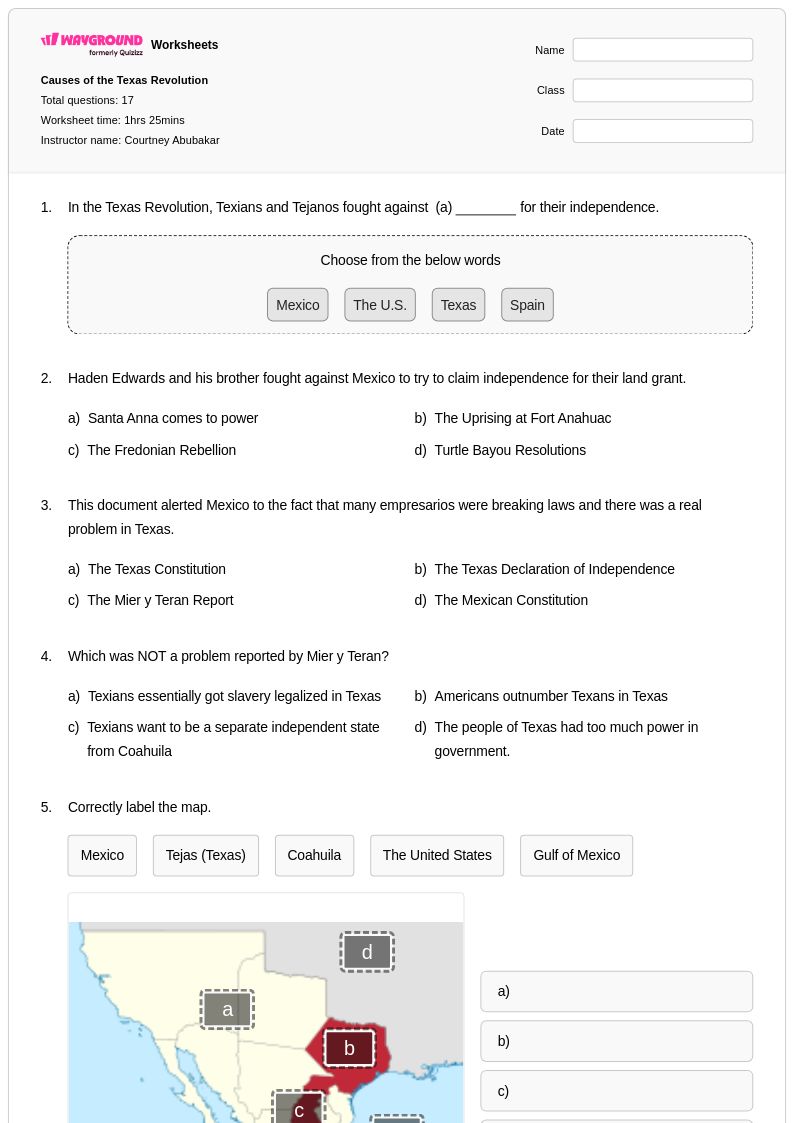
![TX24-25 - Republic of Texas 2 [and unit review] - Printable Global-revolutions-in-history Worksheets Class 7 - Wayground](https://quizizz-static.s3.amazonaws.com/_media/worksheets-new/67325430b6b1e000b90dd5be-tx24-25-republic-of-texas-2-and-unit-review)
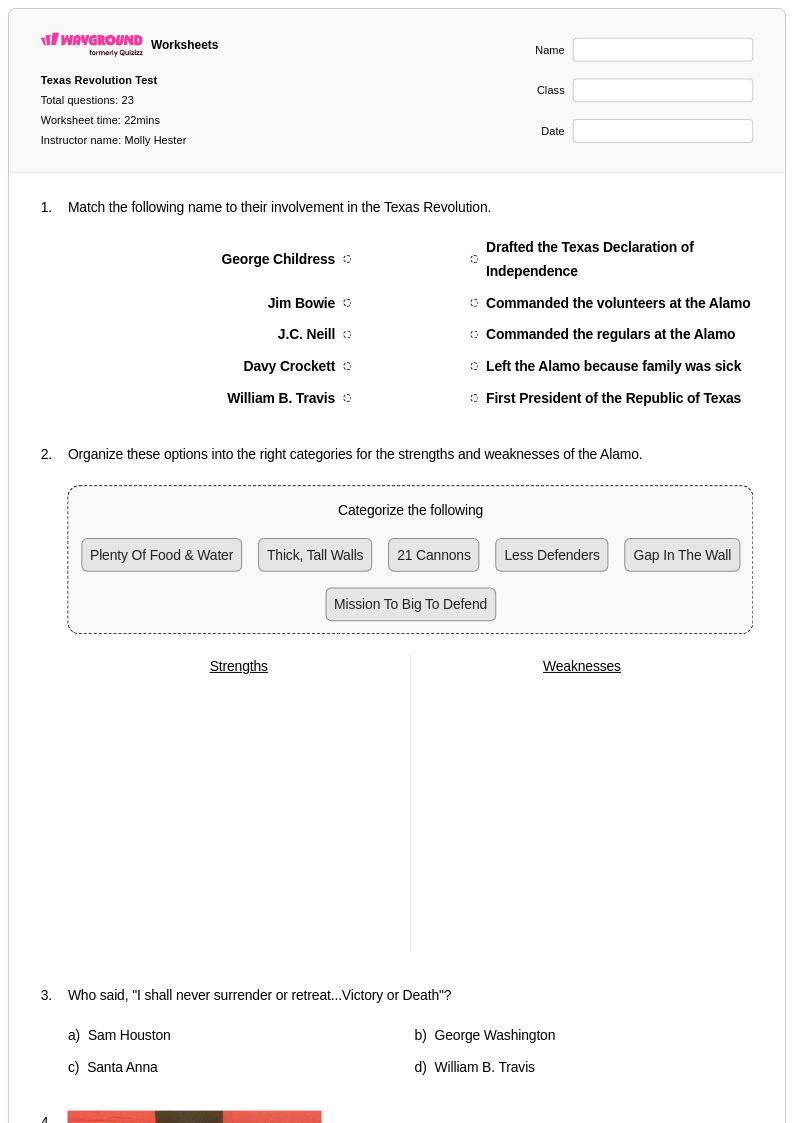
![TX24-25 - Early Statehood [and exam review] - Printable Global-revolutions-in-history Worksheets Class 7 - Wayground](https://quizizz-static.s3.amazonaws.com/_media/worksheets-new/673380fae0dc7c828df7a248-tx24-25-early-statehood-and-exam-review)
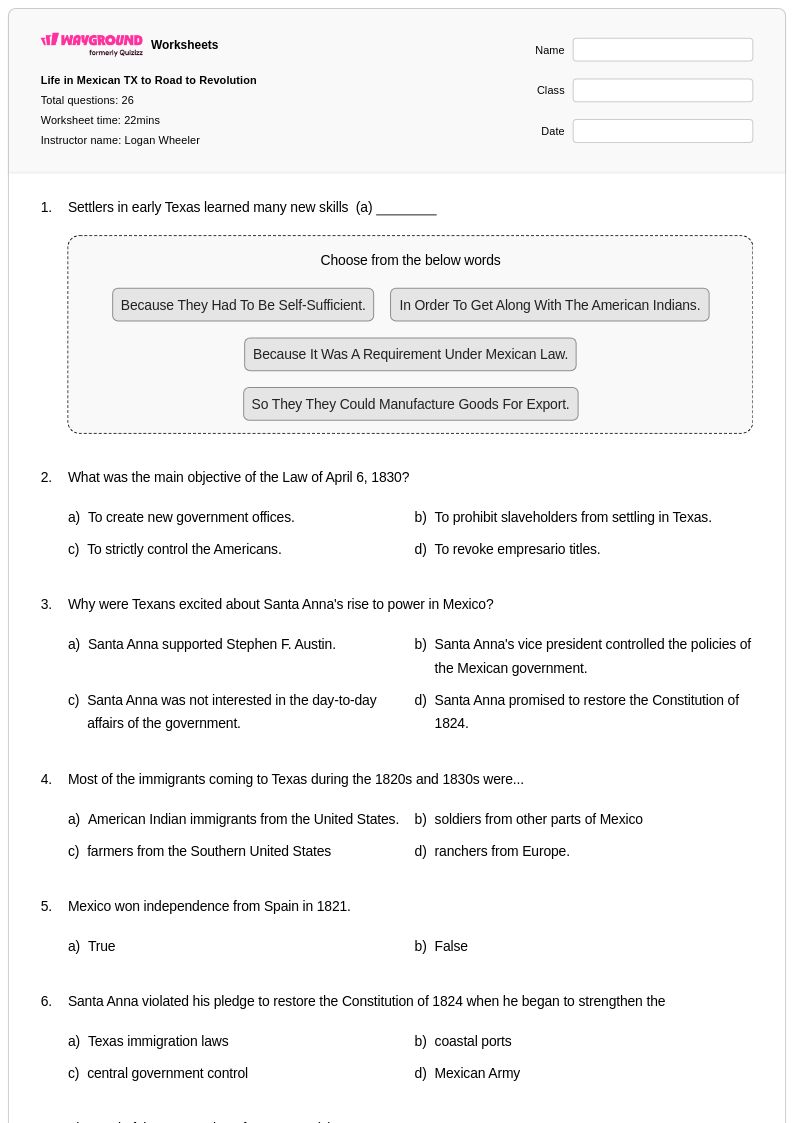
![TX24-25 - Republic of Texas [and unit review] - Printable Global-revolutions-in-history Worksheets Class 7 - Wayground](https://quizizz-static.s3.amazonaws.com/_media/worksheets-new/67321df7862f60ef177f60fd-tx24-25-republic-of-texas-and-unit-review)
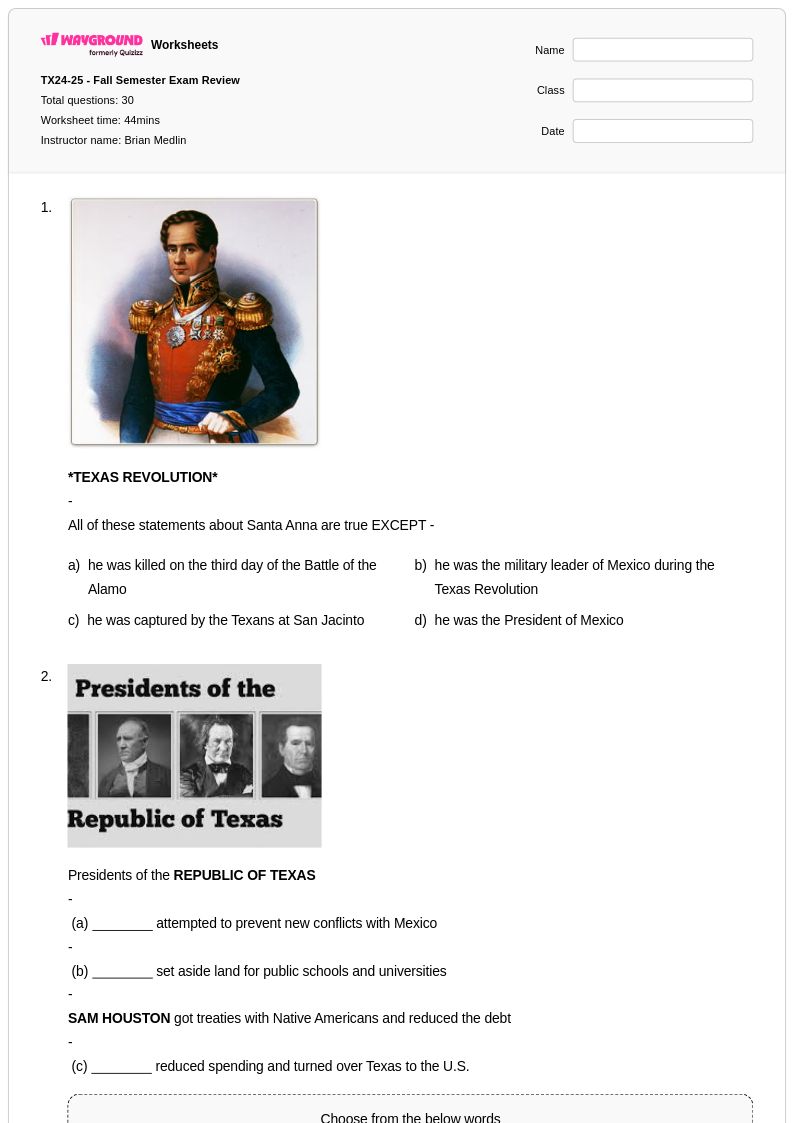
![TX25-26 - TR and Q1 Review [part 2] - Printable Global-revolutions-in-history Worksheets Class 7 - Wayground](https://quizizz-static.s3.amazonaws.com/_media/worksheets-new/690ca06f70ab7cee1b7ced93-tx25-26-tr-and-q1-review-part-2)