Free Printable Medieval Japan Worksheets for Class 7
Discover comprehensive Class 7 Medieval Japan worksheets and printables that help students explore feudalism, samurai culture, and ancient Japanese civilization through engaging practice problems with answer keys available as free PDF downloads.
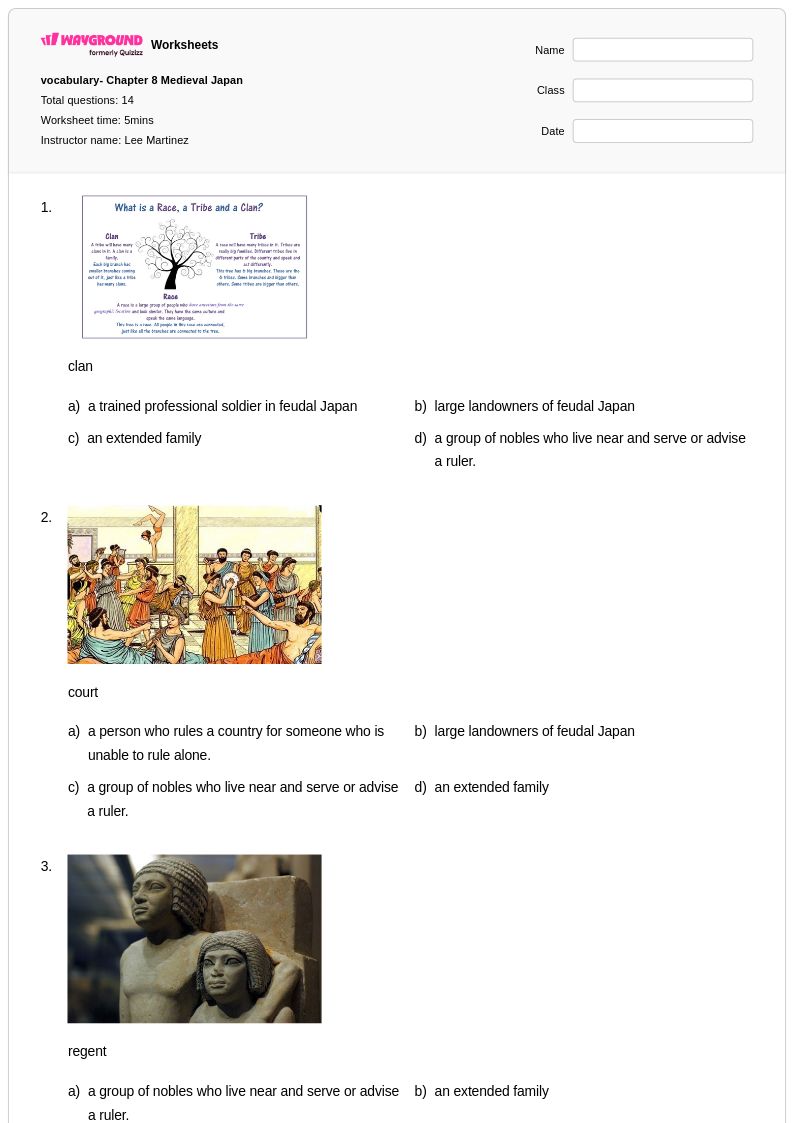
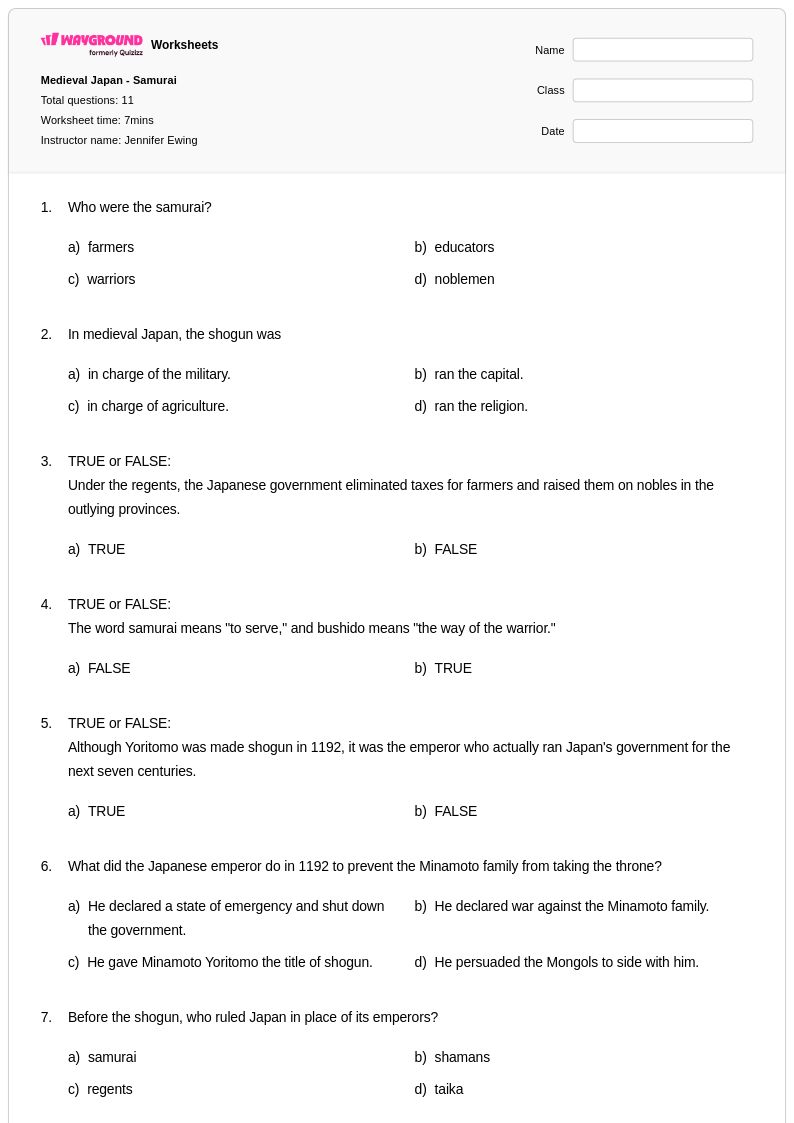
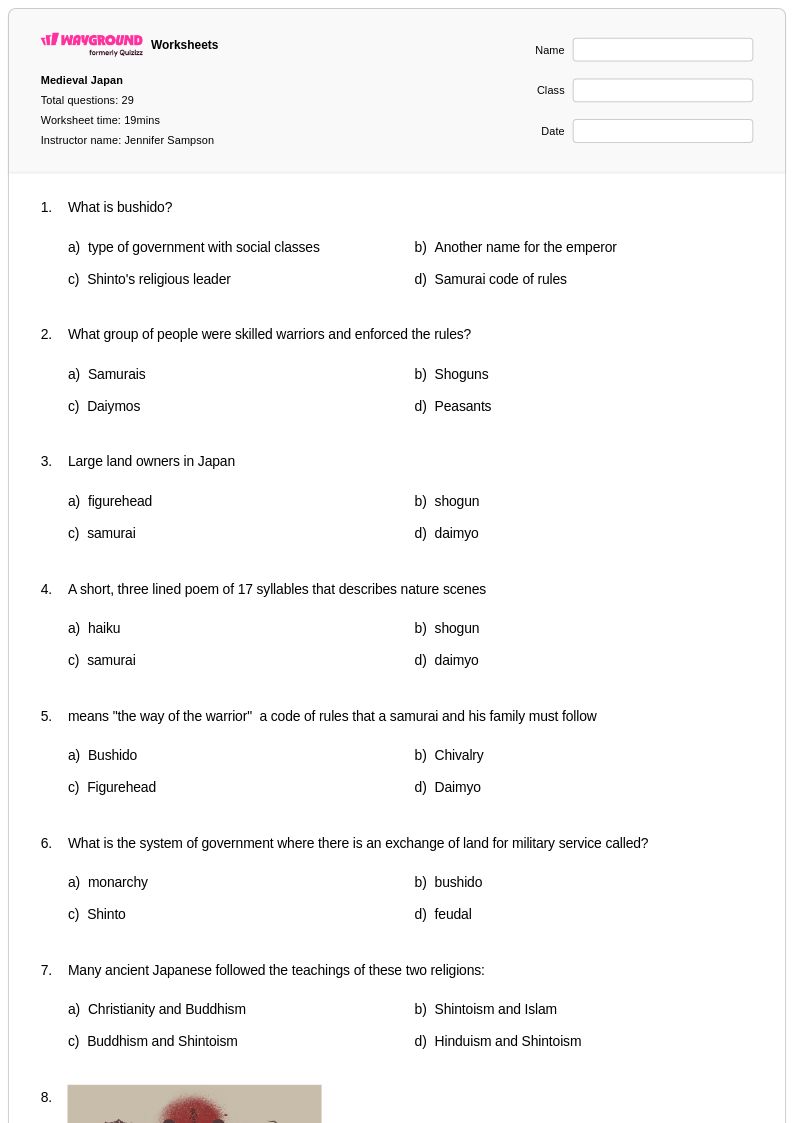
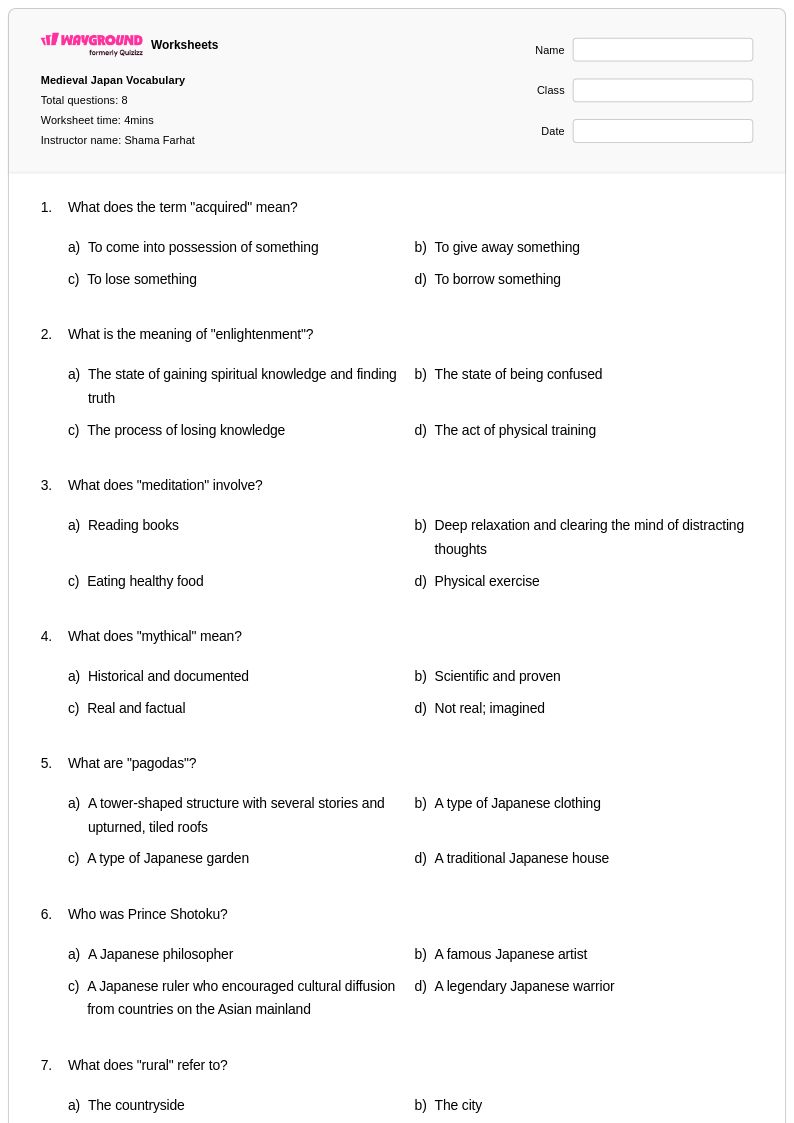
Explore printable Medieval Japan worksheets for Class 7
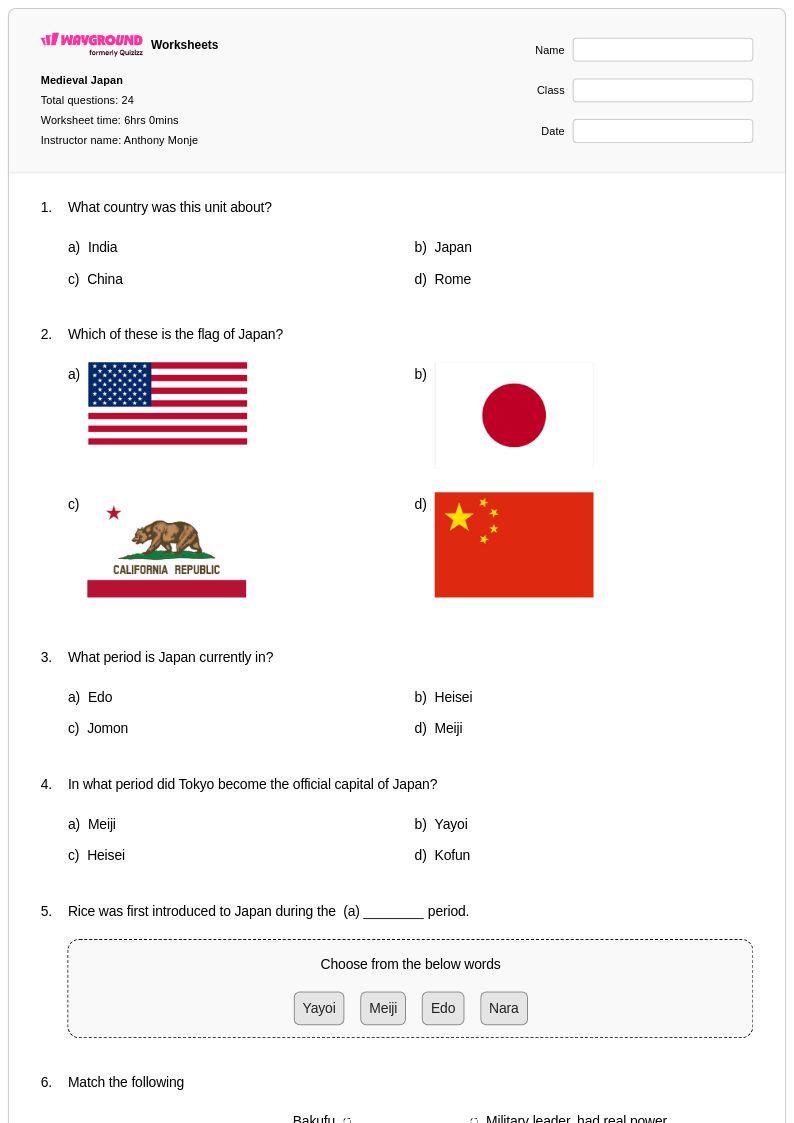
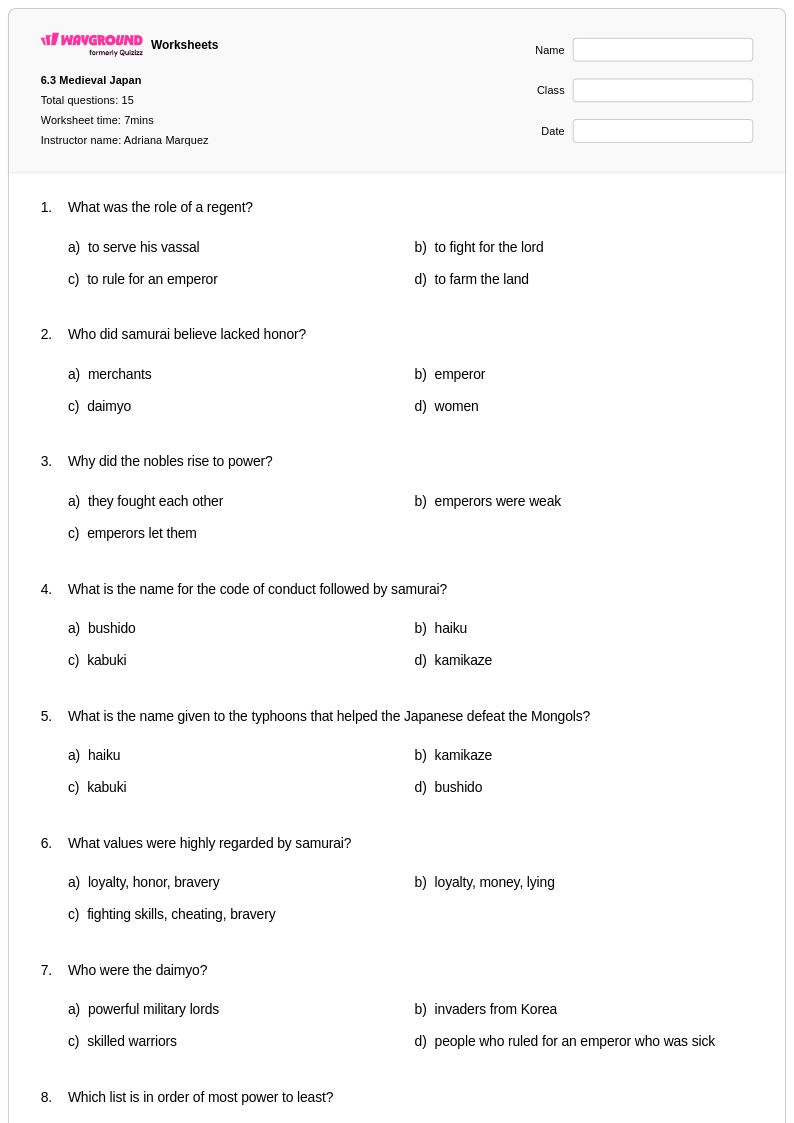
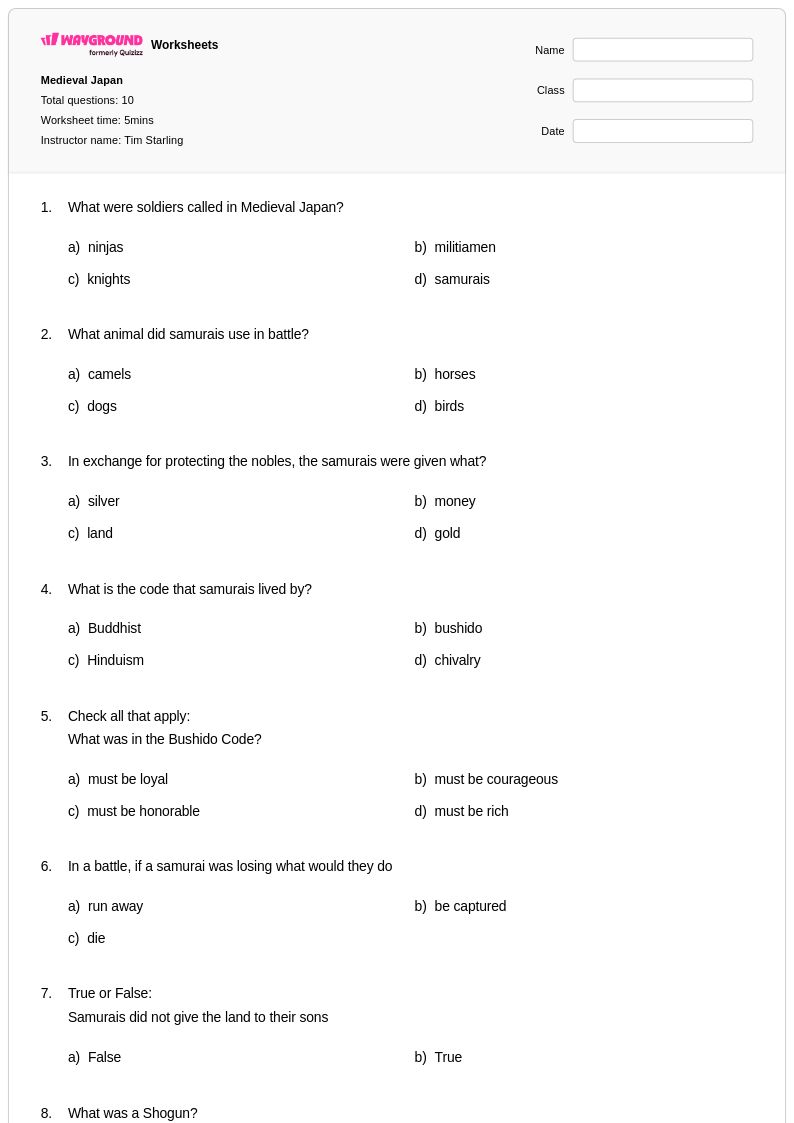
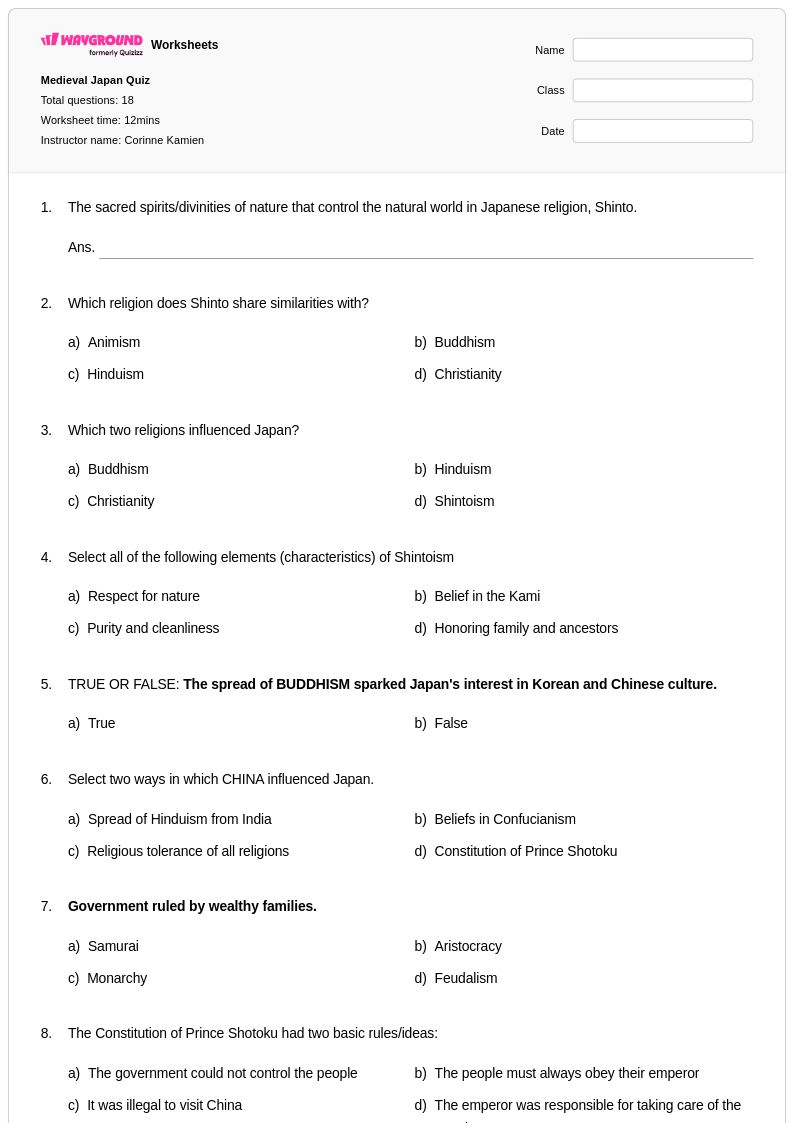
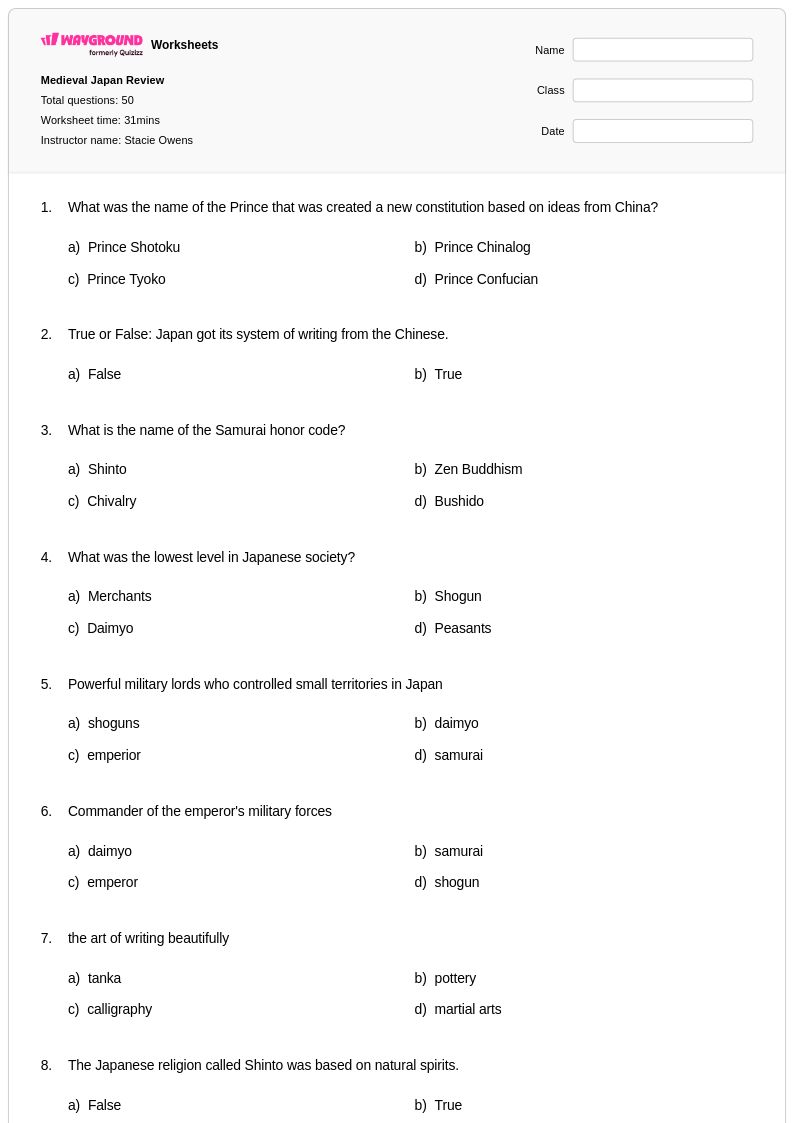
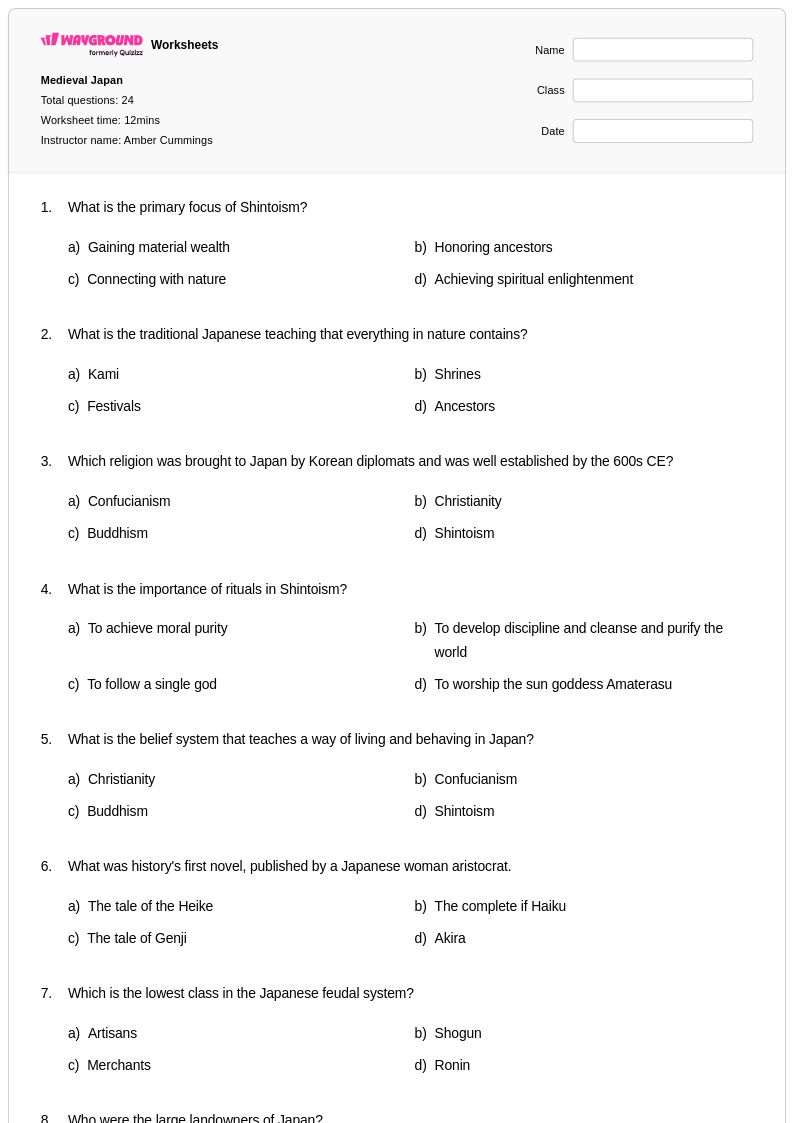
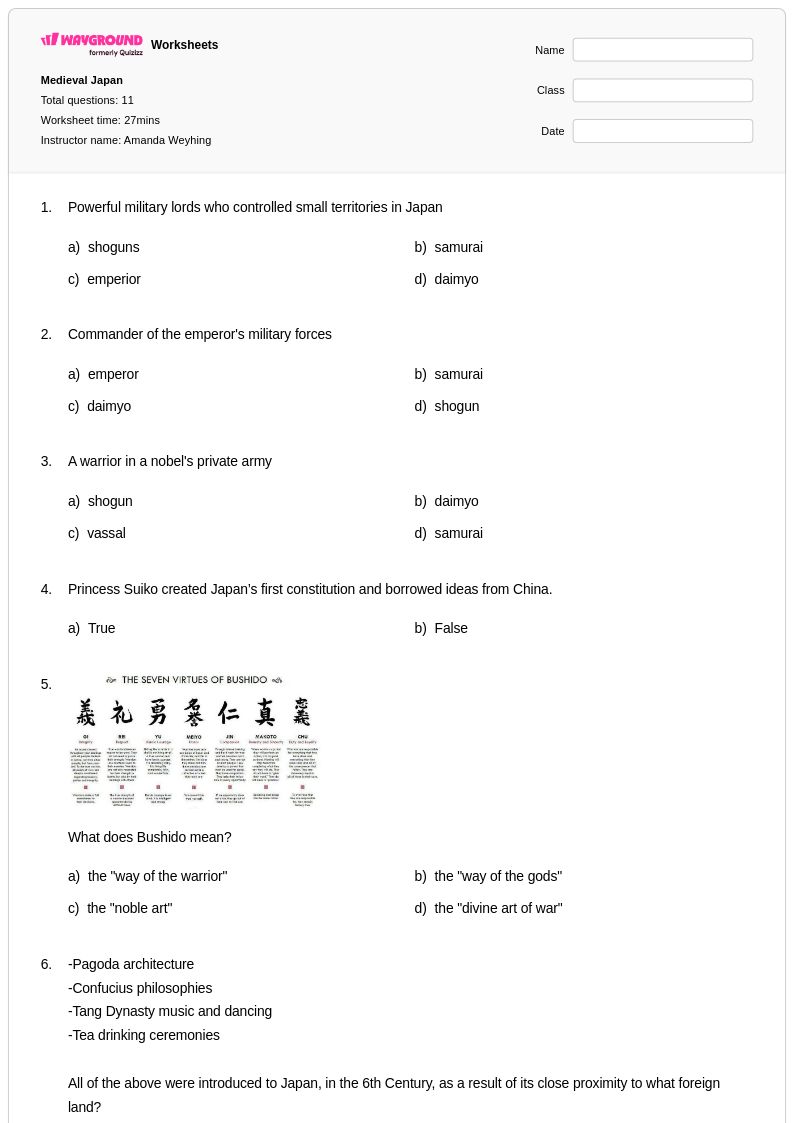
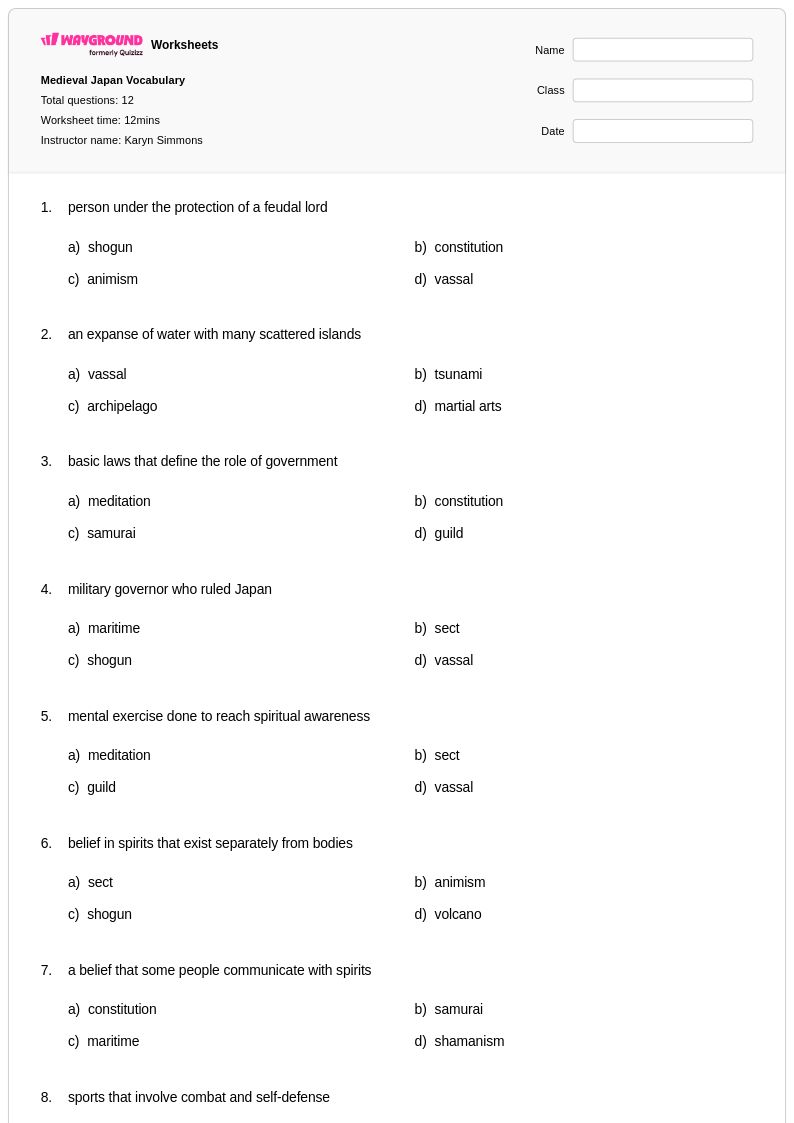
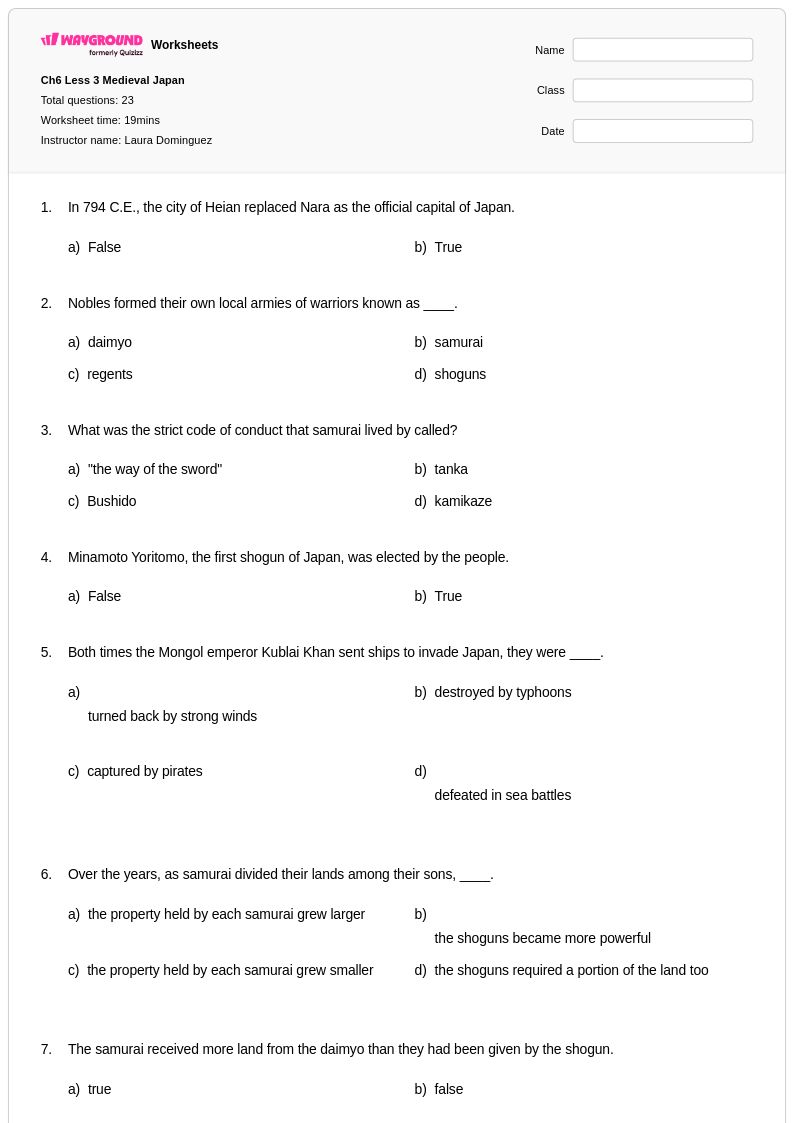
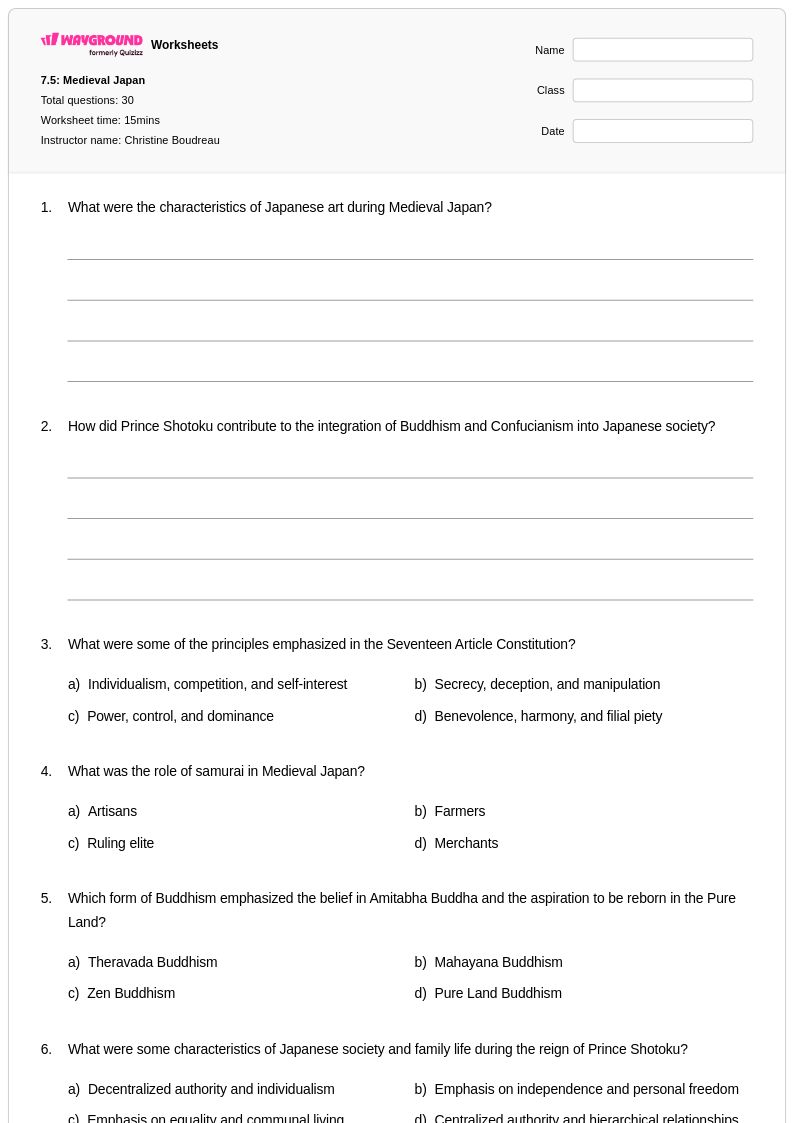
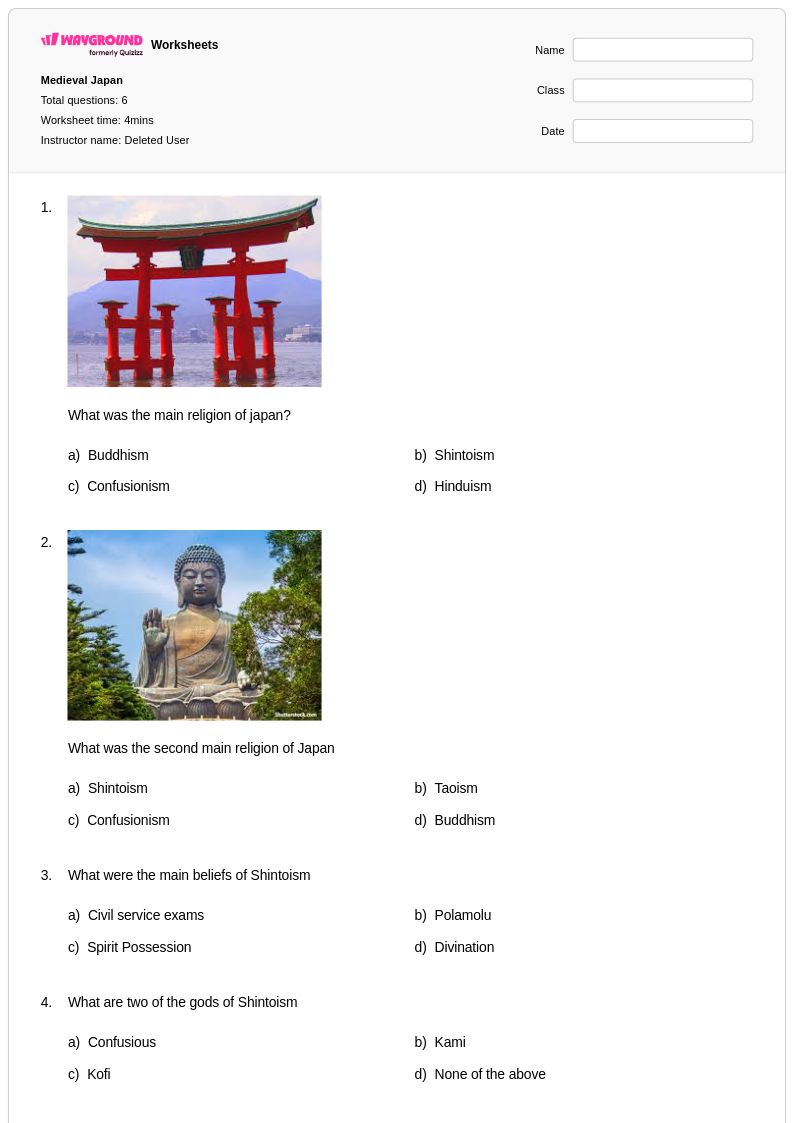
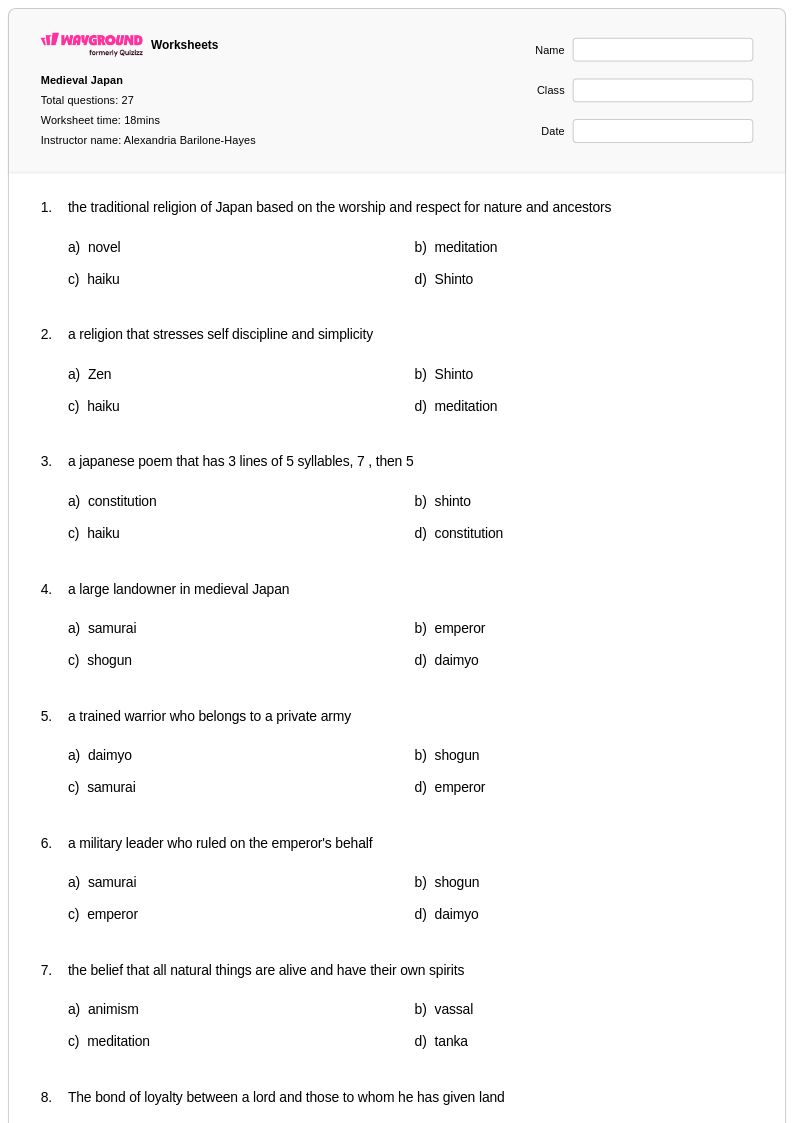
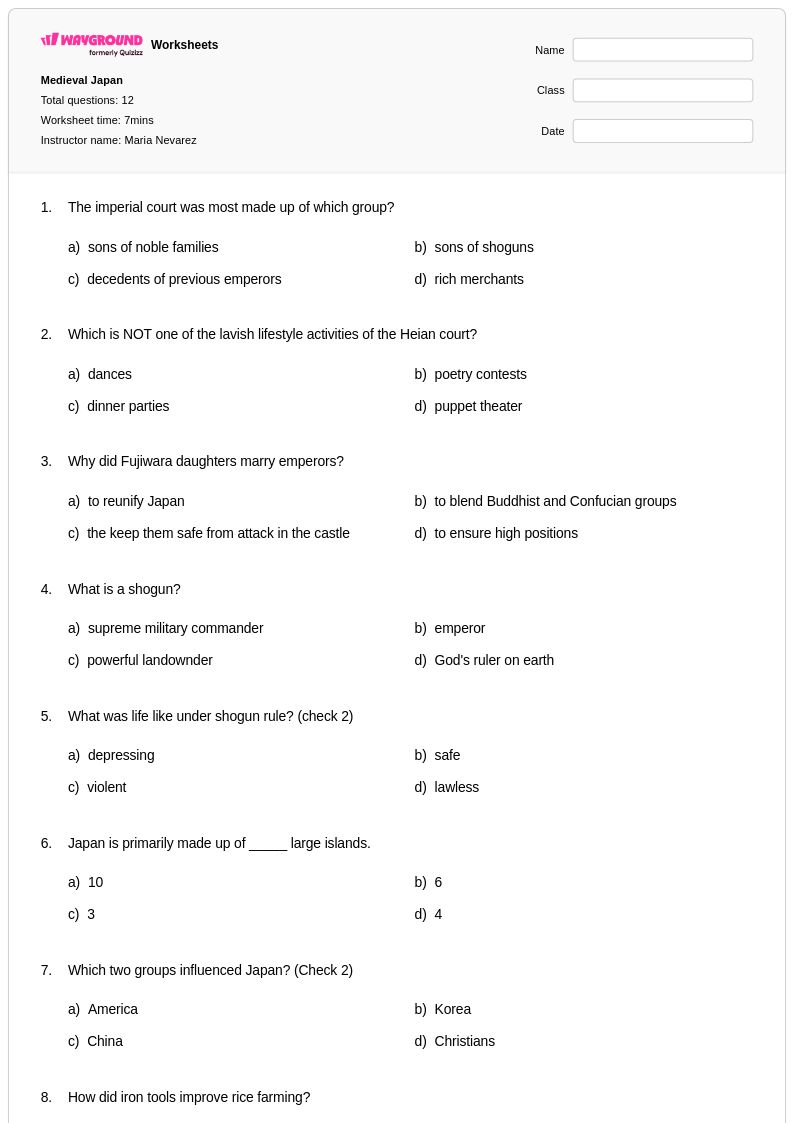
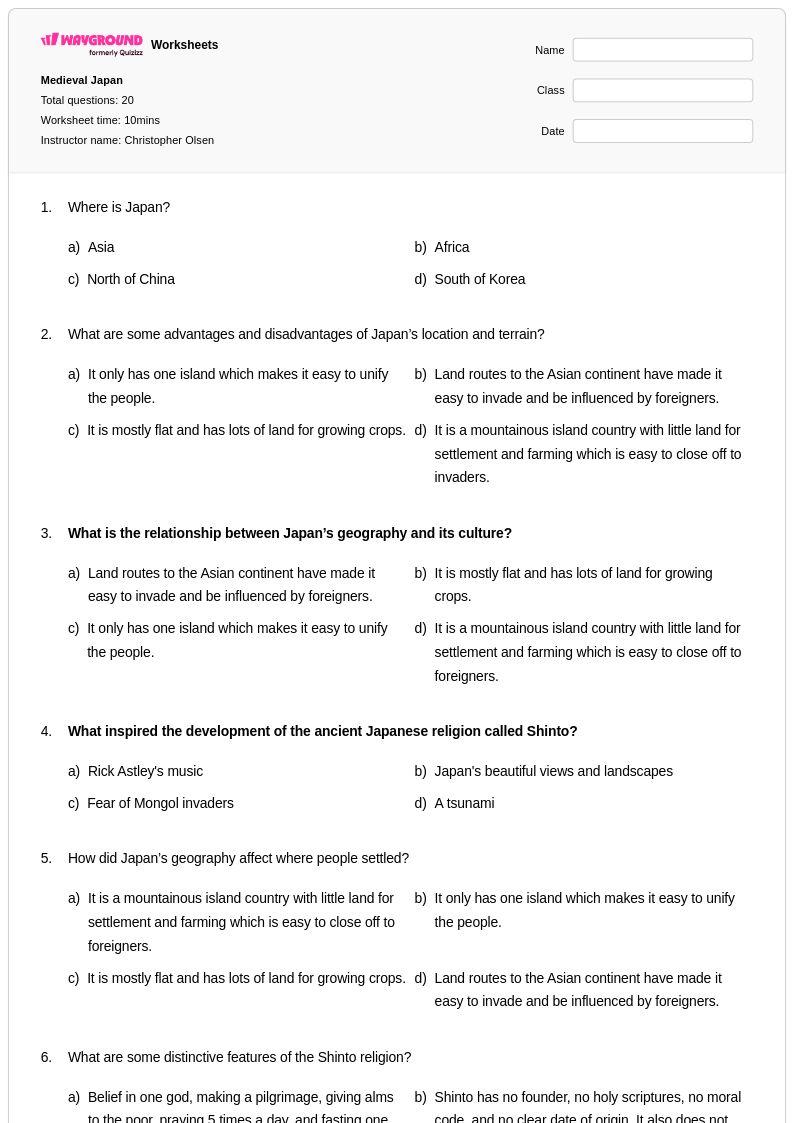
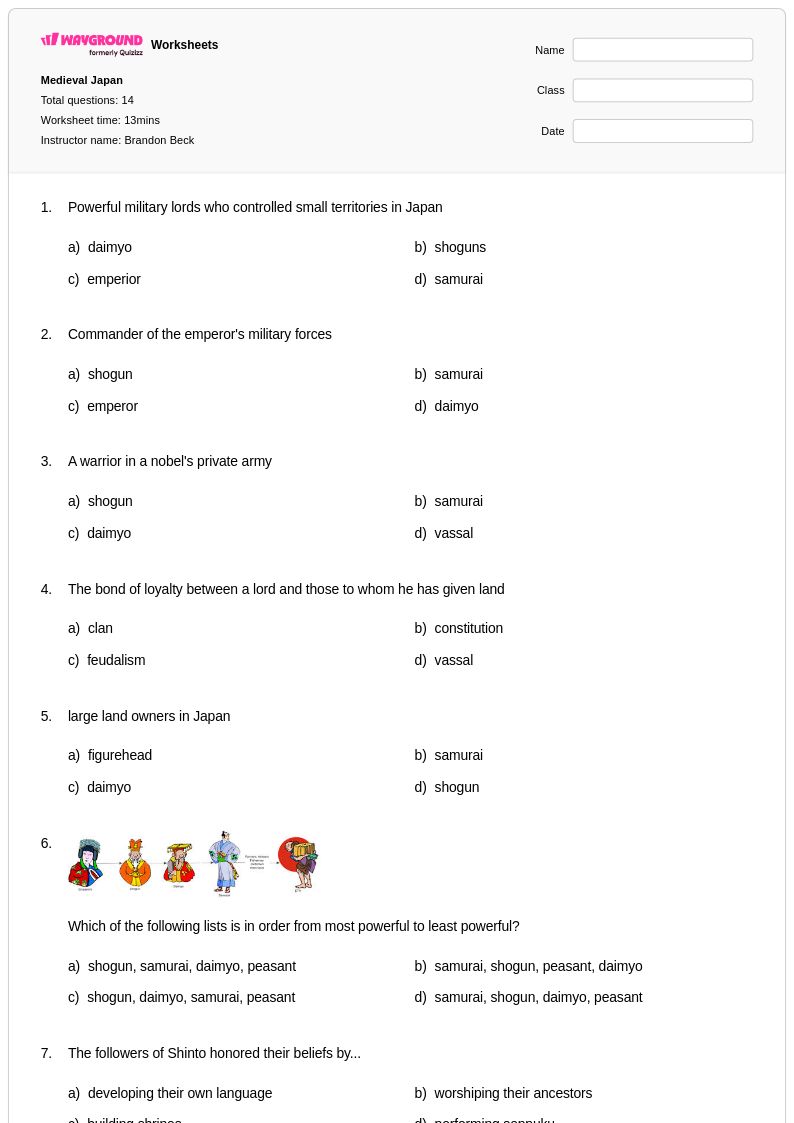
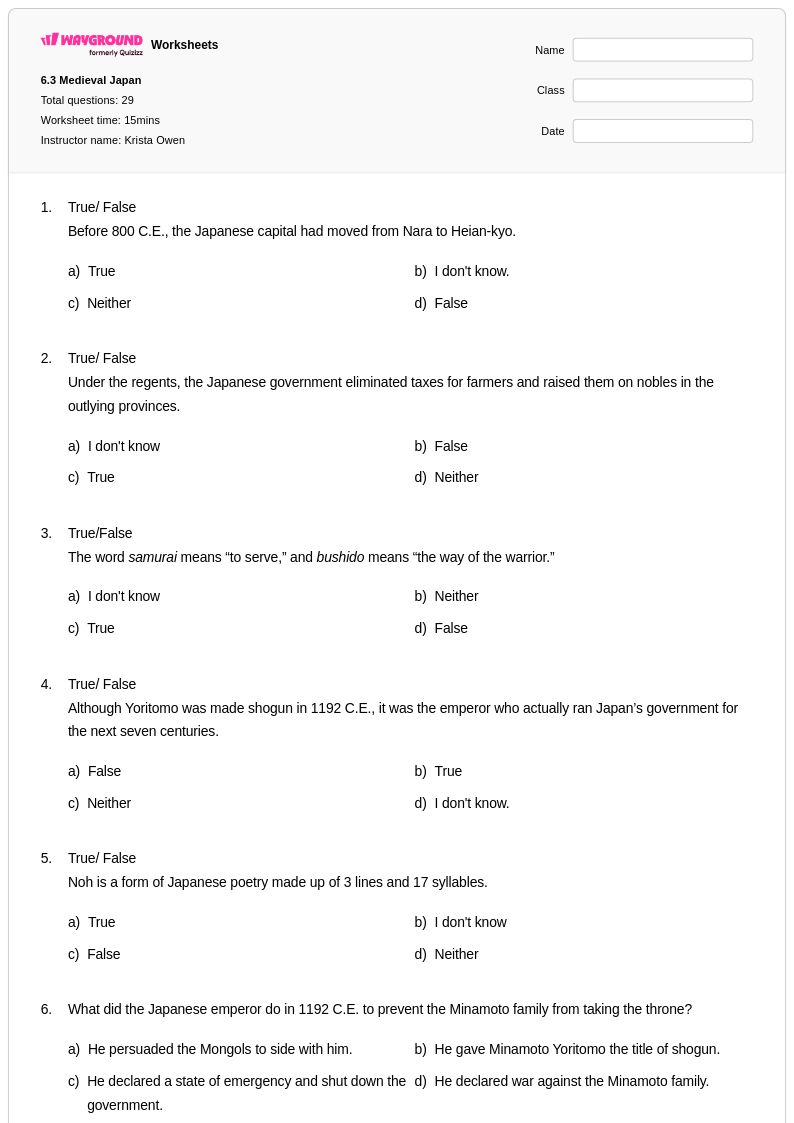
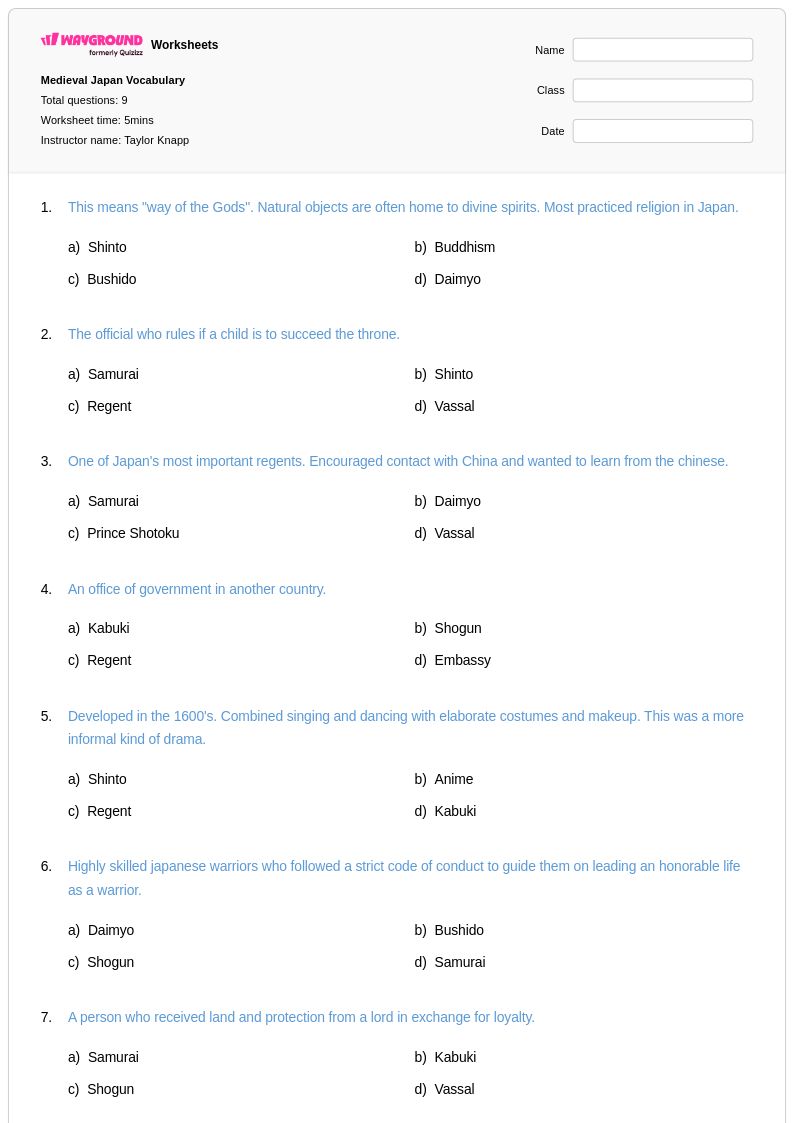
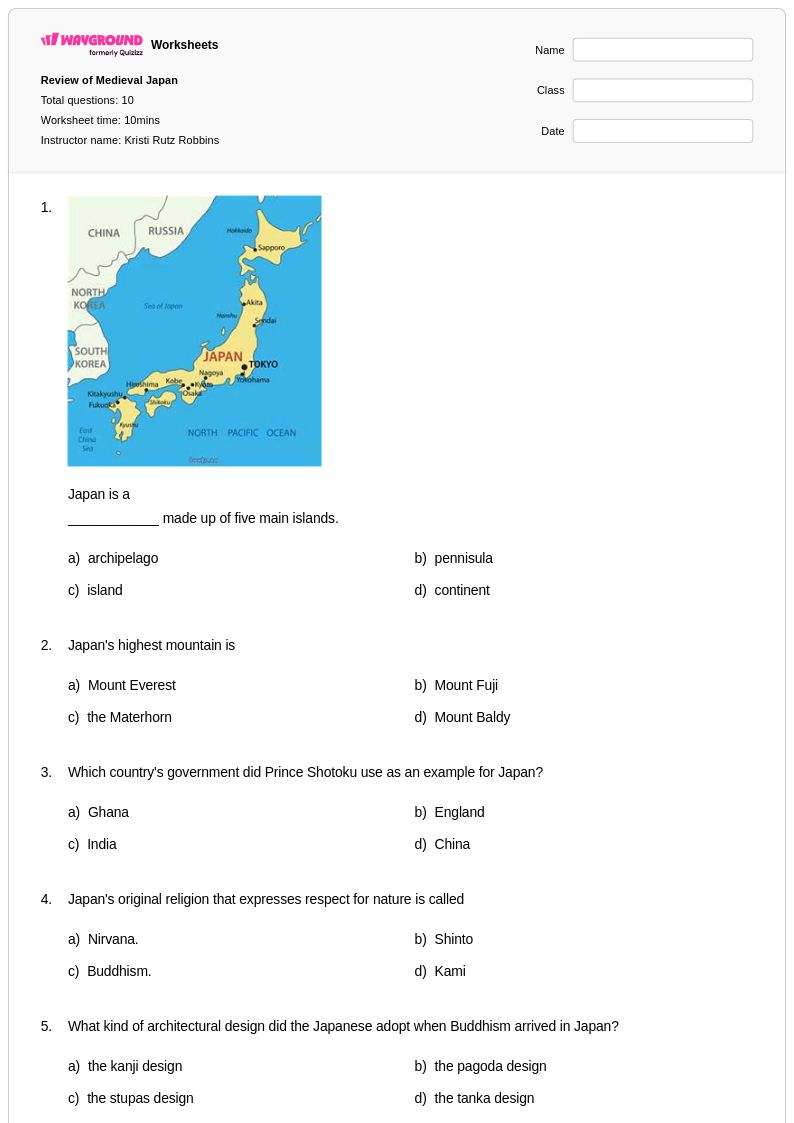
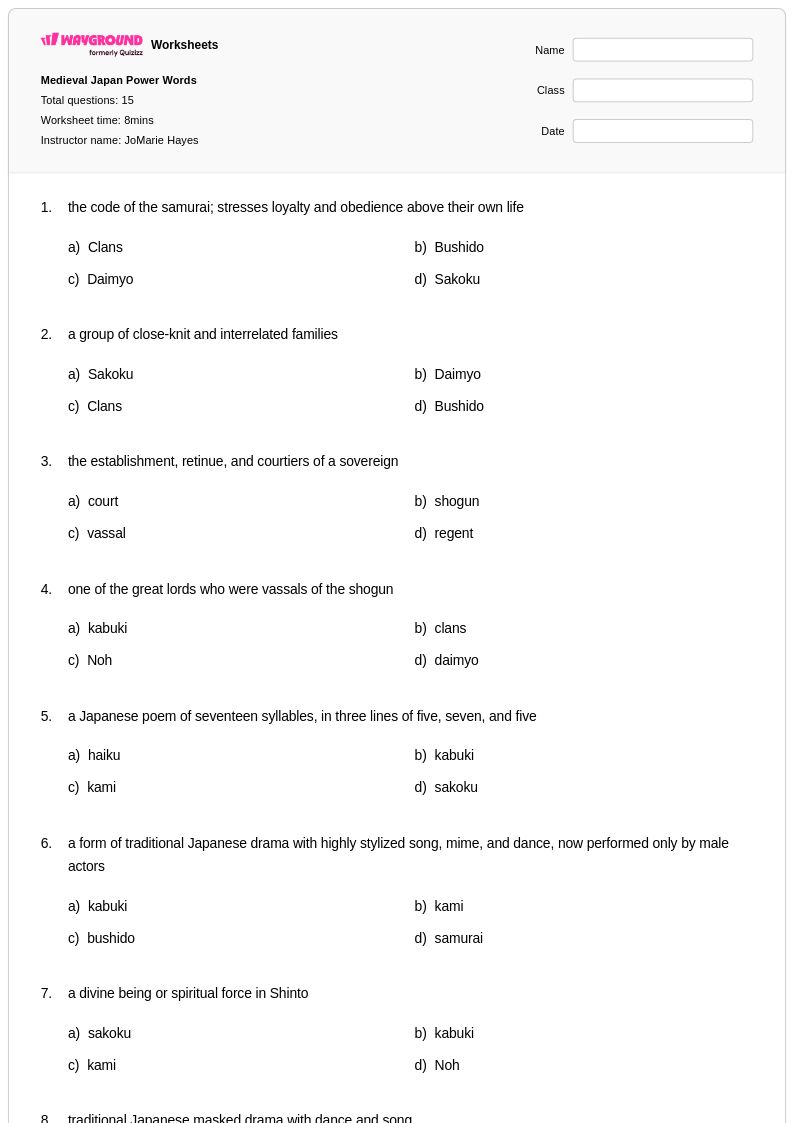
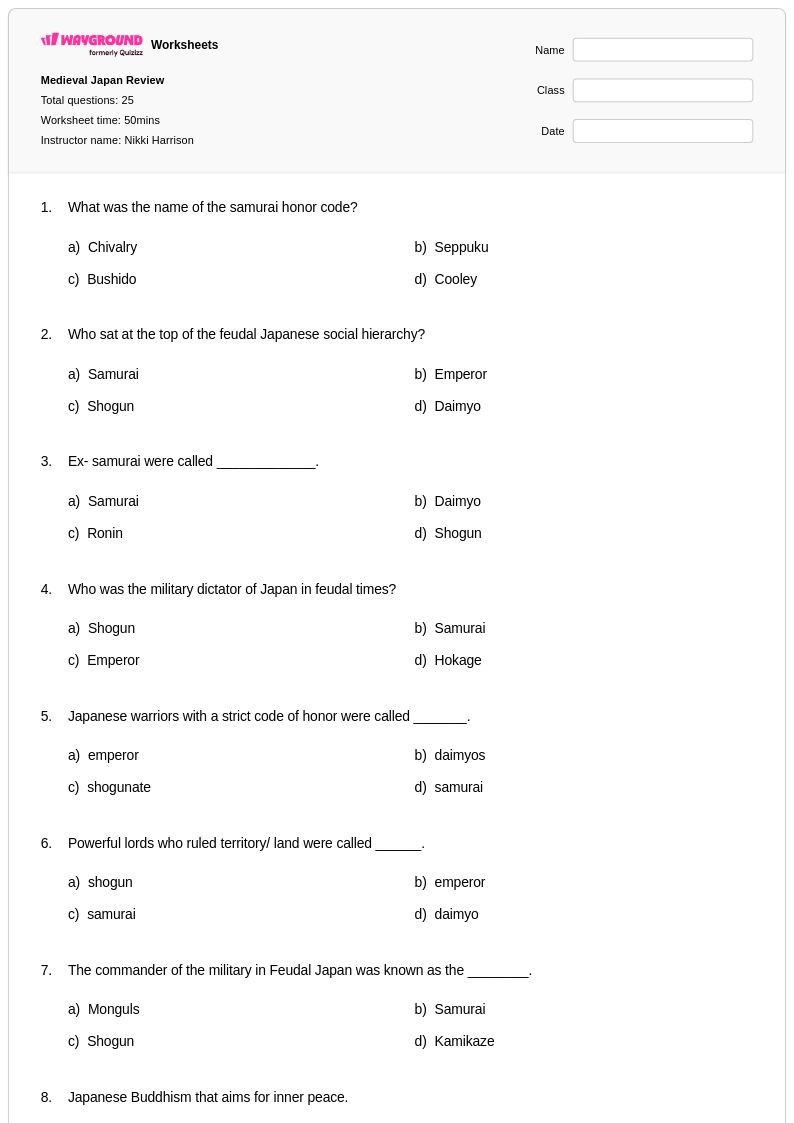
Medieval Japan worksheets for Class 7 students available through Wayground (formerly Quizizz) provide comprehensive exploration of one of history's most fascinating civilizations, covering the feudal system, samurai culture, Shinto and Buddhist influences, and the isolationist Sakoku policy. These educational resources strengthen critical thinking skills as students analyze primary sources, compare social hierarchies, and examine the complex relationships between daimyo, shogun, and emperors that defined Japanese society from the Heian period through the Edo period. The collection includes practice problems that challenge students to evaluate the impact of geographic isolation on cultural development, printables featuring detailed maps of feudal territories, and assessment materials complete with answer key support to ensure thorough understanding of concepts like bushido, the role of women in medieval society, and Japan's unique adaptation of Chinese governmental and religious systems.
Wayground (formerly Quizizz) supports educators with millions of teacher-created resources specifically designed for medieval Japan instruction, featuring robust search and filtering capabilities that allow teachers to locate materials aligned with state social studies standards and differentiated for various learning levels. The platform's extensive worksheet collection includes both printable pdf formats for traditional classroom use and digital interactive versions that can be customized to meet specific curricular needs, whether teachers are planning introductory lessons on the rise of the samurai class or conducting advanced analysis of the Mongol invasion attempts. These flexible tools enable educators to seamlessly integrate remediation activities for struggling learners, provide enrichment opportunities for advanced students, and offer targeted skill practice in historical analysis, geographic reasoning, and cultural comparison that builds foundational knowledge essential for understanding Japan's transition from medieval isolation to modern global engagement.
FAQs
How do I teach Medieval Japan to middle or high school students?
Teaching Medieval Japan effectively means anchoring instruction in the feudal structure that shaped Japanese society for centuries. Start by comparing the Japanese feudal hierarchy of emperors, shoguns, daimyo, samurai, and peasants to feudal Europe, which gives students a familiar framework. From there, build outward into the Heian, Kamakura, Muromachi, and Edo periods, tracing how political power shifted from imperial courts to military rulers. Grounding each period in a key figure, such as Minamoto Yoritomo or Tokugawa Ieyasu, helps students track cause and effect across a long historical arc.
What topics should Medieval Japan worksheets cover?
Medieval Japan worksheets should cover the feudal hierarchy, the rise of the shogunate system, the role of samurai and bushido, and major periods including the Kamakura, Muromachi, and Edo eras. Cultural developments such as Zen Buddhism, tea ceremonies, and the emergence of Japanese art forms are also essential. Worksheets that include primary source analysis from medieval texts and questions about isolationist policies help students move beyond memorization into historical thinking.
What are common misconceptions students have about Medieval Japan?
One of the most common misconceptions is that the emperor held actual political power throughout medieval Japan, when in practice shoguns exercised military and administrative authority for most of this period. Students also frequently conflate samurai with the romanticized warrior image from popular culture, overlooking their administrative and bureaucratic roles within the feudal system. Another common error is treating 'Medieval Japan' as a single unified era rather than recognizing the distinct political and cultural shifts across the Heian, Kamakura, Muromachi, and Edo periods.
How can I use Medieval Japan worksheets to assess student understanding?
Medieval Japan worksheets work well as formative checks after introducing each major period or power structure, allowing teachers to identify gaps before moving forward. Tasks that ask students to sequence the rise of the shogunate, compare the roles of shoguns and daimyo, or explain the social hierarchy in their own words reveal depth of understanding beyond surface recall. Using included answer keys allows for efficient review and targeted feedback on recurring errors in historical analysis.
How do I use Wayground's Medieval Japan worksheets in my classroom?
Wayground's Medieval Japan worksheets are available as printable PDFs for traditional classroom use and in digital formats for technology-integrated or remote learning environments. Teachers can also host them as a quiz directly on Wayground, making it easy to assign and collect student responses in one place. The digital format supports accommodations such as read aloud and extended time, which can be configured individually for students who need them without disrupting the rest of the class.
How do I differentiate Medieval Japan instruction for students at different levels?
For students who need additional support, focus on the core feudal hierarchy and one or two key figures before introducing the full timeline of periods. Advanced students benefit from primary source analysis, comparison tasks between Japanese and European feudalism, or inquiry into how Tokugawa isolationist policies shaped Japan's trajectory into the modern era. On Wayground, teachers can apply accommodations such as reduced answer choices or read aloud to individual students, allowing the same worksheet to serve learners at different levels simultaneously.