Free Printable Columbian Exchange Worksheets for Class 6
Explore Wayground's comprehensive Class 6 Columbian Exchange worksheets and printables that help students understand the profound cultural, biological, and economic exchanges between the Old and New Worlds through engaging practice problems and detailed answer keys.
Explore printable Columbian Exchange worksheets for Class 6
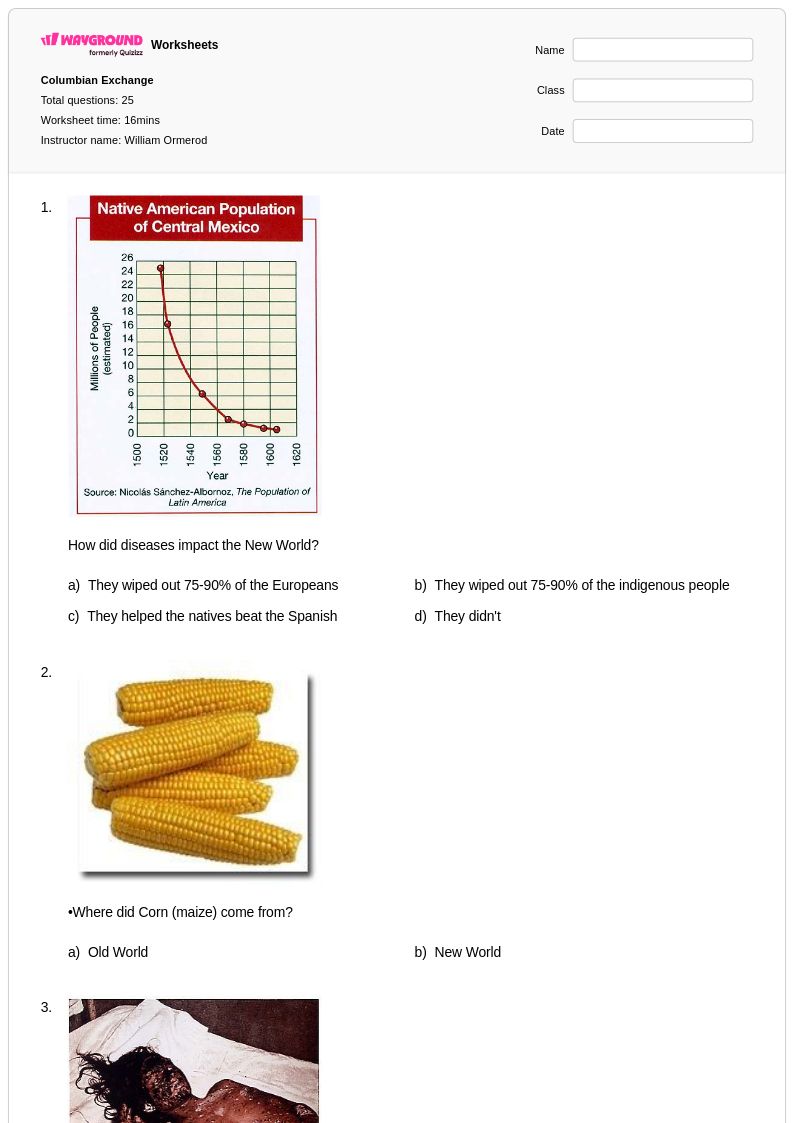
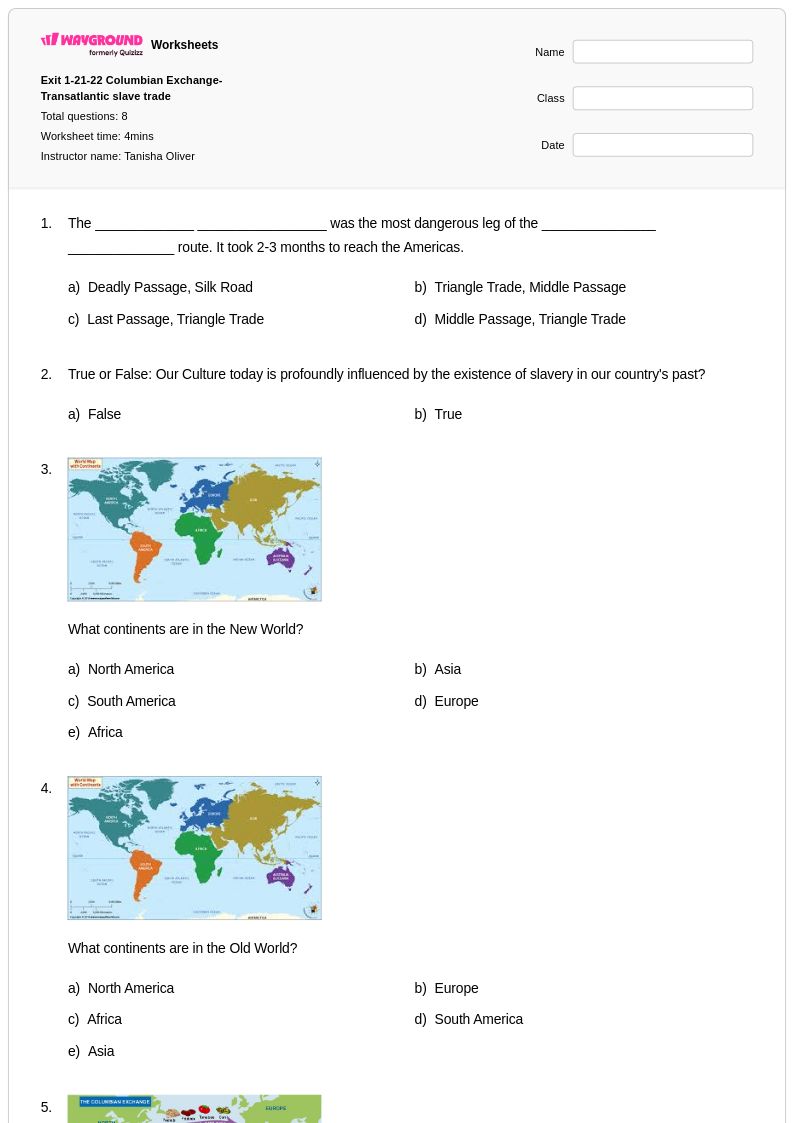
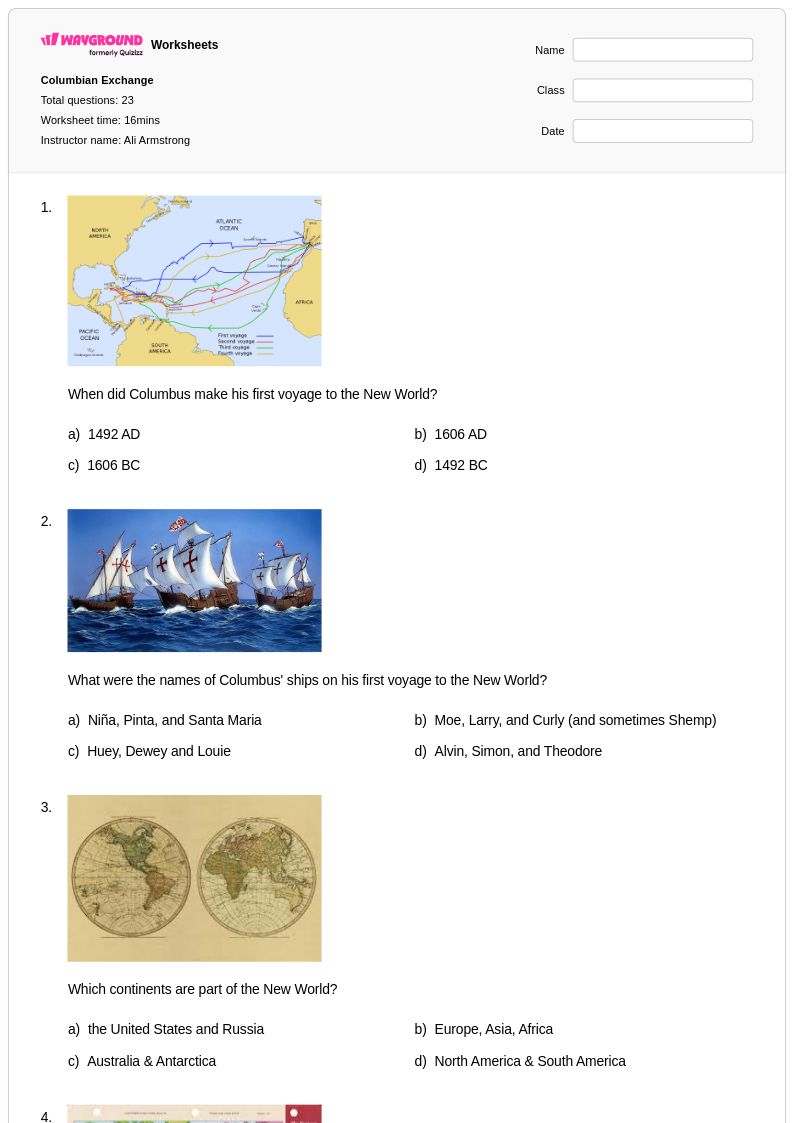
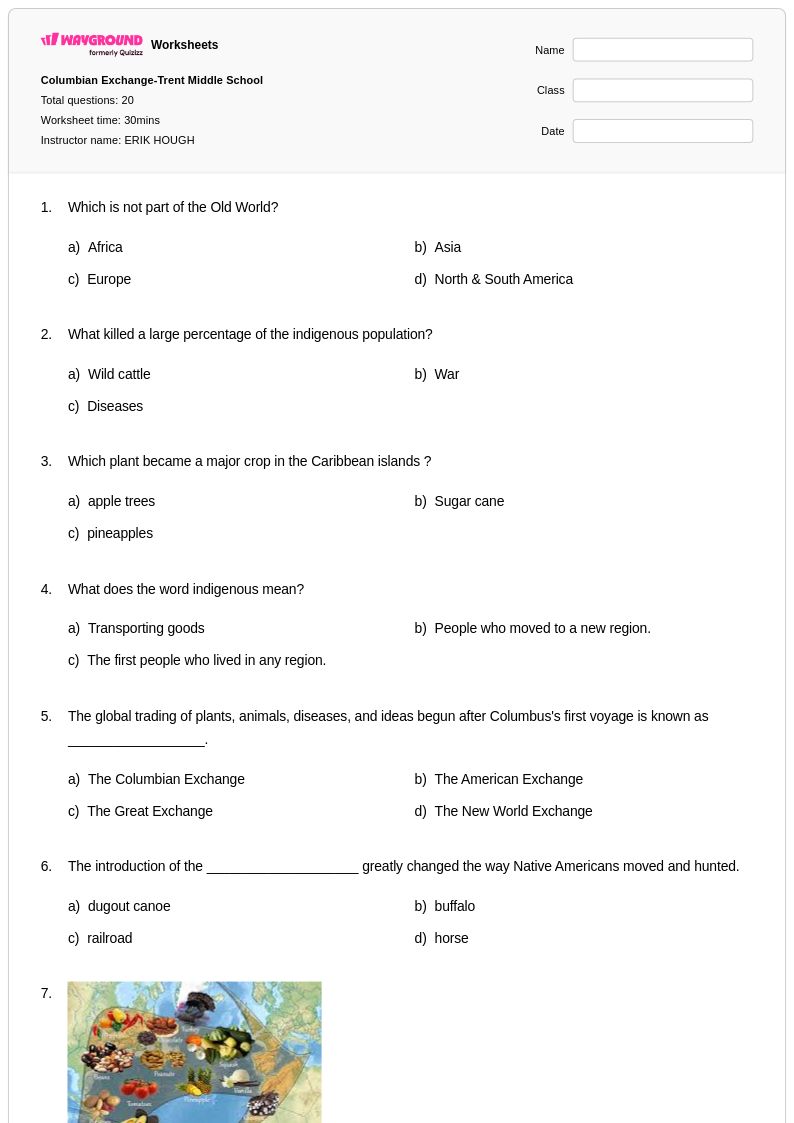
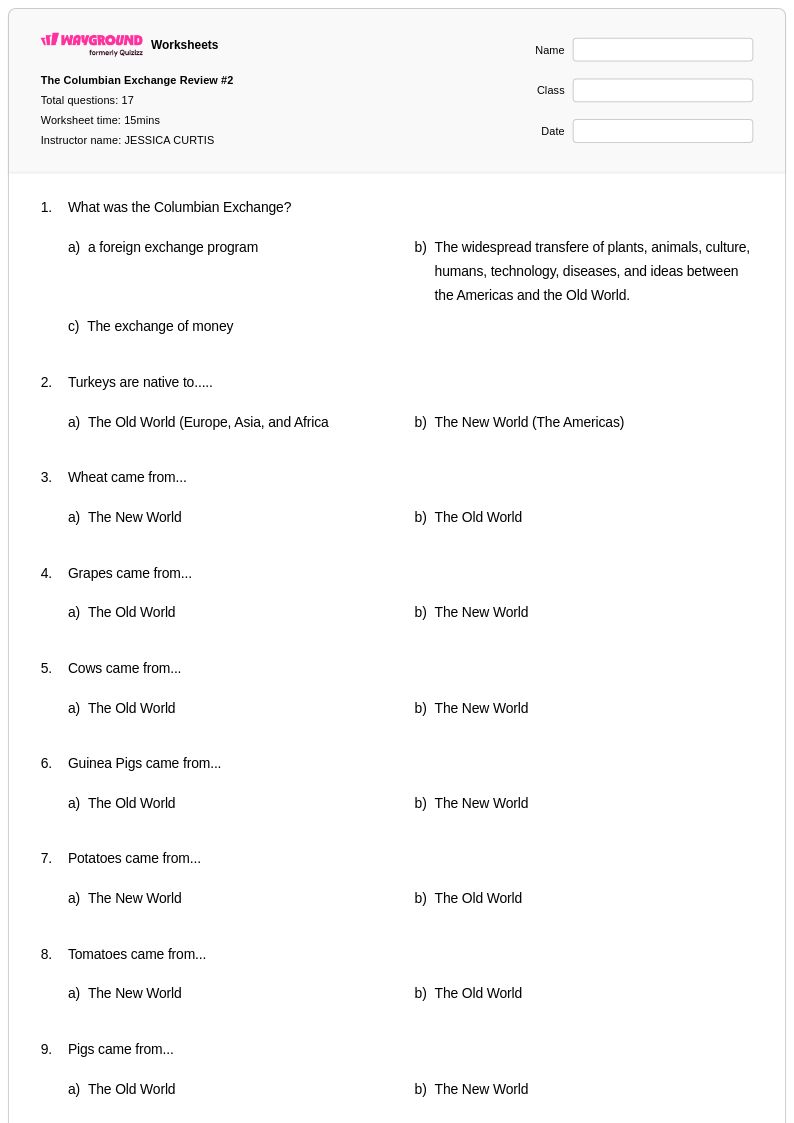
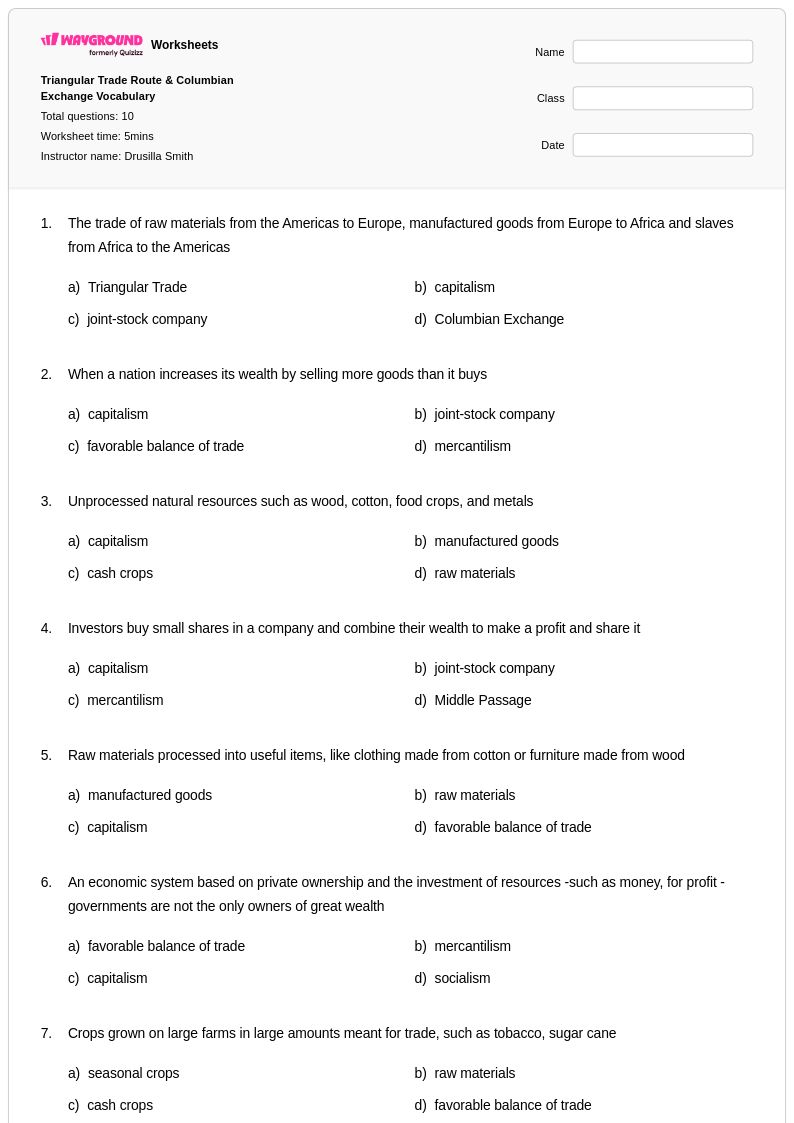
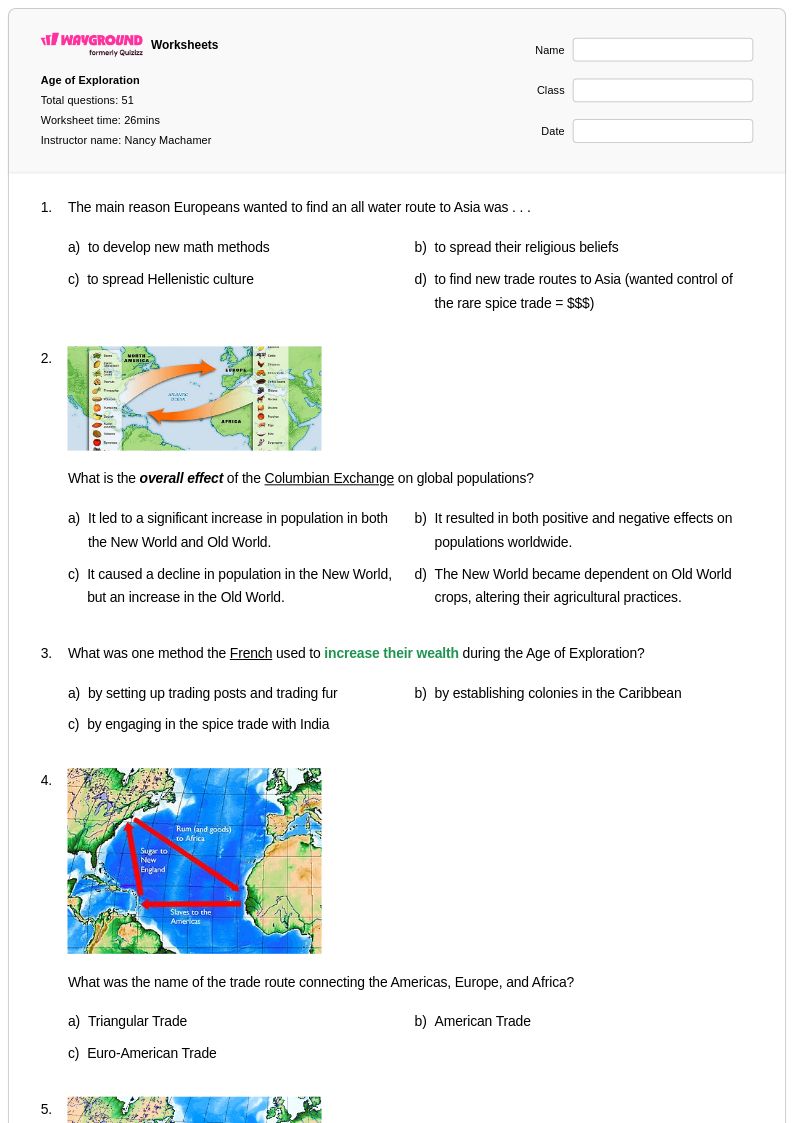
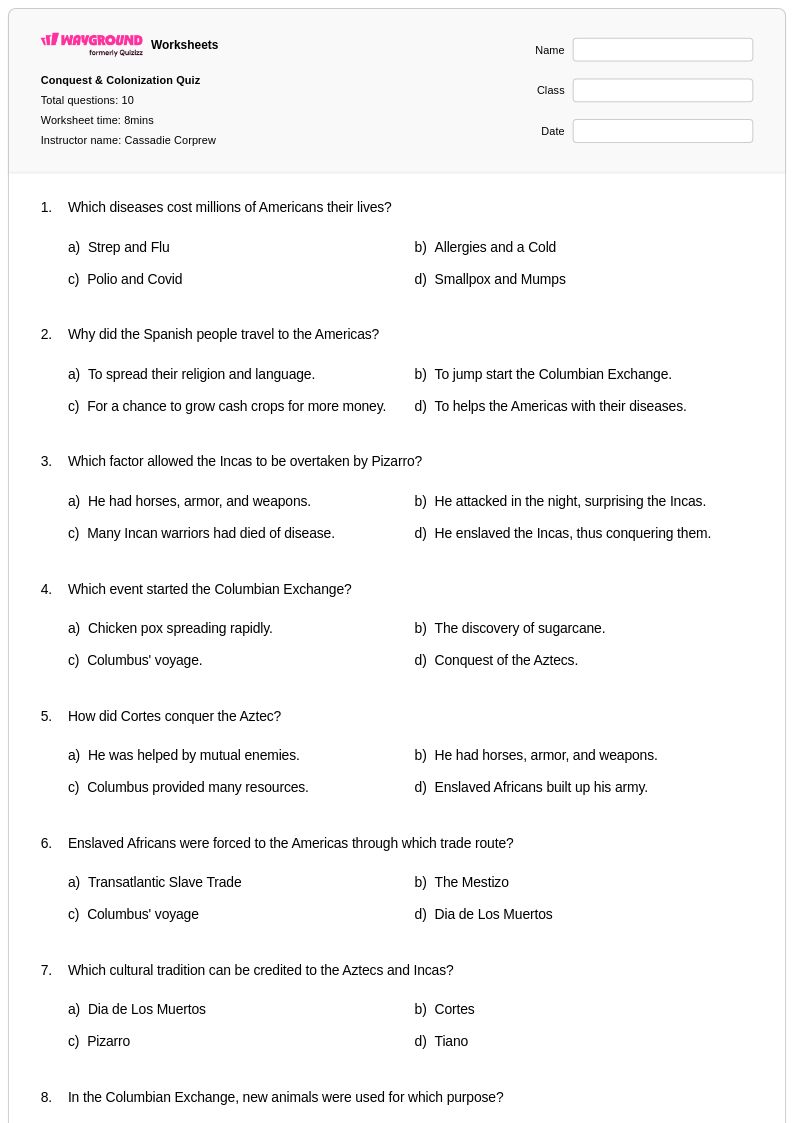
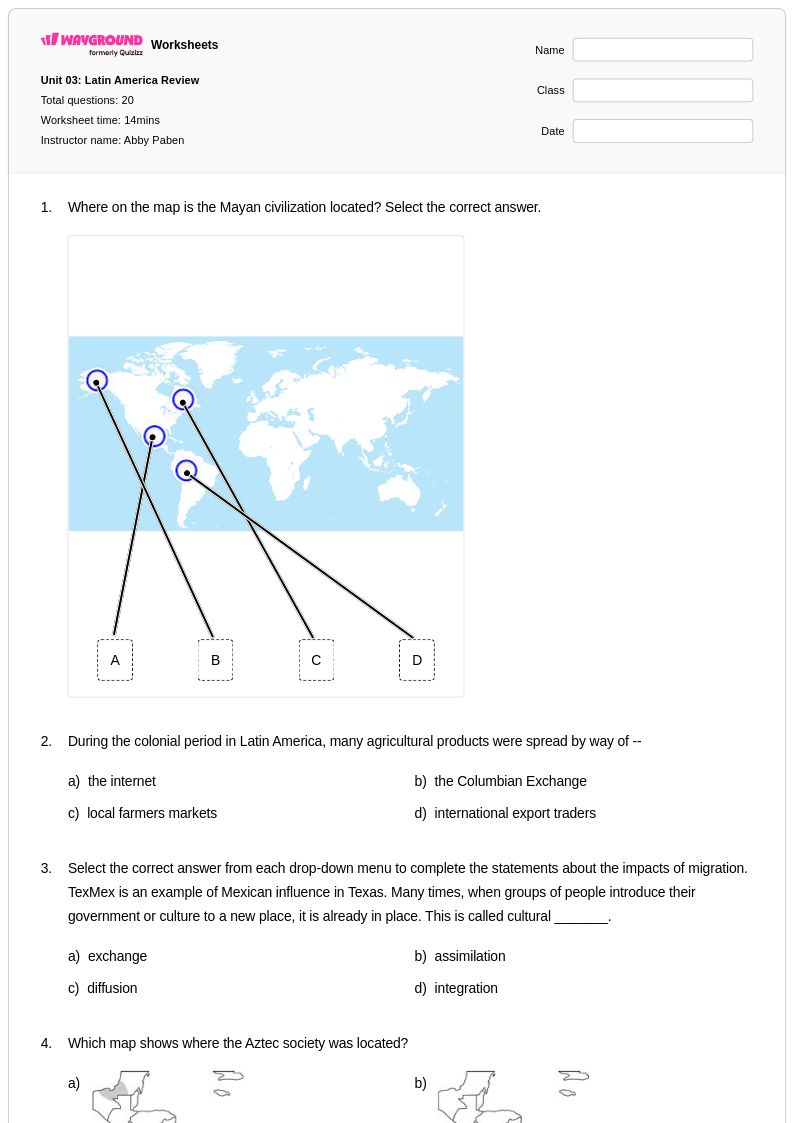
Columbian Exchange worksheets for Class 6 students available through Wayground (formerly Quizizz) provide comprehensive exploration of this pivotal period in world history when European contact with the Americas transformed societies on both sides of the Atlantic. These educational resources strengthen students' analytical skills as they examine the transfer of plants, animals, diseases, and cultural practices between the Old and New Worlds from 1492 onward. The worksheet collection includes practice problems that challenge students to trace the movement of crops like potatoes and corn, analyze the devastating impact of smallpox and other diseases on indigenous populations, and evaluate how the exchange of livestock fundamentally altered agricultural practices across continents. Each printable resource comes with a detailed answer key, ensuring educators can efficiently assess student understanding while the free pdf format makes these materials easily accessible for both classroom instruction and independent study.
Wayground (formerly Quizizz) empowers teachers with an extensive collection of millions of teacher-created resources specifically designed to support Columbian Exchange instruction at the Class 6 level. The platform's robust search and filtering capabilities enable educators to quickly locate worksheets aligned with social studies standards, while built-in differentiation tools allow for seamless customization to meet diverse learning needs within the classroom. Teachers can access these materials in both printable and digital pdf formats, providing maximum flexibility for lesson planning whether conducting in-person or remote instruction. This comprehensive worksheet library serves as an invaluable resource for targeted skill practice, remediation for struggling learners, and enrichment activities for advanced students, helping educators create engaging learning experiences that deepen students' understanding of how the Columbian Exchange fundamentally reshaped global civilization and continues to influence our interconnected world today.
FAQs
How do I teach the Columbian Exchange to middle or high school students?
Teaching the Columbian Exchange effectively means moving beyond a simple list of traded goods and helping students understand the asymmetrical consequences of contact — particularly the devastating impact of disease on indigenous populations alongside European economic gains. Start with a visual transfer map to ground students in geography, then use primary sources and cause-and-effect analysis to build historical thinking skills. Framing the exchange as a turning point, not just a trade event, helps students grasp its long-term significance for global history.
What kinds of exercises help students practice analyzing the Columbian Exchange?
Effective practice for the Columbian Exchange includes cause-and-effect graphic organizers, primary source analysis tasks, and document-based questions that ask students to evaluate consequences for different groups — indigenous peoples, European colonizers, and African populations affected by the slave trade. Comparing perspectives from multiple sides of the Atlantic deepens analytical thinking and prepares students for essay-style assessment. Worksheets that prompt students to categorize transfers by type (biological, cultural, economic) also reinforce content retention.
What misconceptions do students commonly have about the Columbian Exchange?
A common misconception is that the Columbian Exchange was a balanced or mutually beneficial trade between equals. Students often underestimate the scale of indigenous population collapse caused by introduced diseases, sometimes reducing it to a footnote rather than recognizing it as one of the most consequential demographic events in human history. Another frequent error is conflating the Columbian Exchange with voluntary trade, when in reality much of the exchange — particularly the movement of enslaved peoples — was coercive. Explicit instruction on these asymmetries is essential for historically accurate understanding.
How can I differentiate Columbian Exchange instruction for students with different skill levels?
For struggling learners, scaffolded graphic organizers and simplified primary sources with guiding questions reduce cognitive load while maintaining content rigor. Advanced students benefit from open-ended document analysis and tasks that ask them to argue a historical interpretation with evidence. On Wayground, teachers can apply individual accommodations such as read aloud, extended time, and reduced answer choices to specific students, so differentiation happens at the assignment level without disrupting the rest of the class.
How do I use Wayground's Columbian Exchange worksheets in my classroom?
Wayground's Columbian Exchange worksheets are available as printable PDFs for traditional classroom use and in digital formats for technology-integrated or hybrid learning environments, including the option to host them as an interactive quiz on Wayground. Each worksheet includes a detailed answer key, making them practical for independent practice, homework, or review sessions. Teachers can filter materials to find resources aligned with specific learning standards and student needs, streamlining lesson planning for this content-dense historical topic.
How does the Columbian Exchange connect to broader world history standards?
The Columbian Exchange is a central concept in world history standards because it illustrates the interconnectedness of global systems following 1492 — linking colonization, the Atlantic slave trade, the rise of European mercantilism, and the transformation of indigenous societies into a single analytical framework. Most state standards address it in the context of early modern world history or the Age of Exploration, making it a high-priority topic for both instruction and assessment. Worksheets that integrate cause-and-effect reasoning and primary source analysis directly support the historical thinking skills tested in standardized assessments.