Free Printable Communicating Through Symbols Worksheets for Class 1
Class 1 communicating through symbols worksheets and printables help young learners develop essential early literacy skills by practicing how to interpret and create meaning through visual symbols, featuring free PDF resources with answer keys.
Explore printable Communicating Through Symbols worksheets for Class 1
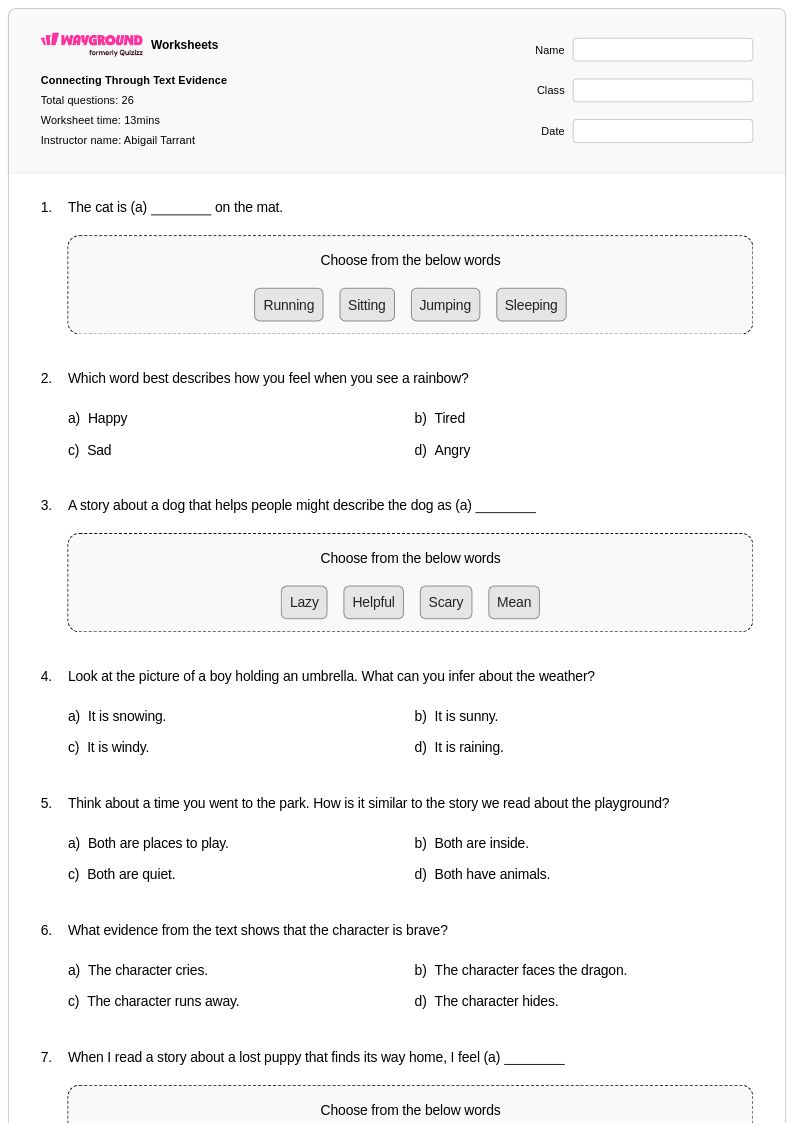
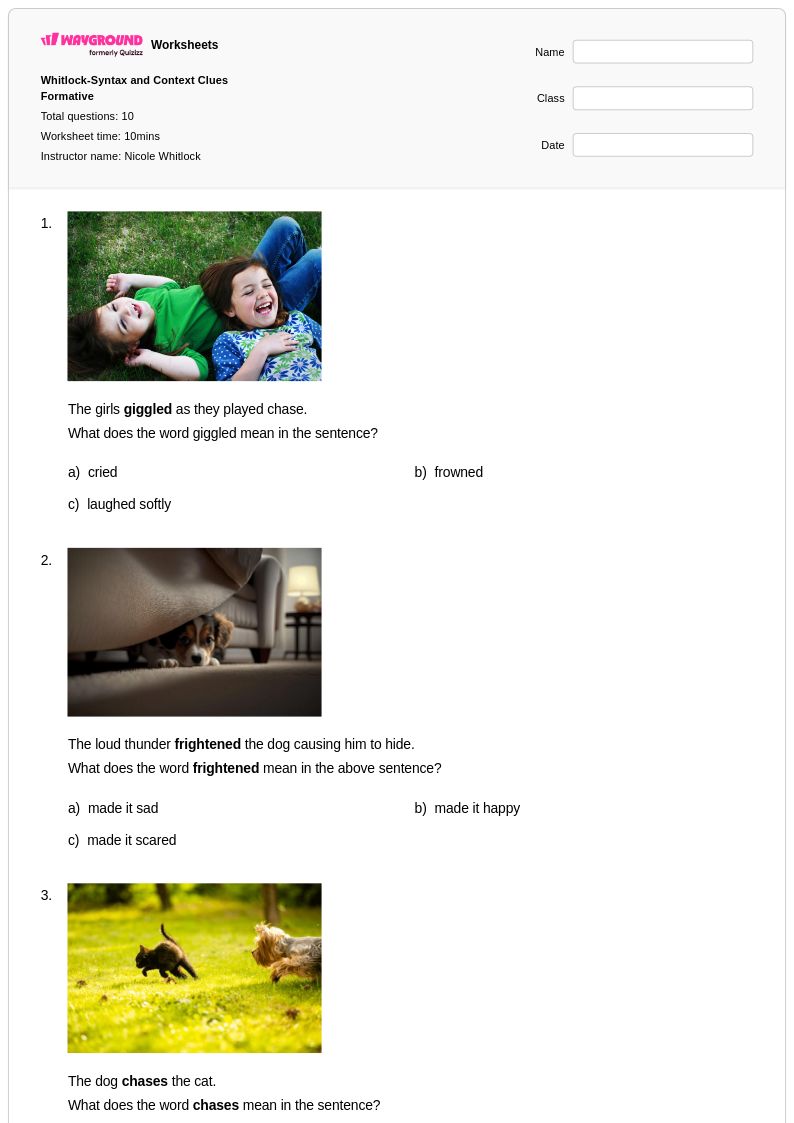
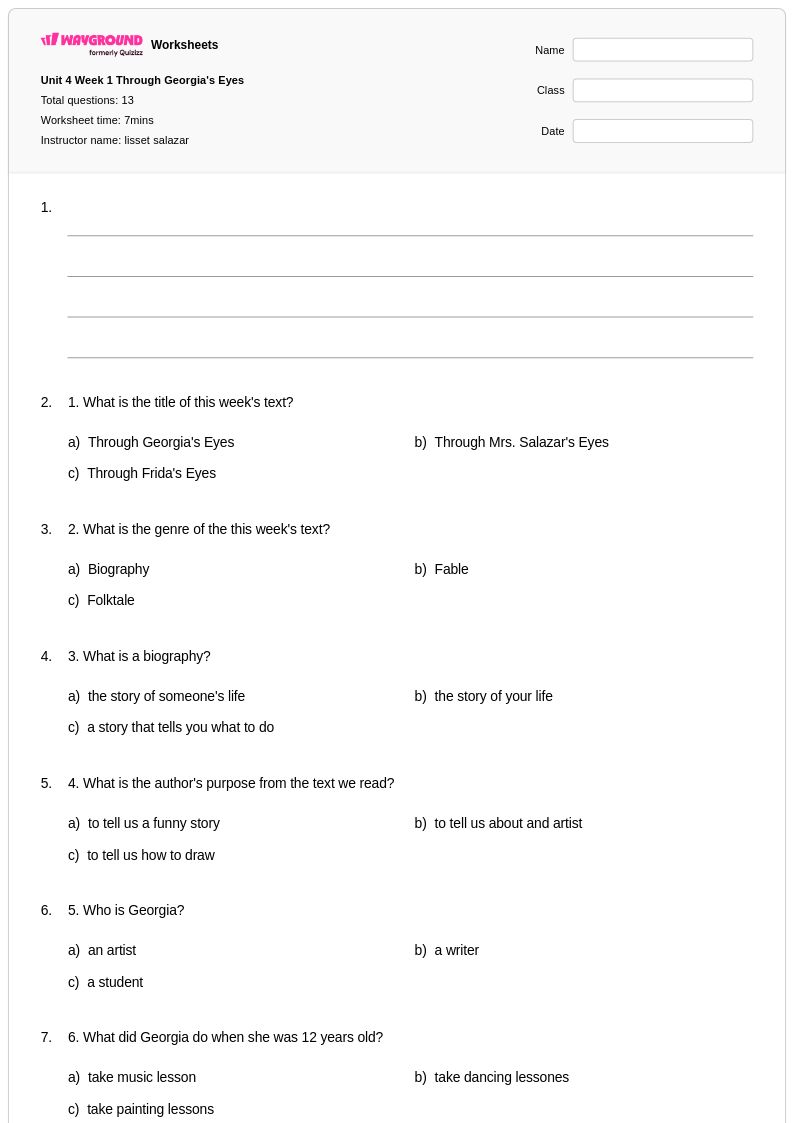
Communicating Through Symbols worksheets for Class 1 students provide essential foundational practice in recognizing and interpreting the visual elements that form the building blocks of literacy. These comprehensive worksheets help young learners develop crucial pre-reading skills by exploring how pictures, symbols, and early text elements convey meaning in everyday contexts. Students engage with activities that strengthen their ability to decode visual information, understand symbolic representation, and make connections between images and their intended messages. The collection includes diverse practice problems that progress from simple symbol recognition to more complex interpretation tasks, with each worksheet featuring a complete answer key to support both independent learning and guided instruction. These free printables offer educators ready-to-use resources that systematically build students' capacity to communicate through and understand symbolic language, establishing the cognitive foundation necessary for successful reading development.
Wayground, formerly Quizizz, empowers teachers with an extensive collection of millions of teacher-created Communicating Through Symbols resources specifically designed to meet Class 1 learning objectives and curriculum standards. The platform's robust search and filtering capabilities allow educators to quickly locate worksheets that align with specific learning goals, student ability levels, and instructional timelines. Teachers benefit from comprehensive differentiation tools that enable customization of content difficulty, visual complexity, and scaffolding support to meet diverse classroom needs. Whether accessed as printable pdf worksheets for traditional classroom use or interactive digital formats for technology-enhanced learning, these resources seamlessly integrate into lesson planning, targeted remediation sessions, enrichment activities, and regular skill practice routines. The platform's standards-aligned approach ensures that each worksheet directly supports established early literacy benchmarks while providing teachers with the flexibility to adapt materials for individual student success and whole-group instruction.
FAQs
How do I teach communicating through symbols to early learners?
Start by anchoring instruction in symbols students already encounter in daily life, such as stop signs, bathroom icons, and weather pictograms, before introducing abstract representations. Build toward the core concept that marks and images carry agreed-upon meaning by having students match symbols to their real-world referents and explain their reasoning aloud. Gradually increase complexity by moving from single pictographs to simple symbol sequences that represent actions or ideas.
What exercises help students practice symbol recognition and visual communication?
Effective practice activities include symbol-to-picture matching tasks, visual discrimination exercises where students identify similarities and differences between symbols, and pattern identification sequences that require students to predict the next symbol in a series. Progressively challenging activities, such as interpreting simple pictograph systems or decoding visual messages, help students build fluency before transitioning to letter-based reading. Repeated exposure across varied contexts strengthens retention and generalizes the concept that written marks carry meaning.
What misconceptions do students commonly have when learning to communicate through symbols?
A frequent misconception is that symbols have inherent, universal meaning rather than agreed-upon, culturally defined meaning, which can cause confusion when students encounter unfamiliar symbol systems. Young learners also sometimes treat visual discrimination as a guessing task rather than a reasoning task, failing to notice systematic differences between similar-looking symbols. Addressing these early by explicitly discussing why a symbol means what it means helps establish the foundational understanding that all written communication, including letters and words, is a symbolic convention.
How does communicating through symbols connect to early literacy development?
Understanding that marks on paper represent ideas, objects, and actions is the conceptual foundation for all reading and writing. When students internalize this principle through symbol work, they arrive at letter recognition with the cognitive framework already in place, making decoding and phonics instruction more meaningful. This is why symbol-based activities are considered pre-reading competencies rather than supplemental content.
How can I use Wayground's communicating through symbols worksheets in my classroom?
Wayground's communicating through symbols worksheets are available as printable PDFs for traditional classroom use and in digital formats for technology-integrated learning environments, including the option to host them as a quiz directly on Wayground. Teachers can use them to introduce the concept of symbolic meaning, provide targeted remediation for students who struggle with visual discrimination, or extend learning for students who are ready for more complex pictograph interpretation. Each worksheet includes an answer key, so formative assessment and self-checking are built into the resource.
How do I support students with different learning needs during communicating through symbols activities?
For students who need additional support, reducing the number of answer choices on matching and interpretation tasks lowers cognitive load without removing the core learning objective. Wayground allows teachers to set individual accommodations, including reduced answer choices, read-aloud support, and extended time, that apply only to specific students while the rest of the class works with default settings. Adjustable font sizes and reading mode themes can also improve accessibility for students with visual processing needs.