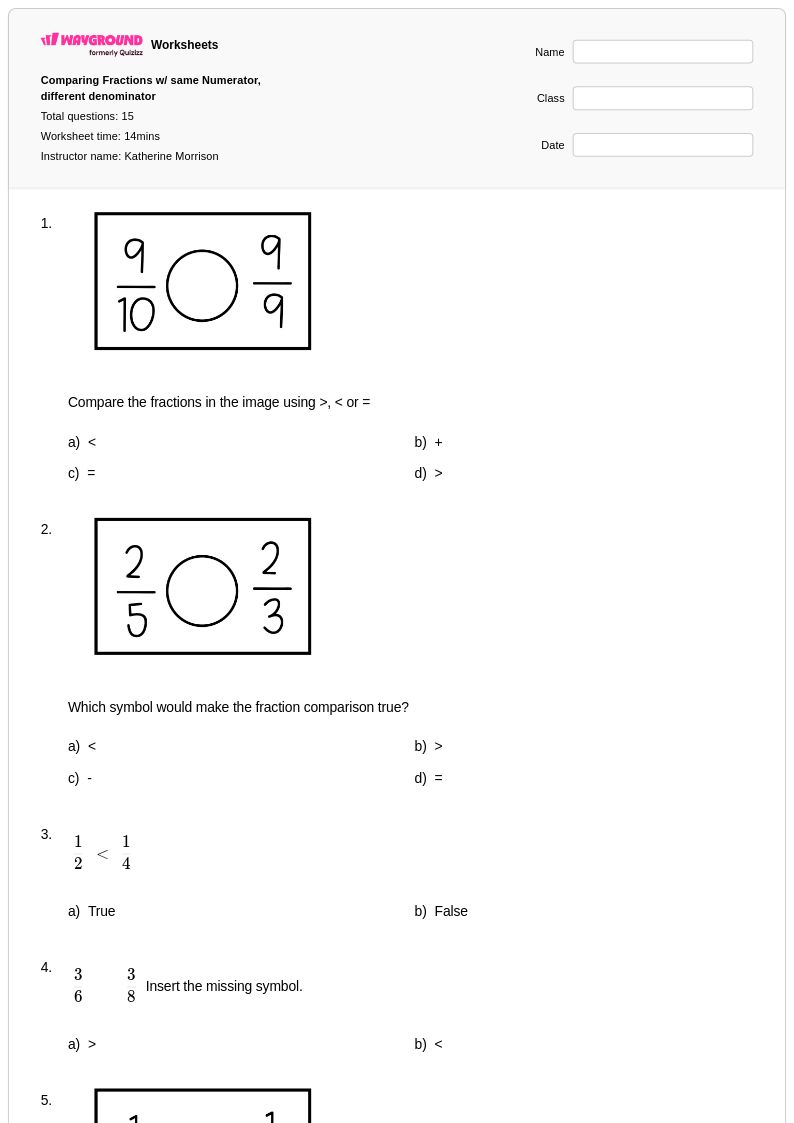
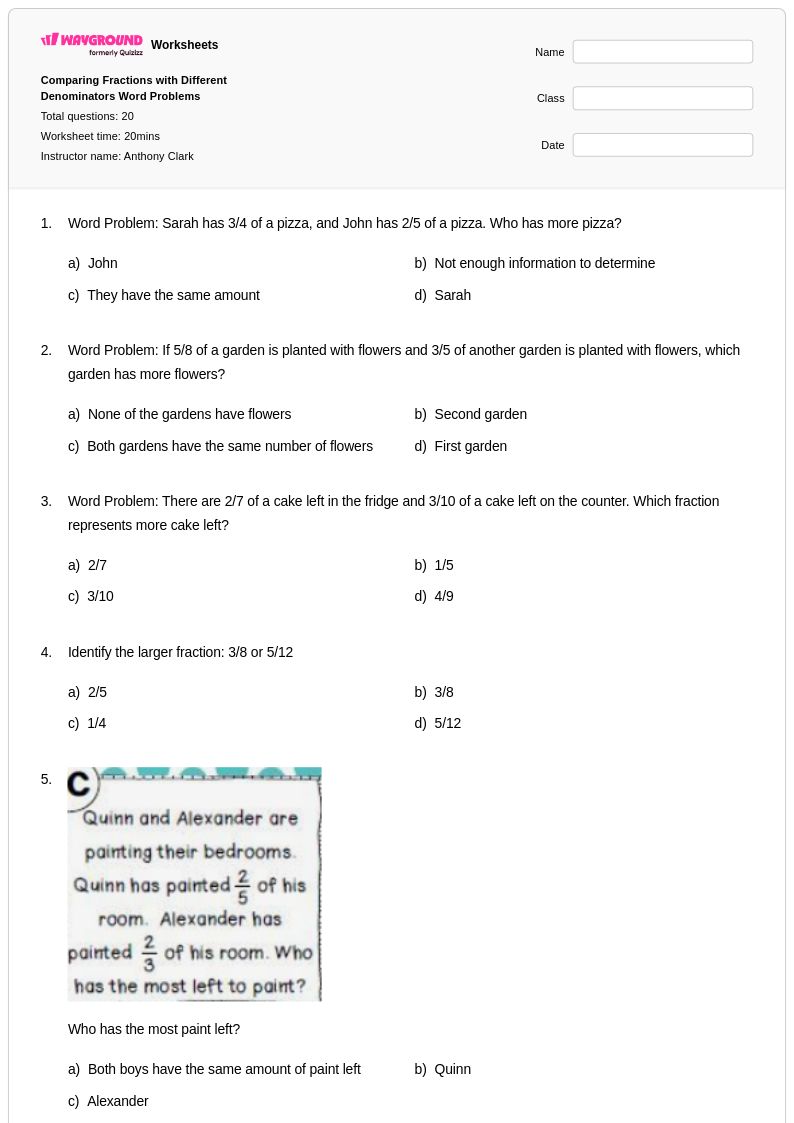
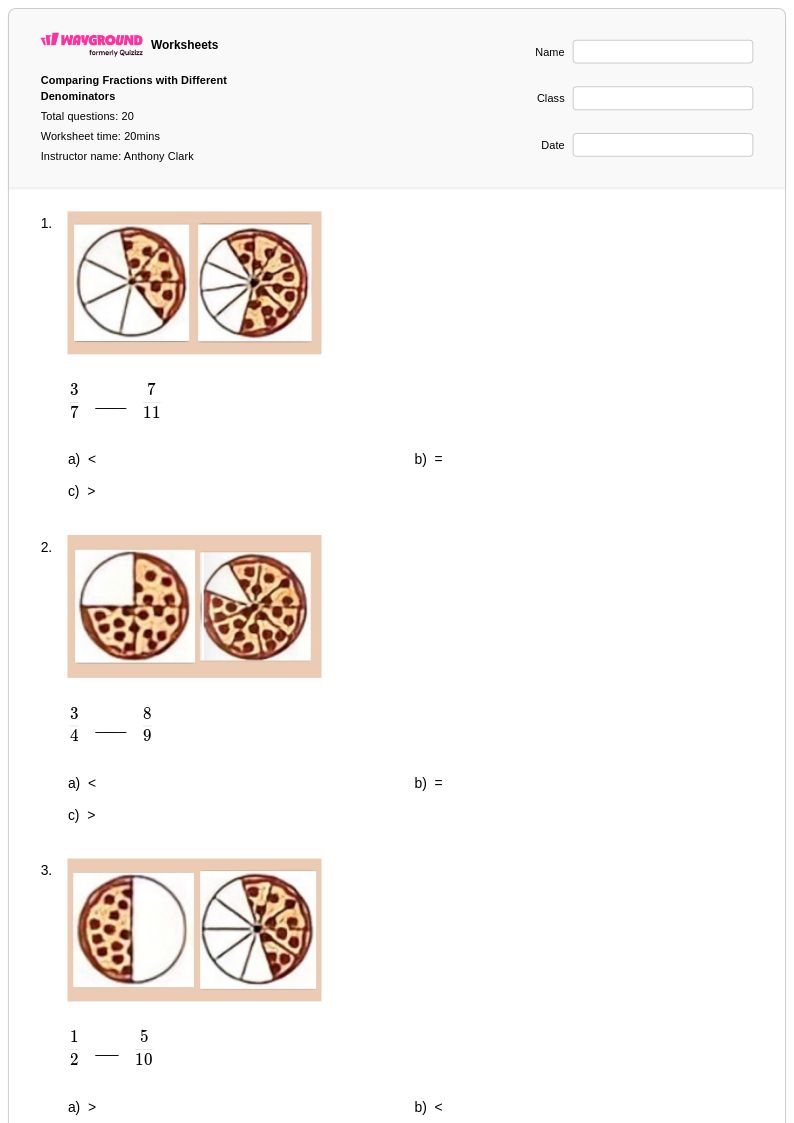
Free Printable Comparing Same and Different Worksheets for Class 3
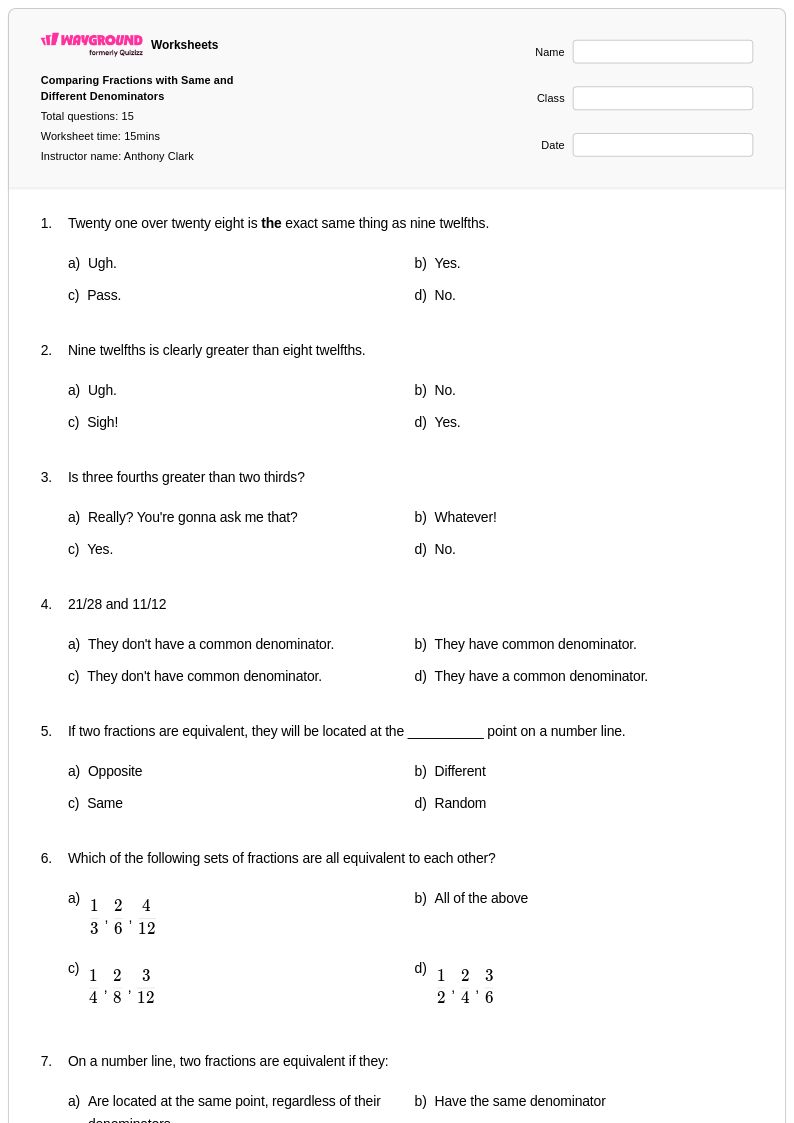
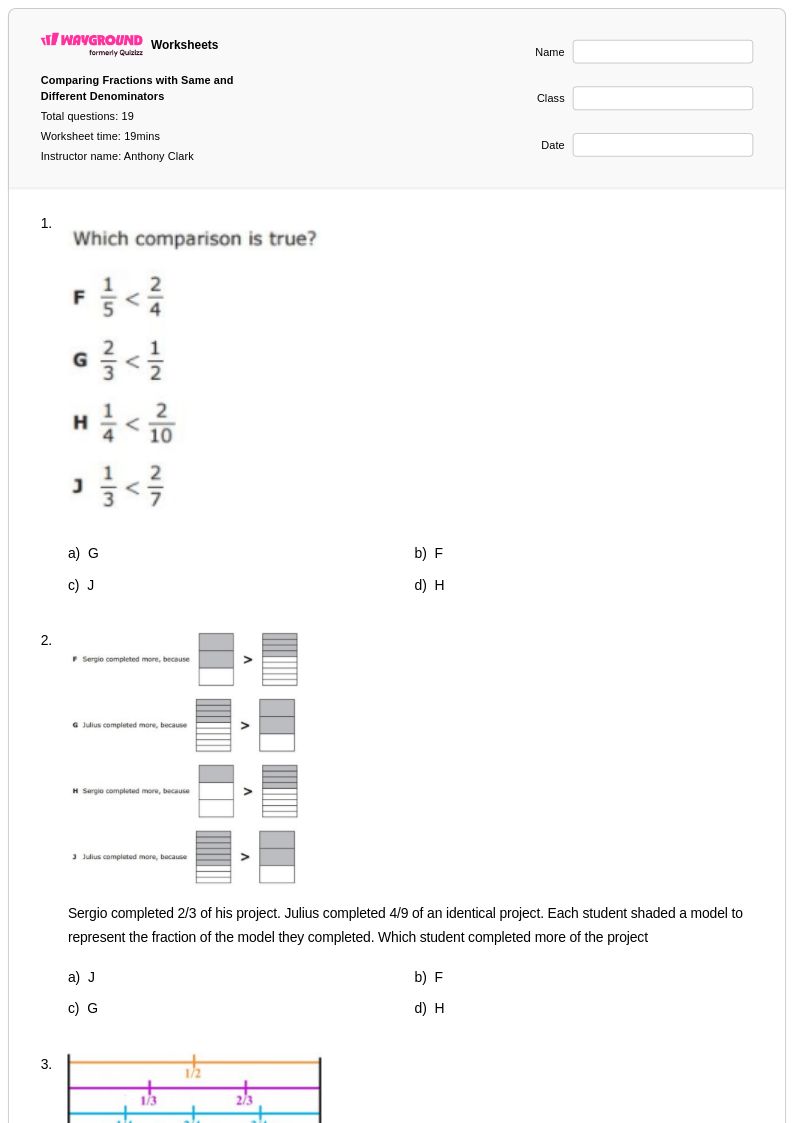
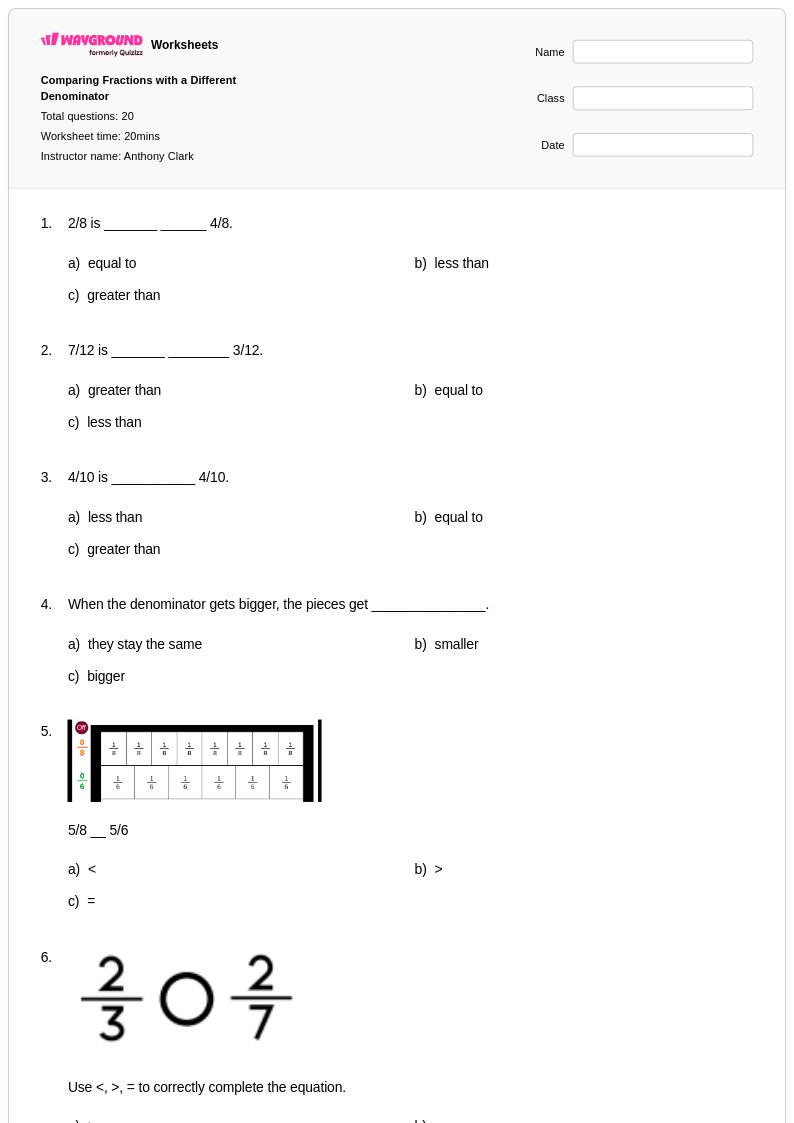
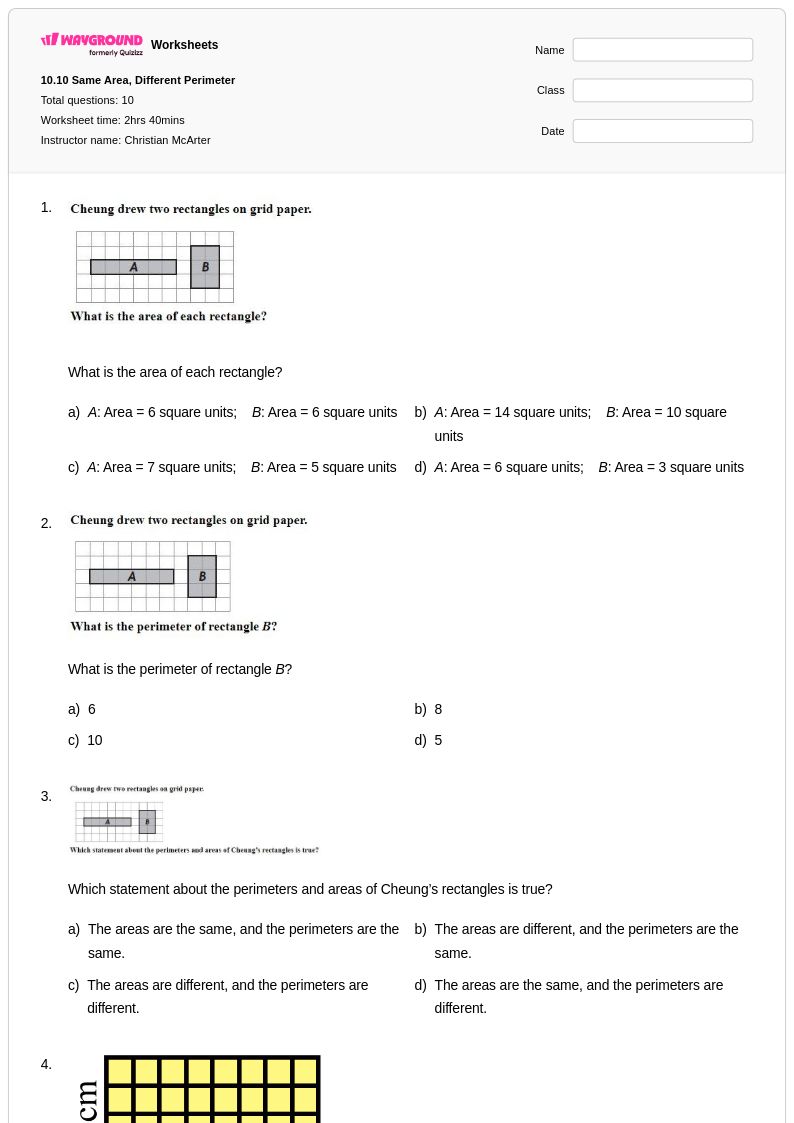
Class 3 students master comparing same and different numbers through Wayground's comprehensive collection of free worksheets, featuring engaging practice problems, printable PDFs, and complete answer keys.
Explore printable Comparing Same and Different worksheets for Class 3
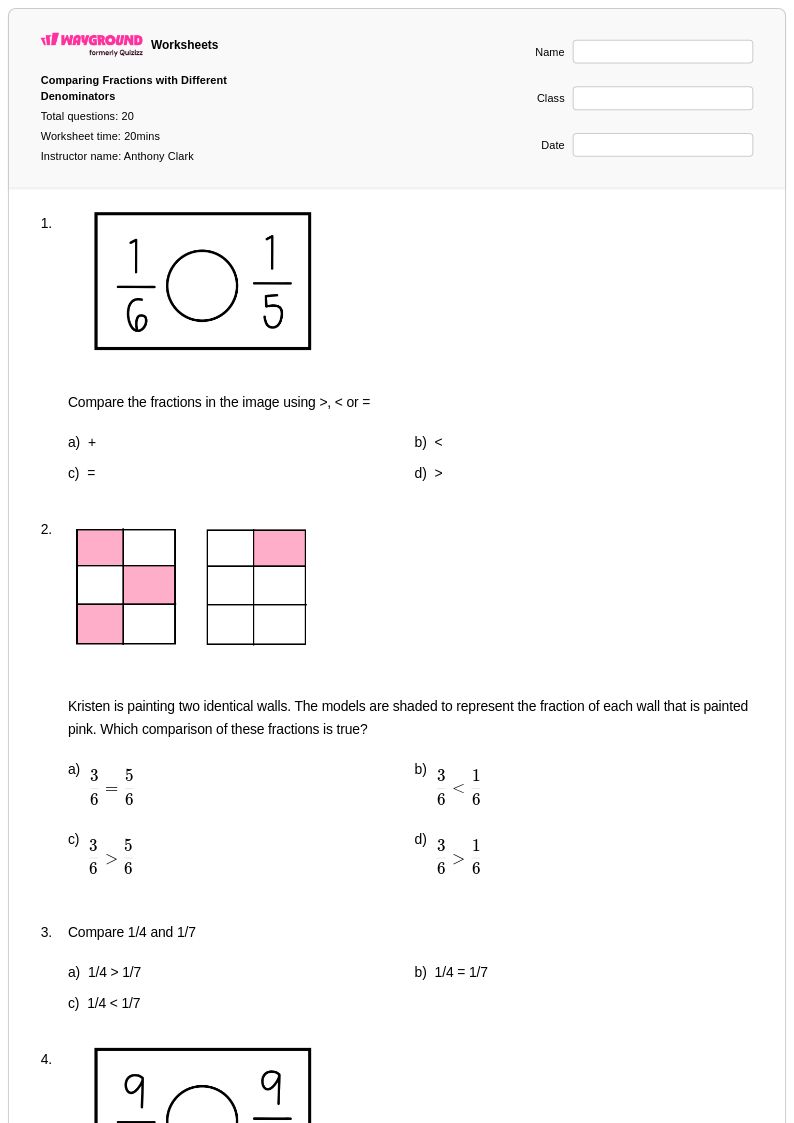
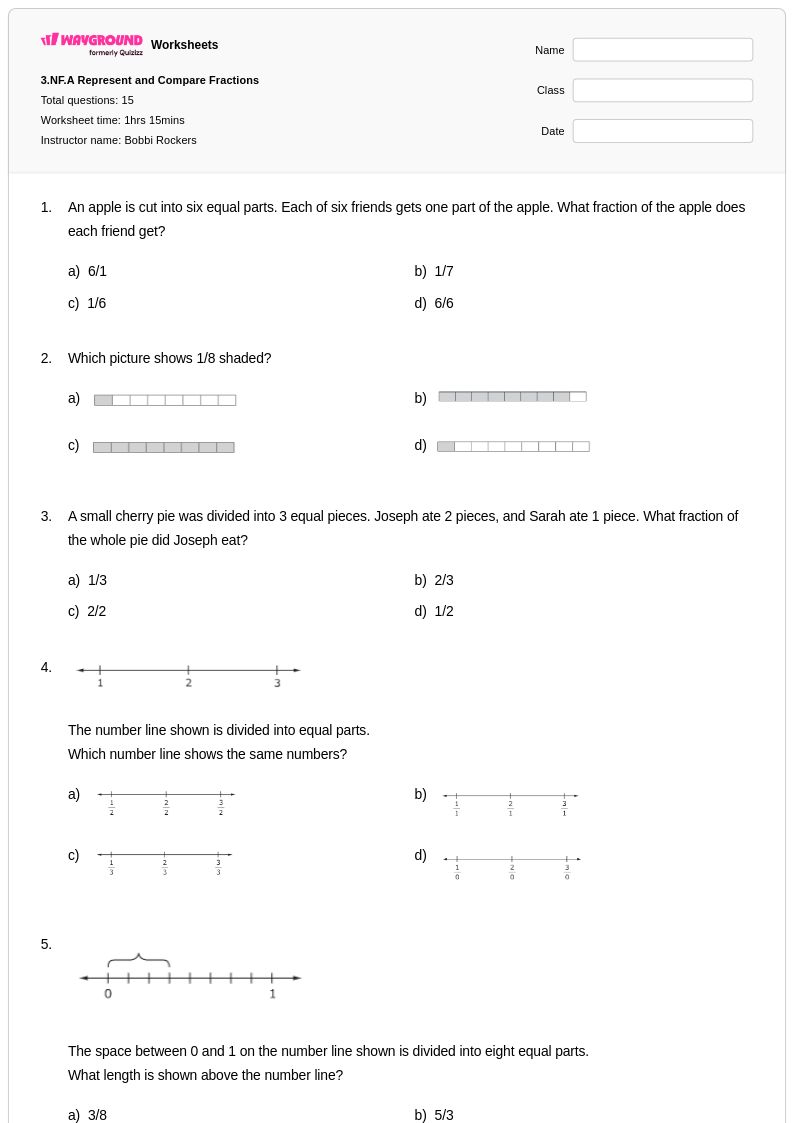
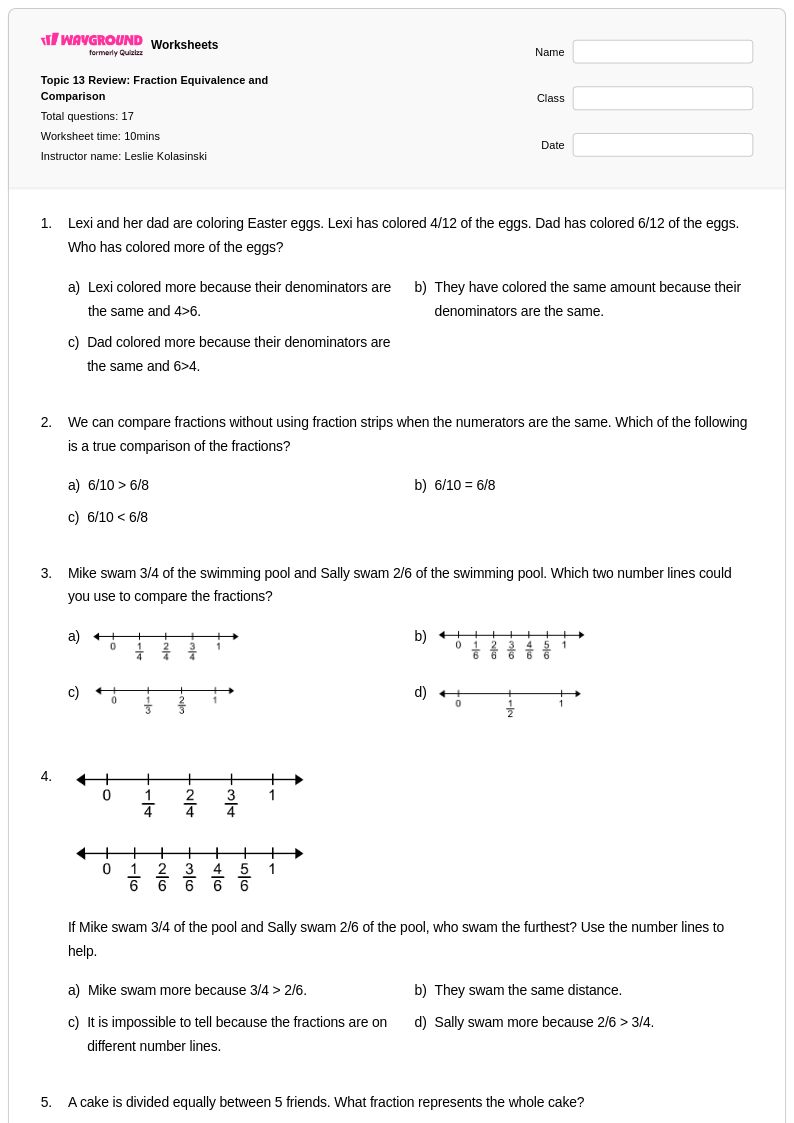
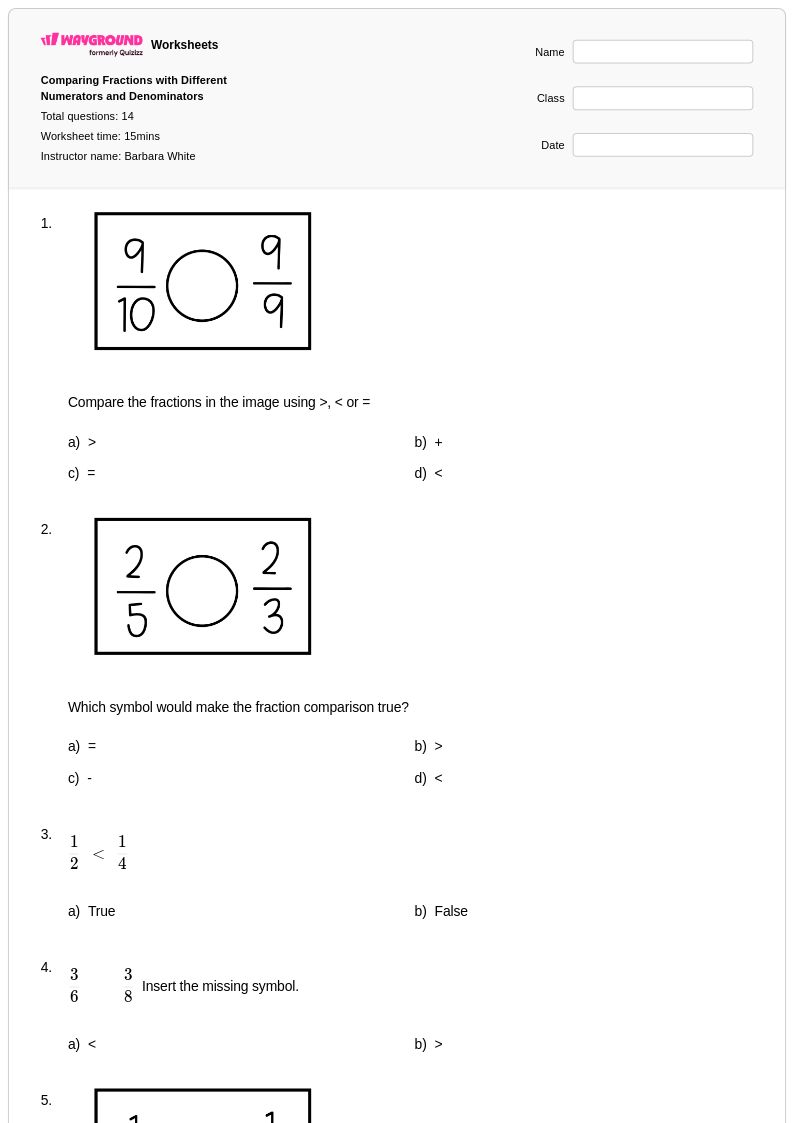
Comparing same and different worksheets for Class 3 provide essential foundational practice in developing critical mathematical reasoning skills that third-grade students need to master. These comprehensive worksheet collections available through Wayground focus specifically on helping students identify similarities and differences between numbers, quantities, shapes, and mathematical concepts, strengthening their analytical thinking and pattern recognition abilities. Each worksheet is designed with age-appropriate problems that challenge students to examine mathematical elements closely, compare attributes systematically, and articulate their reasoning clearly. The free printable resources include detailed answer keys that support both independent practice and guided instruction, while the pdf format ensures easy access for classroom use and home practice sessions.
Wayground's extensive collection of comparing same and different worksheets draws from millions of teacher-created resources, providing educators with robust search and filtering capabilities to find materials perfectly suited to their Class 3 mathematics instruction needs. The platform's standards alignment features ensure that selected worksheets support curriculum objectives while offering differentiation tools that accommodate diverse learning levels within the classroom. Teachers can customize these printable and digital resources to target specific skill gaps during remediation sessions or provide enrichment opportunities for advanced learners. The flexible pdf format enables seamless integration into lesson plans, homework assignments, and assessment preparation, while the comprehensive answer keys streamline grading and provide immediate feedback opportunities that enhance student understanding of comparative mathematical concepts.
FAQs
How do I teach same and different in Grade 3 math?
Have third graders compare numbers, quantities, shapes, patterns, or solution representations using clearly defined mathematical attributes. Model a systematic process—identify the category, examine each feature, record similarities and differences, and explain the conclusion with evidence.
What exercises help third graders practice comparing mathematical similarities and differences?
Effective exercises ask students to classify shapes by properties, compare quantities or number representations, analyze patterns, and determine which examples follow the same mathematical rule. Include prompts requiring written explanations so students practice articulating how the elements are alike or different.
What mistakes do Grade 3 students make when comparing mathematical concepts?
Third graders may rely on appearance instead of mathematical properties, compare unlike attributes, or assume different representations must have different values. They may also identify a difference without explaining its significance, so ask them to name the relevant property, quantity, or structural rule in every response.
How can I use these Grade 3 same-and-different worksheets?
Grade 3 worksheets are available as printable PDFs and digital formats, allowing teachers to host a worksheet as a digital quiz on Wayground or print it for paper submission; every worksheet includes a complete answer key. Printable practice can support instruction when a school is intentionally reducing screen time. Teachers can scan or capture completed physical worksheets and grade them with the Wayground for Teachers app.
How does comparative reasoning fit into the Common Core Grade 3 math progression?
Comparative reasoning supports the Common Core emphasis on recognizing structure across multiplication, division, fractions, measurement, data, and shape categories. Students deepen the skill by comparing mathematical properties and representations, then communicating why examples are equivalent, related, or different.
How can I differentiate comparing same-and-different work in Grade 3?
Provide labeled attributes, visual organizers, or fewer comparison elements for students needing scaffolding; challenge advanced learners to compare multiple representations, generate classification rules, or defend more than one valid grouping. Wayground supports extended time, Read Aloud, reduced answer choices, and reading mode, and teachers can adjust worksheet font size and spacing, select a dyslexia-friendly font, or translate the content.
What grade do students learn to compare mathematical similarities and differences?
Students begin comparing objects and attributes in the primary grades, but Grade 3 applies the skill to more complex numbers, quantities, shapes, patterns, and mathematical concepts. Third graders are increasingly expected to compare systematically and express their reasoning clearly.