
20 Q
9th - Uni
20 Q
9th - Uni
14 Q
7th - Uni
20 Q
7th - Uni
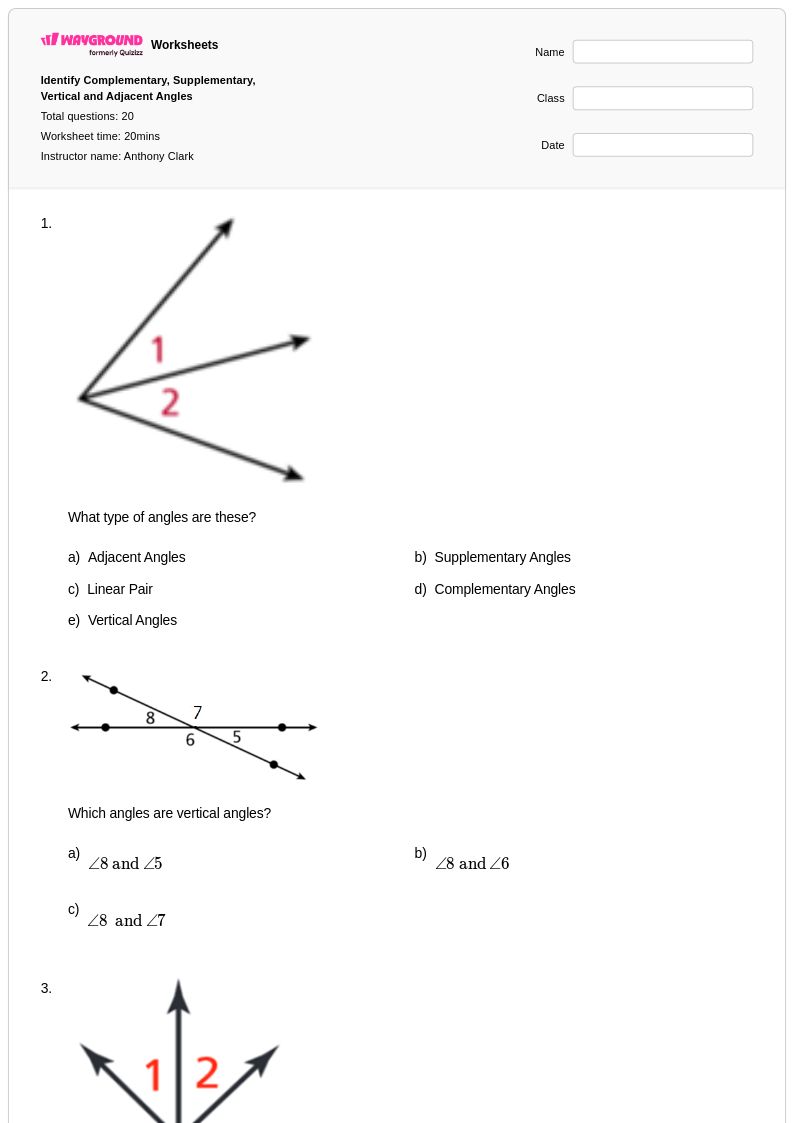
20 Q
9th - Uni
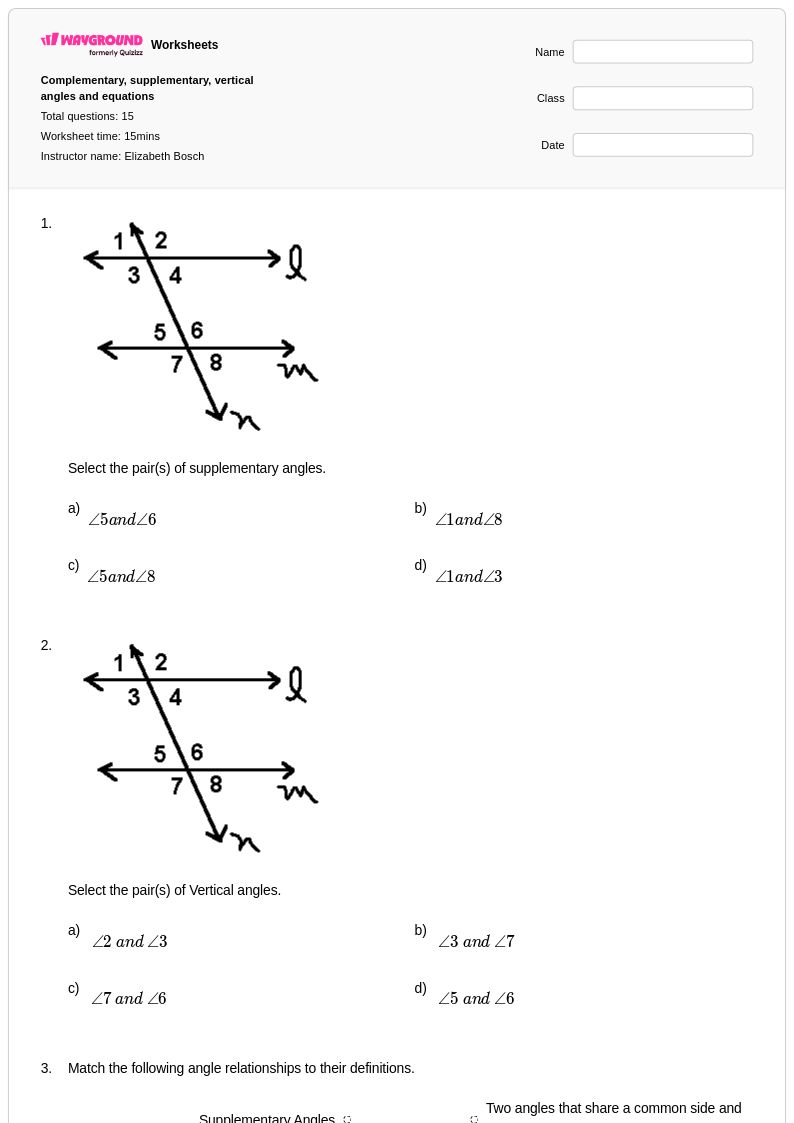
15 Q
7th - Uni
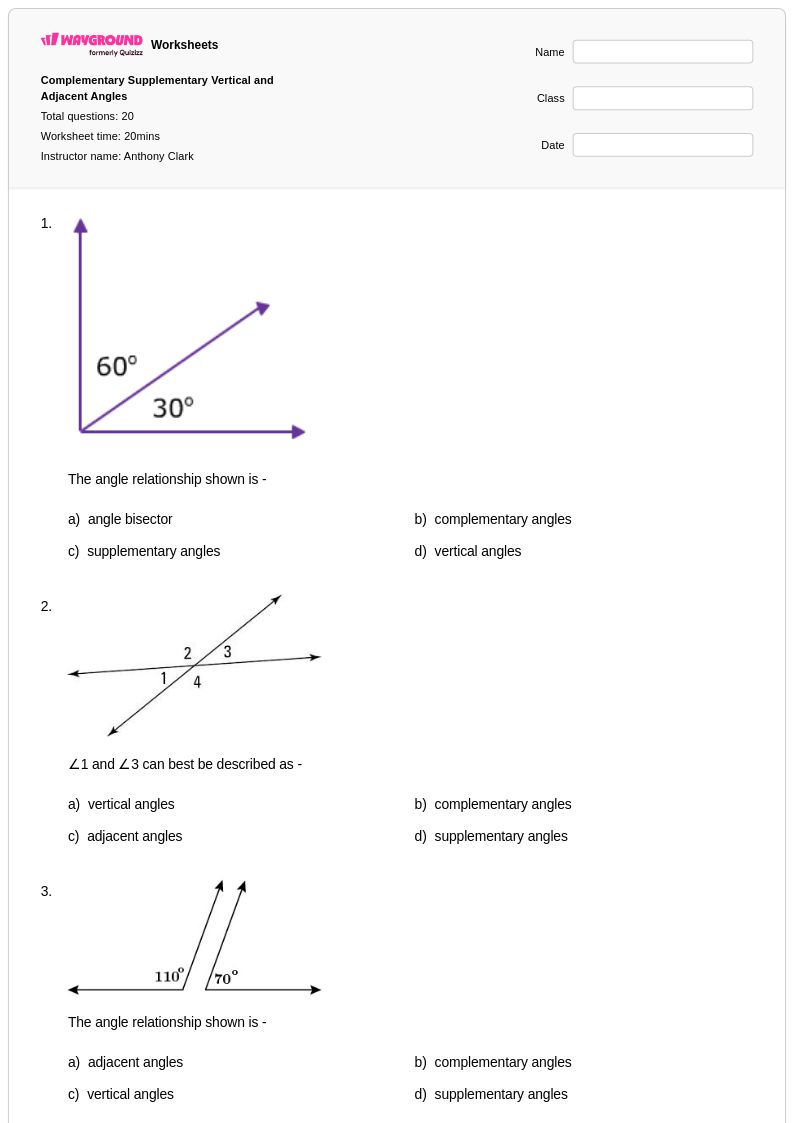
20 Q
7th - Uni
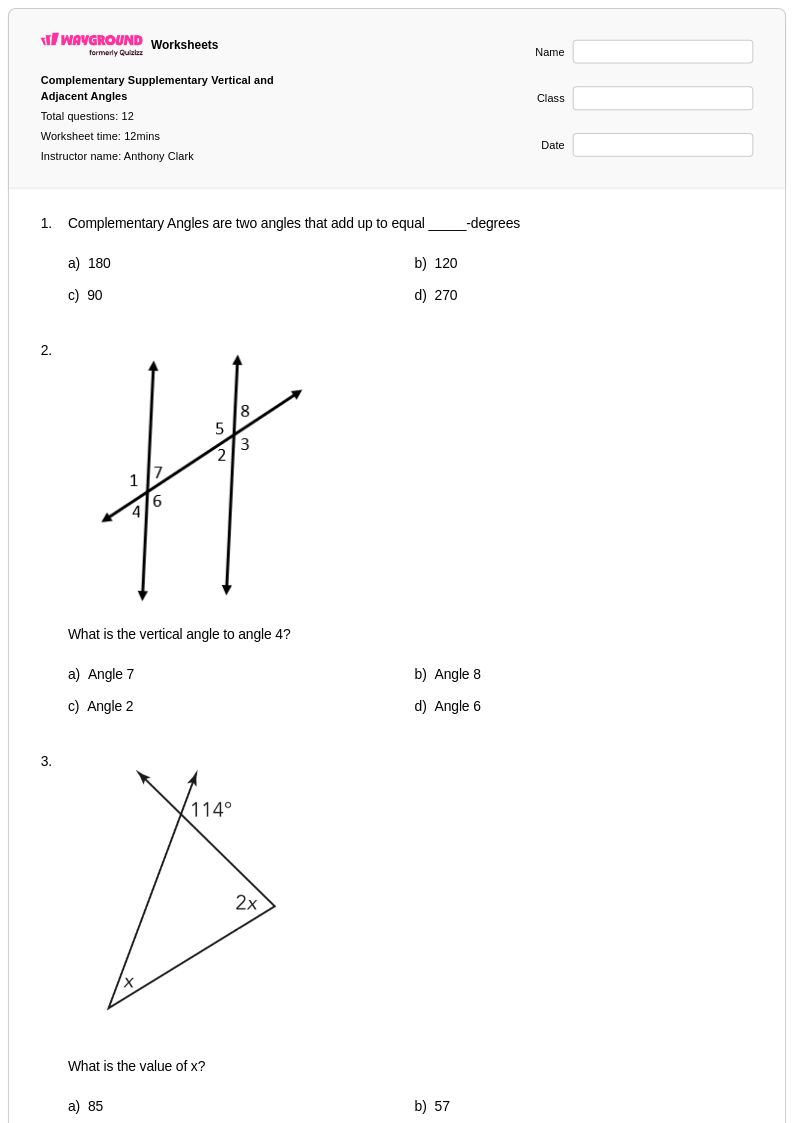
12 Q
9th - Uni
20 Q
7th - Uni
12 Q
9th - Uni
10 Q
7th - Uni
15 Q
7th - Uni
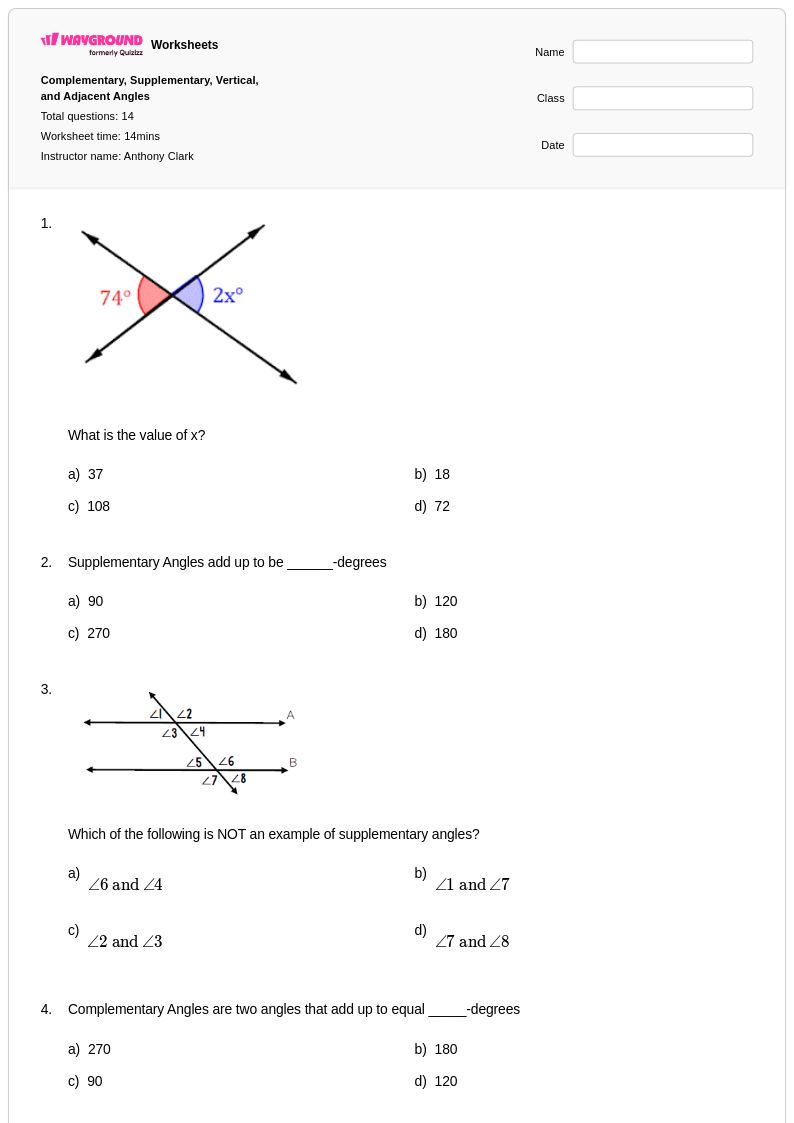
14 Q
9th - Uni
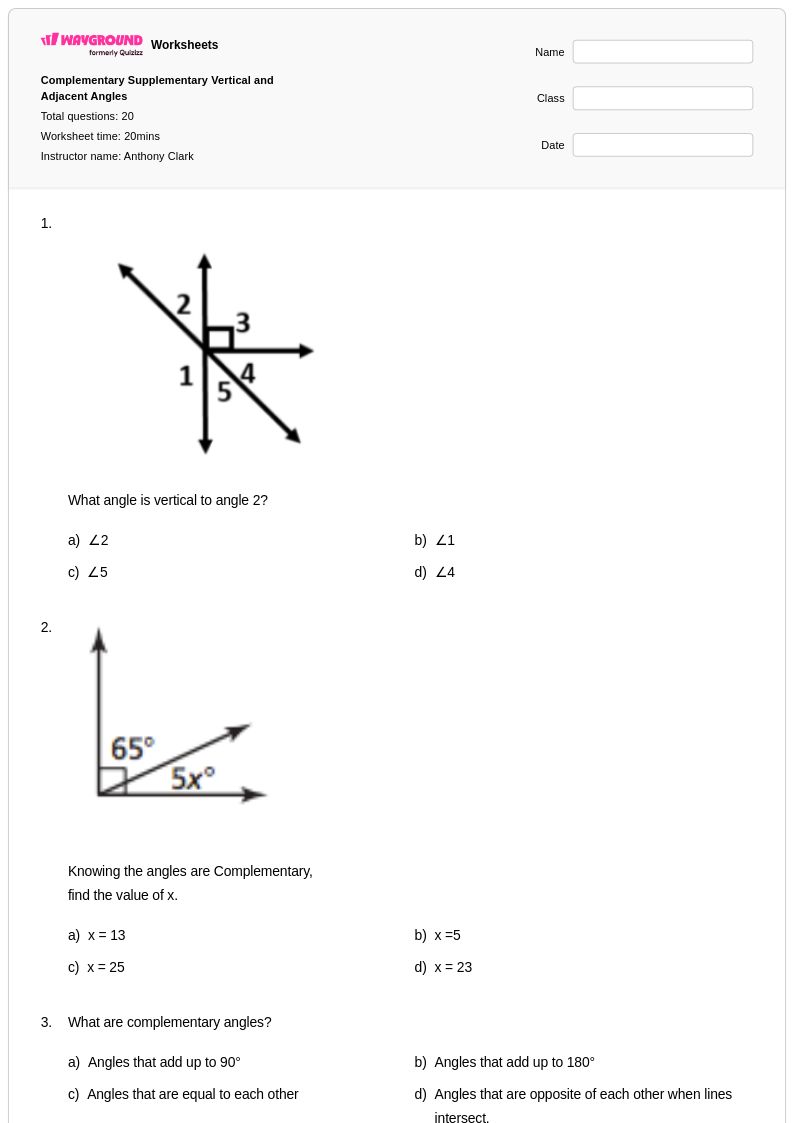
20 Q
7th - Uni
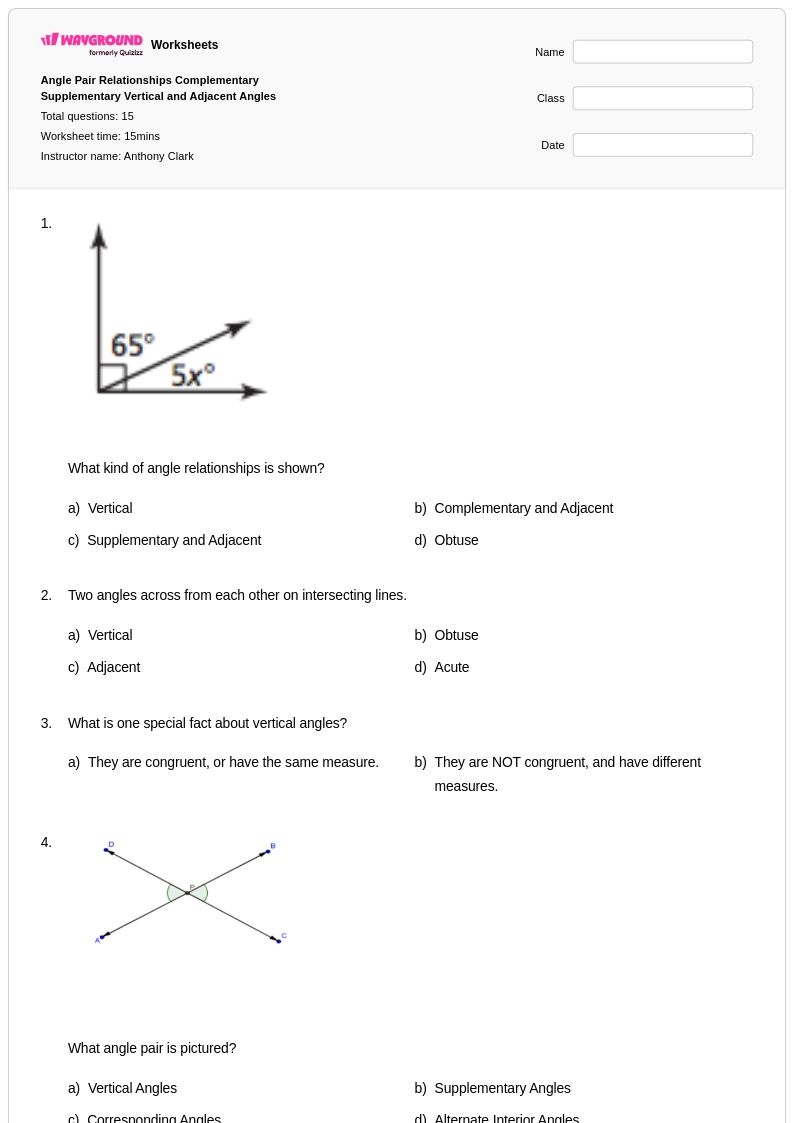
15 Q
9th - Uni
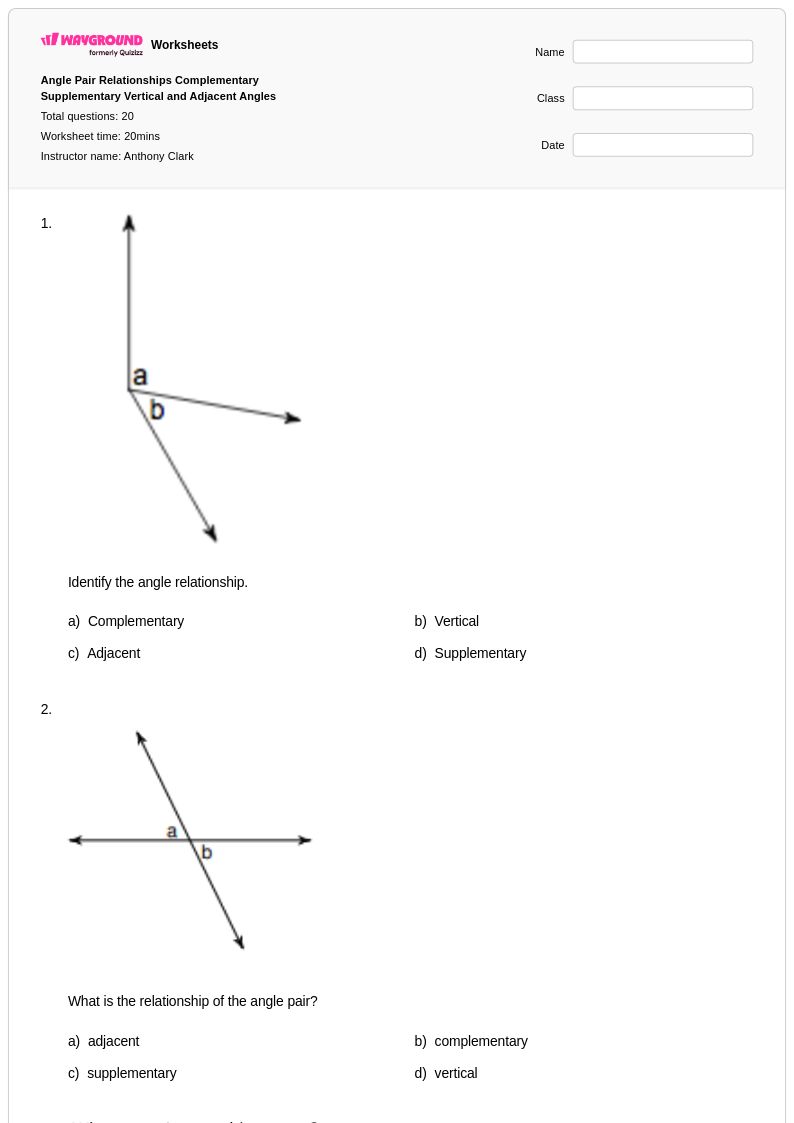
20 Q
9th - Uni
20 Q
7th - Uni
15 Q
7th - Uni
20 Q
7th - Uni
15 Q
7th - Uni
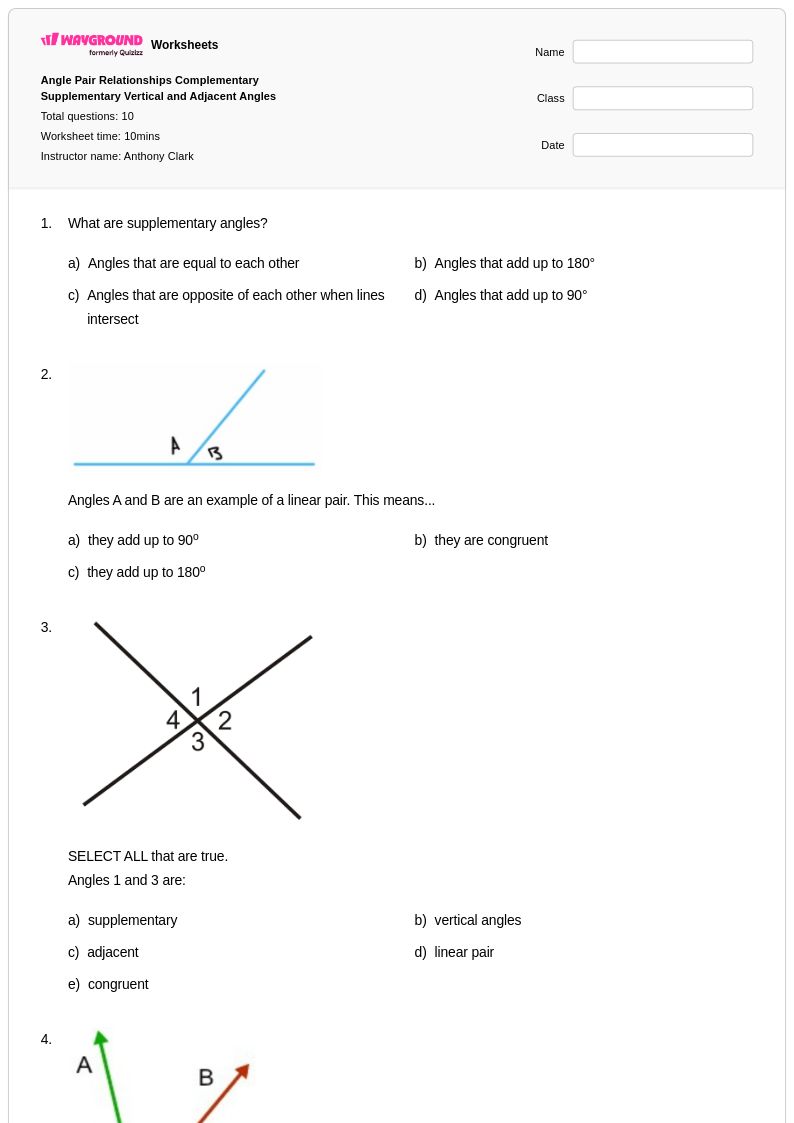
10 Q
9th - Uni
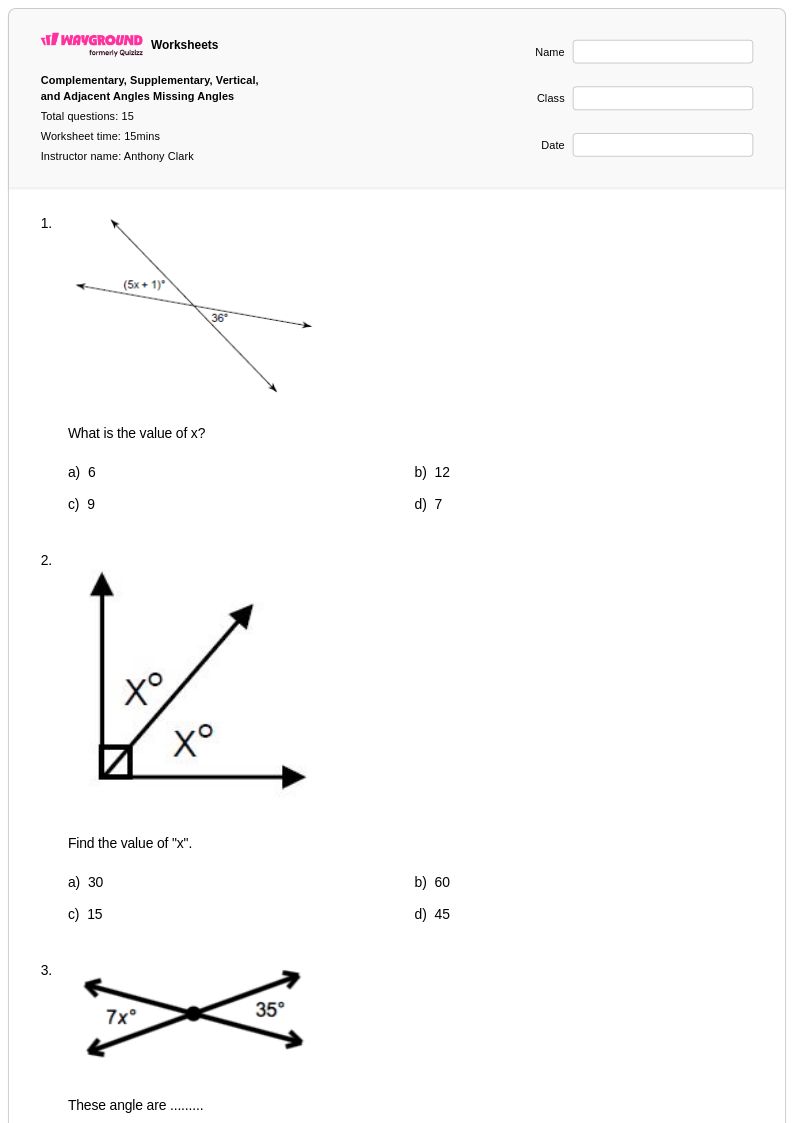
15 Q
7th - Uni
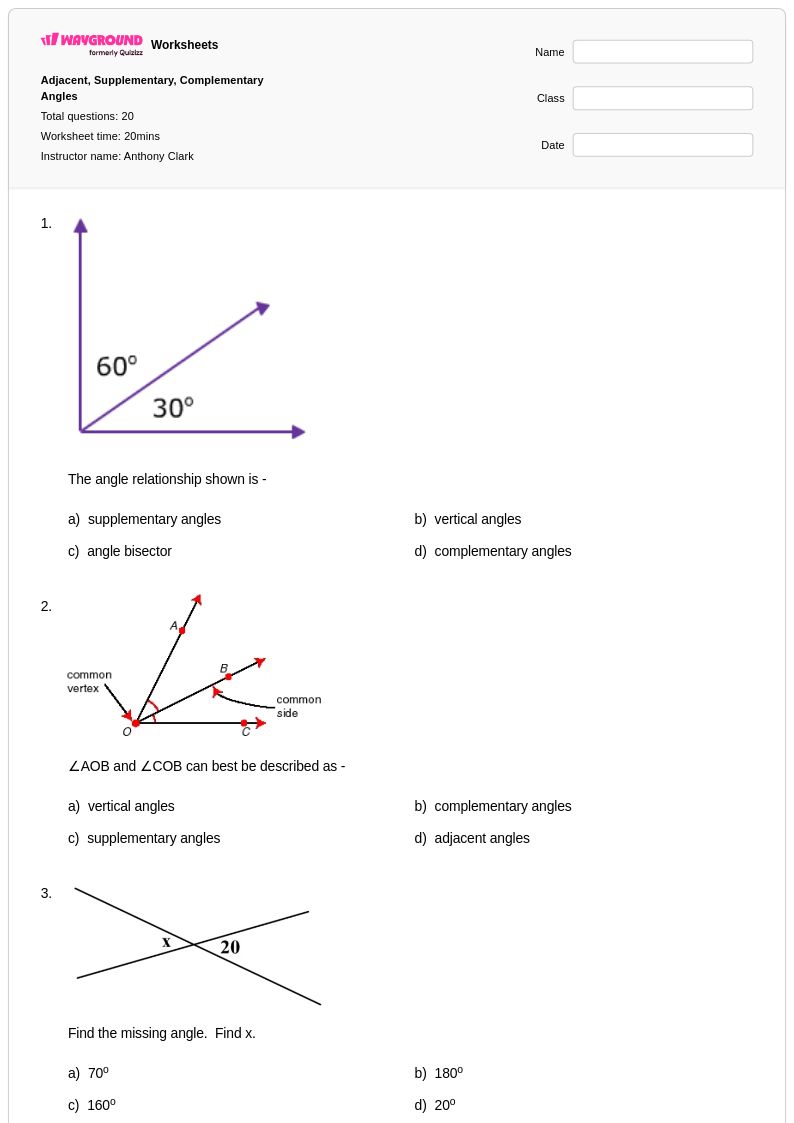
20 Q
7th - Uni
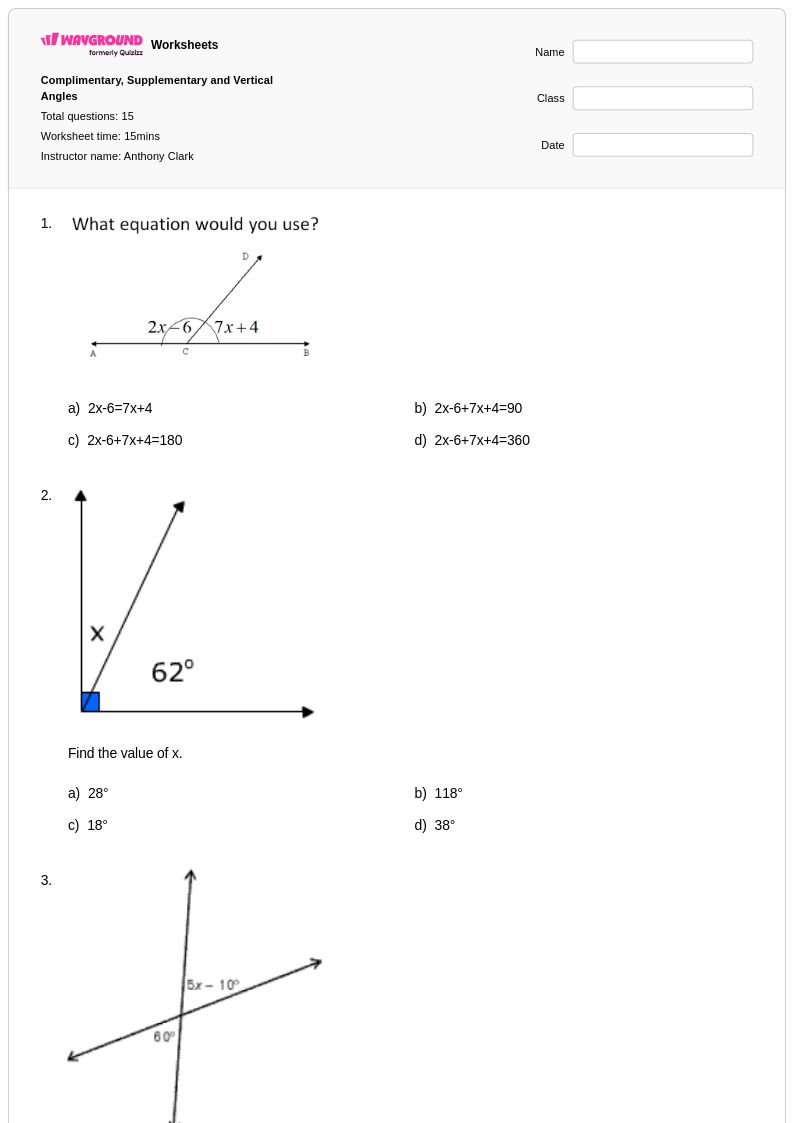
15 Q
8th - Uni
Explore Complementary, Supplementary, Vertical, and Adjacent Angles Worksheets by Grades
Explore Other Subject Worksheets for class 11
Explore printable Complementary, Supplementary, Vertical, and Adjacent Angles worksheets for Class 11
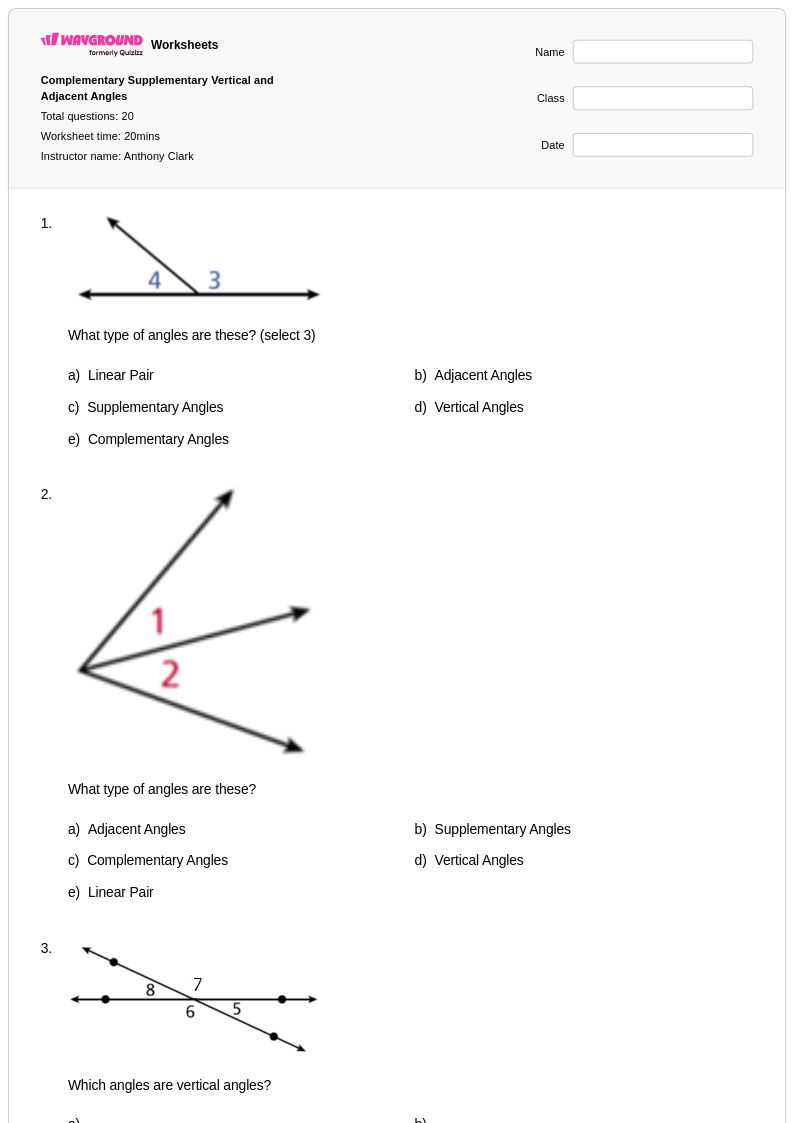
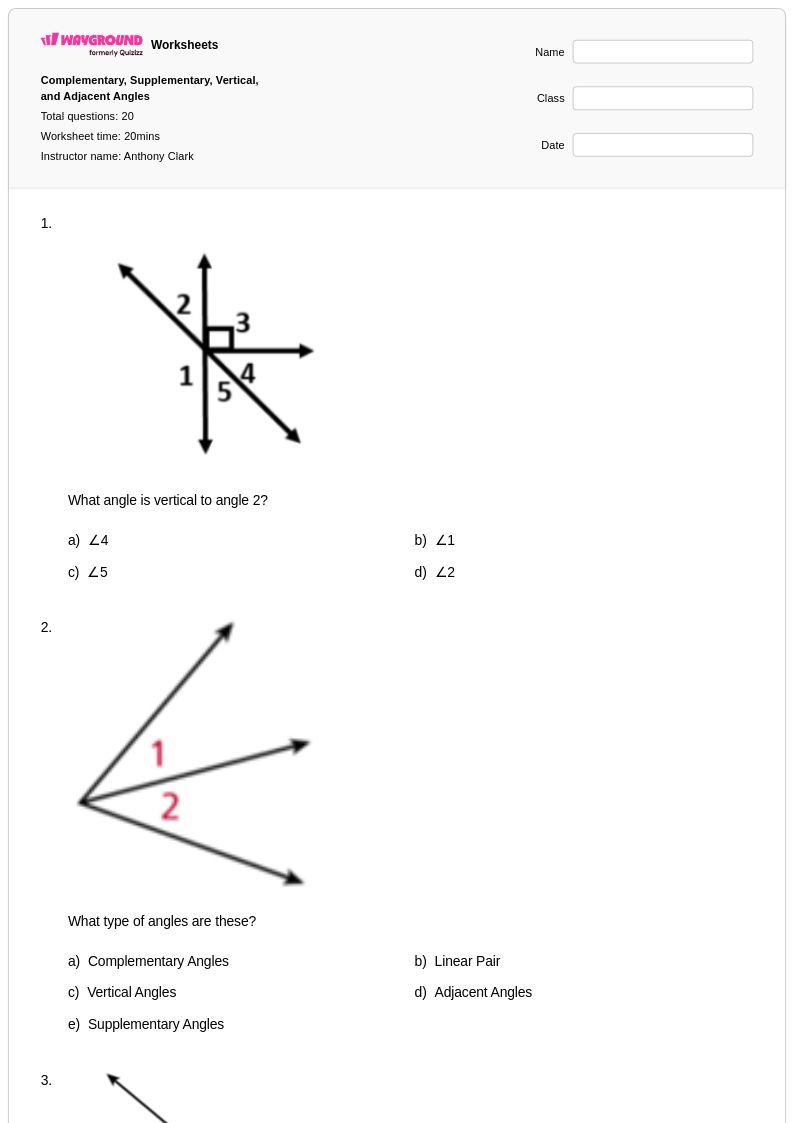
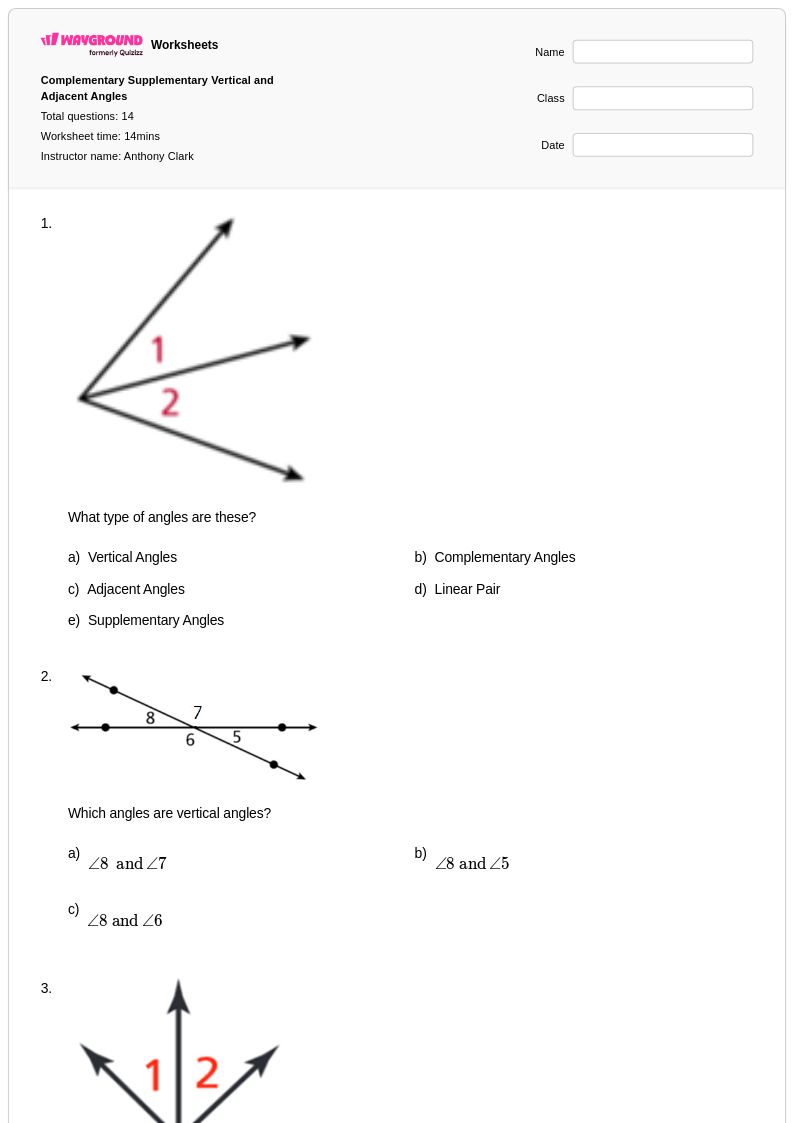
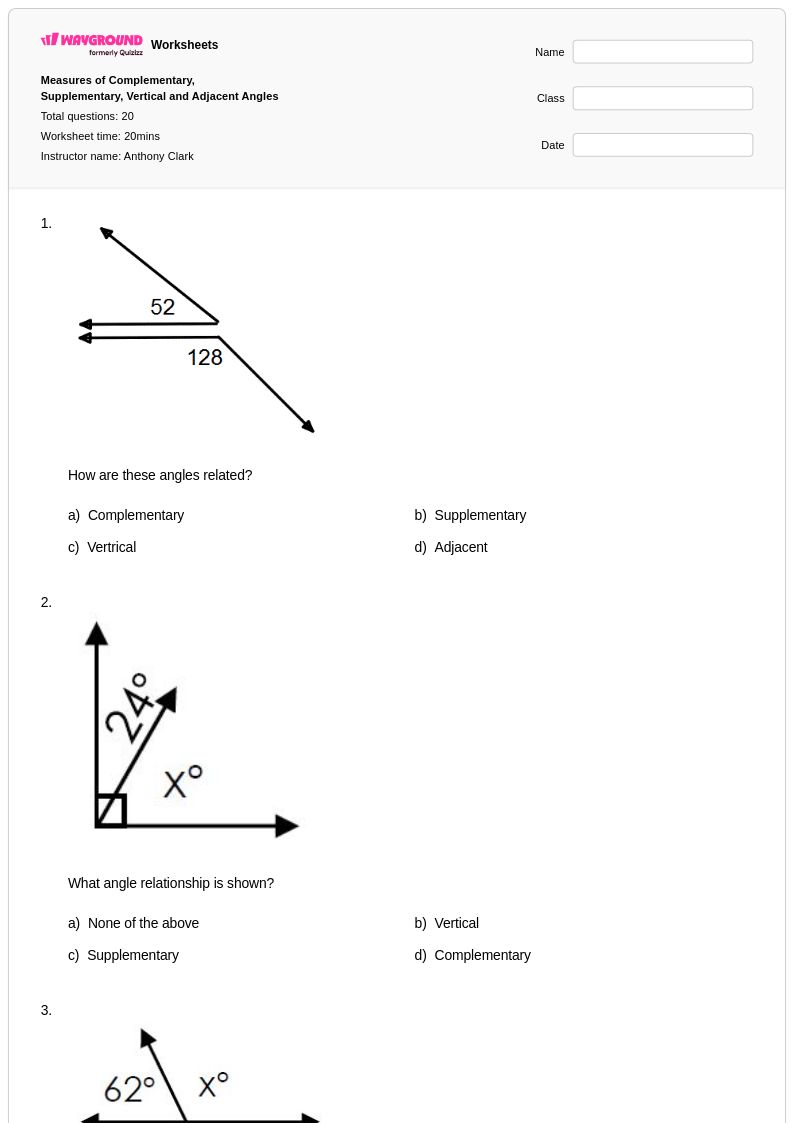
Complementary, supplementary, vertical, and adjacent angles form the cornerstone of geometric reasoning for Class 11 mathematics students, and Wayground's comprehensive worksheet collection provides targeted practice to master these essential angle relationships. These expertly crafted worksheets guide students through identifying angle pairs, calculating missing angle measures, and applying fundamental theorems that govern how angles interact in geometric figures. Each worksheet includes detailed answer keys that support independent learning and self-assessment, while the variety of practice problems progresses from basic identification exercises to complex multi-step calculations involving intersecting lines, parallel line systems, and polygon applications. Available as free printables in convenient PDF format, these resources ensure students develop both computational fluency and conceptual understanding of how complementary angles sum to 90 degrees, supplementary angles total 180 degrees, vertical angles maintain equality, and adjacent angles share common vertices and sides.
Wayground's extensive library of millions of teacher-created resources empowers educators to deliver differentiated instruction tailored to diverse learning needs in Class 11 mathematics classrooms. The platform's advanced search and filtering capabilities enable teachers to quickly locate worksheets that align with specific curriculum standards while offering flexible customization tools to modify difficulty levels, problem types, and formatting preferences. Whether accessed as printable PDF worksheets for traditional classroom use or integrated into digital learning environments, these materials support comprehensive lesson planning from initial concept introduction through targeted remediation and advanced enrichment activities. Teachers can seamlessly scaffold student learning by selecting worksheets that build progressively complex understanding of angle relationships, ensuring every student receives appropriate challenge levels while developing the spatial reasoning and algebraic thinking skills essential for success in advanced geometry and trigonometry courses.
FAQs
How should I review complementary, supplementary, vertical, and adjacent angles in Grade 11?
What angle relationship exercises are useful for Grade 11 students?
What misconceptions should I look for when assessing angle relationships?
How do I assign these Grade 11 angle worksheets?
Are Grade 11 angle relationship worksheets aligned with Common Core geometry?
How can I support Grade 11 students who struggle to read complex angle diagrams?
Is complementary and supplementary angle practice appropriate for Grade 11?