
Temas recomendados para ti
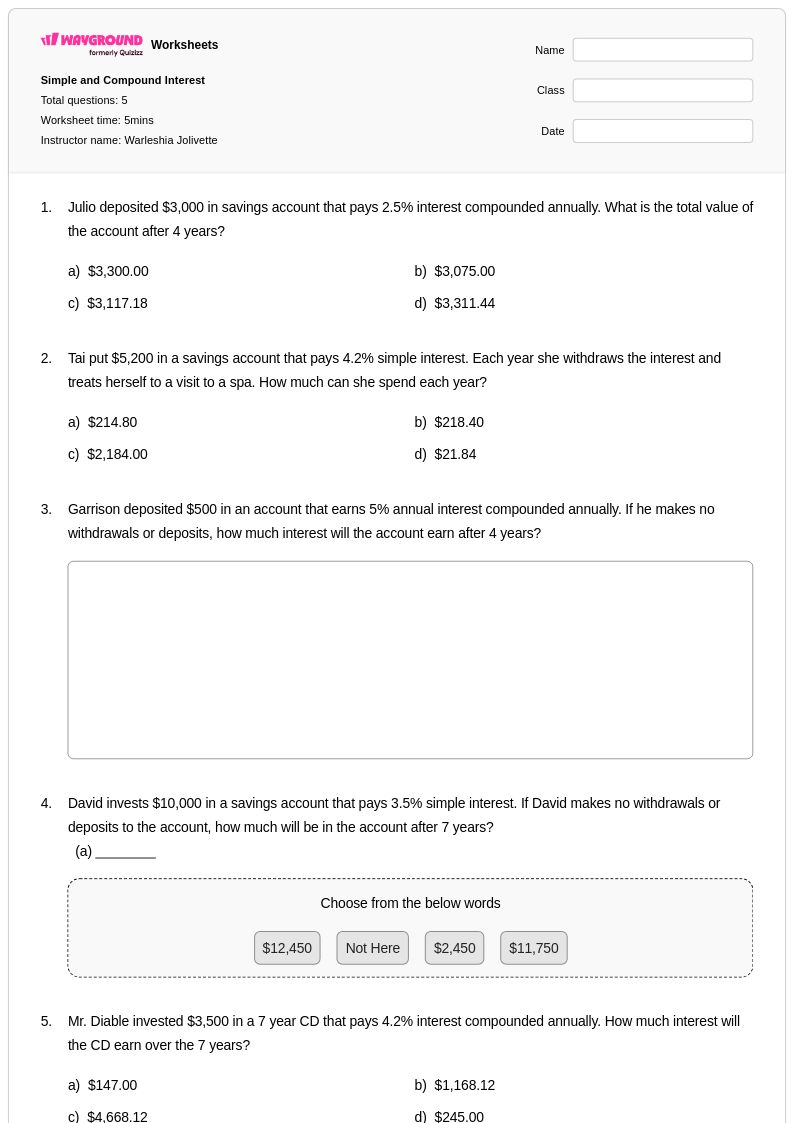
5Q
8th
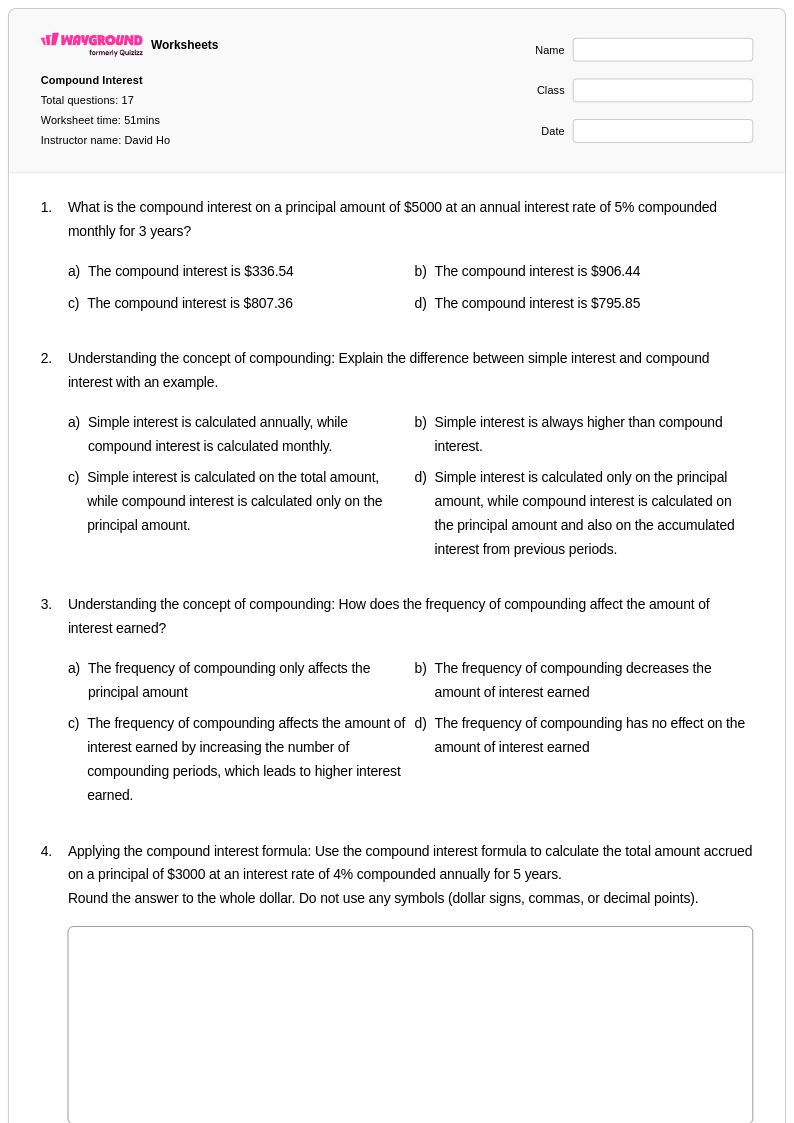
17Q
12th
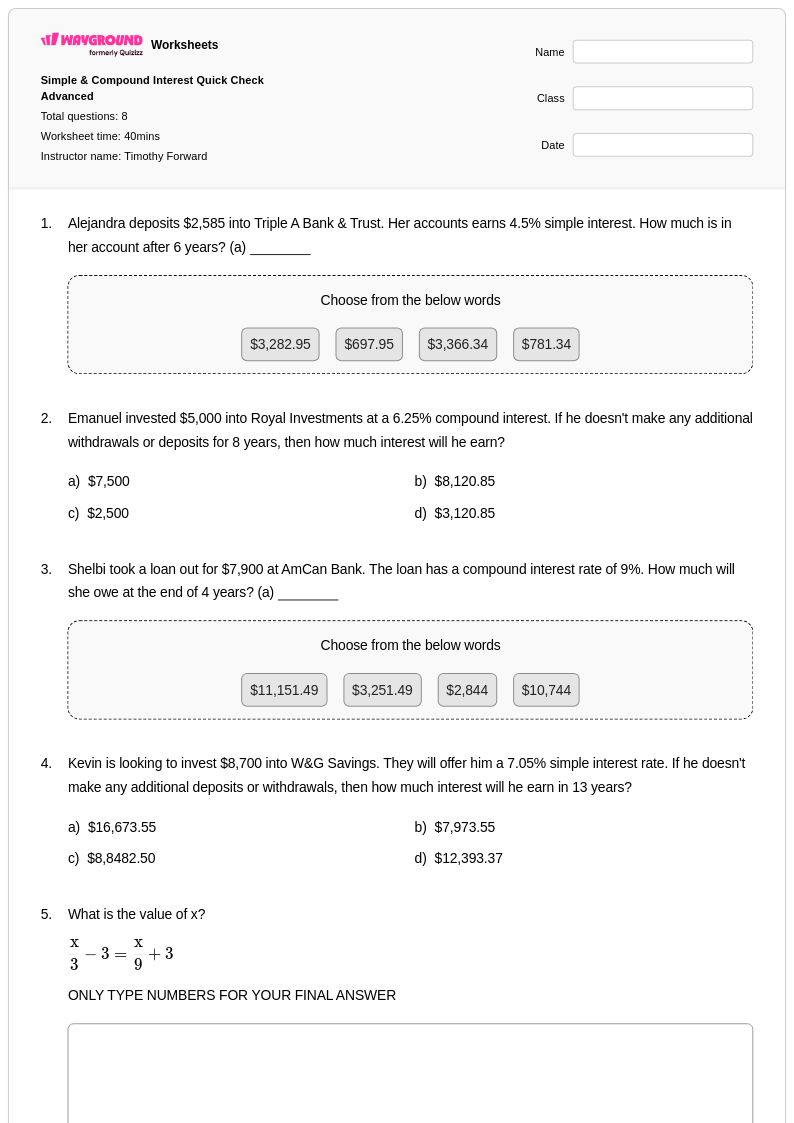
8Q
8th
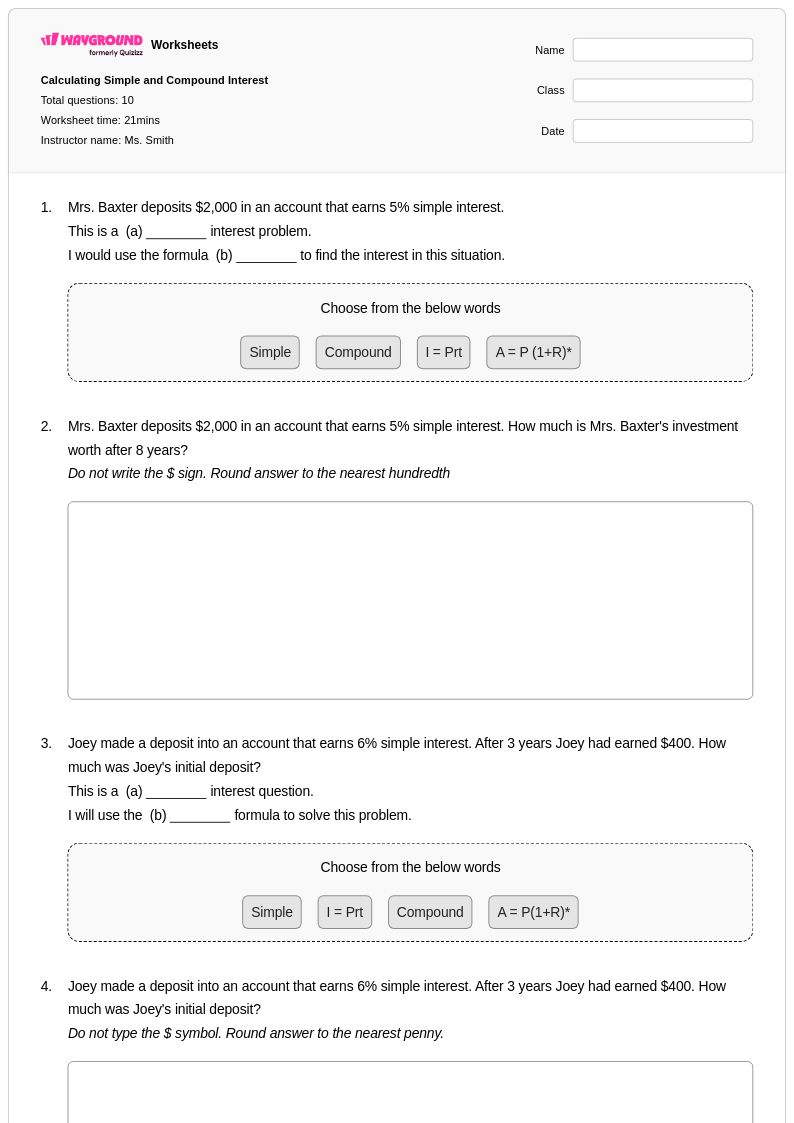
10Q
7th
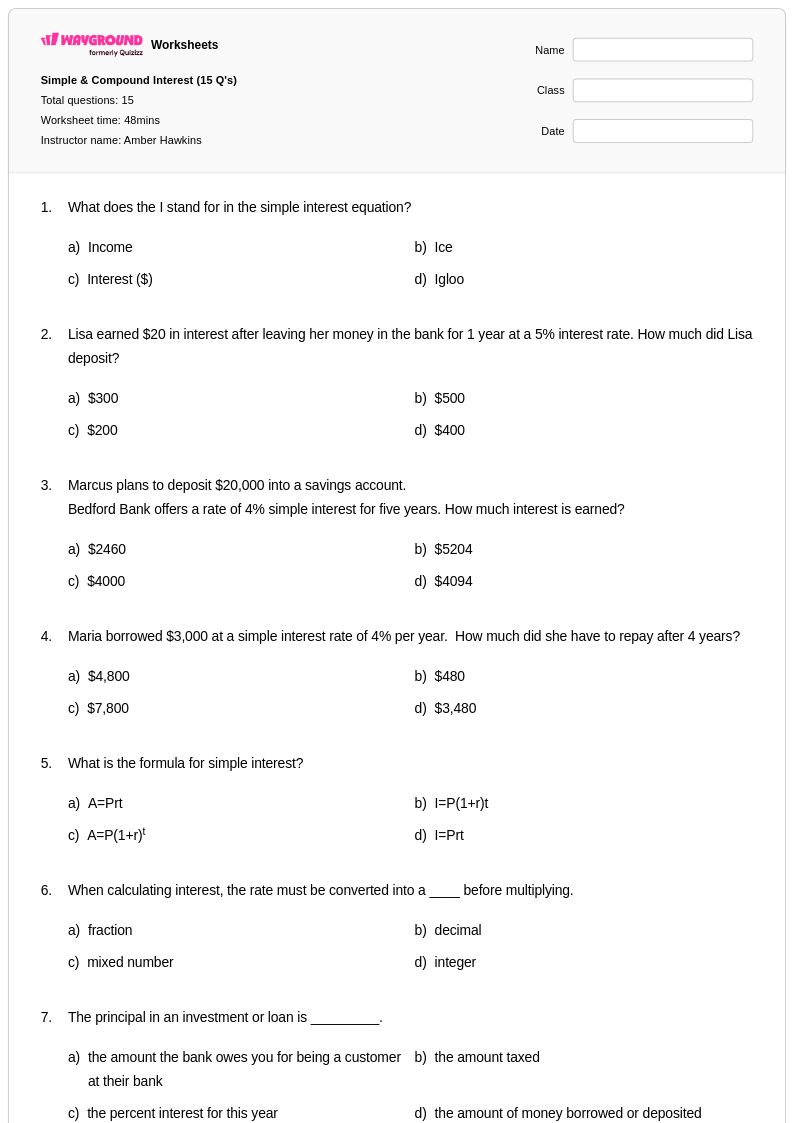
15Q
8th
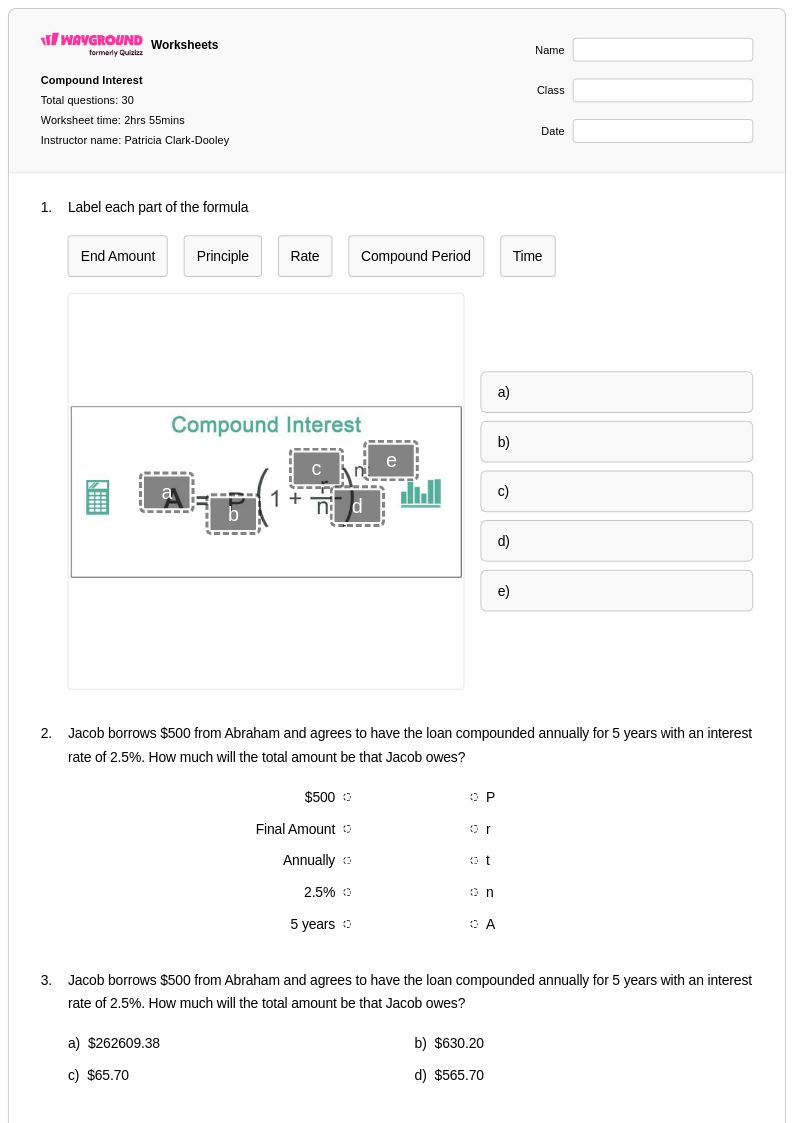
30Q
9th - 12th
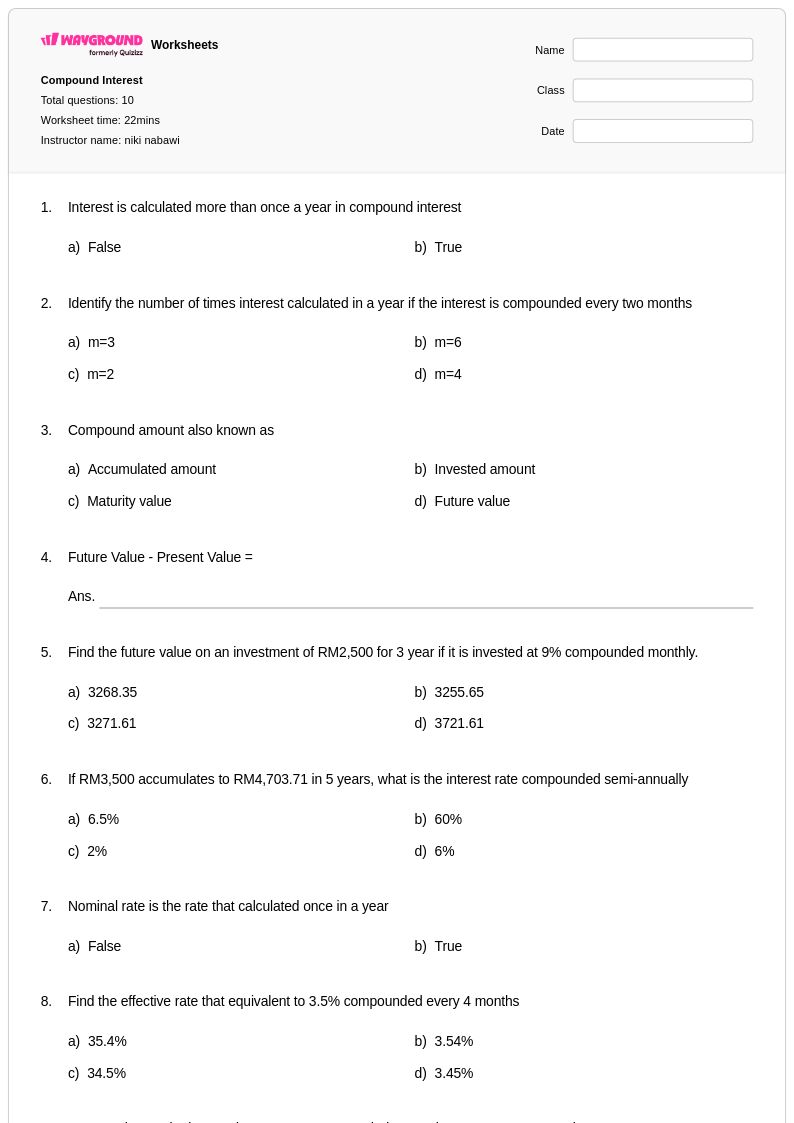
10Q
Uni
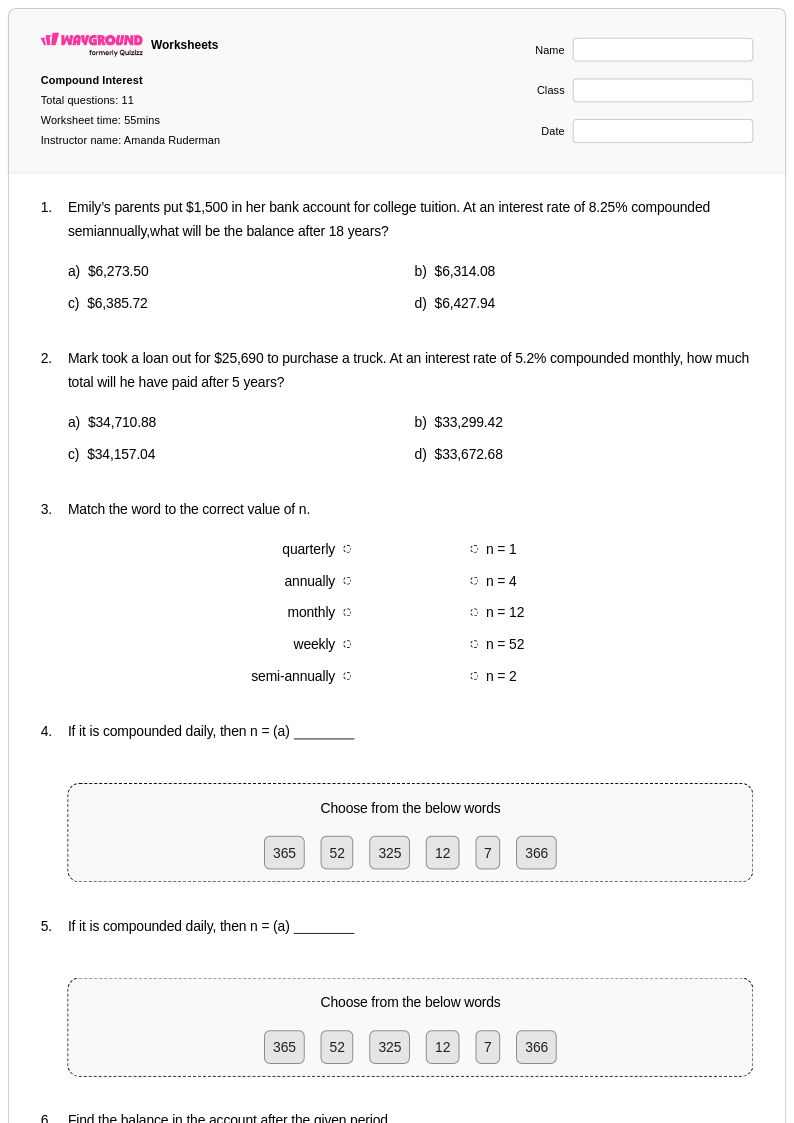
11Q
9th
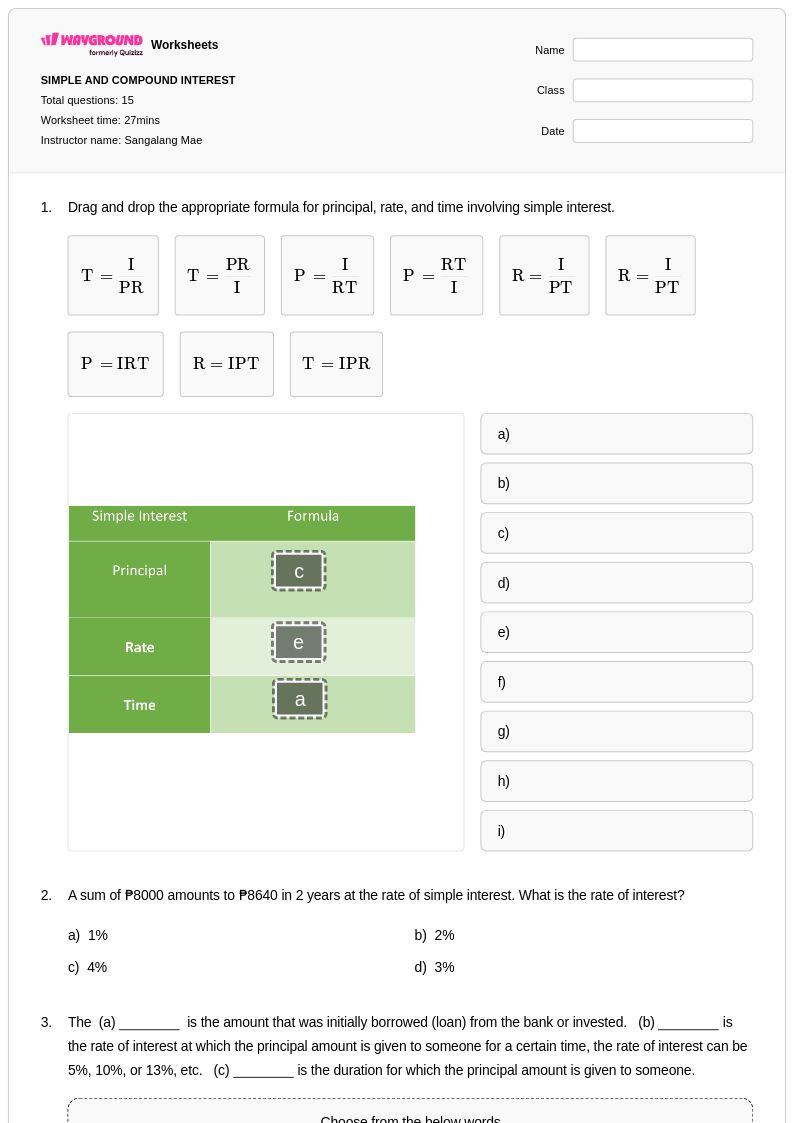
15Q
Uni
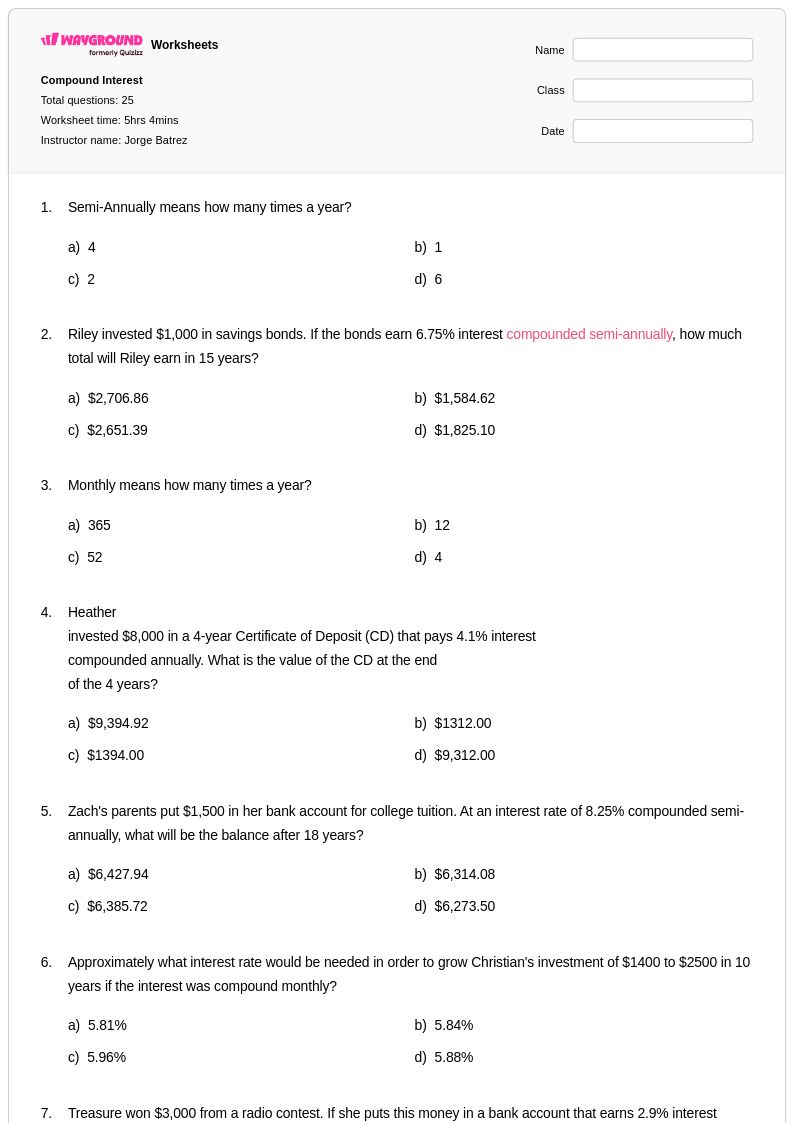
25Q
9th - 11th
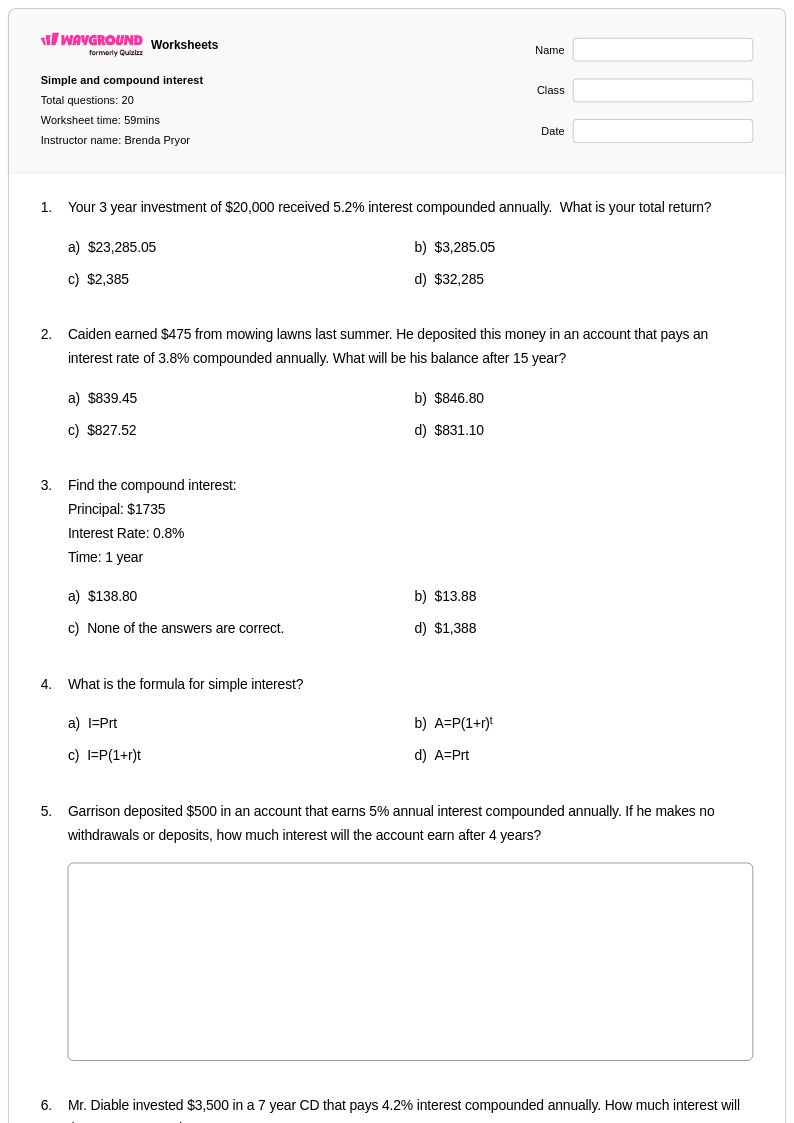
20Q
KG - Uni
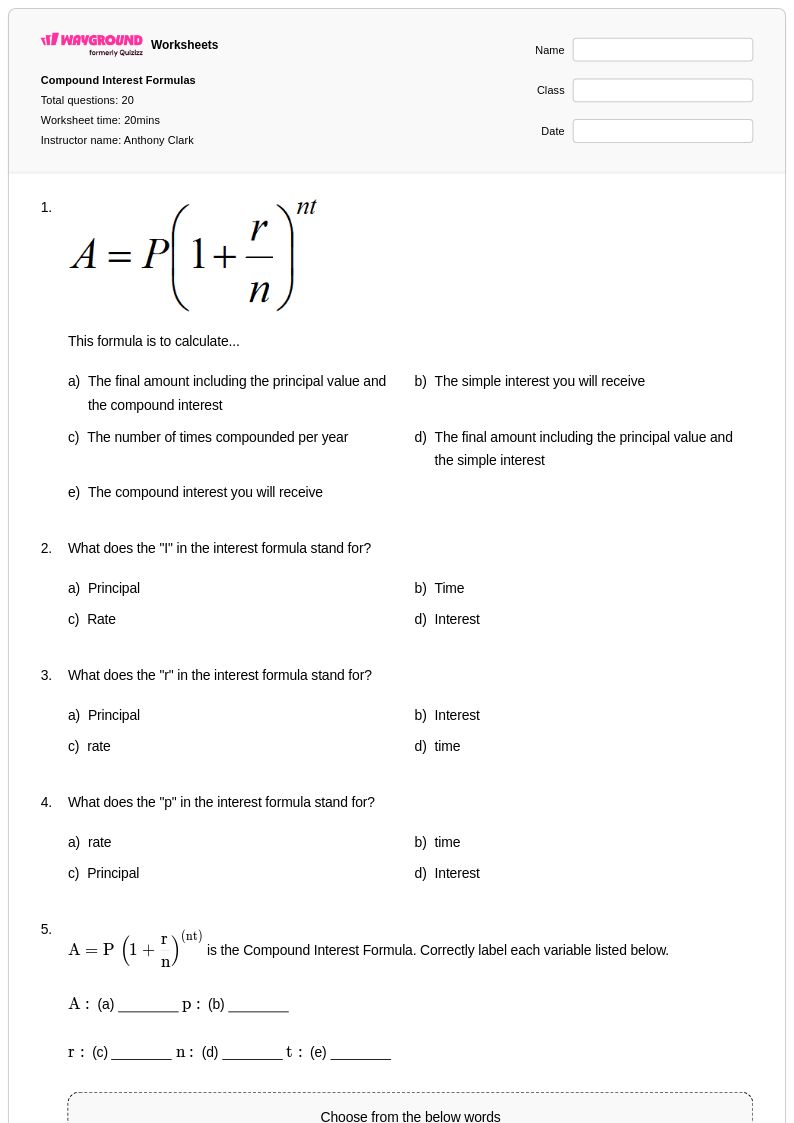
20Q
12th - Uni
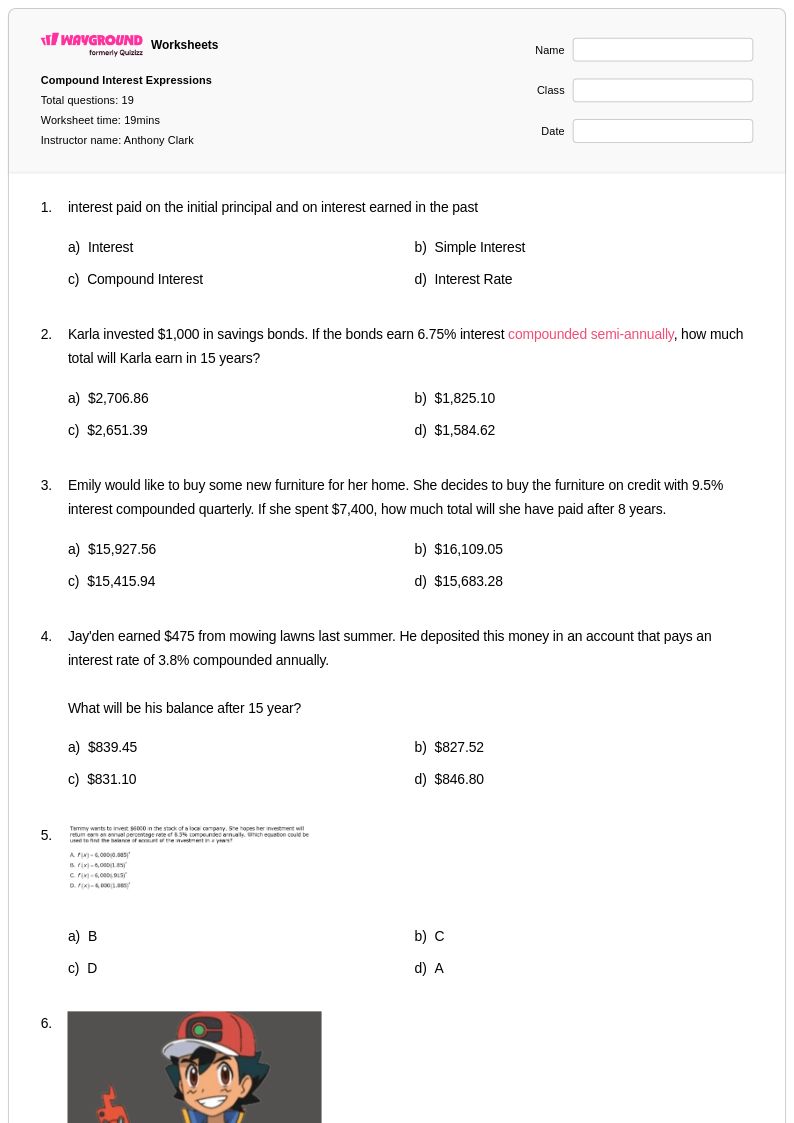
19Q
8th - Uni
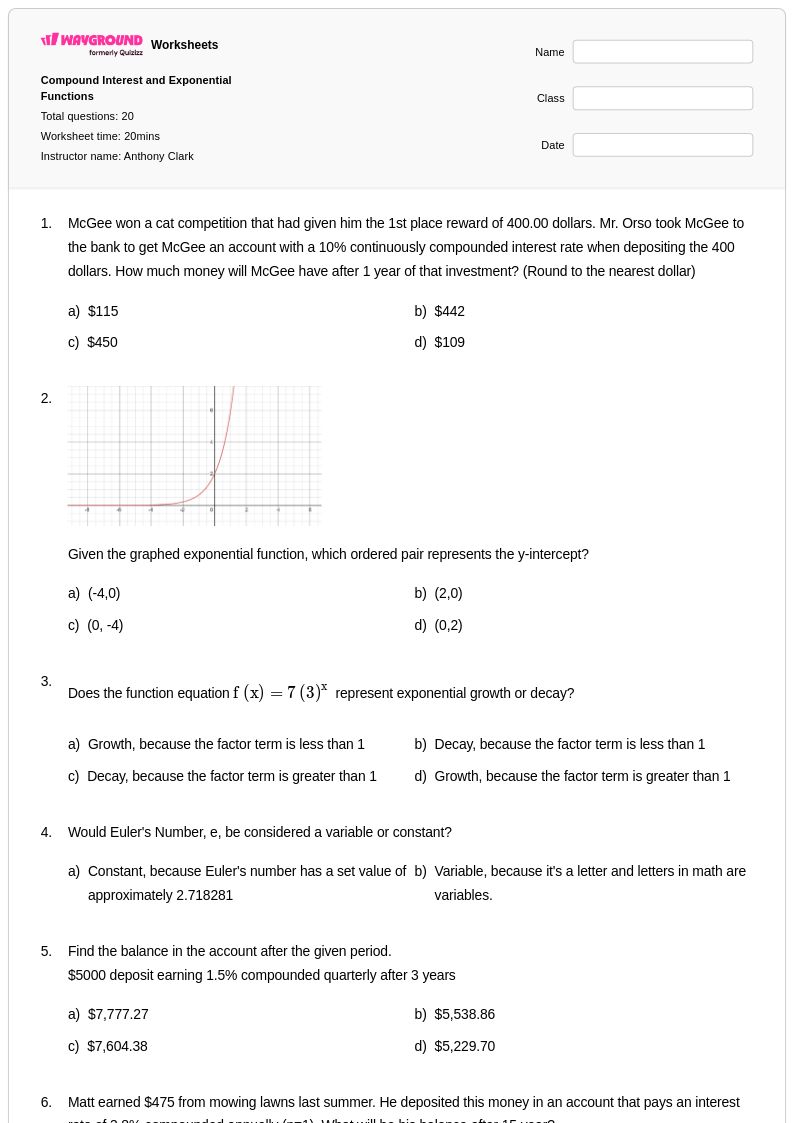
20Q
9th - Uni
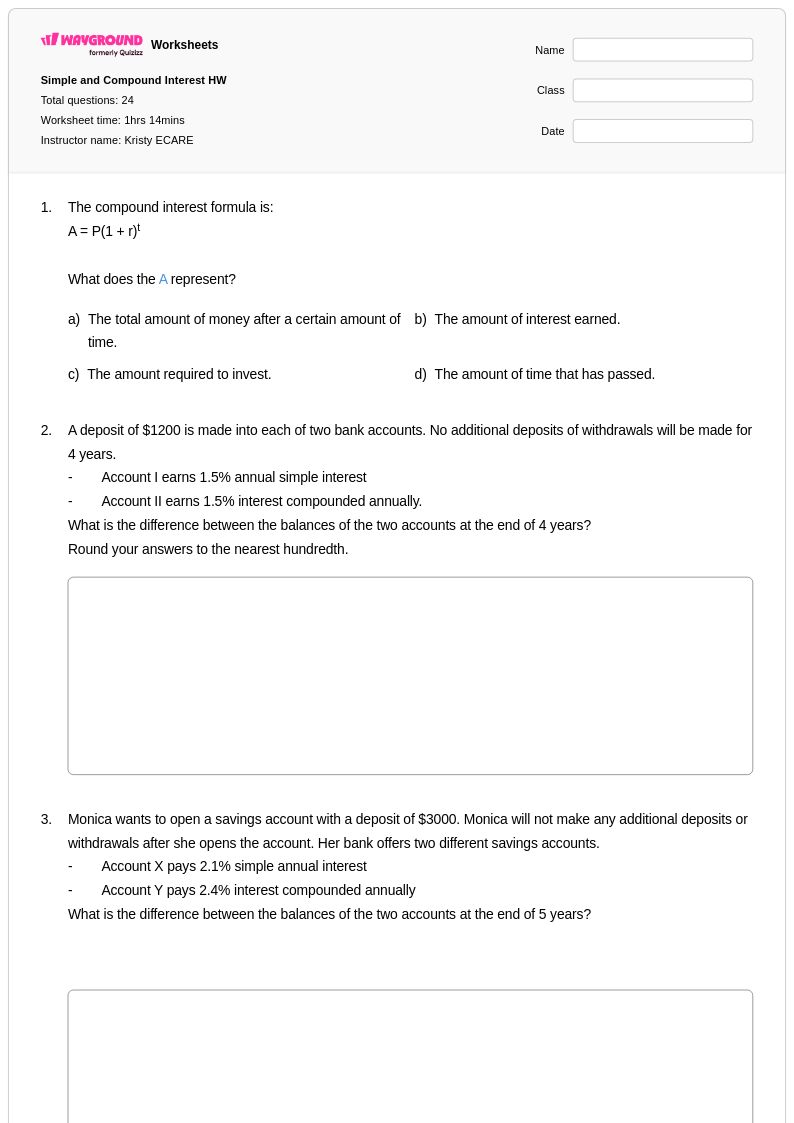
24Q
8th
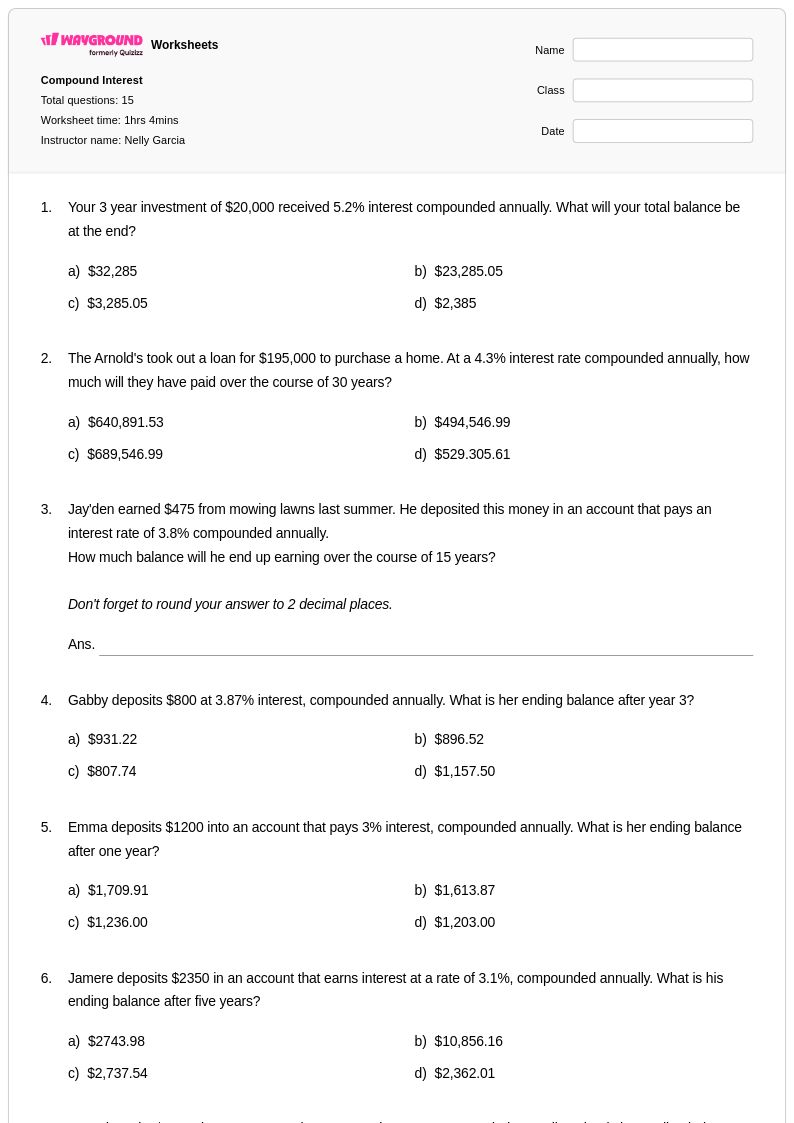
15Q
8th
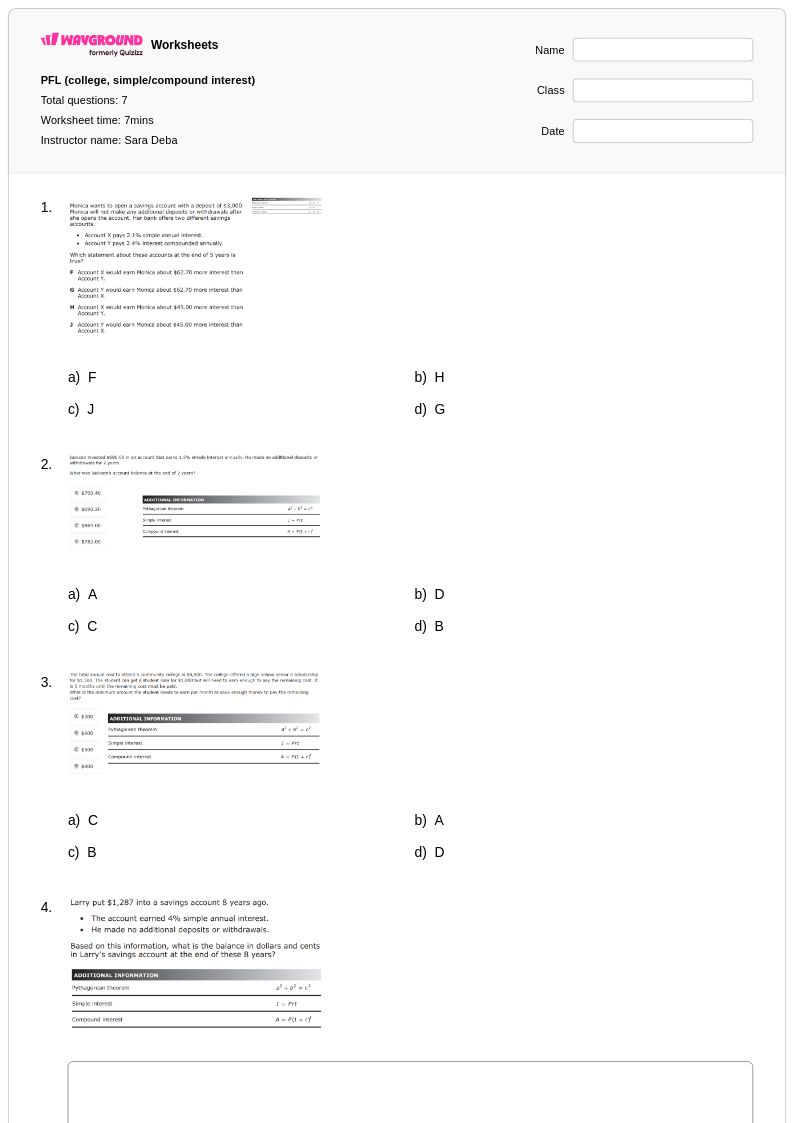
7Q
9th
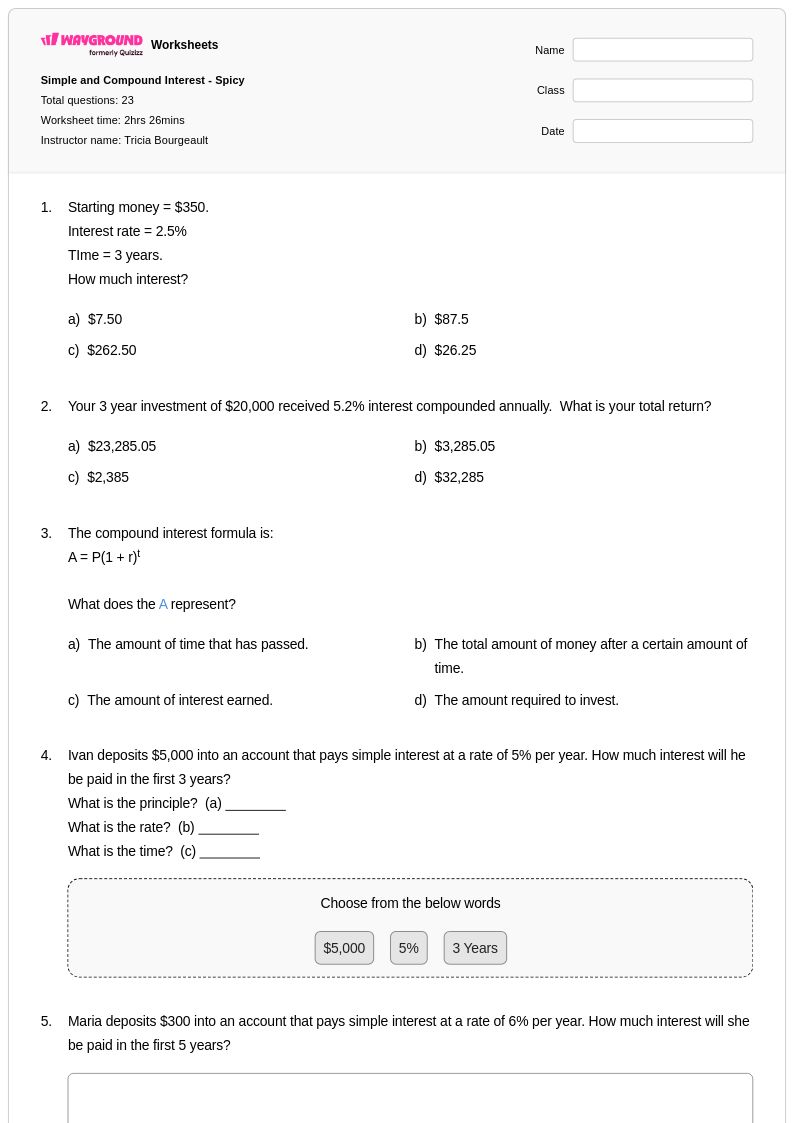
23Q
12th
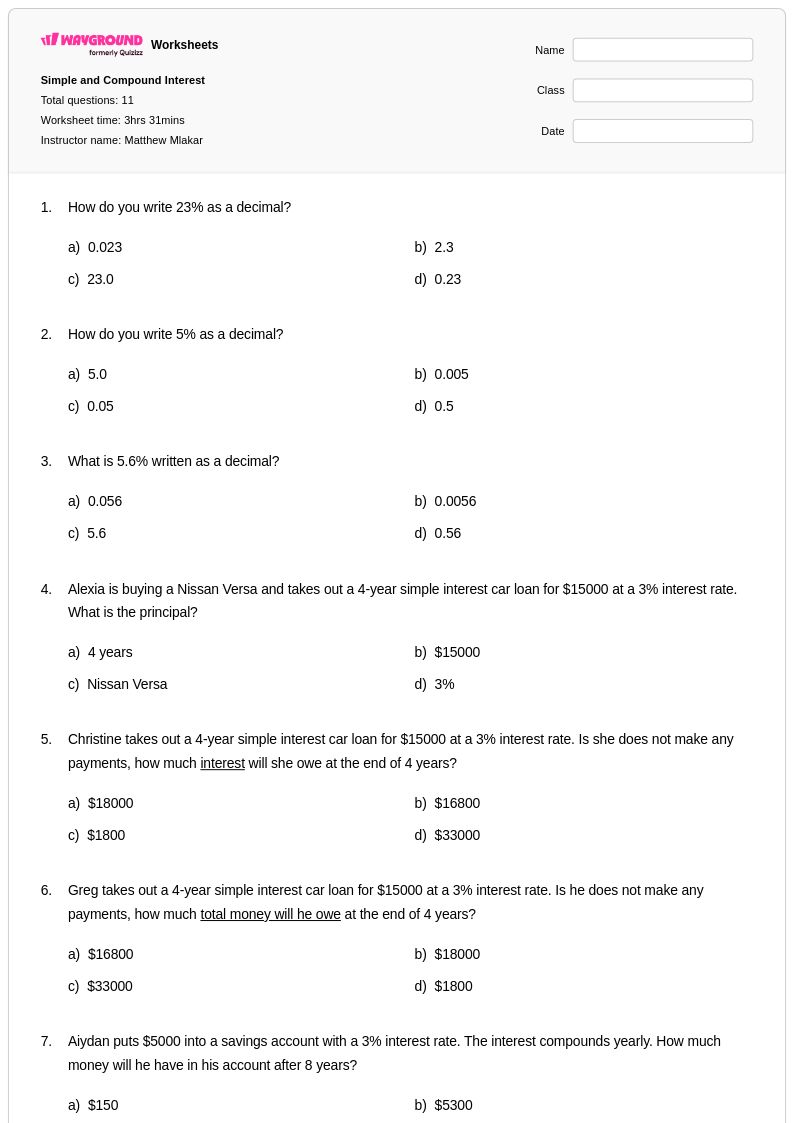
11Q
9th - 11th
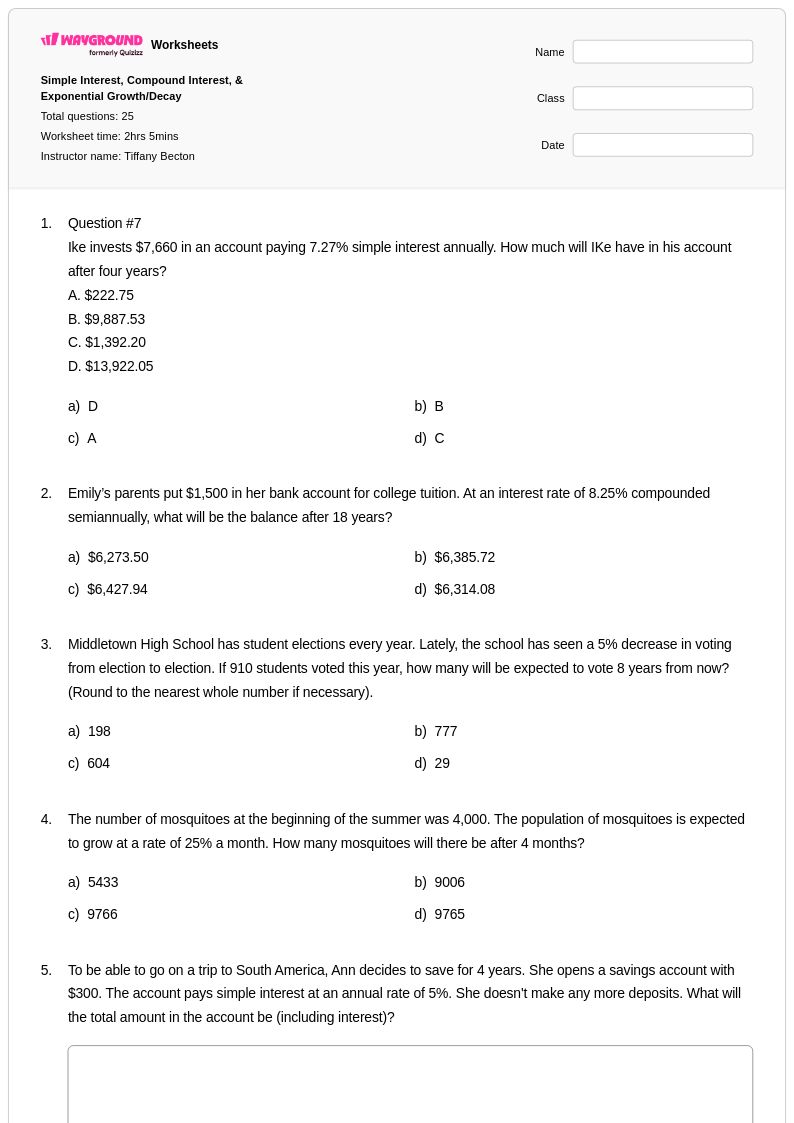
25Q
9th - 12th
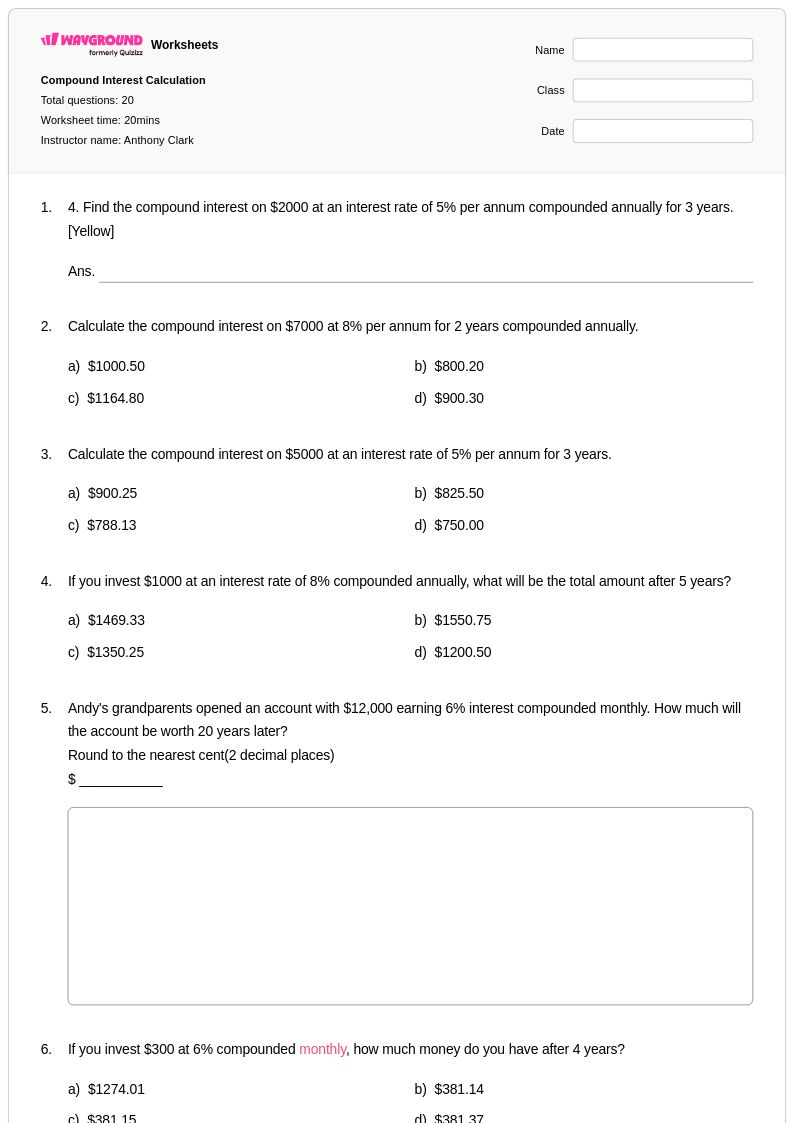
20Q
11th - Uni
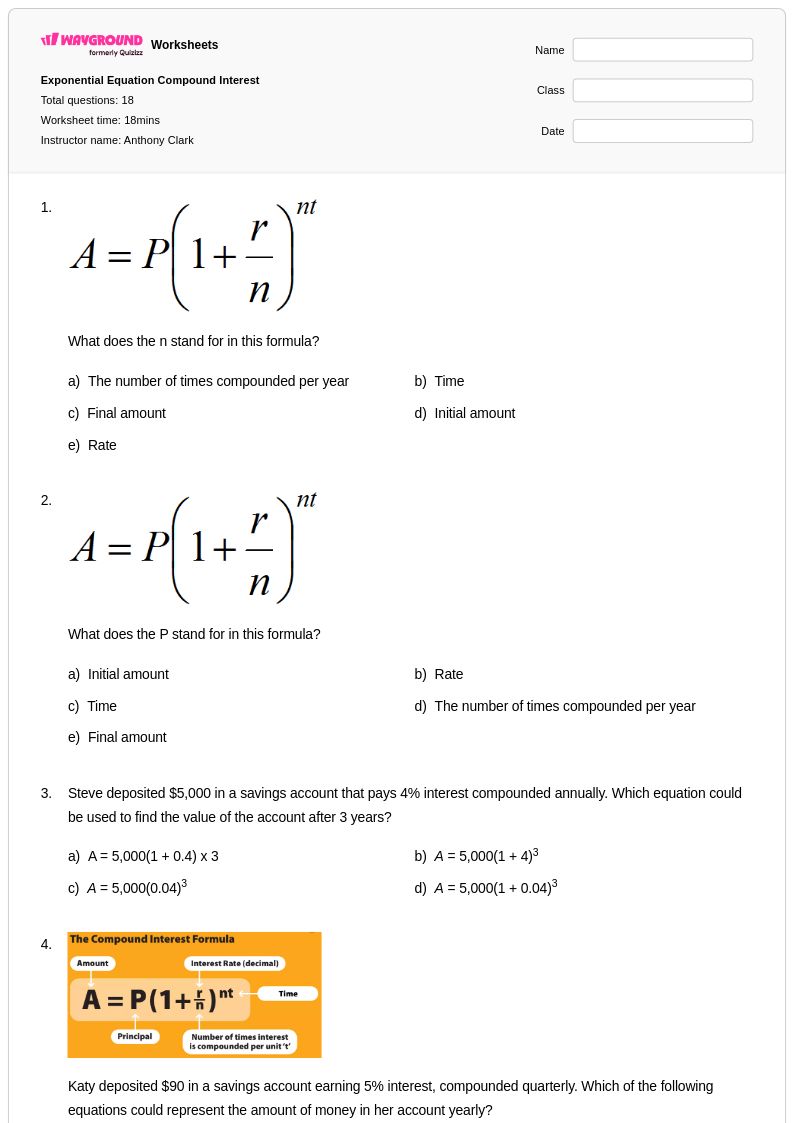
18Q
11th - Uni
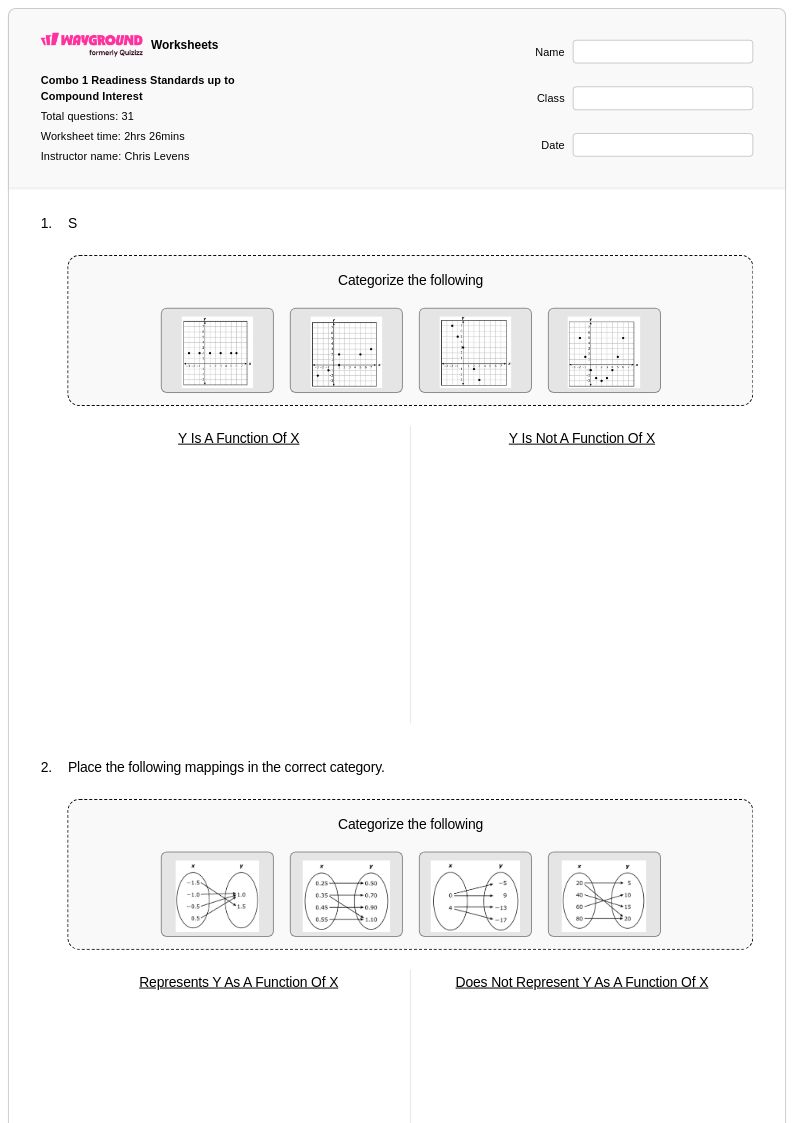
31Q
8th - Uni
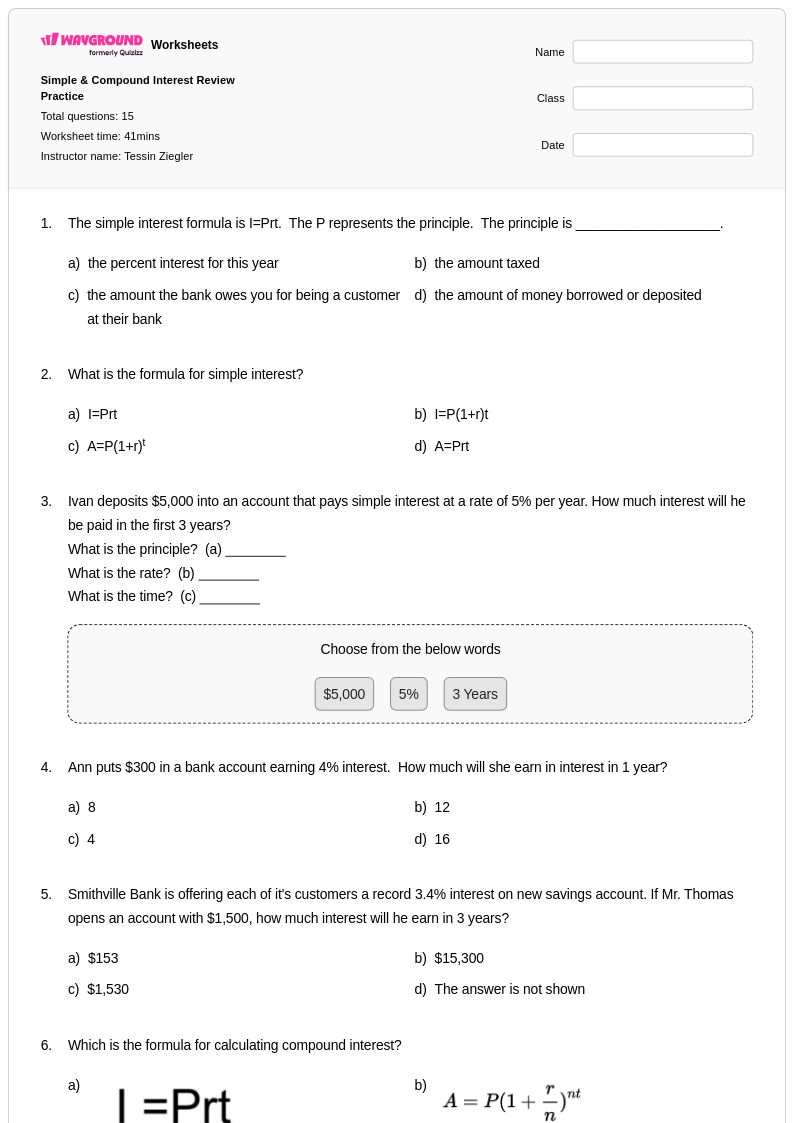
15Q
6th - 8th
Explorar Compound Interest hojas de trabajo por temas
Explorar hojas de trabajo por materias
Explore printable Compound Interest worksheets
Compound interest worksheets available through Wayground (formerly Quizizz) provide comprehensive mathematics resources designed to build students' understanding of exponential financial growth and time-value of money principles. These expertly crafted worksheets strengthen critical quantitative skills including calculating compound interest using various formulas, comparing simple versus compound interest scenarios, determining investment growth over different time periods, and analyzing the impact of compounding frequency on financial outcomes. Each worksheet collection includes detailed practice problems that progress from basic compound interest calculations to complex real-world applications, complete with answer keys and step-by-step solutions. Teachers can access these free printables in convenient pdf format, making it easy to distribute targeted practice materials that reinforce fundamental financial literacy concepts through hands-on problem solving.
Wayground (formerly Quizizz) empowers educators with millions of teacher-created compound interest resources that feature robust search and filtering capabilities, standards alignment to mathematics curricula, and comprehensive differentiation tools for diverse learning needs. The platform's flexible customization options allow teachers to modify existing worksheets or create personalized versions that match specific lesson objectives, assessment requirements, and student skill levels. Available in both printable and digital formats including downloadable pdfs, these worksheet collections support effective instructional planning by providing ready-to-use materials for classroom practice, homework assignments, remediation activities, and enrichment challenges. Teachers can efficiently locate age-appropriate compound interest problems, track student progress through integrated assessment features, and seamlessly integrate these mathematical resources into comprehensive financial literacy instruction that prepares students for real-world financial decision making.
FAQs
How do I teach compound interest effectively?
What exercises help students practice compound interest?
What mistakes do students commonly make when calculating compound interest?
How can I use Wayground compound interest worksheets with my class?
How does compound interest fit into the Common Core math progression?
How can I differentiate compound interest practice for mixed-ability classes?