
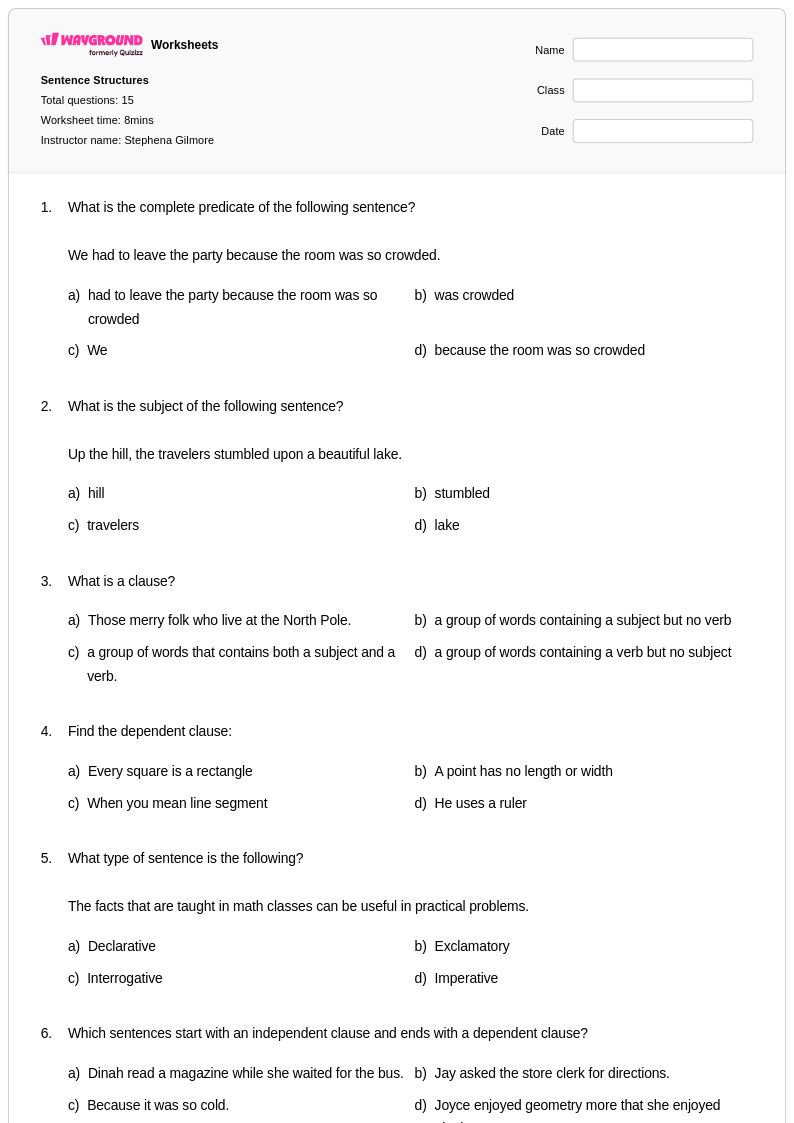
15 T
6th - 10th
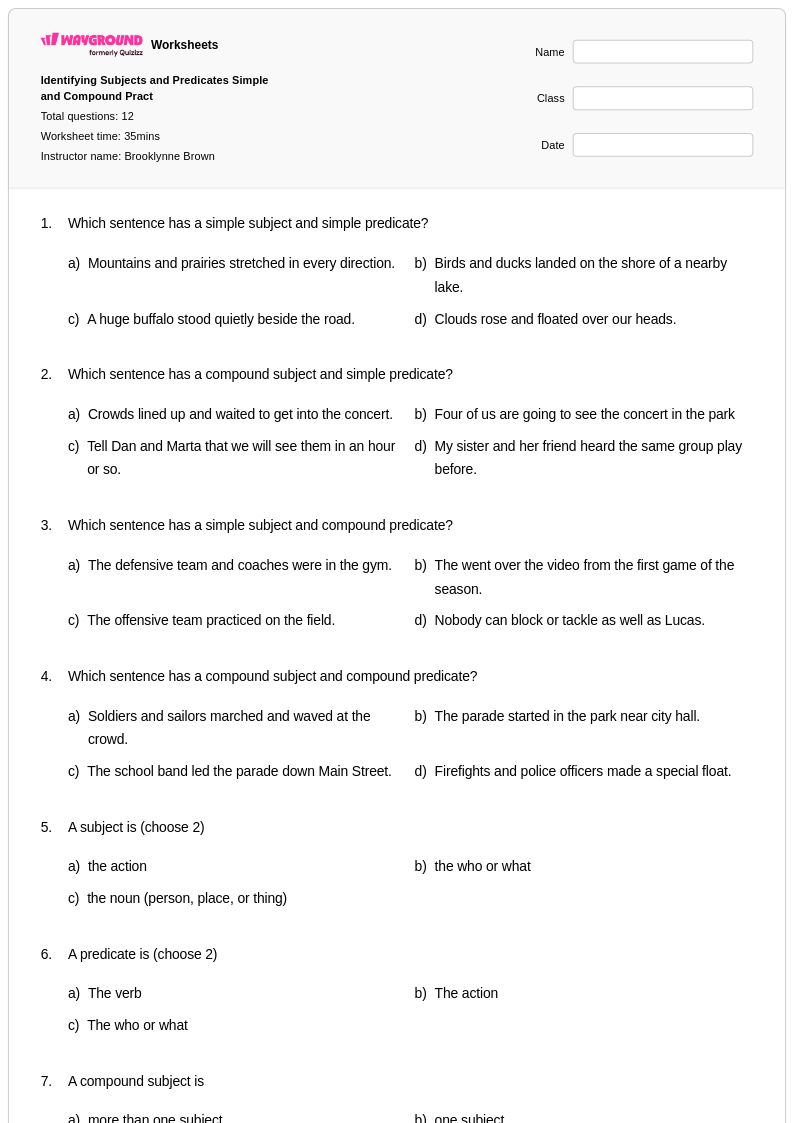
12 T
4th - Uni
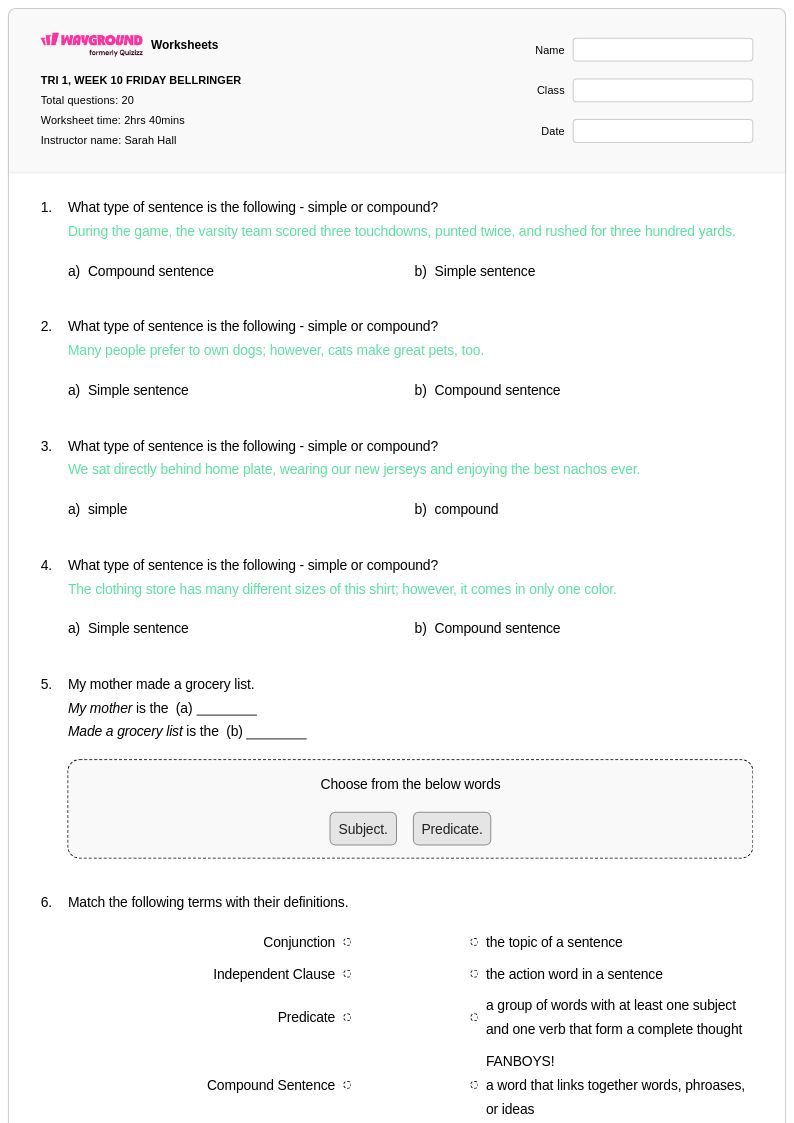
20 T
8th
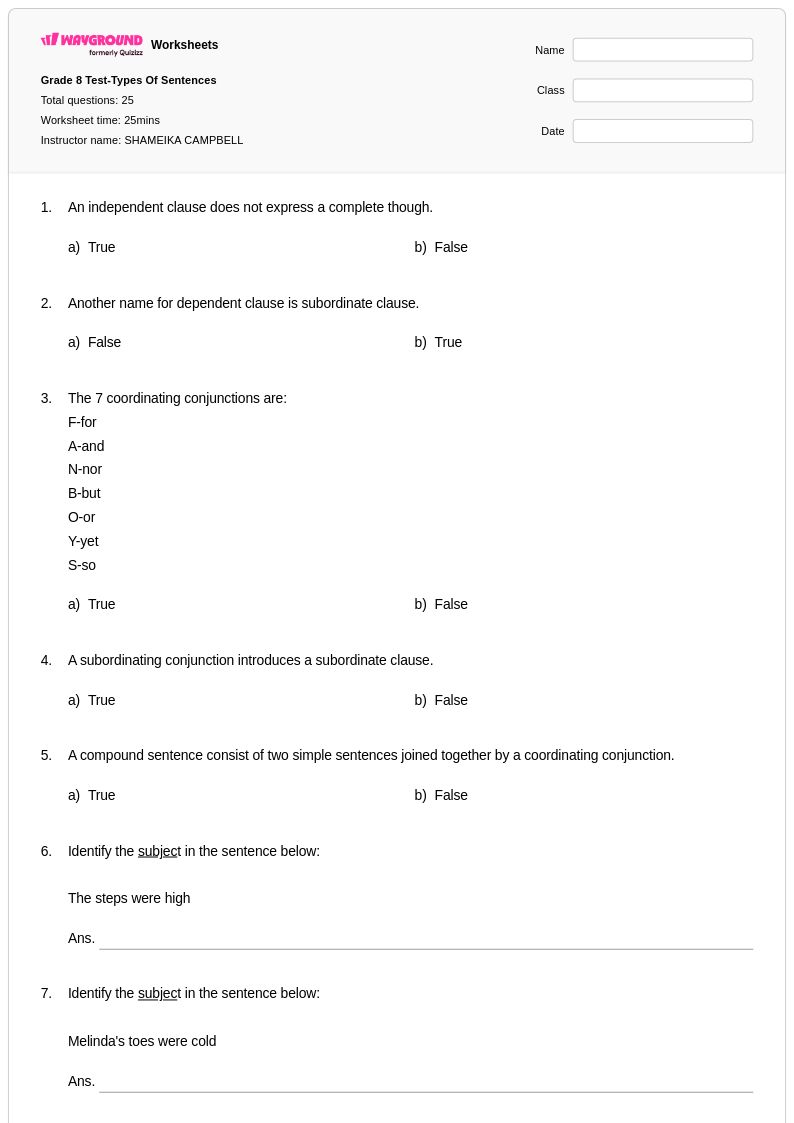
25 T
8th
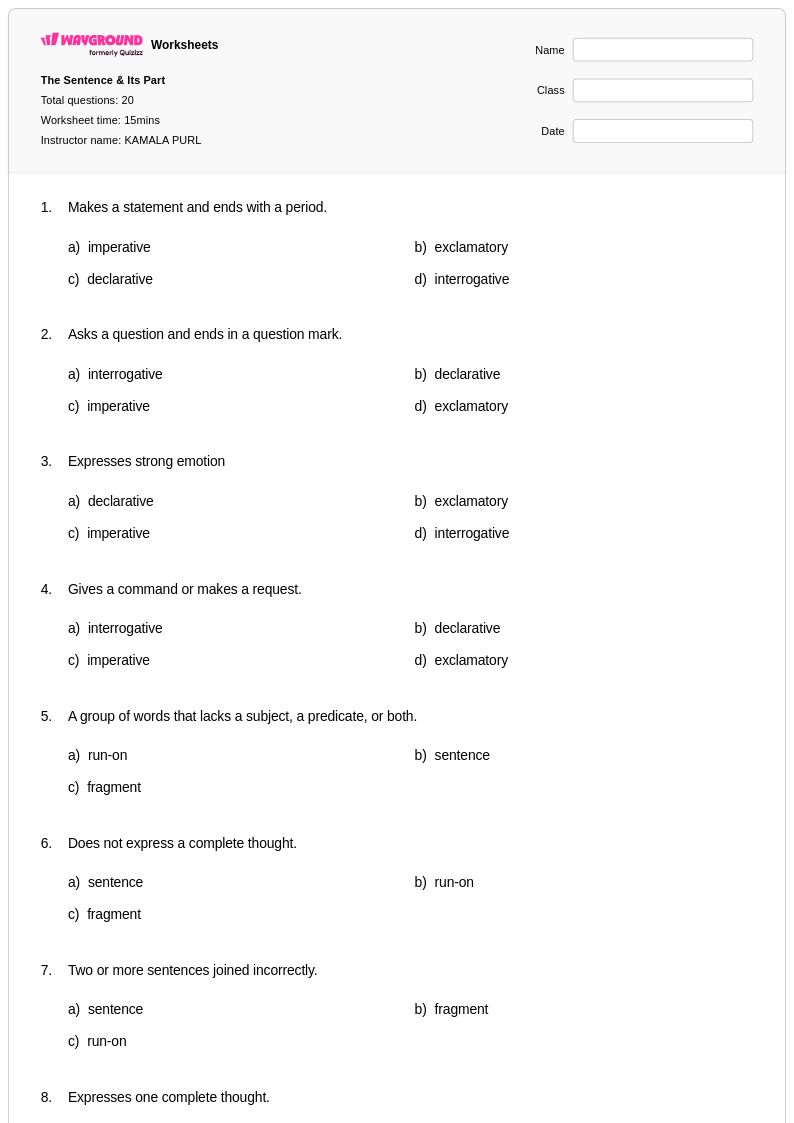
20 T
8th
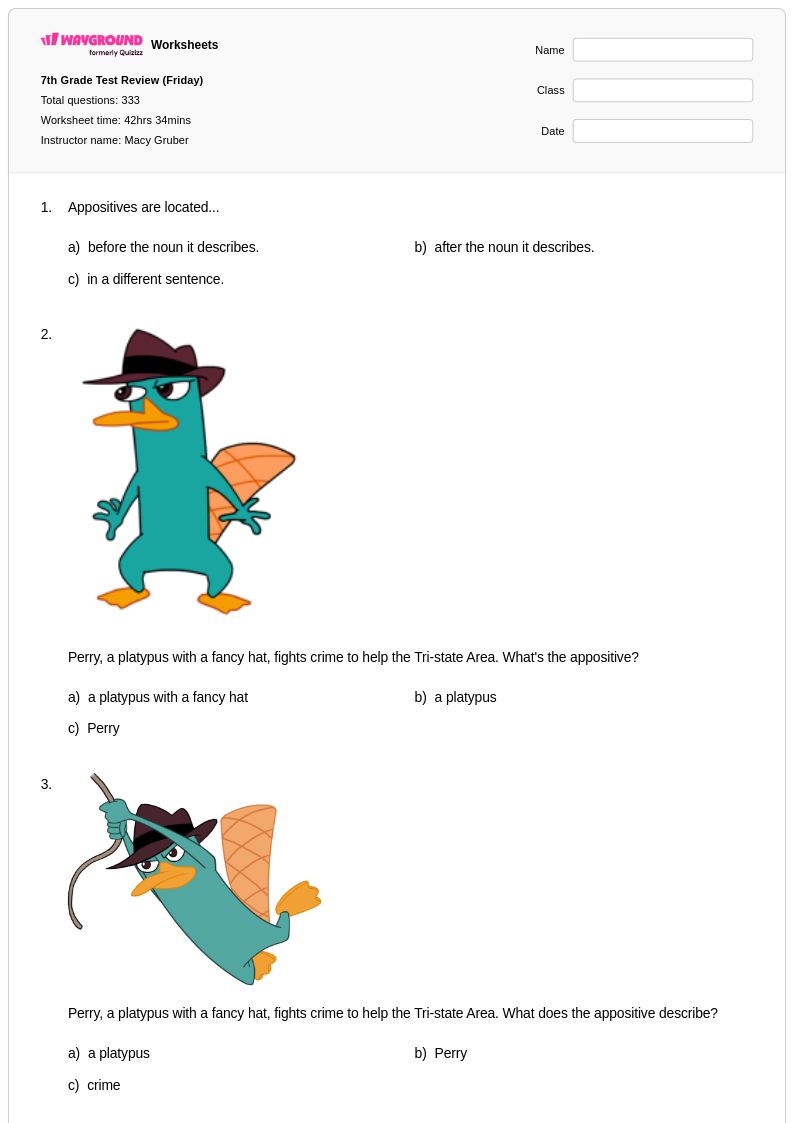
333 T
6th - 8th
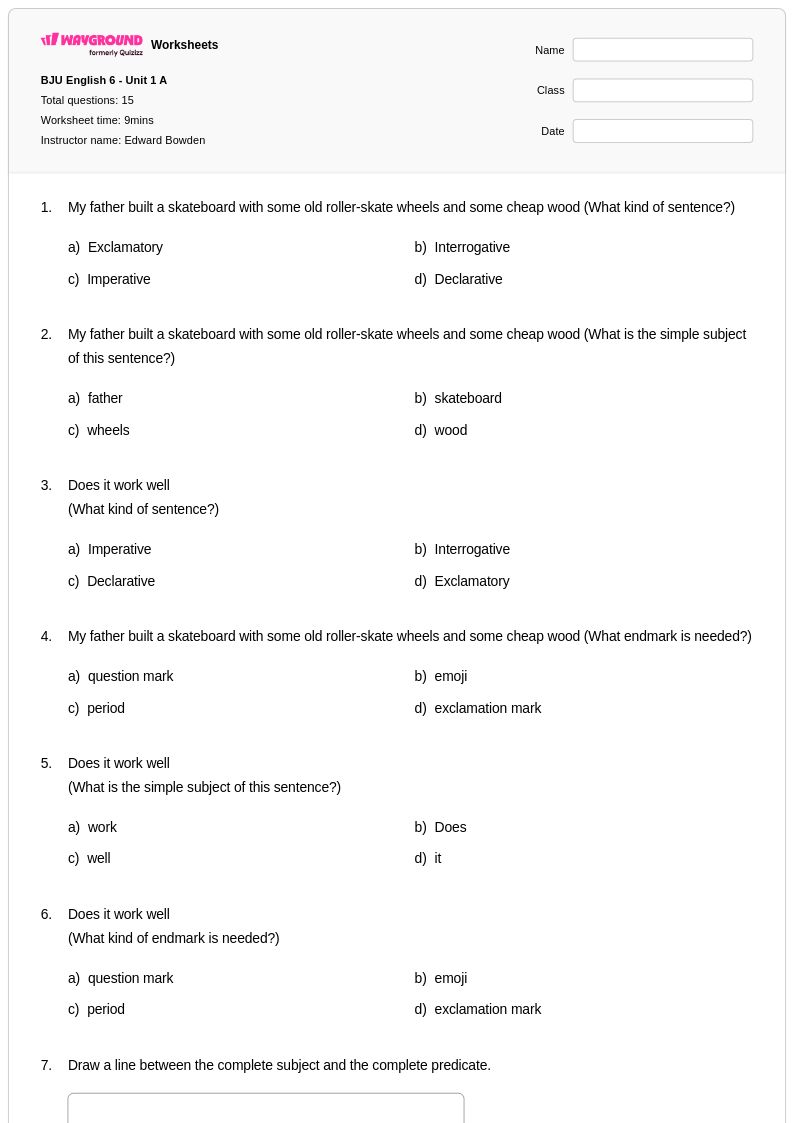
15 T
5th - 8th
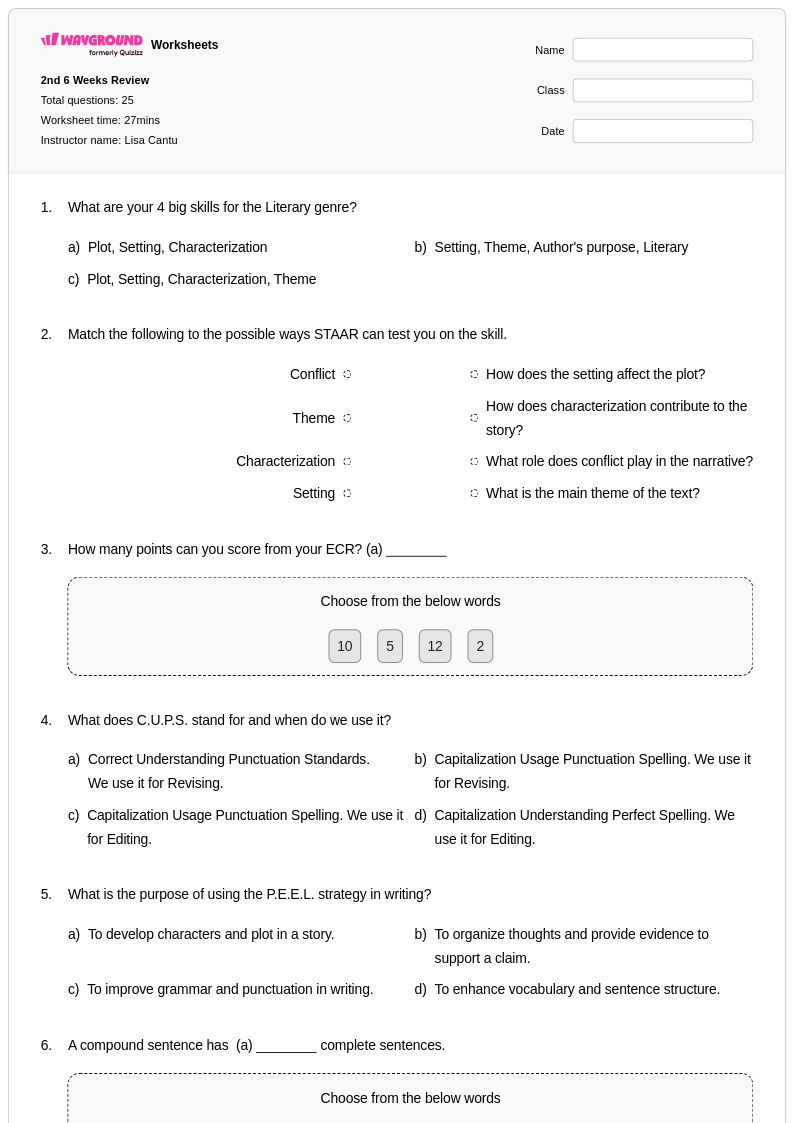
25 T
8th
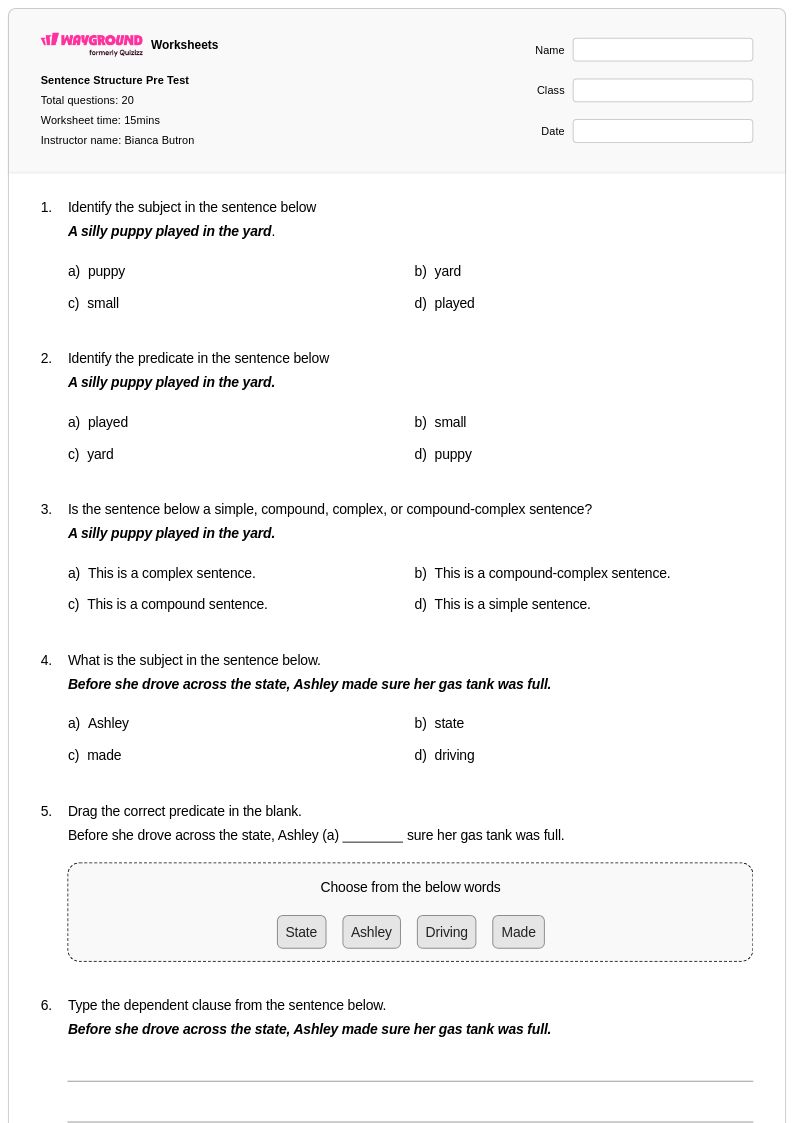
20 T
7th - Uni
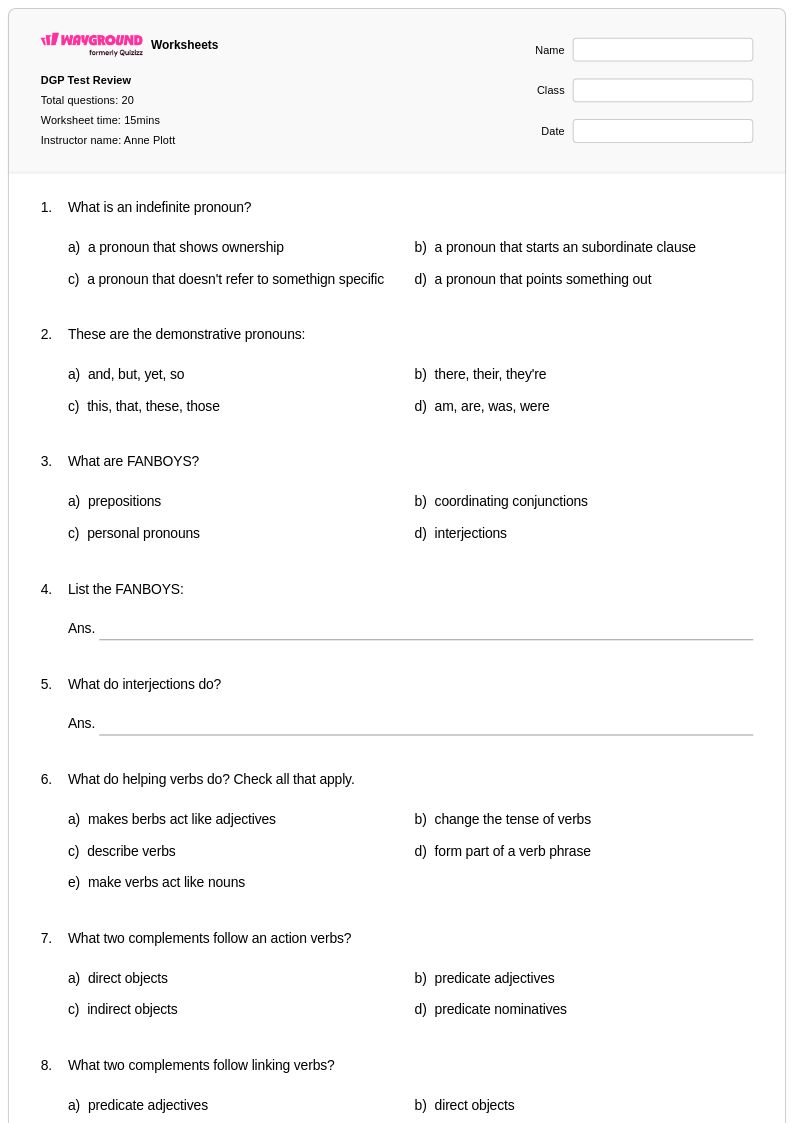
20 T
6th - 8th
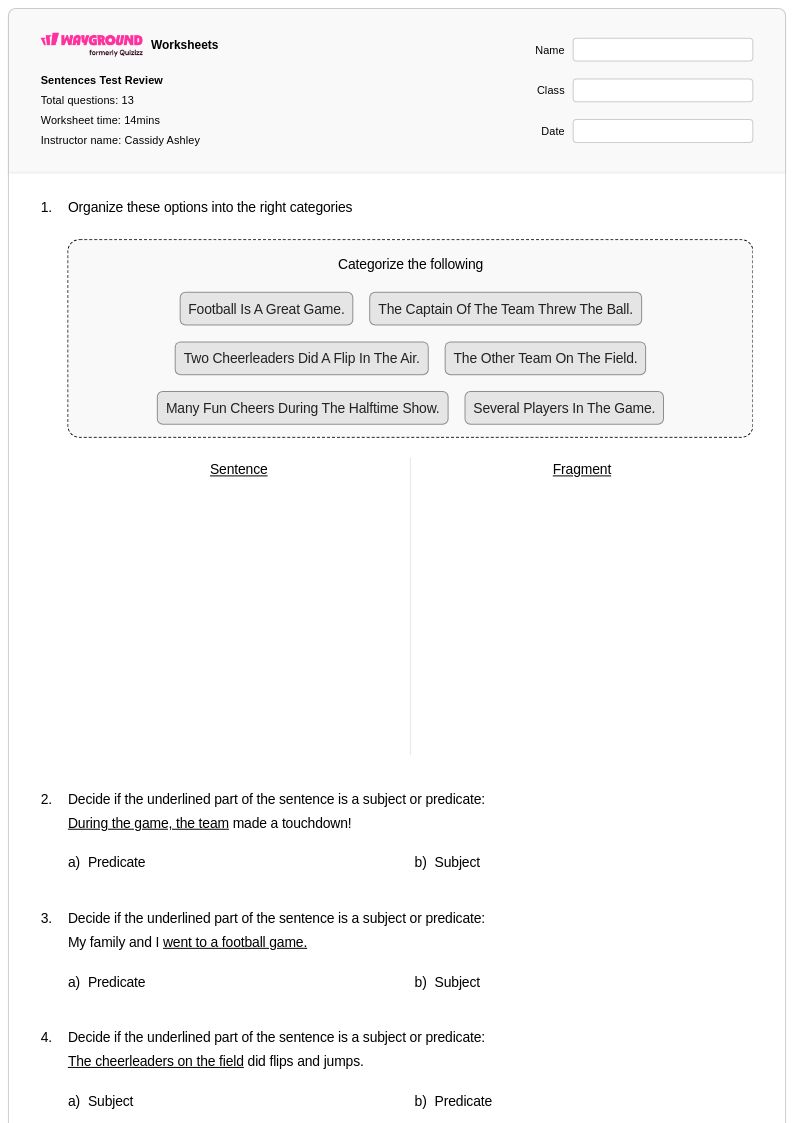
13 T
4th - Uni
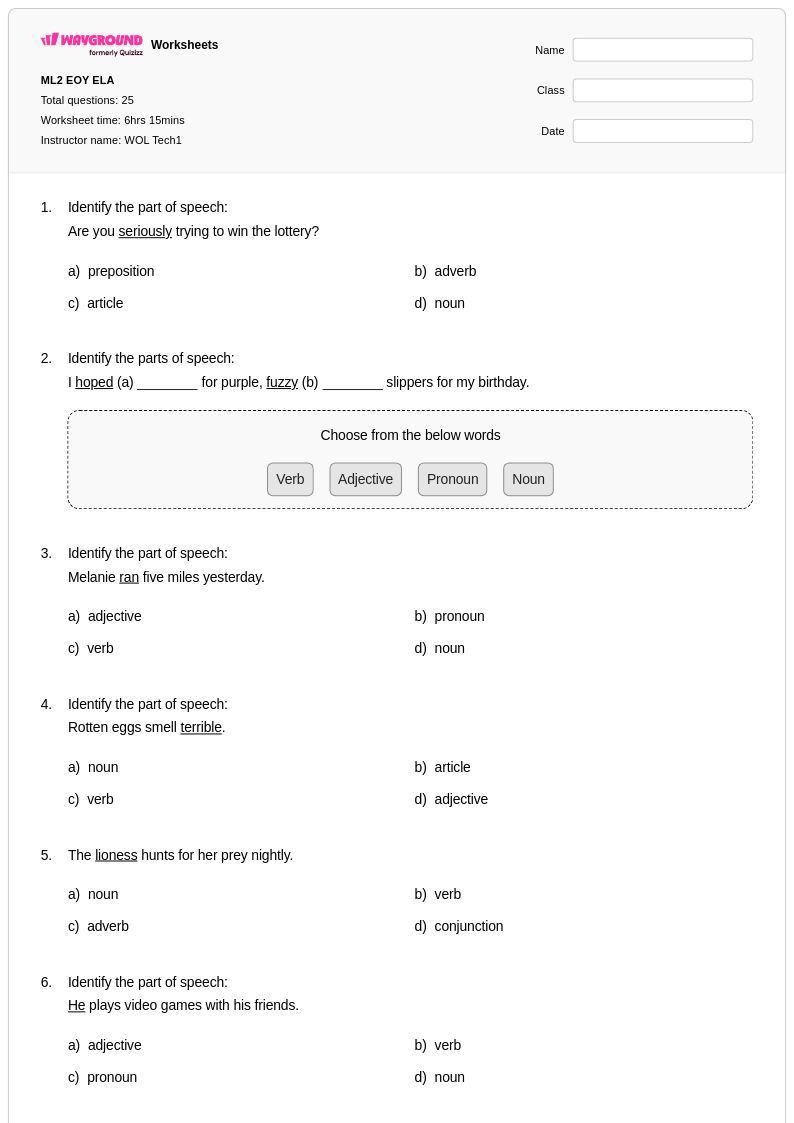
25 T
6th - 8th
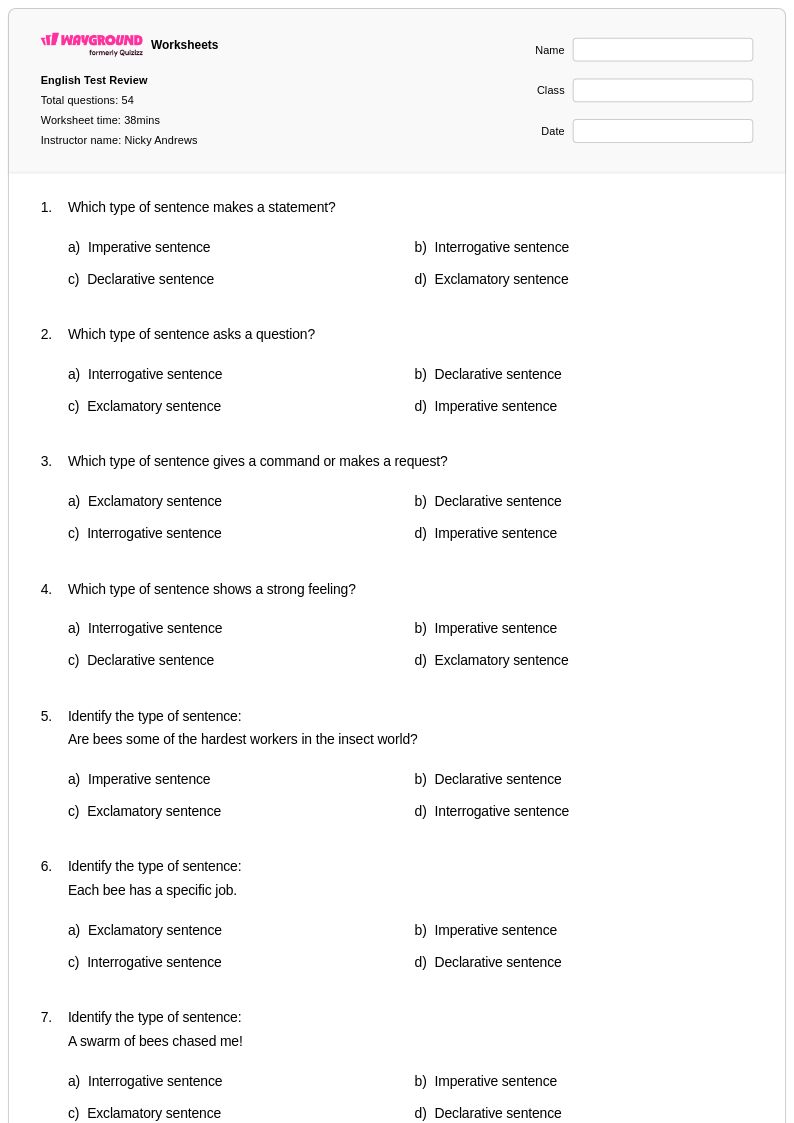
54 T
6th - 8th
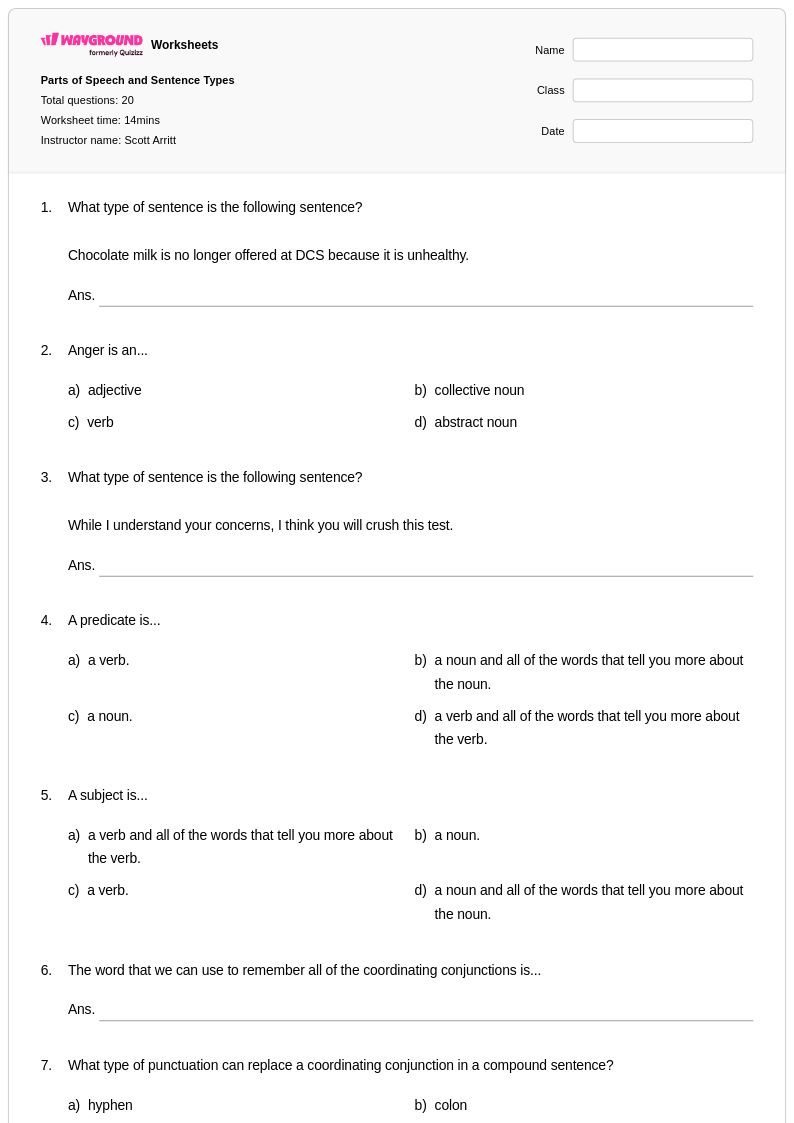
20 T
6th - 12th
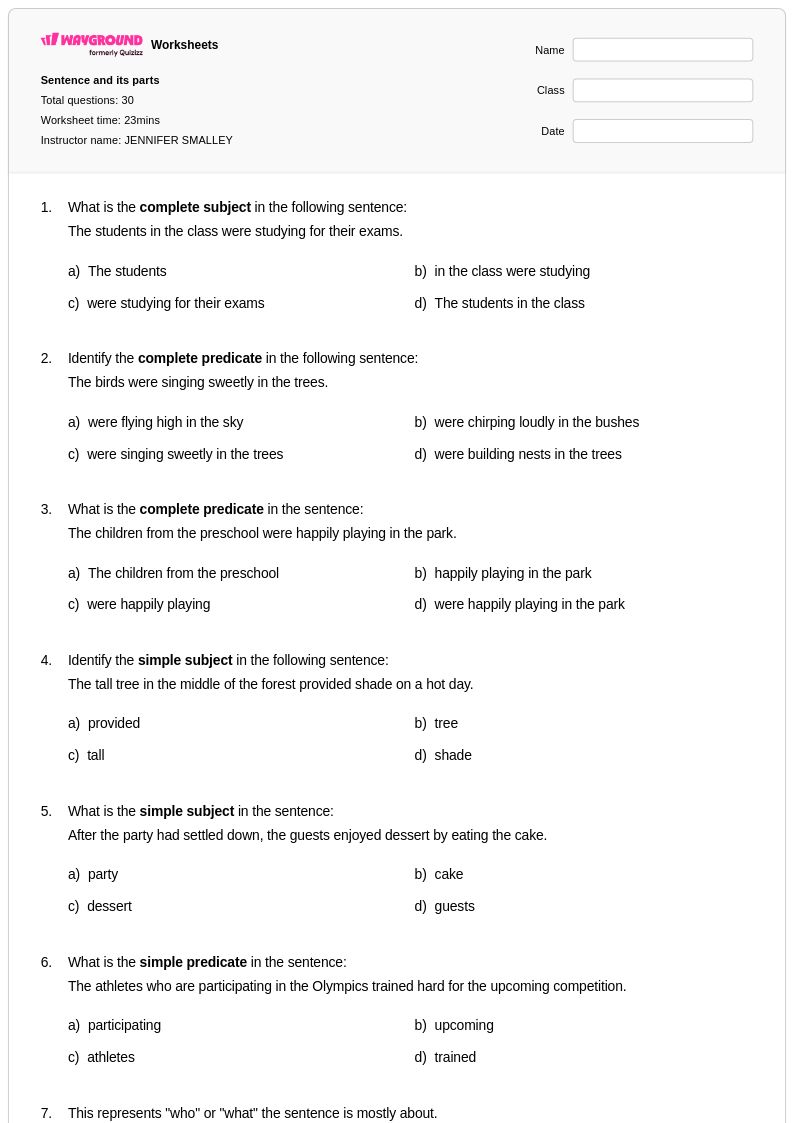
30 T
8th
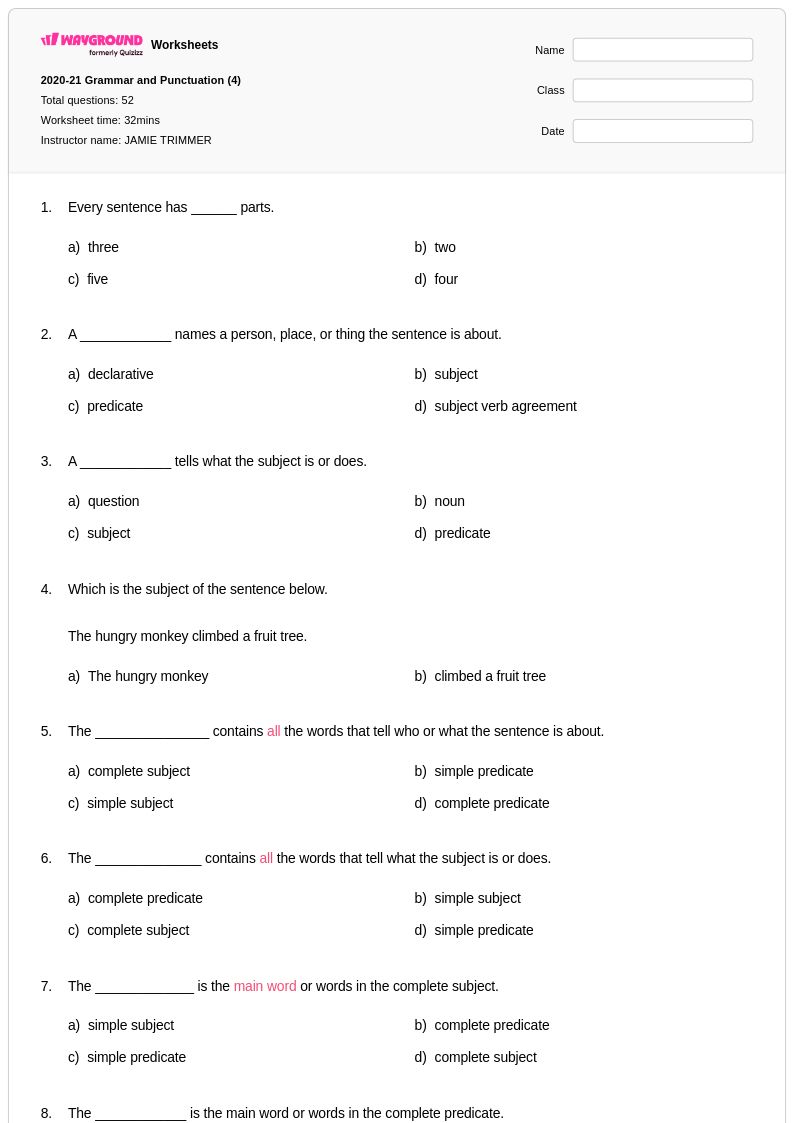
52 T
4th - 9th
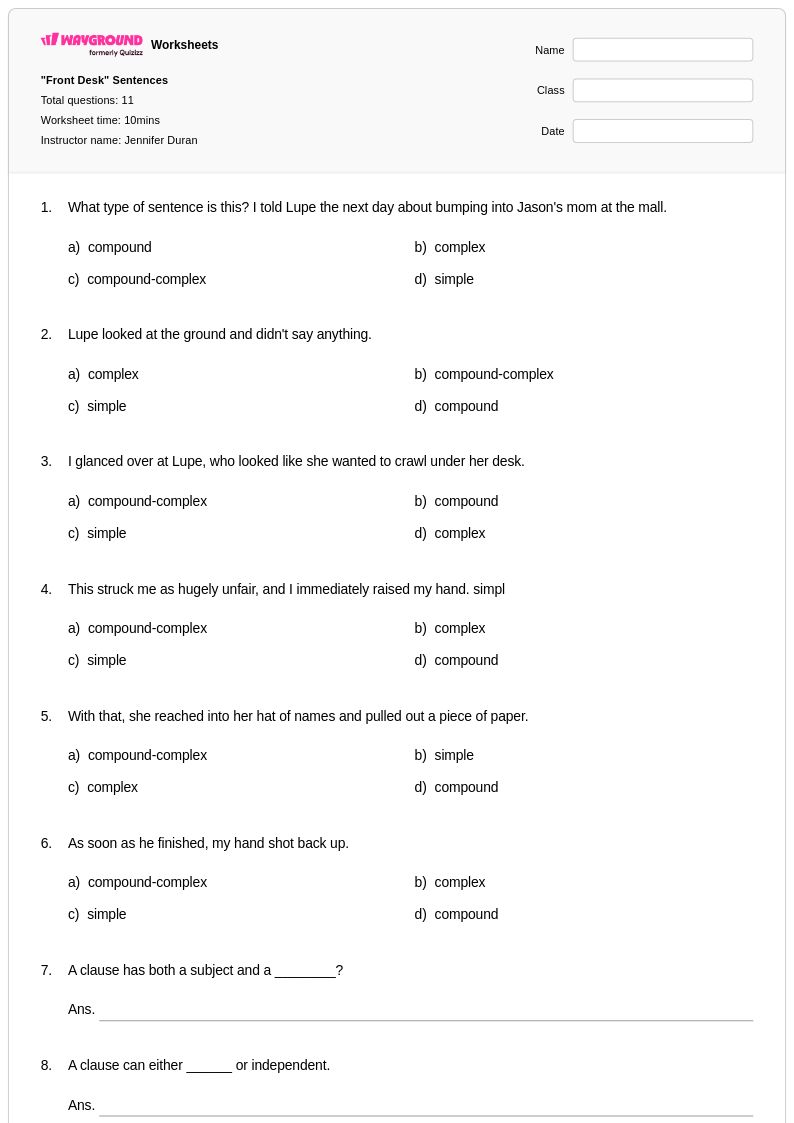
11 T
6th - 8th
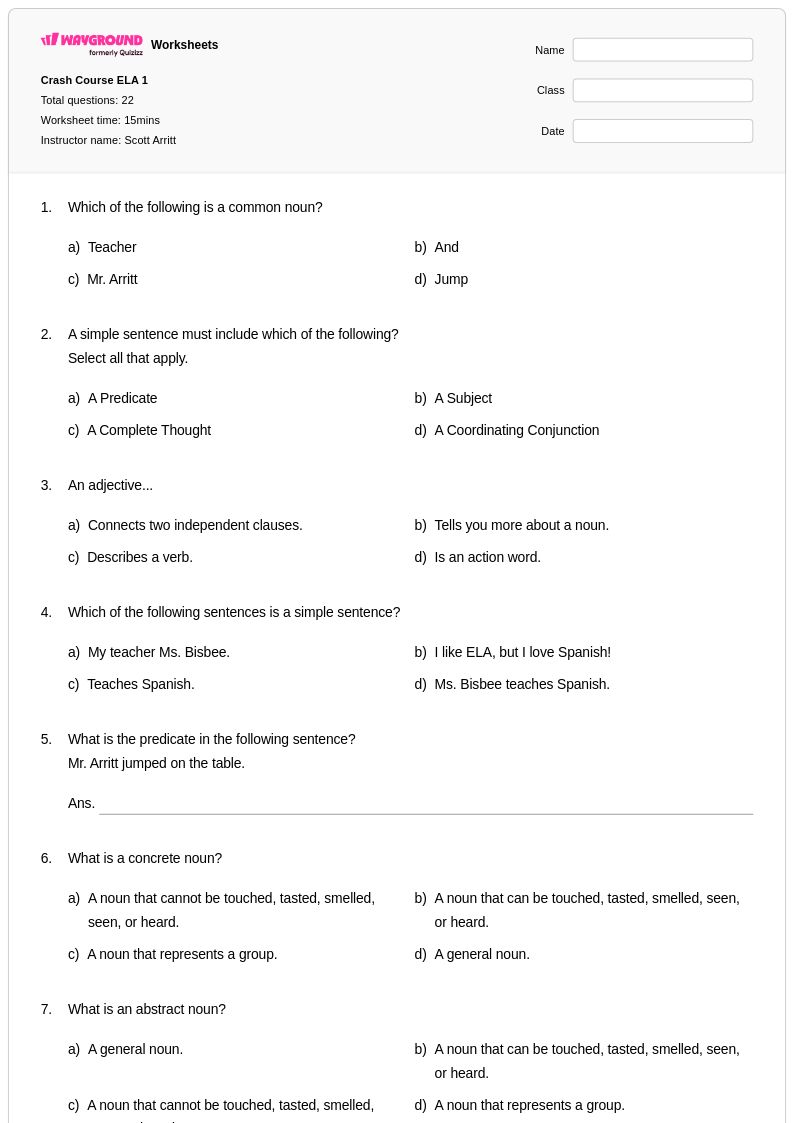
22 T
6th - 8th
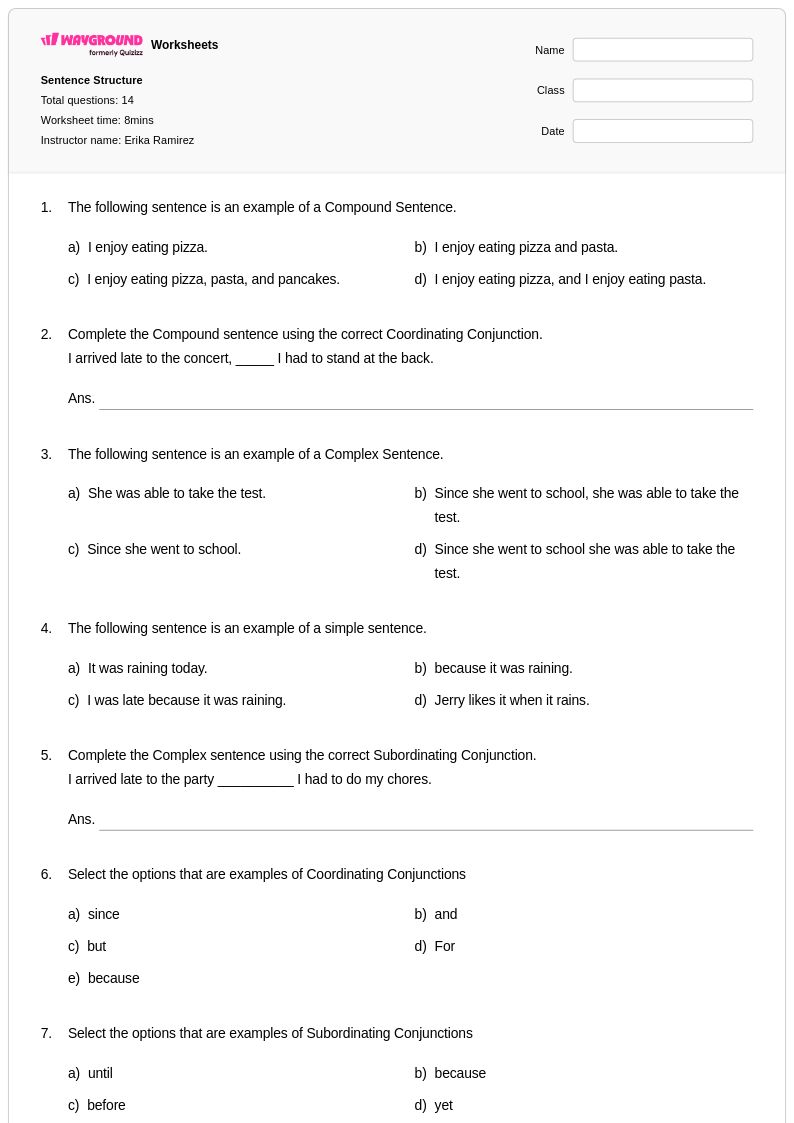
14 T
8th
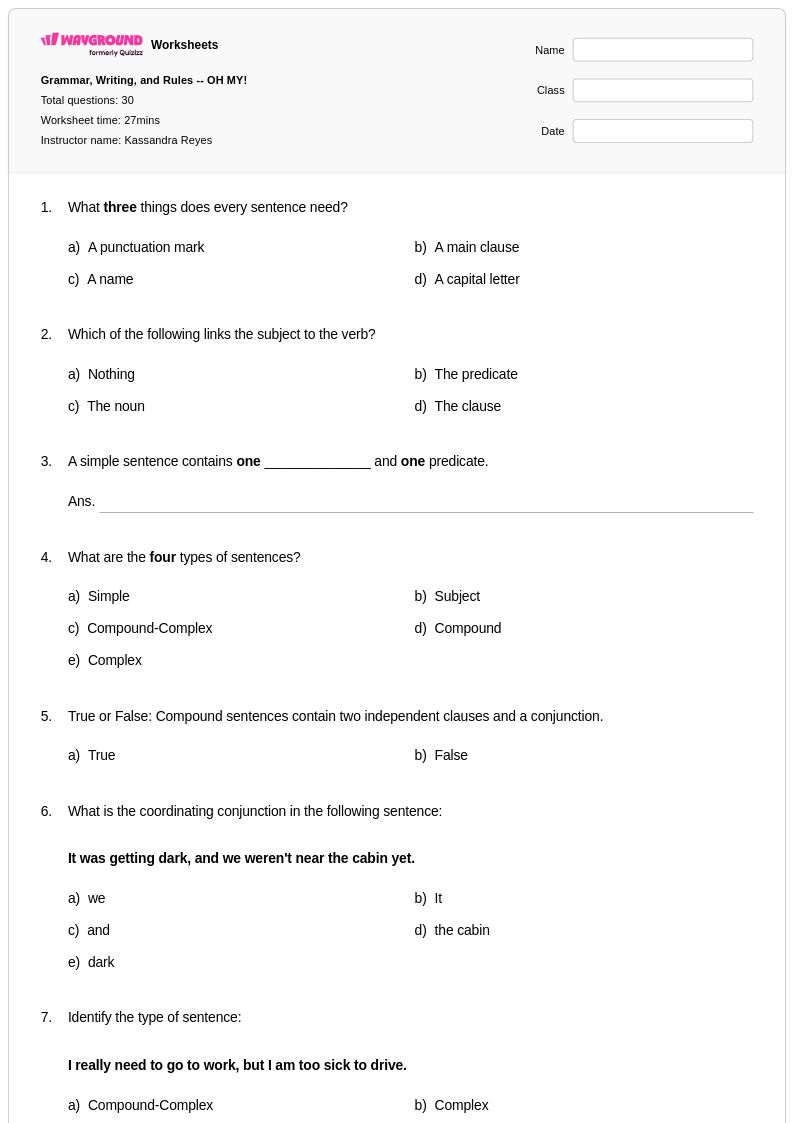
30 T
4th - 9th
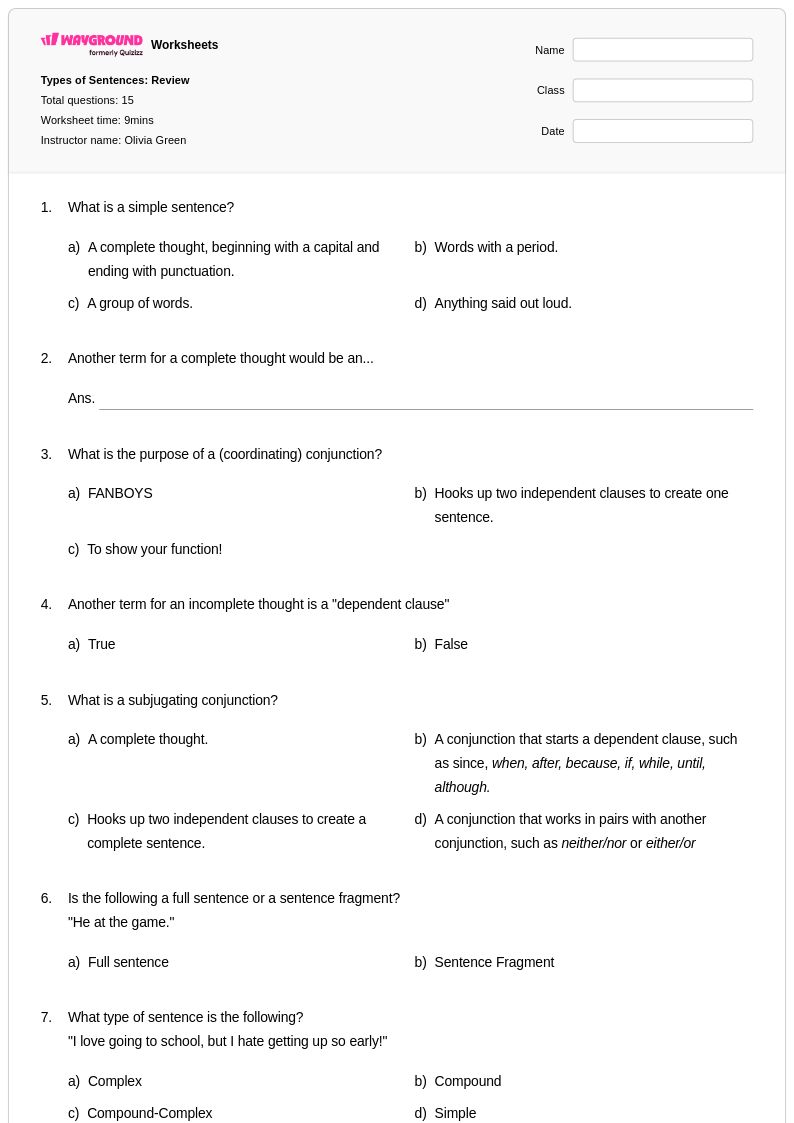
15 T
6th - 8th
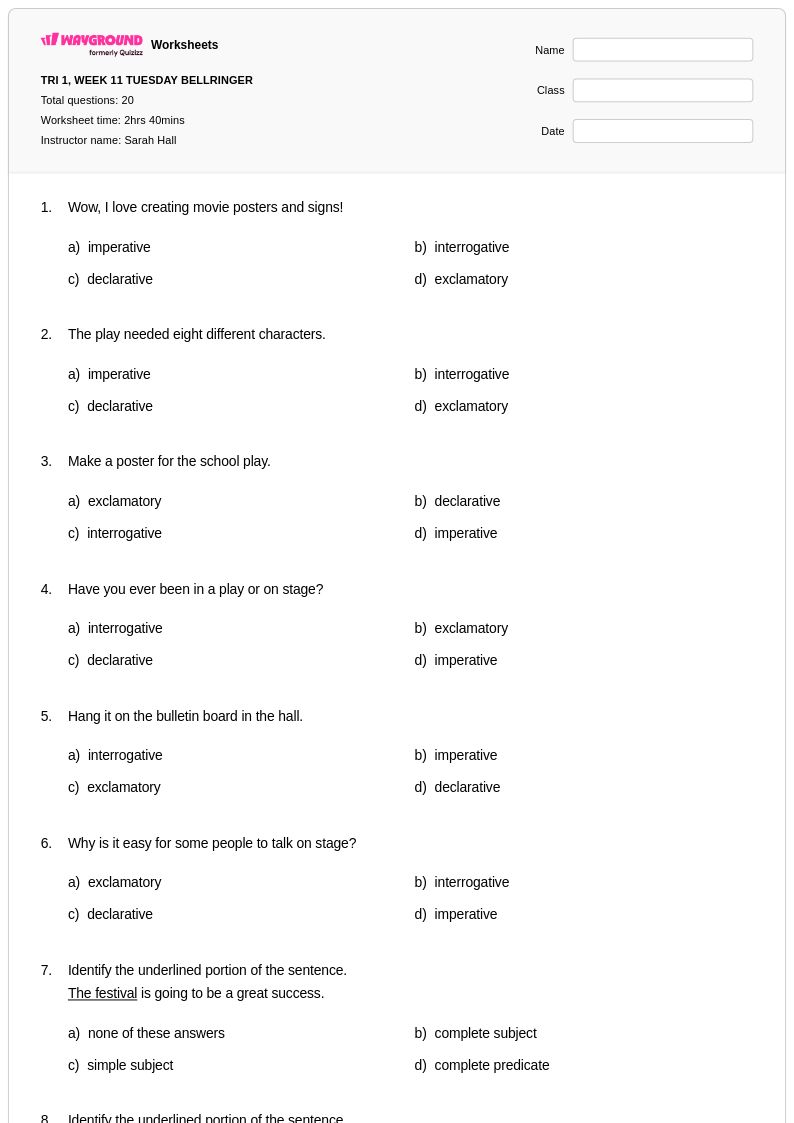
20 T
8th
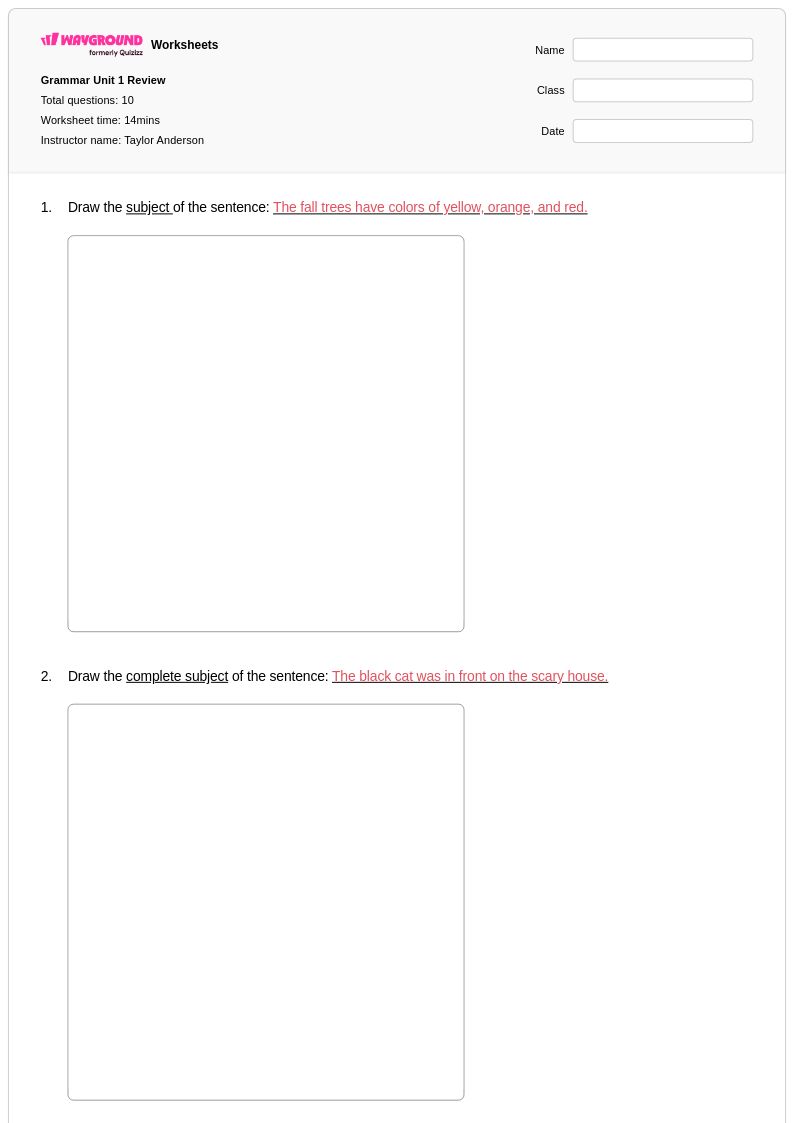
10 T
7th - 8th
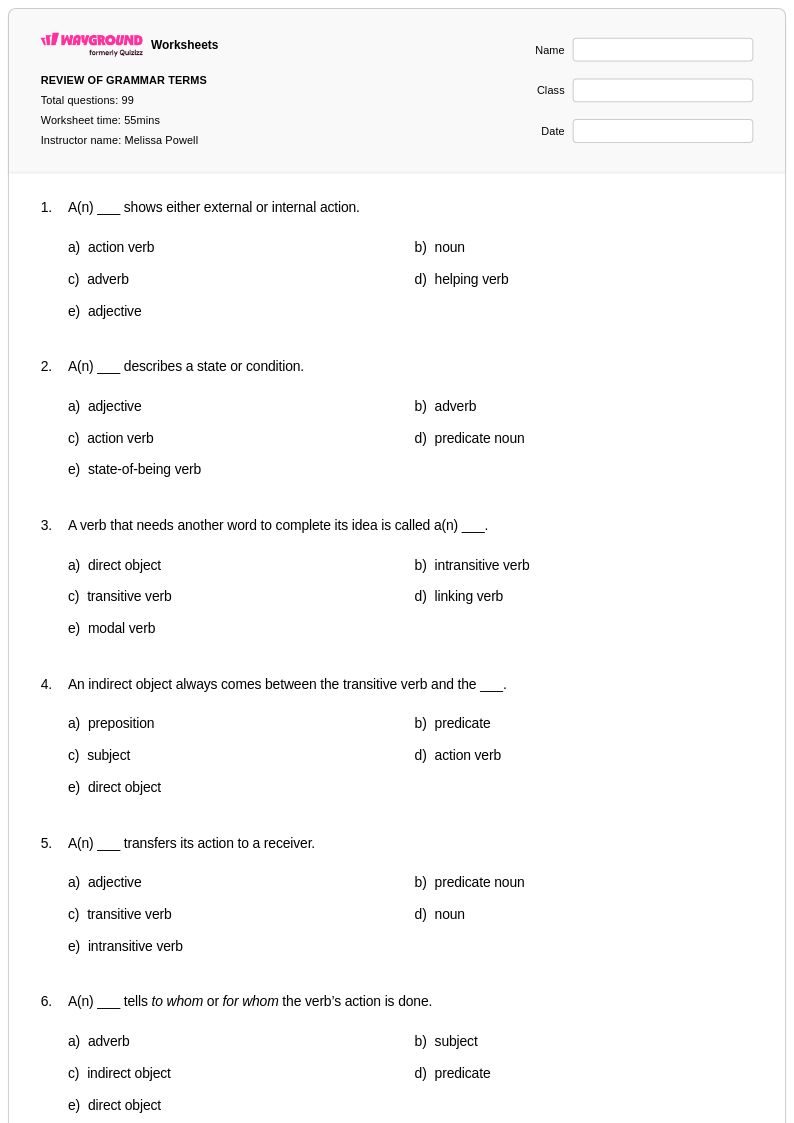
99 T
8th
Jelajahi Compound Predicate Lembar Kerja berdasarkan Nilai
Jelajahi Lembar Kerja Mata Pelajaran Lainnya untuk class 8
Explore printable Compound Predicate worksheets for Class 8
Compound predicate worksheets for Class 8 students available through Wayground (formerly Quizizz) provide comprehensive practice in identifying and constructing sentences with multiple predicates that share the same subject. These expertly designed resources help eighth-grade students master the skill of recognizing when two or more verbs or verb phrases work together to describe what a single subject does, strengthening their understanding of complex sentence construction and improving their writing fluency. The collection includes varied practice problems that challenge students to distinguish compound predicates from compound sentences, create their own examples, and revise simple sentences by combining predicates for more sophisticated expression. Each worksheet comes with a detailed answer key, and teachers can access these materials as free printables in convenient PDF format, making them ideal for both classroom instruction and independent practice.
Wayground (formerly Quizizz) empowers educators with millions of teacher-created resources specifically designed to support Class 8 sentence structure instruction, including extensive collections focused on compound predicates and related grammatical concepts. The platform's robust search and filtering capabilities allow teachers to quickly locate materials that align with specific learning standards and match their students' proficiency levels, while built-in differentiation tools enable customization for diverse learning needs. These worksheets are available in both printable PDF format and interactive digital versions, providing flexibility for various instructional settings and supporting seamless integration into lesson planning. Teachers can utilize these resources for targeted skill practice, remediation sessions for struggling learners, and enrichment activities for advanced students, ensuring that all eighth-graders develop confidence in analyzing and constructing sentences with compound predicates.
FAQs
How do I teach compound predicates to students?
What exercises help students practice identifying compound predicates?
What mistakes do students commonly make with compound predicates?
How do I help struggling students understand the difference between compound predicates and compound sentences?
How can I use compound predicate worksheets in my classroom?
How do compound predicates improve student writing?