Free Printable Diagramming Sentences Worksheets for Class 8
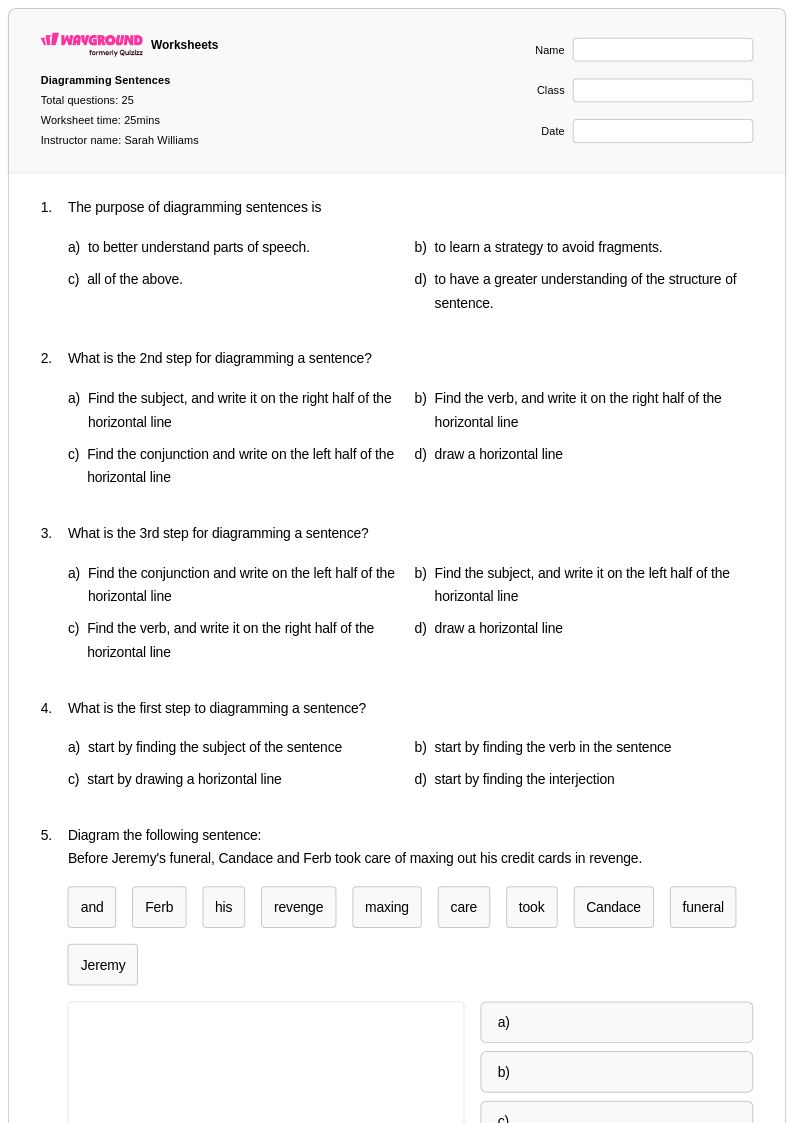
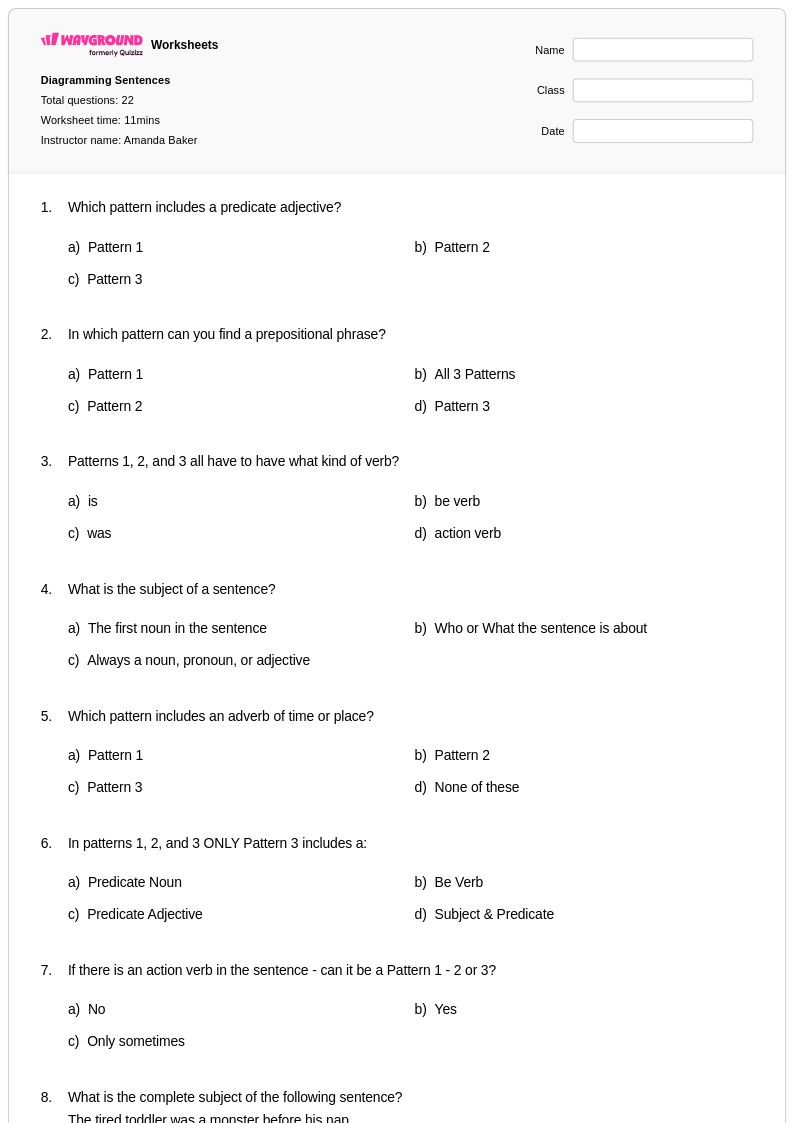
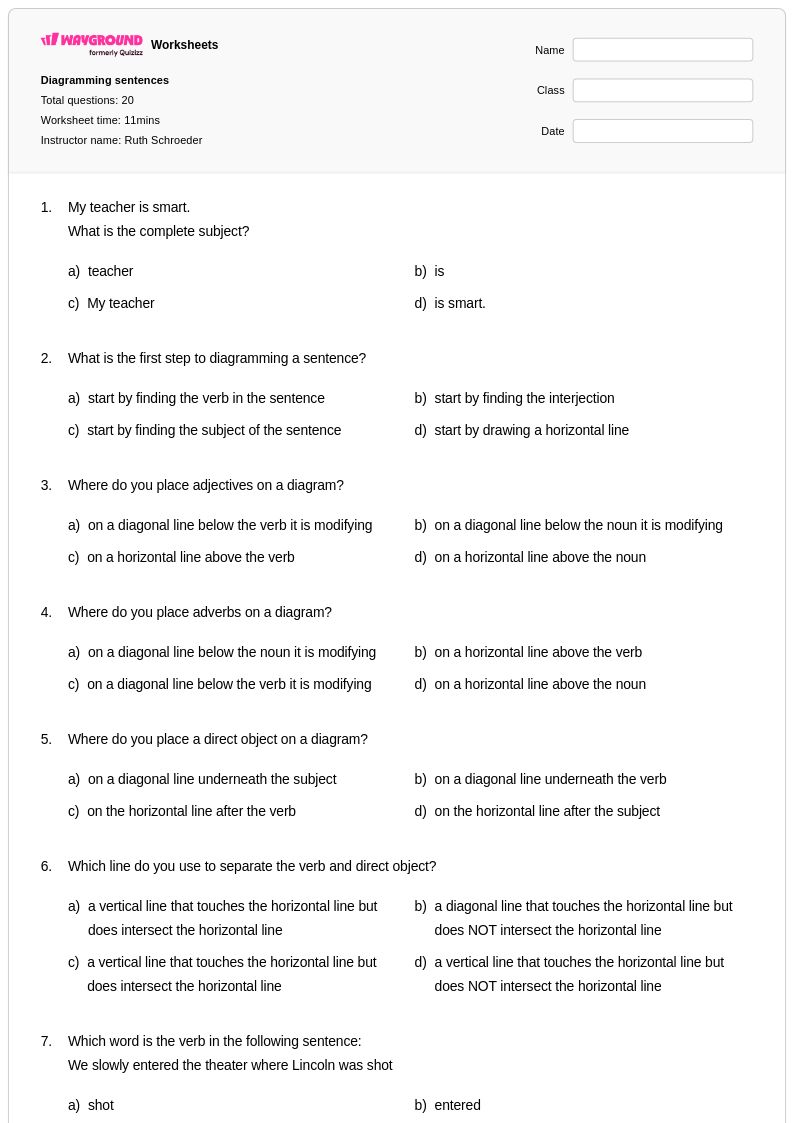
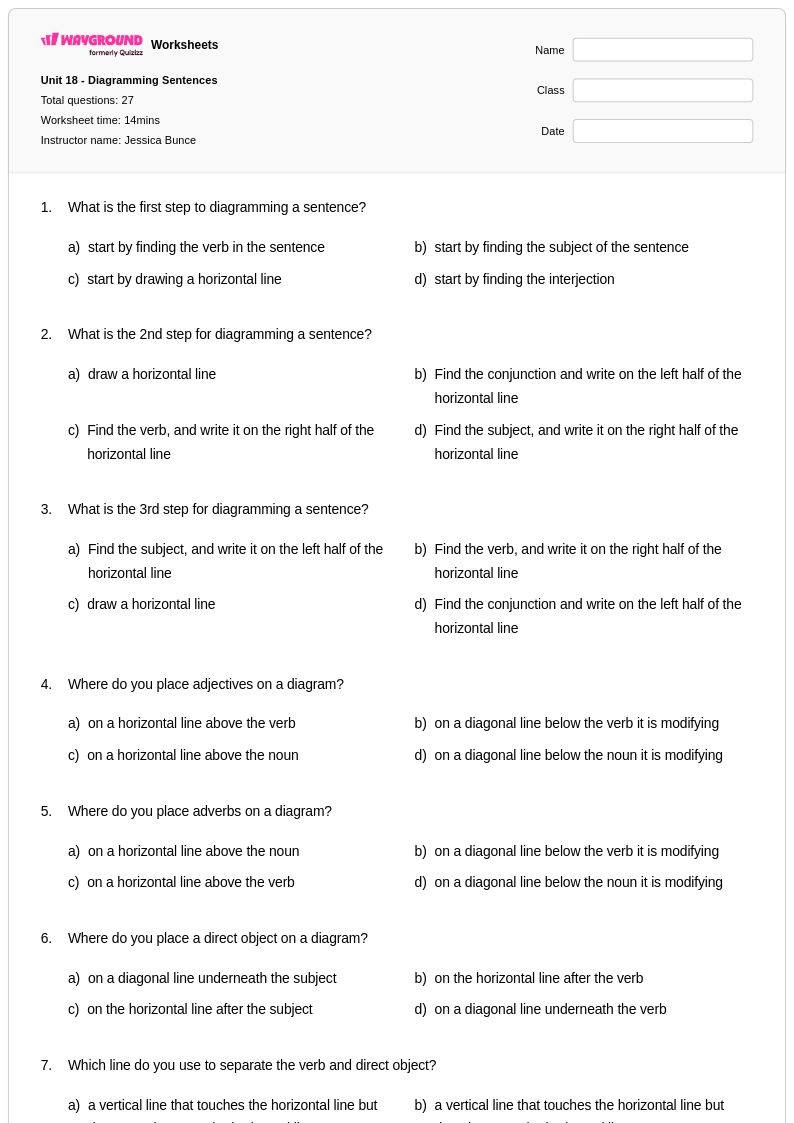
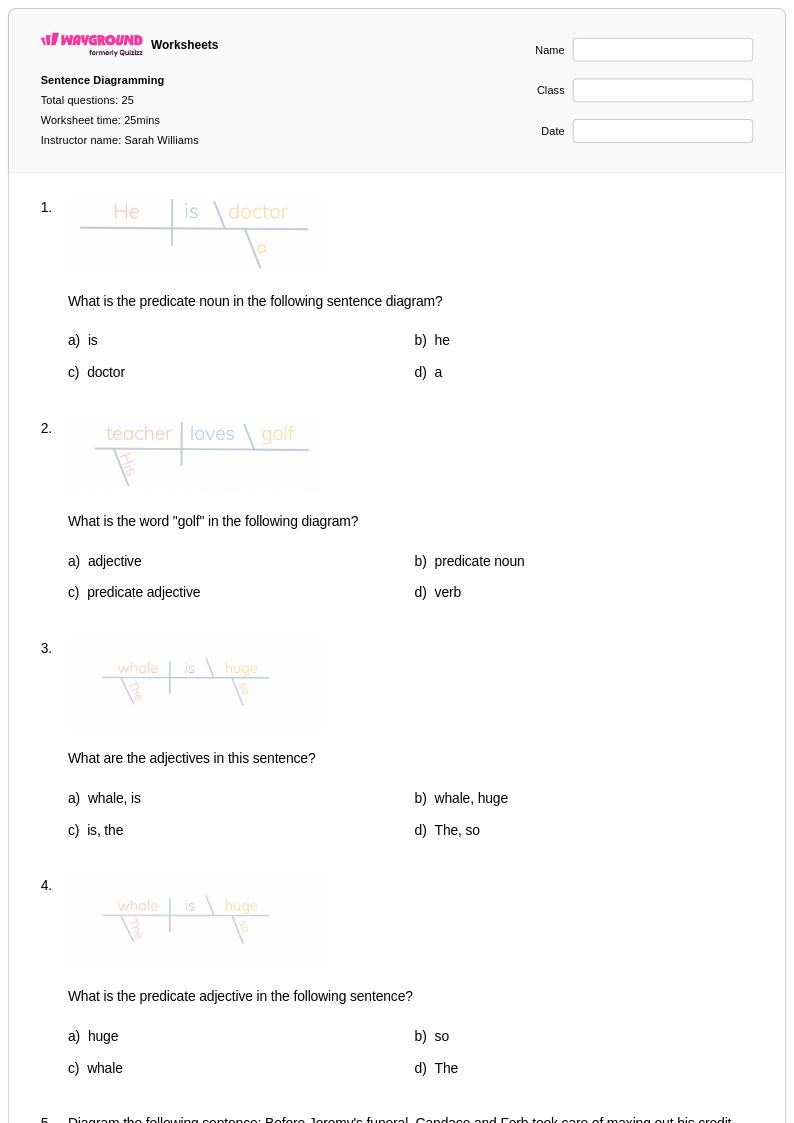
Class 8 diagramming sentences worksheets from Wayground help students master sentence structure analysis through comprehensive printables and practice problems with complete answer keys available as free PDF downloads.
Explore printable Diagramming Sentences worksheets for Class 8
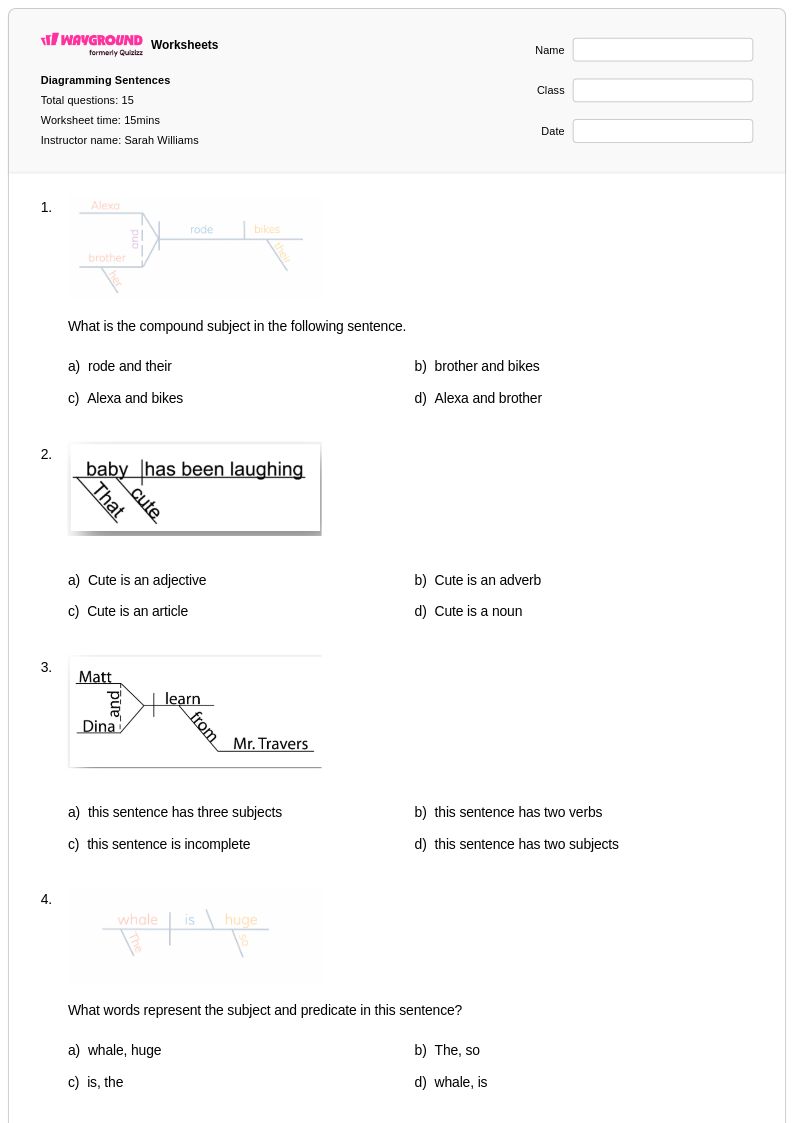
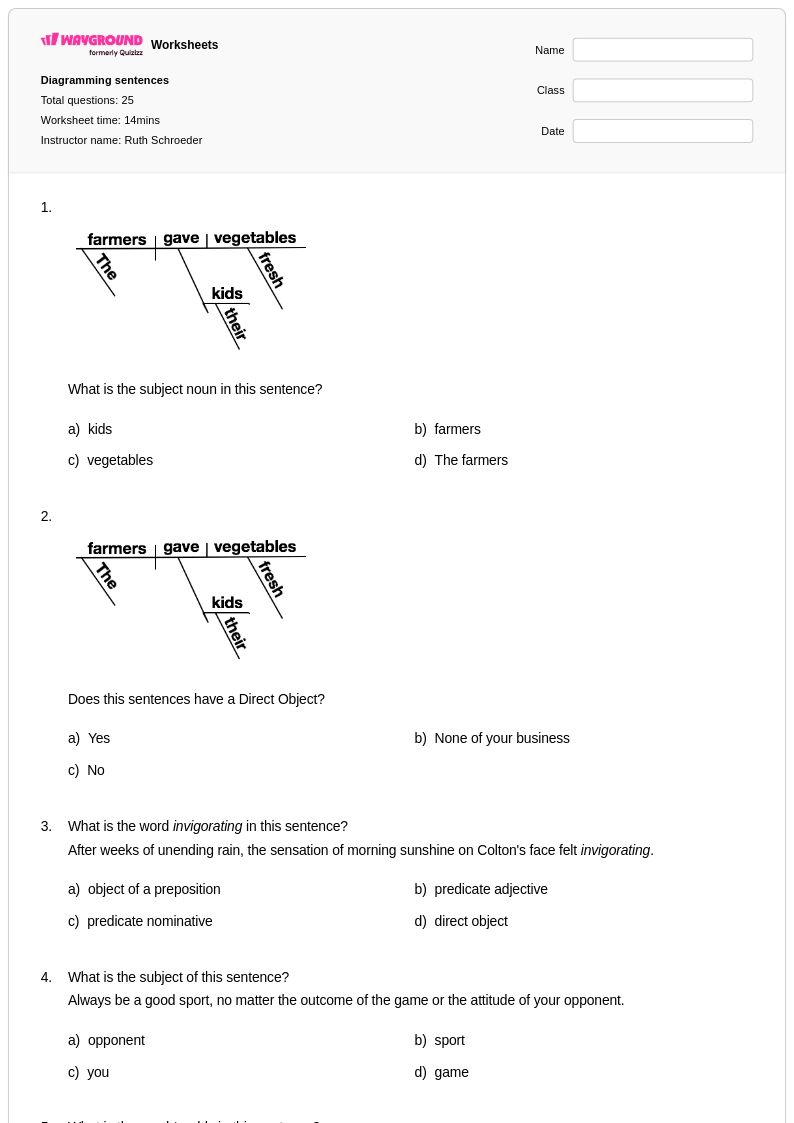
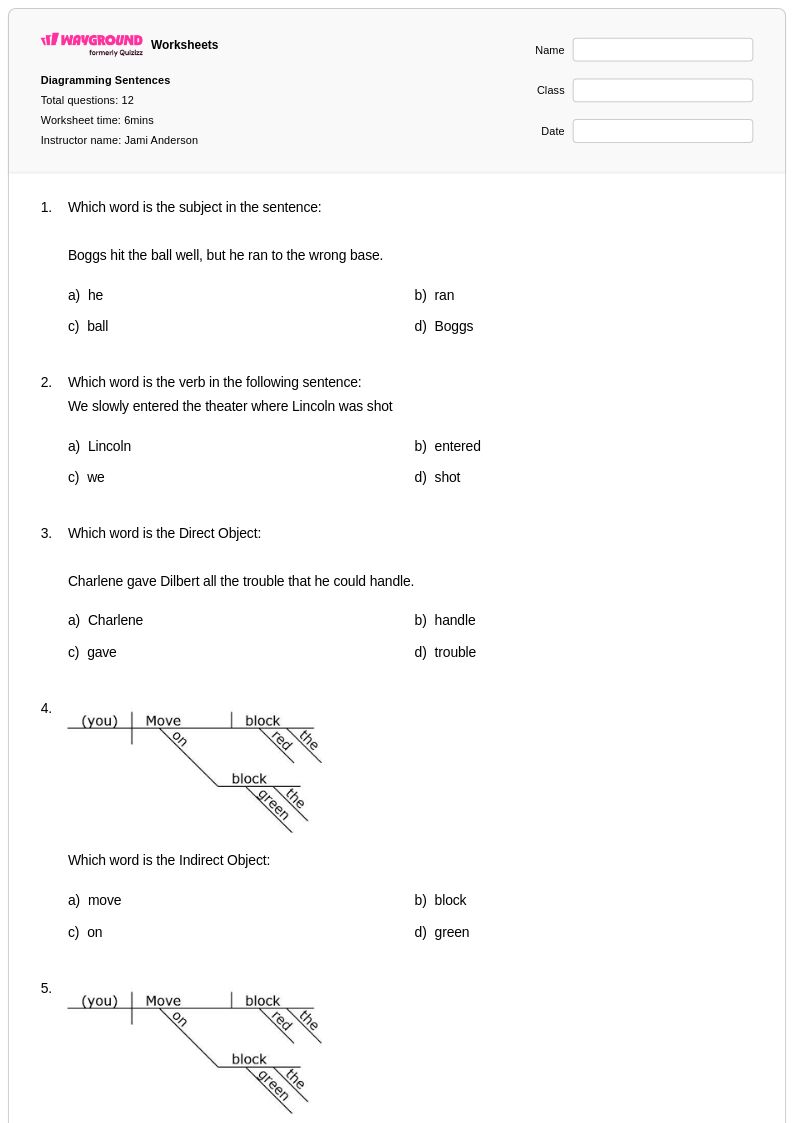
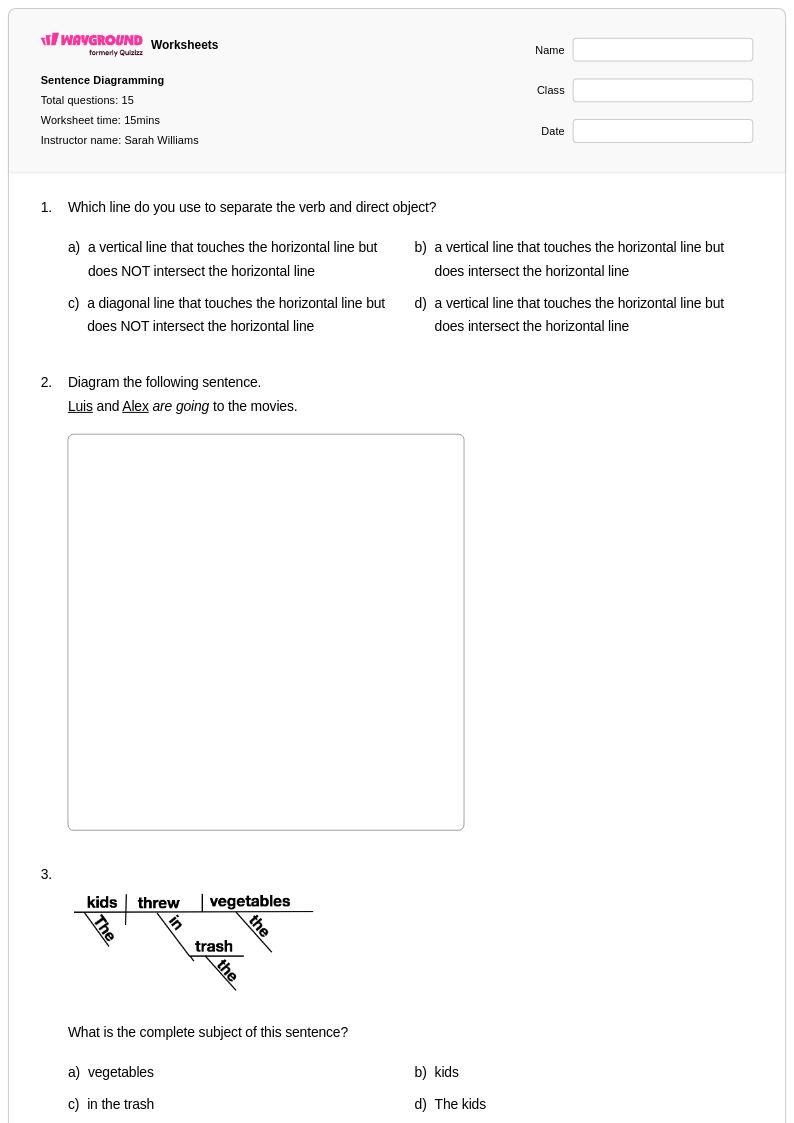
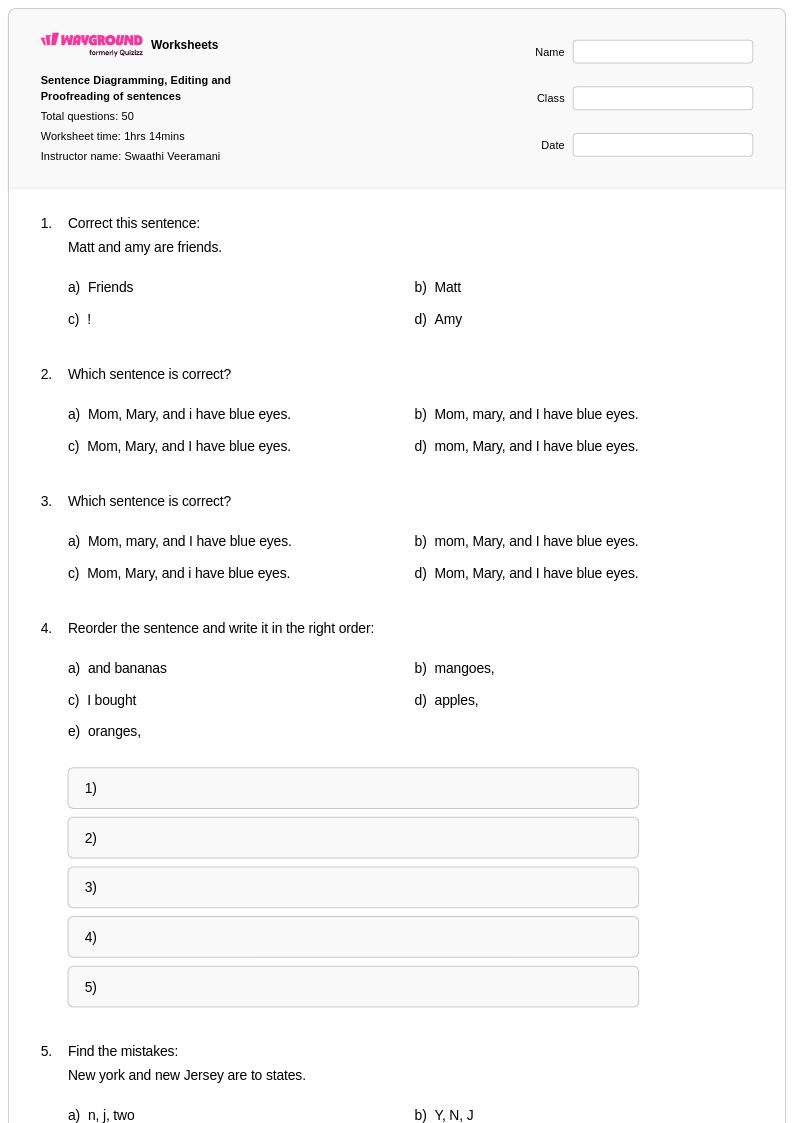
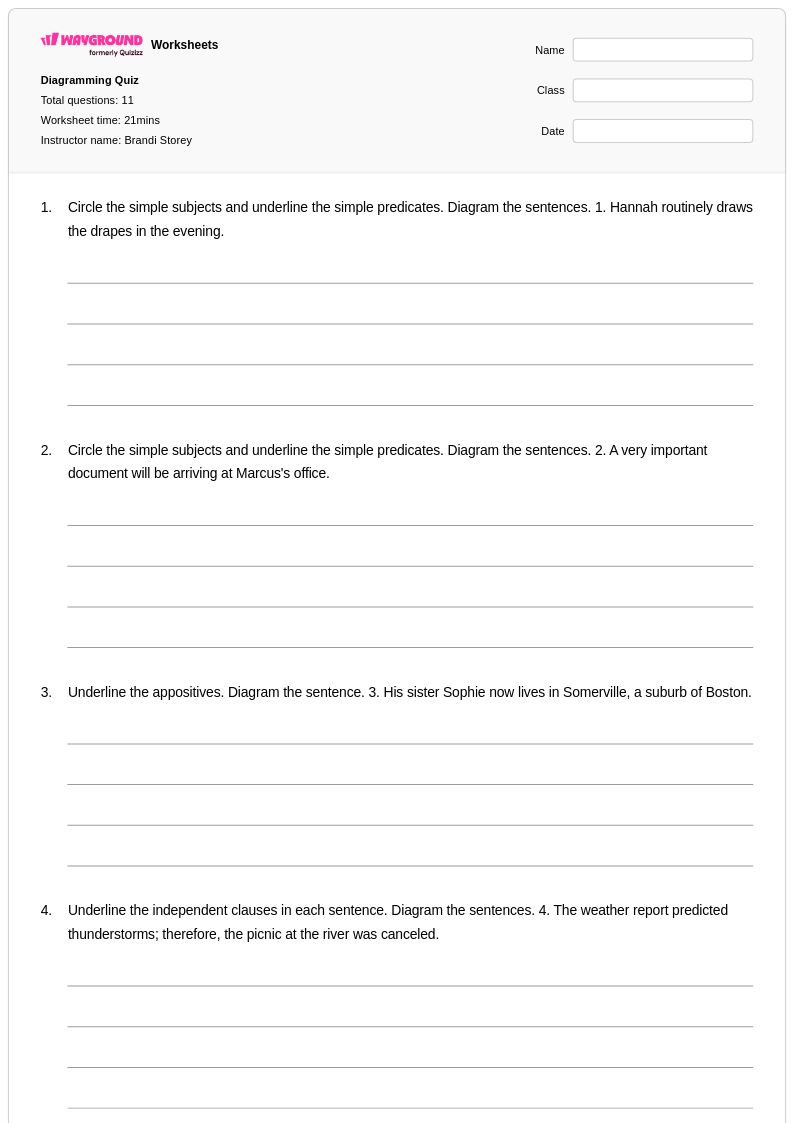
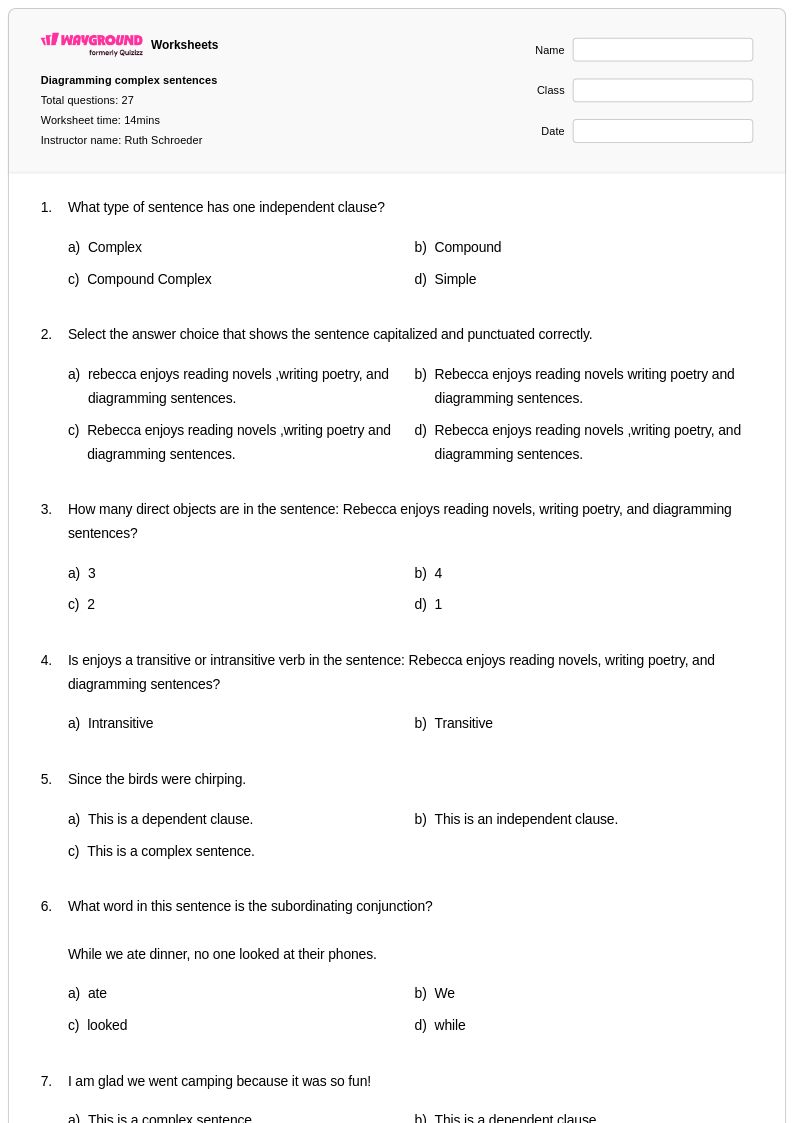
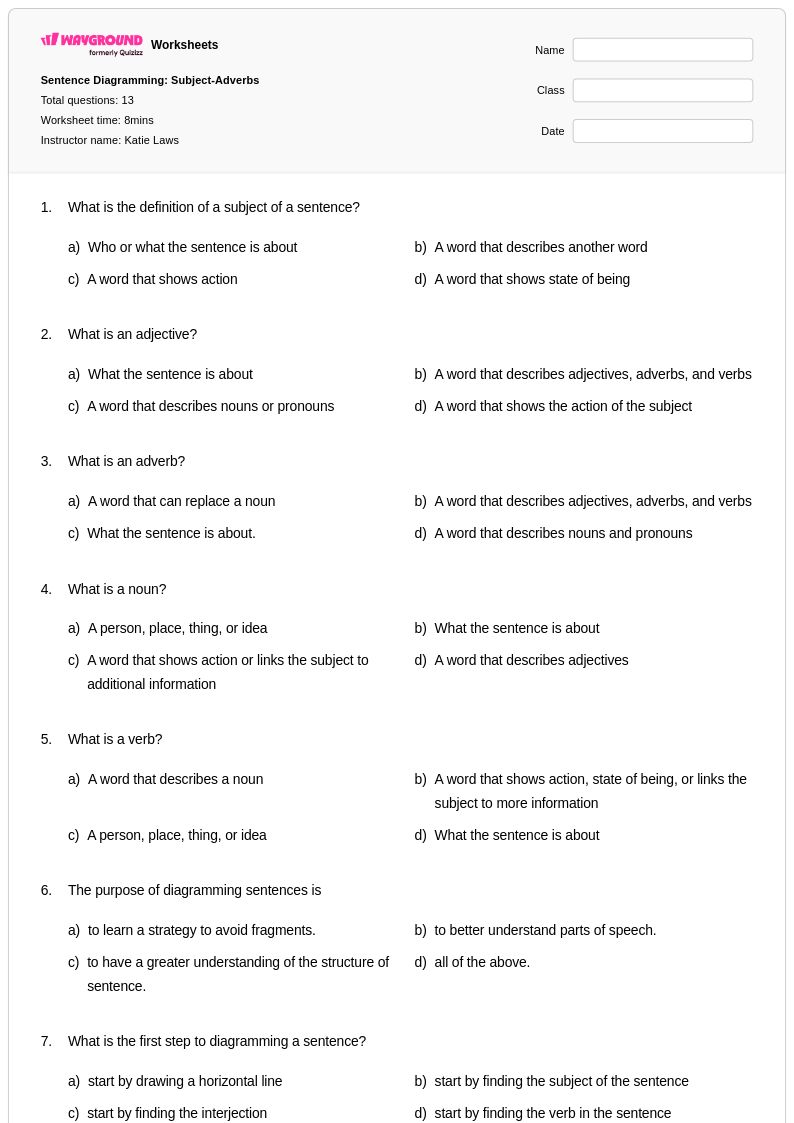
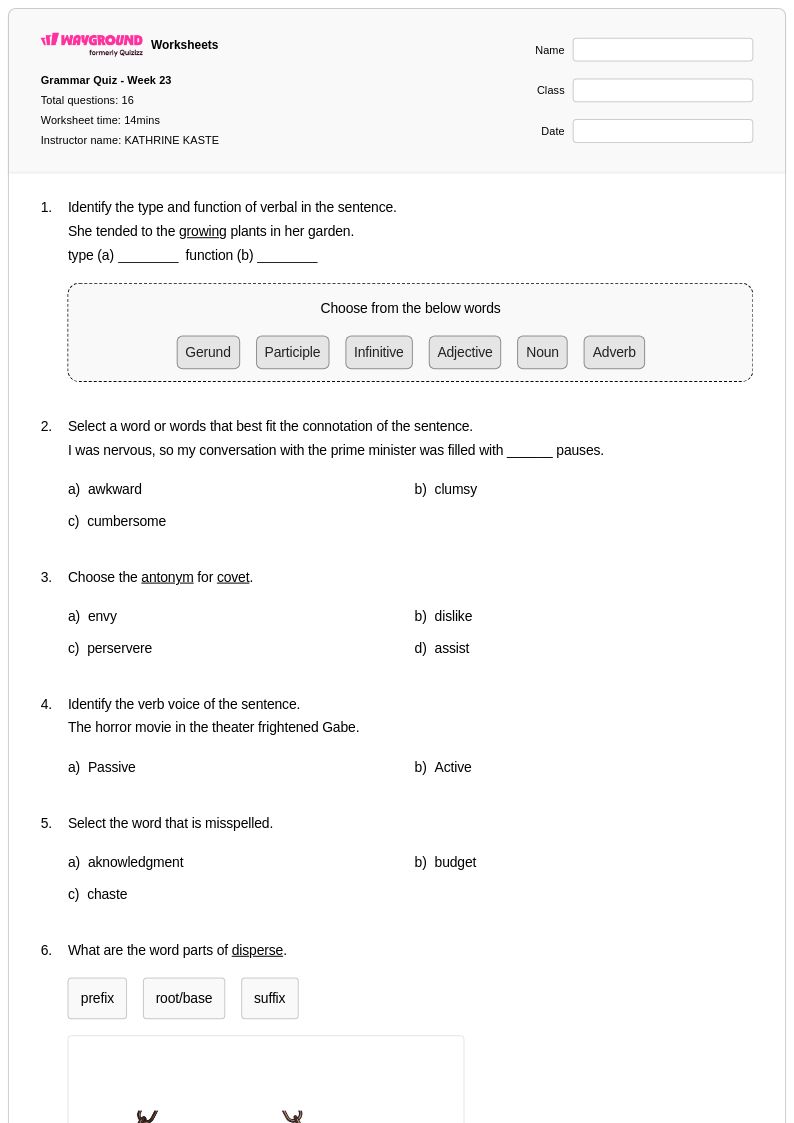
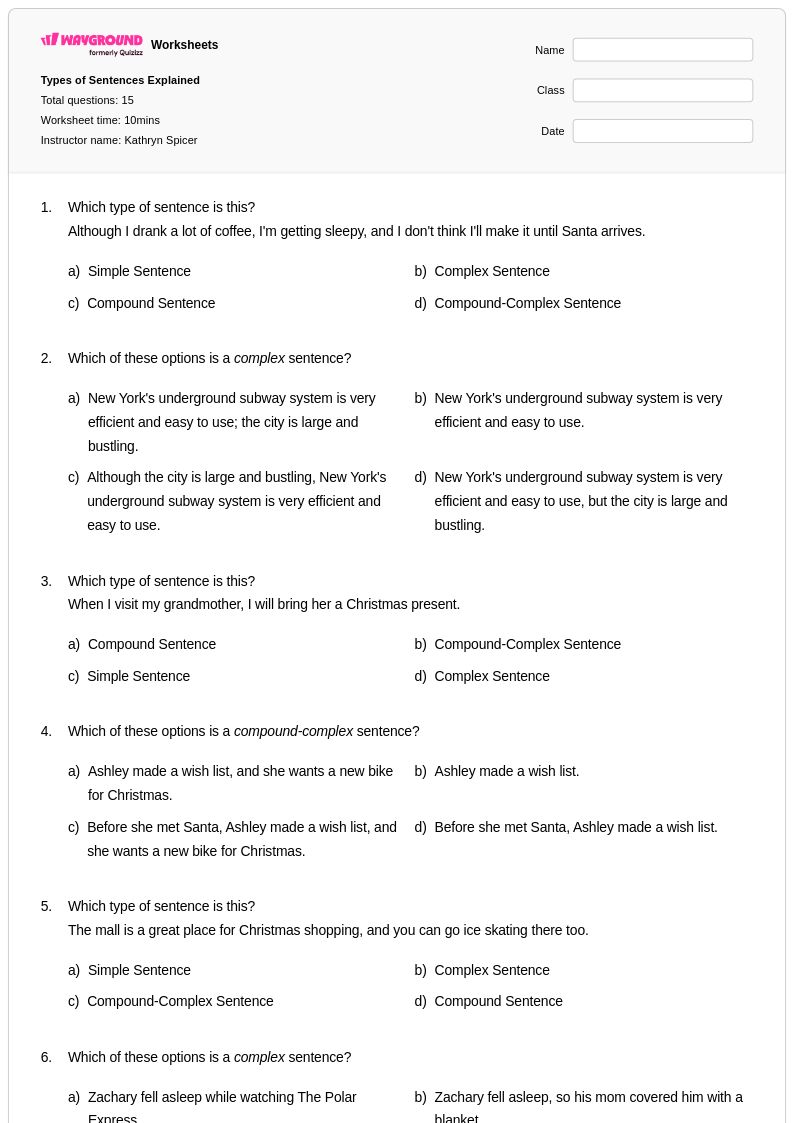
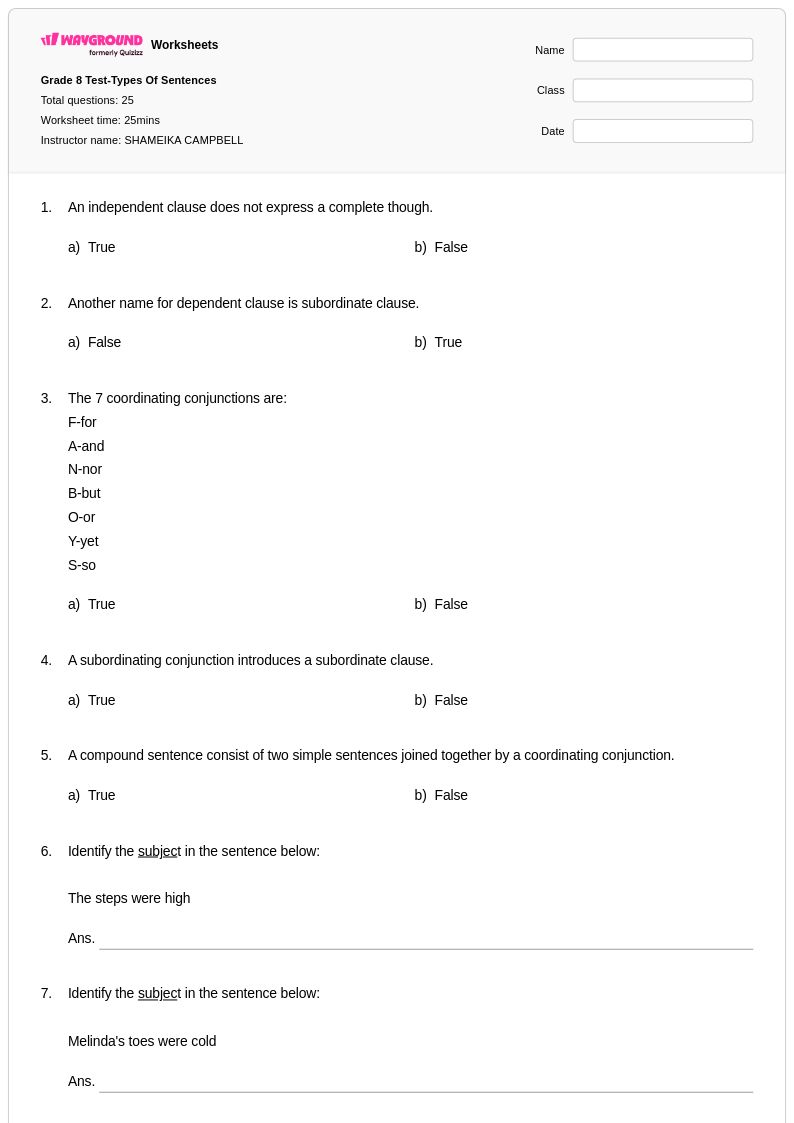
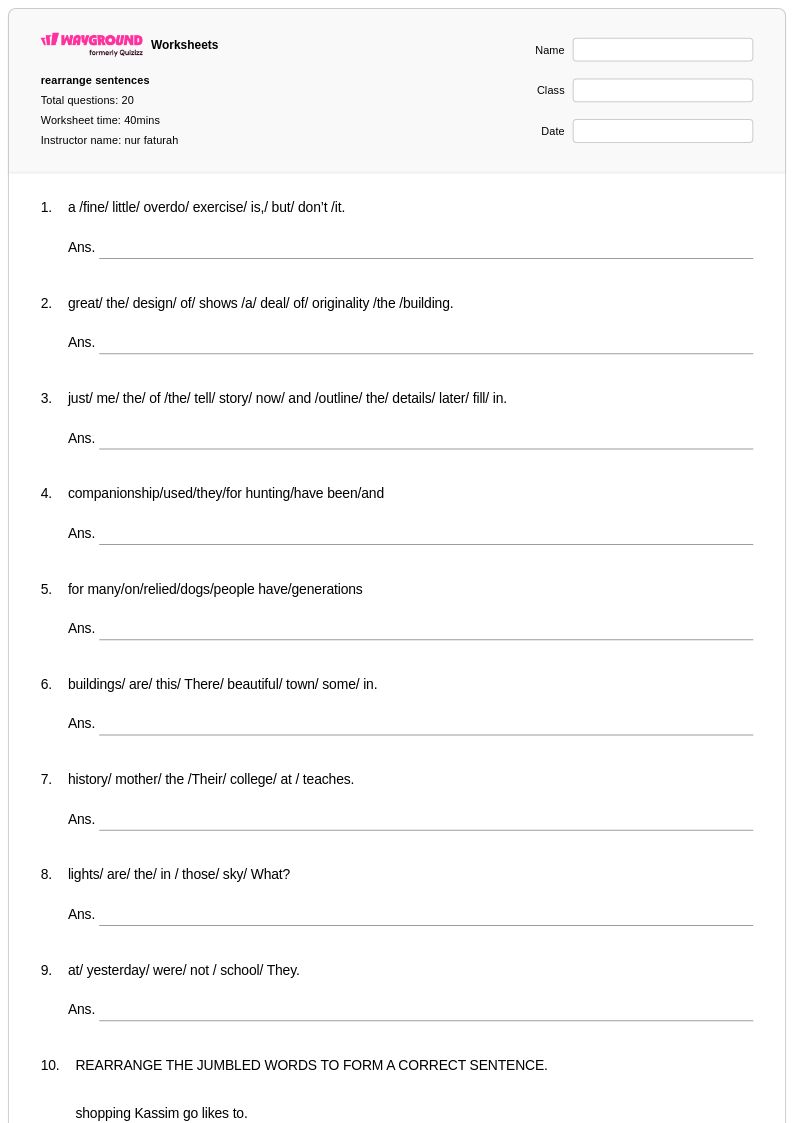
Diagramming sentences represents a fundamental skill for Class 8 students developing advanced understanding of English grammar and syntax. Wayground's comprehensive collection of sentence diagramming worksheets provides students with structured practice in visually mapping the relationships between words, phrases, and clauses within complex sentences. These printable resources strengthen critical analytical skills by requiring students to identify subjects, predicates, modifiers, and various sentence components while organizing them into clear visual representations. Each worksheet includes detailed practice problems that progress from simple sentence structures to more sophisticated compound and complex constructions, with accompanying answer keys that allow students to verify their understanding and self-correct their diagramming techniques. The free pdf format ensures accessibility for both classroom instruction and independent study.
Wayground's extensive library draws from millions of teacher-created resources specifically designed to support educators in delivering effective sentence diagramming instruction for Class 8 English curricula. The platform's advanced search and filtering capabilities enable teachers to locate worksheets aligned with specific standards and learning objectives, while differentiation tools allow for seamless adaptation of materials to meet diverse student needs. These digital and printable worksheet collections provide flexible customization options that support targeted skill practice, remediation for struggling learners, and enrichment activities for advanced students. Teachers can efficiently plan comprehensive grammar instruction by accessing ready-to-use materials that systematically build students' ability to analyze sentence structure through visual diagramming methods, ultimately strengthening their overall comprehension of English grammar principles and enhancing their writing clarity.
FAQs
How do I teach sentence diagramming to students who have never done it before?
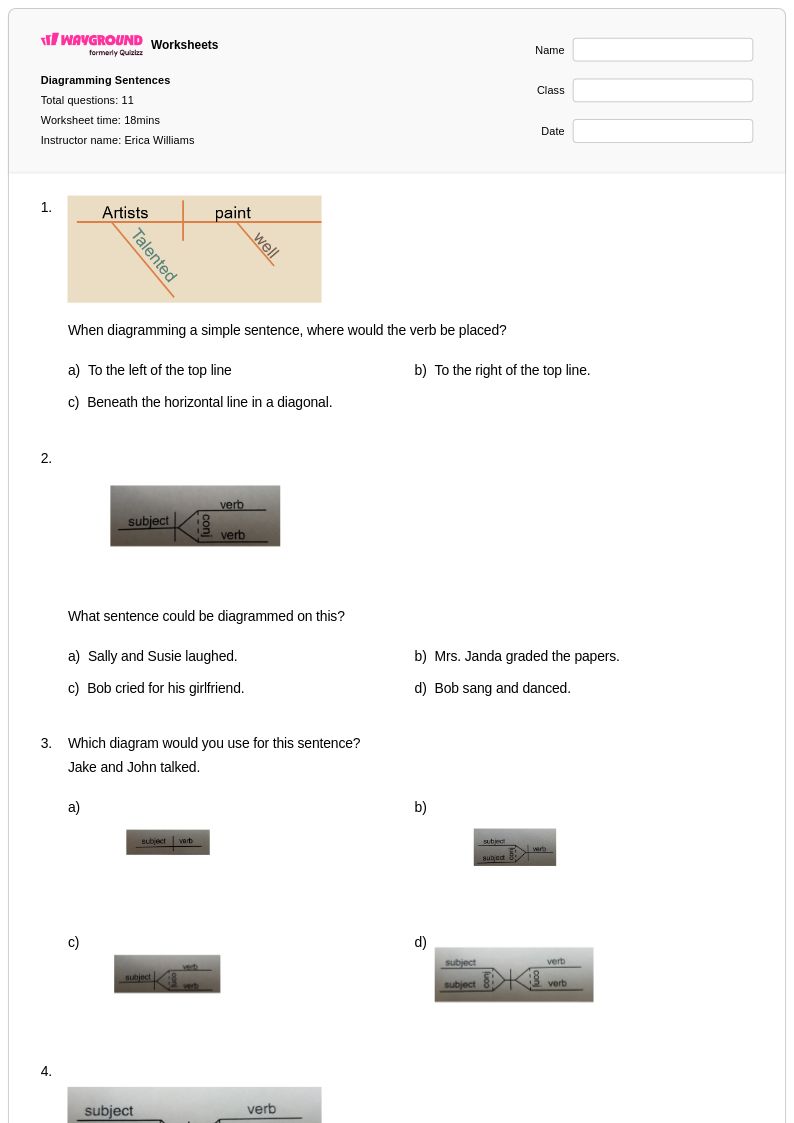
Start with the baseline: a simple subject-verb sentence on a horizontal line, with the subject and predicate separated by a vertical bar. Once students are comfortable placing the base, introduce modifiers on diagonal lines beneath the words they modify. Build complexity gradually by adding prepositional phrases, then direct objects, then clauses. Students benefit from seeing the diagram constructed step by step before attempting to build one independently.
What order should I teach sentence diagramming concepts?
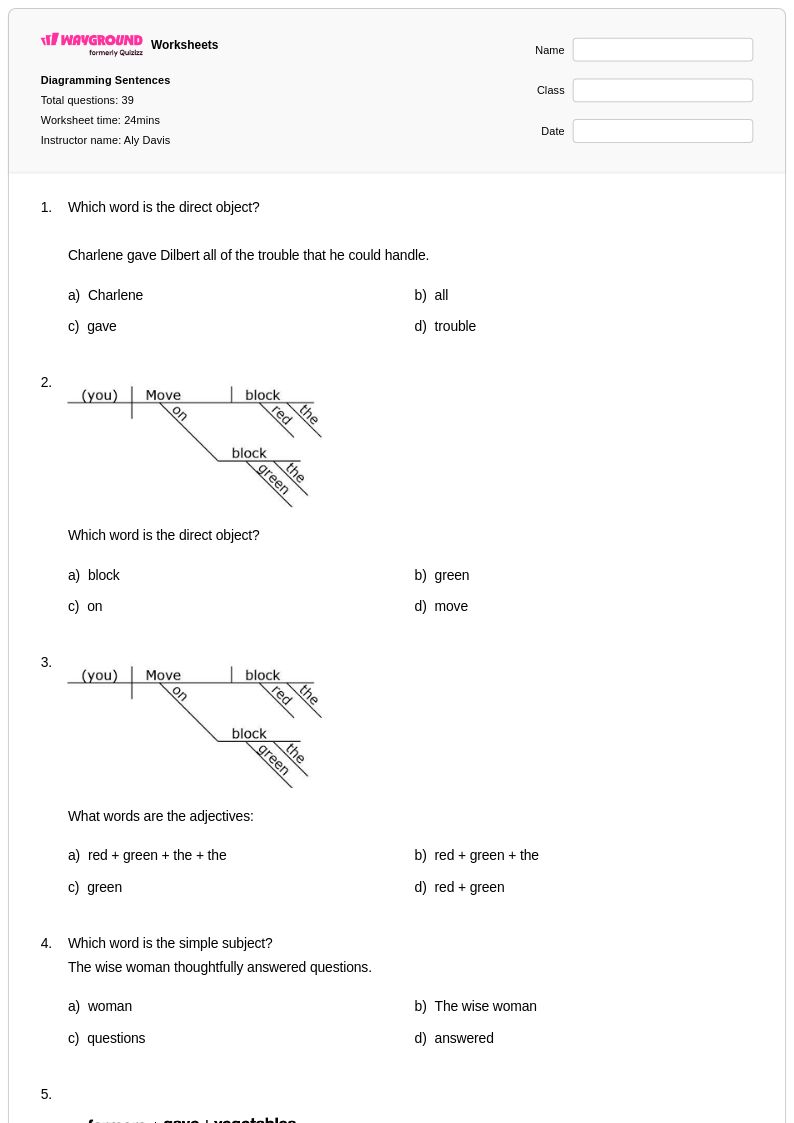
Begin with simple subject-verb constructions, then add direct and indirect objects, then adjectives and adverbs as modifiers. Once those foundations are solid, introduce prepositional phrases, then compound elements, and finally subordinate clauses. Rushing to complex sentences before students can diagram a basic declarative sentence is the most common pacing mistake. Each layer of complexity should only be introduced after the previous one is secure.
What mistakes do students commonly make when diagramming sentences?
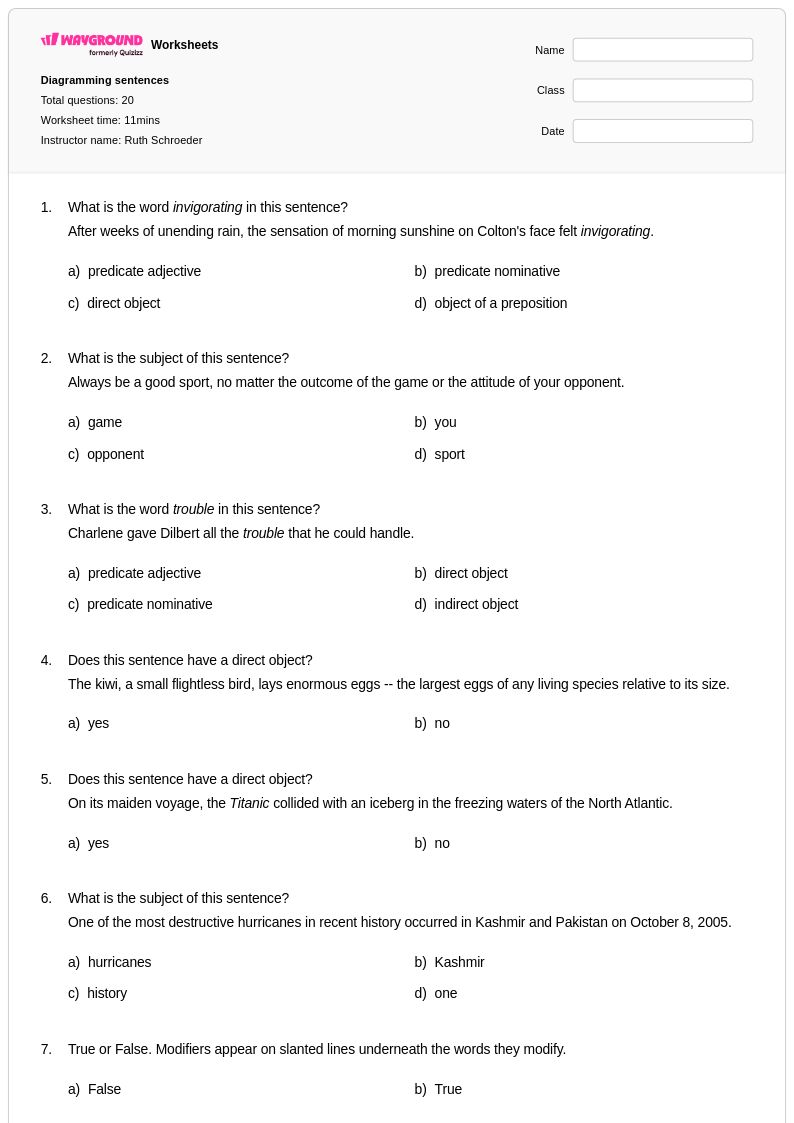
The most frequent error is misidentifying the subject in sentences with inverted word order or prepositional phrases at the start, such as treating the object of a preposition as the subject. Students also frequently place adjectives and adverbs on the wrong diagonal lines or attach them to the wrong base word. Another common mistake is confusing predicate adjectives and predicate nominatives, which sit on the baseline, with regular modifiers, which do not.
How do sentence diagramming worksheets help students understand grammar?
Sentence diagramming makes abstract grammatical relationships visible by placing each word in a position that reflects its function in the sentence. Students who struggle to identify a predicate adjective in isolation often understand it immediately when they see it placed on the baseline after a linking verb. The visual format also helps students recognize how phrases and clauses connect to the rest of the sentence, which strengthens both reading comprehension and writing clarity.
How do I use Wayground's sentence diagramming worksheets in my classroom?
Wayground's sentence diagramming worksheets are available as printable PDFs for traditional classroom use and in digital formats for technology-integrated environments, including the option to host them as a quiz directly on Wayground. Each worksheet includes a complete answer key, making them practical for independent practice, homework, or guided instruction. The scaffolded progression from simple to complex sentences means teachers can select the difficulty level that matches where their class currently is in the curriculum.
How can I differentiate sentence diagramming practice for students at different skill levels?
For struggling students, limit sentences to simple subject-verb-object structures and provide a partially completed diagram as a scaffold. For advanced students, use compound-complex sentences with multiple subordinate clauses and require them to identify the grammatical function of every word. On Wayground, teachers can apply individual accommodations such as reduced answer choices or read-aloud support for students who need them, while the rest of the class works with standard settings.