
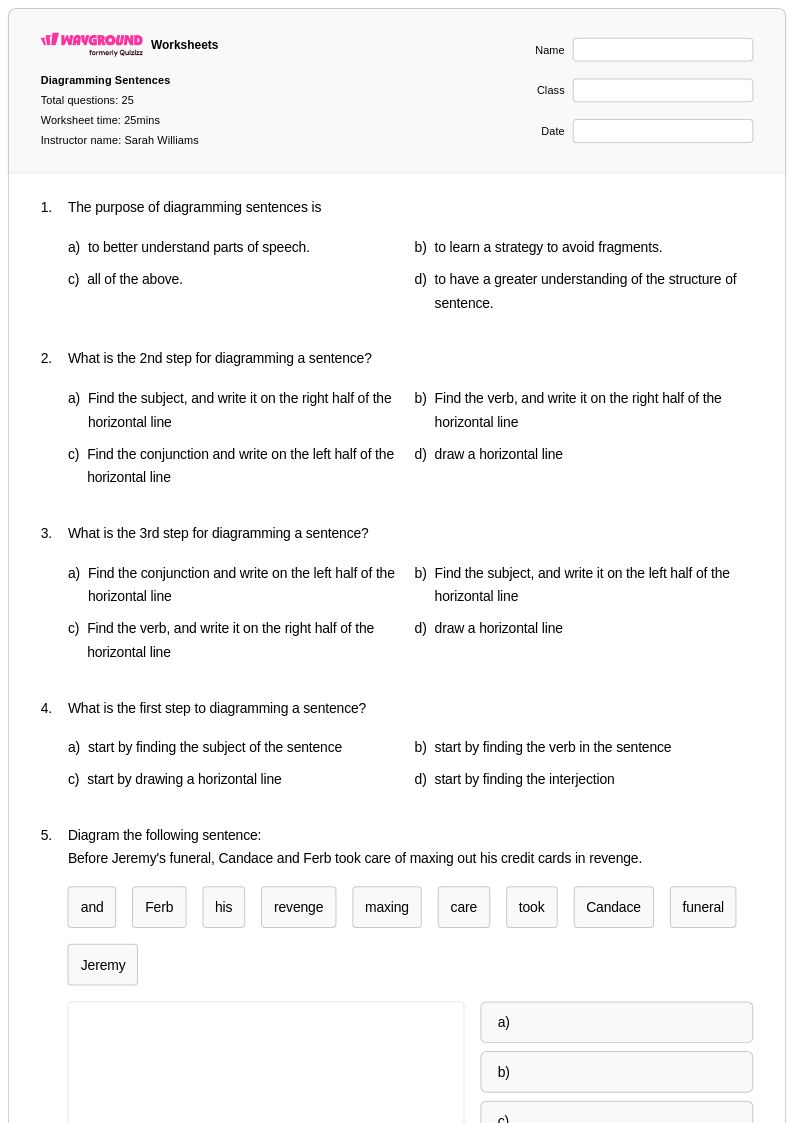
25 Q
8th - Uni
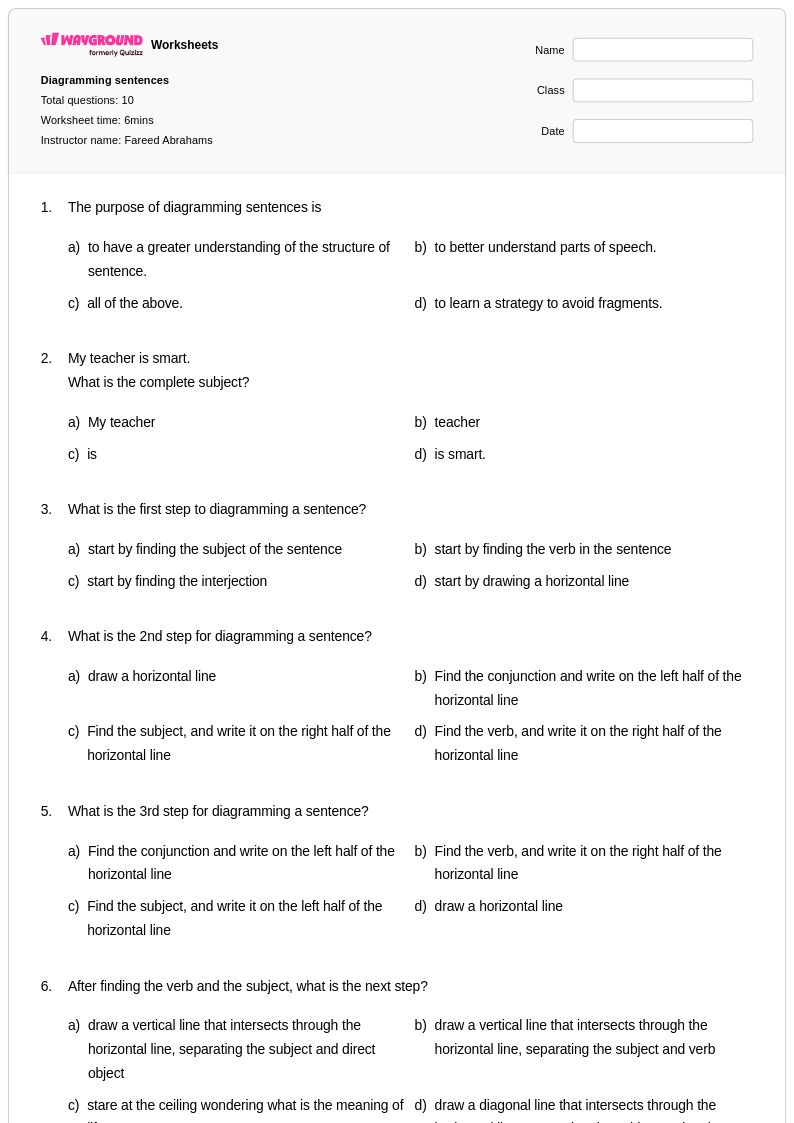
10 Q
10th
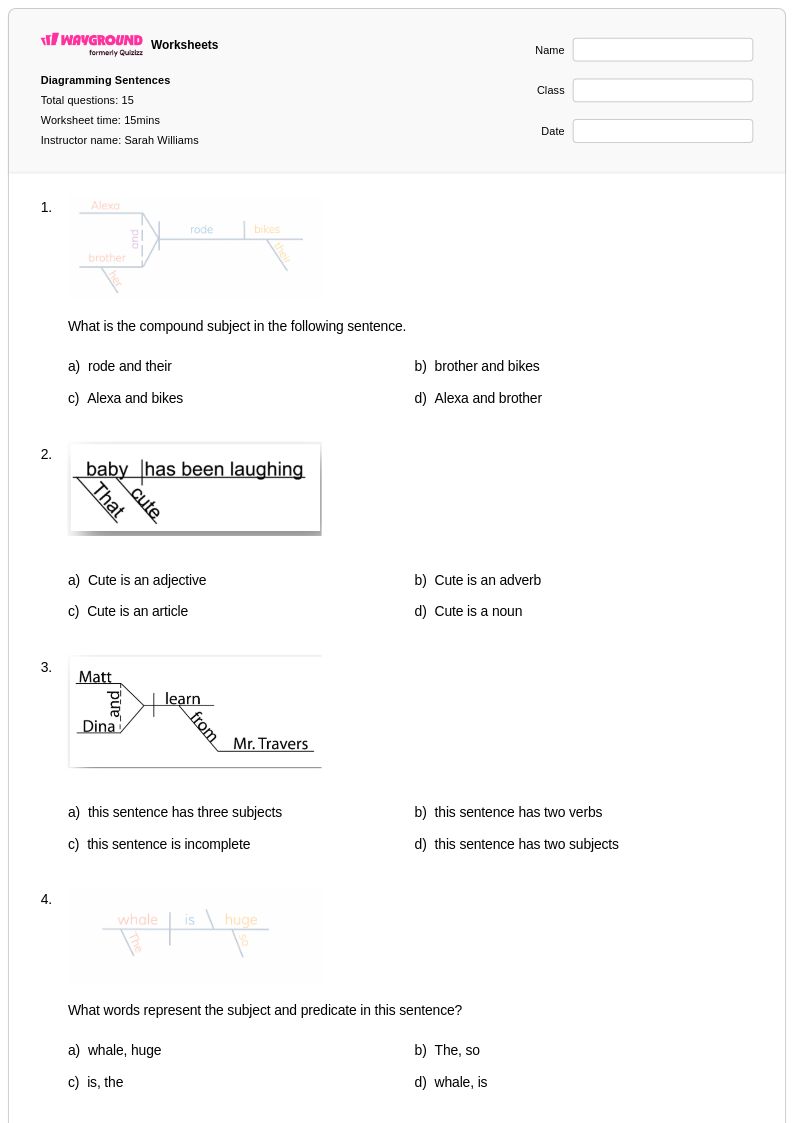
15 Q
8th - Uni
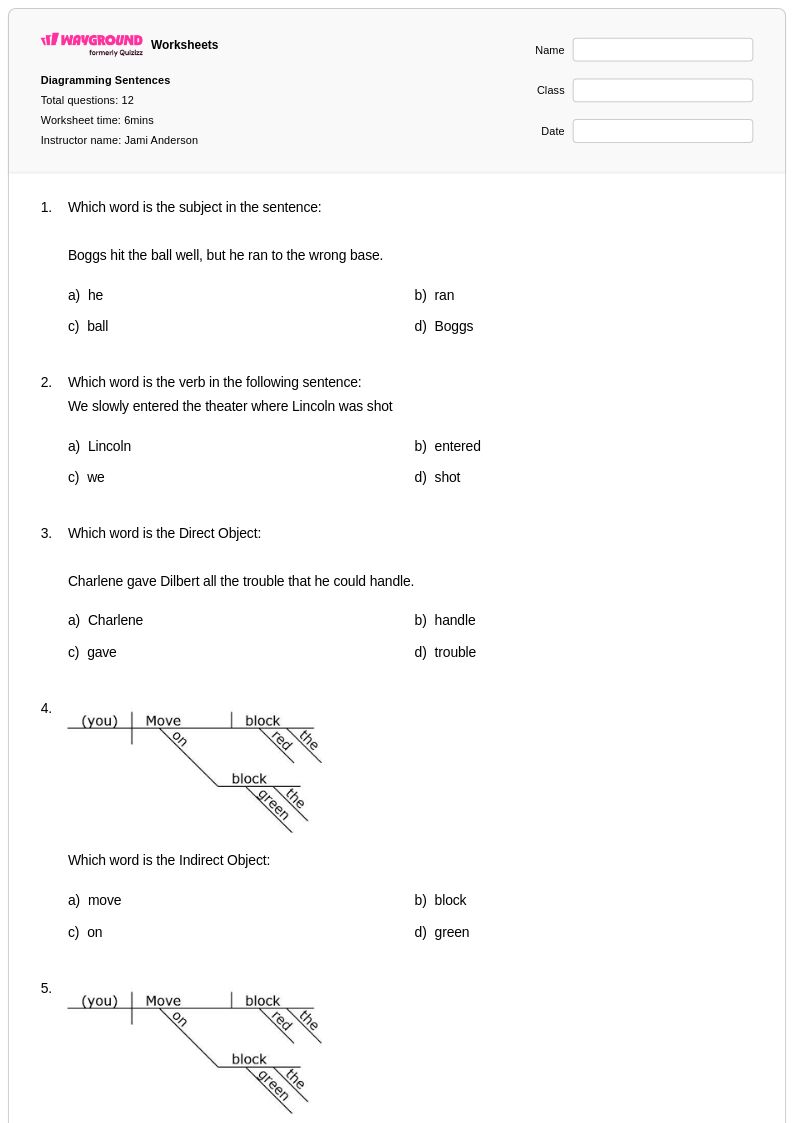
12 Q
7th - 10th
47 Q
9th - 12th
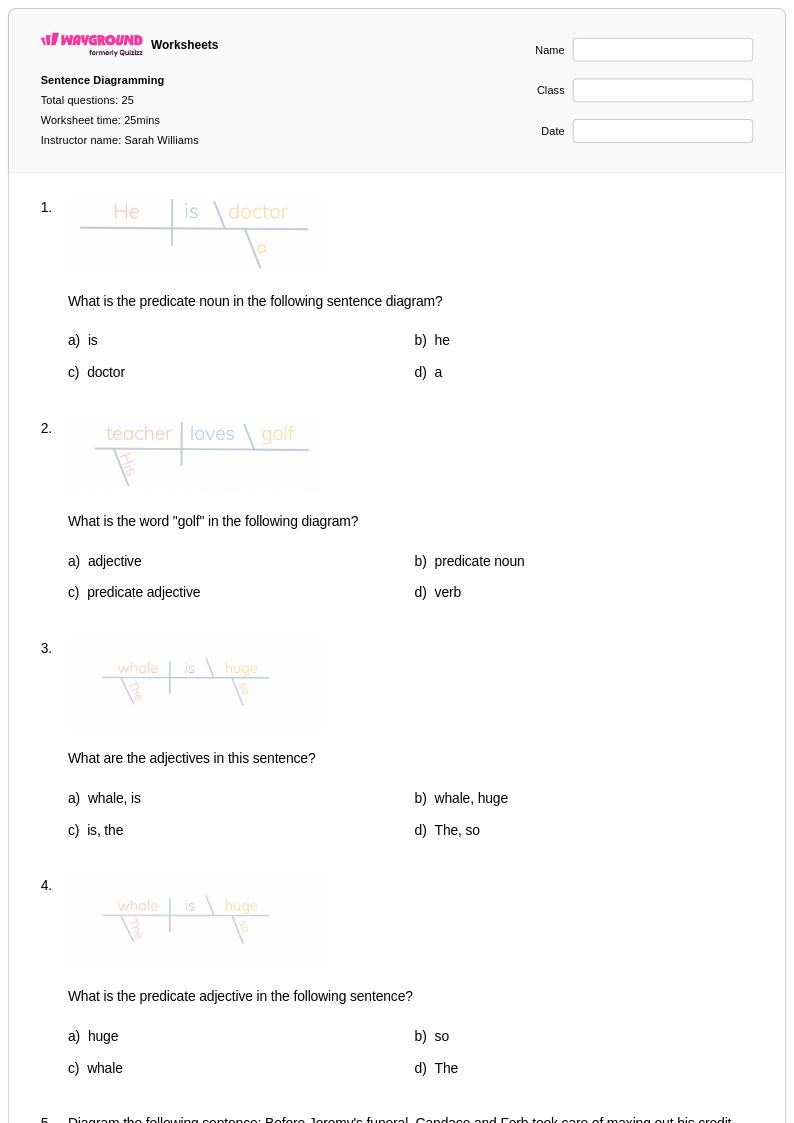
25 Q
6th - Uni
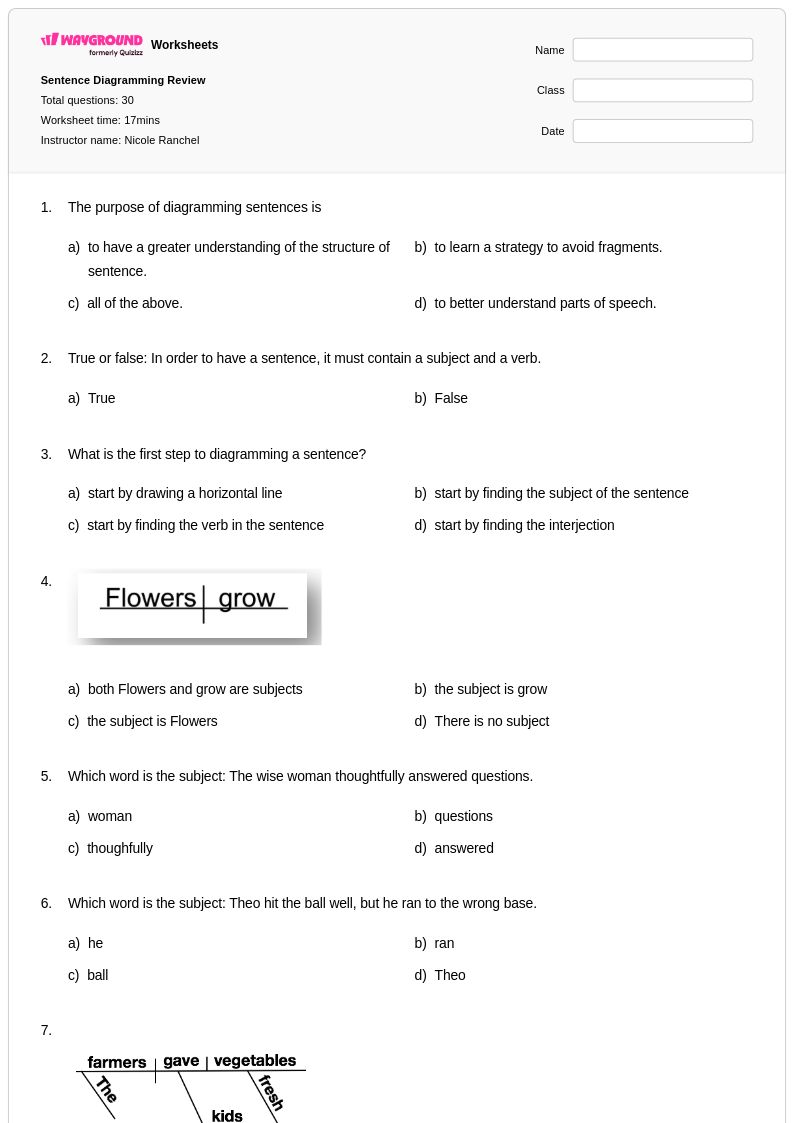
30 Q
10th
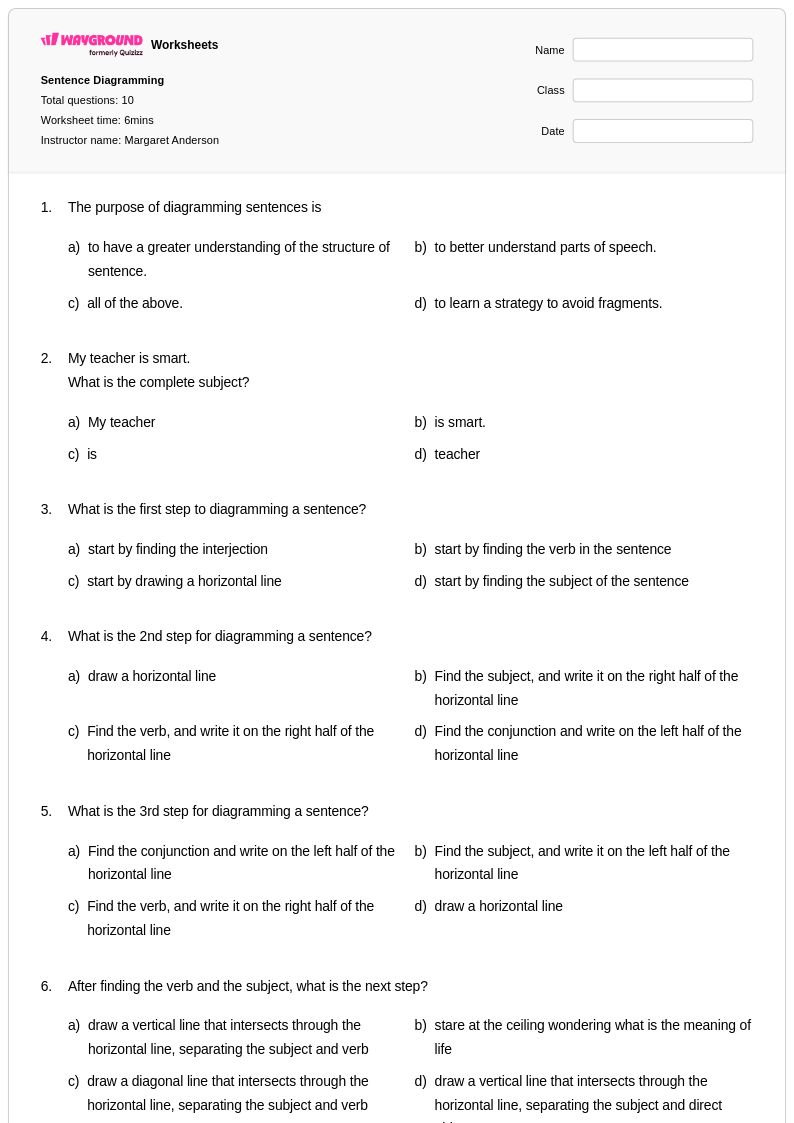
10 Q
10th
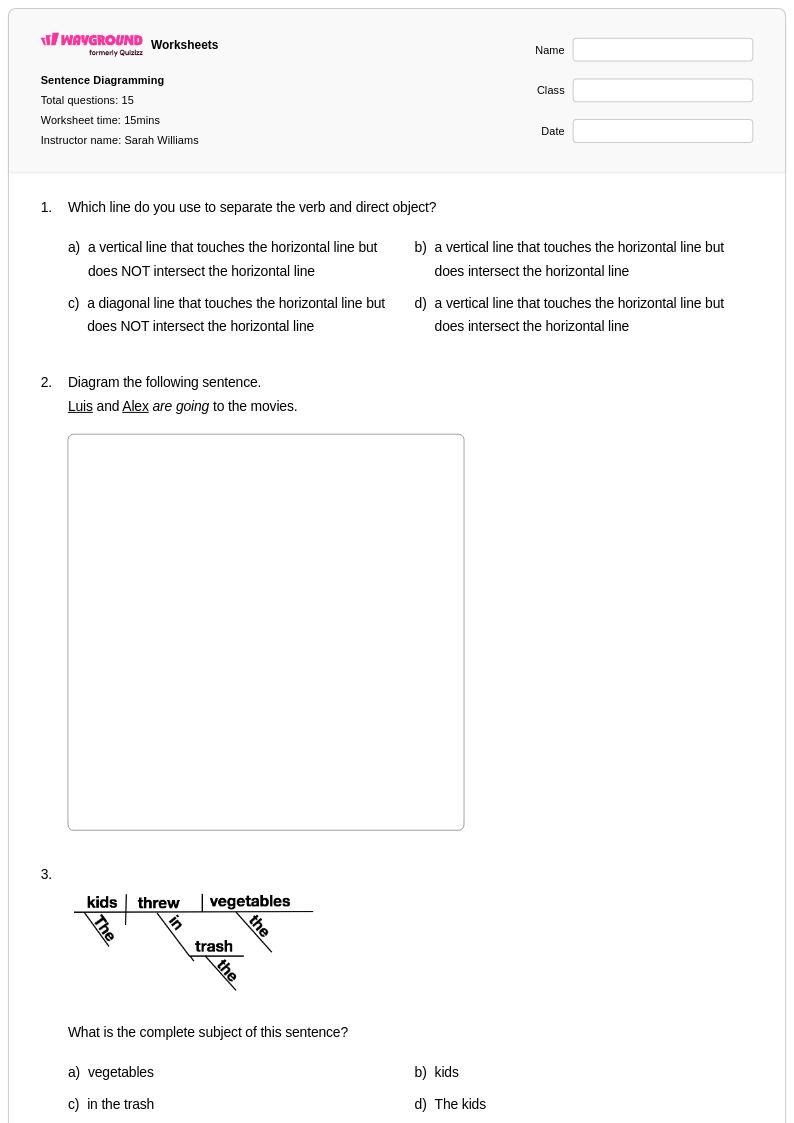
15 Q
6th - Uni
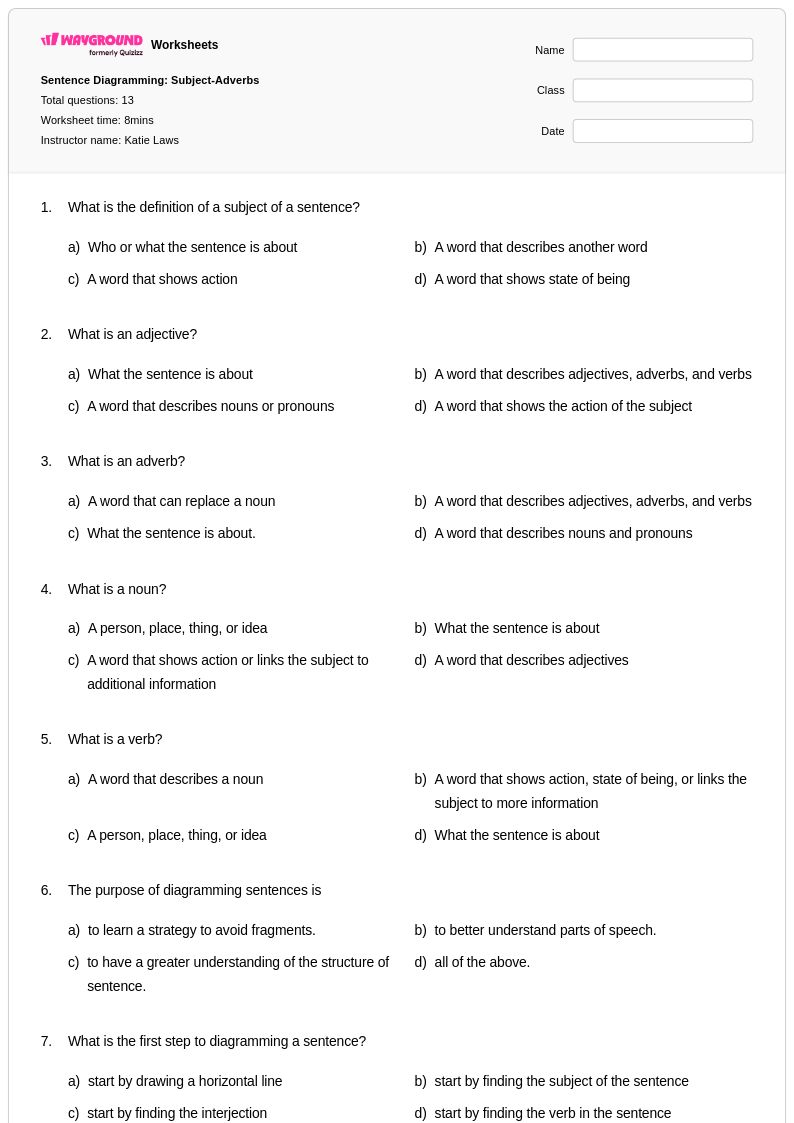
13 Q
7th - 12th
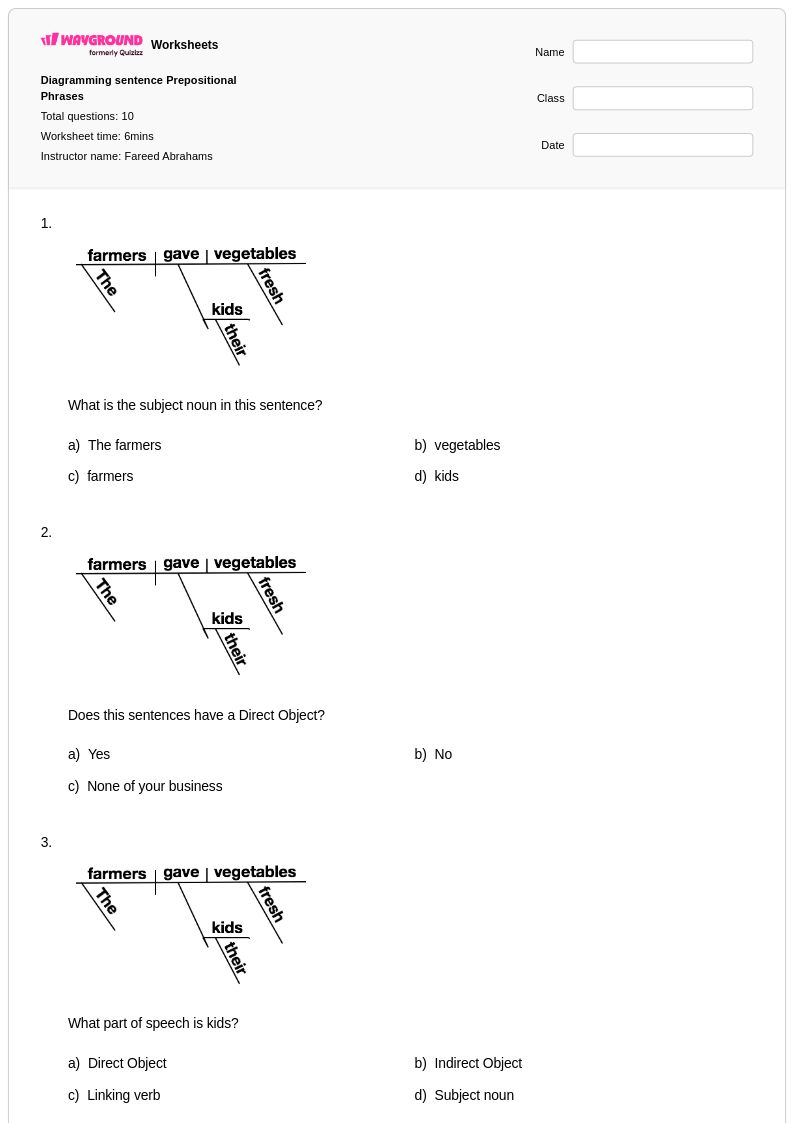
10 Q
10th
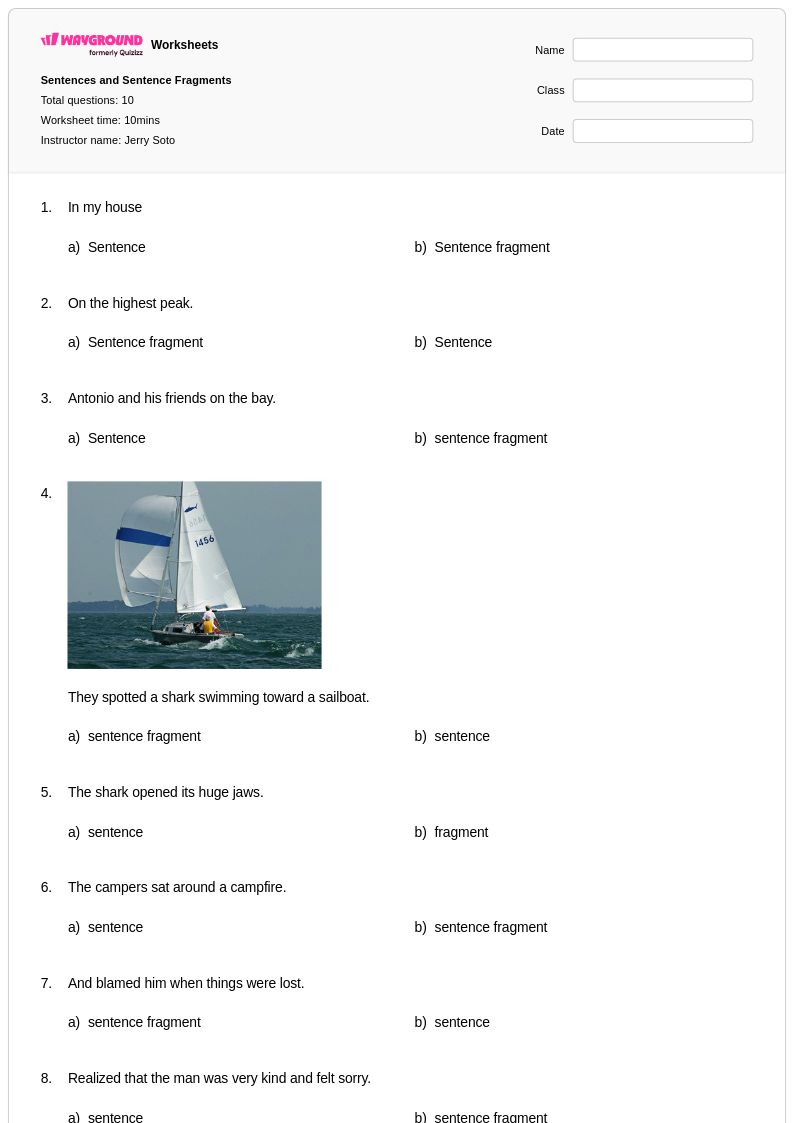
10 Q
7th - 12th
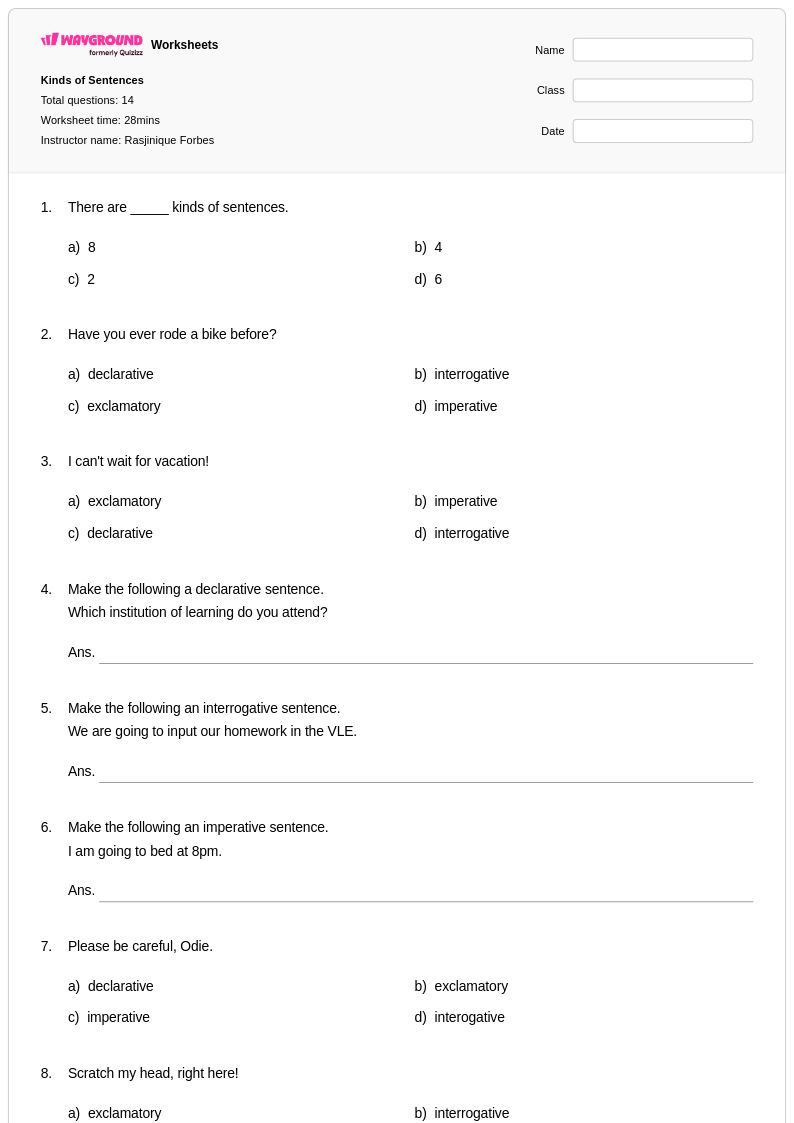
14 Q
7th - 12th
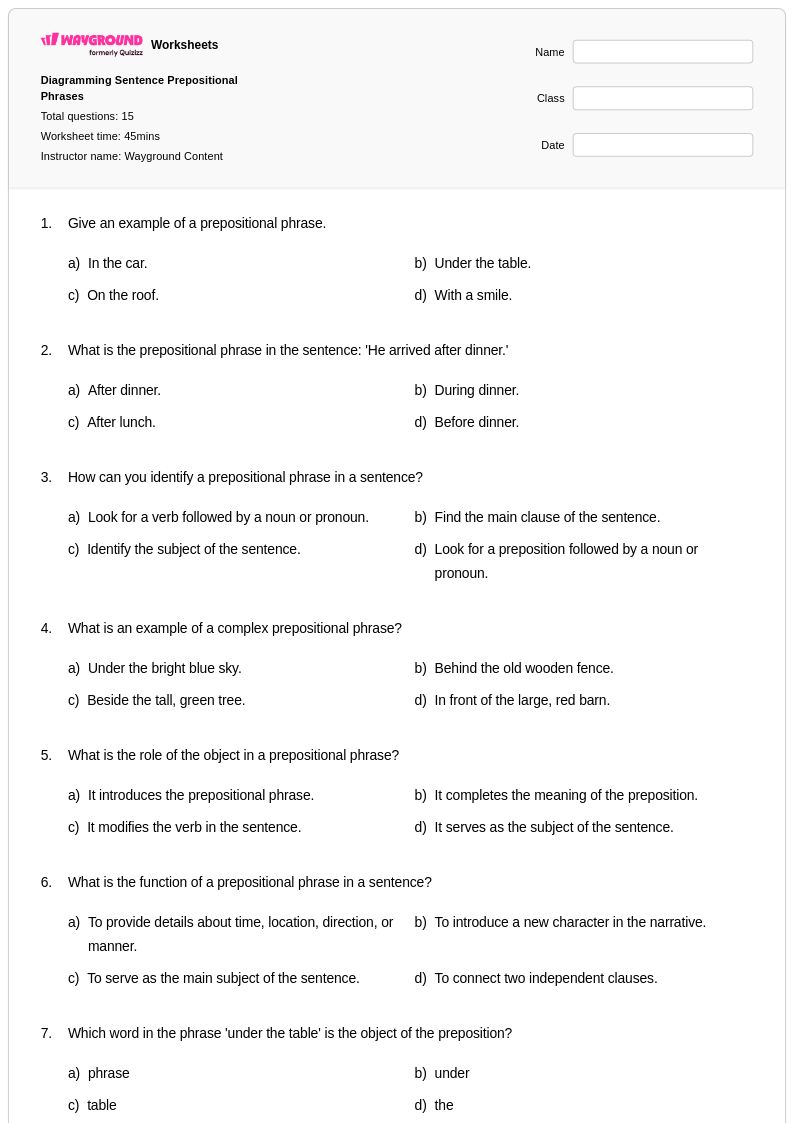
15 Q
7th - Uni

10 Q
9th - 12th
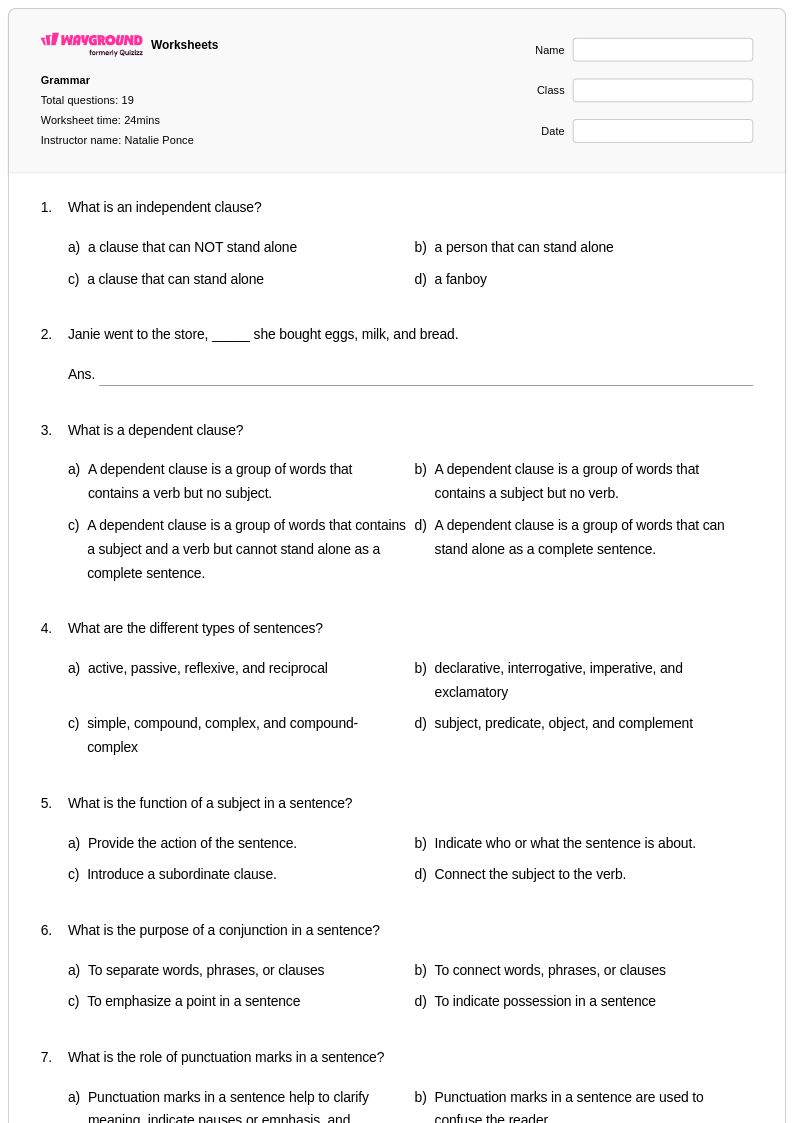
21 Q
9th - 12th
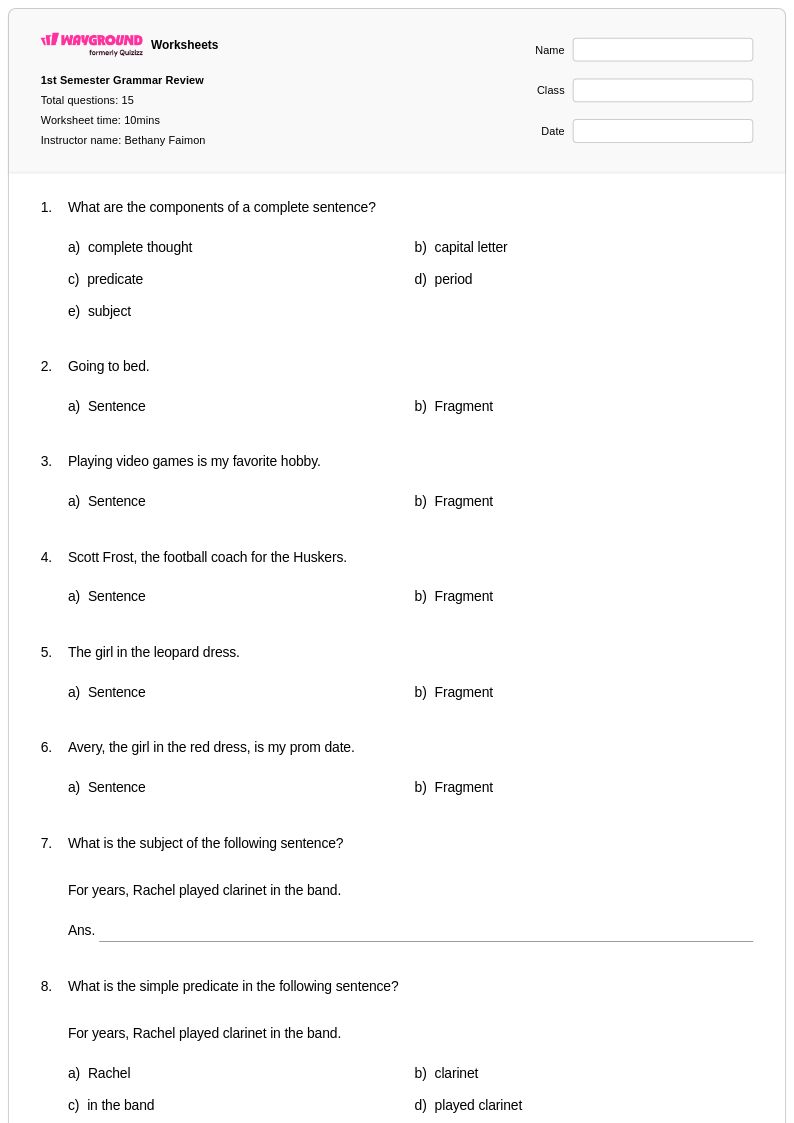
15 Q
9th - 10th
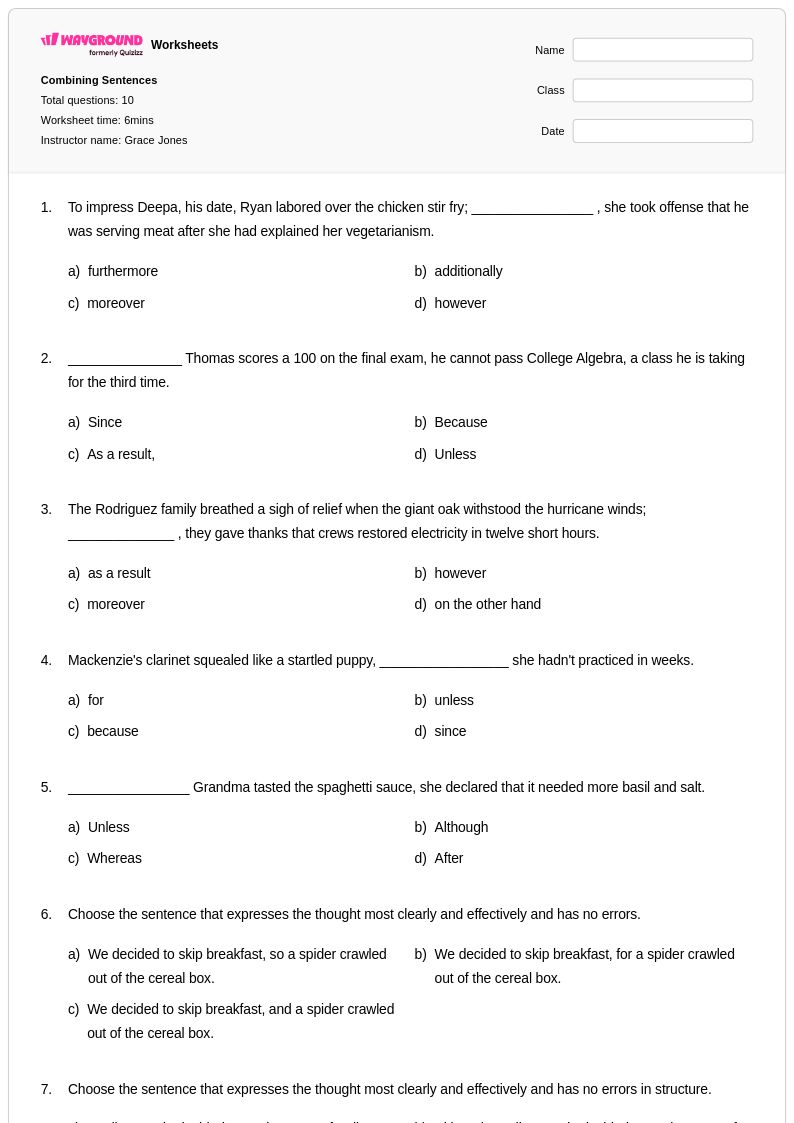
10 Q
7th - 10th
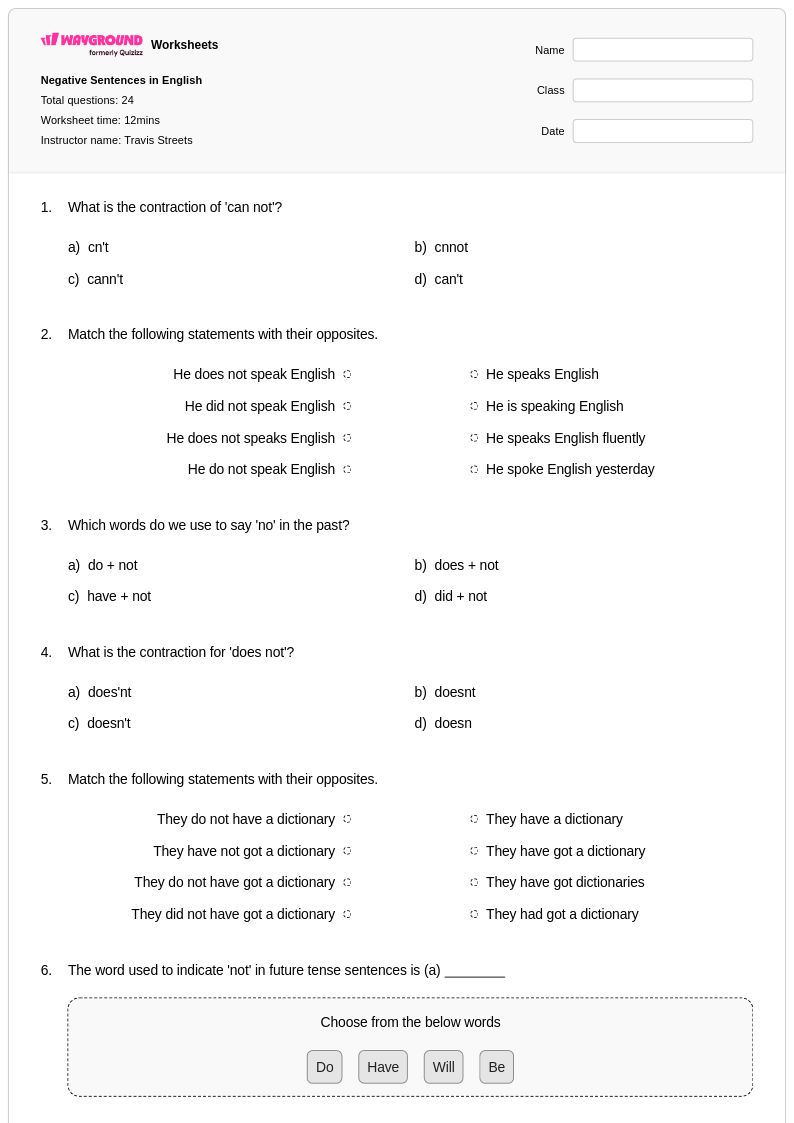
24 Q
7th - Uni
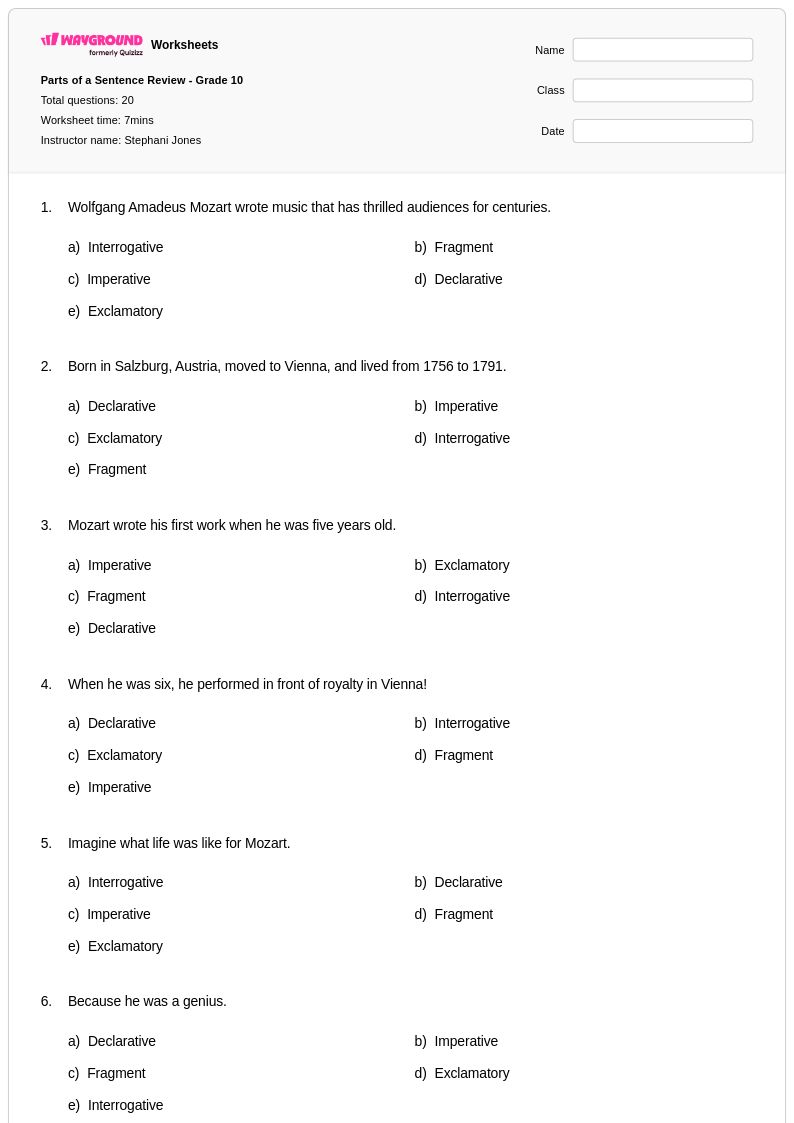
20 Q
10th
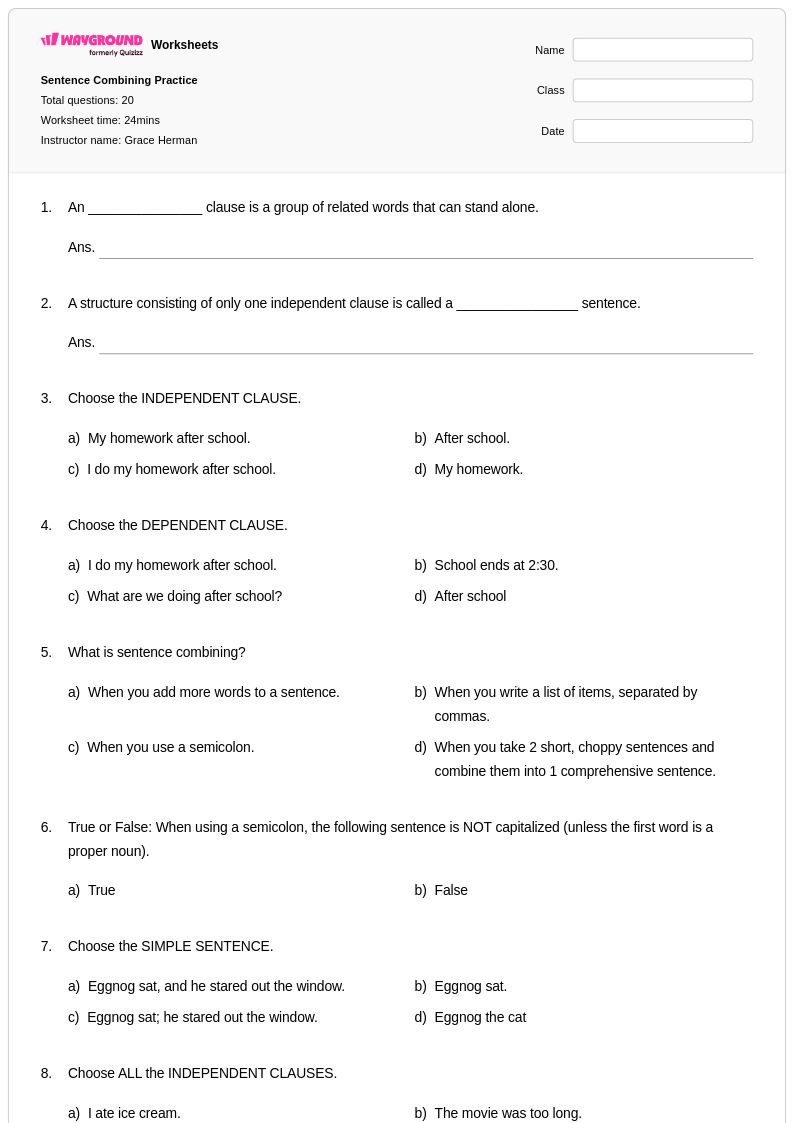
20 Q
10th
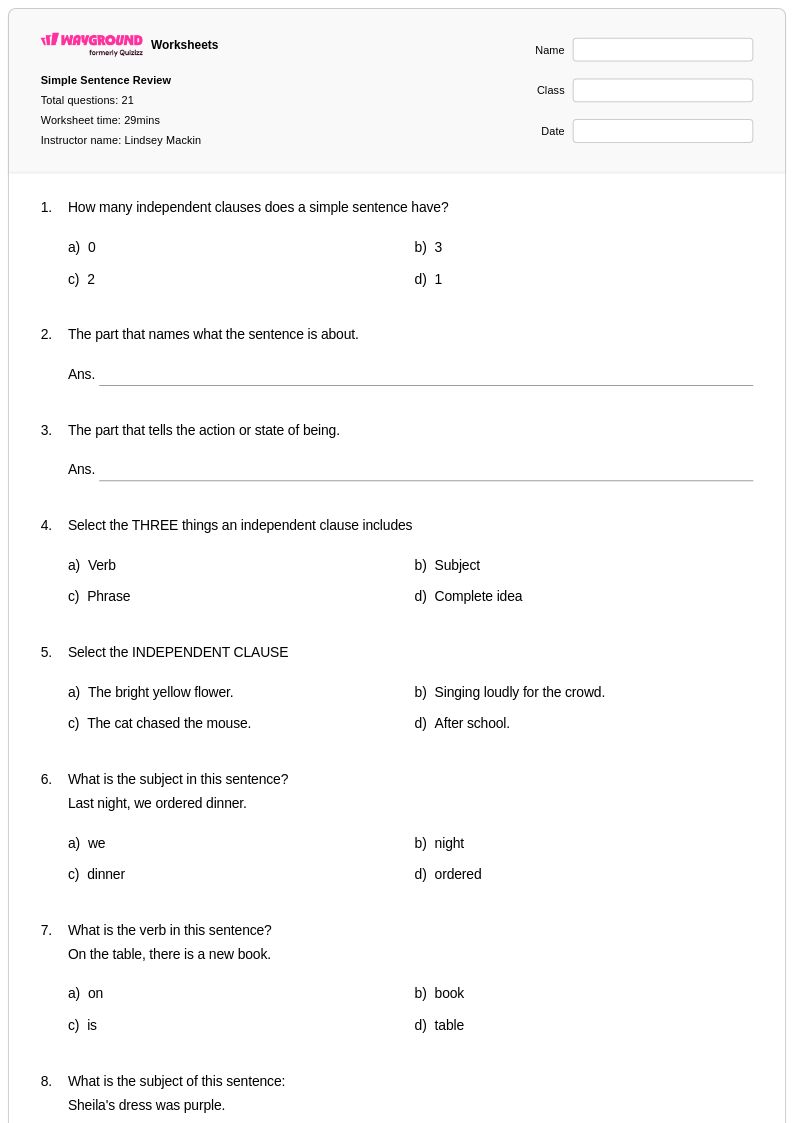
21 Q
9th - 12th
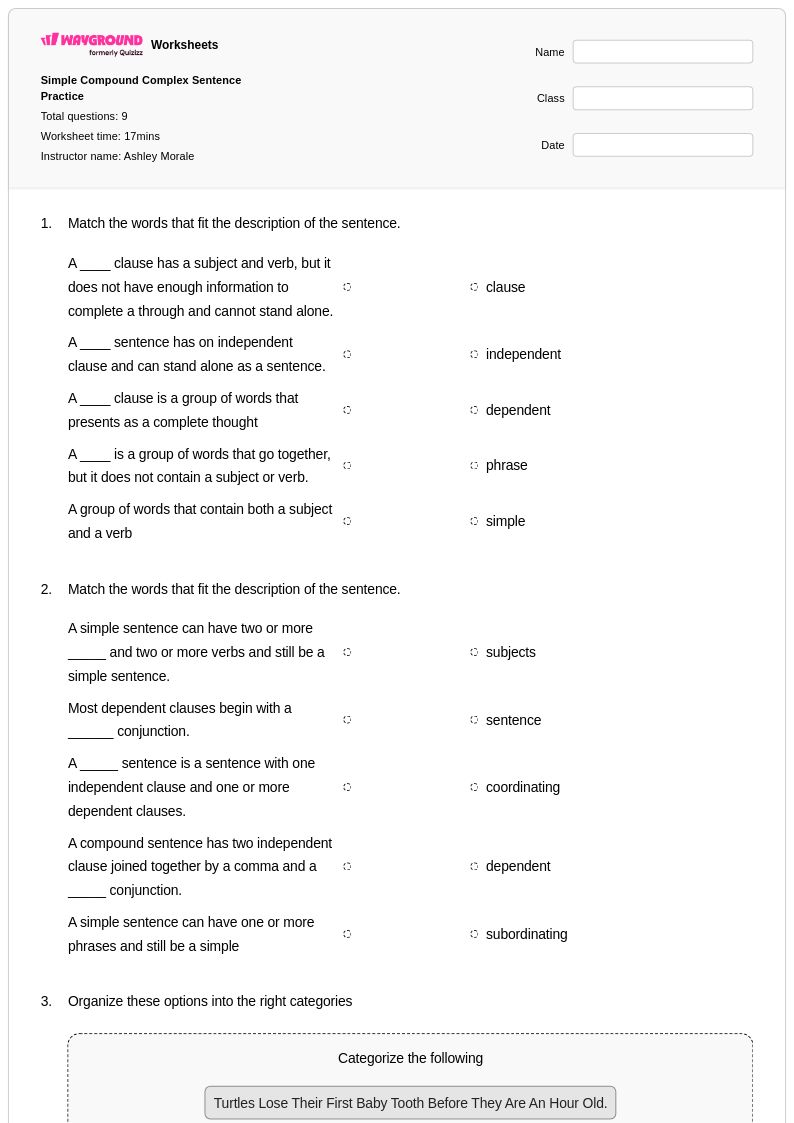
9 Q
9th - 12th
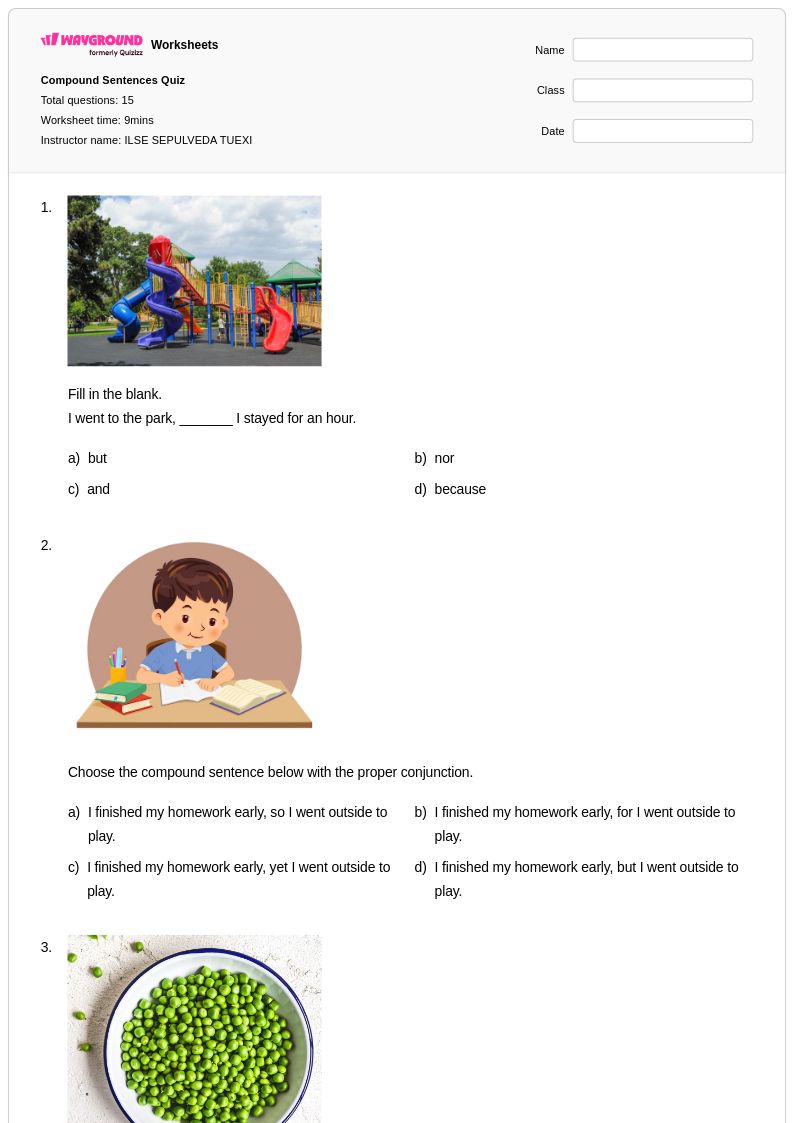
15 Q
10th
Explore Diagramming Sentences Worksheets by Grades
Explore Other Subject Worksheets for class 10
Explore printable Diagramming Sentences worksheets for Class 10
Diagramming sentences represents a fundamental skill for Class 10 students developing advanced analytical abilities in English language arts, and Wayground's extensive collection of sentence diagramming worksheets provides comprehensive practice opportunities for mastering this complex grammatical analysis technique. These professionally crafted worksheets guide students through the systematic process of visually mapping sentence components, helping them identify subjects, predicates, modifiers, and various clause structures while strengthening their understanding of grammatical relationships. Each worksheet includes detailed answer keys and practice problems that progress from simple sentences to complex constructions, offering students multiple opportunities to develop proficiency in breaking down intricate sentence patterns. The free printable resources available in PDF format ensure that educators can seamlessly integrate sentence diagramming exercises into their curriculum while providing students with tangible reference materials for independent study and review.
Wayground, formerly Quizizz, empowers educators with millions of teacher-created sentence diagramming resources specifically designed to meet the diverse needs of Class 10 English classrooms through robust search and filtering capabilities that allow for precise content selection based on complexity levels and grammatical concepts. The platform's standards alignment features ensure that worksheet collections correspond directly with grade-level expectations for syntactic analysis, while built-in differentiation tools enable teachers to customize difficulty levels for students requiring remediation or enrichment opportunities. These comprehensive worksheet collections are available in both printable and digital PDF formats, providing maximum flexibility for classroom implementation, homework assignments, and targeted skill practice sessions. Teachers can efficiently plan instruction sequences, assess student progress, and provide individualized support through the platform's extensive library of sentence diagramming materials that address everything from basic sentence patterns to advanced compound-complex structures.
FAQs
How do I teach sentence diagramming to students who have never done it before?
What order should I teach sentence diagramming concepts?
What mistakes do students commonly make when diagramming sentences?
How do sentence diagramming worksheets help students understand grammar?
How do I use Wayground's sentence diagramming worksheets in my classroom?
How can I differentiate sentence diagramming practice for students at different skill levels?