Free Printable Misplaced and Dangling Modifiers Worksheets for Class 10
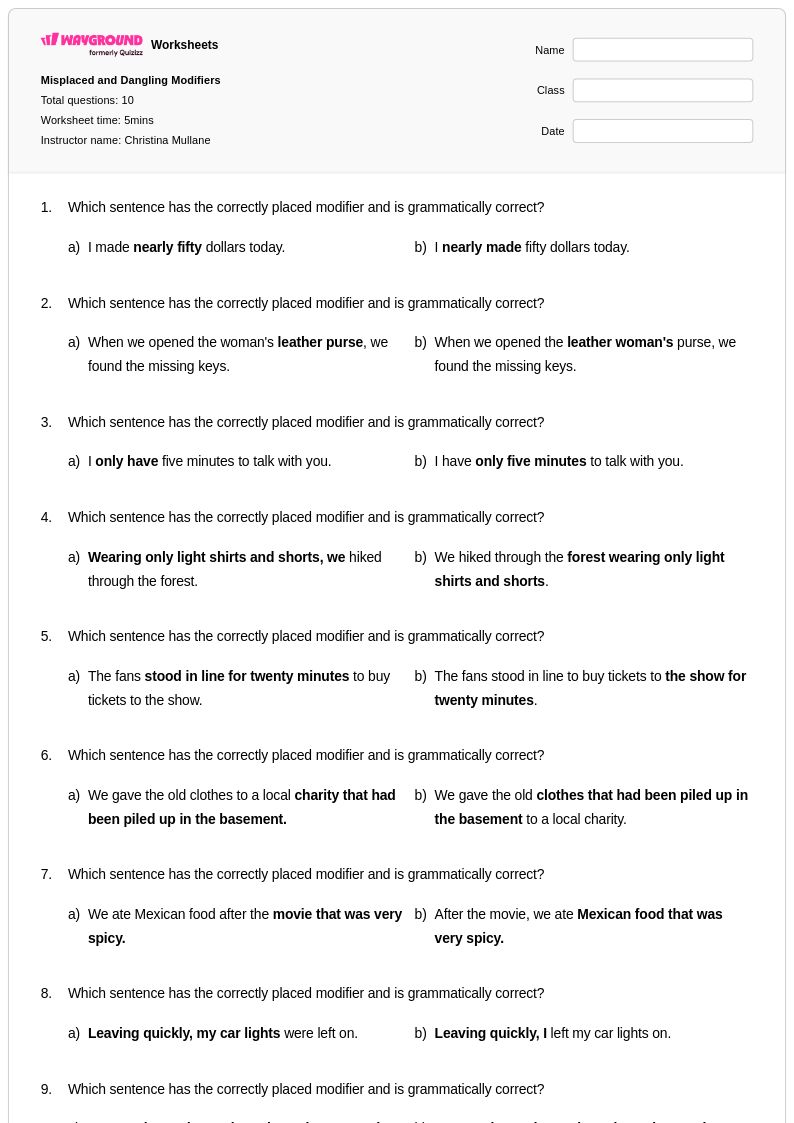
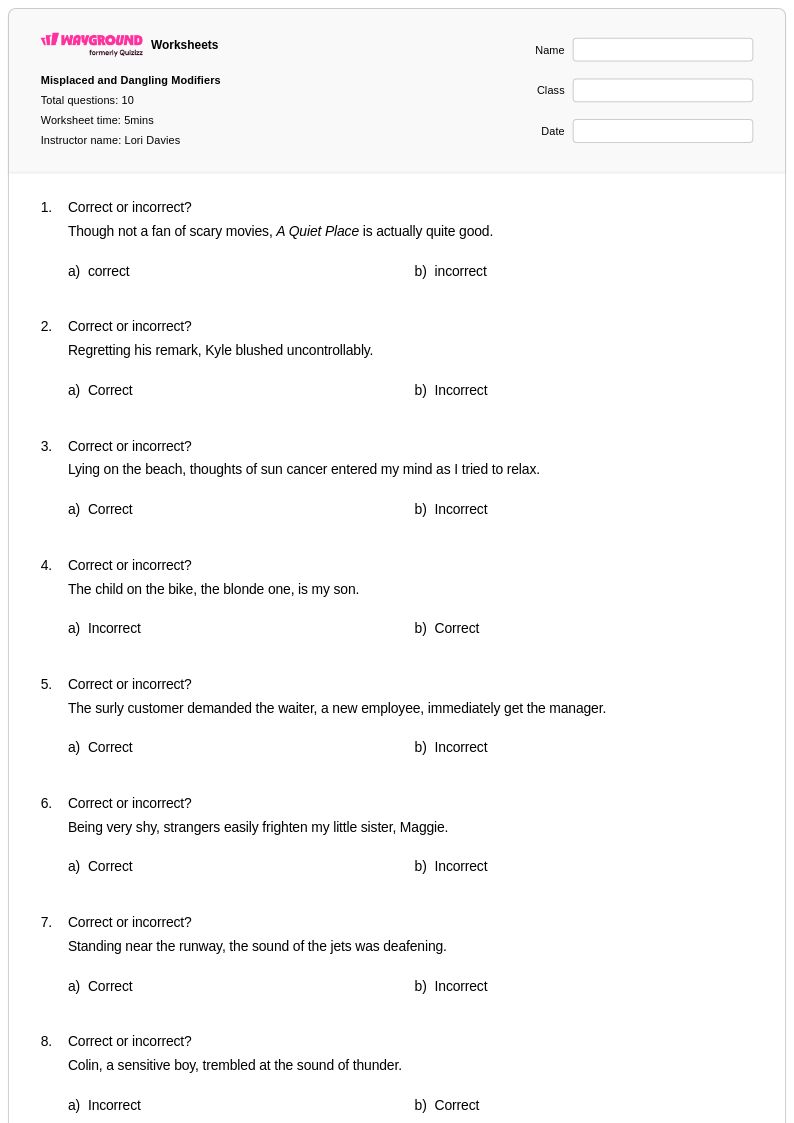
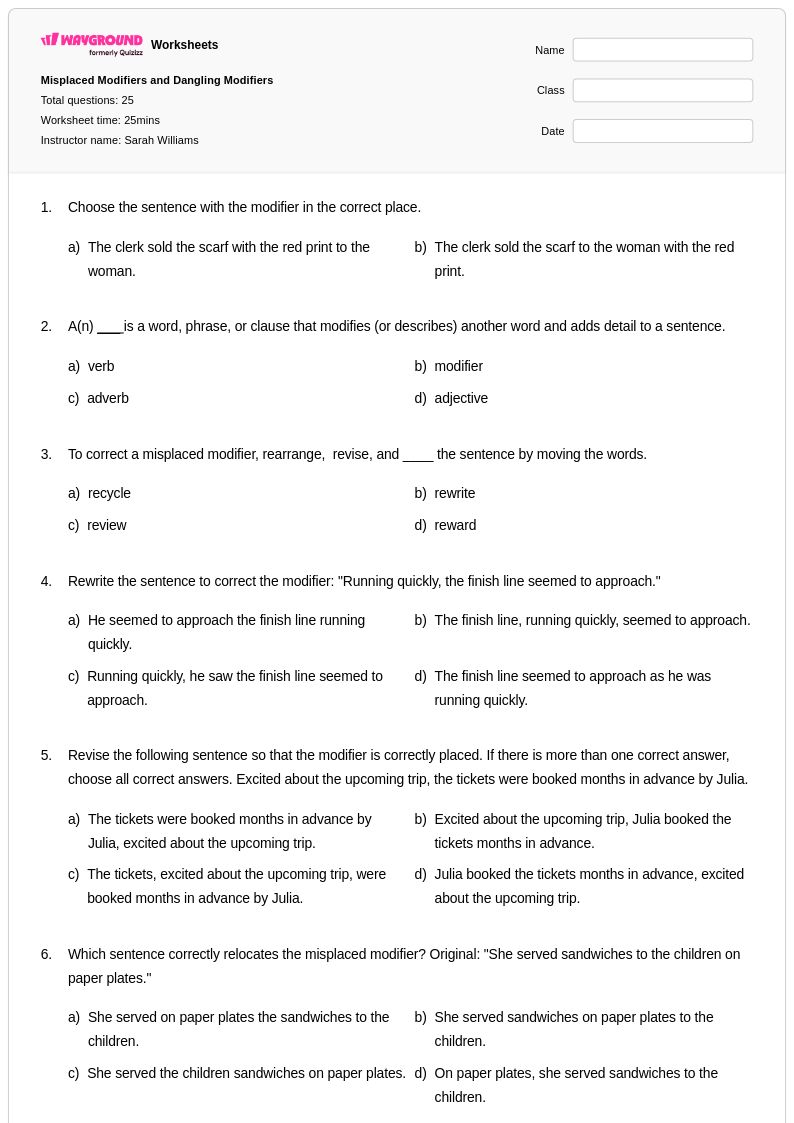
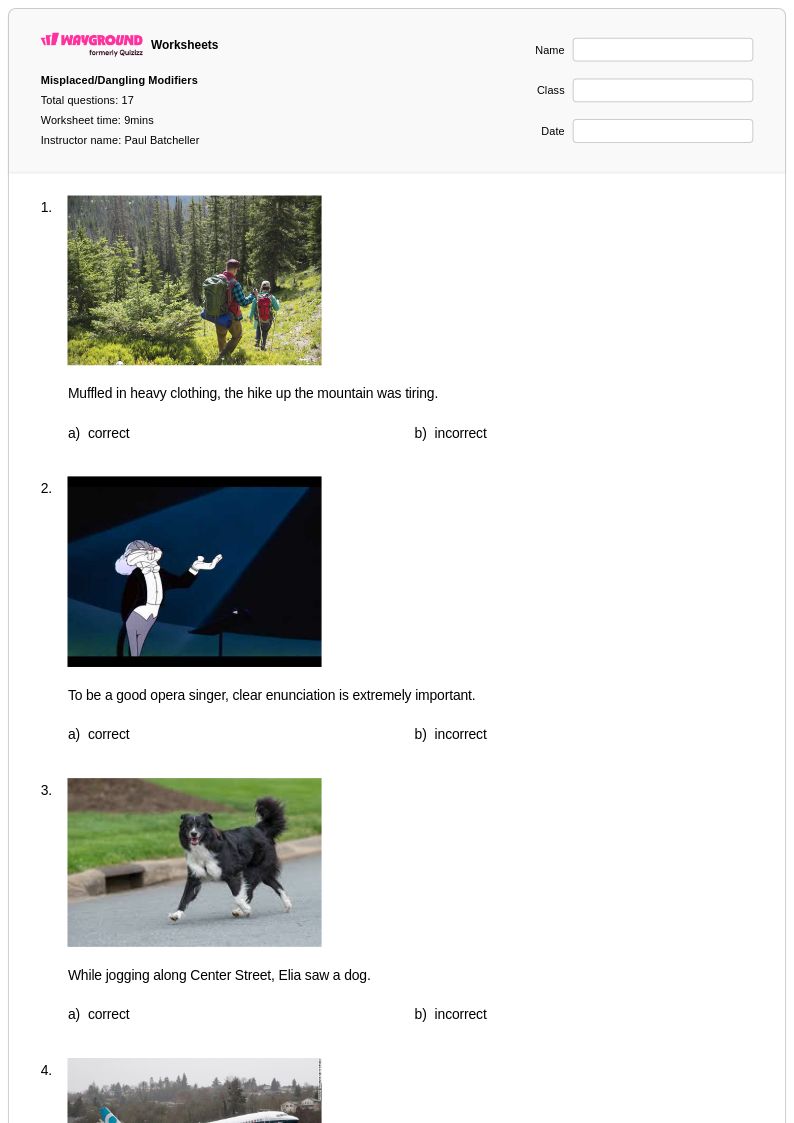
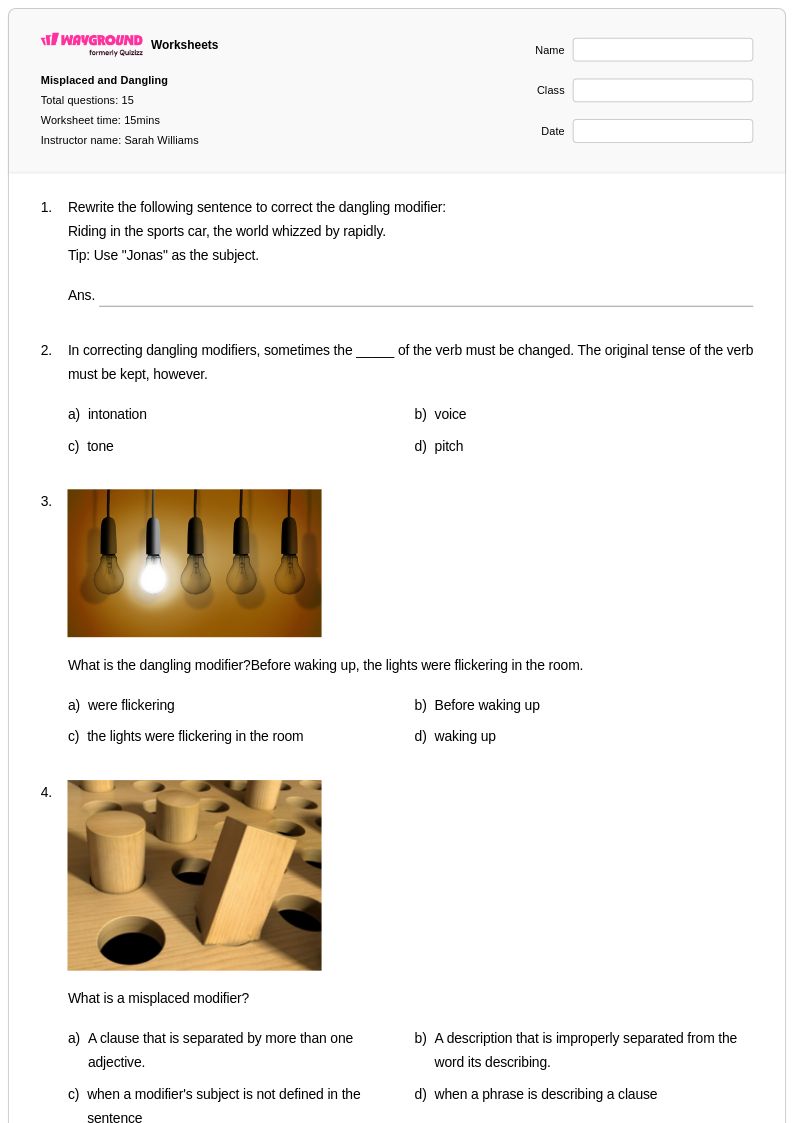
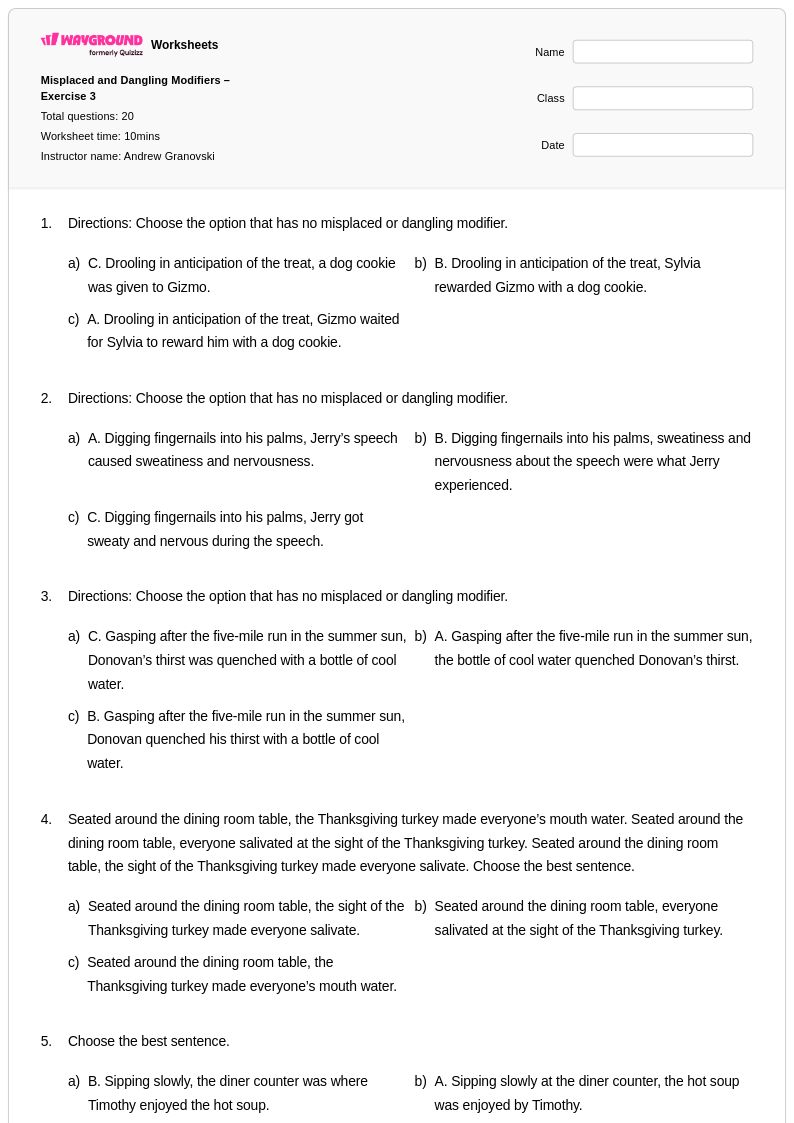
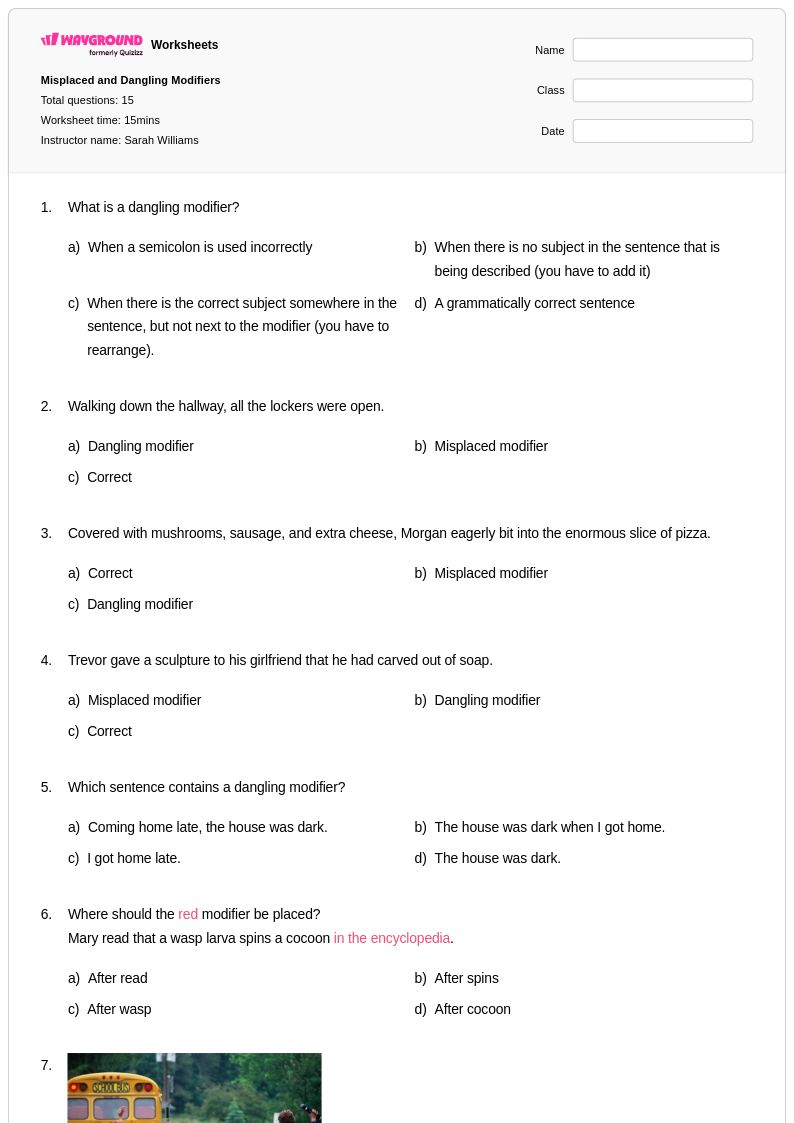
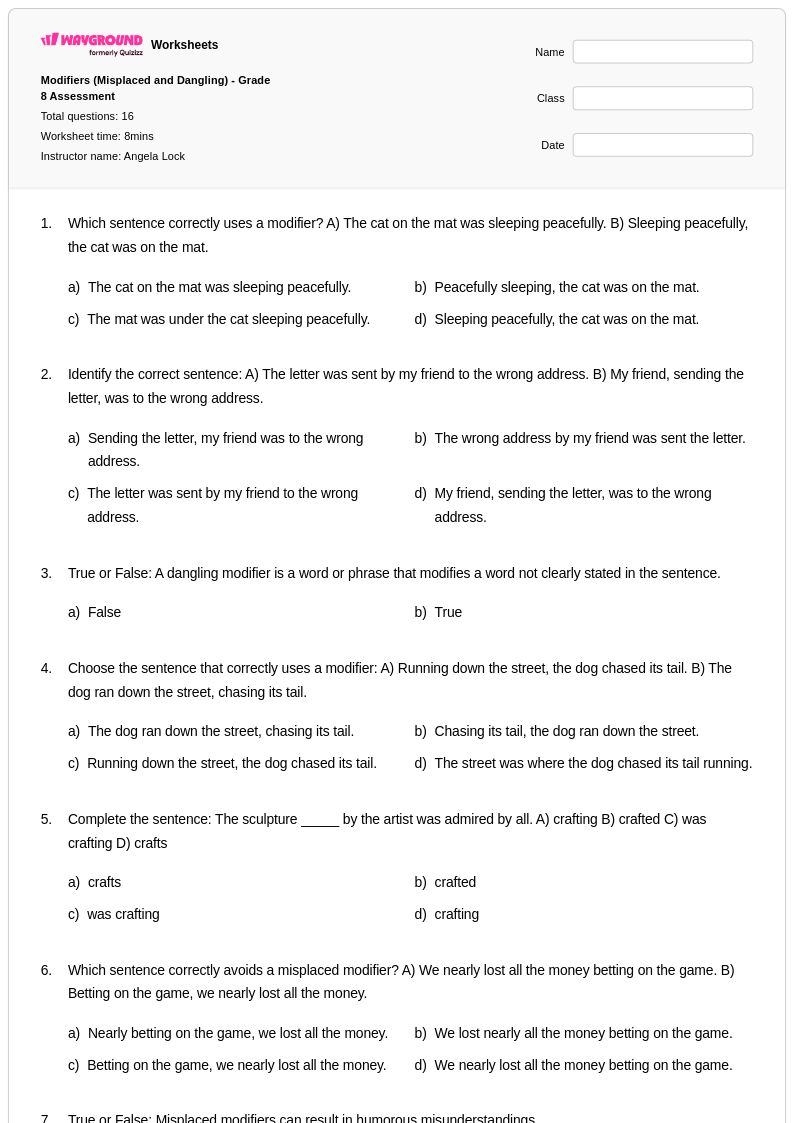
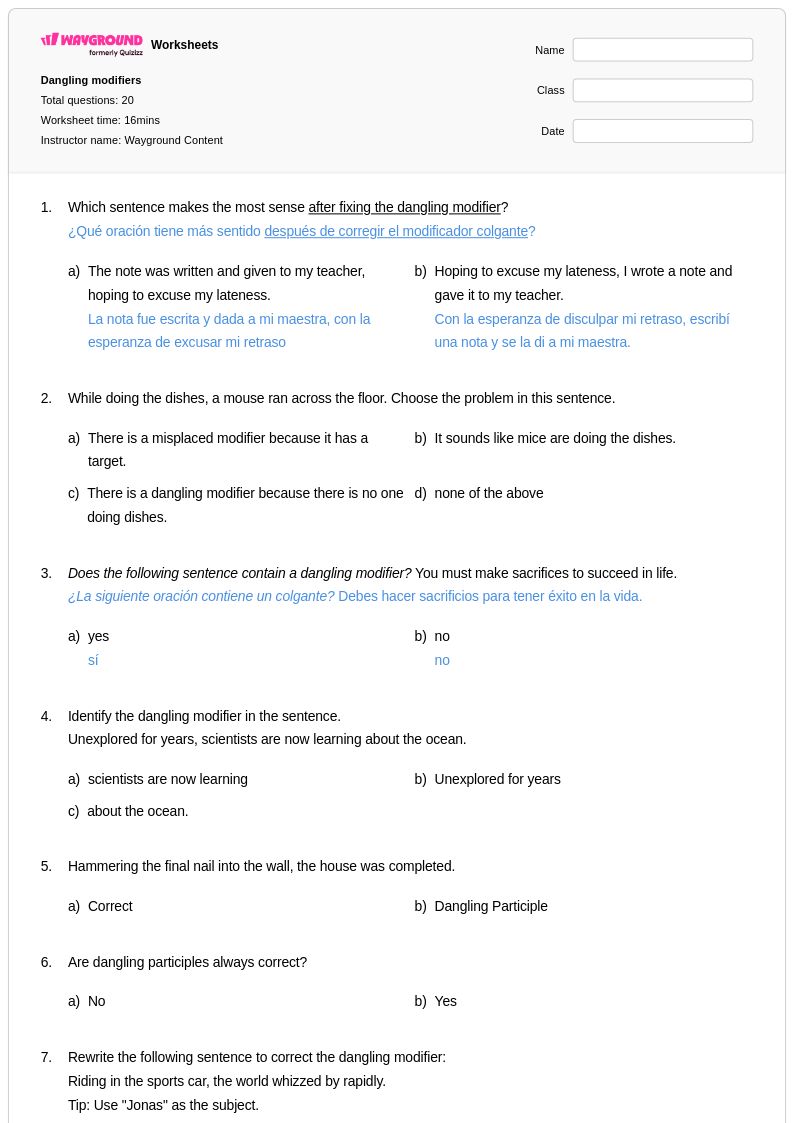
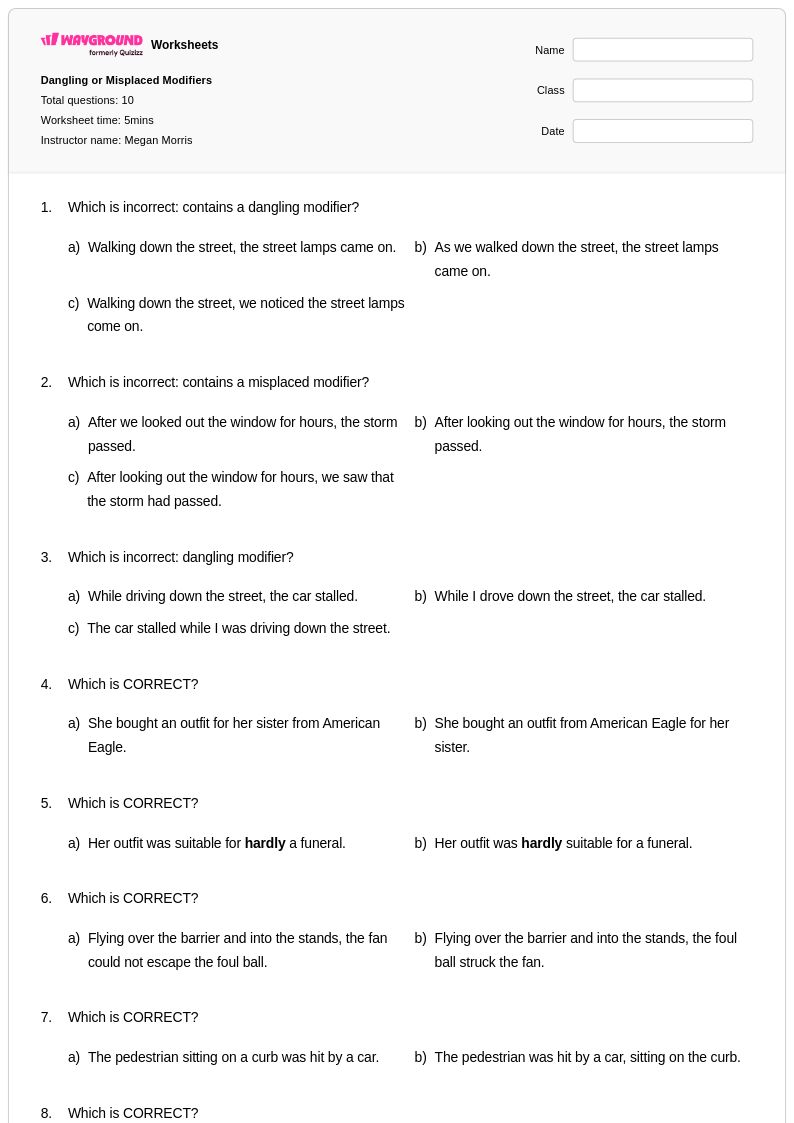
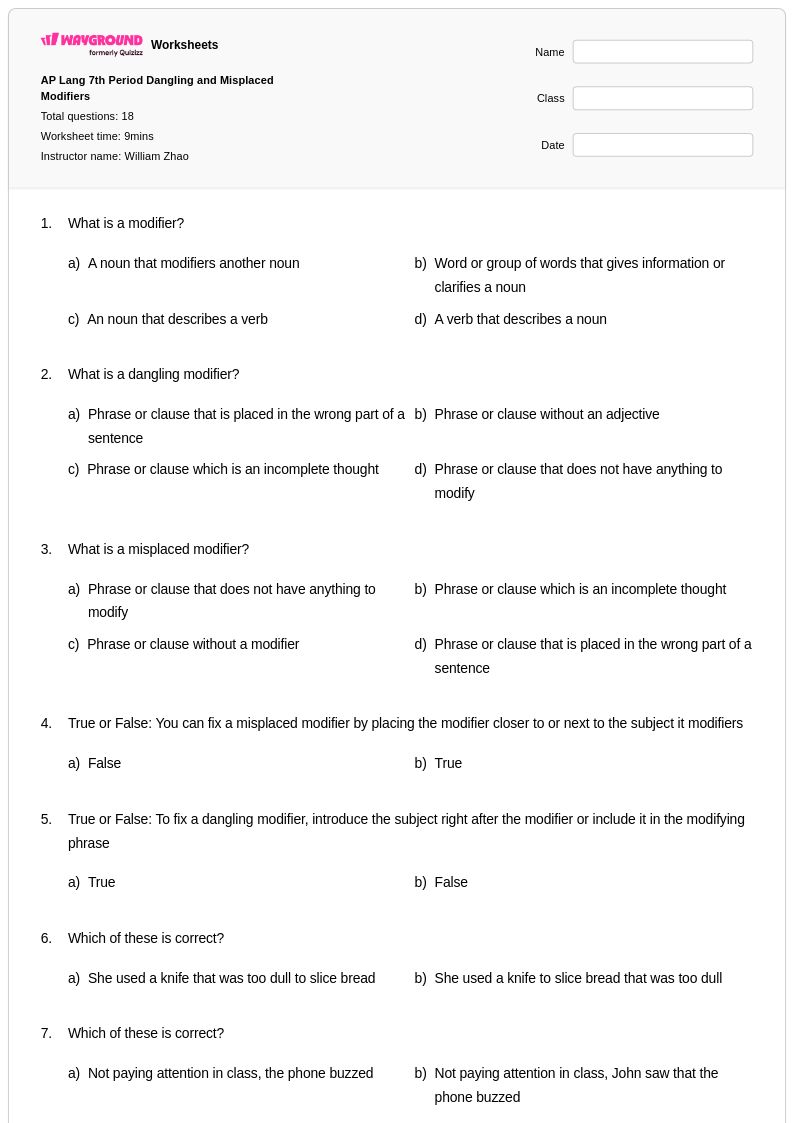
Wayground's free Class 10 misplaced and dangling modifiers worksheets offer printable PDF practice problems with answer keys to help students master proper modifier placement and eliminate confusing sentence construction errors.
Explore printable Misplaced and Dangling Modifiers worksheets for Class 10
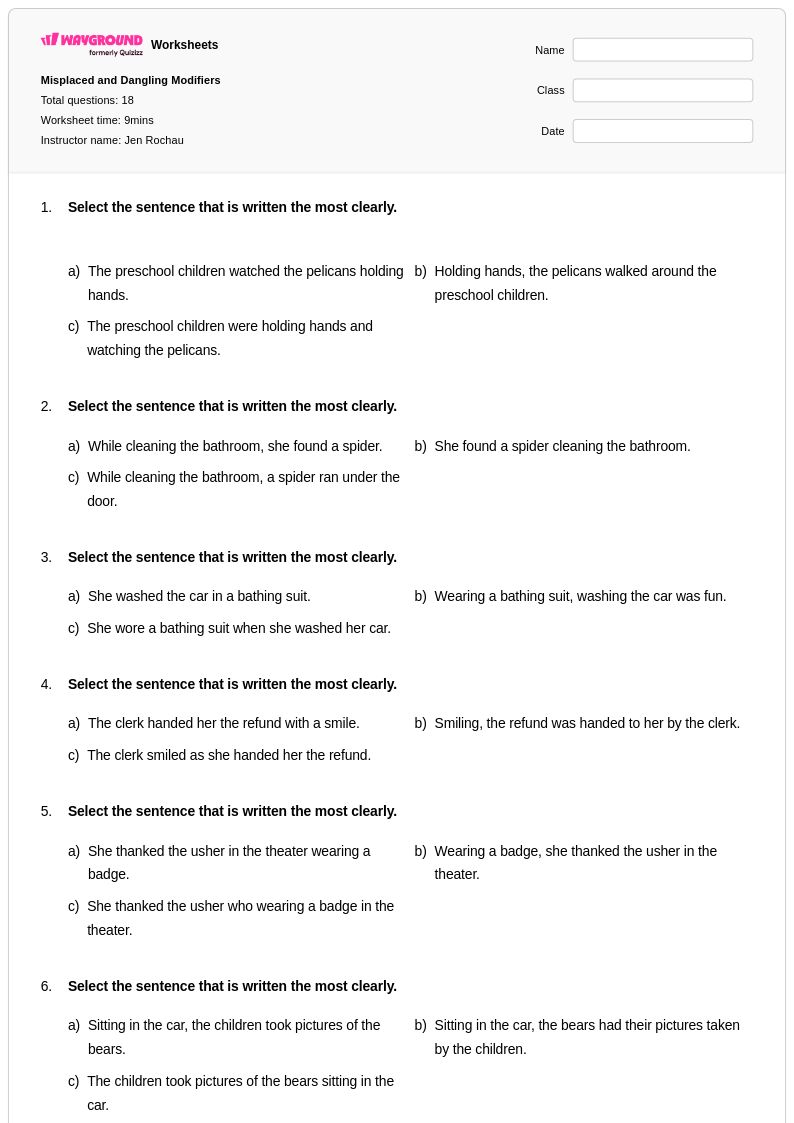
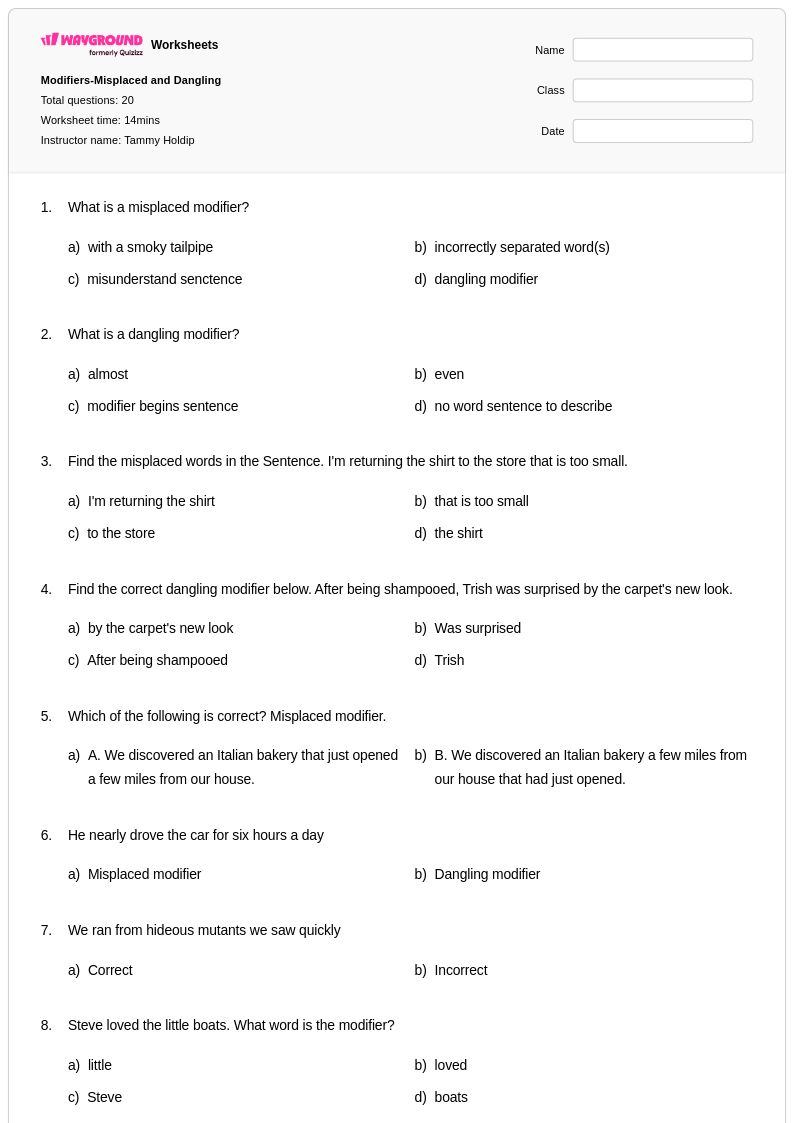
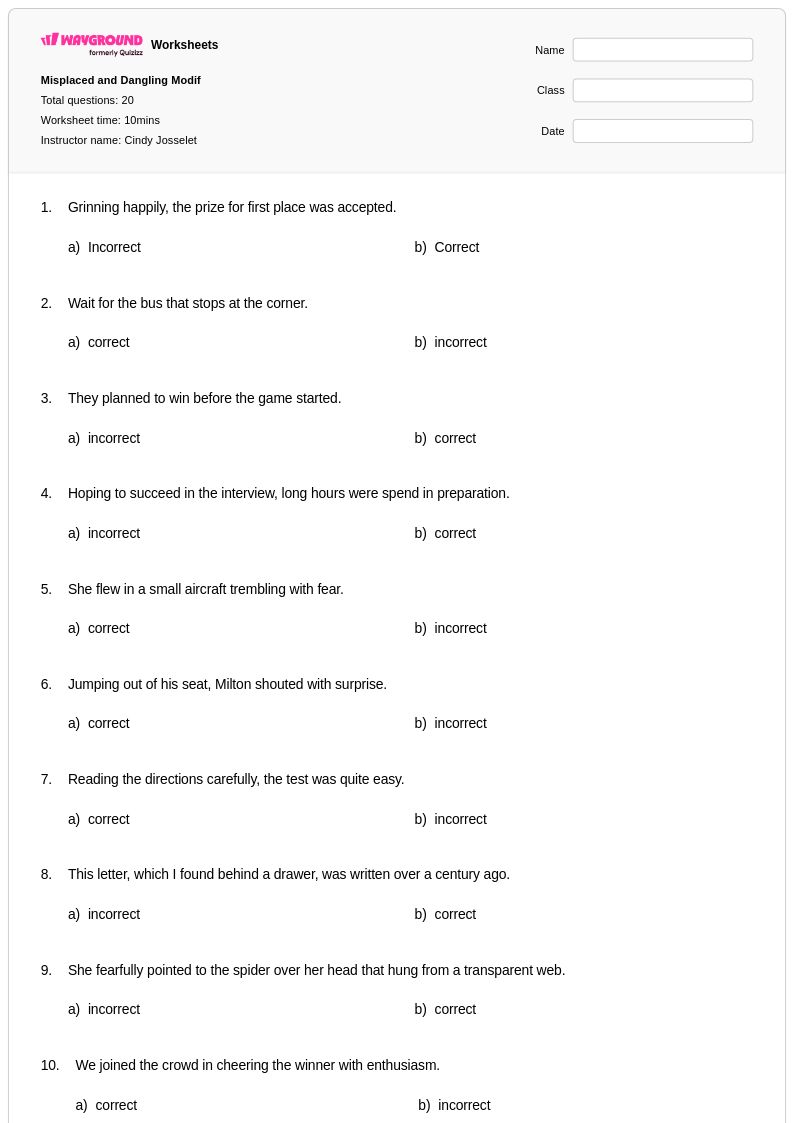
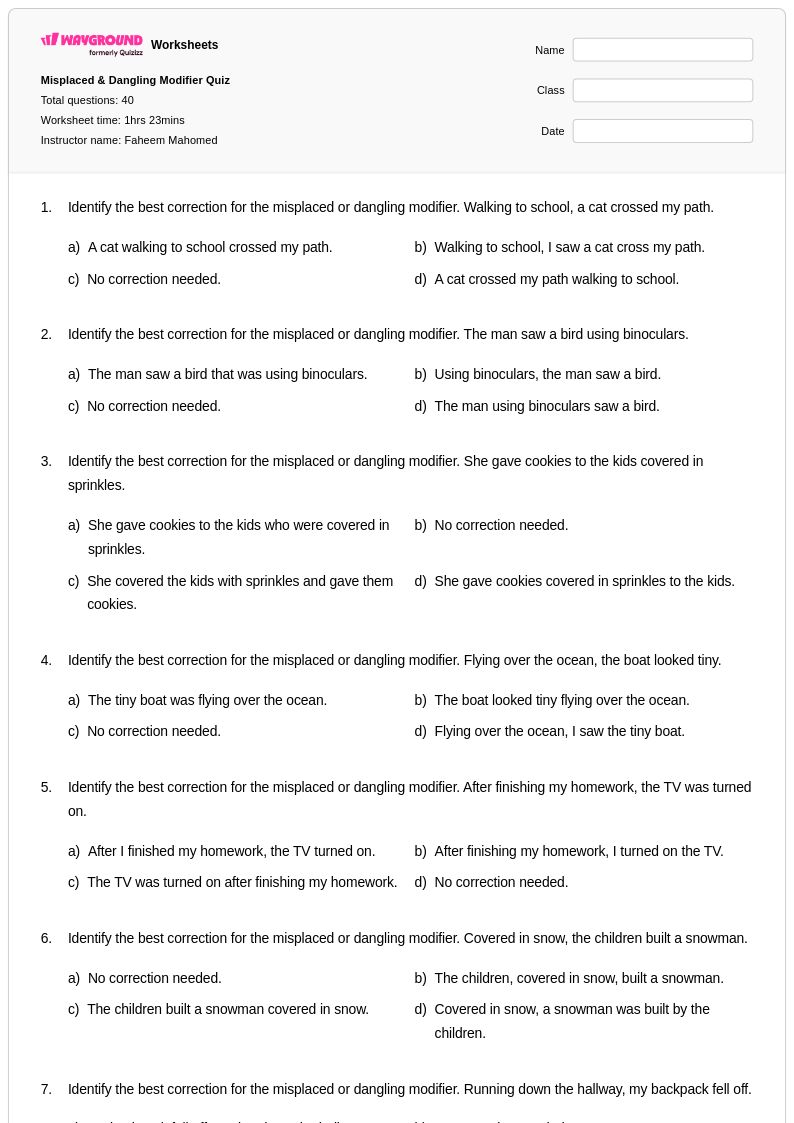
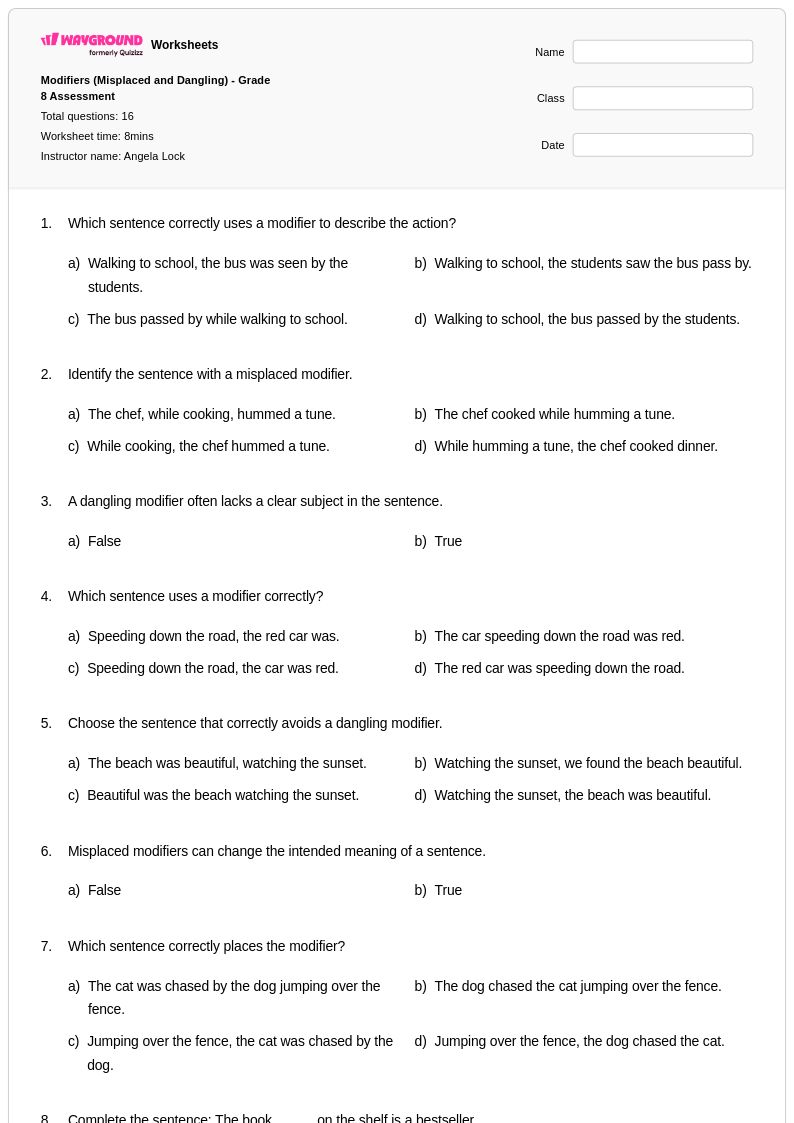
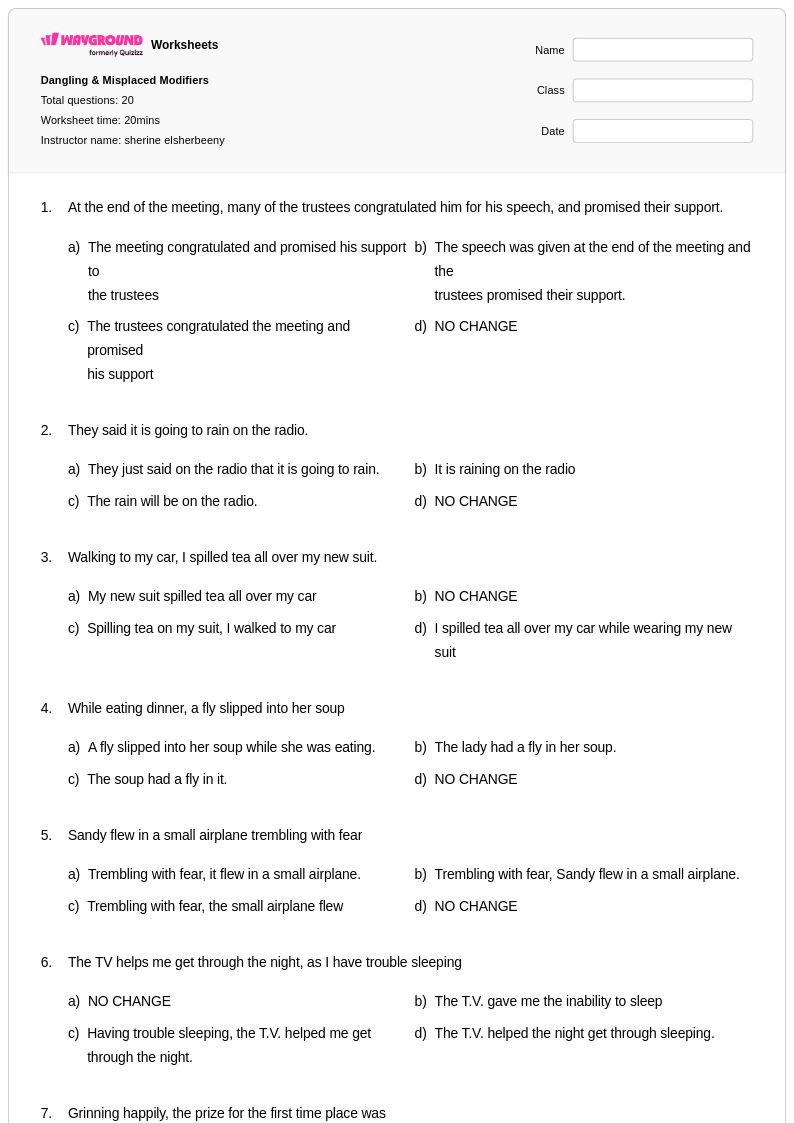
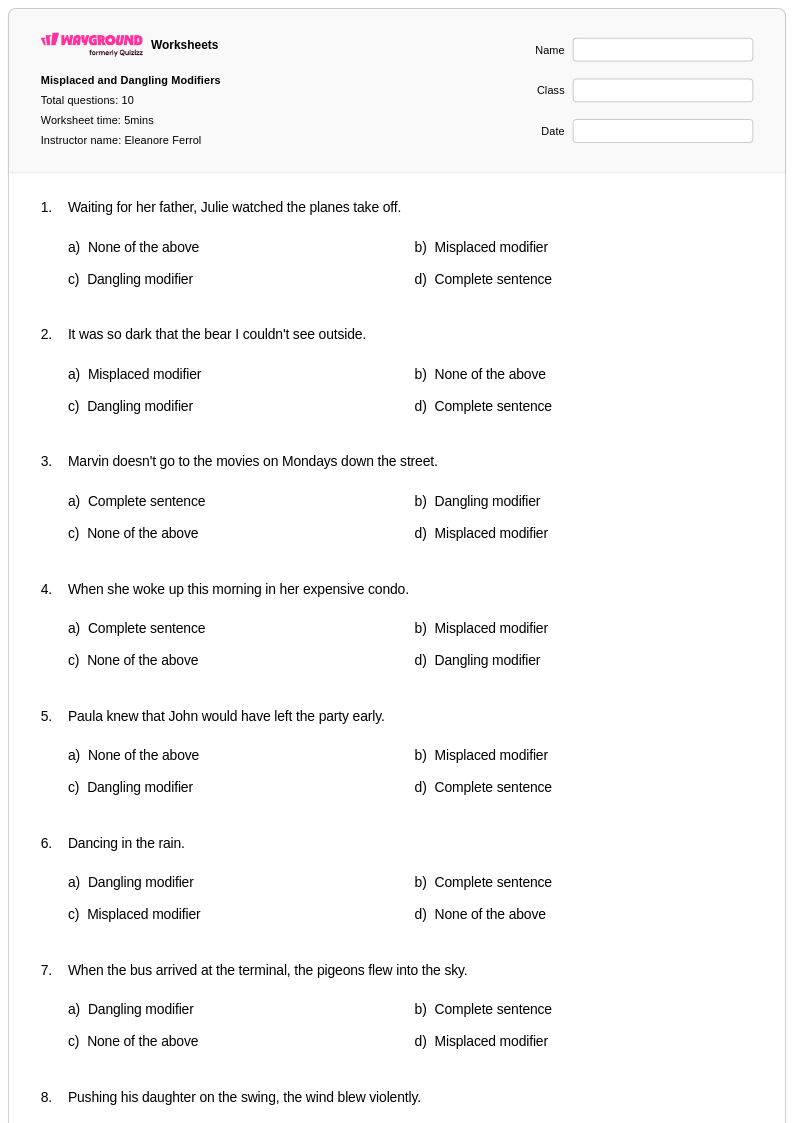
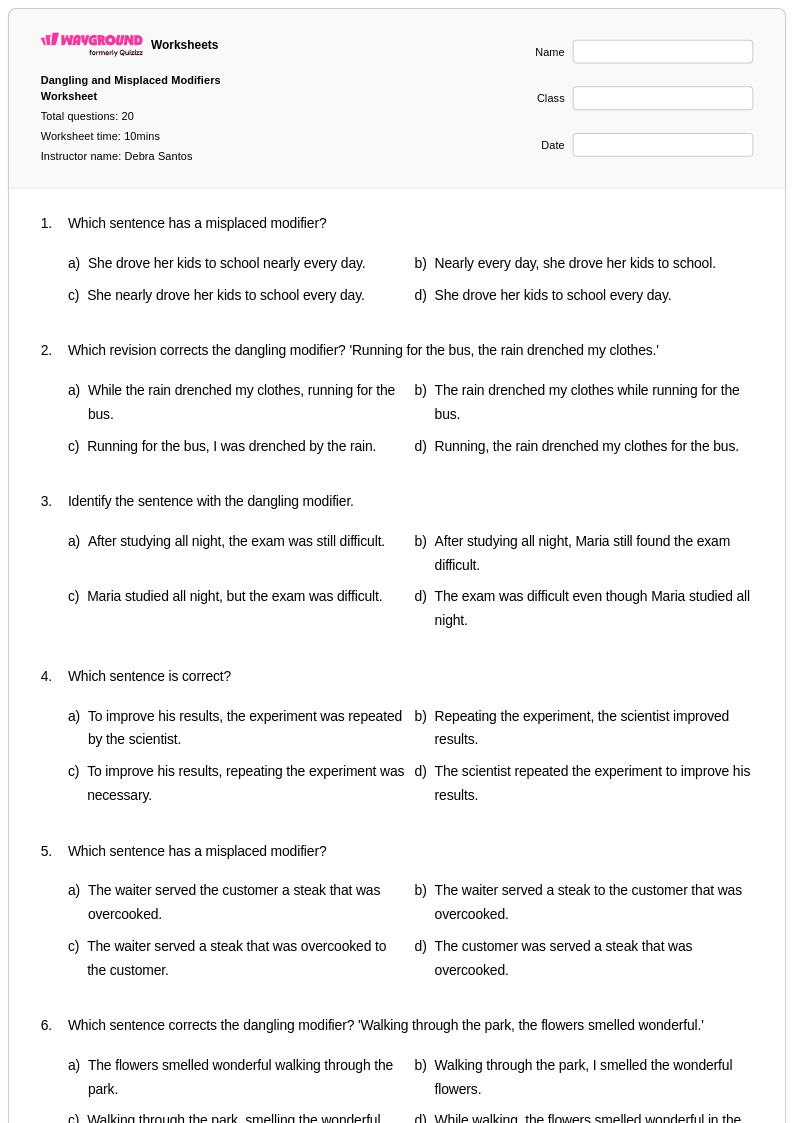
Misplaced and dangling modifiers present significant challenges for Class 10 students developing sophisticated writing skills, and Wayground's comprehensive worksheet collection addresses these complex grammatical concepts with targeted practice materials. These expertly designed worksheets help students identify when modifying phrases and clauses are incorrectly positioned within sentences, causing confusion about what element is being modified. Through systematic practice problems, students learn to recognize dangling modifiers that lack clear subjects to modify and misplaced modifiers that create unintended meanings due to poor positioning. Each worksheet includes detailed answer keys that explain correct modifier placement, enabling students to understand the logic behind proper sentence construction. The free printable resources provide extensive drill opportunities with increasingly complex sentence structures, allowing students to master this essential component of advanced grammar through guided practice and independent work.
Wayground (formerly Quizizz) empowers educators with millions of teacher-created resources specifically designed for grammar instruction, including extensive collections focused on modifier usage and sentence structure refinement. The platform's robust search and filtering capabilities allow teachers to quickly locate worksheets that align with specific curriculum standards and target particular aspects of modifier placement, from basic identification exercises to complex revision tasks. Teachers can easily differentiate instruction by selecting materials that match individual student needs, whether for remediation of fundamental concepts or enrichment activities that challenge advanced learners. The flexible customization tools enable educators to modify existing worksheets or combine elements from multiple resources, while the availability of both printable PDF formats and digital versions ensures seamless integration into any classroom environment. These comprehensive features support effective lesson planning and provide ongoing opportunities for skill practice, helping teachers address this challenging grammatical concept through varied and engaging instructional materials.
FAQs
How do I teach misplaced and dangling modifiers to students?
Start by helping students understand what a modifier is and what word or phrase it is intended to describe. Use humorous examples of dangling modifiers, such as 'Running down the street, the trees looked beautiful,' to show how an unattached modifier creates absurd or confusing meaning. Once students can identify the error, guide them through rewriting the sentence so the modifier is placed directly next to the word it describes. Modeling the correction process step-by-step before moving to independent practice is key to building this skill.
What is the difference between a misplaced modifier and a dangling modifier?
A misplaced modifier is a word, phrase, or clause that is positioned too far from the noun or verb it modifies, causing ambiguity — for example, 'She almost drove her children to school every day' implies she nearly did it but did not. A dangling modifier occurs when the word the modifier is meant to describe is absent from the sentence entirely, leaving the modifier with nothing logical to attach to — for example, 'Exhausted after the hike, the couch was immediately claimed.' Teaching students to distinguish between the two error types helps them apply the correct revision strategy.
What exercises help students practice identifying and correcting modifier errors?
Effective practice exercises include sentence identification tasks where students flag which word or phrase is the modifier and determine what it is supposed to modify, followed by sentence revision tasks where they rewrite the sentence correctly. Progressing from recognition to correction — and eventually to writing original sentences with modifiers placed correctly — builds the skill systematically. Worksheets that include participial phrases, prepositional modifiers, and infinitive constructions give students exposure to the full range of modifier types they will encounter in academic writing.
What mistakes do students commonly make when correcting misplaced and dangling modifiers?
A frequent error is moving the modifier to a new position without checking whether the sentence now makes logical sense, resulting in a different but equally awkward construction. Students also commonly add a subject to fix a dangling modifier but fail to restructure the rest of the sentence, leaving grammatical inconsistencies. Another recurring mistake is treating every introductory phrase as a dangling modifier, when in fact the phrase may correctly modify the subject — so students benefit from practice distinguishing genuine errors from correct constructions.
How can I use Wayground's misplaced and dangling modifier worksheets in my classroom?
Wayground's misplaced and dangling modifier worksheets are available as printable PDFs for traditional classroom use and in digital formats for technology-integrated or remote learning environments, and they can also be hosted as a quiz directly on Wayground. Each worksheet includes answer keys, so teachers can use them for guided instruction, independent practice, or self-paced review. The range of problem types, from basic identification to complex sentence revision, makes them suitable for whole-class lessons, small-group remediation, or enrichment for advanced writers.
How do I differentiate modifier instruction for students who are still struggling?
For struggling students, begin with highly visual or humorous examples that make the error obvious before introducing subtler cases. Reducing the number of answer choices in correction exercises can lower cognitive load and help students focus on the core skill. On Wayground, teachers can enable accommodations such as reduced answer choices or read-aloud support for individual students, allowing them to participate in the same activity as their peers while receiving tailored support.